
Pontiac LeMans buyer's guide
Pontiac LeMans -- the model's own buyer's guide: variants, values and what to check.
Years listed: 1964-1973 · Series: GTO
Overview and history
The Pontiac LeMans is the car that gave America the GTO, and then spent the rest of its life living in the GTO's shadow. That is both its problem and its opportunity. Under the badges, a classic LeMans is the same General Motors A-body hardware as the car every collector wants — the same frame, suspension, Pontiac V8s and handsome styling — without the GTO's paperwork premium and without quite the same pressure to be perfect. Buy the right LeMans and you get ninety percent of the GTO experience for a fraction of the GTO money. Buy the wrong one, or a LeMans pretending to be a GTO, and you get all of the A-body's rust and deferred maintenance with none of the honesty that makes the model worthwhile.
The name started small. LeMans — named for the French endurance race, spelled by Pontiac as one word with a capital M — appeared for 1961 as the top trim of the compact Tempest, Pontiac's innovative little car with a rear transaxle. For 1963 the Tempest LeMans became a model in its own right, still a compact. The car this guide is about arrives for 1964, when Pontiac moved the Tempest line onto GM's new intermediate A-body platform, shared with the Chevrolet Chevelle, the Oldsmobile Cutlass and the Buick Skylark. From that moment the LeMans was the top-trim Tempest: the best-appointed version of Pontiac's mid-size car, sitting above the Tempest Custom and the plain Tempest, with bucket seats, better upholstery and more brightwork as standard.
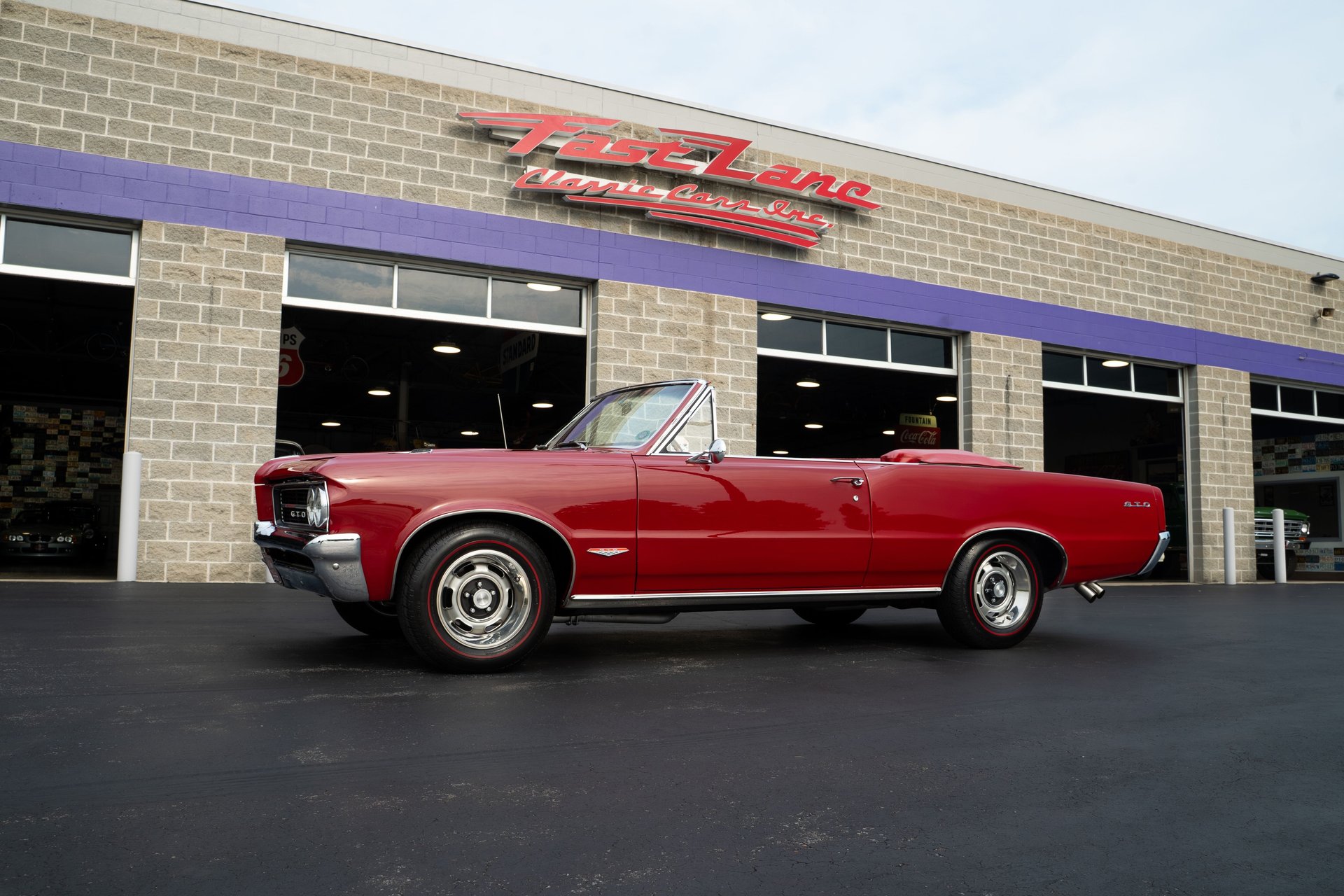
And then, for 1964, Pontiac's engineers — John DeLorean most famously among them — slipped a 389-cubic-inch V8 into that intermediate body and offered it as an option package on the LeMans. That package was the GTO. For 1964 and 1965 the GTO was not a separate model at all: it was an option on the LeMans, built on the LeMans line, carrying a LeMans VIN. From 1966 to 1971 the GTO became a series of its own and the LeMans carried on beneath it as the mainstream car. For 1972 and 1973 the GTO went back to being an option package — on the LeMans and LeMans Sport — before moving to the smaller Ventura for its final year. You cannot understand a LeMans listing without that relationship, because half the cars you will look at are trading on it, honestly or otherwise.
The classic A-body LeMans falls into three clear styling generations. The first, 1964 and 1965, is the crisp, stacked-headlight car — vertical headlamps and clean flanks. The second, 1966 and 1967, is longer, lower and more sculpted, with the Coke-bottle rear quarters that define the mid-sixties GM look; the 1967 car adds a heavier grille and is, to many eyes, the prettiest LeMans of all. The third, 1968 to 1972, is the rounded, semi-fastback A-body — a new shell with a shorter wheelbase on two-doors and concealed wipers, while the LeMans kept a chrome grille that changed in detail almost every year. A facelifted 1970 front end, the single-headlamp 1971 and 1972 cars, and small annual trim changes let a practiced eye date a car from across a parking lot — a skill worth learning, because sellers get years wrong more often than you would expect.
For 1973 the A-body went Colonnade: a new, heavier shell with fixed rear side glass on coupes, big federally mandated bumpers and a softer, more formal character. The 1973 car is the last covered in depth here, matching the span traded on this site — our current listings run from 1964 to 1973 and nothing later. The name ran on through the Colonnade years to 1977 and on the downsized 1978 to 1981 A-body, and Pontiac revived it for 1988 on a completely different car: a Korean-built, Daewoo-made hatchback and sedan derived from the Opel Kadett, sold until 1993. That last car shares nothing with the A-body but the badge. Everything that follows is about the rear-wheel-drive A-body car.
Why buy one now? Because the LeMans was built in large numbers and preserved unevenly. The market on this site tells that story: we currently track 31 LeMans listings, 24 of them for sale and 7 recorded as sold, spread across every year from 1964 to 1973 with the heaviest concentration in 1967, followed by 1971 and 1968. Red and blue are the commonest colours, most cars are automatics, and supply splits between private Marketplace sellers and dealers. This is a living, liquid market in usable cars. The mechanicals are fundamentally tough, parts support is among the best in the American classic hobby, and the difference between a good LeMans and a money pit is, as with every A-body, almost entirely rust, accident history and how honestly the car is described.
The models
Every classic LeMans sits in a hierarchy, and placing a car in it correctly is the first pricing skill you need. At the bottom sat the Tempest, then the Tempest Custom, then the LeMans as the top trim — and from 1970, the LeMans Sport above that again as the range moved upmarket and the Tempest name was dropped. Alongside sat the GTO, first as the LeMans's option and then as its glamorous sister series, and from 1970 the T-37 and GT-37, Pontiac's budget performance cars. A seller who calls every A-body Pontiac a LeMans, or every LeMans a GTO, is either careless or hoping you are. The VIN, the trim tag and the paperwork — covered in the inspection section — settle what a car actually is.
Body styles were generous. Depending on the year, the LeMans came as a two-door sport coupe (a pillared coupe), a two-door hardtop, a convertible, a four-door hardtop, a four-door sedan, and a station wagon carrying the Safari name. The hardtop coupe and convertible are the cars the market wants; the four-doors and wagons are the same mechanical package in a less fashionable suit, priced accordingly — which makes them, as we will argue later, some of the smartest buys in this guide. On this site the recorded body-style data is patchy — only a single car in the current pool is formally recorded as a convertible — which tells you more about listing quality than about the cars: always establish body style from the photographs and the VIN, never from a listing's drop-down fields.
| Model | Years | Engine | Output | Built | Character |
|---|---|---|---|---|---|
| Tempest LeMans (compact) | 1961–1963 | Four, six and 326 V8 options | varies | Large numbers | The nameplate's origin; rear-transaxle car, a different guide's subject |
| LeMans (first A-body) | 1964–1965 | Six, 326 V8 | 140–285 hp range across options | High volume | The crisp original; the GTO's host car in both years |
| LeMans (second generation) | 1966–1967 | OHC six, 326 V8 | 165–285 hp range | High volume | Coke-bottle styling; Sprint six is the connoisseur's pick |
| LeMans (third generation) | 1968–1972 | OHC six, 350, 400 V8 | 175–300 hp range | High volume | The rounded car; broadest engine choice, deepest market |
| LeMans Sport | 1970–1972 | 350, 400, 455 V8 | 255–300 hp range | Moderate volume | Top trim; GTO option returned on this shell for 1972 |
| LeMans (Colonnade) | 1973 | 350, 400, 455 V8 | Net ratings, lower | High volume | Heavier, softer, cheapest entry to a V8 LeMans |
| LeMans (Daewoo-built) | 1988–1993 | 1.6 and 2.0 fours | 74–110 hp range | High volume | A badge revival only; front-wheel drive, unrelated engineering |
Outputs above are period gross ratings for the A-body cars except the Colonnade and Korean cars, which were rated net — treat every period figure as approximate, because Pontiac quoted differently year to year. Production of the A-body LeMans ran to large annual volumes throughout; Pontiac was GM's third-best-selling division in this era and the Tempest line was its volume car, so no mainstream LeMans variant is rare in the way a limited-production European classic is rare. Rarity here is specific: a Sprint six with a four-speed, a factory 455 car, a convertible with its original engine — individual specification, not the badge.
The early cars, 1964–1965. The first A-body generation is the lightest, simplest LeMans and the one most tightly bound to the GTO story. Standard power was a six; most surviving cars carry the 326-cubic-inch Pontiac V8 in two-barrel or four-barrel high-output form. Trim is year-specific and hard to find, suspensions are straightforward, and the cars feel noticeably more vintage than a 1968-onwards car — narrower, taller, with lighter steering. A genuine 1964 or 1965 LeMans in honest condition is a charming car; a 1964 or 1965 LeMans wearing GTO badges is a question, addressed in full below.

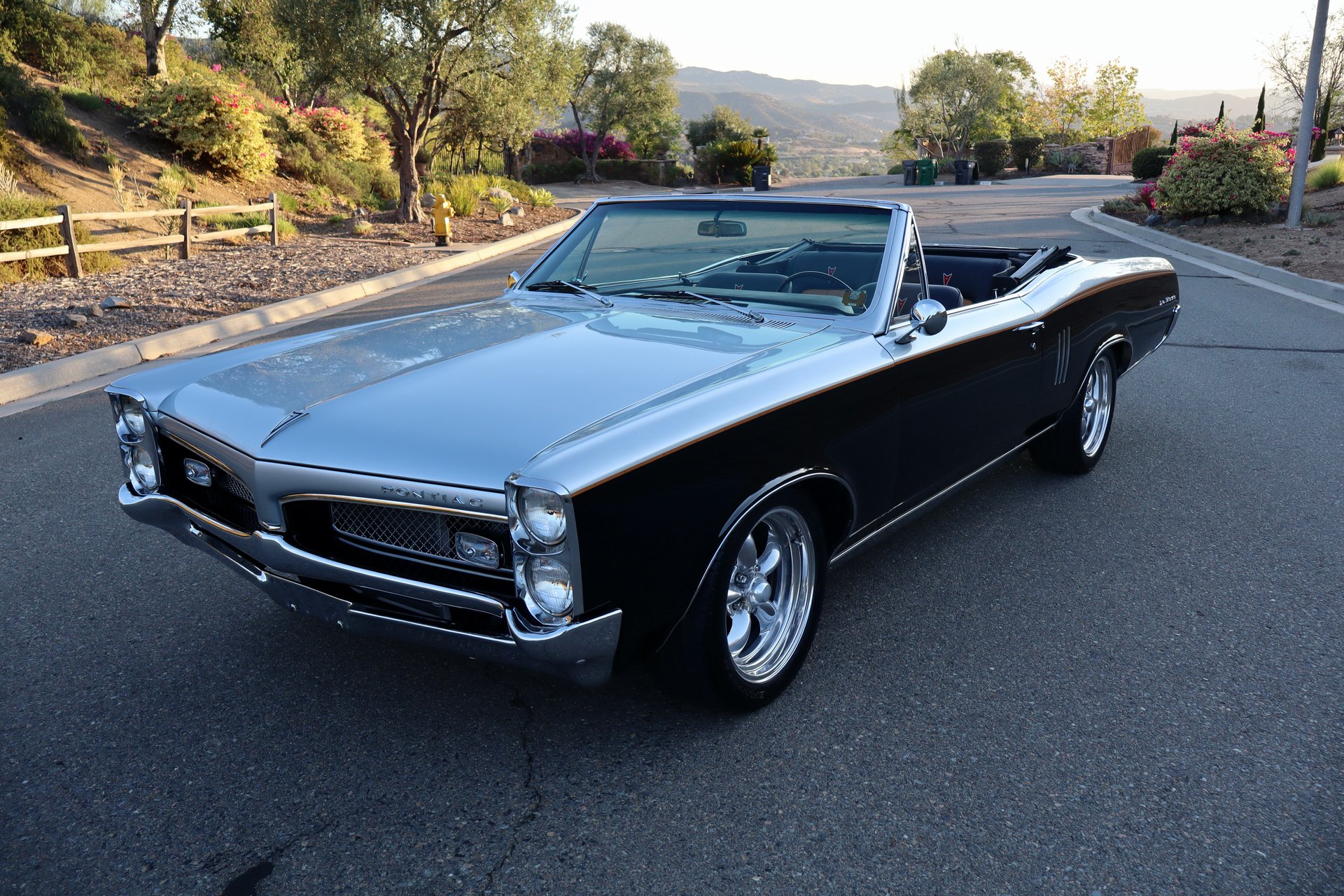
The middle cars, 1966–1967. The second generation brought the overhead-cam six — Pontiac's most interesting engine of the decade — and the Sprint package that turned the six-cylinder LeMans into a genuine sports sedan rival. The 1967 model year is the peak of the current market on this site, with more 1967 cars listed than any other year, and that reflects a wider truth: the 1967 car combines the prettiest styling of the run with the full engine range and slightly better safety equipment, including a dual-circuit brake master cylinder. If you are generation-flexible, start your search here.
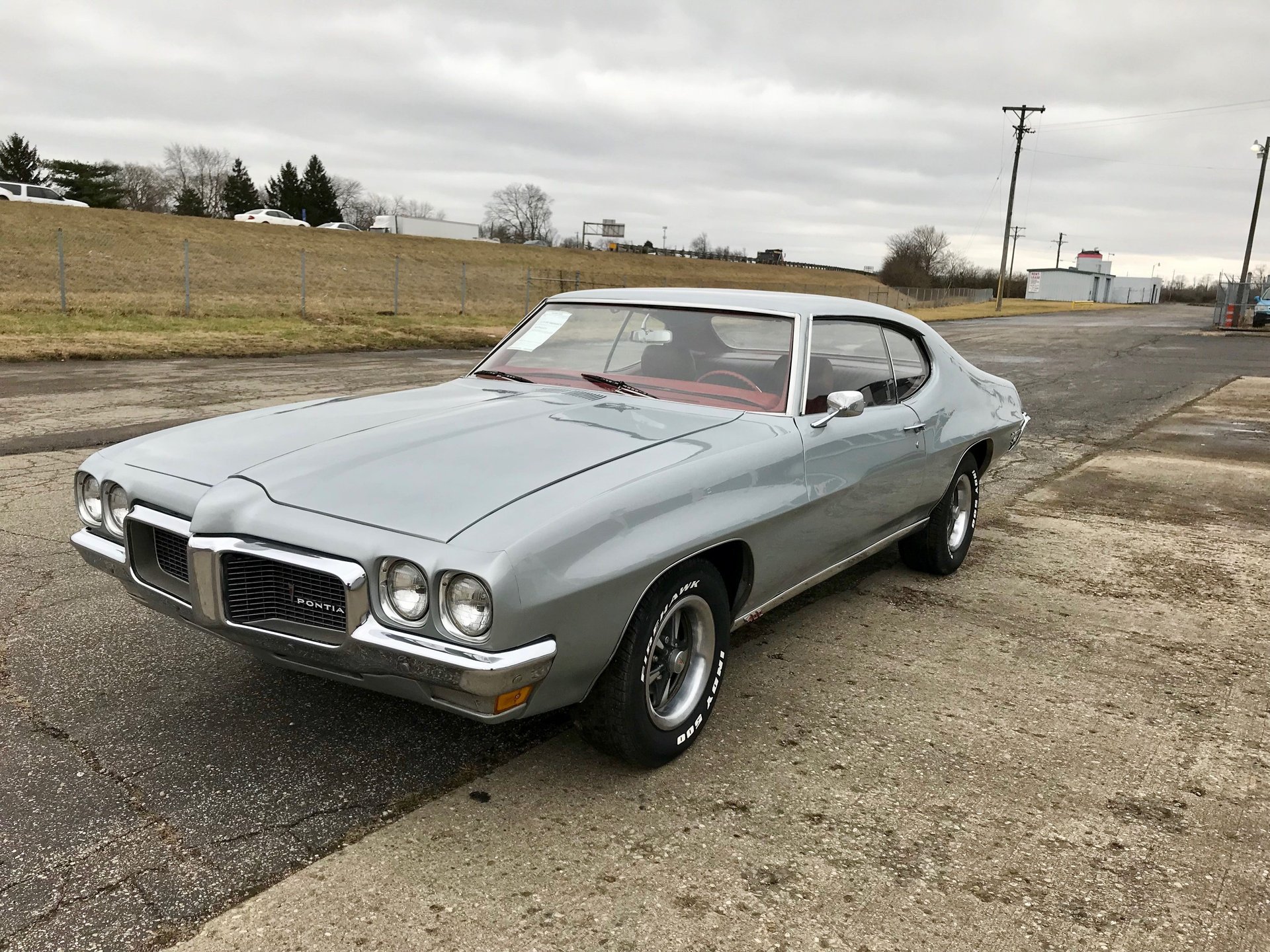
The volume cars, 1968–1972. The third generation is the LeMans most buyers will end up with, because it offers the widest choice: sixes early on, the 350 V8 as the mainstream engine, the 400 for buyers who wanted GTO pace without GTO badges, and the 455 in the final years. The LeMans Sport of 1970 to 1972 added plusher trim and became the shell that carried the revived GTO option in 1972 — so a 1972 LeMans Sport needs the same paperwork scrutiny as a 1965 car, for exactly the same reason. Annual styling changes are a dating tool and a parts warning at once: grilles, tail lamps and trim differ year to year, and a car wearing the wrong year's nose has usually been repaired with whatever was available.
The Colonnade car, 1973. One 1973 car sits in the current pool, and the Colonnade LeMans generally is the cheapest way into a V8 A-body: heavier, softer, styled for the seventies, with big impact bumpers and emissions-era engines in net ratings that look worse on paper than they feel on the road. Survivors divide sharply between cherished originals and cars that were simply used up. Buy a 1973 on condition alone.
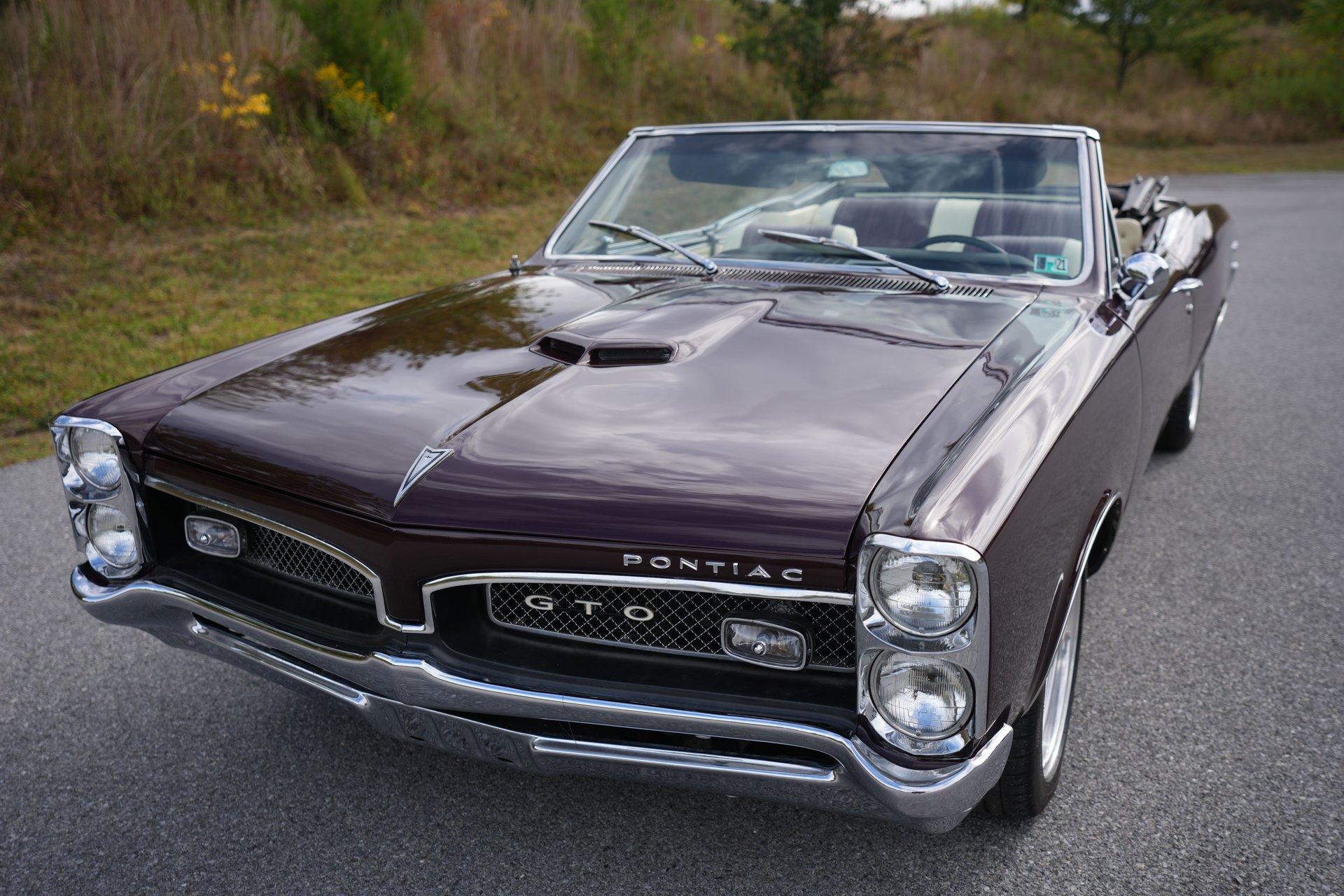
The GTO question, stated plainly. For 1964 and 1965, a real GTO is a LeMans with the GTO option, and nothing on the car itself — no badge, no hood, no engine swap — proves it either way after sixty years. For 1966 to 1971, a real GTO is a separate series with its own VIN identity. For 1972 and 1973, the GTO is an option on the LeMans again. In every case the arbiter is paperwork: Pontiac Historical Services — PHS — holds factory billing records and can document, from the VIN, how a car was actually built. A seller asking GTO money without PHS documentation is asking you to fund his hope. A tribute or clone, honestly described and priced as the LeMans it is, can be a fine car to own and drive. The sin is never the car; it is the description and the price.
Engines and gearboxes
Pontiac in this era built its own engines, and that matters. A LeMans does not carry a Chevrolet small-block from the factory in these years — it carries Pontiac's own V8, with its own character, specialists and parts stream, plus one of the most original six-cylinder engines ever sold in America. Learn the families — the overhead-cam six and the Pontiac V8 in its several sizes — and you can read any engine bay in this market at a glance.
The overhead-cam six: Pontiac's Sprint experiment
For 1966 Pontiac did something no other American maker attempted: it put a belt-driven overhead-cam six into its mainstream intermediate. The OHC-6, championed by John DeLorean, displaced 230 cubic inches in 1966 and 1967 and grew to 250 cubic inches for 1968 and 1969, after which the six-cylinder LeMans reverted to a conventional pushrod six bought in from Chevrolet. In base form the OHC six ran a single one-barrel carburettor and made modest power. In Sprint form — the package to look for — it carried a four-barrel Quadrajet carburettor, a hotter camshaft, a higher compression ratio, a split exhaust manifold and, in period ratings, up to around 215 horsepower from the 230 and a little more from the 250: genuine V8 pace with six-cylinder weight over the front wheels, and a rev-happy character nothing else in the A-body range offers.
On the road a good Sprint is the surprise of the whole range — light, eager, with a hard-edged exhaust note no V8 imitates. The ownership reality is narrower support. The cam drive belt and its tensioner are service items, and a belt that fails or jumps is a serious day; camshafts, followers and Sprint-specific induction and exhaust parts are reproduced only patchily, and expertise concentrates in a small circle of OHC specialists. A base one-barrel OHC car is a curiosity that drives like a period six and should be priced as one. A documented Sprint — documentation matters, because Sprint badges and four-barrel conversions have been added to base cars for decades — is a connoisseur's LeMans, worth paying to keep right. Budget a specialist inspection before buying one: a tired OHC engine is a more expensive rebuild than a tired Pontiac V8, realistically into the mid four figures for a full specialist rebuild.
The Pontiac V8: 326, 350, 400 and 455
One engine architecture carried the LeMans from 1964 to the end of the Colonnade era, and understanding it starts with a single useful fact: all Pontiac V8s of this period share the same external block dimensions. The 326, the 350, the 400 and the 455 look alike in the bay, weigh much the same, and take many of the same accessories — which is why engine swaps are endemic in this market, why a seller's claim about which engine a car carries is worthless without checking, and why the casting numbers and the stamped engine code, not the air-cleaner decal, settle the question. The engine code is stamped on a pad at the front of the block beside the water pump, and a partial VIN stamping appears on the block near the oil filter on later cars. Check both on any car where the engine is part of the price.
The 326 (1964–1967) is the early car's V8: offered in two-barrel form and as a four-barrel high-output version, smooth, torquey and entirely adequate in the lighter first- and second-generation shells. It shares its architecture with the bigger engines but has its own bore, and internal parts specific to it are a little thinner on the ground than 400 parts. Treat a healthy 326 as a plus, a tired one as a candidate for the swap conversation below.
The 350 (1968 onwards) became the mainstream LeMans V8 for the third generation and the Colonnade cars: usually a two-barrel engine in LeMans service, flexible and durable, the default motor of the family LeMans. There was also a higher-output 350 in some years with a four-barrel and more compression. The 350 is the engine the fewest sellers brag about and the one that gives the least trouble — its exhaust manifolds, however, crack and its rear main seal weeps like every Pontiac V8, so read the problem areas section before falling for any of them.
The 400 (1967 onwards) is the GTO engine in its home range, offered in the LeMans as the performance option: two-barrel economy versions and four-barrel versions exist, and a factory 400 LeMans is a genuinely quick car that flies under the GTO market's radar. Because 400s are also the commonest swap into six-cylinder and 350 cars, a 400 LeMans divides into documented factory cars, which carry a premium, and converted cars, which should be priced on the quality of the conversion and nothing else.
The 455 (1970 onwards) is the torque flagship, available in the LeMans and LeMans Sport in the final third-generation years and in the Colonnade car. In period gross ratings the early 455s were quoted around 325 to 360 horsepower depending on version; the later net-rated cars quote far less and lose little on the road, because what the 455 sells is not peak power but effortless mid-range pull. A genuine factory 455 LeMans is one of the rarest specifications in this guide and one of the most faked, for the obvious reason that any Pontiac V8 drops into the same hole. PHS paperwork or walk away from the premium.
Across the family, the mechanical story is consistent. These are pushrod, hydraulic-lifter engines with a reputation for torque and durability when the oil has been changed, and three characteristic weaknesses when it has not: timing-chain stretch on high-mileage engines, which retards the cam and flattens performance long before anything rattles; lifter noise from neglected oil; and oil leaks, classically from the rear main seal and the valley pan, that bake onto the block and make a sound engine look neglected. Induction divides between two-barrel carburettors on economy cars and the Rochester Quadrajet four-barrel on performance versions — an excellent carburettor when rebuilt by someone who understands its metering rods and air-valve tension, and a flat-spot machine when rebuilt by someone who does not. Ignition is points on early cars, with electronic conversions common and generally welcome. A healthy Pontiac V8 should start readily hot or cold, idle with a slight lope on four-barrel cars, show steady oil pressure — a modest gauge reading at hot idle is normal, a flickering oil light is not — and pull cleanly without smoke. Blue smoke at start-up after standing is valve seals; blue smoke under load is rings; white smoke that does not clear is a head-gasket conversation. A full V8 rebuild at a competent machine shop runs broadly in the mid four figures before performance parts, and a quality specialist Quadrajet rebuild is a few hundred dollars — both worth holding against any seller's claim that a fault is a cheap fix.

Gearboxes
The gearbox census on this site is unambiguous: automatics dominate the surviving market overwhelmingly, with manuals represented by a handful of cars. That reflects survival as much as original sales — family automatics were kept, manual performance cars were used hard — and it shapes pricing, because a genuine four-speed car now carries a scarcity premium that a converted car tries to borrow.
Automatics. Early cars use the two-speed Super Turbine 300, a Buick-designed two-speed automatic that is smooth, durable and leisurely; from 1969 the three-speed Turbo Hydra-Matic 350 becomes the standard automatic behind sixes and small V8s, with the heavier Turbo Hydra-Matic 400 behind 400- and 455-cubic-inch engines and heavy-duty applications. The TH350 and TH400 are among the strongest, best-supported automatics ever made: parts are everywhere, every transmission shop in America knows them, and a full rebuild is a known quantity at roughly the low-to-mid four-figure mark fitted. Faults are conventional: delayed or flaring engagement, especially into reverse on a cold morning, means wear; a box that shifts well hot but misbehaves cold is negotiating; dark, burnt-smelling fluid on the dipstick is the cheapest diagnostic in this guide — pull it on every viewing. The two-speed is a period piece: accept its two ratios as character in an early cruiser, and price a TH350 swap, if you plan one, as the modification it is.
Manuals. The standard manual was a three-speed, column-shifted in family cars; the enthusiast choice was the four-speed — Muncie M20 wide-ratio or M21 close-ratio — with a floor-mounted Hurst shifter. A real four-speed LeMans is a delight and a rarity; test second-gear synchromesh on a fast downchange, listen for bearing whine, and check the clutch for judder and a biting point at the very top of the pedal, which means a worn plate. Rebuilding a Muncie is specialist but routine work, and a clutch is ordinary money; what is not routine is converting an automatic car properly — pedals, linkage, shifter, console, speedometer gearing — so a converted car should be judged as a hot rod, on workmanship, and never priced as a factory four-speed. As with the engines, the trim tag and PHS record, not the shifter in the tunnel, prove how the car was built.

Problem areas
Everything in this section applies across the A-body family, because the LeMans shares its shell, frame and running gear with the Chevelle, Cutlass and Skylark — and that is good news, because it means every weakness is mapped, documented and fixable with reproduction metal. Our own photo examination is a small sample — eight cars examined in detail, with rust mentioned in three of them and damage in two — so treat those numbers as a prompt, not a statistic: on a car of this age, in this market, you assume the examination matters until the individual car proves otherwise. Almost everything mechanical on a LeMans can be fixed with money and patience. Structural rust and a dishonest identity are the two things that reliably turn a bargain into a write-off, and this section takes them in that order.
Rust: the map
A-body rust follows the water and the road dirt, and it is worse on these cars than their simple construction suggests, because GM built them with plenty of trapped-moisture cavities and the LeMans spent its working life as an ordinary car, driven in winter, parked outside, and washed rarely. Work through the map in this order, because the order is the order of expense.
Frame first. Unlike the unibody cars many buyers cross-shop, the A-body sits on a full perimeter frame — which rusts, and which too many inspections skip because the body looks sound. The classic sites are the frame rails behind the rear wheels, where the rails kick up over the axle and trap mud; the body-mount points, where the pads hold moisture against the rail; and the front crossmember under the engine. Surface scale is normal and treatable. Perforation, especially at a body mount or in the rear kick-up, is fabrication work: a frame section replaced runs well into four figures per side at a restoration shop, and a frame thin in several places ends the conversation about an otherwise attractive car. Any serious viewing includes time underneath with a torch and a screwdriver, or a lift inspection you pay for. There is no shortcut version of this check.
Sills, floors and the trunk. The rocker panels and sills rot from the inside out, fed by blocked drains and front-wheel spray; press hard along their full length and distrust fresh underseal and new sill covers in equal measure. The floor pans collect the water that gets past the windshield seal and the cowl — the A-body cowl is notorious for leaking and rusting around the vent openings, and the water then sits under the carpet, which is why you lift every carpet and prod all four footwells. The trunk floor is the third basin: the rear window and trunk seals leak, water gathers in the spare-wheel well and the corners behind the wheel tubs, and the floor rots under a mat that hides the evidence. Replacement pans are available and are ordinary panel work — a fitted, painted section is typically a four-figure job per area — but rust is a census, not a spot check: floors, sills and trunk going together describe a shell that needs a body-off conversation, and the price must say so.
The rear quarters and wheel arches. The lower rear quarters behind the wheels, the wheelhouse lips and the panel below the rear window are the LeMans's signature rust display, and the 1966 to 1972 cars add the rear window surround: the channel at the base of the rear glass traps water under the trim, rots invisibly, then leaks into the trunk and onto the package shelf, so staining inside the rear window and a damp trunk are one fault, not two. Vinyl roofs — fitted to many LeMans hardtops — hide a second crime scene: moisture under the vinyl rots the roof skin and window surrounds beneath a top that still looks presentable, and a bubbling vinyl roof is a metalwork bill, not a trim bill. Lifting a suspect vinyl roof adds a roof-skin repair, realistically four figures with paint, to whatever else the car needs. Door bottoms, the lower front wings, the battery tray and the radiator core support complete the standard tour; none alone kills a car, all of them together price it.
Convertible specifics. A convertible LeMans adds the top frame, the hydraulic rams and pump, and the well behind the rear seat to the inspection, plus a structural premium on the floors and sills, because the open car leans on them harder. A top that operates slowly, unevenly or with visible hydraulic weeping is a system refresh — rams, hoses and pump work that runs to several hundred dollars in parts before labour — and a perished top itself is a four-figure fitted job. None of it is a reason to avoid a convertible; all of it belongs in the price.
Identity, clones and paperwork fraud
No other mainstream Pontiac carries this risk, and it deserves its own heading because it is a problem area exactly as rust is: the LeMans is the donor car for GTO clones, and has been for forty years. The mechanics of the fraud vary by year, as the models section explained — an option-package car in 1964, 1965, 1972 and 1973, a separate series from 1966 to 1971 — but the buyer's defence is the same in every year. First, the VIN: on 1966 to 1971 cars a genuine GTO carries its own series identity in the VIN, and a LeMans VIN under GTO badges closes the argument on the spot. Second, the trim tag on the firewall, which records body style, build date, trim and paint as the car left the factory, and which must agree with the car in front of you. Third, and decisively, the PHS billing record ordered on the VIN, which lists the options the factory actually fitted. An undocumented GTO is a LeMans with a story, and it is priced as a LeMans, full stop.
The same discipline covers the lesser upgrades. Sprint badges on a base six, a 400 or 455 where the paperwork says 350, a four-speed where the car was built an automatic, GTO hoods and Endura noses on LeMans shells — each is a legitimate modification on an honestly described car and a deduction on a dishonestly described one. Engine swaps deserve a balanced word: because every Pontiac V8 shares its external dimensions, a well-executed swap to a later or larger engine is common, often improves the car, and is no scandal. What you are pricing is workmanship — mounts, cooling, wiring, correct accessories — and disclosure. Never pay an originality premium for a car whose originality exists only in the advertisement. A matching-numbers claim is verified against the partial VIN stamping on the block and transmission case, not asserted from the seller's memory.
Mechanical wear: engine, suspension, steering and brakes
The Pontiac V8's wear pattern is covered in the engines section; the chassis underneath it has its own list. Front suspension is double-wishbone with coil springs, and by now every rubber bush in it is either replaced or perished: budget a front-end refresh — ball joints, bushings, tie-rod ends and an alignment — as a routine recommissioning cost, broadly a four-figure fitted job with parts, on any car without receipts for it. Rear suspension is a live axle on coil springs with trailing arms, simple and strong, whose bushes likewise perish and whose worn upper-arm bushes let the axle steer the car under power — a vague, wandering feel at speed that owners misdiagnose as steering wear. Steering divides between manual and power, both recirculating-ball boxes; play at the wheel is usually a worn box or a perished rag joint in the column, and a rebuilt box is a few hundred dollars exchanged. Sway-bar links, shocks and springs are consumables: a car sitting tail-down on tired rear springs is telling you its maintenance history in one glance.
Brakes are where era matters most. Early cars carry four-wheel drums, with front discs an option that became progressively commoner; a drum-brake LeMans stops adequately when everything is fresh and poorly when it is not, and the single-circuit master cylinder on pre-1967 cars means one hydraulic failure is a total failure — many owners upgrade to a dual-circuit system, and a well-done conversion is a plus, not a demerit. On any car, the recommissioning list after long storage is the same: seized wheel cylinders or calipers, perished hoses, a tired master cylinder and corroded lines, with a full hydraulic refresh typically in the high three to low four figures fitted. Judge the car on whether it stops straight and the pedal is firm, and price the rest as scheduled work.
Cooling and electrics complete the mechanical tour. Pontiac V8s run hot in traffic when the system is marginal: a recored or replacement radiator, a correct fan and shroud, and fresh hoses are the standard cure. A car that creeps up the gauge at idle but cools on the move is describing airflow; one that heats everywhere is describing the radiator or the head gaskets. Electrics fail at connections and grounds first, with two LeMans-specific notes: the engine harness lives above a hot V8 and goes brittle, and alternator and regulator faults present as dim lights and lazy charging that owners misread as battery failure. A car where everything electrical works has usually been used and maintained — the best single sign in this entire guide.
Interior, trim and the cost of cosmetics
Cosmetics are where a cheap LeMans becomes an expensive one slowly. While seat covers, carpets, door panels and headliners are well reproduced for the mainstream coupe and hardtop bodies, a full professional interior refresh runs well into four figures — and four-door and wagon interiors, and one-year trim details, are reproduced patchily or not at all. Bucket-seat cars need their specific frames and foams; a bench car converted to buckets has usually been converted incompletely. Dash pads crack in the sun, steering wheels crack at the rim, and the brightwork — grilles, tail panels, wheel-arch mouldings, year-specific emblems — is the classic A-body trap, because a one-year grille or tail panel in good condition can take a season to find at any price. Rechroming a full set of bumpers and brightwork is a four-figure programme on its own. The rule follows: buy the trim-complete car and fix the mechanics, because mechanics are a catalogue and trim is a treasure hunt.
Glass and seals are the quiet budget line. Windshield and rear-window seals perish and leak — feeding the floor and trunk rust above — and replacement glass for hardtop and convertible side windows is available but not cheap. Weatherstrip kits are reproduced, and fitting a full kit is a weekend-scale job that transforms how the car feels; budget it into any car whose seals are visibly cracked, and treat a seller's recent replacement, with receipts, as real money already spent for you.
How to inspect one
Allow at least an hour, bring a torch, a cloth-wrapped magnet and a cheap infrared thermometer if you have one, and insist on seeing the car cold and outdoors in daylight. If it passes you, pay for a lift inspection before money changes hands — on an A-body, the frame check alone is worth the fee many times over.
- Start with the paperwork and the plates. Match the VIN on the title to the VIN plate on the car and check the body style it decodes to against the car in front of you. Read the firewall trim tag for build date, trim and paint codes, and compare them with the car: a different original colour under the current paint is normal history, a different body style is a different conversation. If the car is offered as a GTO, a Sprint, a factory 400 or 455, or a factory four-speed, ask for the PHS billing record there and then. No paperwork, no premium — that rule, applied without embarrassment, is worth more than any other step in this list.
- Cold start. Insist the engine is stone cold when you arrive; a warmed-up car is a seller managing the evidence. A Pontiac V8 should fire readily, settle to a steady idle, and show no more than a puff of blue at start-up. Persistent blue smoke, a heavy petrol smell, a long crank when hot later in the viewing, or a timing-chain rattle that does not fade in a second are all priced faults, and each maps to a cause in the engines section.
- Read the engine, not the decal. Find the stamped engine code on the pad at the front of the block beside the water pump, and on a car where originality is priced in, the partial VIN stamping near the oil filter. Compare what you find with what the paperwork says the car was built with. An honestly disclosed swap is a feature to judge on workmanship; an undisclosed one discovered by you is a reason to reprice the whole car. While you are there, check the oil for a milky emulsion, the coolant for oil and rust, and the transmission dipstick for dark, burnt fluid.
- Under the car: frame before body. Torch along both frame rails, paying special attention to the kick-up over the rear axle, the body-mount points and the front crossmember. Prod suspect areas with a screwdriver, with the seller's permission. Perforation at a mount or in the rear rails is structural and expensive; scale is a negotiation. Then read the sills, the floor seams and the trunk floor from below, and read the underseal as you go: patchy and honest is factory age, while a uniform fresh black coat blown over everything the week before a sale is a question, not an answer.
- Trunk and rear window. Lift the spare wheel and the mat. Look for water staining, perforation in the well corners and a damp, closed-up smell. Then look at the base of the rear window from inside and out: bubbling under the trim, staining on the package shelf and a wet trunk are one fault with one bill, and on a vinyl-roof car add the roof skin around both windows to the same check.
- Floors inside. Lift all four carpets and prod the pans, especially the front footwells below the cowl. Wet carpets in a car described as dry-stored mean leaking cowl or windshield seals and rust already started. Check the cowl area itself from the engine bay for perforation around the vents — a cowl repair is a dashboard-out job and is priced like one.
- Body, gaps and the magnet. Run the cloth-wrapped magnet over the lower rear quarters, the wheel-arch lips, the sill bottoms and the door bottoms: filler announces itself where the magnet falls away. Check door bottoms for bubbling, the battery tray for acid damage, and every panel gap for the unevenness that records an old accident. Sight down both flanks in daylight. Count damaged or missing brightwork and price it individually, because on a one-year grille or tail panel the search, not the money, is the cost.
- Suspension and steering. Bounce each corner and watch it settle in one movement; rock each front wheel top-to-bottom and side-to-side for bearing and ball-joint play. Look at the car from fifty feet: level is correct, tail-down is tired rear springs or bushes, and any lean is a spring or a frame question until proved otherwise. On the drive, the steering should be free of a dead band at centre; wander under power points at rear-arm bushes, not the steering box.
- The test drive. Fifteen minutes minimum, including a highway stretch and a rough surface. An automatic should engage drive and reverse without a long pause or a thump, change cleanly without flaring, and kick down when asked. A manual should take second gear on a brisk downchange without grinding. A V8 should pull cleanly from low revs without a Quadrajet flat spot; a Sprint six should rev freely and eagerly — reluctance in either is a fuel or ignition bill, not character.
- Brakes, heat and electrics. Brake firmly from speed twice: the car should stop straight, the pedal firm and at a consistent height. A pre-1967 car still on a single-circuit master cylinder deserves an explicit conversation about a dual-circuit conversion. Let the car idle hot in traffic conditions and watch the temperature gauge; check it against the infrared thermometer on the thermostat housing if you brought one. Then work everything electrical: lights, indicators, wipers and washers, heater blower on every speed, windows, horn and every gauge. Each dead item is small; a pattern of dead items is a maintenance biography.
- Interior and trim, priced honestly. Sit in the driver's seat, not the passenger's — it wears first, and a collapsed seat you can feel the frame through is a foams-and-trim bill. Check the dash pad for cracks, the headliner for sagging and water stains (which send you back to the window seals), and the operation of every window regulator. Then list the missing or damaged trim against the car's year, remembering that the mainstream bodies are well served by reproduction and the four-door, wagon and one-year pieces are not.
- The convertible and Sprint extras, where fitted. On a convertible, run the top up and down twice, watch for even movement, inspect the well and rams for hydraulic weeping, and check the floors and sills again — the open car depends on them. On a Sprint, verify the four-barrel induction, the split exhaust manifold and the paperwork agree, and arrange the specialist inspection the engines section recommends before agreeing a Sprint price. On every car, finish by photographing the stance from the side and the engine code pad — the two records that settle arguments later.
Values
The market block beneath this guide carries the live numbers — the cars listed now and the recorded sales — and this section teaches you how to read them, because a LeMans is one of the easiest classics in America to misprice in both directions. The pool is broad and shallow: a few dozen cars at any time, spread over ten model years, six body styles and four engine families, which means the headline figures average together cars that have almost nothing in common. Read by year, body and engine, never by badge alone.
The first driver is body style. Hardtop coupes and convertibles carry the market; sport coupes follow; four-doors and wagons trail by a wide margin despite identical mechanicals, and that gap is a market habit rather than a judgement on the cars — it is the single most reliable source of value in this guide. The second driver is condition, and the spread is enormous: a rusty project and a sorted driver wearing the same badge are different goods, and the distance between them is the full cost of the bodywork, paint, trim and recommissioning chapters of this guide added together. When a listing sits far below its peers, it is almost never a bargain waiting for you personally; it is the market pricing the rust map in the problem areas section, accurately.
The third driver is identity, and it cuts both ways. A documented GTO, a documented Sprint, a documented factory 455 — each carries a real premium, because the paperwork converts a claim into a fact. An undocumented car wearing the same badges carries none of it, and the gap between a tribute priced as a tribute and a tribute priced as the real thing is the largest single overpayment available in this market. Asking prices in this segment also run ahead of achieved prices as a matter of routine: sellers anchor on the best car they have seen advertised, auction results for exceptional cars get quoted as if they were typical, and the recorded-sales figures in the market block — achieved money, not asking money — are the corrective. Weight them over the listings whenever the two disagree.
Negotiation reality is friendly here. This is a high-volume classic with a deep pool of alternatives, so patience is a genuine strategy: the right specification recurs, and a seller of a mainstream LeMans competes with every other mainstream LeMans on the market. The exceptions are the specific cars — the Sprint, the convertible with its original engine, the one-year colour on a rust-free shell — where the pool thins to one and the negotiation inverts. In both cases the discipline is the same: price the car's rust, trim completeness and paperwork, add the recommissioning it honestly needs, and let the badge contribute only what its documentation supports.
Parts and ownership
The LeMans is one of the best-supported American classics you can own, for a structural reason: it shares its platform with the Chevelle, Cutlass and Skylark, and the combined A-body aftermarket is an industry. The big reproduction houses catalogue body panels, floor and trunk pans, weatherstrip, interior kits, suspension and brake components, and trim for the mainstream years and bodies, and the Pontiac-specific specialists cover the engines, the GTO-adjacent detailing and the harder trim. Mechanical parts for the Pontiac V8 — gaskets, bearings, cams, timing sets, water pumps — are ordinary catalogue items, and the Turbo Hydra-Matic gearboxes are supported by every transmission shop in the country.
Easy: service items, filters, plugs and ignition consumables; brake discs, drums, pads, cylinders and hoses; suspension bushes, ball joints and springs; floor, trunk and quarter repair panels for the coupe and hardtop bodies; weatherstrip kits; carpet, seat-cover and headliner kits for the mainstream bodies; Quadrajet rebuild kits and specialist rebuild services; glass rubbers and the common glass. Order today, fit this weekend, at prices close to modern-car money.
Harder and dearer: overhead-cam six internals and Sprint-specific induction and exhaust parts, where the specialist circle is small; year-specific grilles, tail panels and emblems in good original condition; four-door and wagon interior trim and body specifics; Colonnade-era trim and the 1973-only pieces; convertible top frames and hydraulic components in good order; and correct dated components — carburettors, distributors, alternators — where a matching-numbers car is being taken seriously. None of it is unobtainable; all of it rewards joining the marque club and the A-body forums, where the knowledge of which reproduction part actually fits is worth more than the part.
Running costs. A sorted LeMans is a realistic regular-use classic: fuel consumption in the mid-teens miles per gallon for a V8 driven gently, worse for a 455 driven as a 455 invites; servicing any competent independent shop can handle, because nothing on the car is exotic; and insurance in line with other American classics of similar value. The budget line that catches new owners is the first year. Catching up deferred maintenance on a running car — fluids, belts, hoses, brake hydraulics, suspension bushes, a carburettor rebuild done properly — honestly runs into the low four figures before you improve anything, and recommissioning a car that has sat for years, with a fuel system cleaned end to end against modern ethanol fuel, every brake component inspected and all seals renewed, runs higher again. Sleeping cars also need their fuel tanks inspected for internal rust, which sheds debris that blocks filters for months if not dealt with first. Buy a car in regular use over a sleeping car at the same money, every time: the premium for a driven car is the cheapest money in this guide.
Which one to buy
- The all-rounder: a 1968–1972 LeMans hardtop with the 350 V8 and an automatic. The deepest market, the best parts support, the easiest ownership, and ninety percent of the period experience. This is the car most buyers should buy, in the best condition they can find.
- The value buy: a four-door or a wagon. Identical mechanicals, a fraction of the coupe money, and room to use the car as a car. If your pleasure is driving rather than being photographed, the market's unfashionable bodies are its gift to you.
- The connoisseur's car: a documented Sprint. The overhead-cam six in four-barrel Sprint form is the most interesting LeMans ever built and the one the cognoscenti are quietly collecting. Buy only with paperwork and a specialist's inspection, and keep it original.
- The pretty one: a 1967 hardtop or convertible. The styling peak of the range and the heaviest-listed year on this site, so you can afford to be choosy. A rust-free 1967 with a 326 or a Sprint is a car to keep.
- The stealth performance car: a documented factory 400 or 455 LeMans or LeMans Sport. GTO pace, LeMans money, and none of the GTO market's theatre — provided the PHS record, not the seller, establishes the engine.
- The budget entry: a 1973 Colonnade car bought strictly on condition. The cheapest V8 A-body ownership there is. A cherished, rust-free 1973 is a better car than a rusty 1967 at the same money, and it is not close.
- The honest tribute: a GTO clone priced as the LeMans it is. If you want the look and the noise and do not care about the paperwork, a well-built tribute at LeMans money is a rational, enjoyable purchase. The identical car at GTO money is the worst buy in this guide.
And the rule that overrides all of the above: buy the least rusty, most honestly described car you can find, in the specification you can live with. Engines, gearboxes, brakes and carburettors are all fixable at prices you can plan for, and trim can be hunted. A rotten frame, a rotten shell, or an identity that exists only in the advertisement are the three things no budget fixes — and the three things this guide has taught you to check first.
See the 21 LeMans cars currently listed.