
Pontiac Firebird buyer's guide
Pontiac Firebird -- the model's own buyer's guide: variants, values and what to check.
Years listed: 1967-1995 · Series: Firebird Gen 1
Overview and history
The Pontiac Firebird is not one classic car but four, wearing one name across thirty-five years. It was built from 1967 to 2002 in four distinct generations, and the generations share a badge, a rear-drive layout and an attitude — and almost nothing else. A buyer who understands that single fact is already ahead of most of the market, because the mistake that costs Firebird buyers money is shopping for "a Firebird" when they should be shopping for a specific generation, a specific engine and a specific state of preservation. This guide is a cross-generation orientation: it walks all four generations, tells you which cars carry the value and why, and gives you the inspection discipline that applies whether the car in front of you is a 1967 convertible or a 2002 WS6.
The Firebird was Pontiac's answer to the Ford Mustang, developed under John Z. DeLorean when he ran the division. General Motors gave Pontiac a version of the Chevrolet Camaro's F-body platform, and DeLorean's team worked hard to make it more than a badge job: Pontiac used its own engines, its own suspension tuning and, from the start, a more European idea of what a sporting car should be. The car that launched in February 1967 as a 1967 model could be a mild overhead-cam six, a Sprint with a four-barrel carburettor and a genuine sports-car brief, or a 400-cubic-inch V8 muscle car.
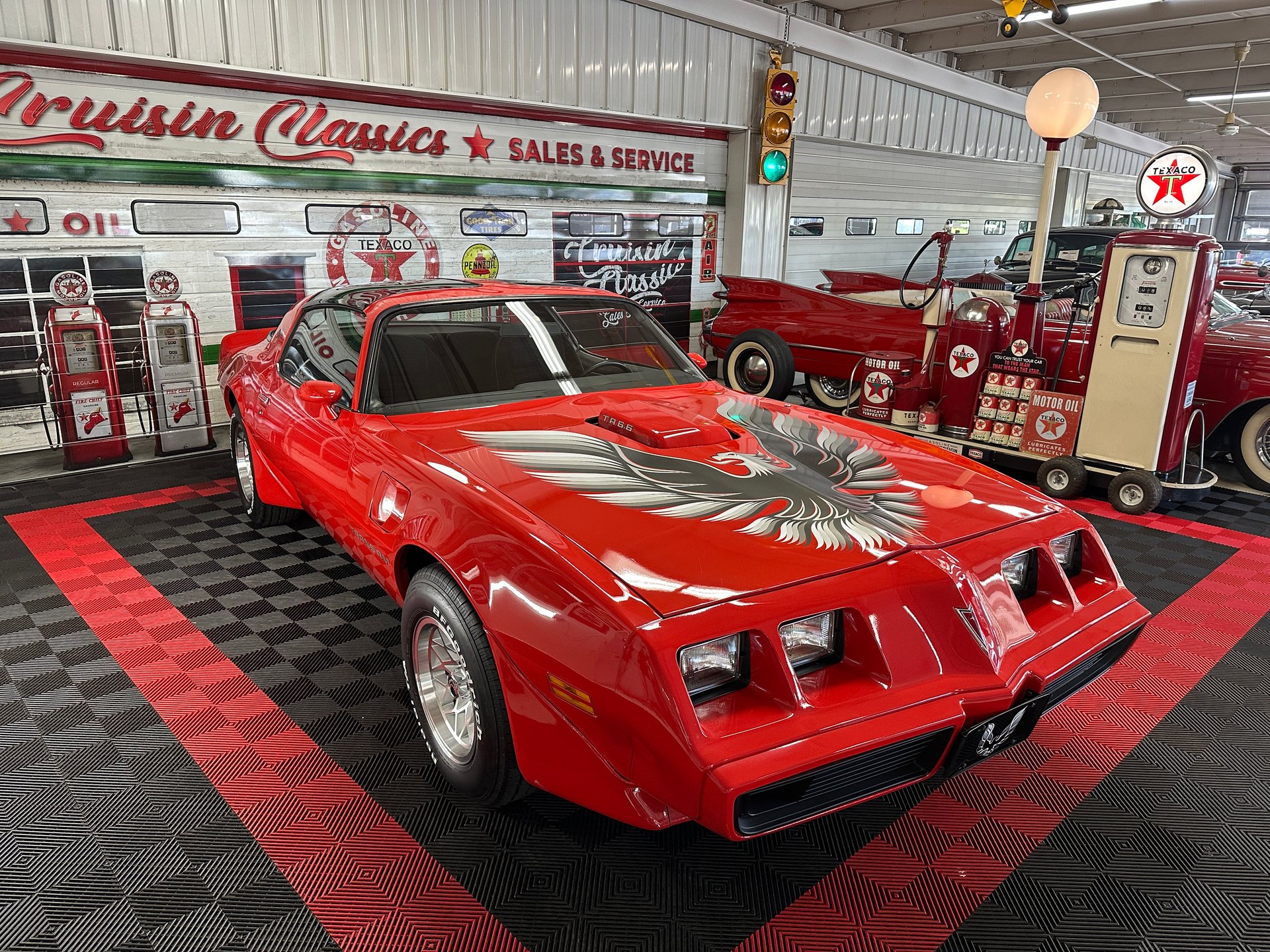
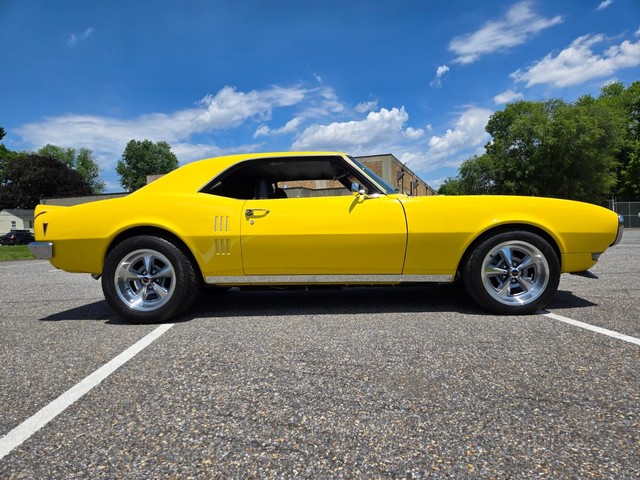
The first generation (1967–1969) is the muscle-era car: compact, chrome-bumpered, available as a convertible, and home to the original 1969 Trans Am, one of the most valuable American cars of its period. The second generation (1970–1981) is the longest-lived and the most varied: it begins with some of the fastest Pontiacs ever built, passes through the emissions-strangled middle seventies, and ends as the black-and-gold icon of Smokey and the Bandit. The third generation (1982–1992) is the eighties car — lighter, hatchbacked, fuel-injected, and for years the cheapest way into the name; its 1989 Turbo Trans Am is a genuine sleeper. The fourth generation (1993–2002) is the modern one: LT1 and then LS1 power, six-speed manuals, real brakes and air conditioning that works, wrapped in bodywork that has dated more than the engineering underneath it. When Pontiac built the last Firebird in 2002 the nameplate ended with the platform; the division itself followed in 2010, which is one reason interest in the best Firebirds keeps hardening — there will never be another one.
Our own listings tell you where the surviving population sits. We currently track 234 Firebirds for sale or recently sold, spanning 1967 to 2002, and the centre of gravity is unmistakable: second-generation cars are the largest group at 101, first-generation cars follow at 51, and fourth-generation cars account for 42. The single most common year is 1979, with 24 cars, followed by 1967 with 22 and 1969 with 17. Coupes dominate the body styles, convertibles are a small minority, and automatics outnumber manuals by a wide margin — which is exactly why a genuine manual car, in any generation, deserves a second look when one appears.
What defines the Firebird market today is the same thing that defines most American classics of the period: the mechanicals are fundamentally tough and rebuildable, parts support ranges from excellent to extraordinary, and the difference between a good car and a money pit is rust, documentation and originality — in that order. Engines can be rebuilt by any competent machine shop in America. A rotten second-generation rear frame rail or a fourth-generation car with a cut-up wiring harness cannot be fixed so easily, and a Trans Am whose numbers no longer match its story has lost the very thing its price was built on. Read the generations separately, inspect them the same way, and buy condition and provenance over colour and folklore every time.


The models
The Firebird range always stacked the same way, whatever the generation: a base Firebird at the bottom, a luxury or appearance tier above it, the Formula as the performance car without the theatre, and the Trans Am at the top. Learn that ladder once and you can read any year's range. What changes across the years is how much real hardware separated the rungs — in 1970 the gap between a base car and a Trans Am was enormous; by the late seventies it could be mostly decals; by the LS1 years the Trans Am and Formula were again genuinely fast cars. The table below is an orientation across the generations, not a year-by-year catalogue; outputs are period factory ratings, gross before 1972 and net after, which is why numbers fall off a cliff in 1972 without the cars getting much slower in the real world.
| Model | Years | Engine | Output | Built | Character |
|---|---|---|---|---|---|
| Firebird Sprint | 1967–1969 | 230/250 overhead-cam six | up to 215 hp | not separated in period totals | The thinker's Firebird; four-barrel, split manifold, real sports-car brief |
| Firebird 400 | 1967–1969 | 400 V8 | 330 hp | not separated in period totals | The first-generation muscle car; Ram Air versions are the prize |
| Trans Am | 1969 | 400 Ram Air III / IV | 335 / 345 hp | 697 in total | The debut; 689 coupes and just 8 convertibles — verify everything |
| Trans Am | 1970–1972 | 400 Ram Air / 455 HO | 345 / 335 hp | low thousands per year | The high-water mark of Pontiac performance before emissions law bit |
| Trans Am SD-455 | 1973–1974 | 455 Super Duty | 290 hp net | low hundreds per year | A race engine sold by accident; the most collectible second-generation car |
| Formula | 1970–1981, 1982–1992, 1993–2002 | various V8s | varies by year | not separated in period totals | The connoisseur's pick in every generation — the pace without the plumage |
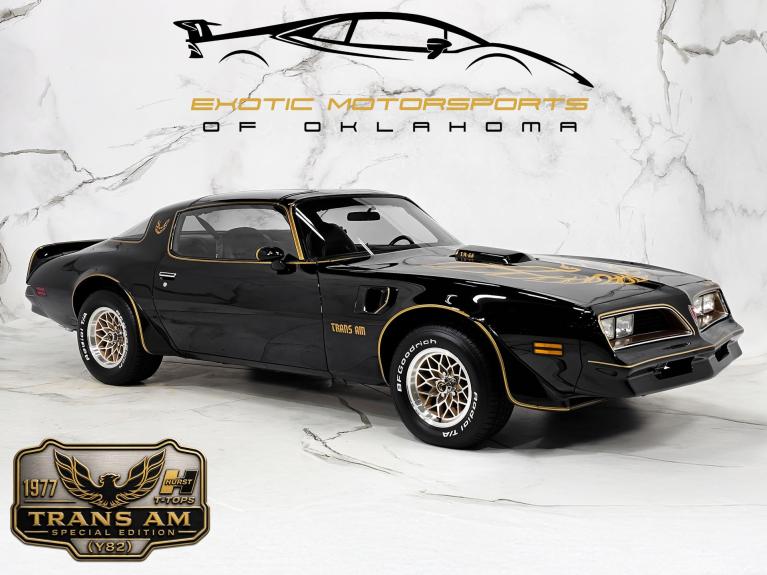
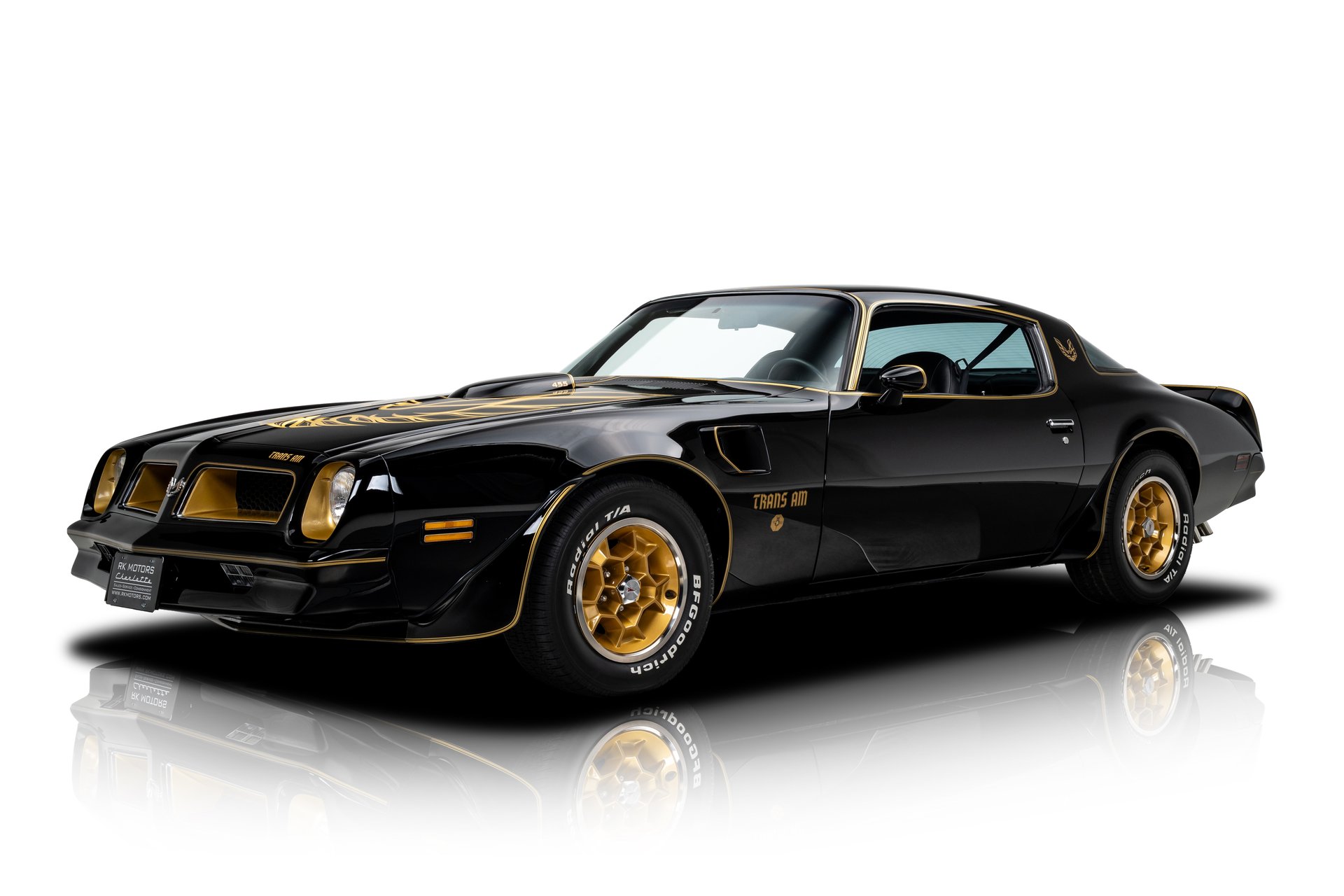
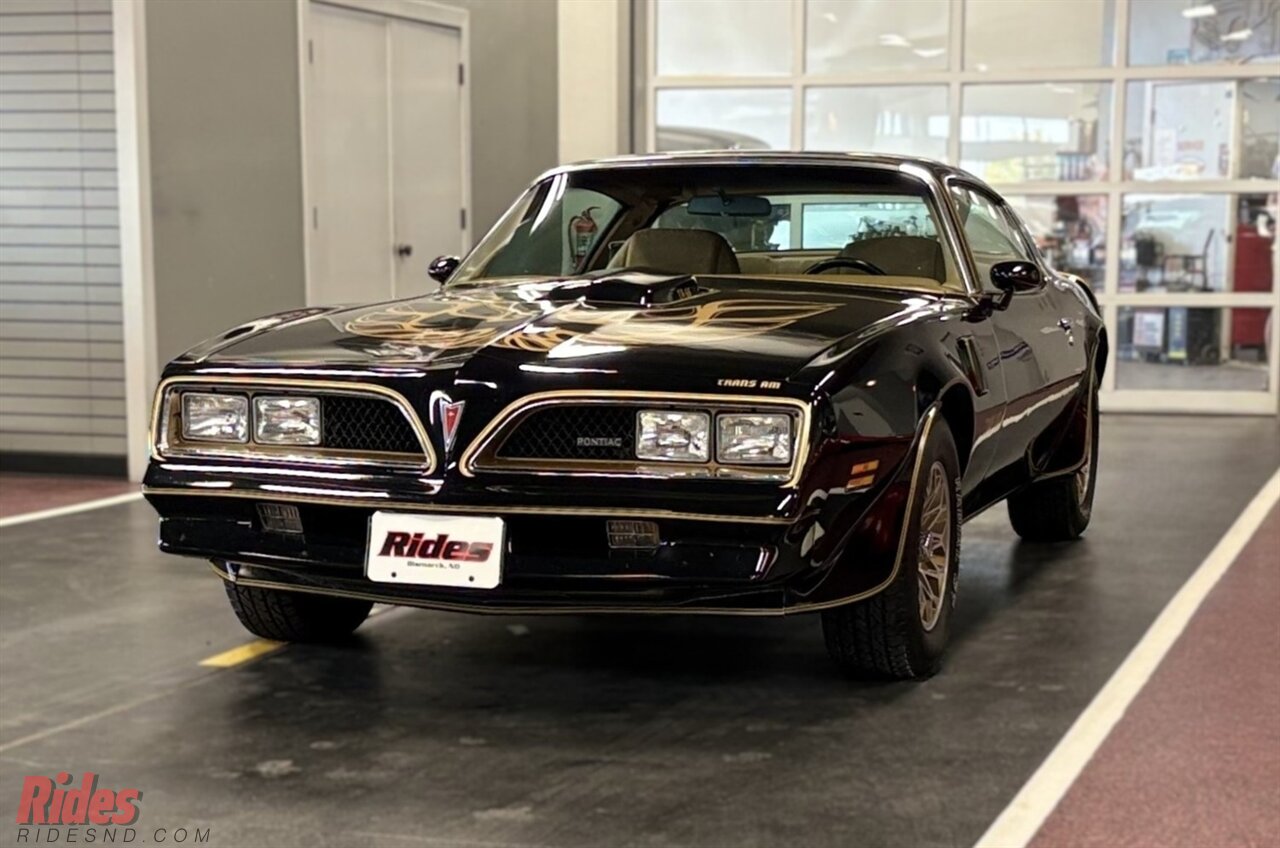
| Trans Am Special Edition | 1977–1978 | 400 W72 or Oldsmobile 403 | 200 / 185 hp | thousands; verify by code | The black-and-gold Bandit car; Y82 and Y84 codes separate real cars from clones |
| Trans Am Turbo | 1980–1981 | 301 turbo V8 | 210 hp | a minority of Trans Am production | Period curiosity; boost under the bonnet scoop, pace-car replicas common |
| Trans Am GTA | 1987–1992 | 5.0 / 5.7 Tuned Port V8 | 205–245 hp | not separated in period totals | The third generation grown up; the one to buy from the eighties |
| Turbo Trans Am | 1989 | Buick 3.8 turbo V6 | 250 hp rated | 1,555 | The fastest Firebird of its decade and an Indy pace car; a genuine sleeper |
| Trans Am WS6 | 1996–2002 | LT1, then LS1 V8 | 305–325 hp | not separated in period totals | Ram Air, suspension and brakes; the fourth generation at full strength |
| Firehawk | 1992–2002 | Tuned Port / LT1 / LS1 V8 | 300–345 hp | hundreds per year | SLP-built special; documentation is the whole value — no papers, no premium |
The first generation (1967–1969). The launch range ran from the overhead-cam six through the 326 V8 to the Firebird 400, whose engine was effectively the GTO's 400 in a lighter body. The Sprint six is the connoisseur's footnote that deserves better: a four-barrel carburettor, a split exhaust manifold, higher compression and a floor-shift manual made it a genuinely European kind of car, and survivors are rare because nobody preserved six-cylinder Firebirds. Ram Air cars — cold-air induction through functional bonnet scoops, with progressively hotter camshafts from Ram Air I through the round-port Ram Air IV — sit at the top of the first-generation market. The 1969 Trans Am, launched mid-year as a handling-and-image package with the Ram Air III standard, sold just 697 units because Pontiac barely advertised it; that failure is precisely what makes it valuable now, and precisely why clones exist. Any claimed 1969 Trans Am must be verified against its build record before a dollar of Trans Am money changes hands.
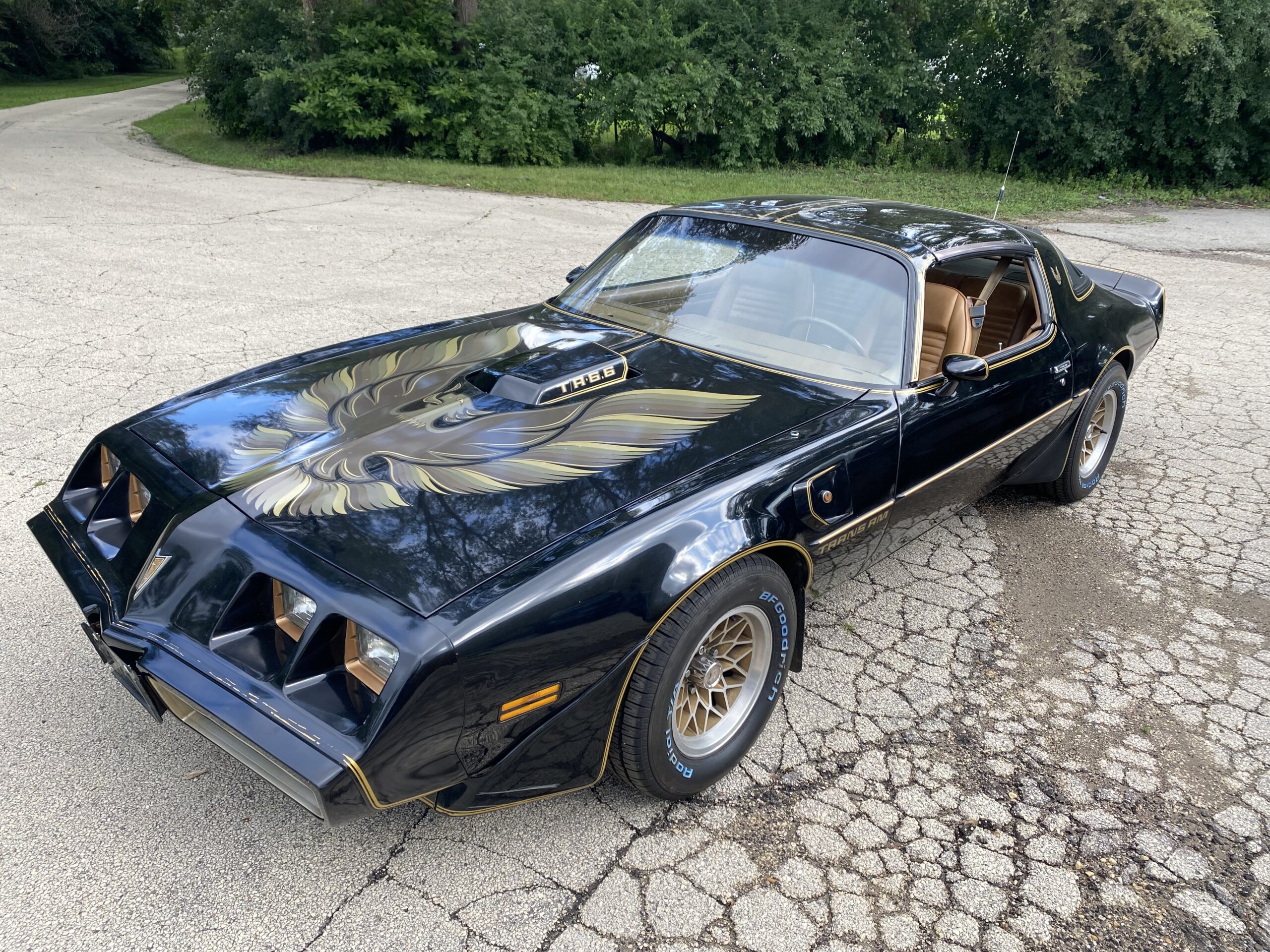
The second generation (1970–1981). The 1970 model arrived late — a "1970½" — with a long, low, Italianate body that stayed in production, with facelifts, for twelve years. The early cars are the performance peak: the Trans Am with the Ram Air III and IV 400s, then the 455 HO, and in 1973–74 the Super Duty 455, an engine built with a reinforced block, forged internals and round-port heads that Pontiac's engineers slipped past management as emissions law closed in. The Formula shared most of the pace with a twin-scoop bonnet and no rear spoiler, and remains the value route into early second-generation performance. From 1975 the story changes: catalytic converters, low compression and 185-horsepower flagship engines — and yet the cars sold better than ever, because the styling, the T-top roof from 1976 and the Bandit films made the late Trans Am a cultural object. The 1977–78 Special Edition in Starlight Black with gold striping is the famous one; the 1979 model year was the production peak, when Trans Ams accounted for more than half of all Firebirds built. The decade closes with the 1980–81 Turbo Trans Am, its 301 V8 boosted to 210 hp, its bonnet scoop carrying boost lights — ingenious, fragile and now collectible precisely because so few survive unmodified.
The third generation (1982–1992). Smaller, lighter by several hundred pounds, hatchbacked and drag-efficient, the third-generation car was a clean break. Early cars can be painfully slow — the four-cylinder and Cross-Fire injection cars especially — but the range matured fast: Tuned Port Injection from 1985, the 5.7-litre engine from 1987, and the GTA as a genuinely complete grand tourer. The 1989 Turbo Trans Am, built around the Buick Grand National's turbocharged 3.8 V6 for the Indianapolis pace car programme, outran every V8 Firebird of its era and is the third generation's blue-chip car.
The fourth generation (1993–2002). The last Firebird is a modern performance car in period clothes: the LT1 5.7 V8 from 1993, the all-alloy LS1 from the 1998 facelift, six-speed manual gearboxes, four-wheel disc brakes and, in WS6 Ram Air form, performance that still embarrasses new cars. The Firehawk continued as SLP's numbered special. The 2002 Collector Edition — yellow, with black wheels and specific striping — closed the line. Fourth-generation cars were the performance bargain of the last twenty years; the market has woken up, but condition still matters more than mileage, and the best cars remain the unmodified ones with their books and both sets of keys.

Engines and gearboxes
The Pontiac engines: overhead-cam six and the V8 family
The first thing to understand about early Firebird engines is that Pontiac built its own, and they were not Chevrolet engines with different badges. The launch six was a genuine overhead-cam design — a single cam in the head driven by a fibreglass-reinforced belt, years before that was normal in America — in 230-cubic-inch form, growing to 250 for 1968. In Sprint tune, with a four-barrel Quadrajet, split exhaust manifold and a hotter cam, it made up to 215 hp and revved with an enthusiasm no pushrod six of the day could match. It is a characterful, durable engine whose enemies are neglect and the parts counter: cam-belt history matters, the belt-driven cam's housing seals weep with age, and Sprint-specific parts — the manifold, the carburettor linkage — are hunted items. A Sprint that runs sweetly is a delight; a Sprint that needs its induction system rebuilt from scratch is a research project.
The Pontiac V8 is one engine architecture in many sizes: 326, 350, 389-derived 400, 428 and 455 all share the same external dimensions, the same basic block design and a deserved reputation for torque. In Firebirds the important ones are the 400 and the 455. The 400 came in states of tune from mild two-barrel form to the Ram Air IV — round exhaust ports, an aluminium intake manifold, a long-duration cam and 345 hp gross in the 1969 Trans Am, an engine that idles like a cement mixer and pulls like a train. The 455, from 1970, traded revs for displacement; the 455 HO of 1971–72 kept round-port heads and real performance under the new net ratings, and the 1973–74 Super Duty 455 is the family monument: a block cast with extra material in the mains, forged pistons and rods, round-port heads and a rating of 290 hp net that everyone in period understood to be a legal fiction. A genuine SD-455 engine is worth a large fraction of the car around it, which is why the engine's stamped codes — on the machined pad at the front of the block, beside the timing cover — must be read, photographed and checked on any car sold as one. The same discipline applies, at lower stakes, to every Ram Air claim: Pontiac stamped its engines clearly, and the partial VIN stamped into the block either matches the car's VIN or it does not.
Two honest warnings about the Pontiac V8 as it ages. First, cooling: these are big engines in tight bays, and a car that runs hot in traffic is usually showing you a silted radiator, a missing fan shroud, a tired clutch fan or retarded timing from a worn distributor — all fixable, none ignorable, because repeated overheating is what warps heads and cooks the valley. Second, the rear main seal: the original rope seal weeps with age on almost every Pontiac V8, and a few drips on the driveway are normal service, not a death sentence; modern split-lip conversions fix it at rebuild time. Budget a full engine rebuild — machining, forged pistons, the works — at roughly $6,000–12,000 at a good shop, and a Super Duty or Ram Air IV rebuild rather more, because the rare parts are priced like jewellery.
From 1977 the engine story gets complicated, and the complication itself is a buying point. Pontiac could not build enough 400s, so many 1977–79 Trans Ams carry the Oldsmobile 403 — the "6.6 Litre" cars — while the Pontiac 400 cars, especially the W72 performance package with its higher output, chrome dress-up and (in 1979) availability with a four-speed manual, carry the premium. California cars and later base models add Chevrolet 305s and Pontiac's own downsized 301 to the mix. None of these engines is bad; the 403 is a smooth, torquey motor with thin cylinder walls that punish overheating and heavy overboring. But the market prices them differently, so the engine in the car must be identified by its codes, not by the callouts on the shaker scoop, which are the easiest part of the car to change. The 301 that followed for 1980–81 is a lightened, shortened-deck Pontiac design; in turbo form it made 210 hp with period turbo lag and period turbo fragility — the turbocharger, its wastegate control and the electronic spark control box are all failure points now, and unmodified turbo cars are valued precisely because most were modified or blown up decades ago.
The borrowed engines: Buick, Chevrolet and the third and fourth generations
The third generation opened with the weakest engine range in Firebird history — a 2.5-litre four, a 2.8 V6 and V8s strangled to as little as 145 hp — and then climbed steadily back. The turning points are the fuel systems. Cross-Fire Injection, the twin-throttle-body setup on early 5.0 cars, is fussy, poorly supported and best avoided unless the car is cheap and original. Tuned Port Injection, from 1985, is the opposite: a long-runner intake that makes real torque, reliable electronics and an engine — in 5.7 form especially — that suits the car perfectly. The 1989 Turbo Trans Am's Buick 3.8 turbo V6 is a different species again: intercooled, sequentially injected, rated at 250 hp and widely understood to make more, with the Grand National's known appetites — it wants clean oil, a healthy turbo and respect for its head gaskets under raised boost.
The fourth generation is the simplest to buy well. The LT1 5.7 (1993–97) makes 275–285 hp, pulls hard and has one famous weakness, covered in the problem areas below: the OptiSpark distributor, mounted on the front of the engine beneath the water pump. The LS1 (1998–2002) is the better engine by almost every measure — all-alloy, 305 hp in standard form, 320–325 hp in WS6 Ram Air tune, with a deep aftermarket and a reputation for taking 150,000 miles in stride if the oil was changed. Its known noises are mostly benign: piston slap on a cold start that fades as the engine warms is common and usually harmless, and lifter tick on a neglected car is the warning to take seriously. The V6 cars — 3.4, then the excellent Buick-derived 3.8 Series II — are honest transport and cheap; buy them on condition alone and never pay a V8 price for one, whatever wheels and spoilers have been fitted since.
Gearboxes
Manual Firebirds are the minority in every generation — our listings show automatics outnumbering manuals heavily — and that scarcity is why the manual cars carry premiums and why conversions must be detected. The first-generation cars used three- and four-speed manuals by Saginaw and Muncie; the Muncie four-speeds (M20 wide-ratio, M21 close-ratio, and the rare, near-indestructible M22 "rock crusher") are the desirable boxes, identifiable by their casting and date codes, and a claimed M22 in particular should be verified rather than believed. Second-generation performance cars moved to the Borg-Warner Super T-10 four-speed, a strong box whose second-gear synchromesh is the wear point to test on any test drive. The standard automatic of the muscle years is the Turbo Hydra-Matic — TH350 in most cars, TH400 behind the biggest engines — a transmission so tough and so well supported that a rebuild, roughly $1,500–2,800 at a specialist, is a routine ownership event rather than a catastrophe. Late second-generation and third-generation cars add the 200-4R and 700R4 overdrive automatics; the 700R4's throttle-valve cable adjustment is critical — a misadjusted cable burns the box up in short order, so an overdrive car that flares or stacks its shifts needs the cable checked before the box is condemned.
Third-generation manuals are mostly the Borg-Warner T5 five-speed, a pleasant box with a hard limit: it was never factory-fitted behind the 5.7 in a Firebird, because it could not take the torque, so a claimed factory 5.7 five-speed third-generation car is a conversion until paperwork proves otherwise. Fourth-generation V8 manuals are the Tremec T56 six-speed — the strongest, most desirable gearbox ever fitted to a Firebird, with a double-overdrive top end that makes LS1 cars genuine 30-mpg highway machines. Its checks are the usual ones: synchromesh on second and third, a clutch whose bite point and behaviour under load tell the truth about its life, and the skip-shift solenoid's behaviour, which many owners disabled — a modification, not a fault. The 4L60 and 4L60E automatics behind them are strong and rebuildable; judge them on fluid colour, shift quality hot, and evidence of fluid changes, and price a rebuild at roughly $2,000–3,500 if the drive says it is coming.

Problem areas
Everything in this section applies across the generations, with the emphasis shifting as the cars get newer: the first and second generations are rust-and-originality problems, the third is a deferred-maintenance and electronics problem, and the fourth is a wear-and-modification problem. Our own photo examination makes the first point bluntly: across 124 Firebirds whose sellers' photo sets we examined in detail, rust was mentioned in the notes for 58 of them — nearly half. Smoke appeared in just one car's notes and leaks in just one, which tells you where these cars stand: the engines are rarely the issue. The bodies are.
Rust: the map
Firebird rust follows the water and the road salt, and each generation has its own map, but the order of inspection never changes: structure first, panels second, cosmetics last.
Rear frame rails and spring perches (first and second generations). The single most important check on any 1967–81 car. These are unit-body cars: the front subframe bolts to a body shell whose rear frame rails carry the leaf springs, and the rails rot from the inside out, worst around the front spring eyes and the shackle mounts at the very back. A rail that is perforated or soft around a spring mount is structural fabrication work — rails can be replaced, at roughly $1,500–3,000 a side fitted and painted, but the job's cost against a base car's value is exactly how Firebirds become parts cars. Prod with a screwdriver, with permission; tap with a knuckle and listen for the change from ring to thud; and be deeply suspicious of fresh underseal blown over the rear rails the week before a sale. Nobody rustproofs a sound car as a favour to its next owner.
Floor pans and the toe boards. Water enters past the windscreen seal, the cowl vents and perished door seals, then sits under carpets that hold it against the metal. Lift every carpet you are allowed to lift. Surface scale is treatable; perforation at the seat mounts or the subframe mounting points is structural. Floor sections are available for the early cars and a pan fitted runs roughly $600–1,200 a side, but floors, like sills on other cars, rarely rot alone — read them as a report on the whole shell.
Trunk floor. The rear window seal and the boot lid seal leak, and the water gathers in the spare wheel well and the drop-offs behind the rear wheels — which is also where the frame rails end. Ten minutes with the spare out and a torch tells you more about a first- or second-generation car than an hour of walking around it. A perforated trunk floor over rotten rails is the classic cheap-Firebird trap: the panel itself is a few hundred dollars, the structure underneath it is the bill.
Quarters, wheel lips, fender bottoms and door bottoms. The cosmetic rust that prices the paint job. Rear quarter panels trap mud behind the wheel and bubble at the lip and low behind the arch; front fenders rot at the bottom behind the wheel, where the drain blocks; doors fill with water when their drain slots clog and rot along the bottom edge — run a fingertip along every door bottom and feel for bubbling under the paint. On second-generation cars, add the panel below the rear window and the corners of the windscreen frame, where the vinyl roof fitted to many seventies cars held moisture against the steel for decades. A car that wore a vinyl roof needs its roof skin and pillars examined as structure, not trim.
Subframe, body mounts and the cowl (all unit-body cars). The front subframe itself is a heavy pressing that survives well, but its mounting points in the body do not: the cowl-side mounts and the core support rot, and the rubber body bushings perish, collapse and let the subframe shift — the cause of the classic F-body symptoms of wandering steering, uneven panel gaps and a nose that sits low on one side. A bushing set is cheap, roughly $150–300 in parts; fitting it to a car whose mounting holes have rotted out is fabrication. On the third and fourth generations the same logic moves to the front K-member mounts, the strut towers and, on fourth-generation cars, the floor around the rear seat and the hatch well, where water sits under the carpet.
T-tops, hatches and convertibles. Every opening roof is a water management system that is now forty years old. Second-generation T-top cars — Fisher tops from 1978 are better sealed than the earlier Hurst installations — leak into the roof frame and the A-pillars, and rust there is hidden by the headlining until it is advanced; pull the tops, inspect the apertures and the weatherstrips, and check the floors below. Third-generation hatchbacks leak at the hatch seal and fill the rear well; the struts that hold the hatch are a service item, not a diagnosis. First-generation convertibles add the well behind the rear seat and the top frame's mounting points to the list, and a convertible with rotten rails and floors has lost the structure that keeps its doors shutting properly — check the door gaps on any convertible first, because they are the report card.

Mechanical wear: engines, cooling and the driven axle
The Pontiac V8's wear pattern is well mapped. Timing chains stretch and retard the cam timing, giving a car that runs flat and hot; a chain-and-gears set is a few hundred dollars in parts and belongs in any recommissioning budget. Oil pressure that is strong cold and fades hot points to bearing wear, and the gauge's story on a long test drive matters more than any cold-start impression. Valve stem seals harden and give the classic puff of blue smoke on start-up after sitting — an inexpensive job, and not to be confused with smoke under load, which is rings and bores and an engine-out conversation. Carburetted cars live or die by their Quadrajet: a properly rebuilt Quadrajet is an excellent carburettor, but decades of amateur adjustment, worn throttle-shaft bores and choke faults make "it just needs a tune" the most expensive sentence in the Firebird market. A specialist Quadrajet rebuild runs roughly $400–800; an Edelbrock swapped in its place is not a fault, but on a numbers-matching car it is value leaving the vehicle, so price accordingly and ask whether the original comes with the car.
Cooling deserves its own paragraph because it interacts with everything. Radiators silt, water pump impellers corrode, and the big second-generation cars run their engines in a sealed, shrouded bay that punishes any missing piece of the original ducting. A Firebird that creeps up in traffic and cools at speed has an airflow problem; one that heats at speed has a circulation or head-gasket problem; one that does both after a seller has fitted an electric fan and removed the shroud has an owner who treated the symptom. Head gaskets on Pontiac V8s are not a weak point by design, but the Oldsmobile 403 and the Buick turbo V6 both punish overheating, and any car with a history of running hot should be compression-tested before it is believed.
At the back, the driven axle changes character across the generations. The early cars' 10-bolt and 12-bolt axles are strong, well supported and cheap to rebuild; a whine on the overrun is pinion bearings, a clonk on take-up is wear in the limited-slip or the universal joints, and all of it is routine. The third and fourth generations use the much lighter 7.5-inch 10-bolt, which is adequate behind a V6 and marginal behind a healthy V8 driven hard — a fourth-generation car with drag-strip history and a noisy rear axle is showing you its weakest component, and a rebuild at roughly $800–1,500 should be priced in. Leaf springs on the early cars sag and lose their arch, which is why so many sit tail-down; torque-arm and coil-spring rear ends on the later cars wear their bushings instead, giving axle tramp and a rear end that steers the car over bumps.
The later cars: electronics, OptiSpark and interiors
The third generation's problems are the eighties in miniature. The electronics are early-generation: engine management that is reliable when unmolested and miserable when a previous owner has been at the loom with crimp connectors, emissions equipment removed with varying legality and competence, and vacuum hoses by the dozen, all perished. Pop-up headlamp motors wear their gears; digital dashboards on later GTA-era cars fail in segments; power window motors slow and die. None of it is structural, all of it is time, and the correct response is to buy the most original car you can find, because originality in a third-generation car is a proxy for an intact wiring loom. The interiors trim in plastics that crack and fade at different rates, so a cabin whose colours match is a cabin that has lived indoors.
The fourth generation concentrates its known faults in a short, honest list. The LT1's OptiSpark distributor sits low on the front of the engine, where the water pump's weep hole can drip straight into it; the symptoms are misfires, hard starting and stumbling under load, and the fix — a quality replacement unit, fitted — runs roughly $600–1,200, with the water pump usually replaced at the same time because its leak caused the failure. LS1 cars escape the OptiSpark entirely and substitute smaller vices: power window motors are a consumable, the door panels crack at their staple line, dash tops crack in the sun, and the skip-shift and clutch hydraulics on manual cars want attention with age. Headlamp motors on the fourth generation use a plastic gear that strips — the brass replacement gear is a permanent fix for the price of a pizza. On both later generations, air conditioning is a real system that buyers expect to work; a compressor, condenser and recharge on a system that has sat open is a $800–1,500 conversation, and "just needs gas" should be priced as exactly that conversation until a gauge set proves otherwise.
T-top and convertible weather sealing on the later cars, the condition of the rear hatch struts, the state of the spare wheel well under the hatch carpet — the checks rhyme with the early cars. Water is still the enemy; it has simply been given newer places to hide.

How to inspect one
Allow at least an hour, bring a torch, a magnet wrapped in cloth, a screwdriver for prodding (with the seller's permission) and a paint-depth gauge if you have one. Insist on seeing the car cold, on the ground first and on a lift if it passes you — on any Firebird, the lift inspection is the best money in the whole purchase.
- Start with the paperwork and the numbers. Match the VIN on the title to the plate on the car — on first- and second-generation cars it sits at the base of the windscreen on the driver's side; on later cars check the door jamb label as well. Read the cowl or data plate for the original colour and trim, then the engine's stamped code and partial VIN on the block pad. On any Trans Am, Special Edition, Ram Air, Super Duty or Firehawk claim, this step is the whole ballgame: build records through Pontiac Historical Services exist for these cars, and a seller of a genuine special should welcome the check. A car whose numbers do not support its story is a base car with decorations, and must be priced as one.
- Cold start. The engine should be stone cold when you arrive — a warmed-up car is a seller hiding a cold-start fault. Watch the exhaust: a puff of blue that clears is valve stem seals; smoke that stays is rings. Listen for timing-chain rattle on a Pontiac V8, lifter tick on an LS1 that does not fade, and the accessory-drive squeals that mark tired belts and bearings. A carburetted car should settle to an even idle as the choke comes off; a Tuned Port or LS car should start instantly and idle cleanly, hot or cold.
- Under the car: structure first. Torch along both rear frame rails, prod around the spring eyes and shackles, check the floor seams, the subframe mounting points in the cowl and the trunk drop-offs from below. Perforation in rails or mounts is structural — the rust section's prices apply, and this step decides whether you continue at all. Read the underseal as you go: patchy, chipped and honest is factory; a fresh uniform coat of black over everything, rails and brake lines alike, is a question, not an answer.
- Trunk and hatch. Lift the spare wheel and the mat or carpet. Look for water staining, rust in the well corners and the drop-offs, and a damp smell. On third- and fourth-generation cars check the hatch well and the rear seat floor the same way. Check the rear window seal while you are there — it is where the water gets in.
- Floors inside. Lift all the carpets you can. Look for water tracks from the windscreen base, the cowl and the door seals, and prod the pans at the seat mounts. On a T-top car, damp front carpets mean the roof apertures or pillars are leaking, and the rust section explains where that water has been sitting. On a convertible, check the well behind the rear seat and then look hard at the door gaps: a convertible whose doors no longer shut cleanly is telling you its structure has moved.
- Body, gaps and the magnet. Run the magnet over the quarters, wheel lips, lower fenders, door bottoms and the panel below the rear window — filler announces itself by the magnet's indifference. Sight down each flank in hard light for ripples. Check the fit of the nose cone on second-generation cars and the panel gaps everywhere; gaps that wander are accident history or collapsed body bushings, and both are priced differently from paint.
- The engine's own evidence. Pull the dipstick: oil that is black and gritty is neglect; oil that smells of fuel on an injected car is a system fault; mayonnaise under the filler cap is short trips or a head gasket, and the test drive will separate them. Check the coolant's colour and the radiator's core through the cap. On a Pontiac V8, read the engine code pad and photograph it. On an LT1, ask directly about the OptiSpark and the water pump — the invoice for both is the document you want to see. On any turbo car, ask whether the boost is at the factory setting.
- Suspension, steering and brakes. Rock each front wheel for play, bounce each corner, and look at the stance: tail-down on leaf springs is sag; a nose low on one side is bushings or mounts. On the drive, the steering should be free of wander and clonks; a rear end that steers over bumps is torque-arm or trailing-arm bushings on a later car. Brake hard from speed — the car should stop straight without judder — and remember that a car which has sat wears a rust band on every disc, so judge the pedal and the pull, then budget the refresh.
- The test drive. Fifteen minutes minimum, including highway speed and a stretch of broken road. An automatic should shift firmly without flaring; a 700R4 that stacks or hunts needs its throttle-valve cable checked before the box is condemned. A manual should take second gear cleanly, hot and cold — synchromesh is the wear point on Muncies, Super T-10s and T5s alike. A V8 should pull cleanly to the top of its range without hesitation; flat spots on a carburetted car are the Quadrajet conversation from the problem areas, and a misfire under load on an LT1 is the OptiSpark introducing itself.
- Heat, electrics and the roof. Let it idle hot in traffic if you can. Temperature should stabilise; a gauge that creeps at idle and settles at speed is airflow, and the cooling section prices the causes. Work everything electrical: windows, lamps (including the pop-ups on later cars, twice), wipers, washers, blower on all speeds, air conditioning if fitted. Remove and refit the T-tops or cycle the convertible top, and inspect the apertures and seals while they are open.
- Interior last, but weigh it heavily. Sit in every seat. Check the dash pad for cracks, the headlining around T-top apertures for water stains, and the colour match of the plastics on third- and fourth-generation cars — matched plastics mean a garaged life. Seat foam and covers are available for most years; a complete, original, uncracked interior on a seventies car is genuinely hard to replace at any price, so let it move your offer.
- The lift, and the second pair of eyes. If the car has passed you, pay for a pre-purchase inspection on a lift before money changes hands — rails, mounts, brake and fuel lines, axle leaks and the underside of the floors, seen properly. On any car carrying a special-edition, Ram Air, Super Duty or low-production premium, add the documentary check to the mechanical one. The two together cost less than one mistake.
Values
The market block beneath this guide carries the current numbers — what is listed now, at what figures, and what recorded sales say — and it is refreshed as the market moves, so this section deliberately carries no prices of its own. What it can teach you is how to read those numbers, because the Firebird market is really four markets wearing one name, and averaging them produces a figure that describes no actual car.
The first market is the blue-chip tier: the 1969 Trans Am, the Ram Air IV cars, the Super Duty 455s, the 1989 Turbo Trans Am and the best Firehawks. These cars trade on documentation as much as condition, their buyers are collectors rather than drivers, and the spread between a verified car with records and a similar-looking car without them is the widest in the whole Firebird world. The second market is the strong-driver tier: early second-generation Trans Ams and Formulas, W72 four-speed cars, clean WS6 and LS1 cars, good GTA coupes. Here condition rules and originality pays, but the cars are bought to be driven and are priced by how much work they need, not by folklore. The third market is the cultural tier — the late-seventies Trans Ams, above all the black-and-gold Special Editions — where the Bandit premium is real but attaches only to verified cars in the correct specification; a cloned stripe package on a standard car adds the cost of the stripes and nothing else. The fourth market is the project tier, which in Firebirds is unusually deep because so many cars were built: rusty second-generation shells, tired third-generation cars and neglected fourth-generation V6s trade at figures that reflect their parts and their potential, and the trap is arithmetic — a project that needs rails, floors, paint and an interior will cost more finished than the same car bought finished, in every generation, every time.
Within every tier, the same drivers move the money. Numbers-matching drivetrains pay, most steeply where the engine is the car's identity — Ram Air, Super Duty, turbo cars. Manual gearboxes pay, because they were the minority choice in every generation. Original colour pays, verified from the data plate rather than the paint. Documentation pays most of all relative to its cost: build sheets, window stickers, dealer invoices and historical-services records are the difference between a story and a fact, and the market prices facts. Condition spreads follow the rust map in this guide: a genuinely solid shell under a tired engine is worth more than a rebuilt engine in a patched shell, because the engine is a known, bounded cost and the shell is not. Asking figures, finally, run ahead of achieved figures most steeply in the cultural tier, where sellers price the film rather than the car; the recorded-sales evidence in the market block is the corrective, and it is the number to negotiate from.
Parts and ownership
The Firebird is one of the best-supported American classics ever made, for a simple reason: it shares its platform with the Chevrolet Camaro, and the combined production across thirty-five years gives the reproduction industry a market it can make money from. Between the two nameplates, almost everything for the first and second generations is reproduced, and the third and fourth generations are served by a deep used-parts pool and a still-active performance aftermarket.
Easy: service items for every engine in the range, brake components, suspension wear parts, steering components, exhaust systems, weatherstrips, glass, seat covers and foam, carpets, dash pads for the popular years, and sheet metal — floor pans, trunk floors, quarter panels, fenders and frame rails for the early cars are all catalogue items. A car that needs only catalogue parts is a car whose restoration can be priced to the dollar before you start.
Harder and dearer: generation- and model-specific pieces. Ram Air and Super Duty engine components are priced as the rare parts they are. Sprint six induction parts, 1970–73 body panels (the early second-generation nose and tail differ from the later cars and reproduce less completely), Hurst T-top seals and hardware, turbo-specific parts for both the 301 and the Buick cars, third-generation electronics that are no longer made and must come from donor cars, and fourth-generation interior plastics in uncracked condition all require hunting. Firehawk and Turbo Trans Am documentation cannot be bought at all — it either comes with the car or it does not exist, which is why it is priced into the car. A quality repaint on a straight second-generation car starts in the low five figures at a good shop once trim, striping and decals are included, and the full decal and stripe kits for the Special Editions are available — which cuts both ways, since it is also what makes the clones in the values section possible.
Running costs. These are simple, tolerant cars by the standards of their performance. The Pontiac V8 wants regular oil changes and rewards them with very long life; the LS1 is a modern engine with modern service intervals; the turbo cars want their oil clean and their boost standard. Fuel consumption is what the displacement suggests — the big-block-era cars live in the low teens, the overdrive-geared LS1 cars can approach thirty on a highway run. The budget line that catches new owners is the same as on every classic in this guide's family: the first year. Catching up deferred maintenance on a running car — fluids, belts, hoses, brake hydraulics, tyres, the cooling system gone through properly — honestly runs $2,000–5,000 before you improve anything, and recommissioning a car that has sat for years, with its fuel system cleaned end to end and its seals renewed, runs $4,000–8,000 at shop rates. Modern ethanol fuel attacks old rubber and leaves varnish in tanks and carburettors, so a car in regular use is almost always a better buy than a lower-mileage car that has been asleep — buy the driver, not the odometer.
Which one to buy
- The all-rounder: a fourth-generation LS1 car, 1998–2002. Fast by any modern standard, reliable, air-conditioned, six-speed if you shop for it, and still bought on condition rather than mythology. If you want one Firebird to drive everywhere, this is it.
- The value buy: the Formula, in any generation. The Trans Am's pace without its premium — most true of the early second-generation cars and the third-generation 5.7 coupes, where the Formula is the same car in plainer clothes for noticeably less money.
- The collector car: the 1969 Trans Am, the Ram Air IV cars and the SD-455. Verified, documented examples sit at the top of the market for sound reasons. Buy the paperwork first and the car second, and never buy the story at the car's price.
- The cultural icon: a verified 1977–78 Special Edition. The black-and-gold car is a piece of American film history that also happens to drive well. The premium belongs only to cars whose codes and records prove the specification — a clone is a black Trans Am and should cost what a black Trans Am costs.
- The sleeper: the 1989 Turbo Trans Am. The fastest Firebird of its decade, still under-recognised next to the V8 flagships. Buy the most original one you can find, keep the boost standard, and keep every document.
- The character buy: a Sprint six, first generation. The thinking person's Firebird — European in spirit, rare because nobody saved them, and a reminder that this range was clever as well as loud. Buy the best-running one, because Sprint-specific parts reward patience.
- The first classic: a tidy third-generation GTA or a V6 fourth-generation car bought honestly. Real Firebird character and community at the shallow end of the market — bought on condition, with the wiring unmolested, either is a fine way in.
And the rule that overrides all of the above: buy the least rusty, most original car you can find, with the paperwork to prove what it is. Engines, gearboxes, brakes and interiors are all fixable at prices you can plan for. A rotten shell and a false identity are the two faults no budget cures — and in a range this large, the right car is always out there if you are willing to walk away from the wrong ones.
See the 132 Firebird cars currently listed.