
Pontiac Catalina buyer's guide
Pontiac Catalina -- the model's own buyer's guide: variants, values and what to check.
Years listed: 1958-1971 · Series: Full Size
Overview and history
The Catalina is the Pontiac that carried the division's Wide Track era on its back. When Pontiac launched the all-new 1959 models — wider track, split grille, low and broad styling that made the competition look narrow and upright overnight — the Catalina was the entry point to the full-size range, sitting below the Star Chief and the Bonneville. It was also, for a few remarkable years in the early 1960s, the lightest full-size Pontiac you could buy, which is why the factory's Super Duty drag-racing programme was built around it. The same nameplate that took families on holiday also won the 1961 and 1962 NASCAR championships in Smokey Yunick's and Fireball Roberts' hands and ruled NHRA Super Stock. That double life — sensible family sedan on Monday, factory race car on Sunday — is what makes the Catalina more interesting than its modest place in the range suggests.
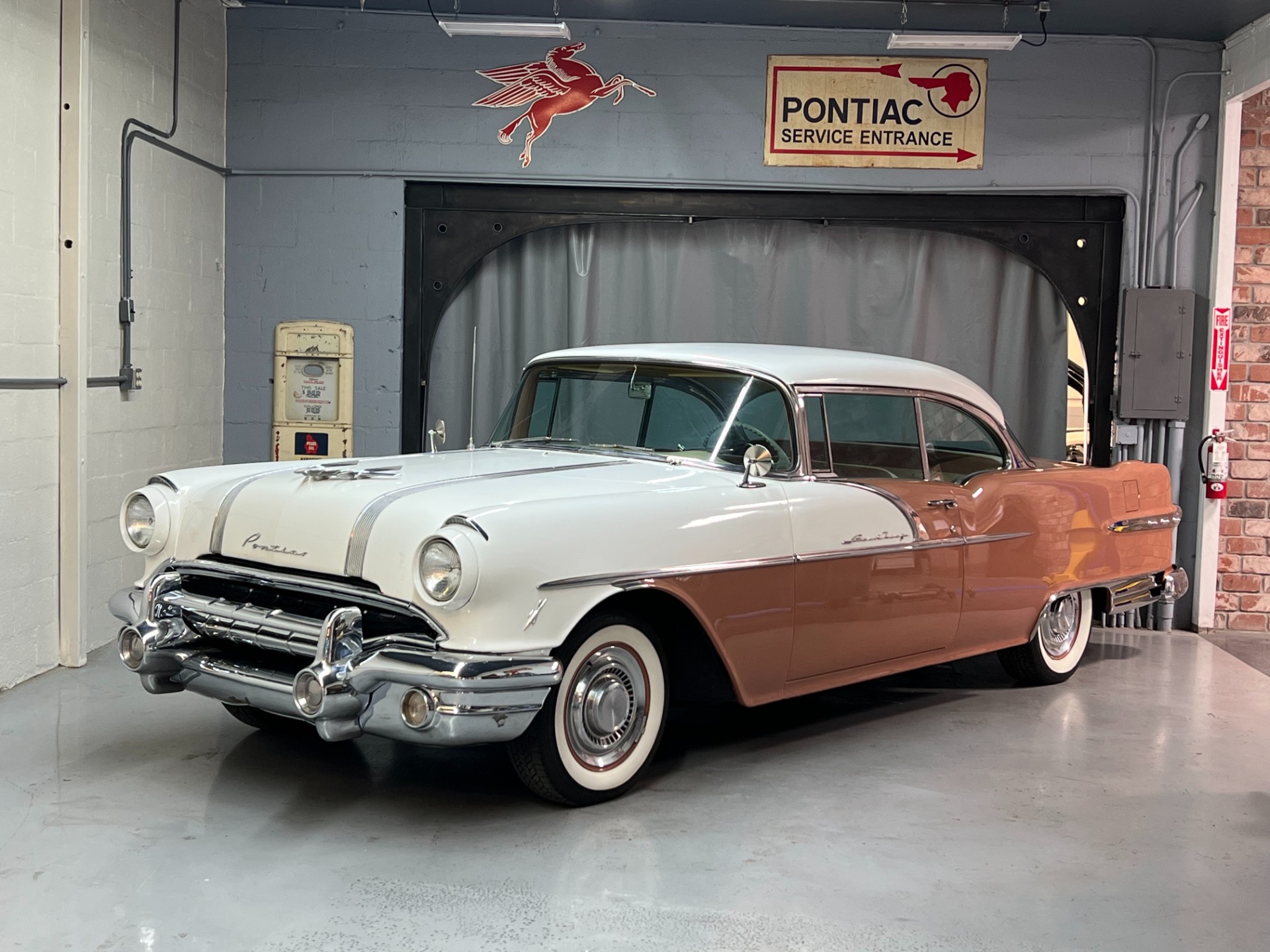
The name itself is older than the model. Through the 1950s, Catalina was Pontiac's word for a pillarless hardtop body, applied across the range: a Star Chief Catalina is a hardtop Star Chief, not a separate model, and the earliest cars in our listings — the 1956 and 1958 cars — are exactly that, hardtop-bodied Star Chiefs wearing the Catalina name as a body description. From 1959 the name was promoted to a model line of its own, and it stayed in production, through the great 1965 restyle, the enormous 1971–76 generation and the downsized 1977 cars, until 1981. This guide concentrates on the years that dominate today's market and our own listings: 1959 to 1976, with the 1961–64 cars at the centre of collector interest.
Understand the range structure and you understand the car. Pontiac's full-size line was a ladder: Catalina at the bottom, then Star Chief (later Executive), then Bonneville, with the Grand Prix spun off as a personal-luxury coupe from 1962. The Catalina shared its body, engines and most of its engineering with the Bonneville — what you gave up was trim, upholstery, standard equipment and a few inches of wheelbase on some years, not substance. A Catalina with the right options — a 421, a four-speed, the eight-lug wheels — is mechanically the equal of anything Pontiac built, and period buyers who knew that ordered exactly those cars.
The arc of the car follows the arc of the American industry. The 1959–60 cars are dramatic, finned and increasingly collectible. The 1961–64 cars are the sweet spot for most enthusiasts: clean styling, the strongest engines, real racing pedigree and a huge performance aftermarket born of the Super Duty years. The 1965 restyle made the car bigger and more luxurious, the 1967 models brought a fastback elegance and the new 400 and 428 engines, and by 1969–70 the 455 had arrived just as insurance surcharges and emissions rules began closing the performance era down. The 1971–76 cars are the last of the true giants — the longest, heaviest Catalinas ever built, sold into a market that was about to turn against them — and they survive today as affordable, charismatic cruisers rather than performance cars.
What kills Catalinas is not mechanical failure. The Pontiac V8 is one of the toughest American engines of its period, the Turbo Hydra-Matic is close to unbreakable in normal use, and the chassis is simple, over-built and easy to repair. What kills them is rust, neglect during the decades when they were worth little, and the slow consumption of trim and interior parts that nobody reproduced because the Bonneville got the attention. Buy the body and the completeness first, verify the identity of any car wearing performance badges second, and treat the mechanicals as a known, budgetable quantity. The rest of this guide shows you how.
The models
Every Catalina is a full-size, rear-wheel-drive Pontiac on the GM B-body platform, sharing its basic structure with the Chevrolet Impala, Oldsmobile 88 and Buick LeSabre while keeping Pontiac engines, Pontiac styling and Pontiac chassis tuning throughout. Body styles across the classic years cover two- and four-door sedans, two- and four-door hardtops, a convertible (through 1970), and Safari station wagons in two- and three-seat forms. Wheelbases hover around 120 to 124 inches depending on year and body; the 1971–76 cars are the giants of the line.
| Model | Years | Engine | Output | Built | Character |
|---|---|---|---|---|---|
| Star Chief Catalina | 1956–1958 | 316/347/370 V8 | up to about 300 hp | Hardtop body across the range | Catalina as a body style, not a model; fins and chrome |
| Catalina (first generation) | 1959–1960 | 389 V8 | 235–345 hp | Volume seller of the Wide Track launch | The original Wide Track car; dramatic styling |
| Catalina (second generation) | 1961–1964 | 389/421 V8 | 235–410 hp | The core collector years | Super Duty fame; lightest full-size Pontiac |
| Catalina Super Duty | 1962–1963 | 421 Super Duty V8 | 405–410 hp | A few hundred at most; 14 Swiss-cheese cars in 1963 | Factory drag racer; verify everything |
| Catalina 2+2 | 1964–1967 | 421, later 428 V8 | 338–376 hp | About 7,998 in 1964, falling to under 2,000 by 1967 | The big-car performance package; bucket seats, heavy duty chassis |
| Catalina (third generation) | 1965–1966 | 389/421 V8 | 256–376 hp | Volume seller | Bigger, plusher; last Tri-Power year is 1966 |
| Catalina (fourth generation) | 1967–1970 | 400/428/455 V8 | 265–370 hp | Volume seller | Fastback coupes; Ventura option; performance fades after 1968 |
| Catalina (fifth generation) | 1971–1976 | 350/400/455 V8 | Net ratings, roughly 150–220 hp | Volume seller to the end | The biggest Catalinas; cruisers, not racers |
Outputs before 1972 are period SAE gross figures, quoted for the strongest generally available tune; from 1972 the industry switched to net ratings measured with all accessories and emissions equipment fitted, which is why the numbers fall off a cliff on paper even where the engines changed far less. Treat every period figure as approximate — Pontiac, like its rivals, rated optimistically in the gross era.
The 1959–60 cars. The launch cars are pure theatre: split grille, twin fins, acres of glass and the widest track in the industry. The 389 engine arrived the same year and stayed for a decade. These cars are appreciating as design objects, but they are also the most chrome-laden and trim-dependent Catalinas to restore, and the 1959–60-only body means panels and brightwork are one-generation-only.
The 1961–64 cars. This is the heartland. The 1961 restyle squared the car up and sharpened it; the 1963 models, with their stacked headlamps and split grille at its cleanest, are for many eyes the best-looking full-size Pontiacs ever made. Underneath, these are also the performance years: the 421 arrived in late 1961, the Super Duty programme peaked in 1962–63, and the 2+2 package turned the Catalina into a genuine big-car hot rod from 1964. Four-speed manual cars, Tri-Power cars and eight-lug-wheel cars all live in this window, and the market knows it.
The Super Duty cars (1962–63). Pontiac's racing department built the Super Duty 421 as a complete package: a massively reinforced engine with forged internals, aluminium exhaust manifolds, dual four-barrel carburettors on the top versions — and, in a handful of 1963 cars, aluminium front body panels and frames drilled with lightening holes that earned them the Swiss-cheese nickname. Fourteen Swiss-cheese Catalinas were built for 1963 before GM's racing ban ended the programme in January of that year. These are among the most valuable American sedans of the 1960s, and among the most cloned. Nothing about a claimed Super Duty should ever be taken on trust; the identity section of this guide explains how you verify one.
The 2+2 (1964–67). Pontiac applied the GTO formula to the big car: bucket seats, a console, heavy-duty suspension and the big engines as standard or near-standard fitment. The 2+2 was an option package in 1964–65 and a separate model in 1966–67. It never sold in GTO numbers, which makes genuine cars scarce today — and makes badge engineering by sellers common. A 2+2 should have paperwork, not just badges.
The 1965–70 cars. The 1965 restyle is the one most people picture: stacked headlights, Coke-bottle hips, a more formal roofline. The cars grew plusher and heavier, the Ventura option package dressed Catalinas up toward Bonneville level, and convertibles and hardtop coupes from these years make superb cruisers. Engine-wise the story runs 389 and 421 to 1966, then the bored-and-stroked 400 and 428 from 1967, with the 455 arriving for 1970. Emissions tuning and falling compression ratios soften the cars year by year from about 1968 on.
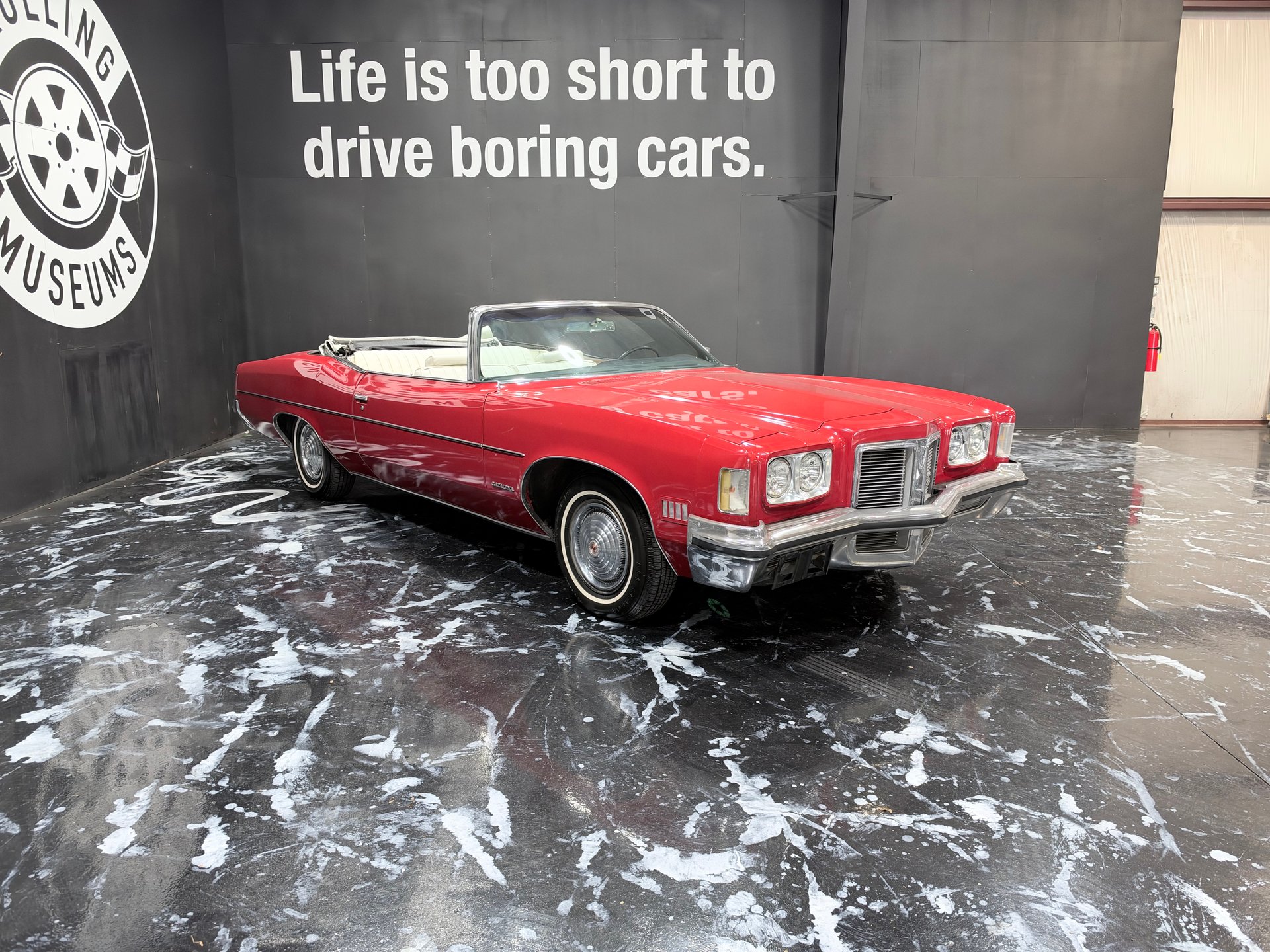
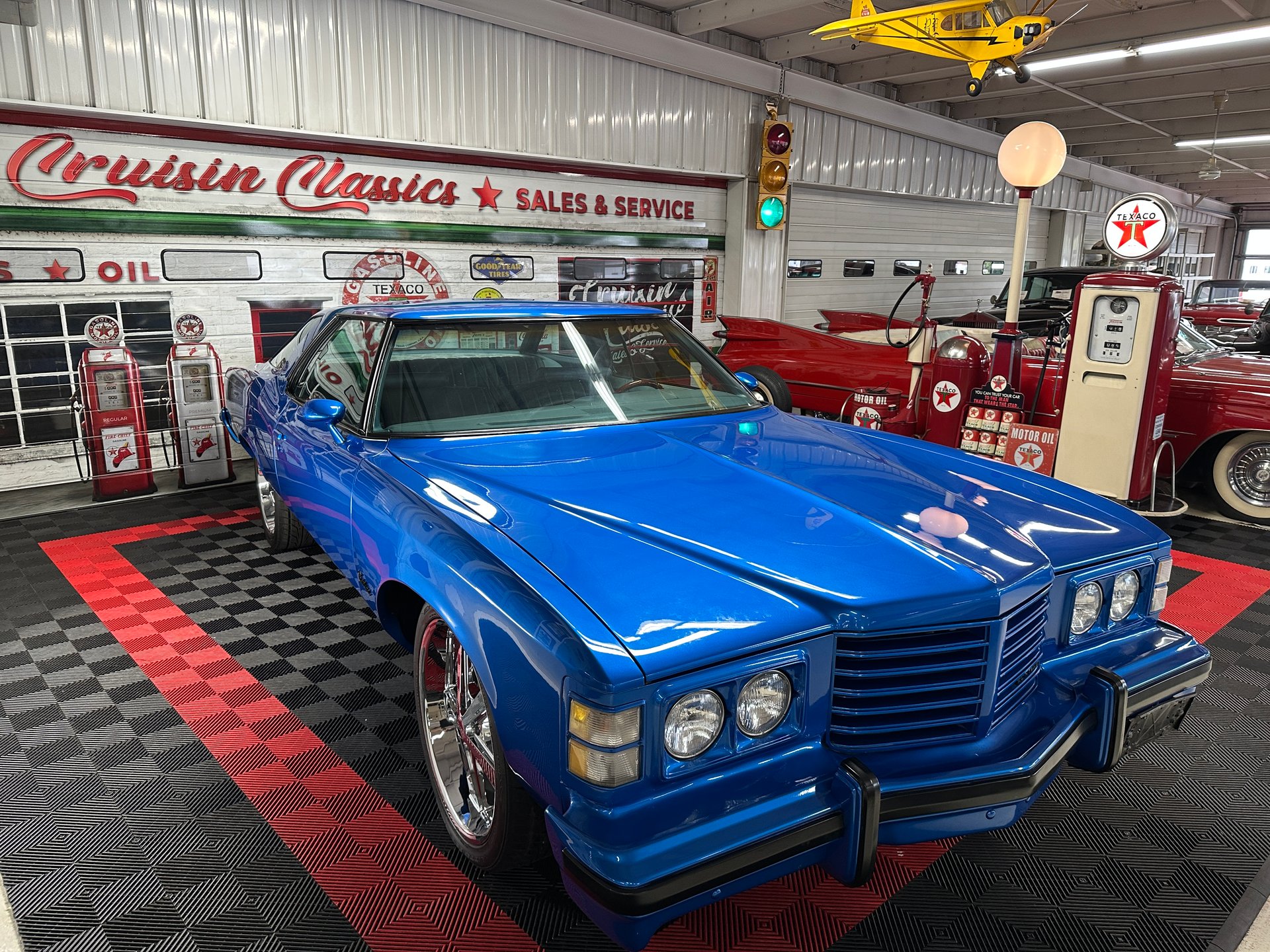
The 1971–76 cars. The final classic generation is the biggest American sedan formula taken to its limit: huge, soft, quiet and styled with a confidence the market was already abandoning. The 1973 cars gained the federally mandated impact bumpers, 1975 brought catalytic converters and the last convertible had already gone in 1970. These are the cheapest way into Catalina ownership and the most expensive to feed, and their survival rate is low because they were used up as family transport through the fuel-crisis years.

Engines and gearboxes
The Pontiac V8: one architecture, 287 to 455
Every classic Catalina runs a Pontiac V8, and the first thing to understand is that they are all the same engine in the way that matters. Pontiac's V8, introduced for 1955 at 287 cubic inches, was designed with room to grow, and grow it did: 316, 347 and 370 in the 1950s, then the famous 389 from 1959, the 421 from late 1961, the 400 and 428 from 1967 and the 455 from 1970. Externally the blocks are near-identical in size across the whole span — a 455 is not a big-block next to a small-block 326, because Pontiac never made that split. Journals, bore spacing and architecture evolved in detail, but a Catalina engine bay looks fundamentally the same in 1959 and 1970, and parts knowledge transfers across the range.
The design's virtues are torque, smoothness and toughness. These are long-stroke, low-revving engines with deep-skirt blocks and generous bearing area, built to move two tons of car on lazy gearing, and in standard tune they do it almost indefinitely if the oil has been changed. The design's known weaknesses are just as consistent, and they recur throughout this guide: the cooling system works through a water pump mounted on the timing cover with stamped divider plates whose clearances matter enormously; the rear main seal is a rope seal that weeps with age on almost every car; and the engines run hot by modern standards in traffic if any part of the cooling system is below par.
The 389 (1959–66) is the default Catalina engine and the one most buyers will meet. In Catalina tune it was offered with a two-barrel carburettor for economy (around 235 hp in early form, more later) and with a four-barrel at around 280–303 hp, and it is a sweet, torquey, unstressed unit in either form. The glamour option was Tri-Power: three Rochester two-barrel carburettors, the centre one working alone in normal driving and the outer pair opening under load, rated up to 345 hp in 1959 form and more in later high-output tunes. Tri-Power was available on Catalinas into 1966 and transforms the car's character — and its value, which is why originality must be proven, not assumed, because the induction system bolts onto any 389 or 421.
The 421 (1961–66) is the connoisseur's engine: same external size as the 389, substantially stronger inside, with four-bolt main bearing caps on most versions. In Catalina service it came in four-barrel form at around 320–338 hp and as the 421 HO with Tri-Power or a four-barrel and high-output manifolds at up to 376 hp. At the top of the pyramid sat the Super Duty 421 of 1962–63, a hand-built racing engine with a forged crankshaft and pistons, special heads with huge ports, solid-lifter camshafts and either a single four-barrel, dual four-barrels or, experimentally, other induction entirely — rated at 405 hp with dual quads in 1962 and 410 hp for 1963. A genuine Super Duty engine is a major component in its own right, worth as much as many complete Catalinas, and the market in cloned cars and restamped blocks is exactly as active as you would expect.
The 400 and 428 (1967–69) and the 455 (1970–76) are the final development of the architecture. The 400 — a bored 389 — became the standard performance-era Catalina V8, smooth and strong at around 290–325 hp in four-barrel form, with a two-barrel economy version below it. The 428 replaced the 421 as the big option, rated at 340 hp in standard form and 360–375 hp in HO tune, and it is arguably the best road engine of the whole family: the torque of the big engine without the Super Duty's temperament. The 455 that replaced it for 1970 is a stroked 428, rated at up to 370 hp in its first, high-compression year and falling steadily thereafter as compression ratios dropped for emissions and unleaded fuel — by the mid-1970s the same architecture was net-rated at figures that look feeble on paper but still deliver the effortless low-speed torque that is the whole point of the car. Do not let a low net figure talk you out of a tidy late car, and do not let a high gross figure talk you into a tired early one: condition and specification matter more than the rating system.
The later engines (1971–76). Late Catalinas were also sold with Pontiac's 350 V8 — the same architecture in smaller displacement — and the final years bring two-barrel carburettors, EGR, air injection and, from 1975, catalytic converters. These engines are softer but not worse made; their enemies are the bodges of the smog era — disconnected vacuum lines, removed air pumps, distributors recurved by ear — rather than any design flaw. A late car with its emissions equipment intact and working is a better buy than one enthusiastically de-smogged by an amateur, because a badly de-smogged Pontiac V8 runs worse than a smogged one.
Carburettors and fuel systems
Most Catalinas breathe through a single carburettor: Rochester or Carter two- and four-barrels early on, the Rochester Quadrajet from the late 1960s. The Quadrajet is excellent when right — small primaries for economy, huge secondaries for power — and miserable when worn; the problem areas section covers its failure modes. Tri-Power cars use three Rochester 2GC two-barrels on a dedicated manifold, with vacuum or mechanical progressive linkage depending on year; correct setup is a specialist job, and a badly set-up Tri-Power is slower and thirstier than the four-barrel it replaced. All these cars were built for leaded fuel; expect consumption in the low-to-mid teens in mixed use and single figures around town for the big engines, and plan on hardened valve seats or a lead-substitute strategy on early high-compression engines that have not already had the work — in practice most survivors have either been rebuilt with unleaded-compatible seats or are run gently enough that seat recession is slow rather than urgent.
Gearboxes
Manuals. The standard gearbox through most of the 1960s was a three-speed manual with column shift — strong, simple and nobody's idea of fun. The option that matters is the four-speed: Borg-Warner T-10s in the very early 1960s, Muncie M20 and M21s thereafter, with a Hurst shifter the desirable fitment. A genuine factory four-speed Catalina from 1961–66 is rare and valuable, because almost every period buyer ordered the automatic; that rarity makes the four-speed the most faked specification in the range after the Super Duty itself, and the paperwork checks in the inspection section apply with full force. Clutches are conventional, heavy and long-lived; linkage and shifter wear before the gearbox does.
Automatics. Early cars use versions of GM's Hydra-Matic: the Controlled-Coupling four-speed in the late 1950s, then the Roto Hydramatic — the so-called Slim Jim — in 1961–64 Catalinas. The Roto is the weak point of the early cars: it was designed for lightness and economy rather than strength, its shifts are leisurely even when healthy, parts and rebuild expertise are thinner than for any other box in the range, and a failing Roto is a genuine cost to put right. From 1965 Pontiac adopted the Turbo Hydra-Matic 400, and the story changes completely: the TH400 is one of the strongest automatic gearboxes ever fitted to a production car, it shifts firmly and predictably, every competent transmission shop in America knows it, and a rebuild is a known, moderate expense rather than a research project. Judge a TH400 on shift quality and fluid condition; judge a Roto on those things twice as hard, and budget accordingly. Late-1970s downsized-era transmissions fall outside our years, but within 1971–76 the TH400 continues behind the big engines, with the lighter Turbo Hydra-Matic 350 appearing behind smaller ones — also a well-understood, durable box.
Axles and ratios. A live rear axle on coil springs (leaf springs on wagons in some years), with ratios chosen for cruising — typically 2.41 to 3.23 for automatic cars, lower for performance versions. Pontiac's Safe-T-Track limited-slip was a popular, desirable option: check for it by the axle tag and by behaviour, not by the seller's word. The axle itself is strong; whine on the overrun and pinion-seal leaks are the usual age faults, both conventional repairs.

Problem areas
Start with the evidence from our own listings. We have photo-checked 10 Catalinas in detail for this guide, and the pattern in those 10 cars is the pattern of the market: visible damage or deterioration shows in 6 of the 10, and rust appears in 3 of the 10 — and sellers' photographs systematically flatter a car, so treat those figures as a floor, not a ceiling. Nothing in the sample showed smoke or leak evidence in the photographs, which fits the mechanical story: these cars rarely die by their engines. They die by their bodies, their frames and their completeness. Work through this section in that order.
Rust and structure: the map
A Catalina is a body-on-frame car, which changes the rust calculation compared with a unibody: a rotten body can in principle be lifted off and repaired, and a rotten frame can in principle be replaced — but in principle is doing heavy lifting in both cases, because either job costs more than most Catalinas are worth. Assess both, separately.
The frame. Pontiac used a perimeter frame on these cars, with side rails running outboard under the sills. The rails rust from the inside out, fed by road salt entering through drain holes and seams, and the worst areas are consistent: the rails under the doors, the kick-up over the rear axle, the rear crossmember area and the front crossmember and its mounting points. Surface scale is normal and treatable; flaking, swelling or perforation is structural. Get the car on a lift and prod with a screwdriver — a frame that rings is sound, a frame that crunches is a negotiation or a walk-away. Frame repair by sectioning and welding is established practice on these cars and a competent fabricator can do it, but price it as fabrication, not as a panel swap: a badly rotten frame on a standard Catalina sedan usually ends the conversation, while on a genuinely rare car — a Super Duty, a 2+2 four-speed — it becomes a budget line to argue about rather than an automatic refusal.
Floor pans and trunk floor. Water enters past the windshield seal, the rear window seal and the cowl, and sits under carpets and sound deadening that hold it against the metal. Lift every carpet you can, front and rear, and lift the trunk mat and spare wheel without exception: the spare wheel well and the trunk floor extensions over the rear wheels are among the first panels to go, and trunk rust is the single most reliable honesty test on the car, because sellers photograph trunks last and clean them least. Replacement floor and trunk pans for the popular years are reproduced and fitting them is ordinary restoration work — budget in the low thousands per major area at shop rates, done properly with paint — but floors almost never rot alone. Floor rust is a marker for the whole lower body's condition, not an isolated job.
The outer body. Work the standard B-body map: lower front fenders behind the wheels, the bottoms of the doors (drain holes block, doors fill, the skin rots from inside — run a fingertip along every door bottom), the lower rear quarters behind the rear wheels, the wheel arch lips, the rocker panels, and the panel below the rear window. Vinyl roofs, fitted to a great many Catalinas from the mid-1960s on, deserve their own paragraph in your inspection: moisture trapped under vinyl rots the roof skin and, more seriously, the rear window frame and the pillars beneath a covering that can look perfect from outside. Bubbling under vinyl, a soft feel when you press the roof near its edges, or rust staining at the rear window are all roof-off investigations. Convertibles add the top well and the floor areas around the top mechanism to the list, plus their own structural premium: a convertible with a rotten frame is a much worse proposition than a sedan with the same frame.
The smaller traps. The battery tray and inner fender beneath it rot from acid. The core support rusts at its lower mounts, letting the front clip sit subtly wrong. The cowl and plenum rust where leaves collect, and the first symptom is wet front carpets after rain, blamed on the windshield seal for years while the plenum quietly perforates. Bumpers and brightwork pit, and rechroming a full set is a four-figure exercise, so count pitted chrome as money, not patina.
The engine: what actually goes wrong
The Pontiac V8's core almost never fails in service. What fails is everything attached to it, in a predictable order.
Cooling, and the divider plate trap. Overheating in traffic is the classic Pontiac complaint, and its most misdiagnosed cause lives behind the water pump. The pump mounts to the timing cover, and stamped steel divider plates inside the cover control the coolant path past the impeller. The clearance between impeller and plate is critical: too wide, and flow at low speed falls away exactly when you are sitting in traffic. Rebuilt pumps with bent or wrong plates, or plates corroded thin, produce a car that runs cool on the highway and boils at idle — a symptom owners chase through radiators, thermostats and fan clutches for years. The test is behavioural (hot at idle, cool at speed points at the pump and plates; hot everywhere points at the radiator, timing or a head gasket), and the cure is a correct pump with plates clearanced properly, a few hundred dollars in parts and a known specialist job. Radiators silt up, fan clutches freewheel when they should drive, and missing fan shrouds on cars that had them ruin low-speed airflow: check all three before condemning anything expensive.
Oil leaks and the rear main. The rope rear main seal weeps on nearly every Pontiac V8 eventually, and the honest question is rate, not presence: a few spots after a run are character, a steady drip that coats the underside is a seal replacement, which means the engine or transmission comes out — budget four figures at a shop and fold it into other work whenever possible. Modern replacement seals improve on the rope design. Valve cover gaskets, valley pan gaskets and the oil filter housing account for most of the rest of the leaks you will see; a dry engine bay on a fifty-year-old Pontiac usually means it was cleaned that morning.
Valve gear and timing gear. Two age items matter. Valve stem seals harden and crumble, giving the classic puff of blue smoke on start-up after sitting and on the overrun: annoying, common, and fixable in place with the heads on — a few hundred dollars — and not a reason to reject an otherwise good engine. Smoke under load is rings and is a different conversation entirely. And on later engines Pontiac, like other GM divisions, used camshaft timing gears with nylon teeth for quietness; the nylon embrittles with age and heat, sheds teeth into the oil pan and can let the chain jump. Any late-1960s or 1970s car without documented timing-set replacement should get a steel timing set as preventive work — a few hundred dollars in parts — because the failure, when it comes, arrives without warning and bends nothing on most of these engines but strands you completely.
Carburettor faults. On Quadrajet cars, learn the trio: the air horn warps when the front bolts are over-tightened, lifting the gasket and causing erratic idle and off-idle stumble; the fuel bowl well plugs weep internally, so the bowl drains overnight and the car cranks forever on a cold start but starts instantly when warm — that specific symptom pair is nearly diagnostic; and worn throttle shafts leak air and defeat every adjustment. All three are fixable by a Quadrajet specialist for a few hundred dollars, and a specialist rebuild is worth more than a generic parts-store replacement carburettor, which is usually jetted for something else entirely. On Tri-Power cars, add linkage and vacuum-switch wear: the outer carburettors either never open (flat performance, disappointed owner) or hang open (appalling economy), and correct setup is the difference between the system's fearsome reputation and its actual behaviour. Choke faults — stuck fast-idle, divorced chokes with bent linkage rods — account for a large share of cold-running complaints on all versions and cost almost nothing to put right once identified.
Ignition. Points ignition on early cars is simple and wants regular attention; dwell drift masquerades as carburettor trouble. Many cars have been converted to electronic ignition, usually a worthwhile improvement when done with quality parts. On any car that runs worse as it warms up, suspect the coil and the condenser before anything exotic. From the mid-1970s, GM's HEI electronic ignition is standard and is one of the most reliable systems of its era; its module fails with age and heat, cheaply replaced.
Exhaust manifolds and bolts. Pontiac exhaust manifold bolts seize and snap, and the manifolds themselves crack, particularly the centre-exit high-output designs. A ticking that fades as the engine warms is usually a manifold gasket or a hairline crack, not a lifter — distinguish them by listening at the manifold with a tube before anyone sells you a top-end rebuild. Drilling out snapped studs in the car is miserable work; price accordingly.
Suspension, steering and brakes
The chassis is conventional: independent front suspension with coil springs and ball joints, a live rear axle on coils (leaf springs on some wagons), recirculating-ball power steering on most cars and drum brakes all round on early cars, with front discs optional from the late 1960s and standard in the 1970s.
Front end wear. Ball joints, control arm bushings, idler arms and tie-rod ends all wear on a two-ton car, and the collective symptom is vague steering, wandering at highway speed and uneven front tyre wear. None of it is exotic: a full front-end rebuild with quality parts runs into the low thousands fitted, and transforms the car. The specific check is to have a helper rock the steering while you watch each joint for lost motion, and to lever each wheel for ball-joint play with the suspension loaded correctly — an unloaded ball joint check on these cars can pass a worn joint, which is why a lift inspection by someone who knows the type beats your driveway check.
The eight-lug wheels (1960–68). Pontiac's most famous chassis option deserves its own warning. The Kelsey-Hayes eight-lug wheel is an aluminium brake drum with an integral finned face, to which a steel rim attaches with eight lugs: beautiful, effective at cooling the brakes, and sixty years old. The drums have a maximum machining limit and many have been turned past it; the aluminium cracks around the lug area and corrodes where the steel rim seats; and correct drums are expensive and getting scarcer. On an eight-lug car, budget for a specialist inspection of every drum, and understand that a car needing a full set of drums has a four-figure problem wearing a very pretty face. The myth to correct: the eight-lug is not a weak design that failed in period — it worked well and was dropped for cost and the coming of disc brakes — but age has made every surviving set a consumable with a finite remaining life.
Brakes. Drum-brake cars stop adequately when the whole system is right and alarmingly when any part of it is not: seized wheel cylinders, perished hoses, contaminated linings and tired master cylinders are the standard recommissioning list, and a full hydraulic refresh with linings is a known few-hundred-to-low-thousands job. Disc-brake cars add seized calipers and scored rotors. The test that matters is a firm stop from speed in a straight line: pulling means unequal braking side to side, and a pedal that sinks slowly at a standstill means the master cylinder is passing internally, whatever the seller says about it just needing a bleed.
Steering. The power steering boxes leak from the pitman shaft seal and wear loose on centre; a remanufactured box is a moderate expense. Vagueness blamed on the box is as often the rag joint — the flexible coupling in the column — perished and flexing: a cheap part that you check by watching it while the wheel is rocked. On 1971–76 cars the sheer weight and tyre sizes accelerate wear in everything above, so inspect the big late cars' front ends with extra care.
Interior, trim and electrics
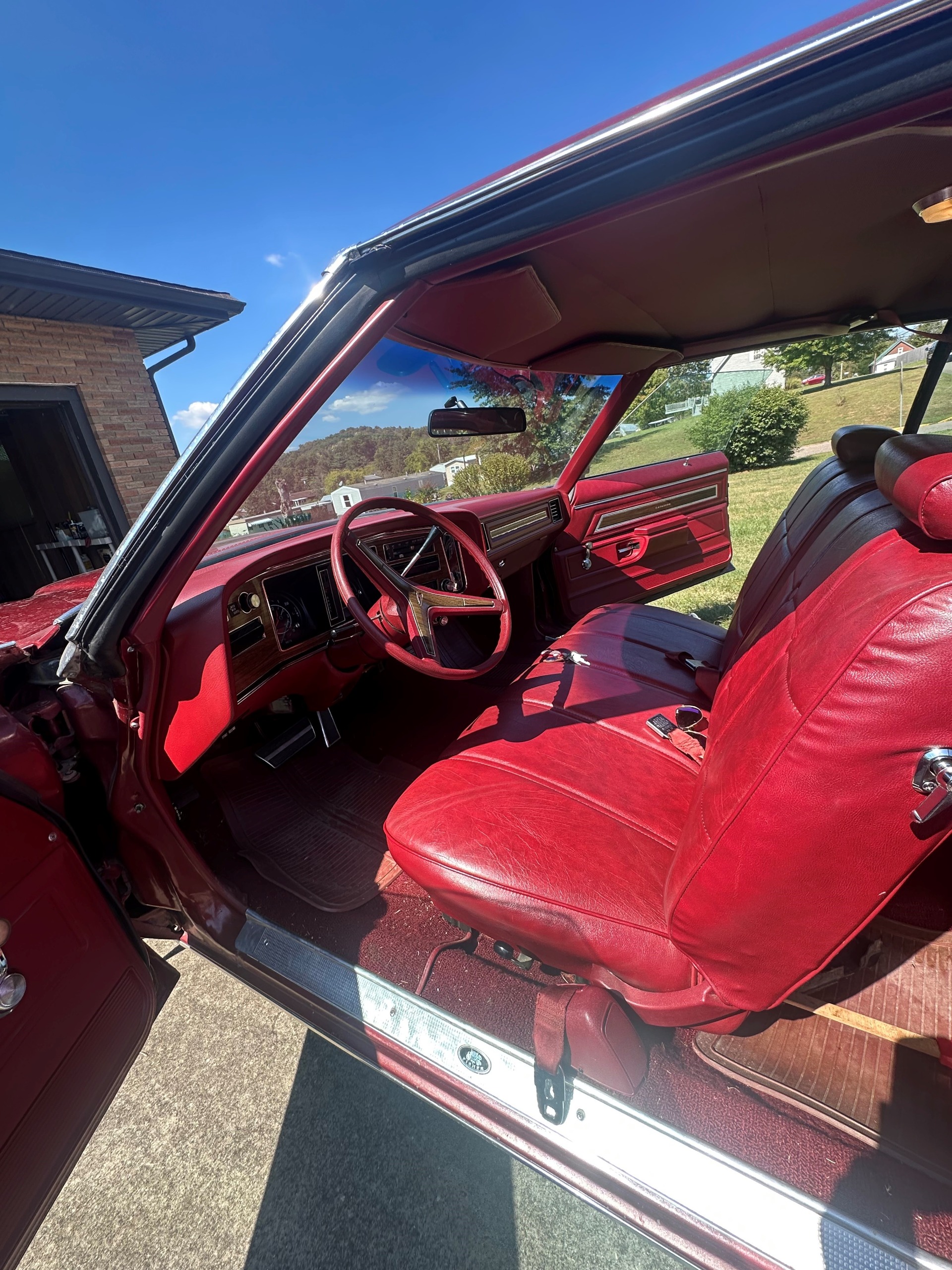
Interiors. Catalina trim was deliberately a step below Bonneville: vinyl and cloth benches, less brightwork, simpler door panels. The materials are durable, but the driver's seat takes fifty years of entries and exits, the padding beneath crumbles, and headliners sag or shred. A correct retrim in period-pattern material costs far more than a serviceable mechanical refresh — several thousand dollars for a full interior done properly — against which a tired-but-original interior you can live with is a genuine asset. Judge interiors from the driver's seat, check under the seats for the debris of disintegrating padding, and remember that four-door sedan interior trim is the hardest of all to source: the reproduction market serves coupes first.
Trim and completeness. This is the Catalina's quiet economic trap. Because the Bonneville carried the range's prestige, reproduction and NOS availability skews to it, and Catalina-specific side trim, scripts, grille pieces and interior badges for individual years can be remarkably hard to find. A car missing its side spear or wearing a damaged one-year-only grille can be mechanically perfect and still be the wrong car, because the missing piece may take years to find at any price. Inventory the trim on any car you are serious about, piece by piece, and treat completeness as a headline virtue — it is worth more on a Catalina than on almost any rival.
Electrics. Fifty-year-old GM electrics fail at connections: corroded grounds, a bulkhead connector with green pins, fuse clips that have lost their grip. Dim lights, slow windows and gauges that wander are ground problems until proven otherwise. Power windows on the big 1971–76 coupes lift enormous glass with ageing motors and dried grease in the regulators — slow is normal-ish, stalled is a regulator or motor job inside a door you will learn to dislike. Air conditioning, fitted to a majority of later cars, uses the GM A6 compressor, which is tough; the system's enemies are perished hoses, a seized clutch bearing and decades of slow leaks, and a full recommissioning with conversion decisions about refrigerant is a four-figure conversation on a car where the seller says it just needs gas. It never just needs gas.
The smog-era tangle (1973–76). Late cars carry EGR valves that clog, air pumps that seize, thermal vacuum switches that crumble and miles of perished vacuum hose. The failure mode is cumulative roughness — bad idle, hesitation, warm running — with no single culprit. The fix is systematic renewal of the vacuum plumbing and honest testing of each device, tedious rather than expensive; the trap is the previous owner's shortcut of removing half the system and leaving the rest connected wrongly. Budget a weekend and a vacuum diagram before anything else.
How to inspect one
Allow two hours, bring a torch, a magnet wrapped in cloth, a screwdriver for prodding (with permission) and a tyre pressure gauge. Insist on seeing the car cold. If it survives your inspection, pay for an hour on a lift before money changes hands — on a car with a perimeter frame and a trunk floor like these, the lift hour is the best money in the whole purchase.
- Start with identity, before anything else. Match the VIN on the title to the plate on the car — on 1960s cars, the driver's door jamb and the cowl area; the exact location varies by year, so know your year's before you go. Then order the paperwork that settles everything: Pontiac Historic Services (PHS) can supply the factory invoice and build information for most 1961-onward Pontiacs from the VIN, and on any car with a performance claim — Super Duty, 2+2, Tri-Power, 421, four-speed — the PHS packet is not optional, it is the purchase. A seller who resists a PHS check on a premium-priced car has answered your question.
- Check the engine against the claim. Pontiac stamps the engine code — two letters — on the front face of the block on the passenger side, beside the water pump, along with a unit number; from the late 1960s a partial VIN is stamped on the block near the timing cover. The casting number and date code sit at the back of the block by the distributor. Decode all three against published tables for the claimed year and specification. A correct-code engine with a casting date that precedes the car's build by a sensible margin supports the story; a wrong code or a ground-and-restamped pad ends it. Remember that the engines are externally near-identical from 287 to 455 — the badge on the fender proves nothing, the stampings prove almost everything.
- Cold start. A healthy Pontiac V8 on a carburettor starts with a pump of the throttle to set the choke, fires quickly and settles to a slightly fast idle that steps down as it warms. Long cranking on a Quadrajet car that then starts instantly when warm points at the leaking well plugs described in the problem areas. Watch the tailpipe: a puff of blue on start-up is valve stem seals; continuous blue smoke is rings; white vapour that persists after warm-up and smells sweet is coolant and a head-gasket conversation.
- The cooling behaviour test. Let the car idle to full temperature and watch the gauge, then drive it. Hot at idle but cool at speed is the water-pump divider-plate signature from the problem areas; hot everywhere is radiator, shroud, fan clutch or worse. A car that has genuinely overheated repeatedly will show it in warped carburettor castings, cooked vacuum hoses and a history of head-gasket work — ask directly whether it has ever boiled, and listen to how the answer comes.
- Oil, leaks and the dipstick story. Check the oil level and condition, look under the car before and after the drive, and classify leaks honestly: valve covers and filter housing are pocket money; a rear main drip is a known four-figure fold-in job; a wet front cover area on a late car raises the timing-set question. Smell the oil for fuel on a car that has been standing — dilution means the fuel pump diaphragm or carburettor is passing petrol into the sump.
- The frame, on a lift. Torch and screwdriver along both rails, the rear kick-up, the crossmembers and the body mounts. This is step 6 of your visit but step 1 of the decision: perforation in the rails ends the inspection of an ordinary car on the spot, exactly as the rust section explains. Check the body mounts while you are there — collapsed mounts let the body sit low and misalign every panel gap, and owners chase the gaps for years without finding the cause.
- Floors and trunk. Lift the carpets in all four footwells and prod the pans; then the trunk — mat out, spare wheel out, torch into the well corners and the extensions over the rear wheels. Damp, staining or fresh underseal inside the trunk are all information. Check the rear window frame and, on a vinyl-roof car, press the roof skin around its edges and the rear pillars for the softness that means rot under the vinyl.
- Body and trim inventory. Walk the magnet over the lower fenders, door bottoms, rockers and rear quarters. Check every door's bottom edge with a fingertip. Then do the Catalina-specific job nobody does on other cars: inventory the trim, piece by piece — side spears, scripts, grille, badges, wheel opening mouldings — against photographs of a correct car for that year. Missing Catalina-specific trim is a value deduction you can defend with evidence, because the parts hunt is real.
- Front end and steering. On the lift, watch every joint while a helper rocks the steering, lever for ball-joint play with the suspension correctly loaded, and inspect the rag joint. On an eight-lug car, have the drums inspected for cracks and machining limits — wheels off, ideally a specialist's eye, and it prices the car. Read the front tyre wear pattern on any car: it is the front end's written report.
- The test drive. Twenty minutes minimum, including highway speed and a stretch of rough road. A Turbo Hydra-Matic should shift firmly and consistently, with kickdown on demand; a Roto Hydramatic will feel lazier, but laziness is not slipping — flaring revs between shifts are. A four-speed should engage cleanly with no second-gear synchro crunch on a brisk downshift. Listen for axle whine on the overrun, manifold tick when cold, and suspension knocks that locate front-end wear. Brake firmly from speed twice: straight, stable and repeatable is the pass.
- Heat and electrics, all of them. Run the heater and blower on every speed, work every window, test wipers, washers, lights, horn and radio, and run the air conditioning if fitted — then look at the compressor clutch rather than accepting that it needs gas. Let the car idle hot for five minutes at the end and re-check temperature, oil pressure and idle quality: smog-era cars reveal their vacuum-plumbing sins hot, at idle, after a drive.
- Interior last, from the driver's seat. Sit where the owner sits. Feel for collapsed padding, check the seat frame for the sag that means broken springs, look under the seats for crumbling pad debris, and test the headliner with your eyes at its edges. A sound original interior on a Catalina is harder to replace than any mechanical component on the car, so weight it as the problem areas section advises — heavily.
Values
The Catalina market is really several markets wearing one nameplate, and reading it well means knowing which one you are in. At the top sit the verified performance cars — genuine Super Duty cars, documented 2+2s, Tri-Power and four-speed cars with paperwork — where value is set by provenance more than condition and where the PHS packet is effectively part of the car. Below them, the mainstream 1961–66 hardtops and convertibles form the liquid heart of the market: cars that sell in reasonable time at prices that track condition closely. The 1959–60 cars trade partly as design objects, the 1967–70 cars as cruisers, and the 1971–76 cars remain the softest part of the range, where the spread between a tired survivor and a genuinely tidy example is wide in percentage terms but modest in money.
Condition is the dominant variable everywhere below the provenance tier, and it works through the costs this guide has priced for you. The gap between a project and a driver is roughly the cost of the frame, floor, paint and interior work the project needs — and because that work, done properly, so often exceeds the finished car's worth, projects are chronically overpriced relative to drivers. Sellers anchor on what a good one makes; the market pays for what the specific car needs. Value any Catalina from the price of a good example of that exact variant and subtract, item by item, the costed work from the inspection: trim completeness, frame condition and interior originality move the number more than mileage does, and a documented moderate mileage beats a claimed low one every time.
Asking prices and achieved prices diverge in a predictable pattern. Dealer asking prices for presentable cars sit well above private and auction results for comparable metal, and the rarest-variant claims — the undocumented Super Duty tribute priced near a real one, the badge-engineered 2+2 — account for most of the fantasy end of the listings. Auction results, where the car is inspected in person by the room, are the discipline: watch what documented cars actually achieve, not what undocumented ones ask. Regional patterns matter too: dry-climate cars command a real premium because the frame and floor story is so much better, and that premium is rational, not fashionable — it is the market pricing the rust map in the problem areas section.
Two buying realities close the section. Convertibles, hardtop coupes and wagons each carry their own following, while four-door sedans — the bulk of production — remain the value entry to every generation; if you simply want to own and drive a Catalina, the sedan is the rational buy. And the cheap car is almost never the cheap ownership experience: the market's discount for a rough car is systematically smaller than the cost of making it good, which is the arithmetic that should govern every offer you make.
Parts and ownership
The Catalina enjoys the two great advantages of a high-production GM car: the division built them in the hundreds of thousands, and the mechanical architecture was shared across a decade and a half of Pontiacs, so the specialist trade is deep and knowledgeable.
Easy: engine service parts for the whole V8 family — gaskets, seals, water pumps, timing sets, bearings, pistons — are catalogued and stocked by multiple Pontiac specialists, and a standard rebuild of a 389, 400 or 455 is routine work for any competent machine shop, typically in the low-to-mid thousands depending on machining and specification. Brake, suspension and steering wear parts are reproduced and cheap. Turbo Hydra-Matic parts and rebuild expertise are universal. Glass, weatherstripping and most soft trim for the popular coupe and hardtop bodies are available from the reproduction trade.
Harder: Roto Hydramatic parts and expertise are genuinely thin — if you own a 1961–64 automatic, identify your transmission specialist before you need one. Eight-lug drums, as covered above, are a finite resource: good used drums trade at serious money and crack-free cores are hoarded. Super Duty and HO engine components are specialist and priced accordingly. Catalina-specific exterior trim for individual years, four-door sedan interior trim, wagon-specific parts and 1959–60 brightwork are the scarcity frontier — the advice from the problem areas bears repeating: buy completeness, because you may not be able to buy the missing piece later at any price.
Running costs. A sorted Catalina is an honest regular-use classic: fuel consumption in the low-to-mid teens is the expectation, insurance is ordinary classic-car money, and servicing is simple work any owner with a manual can do — oil, points or module, plugs, and the chassis lubrication the car was designed around. The budget line that catches new owners is recommissioning: a car that has sat for years needs the fuel system cleaned end to end (modern ethanol fuel attacks old rubber hose and leaves deposits throughout), every brake hydraulic renewed, tyres replaced on age regardless of tread, and the cooling system gone through with the divider-plate check included. Budget in the low thousands for a shop to recommission a standing car properly, and treat a car in current regular use as worth a premium over a prettier sleeper — on Catalinas, use is maintenance.
Ownership has one more pillar: documentation. Factory literature, service manuals and parts books are reproduced and plentiful, PHS documentation anchors provenance, and the Pontiac club and forum world is large and technically literate — the accumulated knowledge on timing-cover clearances, Quadrajet tuning and eight-lug care exists because thousands of owners have needed it. You are never the first person to meet any problem these cars present.
Which one to buy
- The all-rounder: a 1963–66 Catalina hardtop with the 389 four-barrel and Turbo Hydra-Matic (1965–66) or a healthy Roto (earlier). The best-looking years, the toughest specification, the deepest parts support and a market you can buy into and sell out of. This is the default recommendation.
- The value buy: a four-door sedan, any generation. The market discounts the body style that Pontiac built most of, and you get the identical mechanical car for materially less. A tidy 1965–66 sedan is the cheapest honest route into the classic years; a tidy 1971–76 sedan is the cheapest route into Catalina ownership outright.
- The performance car: a documented 2+2 or Tri-Power car, 1964–66. The GTO formula at full size, with the paperwork to prove it. Buy the PHS packet before you buy the car, and pay for provenance, not badges.
- The cruiser: a 1967–70 convertible or hardtop coupe with the 400 or 428. The fastback-era styling, the strongest road engines of the family and open-air option the earlier cars cannot match for ease of use. The 428 in particular is the connoisseur's road engine.
- The design statement: a 1959 or 1960 car. Buy it for the styling and the Wide Track story, budget for the chrome and the one-generation-only trim, and accept the earlier gearbox choices as part of the period character.
- The collector car: a verified Super Duty, 1962–63. Among the most significant American performance sedans ever built — and a purchase that belongs in the hands of a marque expert, with PHS documentation, engine stampings and expert inspection all aligned before money moves. Nothing in this category should ever be bought on a listing description.
- The character buy: a 1971–76 car in honest, complete condition. The last of the giants, bought for presence and cruising rather than investment. Completeness and an unmolested engine bay matter more here than anywhere else.
And the rule that overrides all of the above: buy the least rusty, most complete car you can find, with its identity proven on paper. Engines, gearboxes, brakes and carburettors are all fixable at prices you can plan for. A rotten frame, a gutted interior and missing one-year trim are not — and a Super Duty badge without documentation is not a specification, it is a story.
See the 8 Catalina cars currently listed.