
Pontiac Bonneville buyer's guide
Pontiac Bonneville -- the model's own buyer's guide: variants, values and what to check.
Years listed: 1959-1995 · Series: Full Size
Overview and history
The Pontiac Bonneville is not one car. It is a name Pontiac kept in production from 1957 to 2005 — and across those five decades it was, in turn, a fuel-injected limited-edition convertible, the flagship of the Wide Track era, a two-and-a-half-ton 455-cubic-inch luxury liner, a downsized family sedan, a mid-size rear-drive car wearing a famous badge, and finally a front-wheel-drive performance sedan with a supercharged V6 and, at the very end, a V8 again. A guide that pretends those cars are the same machine would be useless. What they share is a position in the range — the Bonneville was almost always the Pontiac you bought when you wanted the most Pontiac there was — and a set of buying rules that follow from it: top-trim cars carry the most equipment, the most trim to restore, and the most places for rust and neglect to hide.
The name came first, and it came from speed. Bonneville meant the Utah salt flats, where Pontiac-supported cars had set endurance records, and when division chief Semon “Bunkie” Knudsen wanted a halo car for 1957 he took the name for a limited-production convertible based on the Star Chief. The 1957 car was sold through one dealer in each zone, carried Rochester mechanical fuel injection as standard at a time when fuel injection was headline news, and cost more than many Cadillacs once optioned. It was a statement, not a volume model — and it worked. For 1958 the Bonneville became a full model line, sitting above the Chieftain and Star Chief ranges, and it never really left the top of the catalogue again.
The cars most buyers are actually shopping for — and the cars that dominate our own listings, where the tracked pool runs from 1958 to the front-drive era and is heaviest in the 1960s — fall into three families. The first is the chrome-era flagship of 1958 to 1964: the Wide Track restyle, Tri-Power carburation, the 389 and then the 421. The second is the big B-body car of 1965 to 1981: stacked headlamps, the 400, 428 and 455, the vast 1971 to 1976 generation, and the sharply downsized but still rear-drive cars of 1977 to 1981. The third is the one too many guides ignore: the front-wheel-drive H-body cars of 1987 to 2005, powered by the 3800 V6 in naturally aspirated and supercharged form — not classics in the chrome sense, but now old cars with their own failure patterns, their own following, and, in SSEi and Northstar GXP form, genuine pace. This guide covers all three, because the badge does.
One honest orientation point before the detail. The Bonneville was built in large numbers for most of its life, shared its shell and running gear with cheaper Pontiacs and other General Motors divisions, and was a working luxury car rather than a garaged toy for most first owners. That history defines the market today: survival is patchy and regional, the mechanicals — the Pontiac V8 in particular — are fundamentally strong, and the difference between a good Bonneville and an expensive mistake is almost never the engine badge. It is rust in the frame and floors, the state of model-specific trim you cannot buy, and, on the later cars, plastic and electronic systems that age on a calendar rather than by mileage.


The models
Read the Bonneville range as a ladder Pontiac rebuilt several times. Body style tells you where the money and the risk sit: sedans and hardtops are the volume cars, convertibles the scarce and valuable ones, and the Safari wagons — built in the early years and again in the downsized era — have gone from overlooked to sought-after because so few were kept. Trim names multiply as the years pass: Bonneville, Bonneville Brougham, Grand Ville (above the Bonneville from 1971 to 1975), and on the front-drive cars LE, SE, SSE and SSEi. The badge on the trunk lid is a starting point, never proof — engines were swapped and trim was added, and on the early cars the data plate and engine stampings settle what a car actually is.
| Model | Years | Engine | Output | Built | Character |
|---|---|---|---|---|---|
| Bonneville convertible (fuel-injected) | 1957 | 370 V8, Rochester fuel injection | about 310 hp | 630 | The halo car; one per dealer zone, injection standard |
| Bonneville (first full line) | 1958 | 370 V8, carburettor or optional injection | 240–310 hp | — | Chrome-heavy flagship; injected cars rare and often converted |
| Bonneville Wide Track | 1959–1960 | 389 V8, single carb or Tri-Power | 260–348 hp | — | Split grille, wide stance; the Knudsen-era statement car |
| Bonneville (sharp-body) | 1961–1964 | 389 or 421 V8, single carb or Tri-Power | 267–376 hp | — | The collector sweet spot; stacked lamps from 1963, 421 power |
| Bonneville B-body | 1965–1970 | 389, 400, 421, 428 or 455 V8 | 256–390 hp | — | Coke-bottle styling, stacked lamps, big-block torque |
| Bonneville and Grand Ville | 1971–1976 | 400 or 455 V8 | 185–310 hp | — | The largest Bonnevilles; Grand Ville is the top trim to 1975 |
| Bonneville (downsized B-body) | 1977–1981 | 301, 350, 400 or 403 V8 | 135–185 hp | — | Much lighter, still rear-drive; the honest family flagship |
| Bonneville Model G | 1982–1986 | 3.8 V6, 5.0 V8, diesel V8 options | 110–150 hp | — | Mid-size G-body wearing the badge; a different car entirely |
| Bonneville H-body | 1987–1991 | 3.8 V6 (3800 family) | 150–165 hp | — | Front-wheel drive arrives; SSE is the sporting flagship |
| Bonneville SSEi | 1992–1999 | 3.8 V6, supercharged (Series I and II) | 205–240 hp | — | The modern performance Bonneville; blower torque, torque steer |
| Bonneville (final generation) | 2000–2005 | 3.8 V6, supercharged V6, 4.6 Northstar V8 in GXP | 205–275 hp | — | Last of the line; the 2004–2005 GXP returns a V8 to the badge |
(Outputs are period gross figures for the V8 cars to 1971 and net figures thereafter, and they vary by year, carburation and market — treat them as orientation, not specification. Production totals by individual Bonneville trim were not consistently published separately from the wider Pontiac range, so the Built column is left blank rather than filled with invented precision; the one figure every source agrees on is the 630 fuel-injected convertibles of 1957.)
The 1957 and 1958 cars. The 1957 convertible is a museum-grade rarity and priced like one; the realistic early buy is a 1958, the first year you could walk in and order a Bonneville hardtop, sedan or Safari wagon. Fuel injection was optional for 1958 and very rarely ordered, and most injected cars of both years were converted to a carburettor by frustrated early owners — so an injection unit present, complete and correct today is a major value item, and a car advertised as injected with a four-barrel under the hood is a carburettor car with a story.
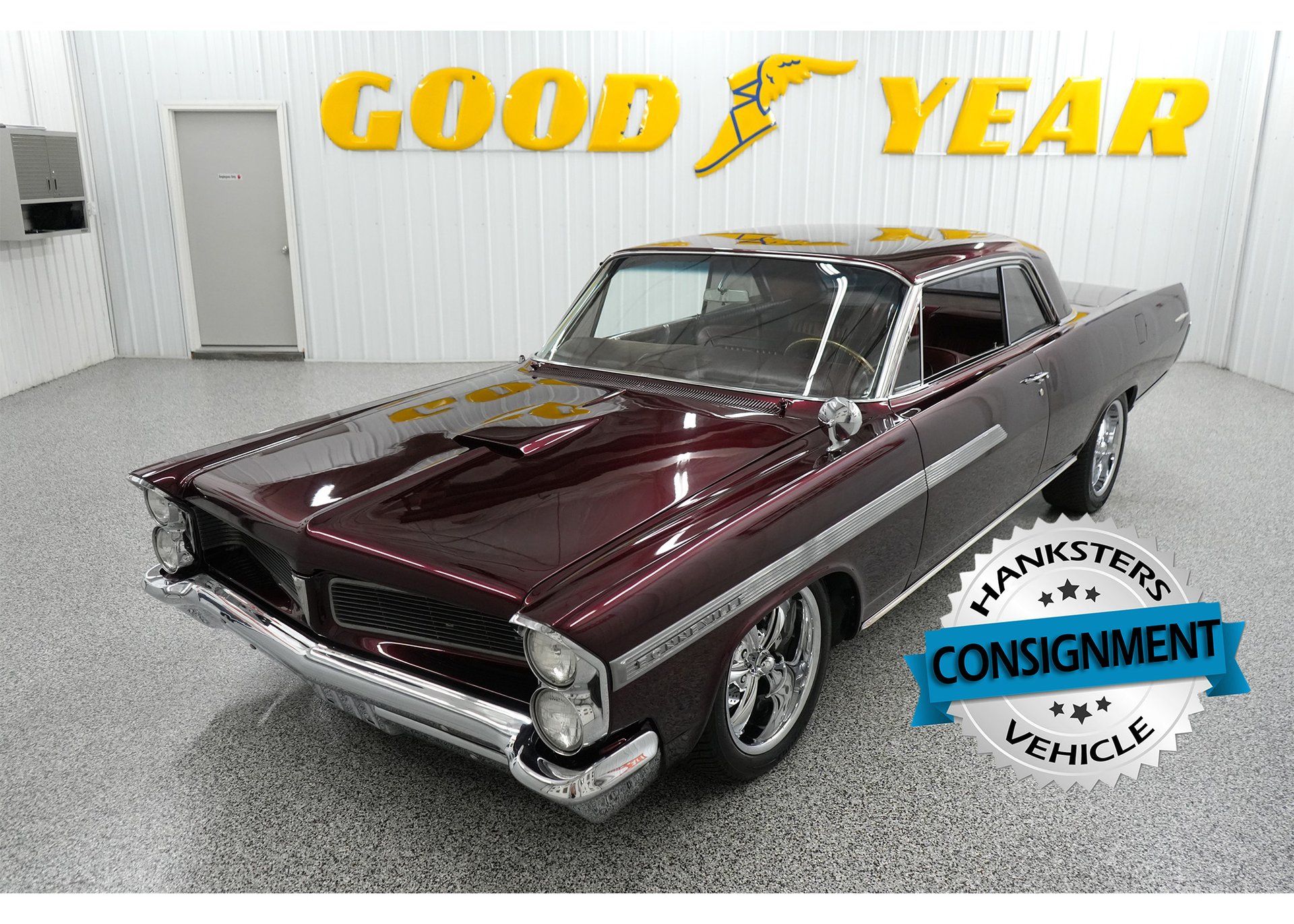
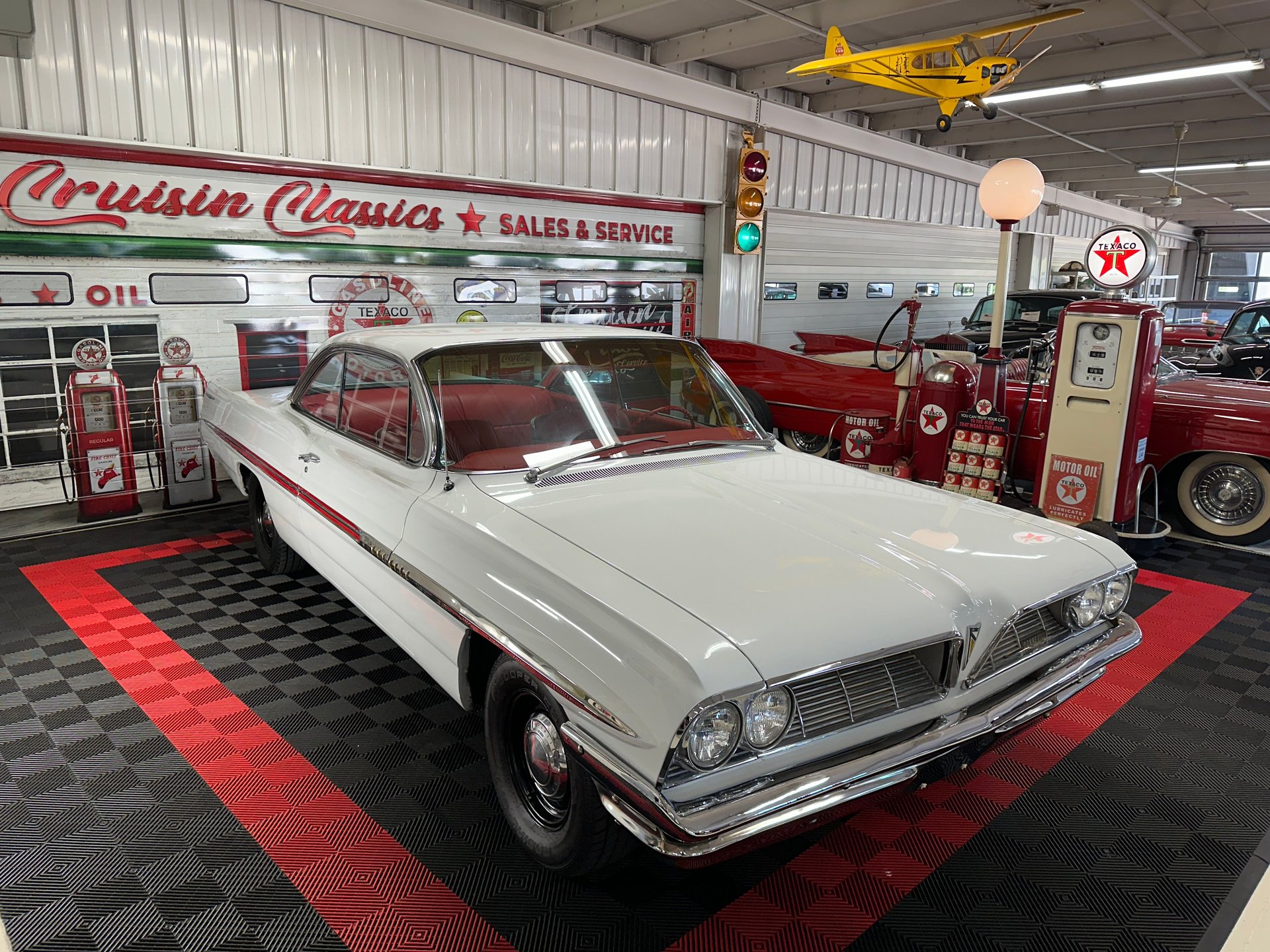
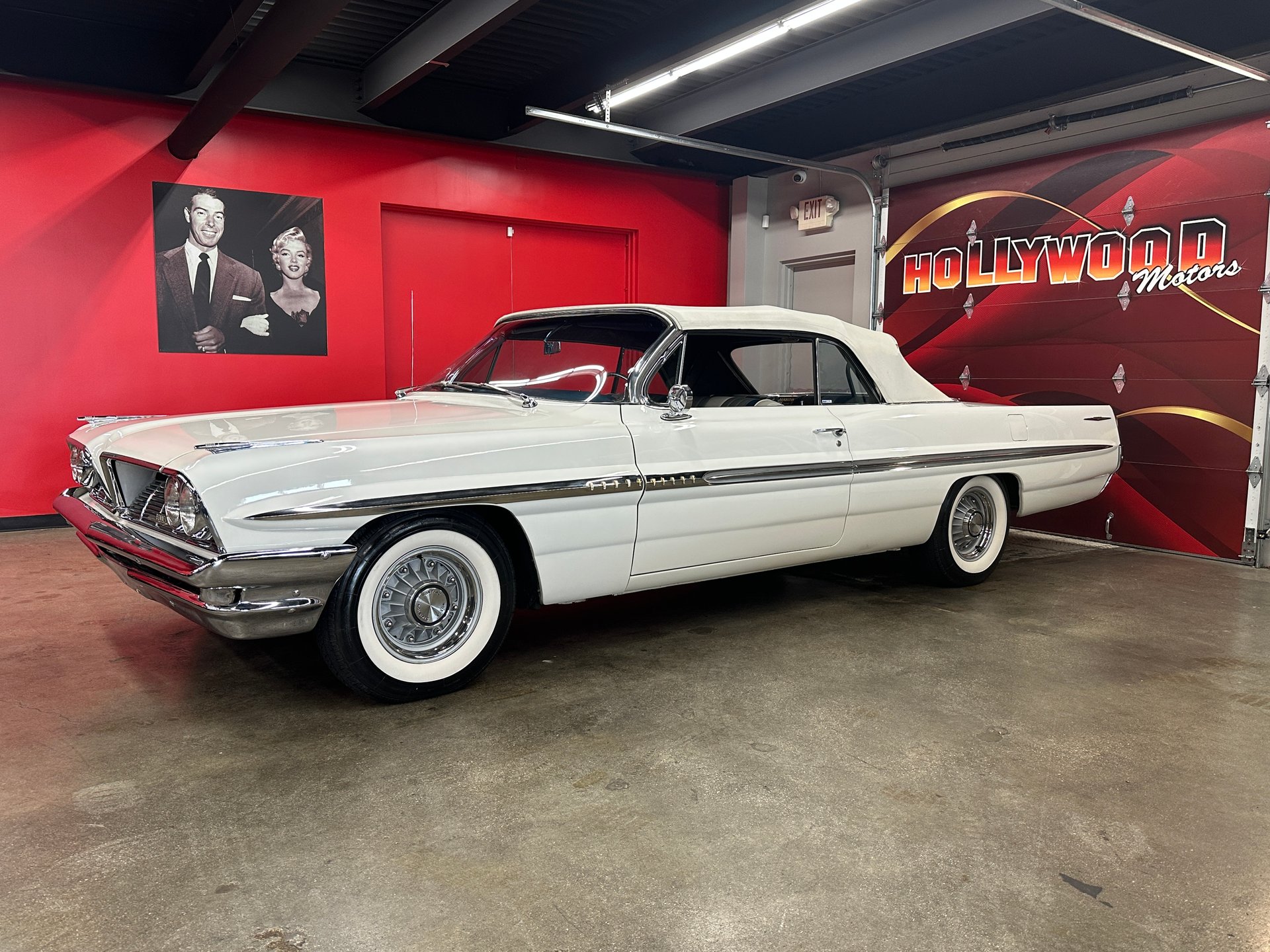
The Wide Track cars, 1959 to 1964. This is the heart of the classic Bonneville market. The 1959 restyle pushed the wheels outward — Wide Track was an engineering change and an advertising slogan at once — and introduced the split grille that became a Pontiac signature. The 1961 cars cleaned the styling up dramatically, and the 1963 and 1964 cars, with their stacked quad headlamps and crisp restraint, are for many buyers the best-looking full-size Pontiacs ever built. Underneath, the 389 is standard and the 421 — the engine of Super Duty drag racing fame in lighter Catalinas — was available in Tri-Power form, making a very large car genuinely quick. Two-door hardtops and convertibles carry the premiums; four-door hardtops give you the same car, engine and trim for notably less, and they are the thinking buyer’s route into this era.
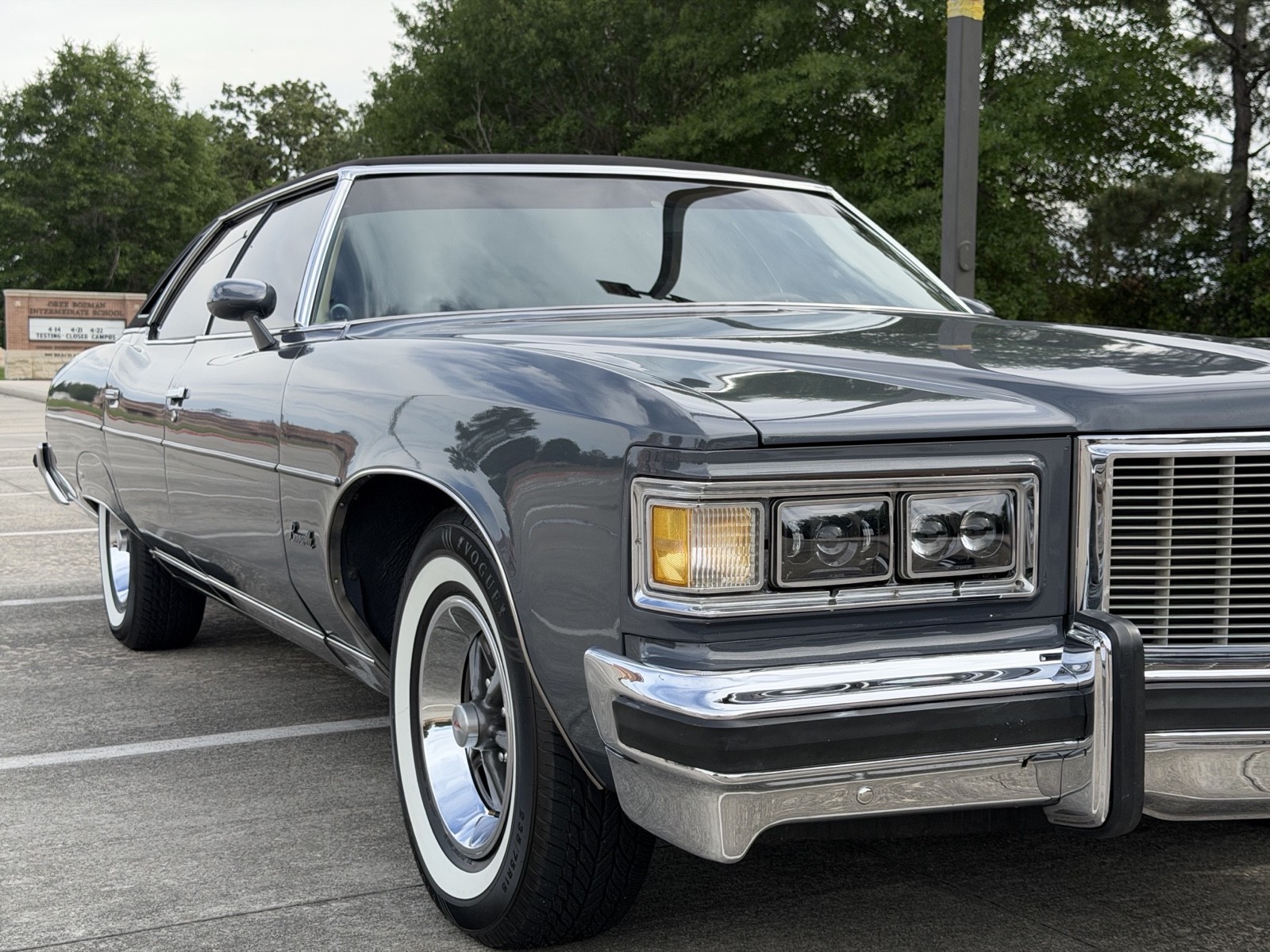
The big B-body cars, 1965 to 1981. The 1965 redesign brought the curved, Coke-bottle flanks and vertically stacked headlamps, and the Bonneville settled in as a large, well-trimmed cruiser: 389 power at first, then the 400 from 1967, the 428 alongside it, and the 455 from 1970. The 1971 to 1976 cars are the biggest Bonnevilles ever made — enormously comfortable, enormously heavy, and the cheapest per pound in this guide, with the Grand Ville above the Bonneville as the true flagship until 1975. The 1977 downsizing cut weight and length dramatically while keeping rear-wheel drive and V8 power. Do not confuse any of these with the 1982 to 1986 Bonneville Model G: the name moved down to the mid-size rear-drive G-body — a pleasant car, but a LeMans successor wearing a flagship badge, and it should be priced and judged as one.
The front-drive cars, 1987 to 2005. The 1987 H-body Bonneville changed everything except the nameplate’s job: front-wheel drive, the 3800 V6, and trims running from LE through SE to the ground-effects SSE. The 1992 restyle added the supercharged SSEi — the performance pick of the late era, first with the Series I blower engine, then with the stronger Series II. The final generation kept the formula, and the 2004 GXP replaced the supercharged V6 with a 4.6-litre Northstar V8. These cars live or die on maintenance and electronics rather than chrome, and the inspection section treats them separately for exactly that reason.

Engines and gearboxes
The Pontiac V8: 370, 389, 421, 400, 428 and 455
Every classic Bonneville V8 belongs to one engine family, and understanding it is the single most useful piece of knowledge in this guide. Pontiac built its V8 from 1955 around one block architecture, then grew it by bore and stroke for twenty years: 287, 316 and 347 cubic inches in the 1950s, the 370 of the first Bonnevilles, the famous 389 from 1959, the 421 from 1961, and — after the range was reorganised in 1967 — the 400 (a bored 389), the 428 (a stroked 421) and finally the 455 (a stroked 428) from 1970. They share a look, a layout and most service knowledge: a deep-skirt iron block, hydraulic lifters, a timing chain under an aluminium front cover that also carries the water pump, and a reputation for torque the gross horsepower figures understate. A healthy one starts readily, idles with a soft lope, pulls from low revs, and shows steady oil pressure — a hot idle pressure that collapses toward zero, or a top-end rattle that does not fade as the engine warms, is a wear verdict, not a character trait.
The differences that matter to a buyer are in the induction and the details. Most Bonnevilles carry a single carburettor — a Rochester or Carter four-barrel on the stronger versions, a two-barrel on the humbler ones — and they are the easiest cars to live with: a Quadrajet or AFB in good order is a fit-and-forget device, and a tired one is a known, priceable rebuild. Tri-Power is the glamorous option: three Rochester two-barrels on one manifold, the centre carburettor doing the everyday work and the outer pair opening under load, offered on the 389 and 421 through 1966. When it is set up correctly it is wonderful — strong, economical at a cruise, and mechanically simple in principle. When it is wrong it is three carburettors’ worth of worn throttle shafts, perished linkage and vacuum leaks, and the classic trap is a car whose outer carburettors have been disconnected or blanked off by a previous owner to hide exactly that. Open the air cleaner on any Tri-Power car: all three units should be present, linked, and fuel-stained in a way that says they work. A proper Tri-Power rebuild and setup by a specialist runs roughly $1,200 to $2,500 depending on how much linkage and plating is involved, so a documented setup is worth paying for. Fuel injection, the 1957 and 1958 Rochester mechanical system, is a different world again: rare, valuable, and specialist-only. Judge an injected car as a collector object — completeness and originality of the unit matter more than whether it runs perfectly on the day — and never pay the injection premium for a car whose unit is missing, incomplete, or a later fabrication.
By year, the engines you will actually meet are these. The 370 (1957–58) is strong and simple, with injection as its headline. The 389 (1959–66) is the classic Bonneville engine — torquey, durable, and the best supported of the early motors. The 421 (1961–66) shares the 389’s manners with more of everything, and the high-output Tri-Power versions are the performance peak of the chrome era; verify a claimed 421 by its block casting and stamped code, because the premium invites badge engineering. The 400 (1967–79) is the workhorse of the late-1960s and 1970s cars, and the 428 (1967–69) its stronger, scarcer stablemate. The 455 (1970–76) is the torque king: gross-rated at up to 360 hp in 1970, progressively detuned through the emissions era, but always the effortless mover of very heavy cars. After the 1977 downsizing the picture fragments — Pontiac’s own 301 (1977–81, adequate rather than strong), the Buick 350, the Pontiac 400 until 1979, and the Oldsmobile-built 403 (1977–79) all appear depending on year and state of sale. Read the engine in front of you, not the year chart: divisional engines were factory practice in this period, and a 403 in a 1978 Bonneville is correct, not a substitution. The 1980 and 1981 cars also offered the Oldsmobile 350 diesel — avoid it unless you specifically collect diesels, for the reasons the problem section gives.
Two Pontiac V8 checks belong in every viewing. First, the timing cover and water pump: the pump is carried in the aluminium front cover, a neglected coolant history eats the cover itself, and the result shows as overheating that owners blame on the radiator — a cover replacement with pump and labour is a $700 to $1,400 job, and it is the first bill many new owners meet. Second, oil leaks are normal in kind but not in degree: rocker covers, the valley pan and the rear main seal all weep, and a dry engine is a recently detailed engine until proved otherwise. What should worry you is smoke: blue under load is rings and bores, blue on the overrun and at start-up is valve stem seals (a known, fixable job), and white, sweet-smelling exhaust with falling coolant is a head gasket or a cracked casting — walk away at classic-Bonneville money unless the rest of the car is exceptional.
The later engines: small V8s, the 3800 V6, the supercharged cars and the Northstar
The 1982 to 1986 Model G cars use the corporate shelf: the Buick 3.8-litre V6 as the base engine (the direct ancestor of the 3800 that followed), the Chevrolet 5.0-litre V8, and Oldsmobile diesel V8s in 4.3 and 5.7 form. The V6 is the pick — smooth, durable, and cheap to keep. The diesels need the warning given below.
The front-drive era belongs to one engine: the 3800. Derived from the Buick V6 line, fitted from 1987 to 2005 in Series I, II and III form, it is one of the most durable engines General Motors ever made — iron block, pushrods, no timing belt, and a bottom end that routinely outlives the car around it. Naturally aspirated versions made roughly 150 to 205 hp and are the low-stress choice. The supercharged version — the L67, an Eaton Roots blower on the same basic engine, fitted to the SSEi — made about 205 hp in Series I form, 225 hp in the mid-1990s, and 240 hp as a Series II, and it transforms the car: torque at low revs, the front tyres as the limiting factor, and genuine pace even today. The blower itself is durable; its coupler and its oil are the service items, covered in the problem section. For 2004 and 2005 the GXP replaced it with the 4.6-litre Northstar V8 (about 275 hp) — an all-alloy, twin-cam Cadillac-shared engine, smoother and stronger, but more complex and expensive to repair, with the family’s known head-gasket and oil-consumption history to check on any individual car. Judge a GXP on its service record and its coolant and oil behaviour, not on reputation alone.
Gearboxes
Classic Bonnevilles are automatic cars. The 1950s cars use Hydra-Matic variants — the controlled-coupling Hydra-Matic and then the Super Hydra-Matic (also marketed as Strato-Flight in its early form) — first-generation four-speed automatics: smooth when right, expensive and specialist-only when wrong. From the mid-1960s the Turbo Hydra-Matic takes over: the TH400 behind the big engines is one of the strongest automatics ever fitted to a production car, and the TH350 behind smaller engines is nearly as well regarded. Both should engage drive and reverse promptly, change cleanly under load, and neither flare nor hunt at a cruise. A rebuild is a known quantity at roughly $1,800 to $3,500 fitted, which makes a slipping box a negotiation item rather than a walk-away — unless the same car also needs bodywork, in which case the bills are stacking. Manual gearboxes exist on early cars — three-speed column change, and rare four-speed floor change on early-1960s performance orders — and they are collector curiosities: delightful when genuine, but verify one ruthlessly, because a converted car is worth less than either a genuine manual or an honest automatic. On the downsized and Model G cars the TH200 and later overdrive automatics appear; the early TH200 is the weak link of that era, and a car that has already had it replaced with a stronger unit is a better buy, not a suspect one.
The front-drive cars use electronic four-speed transaxles — the 4T60 and 4T60-E, then the 4T65-E, with the heavy-duty 4T65E-HD behind the supercharged engine and the 4T80-E behind the Northstar GXP. The test is the same in spirit and stricter in practice: shifts should be clean and consistent hot and cold, the torque-converter lockup should engage without a shudder, and any car with a stored transmission fault, burnt-smelling fluid, or a flare on the two-to-three change is telling you its next big bill. A transaxle rebuild is a $2,500 to $4,500 conversation, so on an SSEi or GXP — cars whose values do not forgive big bills — a documented fluid history and a long, hot test drive are not optional.

Problem areas
Everything in this section follows one rule: on a Bonneville, the body decides. In the photo sets we examined in detail for 17 Bonnevilles currently tracked on Classic Listings, rust was noted on 5 cars and visible damage on 5 more — and that sample flatters the wider market, because listed cars are the survivors. The engines in these cars are among the most durable of their eras. The shells, the frames and the trim are what end them. Work through the problems in the order below: structure first, then the running gear, then the cabin, then the special case of the front-drive cars.
Rust: the map
A classic Bonneville is a body-on-frame car, and that cuts both ways. A rusty body panel is a repair; a rusty frame is a verdict. Start underneath, on a lift if the car is worth real money, and read the frame the way you would read a chassis on any full-size General Motors car of the period: the side rails where they pass under the doors, the crossmembers, the rear rails over and behind the axle, and above all the body mounts, where the shell sits on rubber cushions bolted through the frame. Mounts that have rusted through let the body sag and shift — doors that no longer align, gaps that wander, a car that creaks over driveways. A frame section or mount repair is fabrication work at roughly $800 to $2,500 per area done properly, and a car needing several areas at once is a parts car at any asking price that pretends otherwise. Fresh black underseal blown uniformly over the frame, the mounts and the floor edges the week before a sale is a cover-up until the seller proves otherwise, for the same reason it is on any old car: nobody re-underseals a sound underside as a favour to the next owner.
Above the frame, rust follows the water. Floor pans go first, fed by leaking windshield and rear-window seals and by wet carpets never dried; lift every carpet, including in the trunk, and prod — surface scale is treatable, lace is a panel. Trunk floors and the spare-wheel well collect what the rear window and trunk seals let in, and on the 1971 to 1976 cars the sheer acreage of the trunk floor makes the repair bigger than the panel price suggests. Rocker panels and front fender bottoms trap road dirt behind the wheels and rot from the inside out; bubbling paint at the bottom rear of a front fender is a window into the cowl and rocker behind it, not a cosmetic spot. Door bottoms fill with water when their drain slots block — run a fingertip along the lower edge of every open door. The cowl and windshield base matter disproportionately on the 1960s cars, because water entering there runs down inside the structure and appears, confusingly, as a wet front floor. Convertibles add two traps: the top well behind the rear seat, which holds water against the floor, and the reinforced rails and braces that give an open car its stiffness — a convertible with soft rails is a structural rebuild, not a cheap fix. Safari wagons rust in the rear quarters, the tailgate and the load-floor spare well, and their rear glass and tailgate hardware are among the hardest parts in this guide to replace. Wheel-arch lips, the battery tray and the firewall beneath it complete the map. None of these alone, caught early, kills a car. The pattern is what you are pricing: a Bonneville rusting in four places on the map is a car whose unseen places are worse, and your offer should say so.
The Pontiac V8, fuel systems and driveline in service
The engine itself rarely ends a Bonneville’s life, but four systems around it generate most of the bills. Cooling is the first: these are large engines in cars that were often maintained on a budget in middle age, and the failure chain runs from a silted radiator and a corroding aluminium timing cover to overheating, to a warped head or a failed gasket. A car that runs hot in traffic, whose temperature climbs at idle and falls at speed, is describing airflow and fan-clutch trouble; a car that climbs steadily under load is describing circulation — radiator, pump, cover, or combustion gas in the coolant. Test which one you have before you buy, because the prices differ by an order of magnitude. The nylon-toothed timing gear fitted in many General Motors engines of the late 1960s and 1970s deserves a direct mention: the plastic teeth age, harden and shed, the chain jumps, and the debris blocks the oil pump pick-up. Any 400, 403 or 455 of that era without a documented timing set replacement should be priced as if the job — roughly $600 to $1,200 with the chain, gears and a pick-up clean-out — is still to do. Carburation is the third system, and the distinction from the models section matters here: a single four-barrel that hesitates is usually a tired accelerator pump, a perished vacuum line or a choke fault — cheap causes, in that order — while a Tri-Power car that hesitates may need the full three-carburettor setup described earlier. Do not let a seller convert a fuel-system bill into an engine bill, and do not let one convert it the other way either. The Oldsmobile diesel fitted to some 1978 to 1985 cars is the fourth: the 350 diesel’s head-bolt and head-gasket history, its injection pump wear, and its intolerance of neglected fuel filters are all well documented, most surviving cars were converted to petrol decades ago, and a running original diesel is a specialist’s hobby rather than a driver’s buy.
Behind the engine, the driveline is the strong suit. Turbo Hydra-Matic gearboxes fail by neglect — black, burnt fluid and a flare on changes — rather than by design, and rear axles whine from worn bearings long before they break. Because the driveline is tough, sellers neglect it entirely, so budget for fluids, seals, universal joints and a pinion seal on any car without records, at a few hundred dollars in parts and a day’s labour, rather than discovering them one leak at a time.
Suspension, steering and brakes
A full-size Bonneville rides on coil springs, double wishbones at the front and a live rear axle — simple, strong, and by now almost always worn in the same places. Ball joints, tie-rod ends, the centre link and the idler arm wear together, and a car that wanders, follows road camber, or knocks over bumps is describing a front-end refresh at roughly $900 to $2,000 in parts and labour with an alignment, not a mysterious handling flaw. Saginaw power steering boxes leak and develop play at centre; a box rebuild is a few hundred dollars, a pump less, and both are routine. Rear springs sag — the 1971 to 1976 cars sit down at the back on tired coils and tired air-shock conversions alike — and a car sitting nose-up needs its rear springs or mounts looked at, while a car sitting unevenly side to side deserves a frame check before a spring check. Air shocks fitted to mask sag are a previous owner’s deferral, priced accordingly.
Brakes divide by era. Front discs became common from the late 1960s and standard in the 1970s; earlier cars carry drums all round, which stop a two-ton car adequately when perfectly maintained and poorly when not. What actually stops old Bonnevilles being driven is sitting: seized calipers and wheel cylinders, perished hoses, a corroded master cylinder and lines that look sound until the first hard stop. Price a full hydraulic refresh — master cylinder, hoses, calipers or cylinders, fluid and an honest look at every hard line — at roughly $900 to $2,200 fitted, and treat it as non-negotiable recommissioning on any car that has stood. A pulling brake, a sinking pedal, or a handbrake that barely holds are each small diagnoses with the same conclusion: the system needs opening, not adjusting.
Interior, trim and electrics
The cabin is where a Bonneville’s flagship status costs you. These were the best-trimmed Pontiacs of their day: deep seats in vinyl or cloth-and-vinyl (leather is rare), extensive brightwork, woodgrain appliqué from the mid-1960s, and options — power windows, power seats, air conditioning, tilt columns, cruise control — that each add a motor, a switch and fifty years of contact corrosion to your inspection. Seat padding collapses, and the driver’s seat always goes first; sit in it, not beside it. Re-trimming a full interior to a good standard is a four-figure job in materials alone, so a sound original interior is worth a real premium over a shiny engine. Brittle sun-damaged vinyl, a cracked dash pad on the 1970s cars, and delaminating woodgrain are all visible in listing photographs if you look — and in our examined photo sample, trim and presentation faults were as common as the rust findings, the pattern of cars that were kept running but stopped being cherished.
Trim is the hard ceiling on restoration. Bonneville-specific side mouldings, scripts, grille sections, tail panels and lamp bezels were made for one or two model years, were never reproduced in depth, and are hunted by every other owner of the same car. A mechanically tired car with complete trim is a better buy than a strong runner missing its brightwork, every time — engines can be rebuilt from a catalogue, a 1963 grille cannot. Electrics fail at connections rather than in components: earth straps, bulkhead connectors, fuse-box corrosion and window switches account for most faults, and the test is simply to work everything — every window from both switches, the seat, the blower on every speed, the washers, the clock, the radio — because a car where everything works has been used and maintained, and that is the best single predictor in this whole guide. Air conditioning deserves its own line: a complete but dead system is a recommissioning at roughly $800 to $2,000 depending on compressor, hoses and conversion state, while a system with components missing is an open-ended one. Price the difference.
The front-drive cars: 3800, blower and transaxle problems
The H-body cars rust differently and fail differently, and a chrome-era checklist will miss their real problems. Structure first, as always: front subframes and their mounting areas, rear suspension mounting points, rockers, floors and strut towers. A rusty subframe on a car of this value is the same verdict as a rusty frame on a 1965 car — the repair exceeds the car. Mechanically, the 3800’s known fault is coolant where it should not be: on Series II naturally aspirated engines the plastic upper intake manifold can erode around the exhaust-gas recirculation passage until coolant leaks internally, presenting as unexplained coolant loss, a misfire, or in the worst case a hydrolocked engine — and lower intake gaskets across the family weep with age. Neither is a reason to avoid the engine; both are reasons to check coolant level and condition, look for milky residue in the oil, and ask whether the manifold and gaskets have already been done, a $600 to $1,300 job that converts a suspect car into a known one. Supercharged cars add the blower coupler, whose wear announces itself as a rattle at idle that fades as revs rise — a cheap part, a moderate job, often misdiagnosed as engine wear — plus blower oil that should have been changed and rarely has been. Transaxle health is the other big-ticket item, joined by the electronics of age: wheel-speed sensors and the anti-lock and traction systems they feed, climate actuators, window regulators, and clusters with failing backlights. None is individually expensive; a car needing six of them is a project wearing a daily driver’s clothes. The Northstar GXP adds coolant history, oil consumption, and any sign of the head-gasket failure the family is known for — on this engine a repair priced in the thousands, and an engine-out job. Buy a GXP on paperwork.


How to inspect one
Allow a full hour for a classic car and at least forty minutes for a front-drive one, and bring a torch, a cloth-wrapped magnet and a phone for photographs. If a chrome-era car passes your inspection, pay for time on a lift before money changes hands — on a body-on-frame Bonneville the lift is where the verdict lives. Work in this order, and be willing to stop early: the walk-away faults are arranged to surface before you fall for the car.
- Start with the paperwork and the identity. Match the vehicle identification number on the title to the plate on the car — the cowl or door-jamb plate on the classic cars, the plate at the base of the windshield on the front-drive cars. Check the engine against the badge: a claimed 421, a claimed Tri-Power car, a claimed fuel-injected 1958 and a claimed SSEi all carry premiums that the hardware, not the trunk lid, has to prove. A thick history file is worth real money on any Bonneville; its absence on a restored car is a question, not a detail.
- Cold start, and insist on it. The engine should be stone cold when you arrive. A Pontiac V8 should fire readily, settle to an even idle, and show no smoke beyond a first puff; listen for a top-end rattle that persists (wear, not warm-up) and watch the temperature gauge’s whole story from cold. A 3800 should start cleanly and idle without the rattle that marks a worn supercharger coupler on an SSEi. A seller who has warmed the car up for you has edited your inspection.
- Fluids before road. Engine oil: level, colour, and smell — thin, fuel-smelling oil on a carburettor car points at a flooding needle valve or a failing pump diaphragm, and milky residue under the filler cap on a 3800 points at the coolant faults in the problem section. Coolant: level in the radiator or reservoir, rust or oil in it, and any sign of sealant abuse. Transmission fluid: pink and sweet is a serviced box, brown and burnt is a rebuild negotiation. Brake fluid dark as tea means the hydraulic refresh in the problem section is already owed.
- Underneath: frame, mounts and floors. Torch along both frame rails, every crossmember you can reach, and all the body mounts. Perforation in a rail, a mount pulling through, or a floor you can flex with thumb pressure is structural — this step decides whether the inspection continues at all. Read the underseal as you go: patchy, chipped and honestly dirty is factory age; a fresh, uniform black coat over rails, mounts and seams is a question the seller needs to answer with photographs of the work, not adjectives.
- The rust map, top side. Work the map from the problem section in order: rockers and front fender bottoms, door bottoms with every door open, wheel-arch lips with the magnet (filler announces itself by a dead response), the cowl and windshield base, the battery tray, and the trunk — lift the mat and the spare, look in the well corners, and smell for the damp that says the rear window seal has been feeding it. On a convertible, add the top well and work the top up and down twice; on a wagon, the tailgate and load floor.
- Trim census. Photograph the car from every side and count what is missing or damaged: grille sections, side mouldings, scripts, lamp bezels, hubcaps or road wheels, interior brightwork. Price every missing Bonneville-only piece as a hunt, not a catalogue order, because that is what it is. A car complete in trim but tired in paint is a better buy than the reverse, and this step is where you find out which one you are looking at.
- The test drive: engine and gearbox together. Fifteen minutes minimum, including a sustained faster stretch. A Pontiac V8 should pull from low revs without hesitation — a flat spot is carburation or vacuum until proved otherwise — and a Tri-Power car should pull noticeably harder when the outer carburettors open. The automatic should engage promptly, change cleanly, and select reverse without a long pause or a thump. On an SSEi, feel for torque steer; on any front-drive car, feel the converter lockup for shudder and the two-to-three change for flare, hot, at the end of the drive, not just cold at the start.
- Steering, suspension and brakes on the move. The steering should be light, centred and free of wander; play at centre plus a knock over bumps is the front-end refresh from the problem section, priced in. Brake firmly from speed twice: the car should stop straight, without judder, pull or a sinking pedal, and the handbrake should hold on a slope. Note the stance when you get out — level is correct; down at the rear is springs or deferrals; uneven side to side sends you back to step 4.
- Heat, electrics and every switch. Let the car idle hot and watch the temperature for five full minutes — a classic V8 that creeps upward at idle is describing its cooling system to you. Then work everything: every window from both switches, the power seat, blower on all speeds, heater hot and cold, air conditioning if fitted (cold air or a priced recommissioning — decide which you are buying), washers, wipers, horn, lights and radio. Dead accessories are individually cheap and collectively diagnostic: they mark a car that stopped being maintained.
- Interior last, from the driver’s seat. Sit where the owner sat. Feel for collapsed padding and a spring frame coming through, look for the brittle vinyl, cracked pad and worn bolster that listing photographs flatter, and check the rear seat and headlining with the same honesty. Look under the mats for the moisture step 5 predicted, and weigh what you find heavily — a sound original interior is the hardest part of a Bonneville to recreate at any price.
- Front-drive extras, if the car has them. On an H-body car, add: coolant level and any unexplained loss (the intake-manifold question), a scan for stored fault codes if the seller permits it, anti-lock and traction warning lamps that light at key-on and go out, climate controls through their full range, and a hard look at the front subframe and its mounts from underneath. On a GXP, add oil consumption history and coolant paperwork to the file from step 1.
- Close with the arithmetic, not the emotion. List what the car needs in three columns — safety and structure, mechanical recommissioning, cosmetics and trim — and price each column from the ranges in this guide before you name a figure. A car that needs the first column is a walk-away at any price that ignores it; a car that needs only the third is the one to stretch for.

Values
The market content beneath this guide — the cars listed now and the recorded sales — carries the current numbers, refreshed as the market moves, and this section’s job is to teach you how to read them. The Bonneville market is really several markets wearing one badge, and the first discipline is never to compare across them: a chrome-era convertible, a 1970s sedan, a Model G and a supercharged SSEi share a name and nothing else, and an average drawn across all four tells you less than nothing.
Within the classic market, the spread is driven by body style, engine proof and structure, in that order of surprise to newcomers. Convertibles sit at the top, two-door hardtops below them, and four-door cars — hardtops especially — offer the same engineering and trim for a fraction of the commitment, which is why experienced buyers who intend to drive rather than show so often end up in a four-door. Tri-Power and 421 cars carry real premiums, but only when the hardware is proved by stampings and castings; an unproved performance claim should be priced as the standard car it may be. The condition spread is the widest fact in the market: the gap between a rusty project and a sound, original driver is not a percentage, it is a multiple, and the gap between that driver and a genuinely excellent, correctly trimmed car is another step again — because the expensive parts of a Bonneville are the body, the trim and the interior, and those are exactly what the top cars have and the cheap cars need. Asking prices in this market habitually sit above achieved prices, most of all on the big 1970s cars, where optimistic listings can wait a long time; recorded sales, not listings, are the evidence, and a car that has been advertised unchanged for months is the market speaking.
The 1977 to 1981 downsized cars and the 1982 to 1986 Model G sit in the value basement of the range, and that is an opportunity with a condition attached: they are cheap because demand is thin, not because the cars are poor, but thin demand also means a restoration will never be repaid — buy the best example you can find, already done, rather than building one. The front-drive cars follow the modern-classic pattern: ordinary SE and LE cars are inexpensive transport with a following, the SSEi carries a modest premium that depends entirely on blower, transaxle and coolant history, and the GXP is the speculative end of the late market — rare, fast, and priced on paperwork. Across every era the negotiation reality is the same: the seller is selling the best version of the car’s story, and your inspection columns — structure, recommissioning, trim — are the counter-argument, itemised and priced. Cars with complete trim, sound frames and documented work sell close to their story. Cars without them sell at the price of the work they need, however the listing is written.
Parts and ownership
The Bonneville’s great ownership advantage is its family. The classic cars share their shells with the Catalina and, in later years, with other General Motors B-body cars; the running gear is corporate; and the Pontiac V8 was built in the millions. The mechanical catalogue is deep and the knowledge base — clubs, forums, specialist suppliers — is one of the strongest in the American hobby.
Easy: service items for every engine in this guide, brake hydraulics and friction parts, suspension and steering wear parts, cooling components, exhaust systems in standard form, glass for the common body styles, weatherstrips and seals, and — for the 3800 cars — sensors, gaskets, intake manifolds and supercharger couplers, all still in ordinary trade channels. A Pontiac V8 rebuild is a known job at any competent machine shop, and the parts are a catalogue order, not a treasure hunt.
Harder and dearer: year-specific exterior trim, grilles and lamp bezels; Bonneville scripts and side mouldings; convertible top frames and wagon tailgate hardware; correct Tri-Power linkage and air cleaners; a complete, correct Rochester fuel-injection unit for a 1957 or 1958 car; Grand Ville and Brougham interior trim; and, on the late cars, SSE and SSEi body cladding, clean instrument clusters and Northstar engine work, which is specialist territory with specialist pricing. The rule from the problem section holds for ownership as much as for buying: completeness of trim on the day you buy is worth more than any mechanical promise, because that promise can be kept from a catalogue.
Running costs. A sorted classic Bonneville is a realistic regular-use car: fuel consumption in the low-to-mid teens is the honest expectation for a big V8, less for a downsized or V6 car, and the supercharged 3800 sits between. Insurance and club support are in line with other full-size American classics. The budget line that catches new owners is the first year: catching up deferred maintenance on a running classic runs into the low thousands before any improvement begins, and recommissioning a car that has stood for years — fuel system cleaned end to end, brakes gone through, all fluids, seals and hoses renewed, tyres replaced on age alone — is a larger figure again. The front-drive cars invert the pattern: cheaper to recommission, with their money going instead to the intake, transaxle and electronic items that age on a calendar. Buy a car in regular use over a sleeping car at the same money, in every era of this badge.
Which one to buy
- The all-rounder: a 1963–1964 Bonneville hardtop with the 389. The best styling of the run, the best-supported early engine, and a deep market to buy from and sell into. A four-door hardtop is the same car for less; buy it on frame and trim.
- The value buy: a 1965–1970 four-door or a 1977–1981 coupe or sedan. The big B-body experience — 400 or 455 torque in the early cars, lighter and handier in the downsized ones — at the gentlest prices in the classic range. These cars reward buying condition ruthlessly, because the market will not repay restoration.
- The cruiser: a 1971–1976 Bonneville or Grand Ville with the 455. The largest, softest Bonnevilles ever made, and the cheapest way into big-block ease. Check the trunk floor and rear quarters twice, because the acreage rusts in proportion.
- The collector car: the 1957 fuel-injected convertible, or a proved 421 Tri-Power car. The 1957 is a 630-car halo model — buy it as an artefact, on completeness of the injection unit above all. The 421 is the usable collector alternative, and the word proved is doing the work: stampings and castings, or it is priced as a 389.
- The modern classic: a 1996–1999 Bonneville SSEi. The Series II supercharged 3800, the strongest of the blower cars, with the intake and transaxle questions answerable from paperwork. The 2004–2005 GXP is the alternative for the buyer who wants the last V8 Bonneville — bought, again, on its coolant and service record.
- The honest transport: any well-kept 3800 SE or LE. Not collectible, not pretending to be — just one of the most durable engines of its era in a comfortable car, bought cheaply and run properly.
And the rule that overrides all of the above: buy the soundest structure and the most complete trim you can find, in the era you can live with. Engines, gearboxes, brakes and blowers are all fixable at prices this guide has put numbers on. A rusted frame or a car stripped of its year-specific brightwork costs more to put right than the finished car will be worth — and it can never be made original again.
See the 23 Bonneville cars currently listed.