
Plymouth Belvedere buyer's guide
Plymouth Belvedere -- the model's own buyer's guide: variants, values and what to check.
Years listed: 1954-1967 · Series: B-Body
Overview and history
The Plymouth Belvedere is two cars wearing one name, and a buyer has to know which one he is looking at before anything else about it makes sense. From 1951 to 1961 it was Plymouth's full-size flagship line — fins, chrome, pushbuttons and family sedans. From 1962 to 1970 it was something else entirely: the mid-size B-body, the platform that carried the Max Wedge drag cars, the 426 Hemi, the GTX and, wearing Belvedere bones under a cartoon badge, the Road Runner. The name died after 1970, but the second car is the reason the name matters, and it is the centre of gravity of today's market.
The badge began modestly. Belvedere first appeared in 1951 as the name of Plymouth's pillarless two-door hardtop, a version of the Cranbrook, and in 1954 it became a series in its own right, sitting at the top of the Plymouth range. The early cars are honest flathead-era and early-V8 machines: well built, conservatively styled, and worth buying today as period cruisers rather than as performance cars. Everything changed, visually at least, in 1955, when Virgil Exner's Forward Look restyled the whole Chrysler Corporation range, and again in 1957, when the second-generation Forward Look cars arrived with soaring fins, torsion-bar front suspension and pushbutton TorqueFlite automatics. A 1957 or 1958 Belvedere — the car Stephen King's novel and the John Carpenter film made famous in Christine form, strictly a Fury in the book but a Belvedere-bodied car to most eyes — is a genuine piece of fifties Americana, and convertibles from those years are the glamour cars of the early Belvedere story.
The finned cars ran to 1961, growing stranger in the styling as they went, and then Chrysler made the decision that accidentally created the muscle car. Believing, wrongly, that Chevrolet was about to shrink its full-size cars, Plymouth downsized its 1962 range onto the new 116-inch-wheelbase B-body. The 1962 cars were too small to compete as full-sizers and were not loved when new, but they were light, stiff and unibody, and Chrysler's engineers promptly discovered that the corporation's biggest engines fitted. Within a year the Belvedere was the car you bought to go drag racing: the Max Wedge programme turned it into a factory weapon, and in February 1964 the 426 Race Hemi made its debut in Belvederes at Daytona and on the drag strips, and cleaned up at both. When the street Hemi arrived for 1966, it arrived in this car.
That racing decade is the Belvedere's real history. The range was structured like a ladder. At the bottom sat the fleet-and-family Belvedere I; above it the better-trimmed Belvedere II; from 1965 the Satellite was the plush top of the line; from 1967 the GTX was the gentleman's muscle car, a Belvedere in a tailored suit with a big engine as standard; and from 1968 the Road Runner took the same shell, stripped it, fitted a proper engine and sold speed cheap. Dodge's Coronet, Super Bee and Charger are the same platform in different clothes, which matters to an owner because it trebles the parts pool. The last Belvederes were built for 1970; for 1971 the whole B-body range was renamed Satellite, and the Belvedere name was retired.
Our own listings tell you where the surviving market sits. We currently track 26 Belvederes, 21 of them for sale, and the years bunch exactly where you would expect: the mid-sixties B-bodies dominate, with 1965 the commonest year, then 1966 and 1967, a pair of 1964 cars — the Race Hemi year — and a thin scatter of earlier cars including 1954, 1957 and 1958 examples. Twenty of the 26 file under the B-body series and six as full-size cars. Red, black and blue are the commonest colours, automatic gearboxes outnumber manuals heavily — as they did when the cars were new — and the sellers split between dealers and Marketplace private sellers, which means the same nameplate arrives in our listings as everything from a polished dealer GTX convertible to a private-sale project sedan. Of the small sample of cars we have photo-checked in detail for this model, rust was mentioned in two of seven and visible damage in three — a reminder, on a unibody car now sixty years old, that the shell is the purchase and everything else is a detail.
That spread — family sedan to Hemi hardtop under one badge — is the whole buying problem in one sentence. A Belvedere badge guarantees nothing about what a car is worth, how it should drive, or what it will cost to run. The year, the body style, the original engine and the state of the unibody decide everything, and this guide works through them in that order.


The models
Read the Belvedere range as three eras. The first, 1951–54, is the upright pre-Forward Look car: flathead six power at first, a hardtop and sedan range, bought today for charm and simplicity. The second, 1955–61, is the full-size Forward Look car: V8s arrive, the fins grow, torsion bars arrive for 1957, and the Fury progressively takes over the flagship role, pushing Belvedere down to the middle of the range by 1959 — which is why a late-fifties Belvedere is usually a better buy than the Fury everyone else is chasing: the same shell and running gear without the flagship premium. The third era, 1962–70, is the B-body, and it is where most of the cars, and nearly all of the money, are.
Within the B-body years the ladder matters more than the badge on the wing, because the same two-door hardtop shell could leave the factory as a six-cylinder family car or as one of the fastest production cars in the world:
| Model | Years | Engine | Output | Built | Character |
|---|---|---|---|---|---|
| Belvedere (full-size) | 1954–1961 | Flathead six, then Poly V8s | 100–305 hp | High volume | The Forward Look family car; convertibles are the prize |
| Belvedere I / II (B-body) | 1962–1970 | Slant six to 426 Hemi | 101–425 hp | High volume | The base cars — and the shell every clone starts from |
| Satellite | 1965–1967 (as Belvedere flagship) | 273 V8 to 426 Hemi | 180–425 hp | Moderate | The plush one: better trim, bucket seats, same bones |
| Belvedere GTX | 1967 | 440 Super Commando or 426 Hemi | 375–425 hp | 11,277 | First-year GTX; hardtop and convertible |
| Max Wedge cars | 1962–1964 | 413 / 426 Max Wedge | 410–425 hp | Low, race-ordered | Factory drag cars; provenance is everything |
| Race Hemi cars | 1964–1965 | 426 Race Hemi | 425 hp (nominal) | Very low | A864 and A990 programmes; expert-only territory |
(Outputs are period gross ratings, which flatter everything roughly equally; treat them as a ranking, not a promise. Production figures are given only where they are solidly documented — for most Belvedere variants no trustworthy factory breakdown survives, and any seller quoting you an exact build count for an ordinary car is quoting folklore.)
The early cars, 1951–61. The pre-1955 cars are simple, slow and charming, with the flathead six and three-speed manual or early automatic gearboxes; buy them on body and trim condition, because mechanical parts are easy and brightwork is not. The 1955–56 cars brought the first Plymouth V8s and the Forward Look shape in its gentler form. The 1957–59 cars are the iconic ones — the finned shape, Torsion-Aire ride, pushbutton automatics on the dash, and a choice of Poly V8s up to the big 361 in the later cars. The 1960–61 cars share the mechanicals with plainer, odder styling and are correspondingly cheaper; a 1961 is the thinking buyer's way into a finned Plymouth, though by then the fins themselves were shrinking.
The 1962–64 B-bodies. The downsized cars: short, light, and styled in a hurry, with the plucked-eyebrow front end of 1962 giving way to cleaner lines for 1963 and a handsome squared-off car for 1964. These are the Max Wedge and Race Hemi years, and they are covered in the engines section, but note the trap: because the fast cars are so valuable and the ordinary cars are not, this is the most cloned corner of the whole Belvedere world. A genuine 1964 Race Hemi car is a documented competition artefact; a 1964 Belvedere with a Hemi in it is, until the paperwork proves otherwise, a tribute. The ordinary 1962–64 cars — slant sixes, 318 Polys, 361 and 383 big blocks — are good, tough, undervalued classics in their own right, and a 383 car is a genuinely quick period machine.
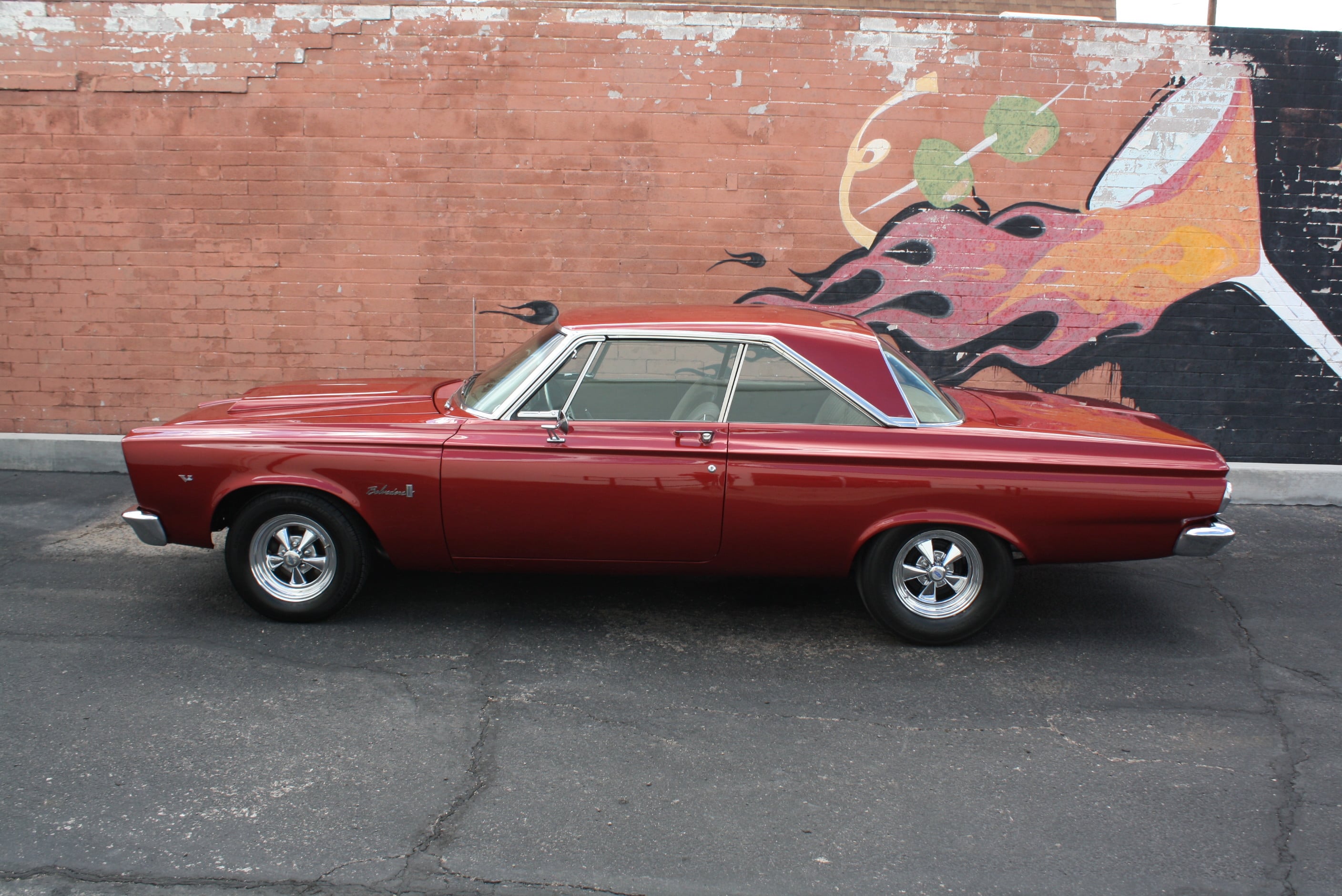
The 1965–67 cars. The B-body grew up: styling became the crisp, stacked-headlamp, slab-sided look most people picture, the wheelbase stayed 116 inches, and the range settled into Belvedere I, Belvedere II and Satellite. 1965 is the last year of the pushbutton-free but still cable-shifted automatic and the first year of the Satellite. 1966 brought the street 426 Hemi as an option across the two-door range and a handsome facelift. 1967 brought the GTX — Plymouth's upmarket muscle flagship, 440 as standard, Hemi as the option, hardtop or convertible — and the cleanest styling of the three years. These are the years our listings show most, and they are the sweet spot of the whole model: old enough to be raw, new enough to be usable, and supported by the strongest reproduction-parts trade.
The 1968–70 cars. The B-body was restyled for 1968 with the rounded Coke-bottle shape, the Satellite became a series in its own right, and the Belvedere name slid to the bottom of the range — the base car under the Road Runner, which was itself a Belvedere two-door sedan with a horn that went beep-beep and a 383 Magnum as standard. A 1968–70 Belvedere is therefore usually the cheapest way into the late B-body shell, and the Road Runner connection cuts both ways: genuine Road Runners are valuable, so base Belvederes get dressed as them. Buy the 1968–70 Belvedere as what it is — a handsome, simple muscle-era family car — and let other people pay the cartoon premium. The name ended after 1970, replaced in the range by Satellite.

Engines and gearboxes
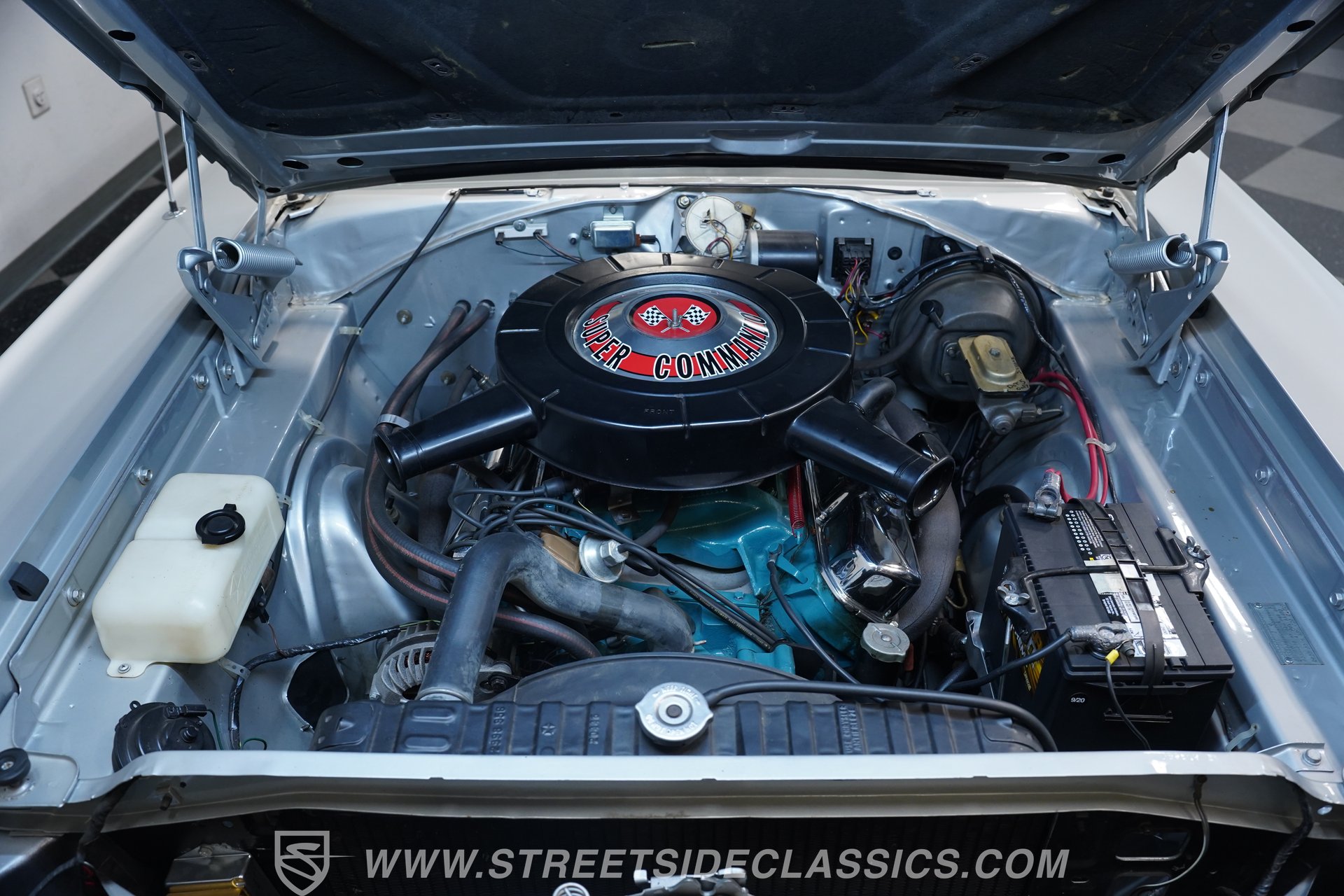
Every Chrysler engine family of the period turns up in a Belvedere somewhere, which is both the joy and the danger of the model. Learn to identify what you are actually looking at, because badges lie and engines get swapped: the quick field checks are the distributor position (front of the engine, angled, on the big-block B and RB engines; at the back on the small-block LA and the Poly), the valve covers (the Poly 318 has scalloped lower edges to its covers and is visibly wider than the LA that replaced it), and, on a claimed Hemi, the sheer width of the heads and the spark plug tubes running down through the middle of the valve covers. If the plugs are at the side, it is not a Hemi, whatever the air cleaner says.
The sixes and the small V8s: slant six, Poly and LA
The flathead six powers the pre-1955 cars: side-valve, unstressed, almost impossible to kill and equally impossible to make fast. Judge it on oil pressure, quiet running and a cooling system that holds temperature; overheating warps heads and cracks blocks on these, and a car that boils on the test drive is telling you the radiator and the water distribution tube need money.
The slant six (170 and, in the B-body cars, almost always the 225) is the base engine from 1960 on. Chrysler leant the block over 30 degrees to lower the bonnet line, and the result is one of the most durable engines ever built — seven main bearings' worth of smoothness in spirit, though it has four, an iron constitution, and a reputation for outliving the car. Its known habits: the long intake manifold gives lazy cold running and icing in damp weather until it warms; exhaust manifolds crack; and the valves are mechanical on early cars, so a neglected one ticks and loses power rather than breaking. A slant-six Belvedere is slow and honest, and as a cheap way into the shell it makes real sense — but know that converting one to a V8 later is a bigger job than the forums claim, involving the K-frame, torsion bars, brakes and rear axle if it is to be done properly.
The Poly 318 (the A engine, 1957–66 in these cars) is the workhorse V8 of the finned and early B-body years. Polyspherical combustion chambers, a wide, heavy engine, torquey and unburstable, with a soft, lazy character. It is not the same engine as the later LA 318 despite sharing the displacement and much of the bottom end, and almost nothing on top interchanges — the single most common parts-counter mistake with these cars. Parts support is thinner than for the LA but the engine itself rarely needs anything beyond gaskets, a timing chain and carburettor attention.
The LA small blocks — 273 from 1964, 318 from 1967 in this range, and the 340 from 1968 in the wider B-body family — are the modern-pattern small blocks: lighter, narrower, distributor at the rear. The 273 is a sweet, revvy engine hampered in these cars by mild factory tuning; the LA 318 is the default driver engine, cheap to run and cheap to fix; the 340 is a genuine performance engine but was not a mainstream Belvedere fitting, so a 340 in a Belvedere deserves a paperwork question rather than automatic suspicion — swaps are common and often well done. All LA engines share the family's virtues (strong bottom ends, cheap parts) and its vices: timing chains stretch, rear main seals weep, and the exhaust manifold bolts at the ends of the heads seize and snap.
The big blocks: B and RB wedges, Max Wedge and the 426 Hemi
This is the section the money reads. The Chrysler big blocks come in two deck heights: the B series (361, 383 and the later 400) with the shorter deck, and the RB or raised-B series (413, 426 wedge and 440) standing roughly three-quarters of an inch taller. Both carry the distributor at the front, driven off the camshaft, tilted towards the passenger side. All of them are iron, understressed in road tune, and capable of enormous mileages. In a Belvedere you will meet the 361 as an early-sixties fitment, the 383 everywhere — it is the default big-block Belvedere engine and, in Magnum or Super Commando form with the high-performance manifolds, cam and carburettor, a seriously strong road engine — and the 440 from 1966 in the full-size cars and from 1967 as the GTX's standard engine. The 440 Magnum or Super Commando, rated 375 hp gross, is arguably the best road engine of the whole muscle era: enormous torque, hydraulic lifters, a single four-barrel Carter carburettor, and none of the Hemi's temperament or maintenance appetite. A good 440 car gives you nine-tenths of the experience for a fraction of the cost and worry.
The Max Wedge cars of 1962–64 are competition engines in street clothing, and barely that: 413 and then 426 cubic inches, high compression, a cross-ram intake carrying twin Carter four-barrels, free-flowing cast exhaust manifolds and, in the later Stage III form, a specification aimed purely at drag racing. They idle like a cement mixer, they foul plugs in traffic, and they are magnificent. They are also rare, race-ordered and almost always with competition history, which means the buying rule is absolute: a Max Wedge Belvedere is bought on documentation — factory records, period photographs, racing history — or it is bought as a clone at clone money. There is no middle position, and the engine alone, however correct its casting numbers, does not make the car genuine.
The 426 Hemi needs its myth handled first. The Gen II Hemi arrived as a race engine in 1964 — single four-barrel for NASCAR, twin four-barrels for drag racing in the A864 cars, then the aluminium-head A990 programme for 1965 — and as a detuned street engine from 1966, with twin Carter AFB carburettors, hydraulic lifters, a milder cam and a nominal 425 hp gross that everyone in the period understood to be a polite fiction. In a Belvedere it was available in the two-door cars, including the Satellite and the GTX. The street Hemi is a strong engine, not a fragile one — forged internals, cross-bolted mains, huge ports — but it is wide, heavy, expensive to rebuild (budget in the region of $15,000–25,000 for a proper full rebuild at a specialist, against roughly $6,000–10,000 for a wedge), and it wants its valve clearances and twin carburettors kept in tune. Solid-lifter race Hemis are another world again. The buying traps are clones and engine swaps, and the defences are in the inspection section: the fifth character of the VIN on 1966-on cars is the engine code and a genuine Hemi car's VIN carries the Hemi code from the factory, the fender tag carries the E74 sales code for the Hemi, and a car whose paperwork starts life as a 318 and now wears Hemi badges is a tribute — price it as a nice hot rod, never as a Hemi car.
Two wedge warnings apply across the big blocks. First, overheating: a big block in a car that has sat for years will have a silted radiator and a tired water pump, and the cooling system has no margin for neglect in summer traffic — a car that creeps up the gauge at idle needs the radiator flow-tested before you blame the engine. Second, the front-mounted distributor makes ignition work easy, but the drive gear and the intermediate shaft wear, giving timing scatter that owners chase through carburettors for months; a timing light that will not hold a steady mark is pointing at the drive, not the points.

Gearboxes
Three families cover the whole run. The early cars use Chrysler's PowerFlite, a two-speed automatic chosen with dash buttons on the finned cars, and three-speed manual gearboxes with a column change. From 1957 the TorqueFlite takes over, and it is one of the great automatics: the A904 for slant sixes and small blocks, the A727 for big blocks, both three-speeds, both famously strong, and both cheap to rebuild by modern standards — roughly $1,500–3,000 for a proper 727 rebuild depending on region and specification. Pushbutton selection ran to the end of 1964; 1965 cars use a cable-shifted column or console lever that is a one-year arrangement with its own adjustment sensitivities, and from 1966 the linkage is the familiar rod setup. A healthy TorqueFlite shifts firmly and promptly, kicks down without drama and engages reverse without a pause; a long delay into reverse on a cold morning is the classic early warning of worn seals, and flaring on the 2–3 shift under power is wear, not adjustment. Budget for the converter and the front pump to be judged at rebuild time, and never let a seller describe a slipping TorqueFlite as a linkage problem until a specialist has agreed with him.
The manual option that matters is the A833 four-speed, Chrysler's own heavy-duty box, with the Hurst shifter on the performance cars. It is a superb gearbox — strong enough that it was fitted behind the Hemi — with synchromesh that wears on second gear first and a linkage that goes sloppy long before the box itself wears out: half of all A833 shifting complaints are worn shifter bushes and maladjustment, fixed for tens of dollars. Three-speed manuals on the base cars are simple and unloved, which makes a three-pedal slant-six or 318 car a cheap buy. Clutches on big-block cars work hard and the linkage — mechanical, with a Z-bar — wears at every pivot; a heavy, creaking pedal is wear in the linkage, usually, rather than the clutch itself.
Problem areas
A Belvedere is a unibody car, and that sentence governs everything in this section. There is no separate chassis to save you: the floor, the rails, the torsion-bar crossmember and the spring hangers are the structure, and rust in the wrong places is not cosmetic work but structural repair on the thing that holds the suspension. The mechanical parts of these cars are, by the standards of sixty-year-old machinery, almost embarrassingly tough — Chrysler engines and TorqueFlites outlive everything around them. So the buying order is always the same: structure first, identity second (on the performance cars), mechanicals third, cosmetics last. Of the cars we photo-checked in detail for this guide, damage or rust showed up in a majority of the small sample, and that is the honest expectation to bring to any viewing.
Rust: the map
Work through a B-body in the order the water and the stress do.
Torsion-bar crossmember and front rails. The most important check on any 1962–70 car, and the one most buyers miss because it hides under the car at the back of the engine bay. The front torsion bars anchor into a heavy crossmember that also carries the transmission, and that member and the frame rails around it trap mud and rot from the inside. Perforation or softness here is serious structural work — the member is loaded every time the car moves — and repairs are fabrication, typically $2,000–5,000 a side done properly with the drivetrain supported, not a patch panel and a Saturday. Get the car on a lift, take a screwdriver, and prod the crossmember ends and the rails where they meet the floor. A seller who will not put a torsion-bar car on a lift is telling you why.
Floor pans and the cowl. Windscreen seals perish, the cowl plenum fills with leaves, its drains block, and water sits under the carpets for decades. Lift every carpet, front and rear, and prod the pans, especially the front footwells under the pedals and the seams where floor meets sill and floor meets firewall. Surface scale is a clean-and-treat job; holes are panel work at roughly $600–1,500 a side fitted, and floor rust never travels alone — read it as a report on the whole shell. On the finned cars the same story applies with flat floors and simpler pressings, and spares are scarcer.
Trunk floor, extensions and rear rails. The boot or trunk seal and the rear window channel leak, and the water collects in the spare-wheel well and in the drop-off extensions behind the rear wheels, exactly where you cannot see it without lifting the spare and the mat. From there it reaches the rear frame rails and the rear spring shackle mounts — and a shackle mount pulling out of a rotten rail is a failure, not a repair bill you can defer. Trunk floor replacement panels are available for the B-bodies and the job runs roughly $800–2,000 fitted and painted; rail and hanger work is fabrication priced per car. Always finish a trunk inspection by looking up at the rear window channel from inside, especially on hardtops: the channel rots under the chrome trim, the first sign is usually bubbling at the lower corners of the glass, and the repair involves glass out and metal fabrication at the corners.
Rear quarters, wheelhouses and spring hangers. The lower rear quarters behind the wheels are the classic B-body rot spot, and they are double-skinned with the outer wheelhouse, so bubbling paint at the quarter's lower edge usually means both skins. Front spring hangers for the rear leaf springs bolt to reinforced sections of the rear rails; check them with the same screwdriver, and check the leaves themselves — a car sitting low or lopsided at the rear may have a broken leaf or a collapsed hanger rather than tired springs. Quarter repair sections exist for the popular years, but blending them into the long, flat 1965–67 flanks or the rounded 1968–70 lines to a standard that does not ripple in sunlight is skilled work; a pair of quarters properly done is a $3,000–6,000 conversation with paint.
The smaller traps. Door bottoms (drain slots block, doors fill with water — run a fingertip along every door's bottom edge and feel for bubbling), front fender tops and the headlamp areas on the finned cars, the battery tray and the inner wing under it, the lower front fenders behind the wheels, the drip rails and roof edges on cars that have lived outside, and the Dutchman panel between the rear window and the trunk lid. None of these alone kills a car; together they are the difference between a car that has been garaged and a car that has been rained in for thirty years, and the bill for fixing all of them is why the honest, dry, slightly scruffy car beats the shiny one with filler in every seam. Learn the underseal tell as well: factory undercoating is patchy, thin at the edges and honestly dirty after sixty years. A fresh, uniform coat of black blown over everything the week before sale — seams, rails, brake pipes and all — is a cover-up until the seller proves otherwise.
Suspension, steering and brakes
The front suspension is Chrysler's torsion-bar system, and it is a good one: longitudinal bars, adjustable for ride height, upper and lower control arms, and ball joints that are a known service item. The torsion bars themselves rarely fail — though a bar with deep corrosion pitting at its anchor ends can snap, which is another reason the crossmember area matters — and the ride height is set by the adjuster bolts, so a car sitting nose-down is usually maladjustment or tired bars, not a mystery. What wears is everything around them: upper and lower ball joints (the uppers screw into the control arm and are a classic seized-in-place fight), control-arm bushes, the idler arm and the tie-rod ends. A full front-end refresh with quality parts is roughly $800–1,800 in parts and alignment, plus labour, and it transforms these cars — vague, wandering steering on a Belvedere is almost never the car's character, it is a worn front end. Check for play with the car on a lift and a pry bar, and check the steering box too: Chrysler power steering is light and rather numb by design, but free play at the wheel beyond an inch or two is box or linkage wear, and a rebuilt box is a $400–800 part before fitting.
At the rear, leaf springs and a live axle — the 8 3/4-inch rear axle on most performance cars, a genuinely strong unit whose centre section unbolts as a pumpkin, which makes ratio changes and rebuilds unusually civilised; slant-six and small-block automatic cars often carry the lighter 7 1/4 or 8 1/4 axles, adequate for their job and a limiting factor in a V8 conversion. Axle tramp under hard acceleration, clonks on take-up and a whine that changes with throttle are the wear signs; an 8 3/4 rebuild is roughly $800–1,500 at a specialist. Brakes are the area where period charm runs out: most Belvederes left the factory with four-wheel drums, adequate when perfectly maintained and sobering when not. Front disc brakes were optional on the later cars and are a popular, well-supported conversion. Budget $800–2,000 to go through a drum system properly — cylinders, shoes, hoses, master cylinder, hardware — and treat any car that pulls, pulses or needs a pumping pedal as needing exactly that before it is driven anywhere. The single-circuit master cylinder on pre-1967 cars is the one upgrade nobody regrets: a dual-circuit conversion is cheap insurance and most specialists will insist on it.
Identity, clones and the performance-car traps
This subsection exists because the Belvedere range contains some of the most cloned cars in the hobby. The shell is common and cheap; the genuine GTX, Hemi and Max Wedge cars are neither. The defence is paperwork and numbers, applied calmly.
The VIN. On 1966–70 cars the VIN plate sits on the driver's side of the dashboard, visible through the windscreen on the later cars and on the door pillar on earlier ones, and its first characters decode the car line and price class — the letters that distinguish a base Belvedere from a Satellite, a Road Runner or a GTX — while the fifth character is the engine the factory fitted. A genuine factory Hemi, 440 GTX or Road Runner announces itself in that string. On 1962–65 cars the numbering system is the older ten-digit style and the decode is different, so use a year-correct decoder and, for a Max Wedge or Race Hemi car, factory and registry documentation. In all years the VIN also appears in hidden body stampings — on the B-bodies, look for the sequence number stamped on the radiator core support and under the trunk weatherstrip on the driver's side — and those stampings must agree with the plate. A plate that has plainly been re-riveted, or stampings that do not match, ends the negotiation for a premium car.
The fender tag. The stamped metal tag screwed to the driver's side inner front wing carries the build codes: engine sales code (the codes that matter include E74 for the 426 Hemi, E86 for the high-performance 440 and E87 for the 440 Six Barrel in the wider family), gearbox, axle, colours, trim and scheduled build date. Learn to read one — the decoders are published and free — and check that the tag's story matches the car in front of you: a tag coding a green vinyl bench-seat interior in a car presented with a red bucket-seat interior means the car has been re-trimmed at best. Tags get swapped and reproduced, so a tag alone proves little; a tag, a VIN and a broadcast (build) sheet that all agree proves a great deal. The broadcast sheet is often still in the car — tucked in the rear seat springs is the classic location, also behind the glovebox or under the carpet — and finding the matching sheet in situ is one of the most reassuring moments in buying one of these cars.
The clone economics. A Belvedere dressed as a GTX, a Satellite with a Hemi dropped in, a base sedan wearing Road Runner badges: none of these is a bad car, and some are excellent. They are bad purchases only when they are priced as the real thing. Price a clone as the sum of a sound shell and the parts fitted, and the problem disappears. Price it as a genuine car and you have bought the seller's profit. The same applies in reverse to engines: a numbers-matching claim means the engine's stamped numbers correspond to the car, and on these Chryslers the partial VIN stamping on the engine pad (on later big blocks, on a machined pad near the oil pan rail) and on the gearbox case is the check — a claim the seller will not let you verify is a claim that has been withdrawn.
Interior, trim and electrics
The B-body interior is simple, wide and built around a bench or buckets, a lot of vinyl and, on Satellites and GTXs, a console and brightwork that lift the whole cabin. Vinyl survives remarkably well; what fails is the foam and the seat springs under it, so sit in the driver's seat and feel for the frame, and look at the entry bolster where every driver for sixty years has slid in. Reproduction seat covers and foam for the popular years are good and available, and a pair of front seats re-covered runs roughly $800–1,500 fitted; a full interior with door cards, headliner and carpet is a $3,000–6,000 project depending on model and finish. The expensive interiors are the odd ones — early cars, finned cars, unusual colours — where nothing is reproduced and everything is a trimmer's handwork.
Dashboards crack in the sun across the top pad; steering wheels crack around the rim and the horn ring; and on the finned cars the pushbutton automatic controls and the elaborate instrument clusters are the interior's centrepiece and its risk — button mechanisms wear and stick, and cluster gauges and their circuit boards give the electrical trouble covered below. Convertible top frames on the finned and GTX convertibles deserve a full raise-and-lower test: bent bows and worn pivots are fabrication, not adjustment, and a new top fitted runs roughly $1,500–3,000 depending on car and material.
Electrics on a Chrysler of this era fail at connections and at two specific components. The first is the bulkhead connector, where the engine harness passes through the firewall: corrosion there causes flickering lights, gauges that lie and intermittent everything, and cleaning and reseating it cures a remarkable share of electrical complaints. The second is the ammeter on many models, which carries the car's full charge current through the dashboard; its connections loosen, heat up and, in the worst cases, scorch wiring. Many specialists bypass or uprate the circuit, and evidence of careful work here is a good sign, not a modification to fear. Alternators and voltage regulators are cheap; the ballast resistor on the ignition circuit is the famous roadside failure — a ceramic resistor on the firewall whose failure stops the engine dead, and the correct spare part to keep in the glovebox costs a few dollars. Wiring that has been butchered for stereos and alarms is the usual real problem: budget time, not money, and be suspicious of any car whose under-dash area is a nest of crimp connectors and Scotchlocks.
How to inspect one
Allow two hours, bring a torch, a magnet wrapped in cloth, a screwdriver for prodding and a friend to work the pedals and lights. Insist on seeing the car cold, and if the car is a GTX, Hemi, Max Wedge or Road Runner tribute candidate, do the paperwork steps first and the emotional steps last — in that order, every time.

- Paperwork and identity first. Match the title VIN to the plate on the car, then decode it: car line, price class, body style and, on 1966-on cars, the fifth-character engine code. Check the hidden body stampings on the core support and under the trunk weatherstrip agree. Read the fender tag on the driver's inner wing and decode the engine, gearbox, axle, paint and trim codes against the car in front of you. On a performance car, ask for the broadcast sheet, registry entries, window sticker, dealer paperwork and old photographs — and treat a matching broadcast sheet found in the rear seat springs as the gold standard.
- Cold start. A car that has been warmed up for your arrival is hiding its cold manners. A healthy engine starts promptly, the choke (or your right foot, on a Max Wedge) settles it, and the exhaust shows no blue smoke on start-up or on the overrun later. Listen for the big-block's hydraulic lifters ticking for a few seconds — normal — and for anything that does not stop. Slant sixes should be near-silent; small blocks should not rattle at the top end.
- Underneath, on a lift. This step decides whether you continue. Torch and screwdriver along the torsion-bar crossmember and its anchor points, the front rails, the floor seams, the rear rails and the rear spring hangers and shackles. Perforation in the crossmember, rails or hangers is structural money — see the rust section — and fresh uniform underseal over everything is a question, not an answer. While it is up, check ball joints and steering linkage for play, look for gearbox and axle leaks, and read the exhaust and brake pipes.
- Trunk and floors. Lift the spare and the mat; prod the well corners and the drop-off extensions; look up at the rear window channel from inside. Then lift all four carpets and prod the footwells, especially under the pedals. Wet carpets in a car described as garaged mean leaking seals and rust in progress.
- Body and gaps. Magnet along the lower quarters, the sill areas, the door bottoms and around the rear wheel arches — filler announces itself. Sight down each flank for ripples, check the door, bonnet and trunk gaps for accident history, and inspect the rear window corners for bubbling under the trim. Count the damaged chrome and trim pieces and price them before you fall for the car; on a Satellite or GTX, trim completeness is money.
- Engine room. Identify the engine by the checks in the engines section — distributor position, valve-cover shape, and on a claimed Hemi the plug tubes through the covers. Read casting dates on a performance car. Check the oil (level, smell, glitter), the coolant (oil film, rust), the bulkhead connector for corrosion and heat damage, the ballast resistor and the general standard of the wiring. A tidy, original engine bay with factory finishes is worth more than a detailed one with fresh paint over everything.
- The drive. Fifteen minutes minimum, mixed roads, some full throttle. A TorqueFlite should shift firmly, kick down cleanly and engage reverse without delay; an A833 should take second gear without a crunch and stay in gear on the overrun. A 383 or 440 car should pull hard and clean from low revs; a car that feels strangled is usually exhaust, ignition timing scatter or a tired carburettor — all fixable, all price chips. Brake hard from speed: straight, no judder, no pumping. Note the temperature gauge's behaviour in traffic.
- Suspension and steering on the road. Over bumps, listen for knocks from the front end (ball joints, idler arm, bushes) and feel for wander at speed. Stand back afterwards and judge the stance: level is right; nose-down is adjustment or tired bars; a lopsided rear is springs or hangers, and you already checked the hangers in step 3.
- Electrics and interior. Work everything: lights, indicators, wipers, washers, heater blower on all speeds, every gauge, the horn — and on a Road Runner, the horn's voice, which should be the correct one. On a finned car, work every pushbutton through its full cycle twice. On a convertible, raise and lower the top completely and watch the frame fold. Sit in every seat, feel for broken springs and collapsed foam, and check the headliner seams.
- Price the faults, then decide. Add up what you found in the currency of the problem-areas section — structural welding, brake overhaul, front-end refresh, interior work — and negotiate from the list, not from the shine. If the car is a claimed performance model and any identity check in step 1 failed, reprice it as the car it provably is before you negotiate at all.
Values
The Belvedere market is really several markets sharing a badge, and the computed market block below this guide — built from our own listings and recorded sales — is where the current numbers live. Read it with the structure of the range in mind, because no single figure describes a nameplate that covers both a slant-six sedan and a Hemi hardtop.
The widest spread is condition, and on a unibody car it is wider than on almost anything else of the era. The gap between a project and a sorted driver is not a percentage, it is a multiple, and the gap between a sorted driver and a genuinely excellent, correctly restored car is another step again. That is because the expensive work on these cars — structural welding, paint, trim — costs the same whether the car underneath is ordinary or rare, so a cheap Belvedere that needs all three is not a bargain at any price, while the same work on a documented performance car may be entirely rational. When you compare listings, compare shells first and specifications second; the market does, even when the adverts pretend otherwise.
Within any condition band, originality of specification is the premium driver. A factory big-block car is worth more than an identical car converted from a small block, a factory four-speed more than an automatic converted later, and a documented GTX, Hemi or Max Wedge car sits in a different market altogether from a tribute wearing the same badges — the tributes trade as modified cars, priced on their build quality, and there is no shame in that market as long as you buy in it knowingly. Convertibles carry a premium over hardtops in both the finned years and the GTX years, reflecting small production and high restoration costs. Factory colours matter at the margin — a car in its fender-tag colour is an easier sale than a colour change — and paperwork matters more than colour: a car with its broadcast sheet, original window sticker or a known history file will find buyers faster and stronger than an identical car with a story.
Asking prices and achieved prices diverge in a predictable pattern on these cars. Dealer-presented performance cars and fresh restorations are usually advertised at the top of what the market will bear and sell after negotiation or time; private-sale project cars are often advertised optimistically against the cost of the work they need rather than against their value, which is why the project end of our listings shows the broadest asking range of all. Auction results for the headline cars — Hemi cars, genuine Max Wedges, GTX convertibles — are strong but selective: the best-documented examples make the headlines, and ordinary examples of the same model quietly make less, a distinction the headlines never draw. The family cars, meanwhile, are the stable end of the market: a sound slant-six or 318 Belvedere is bought by someone who wants to drive it, priced accordingly, and is arguably the best-value seat in the whole muscle-era hobby — the same shell, the same parts support, the same shows, without the performance premium.
The practical rule for reading the figures below: find your car's true comparison set — same era, same body style, same factory engine, same structural condition — and ignore every listing outside it. A Belvedere is never cheap or expensive in the abstract. It is only ever cheap or expensive for what it provably is.

Parts and ownership
The B-body Belvedere is one of the best-supported American cars of its era, for a structural reason: the platform was shared across Plymouth and Dodge for a decade, the muscle-car hobby adopted it wholesale, and the reproduction industry followed the money. The finned and early cars are a different ownership proposition — mechanically simple, but trim- and panel-led, with far less reproduction support.
Easy: engine service parts for the slant six, LA small blocks and the wedge big blocks — gaskets, bearings, timing sets, water pumps, carburettor kits for the Carter and Holley fitments; TorqueFlite and A833 service and rebuild parts; brake hydraulics, hoses and hardware; ball joints, bushes and steering wear parts; leaf springs and shackles; exhaust systems for the popular V8 cars; weatherstrip and window seals for the B-body years; seat covers, foam, carpets and headliners for the common 1965–70 interiors. Most of this is order-today, fit-this-weekend, at prices comparable to any other mainstream classic.
Harder and dearer: Hemi-specific engine parts, where everything is available but nothing is cheap; Max Wedge cross-ram components and the correct cast exhaust manifolds, which are collector items in themselves; Poly 318 top-end and induction parts, thinner on the ground than LA parts and not interchangeable; sheet metal for the finned cars and for the less popular B-body years and body styles; GTX and Satellite exterior trim, grilles and badges — the brightwork that defines the premium models and walks off cars over the decades; convertible top frames and finned-car pushbutton mechanisms; and correct dated components for a car being restored to factory specification, where the price is set by rarity rather than by the part itself.
Running costs. A sorted Belvedere is a realistic regular-use classic. The wedge and small-block cars service like any other American V8 of the period — oil, filters, plugs, points or an electronic conversion, valve clearances on the mechanical-lifter engines — and any competent general classic workshop can look after one; the Hemi wants a Mopar-literate specialist for engine work and rewards one. Fuel consumption is what the displacement suggests: the slant six is frugal by the standards of the day, a 318 is moderate, and a 440 or Hemi driven as intended is a hobby expense in itself. The budget line that catches new owners is the same one it always is with cars of this age: the first year of catching up deferred maintenance on a running car honestly runs $2,000–5,000 before any improvement begins, and recommissioning a car that has slept for a decade — fuel system cleaned end to end against modern ethanol fuel, every brake component renewed, all fluids, seals, tyres and belts — runs $4,000–8,000 at a shop. Buy the car that has been in regular use over the car that has been asleep, even at the higher price; on a Belvedere, use is preservation.
Storage and use advice is conventional but worth stating for a unibody car: dry storage matters more than warm storage, a car used regularly through the year keeps its seals, brakes and fuel system alive, and a car laid up needs its fuel system drained or stabilised and its brakes exercised. Join the marque and model clubs and registers — the GTX and Hemi registries in particular are part of the ownership value, since a registered, documented car is a more saleable car — and keep every invoice. With these Chryslers, the history file is not sentiment; it is a component of the car's value, and on the performance cars it is the largest single component after the shell.
Which one to buy
- The all-rounder: a 1966 or 1967 Belvedere II or Satellite with the 383. The best-supported years, the handsome styling, a big block with real pace and road manners, and no performance-car premium. If you want one Belvedere to drive everywhere, this is it.
- The value buy: a 1965–67 slant-six or 318 car with a sound shell. The same B-body, the same shows and the same parts support, at family-car money. Buy the driest, straightest shell you can find and enjoy it as it is.
- The muscle car: a 1967 GTX with the 440. The gentleman's muscle car with the best road engine of the era as standard, hardtop or convertible. Verify the VIN and fender tag before you pay the GTX premium — a dressed-up Satellite is a fine car at Satellite money.
- The collector car: a documented 426 Hemi car, 1966–67. The summit of the range and priced like it. Buy on paperwork — VIN engine code, fender tag, broadcast sheet, registry history — and have a marque expert inspect it. An undocumented Hemi car is a tribute until proven otherwise.
- The historian's car: a 1962–64 Max Wedge or Race Hemi car. Factory competition history, bought as an artefact with an engine attached. Expert-only territory; provenance is the entire purchase.
- The glamour buy: a 1957 or 1958 Belvedere convertible. The Forward Look at full sail. Buy on chrome, top frame and panel straightness, and accept that trim, not mechanics, will be your budget.
- The sleeper: a 1968–70 Belvedere two-door. The late B-body shell at base-model money, overlooked because the Road Runner took the glory. The cheapest way into the last of the line.
And the rule that overrides all of the above: buy the soundest shell you can find, in the specification the paperwork proves. Engines, gearboxes, brakes and interiors are all fixable at prices you can plan for. A rotten torsion-bar crossmember or a performance car whose identity will not verify cannot be fixed at any price that makes sense — and on a Belvedere, those two checks, shell and paperwork, are the whole game.
See the 18 Belvedere cars currently listed.