
Oldsmobile Cutlass buyer's guide
Oldsmobile Cutlass -- the model's own buyer's guide: variants, values and what to check.
Years listed: 1966-1986 · Series: 4-4-2
Overview and history
The Cutlass is not one car. It is a name Oldsmobile kept re-using for more than three decades, and across the years covered by this guide — roughly the mid-1960s to the mid-1980s — it covers three distinct generations of rear-wheel-drive intermediate, built on three different platforms, with personalities so different that the first job of any buyer is deciding which Cutlass they actually mean. A 1970 Cutlass 442 with the 455 big-block and a 1984 Cutlass Supreme with the 307 small-block share a badge, a parts counter and almost nothing else. This guide is an orientation across the whole run: what each generation is, which engines sit in which cars, where each one rusts and breaks, and how to inspect the car in front of you rather than the car in the brochure.
The name arrived in 1961 as the top trim of Oldsmobile's compact F-85, but the Cutlass that matters starts in 1964, when General Motors launched its new A-body intermediates and the F-85/Cutlass line moved onto that platform: a proper perimeter frame, coil springs all round, and room under the hood for a real V8. That same year Oldsmobile answered the Pontiac GTO with the 442 package — the name originally stood for four-barrel carburettor, four-speed manual gearbox and dual exhausts — and the Cutlass spent the rest of the decade as both a sensible family intermediate and, in 442 and Hurst/Olds form, one of the quickest cars in America. The second A-body generation (1968–72) is the muscle-era peak: fastback styling, the 442 as a separate model from 1968 to 1971, the W-30 option at the top of the tree, and the 455 big-block from 1970. The third generation (1973–77) wore the pillared "Colonnade" body, traded speed for comfort as emissions rules bit, and sold in such numbers that the Cutlass became the best-selling car line in America. The fourth (1978 into the late 1980s) was downsized onto the platform later renamed the G-body: lighter, squarer, mostly V6 and small-V8 powered, with the Hurst/Olds and a revived 442 keeping a performance flag flying at low wattage.
The cars that turn up for sale today span all of it. The listings behind this guide run from 1966 to 1986, and the mix is instructive: the muscle years (1966–72) and the downsized 1980s cars dominate, automatics outnumber manuals by a wide margin, and a large share of the early cars are described as 442s or 442 tributes — which is exactly why the identity checks in this guide matter more than the badges. Two structural facts shape everything that follows. First, Oldsmobile built its own engines, distinct from Chevrolet, Pontiac and Buick hardware despite the shared GM platforms, and those Olds V8s are strong, torquey and long-lived — the mechanical side of a Cutlass is rarely the expensive side. Second, these were high-volume cars built to a price, and the bodies and frames were not protected like a Mercedes of the same age. Rust, and on the later cars the rear frame rails, is what kills them. Buy the shell first and the engine second is the rule for the whole nameplate, in every generation.
One warning about the 1980s before we start. As the nameplate aged, Oldsmobile spread it across unrelated cars: the rear-drive Cutlass Supreme and Cutlass Calais in the listings are one family, but the same years also produced the front-wheel-drive Cutlass Ciera, a completely different car that shares nothing but the badge. Everything in this guide concerns the rear-wheel-drive line. If a 1980s car you are looking at drives the front wheels, you are reading the wrong guide.

The models
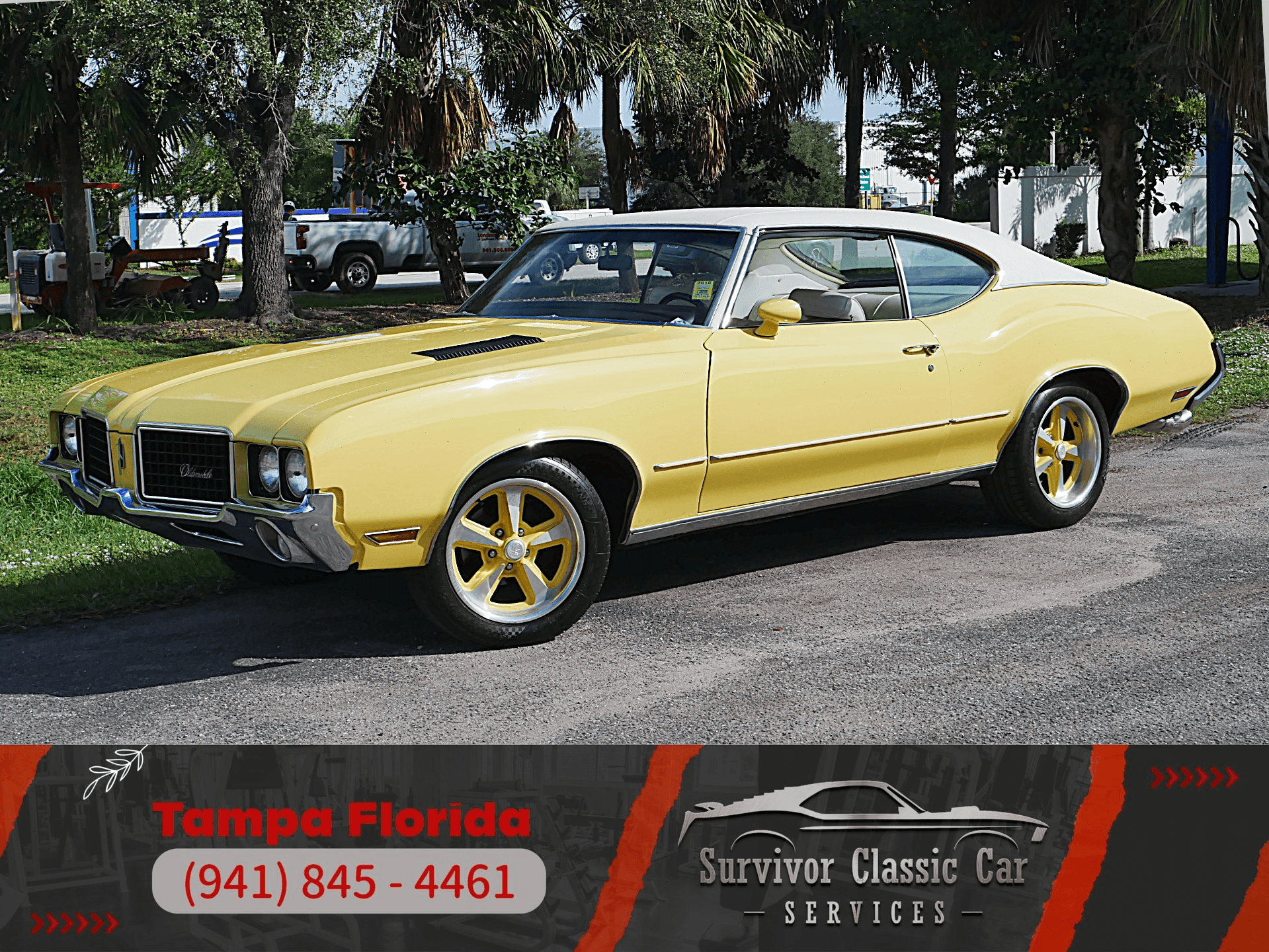
Cutlass trim names move around between generations, so learn the ladder once and then re-learn where it sits in each era. In broad terms: F-85 was the base car in the 1960s, Cutlass the middle, Cutlass Supreme the luxury trim from 1966 on, and Cutlass S the sportier, cheaper fastback in the 1968–72 years. The 442 began as an option package (1964–67), became a separate model (1968–71), went back to being an option (1972 on), and was revived as a distinct G-body model for 1985–87. The Hurst/Olds was a limited-production collaboration with Hurst Performance — big-engine cars in 1968–69, then smaller, appearance-and-handling editions in 1979 and 1983–84. Option codes beginning with W — W-30 (the full-house 455 package), W-31 (its small-block 350 equivalent) and W-29 (the 1972-on 442 package) — are where the money and the fakery both live.
| Model | Years | Engine | Output | Built | Character |
|---|---|---|---|---|---|
| F-85 / Cutlass (A-body) | 1964–1967 | 225 V6 or 330 V8 | up to about 310 hp | volume production | The original intermediate; simple, light, honest |
| 442 (option, then model) | 1964–1967 | 330, then 400 V8 | 310–360 hp | about 3,000 in 1964, growing yearly | Early muscle; tri-carb 1966 is the connoisseur's car |
| Cutlass S / Supreme | 1968–1972 | 250 six, 350 or 455 V8 | up to about 325 hp (W-31 350) | hundreds of thousands | The mainstream muscle-era car in fastback or formal-roof form |
| 442 | 1968–1972 | 400, then 455 V8 | 350–370 hp gross | tens of thousands; 3,100 W-30s in 1970 | The flagship; its own model 1968–71, an option for 1972 |
| Hurst/Olds | 1968–1969 | 455 V8 | 380–390 hp | 515 in 1968; about 900 in 1969 | Limited, loud and genuinely quick; paperwork is everything |
| Cutlass (Colonnade) | 1973–1977 | 350, 403 or 455 V8 | up to about 250 hp net early, falling fast | the best-selling car line in America by 1976 | Comfort first; Supreme coupes are the ones that survive |
| Cutlass Supreme / Calais (G-body) | 1978–1986 | 231 V6, 260, 307 or diesel V8 | 110–180 hp | volume production into the late 1980s | The downsized car; ride and trim over speed |
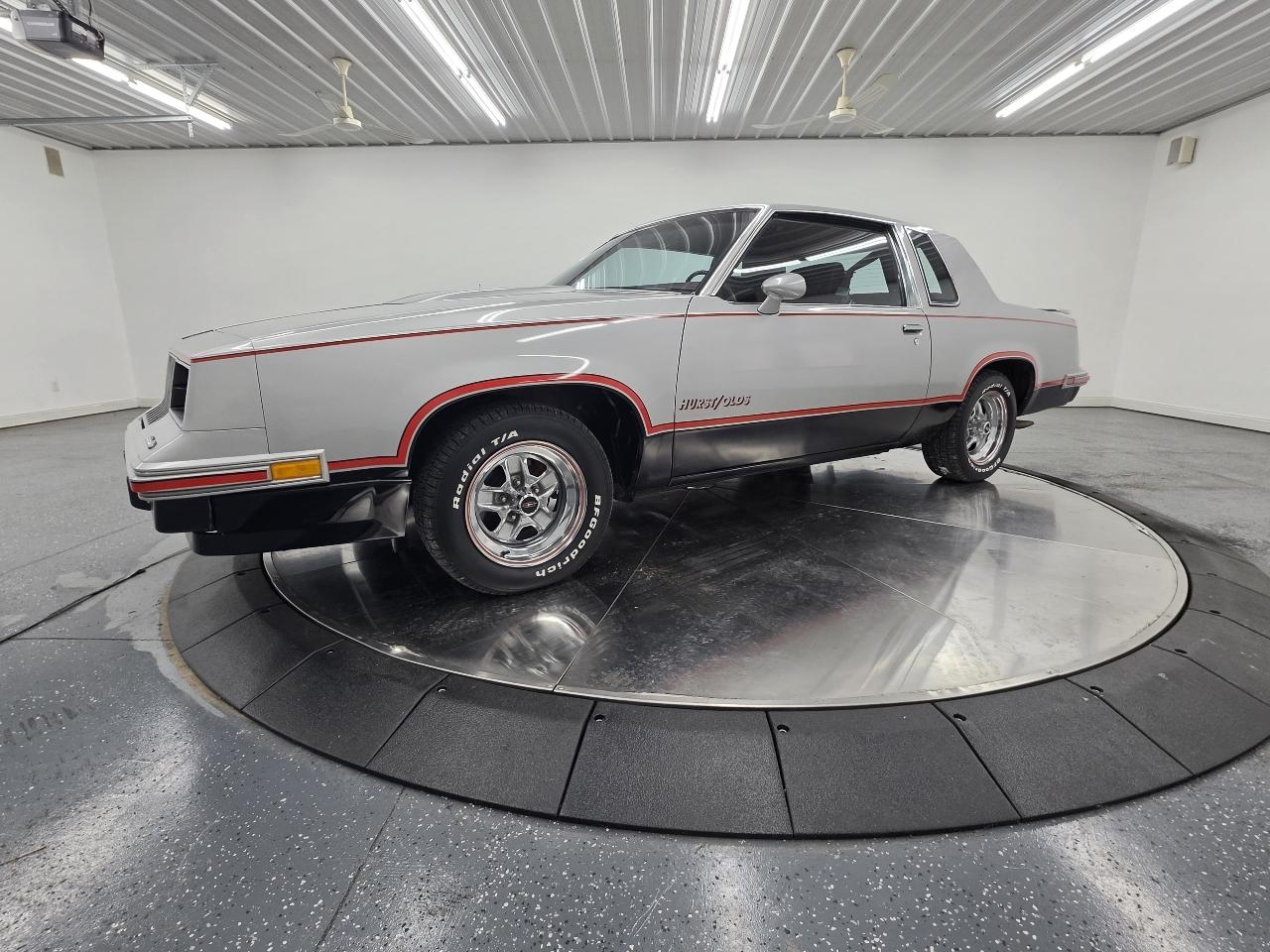
| Hurst/Olds (G-body) | 1979, 1983–1984 | 350, then 307 HO V8 | about 170–180 hp | about 2,500 in 1979; 3,001 in 1983; 3,500 in 1984 | 1979 has the last 350; 1983–84 have the Lightning Rods shifters |
| 442 (G-body) | 1985–1987 | 307 HO V8 | about 170 hp | small annual runs | The last rear-drive performance Cutlass; handling more than horsepower |
(Outputs are period factory ratings — gross figures before 1972, net figures after — and are quoted to place the cars relative to each other, not as dyno promises.)
The 1964–67 cars. The first A-body generation is the lightest and simplest Cutlass, and the most under-valued. The volume cars run the 330 small-block V8, a sweet, durable engine; six-cylinder cars used a 225 cu in V6 bought in from Buick. The 442 package arrived for 1964 on the 330, moved to the new 400 big-block for 1965, and peaked in 1966 with an optional tri-carburettor setup rated at 360 hp. Cutlass Supreme joined for 1966 as the plush trim. These cars are narrower, plainer inside and harder to find unmolested than the later ones, but they are also the cheapest way into a genuine 1960s 442.

The 1968–72 cars. This is the generation most buyers picture. The styling split the range: Cutlass S and 442 hardtops got a semi-fastback roofline, the Supreme kept a formal notchback. The 442 was a separate model from 1968 to 1971 — a fact you can use, because its VIN prefix (344) proves the car left the factory as a 442, something no badge can do for the other years. The W-30 option added outside-air induction, a hotter camshaft and, on 1970–71 cars, red plastic inner front fenders and an aluminium intake manifold; the W-31 did the same job on the 350 small-block in Cutlass S and F-85 cars and is the sleeper of the range. Hurst/Olds editions in 1968 and 1969 put the 455 — an engine Oldsmobile otherwise kept out of the intermediate line by corporate policy — into the A-body with Hurst's shifter and paint schemes to match. For 1972 the 442 reverted to an appearance-and-handling option (W-29) on Cutlass S, so a 1972 "442" is verified by paper, not by VIN.
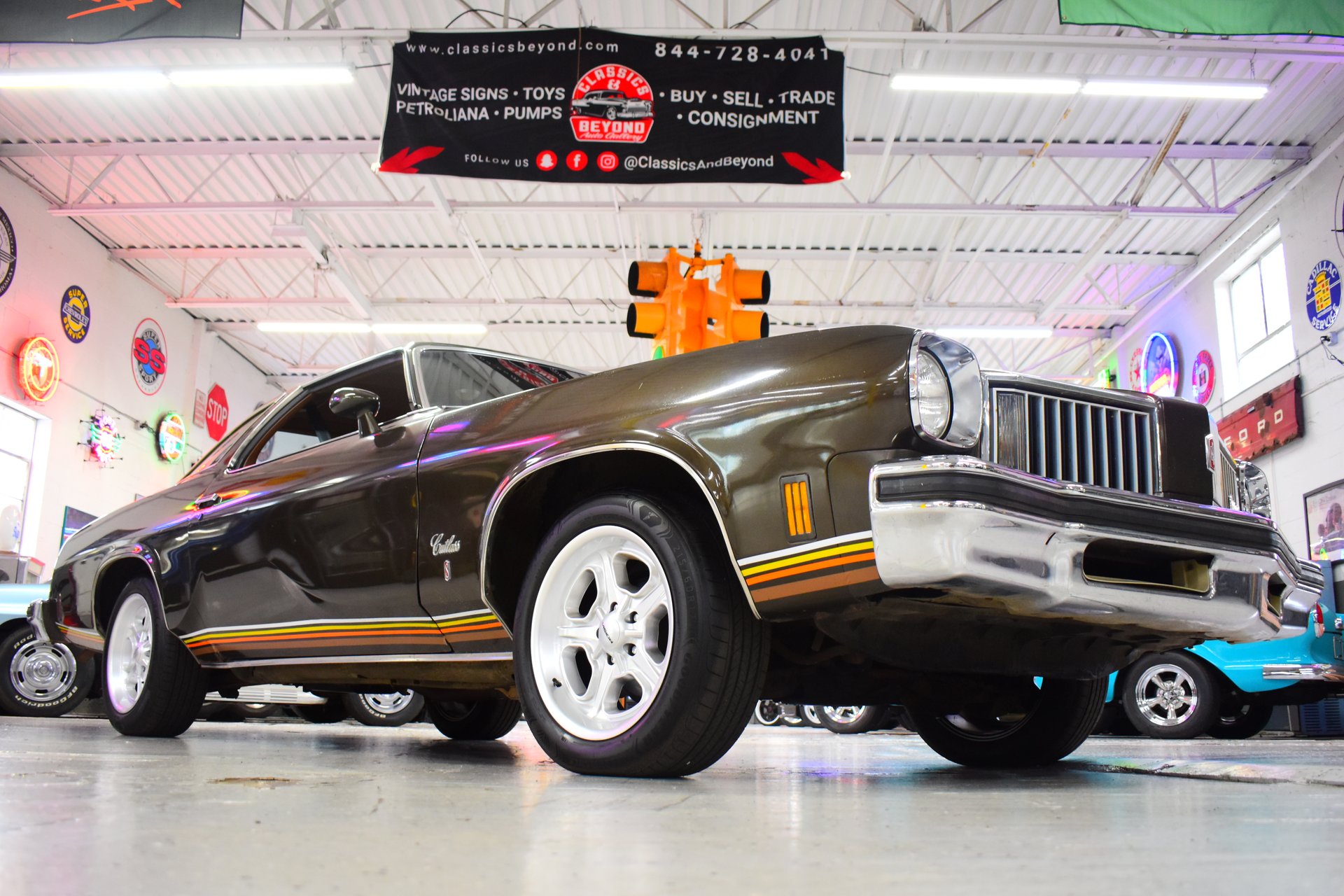
The 1973–77 Colonnades. Federal bumper and rollover rules gave these cars their pillared roofs, fixed rear side glass on coupes and a much heavier feel. The 455 survived until 1976 in falling states of tune, the 350 did most of the work, and the 403 small-block arrived for 1977. What the Colonnade cars lost in speed they made back in sales: plush Supreme coupes with opera windows and velour became the default American personal car, and the Cutlass line topped the national sales chart. Survivors today are mostly Supreme coupes; four-doors and wagons were used up and thrown away.
The 1978-on G-body cars. Downsizing took roughly 700 lb out of the car. The range settled as Cutlass Supreme and the slightly plusher Cutlass Calais (with the base Cutlass Salon fading early), in notchback coupe, sedan and wagon forms. Base power was usually Buick's 231 V6; the Olds 260 and then 307 V8s were the common upgrades; a 350 was available early and in the 1979 Hurst/Olds. The performance thread runs 1979 Hurst/Olds (W-30, the last 350-powered one), 1983–84 Hurst/Olds (307 high-output, Hurst's triple-stick Lightning Rods shifters, 3,001 and 3,500 built) and the 1985–87 442 (307 HO, firmer suspension, about 170 hp). These cars were built in huge numbers and sold across the whole country, which is why the 1980s cars in the listings are mostly ordinary Supreme coupes — good ones are cheap transportation with classic status, and the special editions carry all the collector interest.

Engines and gearboxes
Almost every Cutlass you will look at has an Oldsmobile-built V8, and understanding that family is the single most useful piece of knowledge in this guide. Oldsmobile V8s come in two architectures. The small-blocks — 260, 307, 330, 350 and 403 — use a 9.33-inch deck height. The big-blocks — 400, 425 and 455 — use a 10.625-inch tall deck, which makes the engine visibly wider across the intake manifold. All of them share the same basic layout: cast-iron block and heads, hydraulic lifters, the distributor at the rear of the engine (a quick Oldsmobile tell — Chevrolet puts it there too, but Pontiac and Buick do not arrange the rest the same way), and a timing chain under the front cover. They are torquey, understressed and famously durable; a well-kept Olds V8 at 150,000 miles is a used engine, not a worn-out one. What dates them is not wear but neglect — sludge from skipped oil changes, tired timing chains, and on the later cars a layer of emissions plumbing that confuses diagnosis. One cross-family trap: because the architectures share their external dimensions closely, engine swaps between Olds blocks are easy and common. The badge, and even the air-cleaner decal, tells you what the seller wants the engine to be. The casting numbers and the stamped code on the block tell you what it is, and on a 455-priced car you check them.
The small-blocks: 330, 350, 403, 307 and 260
The 330 (1964–67) powered the first-generation cars: smooth, revs happily, and in four-barrel high-compression form makes about 310 hp. It has no real vices beyond age — timing chain stretch, worn valve guides showing as a puff of blue smoke at start-up, and rear main seal leaks. The 350 Rocket (1968–80) is the workhorse of the whole nameplate and the engine in most surviving Cutlasses. In 1968–70 four-barrel form it makes 290–310 hp gross and pulls a mid-size car with genuine ease; the W-31 version, with its bigger cam, valves and carburettor, was rated at 325 hp and is a small-block that behaves like a big one. After 1971 the ratings fall with compression and tuning — a mid-1970s 350 makes roughly half the power of a 1970 one on paper — but the engine underneath is the same durable piece, and it responds to the usual hot-rod attention. The 350's known age items are a stretched timing chain (a rough, retarded-feeling idle and lazy performance), nylon-toothed cam sprockets on later smog-era engines whose teeth shed into the oil pan, and oil leaks from the front and rear seals and the intake manifold end seals.
The 403 (1977–79) is a 350 architecture bored out to 4.351 inches — the largest bore of any small-block — which leaves the cylinder walls siamesed and the main-bearing webs windowed for clearance. It makes strong low-end torque (it was also the engine in late-1970s Pontiac Trans Ams) but it runs hotter than a 350, has less metal where it matters, and is the least forgiving Olds V8 of abuse or overheating. Treat a 403 car that has ever boiled with suspicion. The 307 (1980–90) is the G-body engine: a small-bore, economy-tuned small-block built for the emissions era, fitted with an electronically controlled Quadrajet carburettor under GM's Computer Command Control system. In standard form it makes about 140 hp and moves a Supreme adequately; the high-output version in the Hurst/Olds and 1985–87 442 — better cam, heads, exhaust and carburettor calibration — makes 170–180 hp and is a genuinely nicer engine. The 307's issues are electronic rather than mechanical: a failed oxygen sensor, a dead mixture-control solenoid in the carburettor or a sick engine computer leaves it running rich, gutless and thirsty, and the fix is diagnosis with a dwell meter on the mixture solenoid circuit, not a carburettor swap. The 260 (1975–82) is a destroked economy small-block of about 105–110 hp; it is reliable and completely out of its depth in a car this size. A 260 car is priced as a shell with an engine swap in its future, and should be.
All the carburetted small-blocks breathe through Rochester carburettors — two-barrel Rochesters on the cooking engines and the Quadrajet four-barrel on everything with sporting intent. The Quadrajet is an excellent carburettor when set up by someone who understands it: its small primaries give economy and its huge secondaries give the famous bwaah under full throttle. Its age faults are worn throttle-shaft bores (an air leak at the base that no idle adjustment cures), a sunk float and leaking well plugs causing hard hot starting. A proper Quadrajet rebuild by a specialist runs roughly $350–650; an exchange "rebuilt" unit from a parts store is a lottery ticket.
The big-blocks: 400, 425 and 455
The 400 powered the 442 from 1965 to 1969, in two distinct forms: the early (1965–67) engine with the smaller bore and longer stroke, and the 1968–69 version that shares the 455's stroke with a smaller bore and is generally considered the weaker design for performance builds. Period ratings run 345–360 hp, and the 1966 tri-carburettor option is the glamour engine of the first generation. The 425 (1965–67) is a full-size-car engine that occasionally appears in swaps; it is strong and its forged crankshaft is prized by builders. The 455 is the headline engine: standard in the 1970–72 442 (the 1968–69 442 used the 400, with the 455 reserved for the Hurst/Olds), rated at 365 hp gross in 1970 and 370 hp in W-30 form, with 500 lb-ft of torque that arrives low and stays. It is an effortless, lazy-feeling engine that moves a heavy A-body without ever sounding busy, and it keeps doing it — the bottom end is very strong, oiling is good, and the common failures are the same timing-chain, seal and valve-guide items as the small-blocks, plus exhaust manifold bolts that snap on removal and turn a manifold gasket job into a machining job. In the Colonnade cars the 455 faded through the mid-1970s in ever-lower compression, and after 1976 it was gone.
On any big-block car, identity is money. A genuine 1970–72 442 left the factory with a 455; a Cutlass S of the same year with a swapped-in 455 is worth a fraction of it, and the swap is a weekend's work, so assume nothing. The engine's identity is in its casting and stamping codes, decoded against the car's VIN derivative stamp where present, and the W-30's identity is in its specific parts — induction, camshaft, heads and those red inner fenders — most of which bolt onto an ordinary 455 just as easily. Paperwork and matching numbers are the difference between a flagship and a tribute, and they should be priced as such.
Sixes, and the diesel trap
Six-cylinder Cutlasses exist in every era: the Buick-built 225 V6 in the mid-1960s cars, Chevrolet's 250 inline six as the base engine in 1968–72, and Buick's 231 (3.8-litre) V6 as the standard engine in the G-body cars. The 231 is a good engine — the same family that, turbocharged, powered the Buick Grand National — and in a G-body Supreme it gives adequate performance with real economy. Its known faults are timing-chain wear, a plastic-coated cam sprocket that sheds teeth with age, and oil leaks; a 231 car is bought as transport, and condition of the body matters even more than usual because the engine adds no value.
The trap is the diesel. From 1978 to 1985 Oldsmobile sold a 350 cu in diesel V8 (and later a 4.3-litre diesel V6), and the G-body Cutlass was one of its main homes. The diesel 350 was adapted from the petrol block and became notorious: head-bolt and head-gasket failures, injection-pump wear, and a reputation that collapsed the cars' values when new. Many were converted to petrol power by dealers and owners, some were converted badly, and some survivors still run diesel. Before you value any 1978–85 car, establish what is actually under the hood and what the title and VIN say the car was born as: the eighth-character engine code in the VIN identifies a diesel-built car. A petrol-converted diesel car can be a perfectly good car, but it is worth less than a born-petrol car, its paperwork trail is often muddy, and in states with emissions inspection it can be a bureaucratic nightmare. Sellers do not always volunteer this history. Check.
Gearboxes
Three-speed manuals were standard equipment on most 1960s Cutlasses and almost nobody ordered them; four-speeds — Muncie M20 wide-ratio and M21 close-ratio boxes, with the heavy-duty M22 rare in Oldsmobiles — went into the 442s and are the desirable fitment today. Judge a Muncie on second-gear synchromesh (the first to go), on whether it jumps out of gear on the overrun, and on bearing whine; a full rebuild runs roughly $1,200–2,500 at a specialist, and Hurst shifters (factory-fit on many performance cars) that are sloppy usually need a $150–300 bushing and linkage rebuild rather than a gearbox.
Automatics did most of the work, and there are four. The Super Turbine 300 two-speed (1964–69, small-engine cars) is simple and durable but leaves the car feeling undergeared. The Turbo 350 three-speed (from 1969, small-block cars) is one of the best automatics ever made — strong, cheap to rebuild at roughly $1,200–2,200, and the default in most surviving cars. The Turbo 400 (big-block and 442 cars) is stronger still, with a distinctive firm shift; budget roughly $1,500–2,500 for a rebuild. The G-body era added the Turbo 200 three-speed (1978 on, light-duty cars), which is the weak link of the whole nameplate — a light, failure-prone box that should be tested hard and priced as a future Turbo 350 swap — and the Turbo 200-4R four-speed overdrive (1980s, including the Hurst/Olds and 442), which is a good gearbox when it has been maintained and the one to have in a late car. On any automatic, judge the fluid (bright red and sweet-smelling good; brown and burnt bad), the engagement delay into drive and reverse, and the shift quality at full throttle. A box that flares between gears or shudders on take-up is a rebuild priced into the offer, whatever the seller says about it "just needing a service."

Problem areas
Everything in this section follows one ordering principle: on a Cutlass, the body and frame decide whether the car is worth anything, the mechanicals decide how much more it will cost, and the trim decides how long the restoration takes. The engines are the strongest part of the package. The steel is not. We should be honest about our own evidence base here: the photo sets behind this site's listings have so far been examined in detail for only a small sample of Cutlasses — six cars — and rust was noted in three of those six, with visible damage in two. Six cars prove nothing statistically, but a fifty-percent rust rate in the first handful is entirely consistent with what fifty years of these cars teaches: assume rust until the car proves otherwise, in every generation, and be pleasantly surprised when one passes.
Rust: the map
Rust on a Cutlass follows the water and the mud, and each generation has its own signature.
The 1964–72 A-body cars. Start at the rear window channel. The glass sits in a channel that traps water, and on the many cars fitted with a vinyl roof covering, the covering traps moisture against the steel around the rear glass and the roof pillars — a vinyl top on a 1968–72 car should be read as a warning label, not a luxury feature. Bubbling at the base of the rear window or along the vinyl's edges usually means the channel and the panel below it are perforated, and the water that entered there has been running down into the trunk floor and the rear wheelhouses. Lift the trunk mat and the spare wheel on every car: trunk floors rot from the top down over the frame rails, and a floor that sounds dull or flexes under a prod is a panel replacement, roughly $800–1,800 fitted and painted per major panel once the glass and trim work is counted. Lower rear quarters behind the wheels and the bottoms of the front fenders behind the front wheels are the next stops — both trap road mud against single-skin steel. Door bottoms fill with water when their drain holes block; run a fingertip along the bottom edge of every open door and feel for bubbling. Floor pans go under the front footwells where the cowl leaks, and along the seams where they meet the rockers. Rocker panels and the body mounts matter structurally: the A-body is a separate-frame car, so a rotten rocker is a repair, not a death sentence — but rotten frame is. On 1964–72 frames, inspect the rear kick-up over the rear axle, the side rails at the body-mount points, and the front crossmember under the engine; surface scale is normal, perforation or heavy pitting at a mount is fabrication work at $1,500–4,000 per major area, and it is the point at which a cheap car stops being cheap.
The 1973–77 Colonnades. The same A-body rust map applies, with two additions: the fixed rear quarter glass and its surround on coupes, which leaks into the rear seat area and the wheelhouse, and an even greater prevalence of vinyl roofs, with the same trapped-moisture story at the rear pillars. These cars were also rustproofed to the standard of their day, which is to say barely, and they spent their lives as ordinary transport in salt states. A Colonnade with genuinely sound rear quarters, window surrounds and trunk floor is rarer than its production numbers suggest.
The 1978-on G-body cars. The body panels rot in the familiar places — door bottoms, lower quarters, trunk floor, floor pans at the front footwells — but the generation's signature failure is behind the car, in the frame, and it is important enough to get its own heading below. Also check the T-top cars: the G-body was sold with T-tops that leaked when new; forty years on, the seals are hard, the channels corrode, and the water goes into the floors and the A-pillars. A T-top car with a damp smell and a stained headliner is telling you its floors are wet. Price the seal kit and the floor work, not the sunshine.
Frame and structure: the G-body rear rails
Every G-body Cutlass — Supreme, Calais, Salon, Hurst/Olds, 442 — sits on a perimeter frame whose rear section, from just behind the rear wheels to the back bumper, is the most notorious structural weakness of any 1980s GM car. The rails there are a thin, boxed section that collects road salt and mud inside, and they rot from the inside out, often while the rest of the car still looks presentable. The failure is worst exactly where the bumper and the rear body mounts attach. Get under the back of any G-body with a torch and a screwdriver and prod the rails along their full rear length, top and bottom, plus the crossmember between them. Paint and undercoating hide this rust beautifully, which is why the prod, not the eye, is the test. Sound rails are a repair-free car; soft rails are a fabrication job — sections can be cut out and replaced by a competent welder for roughly $1,000–2,500 per side depending on how far the rot has travelled — and rails rotten into the spring and shock mounts are a walk-away on any car that is not rare enough to justify a frame swap. This single check is worth more than everything else you will do on a G-body viewing combined, because it is the one the seller's photographs will never show you.
The earlier separate-frame cars need the same discipline in their own places — A-body frame rot concentrates at the rear kick-up, the body mounts and under the battery tray area of the front crossmember — and on all generations, check the body mounts themselves: the rubber cushions perish and collapse, which shows as uneven panel gaps, doors that drop on their hinges and a car that sits subtly crooked. A mount kit is cheap at roughly $150–300 in parts; fitting it is a day's labour, and on a car where several mounts have collapsed you should ask what the frame underneath them looks like before you agree it is just the rubbers.
Suspension, steering and brakes
The chassis hardware is conventional GM and mostly good news. Front suspension is double wishbones with coil springs; the rear is a live axle on coils (1964 on) located by trailing arms. The wear items are universal: ball joints, tie-rod ends, idler arms, control-arm bushings and the rear trailing-arm bushings, whose failure shows as the axle steering the car under power and braking. A full front-end rebuild in parts is roughly $400–800, plus labour and an alignment; none of it is exotic. Sintered-iron steering boxes wear at the centre of their travel, giving the classic two inches of free play at the wheel — a rebuilt box runs about $250–450 exchange. Judge the car on whether it tracks straight and returns to centre, not on the play alone.
Two generation-specific items deserve attention. The 1964–66 cars used four-wheel drum brakes as standard, with front discs an option that became standard-fit thinking only later in the decade; a drum-brake car driven in modern traffic wants the disc conversion most owners eventually do, at roughly $600–1,200 in parts for a front kit. And on all years, the brake hydraulics are the recommissioning tax on any car that has sat: seized calipers or wheel cylinders, perished flexible hoses and a tired master cylinder are the standard list, $600–1,500 for a full hydraulic refresh with labour. On G-body cars, add the rear frame-rail check's cousin — the brake and fuel lines run along the frame and corrode with it; a car needing lines as well as rails is a bigger job than it first looks.
Air conditioning deserves a sentence of its own, because most Cutlasses have it and most systems are dead. The GM A6 compressor is tough and rebuildable, but a system that has sat open or empty for years needs seals, a dryer, possibly hoses and a refrigerant conversion — budget $800–2,000 to make cold air properly, and treat a seller's "just needs a charge" as "does not work."
Interior and trim
The interiors are where the generations diverge in cost. On the 1960s cars the materials are simple and the reproduction trade is strong: seat covers, door panels, carpets and headliners for 1964–72 A-bodies are all reproduced, and a full interior refresh in vinyl is a known quantity at roughly $2,500–5,000 in parts if you fit it yourself. Judge the seat frames and foam, not just the covers — the driver's cushion collapses first, and broken seat springs turn a cover job into a rebuild. On Colonnade cars the swivel bucket seats (a popular option) wear their swivel mechanisms and the plastics of the era — dash pads, door panels, console parts — crack, chalk and go brittle in the sun, and reproduction support is much thinner than for the earlier cars; a Colonnade with a sound, uncracked dash and good door panels is worth a premium because you cannot simply order replacements. On G-body cars the signature failures are the sagging headliner (the foam backing of the headliner cloth disintegrates on every one of these cars, without exception — a re-trim is roughly $250–500 and is a when, not an if), cracked dash pads, and brittle plastic trim in sun-state cars. The 1983–84 Hurst/Olds Lightning Rods shifter is the single most valuable interior component in the whole guide: a complicated triple-lever Hurst mechanism that wears, gets removed, and gets faked with a standard console. Verify it is present, complete and actually operates the gearbox through its gates.
Chrome and brightwork follow the usual economics: bumpers on the 1960s cars are big, straightenable and re-chromable at roughly $400–800 per bumper; the pot-metal trim, grilles and emblems that are specific to one year and model are the hard parts, and on the Colonnades and G-bodies the plastic grilles and lamp surrounds crack and craze with no reproduction safety net for many pieces. Count the damaged trim on any car and price it as a hunting expedition, not a catalogue order.
Electrics and the emissions-era systems
Oldsmobile electrics are conventional and, by the standards of this guide's other marques, simple. The failures are the universal ones of age: corroded earth points causing dim lamps and lying gauges, fusible links that have been replaced with plain wire by a previous owner's roadside repair, worn ignition switches, and alternator and starter wear. A car where everything electrical works — lamps, gauges, windows, blower on all speeds, wipers, horn — has usually been used and maintained, which remains the best single sign there is.
The G-body cars add a second layer: the Computer Command Control system on 1980s cars runs the carburettor's mixture solenoid, the ignition timing and the torque-converter lockup off an engine computer with an oxygen sensor in the loop. When it works, a 307 car is clean, economical and perfectly driveable. When any component fails, the car runs rich or flat, the check-engine lamp glows, and generations of mechanics have "fixed" it by disconnecting things. Inspect a late car by starting it cold and watching the lamp prove out and go off, then driving it until the converter locks up at cruise. Budget $300–800 in parts and diagnostic time to put a neglected system right; a car whose wiring has been cut about to defeat the computer is worth less than one that is merely broken, because you have to undo the sabotage before you can do the repair. The diesel cars, where they survive as diesels, are their own specialism — injection-pump and glow-plug systems, twin batteries — and are bought by enthusiasts for that engine specifically; nobody should drift into one by accident, which is why the VIN check in the engines section is not optional.
How to inspect one
Allow at least an hour, and bring a torch, a magnet wrapped in cloth, a screwdriver for prodding (with the seller's permission) and a tyre-pressure gauge. On any car that passes you, a paid lift inspection before money changes hands is the best money in the whole purchase — on a G-body it is not optional, because the decisive check lives under the rear of the car.
- Start with the paperwork and the VIN. Match the title to the VIN plate. Then use the VIN for the generation-specific identity checks: on a 1968–71 car sold as a 442, the model prefix must be the 442's own (344) — no prefix, no 442, whatever the badges say. On a 1978–85 car, read the engine code in the VIN and establish whether the car was born petrol or diesel before you discuss price. On a 1964–67 or 1972-on "442," or any W-30 or Hurst/Olds, the car is an option package on a Cutlass, so the build sheet, window sticker, Protect-O-Plate or dealer invoice is the proof — ask for it now, not after the drive.
- Cold start. Insist the engine is cold when you arrive. An Olds V8 should start promptly, settle to an even idle and show healthy oil pressure. A puff of blue smoke that clears points to valve seals; smoke that stays is rings or guides and an engine-out conversation. Listen for timing-chain rattle and for a deep knock in the first seconds before oil pressure builds.
- Identify the engine, not the decal. Find the casting and stamping codes and confirm the block is what the car is priced as — 455 versus 350 is the classic substitution, and the tall-deck big-block is visibly wider across the intake than the small-block if you know to look. On a W-30, look for the induction system and the red inner fenders on a 1970–71 car, and remember that every W-30 part bolts onto an ordinary 455: parts present is encouraging, paperwork is conclusive.
- The rust walk, in order. Rear window channel and vinyl-roof edges first on a 1964–77 car, then trunk floor with the mat and spare lifted, then lower quarters, fender bottoms, door bottoms with every door opened, floor pans with the carpets lifted at the corners, and rockers pressed hard along their full length. Run the magnet over quarters, fenders and door bottoms — filler announces itself. Bubbling at the rear glass plus a stained trunk floor is one fault, not two: the channel leaks, the trunk pays.
- Underneath: frame before everything. On a lift or with the car safely raised, prod the frame. On a G-body, spend most of your time on the rear rails behind the rear wheels, exactly as the problem-areas section describes — soft metal there ends the inspection. On an A-body, work the rear kick-up, the body-mount points and the front crossmember. Read the underseal as you go: patchy and honest is age; a fresh, uniform black coat over rails, lines and mounts alike, applied for the sale, is a question the seller needs to answer.
- Body mounts and stance. Stand back and look at the car level: does it sit square, are the panel gaps even, do the doors open without dropping? Collapsed mounts show here first. Then look down each flank for ripples and mismatched reflections that betray old accident work.
- Suspension and steering. Rock each front wheel top-to-bottom and side-to-side for ball-joint and bearing play. Bounce each corner — it should settle in one movement. On the drive that follows, note steering free play at the centre, knocks over bumps and any rear-end steer under power, which points to trailing-arm bushings.
- The test drive. Fifteen minutes minimum, including a highway stretch. The engine should pull cleanly from low revs — an Olds V8's whole character is low-end torque, so a car that feels flat and breathless has a fault, usually ignition timing, a tired chain or a carburettor problem. The automatic should engage drive and reverse without a long pause, shift firmly without flaring, and on a Turbo 200 car it should do all of that twice as convincingly, because that box is the weak one. Brake hard from speed: straight stop, no judder, no pull.
- Heat and idle. Let the car idle hot after the drive. Watch the temperature gauge, especially on a 403 car, which runs hot by nature and forgives nothing. Check for leaks that only appear hot and pressurised, and sniff the coolant for exhaust smell — head-gasket failure on a diesel-born or overheated engine announces itself here.
- Electrics and the computer cars. Work everything: lamps, gauges, windows, blower on every speed, wipers, washers, horn, air conditioning (assume it needs money unless it demonstrably blows cold). On a 1980-on car, watch the check-engine lamp prove out at start-up and go off, and on the drive confirm the converter locks up at a steady cruise — both are the Command Control system telling you it is alive and unmolested.
- Interior last, but properly. Sit in every seat and feel for collapsed foam and broken springs under the cover. On a G-body, look up: the headliner will be sagging or already replaced, and either fact is a price input. On a Colonnade, examine the dash pad and door plastics as if they were bodywork — they are rarer than bodywork. On a 1983–84 Hurst/Olds, operate the Lightning Rods through their gates; a missing or decorative shifter set is a major deduction on the one model whose price depends on it.
- The underside photographs test. Before you leave, take your own photographs of the frame rails, the trunk floor, the rear window channel and the engine codes. Faults you talk yourself out of in the seller's driveway are obvious in a photograph that evening, and the codes let you decode the engine at home, at leisure, instead of under sales pressure.
Values
The market block beneath this guide carries the live numbers — what is listed now, at what asking prices, and what recorded sales have achieved — and it is refreshed as the market moves, so this section deliberately teaches you how to read it rather than repeating figures that would stale.
The first thing to understand is the spread inside a single model name. "Cutlass" spans a worn six-cylinder sedan and a documented W-30 convertible, and even within one variant — a 1970 442 hardtop, say — the distance between a rusty project and a matching-numbers car with paperwork is not a percentage, it is a multiple. Condition and documentation drive this market far more than model year does. The second thing is the asking-versus-achieved gap. These are cars with a large emotional-asking fringe: sellers price the car they remember, and the recorded sales show what buyers actually paid. Weight achieved prices heavily, treat the highest asks as fiction until a sale proves them, and remember that auction results for the special cars — W-30s, Hurst/Olds, genuine early 442s — represent the documented top of the market, not the typical car in a driveway listing.
Premiums attach to proof. A 1968–71 442 carries its proof in its VIN and prices accordingly; the same visual car from 1964–67 or 1972, where the 442 was a package, is worth its premium only with paperwork, and a tribute or clone — however well built — is worth the value of the underlying Cutlass plus a modest allowance for the parts, never the real car's money. Big-blocks outrun small-blocks, four-speeds outrun automatics in the muscle years (the reverse of the survival rate, which is why), and convertibles outrun hardtops. In the G-body years the premiums invert toward the special editions: an ordinary Supreme is worth its condition and little more, because supply is effectively unlimited, while the 1979 and 1983–84 Hurst/Olds and the 1985–87 442 carry genuine scarcity value — with the same documentation rule, because the badges and paint are all reproducible.
The project-versus-driver gap is widest on the cars with the thinnest parts support. A Colonnade project looks cheap against a 1970 project until you price the interior plastics and trim that nobody reproduces; a G-body project looks cheap until the rear rails are prodded. Conversely, the driver-quality middle of the market — sound, honest 1968–72 Supreme coupes, tidy G-body Supremes, presentable Colonnades — is where the value sits, because those cars can be enjoyed while they are improved. Negotiate from the inspection, not from the asking price: frame work, a dead diesel history, a missing Lightning Rods set and an engine that is not what the badge claims are all concrete, priced deductions, and a seller who has been told the specific numbers by your inspection is a seller negotiating against facts.
Parts and ownership
The Cutlass sits in the sweet spot of American classic ownership: a high-volume GM car with a big aftermarket. For the 1964–72 A-body cars the reproduction trade is comprehensive — sheet metal including quarters, floors and trunk pans; interior kits; weatherstripping; suspension and brake components; and most chrome — because the same platform underpins the Chevelle and GTO and the trade serves all of them. The 1973–77 Colonnade cars are the thin spot: mechanical parts are easy (the engines and gearboxes are shared across GM), but body panels, glass and interior plastics are largely a used-parts hunt. The G-body cars are well served mechanically and for wear items, with a growing reproduction trade for the special editions, though the rear frame-rail repair sections and T-top seals are specialist items rather than shelf stock.
Easy: service items, filters, plugs and ignition parts for every engine; brake discs, drums, calipers and hydraulics; suspension wear parts; water pumps, alternators and starters; exhaust systems in standard form; carburettor kits for the Quadrajet; glass and weatherstrip for the A-body cars. Oldsmobile engines share almost nothing with Chevrolet despite the GM badge — order by engine, not by platform — but everything in this list is ordinary money and next-week delivery.
Harder and dearer: correct dated and coded components for a numbers-matching muscle car (a correct W-30 induction setup or a date-matched 455 is a serious purchase, priced like one); Muncie four-speeds in good order; Colonnade interior plastics and dash pads; Hurst/Olds-specific trim and a complete working Lightning Rods shifter set; convertible top frames and T-top hardware; and diesel injection equipment for the few who run the diesels deliberately. A quality repaint starts in the low five figures on a car this size, which is why the recurring advice of this guide is to buy the body and the frame and fix the mechanics.
Running costs. A sorted Cutlass is a realistic regular-use classic. Fuel consumption is in the low-to-mid teens mpg for a V8 car driven normally, single figures if you enjoy a big-block properly; the V6 G-body cars are the economy pick. Servicing is simple — oil, filters, plugs, points or electronic ignition depending on year — and any competent general shop can do it, though a Quadrajet or a Command Control car rewards a specialist who knows the systems. The budget line that catches new owners is the first year: catching up deferred maintenance on a running car — brakes, hoses, belts, tyres, fluids, the timing chain you cannot prove was done — honestly runs to a few thousand dollars before you improve anything, and recommissioning a car that has sat for years costs more again, because the fuel system needs cleaning end to end (modern ethanol fuel attacks old rubber and leaves varnish in tanks), every brake component needs inspection, and every seal that dried out will leak in sequence. Buy a car in regular use over a sleeping one, even at a higher price, in every generation of this nameplate.
Which one to buy
- The all-rounder: 1968–72 Cutlass Supreme or Cutlass S with the 350. The best-supported cars in the guide, quick enough to use anywhere, formal-roof Supreme for comfort or fastback S for looks. This is the Cutlass most buyers should actually buy.
- The muscle car: 1970–71 442 with the 455. The peak of the nameplate — buy on VIN, engine codes and paperwork, and pay for a documented car rather than a shiny one. The W-30 is the collector flagship and is priced like one; a plain 442 is nine-tenths of the experience.
- The value buy: 1964–67 442 or 330-powered Cutlass. The first generation is lighter, simpler and cheaper than the later cars, and a genuine early 442 is still the least expensive route into real 1960s Oldsmobile muscle — verify the package with paperwork, because the VIN will not do it for you.
- The connoisseur's car: 1966 tri-carb 442, or a 1968–69 Hurst/Olds. Rare, charismatic and entirely paperwork-dependent. Buy the file as much as the car.
- The cruiser: 1973–77 Cutlass Supreme coupe. The Colonnade at its best — plush, quiet, cheap to buy and cheap to run, provided the rear window surrounds, quarters and interior plastics are sound, because those are the parts you cannot replace.
- The modern classic: 1978–86 Cutlass Supreme or Calais with the 307. The G-body is the easiest Cutlass to live with daily — once the rear frame rails have passed the prod test. The 1983–84 Hurst/Olds and 1985–87 442 are the collectible versions; the ordinary Supreme in fine condition is the bargain.
And the rule that overrides all of the above: buy the soundest shell and frame you can find, in the specification you can verify. Engines, gearboxes, brakes and headliners are all fixable at prices you can plan for. A rotten G-body frame rail, a perforated A-body rear window channel that has taken the trunk floor with it, or a "442" whose identity exists only in its badges will each cost more to put right than the finished car will be worth — and identity, once lost, cannot be welded back in.
See the 34 Cutlass cars currently listed.