
Oldsmobile Cutlass Supreme S Coupe 2D buyer's guide
Oldsmobile Cutlass Supreme S Coupe 2D -- the model's own buyer's guide: variants, values and what to check.
Years listed: 1968-1987 · Series: 4-4-2
Overview and history
The Cutlass Supreme coupe is not one car but three, wearing one name across the whole rear-drive era of the American intermediate. There is the 1968–72 A-body, a handsome hardtop riding the crest of the muscle years with a Rocket V8 up front and a 4-4-2 for a showroom neighbour. There is the 1973–77 Colonnade, bigger, softer and heavier, built for the personal-luxury buyer with opera windows and a vinyl roof. And there is the 1978–88 downsized car — A-body in name until GM re-lettered the platform G-body for 1982 — which became one of the best-selling cars in America, a formal notchback coupe that sold on comfort, price and sheer familiarity. This guide covers the coupe across all three generations, because that is how the name is filed here, and because a buyer cross-shopping them needs to understand that they share a badge, a basic layout and almost nothing else.
The Supreme badge itself started as a trim level. Oldsmobile launched the Cutlass line in 1961, made the Cutlass Supreme a top-trim four-door for 1966, and promoted Supreme to a series of its own for 1967, coupes included. The formula never changed in principle: take the volume Cutlass, add better trim, plusher seats, more sound deadening and the bigger engine options, and charge a premium that was always smaller than the Buick or Pontiac equivalent's. It worked. Through the late 1970s and early 1980s the Cutlass nameplate was repeatedly America's best-selling car line, and the Supreme coupe was the heart of it — the two-door your neighbours bought new, in grey, tan and blue, with a landau roof and wire wheel covers.
That ubiquity defines today's market, and our own listings show it plainly: of the 25 Cutlass Supreme coupes we currently track, spanning 1968 to 1987, the large majority are 1980s cars, and 22 of the 25 arrived via Facebook Marketplace rather than dealers. These were ordinary cars, used as ordinary cars, and most were run until they were cheap and then run some more. The mechanicals underneath are fundamentally honest — a separate frame, a live rear axle, an iron V8 in most of them — but the difference between a good Supreme and a money pit is rust, sagging metric-era trim, and twenty years of deferred maintenance, not mileage.
Why the coupe, specifically? Because the coupe was the Supreme. Sedans and wagons carried the name too, but the two-door was the volume seller in every generation and the car the name conjures — the personal car, bought by couples and commuters rather than fleets, and therefore the body style most likely to have been garaged, kept and eventually preserved. It is also the body style the performance versions used, which means the coupe's survival rate and its parts support both run ahead of the four-door's. When you shop, expect the coupe market to be deeper, better documented and slightly more expensive than the same car with two extra doors — and expect nearly everything written about the Cutlass Supreme anywhere, this guide included, to be written about the coupe first.
The other thing to understand before you start is the adjacency. The Supreme coupe always lived one rung below the performance cars built on the same shell: the 4-4-2 in the A-body years, and the Hurst/Olds and 4-4-2 again in the G-body years. That adjacency cuts both ways today. It means the Supreme benefits from a performance aftermarket that exists because of its faster brothers, and it means sellers price ordinary Supremes with a hopeful glance at what the fast versions fetch. Your job as a buyer is to pay for the car in front of you.
The models
Three generations, one name. Within each generation the coupe came in more than one roof form and trim level, and the differences matter to price, to rust behaviour and to what you will live with.
| Variant | Years | Engine | Output | Built | Character |
|---|---|---|---|---|---|
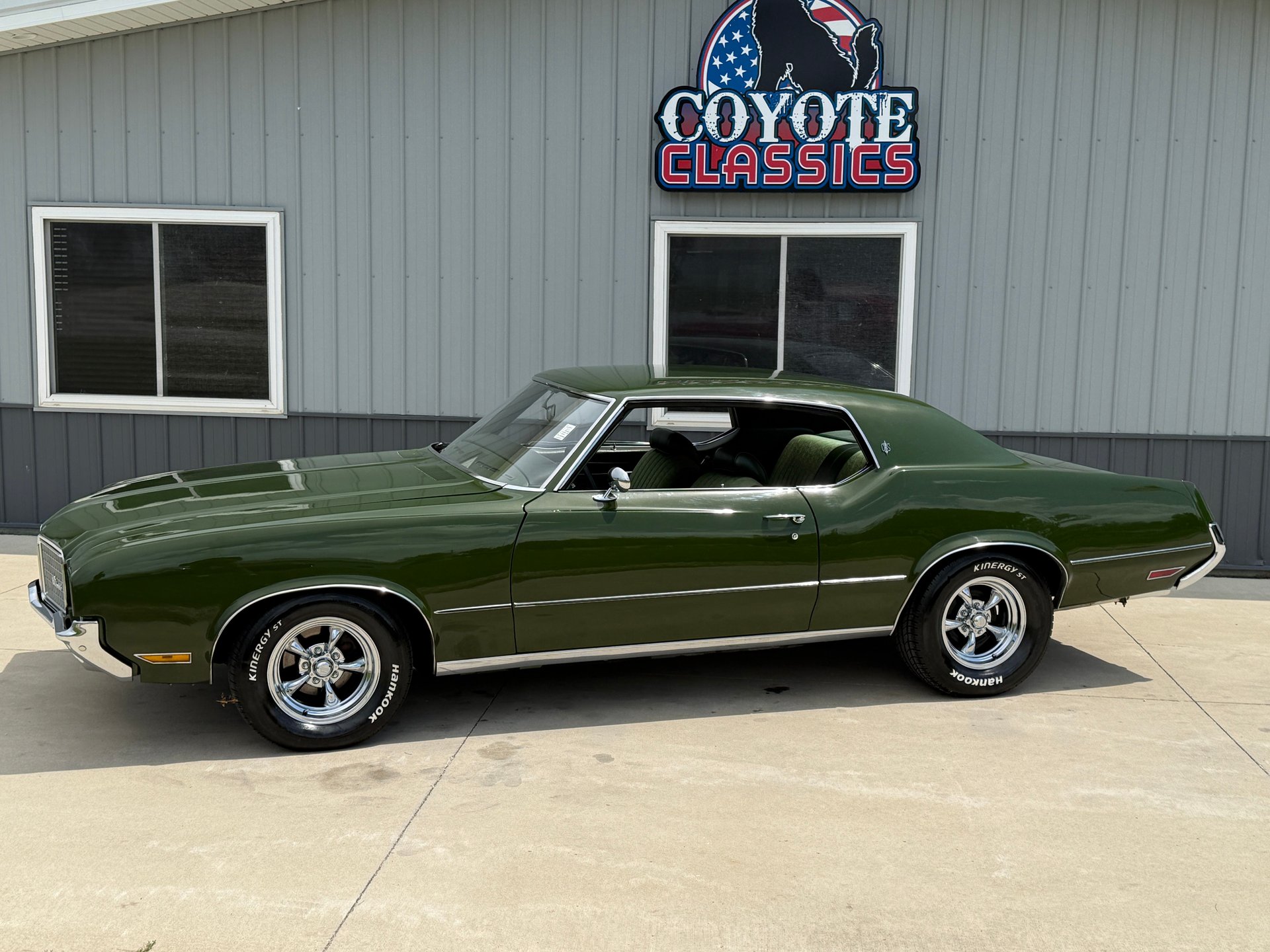
| Supreme coupe (first A-body) | 1967–1969 | 330, then 350 Rocket V8 | up to 310 hp (gross) | Large numbers | The early car; 1968 restyle is the one most buyers want |
| Supreme Holiday coupe / Sports coupe | 1970–1972 | 350 Rocket V8; 455 in SX | 310 hp (gross); SX about 365 hp (gross) | Large numbers | The muscle-era Supreme; hardtop or pillared coupe |
| Supreme SX | 1970–1971 | 455 Rocket V8 | about 365 hp (gross) | Small numbers | The sleeper: a Supreme with the big-block, quietly badged |
| Colonnade Supreme coupe | 1973–1977 | 350, 403, 455 Rocket V8 | 170–190 hp (net) | Very large numbers | Formal, heavy, soft; the opera-window car |
| Downsized Supreme coupe | 1978–1981 | 231 V6, 260/305/350 V8, diesel | 105–160 hp (net) | Very large numbers | The downsized original; lightest of the late cars |
| Supreme / Supreme Brougham (G-body) | 1982–1988 | 231 V6, 307 V8, diesel to 1985 | 110–140 hp (net) | Enormous numbers | The best-seller; Brougham adds the plush trim |
(Outputs are period ratings — gross before 1972, net from 1972 on — and the SX figure is the period gross rating for the 455 as fitted to the big Oldsmobiles of the day. Treat all of them as orientation, not gospel; what matters is which engine is actually in the car, which the sections below teach you to verify.)
The first A-body cars (1967–69). The 1967 Supreme coupe is a one-year bridge: the earlier, boxier shell with the new series badge. The 1968 redesign is the car the market wants — Coke-bottle flanks, a long hood, a choice of a pillarless Holiday hardtop coupe or a pillared Sports coupe. The 350 Rocket replaced the 330 for 1968 and is the better engine. These cars share almost everything mechanical with the 4-4-2 of the same years, which is why parts and knowledge are deep.
The peak years (1970–72). A facelift sharpened the styling, and the range quietly included one of the great sleepers of the era: the Supreme SX of 1970–71, which put the 455 big-block into the luxury coupe with minimal fanfare. Most SXs were convertibles, but coupes exist and are persistently misdescribed — in both directions. Sellers call ordinary 350 cars SXs, and genuine SXs hide under plain descriptions. The engine number and the car's paperwork settle it, never the badge. By 1972, power ratings had gone net, emissions equipment was strangling the small-block, and the hardtop coupe was in its final year — which is exactly why 1972 cars carry the nostalgia premium they do.
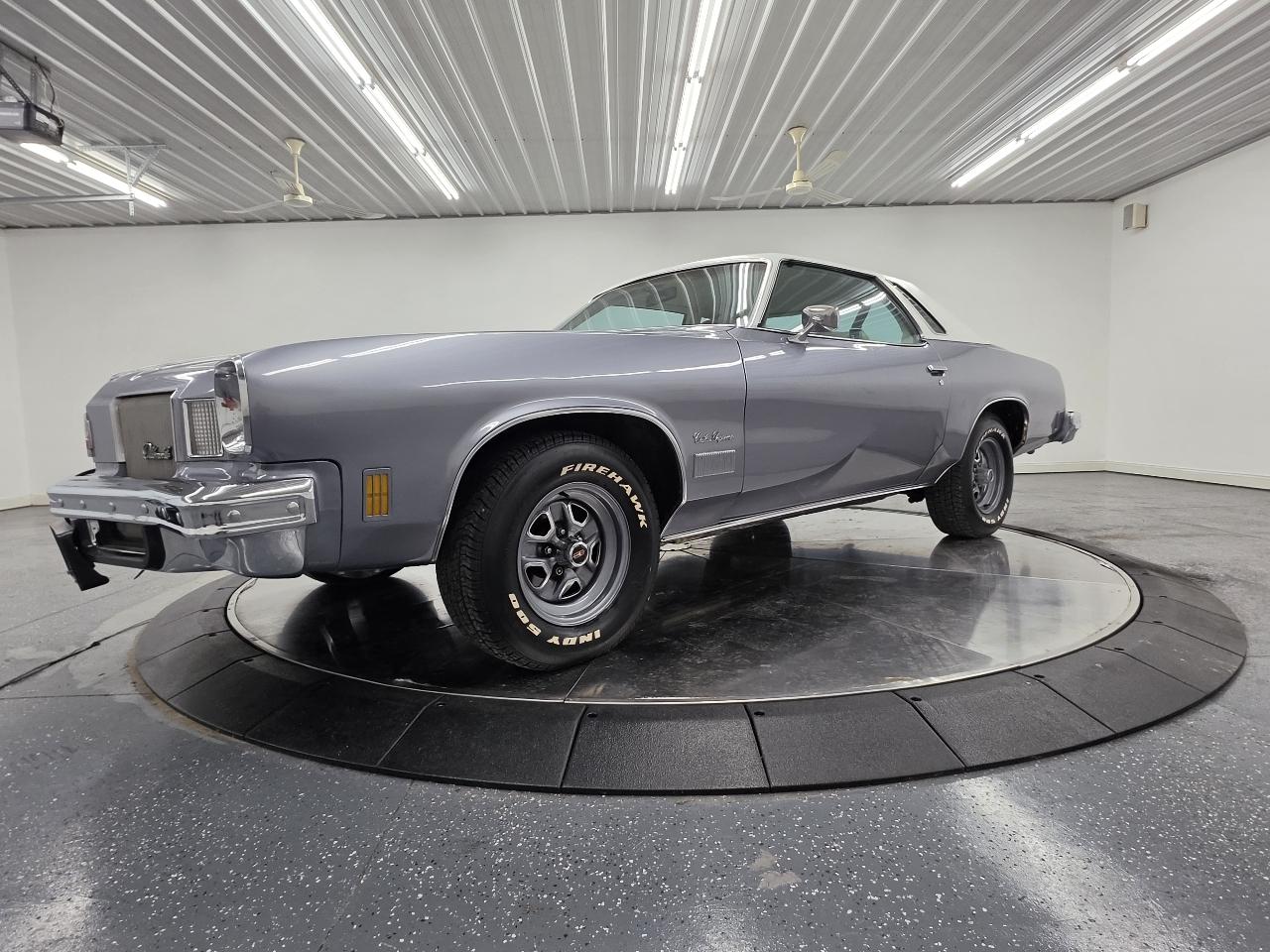
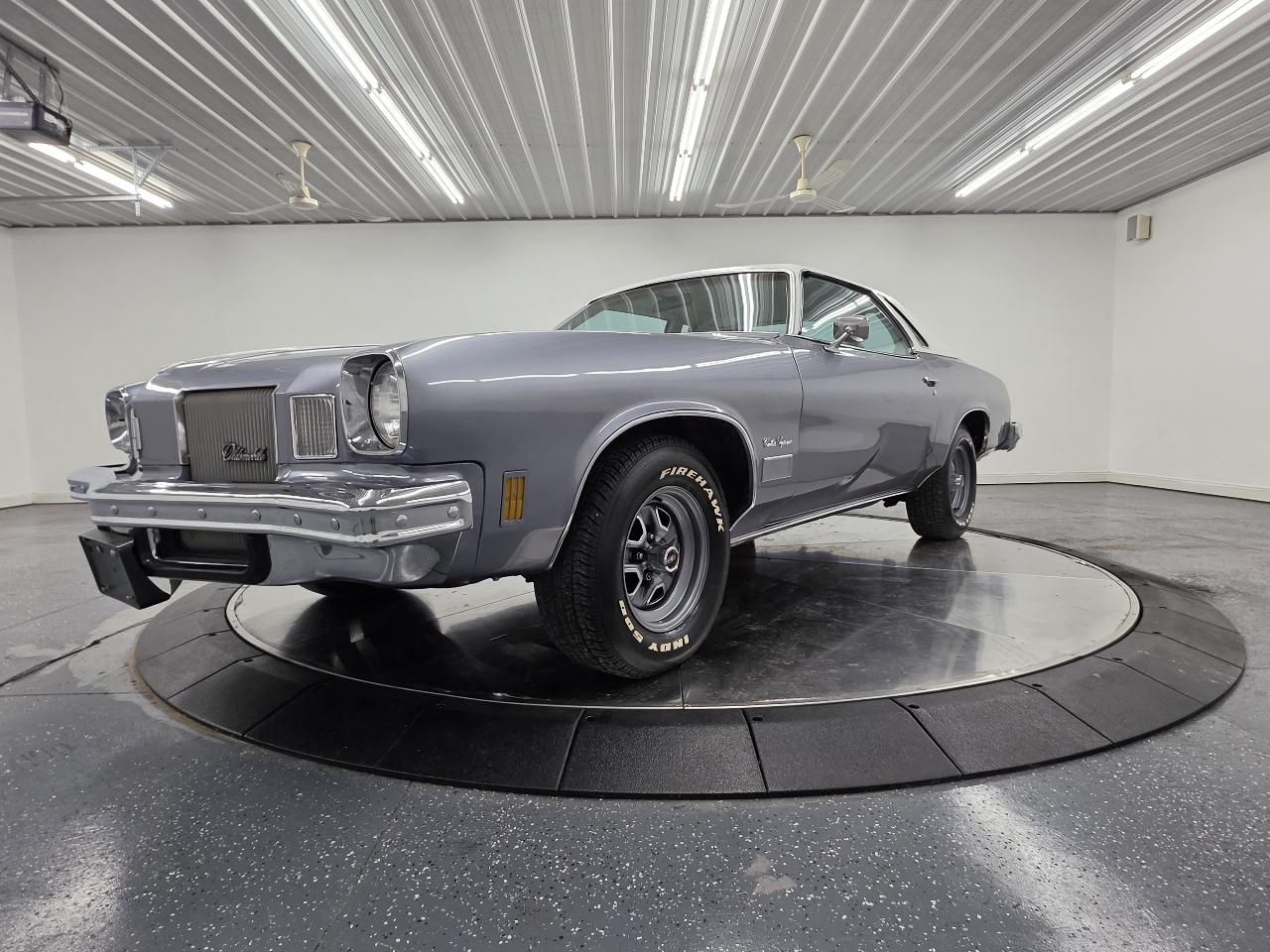
The Colonnade (1973–77). GM's response to rollover legislation gave every intermediate a fixed centre pillar, frameless-looking glass that was not, and — on the Supreme — the opera window and padded vinyl roof that defined mid-1970s American taste. The cars grew heavier as engines shrank in output: the 455 survived to 1976, the 403 arrived for 1977, and the 350 did most of the work. These are the softest-driving and slowest-appreciating Supremes, and honest ones are genuinely pleasant cruisers. They are also the generation where a vinyl roof has had fifty years to rot the steel underneath it.
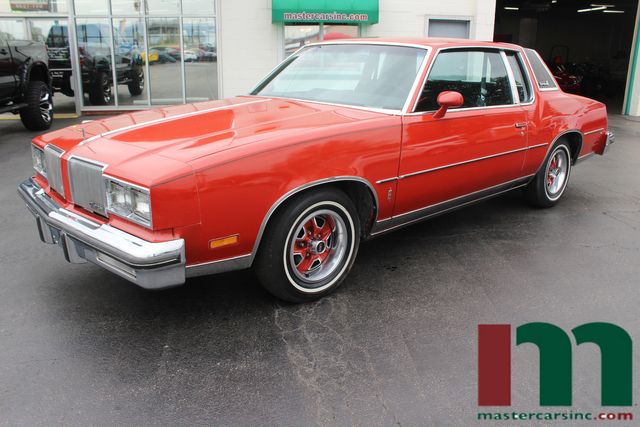
The downsized cars (1978–88). The 1978 car shed roughly 600 pounds and nearly a foot of length and became a phenomenon: a trim, formal notchback coupe with a huge options list and a price ordinary families could reach. The trim ladder ran Supreme, then Supreme Brougham with its loose-pillow velour and landau roof; a Calais sat alongside as the sportier sister and carried the Hurst/Olds and later 4-4-2 packages. Engines multiplied — Buick's 231 V6 as the base, Oldsmobile's own 260 and 307 V8s, a Chevrolet 305 in some years and markets, and the infamous 350 diesel. For 1988 the rear-drive car was renamed Cutlass Supreme Classic for its final year, sold alongside the new front-drive Supreme; if a listing says 1988, establish which car it actually is before anything else, because they share nothing but the name.
Engines and gearboxes
The Rocket V8s: 330, 350, 400, 403 and 455
The Oldsmobile Rocket V8 family is one basic architecture in two sizes. The small-blocks — 330 (1964–67), 350 (1968–80) and the later 260 and 307 covered below — share a tall-deck iron block, and the big-blocks — 400, 403 and 455 — are a taller, wider version of the same design. All are overhead-valve, hydraulic-lifter, chain-driven engines of legendary toughness, and all share the family's tells: the distributor sits at the back of the engine (unlike a Chevrolet), the oil filler is a tube at the front, and the engine number is stamped on a pad at the front of the left-hand head area and on a machined ledge by the oil filler — learn where it is, because on a car whose value rides on which engine it carries, that number is the argument-ender.
The 350 is the core engine of this guide. Fitted to the great majority of A-body and Colonnade Supremes, it came with a two-barrel carburettor in the cooking versions and a Rochester Quadrajet four-barrel in the stronger ones, rated at 310 hp gross in its best late-1960s form and falling steadily through the emissions years as compression dropped and ratings went net. None of that matters much now. What matters is that a 350 with oil in it is very hard to kill: the failure list is timing chains, tired valve seals (blue smoke on start-up after sitting, clearing as it warms), cracked exhaust manifolds and broken manifold bolts, oil leaks from the front and rear seals, and carburettor faults that get blamed on the engine. A healthy 350 starts easily, idles evenly, shows good oil pressure hot — the gauge, where fitted, should hold a solid reading at cruise and may drop at a hot idle — and pulls without smoke under load. Smoke under load is rings, and that is a rebuild conversation on any engine in this guide.
The big-blocks (400, 403, 455) are the muscle-era prize and, in the Supreme, mostly an SX story plus Colonnade options. The 455 is a torque engine — it pulls from idle in a way no small-block matches — and in a Supreme it makes a heavy luxury coupe feel effortless. The 403 (1977 onward, and in many 1977–79 cars across GM) is a small-bore big-block with a siamesed-cylinder block that runs hotter and tolerates overheating badly; a 403 that has been cooked is a 403 with warped heads or worse, so the temperature gauge's story matters more on a 403 than on anything else here. All the big-blocks share the family's hot-start curse: the starter motor sits beside the exhaust, heat-soaks after a run, and cranks slower and slower on a hot restart until it barely turns. Sellers describe this as a battery fault. It is a starter and heat-shield fault, curable with a rebuilt starter, a proper heat shield and good cables — budget a few hundred dollars, and use it as a negotiating point rather than a walk-away.
Carburettors. Almost everything in this guide breathes through a Rochester Quadrajet, and the Quadrajet's reputation for trouble is mostly a reputation for age. The mechanisms are known: the throttle shafts wear their bores in the baseplate and leak vacuum, giving an idle no adjustment will stabilise; the air-horn warps from decades of uneven tightening and the top gasket weeps; the choke pull-off diaphragm perishes and the cold engine stumbles and stalls; and on the 1980s cars the carburettor is computer-controlled (GM's Computer Command Control), with a mixture-control solenoid inside it whose health is read as a dwell signal — a car that hunts, surges or runs permanently rich on a CCC system usually needs the carburettor set up with the right tools, not replaced. A proper Quadrajet rebuild by a specialist who re-bushes the throttle shafts runs roughly $400–800 and transforms a car; a parts-store exchange carburettor thrown on without setup is how these cars get their "never ran right" stories.
The downsized era: 260, 307, the borrowed engines and the diesel
The 1978-on cars kept the Supreme name and lost the muscle. The engines that matter:
The 307 (1980–88) is the G-body Supreme's default V8 — a small-bore, long-stroke Oldsmobile small-block built for economy and smoothness, rated around 140 hp net in standard form. It is not fast and was never meant to be. It is, however, durable in the family tradition, and its faults are specific. The camshaft timing gear on these engines used nylon-toothed construction in period, and the teeth age, crack and shed — the engine still runs, retarded and gutless, or jumps time entirely. A sluggish 307 with no other symptoms deserves a timing-chain check before any other diagnosis; a chain and gear set is a few hundred dollars in parts and a weekend, and it wakes the car up. The high-output version of the 307 (VIN code 9, about 180 hp net) powered the Hurst/Olds and 4-4-2, not the Supreme — so a Supreme advertised with the HO engine is either swapped or misdescribed, and both possibilities need the engine number, not the seller's word. Late 307s (from about 1985) got swirl-port heads and roller lifters and are marginally the nicest of the line.
The 260 (1975–82) is the 307's smaller, weaker predecessor — a tiny-bore small-block fitted to Colonnade and early downsized cars for economy. It is smooth, slow and unloved, and a 260 car is worth less than the same car with a 350 or 307; many have been swapped, so check what is actually fitted.
The borrowed engines. GM's corporate engine-sharing means a Supreme may legitimately carry a Buick 231 (3.8-litre) V6 — the base engine of the downsized cars, adequate, long-lived, and identifiable by its distributor at the front of the engine — or, in some years and states, a Chevrolet 305 V8, identifiable by its rear distributor and centre-bolt valve covers on later versions. Neither is a defect; both are factory. But a car advertised as a Rocket V8 car that turns out to carry a 305 is a car whose price should move, which is why the identity check in the inspection section exists.
The 350 diesel (1978–85) needs its own paragraph because it damaged Oldsmobile's reputation for a generation. The LF9 diesel was developed from the 350 petrol block and was not strong enough for diesel compression in its early form: head gaskets failed, head bolts stretched, injector pumps (a Stanadyne rotary unit) wore, glow-plug systems gave trouble, and water in fuel — there was no proper water separator at first — wrecked pumps. The 1981-on revised block (the DX casting) is meaningfully better. Today the honest position is this: a running, documented diesel car is a curiosity with a small, devoted following; a non-running diesel is a car you are buying for a petrol-engine conversion, and it should be priced as a shell. Very many were converted in period, which is a legitimate history — but a converted car must be priced as a conversion, not as an original V8 car.
Gearboxes
Nearly every Supreme coupe is an automatic, and the box depends on the era. The earliest cars used the two-speed Jetaway (Super Turbine 300); the A-body and Colonnade standard became the three-speed Turbo Hydra-matic 350, a strong, simple, cheap-to-rebuild box, with the heavier Turbo 400 behind big-blocks. A TH350 that flares between gears, delays engaging drive or reverse, or has burnt-smelling fluid is a rebuild at roughly $1,200–2,500 at a general transmission shop — these are among the cheapest automatics in the world to have rebuilt, which should temper your fear but not your negotiating.
The downsized cars brought the metric-era boxes. The Turbo 200 (TH200, "Metric") three-speed fitted to many 1978–83 cars is the weak link of the whole guide: a light-duty box that was marginal when new and is the first thing to check on an early G-body. The fix the market settled on is the Turbo 200-4R four-speed overdrive (fitted from 1981 in various applications and standard on the performance cars), which is stronger, gives an overdrive top gear, and bolts into the same space — a swapped 200-4R in a Supreme is an upgrade, not a demerit, provided it is declared. The 200-4R has one lethal quirk that applies to every car fitted with one: its throttle-valve (TV) cable is not a kickdown cable, it controls line pressure, and a misadjusted or disconnected TV cable will burn the box up in a few miles of driving. On any 200-4R car, check the cable is connected and correctly tensioned before the test drive, and treat a seller who has been driving with it slack as a seller with a dying gearbox.
Manual gearboxes exist at the edges — three- and four-speeds on early A-bodies (the four-speed is a Muncie and is worth money in its own right), and a fragile five-speed was offered with the 260 in the late 1970s — but they are rare enough in Supremes that you judge them individually: synchromesh on second gear, clutch judder, and a linkage that selects every gear cleanly. Lock-up torque converters arrived on the early-1980s automatics (TH350C and the overdrives); a shudder at light throttle around 40–50 mph that vanishes with a touch of brake is the lock-up clutch, usually a fluid-and-service issue before it is a rebuild.
Problem areas
Everything in this section reduces to one sentence: the Supreme's mechanicals are fixable and its body is the bill. These are body-on-frame cars, so the frame is a separate verdict from the body — a car can have a rotten shell on a sound frame (expensive but doable) or a sound-looking shell on a rotten frame (walk away). Check both, always. Our own photo-note sample for this model is small — three cars examined in detail, with rust noted on one — so treat what follows as the accumulated knowledge of the model rather than a statistic, and do your own forensic work on the car in front of you.
Rust: the map
Rust on a Supreme follows the water and the trim. Work through it in this order, because the order is the order of expense.
The frame. On A-body cars, prod the frame rails along their whole length, with particular attention to the rear kick-up over the axle and the sections behind the rear wheels, where road salt collects inside the rail and rots it from within. On G-body cars the notorious failure is the rear frame rails behind the rear axle — the last two feet of frame, carrying the bumper and the rear body mounts, rot out so reliably that repair sections are a catalogue item. A G-body with soft rear rails is not a project, it is a parts car, unless you weld and enjoy it. Frame repair done properly — cut out, section in, align — runs from about $800 for a localised rail repair to several thousand for extensive work, and it must be done before any other money is spent. Body mounts matter too: the rubber biscuits perish and the steel cups rust, and a car whose body sits visibly unevenly on its frame, or clunks over bumps from the back, is often telling you about mounts, not suspension.
Floors and trunk. Windshield and rear-window seals perish, the cowl leaks, and the water sits under carpets that never dry. Lift every carpet you are allowed to lift. On G-bodies add the trunk: the rear window channel rots, water enters the trunk, and the trunk floor and the extensions over the rear rails go together — a rotten trunk floor on a G-body is a marker for the rear rails below it, so never price the floor alone. Floor sections are available and a side fitted and painted runs roughly $500–1,500, but floors, like frames, rarely rot alone.
Doors. The G-body coupe's doors are enormous — long, heavy, frameless-glass doors — and they are the single most recognised rust item on the late cars. The bottom seam traps water, the skin bubbles along the lower edge, and the inner structure follows. Run a fingertip along the bottom edge of each door and feel for bubbling under the paint; open the door fully and lift it at the rear edge — play means worn hinge pins and bushes (a cheap kit, an hour or two), but a door that is heavy with filler or soft along the bottom is a door skin or a replacement door, and good G-body coupe doors are getting genuinely hard to find. A-body and Colonnade doors rot the same way, slower, and the drain slots at the bottom of every door should be probed clear on any car you buy.
Vinyl roofs, opera windows and the Colonnade pillar. The Supreme was the vinyl-roof car of its era, and a padded landau roof is a moisture trap laid over the least-protected steel on the car. Rust blooms at the roof's edges, around the rear window under the vinyl, and down the pillars; on Colonnades the fixed B-pillar and the opera-window apertures add their own traps. Bubbling under vinyl is not a cosmetic issue — the vinyl must come off to know the truth, and roof and rear-window-channel repair with the roof redone runs well into four figures. Price any car with a bubbled vinyl roof as a car needing roof work, and let the seller prove otherwise. T-top cars (offered on the downsized coupes) leak as a matter of course: check the A-pillar bases, the header rail and the floors under the seats for the consequences, and budget for seals.
The smaller traps. Front fender heels behind the wheels, lower rear quarters behind the rear wheels (the A-body's prettiest line and its mud trap), rocker panels along their full length, the battery tray and the inner fender beneath it, the cowl sides where the fenders meet the body, and — on A-bodies — the panel below the rear window inside the trunk. None alone kills a car; together they are the difference between a driver and a restoration, and they are the panels fresh paint hides best. A magnet wrapped in cloth, dragged over the lower six inches of the whole car, is the cheapest truth serum in this guide.
Engines and drivetrain in service
The engine faults are covered by family above; what follows is what ownership actually presents. Timing chains are the recurring theme across every engine in this guide — the nylon-toothed cam gears of the emissions-era small-blocks shed teeth with age, and a jumped or retarded chain masquerades as a tired engine. Oil leaks are universal: valve-cover gaskets, the rear main seal, the timing-cover seal and the oil-pan gasket, in roughly that order of frequency and reverse order of cost. A dry Rocket V8 is a recently resealed Rocket V8. Cooling systems suffer most from storage: radiators silt up, heater cores leak (a sweet smell and a misting windscreen on a warm day; on most of these cars the core is a moderate job, not a dashboard-out nightmare, but confirm on the specific year), and the 403 in particular must never be run hot. Fuel systems on cars that have sat need cleaning end to end — modern ethanol fuel attacks period rubber, varnishes tanks and lines, and a car recommissioned without a tank clean will block filters and fill its freshly rebuilt carburettor with rust for months.
Exhausts and emissions hardware are the slow corrosion you can hear. The manifolds crack and their bolts snap flush with the head — drilling out a snapped manifold bolt is an engine-in or head-off job in the worst case, so a blowing manifold on a cheap car is not the trivial fix it sounds. The systems behind them rot from the inside, and the emissions-era cars carry air-injection pumps, EGR valves and miles of vacuum hose, all of it perished by now. A car in a state with emissions inspection needs that equipment present and working; a car whose engine bay has been "cleaned up" by a previous owner may be unregisterable where you live, and reinstating a full AIR and EGR setup from salvage parts is a scavenger hunt. Establish the rules in your state before you fall for a desmogged car.
At the back, the rear axle is a GM 10-bolt in most cars — the stronger 8.5-inch ring gear in A-body performance applications, the lighter 7.5-inch in most G-bodies. Both are durable; listen for a whine that changes with throttle (worn ring and pinion), a clunk on taking up drive (worn spider gears or slack everywhere), and check for a leaking pinion seal. Limited-slip (Positraction / Anti-Spin) was an option worth having; a car advertised with it should be verified by jacking the rear and turning a wheel — both wheels turning the same way is the test. Driveshaft U-joints are cheap and commonly neglected; a vibration that rises with road speed and a chirp on pull-away are the tells.
Suspension, steering and brakes
The front suspension is conventional double-wishbone with coil springs on all three generations, and it wears conventionally: ball joints (the lowers carry the load and go first), control-arm bushes, tie-rod ends, the idler arm and the centre link. A car that wanders, knocks over bumps and wears its front tyres on the edges is describing a front-end rebuild — parts are cheap, a full wear-parts refresh runs roughly $600–1,500 fitted, and it transforms these cars. Saginaw steering boxes wear play into the centre of their travel; a small amount adjusts out at the box, but a box that is tight at the locks and loose straight ahead is worn, and rebuilt boxes are readily available. Springs sag — measure the stance rather than eyeballing it, and remember a tail-down G-body may be body mounts rather than springs. Power steering pumps whine and leak from the front seal; hoses perish; none of it is expensive, all of it is negotiation.
Brakes are front disc and rear drum on everything in this guide (four-wheel drums survive only on the very earliest, lowest-spec cars, and a Supreme should not have them). What kills brake systems is sitting: seized calipers, collapsed flex hoses that act as one-way valves, rusted steel lines — inspect the lines along the frame rail as a safety item, because a line that bursts under a panic stop is the one failure in this guide that can hurt someone. A full hydraulic refresh — calipers, hoses, master cylinder, lines where needed — runs roughly $800–2,000 fitted and is non-negotiable money on any car that has stood. The rear drums self-adjust poorly and the handbrake cables seize; a car that rolls too easily on its parking brake is telling you the rear brakes need attention, not adjustment alone.
Interior, electrics and metric-era build quality
The late cars were built in the years when GM's build quality was at its most variable, and the Supreme's interior shows it. The headliner is foam-backed cloth glued to a board, and the foam disintegrates: every G-body headliner sags eventually, and a pinned-up headliner is the sign of one that has. Re-trimming the board is a $200–400 job done at home or a trim shop. Seat foam collapses on the driver's side first, Brougham velour wears and fades, dashboards crack from the top down in sun states, and the plastic of the door panels and console goes brittle and chalky. None of this is structural, all of it is visible in photographs, and a genuinely good original interior is the hardest thing about a late Supreme to replace — weight it accordingly, because trim for these cars is reproduced only in patches.
Electrics fail at the usual GM points. Power window motors slow to a crawl (worn motors and dried grease in the regulators; the big frameless glass is heavy work for them), power seat tracks jam, and the Delco alternators and starters are cheap and everywhere. The fusible links at the starter are the classic no-start: a car that is electrically dead everywhere, with a good battery, has usually melted a link. On CCC-equipped 1980s cars, a check-engine light that never comes on at key-on is as suspicious as one that stays on — bulbs get removed. Air conditioning will be R12 originally; a system converted to R134a with the work documented is a plus, a system "just needing gas" is a system needing a compressor, hoses and money, in that order, typically $800–1,800 to make genuinely cold.
How to inspect one
Allow at least an hour, bring a torch, a magnet wrapped in cloth, a small screwdriver for prodding (with the seller's permission) and a tyre-pressure gauge. If the car passes you, pay for a lift inspection before money changes hands — on a G-body especially, the rear frame rails you cannot see from the driveway are the whole ballgame.
- Start with the paperwork and the identity. Match the VIN on the title to the plate on the car (the dash plate visible through the windscreen on the later cars, the door-jamb and firewall tags on the earlier ones). Then verify the engine against the advertisement: find the stamped engine number, and remember the layout tells — a Rocket V8 has its distributor at the rear and its oil filler tube at the front; a Buick V6 has the distributor at the front; a Chevrolet 305 looks like every other small-block Chevrolet. A car sold as a 455 SX or a 350 car that carries something else is repriced on the spot, whatever the seller says.
- Cold start. Insist the engine is cold when you arrive — a warmed-up car is hiding its cold behaviour. A carburetted Rocket should start with a couple of pumps of the throttle and settle to an even idle; watch for blue smoke that clears (valve seals) versus smoke that stays (rings), and listen for a timing-chain rattle or a deep knock in the first seconds before oil pressure builds.
- The hot restart. After the test drive, switch off, wait five minutes, and restart. The slow, laboured crank of a heat-soaked starter is the Oldsmobile family trait described in the engines section — it is a few hundred dollars of starter, shield and cables, and it is one of the best negotiating points on these cars because sellers so often misdescribe it as terminal.
- Under the car: frame first. Torch along both frame rails, prod the rear kick-up on an A-body and the last two feet of rail behind the rear axle on a G-body — the specific rot spot named in the problem areas. Perforation in the frame is the walk-away line for a non-welder. Read the underseal as you go: patchy and honest is factory; a fresh, uniform black coat over everything, rails and brake lines included, is a question, not an answer. Check the steel brake and fuel lines along the rail while you are there.
- Floors and trunk. Lift the carpets in both footwells and under the rear seat if you can; prod the pans. Open the trunk, lift the mat and any spare, and look at the floor and the rear-window channel. On a G-body, trunk-floor rust means you go back to step 4 and look harder at the rails beneath it.
- Doors, roof and glass. Run a fingertip along the bottom edge of both doors for bubbling, then open each door fully and lift it at the rear edge for hinge play. On a vinyl-roof car, press gently along the roof edges and around the rear window and opera windows, feeling for the crunch of rust under the vinyl. On a T-top car, look at the header rail and the A-pillar bases and feel the carpets for damp.
- Body and gaps. Drag the cloth-wrapped magnet over the lower fenders, quarter panels, rockers and door bottoms — filler announces itself where the magnet falls away. Sight down each flank for ripples, check that the chrome and bright trim lines up across the door gaps, and count the rust bubbles rather than admiring the paint. Fresh paint on a Supreme is a reason to look harder, not a reason to relax.
- Engine bay honesty. Look for the story, not the shine: oil leaks mapped in the engines section, perished vacuum hoses, a CCC car with its emissions equipment intact or honestly deleted, an air-conditioning compressor that is present and belted. Smell the oil on the dipstick for fuel (a leaking mechanical fuel pump or a drowning carburettor) and check the coolant for oil and the oil for coolant — head-gasket evidence matters most on a 403 or a diesel.
- The test drive. Fifteen minutes minimum, including a stretch at highway speed. The automatic should engage drive and reverse promptly and change cleanly without flaring; on a 200-4R car, confirm the TV cable is connected before you move off, per the gearboxes section. The car should track straight, brake straight from speed without judder or pull, and show no whine from the rear axle that changes with throttle. A 307 car will feel slow — that is correct behaviour, and it is not a fault to negotiate on.
- Heat, idle and electrics. Let it idle hot for five minutes. Watch the temperature gauge's story (a 403 that creeps is a warning, not a quirk), run the heater and blower on every speed, and work every electrical item: windows up and down on both sides, power seat, locks, lights, washers, horn, radio, and the check-engine light's bulb check at key-on. An air-conditioning car should blow measurably colder at the vents, not merely cool-ish.
- Stance and suspension. Stand back and look at the car level: it should sit even side to side, with the rear at a sensible height. Bounce each corner — a corner that keeps bouncing has a dead shock absorber. Rock each front wheel top-to-bottom and side-to-side for ball-joint and bearing play. A car that sits down at one rear corner is pointing you back to body mounts and springs, in that order.
- Interior last. Sit in the driver's seat and feel for collapsed foam; look up at the headliner; check the dash top for cracks and the door cards for brittleness. Then weigh what you have found the way this guide has ordered it: frame and shell first, engine identity second, mechanics third, cosmetics last. A Supreme with a sound frame, an honest engine and a tired interior is a buy. The reverse combination is not, at any price that leaves you whole.
Values
The market block below this section carries the current numbers from our own listings, refreshed at every build, so this section teaches you how to read them rather than repeating figures that would date. What you need to know is how this market is shaped, because the Cutlass Supreme coupe market is really three markets wearing one name.
The first market is the 1968–72 A-body, and it trades on muscle-era gravity. These cars are not 4-4-2s and should never be priced as 4-4-2s, but they share the 4-4-2's looks, engines and parts ecosystem, and good hardtop coupes have a genuine collector floor under them. Within that market the SX is the special case: a verified big-block car is worth a substantial premium over a 350 car, and an unverified one is worth nothing extra at all — the premium lives entirely in the paperwork and the engine number, which is why the inspection section starts there. Condition spread is wide: the gap between a rusty project and a sorted, documented driver is several multiples, and the expensive end of that gap is always the body, never the engine.
The second market is the Colonnade, and it is the softest of the three. These cars were unloved for decades, which means two things for a buyer: asking prices are modest, and the surviving population skews heavily toward tired, vinyl-roofed cars with deferred everything. Achieved prices run well behind optimistic asking prices here, because the buyer pool is thin and patient. A genuinely excellent Colonnade Supreme — original, dry, documented — is rarer than its price suggests, but rarity alone does not move this market quickly, so buy a Colonnade because you want one, at a price that assumes you will sell it slowly too.
The third market is the G-body, and it is the most interesting. For years these were disposable cars, and the disposable years consumed them: the clean, original, unmolested Supreme coupe — never lowered, never big-wheeled, never engine-swapped, interior intact — has become genuinely scarce, and scarcity has started to do what scarcity does. At the same time, a large share of demand for G-body coupes comes from custom and lowrider culture, which values straight shells and is relaxed about originality — so a modified car is not automatically a cheap car, but its buyer pool is different from the originality buyer's pool, and a car caught between the two (half-modified, originality spoiled, custom work unfinished) is the hardest of all to sell and should be the cheapest to buy. Our current listings sample shows the shape of the supply honestly: most of the Supremes we track are 1980s cars offered by private sellers, and the spread between the cheapest runner and the dearest original car is the whole story of this market in one range.
Across all three markets, the same adjustments apply. Originality and documentation add value in proportion to the car's age and rarity. A diesel car is worth substantially less than the identical petrol car unless it is an exceptionally original survivor, and a converted diesel is worth what a conversion is worth. Engine swaps are neutral-to-negative on an A-body, where the original engine is part of the car's identity, and closer to neutral on a G-body, where the 307 was nobody's reason for buying. Rust is the great divider everywhere: because repair costs are what they are, a genuinely rust-free car from a dry state is worth travelling for and paying up for, and a cheap car from the salt belt is usually the most expensive car on the page once the welder's bill arrives. Finally, asking prices on the private marketplaces where most of these cars trade are opening positions, not results — sellers of ordinary Supremes expect to be negotiated with, and the cars sit until the price meets the condition.
Parts and ownership
The Supreme's great ownership virtue is that it was built by the million from the industry's most common parts bins, and it shares its mechanical life with the 4-4-2, the Hurst/Olds, and half the GM intermediates of its eras. Almost everything that wears out is available, most of it cheaply, and the knowledge base — factory service manuals, marque clubs, forums with thirty years of accumulated answers — is as deep as American cars get.
Easy: every service item, filters, plugs, ignition parts, water pumps, alternators and starters; brake discs, drums, pads, calipers and hydraulics; suspension wear parts, springs and shock absorbers; U-joints and axle bearings; Quadrajet rebuild kits and the specialists to use them; Turbo 350 and 200-4R rebuild parts and the shops to fit them; glass rubbers and weatherstrips for the common body styles; exhaust systems in standard form. Order today, fit this weekend, at prices close to modern-car money.
Harder and dearer: body panels — reproduction sheet metal exists for the A-body (helped by the 4-4-2 market) but G-body coupe door skins, quarters and trunk floors are thinner on the ground, and good used doors are hunted; Colonnade-specific trim, opera-window surrounds and vinyl-roof mouldings; Brougham velour in the correct patterns; correct diesel injection parts and anyone willing to work on them; the early cars' one-year-only trim pieces; and crack-free dashboards for the late cars. A quality repaint starts in the same territory as any other classic — which is why the mantra of this guide is to buy the body and the interior, and fix the mechanics.
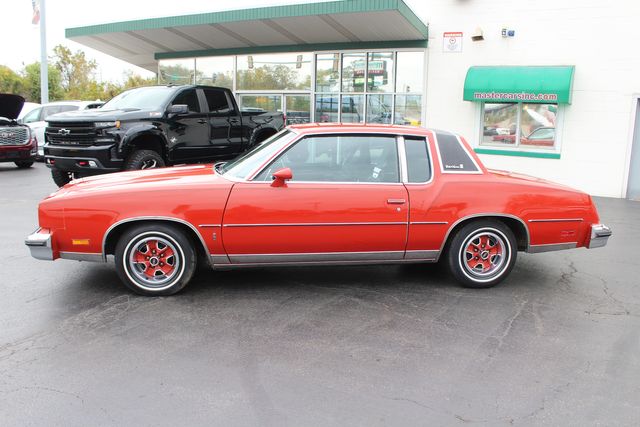
Running costs. A sorted Supreme is one of the cheapest classics in the world to run: fuel consumption in the mid-teens for a V8 car in mixed use, insurance in line with other cars of the value, and servicing that any competent independent shop — or you, with a manual — can handle. The budget line that catches new owners is the same one it always is: the first year. Catching up deferred maintenance on a running car honestly costs a couple of thousand dollars before you improve anything, and recommissioning a car that has sat for years — fuel system cleaned end to end, every brake component inspected, fluids, seals, tyres — runs several thousand at shop rates. Budget for it, buy a car that has been in regular use over one that has been asleep, and the Supreme will repay you by being the classic that simply works.
Which one to buy
- The all-rounder: a 1970–72 Supreme with the 350. The best-looking shell, the best-supported engine, the deepest parts and knowledge base, and a market that will always be there when you sell. Buy the Holiday hardtop if your heart is set on the pillarless line, the Sports coupe if you find the better car with a pillar.
- The sleeper: a verified 1970–71 SX. The 455 makes the luxury coupe into something genuinely quick, and verified cars are scarce. The word verified is doing all the work in that sentence — no engine number, no premium.
- The value buy: a 1978–80 downsized Supreme with a 350 or 307. The lightest, simplest of the late cars, before the metric-era trim and electronics piled up, and still priced like a used car rather than a collectible. Check the doors and the rear rails twice.
- The cruiser: a 1982–87 Supreme Brougham. If your driving is distance, comfort and air conditioning, the plush late car is the pick — velour, landau roof and all. Prioritise an intact original interior and a working everything over low mileage.
- The brave buy: a Colonnade. The cheapest route into a Rocket V8 coupe and a genuinely pleasant car, bought with open eyes about the vinyl roof, the weight and the slow resale. Buy the driest one in the country, not the nearest one.
- The curiosity: an original diesel survivor. Only with documentation, only running well, and only at diesel money. Everyone else should let it pass.
And the rule that overrides all of the above: buy the least rusty car you can find, in the specification you can live with. On a Supreme the frame rails, the floors, the door bottoms and the steel under the vinyl roof are the car; engines, gearboxes, brakes and headliners are all fixable at prices you can plan for. A rotten shell costs more to put right than the finished car will be worth — and it is the one thing about a Cutlass Supreme that can never be made original again.
See the 23 Cutlass Supreme S Coupe 2D cars currently listed.