
Oldsmobile 98 buyer's guide
Oldsmobile 98 -- the model's own buyer's guide: variants, values and what to check.
Years listed: 1955-1995 · Series: Full Size
Overview and history
The Oldsmobile 98 — written out as Ninety Eight in later years, and called the Custom Cruiser 98, the Futuramic 98, the Super 98 and finally the Regency at different points — is not one car in the way a three-year model is one car. It is a nameplate that sat at the top of the Oldsmobile range from 1940 to 1996: fifty-six years, eleven generations, straight-eight power at the start, a landmark overhead-valve V8 in the middle, and front-wheel drive with a supercharged V6 at the end. For much of that span the 98 was the car a successful American bought when a Cadillac felt like showing off and a Buick felt like settling — bigger, quieter and better trimmed than the 88 below it, sharing its basic body with Buick and Cadillac flagships in many years, but priced a step below them.
That long life is both the appeal and the trap. A 1949 Futuramic convertible with the first-year Rocket V8, a 1969 convertible with a 455, a 1979 Regency sedan with a diesel V8, and a 1995 front-drive Regency Elite with a 3800 V6 are all 98s, and they ask completely different questions of a buyer and a mechanic. This guide works generation by generation: decide which era of 98 you actually want, then judge the individual car against that era's known weaknesses.
The name is a code. Oldsmobile numbered its series by cylinder count and rank: the 76 was the six-cylinder car, the 88 the eight-cylinder volume car, and the 98 the eight-cylinder flagship on the longest wheelbase offered. When the arithmetic fell away — by the 1980s the 98 had a V6 — the name stayed because buyers knew what it meant. The trim names decode the same way: Holiday meant a pillarless hardtop, Starfire the most expensive convertible built, and Regency, introduced as a lavish trim in the early 1970s, gradually swallowed the range until it was effectively the model itself.
Three moments matter beyond Oldsmobile. In 1940 Oldsmobile introduced Hydra-Matic, the first fully automatic transmission on a mass-production American car, with the 98 as one of its showcases — which is why a 98 is almost always an automatic, and why its gearbox history is part of its identity. In 1949 the Futuramic 98 received the Rocket V8, which with Cadillac's similar engine the same year started the horsepower race and defined the American V8 for a generation. And in the long downsizing, the enormous 1971 to 1976 cars gave way in 1977 to a smaller, lighter 98, then in 1985 to a front-drive car that kept the name and the comfort while changing almost everything underneath. Each transition produced good cars and compromised cars, and this guide names which is which.
Our own listings underline the spread: the pool behind this guide runs from a 1941 car to a 1995 car, taking in convertibles from 1948, 1949, 1956 and 1969, sedans from the 1960s, Regency sedans from the 1980s, and the final front-drive generation. What unites every era is the buying logic. A 98 was a heavily optioned car when new, so equipment is part of the value — a 98 where none of the power accessories work has lost much of what you are paying for. And the pattern you will meet again and again is a sound, low-mileage car undone by sitting: perished rubber, stale fuel, seized brakes and rust in the seams. Mileage matters less than continuous use: a 90,000-mile car driven and serviced yearly beats a 40,000-mile car that sat for fifteen.

The models
Because the 98 spans eleven generations, the range is best organised by era. The table is the map for the whole guide: find the era of the car in front of you, then read the problem areas with that era in mind. Outputs are period factory ratings — gross horsepower until the switch to net ratings for 1972, which is why a 1973 car looks weaker on paper than a similar 1971 car while feeling much the same. Never compare gross and net figures as if they were the same measurement; sellers do, and it flatters the earlier car.
| Model | Years | Engine | Output | Character |
|---|---|---|---|---|
| Custom Cruiser 98, pre-war | 1940–1942 | 257 cu in straight-eight | 110 hp | The original flagship; Hydra-Matic pioneer |
| 98, immediate post-war | 1946–1948 | 257 cu in straight-eight | 110 hp | Pre-war design carried over; 1948 points forward |
| Futuramic 98 | 1949–1950 | 303 cu in Rocket V8 | 135 hp | First Rocket V8 flagship; a landmark car |
| Super 98 | 1951–1953 | 303, then 324 cu in Rocket V8 | 135–165 hp | Heavier, plusher; power equipment spreads |
| 98, Starfire era | 1954–1956 | 324 cu in Rocket V8 | 185–240 hp | The glamour years; Starfire convertible on top |
| Super 98, Golden Rocket era | 1957–1958 | 371 cu in Rocket V8 | 277–305 hp | Bigger and more ornate; J-2 option in 1957 |
| 98, fin era | 1959–1960 | 394 cu in Rocket V8 | 315–345 hp | Huge glass and fins; 1960 is the calmer car |
| 98, early sixties | 1961–1964 | 394 cu in Rocket V8 | 325–345 hp | Slimmer and sharper; Starfire separates after 1960 |
| 98, big-block era opens | 1965–1967 | 425 cu in Rocket V8 | 310–375 hp | Clean styling, strong engines |
| 98, 455 era | 1968–1970 | 455 cu in Rocket V8 | 310–365 hp | Effortless torque; last big convertibles |
| 98, the largest cars | 1971–1976 | 455 cu in Rocket V8 | 185–275 hp, net era | The biggest 98s ever; Regency trim rises |
| 98 Regency, downsized | 1977–1984 | 307, 350, 403 cu in V8; 350 diesel; V6 options | 105–180 hp | Smaller and lighter; engine choice matters enormously |
| 98 Regency, front-drive | 1985–1990 | 3.0 and 3.8 V6 | 110–165 hp | Front-drive C-body; Touring Sedan is the pick |
| 98 Regency Elite, final cars | 1991–1996 | 3800 V6, supercharged option | 170–205 hp | The last 98s; easiest to live with daily |

The Rocket arrives, 1949 to 1956. The 1949 Futuramic 98 made the nameplate's reputation: new styling, new chassis, and the Rocket V8 dealt with below. The convertible — sleek, expensive, carrying the engine everyone was talking about — is the blue-chip early 98. The Super 98 name arrived for 1951 as the cars grew plusher. For 1954 the range was restyled lower and wider with a panoramic windshield, the engine grew to 324 cubic inches, and the Starfire name went onto the production convertible. The 1954 to 1956 cars are the sweet spot of the early V8 era, and a 1956 Starfire is its glamour car.
Size, fins and the 394, 1957 to 1964. The 1957 cars were lower, wider and more ornate, with the 371 engine and, for one year, the famous J-2 triple-carburettor option; 1958 added chrome by the acre. Then came the dramatic 1959 restyle — thin roofs, vast glass, fins — with the new 394 V8, and a cleaner 1960 follow-up. From 1961 the styling sharpened, the controversial Roto Hydra-Matic arrived (see the gearbox section — it matters), and Starfire moved to a separate sporty line. The 1961 to 1964 cars are underrated: powerful, handsome, and usually cheaper than the 1950s cars they followed.
The big-block flagship, 1965 to 1970. The 1965 restyle gave the 98 clean, straight-edged styling and the new 425 V8, topped by high-compression versions with real pace; the cars feel a generation more modern than the 1964 model without losing the traditional virtues. For 1968 the engine grew to the famous 455, and front disc brakes moved from option toward standard fitment. The 1969 and 1970 cars are the last of the big convertibles — no 98 convertible exists after 1970 — and the easiest of all the ragtops to drive, stop and live with.
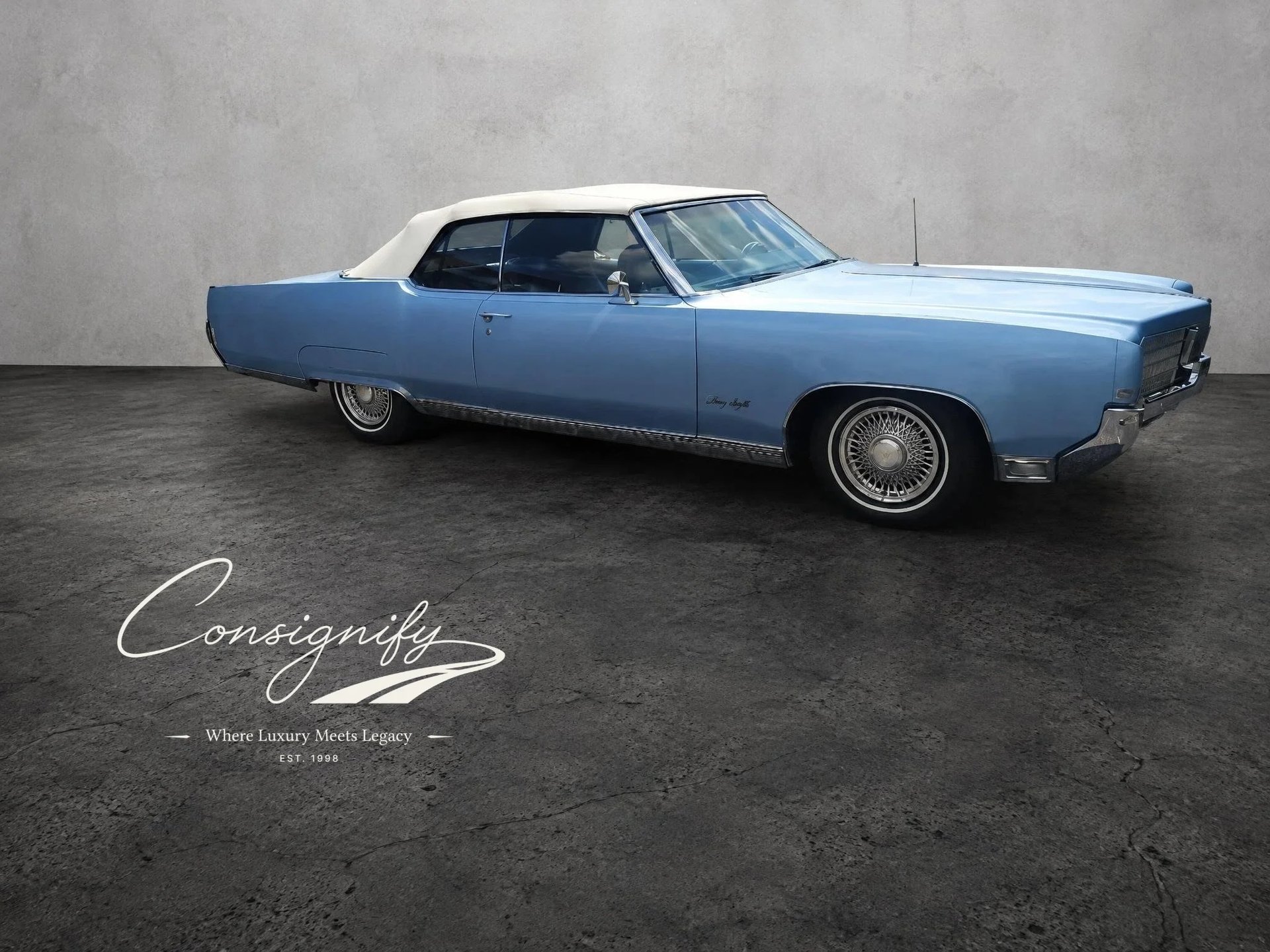
The largest cars, 1971 to 1976. The biggest 98 of all: a vast sedan and hardtop on the General Motors C-body, shared in essentials with the Buick Electra and Cadillac DeVille, with the 455 detuned year by year as emissions rules and lower compression took hold. The Regency name, launched as a limited luxury trim in 1972, became the standard flagship specification — pillow-tufted seats, deep carpet, every power accessory in the catalogue. Magnificent road-trip machines, but deferred maintenance and sheer size punish a casual owner; a 1971 or 1972 car, before the heaviest emissions equipment, is the pick of the six years.
Downsized rear-drive cars, 1977 to 1984. The General Motors downsizing cut roughly a foot of length and several hundred pounds for 1977 while keeping six-passenger room, and the formal styling meant the car still looked like a 98. The catch is under the hood: the Oldsmobile 350 and 403 petrol V8s are fine, the later 307 is smooth but slow, the Buick V6 versions are underpowered, and the 350 diesel is the most notorious engine ever fitted to a 98. Buy these by engine and condition, never by year and badge alone.
Front-drive cars, 1985 to 1996. For 1985 the 98 moved to the front-drive C-body, sharing its structure with the Buick Electra and Park Avenue and the Cadillac DeVille: smaller outside, roomier in useful ways, powered by V6s — a 3.0-litre Buick V6 at first, then the 3.8, which matured into the famous 3800. The Touring Sedan of 1987 to 1990, with firmer suspension and bucket seats, is the connoisseur's version. The final generation of 1991 to 1996, sold as the Regency Elite, added refinement and an optional supercharged 3800 that made it a genuinely brisk car. The name was retired after 1996. These late cars are not yet classics in everyone's eyes — precisely why a good one is such value.

Engines and gearboxes
The straight-eight and the first Rocket V8s: 257, 303 and 324
The pre-war and immediate post-war 98 runs the 257 cubic inch side-valve straight-eight, rated at about 110 hp: simple, smooth and low-revving, with torque as its virtue and age as its vice. Parts come through the early Oldsmobile specialists, and engine work belongs with someone who knows side-valve eights. Cooling is the system to interrogate hardest: radiator and block passages have seen eighty years of water of varying quality, and an engine that runs cool around the block but creeps up in traffic or on a grade is telling you the radiator core or the block needs attention. Overheating a side-valve eight warps things you do not want warped, so judge it on a proper run, in traffic, with the gauge watched throughout.
The 1949 Rocket changed everything. The 303 cubic inch V8 — overhead valves, short stroke, a high compression ratio for its day at 7.25 to one, hydraulic lifters — made 135 hp, and made it eagerly; this architecture, enlarged repeatedly, powered flagship Oldsmobiles for three decades. Early Rockets have two well-known needs. The first is clean oil: neglected oil becomes lifter clatter at start-up that, on a healthy engine, fades within seconds; clatter that persists hot is wear or sludge, and sludge is a sump-off cleaning job, not an additive job. The second is cooling — a marginal radiator that coped in 1949 will not cope with modern traffic. For 1954 the engine grew to 324 cubic inches, reaching 240 hp by 1956; the 324 is the easiest early Rocket to live with, with better parts support than the 303. On any early Rocket, listen for exhaust manifold cracks — a ticking that fades as the engine warms — and ask about electrics: pre-1953 cars were 6-volt, and voltage conversions are fine when done completely and documented, and endless trouble when half the car has been converted and half has not.
The big Rockets: 371, 394, 425 and 455
The second-generation Rocket family carried the 98 from 1957 into the mid-1970s, and it is the engine room most readers will be shopping in. The 371 of 1957 and 1958 made 277 hp in standard tune and 305 hp with the J-2 option: three two-barrel Rochester carburettors, the centre one doing the everyday work, the vacuum-linked outboard pair opening under load. A genuine J-2 car is rare and valuable; a car with a triple-carburettor manifold added later is worth what the rest of the car is worth. Check a claimed J-2 for correct carburettors and linkage and for evidence the outboard pair actually functions — many have been disconnected into a single-carburettor car wearing extra hardware, and a badly set-up J-2 runs worse than the four-barrel it replaced. The test is a full-throttle run: the extra carburettors should arrive with a distinct change of note and pace, without a bog.
The 394 of 1959 to 1964 is one of the great Oldsmobile engines: 315 hp at first, up to 345 hp in high-compression four-barrel form, with deep reserves of torque. Heavy, strong and understressed, it suffers mainly from age items — timing chain stretch, worn valve guides showing as a puff of blue smoke on start-up after sitting, gasket leaks, and carburettors that need a proper rebuild rather than another adjustment. The 425 of 1965 to 1967 refined the formula, with outputs from 310 hp to 375 hp; in the 98 you will mostly meet the strong mid-tune versions. The 455, from 1968, is the torque champion: up to 365 gross hp in 1970 form, and even in detuned mid-1970s form it moves a two-and-a-half-ton car with an ease the paper figures undersell. A healthy 455 starts instantly, idles with a slow, even lope, and shows no smoke beyond at worst a brief puff after standing. These V8s are not high-pressure engines, so judge hot oil pressure by the gauge and the absence of bearing noise, not by an internet number.
Across all the big Rockets the failure pattern is the ancillaries, not the core. The Rochester Quadrajet fitted from the mid-1960s is a superb carburettor when rebuilt by someone who understands its metering rods, float level and choke pull-offs, and a flat-spotted misery when the throttle shafts have worn oval in the baseplate and leak air. Add ignition wear and rubber fuel lines that modern ethanol fuel hardens and cracks. A big Rocket that runs badly is, nine times in ten, a fuel, ignition or vacuum problem on a sound engine: budget roughly 600 to 1,200 dollars for a carburettor rebuild, 300 to 700 dollars for a distributor rebuild or electronic conversion, and 500 to 1,000 dollars for a radiator recore, and most running complaints go away. The expensive version — low oil pressure hot, bearing rumble, coolant in the oil — is a rebuild at roughly 5,000 to 9,000 dollars. That is why the cold start, the oil and the exhaust smoke matter so much in the inspection: they separate a tune-up from a rebuild.

Downsized engines, the diesel, and the end of the V8
From 1977 the engine fitted is part of the purchase, because the same Regency sedan could leave the factory with engines of wildly different merit. The Oldsmobile-built petrol V8s are the picks: the 403 is strong and torquey, the 350 likewise sound and well supported. The 307 that became standard in the 1980s is smooth and durable but simply slow — price it as the gentle cruiser it is. Buick V6 versions are underpowered; treat them as curiosities unless the car itself is exceptional and cheap.
Then there is the diesel. The Oldsmobile 350 diesel V8, offered from the late 1970s into the mid-1980s and converted from the petrol 350 architecture, became notorious for head gasket and head bolt failures, injection pump problems and, on early versions without a water separator, fuel contamination damage. Maintained survivors can run reliably — but a neglected diesel is one of the riskiest purchases in this guide. Many were converted to petrol in period, creating an identity trap: a car wearing diesel badges with a petrol engine needs its paperwork read carefully, and is worth what the conversion's quality makes it worth. Unless you specifically seek a diesel, walk past them to the petrol cars.
Emissions-era petrol cars share one issue regardless of engine: miles of vacuum hose operating the choke, ignition advance, air conditioning and emissions equipment, all now forty years old and leaking at once. A car that idles high, hunts or stalls at junctions is usually describing perished rubber, not a failed engine — and an engine bay that is complete and original is worth more than one a previous owner has simplified.
The front-drive V6s: the 3.0, the 3.8 and the 3800
The 1985 car launched with a 3.0-litre Buick V6 and the 3.8, and the 3.8 is the one to have: smoother, stronger, and the ancestor of the 3800 that powered the final cars. The 3800 — Series I form in the late 1980s and early 1990s cars, Series II in the very last — has a justified reputation as one of the most durable engines General Motors ever built: a pushrod V6 with a balance shaft, tuned for low-speed torque, that should be almost silent at idle. Output rose from around 150 hp in early 3.8 installations to 170 hp in the Series I, and the supercharged version made 205 hp and turned the Regency Elite into a quietly rapid car. On a supercharged car, listen for bearing rattle from the supercharger nose at idle and confirm its oil has been serviced.
The known 3800 issues are specific and manageable. Intake manifold gaskets — and on Series II engines the plastic upper intake manifold itself — can leak coolant externally as a slow loss with no puddle, or internally into the oil or a cylinder, which is engine-threatening. Any unexplained coolant loss is investigated before purchase, not after: check the filler cap for emulsion, the coolant for oil, and the history for manifold work, a 600 to 1,200 dollar job with updated parts. Coil packs and ignition modules fail with age and heat and cause a misfire under load that owners chase through plugs and leads first; the test is whether the misfire follows a cylinder or a coil. Crankshaft position sensors fail intermittently and cause the classic hot stall with no restart until the engine cools — infuriating to diagnose, cheap to fix. Timing chains are long-lived, and a well-kept 3800 at 150,000 miles is a safer bet than most engines in this guide at half that. On the earliest front-drive cars, add tired engine mounts — a clunk on taking up drive is usually a mount, not the gearbox.
Gearboxes
Almost every 98 is an automatic, and the gearbox lineage is a history of the automatic itself. The original Hydra-Matic is a four-speed box with a fluid coupling rather than a torque converter: changes are deliberate and noticeable, and a healthy early Hydra-Matic is not a slushy modern box. It is also a specialist item — band and throttle-linkage adjustment determines how it shifts, and a box that flares, bangs or hunts needs an old-school Hydra-Matic man, not a general shop's best guess. Rebuilds typically run 2,500 to 4,500 dollars, so documented Hydra-Matic work by a known specialist is worth a real premium.
The trap of the 1950s-to-1960s lineage is the Roto Hydra-Matic fitted to the 1961 to 1964 cars — the compact box nicknamed the Slim Jim. Shift quality was mediocre when new, durability is questionable with age, and parts and expertise are thinner than for any other gearbox here. A car whose Roto Hydra-Matic shifts cleanly and shows clean fluid is fine to buy; one with slip, delay or noise is a specialist search and a budget of roughly 2,000 to 4,000 dollars. Some owners have swapped to the later Turbo Hydra-Matic, which changes originality and must be priced as a conversion.
From 1965 the 98 received the three-speed Turbo Hydra-Matic 400, and the gearbox problem essentially disappears for fifteen years. The TH400 is one of the strongest, best-supported automatics ever made, rebuildable anywhere in America for roughly 1,500 to 2,800 dollars. Judge it on fluid that is red rather than brown and burnt, prompt engagement of drive and reverse, clean upshifts, a working kickdown, and no slip on a full-throttle run. Later rear-drive cars moved to lighter overdrive boxes, more dependent on correct throttle-valve cable adjustment where one is used — a misadjusted cable can burn a box in miles, so on a car with a recent swap, verify that adjustment rather than assuming it.
The front-drive cars use the Turbo Hydra-Matic 440-T4, later renamed 4T60, and in the final cars its electronically controlled 4T60-E development. These decline slowly rather than dying suddenly: delayed engagement when cold, a shuddering lock-up converter clutch, lazy shifts as the valve body ages. Fluid history matters enormously — a serviced 4T60 will outlast the car, an unserviced one at 150,000 miles is on borrowed time — and a rebuild runs roughly 1,800 to 3,000 dollars. Feel specifically for shudder at light throttle as the converter locks, and for flare on the two-to-three shift. Manual gearboxes exist only as rare early options; judge one on second-gear synchromesh and clutch judder, and do not expect a manual premium the market does not usually pay for a 98.
Problem areas
On a 98, condition is era-specific. The rust map of a 1956 convertible, the vacuum system of a 1975 Regency and the intake manifold of a 1994 Regency Elite are different subjects, and a buyer who checks the wrong list will miss the thing that actually costs the money. Work through the subsections that apply to the generation in front of you. And treat photo evidence honestly: in the small examined sample behind this guide — three cars with detailed photo notes — rust was noted on one car and damage on one, a sample far too small to generalise from, which is itself the point: examine every car as if the sample did not exist.
Rust and structure: the map by era
Rust is the defining issue on every rear-drive 98, and it follows the water and the road salt. Start underneath. These are heavy body-on-frame cars — the front-drive cars are unit-body, dealt with below — and the frame is the first verdict. Frame rails, especially around the rear arches and suspension mounts, body mounts and crossmembers should be prod-tested with a screwdriver on a lift: surface scale is normal and treatable, but perforation at a body mount or suspension pickup is structural fabrication work, priced per car, and it ends most negotiations. A frame repair on a car worth sedan money is rarely economic; on a convertible it might be, which is why convertibles get the closest look of all.
Floors, trunk and the water path. Water enters past windshield and rear window seals, past cowl vents and, on hardtops, past the pillarless window seals, and sits under carpets and in the trunk. Lift every carpet you are allowed to lift: floor pans rot from the inside out under sound-deadening, so press and prod rather than admire. The trunk floor and spare wheel well collect what the rear window seal lets in — a stained well is a clean-and-treat job, a well you can see through is a panel replacement. On 1959 and 1960 cars the enormous glass area lengthens the water path, and panoramic windshield leaks appear as floor rust far from the source. On 1971 to 1976 cars add the vinyl roof: moisture trapped under a padded top rots the roof skin and pillars beneath while the vinyl above still looks presentable. Bubbling at the roof edges or rear pillars is a roof-off investigation, and the repair runs roughly 1,500 to 3,500 dollars before paint blending.
Sills, doors, wings and quarters. Sills trap mud thrown up by the front wheels and rot from inside: check the full length, the jacking points and the seams where sill meets floor. Door bottoms fill with water when their drain holes block — run a fingertip along the bottom edge of every door and feel for bubbling. Front wings rot behind the wheels; rear quarters rot around the rear wheels; and on 1950s cars the elaborate chrome trim traps moisture against the paint along every spear, hiding a rust seam along its length. Battery trays rot under the battery from acid, invisibly until the battery comes out: rock it and look at the tray edges and firewall below. None of these panels alone kills a car, but they add up in welding and paint — a quality repaint on a car this size starts around 8,000 to 12,000 dollars — which is why the standing advice is to buy the body first and fix the mechanics.
Convertibles. A 98 convertible is a body-on-frame car with the roof structure removed, so frame, sills and floor carry loads a sedan shares with its roof. Flex shows as door fit that changes, scuttle shake and gaps uneven side to side. The top should raise and lower evenly, without one side leading; the pump, cylinders and hoses live behind the rear seat, and leaks there soak trim and start rust where you cannot see it. A top hydraulic overhaul runs roughly 800 to 1,800 dollars and a quality new top 1,500 to 3,000 dollars fitted. A top that is down in every photograph in the listing is a top the seller may not want you to raise. Raise it.
Front-drive cars. The 1985-on cars rust differently: not a frame, because there is not one, but the subframe and its mounts, the rear strut towers and arches, the sills under the plastic cladding, and the brake and fuel lines. Northern cars used year-round can be structurally tired under a clean top side, so a lift inspection is not optional: subframe rot is a safety item, and the most common reason a cheap late 98 is cheap.
Engines, transmissions and the running gear
The engine-specific problems are covered above; these are the running-gear verdicts that apply across generations. Oil leaks on any Rocket V8 are a matter of degree: damp gaskets and a weeping rear main seal are normal for the breed, but a car that marks its territory heavily, or has low oil pressure hot to go with the leaks, is describing wear, not character. Exhaust manifolds crack, and their studs snap on removal — listen for ticking on a cold start. On any car that has sat, assume the whole fuel system needs recommissioning — tank cleaned, lines inspected, pump and carburettor rebuilt — at roughly 800 to 2,000 dollars, because varnished fuel and perished rubber will otherwise strand you in the first month in a way that feels like five separate faults.
Add the rear axle to the gearbox checks in the engines section: a whine that rises with road speed, or a clunk on taking up drive, is usually pinion bearings, worn gears or simply a universal joint — the joints are cheap, an axle rebuild is roughly 1,000 to 2,000 dollars.
Cooling condemns more big Oldsmobiles than any mechanical failure. These cars were cooled adequately when new; decades later the radiator is silted, the fan clutch (where fitted) is lazy, the shroud is cracked and the block has scale. The result is a car fine at 40 mph and miserable in traffic or on a grade — exactly where you will use it. Judge cooling on a hot day, in traffic, with the air conditioning on if fitted, and treat a marginal system as a known bill: radiator recore or replacement 500 to 1,000 dollars, a fan clutch 100 to 250 dollars in parts, hoses a modest sum more. A blocked air conditioning condenser, sitting in front of the radiator, makes both systems worse.
Suspension, steering and brakes
A 98 is a heavy car designed to ride softly, so suspension wear hides until it is advanced: the car floats over the evidence. Front ends are conventional double wishbones with coil springs; the wear items are ball joints, control arm bushes, steering linkage joints and shock absorbers. Test three ways. On the lift, lever each front wheel for play. On the road, listen for knocks and feel for wander — a tight big Oldsmobile steers far better than its reputation, so vagueness is wear, not character. And check the stance: a corner down is a spring, and the rear down on a 1970s car may be dead air-assisted rear shock absorbers, leaving the car on springs never meant to carry it alone. A full front-end refresh runs roughly 1,200 to 2,500 dollars with labour; quality shock absorbers all round are 400 to 900 dollars fitted.
Power steering leaks from the pump, the hoses and the steering box, in roughly that order. A groan on full lock with a low reservoir is usually a hose and a top-up away from quiet; a box leaking from its seals is a rebuild or exchange unit at roughly 400 to 800 dollars fitted. Play beyond an inch or so at the wheel, once the linkage is proven tight, is box wear — have it assessed, because a box over-tightened to hide wear is worse than an honestly loose one.
Brakes are the safety verdict and, on cars that have sat, the first bill. Early cars run drums all round; front discs arrived as an option in the late 1960s and became the norm in the 1970s. Whatever the hardware, sitting kills hydraulics: calipers and wheel cylinders seize, hoses perish internally and act as one-way valves, master cylinders bypass, and steel lines corrode. A full hydraulic refresh runs roughly 800 to 2,000 dollars with labour and should be assumed on any car recommissioned from storage. Judge brakes by straightness and effort, not just stopping power: a car that pulls has a seized or contaminated corner, and a pedal that sinks slowly at a standstill is a master cylinder or a leak. On front-drive cars add ABS behaviour where fitted: the warning light should prove out at start-up and stay out, and a light taped over means a fault someone chose to hide. Automatic level control, where fitted, follows one rule: the car should sit level after standing overnight, and the compressor should run briefly and stop; a car that sinks, or a compressor that runs and runs, has a leak.
Interior, electrics and the equipment that defines the car
The cabin is where a 98 earns its flagship money, and where neglect hides in plain sight. Sit in the driver's seat, because it goes first: once you can feel the frame, the job is pads and springs together, at roughly 400 to 800 dollars per front seat for re-padding before any retrimming. The loose-pillow Regency upholstery of the 1970s is magnificent when sound and miserable to recreate — a specialist retrim runs well into four figures per seat, and a full leather retrim of a 1950s convertible is a five-figure conversation. Original upholstery is therefore worth real money: check the driver's bolster, the seat backs where sun strikes through the glass, and the headliner, which sags on foam-backed cloth cars from the 1970s onward — a professional replacement is roughly 400 to 900 dollars.
On later cars the interior cost centre is plastic: dashboard pads crack, door panels warp, and the acres of colour-keyed plastic in a 1980s car fade at different rates panel to panel, so a car that lived outside can be mechanically sound and visually patchy in a way no single repair fixes. On 1950s cars it is chrome: re-plating a full set of bumpers and brightwork runs to several thousand dollars, so count pitted pieces and price them individually rather than writing chrome off as cosmetic.
Electrics follow the era. The 6-volt pre-1953 cars start adequately when cables and earth straps are clean and heavy enough, and badly when they are not — slow cranking is usually cables and earths, not the starter. What fails across every era is the equipment: power window motors and switches, power seat transmissions, power aerials, clocks, radios, cruise control servos, and the vacuum-operated locks and boot releases fitted to various years. Work every switch on the viewing, in a set order, and write down what does not work, because the list is the negotiation. Individually these are 150 to 600 dollar jobs; collectively, on a car where nothing works, they are the difference between a flagship and a shell with a good engine.
Climate control deserves special suspicion on 1970s and 1980s cars. The automatic systems — Comfortron and its successors — blend vacuum, electronics and a programmer unit, and when they fail they fail confusingly: heat only, cold only, air only to the screen, or a system that changes its mind with engine vacuum. A car whose climate system behaves correctly through a full test — cold at idle, cold at speed, heat on demand, distribution moving as commanded — has passed a test many sellers hope you will skip on a mild day. Manual air conditioning on earlier cars is more robust; its main costs are the compressor, hoses and the refrigerant question, a 500 to 1,500 dollar conversation. On front-drive cars the rule is the same in modern form: cold at idle in traffic, or budget for the diagnosis.
How to inspect one
Allow at least an hour for the car itself, and pay for a lift inspection before money changes hands if the car passes your own checks — on a car this size, the lift is where the verdict lives. Bring a torch, a cloth-wrapped magnet, a screwdriver for prodding seams (with the seller's permission) and a notebook. Work in this order, because the early steps can end the inspection and save you the later ones.
- Start with identity and paperwork. Match the VIN or serial plate to the title: plate and engine number should agree with the badge, the year and the seller's story. This matters most where identity carries money or risk — a claimed 1949 Rocket car, a claimed J-2, a Starfire convertible, and any downsized-era car, above all one that may have been a diesel. Ask for the history file: documented maintenance and body work are worth thousands.
- Cold start, arranged in advance. Insist the engine is cold when you arrive. A healthy Rocket V8 or 3800 starts promptly, settles to an even idle and shows no blue smoke beyond at most a brief puff on an old V8. Note lifter clatter that does not fade, timing chain rattle, glow-plug behaviour on a diesel, and any persistent smoke: blue is oil, white and sweet-smelling is coolant, black is fuel. A car presented already warm has had this test taken away from you; ask yourself why.
- Oil, coolant and fluids before the drive. Read the engine oil for level, colour and smell — thin, fuel-smelling oil on a V8 suggests carburettor flooding; emulsion on the filler cap of a 3800 points at the intake story in the engines section. Check coolant and brake fluid, and the transmission fluid where a dipstick is fitted: red and unburnt is correct, and brown, burnt-smelling fluid is a service-history verdict and a negotiation.
- Under the car on a lift. The step that decides whether you continue. Prod the frame rails, body mounts and crossmembers on a rear-drive car, the floors and trunk pan from below, the sills and jacking points, and on a front-drive car the subframe, its mounts, the strut towers and the brake and fuel lines. Perforation at a mount or pickup is structural. Read any underseal as you go: patchy, aged and honest is factory; a fresh, uniform black coat over everything is a question, not an answer.
- The water path from above. Lift the carpets in all footwells, look under the trunk mat and lift the spare wheel. Check windshield and rear window seals, and on a vinyl-roof car the roof edges and rear pillars for bubbling that betrays rot under the covering. Wet carpets in a dry-stored car mean leaking seals and rust already starting.
- Body, gaps and glass. Sight down each flank and run the magnet over sills, arches, lower doors and quarters. Check door bottoms for bubbling, the battery tray area with the battery rocked, and every pane of glass — especially the panoramic 1950s screens — for chips and delamination. On a convertible, work the doors with one front wheel raised if the seller permits: gaps that change materially are flex, and flex is structure.
- The convertible top, if fitted. Raise and lower it twice, fully. Watch for even movement, listen to the pump, check for hydraulic leaks behind the rear seat, and examine the fabric, rear window and latches. A top shown only down stays an unknown until you have cycled it. While it is down, check the well it folds into for water and rust.
- Suspension and steering. Lever each front wheel for ball joint and bearing play, check the steering linkage joint by joint while an assistant rocks the wheel, and bounce each corner to judge the dampers. Read the stance from a distance: level is correct, a corner down is a spring, and where a level-control car sits in the morning versus the evening settles whether it sinks overnight.
- The test drive, at least twenty minutes. Include town traffic, a steady motorway stretch and, if you can, a hill. The automatic should engage promptly, shift cleanly, kick down on demand and show no flare or slip on a full-throttle pull; a front-drive car should show no shudder as the converter locks. The engine should pull cleanly without flat spots — carburettor or fuel system on a V8, ignition or coils on a 3800 — the steering should hold a line, and the brakes should stop the car straight, repeatedly, with a firm pedal.
- Heat and cooling under load. Watch temperature behaviour in traffic with the air conditioning running if fitted. A car calm at speed that climbs in traffic has the marginal cooling system described above; note it as a priced job, not a mystery. Check heater output, and on automatic climate cars work the system through cold, hot and each distribution setting — behaviour, not promises.
- Every electrical item, in a set order. Windows, seats, locks, aerial, wipers, lights, horn, radio, cruise control, instruments and warning lights — including that ABS and airbag lights on late cars prove out and extinguish properly. Write the failures down as you go: on a 98 the equipment list is long by design, and the total of dead items is a price, not a footnote.
- Interior last, from the driver's seat. Sit in every seat, feel for collapsed cushions, check the driver's bolster and the headliner, and operate the seatbelts. Then form the verdict in this guide's order: structure first, identity second, mechanics third, equipment fourth, cosmetics last. A 98 that passes in that order is worth stretching for; one that fails early and charms late is the car this checklist exists to protect you from.
Values
The build below this guide carries the live market figures for the 98 — the cars listed now and the recorded sales — and this section teaches you how to read them, because on a nameplate spanning fifty-six years the spread is the story. There is no single 98 market: there are several markets wearing one badge, and the first step in valuing any car is knowing which market it is actually in.
The top of the market belongs to the convertibles and the landmark cars. An early Rocket convertible — 1949 to 1956, above all a Starfire — is a collector car driven by originality, colours, equipment and documentation, and the gap between a correct car and a similar-looking one with the wrong engine or a tired body is not a percentage but a multiple. The 1969 and 1970 convertibles sit in a second tier: the last of the big ragtops, bought for presence and summer usability. Below them, the mass of the market is sedans and hardtops, and there condition rules everything: a clean, documented 1960s sedan with a strong body is genuinely desirable, the same model with rust and dead equipment is a parts-priced project, and that distance is far larger than the distance between model years. Sort listings by evidence of body condition and history, not by asking optimism.
Asking and achieved prices part company predictably here. Sellers remember what the car cost new and what the best convertible in the country achieved, and ask accordingly; buyers pay for the car in front of them. The recorded sales in the market block are the corrective: compare an ask against achieved results for the same era and body style, and expect negotiation to close some, not all, of the gap on a fairly priced car, and most of it on a car priced from memory. Restoration cost is the other trap — a sedan restored at retail labour rates will almost always have cost more than the finished car is worth, which makes the best-value 98 usually the car someone else has already spent the money on, provided the invoices prove the work.
Era by era, the premiums are consistent. Matching-numbers engines carry the early cars; the J-2 option, where genuine and documented, carries 1957; Starfire trim carries the mid-1950s convertibles. On the big-block cars the 455 outruns the detuned mid-1970s cars, and 1971 and 1972 cars outrun their later sisters. On the downsized cars, engine identity is the premium: a 403 or 350 petrol car is worth materially more than the same sedan with a 307, and a diesel is worth what the small specialist market says — buy one cheaply, knowingly, or not at all. On front-drive cars the Touring Sedan and the supercharged final cars carry the enthusiast premium, while ordinary Regency sedans trade on condition and mileage alone. Across every era, an original interior and a working equipment list quietly out-earn shiny paint.
The project-versus-driver gap is widest on the big rear-drive cars. A project 98 is cheap because the expensive things — structure, paint, chrome, interior, and on convertibles the top — are exactly what it needs, and those are priced by the car's size, not its purchase price: twice the chrome, twice the paint of a small car. Buy a project only if the structure is sound and you want the process; buy the best driver you can find if you want the car. The late front-drive cars invert the logic: cheap because the market has not yet decided they are classics, mechanically the most durable cars in this guide, and close to a modern car in usability.
Parts and ownership
A 98 is supported the way big, long-lived General Motors cars usually are: unevenly by era, brilliantly in the middle, with a strong club scene holding it together. The Oldsmobile Club of America, the marque specialists and the general American parts trade cover most mainstream needs, and shared General Motors engineering is the owner's best friend — much of what a 1960s or 1970s 98 needs was also fitted to Buicks, Cadillacs and Pontiacs.
Easy: service items for every Rocket V8 and for the 3800; brake components for the disc-brake eras and most drum hardware; TH400 parts and rebuild services anywhere in North America; suspension wear parts for the rear-drive cars; exhaust systems in standard form; weatherstripping for the popular 1950s and 1960s body styles; and the consumables of the 3800, which shared its life with millions of Buicks and Pontiacs. For the 1955 to 1975 heartland cars, a planned parts order is a week, not a season.
Harder and dearer: straight-eight parts and pre-war trim; early Hydra-Matic expertise and Roto Hydra-Matic parts; J-2 carburettor components; 1950s chrome and trim in good order, and the panoramic glass; convertible top frames for the scarcer years; Regency pillow upholstery materials matched to original patterns; diesel injection equipment; automatic climate control programmers for the 1970s and 1980s cars; and, on front-drive cars, era-specific electronics, ABS components and plastic interior parts that were never reproduced because the cars were too cheap for too long. None of it is unobtainable; all of it rewards joining the club and asking before you need it, because the answer is often a member's shelf rather than a catalogue.
Running costs. Fuel consumption is era theatre: a big Rocket in a two-ton car returns figures in the low-to-mid teens in miles per gallon, the downsized cars do somewhat better, and the 3800 cars are the only 98s approaching modern economy. Tyres are modestly priced in common sizes, and classic-market insurance is in line with other American classics of similar value. The budget line that catches new owners is the first year: catching up deferred maintenance on a running car honestly runs 1,500 to 4,000 dollars before you improve anything, and recommissioning a car that has sat for years runs 4,000 to 8,000 dollars at shop rates once fuel system, brakes, tyres and cooling are done properly. Against that, a sorted 98 is a realistic regular-use classic: the mechanical core is truck-tough, parts prices are American rather than exotic, and any competent independent mechanic can maintain a Rocket V8 or a 3800. Buy a car in regular use over one that has been asleep, even at a higher price — these cars deteriorate by standing and improve by running.
Which one to buy
- The landmark: 1949 to 1950 Futuramic 98, ideally a convertible. The first Rocket V8 flagship. Buy originality and documentation above everything, and expect early-car ownership costs in a post-war body.
- The glamour car: 1956 98 Starfire convertible. The last and strongest of the early Starfires. The driver's seat, the top hydraulics and the chrome bill decide the individual car.
- The underrated classic: 1961 to 1964 98. The 394 V8, sharp styling and prices below the 1950s cars — provided the Roto Hydra-Matic shifts as it should, or its conversion has been done properly and priced honestly.
- The all-rounder: 1965 to 1970 98. The 425 and then the 455, the TH400, available disc brakes and the easiest big-car ownership in the guide. A Holiday hardtop is the value pick; a 1969 or 1970 convertible is the dream pick.
- The road-trip flagship: 1971 to 1972 98 Regency. The biggest cars at their least compromised, before the heaviest detuning. Buy the best body and the most complete equipment list, and budget for the vacuum and climate systems.
- The value cruiser: 1977 to 1984 Regency with a 350 or 403 petrol V8. The downsized flagship at modest money. The engine check is the whole game here — and the diesel is a specialist purchase, not a bargain.
- The daily classic: 1991 to 1996 Regency Elite. The 3800, modern manners and the lowest running costs in the guide; the supercharged cars add real pace. A Touring Sedan from the earlier front-drive years is the rarer alternative.
And the rule that overrides all of the above: buy the soundest body and the most complete, working equipment list you can find, in the era you actually want. Engines are rebuildable, gearboxes replaceable and brakes consumables — but structure, chrome, upholstery and a hundred dead accessories are priced by the size of the car, and a 98 is a very large car to put right.
See the 12 98 cars currently listed.