
Lincoln Town Car buyer's guide
Lincoln Town Car -- the model's own buyer's guide: variants, values and what to check.
Years listed: 1986-1997 · Series: Town Car
Overview and history
The Lincoln Town Car is the last of a kind: a full-size, body-on-frame, rear-wheel-drive, V8-powered American luxury sedan, built on Ford's Panther platform from 1981 to 2011. For thirty years it did one job — carry four to six people in quiet, soft-riding comfort over long distances — with a stubborn consistency no other luxury car of its era matched. While rivals chased handling, technology and downsizing, the Town Car stayed large, stayed simple and stayed fixable. That is why it is worth buying carefully today.
The name came first as a trim: Town Car began in the 1970s as the top package on the Lincoln Continental. For 1981, as Ford's big cars settled onto the Panther platform, it stepped out as a distinct model above the Continental and held that flagship position for the rest of its life. Early-1980s paperwork saying Continental Town Car is the same lineage in transitional naming; from 1981 onward, Town Car is the model, and Executive, Signature and Cartier are the trims inside it.
Three generations cover the whole run. Learn to tell them apart at a glance: engine, suspension, electronics, rust pattern and parts all follow the generation, not the badge.
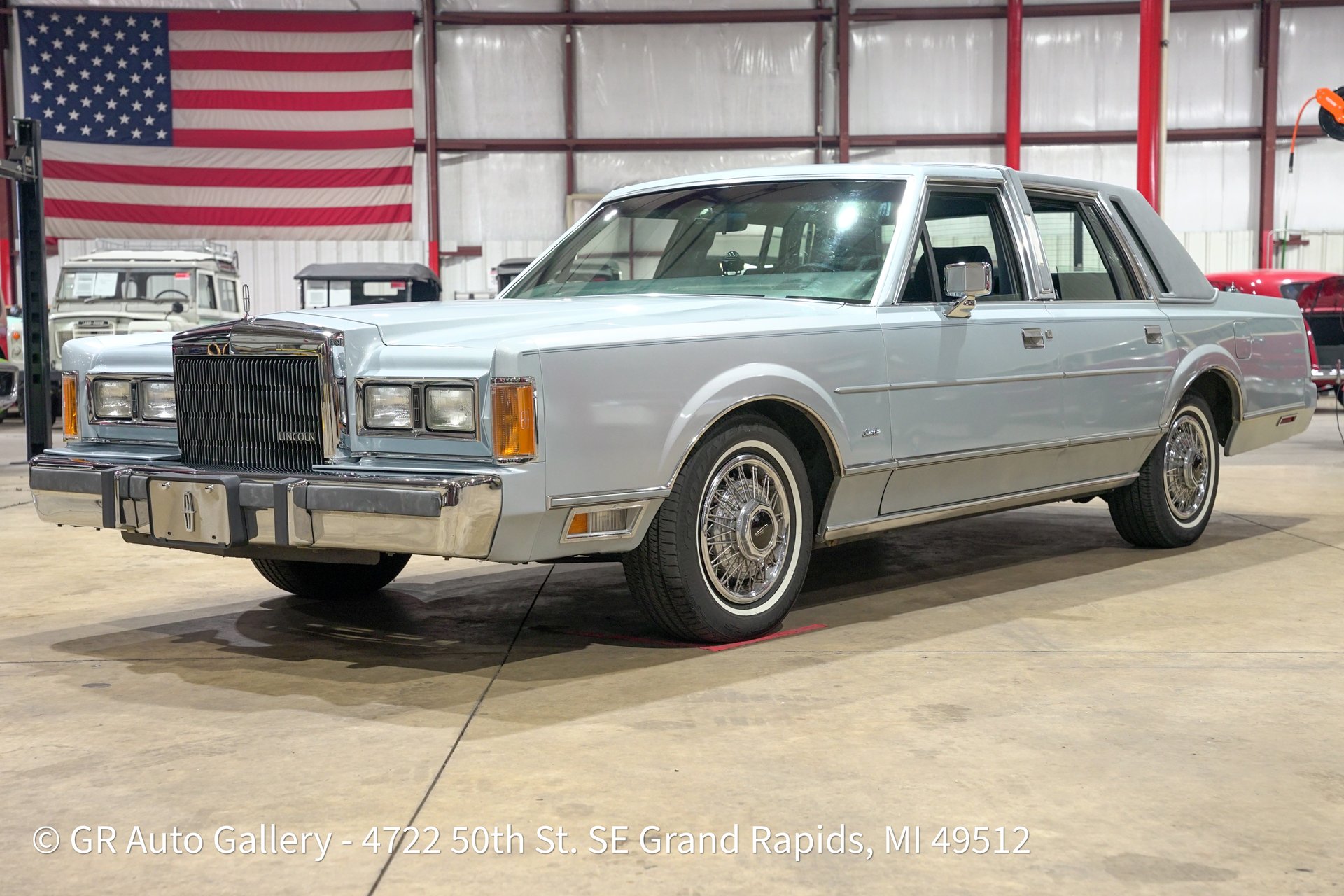
The first generation, 1981 to 1989, is the box. Upright, formal and chrome-trimmed, with a near-vertical grille, vinyl roofs on a large share of cars, and the 5.0-litre Windsor V8 under a long, flat hood. The 1980s examples — 1984 through 1989 in the cars we currently track — still turn up regularly. They feel like a tidied-up 1970s luxury car: recirculating-ball steering with play designed in, deep buttoned seats and a ride that isolates you from the road almost completely.
The second generation, 1990 to 1997, is the aero car. Lincoln rounded every panel and flush-fitted the glass and lamps. The mechanical break matches the styling break: the pushrod V8 gave way during 1991 to the overhead-cam 4.6-litre Modular V8, the dashboard went increasingly electronic, and rear air suspension became a defining feature. The middle years — 1993, 1994 and 1995 in particular — dominate the listings we see, which reflects survival: high-volume cars, garaged more often than the first-generation cars, in numbers large enough that good examples still surface.
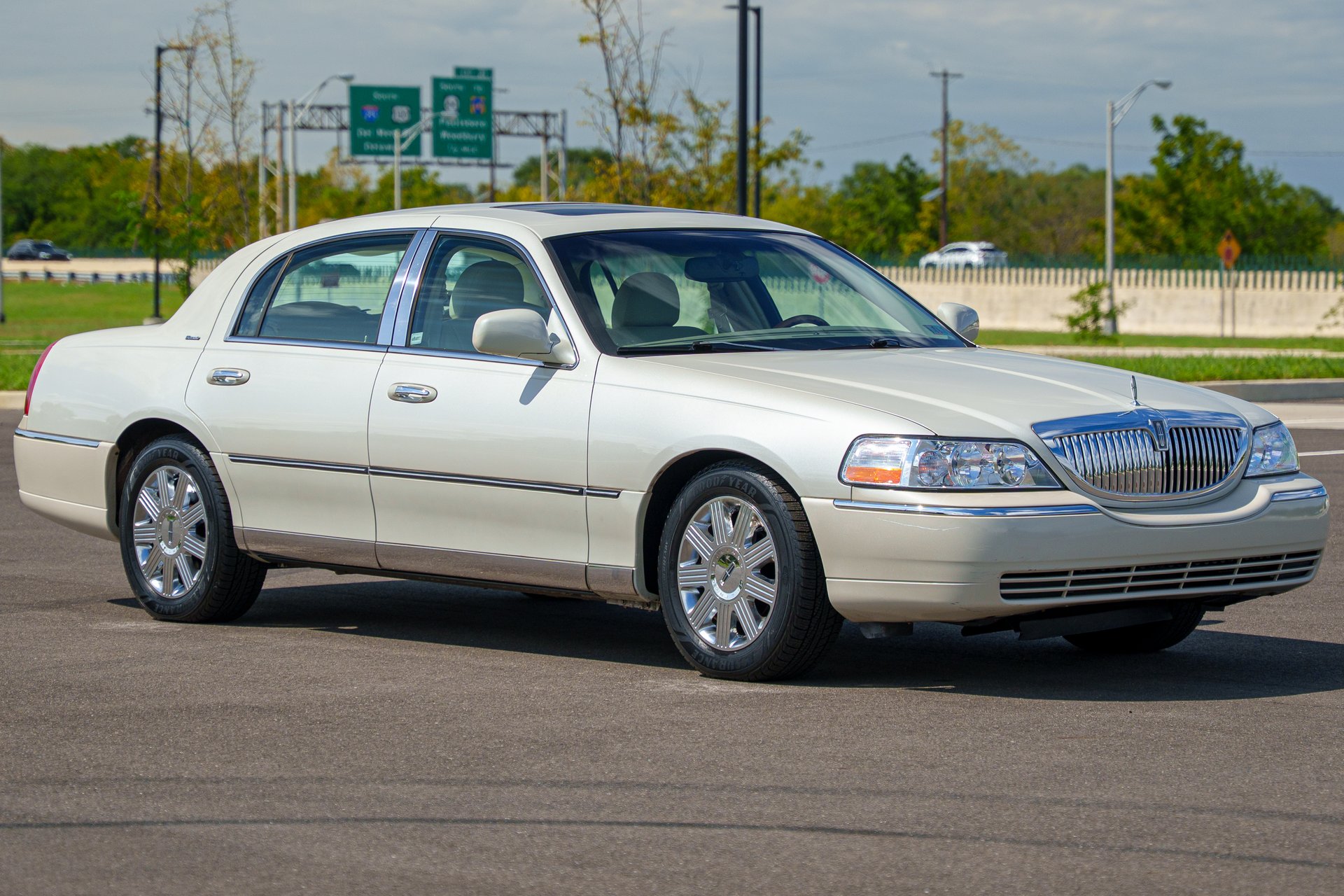
The third generation, 1998 to 2011, is the rounded car: taller and softer-edged, with an oval grille opening and, from 2003, a substantially re-engineered chassis — new front suspension, rack-and-pinion steering and a stronger frame. The livery and fleet buyer mattered more every year and trim names multiplied. Our current pool runs to 2004, but the same buying logic applies to the 2005 to 2011 cars, which changed in detail rather than in character.
Under all three generations sits the same Panther idea: a separate steel perimeter frame, a live rear axle, a front-mounted V8 driving the rear wheels, and a four-speed automatic. Ford built Panthers — Crown Victoria, Grand Marquis and Town Car together — in the millions, and the Town Car alone sold in six figures a year at its 1980s peak before settling to tens of thousands a year. That volume is the car's greatest asset as a classic: almost every mechanical part was shared across the Panther family or Ford's wider range, and any competent American-car mechanic already knows the car.
Who bought them matters to what survives. Retail cars were disproportionately bought by older, affluent owners who dealer-serviced and garaged them — the one-owner, low-mileage, full-history car is a real, recurring Town Car pattern, not a sales myth. Alongside them ran the working cars: hotel, airport and livery cars, funeral cars and conversions, many of them Executive trim, driven to mileages that would finish a lesser car. An odometer therefore tells you less than job history does: a 70,000-mile livery car that idled in airport queues can be more worn than a 140,000-mile private car that lived on the highway. Read trim, wear and paperwork together.
These were never sports sedans. What they offer is durability, silence, seat comfort and running costs closer to a pickup truck's than to a German flagship's. The difference between a good Town Car and a money pit is rarely the engine or gearbox — both are among the toughest Ford built — it is air suspension deferred, intake and cooling problems ignored on the Modular cars, frame rust on salt-state cars, and interiors worn out by livery life.

The models
Every Town Car is a four-door sedan on the standard wheelbase unless it is one of the factory long-wheelbase cars described at the end of this section. There are no production coupes, wagons or convertibles to shop for. What changes across the range is generation, trim and, on the second generation, the engine change that splits the generation in two. Buy the generation first and the trim second.
| Model | Years | Engine | Output | Built | Character |
|---|---|---|---|---|---|
| Town Car (first generation) | 1981–1989 | 5.0 V8 (Windsor) | 130–160 hp | High volume; six-figure years at the 1980s peak | The box; simplest electrics, oldest-car needs |
| Town Car (second generation, early) | 1990–1991 | 5.0 V8 (Windsor) | 150 hp | One full year plus a short 1991 run | Aero body on the old engine; a rare overlap |
| Town Car (second generation) | 1991–1997 | 4.6 V8 (Modular) | 190–210 hp | High volume through the mid-1990s | The sweet spot for most buyers; air ride standard fare |
| Town Car (third generation) | 1998–2002 | 4.6 V8 (Modular) | 200–220 hp | Tens of thousands a year | Rounded body, carry-over chassis; intake check vital |
| Town Car (third generation, revised) | 2003–2011 | 4.6 V8 (Modular) | 220–239 hp | Declining volume to the 2011 end | Best steering and brakes; livery share highest |
Outputs are period SAE net figures for US cars; dual-exhaust cars rate higher than single-exhaust cars on the same engine, hence the ranges. Ford did not publish consistent trim-by-trim production splits for most years, so the Built column describes volume honestly at generation level rather than inventing precision. Total Panther production across all three Ford brands ran into the millions, and Town Car was the lowest-volume but highest-margin member of the trio.
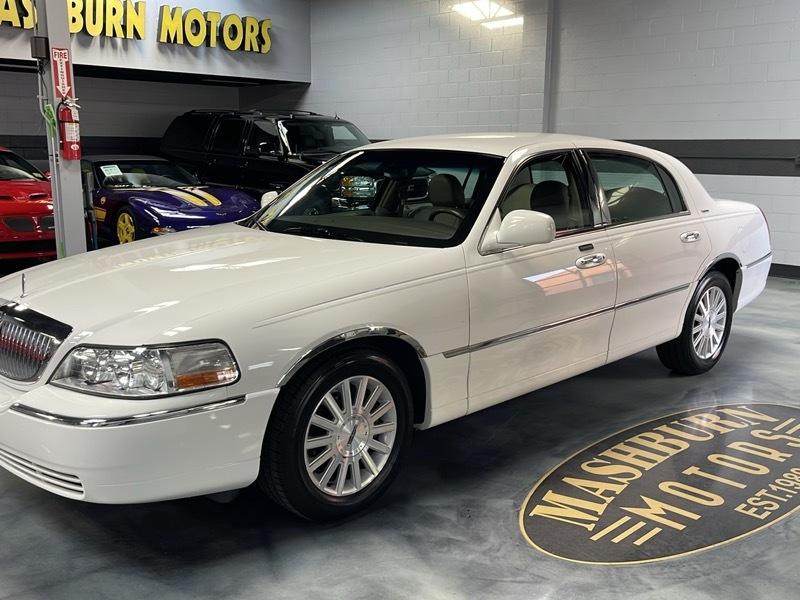
Trim: Executive, Signature, Cartier — and the rest. From the early 1990s the range settled into a ladder. Executive was the base car — still a V8 luxury sedan with air conditioning and power accessories, but with plainer seats and trim, and the trim most often ordered by fleets and livery firms. Signature was the volume retail car: leather, more woodtone trim, better audio and more seat adjustment. Cartier was the designer flagship through 2003, sold at a clear premium when new. Around that ladder orbit shorter-lived names: Signature Series on first-generation cars is the equivalent step up from base; Touring (late 1990s) brought dual exhaust, firmer tuning and more power; Ultimate replaced Cartier at the top briefly in the early 2000s — the white 2004 car in our photographs is one; Designer and Signature Limited carried the idea through the final years. No trim changes the engine family, the frame or the inspection. Trim changes seat quality, electronics count and how hard the car was likely worked. A Cartier or Signature with a private-owner history is usually the best-kept car in any year; an Executive with livery history is the car to inspect hardest, however clean it photographs.

The 1990 to 1991 overlap. The second-generation body arrived for 1990 with the old 5.0 engine still fitted, and the 4.6 Modular replaced it during the 1991 model year. That makes early second-generation cars the odd ones in the range: modern body, old engine, one-year-only combinations of fittings. There is nothing wrong with a 1990 car — the 5.0 is a known quantity and parts are everywhere — but you must establish which engine a 1991 car actually carries before you price its needs, because the problem areas for the two engines barely overlap. The eighth character of the VIN and a look under the hood settle it in seconds: pushrod cars have a distributor at the front of the engine and plug leads to a central coil arrangement you can follow by hand; Modular cars have no distributor at all, with coil packs or coil-on-plug ignition and cam covers that dominate the bay.
Long-wheelbase cars. Lincoln offered a factory long-wheelbase car — most visibly the Executive L and Signature L of the third generation, stretched by about six inches, all in the rear doors — built for the livery trade. A factory L car is a legitimate buy if you want rear legroom, but it carries the livery-history warning in concentrated form. Coachbuilder limousine conversions sit outside this guide: their frames, wiring and interiors are conversion-specific and need a specialist inspection.
Special editions and dealer packages. Gold packages, vinyl and carriage roofs, wire-wheel covers and dealer editions were layered over every generation, especially the first. Treat all of it as decoration with a cost attached: a vinyl or fabric roof hides the roof panel from inspection, traps moisture at its edges and costs real money to renew. A covering that is lifting, bubbling or stained means pricing both the covering and whatever it has been hiding.
Engines and gearboxes
The 5.0 Windsor V8: 1981 to 1991
The first-generation Town Car and the earliest second-generation cars use Ford's 5.0-litre (302 cubic inch) Windsor small-block V8: an iron-block, iron-head, pushrod engine with a design history stretching back to the early 1960s. It is not powerful by modern standards and it was never stressed in this application, which is the point. In Town Car tune it spends its life between idle and 3,500 rpm, and a properly oiled example will outlast the body around it.
Fuel delivery divides the run. The earliest cars use a carburettor or Ford's throttle-body central fuel injection (CFI); from 1986 the Town Car moved to sequential electronic fuel injection (SEFI) with a mass-air or speed-density strategy depending on year, and that later system is the one to have — better starting, better economy, cleaner diagnosis and none of the CFI car's awkward in-between character. Output rose across the run from roughly 130 hp in the earliest, emissions-choked cars to about 160 hp in the best late-1980s dual-exhaust form, with most cars you will actually see — the single-exhaust mid-1980s cars — sitting in between. Torque, delivered low and early, is what the car drives on; do not judge a 5.0 Town Car by its horsepower figure.
A healthy 5.0 starts promptly, idles with a slight, even lope and pulls without hesitation. Judge it by sound, smoke and leaks rather than by the factory oil gauge, which on later cars behaves more like a switch than a true readout. Blue smoke on a cold start that clears within a minute points to valve stem seals, a known and manageable job. Blue smoke under load, or a chuffing blow-by pulse at the oil filler, points to ring and bore wear and a different conversation entirely. Coolant in the oil, or a cooling system that pressurises within seconds of a cold start, points to gasket failure; the 5.0 tolerates overheating once, not repeatedly.
The wear items are conventional and cheap: timing chain stretch after high mileage (a slack rattle at the front cover, retarded and wandering timing), water pump and thermostat, smog pump plumbing where fitted, and vacuum hoses that have had four decades to harden. A rough idle on a 5.0 is vacuum leaks and tired ignition parts until proven otherwise — cap, rotor, leads and plugs are service items, not diagnostics. The EGR system cokes up and produces the classic light-throttle ping and surge; cleaning passages is labour, not parts money. Budget a full ignition and vacuum refresh on any newly bought car before condemning anything electronic.
Two rarities deserve a warning rather than enthusiasm. A few early cars carried the 5.8-litre (351) Windsor, mainly for fleet and towing use, and a tiny number of 1984 and 1985 cars carried a BMW-sourced 2.4-litre turbo-diesel six. Neither is a sensible purchase unless you specifically want the oddity and have verified parts supply for the diesel, which sits in a different scarcity class from everything else in this guide.
The 4.6 Modular V8: 1991 to 2011
The 4.6-litre Modular is the engine that defines most Town Cars you will buy. Ford's overhead-cam replacement for the Windsor family, it arrived in the Town Car first — the Town Car was the Modular's launch application in 1991 — before spreading across the Ford range. In Town Car form it is a single-overhead-cam, two-valve-per-cylinder iron-block V8 with aluminium heads, built for smoothness and longevity rather than revs. Single-exhaust cars rate around 190 hp in early form, rising through the 1990s; dual-exhaust cars rate higher, and the final cars reach the high 230s in top tune. As with the 5.0, the number matters less than the delivery: quiet, torquey and unstressed.
The Modular's core is exceptionally durable. Chain-driven camshafts, a deep-skirt block and conservative tuning give it a service life that routinely runs well beyond 250,000 miles in taxi and livery Panthers, provided the oil was changed and the cooling system kept honest. Judge it by its ancillaries and its plastic, not its bottom end. Listen at a cold start for timing-chain rattle: a second of noise as tensioners pressurise is common on a high-mileage car; a rattle that persists, or slapping from the front cover at idle, means guides and tensioners need a substantial front-of-engine repair that should be priced into the offer. Check for misfire under light load — coils and plugs far more often than anything mechanical — and for coolant smell at the front of the engine, which leads directly to the intake manifold problem in the next section: the plastic manifold with its composite crossover, fitted to mid-1990s through early-2000s cars, cracks and leaks, and it is the best-known Modular failure.
Spark plugs need respect on the Modular. The aluminium heads carry relatively few plug threads, and a plug that has been over-torqued, cross-threaded or left in place for a decade can damage threads on removal. A documented plug change with correct torque is a selling point; a properly done thread repair is acceptable, but ask who did it and how. Oil leaks gather at the cam covers, oil filter adapter gasket and front crank seal — untidy rather than fatal, and useful evidence of how closely the car was watched. A quart of oil every few hundred miles on a car claimed to be low-mileage is a contradiction to resolve before purchase, not after.
Exhaust manifolds crack and their studs corrode, producing a ticking on cold starts that fades as the metal expands: manifold noise is loudest cold at the side of the engine, changes with load and largely disappears warm. The work is labour-heavy because studs snap, so get the cost as a fitted repair with stud replacement included.
From 2003 the Modular gained detail improvements alongside the chassis revision, and the final years added electronic throttle control. None of it changes the buying test: cold start, hot idle, coolant smell, chain noise, misfire scan and leak map.

Gearboxes: the AOD family and its successors
No Town Car was sold with a manual gearbox. Every car uses a Ford four-speed automatic with overdrive, and the family tree is simple. First-generation and early second-generation cars use the AOD — a mechanically and hydraulically controlled box with no electronics to interrogate. Later second-generation cars move to the electronically controlled AODE, and third-generation cars use the 4R70W and its later 4R75E development. All share the same driving character and the same fundamental toughness, and all fail the same way when they fail: through heat, old fluid and neglect rather than through design weakness.
A healthy box engages drive and reverse promptly without a thump, changes up cleanly without flaring — revs rising with no matching rise in road speed — and holds overdrive at a steady cruise without hunting. The test that tells you most is a gentle hill or a steady 45 to 55 mph cruise: shudder under light throttle in top gear is torque converter clutch shudder, often cured in its early stage by fresh fluid of the correct specification and a full service, and a sign of deeper converter wear when a service does not cure it. Price accordingly: a fluid service is a modest maintenance cost; a converter or a full rebuild is a major repair bill that can approach the value of a cheap car — which is why the inspection gives the gearbox a full step of its own.
The AOD has one quirk every first-generation buyer must know. Its throttle valve (TV) cable and the small plastic grommet that connects it to the throttle linkage set the box's line pressure. If that grommet perishes and the cable detaches or loses adjustment — a trivial plastic part — line pressure collapses and the gearbox can destroy itself within a short drive, slipping and burning its clutches while the engine feels perfectly normal. On any AOD car, locate the TV cable at the throttle body, confirm the grommet is present and sound, and replace it preventatively with the improved brass-and-pin arrangement if there is any doubt at all. It is the cheapest insurance in this entire guide. Later electronic boxes remove that failure mode and replace it with sensor and solenoid faults that announce themselves with warning lights and stored codes — one more reason a pre-purchase code scan is non-negotiable on a second- or third-generation car.
Fluid tells the truth about service history. It should be red and smell neutral. Dark brown fluid with a burnt smell and no service record means you are buying the previous owner's deferral; budget a service immediately and a contingency beyond it. Check the level hot, at idle, in park, on level ground, exactly as the dipstick instructs — overfilling foams the fluid and mimics faults that do not exist.
Rear axles are the Ford 8.8-inch unit in most applications, geared tall for quiet cruising. They whine when worn or when the oil has never been changed, and limited-slip units need the correct additive. A whine that rises and falls with road speed and changes between drive and overrun is axle; one that follows engine speed is not. The units are plentiful used, so even a worst case here is a bounded cost.
Problem areas
A Town Car rarely fails all at once. It fades: the rear sinks lower overnight, the steering wanders more on the highway. Almost every serious bill starts as a small fade someone ignored. Remember the ordering rule: air suspension, cooling and frame condition decide whether a car is worth owning; everything else decides what you should pay for it.
Our own photo-note base for this model is too small to quote incidence from honestly — only three cars in the current pool carry detailed photo examinations — so this section makes no sample claims. It is built instead from the Panther platform's long, well-documented service record.
Air suspension, steering and the running gear
Rear air suspension. From the second generation onward — and as load levelling on many first-generation cars in simpler form — the Town Car rides at the rear on air springs: rubber-and-plastic air bags in place of, or assisting, steel coils, fed by an electric compressor under the hood, dried by a desiccant dryer, metered by solenoid valves at each bag and governed by a height sensor linked to the rear axle. When it works, the car levels itself regardless of load and rides superbly. When it ages, it fails in a predictable sequence, and you can test every stage of that sequence on a viewing.
Start with the car after it has sat overnight. It should sit level, rear arch height matching side to side. A rear end sitting down after standing is leaking air — most often from the bags themselves, whose rubber folds crack where the bag rolls over its piston, visible only on a lift with the suspension drooped. Turn the ignition on and listen: the compressor should run briefly, lift the rear visibly and stop. One that runs and runs without lifting, or sounds laboured, is feeding a leak or worn out from feeding one for months. One that never runs, with the car sitting down, points to the relay, height sensor linkage, a fuse or a dead compressor — and to a seller driving on the bump stops. Check the dash warning, and check the trunk shut-off switch: it must be off before the car is jacked, and a car presented with the system off and the rear down has told you its own story.
The repair economics shape the whole market. A pair of air springs is a moderate parts cost with straightforward fitting, a compressor is a mid-range fitted repair cost, and a dryer or height sensor is smaller money again. The trap is the cascade — a leaking bag overworks the compressor, the tired compressor loads the dryer with moisture, the moisture corrodes the solenoids — so a car needing one component often needs three. Get any sagging car quoted as a system, not as a single bag. The alternative already fitted to many cars is a coil-spring conversion, at a kit cost plus fitting typically below a full air-system overhaul. Done with a proper kit, the warning light correctly dealt with and the compressor disabled, it is a legitimate, durable choice for a driver. Done badly — mismatched springs, a nose-down or tail-high stance, a warning light taped over — it describes the ownership the car has had. Either way, stance is evidence: photograph the car from the side on level ground and make the seller explain any stance that is not level.
Front suspension and steering. First- and second-generation cars steer through a recirculating-ball box with a linkage full of joints: centre link, idler arm, pitman arm and tie rods. Wear accumulates in every joint, which is why so many older cars wander — no single part is broken, the whole linkage is tired. Have an assistant rock the wheel while you watch each joint under the car for lost motion. A full linkage refresh with quality parts and an alignment is a predictable, mid-range repair cost and transforms the car; budget it on any high-mileage example rather than treating vagueness as character. Ball joints follow the same pattern, with one safety note: a separated lower ball joint drops the corner without warning, so any car with unknown front-end history earns a lift check before it earns highway miles. From 2003, rack-and-pinion steering replaced the box. Racks leak at their seals and inner tie rods wear, but a healthy late car steers with a precision the earlier cars never had; vagueness in a late car is a fault to find, not a trait to accept.
Brakes, wheels and tyres. The Panther stops on disc brakes that grew over the years, with anti-lock braking standard fare by the 1990s. The system is conventional and cheap to maintain; the enemy is age and standing. Calipers seize, flexible hoses perish internally and act as one-way valves that hold a brake on, and a car that has sat wears a rust band on every disc. A car that pulls under braking, drags a hot wheel after a short drive, or pulses through the pedal needs a full hydraulic refresh — calipers, hoses, fluid and discs as found — a moderate fitted cost and non-negotiable safety work. Check the steel brake lines along the frame rail and across the rear axle for corrosion on any salt-state car; line replacement is labour more than parts. These are heavy cars often under-tyred by budget replacements: confirm size and load rating against the door sticker, and treat mismatched, aged or cracked tyres as an immediate replacement cost.
Frame, rust and body
The Town Car's separate frame is a strength — it is why Panthers survive taxi and police service — but steel is steel, and in salt states the frame and the body rot on separate schedules that you must inspect separately. A shiny Town Car can sit on a tired frame, and a cosmetically tired car can sit on a perfect one.
Frame. Inspect the full length on a lift, with a torch, prodding suspect areas where the seller permits. The vulnerable zones are consistent: front rails and steering mounting areas, mid-rails under the doors where spray collects, rear rails and the kick-up over the axle, and every body-mount pocket, where the rubber mounts hold moisture against the steel. Surface scale is normal and treatable. Flaking, swelling or perforation is structural: frame welding is possible, but it is fabrication priced per car, and a perforated frame on an ordinary car usually ends the discussion. Our listings draw heavily from New York, New Jersey, Michigan and neighbouring states — exactly salt country — so give extra credit to a documented Southern or Western car whose frame still shows factory coatings.
Body. The weak points follow the water. Door bottoms bubble where drain holes block and doors hold water — run a fingertip along every door's bottom edge and clear the drains on any car you buy. Rockers and lower rear quarters trap spray behind trim. The trunk floor and spare-wheel well collect leaks from the rear window and trunk seals; lift the spare and mat and look for staining, scale and damp. The vinyl or fabric roof is a rust blind spot: check its edges for lifting, press along the roof rails and rear pillars for softness beneath the covering, and treat bubbling under vinyl as body rust until a closer look proves otherwise. Fender bottoms, battery tray and cowl deserve the same minute each. No single panel, except in extreme cases, writes a car off — patch repair is ordinary body-shop work at ordinary costs — but a car needing sills, door bottoms and quarters at once is a restoration budget, not a driver purchase.
Glass, seals and water inside. Perished seals let water into carpets and door innards, where it kills window regulators and rots floor pans from above. Wet carpets, a musty smell or misted glass on a dry day mean an active leak: find it before you buy, because the fix ranges from a seal at small cost to a heater-core leak at dashboard-out labour cost. Sweet-smelling damp in the front footwells is coolant until proven otherwise. Water in the trunk on a sunroof car usually means blocked sunroof drains — cheap to clear, expensive in the damage they cause when ignored.

Cooling, intake and engine ancillaries
The plastic intake manifold (4.6 cars, mainly 1996 to 2001). This is the Modular's signature fault. Ford moulded the manifold in composite plastic, including the front coolant crossover. With heat cycles and age the crossover cracks — typically around the thermostat housing and alternator bracket — and coolant leaks, sometimes as a seep, sometimes as a sudden loss that overheats the engine within miles. The fix is a replacement manifold with an aluminium crossover, the updated part you want documented in the history: a mid-range fitted repair cost, and a job any Ford-experienced shop has done many times. On any affected car, inspect the crossover warm, look for crusting and coolant smell, check the valley below the manifold for pooled coolant, and ask directly whether the manifold has been replaced and with which part. An original manifold still in place is not a reason to walk away; it is a reason to price the replacement into the deal and schedule it before it schedules itself on a highway.
Cooling system generally. Radiators, water pumps, thermostat housings and heater cores are all age items now. The heater core is the expensive one, not for its part cost but for its address behind the dashboard — a dashboard-out job at substantial labour cost — so a car with weak cabin heat, a bypassed heater (looped hoses at the firewall) or coolant smell in the cabin is carrying a known bill. Electric fans and their relays on later cars fail silently until hot traffic finds them out; the inspection includes an idle soak for exactly this reason. Never accept an overheating episode as a quirk: a seller's story about a gauge that reads high is a story about head gaskets until a pressure test says otherwise.
Ignition, charging and starting. Modular cars consume ignition coils one at a time, producing a single-cylinder misfire that feels like gearbox shudder at light throttle — a code scan distinguishes the two in minutes, which is why the scan precedes the gearbox verdict in the inspection. Alternators fail with age; check charging voltage at idle with loads on. Corroded starter cable connections cause the classic hot no-crank sellers call an occasional gremlin. On 5.0 cars the equivalents are distributor ignition parts and, where fitted, the TFI module's heat sensitivity — a sudden cut-out that recovers when cool is a module pattern worth knowing before you chase fuel pumps.
Interior, climate and electrics
Climate control. Automatic temperature control is universal on later cars and common on earlier ones, and its characteristic failure is the blend door actuator: a small motor and plastic gear set behind the dashboard that mixes hot and cold air. Failure gives full heat, full cold, or a clicking from behind the dash as the stripped gear hunts. On some years the actuator is reachable with modest dismantling; on others it is a deep-dashboard job, so identify the exact year procedure before quoting. The control head on many cars will run a self-test and display fault codes. A system that cannot hold a set temperature or clicks after every start is a viewing with a repair already attached. Compressors, condensers and driers are ordinary Ford parts at ordinary costs; budget a proper service with leak detection rather than repeated re-gassing, which fixes nothing.
Seats, windows and trim. The seats are the product — deep, soft and built for distance — and their condition prices the interior. Leather cracks with sun and age, splits at the driver's entry bolster first, and loses support as foam and spring base tire; judge from the driver's seat. Re-trimming in leather to a good standard is a major cost, so a sound original interior earns a real premium, and seat covers in listing photos are a question, not an answer. Power seat mechanisms strip their plastic gears and jam; test every direction on both front seats. Window regulators — cable designs on later cars — fail with the window dropping into the door; a regulator is a moderate fitted cost per door, and four tired windows add up. Lock actuators buzz and fail in sets. List every dead function on the viewing and price the list, not the impression.
Electronics and instruments. Second-generation cars brought increasingly electronic instruments, including digital dash variants; third-generation cars are fully networked by the standards of their day. Failures are usually local — a lighting module that drops headlights intermittently on affected years, a door module that takes windows and mirrors with it, cluster solder joints that dim gauges — and diagnosis needs a scanner and a wiring diagram, not guesswork. Every warning light must perform its bulb check at key-on and go out after starting. A missing warning light is not good news; it is a bulb removed to hide a fault. Test everything, write down what fails, and remember that a car where everything electrical works has almost always been looked after.
How to inspect one
Allow ninety minutes, bring a torch, a code scanner, and a magnet wrapped in cloth. Insist on a cold start and on seeing the car before it has been moved that day — the overnight stance of the air suspension and the first seconds of a Modular's timing chains are both cold-only evidence. If the car passes you, pay for a lift inspection before money changes hands; on a Panther, the frame check alone repays the fee.
- Start with the paperwork and the VIN. Match the VIN on the title to the plate at the base of the windshield and the door sticker, and confirm year and engine from the VIN before discussing anything else — on a 1991 car this settles the 5.0 versus 4.6 question that decides which problem areas apply. In the history file, three documents carry real value: an intake manifold replacement with the updated aluminium-crossover part on a 1996 to 2001 car, air suspension work itemised by component, and gearbox or converter work. A livery car with fleet records is worth more than a private car with none.
- Read the stance before you touch anything. Photograph the car from the side on level ground. The rear should sit level and even after standing overnight. A rear end down on its bump stops, or down on one side, is the air suspension leak from the problem areas — note it, then watch what happens at key-on.
- Cold start and compressor watch. Start from cold. Listen for timing-chain rattle on a 4.6 lasting beyond a second or two, and for lifter or manifold tick on either engine. Watch the air suspension compressor: it should run briefly, lift the rear if it had settled and stop. A compressor that runs continuously, labours or never runs converts step 2's observation into a priced system repair. Check that every warning light performs its bulb check and then goes out.
- Under the hood: coolant, oil and the crossover. With the engine warming, inspect the intake manifold's front crossover on 4.6 cars for cracks, crusting and pooled coolant, smell for coolant at the front of the engine, and check the coolant level and colour in the reservoir. Pull the oil filler and look for emulsion; check the oil level and condition on the dipstick. On a 5.0 car, find the automatic gearbox TV cable at the throttle linkage and confirm its grommet is present and sound — the cheap plastic part whose failure destroys an AOD gearbox. Map every leak you can see by location; you are building the deferred-maintenance list that prices the car.
- The scan. Plug in the scanner and read stored and pending codes before the road test, then again after it. Misfire codes point to coils and plugs; climate and body codes support what your switch tests find later. A car that has just had its codes cleared — monitors showing not ready across the board with a seller who cannot explain why — gets its road test extended until the monitors run or the fault returns.
- Under the car. On a lift, work the frame front to back: front rails and steering mountings, mid-rails, rear rails and the kick-up, and every body-mount pocket, prodding suspect scale as the rust section directs. Then brake lines for corrosion, hoses for cracking, the rear air springs drooped for fold cracking, exhaust condition, and front linkage play with an assistant rocking the wheel. Frame perforation ends the inspection for most buyers; everything else goes on the priced list.
- Trunk, floors and the water story. Lift the spare and trunk mat and inspect the well for rust and damp. Inside, lift the carpets in all four footwells, look for water tracks and prod the pans. Wet where it should be dry means a leak to find and a cause to price — seal, drain or heater core — before you agree a number.
- Body and gaps. Walk the car slowly in good light. Run the magnet over rockers, lower doors, rear quarters and fender bottoms. Feel every door bottom edge for bubbling, check panel gaps for accident history, and count the trim, chrome and lamp items that are cracked or missing — a full set of small items quietly becomes a large bill.
- The road test: gearbox and chains under load. Drive at least twenty minutes, including a steady 45 to 55 mph cruise, a gentle hill and a freeway merge. The gearbox should engage promptly, change without flaring and hold overdrive without shudder — light-throttle shudder on the cruise is the converter test from the gearbox section, and it needs a fluid history answer before a rebuild quote. The engine should pull cleanly with no misfire stumble, and a 2003-onward car should steer notably tighter than an earlier one.
- Brakes, heat soak and idle. Brake firmly from speed twice: straight, no pull, no pulse, no fade. Then idle hot for five minutes with the air conditioning on. Watch the temperature gauge for creep, run the heater to full hot and confirm real heat without coolant smell, and listen again for chain and manifold noise at hot idle.
- Climate and every switch. Set the climate control to cold and hot in turn, listen for blend-door clicking, and confirm the air changes temperature promptly. Then work everything: both front seats in every direction, all four windows, locks, mirrors, entry pad, lights, wipers, washers and audio. Write down every failure — priced honestly, this list is often the difference between a fair price and an overpayment.
- Interior last, from the driver's seat. Sit where the owner sat. Judge the seat for support as well as surface — collapsed padding under intact leather is still a retrim conversation — check the headliner for sag and staining, and weigh the interior heavily. Mechanical faults are catalogue work; a worn-out cabin costs specialist money and you sit in it every mile.
Values
The build below this guide carries the live market for the Town Car — the cars listed now and the recorded sales — refreshed at every build, and that block, not this section, is where you read current numbers. What follows here is how to read that market, because the Town Car spread between the cheapest and the dearest ordinary car is driven by a small set of factors that repeat so reliably you can price a car from them before you ever look at an asking figure.
Condition is the first factor, and on a Town Car it means three things in order: frame and body soundness, air suspension and cooling-system status, and interior and electronics completeness. Two cars of the same year and mileage sit far apart when one has a clean frame, a documented aluminium-crossover intake and working air ride and the other has a sagging rear, an original plastic intake and a dead blend door. Mileage alone moves Town Car value less than on almost any other luxury car, because the market knows the drivetrain's longevity; a documented higher-mileage private car routinely and correctly outvalues a neglected low-mileage car whose miles were short trips and long sits.
History is the second factor. The one-owner, garaged, dealer-serviced retail car — Signature or Cartier, full book, both keys — sits at the top of the ordinary market and earns its position, because reproducing that condition from a lesser car costs more than the gap. Livery and fleet history pulls the other way, not because good fleets maintain badly — they maintain rigorously — but because idle hours, rear-seat wear and multiple-driver use age a car in ways the odometer understates. The tells are Executive trim with heavy rear-seat wear, trunk scuffing from luggage, and mounting holes from removed equipment.
Generation and trim set the frame within which condition operates. First-generation cars trade in a classic market that values originality and the formal look, and the best boxes — late, injected, well-kept Signature Series cars — have a following the ordinary aero car does not. Second-generation cars are the volume heart of the market, with 1995 to 1997 cars easiest to place because the systems are mature. Third-generation cars divide at the 2003 revision, the later chassis earning a genuine premium from buyers who have driven both. Top trims carry a premium over Executive reflecting equipment and survival quality more than rarity; no Town Car trim is rare in absolute terms, and a seller pricing on trim alone should be asked to justify the premium from condition instead.
Asking and achieved prices diverge predictably. Sellers anchor on what the car cost new or on the best result seen for the year, while achieved prices follow the inspection list: every deferred system — air springs, intake, linkage, heater, regulators — comes off the achievable figure whether the seller acknowledges it or not. The project-versus-driver gap is correspondingly wide. A running but deferred car is worth its value as a base for work, not a discount from driver value; add the priced inspection list to the asking figure and compare that total with the cost of the best documented car you can find. Cars discounted for a single bounded fault — a properly converted air suspension, a documented gearbox rebuild — are often the rational buys, because the discount usually exceeds the fault.
Buy on the evidence in front of you, keep the inspection list priced in writing, and let the live market block below arbitrate the final number.
Parts and ownership
The Town Car is one of the best-supported American cars of its era, for a structural reason: it shares its platform, engines and most running gear with the Crown Victoria and Grand Marquis, built in far larger numbers and kept in police and taxi service, which kept the parts pipeline full long after production ended in 2011. Ford's parts network, the Mustang-driven 5.0 and Modular aftermarket, and a deep stock of used Panther components mean mechanical scarcity is rarely the problem. Time, trim specificity and labour are the problems.
Easy: service items, filters, belts and hoses; brake discs, pads, calipers and hoses; water pumps, alternators and starter motors; ignition coils, plugs and 5.0 ignition parts; suspension wear items including ball joints, linkage parts and control-arm bushes; air springs, compressors and conversion kits; radiators and cooling consumables; exhaust systems in standard form; tyres in the correct sizes and load ratings. Order today, fit this week, at prices close to mainstream-car money. A full service with quality fluids and filters is a modest maintenance cost, and a gearbox fluid service is similarly routine — both belong in the first month of ownership for any car without a recent record.
Harder and dearer: the updated intake manifold is readily available but the job carries real labour, so treat the fitted repair cost as the number that matters; heater core replacement is a dashboard-out labour bill on a small part; blend door work varies sharply by year, from accessible to deep-dashboard; Town Car-specific lamps, grilles and brightwork are thinner on the ground than Crown Victoria equivalents; leather covers and foam to factory pattern are specialist items; roof renewal is coachtrimmer work that should include treating whatever the old covering hid; clusters and modules need repair-by-exchange specialists. A quality repaint is a major cost on a car this large — another reason to buy the body and interior and fix the mechanics.
Running costs. A sorted Town Car is a realistic regular-use classic and, for its size, an inexpensive one. Expect roughly 16 to 18 mpg in mixed US driving from a healthy car, better on a long cruise, worse from a car carrying a dragging brake or a misfire. Any good independent Ford specialist can service it; the diagnostic equipment for the later cars is standard. Insurance in line with other large sedans of the value is typical, and agreed-value cover is worth arranging once a good car is sorted. The budget line that catches new owners is the first-year catch-up: fluids throughout, brakes as found, tyres if aged, and the known intake or air-suspension item the purchase price assumed honestly run to a four-figure sum in the low thousands before you improve anything. Recommissioning a car that has sat for years costs more — standing adds seized brakes, perished rubber, stale fuel and rodent damage. Buy a car in regular use over one that has been asleep, even at a higher price.
Which one to buy
- The all-rounder: 1995 to 1997 Signature or Cartier. The mature second-generation car: 4.6 Modular, developed air suspension, the best balance of modern usability and classic feel, and the deepest pool of well-kept private cars to choose from. Verify the intake manifold status and buy the best-documented example you can find.
- The value buy: a documented Executive with private history. Base trim keeps the electronics count down and the price honest. The pick is the Executive that was a private owner's car rather than a fleet car — same drivetrain, same frame, less money, provided the wear pattern proves the history.
- The classic choice: 1988 to 1989 Signature Series. The final, best-developed box: sequential injection, the mature 5.0 and the full formal presence. Buy on body, frame and interior originality, replace the gearbox TV-cable grommet on the way home, and accept 1980s steering as part of the charm.
- The driver: 2003 onward Signature or Signature Limited. Rack-and-pinion steering, better brakes and the strongest frame make the revised third-generation car the Town Car to cover distance in. Livery history is commonest here, so the rear-seat and trunk wear checks matter most on exactly these cars.
- The comfort pick: a factory long-wheelbase L car. Six extra inches, all in the rear doors, on the same mechanical package. Buy it for passengers, inspect it as a livery car whatever the seller calls it, and confirm the stretch is factory rather than a conversion before applying this guide's prices and parts logic.
- The one to avoid: the cheapest car in any generation. A sagging, overheating, rust-framed Town Car at the bottom of the market is not a bargain awaiting effort; it is three major repairs wearing one price tag. The Panther's toughness means neglected cars keep running long after they stop being worth saving.
And the rule that overrides all of the above: buy the soundest frame and the most complete history you can find, in the generation you actually want. Engines, gearboxes, air springs and actuators are all fixable at prices you can plan for. A rotten frame, an overheated engine's hidden damage and a worn-out livery interior are the three things about a Town Car that money cannot put back to original — and they are all visible on a careful inspection before you pay.
See the 34 Town Car cars currently listed.