
Jeep Cherokee Classic Sport Utility 4D buyer's guide
Jeep Cherokee Classic Sport Utility 4D -- the model's own buyer's guide: variants, values and what to check.
Years listed: 1974-2002 · Series: Jeep
Overview and history
The Cherokee is two different Jeeps sharing one name, and understanding which one you are looking at is the first buying skill. The original Cherokee, built from 1974 to 1983 on the SJ platform, was the two-door sport version of the full-size Wagoneer: a big, body-on-frame wagon with V8 power, a proper low-range transfer case and room for a family and everything it owned. The second Cherokee, the XJ built from 1984 to 2001, was something else entirely — a compact, unibody wagon that more or less invented the modern sport-utility vehicle. Almost every Cherokee you will find for sale today, and the overwhelming majority of the cars in our listings, is an XJ. This guide covers both, because buyers cross-shop them constantly, but it weights its detail toward the XJ, which is where the choice, the value and the traps all live.
The SJ Cherokee arrived for 1974 as Jeep, then owned by American Motors Corporation, tried to give the ageing Wagoneer line a younger buyer. Where the Wagoneer was a four-door family wagon, the Cherokee launched as a two-door with wider rear wheel arches, bolder trim and names like Cherokee Chief that promised adventure rather than school runs. A four-door Cherokee followed for 1977, by which point the distinction from the Wagoneer was mostly trim and price. Underneath, both were thoroughly traditional: a separate ladder frame, leaf springs at both ends, solid axles front and rear, and a choice of AMC six-cylinder and V8 engines driving through part-time or full-time four-wheel-drive systems. They were tough, thirsty, slow by modern standards and immensely capable off road. They were also built in relatively small numbers, sold mainly in North America, and rusted with enthusiasm — which is why a sound SJ today is a collector car rather than a cheap old truck.
The XJ was a clean-sheet answer to a different problem. By the late 1970s AMC knew the big SJ was too heavy, too thirsty and too expensive to build for the fuel-conscious 1980s, and Renault, which had taken a controlling stake in AMC, wanted a Jeep it could also sell in Europe. The result, launched for the 1984 model year under chief engineer Roy Lunn and designer Dick Teague, was radical for a Jeep: a steel unibody instead of a separate frame, coil springs at the front instead of leaves, a four-door body that was genuinely compact by American standards, and a kerb weight roughly a thousand pounds lighter than the SJ it would eventually replace in spirit, if not in showroom position. Purists doubted a unibody Jeep could be a real Jeep. They were wrong. The XJ was stiff, capable, durable and — crucially — car-like enough that buyers who would never have considered a traditional truck bought one as a family car. Jeep had, almost by accident, built the template every crossover and compact SUV since has followed.
One naming trap needs settling before you look at a single listing. The Grand Cherokee, launched for 1993 on the ZJ platform and continued as the WJ from 1999, is a larger, plusher, entirely separate model that shared showrooms with the XJ for nine years. Sellers, listing sites and even parts catalogues confuse the two constantly, and a Cherokee search will surface Grand Cherokees wearing the shorter name. They share almost nothing that matters to a buyer — different body, different suspension, different failure points. If the car in front of you has a rounded, upmarket body, coil springs at the rear and a V8 option, you are looking at a Grand Cherokee and you need a different guide. Everything that follows is about the Cherokee itself: SJ and XJ, two doors or four, and nothing else.


The models
Cherokee badging tells you trim and, on the XJ, sometimes the door count — it rarely tells you the engine, and it never tells you the condition. Learn the generations first, then the trims inside them, and always confirm the engine from the engine bay and the vehicle identification number rather than the tailgate.
| Model | Years | Engine | Output | Built | Character |
|---|---|---|---|---|---|
| Cherokee SJ two-door | 1974–1983 | 4.2 six / 5.9 and 6.6 V8 | 110–175 hp | Part of about 200,000 SJ Cherokees in total | The original; big, simple, collectible |
| Cherokee SJ four-door | 1977–1983 | 4.2 six / 5.9 V8 | 110–175 hp | Included above | A cut-price Wagoneer in all but name |
| Cherokee XJ two-door | 1984–2001 | 2.5 four / 2.8 V6 / 4.0 six | 105–190 hp | A minority of 2.8 million XJs | Rarer, sportier, same mechanics as the four-door |
| Cherokee XJ four-door | 1984–2001 | 2.5 four / 2.8 V6 / 4.0 six / diesels abroad | 105–190 hp | The bulk of 2.8 million XJs | The default Cherokee and the core of the market |
| Cherokee XJ 4.0, 1987–1990 | 1987–1990 | 4.0 six, Renix injection | 173–177 hp | — | The engine arrives; electronics need understanding |
| Cherokee XJ 4.0 HO, 1991–2001 | 1991–2001 | 4.0 six, Chrysler injection | 190 hp | — | The sweet spot: power, simplicity, support |
| Wagoneer XJ | 1984–1990 | 2.8 V6 / 4.0 six | 115–173 hp | About 28,000 | Woodgrain luxury trim on XJ bones; buy on condition |
| Comanche MJ pickup | 1986–1992 | 2.5 four / 2.8 V6 / 4.0 six | 105–177 hp | About 190,000 | The XJ as a pickup; kin, not a Cherokee, but cross-shopped |
The SJ Cherokee, 1974–1983. Trims ran from the plain Cherokee through the S and the wide-track Cherokee Chief to the Golden Eagle and Laredo packages, with tape stripes, denim-look upholstery and other period delights that are now half the appeal. Two-door cars came first and carry the classic silhouette; the four-door from 1977 is roomier and usually cheaper. Engine choice matters more than trim: the 258 cubic inch (4.2-litre) AMC six is adequate and simple, the 360 cubic inch (5.9-litre) V8 is the one most buyers want, and the 401 cubic inch (6.6-litre) V8 offered in the mid-1970s is rare, strong and thirsty in equal measure. For 1980 the range was rationalised and a 360 V8 became the mainstay. Every SJ is now at least forty years old, so originality, rust and completeness decide value far more than which stripe package it wore new.
The early XJ, 1984–1986. The launch range is the part of XJ history to approach with your eyes open. The base engine was AMC's 2.5-litre four, willing but slow in a four-wheel-drive wagon. The optional engine was General Motors' 2.8-litre V6, bought in because AMC had nothing suitable ready — underpowered, leak-prone and unloved then and now. Trim names set the pattern that lasted: base Cherokee, Pioneer, Chief and Laredo, with the woodgrained Wagoneer sitting above them as a separate nameplate on the same shell. Two-door and four-door bodies were offered from the start, and a two-wheel-drive version existed for buyers who wanted the shape without the hardware — check driven axles on any suspiciously cheap car, because a two-wheel-drive XJ is worth substantially less and some listings omit the fact. These early cars are historically interesting and mechanically the weakest of the run. Buy one for its story, not as your first Cherokee.
The 4.0 arrives, 1987–1990. The single most important event in XJ history is the 1987 introduction of the 4.0-litre six, developed from AMC's 258 and managed by the Renix engine electronics described in the next section. Overnight the Cherokee became a genuinely quick, torquey, durable vehicle. The 2.5 four continued as the budget option, now with fuel injection, and the GM V6 was dropped. Trim structure settled into base, Pioneer, Laredo and the new Limited at the top, while the Sport name that would dominate later years appeared toward the end of the period. The Comanche pickup, launched for 1986 on a stretched XJ front half with a frame under its bed, belongs to this era and shares its engines and front suspension — worth knowing because Comanche parts and knowledge cross over.
The HO years, 1991–1996. For 1991 Chrysler replaced the Renix electronics with its own engine management and the 4.0 became the High Output, badged as such on the tailgate. This is the era most experienced buyers target first: the strongest version of the best engine, in the original square body, with an interior that is simple and hard-wearing rather than plush. Trims simplified over the period — base and Sport at the working end, Country with its two-tone paint and plusher seats in the middle, Briarwood with woodgrain for a single year, and Limited while it lasted. Anti-lock brakes became available, airbags arrived for 1995, and the structure was quietly strengthened. A 1991 to 1996 Sport or Country with the 4.0, an automatic gearbox and the better transfer case is, for most buyers, the Cherokee in its purest and most usable form.
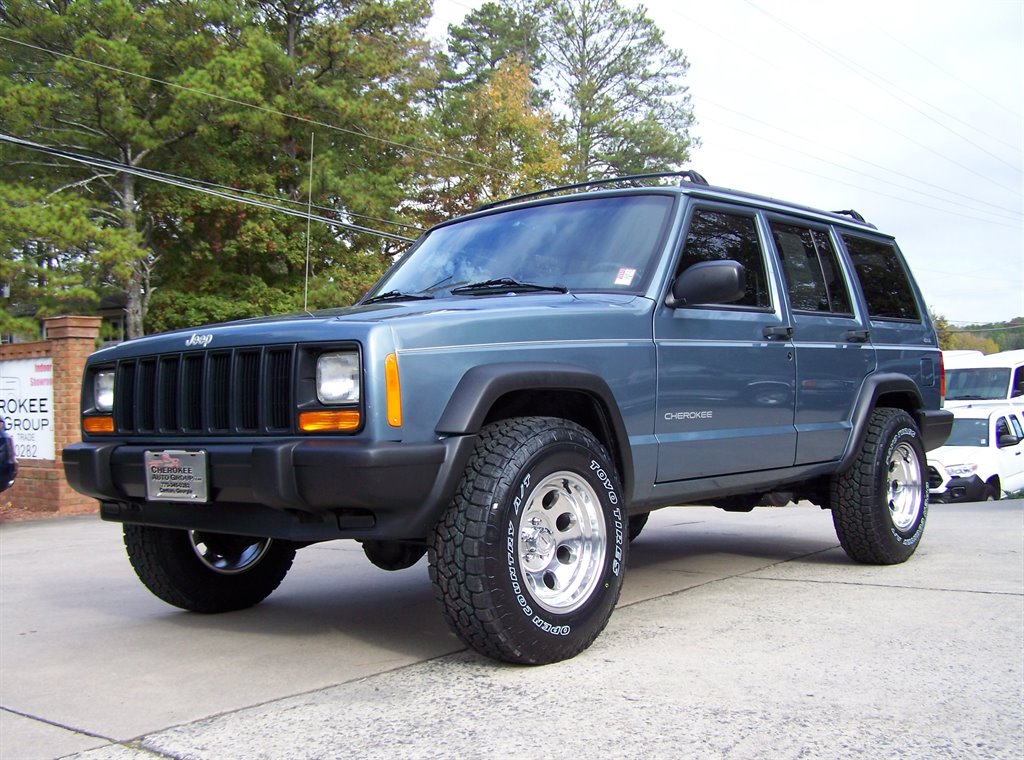
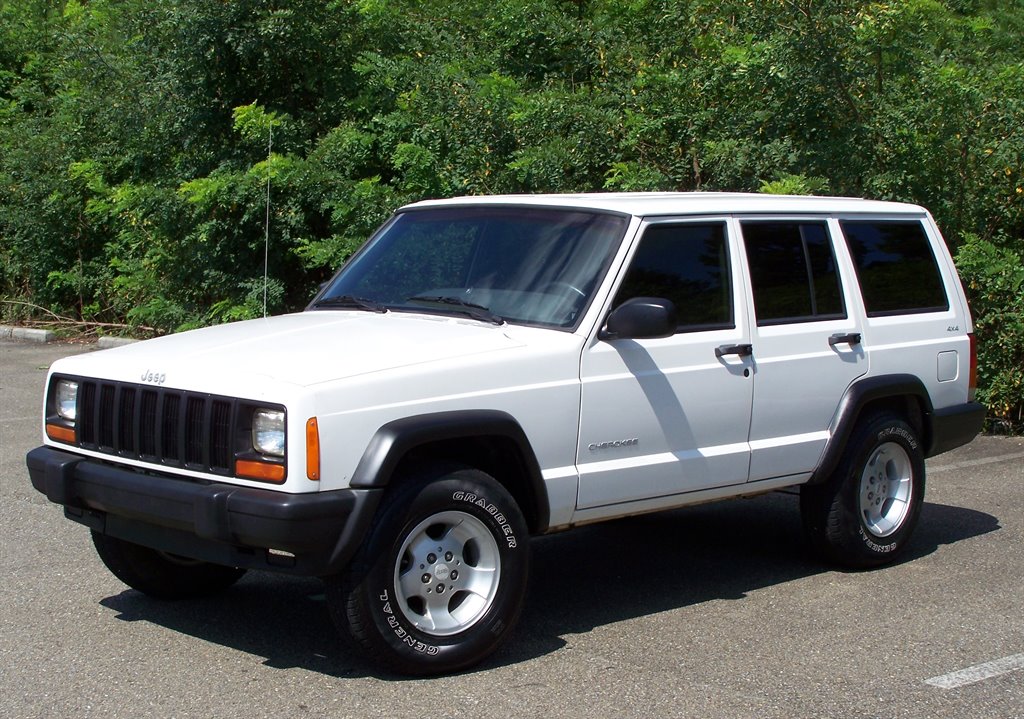
The facelift, 1997–2001. The 1997 revision rounded the nose, integrated the bumpers, fitted a steel tailgate in place of the earlier fibreglass one, and replaced the angular dashboard with a modern dual-airbag interior. Mechanically the car was refined rather than reinvented: the 4.0 continued, the running gear carried over, and trim settled into SE, Sport, Classic and Limited. These are the easiest Cherokees to live with daily — quieter, safer, better sealed — and the most likely to have air conditioning that works and an interior that has survived. They are also the cars most affected by the cylinder-head weakness of the final two years, covered in detail below, so the facelift's extra polish must never excuse you from the head and cooling checks. Production ended in June 2001, and late, low-mileage, unmodified 2000 and 2001 cars in Sport, Classic or Limited trim are now the most contested corner of the whole market — provided the head is sound.

Engines and gearboxes
The 4.0-litre six: the engine that defines the XJ
Almost everything worth saying about Cherokee engines starts with the 4.0. It is an overhead-valve, seven-main-bearing inline six of 3,959 cc, developed by AMC from its long-running 258 (4.2-litre) by combining that engine's crankshaft dimensions with a new bore, a better cylinder head and modern fuel injection. In Renix form for 1987 to 1990 it makes 173 to 177 horsepower depending on year; in Chrysler-managed High Output form from 1991 it makes 190 horsepower and 225 lb-ft of torque, figures that stayed essentially constant to the end of production. Those numbers undersell it. The 4.0 makes its torque low, pulls from idle without complaint, tolerates abuse that would kill a more highly strung engine, and routinely passes 200,000 miles without internal work if the oil has been changed and — this is the condition that matters — it has never been seriously overheated.
Judge a 4.0 by its manners and its temperatures, not its mileage. A healthy one starts instantly, hot or cold, settles to a steady if never silent idle, and pulls cleanly through the gears with no hesitation, no pinking under load and no smoke. A puff of blue smoke at start-up after standing points to hardened valve stem seals, a common and tolerable fault at this age. Continuous blue smoke under load means worn rings or bores and an engine-out conversation. Grey-white smoke, a sweet smell at the exhaust, unexplained coolant loss or mayonnaise under the oil filler cap points at the head gasket or, on the last cars, the head itself — see the problem areas section, because on a 2000 or 2001 car that symptom has a specific and expensive usual cause.
The management system divides the 4.0's life in two, and you should know which side of the divide your car sits on before you buy parts or advice. Renix cars, 1987 to 1990, use a Renault-Bendix system with no on-board diagnostic codes in the modern sense, a separate ignition control module, and a closed fuel-pressure arrangement that confuses people who expect Chrysler behaviour. They run beautifully when right and need a specialist mindset when wrong — the system is diagnosable, but with a meter and a manual rather than a code reader. Chrysler cars, 1991 onward, use the maker's own electronics, flash fault codes through the check-engine light on pre-1996 cars and speak standard OBD-II from 1996, which makes them markedly easier for any competent shop to fault-find. Neither system is a reason to reject a car; the Chrysler system is simply the easier ownership proposition, and it comes attached to the stronger HO engine, which is why the 1991-onward cars are the default recommendation.
Fuel system specifics worth knowing: the system runs at roughly 31 psi at the rail on Renix cars and about 39 psi, rising to around 49 psi on the later returnless system fitted from 1996 — low pressure from a tired pump or clogged filter gives exactly the hesitation and lean running that owners blame on injectors, so pressure comes first in any diagnosis. Injectors themselves are durable; the four-hole upgrades sold everywhere are a refinement, not a repair. The throttle body carbonises and gives a sticky, uneven idle that a clean cures. The crankshaft position sensor, mounted at the back of the engine reading the flywheel, is the single most common cause of a 4.0 that cranks but will not start, or cuts out hot and restarts cold — a sensor costs roughly 40 to 90 dollars and fitting it is fiddly rather than difficult, so a non-running Cherokee with no spark and no fuel is very often a cheap fix wearing an expensive disguise. Carry a spare in a car you travel in. The camshaft synchroniser and oil pump drive on the distributorless 2000 and 2001 cars — which replaced the distributor with coil packs — can squeal and wear, and failure starves the oil pump drive, so any chirping from the back of a late engine is investigated the day you hear it, not at the next service.
The other XJ engines: 2.5 four, 2.8 V6 and the diesels
The 2.5-litre AMC four, 150 cubic inches, powered the budget XJ from the start: carburetted for 1984, throttle-body injected from 1986, and multi-point injected from 1991 with output rising from about 105 to 130 horsepower along the way. It shares its architecture and much of its hardware with the 4.0, lasts well, and is simple to the point of crudity. It is also slow — a four-wheel-drive XJ on a 2.5 works hard at highway speed, overtakes in its own time, and returns little better economy than the six for its trouble because it is worked so much harder. As a trail toy or a town car it is perfectly serviceable; as a long-distance vehicle it tries your patience. Price it accordingly: a 2.5 car should cost meaningfully less than an equivalent 4.0, and if it does not, buy the 4.0.
The SJ engines: AMC six and V8s
The full-size Cherokee offers the 258 (4.2-litre) AMC six at about 110 horsepower in its later, emissions-era form, the 360 (5.9-litre) AMC V8 at 140 to 175 horsepower depending on year and carburettor, and, for the mid-1970s, the 401 (6.6-litre) V8 at around 175 horsepower net but with torque the figures do not flatter. All are simple, pushrod, carburetted engines that any old-school shop understands. The six is adequate in town and strained on the highway; the 360 is the balanced choice, with parts everywhere and enough muscle to move two and a half tons without embarrassment; the 401 is strong, rare and drinks accordingly. Expect fuel consumption in the low teens at best for a six and single figures to low teens for a V8 driven with enthusiasm. On any SJ, the fuel system will need ethanol-era attention — carburettor rebuild, rubber lines replaced, tank cleaned — and the Carter carburettors fitted to later cars have known wear in the throttle shafts that gives an idle no adjustment will stabilise. An engine that runs is not the same as an engine that runs right; budget for a carburettor rebuild at roughly 350 to 700 dollars and a full ignition service on any SJ that has sat.
Gearboxes and transfer cases
The gearbox most XJ buyers want is the Aisin-Warner AW4 four-speed automatic, fitted to almost every 4.0 automatic from 1987 onward. It is a Japanese-built, electronically controlled box with a reputation fully earned: with fluid changes every 30,000 miles or so it routinely outlives the vehicle, and failures are rare enough that a faulty AW4 usually means neglect, overheating or a simple electrical cause. Shifts should be firm and punctual; flaring, delayed engagement or a refusal to take top gear is investigated first at the throttle position sensor, the solenoids and the fluid condition before anyone condemns the box itself — solenoid sets cost roughly 100 to 250 dollars in parts, while a rebuilt box fitted runs roughly 1,800 to 3,000 dollars. The AW4 has no dipstick trickery and no sealed-for-life pretence; it rewards the cheapest maintenance in the world and punishes only total neglect. The lighter four-cylinder cars used Chrysler three-speed automatics, adequate and unremarkable, and the earliest V6 cars used a Chrysler 904-family three-speed.
Manual gearboxes divide by engine. Four-cylinder cars used Aisin AX5 five-speeds; six-cylinder cars from 1989 used the stronger AX15 five-speed, replacing the earlier Peugeot BA10/5 fitted to 1987 to early-1989 4.0s — a weaker box with a deserved reputation, expensive parts and a habit of failing behind the torquey six, so identify the box on an early car before you value it. The AX15 is durable, with second-gear synchromesh wear the usual high-mileage fault. For 2000 and 2001 the manual option became the New Venture NV3550, similarly strong. Clutch replacement on any manual runs roughly 700 to 1,200 dollars fitted; the internal slave cylinder arrangement on some years means the gearbox comes out for a hydraulic fault, so a car with a recent clutch and hydraulics is worth more than the invoice suggests. Manual 4.0s are a small minority of production and drive with a character the automatic lacks — if you want one, expect to search longer and to forgive higher miles.

Problem areas
Everything in this section follows one principle: on a Cherokee, the mechanicals forgive and the structure does not. Our own examined-photo evidence for this model is small — of the Cherokees in our store, only 6 cars carry detailed photo notes, with rust mentioned in 1 of those 6 and visible damage in 1 of those 6 — far too small a sample to quote as a rate, and a reminder that on this model the listing photos rarely show the places this section sends you to look. The guidance below is therefore drawn from the model's long workshop record, and the inspection that follows assumes you will verify every claim on the car in front of you rather than trusting any photograph, including ours.
Rust and the unibody: the map
On the XJ there is no frame to save you. The unibody's sill structures, floor pans and frame rails are the structure, and when they rot the car does not need welding so much as resurrection. Work through the car in this order, because the order is the order in which rust kills value.
Rocker panels and sills. The single most common structural failure. The rockers trap mud and salt behind the pinch weld, rot from the inside out, and are routinely disguised with filler, fresh paint or bolt-on covers that are themselves a confession. Crouch and look along the full length from underneath, not from standing height. Press hard, prod the pinch weld seam, and check the jacking points. Surface bubbling with solid metal beneath is a repair; soft, flaking or holed rockers are structural welding at roughly 600 to 1,500 dollars per side done properly, and they rarely come alone. Replacement panels are cheap; the labour to fit them honestly is not, and a car needing both rockers, floors and rails is a parts car wearing a driver's price.
Floor pans. The front footwells and the rear cargo floor rot where water sits: under carpets, under the rear seat and around the drain plugs. The causes are predictable — leaking windshield seals, perished door seals, a heater core weep, and air-conditioning condensate drains that block and spill into the passenger footwell. Lift every carpet you are allowed to lift, and get under the car and read the floors from below, where underseal blisters and seam rust tell the truth that dry-looking carpet hides. Pinholes and surface scale are treatable; pans you can push a screwdriver through are panel work at roughly 500 to 1,200 dollars per side fitted, and floor rust is the best single predictor that the rockers and rails are going the same way.
Frame rails and rear spring mounts. The unibody rails — especially around the steering box at the front, the rear leaf-spring hangers and shackle mounts, and the sections above the rear axle — crack and rot where mud packs and stays wet. The rear shackle area deserves a torch and your full attention: the spring mounts into the structure, and corrosion or cracking there is fabrication work, priced per car, that quickly exceeds the value of a cheap Cherokee. At the front, check the steering box mounting for cracks in the rail, a known stress point aggravated by big tyres and off-road use; a spacer plate and cracks that have been welded without reinforcement are questions, not reassurance. A lift inspection earns its fee on these areas alone, because none of them photographs well and all of them decide whether the car is a purchase or a project.
The rest of the shell. Rear wheel arches and the lower rear quarters behind them bubble early and are usually honest — visible rust you can price. Door bottoms fill with water when their drains block; run a fingertip along every door's lower edge and feel for the ripple of filler or the crunch of rot. The tailgate on pre-1997 cars is fibreglass and does not rust, though its hinges, struts and latch wear; the steel tailgate from 1997 rots along its lower edge like any other panel. The roof around the gutter rails and the windshield surround collect seam rust that leaks into the cabin and then rots the floors from above — a car with a stained headliner at the A-pillars is telling you where its floor rust came from. The battery tray and the inner wing beneath it corrode from acid; lift the battery if the seller allows it. On SJ Cherokees, add the full frame-and-body catalogue of any 1970s truck: cab mounts, floor supports, tailgate surround, rear quarters and the frame itself around the spring hangers, plus filler hiding in the wide rear arches that made the Chief's reputation. An SJ with a genuinely solid shell is the exception and is priced as such; assume welding until a lift proves otherwise.
Cooling, overheating and the 0331 head
If rust is the Cherokee's structural weakness, heat is its mechanical one. The 4.0 makes plenty of it, the engine bay gives it nowhere to go, and the cooling system was marginal when new and is now twenty-five to forty years old. Overheating is not merely a fault in itself; it is the cause of the model's most expensive secondary failures — warped heads, failed head gaskets and, on the final cars, cracked heads — so the cooling system is inspected as a system, not a radiator.
Read the evidence in sequence. The radiator on a Renix car is part of a closed system with a pressurised expansion bottle on the firewall; the bottle cracks with age and heat, its cap fails to hold pressure, and the system then runs low and hot while showing no leak on the ground — a Renix Cherokee that runs warm is guilty until the bottle, cap and hoses are proven innocent. Open systems from 1991 use a conventional radiator cap and overflow bottle and are simpler to diagnose. On any car: coolant should be clean and green or the maker's later specification, not rusty water; rusty coolant means years of neglect and a system full of scale. The viscous fan clutch is a wear item — a fan that spins freely by hand when hot, or roars constantly when cold, has failed, and a failed clutch is the most common single cause of low-speed overheating. The auxiliary electric fan, where fitted, must cut in with the air conditioning and at high temperature; test both. Water pumps weep from the tell-tale hole and rumble at the bearing; heater cores clog and leak into the passenger footwell, and replacing one is a dashboard-out job at roughly 800 to 1,400 dollars fitted, which is why a sweet smell and a misting windshield on a test drive are priced immediately.
The head itself divides by casting. The 7120 head on 1991 to 1995 HO engines and the 0630 on 1996 to 1999 cars are strong castings with no endemic cracking fault; they warp if cooked and crack if abused, but a car with a clean cooling history rarely troubles them. The 0331 head on 2000 and 2001 cars is different: it cracks, typically in the web between cylinders three and four, most often after overheating but sometimes without a confession in the history. The signs are specific — coolant disappearing with no external leak, oil on the filler cap looking milky or the oil level rising with emulsion, a misfire or rough running, and, on a definitive test, combustion gas in the coolant or coolant weeping visible through the oil filler opening on a running engine. A replacement with a good used 0630, a new aftermarket casting or the later strengthened TUPY 0331 runs roughly 1,200 to 2,500 dollars fitted including machining checks and gaskets, and the job is pointless unless the cooling fault that caused the crack is fixed in the same visit. The myth to bury is that every 0331 head cracks: many live long lives on cars that never overheat. The buying rule is not to avoid the years — it is to verify the head, demand cooling history, and price any doubt as a head job.
Suspension, steering and the death wobble
The XJ rides on a solid front axle located by coil springs, control arms and a track bar, with leaf springs and a solid axle at the rear. It is simple, strong and entirely dependent on rubber bushes and ball joints that are now decades old. Worn control-arm bushes, tired leaf springs that have gone flat or inverted, and dead shock absorbers are the default condition of a cheap Cherokee, not the exception. A suspension refresh with bushes, shocks and springs runs roughly 800 to 1,800 dollars in parts and labour depending on how far you go, and transforms the car — budget for it rather than being surprised by it.
The fault with a name of its own is death wobble: a violent, self-sustaining oscillation of the front axle set off by a bump at 40 to 60 mph, stopped only by slowing down. It is not a single part failure and anyone who sells you one part as the cure is guessing. The mechanism is slack anywhere in the system that locates the axle — track bar mount and bush first, then ball joints, wheel bearings, tie-rod and drag-link ends, control-arm bushes, and alignment with insufficient caster — amplified by worn tyres, incorrect pressures and, on lifted cars, geometry the factory never intended. The steering stabiliser masks it; a new stabiliser on a car that wobbles is a bandage over an undiagnosed joint, and the correct response to a wobbling car is a systematic dry-steering test on a lift with every joint loaded and watched in turn. Price a wobble as a front-end rebuild until the seller proves a single cause: roughly 600 to 1,500 dollars at a shop for the joints, bar and alignment that usually settle it.
Electrics, interior and the small systems
Fifty-year-old-truck electrics this is not — the newest XJ is a quarter-century old, and its electrics fail in the modern way, at sensors, grounds and connectors rather than in the looms. The crankshaft position sensor fault described earlier is the headline. The neutral safety switch on automatics fouls and gives no-crank and missing reverse lights, and it is cleanable before it is replaceable. Ground straps between engine and body corrode and produce a carnival of unrelated symptoms — dim lights, wandering gauges, slow cranking — that vanish for the price of a strap and an hour. Window regulators, especially on facelift cars, fail with a bang and a dropped glass; door wiring breaks inside the hinge gaiters and takes speakers, locks and windows with it one wire at a time. Gauges drop out in clusters on 1997-onward cars from a connector fault behind the instrument pack that cleaning and reseating usually cures. None of this is expensive individually; a car where everything electrical works has been maintained, and a car where six small things are dead has been neglected in the large things too.
The interior wears its life honestly. Headliners sag on every XJ eventually — the foam backing disintegrates — and a pinned-up or missing headliner is cosmetic but universal; professional retrimming runs roughly 300 to 600 dollars. Seat foams collapse on the driver's bolster first, frames crack at the mounts on hard-used cars, and the facelift interior's plastics mark and crack around the console. Heater controls on early cars use vacuum actuators whose hoses perish and default the airflow to the windshield — a car that will only demist is a vacuum leak, not a heater failure. Air conditioning on a working car is a genuine asset: compressors, condensers and evaporators are all available, but a system empty for years needs seals, a receiver-drier and patience, at roughly 600 to 1,200 dollars to recommission honestly. Water in the footwells comes from the windshield seal, the cowl seam and the air-conditioning drain before it comes from the heater core, and the order you test them in is the order of their cost.

How to inspect one
Allow at least an hour in daylight, bring a torch, a magnet wrapped in cloth, an infrared thermometer if you have one, and a screwdriver for prodding — with the seller's permission. Insist on a cold engine when you arrive. If the car passes your inspection, pay for thirty minutes on a lift before money changes hands; on a unibody Cherokee the lift is not a luxury, it is where the purchase is decided.
- Start with identity and paperwork. Match the vehicle identification number on the title to the plate at the base of the windshield and the sticker on the driver's door. Decode the year and engine from the number, and check them against the car in front of you — a Cherokee advertised as a 4.0 that carries a four-cylinder, or a four-wheel-drive car that proves to be two-wheel drive, is misdescribed whatever the seller intended. Ask for service history, cooling-system invoices and, on a 2000 or 2001 car, any cylinder-head paperwork. A thick file is worth money; its absence is priced, not forgiven.
- Cold start. From cold, the 4.0 should fire at once and settle. Watch the exhaust: a brief puff of blue is valve seals; continuous smoke is not. Listen for exhaust manifold leaks — a ticking that fades as the engine warms is the classic cracked manifold or failed gasket — and for lifter noise that persists beyond the first minute. Note the oil pressure as it warms.
- The head check on late cars. On a 2000 or 2001, find the head casting number on the side of the cylinder head with your torch. An 0331 casting is not a rejection, but it raises the standard of proof: the oil filler cap must be clean, the oil on the dipstick uncontaminated and at a stable level, the coolant full with no external leak to explain any loss, and the history free of overheating. Any emulsion, any unexplained coolant loss, any misfire — price a head replacement into the offer or walk away. On any year, this is also the moment to apply the cooling evidence from the problem areas section: coolant condition, fan clutch feel, hoses squeezed for softness and crunch.
- Rockers, floors and rails. Crouch and work the rocker panels along their full length, pressing and prodding the pinch welds. Get under the car — or wait for the lift — and read the floor pans, the rails around the steering box, and the rear spring hangers and shackle mounts. Perforation in rockers, rails or spring mounts is structural, and the sill and rail evidence from the rust section settles the car: sound structure continues the inspection, rotten structure ends it or reprices it as a project.
- Inside the floors. Lift the carpets in both front footwells and under the rear seat if you can. Look for water tracks, damp sound deadening, surface scale and holes. Wet carpet in a dry-stored car means leaking seals or a blocked air-conditioning drain, and the water has been sitting on the pan you have just checked from below. Smell for coolant — a sweet smell plus damp on the passenger side points at the heater core and its dashboard-out replacement cost.
- Body, gaps and modifications. Run the magnet over the rockers, rear arches and lower doors — filler announces itself. Check door bottoms, the tailgate edge on facelift cars, the windshield surround and the roof gutters. Then catalogue the modifications without emotion: lift height, tyre size, gearing evidence, bumpers, winch, cut arches. Every modification is judged on its execution, and undocumented driveline vibration, stretched brake lines or spacer-only lifts are priced as the corrections they need.
- The transfer case and driveline. On a loose or gravel surface, engage four-wheel drive high, then low, and drive a few yards in each. The case should engage without a fight, stay engaged, and make no howling or clunking. On a Selec-Trac car, test the full-time position too. Check the front axle engagement on part-time cars, listen for universal-joint clunks taking up drive, and inspect for pinion and transfer-case seal leaks while you are underneath.
- Steering and the wobble test. With the engine running and an assistant rocking the steering wheel, watch the track bar, drag link and tie-rod ends for lost motion — or do it dry on the lift at your paid inspection. Rock each front wheel at top and bottom for bearing and ball-joint play. On the road, cross broken pavement and expansion joints at 40 to 55 mph with a relaxed grip: any shimmy that builds rather than damps is the death wobble introducing itself, and it is priced as a front-end rebuild per the problem areas section, not cured by the new stabiliser the seller may proudly mention.
- The test drive. Fifteen minutes minimum, including a highway stretch and, crucially, a long idle in traffic or a parking lot at the end. The AW4 automatic should shift firmly and take top gear without flaring; a manual should find second gear cleanly, hot and cold. The engine should pull to 4,000 rpm without hesitation. Watch the temperature gauge throughout and verify it afterwards with your thermometer at the thermostat housing — a car that creeps up at idle has a fan clutch, radiator or head story to tell. Brake firmly from speed: straight stop, no judder, no pull, and a handbrake that holds on a slope afterwards.
- Heat, cooling and electrics, hot. At a hot idle, run the heater full hot and confirm strong heat, then the air conditioning full cold and confirm the auxiliary fan cuts in. Work every window, lock, light, wiper and the rear wash-wipe. Drop-out gauges on a facelift car, dead door electrics and a heater that only demists are each small faults with known causes in the problem areas section — count them, price them, and read their total as a maintenance verdict.
- Stance and springs. Stand back and look. An XJ should sit level side to side, with the rear neither sagging on flattened leaves nor jacked up on blocks compensating for them. Sagging rear springs, an obvious lean, and mismatched tyre sizes or pressures all speak before you drive a yard. Photograph the car square from the side; stance faults you excuse in person are obvious in a picture.
- Oil, fluids and the underside, last. Engine oil condition and level, automatic fluid colour and smell — dark and burnt is neglect, fresh fluid in a faulty box is a question — coolant level rechecked hot, and a final torch pass underneath for leaks at the rear main seal, transfer case and pinions, and for the brake line along the rear rail. Then decide in the order this guide has insisted on throughout: structure, cooling and head, driveline, specification. A Cherokee that passes in that order is worth pursuing at a fair price. One that fails early never redeems itself with a nice trim level.
Values
The market content that follows this guide on the page — the live listings summary and the recorded-sales block, refreshed at every build — carries every current number for the Cherokee, and this section teaches you how to read it rather than repeating figures that would stale in a week. Read the Cherokee market as three markets wearing one name, because averaging them produces a number that describes no car anyone is selling.
The first market is the working XJ: high miles, honest wear, some rust, modifications of mixed quality, bought as transport, a trail vehicle or a winter car. This is where most listings live and where the recorded sales cluster. Condition spread inside it is enormous and is driven almost entirely by the structure — a mechanically tired car with sound rockers, floors and rails is a viable purchase at the right money, while a shiny car with rotten spring mounts is not cheap at any price, because the welding bill arrives immediately and the finished car is still a welded car. The second market is the preserved XJ: unmodified or sympathetically kept, documented, rust-free underneath, usually a 4.0 automatic in Sport, Classic, Country or Limited trim, and increasingly a facelift car with a verified head or a pre-2000 car with the proven casting. These cars attract buyers who remember them new, buyers priced out of other classic 4x4s, and buyers who simply want the best example of a vehicle Detroit no longer makes. They sell slowly at asking and quickly at auction when two such buyers meet, which is why asking figures and achieved figures diverge more at this end than anywhere else in the model. The third market is the SJ: a small, collector-led pool where completeness, originality and shell condition dominate, wide-track two-door Chiefs in period colours lead, and a restored or exceptionally original car inhabits a price world the working trucks never enter.
Asking versus achieved is the central reading skill. Cherokee asking prices are set by hope as often as by evidence — sellers anchor on the best preserved example they have seen advertised and price their working truck a polite distance below it. The recorded-sales block is your correction: compare like with like by generation, engine, door count and, above all, by the structural and head evidence the listing actually shows. A project-versus-driver gap on this model is unusually mechanical in its logic. A non-running 4.0 with a dead crank sensor or a fuel pump is a weekend and a small parts bill from being a driver, and the market underprices such cars because sellers describe symptoms and buyers fear the worst; a running car with a cracked 0331 head or rotten rails is the reverse, a driver in name whose repair bill approaches its finished value. Learn to tell those two apart and you will buy better than most of the market.
Parts and ownership
The Cherokee, and the XJ in particular, is one of the best-supported classic 4x4s in North America, for the simplest of reasons: Jeep built millions of them, the off-road industry adopted the XJ as a platform, and the same vehicle stayed in production with minimal change for seventeen years. Between the factory parts channel, the Jeep specialist trade and an aftermarket that still develops new products for the model, there is very little you cannot buy, and most of it arrives quickly and at working-truck prices rather than classic-car prices.
Easy: every service item, filters, plugs, ignition components, sensors including the crankshaft position sensor, water pumps, radiators, fan clutches, hoses and thermostats; brake discs, pads, drums, calipers and hoses; shock absorbers, springs, bushes and steering joints; exhaust systems including the manifold that cracks — aftermarket manifolds run roughly 150 to 350 dollars in parts and the job is a known quantity; universal joints, wheel bearings and seals; glass, window regulators and door hardware; and the entire catalogue of lift, armour and recovery equipment, should you want it. A Cherokee can be maintained by any competent general shop, and most jobs are within reach of a home mechanic with a factory service manual, a jack rated for the work and respect for the rust on every fastener underneath.
Harder and dearer: unibody repair panels are available but the labour is the cost, as the rust section sets out; heater cores, for the dashboard labour rather than the part; Renix-era electronic components, which require diagnosis by measurement and a shrinking pool of people fluent in the system; good cylinder heads — a quality replacement 0331-pattern head or a sound used 0630 is findable but must be verified, not assumed; NP242 transfer-case internals in the same depth as the common NP231; Peugeot BA10/5 gearbox parts for the earliest 4.0 manuals; and SJ-specific trim, glass and interior pieces, where the full-size cars share the Wagoneer's supply in some areas and stand alone in others. Brightwork, decals and correct period trim for a Cherokee Chief or a Briarwood are hunts, not orders, and price accordingly when a complete car appears.
Running costs. A sorted 4.0 XJ is a realistic daily and long-distance classic: fuel consumption in the mid-teens around town and the high teens on a highway run for a standard car, worse on lifts and big tyres; servicing at ordinary intervals with ordinary fluids; insurance in line with other vehicles of its value, with agreed-value cover worth arranging on a preserved example. The budget line that catches new owners is not running cost but deferred maintenance: the first year of catching up a neglected Cherokee — cooling system renewed end to end, every fluid changed, front-end joints, brakes and a set of tyres — honestly runs into the low thousands at shop rates, and roughly half that doing the work yourself. Cars that have sat need the fuel system cleaned, the tank inspected, every rubber hose and belt renewed and the brakes overhauled before any of it is optional. An SJ adds thirst, carburettor attention and the standing rule of any 1970s truck: carry tools, know your vehicle, and treat every long trip as a small expedition you have prepared for. None of this is a reason not to buy one. It is a reason to buy the car whose previous owner has already paid the first-year bill — and to keep the invoices, because the next buyer will pay you for exactly the same evidence.
Which one to buy
- The all-rounder: a 1991 to 1996 Cherokee Sport or Country, 4.0 automatic. The High Output engine at its simplest, the AW4 at its most proven, the square body at its most honest. The deepest choice, the easiest ownership and the easiest resale. If you want one Cherokee to use for everything, this is it.
- The daily driver: a 1997 to 1999 facelift car, Sport, Classic or Limited. The refined interior, the steel tailgate, standard safety equipment and the proven 0630 head make these the easiest Cherokees to live with every day. Verify cooling history as you would on any car, and enjoy the polish without the late-head question.
- The late car, bought properly: a 2000 or 2001 with a documented head. A strengthened replacement head, a renewed cooling system and invoices to prove both turn the model's most feared years into its most refined standard cars. Without that paperwork, the same car is a negotiation, not a purchase.
- The value buy: a sound 2.5 four-cylinder or an early Renix 4.0. Both are discounted for reasons that matter less than structure. A rust-free 2.5 at working-truck money, or a Renix car from an owner who understood its electronics, gives you the Cherokee experience for the least capital — provided the shell passes every test in this guide.
- The enthusiast's manual: a 4.0 with the AX15 five-speed. Scarce, characterful and slower to buy than to sell. Accept higher miles, verify second-gear synchromesh hot and cold, and avoid the earlier Peugeot-box cars unless the price truly reflects the box.
- The winter car: any sound 4.0 with the NP242 Selec-Trac case. Full-time four-wheel drive you can leave engaged on patchy winter roads is the one option that changes what the vehicle is for. Worth searching for if your roads demand it, and worth a modest premium.
- The collector car: an SJ Cherokee Chief, two-door, wide-track. The original, bought on shell, completeness and originality alone. A 360 V8 car in a period colour with its trim intact is the one to hold out for; a rotten Chief is a restoration whose bill you should see in writing before you feel anything at all.
And the rule that overrides all of the above: buy the least rusty Cherokee you can find, with a cooling system you can prove, in the specification you can live with. Engines, gearboxes, sensors and heater cores are all fixable at prices you can plan for. A rotten unibody and a cooked cylinder head are the two bills that turn a bargain into a write-off — and they are the two checks this guide has put first at every stage for exactly that reason.
See the 75 Cherokee Classic Sport Utility 4D cars currently listed.