
GMC Sonoma SL Pickup 2D 6 ft buyer's guide
GMC Sonoma SL Pickup 2D 6 ft -- the model's own buyer's guide: variants, values and what to check.
Years listed: 1987-1995 · Series: S-15/Sonoma
Overview and history
The GMC Sonoma is the compact pickup that spent twenty-two years doing the unglamorous work of America — and that is exactly why you need to buy one carefully. It is GMC's version of the Chevrolet S-10, built on the same GMT325 platform, with the same engines, the same frames and almost all of the same strengths and weaknesses. What the GMC badge bought you when new was different trim, a different grille, sometimes a plusher seat, and a dealer who also sold bigger trucks. What it buys you now is a truck that is often overlooked next to the identical Chevrolet, which can make a clean Sonoma the smarter purchase — provided you judge the individual truck, not the badge.
The story starts in 1982, when General Motors launched the S-10 and its GMC twin, the S-15, as the first American-built compact pickups from a domestic maker. The timing was deliberate: fuel prices had spiked, Japanese compacts from Toyota and Datsun were selling strongly, and GM wanted a small, economical truck built in the United States. The S-15 was offered as a regular cab with a short or long bed, rear-wheel drive or part-time four-wheel drive, and with a bewildering spread of four-cylinder and V6 engines over its life. An extended cab — GM called it the MaxiCab — arrived for 1983, and the basic shape, lightly facelifted, carried through to 1993.
The name Sonoma arrived for the 1991 model year, replacing S-15. The change was partly housekeeping — GMC was clearing S-15 away because the full-size Jimmy had also worn an S-15 designation — and partly marketing: a name sounded more upmarket than a number. The truck underneath the new badge was still the first-generation platform, and it ran in that form through 1993. Two of the most collectable American trucks of the whole era sit inside this window, and both are Sonomas: the 1991 Syclone, a turbocharged, all-wheel-drive street truck that was briefly among the fastest-accelerating production vehicles in the world, and the one-year-only 1992 Sonoma GT that followed it in much smaller numbers and with no turbo.
The second generation arrived for 1994 and ran to the end. It was rounder, safer and more car-like inside: a new body on a developed version of the same frame, a driver's airbag from launch with a passenger bag added later, anti-lock brakes standardised, and a simplified engine range built around just two engines — a 2.2-litre four and the 4.3-litre Vortec V6. Regular, extended and, from 2001, four-door Crew Cab bodies were offered, in two- and four-wheel drive. Production ended after the 2004 model year in the United States — a small number of 2005s were built for Canada — and the Sonoma was replaced by the mid-size Canyon, GMC's version of the Chevrolet Colorado. There was no direct successor in spirit: the Canyon was bigger, and the truly compact, cheap, simple pickup disappeared from GMC showrooms with the Sonoma.
Assembly was spread across GM's small-truck plants — Shreveport, Louisiana, Linden, New Jersey and Moraine, Ohio — and volume was large: fleet trucks, farm trucks, first trucks and work trucks, sold in the hundreds of thousands across the S-10 and Sonoma lines combined. That history defines today's market. A Sonoma was rarely garaged as a treasured possession; it was bought to work, maintained to a budget once out of warranty, and often driven until something expensive failed and then parked. The mechanical core — particularly the 4.3 V6 — is fundamentally tough. The difference between a good Sonoma and a money pit is rust, deferred maintenance and how honestly the truck in front of you has been used, not the number on the odometer.
Our own listings underline the pattern. The Sonomas that pass through Classic Listings concentrate in the heart of the range — early-1990s first-generation and mid-1990s second-generation trucks, regular cabs most common, red the most common colour by a distance, and the South, Georgia, Tennessee and Florida above all, supplying the most trucks. That geography matters: a Southern life is the best rust protection these trucks ever got. Automatics outnumber manuals, but the manual survives in unusual numbers because so many base trucks were sold with a stick to keep the price down. The common trucks set the parts supply and the knowledge base; the rare ones — a genuine Syclone above all — need a completely different standard of proof.

The models
Every Sonoma is a body-on-frame compact pickup, and the range divides first by generation, then by cab, then by engine. Trim names are consistent enough to be useful: SL was the base work specification, SLS added equipment and became the volume mid-trim, and SLE was the top trim with the best seats, more sound deadening and the plusher interior. Four-wheel-drive trucks carry a premium in the northern states and a smaller one in the South, and two-wheel-drive trucks sit lower, ride better and are simpler underneath. Bed choice matters more than trim: the standard short bed is about six feet, the long bed about seven and a half feet on first-generation regular cabs, and the second-generation Crew Cab came only with a very short bed of roughly four and a half feet, which limits it as a load carrier no matter how useful its four doors are.
| Model | Years | Engine | Output | Built | Character |
|---|---|---|---|---|---|
| S-15 / Sonoma base four-cylinder | 1982–1993 | 2.5 four (Iron Duke) | 92–105 hp | Volume production; no reliable trim split published | The honest work truck; slow, simple, nearly unkillable |
| S-15 / Sonoma 2.8 V6 | 1982–1993 | 2.8 V6 | 110–125 hp | Volume production; no reliable trim split published | The middle way of the first generation; check the intake and the oil |
| Sonoma 4.3 V6, first generation | 1988–1993 | 4.3 V6, TBI or CPI | 155–195 hp | Volume production; no reliable trim split published | The first-gen pick; real torque, real towing ability |
| Syclone | 1991 | 4.3 V6, turbocharged | 280 hp | 2,995 | The legend; all-wheel drive, automatic only, verify everything |
| Sonoma GT | 1992 | 4.3 V6, CPI | 195 hp | 806 | One year only; the Syclone look without the turbo or the price |
| Sonoma 2.2, second generation | 1994–2004 | 2.2 four | 110–120 hp | Volume production; no reliable trim split published | The economy truck; head gasket and timing chain decide its fate |
| Sonoma 4.3, second generation | 1994–2004 | 4.3 V6 Vortec | 170–190 hp | Volume production; no reliable trim split published | The default second-gen buy; the spider injector is its tax |
| Sonoma Crew Cab 4WD | 2001–2004 | 4.3 V6 Vortec | 190 hp | Volume production; no reliable trim split published | Four doors, tiny bed; the family Sonoma, ZR5 dress-up common |
(Outputs are period figures and vary slightly by year, market and rating method; the 4.3 in particular was rated several ways across its life. Treat any single horsepower claim on a listing with suspicion and check the VIN's engine code instead — the eighth character of the VIN carries the engine, and it settles arguments the badge cannot.)
The first-generation trucks, 1982–93. The early S-15s are the lightest, simplest Sonomas, and the ones that feel most like a small truck rather than a shrunken full-size. Iron Duke four-cylinder trucks are slow in modern traffic and were bought to be cheap, so they were often maintained to match — but the engine itself is one of the toughest fours GM ever made. The 2.8 V6 added smoothness without adding much durability. From 1988 the 4.3 V6 changed the truck's character completely: a cut-down small-block V8 in architecture, with torque a compact truck had never had, and a 4.3 first-generation truck — especially with the later central-port injection — is a genuinely quick, useful thing. Extended cabs carry two small jump seats that suit children and short trips only. Four-wheel-drive first-gens use a part-time system and a torsion-bar front suspension in place of the two-wheel-drive truck's coils.
The Syclone and the GT. The 1991 Syclone distorts the market around it. GMC took the regular-cab short-bed truck, fitted a turbocharged and intercooled 4.3 rated at 280 hp, all-wheel drive built around a BorgWarner transfer case with a torque split biased to the rear, a four-speed automatic, lowered suspension and a full body kit — and built 2,995 of them, all in black apart from a tiny number of promotional exceptions. Period tests recorded acceleration that embarrassed contemporary sports cars. Today a genuine Syclone is a collector vehicle with a collector verification burden: clones exist, the VIN and the correct engine and drivetrain codes are the proof, and the price gap between a real one and a dressed-up Sonoma is enormous. The 1992 Sonoma GT — 806 built — used the naturally aspirated 195 hp CPI 4.3, rear-wheel drive and much of the Syclone's styling: most of the look and rarity with running gear any GM mechanic understands.
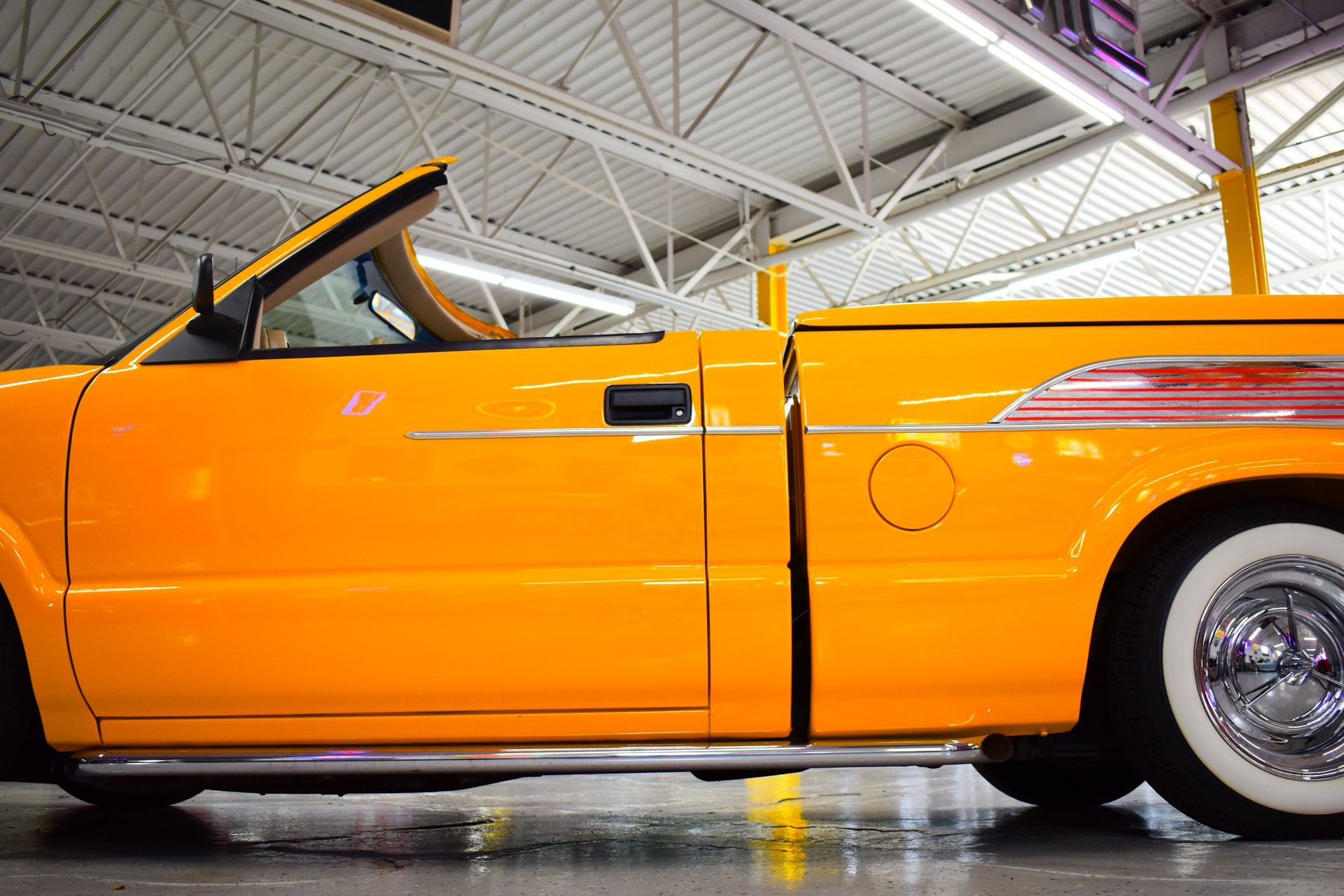
The second-generation trucks, 1994–2004. The 1994 redesign made the Sonoma easier to live with and slightly less characterful. The interior is the biggest gain — proper seats, a real dashboard, better ventilation — and the structure is stiffer and safer. The range simplified: the 2.2 four for economy trucks, the 4.3 for everyone else. A 1998 facelift brought new front styling, a revised interior and dual airbags. Off-road buyers were served by the Highrider package — GMC's equivalent of Chevrolet's ZR2 — with a lifted, widened chassis, larger tyres, skid plates and flared arches on extended-cab 4x4 trucks; a genuine Highrider is worth a premium and is widely imitated, so check for the correct suspension and frame differences, not just the stickers. The 2001 Crew Cab answered a market the Sonoma had never served: four full doors and five usable seats, four-wheel drive and the 4.3 as standard, at the cost of that very short bed; many wear the ZR5 appearance package — roof rack, step bars and badging — which adds looks and no capability. As a used buy the Crew Cab is the most modern-feeling Sonoma there is, and the one most likely to have lived as a family car rather than a work truck, which usually shows in its condition.
Trim, in one warning. Badges migrate: SL, SLS and SLE designations, Highrider and ZR5 decals, and GT and Syclone body parts all bolt or stick onto lesser trucks, and thirty years of ownership gives plenty of time for it to happen. The service parts label in the glovebox lists the original build codes — RPO codes — and is the single most useful document on the truck. Photograph it, decode it, and believe it over the tailgate.
Engines and gearboxes
There is no bad engine in the Sonoma range, but there are engines that suit the truck and engines that merely move it, and the fuel systems wrapped around them matter more to your ownership experience than the blocks themselves. Judge every engine the same way first: it should start promptly hot and cold, idle without hunting, pull without a flat spot, show no smoke beyond a brief puff after a cold start, and have oil that looks and smells like oil. Then apply the engine-specific checks below — each of these powerplants has its own signature failure and its own cheap test that reveals it.
The fours: the Iron Duke 2.5 and the 2.2
The first-generation base engine is the 2.5-litre Tech IV, universally called the Iron Duke: a pushrod four, gear-driven in its early form with no timing belt or chain to service, and famous for one thing — it does not die. Outputs rose from about 92 hp in the carburetted early trucks to about 105 hp with throttle-body injection, which arrived in the mid-1980s and transformed its manners if not its speed. Its faults are age faults rather than design faults: oil leaks from every gasket surface it owns, a rattling timing gear set on high-mileage engines, cracked exhaust manifolds, and throttle-body injector and idle-control problems presenting as a wandering idle and stalling at lights. A Duke with a history of repeated overheating has been abused — the cooling system is generous and the engine tolerant — and a warped head will be your reward. Performance is honest and inadequate in equal measure: it holds highway speed on the flat, surrenders it on a grade, and will not tow anything worth mentioning. Buy it for simplicity and economy, not capability.
The second-generation four is a different engine entirely: the 2.2-litre overhead-valve four, known in its first form as the LN2 and from 2000 in a revised flex-fuel-capable form as the L43. It makes 110 to 120 hp depending on year — adequate in a regular-cab two-wheel-drive truck, marginal in anything heavier. It is chain-driven, and the chain and its tensioner are its first signature issue: a rattle from the front of the engine on cold start that quiets as oil pressure builds is a chain asking for attention, and left alone it can jump time. Its second signature issue is the head gasket, presenting as slow coolant loss with no visible leak, a misfire on one cylinder from cold, or coolant weeping down the block. The test is a cold start with the radiator cap off and an eye for bubbles, plus a plug read: one steam-cleaned plug among three sooty ones settles it. A head gasket job is a known quantity at any independent shop — budget roughly $900 to $1,600 fitted — so price it in rather than fearing it, but do not buy a truck being sold with the fault undisclosed and the coolant bottle stained and empty.
Early S-15s also carried engines you will meet rarely — a 1.9-litre Isuzu four, a 2.0-litre GM four and a 2.2-litre diesel in the first years. Parts and knowledge for them are thin; unless the truck is exceptional in every other way, the mainstream engines are the rational buy.
The V6s: the 2.8 and the 4.3
The 2.8-litre 60-degree V6 powered first-generation trucks from the start, carburetted at first and then with throttle-body injection, making roughly 110 to 125 hp. It is smoother than the Duke and no stronger in any way that matters once the truck is loaded, and its reputation for oil consumption, intake leaks and rear main seal leaks is largely earned. Check the valley and the back of the block for oil, the coolant for the brown emulsion of an intake gasket letting go, and listen for lifter noise that does not fade. It is a serviceable engine in a cheap truck and the wrong one to pay a premium for: the 4.3 exists, and it is better in every respect.
The 4.3-litre V6 is the Sonoma engine, and understanding its three fuel systems is most of understanding the truck. Architecturally it is three-quarters of the 5.7-litre small-block V8: a 90-degree pushrod V6 with a balance shaft added from the early 1990s to tame the shake the odd firing intervals would otherwise produce. In the Sonoma it appeared from 1988 and ran to the last truck in 2004, and its bottom end — block, crank, rods, bearings — is as durable as the V8's, which is to say it will outlast the truck if the oil has been changed at all regularly.
The first fuel system is throttle-body injection, TBI: two injectors in a unit that looks like a carburettor, feeding a wet manifold. It is simple, tolerant and makes about 155 to 160 hp; its faults are cheap faults — injector seals, a tired fuel pump, a faulty coolant temperature sensor making it run rich — and a TBI truck is the easiest 4.3 to buy blind and to fix in a driveway. The second system is central port injection, CPI, fitted to higher-output first-generation and early second-generation trucks and rated up to 195 hp: a single central injector assembly inside the intake manifold feeding poppet nozzles at each port through nylon tubes — the assembly everyone calls the spider. When its internal fuel pressure regulator leaks it washes fuel into the manifold: the truck runs rich, smells of fuel, fouls plugs on one bank and can hydro-lock in the worst case; when the poppets clog, individual cylinders misfire. The third system, from 1996, is sequential central port injection under the Vortec name, with an improved spider carrying proper mini-injectors at the tube ends from 2002 on the later LU3 version; outputs ran 170 to 190 hp. The Vortec spider is better than the CPI spider and fails the same way eventually: regulator leaks, clogged poppets, brittle nylon lines disturbed during intake work.
The spider test is a fuel pressure test, and it is the single most valuable diagnostic on any injected 4.3. The system wants roughly 60 to 66 psi at key-on on CPI and Vortec trucks, and the telling measurement is leak-down: pressure that falls away quickly with the pump stopped means fuel is going somewhere it should not — the regulator, a poppet, or the feed and return lines inside the manifold, collectively called the nut kit. A spider replacement with quality parts runs roughly $450 to $900 fitted; a nut kit alone is cheaper. Neither is a reason to reject a truck. Both are reasons to negotiate with the gauge readings in your hand.
Every 4.3 of the Vortec era shares one more signature fault: the intake manifold gasket. The plastic-framed gaskets GM fitted deteriorate with age and heat cycling and leak coolant externally at the manifold corners, internally into the valley and oil, or both. The early warning is a coolant level that falls slowly with no puddle, or a sweet smell at the front of the engine after a run. The consequence of ignoring it is coolant in the oil and bearing damage in an engine that would otherwise run forever. Budget roughly $600 to $1,100 for a proper gasket job with the updated gasket design and a coolant change, and treat a documented recent intake gasket as a selling point worth paying for.
The Syclone's turbocharged 4.3 is a separate discipline: a Mitsubishi TD06 turbocharger, an air-to-water intercooler, lower-compression pistons and multi-point injection in place of the CPI spider, making 280 hp and very serious torque. It is strong when maintained and unforgiving of detonation, cheap fuel and neglected oil. Any Syclone purchase needs a specialist inspection and documentary proof of identity; the general 4.3 advice here is the floor for a Syclone, not the ceiling.

Gearboxes and drive
Manual gearboxes are a Sonoma strength. First-generation trucks used Borg-Warner four- and five-speeds early on and the stronger New Venture units later; second-generation fours use the NV1500 five-speed and V6 trucks the NV3500, a genuinely pleasant, tough box. Judge any of them on second-gear synchromesh, which wears first, on bearing whine, and on a clutch whose bite point and judder tell the truth about its life; a clutch is roughly $700 to $1,200 fitted and is normal wear, not a defect. Four-wheel-drive trucks add a chain-driven transfer case, part-time with low range, selected by a floor lever on earlier trucks and dash buttons with an electronic shift motor on later ones. That motor is the common failure: a 4x4 that will not engage, or that flashes its dash lights and gives up, usually needs a motor or an encoder at roughly $250 to $600 fitted, not a transfer case. Test every mode, including low range, on any viewing, and drive briefly in four-wheel drive on a loose surface to listen for chain slap and binding.
Automatics are the four-speed 700R4 in early trucks, renamed 4L60 and then, with electronic control from 1993, the 4L60-E that served to the end. Every transmission shop in America knows it, and a rebuild is roughly $1,800 to $3,000 fitted. Its tells are late or flaring shifts, a shudder in lock-up, delayed engagement of drive or reverse from cold, and fluid that is brown and burnt-smelling rather than red and sweet; the 3-4 clutch pack is the known wear item on hard-worked trucks. A service history with fluid changes is worth real money, because these boxes tolerate use and punish neglect in direct proportion. Towing is the dividing line: a 4.3 automatic that has towed within its rating with a cooler fitted will be fine; a 2.2 automatic that has towed at all has lived a hard life, and its gearbox will say so.
Rear axles are the GM 7.5-inch and, on some V6 and 4x4 trucks, the stronger 8.5-inch 10-bolt. The locking differential, RPO code G80 — the Gov-Lok — was a popular option and is a mixed blessing at this age: its governor and clutch pack wear and can engage abruptly, and a G80 that bangs and chatters is telling you its clutches are done. Whine on a steady throttle that changes on lift-off is pinion bearing or gear wear; a clunk on taking up drive is universal joints first, axle wear second. Joints are cheap; axle rebuilds are rarely justified on a standard truck — a good used axle is the pragmatic fix.
Problem areas
A Sonoma fails in a predictable order. The body and frame corrode where salt and mud sit. The cooling and fuel systems decay from age and from the specific design weaknesses covered below. The running gear wears in proportion to the work the truck has done. Almost nothing on this list is exotic, and almost all of it is negotiable or fixable at known prices — except structural corrosion, which is the one fault that reliably turns a cheap Sonoma into a parts truck. Work through this section in that spirit: rust decides whether you buy the truck at all, and everything else decides what you pay for it.
A note on evidence: our photo-checked sample for the Sonoma is small — only four trucks examined in detail — far too few to quote incidence figures honestly, and this guide does not pretend otherwise. The failure patterns below come from the wider S-10 and Sonoma record, one of the best-documented compact trucks ever built, and they are consistent across that much larger population.
Rust and the frame: the map
Start underneath, because that is where Sonomas die. The frame is a separate ladder chassis, sturdy in section but protected to a price, and on salt-belt trucks the rear half is the first structural casualty. The rails collect mud and salt inside their sections around and behind the rear spring hangers and rot from the inside out: the outside can look merely scabby while the rail is thin enough to flex. Prod the rails with a screwdriver along their full length — hardest above and behind the rear axle, around the spring hanger brackets, at the cab mounts and the crossmembers. Surface scale is normal and treatable; perforation, lamination that flakes away in layers, or a rail that dents under firm screwdriver pressure is structural, and a frame repair is fabrication work that exceeds the value of a standard Sonoma almost every time. This is a walk-away fault on an ordinary truck, and a specialist-restoration conversation only on a Syclone or a GT.
The body rusts in its own fixed geography. Cab corners — the small panels behind the doors at the back of the cab — trap water and mud thrown up by the front wheels and are the first body panels to go on both generations; replacement panels are cheap and every body shop knows the job, roughly $400 to $900 a side welded and painted to a working standard. Rocker panels follow the same pattern and the same price logic. Door bottoms fill with water when their drain slots block: bubbling along the lower edge of the door skin and a slosh after rain are the tells. Front fenders bubble behind the wheel opening. The bed is its own map: the floor rusts where the ribs trap water under a bedliner — always lift a drop-in liner, because it hides the floor completely and a seller who will not let you look has answered the question — the wheel arches bubble from the inside, and the front bed panel and mounts corrode where the bed meets the cab. Extended cabs add rust at the rear of the cab floor and around the jump-seat mounts; Crew Cabs add four door bottoms to check instead of two.
Brake and fuel lines deserve their own paragraph because they are safety items that corrode on a schedule. The steel brake lines run along the frame rail, and on salt-belt trucks they perforate, classically at the clips and where the line passes the fuel tank; a line that weeps under pedal pressure is a truck you drive home carefully or not at all. A full line set in modern nickel-copper, fitted, is roughly $500 to $1,000 and transforms the truck's safety, so budget it on any northern truck whose lines are original and scabby. Fuel lines and the top of the fuel tank corrode together, and the fuel pump module lives in the tank, so tank work and pump work usually arrive as one bill. Check the filler neck too: it rusts, leaks on filling and triggers an evaporative emissions fault that owners chase for months.
Finally, read the coating. Factory protection on these frames was wax-based and honest-looking: patchy, thin at the edges, dirty. A uniform fresh coat of black underseal blown over the frame, lines and hangers the week before a sale is a cover-up until the seller proves otherwise — fresh underseal over perforation fools the eye for one viewing and the screwdriver not at all.
Cooling, fuel and the systems that stop the truck
The 4.3 intake gasket covered in the engines section is the headline here, and its cooling-system context matters. These trucks were filled for years with extended-life Dex-Cool coolant, and neglected Dex-Cool — run low, mixed with other coolant, or left for a decade — sludges, attacks gasket materials and clogs heater cores and radiator tubes. Brown coolant, a stained and crusted reservoir, or a heater blowing lukewarm means the whole system needs attention: radiator, heater core, hoses, thermostat, water pump and a proper flush, roughly $600 to $1,400 depending on how much you replace. The heater core deserves emphasis because it is a dashboard-out job on second-generation trucks and the labour dwarfs the part. Test the heater on every viewing, in July as much as in January.
Fuel pumps fail with age and mileage on all of these trucks, presenting as a no-start, a stall under load, or a long crank as pressure bleeds away. The pump is in the tank, and the professional method is to lift the bed rather than drop the tank on a rusty truck — which is why experienced S-truck owners are relaxed about pump replacement at roughly $400 to $800 fitted. A whining pump is a pump on notice. On injected 4.3 trucks, combine the pump check with the spider leak-down test from the engines section: pressure problems here are a system story, and replacing parts one guess at a time is how owners spend twice.
The anti-lock system develops its own age faults: wheel speed sensors fail and corrode at the hubs, and the control module on some years suffers solder-joint failures presenting as intermittent ABS and brake warning lights together. A truck with both lights on needs the codes read before you price it — a sensor is a small bill, a module a larger one — and a seller who has pulled the warning bulb is telling you something about every other fault on the truck. Check that both lamps light at key-on and go out.
Air conditioning on a truck of this age is a bonus, not a given. Compressors seize, condensers corrode and the early trucks were built for R-12 refrigerant, so a first-generation truck with working air has usually been converted to R-134a — ask for the paperwork and check it was done properly rather than topped up with a can. Budget roughly $700 to $1,500 to recommission a dead system properly, and value a working one accordingly in a Southern summer, where most of our listed trucks live.
Suspension, steering and brakes
Front suspension design splits by drive: two-wheel-drive trucks use coil springs and control arms, four-wheel-drive trucks torsion bars, and both use ball joints, tie rods and idler and pitman arms that wear as a set on a worked truck. The classic presentation is wander, a clunk over bumps and feathered front tyres, and the classic cause is worn ball joints and a worn idler arm in combination rather than any single part. Ball joints are a safety check, not a feel check: jack the front up, lever the wheel and measure the play, because a separated joint drops the corner of the truck without warning. A full front-end refresh — ball joints, tie-rod ends, idler and pitman, alignment — is roughly $800 to $1,600 fitted and makes an old truck feel five years younger. Rear suspension is leaf springs that sag with age and work, on shackles and hangers that corrode in step with the frame around them; a truck sitting low at the back or leaning is showing you tired springs, a broken leaf, or hanger corrosion, in ascending order of seriousness.
Steering boxes wear and leak; a little free play at the wheel centre is normal on a high-mileage truck, while excessive play plus a wandering line means box adjustment or replacement on top of the front-end wear above. Brakes are front discs with rear drums on most trucks, later and heavier-specified trucks gaining rear discs. Age brings seized calipers and slide pins, corroded drum hardware and perished hoses; a full hydraulic refresh runs roughly $700 to $1,500 fitted. Judge the pedal and the stop, not the seller's assurance: the truck should stop straight, without pulling, judder or a sinking pedal. On 4x4 trucks add front hub assemblies and CV boots — clicking on full lock is a CV joint announcing itself.
Cab, electrics and the small things that price a truck
The cab is where a Sonoma shows how it has lived. Seats wear through on the driver's entry bolster first, and the foam collapses underneath before the cover splits, so sit in the driver's seat and feel for the frame. Second-generation plastics survive well apart from sun-cracked dash tops on Southern trucks; first-generation door panels and headliners sag and crumble. Heater blower motors and their resistors fail — a blower that works only on high speed is a resistor, a small bill, while a blower that does not work at all on a second-generation truck is the dashboard-out conversation from the cooling section. Wiper motors develop the famous GM intermittent fault — wipers that park where they like, work only when the housing is tapped, or quit in rain — from a circuit board that is cheap and well documented; test the wipers on every speed anyway, because rain on the drive home is exactly when you will find out.
Electrics otherwise fail at connections and grounds, as they do on every vehicle of this era. The instrument cluster on second-generation trucks can lose individual gauges to stepper-motor failure — a fuel or temperature gauge that sweeps, sticks or reads nonsense is usually the cluster, roughly $150 to $350 for a rebuild service, not the sender the seller blames. Window regulators and switches fail on electric-window trucks; door hinge pins and bushings wear on all of them, and a door that drops as it opens and needs lifting to close is showing you $30 of parts and an hour of labour that the previous owner never spent — a useful character reference for the whole truck. Tailgate cables snap, tailgate handles break, and the spare wheel winch under the bed seizes solid on northern trucks; check that the spare is present, holds air and can actually be lowered.
None of these small faults kills a purchase. All of them price one. A Sonoma whose small things all work — wipers, blower on every speed, every gauge, both doors closing cleanly, tailgate operating, spare present and free — has been maintained by someone who cared, and on a cheap working truck that signal is worth more than any single repair you might avoid.

How to inspect one
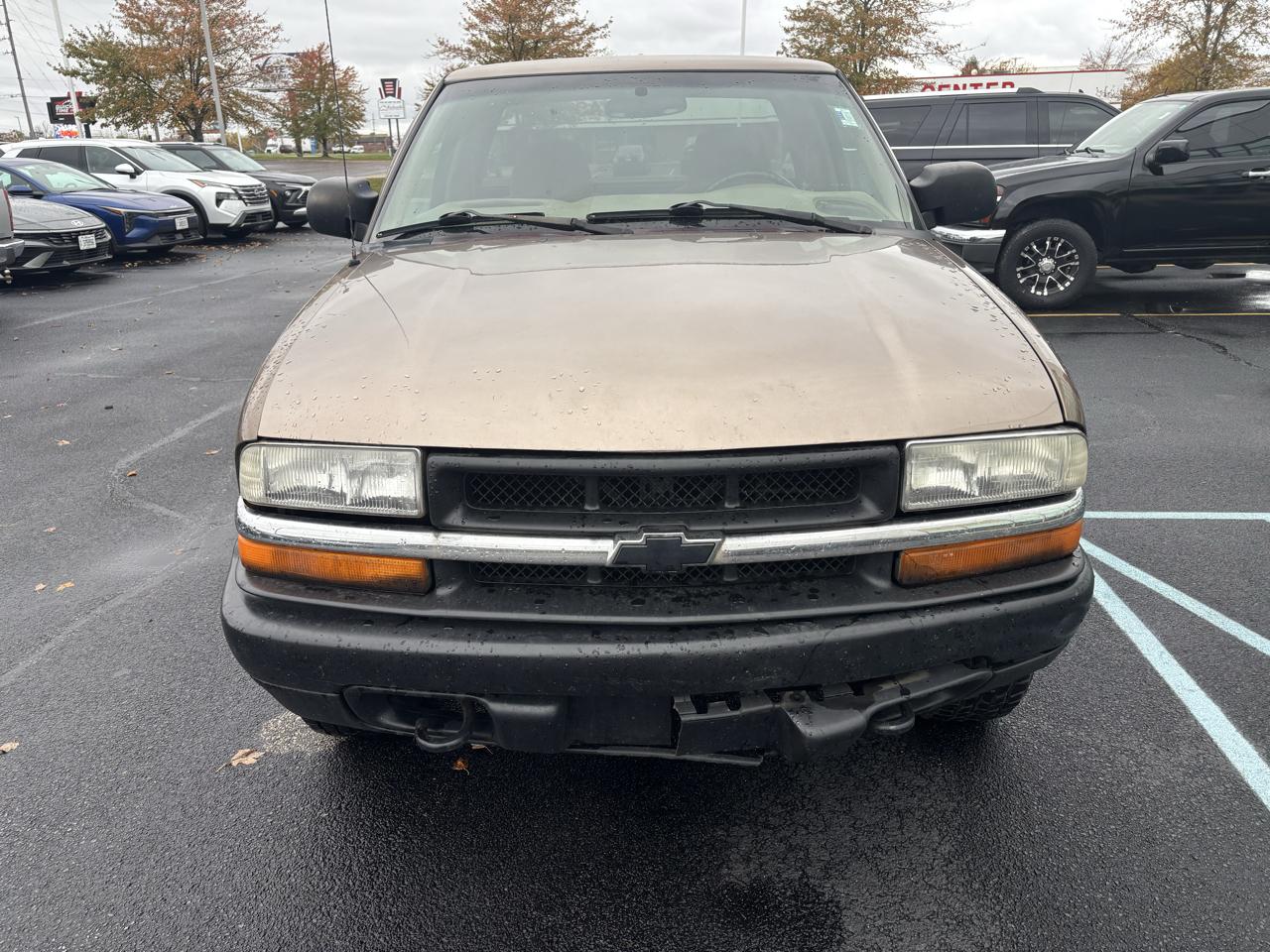
Allow an hour, bring a torch, a screwdriver for prodding with the seller's permission, a magnet wrapped in cloth, and a fuel pressure gauge if you are looking at an injected 4.3 — or pay for a pre-purchase inspection that includes one. If the truck passes you, a lift inspection before money changes hands is the best money in the whole purchase: the frame rails, lines and hangers can only be judged properly from underneath.

- Start with the paperwork and the codes. Match the VIN on the title to the plate at the base of the windshield and the sticker in the driver's door jamb. Photograph the service parts label in the glovebox and decode the RPO codes: they confirm the original engine, axle ratio, the G80 locking differential if fitted, and the trim the truck left the factory with — which settles any Syclone, GT, Highrider or ZR5 claim before you look at a single panel. Read the eighth VIN character for the engine and believe it over the badge and the listing.
- Cold start. Insist the engine is cold when you arrive; a warmed-up truck hides cold-start rattles, smoke and hard starting. A four should start cleanly and settle. A 4.3 should fire at once; watch for blue smoke that lingers, which is valve seals or worse, and listen for a timing-chain rattle on a 2.2 that does not fade as the oil pressure builds.
- Under the truck, first and longest. Torch and screwdriver along both frame rails, hardest at the rear spring hangers, the section behind the rear axle, the cab mounts and the crossmembers, exactly as the rust map describes. Perforation or a rail that dents under pressure ends the inspection on an ordinary truck. While you are there, read the brake and fuel lines along the rail, the spring hangers and shackles, and the bottom of the fuel tank. Patchy honest wax is factory; a fresh uniform black coat over everything is a question, not an answer.
- Cab corners, rockers and floors. Prod the cab corners behind the doors and the rocker panels along their full length. Lift the cab carpets where you can and look for water tracks and floor perforation. Check the door bottoms with a fingertip for bubbling and confirm the drain slots are clear. A cab that is sound here and a frame that passed step 3 mean the truck is structurally worth continuing with; failure in either means the rest of the hour is a negotiation about parts value.
- The bed. Lift any drop-in liner, or walk away from any verdict on the bed floor until someone does. Look for floor perforation along the ribs, bubbling over the wheel arches from inside the bed, and corrosion at the front panel and mounts. Work the tailgate: cables, handle, hinges. Check the spare underneath is present, inflated and that the winch turns.
- The 4.3 fuel pressure test. On a CPI or Vortec truck, connect the gauge, turn the key and read the pressure — roughly 60 to 66 psi — then watch it with the pump stopped. Rapid leak-down is the spider, its regulator or the nut kit passing fuel, priced in the engines section. Smell the oil on the dipstick for fuel and check the coolant level and colour in the same minute: low, brown coolant plus a slow, unexplained loss is the intake gasket story, and together these two tests price the most common 4.3 bills before you have driven a yard.
- Cooling and heater. With the engine warming, watch the temperature gauge settle and stay settled. Run the heater to full hot and confirm the air is properly hot and the blower works on every speed — lukewarm air is a clogged core or a low system, and a dead blower on a second-generation truck is a dashboard-out bill. Squeeze the hoses, look for crusty coolant stains at the intake corners, the water pump and the radiator tanks, and check the fan clutch for wobble and free-spin.
- Front end and steering. Jack each front wheel and lever it top-to-bottom and side-to-side: play is ball joints, bearings or steering linkage, and ball-joint play is a safety item priced in the problem-areas section. On the ground, rock the steering and watch for lost motion at the idler arm. Check the front tyres for the feathering that confirms the wear is real and current.
- The test drive. Fifteen minutes minimum, including a highway stretch and a rough surface. The automatic should engage drive and reverse promptly, shift without flaring, and lock up without shudder; the manual should take second gear cleanly, hot and cold, without a crunch. Brake firmly from speed: straight, no judder, no sinking pedal. On a 4x4, engage four-wheel drive high and low on a loose surface, listen for chain slap and CV clicking on lock, and confirm the dash-button system completes its shifts without flashing and giving up.
- Electrics and cab, every switch. Work the wipers on every speed and the washers, every window, the locks, all the lights, and watch every gauge through a full warm-up for the stepper-motor nonsense described in the problem areas. Confirm the ABS and brake warning lamps light at key-on and go out. Open and close both — or all four — doors: a dropping door is hinge pins, and it is also a maintenance character reference.
- Stance and straightness. Stand back and look down each flank. The truck should sit level, the bed should agree with the cab, and the panel gaps should be even. Run the magnet over the cab corners, arches and lower doors — filler announces itself. Count the rust honestly: the small traps add up, and a truck needing cab corners, rockers and a bed floor is a body project whatever the engine does.
- Identity last, and hardest on the special trucks. For a standard Sonoma, confirm the truck matches its title and its glovebox label and you are done. For a claimed Syclone, GT or Highrider, slow down: verify the VIN sequence and RPO codes, the correct engine and, on a Syclone, the turbo installation, intercooler and all-wheel-drive hardware, against known references, and get a specialist to confirm it before paying a special-truck price. The gap between a genuine truck and a dressed standard one is the largest single financial risk in the whole Sonoma market.
Values
The market summary and recorded-sales figures beneath this guide are computed from our own listings and refreshed at every build, and they carry the numbers. This section teaches you how to read them: the spread between the cheapest and the dearest ordinary Sonoma is explained almost entirely by rust, generation and drivetrain, and the special trucks obey completely different rules from the work trucks they are based on.
Start with condition, because on a Sonoma condition is the whole price. The typical pattern is a long tail of cheap trucks — working trucks at the end of their first lives, with the faults in the problem-areas section present in combination — and a much thinner supply of genuinely clean trucks above them. The project-to-driver gap is wide: a truck needing frame attention is worth its parts, a truck needing cab corners and recommissioning is worth its price plus the cost of that work and no more, and a rust-free, documented Southern 4.3 truck commands a premium that looks irrational until you price welding. There is no such thing as a cheap Sonoma that stays cheap if it has lived in the salt belt. Our own pool reflects the geography of survival: Georgia, Tennessee and Florida supply more listings than the northern states, and a truck that has genuinely lived there starts the negotiation with its structure already paid for.
Generation and specification move the price next. Second-generation trucks are worth more than equivalent first-generation trucks as drivers — safer, more comfortable, easier to live with — except where the first-generation truck is the specification collectors want. Within either generation, the 4.3 V6 is the value engine: four-cylinder trucks are cheaper to buy and worth less forever, because the market knows they cannot do the work. Extended cabs carry a premium over regular cabs in equivalent condition; Crew Cabs a further one as the most usable trucks in the range, discounted by everyone who actually needs a bed. Four-wheel drive adds money in the North and in hill country and very little in the flat South, where a two-wheel-drive truck is the rational buy and should be priced as one.
Asking prices and achieved prices part company predictably. Private sellers of ordinary trucks routinely ask driver money for project trucks, and the listings that sit are usually priced on what the seller has spent rather than on what the truck is. Auction results for standard trucks tend to settle below optimistic asking prices, while a genuinely exceptional truck — low-mileage, rust-free, well documented — can exceed them, because the supply of good ones is thin enough that two motivated buyers change the result. Read any single figure against the condition evidence in the photographs, not the seller's description, and treat a truck with no underside photographs as a truck whose underside you have not been shown — which on a Sonoma is most of the verdict.
The special trucks are a separate market. A genuine Syclone trades as a collector vehicle: provenance, originality, mileage and documentation move its price by multiples of what the same factors do to a work truck, and a modified or unverifiable example falls back toward dressed-truck money with brutal speed. The Sonoma GT sits below it — a real premium over an equivalent CPI truck, bounded by the fact that its mechanical life costs no more than any other 4.3's. Highriders carry a smaller, honest premium for a specification that is genuinely costly to replicate. In all three cases the glovebox label and the VIN are the price: a truck whose codes do not support its badges is a standard truck with a story, priced accordingly.
Negotiation reality is simple. On an ordinary truck, your leverage is the inspection list: frame condition, the fuel-pressure and leak-down readings, the intake gasket evidence, the front-end play and the brake line condition are all priced jobs with known costs, and a seller faced with a written list and a gauge reading negotiates differently from a seller faced with an opinion. On a special truck, your leverage is verification, and your protection is walking away from any example whose identity cannot be proved. Either way, the cheapest Sonoma to own is almost never the cheapest Sonoma to buy.
Parts and ownership
The Sonoma is one of the easiest older trucks in America to keep, for one structural reason: it shares its mechanical life with the Chevrolet S-10 and with a generation of GM vehicles built in enormous numbers, and the aftermarket followed the volume. Engines, gearboxes, axles, brakes, suspension and steering parts are available new, rebuilt and used at every price level, usually on next-day delivery, and the knowledge base — factory manuals, forums, video walk-throughs for every job in this guide — is as deep as it gets for any vehicle. If you can maintain any older American vehicle, you can maintain a Sonoma, and most jobs in the problem-areas section are driveway jobs with ordinary tools.
Easy and cheap: service items, filters, belts and hoses; brake discs, pads, calipers, drums and hardware; ball joints, tie-rod ends and steering arms; universal joints; water pumps, alternators, starters and radiators; clutch kits; fuel pumps; shocks; exhaust systems in standard form; glass, weatherstrips and the common rust repair panels — cab corners, rockers, arches and bed sections are all reproduced and inexpensive as panels, with the cost sitting in the welding and paint rather than the metal. The spider injector assembly and the intake gasket set for the 4.3 are stocked everywhere, which is precisely because they fail everywhere; buy quality brands for both, because the cheap spider is a false economy that repeats the job.
Harder and dearer: correct trim and interior pieces for first-generation trucks, where colours and patterns were numerous and reproduction is patchy; Syclone-specific parts — turbo, intercooler system, cladding, all-wheel-drive components — where originality and scarcity set the price; GT cladding and decals; Highrider suspension and steering components, which differ from standard 4x4 parts and must be ordered by code; Crew Cab rear door and cab parts, made for four model years only; and rust-free beds and cabs in the northern states, where the good used panels have mostly been bought already. A quality repaint on an ordinary Sonoma will exceed the vehicle's value — which is why this guide's rule is to buy the body and the frame, and fix the mechanics.
Running costs. A sorted Sonoma is a realistic daily and working truck. Fuel consumption is honest rather than impressive: the fours are economical in gentle use, the 4.3 returns figures in the high teens on the highway in a two-wheel-drive truck and less in a 4x4, and the Syclone drinks like the performance vehicle it is. Servicing is simple and cheap at any independent shop; automatics want fluid changes and 4x4s want their transfer case and differential oils. Insurance is generally modest for standard trucks and a specialist conversation for a Syclone. The budget line that catches new owners is the first year: catching up deferred maintenance on a running truck — fluids throughout, brakes, front-end wear, a heater or fuel-system fault or two — honestly runs to a four-figure sum before you improve anything, and recommissioning a truck that has sat for years costs more again, because standing still rots brake hydraulics, fuel systems and tyres on a schedule of its own. Buy a truck in regular use over one that has been asleep, even at a higher price.

Which one to buy
- The all-rounder: a second-generation 4.3, extended cab, two-wheel drive. The Vortec engine, the better cab, the deepest parts support and the widest choice of trucks to buy from. Have the intake gasket and spider history in writing, or price both jobs into the offer, and it will do everything a compact truck should.
- The value buy: a first-generation 4.3 TBI truck from the South. The simplest strong drivetrain in the range, in the lightest body, at work-truck money. Rust-free examples are the bargain of the whole market — the same capability as the later trucks with none of the spider and gasket taxes.
- The economy buy: a 2.2 manual second-generation regular cab. Cheap to buy, cheap to run, honest about its limits. Buy it on the head gasket and timing chain evidence, keep it serviced, and do not ask it to tow.
- The family truck: a Crew Cab 4WD. Four real doors and the 4.3 as standard, usually lived as a car rather than a tool and usually the best-kept trucks in the pool. Accept the tiny bed as the price of the cab, and check all four door bottoms.
- The off-road buy: a genuine Highrider. The lifted, widened factory specification is the real thing and costly to copy. Verify it by the RPO codes and the hardware, not the arches and stickers, and pay the premium only for a verified truck.
- The collector car: the Syclone. One of the landmark American performance vehicles of its era, bought like one: verified identity, original hardware, documented history, specialist inspection. The Sonoma GT is the shrewd alternative — 806 built, standard running gear, most of the presence.
- The one to avoid: any ordinary Sonoma, of any year or specification, with perforation in the rear frame rails. Every other fault in this guide has a price. That one has a verdict.
And the rule that overrides all of the above: buy the least rusty truck you can find, in the specification you can live with. Engines, gearboxes, spiders, gaskets and front ends are all fixable at prices you can plan for. A rotten frame cannot be made original again, costs more to put right than the finished truck will be worth, and is the one thing about a Sonoma that no amount of money spent later will turn into a good purchase.