
GMC 3500 Crew Cab Long Bed buyer's guide
GMC 3500 Crew Cab Long Bed -- the model's own buyer's guide: variants, values and what to check.
Years listed: 1988-1997 · Series: C/K Trucks
Overview and history
The GMC C3500 is the one-ton, two-wheel-drive work truck at the top of GMC's conventional pickup range: a full-size truck built to carry a camper, tow a heavy trailer, haul a loaded bed all day and come back for more tomorrow. The name decodes simply, and you should learn to decode it, because sellers blur it constantly. The C means two-wheel drive — a four-wheel-drive truck is a K3500, a different model with a driven front axle, a transfer case and a taller stance. The 3500 is GMC's one-ton rating, sitting above the half-ton 1500 and the three-quarter-ton 2500. Chevrolet sells the same trucks with different badges and grilles — C30 in the earlier years, C3500 later — and almost everything in this guide applies to both, because under the skin they are one truck.
The C3500s you will actually meet fall into two generations that share almost nothing but the badge, and telling them apart at a glance is the first skill to learn. The earlier truck is the "square-body": GM's Rounded Line pickups of 1973 onward, all flat panels, upright glass and a bench-seat cab that changed very little across a long production life. GMC sold its one-ton as the C3500 throughout this era, and when the all-new trucks arrived for 1988 the square-body did not die — the crew-cab and chassis-cab versions carried on under new R-series badging (R3500 in two-wheel drive) through 1991, because the replacement's crew cab was not ready. So a 1989 or 1990 crew cab is an old-generation truck wearing a new-generation year, and it is priced, repaired and judged as a square-body, whatever the listing implies.
The second generation is the GMT400, launched for 1988 and one of the most successful truck platforms GM ever built. Regular and extended cabs came first; the crew cab joined for 1992. The GMT400 brought a sleeker cab, a much better interior, throttle-body fuel injection across the petrol range, an overdrive automatic option as the years passed and, from the mid-1990s, the Vortec engines that finally gave the big petrol V8s modern power. The one-ton GMT400 ran to 2000, outliving the half-ton version of the platform, because heavy-duty buyers are conservative and fleets hate change.
Across both generations the C3500's world is work. These trucks were bought by farmers, builders, utilities, camper owners and trailer towers, and they were used accordingly: high mileages, heavy loads, fifth-wheel and gooseneck hitches, snowploughs in the northern states on the four-wheel-drive sisters, and maintenance that ranged from meticulous fleet schedules to none at all. That spread in past lives, far more than age or mileage, is what separates a good C3500 from a worn-out one today. The engines and running gear are fundamentally long-lived — GM built these powertrains by the million and the basic designs were already mature — so what you are really buying is the previous owners' treatment, the condition of a frame and cab that have carried weight for thirty-plus years, and the state of the heavy-duty hardware (brakes, springs, cooling, electrics) that work wears out first.
Our own listings reflect the shape of the surviving fleet: the C3500s we track span 1986 to 1997, they split between both generations, and crew-cab long-bed trucks — the classic camper-and-trailer specification — are prominent among them, alongside regular-cab trucks that spent their lives as pure tools. Be honest about which of those two lives you want. A C3500 is a big, heavy, thirsty truck that rides like one; bought for the right job, nothing else of its era does that job as cheaply or as repairably. Bought as a lifestyle accessory, it will remind you of its origins on every journey.
The models
Every C3500 is a ladder-frame, rear-wheel-drive one-ton truck, but the badge covers a wide spread of cabs, beds and hardware. Three decisions define any individual truck: which generation, which cab, and whether it carries single or dual rear wheels.
| Model | Years | Engine | Output | Built | Character |
|---|---|---|---|---|---|
| C3500 regular cab (square-body) | to 1987 | 5.7 V8, 7.4 V8 or 6.2 diesel | about 165–230 hp | not broken out by GMC | The pure work truck; bench seat, 8 ft bed |
| R3500 crew cab (square-body) | 1988–1991 | 5.7 V8, 7.4 V8 or 6.2 diesel | about 185–230 hp | not broken out by GMC | Four doors on the old platform; the camper special |
| C3500 regular / extended cab (GMT400) | 1988–2000 | 5.7 TBI, 7.4 TBI or diesel | about 210–230 hp | not broken out by GMC | The modernised one-ton; the volume seller |
| C3500 crew cab (GMT400) | 1992–2000 | 5.7, 7.4 or 6.5 diesel | about 210–290 hp | not broken out by GMC | The family tow rig; mostly dual rear wheels |
| C3500 chassis cab | both generations | as ordered | as ordered | not broken out by GMC | Flatbeds, service bodies, motorhome cutaways |
(GMC published production in combined series totals rather than by cab and rating, so no honest per-model build figure exists to print; anyone quoting you an exact production number for a C3500 cab variant is inventing it. Outputs are period net ratings and vary by year and emissions specification — treat them as orientation, and judge the individual truck on how it runs.)
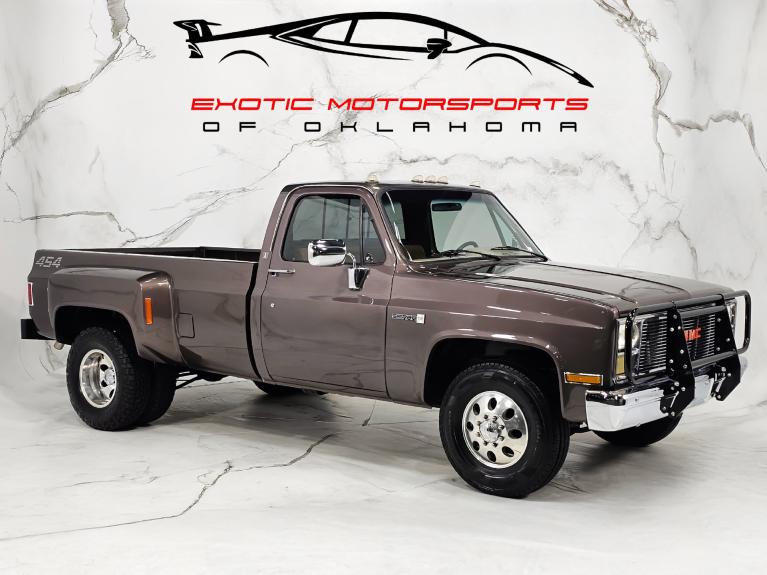
Cab and bed. The regular cab seats three on a bench and carries the 8 ft long bed — the configuration of most working trucks. The extended cab (GMT400 only; the square-body was never offered with one) adds a small rear bench and stowage behind the seats, on the long bed only. The crew cab seats six across two benches and is the defining C3500 for many buyers: square-body crew cabs came with the long bed, and most were ordered as dual-rear-wheel trucks for camper and fifth-wheel work. A short-lived square-body variant to know is the Bonus Cab — a crew cab built without the rear seat, sold as secure tool stowage; sellers occasionally pass one off as a crew cab with the seat "removed", so look for the factory finish in the back before paying crew-cab money.
Single or dual rear wheels. This is the split that matters most mechanically. Single-rear-wheel (SRW) trucks ride on one tyre each side, carry a conventional pickup bed and are easier to live with daily. Dual-rear-wheel trucks — "duallies" — spread heavy pin weights and camper loads across four rear tyres, get wider rear track and flared bed sides to cover it, and are the correct tool for heavy towing; they are also wider, harsher unladen, more expensive in tyres and harder to park. Neither is better in the abstract: match the truck to the load. A dually that has towed heavy all its life has lived a harder life than an SRW truck that carried a camper twice a year, even at the same mileage.
Trim. GMC trim names run from the work-spec Sierra through Sierra Classic on square-bodies, and SL, SLE and SLT on GMT400s. Trim changes the seat cloth, the sound deadening, the brightwork and the options list; it changes nothing structural. On a thirty-year-old work truck, trim is the least important line in the listing — condition of frame, cab and powertrain outranks it completely, and a tidy base truck beats a loaded SLT that has been worked to death.
The K3500 trap. Because the four-wheel-drive K3500 looks near-identical and is worth more in snow country, check what you are actually looking at: a genuine C3500 has no transfer-case lever or floor hump for one, no front differential, and coil-spring independent front suspension with plain hubs. A truck advertised as a C3500 that has a driven front axle is a K3500 mislabelled — or, worse, a conversion. Either way the title, the VIN and the glovebox option label settle it, and you check them before money moves, as the inspection section sets out.
Engines and gearboxes
The C3500 engine range is a short list of long-lived designs, and every one of them was also sold in far larger numbers in lighter trucks and, in the big-block's case, in motorhomes and medium trucks. That is good news for parts and knowledge. What differs between a good example and a bad one is rarely the basic engine — it is the fuel system bolted to it, the cooling system in front of it, and whether anyone ever changed the oil.
The small-block V8: 5.7 litres (350 cu in)
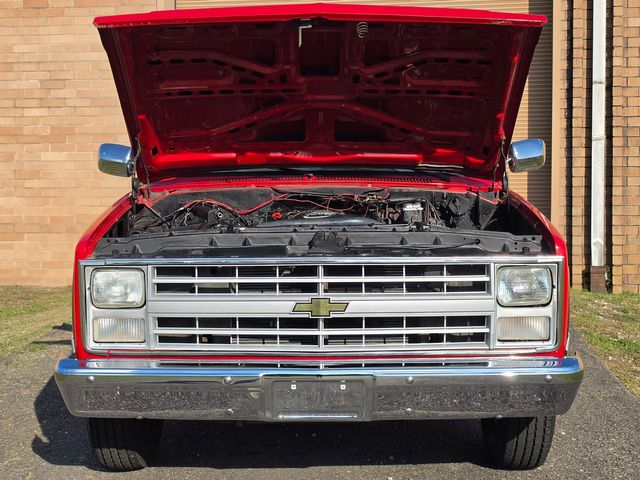
The 350 small-block is the default C3500 engine in both generations and the easiest classic-truck engine in the world to keep alive. Square-body trucks run it with a carburettor — a Rochester Quadrajet in most years, with electronic feedback versions in the emissions-era eighties — at roughly 165–175 hp in one-ton tune. GMT400 trucks run the same architecture with throttle-body injection (TBI, engine code L05) at about 210 hp: two injectors in a unit that looks like a carburettor, an in-tank electric pump, and engine management simple enough to diagnose with a test light and a paperclip. From 1996 the Vortec 5700 (L31) replaced the TBI engine with sequential port injection, better cylinder heads and about 255 hp — recognisable by the plastic engine cover lettered Vortec and by a conventional-looking intake with a central throttle body.
Judge any 350 the same way: cold start without smoke, a steady idle, clean pull to 4,000 rpm, and oil pressure that sits healthy at a hot idle. Blue smoke at start-up that clears is valve stem seals — a known, cheap-ish job, seals replaced in situ with the heads on. Blue smoke under load is rings or bores, and that is a rebuild conversation. The TBI engine's own faults are age faults: a worn throttle-body shaft that leaks air and makes the idle hunt, a tired fuel pump that lets pressure sag so the truck flattens out under load, and coolant and vacuum hoses perished by heat. Fuel pressure is the first test on any TBI truck that runs badly — the system works at low pressure (roughly 9–13 psi) and a pump that cannot hold it mimics ignition and injector faults in turn. The Vortec engine adds two signature jobs. Its intake manifold gaskets are plastic-carrier parts that embrittle and leak coolant, externally down the front of the engine or internally into the valley and the oil; milky residue under the oil filler cap on a Vortec that also loses coolant slowly is this gasket until proven otherwise, and the job is gaskets and a day of labour, roughly $600–1,200 at a shop, before it becomes a bearing job from coolant in the oil. Its distributor, driven at the back of the engine, wears its gear and its housing bush, which shows as a chirp, a misfire under load and cam/crank correlation codes on later trucks; a worn distributor is a replacement part, not a rebuild.
One myth to bury on all 350s: a one-ton 350 is not a car 350 with a truck badge. One-ton engines run lower compression, a milder cam and, in many years, four-bolt main bearing caps and a steel crank specification chosen for sustained load. That is why they feel lazy next to a car engine and why they survive towing: they were built for it. It also means bolting car performance parts onto one without a plan mostly buys you worse towing manners.
The big-block V8: 7.4 litres (454 cu in)
The 454 big-block (Mark IV) is the heavy-towing petrol engine and the one most crew-cab duallies carry. Square-body versions are carburetted and rated around 230 hp in their better years; GMT400 versions run TBI (code L19) at about 230 hp with a wall of low-speed torque, and from 1996 the Vortec 7400 (L29) brought port injection, revised heads and about 290 hp — the strongest petrol engine ever fitted to this platform and a genuinely quick truck by one-ton standards.
The big-block's virtues are torque and durability; its bills are heat and thirst. Everything under the bonnet runs hotter, so the cooling system — radiator core, fan clutch, shroud, hoses — is a wear item in a way it is not on the small-block, and a 454 that creeps up in temperature in traffic usually needs a fan clutch or a radiator, not a head gasket; test the simple causes first, because sellers and buyers both jump to the expensive one. Exhaust manifolds crack and their bolts snap in the heads, announcing themselves as a ticking that is loud cold and quieter hot; budget $500–1,500 to do a side properly with stud extraction, more if bolts shear flush. TBI 454s share the small-block's fuel-pressure sensitivity and add a appetite for ignition modules and distributors cooked by heat. Vortec 7400s share the Vortec intake-gasket issue described above, on an engine where the manifold is heavier and the labour longer. Fuel consumption is in single figures to low teens (mpg) depending on load; nobody buys a 454 for economy, and a seller claiming car-like economy is telling you something about the rest of the description.
Identity check: big-blocks get swapped both ways — into trucks that never had them, and out of trucks whose badges still claim them. The 454 is visibly wider across the valve covers than a 350 and carries its distributor at the back like the small-block; the reliable check is the casting and stamped numbers on the block plus the glovebox option label (L19 or L29 for the GMT400 engines), not the air-cleaner decal, which is a sticker anyone can buy.
The diesels: 6.2 and 6.5 litres
The diesel option in square-body and early GMT400 C3500s is the 6.2-litre V8 (codes J and C), a Detroit Diesel-designed, naturally aspirated indirect-injection engine built for economy and longevity rather than power: roughly 143–160 hp depending on year and rating. It is mechanically injected by a Stanadyne rotary pump, has no turbo to fail, and returns economy in the high teens that no petrol one-ton matches. It is also slow — merging a loaded 6.2 truck is an exercise in planning — and its reputation splits between owners who ran them for 300,000 miles and owners who fought starting problems every winter. Both are describing the same engine in different states of maintenance. The 6.2 lives or dies by its glow-plug system, its starter and batteries (it cranks a high-compression engine and needs both batteries and heavy cables in full health), and clean fuel. Its known structural weakness is the crankshaft and harmonic balancer: the rubber in the balancer perishes, the balancer stops damping, and crankshafts can crack — inspect the balancer on any 6.2, and treat a seller's "it has a slight vibration" as a stop-and-investigate, not a quirk.
From 1994 the 6.5 replaced the 6.2, most in turbocharged form (code F, about 180–195 hp), with electronic control of its Stanadyne DS4 injection pump. The 6.5 tows far better than the 6.2 and is the diesel most GMT400 buyers want — but it carries the single most famous fault in this whole guide. The pump-mounted driver (PMD, also called the FSD) is a small electronic module bolted to the side of the injection pump, in the hottest part of the valley, and it cooks. Failure presents as stalling at idle or in traffic, no-restart when hot, then perfect behaviour when cold — and it strands trucks, which is why the standard fix is a remote-mounted PMD on a heat sink behind the bumper or on the inner wing, a few hundred dollars in parts. On any 6.5, ask where the PMD lives. A truck still running its original pump-mounted module is a truck whose most predictable failure has not been addressed; a truck with a relocated module and a spare in the glovebox has had an owner who understood the assignment. The 6.5's other regular bills are the lift pump that feeds the injection pump (an electric pump on the frame rail whose failure starves the DS4 and gets misdiagnosed as a pump failure at ten times the price — test fuel delivery before condemning the pump), glow plugs and controller, and oil cooler lines, covered below. A properly sorted 6.5 is a durable, economical tow engine; an unsorted one generates the horror stories.
Gearboxes
Square-body trucks offer the Turbo Hydra-Matic 400 (TH400) three-speed automatic — one of the strongest automatics GM ever made, with no overdrive and no lock-up converter, so a square-body C3500 is busy and thirsty at motorway speed — or the SM465 four-speed manual, a Muncie-built box whose first gear is a crawler for moving off under load and is not used in normal unladen driving. The SM465 is nearly indestructible; judge it on synchromesh into third and on clutch condition, because the clutch is the wear item and it is a big one.
GMT400 automatics start with the TH400 (renamed 3L80) and gain the 4L80-E from 1991: an electronically controlled four-speed overdrive automatic derived from the TH400's architecture and equally at home in one-tons. The 4L80-E transforms motorway manners and is the gearbox to have for towing distance; its failures are usually electrical or neglect-based — burnt fluid from towing in overdrive against the manual's advice, solenoid and wiring faults, converter clutch shudder — rather than the mechanical collapse people fear. Burnt-smelling, dark fluid on the dipstick is your five-second verdict on any automatic in this guide: the fluid should be red and sweet-smelling, the shifts firm without flaring, and engagement of reverse prompt. A rebuild of either automatic runs roughly $2,500–4,500 depending on specification; a manual-clutch replacement $800–1,500 in parts and labour. GMT400 manuals move from the SM465's descendants to the New Venture NV4500 five-speed in the early 1990s, an overdrive box with a granny first that is the keen driver's and the heavy tower's favourite; check for noise in fifth (the overdrive gear works hardest towing), jumping out of gear under load, and a seller who has towed in fifth with a heavy trailer, which is exactly the use that wears it.
Whichever box a truck has, a one-ton's gearbox has worked for its living. The test drive in the inspection section — long enough to get everything hot, with a hill and a motorway stretch — is not a formality on these trucks; it is where the gearbox tells you the truth.

Problem areas
A C3500's problems divide by generation in the sheet metal and unite everywhere else: both generations are heavy trucks that have carried weight in all weathers for three decades, and the failures that follow — frame and cab corrosion, tired steering and brakes, cooked cooling systems, perished rubber and wiring — are the failures of work, not of design. A note on our own evidence first, because honesty about sample sizes matters: our photo-check programme has examined only one of the C3500s in our listings in detail so far, which is far too small a sample to quote incidence figures from, so nothing in this section leans on it. Everything below is the established pattern for these two platforms, and the inspection checklist turns it into tests you can run on the specific truck in front of you.
Rust, frame and cab: two different maps
Square-body trucks rust in a pattern so consistent that owners recite it as a list: cab corners first, then the rocker panels, the bottoms of the front wings behind the wheels, the wheel-arch lips in the bed, the cab floor around the mounts, and the inner front wings around the battery tray. The mechanism is trapped mud and road salt in closed sections with poor factory drainage — the cab corner is a pocket that fills from inside and rots outward, so bubbling paint at a cab corner means the pocket behind it is worse, never better. Prod with a screwdriver (with permission) and tap with a knuckle: sound metal rings, dead metal thuds and gives. Replacement panels exist for every one of these areas and are cheap as parts; the money is in cutting, welding and paint, roughly $800–2,000 per area done properly, which is why a truck needing corners, rockers, floors and arches is a restoration project wearing a driver's price tag. The square-body's other corrosion trap is its fuel tanks: on these trucks the tank (or twin tanks, switchable from the dash) sits outside the frame rail under the bed side, exposed to stone damage and rust, and a weeping tank or perished changeover valve is common. Twin-tank trucks add a selector valve and a dash switch that both fail; a truck that "only runs on one tank" is telling you the valve or the second tank's sender and lines need money.
GMT400 trucks rust less flamboyantly but in structurally ruder places. The cab corners and rockers still go — the same pocket design — and extended and crew cabs add the rear cab corners and the back of the cab floor to the list. Rear wheel-arch lips on the bed blister from mud trapped behind the lip. The serious GMT400 corrosion is underneath: brake and fuel lines run along the frame rail in steel that rusts from the outside in salt country, and a line that looks merely scabby can be paper-thin — squeeze-test what you can reach and budget for a full line set (a few hundred dollars in parts, a day of labour) on any northern truck where the lines are heavily scaled, because a brake line that lets go under a loaded truck is not a repair bill, it is an accident. Frames themselves are strong, but check the rail around the steering box on high-mileage trucks for cracking (the box works the rail hard, especially with big front tyres), the rear spring hangers and shackles, which rust and can tear, and the crossmembers under the bed, which trap mud against the bed floor. Cab mounts perish and collapse on both generations: a cab that sits visibly low on one corner, doors that have dropped and need a lift to close, and a clunk over bumps are mounts and hinge pins talking, not "character".
On both generations, learn to read fresh underseal the way the market deserves. Honest factory and old aftermarket coatings are patchy, stone-chipped and dirty. A uniform coat of fresh black over the frame, lines, hangers and floor in the week before a sale is a cover-up until the seller proves otherwise — nobody re-underseals a sound truck as a favour to the next owner.
Steering, suspension and brakes
The two-wheel-drive trucks in both generations use independent front suspension with coil springs, a steering box and a linkage of tie rods, a centre link, an idler arm and a pitman arm. Every joint in that chain wears, and they wear together: the classic C3500 steering feel — a quarter-turn of free play, a wander that you correct constantly, a clunk on lock — is usually the accumulated play of five worn parts rather than one failed one, and the honest fix is a front-end rebuild (joints, idler, pitman, alignment) at roughly $800–1,800 in parts and labour rather than whichever single part a seller offers to replace. Test it two ways: with the engine running, have a helper rock the wheel through the free play while you watch each joint from underneath for movement that does not transmit — play shows as one part moving before its partner does — and on the road, where a good truck tracks straight hands-off on a flat road and returns to centre willingly. Steering boxes themselves wear and leak; a box with play at the input that adjustment will not remove is a replacement, and the rag joint (the fabric coupling in the column shaft) perishes into slop that mimics box wear — check it first, because it costs a fraction of a box.
Springs and dampers tell the load history. Rear leaf packs sag, crack leaves (look along the pack, especially the main leaf at the eyes) and lose their overload leaves' effectiveness; a truck that sits tail-down unladen has tired springs or a life spent overloaded, and neither is fixed by the air bags sellers fit to mask it — air bags themselves are a legitimate accessory, but ask what they are compensating for. Front coils sag too, dropping the nose and eating the inside edges of the front tyres. Dampers on a one-ton are cheap and almost always overdue; bouncing, crashing over expansion joints and scalloped tyre wear are the tells.
Brakes are where a one-ton earns respect. Front discs, rear drums (GMT400) or discs on some later and heavier specifications, vacuum boost on most petrol trucks and hydroboost — power assistance from the power-steering pump — on diesels and many heavy petrol trucks. Hydroboost gives strong brakes and its own faults: leaks from the unit, a pedal that kicks back or groans (often a tired accumulator or aerated steering fluid), and a steering-and-braking system that fails as one when the pump or a hose lets go, so steering hoses and fluid condition are brake maintenance on these trucks. Rear-wheel anti-lock (RWAL) on GMT400s is a simple system whose faults usually show as a warning light and a return to conventional braking; it is rarely the expensive problem the light suggests. The universal brake findings on any old C3500 are seized rear drum adjusters (drums worn bell-mouthed, braking effort all at the front), perished flexible hoses, rust-scaled lines as above, and a parking brake that has not held in years because its cables are seized. A full hydraulic refresh — lines, hoses, calipers, wheel cylinders, fluid — runs roughly $1,000–2,200 with labour and transforms the truck; price it into any example whose pedal is long, low or spongy, and treat a seller's "brakes just need bleeding" as a claim to verify, because air in a sealed system got there through a leak.
Cooling, electrics and the cab
One-tons die of heat more often than of wear. Radiators silt up internally and lose rows to external corrosion; fan clutches lose their drive so the fan freewheels exactly when the truck is working hardest in traffic; water pumps weep from the bearing hole; and every rubber hose and heater-core connection is thirty years old. The heater core deserves its own warning: it lives inside the dash, its failure fogs the windscreen with coolant mist and soaks the passenger footwell, and replacing it is a dashboard-out job — $800–1,500 at shop rates for a part that costs little. Sweet smell in the cab with the heater on, or a greasy film on the inside of the windscreen, is the core announcing itself. Test the heater on every viewing, in July too, exactly as you test the air conditioning: GMT400 air-con is good when working, compressors and condensers are replaceable, but a system "just needing gas" that has sat empty has moisture and corrosion inside it and needs a proper recommission, not a can of refrigerant.
Electrical faults on both generations concentrate at earths, connectors and the ignition switch. The GMT400's column-mounted ignition switch and its wiring wear into intermittent everything — gauges dropping, blower stopping, crank/no-crank that cures itself — and is routinely misdiagnosed as a starter or alternator fault. Test by wiggling the key and column harness during the symptom. Alternators and starters are cheap and plentiful; the expensive electrical story is a previous owner's wiring — alarm splices, trailer-brake controllers wired with twist connectors, auxiliary lights earthed to rust. Trailer wiring on a truck that has towed is a section of its own: check the socket, the brake controller and the splices at the rear lights, because corroded trailer wiring back-feeds faults into the truck's own lighting. Square-body fusible links and bulkhead connectors corrode into voltage drop that makes everything dim and slow; measuring voltage at the component against voltage at the battery finds it in minutes and distinguishes it from a dying alternator in one test.
Inside the cab, judge the seat first — the driver's side of the bench collapses, springs break and covers split, and re-foaming and re-covering a bench is a real cost, roughly $500–1,200 depending on material. Window regulators slow and fail, door hinge pins wear until doors drop (covered above under mounts — same symptom, two possible causes, and the test is to lift the open door and feel where the play lives), and GMT400 dash tops crack in sun states while their door cards and headliners sag. None of this stops a truck working, but all of it is money, and a cab that has been looked after is the single best proxy for how the invisible parts were treated.
Drivetrain wear and leaks
Engines are covered in their own section; what remains is everything behind and beneath them. Rear axles in one-tons are mostly the GM 14-bolt, in semi-floating and (in most 3500s) full-floating form — a famously strong unit whose realistic faults are pinion and axle seal leaks, worn limited-slip clutches on trucks so equipped (chatter on tight turns, cured first by correct oil and additive before anyone sells you a rebuild), and backlash from a life of heavy launches. A whine that changes with throttle at cruising speed is ring-and-pinion wear; a clunk on taking up drive is the sum of axle backlash, universal joints and spring wrap — check the U-joints first, by hand, for play and for rust dust at the caps, because a dry joint is a $40 part and a thrown one is a driveshaft. Two-piece driveshafts on long-wheelbase trucks add a centre bearing whose rubber perishes into a shudder on take-off that feels exactly like a clutch or converter fault; the test is to crawl under and push the shaft up at the bearing — visible movement and cracked rubber settle it.
Oil leaks are a C3500 way of life and mostly tolerable: rear main seals, rocker covers, oil-pan gaskets and, on GMT400s, the engine oil cooler lines — crimped hoses running to the radiator or a remote cooler that weep at their crimps on virtually every truck and can let go outright, dumping the oil supply at pressure. Cooler lines are the one leak to treat as urgent rather than cosmetic: a set is a few hundred dollars fitted, an engine is not. Transmission cooler lines share the crimps and the risk. Transfer that thinking to the power-steering and hydroboost hoses and you have the full list of hoses whose failure is an event rather than a stain.
Finally, the fifth-wheel and gooseneck question. Many C3500s carry a hitch plate or ball in the bed and frame-mounted rails. That is not a defect — it is the truck's purpose — but it is evidence of the heaviest work a pickup does, so a hitched truck gets extra scrutiny everywhere else in this section: rear springs, axle, gearbox temperatures past and present, frame around the hitch mounts for cracking or elongated bolt holes, and a bed floor checked for the ripples of a life spent carrying pin weight. The honest seller of a tow truck can tell you what it towed and how heavy; the rehearsed one cannot.
How to inspect one
Allow ninety minutes — these are big trucks with a lot of hiding places — and bring a torch, a screwdriver for prodding (with permission), a magnet in a cloth, a tyre gauge and a helper for the steering test. Insist on a cold engine when you arrive. If the truck passes you, a lift inspection before money moves is worth more on a one-ton than on almost anything else, because the frame, lines and hangers in the problem-areas section are only honestly visible from underneath.

- Paperwork and identity first. Match the VIN on the title to the plate on the dash (visible through the windscreen) and the door label, and open the glovebox: the option label inside it lists the engine code (L05, L19, L29, the diesel codes), the gearbox and the axle ratio the truck left the factory with. This one label settles badge claims, engine swaps presented as original, and the C-versus-K question from the models section — a driven front axle under a truck sold as a C3500 means the truck is a K3500 or a conversion, and the label and VIN are how you find out which before you pay.
- Cold start. From stone cold, the truck should start promptly: a TBI or Vortec petrol instantly, a carburetted square-body with a few pumps and a steady fast idle, a diesel after its glow-plug light with no prolonged cranking. Watch the exhaust — a puff of blue that clears is stem seals, continuous blue is wear, white diesel smoke that clears as it warms is cold fuelling, white that stays is a problem — and listen for lifter tick that fades (normal on a high-mile 350) against a knock that does not (not normal anywhere).
- Under the bonnet, engine off. Read the fluids: oil level and smell (fuel in diesel oil, coolant emulsion anywhere), coolant colour and level, brake and steering fluid condition. On a 6.5 diesel, ask where the PMD lives and look at it — pump-mounted and original is a known future bill from the engine section; relocated is the mark of a sorted truck. On any diesel, inspect the harmonic balancer's rubber for cracking and extrusion. Check the battery or batteries, cables and the tray beneath for acid damage, and count the perished hoses: you are pricing the cooling-system refresh from the problem areas, hose by hose.
- Rust circuit, square-body pattern. Cab corners, rockers, wing bottoms behind the front wheels, bed arch lips, door bottoms, floor at the cab mounts. Prod and tap as the rust section describes; bubbling at a cab corner is a pocket rotted from inside. Check the fuel tank(s) for weeping and, on twin-tank trucks, run the selector and confirm both tanks feed and read.
- Rust and structure circuit, GMT400 pattern, plus the underside on both. Cab corners and rear cab corners, then underneath: brake and fuel lines along the frame rail (scabby is a budget line, flaking and weeping is a walk-away-until-fixed), spring hangers and shackles, steering-box rail, hitch mounts, crossmembers. Read any fresh underseal as a question, not an answer. Finish with the cab mounts: sight along the cab-to-bed gap for a cab sitting low or twisted, and lift each open door to feel whether play lives in the hinges.
- Steering and front end. Engine running, helper rocking the wheel through its free play while you watch the idler, pitman, centre link and tie rods from underneath for lost motion, joint by joint, as the problem-areas section sets out. Rock each front wheel at top and bottom for bearing and ball-joint play. Then check the rag joint and look for steering-box leaks and rail cracks.
- Brakes, standing. Pedal height and firmness first, engine off then running: a pedal that sinks slowly under steady pressure is leaking internally or externally, full stop. On hydroboost trucks, note pedal kickback or groaning and inspect the steering hoses and fluid as brake components. Pull the parking brake on hard and try to move the truck gently against it. Look through the front wheels at disc condition, and price perished flex hoses and scaled lines from step 5 into the hydraulic refresh figure.
- The test drive — long, hot and loaded with tests. Fifteen minutes minimum, town, a hill and a motorway stretch. The automatic should engage drive and reverse promptly and shift firmly without flaring or shudder; try the overdrive lockout if fitted and note whether the truck has been towing in overdrive. A manual should take third cleanly and, in an NV4500, pull in fifth without noise or jumping out. Feel for the centre-bearing shudder on take-off, listen for axle whine that changes with throttle, and confirm the truck tracks straight hands-off and centres itself after a corner.
- Heat under work. On the hill and after the motorway stretch, watch the temperature gauge behave like the cooling section demands: rise to normal, sit there. A gauge that climbs in traffic points to fan clutch or radiator before it points to anything expensive — but it still points to a bill. Back at base, let it idle hot for five minutes and re-check for leaks, smells and a heater that blows properly hot (the heater-core test) and air conditioning that blows cold, whatever the season.
- Diesel specifics. On a 6.2: glow-plug light cycle timed normally, start from cold without excessive cranking, no persistent white smoke, and the balancer already inspected at step 3. On a 6.5: a hot restart, deliberately — drive it, park it, wait ten minutes, restart. The PMD failure in the engine section is a hot fault; a truck that will not restart hot has just shown you its most famous trick, and the price conversation changes accordingly. Test fuel delivery history by asking about lift-pump replacement; a recent injection pump fitted without a lift-pump test is a misdiagnosis you may inherit.
- Bed, hitch and load evidence. Sight down the bed sides and across the floor for ripple and twist, check the fifth-wheel or gooseneck mounting for cracked rails and elongated holes, test the trailer socket with a lamp or tester and operate the brake controller. Stand behind the truck and read its stance unladen: level is right, tail-down is springs or history, and either is a price input, not a surprise after purchase.
- Cab last, as a witness. Sit in the driver's seat and judge the foam and springs from where the miles were done. Work every window, the blower on all speeds, wipers, washers, lights and gauges; wiggle the key during any electrical misbehaviour to catch the GMT400 ignition-switch fault from the problem areas. Then weigh the whole cab — trim, smells, wear — as the proxy it is: looked-after cabs belong to looked-after trucks far more often than not.
Values
The build of this page carries the live market figures beneath this guide — what C3500s are listed at now and what recorded sales have achieved — so this section teaches you how to read those numbers rather than repeating them, because with a truck like this the spread between the cheapest and the dearest example is not noise: it is the market pricing condition, generation and specification, in that order.
Start with the condition spread, which is wider than for almost any car of the era. At the bottom sit the worked-out trucks: high miles, rust in the structural places, tired gearboxes, sold as projects or parts donors, and priced accordingly — and usually honestly, because their sellers know exactly what they are. The broad middle is the honest working truck: presentable cab, sound frame, a powertrain with life in it, and a list of medium jobs already visible. At the top sit two different kinds of truck that reach high numbers by different routes: the genuinely original, low-mile, well-kept truck (often a camper-kept crew cab that lived under cover and towed gently), and the restored or restomodded square-body riding the generation's collector wave. Do not let a top-band asking price for the second kind set your expectation for the first kind, or vice versa.
Generation moves value in a way that surprises people. Square-body trucks — especially crew cabs and tidy regular cabs — have a collector and nostalgia market on top of their utility value, and the best of them have separated clearly from their work-truck origins. GMT400 trucks are still priced mostly as tools: the same money buys a newer, tighter, better-equipped GMT400 than the square-body it buys, which makes the GMT400 the value buy for anyone purchasing utility rather than silhouette. Within the GMT400 range, the specification premiums are real and rational: the Vortec 7400 big-block is the most sought-after petrol engine, the 6.5 diesel carries a premium when its PMD and fuel system are demonstrably sorted and a discount when they are not, crew-cab duallies in camper-ready condition lead the range, and a documented 4L80-E or NV4500 in good health is worth money over a tired TH400-era drivetrain in the later trucks.
Asking prices and achieved prices part company predictably on these trucks. Sellers of top-band trucks ask with emotion and wait; sellers of working trucks ask with a deadline and deal. Auction results for the collector-grade square-bodies run ahead of private-sale reality for ordinary ones, so read recorded sales for the grade you are actually buying, not the grade the seller is describing. The project-versus-driver gap is the sharpest tool you have: the difference between a running, structurally sound driver and a cosmetically similar truck needing cab corners, lines, a gearbox and a brake refresh is, in repair money, most of the value of the finished truck — which is why the cheap C3500 so often costs more by Christmas than the dear one did in spring.
Finally, geography and season both show in the numbers. Rust-free southern and western trucks carry a premium in the northern market that is simply the avoided welding bill, and camper-and-tow specifications firm up in spring when buyers are planning summer. A fair price, as always with these, is the price of the truck whose frame, cab and powertrain you have verified — the market block below gives you the range; the inspection gives you the truck's place inside it.
Parts and ownership
The C3500 is one of the cheapest heavy trucks in the world to keep, for a structural reason: GM built the underlying platforms in the millions, the engines and gearboxes were shared across cars, trucks, vans and motorhomes, and the American aftermarket treats both generations as core business. Almost everything mechanical is available new, today, at working-truck prices — and a great deal of it is available the same day from a local parts store, which no European classic of the era can claim.
Easy and cheap: every service item, filters, belts, hoses, water pumps, alternators, starters, ignition parts for both TBI and Vortec engines, brake discs, drums, calipers, cylinders and hoses, steering joints and idler and pitman arms, dampers, springs and spring hardware, universal joints, clutch kits, and glass, seals and weatherstrips. Body panels for the square-body are a small industry — cab corners, rockers, floors, arches and complete bedsides are reproduced in steel at modest prices — and GMT400 panels are nearly as well served. This is the deep reason these trucks survive: the parts pipeline never closed.
Harder or dearer: correct interior trim, especially crew-cab and higher-trim pieces, un-cracked GMT400 dash tops and good door cards; square-body twin-tank selector valves and senders in reliable quality; the 6.5's injection pump itself (a specialist rebuild, and the diagnosis discipline in the engine section exists to keep you from buying one unnecessarily), though its PMD is cheap and plentiful; hydroboost units, which are exchange items rather than new; and big-block exhaust manifolds with their snapped-stud extraction, which is labour rather than parts. Vortec intake gaskets, oil cooler line sets and heater cores are all cheap parts attached to expensive labour — the recurring ownership theme of the GMT400.
Running costs. Budget honestly for fuel first: a petrol C3500 lives in the low teens for miles per gallon unladen and single figures towing, the big-block at the worse end of both, while the diesels return the high teens unladen and stay respectable under load — over high annual mileages the diesel's economy is a genuine ownership argument, not a footnote. Tyres are the second line: a dually wears six, and a full set of proper load-rated tyres is a four-figure event that sellers of cheap duallies have often deferred by fitting car-grade rubber — check the load rating on the sidewalls, because underrated tyres on a one-ton are a safety defect, not a saving. Insurance and registration for a working classic truck are unremarkable, but note that some jurisdictions register by weight and some insurers price a one-ton as commercial; check your own position before purchase rather than after.
The first-year rule. As with every old working vehicle, the purchase price is the entry fee: catching up deferred maintenance on a running C3500 — fluids everywhere, brakes refreshed, steering joints, hoses, belts, a set of tyres brought up to rating — honestly consumes a solid four-figure sum in the first year at shop rates, less if you do the simple work yourself, which these trucks unusually reward: they were designed to be serviced by their owners and fleets, with room to work and fasteners you can see. Buy the truck that has been in regular use over the one that has slept for five years at a lower price; seals, hoses, brake hydraulics and fuel systems all punish storage, and recommissioning a sleeper costs more than the discount, every time.
Which one to buy
- The value buy: a GMT400 regular or extended cab with the 5.7. The newest, tightest, cheapest-to-run version of the idea, priced as a tool while it still works like a modern truck. If you need a one-ton to use, start here.
- The tow rig: a GMT400 crew cab dually with the Vortec 7400 or a sorted 6.5 diesel. The big-block for simplicity and strength, the diesel for economy — with the PMD relocation and lift-pump history verified before you pay the diesel premium.
- The classic: a square-body crew cab (R3500 years included). The collector's C3500 and the defining camper special. Buy it on cab corners, rockers and frame, and remember a 1989–91 crew cab is this truck, not a GMT400, however it is advertised.
- The worker: a square-body regular cab with the 350 and the SM465 or TH400. The simplest heavy truck you will ever own, fixable anywhere with anything. Judge it as a tool, not a collectible, and it will not disappoint you.
- The economist: a 6.2 diesel truck in genuinely maintained condition. Slow, simple and frugal, with no turbo and no electronics to speak of. The condition clause is the whole sentence: a neglected 6.2 is a winter of starting problems.
And the rule that overrides all of the above: buy the frame, the cab and the maintenance history, and let the engine and trim fall where they may. Every engine and gearbox in this guide is rebuildable at a plannable price, and every trim piece is findable with patience — but a rotted frame, a twisted cab and thirty years of skipped services cannot be bought back at any sensible money. The best C3500 is the one whose previous owner used it hard and maintained it harder; find that truck, in whichever generation wears the badge, and you have found the one to buy.