
GMC 2500 Regular Cab Long Bed buyer's guide
GMC 2500 Regular Cab Long Bed -- the model's own buyer's guide: variants, values and what to check.
Years listed: 1988-1995 · Series: C/K Trucks
Overview and history
The GMC C2500 is the three-quarter-ton, two-wheel-drive pickup in GMC's C/K line — the truck that sat one rung above the half-ton C1500 and did the heavy work of American farms, fleets, construction crews and trailer towers for three decades. The badge decodes simply: C means two-wheel drive (K is the four-wheel-drive version), and 2500 is GMC's weight-class designation for the three-quarter-ton chassis — roughly a 6,200–8,600 lb gross vehicle weight rating depending on year and specification, with payload and towing figures well beyond anything a half-ton of the same year could legally carry. Chevrolet sold the same trucks as the C20 and later the Silverado 2500; GMC's versions carried different grilles, trim names and a slightly more upmarket pitch, but underneath they are the same machine, and almost everything in this guide applies to both.
Two generations matter to the classic buyer, and both appear in our listings. The first is the "square-body" generation — GM's Rounded Line trucks of 1973–1987, boxy, upright and built around a simple ladder frame, a live rear axle on leaf springs and, in two-wheel-drive form, an independent front suspension with coil springs and unequal-length control arms. A handful of late square-bodies — the 1985 and 1986 cars in our current pool — close out that era. The second, and the bulk of what you will actually find for sale, is the GMT400 generation of 1988–2000, sold as the Sierra 2500: a sleeker, quieter, far more civilised truck with throttle-body fuel injection (later sequential injection on the Vortec engines), overdrive automatics, anti-lock brakes on later years and a cab that finally felt designed for the person rather than the job. The last GMT400 C2500s were built for the 2000 model year, after which the Sierra 2500HD line took over on a new platform.
Why buy a three-quarter-ton at all, when half-tons are cheaper and more numerous? Because the C2500 was built to a heavier standard everywhere it counts: a stronger frame, bigger brakes, a full-floating rear axle on most specifications (the hub carries the load, not the axle shaft), heavier springs and cooling, and engine choices — including big-block V8s and diesels — that the half-ton range either never offered or offered only briefly. These trucks were bought to work, and most of them did, which cuts both ways: the survivors are tough, but they have usually lived hard. The good news is that the C2500 sits in the sweet spot of the classic-truck hobby — new enough to drive anywhere at modern speeds, old enough to be simple, and supported by one of the deepest parts networks of any vehicle ever made. Of the 26 C2500s we currently track, 22 come from private Marketplace sellers and just four from dealers, which tells you exactly what this market is: working trucks passing hand to hand, priced by condition and capability rather than by badge prestige.
The models
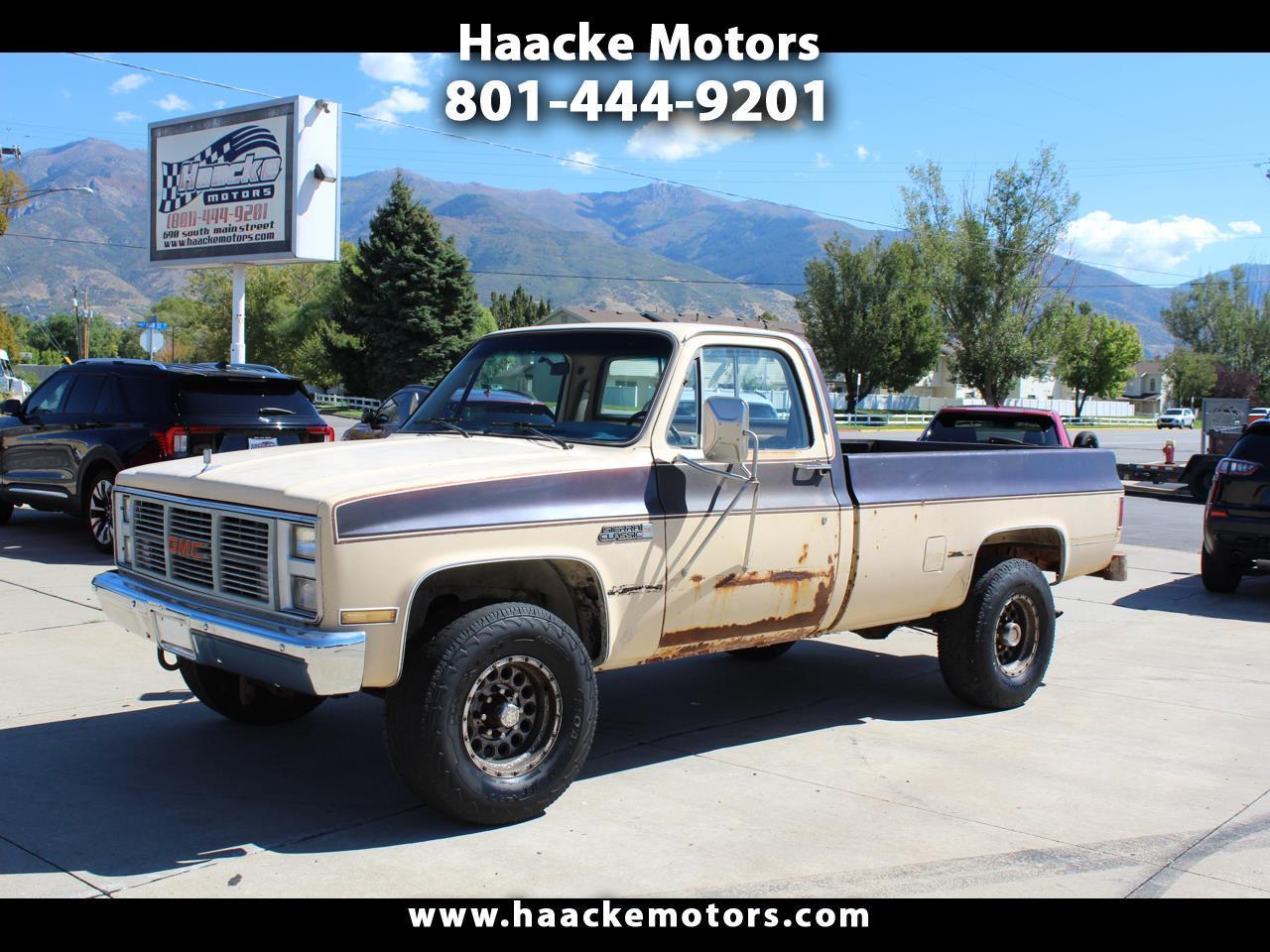
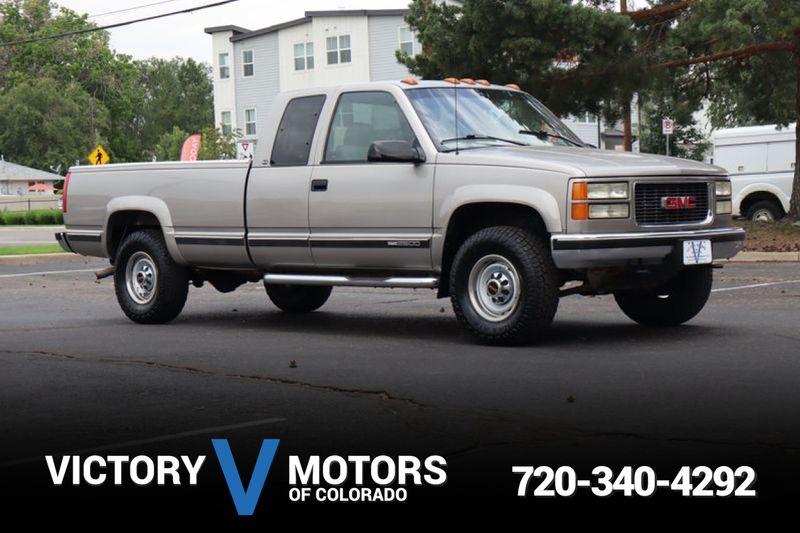
"C2500" is a chassis designation, not a single truck. Across the two generations in our listings it covers regular cabs, extended cabs (GMC called them Club Coupe in the early GMT400 years), crew cabs, long and short beds, two diesels, five gasoline engine families and trim levels from vinyl-seated fleet spec to leather-trimmed SLT. Our current pool of 26 trucks spans 1985 to 1998 and shows the mix plainly: the display model across the store is the 2500 Regular Cab Long Bed, automatics outnumber manuals 23 to 3, and white is the single most common colour (8 of 26) — the fleet-truck fingerprint. Note also what shares the 2500 badge in the wider GMC line: the Suburban 2500 SUV and the Vandura 2500 van both appear in our pool, because GMC applied the 2500 rating across its full-size range. They share engines and much running gear with the pickup, but they are covered by their own guides; everything below is the pickup.
| Model | Years | Engine | Output | Built | Character |
|---|---|---|---|---|---|
| C2500 (square-body) | 1973–1987 | 305/350 V8, 454 V8, 6.2 diesel | 130–230 hp | not published by series | The simple classic; leaf-simple, carburetted, endlessly rebuildable |
| C2500 Sierra (GMT400) | 1988–1995 | 5.0/5.7 TBI V8, 7.4 TBI, 6.2/6.5 diesel | 175–255 hp | not published by series | The workhorse sweet spot; injection, overdrive, real cab comfort |
| C2500 Sierra (GMT400, Vortec) | 1996–2000 | 5.7/7.4 Vortec V8, 6.5 TD | 255–290 hp | not published by series | The modern classic; strongest engines, best brakes, most electronics |
GMC did not publish clean per-series production totals for the C2500 the way European makers did, so this guide does not invent any: the honest figure is that GM built GMT400 trucks in the millions across both divisions, with the three-quarter-tons a substantial minority. Rarity is not the C2500's story. Specification is.
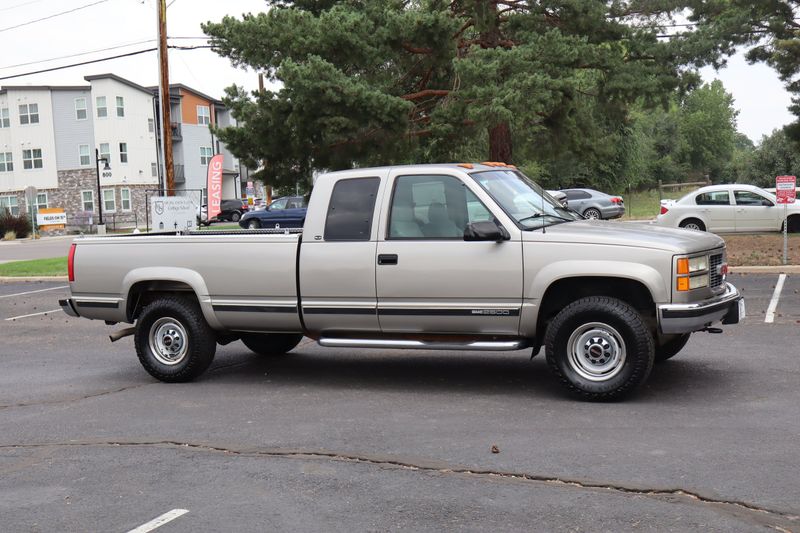
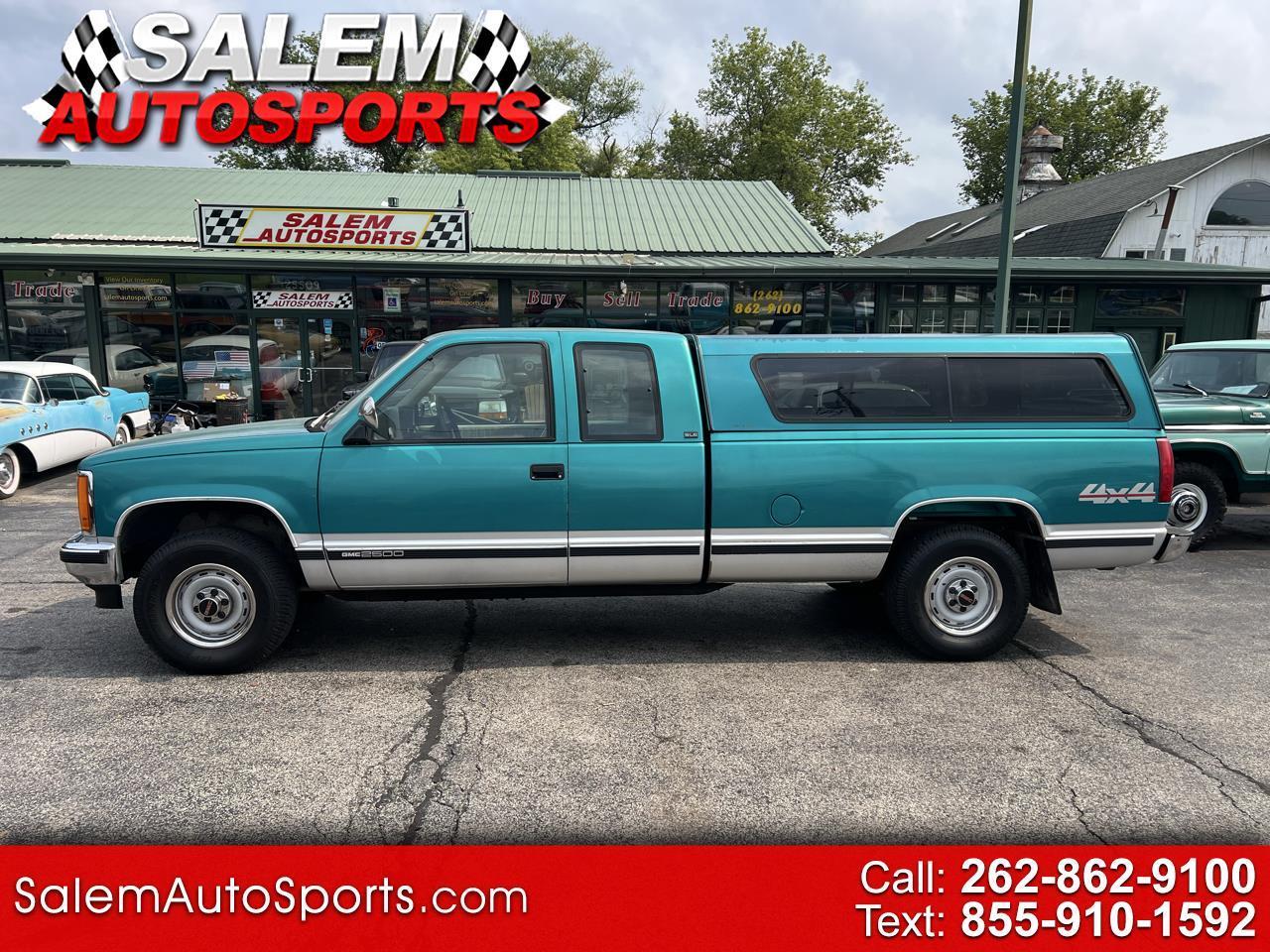
Cab and bed. The regular cab with the 8-foot long bed is the classic work configuration and the most common in our listings. The extended cab (Club Coupe in early GMT400 brochures) adds a small rear seat and was offered with the long bed or, later, a 6.5-foot short bed. The crew cab — four full doors — came only with the long bed in this era and is the rarest and most sought-after family-tow configuration. Fleetside beds are the norm; the flared Stepside was a half-ton fashion item and is rarely seen on a 2500.
Trim. Square-body GMCs ran Custom Deluxe at the bottom through Sierra, Sierra Classic and High Sierra at the top. GMT400 trucks simplified to base Sierra, SLE and SLT, with the SL badge (as on the 1998 copper truck in our photos) sitting in the range as a value trim. Trim matters less on a 2500 than on any car in this programme: a work-spec truck with a vinyl bench and rubber mats is often the most honest survivor, and the SLT's leather and carpet are the first things thirty years of work boots destroy.
The HD question. From the mid-1990s you will see "2500 HD" badges, including on our 1998 photo car. On GMT400 trucks the heavy-duty specification centres on the 8-lug chassis with the higher GVWR (8,600 lb), the full-floating 14-bolt rear axle and, usually, the 4L80-E automatic or a heavy manual. Earlier and lighter C2500s could be six-lug, semi-floating-axle trucks — genuinely capable, but a different animal underneath. Count the wheel lugs before anything else: eight lugs is the heavy truck, six lugs is the light-duty version, and the badge alone does not settle it.
Two-wheel drive only. Every truck in this guide is a C, not a K. If your use is towing on pavement, hauling, or classic-truck driving in a dry climate, the C2500 is the simpler, cheaper-to-run choice — no transfer case, no front differential, no second set of CV or axle joints to wear. If you need four-wheel drive, you want the K2500, and you should read its listings with the extra drivetrain checks that four-wheel drive demands.
Engines and gearboxes
The C2500 engine story is the GM truck engine story: pushrod small-block and big-block V8s, a pair of indirect-injection diesels, and — on light-duty square-bodies — sixes and the 305. Everything is overhead-valve, cast-iron and deliberately understressed. None of it is exotic; all of it is documented down to the last torque figure; and the differences that matter to a buyer are in the fuel system bolted on top, which changed three times across the years in our listings: carburettor (to 1986), throttle-body injection (1987–1995), and Vortec sequential injection (1996–2000).
The small-block V8s: 305 and 350
The 5.0-litre 305 and 5.7-litre 350 are the same Chevrolet small-block architecture — 4.4-inch bore spacing, five main bearings, hydraulic lifters, a timing chain at the front. In a three-quarter-ton the 350 is the engine you want and the one most trucks have: roughly 175–210 hp in the throttle-body years (the L05 TBI 350 is rated around 200 hp in truck trim) and 255 hp as the 1996-on Vortec 5700 (L31), which gained better heads, a roller cam and sequential injection and is the strongest small-block ever fitted to this chassis. The 305 (L03) makes about 170 hp and works noticeably harder in a 5,000-plus-pound truck; it is adequate in a regular cab driven empty and marginal with a trailer. Both engines are fundamentally durable — 200,000 miles is unremarkable on a maintained 350 — and both fail in predictable, cheap ways rather than catastrophic ones.
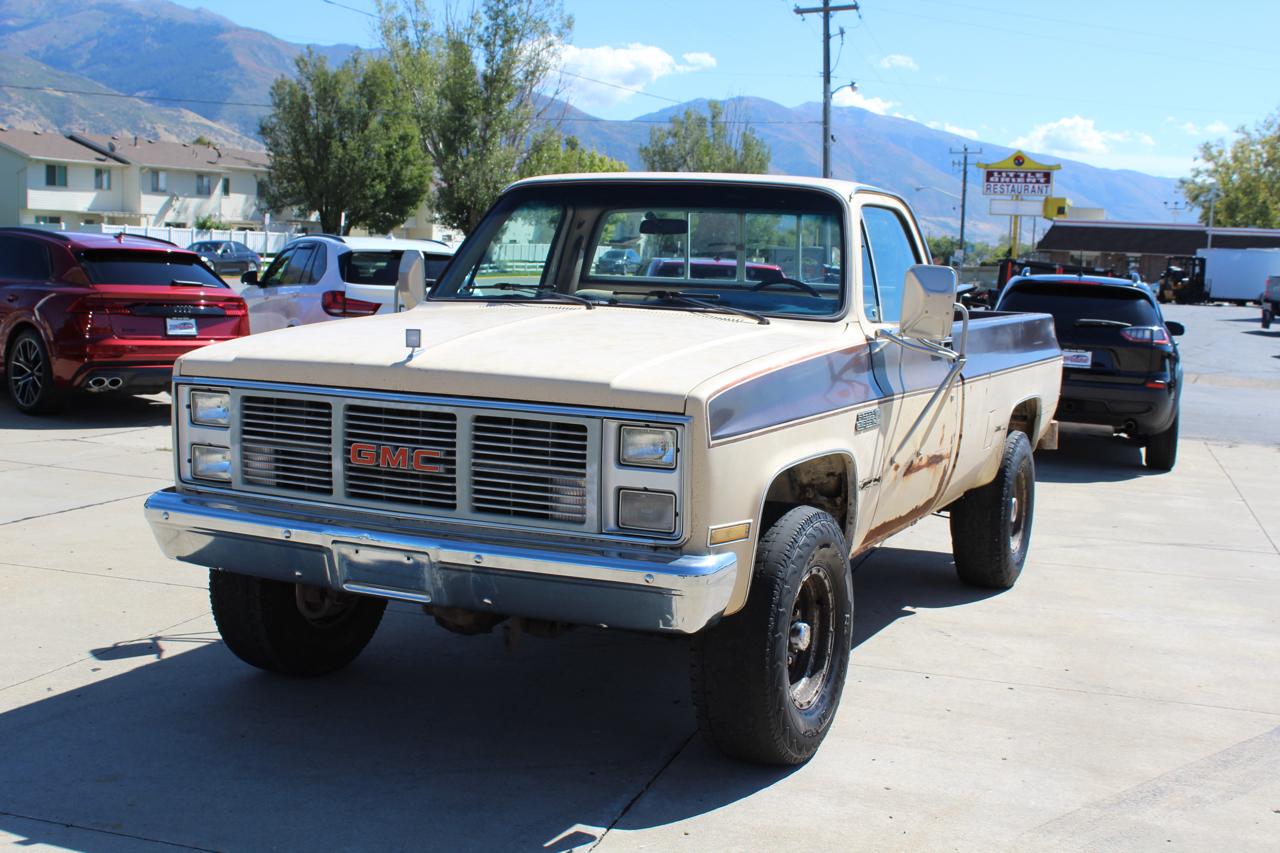
The carburetted square-body engines (a 1985 truck like our tan photo car will have a Quadrajet four-barrel on most V8s) add carburettor behaviour to the checklist: the Quadrajet is a fine carburettor that suffers from worn throttle-shaft bushings (an idle that won't stabilise, because air leaks in around the shafts), leaking well plugs on early castings, and choke pull-offs that die and make cold running miserable. A proper Quadrajet rebuild with bushed throttle shafts runs roughly $400–800; the later electronic-feedback Quadrajets on 1980s trucks add a mixture-control solenoid that clicks by design — don't let anyone sell you a rebuild for the clicking.
Throttle-body injection (1987–95) is the reliability sweet spot of the whole range. The TBI unit is a carburettor-shaped housing with two injectors spraying into the throttle bores, run by a simple ECU. There is very little to go wrong: the injectors rarely fail, the throttle-body base gasket eventually leaks vacuum (a hunting or high idle is the sign, and the gasket is a few dollars), the idle air control valve carbons up, and the in-tank fuel pump does the real wearing. Fuel pressure is low — about 9–13 psi — and half of all "TBI problems" are a weak pump or a clogged filter pulling pressure down, so the first test on any TBI truck that starts hard or flattens out under load is a pressure gauge, not parts. Budget $250–450 for a pump replacement done at a shop, less if you drop the tank yourself; many owners cut an access panel in the bed floor instead, and a neatly cut panel on an otherwise honest truck is a sign of a practical owner, not a bodge.
Vortec engines (1996–2000) bring one notorious fault, and it is covered in the problem-areas section because it is the single most important engine check on a late truck: the lower intake manifold gaskets fail and leak coolant, externally or into the valley. The engines themselves — L31 5.7 and L29 7.4 — are excellent, with more power, better economy and cleaner starting than anything before them. The central sequential fuel injection system (the "spider" assembly inside the intake, with poppet nozzles) is the other Vortec item: sticky poppets cause cold misfires and rough running that clear as the truck warms, and the updated multi-port conversion kit that replaces the poppets with real injectors is a known, permanent fix at roughly $600–1,000 fitted.
The big-block: 454 / 7.4-litre
The 454 cubic-inch (7.4-litre) big-block — L19 in TBI form, L29 as the Vortec 7400 — was the C2500's heavy-tow engine and the reason many of these trucks were bought. Output is unremarkable on paper (about 230–255 hp in TBI form, 290 hp as a Vortec) but the torque is the point: around 385–410 lb-ft, arriving low and staying flat. A 454 truck pulls a loaded trailer the way a 350 truck pulls an empty one. The costs are fuel — expect single figures to low teens mpg depending on load — and heat: big-blocks in these trucks run their exhaust manifolds hard, and broken manifold bolts and warped manifolds are the standard findings (see Problem areas). Internally the 454 is as tough as the small-block and shares its habits: hydraulic-lifter quiet when the oil is good, timing-chain stretch at high mileage, and a rear main seal that weeps with age. If your use is genuinely heavy towing, this is the engine; if it isn't, you are paying the fuel bill for capability you never use.
The diesels: 6.2 and 6.5
The diesel option in a square-body or early GMT400 C2500 is the Detroit Diesel-designed 6.2-litre naturally aspirated V8 (about 130–150 hp), replaced for 1994 by the 6.5-litre, most of them turbocharged (around 180–190 hp). These are indirect-injection, mechanically simple engines — the 6.2 and the early 6.5 use a Stanadyne DB2 rotary injection pump with no electronics in the fuel system at all. They are not powerful, they are not quiet, and they were bought for fuel economy and longevity in fleet and farm service. A good one starts promptly, settles to a loud but even idle, and pulls steadily if slowly. The 6.5 Turbo Diesel from 1994 onward uses an electronic DB4 pump, and with it comes the single most famous fault in this entire guide: the pump-mounted driver (PMD) module cooks on top of the hot pump and fails, causing stalling, no-starts and fish-biting hesitation. The fix — relocating the module to a remote heat-sink mount — is so well established that a 6.5 truck without a relocated PMD is a truck with a scheduled breakdown. The 6.5 also cracks heads and blocks on hard-worked, overheated examples, so a diesel truck's cooling-system history matters more than its mileage. Full detail is in Problem areas; the summary is that a 6.2 is a simple, slow, honest engine, and a 6.5 is a better engine wrapped around two known failure points that must both be checked before money moves.
Gearboxes
Automatics dominate our pool — 23 of 26 trucks — and there are three to know. The Turbo 400 (3L80) three-speed in square-bodies and early GMT400 heavy trucks is one of the strongest automatics ever made; it has no overdrive and no lock-up converter, so a TH400 truck turns high rpm at freeway speed and drinks accordingly, but it almost never fails — a fluid-and-filter service is usually all one needs, and a rebuild, if it ever comes, is roughly $1,800–2,800. The 700R4 / 4L60 (and electronic 4L60-E from 1993) four-speed overdrive automatic is the light-duty box: fine behind a 305 or a gently used 350, but it is the weak link in a three-quarter-ton that has towed heavy, and its failure pattern — losing overdrive or third, slipping under load, burnt-smelling fluid — is well documented. A quality rebuild runs about $2,000–3,200, and any light-duty C2500 with a 4L60 and a tow hitch deserves a long, loaded test drive. The 4L80-E, fitted to most 8-lug and big-block/diesel GMT400 2500s from 1991 on, is the heavy box — effectively an electronic Turbo 400 with an overdrive gear — and it is the automatic you want: strong, long-lived, and rebuildable at roughly $2,500–3,800 if it ever needs it. Read the RPO codes in the glovebox (see the inspection section) to know which box a truck actually has; the shifter quadrant won't tell you.
Manuals are rare in our pool — three of 26 — and split into two. The square-body and early GMT400 four-speed is the SM465: a cast-iron, granny-low truck gearbox with an unsynchronised-feeling, deliberate shift, essentially indestructible and completely unsuited to hurrying. The later five-speed is the NV4500 (from 1992 in heavy trucks), a genuinely good gearbox with one famous flaw: the fifth-gear nut on the mainshaft can back off, dropping fifth gear — the fix is an updated nut and it is a known, priced job ($800–1,500 if the box has to come out). Clutches on working trucks are consumables: budget $700–1,200 fitted, and judge a manual truck on clutch bite point and fifth-gear (or granny-gear) behaviour on the test drive.
Problem areas
Our 26 current C2500 listings come with no photo-note examinations, so this section cannot quote the examined-photo incidence figures some of our other guides use — it is built instead on the documented failure record of the platform, which for these trucks is deep and consistent. Read it with this framing: a C2500 is a machine that was designed to be repaired, and almost nothing in this section is fatal. What kills value is not any single fault but the accumulation — a truck that needs the intake gaskets, the front end, the brakes and the cab corners all at once is a project wearing a driver's price tag. Price each fault you find, add them up honestly, and compare the total with the asking price. That arithmetic, done cold, is the whole skill of buying these trucks.
Rust: the map
GM trucks of both generations rust in the same places, because the water and the road salt go to the same places.
Cab corners and rocker panels are the square-body's signature failure and the GMT400's most common one. The cab corner — the small panel behind the door, at the back of the cab — traps mud thrown up by the rear wheel inside a closed box section, and it rots from the inside out: the paint looks fine until the day it bubbles, and by then the corner is lace. Press hard on the cab corners and along the rockers; crunching is rust, and softness is advanced rust. Patch panels are cheap (the panels themselves run $40–120 a side) but the labour is the cost: cutting out, welding and painting a cab corner and rocker runs roughly $600–1,500 a side at a shop. On a square-body, add the front inner fenders and the cowl/floor junction: water runs down the cowl, the floor rots where it meets the toe board, and the front fender's rear lower corner bubbles where it meets the cab. Lift the floor mats — both generations hide floor rust under rubber mats and carpet that look dry from above, because the water comes in from below and from the cowl, not from boots.
The bed rots at the front panel (where leaves and dirt pack against the cab), at the wheel arches (GMT400 beds bubble over the rear wheels as the inner and outer skins trap moisture), and along the bed floor seams. A bed floor with a plywood sheet or a drop-in liner screwed down over it is hiding the floor until proven otherwise — ask to lift the liner, and treat a refusal as an answer. Bed sides are bolted panels on GMT400 trucks and replaceable; a rotted bed floor is a bigger conversation.
The frame is where rust stops being cosmetic. Both generations use a ladder frame that is strong in section but traps salt and mud inside the rear rails, around the spring hangers and shackles, and — on GMT400 trucks — at the junction under the cab. Surface scale is normal and treatable. Perforation, flaking layers, or a frame rail you can deform with a screwdriver is a structural failure: walk away, because frame repair on a working truck is fabrication work priced per job, and it always costs more than the price difference to a solid truck. Pay particular attention to the rear spring hangers and shackles, which rot through and let the spring shift — a truck sitting lopsided at the rear with one spring eye visible through a rusted hanger is showing you a dangerous fault, not a cosmetic one. Hangers and shackles are available and replaceable ($300–700 a side fitted), but the question is always what the rail behind them looks like.
The northern-truck rule applies to everything above: these trucks sold everywhere, and our listings span Kentucky, Georgia, Arkansas, Texas, Washington and Iowa among others. A lifetime in the South or West is worth real money on a square-body and noticeable money on a GMT400. Conversely, a cheap truck from the salt belt with fresh underseal blown over the frame rails and cab corners is the single most common trap in this market — factory underseal after thirty years is thin, chipped and patchy, and a uniform fresh black coat over everything, rails and brake lines included, is a cover-up until the seller proves otherwise.
Engines: the known failures
Vortec intake manifold gaskets (1996–2000, 5.7 and 7.4). The flagship fault of the late trucks. The original gaskets use plastic carrier frames with moulded sealing beads, and GM's Dex-Cool coolant of the period is hard on them; the frames crack and the seals fail, leaking coolant externally down the front or back of the engine, or internally into the valley and the oil. Signs: a coolant level that drops with no puddle, orange-pink crusty residue along the intake seams, coolant in the oil (a milky film under the oil filler cap, though condensation alone can mimic this on short-trip trucks — the dipstick and a hot run settle it), and unexplained overheating. The job is well understood: an updated gasket set with metal-reinforced carriers, done at roughly $600–1,100 at a shop, and it is close to a rite of passage for these engines — a truck with a documented recent gasket job has had its biggest bill paid. If a Vortec truck is using coolant and the seller cannot explain where, price the job in and suspect the worst version (internal leak, bearings washed by coolant) until a pressure test says otherwise.
6.5 diesel: the PMD and the cracks. The pump-mounted driver module on the electronic 6.5 (1994-on) is mounted on the injection pump in the valley of the engine, where it heat-soaks every time the truck stops. Its failure pattern is unmistakable once you know it: the truck stalls at idle or at a light and restarts after cooling, hesitates or "fish-bites" under steady throttle, or refuses a hot restart and then starts fine cold. The permanent fix is a remote-mounted PMD on a heat sink, usually behind the bumper or on an inner fender, at roughly $250–450 in parts — cheap. The trap is the misdiagnosis: owners replace pumps ($1,500–2,500) chasing a $300 module. Ask where the PMD is. If it is on the pump, budget the relocation and regard every unexplained stall in the truck's story as the module until proven otherwise. The 6.5's second fault is more serious: heads and, on hard-worked engines, blocks crack, typically presenting as coolant loss, pressurised cooling systems (a rock-hard top hose shortly after a cold start), bubbles in the coolant reservoir, or coolant and oil mixing. Any of those signs on a 6.5 is a walk-away or a price that assumes an engine, because the repair is an engine-out job in the $4,000–7,000 range. The 6.2 avoids the PMD entirely (mechanical pump) and cracks far less, but its glow-plug system and controller do the failing instead: a 6.2 that needs ether to start, or cranks long on the plugs, usually wants glow plugs and a controller check ($150–400) rather than an engine — but test compression before believing that on a high-mile example, because a worn 6.2 with low compression shows exactly the same reluctance.
Big-block exhaust manifolds. The 454's manifolds run hot, warp, and break their outer bolts — the classic presentation is a ticking exhaust leak loudest on a cold start that quiets as the manifold warms and expands. Look for soot tracks at the manifold-to-head joints and missing or snapped bolt heads at the end ports. Extracting broken bolts from a big-block head in the truck is fiddly, expensive labour ($500–1,200 depending on how many and how seized), and a common permanent answer is a set of headers — which then brings its own clearance and heat questions. Price a ticking 454 accordingly and do not let anyone call it "just a gasket" without showing you the bolts.
Small-block wear items. The 350 and 305 rarely die; they accumulate. The standard findings on a high-mile small-block are a leaking rear main seal (oil at the bellhousing — annoying, not urgent, and on two-piece-seal engines a job best combined with something else), timing-chain stretch (a sloppy, wandering timing mark under the light; chains are a $500–900 shop job), worn valve stem seals (a puff of blue smoke on start-up after sitting, clearing immediately — liveable and cheap to fix relative to rings), and oil pressure that sags hot at idle on a worn engine. Smoke under sustained load is rings or bores, and that is a rebuild conversation ($3,000–5,500 for a quality small-block rebuild, against which a good used engine or a GM crate engine is often the smarter comparison). On TBI trucks, add the fuel pump and the distributor's ignition module and pickup coil to the wear list — a TBI truck that dies hot and restarts cold, repeatedly, is usually the ignition module in the distributor heat-soaking, a $40–80 part, and one of the most over-diagnosed faults on the platform.
Cooling systems generally. Every engine in this guide is old enough that its radiator, hoses, water pump and fan clutch are either replaced or due. The viscous fan clutch is the one buyers miss: a fan that free-wheels when the hot engine is switched off, or roars constantly, is a failed clutch ($80–200 in parts), and a weak clutch is the hidden cause behind many "this truck runs hot towing" stories. On diesels especially, cooling condition is engine life — walk away from any diesel, 6.2 or 6.5, with a history of overheating, because that history is where the cracks came from.
Chassis, steering and brakes
Front suspension (two-wheel drive). Both generations use independent front suspension with coil springs and ball joints on the C2500, and on trucks that have carried loads for decades the standard wear set is ball joints (uppers especially), control-arm bushings, idler and pitman arms, and tie-rod ends. The test is in the inspection section: play at the wheel, judged correctly, plus steering wander and inside-edge tyre wear as the road evidence. A full front-end refresh — ball joints, bushings, steering linkage wear parts, alignment — runs roughly $1,200–2,500 at a shop and transforms a truck; conversely, a seller who has done it recently has spent real money you don't have to. GMT400 trucks add one specific item: the steering shaft and the EVO (variable-effort steering) sensor on later trucks can produce a clunk or a sudden change in steering weight, and the intermediate shaft's wear gives a loose, rattly column over bumps. None of it is structural; all of it is negotiable.
The 14-bolt rear axle — the full-floating axle under 8-lug trucks — is one of the strongest light-truck axles ever made and rarely gives trouble beyond pinion and axle seals and, at high miles, worn bearings that announce themselves with a hum that changes on and off the throttle. The lighter semi-floating axles under six-lug trucks wear their axle-shaft bearings (the shaft runs in the bearing, so a worn bearing wears the shaft too) and weep at the seals, wetting the rear brakes. Gear oil dark with metal, or a rear brake drum/shoe soaked in oil, tells the story. A semi-float axle rebuild with shafts runs $800–1,500; a 14-bolt seal-and-bearing refresh is less.
Brakes. Three-quarter-tons work their brakes hard and are often maintained to the standard of "still stops." Expect, on an unmaintained truck, some combination of: worn front pads and scored rotors, seized or weeping rear wheel cylinders (drum rears on most earlier trucks) or tired rear calipers on later disc-brake trucks, perished rubber hoses, and a rusted steel line set — GMT400 brake lines in salt country are a known failure, and a full stainless line set fitted runs $600–1,100. The hydroboost brake booster (fitted to diesels and many heavy gasoline trucks, powered by the power-steering pump rather than vacuum) adds its own checks: a hard pedal with the engine off that goes normal running is correct; a pedal that sinks, or steering that goes heavy when braking, points at the booster or pump ($400–800 for a booster fitted). ABS on GMT400 trucks is early-generation: a lit ABS lamp is common and usually a wheel-speed sensor or the control module, and on a working truck it matters less than the hydraulic fundamentals — but price it, and never accept spongy pedal or a pulling stop as "character."
Springs and stance. Leaf springs sag, crack leaves (look along the pack for a leaf that ends mid-air or sits offset), and lose their arch asymmetrically after years of one-sided loads. A truck that sits level empty is the exception worth paying for. Helper springs and airbags fitted by a previous owner are not faults, but they are evidence: this truck worked at the top of its rating, so check the frame rails above the axle and the bed floor for the marks of that life.
Cab, electrics and the small stuff that adds up
GMT400 interiors are durable but the plastics embrittle: dash tops crack in sun states, door handles (inside and out) break, window regulators slow and die, and the tailgate handle and latches on both generations seize or snap. Square-body cabs are simpler and their faults are simpler — vent-window seals whistle, sliding rear windows leak into the cab corner (feeding the rust above), and bench-seat foams collapse. Electrical faults on both generations are overwhelmingly earths and connections rather than components: dim lights, lazy gauges and intermittent accessories trace to ground straps and corroded connectors, cheap to fix and tedious to find. The GMT400's heater/AC controls and blend-door actuators fail with age — check that air actually moves to the selected vents and that the AC compressor engages; a compressor, drier and recharge on R-12-converted or R-134a systems runs $600–1,200, and "AC just needs a charge" on a truck whose compressor doesn't engage is a sentence to finish yourself before paying. Wipers that park wrong or stall mid-sweep on GMT400 trucks are usually the wiper module's solder joints — a known, cheap board-level fix that sellers describe as an act of God. None of these items kills a truck. Together, priced honestly, they are routinely a four-figure list, and they are your negotiating material.
How to inspect one
Allow an hour, bring a torch, a tyre gauge, a magnet wrapped in cloth, and a screwdriver you are prepared to prod with (ask first). These trucks reward a systematic pass and punish a vibes-based one: everything that matters is visible or testable on the day, and the seller who won't let you test is giving you information too.
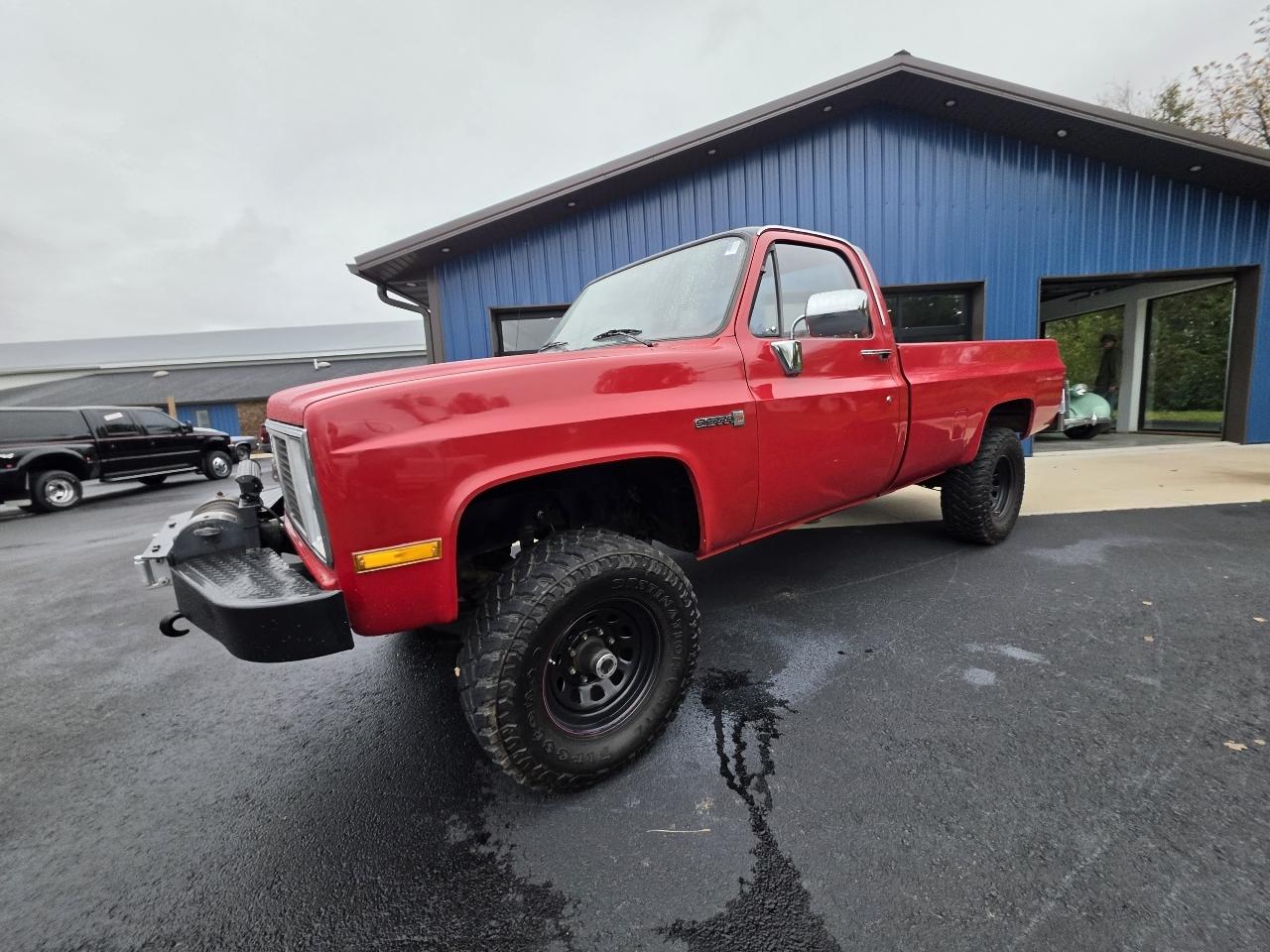
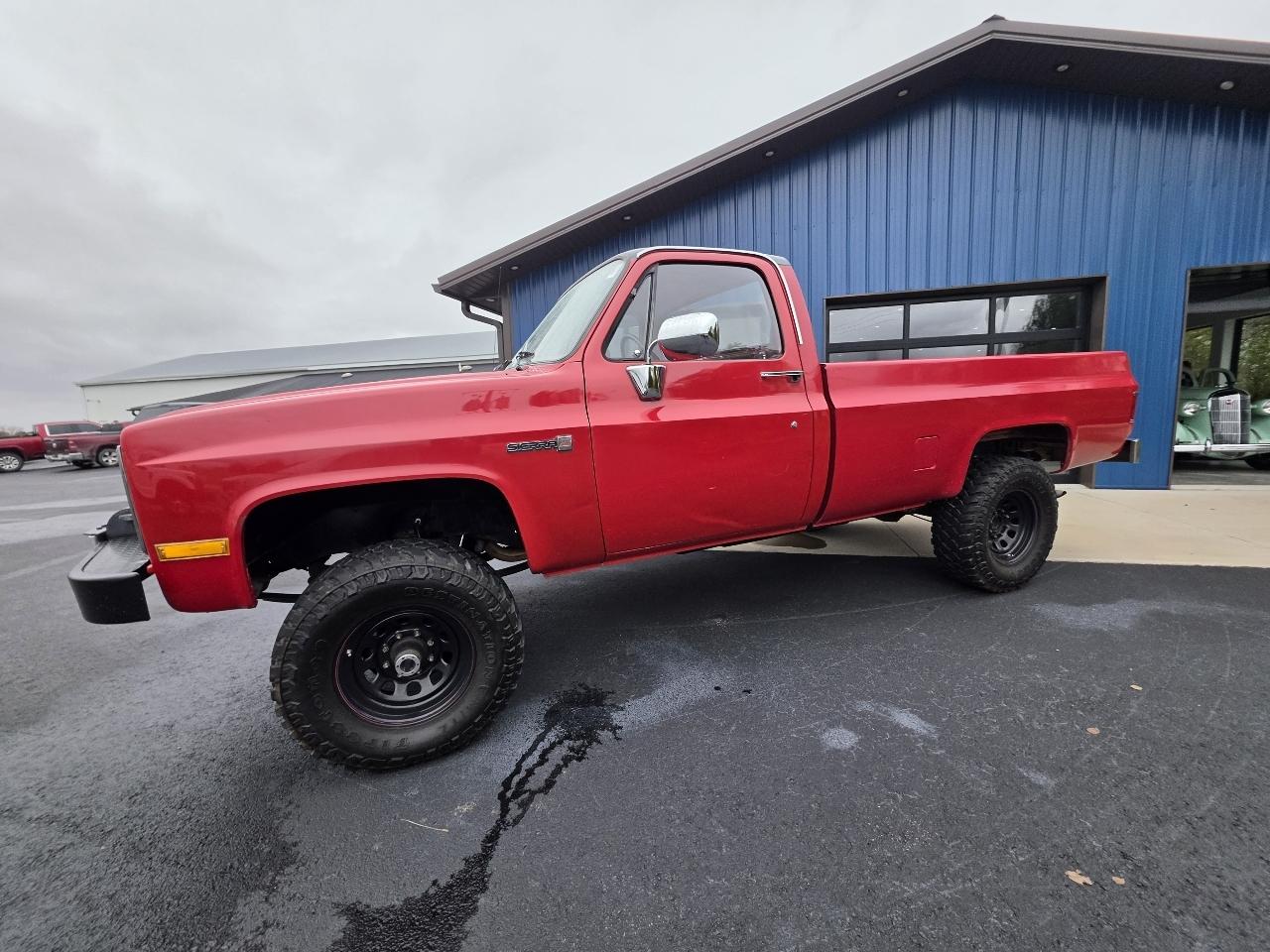
- Paperwork and identity first. Match the VIN on the title to the plate on the driver's door jamb and the dash plate visible through the windshield. Confirm the title says C2500 (two-wheel drive), not K — a listing headline got this wrong in our own photo pool, where a 1986 truck listed as a 2500 is in fact the four-wheel-drive K2500. Open the glovebox and read the RPO code sticker: it lists the truck's factory specification — engine (L05, L31, L19, L29, L65 for the 6.5), gearbox (MT1 is the 4L80-E, M30 the 4L60), axle ratio and GVWR package. The RPO sticker is the data card of the GM truck world: it settles every argument about what the truck was built as, whatever has been bolted on since.
- Count the lugs and look at the rear axle. Eight lugs and a full-floating hub (a bolted flange protruding through the wheel centre) mean the heavy chassis with the 14-bolt axle. Six lugs mean the light-duty version. This single check sorts the truck's capability, its correct gearbox expectations and much of its value.
- Cold start, always. Insist the engine is cold on arrival — a pre-warmed truck is concealing something, and on these trucks cold behaviour is half the diagnosis. Gasoline engines should fire promptly and settle; watch for the start-up puff of blue (valve seals, liveable) versus sustained smoke (rings, not liveable). Diesels should start on the glow plugs without ether: long cranking, white smoke and a rough first minute point to glow plugs, the controller, or compression, in that order of cost.
- The frame and rust circuit. Torch along both frame rails, concentrating on the rear rails, spring hangers and shackles and the section under the cab. Prod cab corners, rockers and the bed's front panel; run the magnet over the cab corners, lower doors and bed wheel arches. Lift the floor mats and look at the toe boards. Perforation in the frame or a spring hanger is a walk-away; cab corners and rockers are priced welding, as the rust section sets out.
- Under the hood, engine-specific. On a Vortec (1996–2000), look for dried coolant crust along the intake seams and check the oil and coolant for cross-contamination — the intake-gasket check. On a 6.5 diesel, find the PMD: on the pump means unfixed, relocated to a heat sink means the known fault has been addressed; then check the top radiator hose shortly after a cold start — rock-hard immediately means combustion pressure in the cooling system, and you stop there. On a 454, look at the manifold end bolts and listen at the cold start in step 3 for the ticking leak. On any engine, pull the dipstick and the transmission dipstick: burnt, brown automatic fluid on a working truck is a gearbox budget line, not a detail.
- Front-end play. With the front wheels on the ground and a helper rocking the steering, watch the tie-rod ends, idler and pitman arms for lost motion. Then jack each front wheel and rock it at 12 and 6 o'clock (ball joints and bearings) and 3 and 9 (steering linkage). Compare what you feel with the truck's steering on the drive: wander plus play equals the front-end refresh priced in Problem areas.
- The test drive — loaded behaviour, empty truck. Fifteen minutes minimum, including a freeway stretch and, if the seller allows, a hill. The automatic should shift firmly without flaring; a 4L60 truck that slips or hunts under load is showing you its rebuild. A 4L80-E should feel unhurried and positive. Manuals: check fifth gear on an NV4500 under load (the backed-off nut drops it) and the clutch bite point on any manual. Brake hard from speed: the truck must stop straight, with a firm pedal that doesn't sink; hydroboost trucks should hold pedal pressure with no steering heaviness.
- Heat and cooling under work. Let the truck idle hot after the drive, then watch the gauge on a slow pull. Check the fan clutch: on a hot, switched-off engine the fan should resist spinning freely. A truck that creeps up in temperature at idle or under load, with a weak fan clutch, may be one $150 part from correct — or may be showing you the overheating history that cracks diesel heads. Judge it with the rest of the truck's story.
- Stance and springs. Stand back and sight the truck level: it should sit even side to side and slightly nose-down or level, not sagging at the rear. Look along each leaf pack for broken or shifted leaves, and check the bed floor and rails above the rear axle for the scars of a life at maximum load. Compare arch heights in a photograph from the rear three-quarter — the view in this guide's photos — because stance faults are easier to see in a picture than in person.
- Cab and electrics sweep. Work everything: windows, locks, blower on all speeds and all vent positions, wipers including the park position, lights, gauges, and the air conditioning — the compressor must engage and the air must actually get cold, not merely cool. Check the tailgate latches, door handles and (on extended cabs) the rear door operation. Every dead item is a priced line from the cab section of Problem areas; add them up in front of the seller.
- Oil leaks, honestly graded. A dry engine on a 30-year-old working truck usually means it was just washed. Weeps at the valve covers, rear main and pinion seal are normal and budgetable; active drips, a soaked underside, or oil in the coolant (or coolant in the oil) are not. Look at where the truck was parked before it was moved for your viewing — the ground tells you what the wash took off.
- The totals test. Before you discuss price, write down the list: every fault found, priced from this guide. A truck needing the intake gaskets, a front-end refresh and brake lines is three shop visits deep before you improve anything. If the asking price plus your list exceeds the price of the sorted truck you passed over last week, this is not the truck — however straight the seller seems.
Values
The build's market block beneath this guide carries the live numbers — what C2500s are listed at now and what recorded sales have achieved — and this section deliberately carries none, because the figures change faster than the buying logic does. Read the block with the following in mind.
The condition spread is enormous, and it is capability-shaped. At the bottom of the market sit worn-out work trucks: high miles, rust in the cab corners, a tired interior and a drivetrain of unknown honesty. At the top sit low-mileage, rust-free, well-specified trucks — crew cabs, big-blocks, clean Vortec extended cabs — that have crossed over from tool to classic. The gap between the two is not a few percent; it is several multiples, and it is driven almost entirely by the three things this guide keeps returning to: frame and cab rust, documented mechanical condition, and specification. A rust-free Southern truck with the wrong engine will outprice a rusty Northern truck with the right one, every time.
Asking prices are a seller's opening position, not a market verdict. This is a private-seller market — the overwhelming majority of our current listings come from Marketplace sellers, not dealers — and private asking prices on working trucks are famously aspirational at the top and negotiable everywhere. The achieved figures in the recorded-sales block are the discipline: where asking and achieved diverge widely, believe the achieved. Trucks priced at the level of the best sorted examples, while needing the work listed in Problem areas, sit for months; the same truck priced to its condition sells in days. If you are selling, that is the whole strategy. If you are buying, the priced fault list from your inspection is not rudeness — it is how this market actually clears.
What carries a premium, and why. The 8-lug heavy chassis over the light-duty version, because capability is the point of the truck. The 454 and the Vortec engines over the TBI small-blocks, and the TBI small-blocks over the 305, for the same reason. Crew cabs over extended cabs over regular cabs, in that order, because families discovered these trucks as tow vehicles. Square-bodies carry a classic premium that GMT400s are only beginning to earn — the square-body is bought partly as an object, the GMT400 still mostly as a tool, and the price structures reflect it. The diesels split: a clean 6.5 with a relocated PMD and a documented cooling history is a specialist buy with a loyal following, while a 6.5 with any crack symptom is worth close to its parts. A 6.2 is worth what a comparable gasoline truck is worth, minus whatever its slowness costs you personally.
Project versus driver. The project trucks in this market are cheap for identifiable reasons, and the arithmetic in step 12 of the inspection is the test: a project makes sense only when the purchase price plus the honest cost of its fault list lands clearly below the price of a sorted equivalent — and when the faults are mechanical. Rust inverts the equation, because welding and paint are the two costs that never come back at resale on a working truck. Buy the driver with the straight frame; let someone else buy the lesson.
Parts and ownership
The C2500's parts situation is as good as it gets in the classic world. GM built these trucks in the millions, the mechanicals stayed in production for decades, and an entire reproduction industry — LMC Truck, Classic Industries, Summit, RockAuto and dozens of specialists — catalogues both generations down to individual clips and weatherstrips. Body panels, cab corners, rockers, bed floors and glass are reproduced for the square-body and widely available for the GMT400; interior trim, dash pads and seat kits are reproduced for both. Mechanical parts — engine internals, brake and suspension components, gearbox rebuild kits — are same-week items at ordinary prices, and every town has a machine shop and a transmission shop that knows the small-block and the 4L80-E by heart.
Easy: all service items, brakes, suspension and steering wear parts, cooling components, TBI sensors and pumps, starters, alternators, water pumps, exhaust systems, glass and seals, and the diesel wear items (glow plugs, PMD modules and relocation kits are stocked by diesel specialists). Harder and dearer: correct square-body trim and grille pieces in good original condition, GMT400 dash tops in uncracked condition, crew-cab-specific body parts, 6.5 cylinder heads of verified quality (the market is full of cheap castings of doubtful merit — buy from a known diesel specialist), and rust-free original beds in the salt belt, which are hunted hard enough that Southern beds travel north on trailers.
Running costs. A sorted C2500 is a realistic daily-capable classic: small-block trucks return fuel economy in the low-to-mid teens, big-blocks in the high single figures to low teens, diesels in the mid-to-high teens, and all of them will run modern freeway speeds without stress. Insurance is ordinary agreed-value classic money once the truck is a classic rather than a work vehicle. The budget line that catches new owners is the same one that catches W108 buyers, translated: the first year of catching up a working truck's deferred maintenance — brakes, front end, fluids everywhere, cooling system, the known engine item for its year — honestly runs $2,000–5,000 at shop rates before you improve anything, and the trucks that look cheapest at purchase are usually the ones that invoice you for it. Buy the maintained truck, keep the oil changed, grease what greases, and a C2500 will outwork and outlast almost anything else on this site.
Which one to buy
- The all-rounder: a 1996–2000 GMT400 350 Vortec, 8-lug. The strongest small-block, the heavy chassis, the 4L80-E, modern brakes and comfort — with the intake gaskets either documented as done or priced in. This is the C2500 to buy if you want one truck to tow, haul and drive anywhere.
- The heavy hauler: a 454 truck, TBI or Vortec. If your trailer is genuinely heavy, the big-block earns its fuel bill every mile. Check the manifold bolts and price the tick.
- The classic: a square-body, 1985–87. The shape, the simplicity, the carburettor-and-points honesty of the thing — and the strongest classic premium in the range. Buy it on frame and cab-corner condition alone; everything else is a Saturday job.
- The value buy: a TBI 350 GMT400, 1988–95. The reliability sweet spot at the lowest prices in the guide: injected, overdrive-equipped, cheap to fix, and not yet carrying a classic premium. A rust-free SLE extended cab is the most truck per dollar in this entire market.
- The economy buy: a 6.2 diesel. Slow, loud, simple and frugal, with no electronics to fail. For local hauling and farm work it is the cheapest C2500 to run that exists — just verify compression before you buy its cold-start story.
- The specialist buy: a 6.5 Turbo Diesel with the PMD already relocated and a cooling system with a clean, documented history. In that condition it is a capable, economical tow truck with a loyal following. Without those two proofs, it is a gamble priced as a certainty — walk on.
And the rule that overrides all of the above: buy the frame, the cab corners and the paperwork, in that order, and let the engine be the tiebreaker. Every engine and gearbox in this guide can be rebuilt or replaced at a price you can plan for, by people in every state. A perforated frame, a cab held together by its paint, or a title that doesn't match the truck cannot be fixed at any sensible price — and on a C2500, they are the only faults that can.