
GMC 1500 Regular Cab Short Bed buyer's guide
GMC 1500 Regular Cab Short Bed -- the model's own buyer's guide: variants, values and what to check.
Years listed: 1969-1995 · Series: C/K Trucks
Overview and history
The GMC C1500 is not one truck. It is the two-wheel-drive, half-ton pickup General Motors sold under the GMC badge from the early 1960s to the end of the GMT400 run around 1999 to 2000 — and the name covers three very different generations that share a job description. The letter tells you the drive: C for two-wheel drive, K for four-wheel drive. The number tells you the payload class: 1500 for the half-ton, on a short or long bed, with a regular cab or, later, an extended cab. That is why a tidy 1970 truck, a 1985 Square Body and a 1993 Sierra can all be listed as a C1500 and yet share almost no body panels, no interior parts and only the broad outline of their engines.
GMC was always the smaller, slightly more upmarket sister to Chevrolet in the truck business. Chevrolet sold volume; GMC sold through a different dealer network and justified itself with higher trim, different grilles and badges, and — in the earliest years — genuinely different engines. By the 1970s that separation had mostly gone: a GMC and a Chevrolet from the same year are the same truck underneath. That is why a GMC buyer today gets Chevrolet parts availability in a truck that is usually a little rarer, a little better trimmed, and no harder to keep.
The lineage runs in clear blocks. The 1960 to 1966 trucks introduced the C and K naming and, from 1963 on, coil-spring front suspension on the two-wheel-drive half-tons. The 1967 to 1972 Action Line that followed is the handsome one — clean styling, a car-like cab, coil springs at the rear on most half-tons as well as at the front, and the beginning of the modern pickup as a personal vehicle as well as a tool. The 1973 to 1987 Rounded Line, universally called the Square Body, squared the styling off, stayed in production for fifteen model years with only a facelift in 1981, and became the work truck of a generation. The 1988 to 1998 GMT400 — later nicknamed OBS, for Old Body Style — brought fuel injection as standard, a far better cab, and the Sierra name promoted from a trim package to the model name itself. A small tail of GMT400 trucks was sold as the Sierra Classic into 1999 and 2000 while the new GMT800 Sierra 1500 took over, which is why the latest C1500s wear a familiar shape with a newer badge story behind them.
Most trucks in the current Classic Listings pool are GMT400s, mostly 1988 to 1995 regular-cab trucks, with a solid minority of Square Bodies from 1983 to 1989 and a handful of earlier trucks. That matches the wider market: Square Bodies are bought for shape and simplicity, GMT400s — old enough to be interesting, new enough to drive every day — dominate the listings, and Action Line trucks are bought deliberately.
These were working trucks first. Almost every C1500 has hauled, towed, idled on a job site, or been a teenager's first vehicle, and many have done all four in sequence. That history defines buying one today far more than mileage does. The mechanicals — small-block V8, simple automatic, leaf or coil rear suspension depending on year — are among the toughest and cheapest to repair of any classic vehicle in America. What separates a good C1500 from a money pit is rust in the cab and frame, a fuel system neglected through years of sitting, and a long list of small deferred jobs that each cost a little and together cost a lot. Buy the structure and the history first. The drivetrain can almost always be fixed.

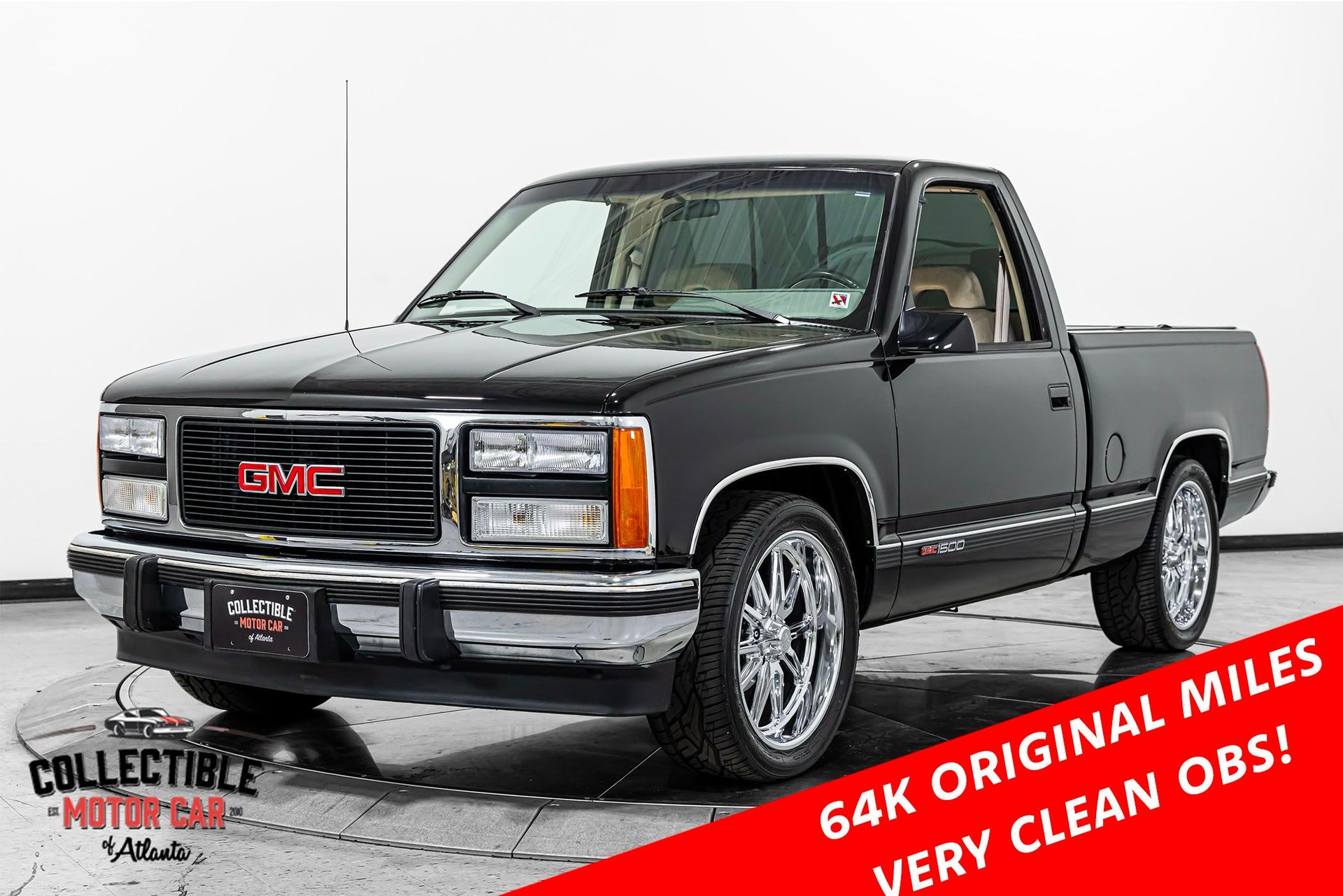
The models
Every C1500 is a half-ton, two-wheel-drive pickup, but cab, bed and trim change the truck you are actually buying more than the badge does. Beds come in two lengths through most of the run: a short bed of about six and a half feet — Stepside or Fenderside with external rear fenders on earlier trucks, Fleetside or Wideside with straight sides on most — and a long bed of about eight feet. GMC used its own bed names for years: Fenderside for the step bed, Wideside for the straight-side bed. Regular cabs seat two or three across a bench. Extended cabs, called Club Coupe in some GMC literature, arrive with the GMT400 and add a small rear seat and a much more usable cab, at the cost of a longer wheelbase.
Trim is where GMC played its hand. In the Square Body years Sierra was the base trim, with High Sierra above it and Sierra Classic at the top; on GMT400 trucks the ladder runs SL, SLE — where most good trucks sit — and SLT at the top. Do not buy a badge: trim was cheap to fake, and decades of swaps mean the VIN and glovebox label matter more than the emblem on the fender.
| Model | Years | Engine | Output | Built | Character |
|---|---|---|---|---|---|
| C1500 Action Line | 1967–1972 | 250 six / 305 V6 / 307, 350, 402 V8 | 155–300 hp | GMC split not published separately | The handsome classic; coil-spring ride, car-like cab |
| C1500 Square Body, early | 1973–1980 | 250 six / 305, 350, 400, 454 V8 | 100–245 hp | GMC split not published separately | The original Square Body; simplest, rust decides value |
| C1500 Square Body, late | 1981–1987 | 4.3 V6 / 305, 350 V8 / 6.2 diesel | 130–210 hp | GMC split not published separately | Lighter, facelifted; injection arrives for 1987 only |
| Sierra C1500 GMT400, regular cab | 1988–1998 | 4.3 V6 / 305, 350 V8 / 6.5 diesel rare | 160–255 hp | GMC split not published separately | The core of today's market; TBI then Vortec from 1996 |
| Sierra C1500 GMT400, extended cab | 1988–1999 | 4.3 V6 / 305, 350 V8 | 160–255 hp | GMC split not published separately | More cab, more wheelbase; the usable daily classic |
| Sierra C1500 Classic | 1999–2000 | 4.3 V6 / 305, 350 V8 | 200–255 hp | Low; carry-over production | Last GMT400s sold beside the GMT800; check title year carefully |
(Outputs are period ratings and change with year and emissions specification — a 1973 350 and a 1996 Vortec 350 share a displacement and almost nothing else in feel. Production was reported in ways that do not give a clean, honest GMC C1500 total by generation, so no total is invented here.)
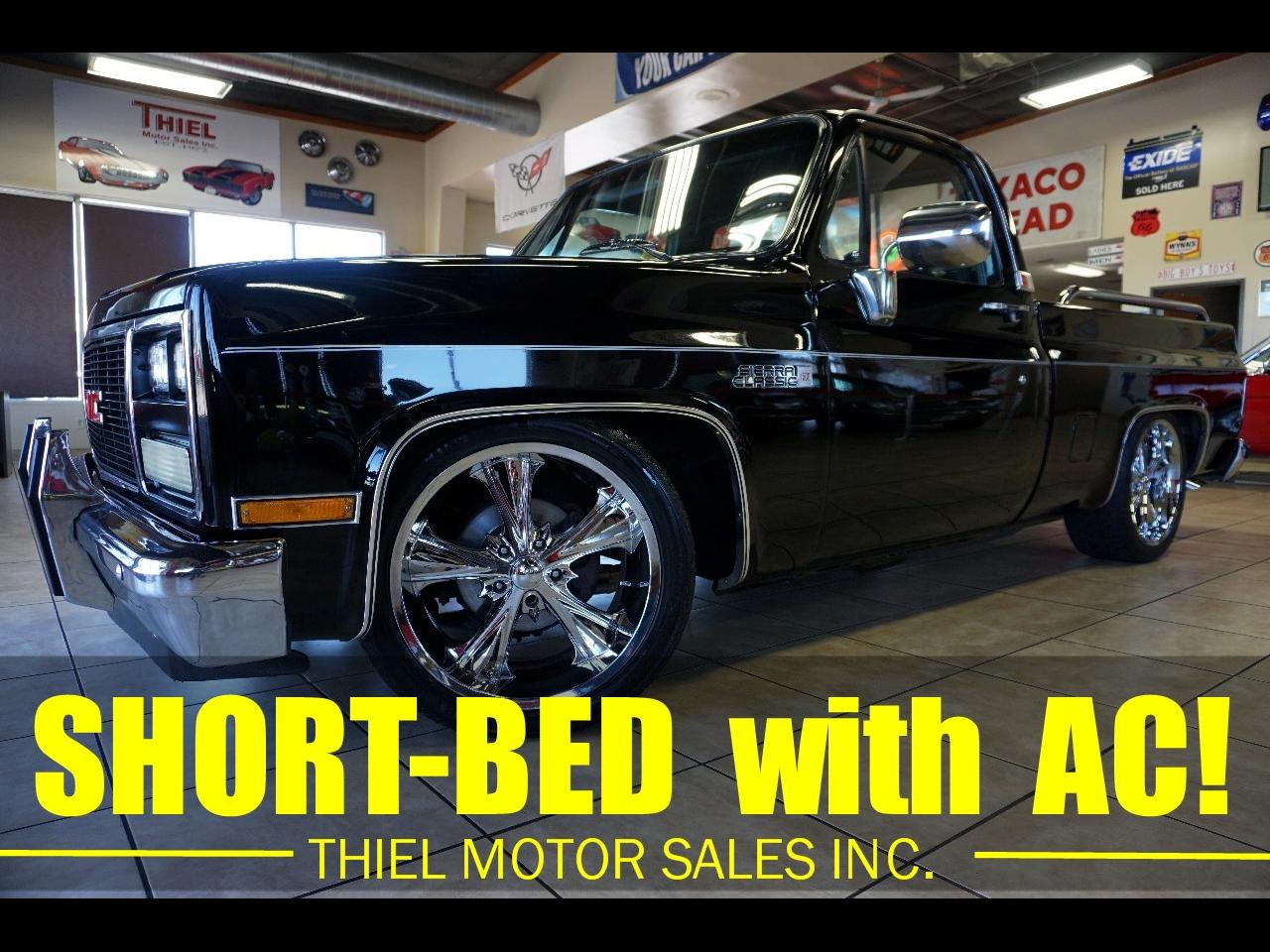
The Action Line, 1967 to 1972. The collector's C1500. Short-bed, straight-side trucks on the 115-inch wheelbase are the ones everyone pictures; long-bed trucks ride on 127 inches and feel it. Most half-tons have coil springs front and rear with trailing arms at the back — a superb ride for the period — though leaf springs were optional and fitted to plenty of working trucks, so look underneath rather than assuming. GMC still offered its own big V6 family early in this run, alongside the Chevrolet-derived sixes and small-blocks most trucks actually carry. Power steering, power brakes and an automatic were options, not givens: a manual-steering, manual-brake Action Line is honest but hard work in modern traffic.
The Square Body, 1973 to 1987. The longest-lived and most varied C1500. The 1973 to 1980 trucks are heavier, softer-riding and the most rust-prone of all; the 1981 facelift brought a sloped hood and lighter panels. All Square Body half-tons ride on leaf springs at the rear and independent coil-spring front suspension — the rear coils are gone. The regular-cab short bed is the sought-after shape; long beds and work trucks are cheaper because they were bought to work and usually did. The final year, 1987, matters out of proportion to its numbers: it is the only Square Body year with throttle-body fuel injection, combining the old shape with a fuel system that starts and drives in modern traffic without carburettor temperament. Expect to pay for that combination, and verify it — a 1987 badge on a carburetted truck means an engine swap or a wrong year, and either needs an explanation.
The GMT400, 1988 to 1998, plus the Classic tail. The truck most readers of this guide will buy. Regular cab on a 117.5-inch wheelbase for the short bed, extended cab on a longer frame, coil-spring independent front suspension on two-wheel-drive trucks — torsion bars belong to the four-wheel-drive models — and a cab with proper seals, ventilation and seats you can sit in all day. The split inside the generation is 1995 and 1996. The 1995 truck gets the new, much better interior but keeps the throttle-body engines. The 1996 truck keeps that interior and gets the Vortec engines, with more power, better economy and a more complicated fuel system to maintain. Neither is automatically better. A sorted TBI truck is simpler and cheaper to keep; a sorted Vortec truck is quicker and nicer on the highway. Buy condition within the half you prefer.
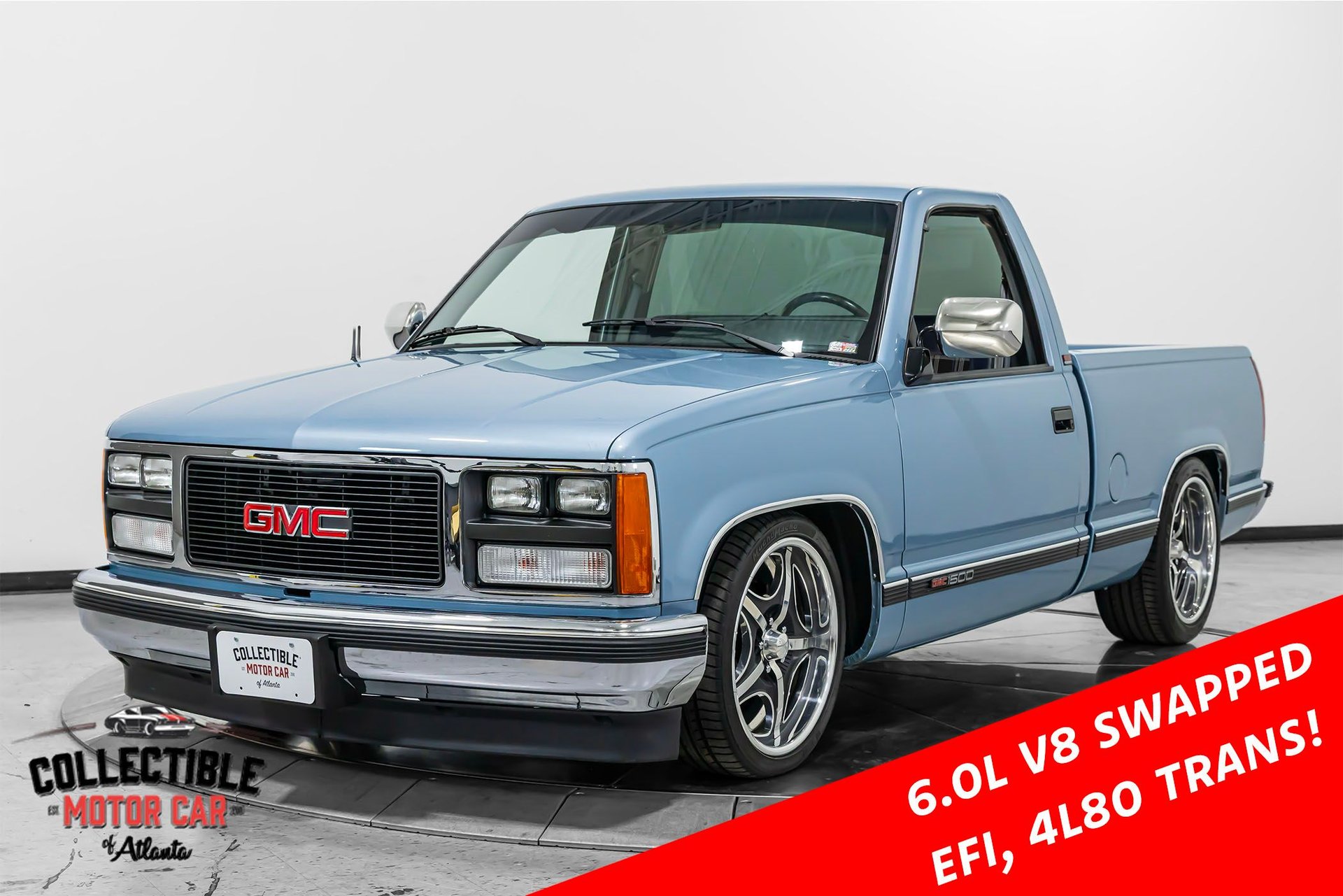
Engines and gearboxes
Sixes, the GMC V6, and the 4.3
The six-cylinder story divides into three chapters, and which one you are looking at tells you how the truck will drive and what it will cost to keep.
Earliest trucks use Chevrolet's inline sixes — the 230 and, far more commonly, the 250 — plus, on GMCs only, the GMC V6 family. That V6 is the interesting one. Offered in 305 cubic inch form in most half-tons, it is a big, heavy, low-revving 60-degree V6 built for torque and longevity rather than speed, with a sound unlike anything else in the range. It is tough, it pulls from idle, and it drinks fuel in a way that surprises even small-block owners. Parts are the issue: service items exist, but engine-specific components are a specialist search, and a tired GMC V6 is a far bigger project than a tired 250 six. Buy one because you want it, with your eyes open, not because the truck around it was cheap.
The Chevrolet 250 six most six-cylinder Action Line and Square Body trucks carry is the opposite proposition: slow, unstressed, and almost impossible to kill with oil in it. It makes its power low down and cruises at highway speed only with patience and the right axle ratio. Check any inline six for exhaust manifold cracks, a worn distributor drive and oil leaks from the side covers — all cheap — and for a noisy bottom end, which is not.
From 1985 the six-cylinder volume engine is the 4.3-litre V6, a 90-degree V6 derived from the small-block with two cylinders removed. In carburetted form, then throttle-body injected, then as the Vortec 4300 from 1996, it powered the majority of working GMT400s and many late Square Bodies. It is a good engine: strong enough for an unladen truck, coarse at high revs, and hard on the same ancillaries as the V8s it shares parts with. Early non-balance-shaft versions vibrate more; balance-shaft engines from the early 1990s are smoother. Its signature failure is the same as on the Vortec V8s — intake gasket failure letting coolant into the oil or out of the engine, covered below. A 4.3 truck is not a failed V8 truck. It is a cheaper, lighter truck that will do most jobs, and the market prices it lower for no mechanical reason that should worry a buyer who does not tow heavy.
The small-block V8s: 305, 350, and the rest
The heart of the C1500 is the Chevrolet small-block V8, and the 350 cubic inch — 5.7-litre — version is the engine this guide, and the market, is really about. It appears in every generation from the late 1960s on, in carburetted, throttle-body and Vortec forms, and its virtues are constant: compact, torquey, tolerant of neglect up to a point, and supported by the deepest parts supply of any engine on earth. A healthy 350 starts easily, idles evenly, pulls without hesitation and shows steady oil pressure. Blue smoke at start-up that clears is valve stem seals — common, liveable, fixable. Blue smoke under load is rings or bores. A top-end rattle that never fades is valvetrain wear. None of this is exotic, and that is the point.
The 305 — 5.0-litre — is the same engine with a smaller bore, sold in huge numbers as the economy V8. It is smoother than its reputation and weaker than a 350 by enough to feel when towing or climbing, and it suffers one specific trap: because it looks identical to a 350 from the top of the engine bay, trucks are routinely described as 350s that are 305s, by sellers who may not know themselves. The eighth digit of the VIN on fuel-injected trucks, the casting number on the block flange behind the left cylinder head, and the glovebox label's engine code settle it. Never pay a 350 price for a truck you have not verified. The same check catches the opposite swap — a later 350 dropped into a 305 truck — which is a bonus if done well and a wiring and emissions question if not.
Around those two sit the period options. The 307 of the early Action Line years is mild and durable, now hampered by thin specific parts support. The 400 small-block, offered in the 1970s, gives big torque from siamesed bores and runs hotter by design; overheating history matters on a 400 more than on any other small-block, and a badly overheated 400 is a rebuild, not a service. The 454 big-block — the 7.4 — was a factory option in Square Body half-tons in the 1970s and appears in many swaps. It transforms the truck and the fuel bill together and adds real weight over the front axle. A factory 454 C1500 is a documented rarity worth verifying; a swapped 454 is worth exactly the quality of the swap.
Three fuel systems divide the small-blocks, and they matter more than displacement.
Carburettors, to 1986. Most trucks use Rochester Quadrajet four-barrels or two-barrel variants. A Quadrajet that is right is excellent — small primaries for economy, huge secondaries for power. A Quadrajet that is wrong is usually wrong for one of three reasons: worn throttle-shaft bores leaking air at idle, a choke system misadjusted through years of cold-start complaints, or fuel inlet and float problems made worse by modern ethanol fuel attacking old needle tips and hoses. The test is a true cold start and a hot restart, not a warm idle arranged before you arrived. Budget for a proper rebuild as a skilled job, roughly $400 to $900 for the rebuild itself depending on wear, before you price a cheap carburetted truck as a bargain.
Throttle-body injection, TBI, 1987 to 1995. Two injectors in a throttle body, an in-tank electric pump, and a simple computer. This is the sweet spot for many buyers: it self-adjusts for cold starts and altitude and its failures are legible. The system wants about 9 to 13 psi of fuel pressure, and a tired in-tank pump that still runs but cannot hold pressure gives the classic symptoms — long cranking, a lean stumble on acceleration, a truck that idles acceptably and falls over under load. Test pressure before replacing sensors. The other repeat offenders are a failed coolant temperature sensor telling the computer the engine is permanently cold, vacuum leaks from perished hoses and the throttle-body base gasket, and a gummed idle air control valve. All are cheap parts. Diagnosis is the cost, and a seller who has replaced half the sensors chasing a fuel-pressure fault has left you the receipts to prove it.
Vortec, 1996 to 2000. The L30 305 and L31 350 Vortec engines bring better heads, higher compression and central sequential fuel injection — a central injector assembly feeding poppet nozzles at each port, at roughly 60 to 66 psi. They are the strongest, cleanest small-blocks in the range and the nicest to drive. They have two signature faults. The first is the injector assembly itself: poppet nozzles stick and clog, especially on trucks that sit, giving a misfire and a rich smell; the proper fix is the upgraded multi-port conversion assembly, roughly $600 to $1,200 in parts depending on source, plus labour, and it is a permanent improvement rather than a repair you will repeat. The second is the lower intake manifold gasket, whose plastic carrier and sealing beads fail with age and coolant chemistry, leaking coolant externally at the front corners or internally into the valley and oil. Milky oil, unexplained coolant loss or a sweet smell at the front of a Vortec engine means the gaskets until proven otherwise, and the job — roughly $700 to $1,400 at a shop — should be priced into any Vortec truck without a receipt for it. Distributor wear is the third item: the plastic housing and drive gear wear on high-mile Vortecs and set a cam-retard error that shows as hard starting; it is a known job, not a mystery.
Diesels and gearboxes
Most C1500s are automatics, and the automatic's identity changes by generation. Square Bodies use the three-speed Turbo-Hydramatic family — the TH350 in most half-tons, the stronger TH400 behind big-blocks and heavy options — and, from 1982, the 700R4 four-speed overdrive automatic. The TH350 and TH400 are simple, strong and cheap to rebuild, roughly $1,800 to $3,200 for a quality rebuild and fitting depending on region. The 700R4 gives an overdrive top that transforms highway cruising, but it lives or dies by its throttle-valve cable adjustment: that cable does not merely control kickdown, it controls line pressure, and a misadjusted or disconnected cable can burn the box in a short drive. On any 700R4 truck, check the cable is present, connected and correctly set, and that shifts are firm without flaring. A soft, sliding 2 to 3 shift is a rebuild conversation.
GMT400 trucks begin with the 700R4, renamed 4L60, and move to the electronically controlled 4L60E from 1993 — the box in most trucks in today's pool. When healthy it shifts cleanly and locks its converter on the highway. Its wear signs are a delayed or harsh 1 to 2 shift, shudder as the converter locks, flaring on the 2 to 3 shift, and fluid that is brown and burnt rather than red and sweet. A full rebuild is the standard fix, roughly $2,200 to $3,800 fitted, and documented recent work is worth a real premium because almost every high-mile GMT400 will need it once. Manual gearboxes — the three-speed column shift on early trucks, the heavy SM465 four-speed with a crawler first gear on Square Bodies, and the lighter five-speeds on GMT400s, ending with the New Venture NV3500 — are in the minority. Judge a manual on clutch bite and judder, synchromesh into second and third, and whine in overdrive on a five-speed. An SM465 is nearly indestructible and shifts like it; an NV3500 is pleasant until its synchros tire.

Problem areas
Everything mechanical on a C1500 can be fixed with parts that exist, at prices you can look up before you buy. The trouble is concentrated in three places: the structure rust eats, the systems that fail when a truck sits, and the accumulation of small jobs a working truck collects. Work through this section in that order — body first, fuel and brakes second, cosmetics last. Our own photo-note sample for this model is small — only 4 trucks examined in detail — so treat it as a prompt, not a census: in that small set, rust was mentioned in 1 truck, leaks in 1, and visible damage in 2. The patterns below come from the generations themselves, not from extrapolating that sample into percentages it cannot support.
Rust: the map
Rust on a C1500 follows water, salt and trapped mud, and each generation has its own version of the same map.
Cab corners, rocker panels and door bottoms. This is the Square Body and GMT400 headline, and it is structural enough to decide a purchase. The cab corner behind each door traps mud thrown up by the rear wheel and rots from the inside out; by the time the paint bubbles, the inner panel is usually gone as well. Rockers rot along their full length, worst at the front where road spray concentrates, and door bottoms go along the hem flange where the drain holes block. Press hard, look from underneath with a torch, and distrust fresh underseal or fresh paint low on a cab more than honest surface rust higher up. Repair panels are cheap; the cost is labour and paint. One cab corner and rocker done properly — cut out, welded, sealed and painted — runs roughly $800 to $1,800 per side at a shop, and both sides plus door bottoms is a common first-year bill on a truck bought for its engine. A cab that needs corners, rockers, floor supports and doors at once is a restoration, not a driver, whatever the asking story says.
Floor pans and cab mounts. Water enters past tired windshield seals, cowl vents and door seals, then sits under rubber mats and sound deadening. Lift the mat on both sides. Surface scale is treatable; perforation around the cab mounts is not cosmetic, because the mounts locate the cab on the frame and a rotted floor lets the cab move, squeak and crack its mounts. GMT400 extended cabs add a rear cab floor and rear mounts sellers rarely photograph. Cab mount rubbers themselves perish and compress on every generation, giving a truck that sits visibly corner-down and knocks over bumps; a mount kit is cheap parts and moderate labour, roughly $400 to $900 fitted for a set, and it transforms a sloppy truck. Rotted steel under the mounts is the expensive version of the same symptom.
The frame. Surface rust on a frame is normal and, in dry-state trucks, often the whole story. The failures that matter are perforation and cracking: at the steering box mounting on Square Bodies and GMT400s, where the box's leverage works the rail and cracks radiate from the bolt holes; around the rear spring hangers and shackle mounts; at the crossmembers under the bed; and, on Action Line trucks, at the rear trailing-arm crossmember and the trailing arms themselves, which rust from inside. A steering-box rail crack is a known repair — weld and reinforce with a plate kit — but it must be found before you buy, because a truck that wanders and clunks may be priced as needing an alignment when it needs fabrication. Any frame perforation near a suspension or steering mount is a walk-away for a driver purchase. Never judge a frame from listing photographs.
Bed floor, wheel arches and front fenders. Steel beds rust in the floor ribs where water and load abrasion meet, over the wheel arches where mud packs behind the lip, and at the front panel where grit collects against the cab. Wood bed floors on early step-bed trucks rot and are replaceable as a kit, but the steel strips and cross sills underneath rust too, so lift what you can. Front fenders go behind the wheel and at the lower rear corner; inner fenders and the radiator core support rot at their lower mounts and around the battery tray, where acid helps the water along. The battery tray itself is a five-minute check that tells a longer story: heavy corrosion there, down the inner fender and onto the frame below, means years of leaking batteries and inattention. None of these panels alone kills a truck. Together they are how you read whether a shiny truck is restored or painted — look for overspray on rubbers, filler at arch lips with a cloth-wrapped magnet, and panel gaps that change along their length.
Suspension, steering and brakes
A C1500 front suspension is independent on every generation here — coils and control arms, with ball joints, bushings and a recirculating-ball steering box doing work designed for bias-ply tyres and lower speeds. Wear is therefore normal, budgetable, and easy to mistake for something worse.
On Action Line trucks the rear trailing-arm system is the special check: trailing-arm bushings, the panhard rod and its mounts, and coil springs that sag with age. Leaf-spring rear ends, standard on Square Bodies and GMT400s, ask for cracked leaves — usually the main leaf at the eye — tired shackle bushings, and leaking shock absorbers. A truck low at the back under no load usually needs both rear springs or has been overloaded into submission, and the bump-stop witness marks will tell you.
Ball joints and control-arm bushings are the front-end bill. Upper and lower ball joints, idler and pitman arms, tie-rod ends and the steering box wear as a system, so a truck that wanders, follows road crown and clunks over broken pavement may need the set rather than a single part. A full front-end refresh with quality parts — joints, bushings, steering linkage and an alignment — runs roughly $1,200 to $2,500 fitted depending on generation and region, and it is the most satisfying money you can spend on a loose truck. Do the test properly: with the front end loaded and then unloaded as the joint design requires, rock each wheel and watch the joint, not the tyre. And grease what can be greased before condemning it; dry joints feel worse than worn ones.
Brakes are discs at the front throughout, drums at the rear on almost everything, with rear disc conversions common as modifications. The standard recommissioning list after years of sitting is seized front calipers, perished flex hoses, a corroded master cylinder, and rear wheel cylinders weeping into the drums. A full hydraulic refresh — calipers, hoses, cylinders, master, fluid and friction parts as needed — runs roughly $800 to $1,800 fitted, and it is not optional money on a truck that has stood. ABS arrives on GMT400s, first rear-wheel only and then four-wheel systems; a lit ABS lamp is usually a wheel-speed sensor or its wiring, but on later trucks the brake control module's solder joints fail and give an intermittent lamp — a module repair service is far cheaper than a new unit. Judge pedal feel, stopping straightness and disc condition on the drive, and budget the refresh if there is no receipt.
Drivetrain, fuel and cooling: the sitting-truck failures
More C1500s are bought as non-runners or poor runners after storage than in any other condition, and the causes repeat so reliably that you can work through them in order.
Fuel first. Steel tanks rust inside, in-tank pumps fail after sitting in old fuel, rubber hoses perish with modern ethanol fuel, and tank selector valves on dual-tank Square Bodies stick or cross-feed — a dual-tank truck that returns fuel to the wrong tank and overfills it has a valve or wiring fault, not a mystery. Sending units lie on almost every generation, so a fuel gauge reading is a suggestion, not evidence. On TBI trucks, test fuel pressure before anything electronic, as the engines section explains. On Vortec trucks, add the injector assembly and intake gaskets to the top of the list. A full fuel-system recommissioning — tank cleaned or replaced, pump, filter, hoses and an injector or carburettor service — runs roughly $900 to $2,200 depending on how far you have to go, and it is the difference between a truck that starts for the seller's demonstration and one that starts for you in February.
Cooling second. Radiators silt, heater cores block and leak onto the passenger floor, water pumps weep, and viscous fan clutches freewheel when they should drive. Vortec intake gasket failure is also a cooling symptom — unexplained coolant loss on a 1996 to 2000 truck is gaskets until proven otherwise. Any small-block overheated hard and repeatedly is a head-gasket and warped-head conversation; oil in the coolant, coolant in the oil, or bubbles in the radiator with the cap off and the engine running settle it on the spot. A radiator, pump, hoses, thermostat and fan clutch as a preventive set is roughly $600 to $1,300 in parts and labour — cheap insurance against turning a good engine into a rebuild.
Oil leaks third, because they are universal and mostly honest: valve-cover gaskets, the rear main seal, the oil-pan gasket and a weep owners have lived with for decades. Distinguish a weep that marks its parking space from a leak that lowers the level between fuel stops. The first is a trait to monitor; the second is a job to price. Transmission fluid leaks from the pan, front pump seal and cooler lines follow the same rule. In our small photo-note set, leaks were mentioned in 1 of the 4 trucks examined — a reminder to look, not a rate to quote.
Interior, electrics and the cost of small things
The cab is where a C1500 shows its working life, and where a buyer can spend a surprising amount making a mechanically sound truck pleasant.
Seats are benches in most trucks, buckets and a console in higher-trim GMT400s. Foam collapses on the driver's outer bolster first, vinyl splits along its seams, and cloth wears through where a driver slides in — sit in the driver's seat and feel for the frame through the pad, because a re-trim or a good replacement seat is real money on a later truck, and a seat cover in the listing photos is there for a reason. Square Body foam and covers are well reproduced; GMT400 extended-cab rear seats are harder to source in matching trim.
Dashboards crack in the sun, GMT400s worst of all across the top pad, and the 1995-on interior — the desirable one — has its own list: glovebox latches, window switches and door pulls that break in ways individually trivial and collectively irritating. Window regulators slow and fail, and door hinge pins and bushings wear until the door drops and must be lifted to latch — a cheap kit and a clear test: open the door halfway and lift it at the rear edge. Play there is hinges, and a door dropped for years wears its latch and striker too.
Heating and air conditioning decide whether a truck gets used. Heater cores leak and block on every generation, and on GMT400s the core is a dashboard-involved job — budget roughly $800 to $1,500 fitted if it weeps or the heat is poor and the coolant side is proven good. Blend-door actuators on GMT400s click, stick and leave a truck blowing hot on one setting and cold on another. Air conditioning on older trucks was built for R12; most survivors have been converted to R134a with varying honesty, and a converted system with a tired compressor, clogged orifice tube and perished hoses is a rebuild, roughly $900 to $1,800 for compressor, dryer, orifice device, hoses as needed and a charge. Test the air conditioning on every viewing, whatever the season, and treat a seller's recharge as a leak announcement, not a service.
Electrics fail at grounds, switches and motors rather than in looms. GMT400 window motors, lock actuators and wiper motors are consumables at this age; the wiper module's circuit board develops cracked solder joints and gives wipers with a mind of their own, and a repaired board fixes what a new motor will not. Square Body fusible links, bulkhead connectors and headlamp switches give dim lights and intermittent feeds that clean grounds and a new switch cure. Gauges lie for known reasons: fuel senders as above, oil-pressure senders that fail low and frighten sellers into honest descriptions of a healthy engine, and temperature senders that read whatever they like. Verify oil pressure with a mechanical gauge before you discount a truck for it — and the same way before you pay full price for a claimed low-pressure engine. None of these jobs is large. Fifty of them are — and a truck where everything electrical works has almost always been a truck in regular use, which remains the best single predictor of a good buy.
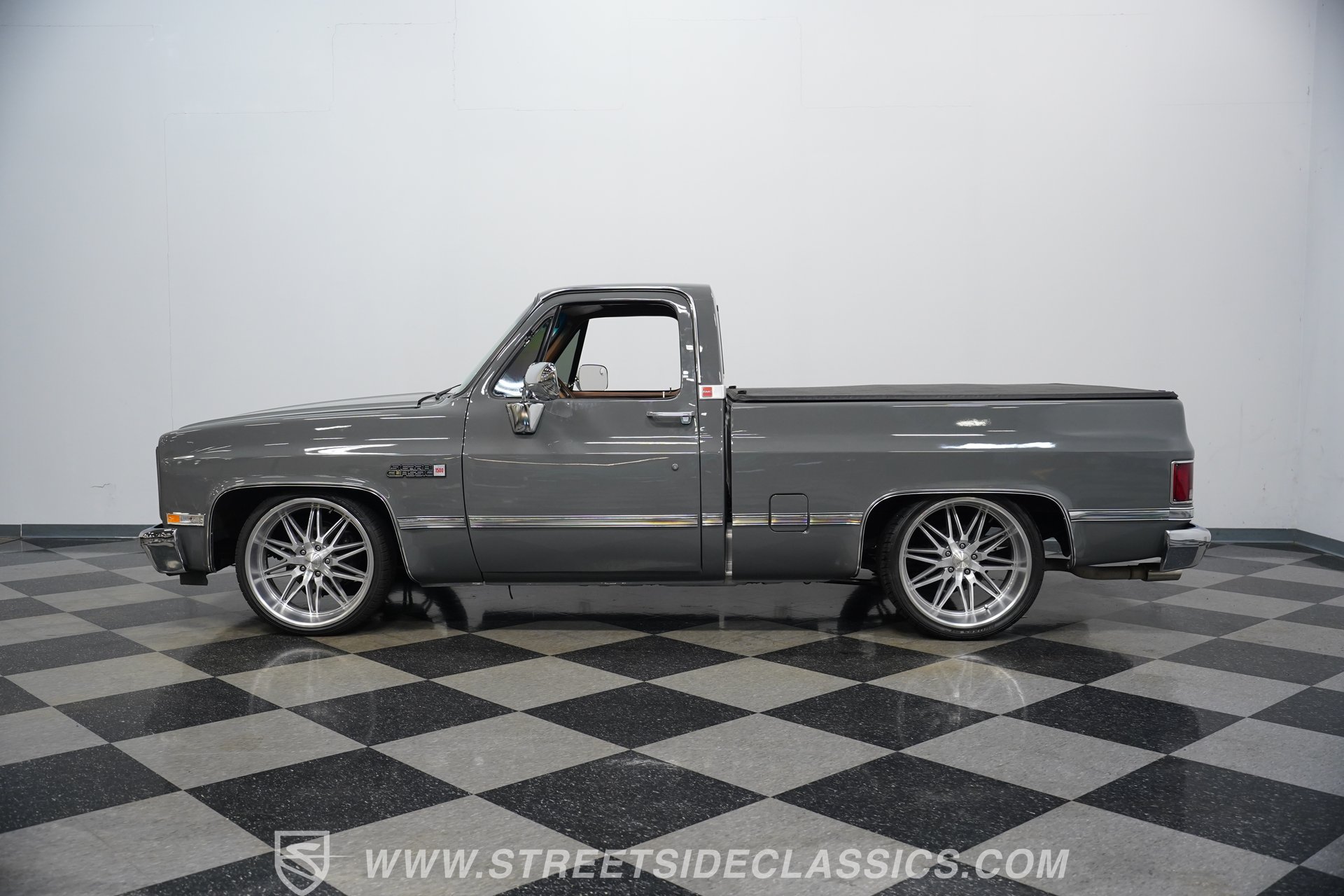
How to inspect one
Allow a full hour, bring a torch, a cloth-wrapped magnet, a tyre-pressure gauge and a cheap code reader if the truck is a 1996 or later model with an OBD-II port. Insist on a cold engine when you arrive. If the truck passes you, pay for a lift inspection before money changes hands — on a truck whose value lives in its frame and cab mounts, it is the best money in the whole purchase.
- Start with paperwork and identity. Match the VIN on the title to the plate on the dashboard or door jamb, depending on year, and to the frame stamping where accessible. Open the glovebox and read the service-parts label: engine code, axle ratio, paint and trim are all there on Square Body and GMT400 trucks. Check the engine against the label — the 305 and 350 check from the engines section — and treat a missing label, a mismatched VIN or a story that changes as a stop, not a negotiation.
- Cold start. From stone cold, a carburetted truck should start with its choke procedure and settle as it warms; a TBI truck should fire at once and hold a fast idle that steps down; a Vortec should start cleanly with no misfire or rich smell. Watch for blue smoke at start-up, blue smoke under a blip of the throttle, and white smoke that does not clear — seals, rings and head gaskets, in that order of cost. Listen for a top-end rattle that stays, and for an exhaust tick that fades as a manifold warms.
- Under the hood, fluids first. Pull the engine dipstick: level, colour, and any milky emulsion or fuel smell. Open the coolant filler cold: rusty water, oil film or bubbling on a running engine each tell their story. Check the transmission fluid — red and sweet is health, brown and burnt is a rebuild priced into the offer. Look at the battery tray, inner fenders and brake master cylinder for leaks, then follow every rubber hose you can see for perishing.
- Frame and underside. Torch along both frame rails, the steering-box mounting, the spring hangers, the crossmembers and, on an Action Line truck, the trailing arms and their crossmember. Perforation near any steering or suspension mount ends the inspection for a driver purchase. Read the coating as you go: honest, patchy factory protection is reassuring; a fresh, uniform black coat over everything, fitted for the sale, is a question.
- Cab structure. Press the cab corners from outside and look at them from behind and below. Work along both rockers, open both doors and check the bottoms and the hinge play, then lift the mats and prod the floors, especially around the cab mounts. Check the windshield surround and cowl for bubbling and fresh sealant. This step, with step 4, decides whether the truck is a driver, a project or a parts source.
- Bed and rear body. Lift any bed liner or mat. Check the bed floor ribs, the wheel-arch lips with the magnet, the front bed panel and, on a step-bed truck, the wood and the cross sills beneath it. Operate the tailgate — bent hinges and a gate that will not latch level tell you how the truck has been loaded. Check the rear bumper mounts and the spare-tyre carrier, which rust in silence.
- Suspension and steering, stationary. Rock each front wheel and watch the ball joints and linkage as the problem-areas section describes. Turn the steering lock to lock at idle: groans are pump or fluid, clunks are linkage or box mount, and a dead band in the centre is box wear or a loose coupling. Push down hard on each corner and watch the rebound — one bounce and settle is a working damper. Read all four tyres for uneven wear, age cracks and mismatched sizes, and check the date codes, not just the tread.
- The test drive. Fifteen minutes minimum, including a highway stretch, a rough surface and a tight car park. The automatic should engage drive and reverse without a long pause or a thump, shift firmly without flaring, and, on an overdrive box, lock its converter and hold top gear without shudder. A manual should take second gear cleanly. Listen for axle whine under load and on the overrun, and for a clunk taking up drive.
- Brakes and stopping. Brake firmly from speed, hands light on the wheel: the truck should stop straight, without judder, pull or a pedal that sinks or pulses. Test the parking brake on a slope — rear drums out of adjustment announce themselves here. After the drive, feel each front wheel for the excess heat of a dragging caliper and look for fresh fluid at the rear drums.
- Heat, cooling and electrics under load. Let the truck idle hot after the drive. Watch the temperature stay stable, confirm the fan clutch or electric fans actually work, and run the heater hot and the air conditioning cold on every fan speed, whatever the weather. Work every window, lock, wiper speed, washer, light, horn and gauge. On a 1996 or later truck, plug in the code reader: stored misfire codes confirm the Vortec checks in the engines section, and a recently cleared light with no drive cycle completed is information in itself.
- Stance and shut-down. Stand back and look at the truck level from front, rear and both sides: it should sit even, with no corner down. A corner down is a spring, mounts or frame question from steps 4 and 5, not a mystery. Switch off, wait five minutes, and restart hot — hot-start behaviour exposes fuel-pressure and sensor faults a cold start hides. Look underneath one last time for fresh drips on clean ground.
- Interior and history last. Sit in the driver's seat and feel for collapsed foam, work the seat belts, check the spare, jack and tools, and then read whatever history file exists. Receipts for a transmission rebuild, Vortec intake gaskets, a fuel pump or front-end work are worth money in that order on a GMT400, and a thick, dated file on any generation is the strongest evidence that the deferred-maintenance list will be short.
Values
The build below this guide carries the live market for the C1500 — trucks listed now and recorded sales, refreshed with the listings. This section teaches you how to read it, because a single figure means nothing until you know which truck, in which condition, is being priced.
The condition spread is the widest of any common classic truck, and it is driven by structure, not specification. At the bottom sit parts trucks and rusted work trucks: perforated cabs, tired drivetrains, titles with stories. In the middle sit honest drivers — sound frames and cabs, mechanical needs with receipts or with room in the price, interiors that show work but hold together. At the top sit two kinds of truck that should not be confused: genuinely original, documented survivors, and fully restored or carefully modified trucks whose cost to replicate far exceeds what the market will return. The gap between a driver and a top truck is not a percentage. It is a multiple, and almost all of it is cab, frame, paint and interior — the things this guide keeps telling you to buy first — rather than engine or trim.
Generation drives the second spread. Action Line trucks carry a classic premium for shape and scarcity in good condition, and short-bed trucks carry it most. Square Bodies have risen as a generation, and the best of them — rust-free, short-bed, well-optioned, and above all the injected 1987 — sit in a different market from a rusted long-bed work truck of the same decade. GMT400s are still priced substantially as used trucks at the bottom and increasingly as classics at the top, which is why their spread looks irrational until you sort by condition and cab: a tired extended cab with a failing transmission is used-truck money, while a clean, documented, short-bed Vortec truck with its intake gaskets and transmission already done is bought by someone who has priced those jobs. The 1995 interior change and the 1996 Vortec change both show in what buyers will pay for. Most buyers feel the Vortec difference on the test drive and only learn the interior difference later, so well-presented 1996 to 1998 trucks tend to be fought over more than their 1995 equivalents in the same condition.
Asking prices and achieved prices part company predictably. Private sellers of working trucks often price from what a restored truck achieved; auction results for comparable condition are the corrective, and the recorded-sales block below this guide is the place to apply it. Modified trucks are the hardest to read: a documented build with quality parts holds an audience, an undocumented build is worth its base truck plus a fraction of its parts, and no modification recovers its full cost. Factory correctness pays on Action Line trucks and on documented survivors of any generation. On a working Square Body or GMT400 driver, correctness pays far less than condition, and a well-done, honestly described engine swap should not frighten you if the paperwork and the workmanship agree.
Negotiation reality is simple because the jobs are priced and known. Add the work from the problem-areas section, with labour, and negotiate from the total cost of the finished truck, not from a percentage off the ask. A project restored panel by panel almost always costs more, finished, than the good driver that looked expensive on the day. There is no cheap C1500 that stays cheap if the cab and frame are gone.
Parts and ownership
The C1500 is one of the best-supported classic vehicles in America, for a simple reason: General Motors built these trucks in the millions across Chevrolet and GMC, the mechanicals were shared across cars and trucks for decades, and the aftermarket followed the volume. A GMC buyer shares almost all of that support. The GMC-specific parts are grilles, badges, trim and some early engine components; everything structural, mechanical and electrical underneath is common, and that commonality is the ownership proposition.
Easy: service items for every engine in this guide — filters, plugs, belts, hoses, water pumps, alternators, starters. Brake discs, pads, drums, shoes, calipers and hydraulics. Suspension and steering wear parts, shocks, springs and cab-mount kits. Small-block engine parts at every level from gaskets to complete crate engines. Transmission rebuild parts and complete remanufactured units. Rust-repair panels for Square Body and GMT400 cabs, beds and fenders, in steel, at prices that make welding viable. Glass, seals and weatherstrips for the common cab and bed combinations. Order today, fit this weekend, at prices close to modern-truck money is a fair description of most of that list.
Harder and dearer: GMC V6 engine-specific parts for the early trucks, which are a specialist and used-parts search. Correct trim for low-volume combinations, especially GMT400 extended-cab rear trim in the right colour. Good original dashboards for sun-cracked GMT400s. Factory 454 and diesel-specific components. And quality paint and body labour itself — now the largest single cost in returning any rusted truck to a high standard, and the reason this guide weights structure so heavily.
Running costs. A sorted C1500 is a realistic regular-use classic and, for many owners, a working truck still. Fuel consumption is period truck consumption — a 4.3 or a gently driven TBI 305 is the economy end, a carburetted big-block or a GMC V6 is the other, and no example should be bought expecting modern figures. Servicing is within the ability of any competent general shop and most home mechanics: the engines predate complex diagnostics until the Vortec years, and even those yield to a code reader and a factory manual. Insurance is conventional classic or regular-use cover depending on how you use it. The budget line that catches new owners is the first year of deferred maintenance: on a running, driving truck with no recent receipts, allow honestly for tyres, a brake hydraulic refresh, fluids throughout, and at least one of the generation's signature jobs — a fuel pump, a front-end refresh, intake gaskets on a Vortec, a heater core — before you improve anything. A truck that has sat for years costs more to recommission than a truck in regular use costs to buy at a higher price, in time as reliably as in money. Buy use and receipts over storage and promises, and the ownership that follows is as straightforward as classic motoring gets.
Which one to buy
- The all-rounder: GMT400 Sierra C1500, 1996 to 1998, regular cab, 350 Vortec. The strongest engine in the best cab, with the transmission and intake-gasket jobs either documented as done or priced in. If you want one C1500 to drive, tow lightly and keep, this is it.
- The value buy: GMT400 TBI truck, 1988 to 1995, 305 or 350. Simpler fuel system, cheaper to buy, cheaper to diagnose, and barely slower in real use than the Vortec for most owners. A sorted 1995 adds the better interior to the simple engine — the connoisseur's value pick inside the generation.
- The classic: Action Line short bed, 1967 to 1972, small-block V8. The shape, the ride and the rising market. Buy it for the generation, verify the trailing-arm structure, and accept period brakes, steering and economy as part of the contract.
- The Square Body pick: 1987 regular cab, short bed, fuel-injected 350. The old shape with the modern fuel system, and the most usable Square Body of all. A rust-free 1981 to 1986 carburetted truck in better condition is the smarter buy than a rusty 1987 at the same money — condition still outranks the specification.
- The work truck: Square Body or GMT400 long bed, honestly presented. Cheaper because the market wants short beds, stronger value if you actually haul, and the place where a documented transmission rebuild and a sound frame matter more than paint. Buy the receipts, not the shine.
- The one to want carefully: factory big-block, diesel, or GMC V6 trucks. Each is interesting, each is a specialist purchase, and each punishes a casual buy. Verify factory fitment from the label and VIN, verify cold starting in person, and walk away from any example whose special engine is its only defence against a rusted cab.
And the rule that overrides all of the above: buy the least rusty cab and the soundest frame you can find, in the generation and specification you can live with. Engines, transmissions, brakes, fuel systems and interiors are all fixable at prices you can plan for, from parts that exist, by people who have done the job before. A rotted cab on a cracked frame costs more to put right than the finished truck will be worth — and it is the one part of a C1500 that no receipt can make original again.
See the 80 1500 Regular Cab Short Bed cars currently listed.