
GMC Sierra (Classic) 1500 Regular Cab buyer's guide
GMC Sierra (Classic) 1500 Regular Cab -- the model's own buyer's guide: variants, values and what to check.
Years listed: 1968-1987 · Series: C/K Trucks
Overview and history
The GMC C10 is the half-ton, two-wheel-drive pickup GMC built, in three distinct generations, from 1960 to 1987 — and for most of that run it was, under the skin, the twin of the Chevrolet C10. That sentence needs qualifying immediately, because the twinship changed over time, and the differences are exactly what make a GMC worth seeking out rather than settling for. In the early 1960s a GMC was genuinely a different truck where it mattered most: under the hood, where GMC fitted its own big V6 that Chevrolet never offered, and in a dealer network that sold trucks alongside commercial vehicles rather than family sedans. By the Square Body years the two trucks had converged almost completely — same cabs, same frames, same Chevrolet-designed engines — and what separated a GMC Sierra from a Chevrolet Silverado was the grille, the badges, the trim names and, often, the kind of first owner who chose it. Neither version makes the GMC the lesser truck: GMC buyers tended to be truck people buying from truck dealers, and survivors often show it.
The naming needs untangling first. Chevrolet called its half-ton the C10; GMC badged its equivalent as the 1000 series in the 1960s and then as the C1500, the 1500 denoting the same half-ton class in GMC's numbering. Sellers and the hobby simply call all of them GMC C10s, and this guide does the same. When you inspect a truck, expect the badges and title to say 1000, 1500, Sierra or High Sierra rather than C10 — do not let that talk you out of a truck, or into thinking you have found something rarer than you have.
Three generations divide the run cleanly. The 1960–66 trucks are the curvaceous ones: a low, wide cab, a wraparound windshield on the early cars, and that GMC-only V6. The 1967–72 trucks — the Action Line — are the ones the market loves most: clean, straight-edged styling, a car-like interior in the higher trims, rear suspension that rides far better than a period Ford, and the full range of Chevrolet small-block and big-block V8 power. The 1973–87 Square Body trucks (GM called the line the Rounded Line, a name nobody outside the factory used) are the longest-lived and most numerous: squared-off styling, a bigger cab, power steering and front disc brakes as normal equipment, and a run so long that the last of them, in 1987, were sold as the R1500 because the C name was being handed to the new GMT400 trucks for 1988.
The market on this site tells the story of what actually survives and trades. We currently track 23 GMC C10s, all offered for sale, spanning 1968 to 1987 — no first-generation 1960–66 trucks in the current listings at all, which is typical: the early trucks are thinner on the ground everywhere, and GMC V6 survivors thinner still. The listings split between Action Line trucks of 1968–72 and the Square Bodies that make up the majority. Blue and red recur most often among the colours recorded, with tan, grey and white behind them. Fifteen of the 23 come from Marketplace sellers and the rest from dealers, concentrated in Ohio and North Carolina among the states recorded. Almost every truck currently listed is an automatic, which matches the wider market: manual C10s exist in real numbers, but sellers of automatics dominate the listings.
Why buy the GMC rather than the Chevrolet? Because the early V6 trucks are a genuinely different experience no Chevrolet can match, because GMC trim names such as Sierra and Sierra Grande often mark the best-equipped trucks of their year, and because the Chevrolet badge carries the bigger nostalgia premium — a like-for-like GMC has often traded at a small discount to its twin, making it the value route into the same parts support and the same truck. The sections that follow treat the GMC on its own terms: what differs, what breaks, and what to check before you pay.

The models
Every C10 is a half-ton, rear-wheel-drive pickup on a separate ladder frame, but within that simple sentence sit three generations, two bed lengths, two bed styles, three cab-related choices in the later years and a trim ladder that changed names often enough to trap the unwary. Work through the generations first, because parts, rust patterns and values all follow the generation, not the badge.
| Model | Years | Engine highlights | Output | Built | Character |
|---|---|---|---|---|---|
| 1000 series (early C10) | 1960–1966 | GMC 305 V6; inline sixes | about 150 hp (305 V6) | not reliably published by model | The distinct GMC: own V6, wraparound glass on early cars |
| C1500 Action Line | 1967–1972 | 250/292 sixes; 307, 350, 402 V8s; GMC 351 V6 early | 155–300 hp depending on engine | not reliably published by model | The collector favourite; best ride, best looks |
| C1500 Square Body | 1973–1980 | 250/292 sixes; 305, 350, 454 V8s; 5.7 diesel late | varies widely by year and emissions tune | not reliably published by model | Bigger cab, disc brakes, the working classic |
| Sierra Classic / R1500 | 1981–1987 | 305, 350 V8s; 6.2 diesel; throttle-body injection in 1987 | varies by year | not reliably published by model | The last and most usable; overdrive automatics |
A note on that Built column: GMC did not publish clean, trustworthy production breakdowns by model and trim, and the numbers circulating online are often Chevrolet totals, guesses, or both, so this guide leaves the column honest rather than inventing precision. What is certain is scale: GM built these half-tons in the hundreds of thousands, GMC took the smaller share, and survival — not original rarity — is what makes any individual truck scarce today.
The 1960–66 trucks. GMC's version of GM's new 1960 pickup line, badged as the 1000 series. The styling is rounded and low, with a wraparound windshield for 1960–63 and a flatter screen after. The chassis was modern for its day: independent front suspension — torsion bars on the 1960–62 trucks, coil springs from 1963 — and coil springs at the rear on most light models. The headline, though, is the engine: most GMC half-tons of this era carry the GMC 305 cubic inch V6, an engine Chevrolet buyers simply could not order, covered in the engines section. Beds came as the Wideside (GMC's name for the smooth-sided Fleetside style) or the Fenderside (the step-sided bed Chevrolet called Stepside), in short and long lengths. These are the rarest C10s in today's market and the slowest, and the current listings on this site — which start at 1968 — reflect that.
The 1967–72 Action Line. The generation that made the C/K trucks icons: straight-edged, handsome styling, a bigger cab, and an interior in a well-specified truck that feels like a period GM sedan's. GMC badged the half-ton as the 1500 series. The trim ladder ran from Custom up through Super Custom to the Sierra and, from 1971, the Sierra Grande — names that later became GMC's whole identity. One mechanical point separates GMC from Chevrolet here: Chevrolet's half-tons used coil springs and trailing arms at the rear as standard, while GMC fitted leaf springs as standard on many of its half-tons, with the coil setup available. Neither is better in the abstract — the coil truck rides more softly empty, the leaf truck carries weight with less sag — but know which you are looking at, because the rust and wear checks differ and sellers routinely describe a GMC as if it were a Chevrolet underneath. Short-beds are the collector preference and carry the premiums; long-beds were the working trucks and are usually cheaper for the same condition. Front disc brakes arrived for 1971, a genuine safety step worth preferring.
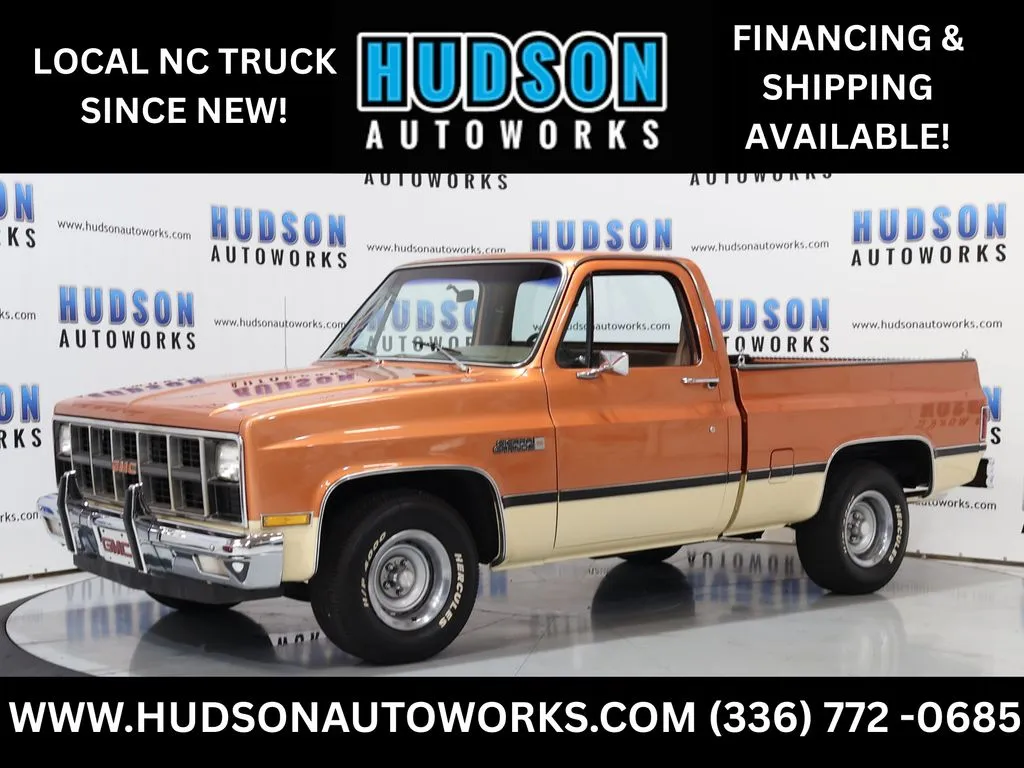
The 1973–87 Square Body. GM's Rounded Line was a bigger, squarer, more comfortable truck, in production for fifteen model years — an eternity that means enormous variation inside one generation. Early trucks (1973–80) run carburetted engines and the classic flat-front styling; a 1981 facelift lightened the truck and sharpened the front end, and the final 1987 trucks gained throttle-body fuel injection and were renamed R1500 for that last year. Trim ran from Custom Deluxe through Sierra and High Sierra to Sierra Classic. Crew cabs existed on heavier chassis and occasionally appear wearing half-ton badges in listings — check the VIN and frame before believing any unusual cab on a claimed C10. The Square Body is the C10 you can most plausibly use as an actual daily truck: parts are everywhere, the cab fits modern humans, and air conditioning, power steering and an overdrive automatic are all findable in the same truck.
Beds, and why they matter. Across all three generations the choice is the smooth-sided bed (Fleetside in Chevrolet language, Wideside in GMC's) or the step-side (Stepside/Fenderside), in short (about 6.5 feet) or long (about 8 feet) lengths. Early beds have wood floors — planks over steel cross sills — while steel floors became the norm later. The wood bed is prettier, more collectible and a maintenance item in its own right; the steel bed is the one to abuse. A short-bed Wideside is the money configuration in the Action Line years, and any truck whose bed style does not match its year and trim story deserves a closer look at the VIN plate, because beds swap easily and often.
Engines and gearboxes
The GMC V6: 305 and 351 (1960–early 1970s)
Start with the engine that makes an early GMC a GMC. In 1960, when Chevrolet's new pickup line arrived with Chevrolet sixes and V8s, GMC instead launched its own engine family: a 60-degree V6 of big-block dimensions and commercial-truck thinking, offered in the light trucks most famously as the 305 cubic inch version and also as a 351, with still larger versions (401 and 478) in medium-duty trucks. The 305 V6 makes roughly 150 hp, but the horsepower figure misses the point: the point is torque, delivered low, from an engine built heavy and understressed — thick castings, a forged crankshaft in the early units, and a reputation in period for outlasting the truck around it. It was designed for trucks that worked, and it drives like it: a slow-revving, grumbling, immensely flexible engine that pulls from idle and is done by the time a small-block Chevrolet is getting interested.
Living with one today is a specialist pleasure. The V6 is smooth in its own agricultural way, sounds like nothing else, and will run for enormous mileages if the oil has been changed. Its weaknesses are thirst — expect consumption that makes a small-block V8 look economical — weight, and parts: engine-specific components take hunting through GMC and vintage-truck specialists rather than a next-day catalogue order. Carburation is a single downdraft unit on most light-truck versions; ignition and cooling are conventional. A V6 truck that starts easily, holds oil pressure and does not smoke is a find, because most survivors have either been swapped for a Chevrolet V8 (common, easy, and a value question — an original V6 truck converted to a 350 is worth less to the GMC faithful than the same truck with its V6 intact) or worked to death. Check the engine before you fall for the truck: the V6 is physically huge, with distinctive wide valve covers, impossible to mistake for a straight six or a V8 once you have seen one photograph of it. An engine swap discovered after purchase is the most expensive surprise an early GMC can give you, and the easiest to avoid.
The 351 V6 appears in the early Action Line years as the bigger GMC option before GMC fell into line with Chevrolet engines at the end of the 1960s. It drives like a 305 with more of everything and is rarer still. Treat any claimed 351 with the same verify-first approach: sellers mislabel 305s, and the difference matters to V6 collectors.
The Chevrolet sixes and small-block V8s (the mainstream)
From the late 1960s onward, and across the whole Square Body run, a GMC C10's engine room is Chevrolet's — which is excellent news for ownership, because these are among the best-supported engines on earth.
The inline sixes. The 250 cubic inch six was the base engine through much of the Action Line and Square Body run, with the torquier 292 as the working six. Both are simple engines that tolerate neglect, leak oil from the side covers and valve cover as a matter of course, and pull a light truck adequately if not quickly. A six-cylinder truck is the cheapest way in and the slowest way everywhere else; many have been V8-swapped, so check the VIN's engine code against the engine in the bay. A 292 is identifiable by its taller block — worth knowing, because sellers advertise 250s as 292s and the 292 is the six people actually want.
The small-block V8s: 307, 305 and 350. The heart of the C10 market. The 307 (1968–73) is a mild, adequate engine nobody seeks out and nobody should fear. The 350 is the one to have: made in enormous numbers, torquey in truck tune, endlessly rebuildable, and supported by the deepest parts catalogue in the hobby. The 305, standard in many Square Bodies, is a smaller-bore emissions-era engine — smoother in period terms, less loved now, and down on power against a 350; a 305 truck should be priced as a 305 truck even if the headline just says V8. All small-blocks share the same inspection logic: blue smoke at start-up that clears is valve stem seals (a known, affordable job); smoke under load is rings and an engine-out conversation; a rattle at start-up that stays is timing chain or worse; oil pressure fading hot at idle on a high-mile engine is wear talking. Carburation is a Rochester Quadrajet on most later trucks — superb when rebuilt by someone who understands it, and a source of flat spots and hot-start trouble when the throttle-shaft bores wear and leak air, which by now most unrestored ones do. Budget for a proper Quadrajet rebuild rather than a cheap replacement carburettor, which usually trades one set of problems for another.
The big-blocks: 402 and 454. Chevrolet's big-block was offered in Action Line half-tons as the 402 (sold in trucks as the 400 in some applications — a muddle that also includes the unrelated small-block 400, so verify by the engine itself, not the seller's words) and in Square Bodies as the 454. A big-block half-ton is a rare, thirsty, charismatic truck with a premium today. Cooling is its tax — a marginal radiator that copes with a 350 will not cope with a 454 in traffic — so on any big-block truck the test drive's hot-idle behaviour matters more than the cold start.
The diesels, and injection finally. Square Bodies were offered late in the run with the Oldsmobile-derived 5.7-litre diesel — best avoided unless the truck is priced as a conversion candidate — and, from 1982, the 6.2-litre Detroit Diesel V8, a simple, economical, slow engine with a loyal following; check one for hard starting (glow plugs and controller), fuel-system air leaks and head-gasket history. The 1987 trucks then brought throttle-body injection on the gasoline V8s, the single biggest usability step of the whole run: an injected 1987 starts, idles and drives like a modern vehicle, in a one-year-only configuration the market has noticed.
Gearboxes
The default C10 gearbox, and the one in nearly every truck currently listed on this site, is the automatic — and there are three you will meet. The Turbo Hydra-Matic 350 (TH350) is the standard three-speed of the Action Line and early Square Body years: strong, simple, cheap to rebuild, and honest in behaviour — shifts should be clean and prompt, with no flare on the 2–3 change and no delay engaging drive or reverse from cold. A TH350 rebuild is one of the best-value jobs in the hobby, in the region of $1,200–2,500 fitted, so a tired one is a negotiation point, not a walk-away. The TH400 is the heavy-duty three-speed found behind big-blocks: even stronger, slightly hungrier, equally rebuildable. The 700R4, arriving in the early 1980s, adds an overdrive fourth and a low first, and transforms highway use. Its weakness is equally well documented: early units were fragile, and the throttle-valve (TV) cable adjustment is critical — a misadjusted TV cable does not just make the shifts odd, it burns the gearbox up, sometimes in a few hundred miles. On any 700R4 truck, ask who set the TV cable and when; shifts should be early and soft at light throttle, firming as you press on. A 700R4 that flares, stacks its shifts or hunts is telling you a rebuild is coming.
Manual gearboxes are the minority taste. The standard manual was a three-speed with column shift — the famous three on the tree — charming, slow and usually worn in the linkage rather than the box: sloppy selection is bushings and adjustment before it is a gearbox. The four-speed that matters is the SM465, a heavy truck box with a very low first for starting loads; nearly indestructible, slow-shifting and honest. On any manual, test second-gear synchromesh on a downchange and feel for clutch judder on a slope; a clutch replacement is a straightforward, budgetable job — roughly $600–1,200 fitted. And note: four-wheel drive is not a C10 at all — C denotes two-wheel drive, K denotes four — so a truck advertised as a C10 with a transfer case is a K10 wearing the wrong name, a different truck with a different market.
Problem areas
A C10's problems divide into the ones that cost money and the one that costs the truck. Rust is the truck-killer, and on these pickups it follows a map so consistent across all three generations that you can walk it on any truck, in order, in about twenty minutes. Of the trucks we have photo-checked in detail for this guide's market, rust already features in the record — and our examined sample is small, so treat that as a floor, not a ceiling: assume rust until the truck proves otherwise. The mechanicals, by contrast, are the best-supported in the classic world, and almost every mechanical fault is a priced job rather than a verdict. Buy the body; the rest is arithmetic.
Rust: the map
Work in this order, from the structural to the cosmetic, and remember the C10's particular trap: these were working trucks, often rustproofed never, washed underneath rarely, and repaired over the decades with whatever was to hand — including filler, fibreglass and, on beds, plywood over rot.
Cab corners. The signature C10 rust spot, on every generation. The rear lower corners of the cab, behind the doors, trap mud and moisture thrown up by the rear wheels and rot from the inside out. Bubbling paint at the cab corner means perforation inside; perforation means a cut-out-and-weld repair with the bed removed or slid back for access. Repair panels are cheap and excellent — the best-supported rust repair in the truck world — and a cab corner fitted and painted runs roughly $400–900 a side. Cheap panels do not make it a small job on a painted truck, though: matching paint on one corner is easy; on a truck needing both corners, both rockers and a bed side it is a respray conversation.
Rocker panels. The sills below the doors rot along their whole length, worst at the ends where they meet the cab corner behind and the front fender ahead. Press hard along the full length, open both doors and look at the inner rocker from the cab step, and be suspicious of fresh stone-chip paint along the bottom edge of an otherwise honest truck — rockers are the first place a quick cosmetic turn-around spends its money. Replacement is well supported with panels, roughly $500–1,000 a side fitted and painted, but rockers plus cab corners plus floors is the point at which a cheap truck stops being cheap.
Cab floor and cab mounts. Water gets in through perished windshield seals, the cowl vents, and — on Square Bodies especially — a cowl and plenum area that collects leaves and holds moisture against the seams. It then sits under the mat or carpet and eats the floor from the top down, which is why C10 floors can be rotten on a truck whose underside looks respectable. Lift the mat in both footwells. Surface rust is a clean-and-treat job; holes around the cab mounts are structural, because the cab sits on the frame at those mounts and a mount pulled through rusty metal is a cab that moves. Mount rubbers perish on every old truck and are a cheap kit; the steel they bolt through is the expensive part. Floor sections are available for all generations, roughly $600–1,500 a side fitted — but price floors as a system: floor, mounts, rockers and corners together are the standard cab restoration, and the labour adds up even when every panel is cheap.
The cowl, windshield surround and drip rails. The base of the windshield and the cowl panel below it collect water and debris; on Square Bodies the cowl side panels and the seams where the cowl meets the firewall are known rot points that leak water down inside the A-posts, which is why some Square Bodies rust at the floor edges and lower door pillars from the inside. Drip rails hold moisture against the roof edge seam. None of this is as well served by repair panels as the corners and rockers — cowl and pillar repairs are fabrication, priced per truck — so rot high up on the cab deserves more caution than rot low down, counterintuitive as that sounds.
Front fenders, inner fenders and the core support. The lower rear corner of the front fender, behind the wheel, is a mud trap on every generation and rots early and often. Inner fenders rot where the battery sits — acid plus trapped dirt — and on Square Bodies the radiator core support rusts at its lower mounts and around the battery tray, which matters because it carries the whole front clip. A perforated core support is a budgetable replacement-panel job; rot spreading from it into the cab's front structure is not. Check the hood while you are there: Square Body hoods bend at the hinge area if the hinges seize and someone forces the hood, so look for a crease midway along the hood sides, and for hinge reinforcement kits already fitted, which tell you the problem has visited.
The bed: wood floors, steel floors and bed sides. The bed is half the truck and the half sellers photograph most flatteringly. On a wood-floor bed, the planks rot from underneath and from the ends, the steel cross sills under them rust, and the strips and bolts seize into a single archaeological layer; a full wood bed kit with strips and hardware is a well-trodden purchase (roughly $800–1,800 in parts depending on wood and finish) plus a long weekend of labour, but rot spread from the sills into the bed's front panel or the cab's rear panel is bodywork, not carpentry. On a steel-floor bed, the floor rusts in the ribs where loads and water sit, and at the front corners. Bed sides rust at the wheel-arch lips and along the lower edge behind the wheels, and the tailgate — dented on every working truck, rusty at its bottom seam — is now an expensive panel in good original condition. On step-side trucks the rear fenders bolt on and trap moisture at every bolt line. Always look at a bed from underneath: a beautiful painted floor viewed from the tailgate can be a sheet of steel laid over a rotten original, and the view from below settles it in seconds.
Frame. The ladder frame is simple and strong, and outright failure is rarer than cab failure — but check the known places: around the steering box mounting on Square Bodies, where stress and moisture crack and corrode the rail (repair plates exist because the problem is real); at the rear spring hangers and shackles; around the cab and bed mounts; and anywhere a previous repair has been plated over. Surface rust is normal and honest; flaking, layered scale at a mount or hanger is not. A bent frame — from overloads or an old accident — shows as uneven gaps at the cab-to-bed junction and a truck that dog-tracks, one set of wheels following outside the other's line; have someone drive it away from you and look.
Suspension, steering and brakes
The C10's running gear is simple and strong, and its wear is the wear of a truck that has carried weight for decades.
Front suspension. All three generations use independent front suspension with coil springs (after the 1960–62 torsion bars) and unequal-length control arms. The wear items are ball joints, control-arm bushings and tie-rod ends, and the test is physical: jack the front up, rock each wheel top-to-bottom for ball-joint play and side-to-side for tie-rod and idler play, and look for perished, extruded bushing rubber. A full front-end rebuild is a known quantity — roughly $800–1,800 in parts depending on generation, plus alignment — and transforms a wandering truck, so price it in rather than fearing it. Coil springs sag, especially on the driver's side and on big-block trucks; a truck sitting nose-down or listing is telling you springs and bushings are due together. On the 1960–62 torsion-bar trucks, check the bars and adjusters for corrosion and a settled, unlevel stance, because torsion-bar parts are the one front-end area where the early trucks are less well served.
Rear suspension: know which one you have. On Action Line trucks this is the GMC trap described in the models section: the coil-spring trailing-arm rear end (standard on Chevrolets, optional on GMCs) rides beautifully, and its wear points are the trailing-arm bushings, the springs and the track bar (Panhard rod) bushings that locate the axle sideways — worn track-bar bushings let the axle wander and make the truck feel loose over bumps in a way owners misdiagnose as shocks for years. The leaf-spring rear end (standard on many GMCs, universal on Square Bodies) wears its spring bushings and shackles, and its springs flatten or break a leaf under decades of loads: look along each pack for a leaf out of line or visibly cracked, check the shackle angles, and bounce each rear corner. U-bolts and their plates rust severely in salt country; budget to replace rather than reuse them on any spring work.
Steering. Manual steering on early and base trucks is heavy at parking speeds and honest at road speeds; power steering, common from the Action Line years onward and near-universal on Square Bodies, uses the Saginaw box, which wears at the sector adjustment and leaks from its seals. More than a couple of inches of play at the wheel rim before the road wheels answer means wear somewhere in the chain — box, rag joint (the flexible column coupling, which perishes and is a safety item, not a cosmetic one), tie rods or idler arm — and the diagnostic is to have someone rock the wheel while you watch each joint in turn. A Saginaw box rebuild or quality replacement is roughly $350–800; replace a perished rag joint on suspicion, because it is a small part whose failure is not small. Watch the box itself while the wheel is rocked: movement on the rail means the Square Body frame cracks described above.
Brakes. Drums all round on the earliest trucks, front discs from 1971 onward, and discs standard through the Square Body run. Discs are the ones to have — not just for stopping power but because a disc system shows its condition (pad thickness, disc scoring, judder under braking) where drums hide theirs. On any truck that has sat, assume the hydraulics need a full refresh: master cylinder, wheel cylinders or calipers, hoses and fluid, roughly $600–1,500 depending on how much is seized. Brake lines rust along the frame rails and are the first thing to replace on any recommissioning — a scabby line will fail under pressure at the worst moment, and line sets are cheap. Judge braking on the test drive: pulling to one side is a caliper, hose or drum adjustment fault; a sinking pedal is master cylinder or a leak; a hard pedal with poor stopping on a disc truck is the vacuum booster or its hose.
Interior, electrics and the working-truck details
The cab interior. C10 interiors are simple and their enemies are sun and water. The dash pad cracks across its top on every generation, worst on Square Bodies, and a crack-free original is now genuinely hard to find — replacements vary in quality, so a good original is worth money. Bench seats collapse at the driver's side: foam and springs go, vinyl splits at the seams and entry edge, and you sit on the seat's frame rather than in it. Sit on the driver's side, always, and price a seat rebuild (foam, springs repaired, cover) at roughly $500–1,200 rather than assuming a seat cover solves it. Door cards, headliners and seals are all reproduced and affordable; window regulators wear and Action Line vent windows leak and whistle. Test the heater on every truck: a heater core replacement on an air-conditioned Square Body is a dashboard-deep job, and a leaking core on any truck (sweet smell, misting windshield, damp passenger floor) is a bill already scheduled. Air conditioning, where fitted, will almost certainly need a full recommission — compressor, hoses, receiver-drier and a refrigerant decision — in the region of $1,000–2,500 done properly; a seller's "air just needs a charge" should be priced as "air does not work."
Electrics. Fifty-year-old truck wiring fails at connections and grounds, and the classic symptoms — dim lights, a slow starter on a good battery, wandering gauges, indicators flashing at odd speeds — are ground-strap and connection problems before they are component problems. The engine-to-frame and cab-to-frame ground straps rot away entirely on many trucks; replacing them is the cheapest diagnostic in this guide. The Square Body's printed-circuit instrument cluster develops connection faults that kill gauges one by one; the fix is cleaning and connector work, occasionally a replacement board. Aftermarket wiring is the real enemy: decades of alarm, stereo and trailer-light installations leave most old trucks with a non-standard loom under the dash, and a truck whose wiring is visibly original is worth a premium you will appreciate the first time anything needs tracing.
The details that tell the truth. Door hinges wear and doors drop — lift each door by its outer edge and feel for play. Door seals perish and let in the water that rots the floors. The fuel tank lives behind the seat on 1960–72 trucks (standard, vented outside, and only a problem if the filler-neck rubber and sender seal leak, which you will smell) and under the bed on Square Bodies, in the famous saddle tanks outside the frame rails; tank rust and sender failure are common on both, and a dead fuel gauge is a sender or a ground until proved otherwise.

How to inspect one
Allow at least an hour, bring a torch, a magnet wrapped in cloth, a small screwdriver for prodding (with the seller's permission) and a friend to rock the steering wheel and drive the truck past you. If the truck passes you, pay for a lift inspection before money changes hands — the underside tells the truth the topside was painted to hide.
- Start with the paperwork and the plates. Match the VIN on the title to the VIN plate (on the driver's door pillar or jamb on earlier trucks, and on the dash plate visible through the windshield on later ones) and, on Square Bodies, read the glovebox service-parts label for the original engine, axle and trim codes. Then compare the label with the truck in front of you: engine type, bed length, cab configuration. A mismatch is not automatically fraud — engines and beds swap legitimately — but it must be explained before, not after, the price is agreed.
- Cold start. Insist the engine is cold when you arrive; a warmed-up truck is a seller hiding a starting fault. A carburetted small-block should start with a couple of pumps and settle to an even idle; a GMC V6 should grumble awake and idle low and steady. Watch the tailpipe: blue smoke at start-up that clears is valve stem seals; smoke that stays is rings; white vapour that does not clear and smells sweet is coolant and a head-gasket conversation.
- The engine bay, in order. Check the oil — level, colour, and whether it smells of fuel. Check the coolant for oil and the filler cap for mayonnaise emulsion. Identify the engine actually fitted, not the one in the advertisement: V6, six, small-block or big-block. A 305 and a 350 cannot be told apart by looking at the covers — the casting numbers and the suffix stamp on the block pad in front of the right-hand head settle it, so look for that pad. Note the carburettor, the vacuum hoses, and whether the radiator looks sized and sound enough for the engine in front of it.
- The rust map, underneath. On a lift or on your back with a torch, work the order from the problem-areas section: cab corners from behind, rockers full length, cab floor at the mounts, cowl seams, core support, bed from below, frame at the steering box, spring hangers and mounts. Prod suspect metal with the screwdriver. Perforation at the cab mounts, frame or core support is structural money; perforation at corners and rockers is priced panel work. Fresh underseal or fresh stone-chip over everything, applied the week before the sale, is a question, not an answer.
- The bed, from above and below. On a wood bed, walk the planks — springiness and rot show underfoot — and look at the cross sills from below. On a steel bed, look for a plate laid over the original floor, rust in the floor ribs and front corners, and daylight where there should not be any. Work the tailgate: it should latch both sides, and its bottom seam is where it rusts first.
- Cab and doors. Sit in the driver's seat and judge the collapse honestly. Lift each door by its outer edge for hinge play, shut each door and read the gaps, and lift the floor mat in both footwells for the water story — damp, staining and top-down floor rust. Test the heater and, if fitted, the air conditioning, whatever the weather: a dead heater core or compressor is a bill you now know about.
- Suspension and steering, hands on. With the front jacked up, rock each wheel top-to-bottom and side-to-side for ball-joint, bearing and tie-rod play. Have your friend rock the steering wheel while you watch the rag joint, the tie rods, the idler arm and the steering box itself — the box should not move on the frame rail. At the back, identify which suspension the truck actually has (coils and trailing arms, or leaves), then check track-bar bushings on a coil truck or spring leaves, shackles and U-bolts on a leaf truck. Bounce each corner and watch it settle in one movement on good shock absorbers.
- The test drive. Fifteen minutes minimum, including a highway stretch and a rough surface. The automatic should engage drive and reverse promptly from cold, shift cleanly without flare, and — on a 700R4 truck — drop into overdrive and stay there without hunting. Listen for axle whine on a light throttle and clunks on taking up drive, which are universal-joint or differential wear announcing themselves. Brake firmly from speed twice: the truck should stop straight, without judder or pulling. Let it idle hot at the end and watch temperature and oil pressure.
- Stance and tracking. Stand back and look: a C10 should sit level side to side, with any rake explained by its specification rather than by a sagging spring. Then have your friend drive it away from you and towards you in a straight line and watch for dog-tracking — the rear wheels following outside the line of the fronts — which points to a bent frame or a shifted axle and is a walk-away on any truck not priced as a project.
- Electrics and grounds. Work everything: lights, indicators, wipers, washers, heater fan on all speeds, horn, gauges, interior light. Then look under the dash for the wiring story — original loom, or decades of added alarms, stereos and trailer wiring — and under the hood for the ground straps. A truck where everything works has usually been used and maintained.
- Numbers and value cross-check. Before you negotiate, re-read the truck against its asking story: generation, engine as fitted, bed configuration, trim, and the rust verdict from step 4. Those five things, in that order, are what a C10 is worth.
- The lift inspection. If the truck has passed steps 1 to 11 and the price is serious, finish with a professional lift inspection — brake lines along the frame, the full underside without a torch-and-driveway compromise, and a mechanic's eye on the wear you found by hand. It is the step that separates the trucks that look right from the trucks that are right.

Values
The market block beneath this guide carries the live numbers — the trucks currently listed, what is being asked and what recorded sales have achieved — and it is refreshed as the market moves, so this section deliberately carries no prices of its own. What it can teach you, durably, is how to read those numbers, because the C10 market is one where the spread between the cheapest and the dearest truck wearing the same badge is enormous, and almost all of that spread is explained by five things: generation, condition of the shell, engine as fitted, bed configuration, and originality.
Generation first. The Action Line trucks of 1967–72 are the collector centre of the market: the styling premium, the strongest show following and the deepest pool of buyers, and within that generation short-beds carry a further premium over long-beds in equivalent condition — a premium about looks and fashion, not utility, which a buyer who actually wants to carry things can cheerfully decline to pay. The Square Bodies were until recently the cheap entry into old trucks; that era has ended, and good Square Bodies — short-beds, well-trimmed Sierras and the injected 1987 trucks especially — have climbed steadily as the generation that grew up with them has come into buying age. The 1960–66 trucks are the connoisseur's corner: fewer buyers, fewer trucks, and a market where the GMC V6, so long treated as the engine to swap out, has begun to be valued precisely because so many were swapped out.
Condition of the shell is the second driver, and it outweighs everything mechanical. The price distance between a project C10 and a good one is mostly the price of cab corners, rockers, floors and paint, done properly, plus the months it takes. That is why the honest rule of this market is that the expensive truck is usually the cheap one: a solid-shell truck at a strong price costs less, in total, than a rotten truck bought cheaply and restored, and it can be used while you improve it. The trucks at the bottom of any listing range are almost never bargains; they are shells with engines attached, and the market knows it.
Asking prices are not achieved prices, and the gap on old trucks is wider than on old cars, because sellers anchor on the best restored example they have seen advertised. The current listings on this site — 23 trucks, from Marketplace sellers and dealers across several states — show that spread plainly, dealer trucks priced at the top and private projects at the bottom. Auction results, where a truck must find its buyer on the day, are the corrective: specification and shell condition sell trucks, while fresh paint over an unexamined underside does not fool a room that has learned to look at cab corners first.
Originality and modification cut both ways, so decide which market you are in before you bid. A stock, matching-numbers Action Line truck sells to the originality market, which is deep and patient; a well-executed restomod sells to the driving market, which is also real, as the modified 1969 truck among our current listings shows. What sells badly is the truck between the two — modified enough to lose the originality buyers, not finished enough to satisfy the driving buyers. Buying to keep, that in-between truck can be your value buy; buying with resale in mind, buy at one end of the spectrum or the other.
Finally, the GMC-versus-Chevrolet question, in value terms. Historically the GMC has traded at a small discount to the identical Chevrolet, because the bowtie carries the bigger nostalgia. That gap has narrowed as buyers have worked out the trucks are twins with identical parts support — and where the GMC is the more distinctive truck (an original V6, a Sierra Grande, a well-specified Sierra Classic) it can be the stronger buy of the pair. Buy the GMC for the truck, and let the badge discount, where it still exists, work for you.
Parts and ownership
The C10's great ownership promise, and it is a true one, is parts. These trucks were built in huge numbers, shared their mechanicals across the whole GM truck line, and sit at the centre of one of the largest reproduction industries in the classic world. Almost every panel, seal, trim piece and wear part for the Action Line and Square Body trucks is reproduced and stocked by competing suppliers, and the mechanical parts — small-block Chevrolet above all — are available at a depth and price owners of European classics can only envy. The GMC badge changes almost none of this: the differences are grilles, badges, trim scripts and a handful of GMC-specific pieces, and even those are reproduced for the popular years because the GMC restoration market rides on the Chevrolet one's coat-tails.
Easy: everything mechanical for the Chevrolet-engined trucks — engine internals, gaskets, carburettor kits, ignition, cooling, clutch and automatic rebuild parts, brakes, suspension wear parts, exhausts — plus the famous rust panels: cab corners, rockers, floor sections, fender repair panels and bed wood kits are all catalogue items, ordered today and fitted next week. Glass and weatherstrips are reproduced for all three generations. This is a truck you can recommission from catalogues without a single salvage-yard trip, and that alone separates it from most classics of its age.
Harder and dearer: the GMC V6 is the exception that defines the rule — engine-specific parts for the 305 and 351 take specialist hunting, and some items are used-only or made in small batches, the price of owning the most distinctive C10. Early torsion-bar front-end parts are thinner than the coil-spring equivalents. Good original tailgates, crack-free dash pads and uncut interior trim in the less common colours are the classic used-parts hunts, and GMC-specific grille and trim pieces for the less popular years cost more than their Chevrolet equivalents because fewer were made. A quality repaint is the single biggest cheque in a restoration — a truck has a great deal of surface area. Buy the shell, again: the parts exist to fix it, but the labour and paint are yours.
Running costs. A sorted C10 is a realistic regular-use classic and a genuinely usable truck. Fuel consumption is period-truck honest: sixes and small-blocks in the teens per gallon in mixed use, big-blocks and the GMC V6 well below that, the 6.2 diesel the economical exception. Servicing is any competent mechanic's bread and butter, and the trucks are simple enough that a home mechanic with a manual can do most jobs on a driveway — one of the few classics where owner-maintenance is the community norm. The budget line that catches new owners is the first year of catching up deferred maintenance on a running truck — brakes, hoses, belts, tyres aged out rather than worn out, suspension wear, electrical grounds — real money spent before you improve anything. A truck that has sat for years needs the full recommissioning treatment: fuel system cleaned end to end (modern ethanol fuel attacks old rubber lines and leaves varnish in tanks and carburettors), every brake component inspected, all fluids renewed. Buy a truck in regular use over a sleeping one, even at a higher price.
Which one to buy
- The all-rounder: a 1971–72 Action Line with a 350 and front discs. The looks the market loves, the engine with the best support in the world, brakes that work in modern traffic, and the deepest resale pool. Look for a well-trimmed Sierra and enjoy the small badge discount where it survives.
- The value buy: a long-bed Action Line or an early Square Body. The long-bed carries no fashion premium and is the better truck for carrying things; the early Square Body in honest, unmolested condition is still the cheapest route into a C10 you can use daily. Buy on shell condition and let the configuration discount work for you.
- The daily driver: a 1985–87 Square Body, ideally a 1987. Overdrive automatic, power everything, air conditioning that can be made to work properly, and — in the 1987 — throttle-body injection that starts like a modern vehicle. The C10 as a real alternative to a modern pickup for local work.
- The connoisseur's truck: an original GMC V6, 1960–66 or early Action Line. The engine no Chevrolet ever had, in the truck it was designed for. Buy the most original example you can find, verify the V6 is the truck's own story and not a later fitting, and accept the parts hunting as part of the hobby.
- The cruiser: a Sierra Classic or Sierra Grande with a small-block and air conditioning. The top trims were bought by people who specified trucks properly, and they survive accordingly. Judge the air conditioning as not working until it demonstrably does, and pay for the trim and shell, not the promise.
- The project to avoid at any price: the in-between restomod and the fresh-paint special. A half-finished conversion and a rotten shell under new paint are the two trucks this market punishes hardest. The inspection steps above exist to catch exactly these two.
And the rule that overrides all of the above: buy the least rusty truck you can find, in the specification you can live with. Engines swap in a weekend, gearboxes rebuild for known money, brakes and suspension are catalogue work — but cab corners, floors, cowls and frames are the truck, and a rotten shell costs more to put right than the finished truck will be worth. The GMC badge gets you the same truck as the Chevrolet, sometimes the more interesting one, occasionally the cheaper one. The shell decides whether any of that matters.
See the 18 Sierra (Classic) 1500 Regular Cab cars currently listed.