
Ford Thunderbird Coupe 2D buyer's guide
Ford Thunderbird Coupe 2D -- the model's own buyer's guide: variants, values and what to check.
Years listed: 1955-1995 · Series: Thunderbird
Overview and history
The Ford Thunderbird coupe is not one car. It is at least six different ideas of the same car, built across four decades, and the first job of any buyer is to work out which idea they are actually buying. The name ran from 1955 to 1997, then returned briefly as a retro two-seater in 2002 to 2005, but the coupe story in today's listings — and in our own pool, which runs from a 1955 car to a 1995 car — is the 1955 to 1997 run: a two-seat roadster that became a four-seat personal-luxury coupe, then a very large coupe, then a downsized coupe, then an aerodynamic coupe, and finally an independent-rear-suspension coupe Ford let die just as it got interesting. Every generation is filed as a coupe, including the 1955 to 1957 cars, which left the factory as two-seat convertibles with a removable fibreglass hardtop. Treat that filing honestly: a Baby Bird is a roadster experience, not a closed luxury coupe, and it drives, leaks and rusts like one.
The Thunderbird was Ford's answer to the Chevrolet Corvette, shown in February 1954 and on sale for the 1955 model year, but Ford read the market more shrewdly than Chevrolet had. Where the early Corvette was a spartan sports car, the Thunderbird was a personal car: a steel body, roll-up windows, a proper heater, an optional automatic and a V8 as standard, styled low and clean by Franklin Hershey's team under George Walker. It outsold the Corvette by more than twenty to one in its first year. For 1958 Ford made the decision that defined the name for the next forty years: the two-seater became a four-seater, on a new unibody, and sales roughly doubled again. Purists mourned the sports car; the market did not. The four-seat Thunderbird invented the American personal-luxury coupe, a formula every Detroit rival then copied — a long hood, a short formal roof, a V8, an automatic, power everything, and comfort and presence ranked above handling or outright speed.
From there the generations follow American car history itself. The Square Birds (1958 to 1960) established the formula; the Bullet Birds (1961 to 1963) sharpened it with jet-age styling and the 390 V8; the Flair Birds (1964 to 1966) are for many buyers the high point — special-feeling, lavishly equipped, and built in numbers that keep parts plentiful. The 1967 to 1971 cars grew and took the big 429 V8. The 1972 to 1976 cars were the largest ever, arriving just as fuel crises and emissions rules gutted their engines. The 1977 to 1979 cars reversed course onto the intermediate Torino chassis, shed roughly 700 pounds, and became the best sellers in the name's history. The 1980 to 1982 Fox-body cars shrank too far. The 1983 to 1988 Aero Birds rebuilt the name, with the Turbo Coupe as a genuine performance flagship. The final 1989 to 1997 MN12 cars — independent rear suspension, available supercharging — were the most ambitious ever, and the last before buyers fled to SUVs and trucks.
What unites all of them is the buying logic. A Thunderbird was an expensive, heavily optioned car when new, often garaged, which is why so many survive. It was also a car whose value fell hard in its second and third decades, so survivors often carry deferred maintenance, tired vacuum and electrical systems, and bodywork repaired to a price. The engines — Y-block, FE, 385-series, Windsor, Lima turbo four, Essex V6 and Modular V8 — are durable Ford units with deep parts support, and almost nothing mechanical is exotic. What separates a good car from a money pit, in every generation, is the same trio: rust in the structure that generation is vulnerable in, the state of the luxury systems, and paperwork proving the car is the variant the badge claims. Buy the shell and the systems first, the engine second, and the colour last.
A note on evidence. Our current pool holds 48 Thunderbird coupes, 45 of them for sale as we write, spanning 1955 to 1995, centred on the 1961 to 1966 Bullet and Flair Birds with a second cluster of 1980s and 1990s Turbo Coupes and Super Coupes. For 12 of those cars we have examined the sellers' photo sets in detail: rust was noted in 5 of the 12, and visible damage in 3 of the 12. That is a small sample, phrased as one — but even in photographs chosen by sellers, close to half of these cars show corrosion somewhere. Assume you will find it in person.
The models
Every Thunderbird coupe is front-engined and rear-wheel-drive, with a V8 as its default engine — the exceptions, the turbocharged four and the V6 cars of the 1980s and 1990s, are flagged because they drive the buying decision in those years. Badging is trim theatre as much as specification: Landau means a vinyl roof and luxury trim, not a different car; Turbo Coupe and Super Coupe, by contrast, are genuinely different cars underneath, with their own engines, suspensions and brakes, and must be verified as such. Production figures are factory model-year totals, given only where reliably documented; where a variant split is not reliably documented, the table says so rather than inventing a number.
| Model | Years | Engine | Output | Built | Character |
|---|---|---|---|---|---|
| Thunderbird two-seater (Baby Bird) | 1955-1957 | 292 or 312 Y-block V8 | 193-300 hp | 53,166 total | The original; a roadster with a hardtop, filed as a coupe |
| Square Bird coupe | 1958-1960 | 352 FE V8; 430 MEL V8 optional | 300-350 hp | About 187,000 total | The first four-seater; unibody pioneer, formal and heavy |
| Bullet Bird coupe | 1961-1963 | 390 FE V8; 390 tri-power M-code optional | 300-340 hp | About 214,000 total | Jet-age styling, swing-away wheel, strong and simple |
| Flair Bird coupe | 1964-1966 | 390 FE V8; 428 FE optional 1966 | 300-345 hp | About 236,000 total | The classic sweet spot; sequential signals, superb support |
| Glamour Bird coupe | 1967-1971 | 390 FE; 429 Thunder Jet V8 | 265-360 hp | Not split reliably by body style | Larger, quieter, hidden headlamps; the last of the big-value cars |
| Big Bird coupe | 1972-1976 | 400, 429 or 460 V8 | 202-224 hp net | Not split reliably by body style | The largest Thunderbirds; comfort first, performance last |
| Torino-based coupe | 1977-1979 | 302, 351 or 400 V8 | 130-173 hp net | Over 900,000 total | The best sellers ever; lighter, simpler, easy to live with |
| Fox Bird coupe | 1980-1982 | 3.3 six; 255 or 302 V8 | 88-131 hp net | About 290,000 total | Downsized too far; rare, cheap, a specialist taste |
| Aero Bird and Turbo Coupe | 1983-1988 | 2.3 turbo four; 3.8 V6; 5.0 V8 | 88-190 hp | Not split reliably by variant | Aerodynamic reset; Turbo Coupe is the driver's car |
| MN12 coupe, LX and Super Coupe | 1989-1997 | 3.8 V6; supercharged 3.8; 5.0 or 4.6 V8 | 140-230 hp | Not split reliably by variant | Independent rear end; Super Coupe is the technical flagship |
(Outputs are period gross ratings to 1971 and net ratings from 1972 — the ruler changed, not just the engines — so a 1976 460 and a 1966 428 are closer in real performance than the table suggests.)
The two-seaters, 1955 to 1957. All Baby Birds are convertibles with a removable hardtop; a fixed coupe was never offered. The 1955 car has the 292 V8 and no portholes. The 1956 car added the porthole hardtop and the external continental spare. The 1957 car, restyled with fins and a longer tail that swallowed the spare, is the most developed and most valuable, and the only year with factory performance options that transform value: the E-code dual-quad 312 at 270 hp and the F-code supercharged 312 at 300 hp. Verify either from the VIN plate data, not the air cleaner decal — clones are common and the premium rides entirely on paperwork. Ordinary single-carb 312 cars are the honest buy: the same looks, most of the pace, a fraction of the premium.
The Square Birds, 1958 to 1960. The four-seat revolution, and the first unibody Thunderbirds. Standard engine is the 352 FE; the optional 430 is a Lincoln MEL engine, rare and expensive to rebuild. The 1958 car is the rarest year, with one-year coil-spring rear suspension replaced by leaf springs for 1959 — a quirk that matters when ordering parts. The 1960 car is the most numerous and best developed, and the only year of the factory Golde electric sunroof, fitted to about 2,500 cars. Every Square Bird coupe is a pillarless hardtop.
The Bullet Birds, 1961 to 1963. A clean-sheet unibody with projectile styling, a standard 390, and the Swing-Away steering wheel that slides across to ease entry. Coupes are all hardtops. The M-code tri-power 390, with three two-barrel carburettors and 340 hp, is the rare performance variant — verify by VIN, because three-carb setups have been bolted onto ordinary 390s for sixty years. The 1963 Landau, with its S-shaped landau bars, defined Thunderbird luxury trim for two decades.
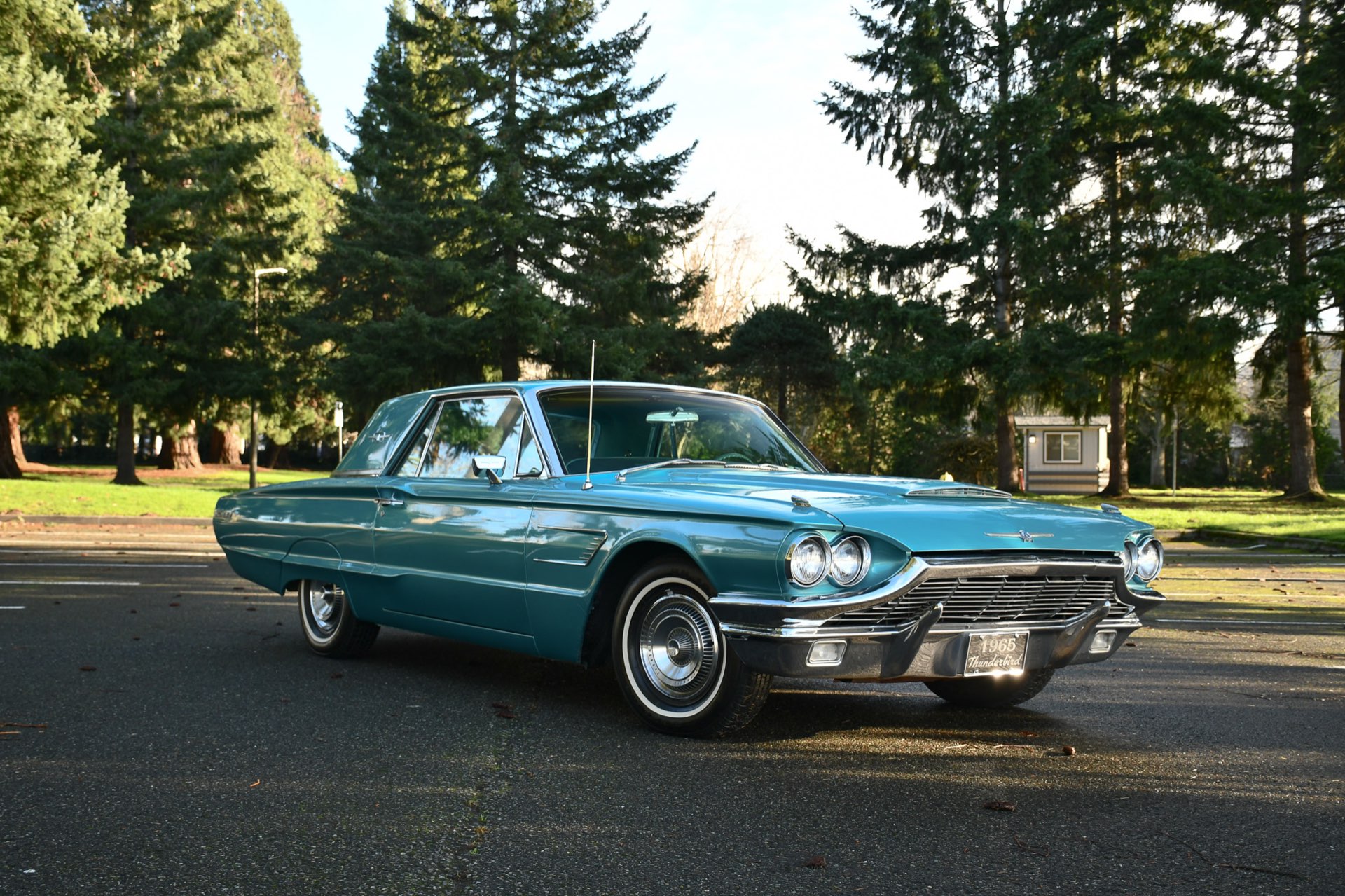
The Flair Birds, 1964 to 1966. The easiest classic Thunderbird to own. Styling is broader and more formal, and 1965 brought standard front disc brakes and the famous sequential rear turn signals. The 1966 car added the 428 Q-code option, a torque-rich FE that is the pick of the classic V8s for real-road driving. If you want one classic coupe to use rather than to show, start here.
The Glamour Birds, 1967 to 1971. A major rethink: body-on-frame construction returned, styling went long and sharp with hidden headlamps, and a four-door sedan joined the coupes. The 429 Thunder Jet arrived for 1968 and is the engine to have: effortless and understressed. These cars are larger and softer than Flair Birds and generally cheaper in equal condition, which makes a good 429 coupe one of the value buys in this guide.
The Big Birds, 1972 to 1976. The largest Thunderbirds ever, on full-size Ford and Mercury architecture. Engines are the 400, the 429 and, from 1973, the 460 — all emissions-era, low-compression, tuned for silence — and weight climbed past 4,600 pounds. Nobody buys one for speed. You buy it for opera windows, pillowed seats and complete isolation from the road, and you buy condition because trim and brightwork, not engines, are what is hard to replace.
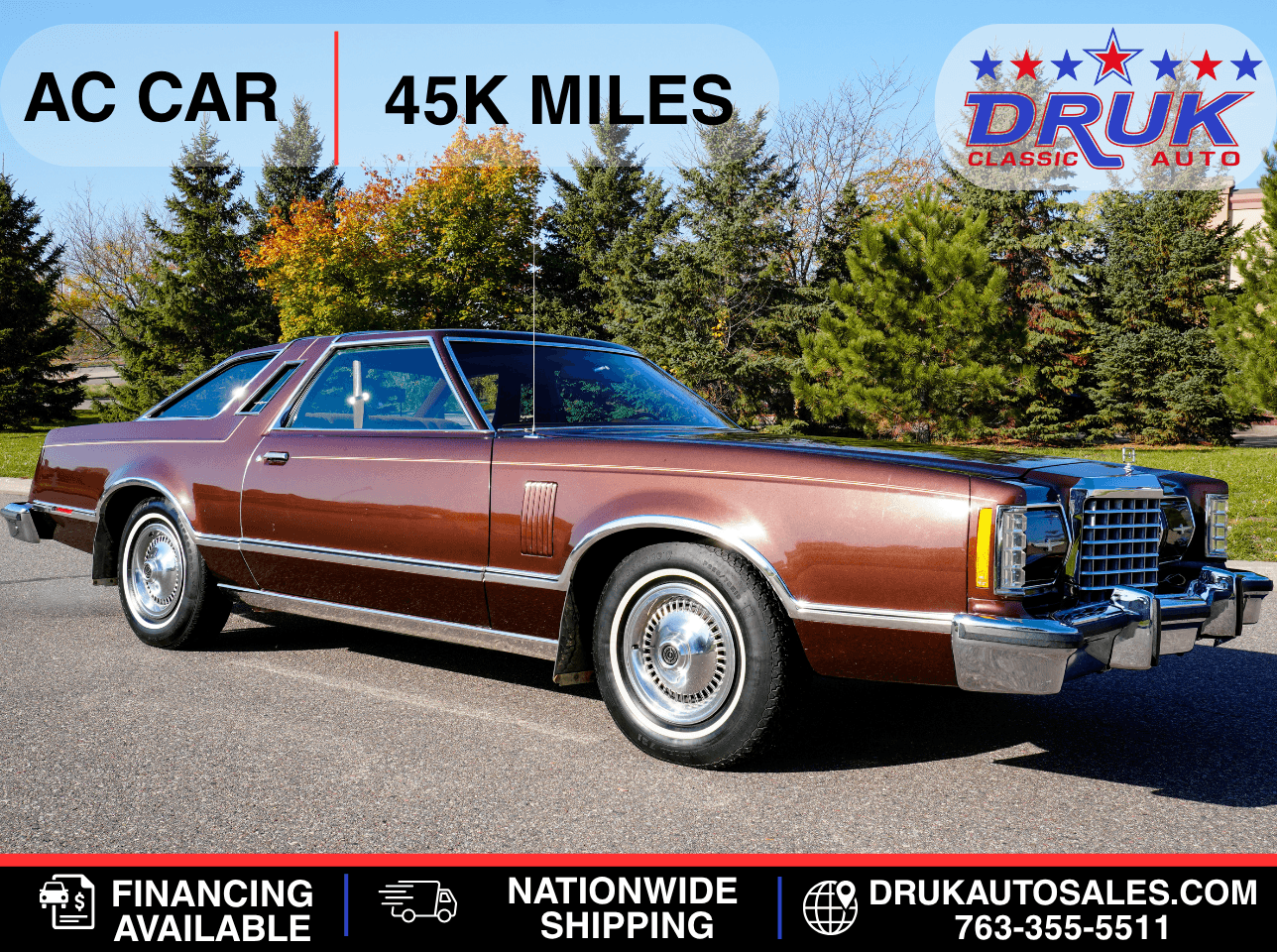
The 1977 to 1979 cars. The commercial peak — over 300,000 cars in each of 1977 and 1978 — because Ford cut the price by moving to the intermediate chassis while keeping the look and the equipment. The 302 is adequate, the 351 is the balanced pick, the 400 thirstier without being much faster. Rust and tired interiors, not mechanical failure, decide most purchases now.
The Fox Birds, 1980 to 1982. Downsized again onto the Fox platform, with boxy styling buyers rejected and that now reads as period charm. The 255 V8 is the weakest Thunderbird V8 ever fitted; the 302 is the only engine worth seeking. Survival is low, and Thunderbird-specific rather than Fox-generic parts are the ownership challenge. Buy one because you love the oddity.
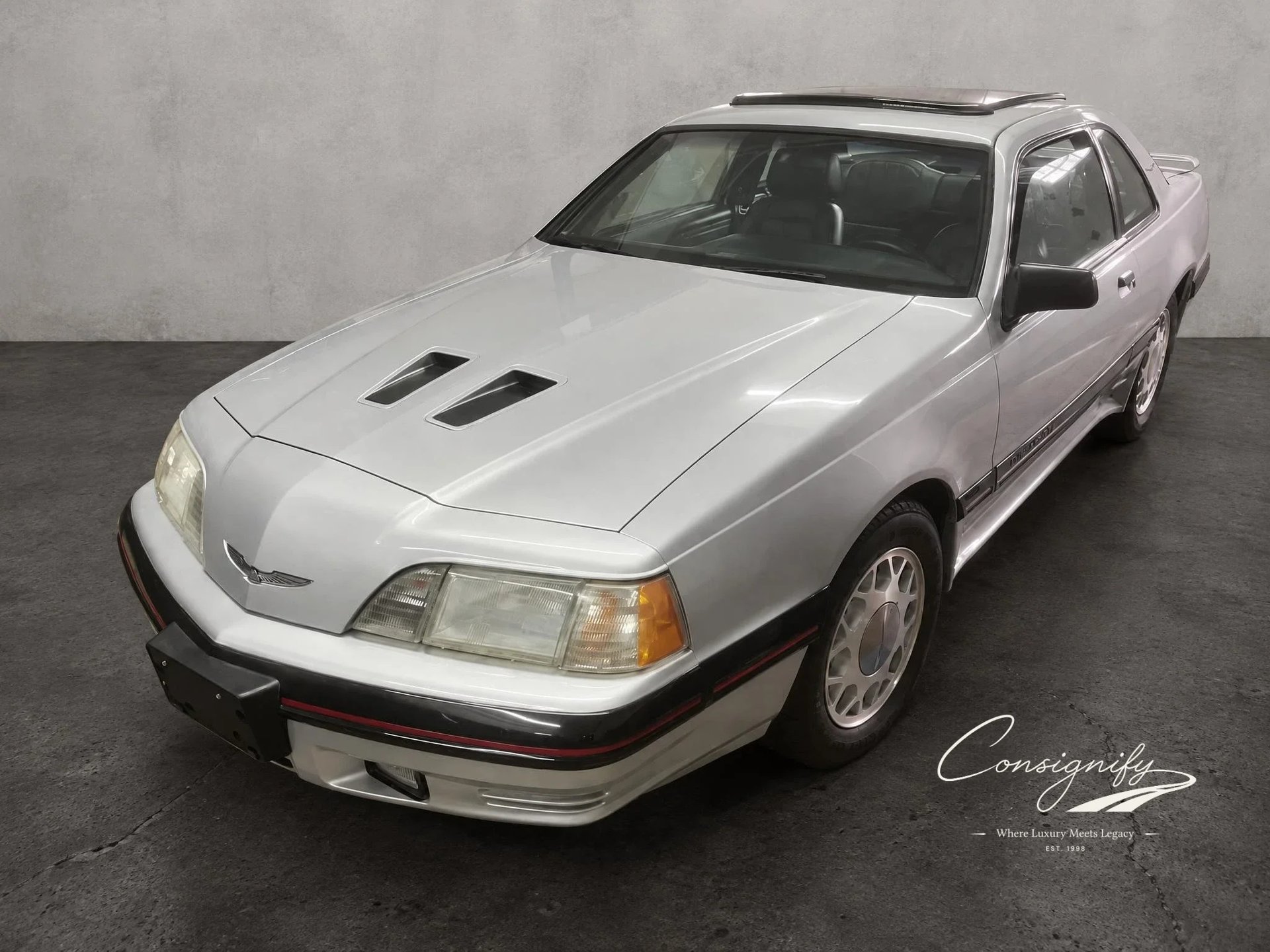
The Aero Birds, 1983 to 1988. The aerodynamic restyle saved the car, and the range finally included a driver's variant. Base cars have the 3.8 V6 or, later, the 5.0 V8; the Turbo Coupe has the turbocharged 2.3, a manual gearbox as standard, four-wheel discs, a limited-slip axle and, for 1987 and 1988, an intercooler and 190 hp in manual form — the fastest Thunderbird since the 1960s. The silver 1988 Turbo Coupe in our photo pool, showing 56,000 miles, is the archetype: verify turbo, intercooler plumbing and electronic dampers before pricing it as a flagship.
The MN12 cars, 1989 to 1997. The final generation and the engineer's car: an all-new platform with independent rear suspension, four-wheel discs and available anti-lock brakes. The LX carries the 3.8 V6, the 5.0 V8 to 1993 and the 4.6 Modular V8 from 1994. The Super Coupe is the flagship: a supercharged, intercooled 3.8 V6 with 210 hp, rising to 230 hp for 1994 and 1995, manual or automatic, with automatic ride control. It is the most capable Thunderbird ever built and the most complex to keep. Production ended in 1997; the 2002 to 2005 retro roadster shares nothing but the badge and sits outside this guide.
Engines and gearboxes
The Y-block and FE V8s: the classic engines, 1955 to 1971
Two engine families power every classic Thunderbird coupe that most buyers picture, and they have opposite characters. Learn which family a car has and you already know its service history, its oil leaks and its rebuild bill.
The Y-block, 1955 to 1957. The 292 (4.8 litres) and 312 (5.1 litres) are Ford's first overhead-valve V8s, named for the deep-skirted, Y-shaped block. A healthy Y-block starts readily, idles with a soft lope and pulls strongly to about 4,500 rpm; it is a torque engine, not a screamer. Its famous weakness is top-end oiling: the feed to the rocker shafts passes through drillings that sludge shut when oil changes are skipped, and a starved top end announces itself as rocker clatter that does not fade as the engine warms. The test is physical: with the engine warm and a rocker cover removed — messy, and only with the seller's permission — oil should weep steadily over every rocker. A dry bank is an oil-way cleaning job at best and a cam conversation at worst. Rear main seals leak on almost every unresealed Y-block; a drip is normal, a puddle is a gearbox-out job. The E-code twin four-barrel and F-code Paxton-supercharged engines are verification exercises first: both use the 312, both are faked with bolt-on parts, so the data plate code prices the car. A standard single-carb 312 with a documented rebuild is the Baby Bird engine to actually own.
The FE, 1958 to 1971. The 352, 390 and 428 are one family — Ford's FE big-block — and the 390 is one of the great American V8s: iron block and heads, a single four-barrel in most Thunderbirds (three two-barrels in the M-code), hydraulic lifters, and torque everywhere. Outputs run from 300 hp for the standard 390 to 345 hp for the 1966 428. A good FE starts hot or cold without drama and pulls a two-ton coupe without ever feeling strained. Its faults are specific. Exhaust manifold bolts snap and manifolds crack, giving a cold-start tick that fades as heat seals the gap — price the job by whether the bolts come out or shear, because drilling a head doubles the bill. The heavy intake manifold's rear seal weeps oil down the back of the block, where it is misdiagnosed as a rear main leak; the rag test on the bellhousing joint distinguishes them. Carburettors (Autolite 4100 or Holley by year) suffer heat soak: after a hot stop, fuel percolates and the car cranks long and smells rich before it fires. A phenolic spacer and correct float levels tame it; an electronic ignition conversion does not fix percolation, so do not let a conversion badge close the diagnosis. The 430 MEL in 1959 and 1960 Square Birds stands apart: a Lincoln engine with immense torque and Lincoln-priced rebuild parts — confirm the engine is a 430 before paying a 430 premium, because a 352 swap looks similar at a glance.
Cooling decides FE longevity more than oil does: small grilles, heavy cars and crank-driven air conditioning mean a marginal radiator, slipped fan coupling or collapsed lower hose will cook one in traffic. Watch the gauge at idle after a run, not just at speed, and treat any car that has run hot as a head-gasket risk until proven otherwise. A full FE rebuild runs roughly $6,000 to $10,000; a top-end refresh with manifolds, seals and carburettor work is more commonly $1,500 to $3,500 — which is why documented engine work moves value more than shiny paint does.
The 385-series, Cleveland and Windsor V8s: the big and middle years, 1968 to 1988
From 1968 the Thunderbird V8 story diversifies, and the buyer has to read the engine code rather than trust the badge, because Ford fitted visually similar engines with very different parts and values.
The 429 and 460, the 385 series. Introduced in the Thunderbird for 1968 as the 429 Thunder Jet at 360 hp gross, this family — thin-wall castings, canted valves, huge ports — was designed for torque in heavy cars and it delivers: a 429 Glamour Bird or a 460 Big Bird moves with a silence and ease no 390 matches. In net-rated 1970s form the numbers fall to the low 200s, but the driving feel remains effortless. Faults are cooling again (even more weight, even more air conditioning), timing chains that stretch and retard the cam, and, on 1970s cars, a thicket of emissions plumbing — air pumps, EGR valves, thermal vacuum switches — where a single perished hose gives a rough idle that gets blamed on the carburettor. The diagnostic order matters: ignition timing and vacuum integrity first, carburettor last. A 460 that idles roughly with no vacuum leaks usually wants points, plugs and a chain check, in that order, for hundreds rather than thousands.
The 400 and the 351s. The 400 (6.6 litres, 335-series family) and the 351M share architecture and a reputation as smog-era plodders; the 351W (Windsor) in the 1977 to 1979 cars is a different, smaller family with better parts support. None is a performance engine in Thunderbird tune, and none needs to be: judge them on oil pressure, quiet lifters and clean starting, and on whether the emissions-era carburettor — Motorcraft 2150 two-barrel or 7200 variable-venturi on some years — has been set up competently. The variable-venturi unit deserves its myth-busting line: right, it is smooth and economical; aged, its diaphragms hunt and stall, and most have been replaced by a conventional carburettor by now — a practical improvement and a small originality deduction, not a fault.
The 302 Windsor. Fitted from the late 1970s through the 1993 LX, in carburetted, throttle-body and finally port-injected SEFI form, the 5.0 is the easiest Thunderbird V8 to live with: every parts counter stocks its service items and the Mustang aftermarket covers the rest. In Thunderbird tune it is mild — 130 to 155 hp in the Fox years, 200 hp in the 1991 to 1993 MN12 — and its faults are the Mustang faults in slower motion: rear main and intake leaks, tired water pumps, and gummed idle air control valves causing a wandering idle cured by cleaning. The 255 (4.2 litres) in the 1980 to 1982 cars is a debored 302 sharing its looks and none of its point: confirm displacement from the VIN on any Fox Bird sold as a 5.0.
The four, the sixes and the Modular: Turbo Coupe, Super Coupe and the last cars, 1983 to 1997
The last two generations break the V8 rule, and their special engines are the reason those generations matter.
The Lima 2.3 turbo. The Turbo Coupe's engine is Ford's 2.3-litre overhead-cam four with a Garrett turbocharger: 145 hp in early form, 155 hp with the automatic in later cars, and 190 hp in the 1987 and 1988 five-speed, which gained an intercooler, larger turbo and the Mustang SVO's engine management. It has two period weaknesses. First, turbo oil feed and return lines coke up when oil changes are skipped or the engine is shut down hot without an idle cool-down, starving the turbo bearings; a whining turbo, smoke under boost or oil in the intercooler pipes prices a rebuild, roughly $900 to $1,800 fitted for a rebuilt unit plus the lines, which should always be replaced with it. Second, the electrics age: the TFI ignition module is a known heat-failure item across Fords of the era, giving a hot cut-out that restarts when cool, and split intercooler hoses give weak boost and a hiss. Both are cheap parts routinely misdiagnosed as a dead turbo. Test boost on the drive — a healthy manual car pulls hard from about 3,000 rpm — and never price a non-boosting Turbo Coupe as a Turbo Coupe.
The Essex 3.8 V6, naturally aspirated and supercharged. The 3.8 powered base Aero Birds and MN12 cars and, with an Eaton M90 Roots supercharger and intercooler, the Super Coupe at 210 hp, or 230 hp in the revised 1994 and 1995 version. Its defining fault, in both forms, is head gaskets: aluminium heads on an iron block, plus boost and heat on the supercharged car, fail between cylinder and water jacket, announcing as unexplained coolant loss, a start-up misfire that clears, or combustion gas in the coolant confirmed by a block test. Do the block test on any 3.8 you are serious about; it settles the most expensive common question on these cars in minutes. A proper gasket job, heads skimmed and checked, runs roughly $1,800 to $3,200. The supercharger itself is durable if its dedicated oil has been changed; a rattling snout at idle that quiets with revs is coupler wear, a few hundred dollars in parts. Harmonic balancer bolts on early Super Coupes are a documented failure: ask whether the upgraded bolt and washer were fitted.
The 4.6 Modular V8, 1994 to 1997. The overhead-cam 4.6 in the late LX is smooth, quiet and long-lived, with chain drive, coil-adjacent period ignition depending on year, and a taste for clean oil. Its Thunderbird-specific checks are the plastic intake manifold's coolant crossover on cars that still carry an early manifold — cracking and coolant loss cured by the revised manifold with an aluminium crossover, a $600 to $1,100 job fitted with parts — and spark-plug threads that punish ham-fisted changes. A Modular car with full oil history is the lowest-risk engine purchase in this entire guide.
Gearboxes
Most Thunderbird coupes are automatics, in five families. The 1950s cars use the three-speed Fordomatic, whose rebuild knowledge now lives with classic specialists. From 1958 most V8 cars use the Cruise-O-Matic family — cast-iron MX, later FMX, and the aluminium C6 behind 428, 429 and 460 engines — all tough, all prone to the same age faults: hardened seals giving lazy cold engagement of drive or reverse that improves warm (a rebuild preview, not a fluid problem), vacuum modulator leaks that draw fluid into the intake and make white smoke owners blame on the engine, and kickdown linkages misadjusted after carburettor work. A C6 rebuild runs roughly $2,200 to $3,800; budget FMX work similarly. The 1980s AOD four-speed overdrive carries this guide's sharpest gearbox warning: its throttle-valve cable sets line pressure, and a perished cable grommet at the throttle body lets pressure collapse and burns the overdrive band within miles. Check the grommet before the test drive — a $10 part protects a $2,000-plus rebuild. MN12 cars use the AOD, then the electronic AODE and 4R70W; shudder on lock-up in a 4R70W is usually fluid and converter, cured first with the correct fluid change.
Manuals are rare and valuable where they belong. The performance manuals that matter are the five-speeds: the Borg-Warner T-5 family behind Turbo Coupes (ratios differ from Mustang units, so confirm identity before ordering parts) and the Mazda-built M5R2 in the Super Coupe, whose second-gear crunch on a cold shift prices its expensive synchromesh parts. Judge any manual on synchromesh, clutch take-up and paperwork proving the car left the factory as a manual — conversions exist in both flagship ranges and are worth less than factory cars, however well they drive.
Problem areas
Everything in this section applies across generations, but no single check applies to all of them: a Thunderbird's construction changed too often for one rust map or one electrical sermon. Work generation by generation. The through-line from our photo examination is worth restating plainly: of the 12 cars in our pool whose photo sets we examined in detail, rust was noted in 5 and visible damage in 3. Sellers photograph cars to flatter them. If corrosion and damage show in seller photographs at that rate, expect to find more, not less, with a torch and a lift.
Rust: the map, generation by generation
Baby Birds, 1955 to 1957. Body-on-frame cars where the frame is rarely the problem and the steel body is. Check floor pans under the carpets, rockers along their full length, lower front fenders behind the wheels, trunk floor around the spare and the dogleg where the rear fender meets the door. Fibreglass hardtops do not rust, but their steel latches and the body ledges they clamp to do. Replacement panels exist for almost everything, which tempts buyers to forgive rust they should price: a floor and rocker programme with paint runs into five figures at shop rates. Prod, do not just look — filler over original rot is the standard failure of cheaper restorations.
Square, Bullet and Flair Birds, 1958 to 1966. The structural heart of Thunderbird rust, because these cars are unibody: the body is the chassis. Check in this order: torque boxes and front subframe rails, inner rockers and floor pans, trunk floor and rear wheelhouses, then lower doors, fender heels and cowl sides. The cowl deserves emphasis: blocked drains leave water standing in the plenum to rot it from inside, and the first symptom is wet front carpets blamed on a windshield seal. Pour water into the cowl grille on the inspection — it should exit promptly behind the front wheels, not into the footwells. Floors rot under sound-looking carpet because the underfelt holds water; lift every carpet and press the pan along the seat risers. None of this is automatically a walk-away: panel support is excellent, and a floor pan fitted and painted runs roughly $800 to $1,600 a side. Torque-box and rail perforation is different — fabrication work, priced per car, and the point at which a cheap Flair Bird stops being cheap. On a unibody car, treat a listing with no underside view as an unfinished inspection, not as a clean car.

Glamour and Big Birds, 1967 to 1976. Body-on-frame construction returns, and the rust moves: frames are generally sound except at the rear kick-up and body mounts, while bodies rot at lower fenders, quarters behind the rear wheels, vinyl-roof edges — Landau roofs trap moisture at seams and opera windows, and bubbling at a roof edge means the steel under the vinyl is the job — and the trunk floor. A car with a perfect interior and bubbled roof rails is a roof-off programme, not a bargain. Check around the hidden-headlamp doors on 1967 to 1971 cars for filler.
Torino, Fox and Aero Birds, 1977 to 1988. The 1977 to 1979 cars rust at rear quarters, trunk floor, lower doors and vinyl-roof edges, with frames usually sound. The Fox and Aero cars are unibody again: front strut towers, K-member mounts, floor pans at the seat mounts, rear torque boxes and door bottoms. Strut-tower rust is structural and common on salt-belt cars — look at the towers' inner faces and the rail beneath the battery tray, which acid attacks from above. A Turbo Coupe with perforated towers is a parts car wearing a flagship badge, whatever its mileage.
MN12 cars, 1989 to 1997. The best-protected Thunderbirds when new and now old enough that protection has expired in the usual places: rocker panels (especially at the rear, under the plastic cladding that hides them — press through the cladding's lower edge and look from underneath), rear wheel arches, the subframe mounts front and rear, and the fuel and brake lines themselves, which on salt-belt cars become a replacement programme in their own right. Remove, or at least peer behind, sill covers where fitted: MN12 rockers rot invisibly until the cladding ripples. Super Coupes add one check: the rear subframe that carries the independent suspension and differential — its bushings perish and its mounts corrode, and slop there mimics differential failure on the drive.
Cooling, vacuum and the systems that stop working
A Thunderbird's luxury was delivered by vacuum and electricity, and both systems age on a schedule the engines do not. Budget for them as a class, not as surprises.
Vacuum. From the Bullet Birds onward, vacuum operates door locks, headlamp covers, air-conditioning flaps, trunk releases and, on Glamour Birds, the tilt wheel and door systems besides. The reservoir cans and the miles of small-bore hose perish together, so a car where one vacuum accessory has failed usually has three more about to. The diagnostic gift is that vacuum faults are cheap in parts and dear only in tracing time: a hand vacuum pump and a gauge settle most arguments in an hour. Hidden headlamps that rise slowly, sink overnight or wink one at a time are hose, check-valve or actuator-diaphragm faults in that order, almost never the switch everyone replaces first. Air conditioning that defaults to the defrost vents on acceleration is the classic vacuum-supply signature across all Ford generations — learn it once and you will diagnose it forever.
Cooling and air conditioning. Every generation runs hot when neglected, for the reasons given in the engines section, and every generation's air conditioning now needs a decision: original R12 systems converted to R134a cool adequately if the conversion included the condenser capacity and hose barriers the job properly needs, and poorly if it was a can of refrigerant and a sticker. Test the air conditioning on every viewing, in every season, because a compressor, condenser and hose programme runs roughly $1,200 to $2,500 fitted, and sellers price summer cars as if it works. Heater cores deserve their own warning on MN12 and Aero cars, where replacement is a dashboard-out job of eight hours or more: sweet smell in the cabin, misting windshield or damp passenger carpet on those cars is a four-figure conversation, not a top-up.
Sequential signals, swing wheels and signature toys. The 1965 and 1966 sequential turn signals run through a motor-driven or electronic sequencer in the trunk, with relays that tire: signals that flash together, stall mid-sequence or work on one side only are sequencer and ground faults, curable with rebuilt units for a few hundred dollars, and a delightful test of whether a seller's sorted car is actually sorted. The Swing-Away wheel on 1961 to 1967 cars wears its linkage and interlock switches; a wheel that will not latch or a car that starts with the wheel swung are adjustment and switch jobs, not column replacements. Power windows across all generations use motors whose gears strip and regulators whose rollers perish: a slow window is a motor and regulator budget of roughly $250 to $500 a door fitted, multiplied by every door that is slow.

Suspension, steering and brakes
Classic Thunderbirds to 1976 ride on double-wishbone front suspension with a live rear axle, recirculating-ball power steering, and — from 1965 — front disc brakes advanced for their day. Wear concentrates in ball joints, control-arm bushings, idler arms and the steering box: wander at speed, a clunk over driveway lips, uneven front tyre wear. A full front-end refresh with alignment runs roughly $1,200 to $2,500 and transforms these cars more than any engine work does. Rear sag on leaf-spring cars is springs, not shocks; on coil cars, check the spring seats and frame pockets for the rust described above. A car that dives, floats and crashes over bumps in sequence is describing its bushings, dampers and bump stops in order.
Fox and Aero cars use MacPherson struts and a four-link live axle; MN12 cars use short-and-long-arm front suspension and the independent rear. The Turbo Coupe's and Super Coupe's electronically adjusted dampers are now the scarcity: a car riding permanently soft or firm with the ride lamp lit has usually lost an actuator or damper, and owners commonly convert to conventional dampers — honest, effective, and a small originality deduction to price calmly. On MN12 cars the Teves anti-lock system adds pump and accumulator faults that light the ABS lamp and can firm the pedal alarmingly: an accumulator is a few hundred dollars, a full hydraulic unit a specialist hunt, distinguished by whether the pump runs and cycles on the inspection drive. Any Thunderbird that has sat needs its hoses, hard lines and fluid condemned or proven in full: a complete hydraulic refresh is roughly $800 to $1,800 and is the least negotiable recommissioning spend there is.
Interior and trim
Interiors decide Thunderbird values more than odometers do, because the cabin was the product. Vinyl in the classic cars is durable but splits at seams and at the driver's entry bolster; leather in Landau and luxury trims dries, cracks and shrinks off its frames; headliners sag on every generation once the foam backing fails, and a pinned-up headliner in a photograph is a $400 to $900 replacement admission. Dashboards crack across the speaker and defroster areas on sun-belt cars of every era, and correct reproduction pads exist for the popular generations at $500 to $1,200 before fitting, while Glamour and Big Bird dash and door trim is largely a used-parts hunt. Wood and woodgrain applique, chrome interior trim and the intricate 1964 to 1966 podded dashboards reward originality: a complete, uncracked classic interior in original material is worth more than a fresh, incorrect retrim, and judges and buyers alike can tell the difference at ten paces.
Carpets hide the floors and should be lifted wherever a seller allows. Seat foams collapse on the driver's side first; sit there and judge support, because foam and trim together run $600 to $1,400 a front seat at a trimmer. On Aero and MN12 cars, check digital clusters carefully — they fail by segments and backlighting, and repair is a specialist board job — and test every seat power function, because MN12 tracks and motors are generation-specific and scarce. Baby Bird hardtop seals belong here too: whistling and leaking at the windshield header is seals and adjustment, a few hundred dollars.

How to inspect one
Allow ninety minutes, bring a torch, a magnet wrapped in cloth, a hand vacuum pump if you own one, and a tyre-pressure gauge you trust. Insist on a cold engine and, for any unibody or MN12 car, arrange a lift inspection before money changes hands — on a Thunderbird the underside view settles more arguments than any other half hour you can buy.
- Start with the paperwork and the plates. Match the VIN on the title to the plate on the car and decode the data plate for engine, transmission, axle and trim. This step prices the flagships: an F-code or E-code Baby Bird, an M-code Bullet Bird, a Q-code 428 Flair Bird and a factory-manual Turbo Coupe or Super Coupe all carry premiums that live or die on codes, not on bolt-on hardware. Ask for invoices, not stories.
- Cold start and first minute. A carburetted V8 should fire with one set of the choke and settle without nursing; an injected later car should start at once and idle evenly. Blue smoke on start-up that clears is valve seals; blue smoke that stays is deeper; white vapour that persists warm, on a 3.8 car, sends you straight to the block test in step 6. Listen for FE exhaust ticking, Y-block rocker clatter that does not fade, and supercharger snout rattle on a Super Coupe.
- Under the hood, systematically. Check oil and coolant condition and level, and every hose by squeezing, not glancing. On an FE, look down the back of the intake for the oil weep described in the engines section. On a Turbo Coupe, inspect turbo oil lines, intercooler hoses and the TFI connector. On any AOD car, find the throttle-valve cable grommet now and confirm it is intact before the car moves — the gearbox section explains why this ten-second check protects the whole transmission.
- Underneath: the generation's rust map. Work the map for the car's construction from the rust section: torque boxes, rails and cowl drains on the 1958 to 1966 unibodies; roof seams, quarters and body mounts on the Landau classics; strut towers and torque boxes on Fox and Aero cars; rockers under the cladding and subframe mounts on MN12 cars. Prod with a screwdriver where the seller allows. Perforation in torque boxes, towers or rails is structural money; floor and trunk pans are panel money. Price them differently and say so in the negotiation.
- Trunk, floors and the water story. Lift the spare and the trunk mat, lift every carpet you can, and press the pans. Then test the story: pour water over the windshield, cowl grille and rear window and watch where it emerges. Wet footwells after the cowl pour confirm the plenum problem from the rust section; a damp trunk after the rear-window pour confirms the seal and channel problem. A dry car with honest drains is worth a premium on any classic Thunderbird.
- The 3.8 test, where fitted. On any Essex V6 car, aspirated or Super Coupe, run the engine to temperature, check for coolant loss with no visible leak, a sweet exhaust smell and bubbles in the header tank, and use a combustion-gas block tester if the seller permits. Add the supercharger checks on an SC: oil history, snout rattle, boost on the drive in step 9, and the harmonic balancer bolt question from the engines section. A failed block test reprices the car by the cost of the gasket job — do not average it away.
- Vacuum and luxury systems, one at a time. Headlamp doors open, close and stay closed; door locks cycle; air conditioning blows cold from the dash vents and stays there under acceleration; the swing wheel latches; sequential signals sequence fully on both sides; windows, seats, antenna and trunk release all operate. The problem section's rule applies — one failed vacuum accessory predicts the others — so count failures and price the class.
- Suspension, steering and brakes at rest. Rock each front wheel for bearing and ball-joint play, bounce each corner and watch it settle in one movement, and inspect tyres for wear patterns that betray alignment and bushings. Check disc faces for lip and scoring and every flexible brake hose for cracking. On ride-control cars, cycle the switch and confirm the dampers change; on ABS cars, confirm the pump cycles.
- The test drive, at least twenty minutes. Include cold streets, a highway stretch and a hot idle at the end. An automatic should engage promptly when warm and change without flare or thump; cold lazy engagement is the seal warning from the gearbox section. A Turbo Coupe should boost cleanly from about 3,000 rpm; a Super Coupe should pull without misfire under boost. Brake firmly from speed twice: the car should stop straight, without judder or a sinking pedal. Watch the temperature gauge at the final idle, not just at speed.
- Heat soak and hot restart. Park, wait ten minutes with the hood closed, and restart. This is the FE and Y-block percolation test and the TFI heat-failure test in one: long cranking with a rich smell points to carburettor heat soak, a clean cut-out that returns when cool points to ignition electrics, and either is a priced fault, not a character trait to accept. Recheck oil and coolant levels after the drive and look underneath for fresh leaks the run has pressurised into visibility.
- Interior last, from the driver's seat. Sit where the owner sits. Judge foam support, bolster wear, dash cracking, headliner tension and whether the trim is original material or incorrect replacement. Work the heater in every mode whatever the weather. A sound, original Thunderbird interior is the hardest component to recreate at any budget, so weight it as heavily as the structure — and on a car that has passed the steps above, let a genuinely good cabin justify stretching, just as a tired one justifies walking.

Values
The Thunderbird coupe market is really ten markets sharing a badge, and the computed market block beneath this guide — the current listings summary and the recorded-sales evidence for this model — is where the live numbers live. Read it generation by generation, never as a single Thunderbird price, because a Baby Bird, a Flair Bird and a Super Coupe share no buyers, no parts economics and no price logic beyond the name. What the authored section can teach, durably, is how to read those numbers once you have them.
Start with the condition spread, which is wider on Thunderbirds than on almost any comparable Ford. Within any single generation, the distance between a project car and a correctly restored or genuinely original survivor is routinely several multiples, not a percentage, because the restoration costs — structure, chrome, interior — are broadly fixed while the finished values are capped by the generation's desirability. That arithmetic creates the model's defining trap: the cheapest car in any generation is usually the most expensive way to own a good one. The project-versus-driver gap is therefore the first number to study in the market block. If finished cars trade at levels that a project plus its welding, paint and trim cannot undercut, buy the finished car. On the less fashionable generations — Glamour Birds, Big Birds, Torino cars, Fox Birds — that is almost always the answer, because restoration costs do not fall just because values do.
Next, separate asking from achieved. Thunderbirds are often sold by private sellers anchored to the car's best year, and asking prices on the classics can sit well above what auctions achieve for equal condition. Where asking and achieved figures diverge in the computed block, believe the achieved figures and treat the gap as the negotiation the market expects. A car that has sat for months at a hopeful ask is not thereby proven poor in condition — inspect it on its merits and offer on the evidence.
Variant premiums are real and worth paying only with paperwork. The verified flagships — supercharged and dual-quad Baby Birds, tri-power Bullet Birds, the 428 Flair Bird, the 429 Glamour Bird, the intercooled manual Turbo Coupe and the Super Coupe, especially the late 230 hp manual cars — carry premiums because they are scarce and drive differently. Trim premiums behave oppositely: Landau roofs and anniversary packages add modestly to a good car's appeal and nothing to a tired car's value. Correct period colours and original interiors support the top of any generation's range; a colour change or incorrect retrim caps a car below it however fresh the work looks.
Finally, read the late cars differently. On Turbo Coupes and Super Coupes, mileage, service history and system health move value more than cosmetics, and low mileage does not rescue a Super Coupe with no head-gasket history. On classics, documented structure and interior outweigh a high odometer reading, because FE and 429 engines tolerate miles better than bodies tolerate rust. In every generation: the seller's evidence sets the ceiling, your inspection sets the offer.
Parts and ownership
Thunderbird ownership is easier than the car's luxury image suggests, because Ford built these cars in enormous numbers from corporate parts bins, and the American classic industry has spent sixty years learning to support them. Support divides cleanly by generation, and knowing which side of each divide your car sits on is most of ownership planning.
Easy, for almost every generation: service items, filters, plugs, ignition consumables, brake friction parts, hoses, belts, water pumps, starters and alternators for every engine in this guide. The FE, Windsor and 385-series V8s enjoy Mustang and truck aftermarket support besides, so engine internals, gaskets and performance parts are order-today items at ordinary prices. Carburettor kits for Autolite and Motorcraft units, AOD and C6 service parts, and Fox-platform suspension consumables shared with the Mustang are similarly painless. Glass rubbers and weatherstrips for the popular classic generations are reproduced and fit acceptably to well.
Harder and dearer, by name: Y-block top-end and supercharger-specific parts for Baby Birds, where the F-code blower and its brackets are specialist and priced as such; MEL 430 internals for the Square Bird option; sequential sequencers, swing-column switches and vacuum actuators for the classics — all available rebuilt or reproduced, none cheap, and all worth buying from Thunderbird specialists rather than general breakers; Landau and opera-window trim, Big Bird brightwork and correct 1970s interior materials, where used condition is the market; Turbo Coupe intercooler plumbing, ride-control dampers and correct T-5 components; and MN12 Super Coupe supercharger service parts, M5R2 synchromesh components, Teves ABS units and electronic dash clusters, where a small specialist ecosystem exists and rewards owners who join the clubs and forums that map it. A quality repaint on a classic coupe starts in five figures at reputable shops, chrome replating for a full classic set is a major budget line of its own, and correct interior retrims follow the same logic — which is why this guide's repeated advice is to buy structure and cabin first.
Running costs and the first year. A sorted coupe of any generation is a realistic regular-use classic or, for the 1980s and 1990s cars, a realistic daily driver. Fuel consumption runs from the mid-teens in a classic V8 car to the mid-twenties on a highway Turbo Coupe driven gently. The budget line that catches new owners is the first year of deferred maintenance: catching up a running car honestly — fluids, hoses, brakes proven end to end, aged-out tyres, vacuum faults traced — runs to a few thousand dollars before any improvement begins, and recommissioning a car that has sat for years costs materially more, because the fuel system needs cleaning end to end against modern ethanol fuel and every seal has dried in place. Buy a car in regular use over a sleeping low-miler at the same money, in every generation: use is what keeps the systems alive, and the inspection steps above are largely a test of whether the car has had it.
Clubs are part of the parts supply. The Vintage Thunderbird Club International covers the classics, the Super Coupe Club of America holds the deepest MN12 technical archive in existence, and generation forums preserve the wiring diagrams and supercharger procedures general manuals never printed. Join before you buy, not after.
Which one to buy
- The all-rounder: 1964 to 1966 Flair Bird with the 390. The classic Thunderbird at its most complete — disc brakes from 1965, sequential signals, the best classic parts support, and a deep market to buy from and sell into. If you want one classic coupe to drive, show lightly and keep forever, this is it.
- The value buy: 1968 to 1971 Glamour Bird coupe with the 429. The most effortless engine in the classic range in the least fashionable classic body. In equal condition these cars generally ask less than the Flair Birds they out-drive. Buy condition ruthlessly and the arithmetic is on your side.
- The collector car: 1957 Baby Bird, verified E-code or an honest single-carb 312. The icon, with the strongest following in the range. Pay the paperwork premium only for plate-verified performance cars; the standard 312 gives the same roads at a saner entry point.
- The driver's car: 1987 or 1988 Turbo Coupe with the five-speed. Intercooled, manual, properly braked and suspended — the best-driving Thunderbird of the Fox era and a genuine performance car. Verify boost, turbo oil lines and ride control before paying flagship money.
- The technical flagship: 1994 or 1995 Super Coupe with the five-speed. The most capable Thunderbird ever built, in its most powerful form. Buy only with head-gasket and supercharger history proven — the block test in the inspection is not optional on this car.
- The cruiser: 1977 to 1979 coupe with the 351. The best-selling formula for a reason: lighter than the Big Birds, simple to run, lavishly comfortable and supported by Torino and Ford corporate parts everywhere. The easiest big-coupe ownership in this guide.
- The modern classic: 1994 to 1997 LX with the 4.6 V8. Independent rear suspension, Modular smoothness and the lowest mechanical risk of any late car here. The Thunderbird to buy if your priority is using it daily, in all weathers, without a project attached.
And the rule that overrides all of the above: buy the soundest structure and the most complete, original interior you can find, in the generation you actually want — engines, gearboxes and luxury systems are all fixable at prices you can plan for, but a rotten unibody, a perforated strut tower or a gutted cabin costs more to put right than the finished car will be worth, in every generation from Baby Bird to Super Coupe.