
Ford Super Deluxe buyer's guide
Ford Super Deluxe -- the model's own buyer's guide: variants, values and what to check.
Years listed: 1941-1947 · Series: Full Size
Overview and history
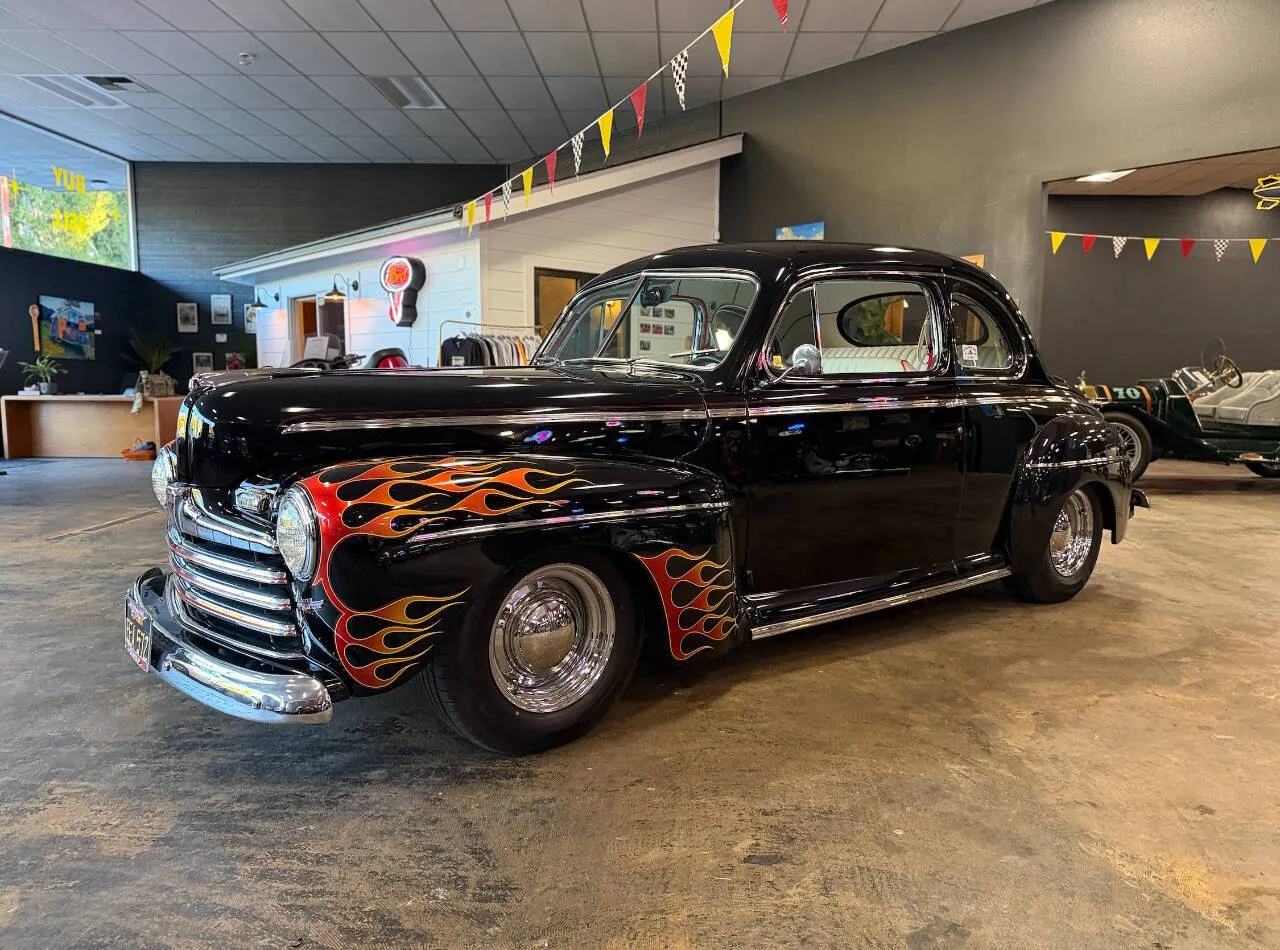
The Ford Super Deluxe is the top-trim Ford of the flathead V8's last great pre-war and immediate post-war flowering — the most chrome, the most equipment and the most money in the Ford showroom for 1941, 1942 and then again from 1946 to 1948. It is not a separate model in the modern sense. Underneath the brightwork sits the same Ford passenger-car chassis, the same transverse-leaf suspension and the same flathead power that went into the cheapest Special. What the Super Deluxe badge buys you is presentation: a richer grille, more stainless trim, a better-appointed cabin, woodgrain dashboard finish, upgraded upholstery and the small fittings — clock, armrests, dual horns and the like — that separated the car the dealer wanted you to take home from the car in the newspaper advertisement.
That distinction cuts both ways today. A Super Deluxe is mechanically no harder to own than any other 1941 to 1948 Ford, and almost every mechanical part interchanges across the range. But one missing its Super Deluxe trim is an expensive problem in a way a stripped Deluxe is not. The value lives in completeness — correct grille, badges and interior over a sound, honest Ford. Judge the trim and body first, because the flathead and three-speed can almost always be put right.
The name arrived for 1941, when Ford reorganised its line into Special, Deluxe and Super Deluxe. The 1941 cars were a major step: wider bodies, headlamps integrated into the front fenders, running boards largely concealed, and a longer, lower look that finally left the 1930s behind. Body styles ran from Tudor and Fordor sedans through business and club coupes to a convertible and a station wagon, with the flathead V8 as the expected engine and the new 226 six for economy-minded buyers.
Civilian production stopped in February 1942 as the industry turned to war work, after only a short run of 1942 cars — which is why a genuine 1942 is so rarely offered. When production resumed for 1946, Ford returned with its pre-war car warmed over: the 1942 body and chassis with a heavier horizontal-bar grille, revised trim and the larger 239 flathead as standard V8 power. The 1946, 1947 and early 1948 cars are developments of one design, not three different cars. Midway through 1948 the all-new 1949 Ford arrived and the Super Deluxe, in this form, ended. The car in this guide is the 1941 to 1948 car only.
In our current Classic Listings pool we track 25 Super Deluxes, 13 offered for sale and 12 recorded as sold. Its shape tells the post-war story plainly: 11 are 1947 cars, six are 1948s and four are 1946s — 21 post-war cars against four 1941s and no 1942s at all. That is not a sampling trick. Ford built the post-war cars in far greater numbers and they were kept and restored in numbers the short pre-war run never matched. If you want a Super Deluxe to drive, you will almost certainly shop 1946 to 1948; if you want a 1941, expect a thinner choice and a longer search.
These cars also lived two lives, and you need to decide which life you are buying. The first is the original one: a handsome, torquey family Ford that cruises happily at secondary-road speeds, steers heavily at parking pace and asks for regular, simple maintenance. The second is the modified one — no American car has been hot-rodded and restomodded more, and automatic gearboxes, five-speed manuals, disc brakes and modern V8s are all common under a Super Deluxe body today. Neither life is wrong. What is wrong is paying original-car money for a modified car, or modified-car money for a tired original. The inspection section is built around telling the two apart before you price either.

The models
Every Super Deluxe is a full-size Ford on the same basic chassis, so the model choice is really three choices stacked together: pre-war or post-war, V8 or six, and which body. Get those three right and the individual car is a matter of condition. Get one wrong — a six-cylinder convertible bought at V8 money, say — and no amount of condition will rescue the deal.
| Model | Years | Engine | Output | Built | Character |
|---|---|---|---|---|---|
| Super Deluxe Tudor sedan | 1941–1942, 1946–1948 | 221 or 239 V8; 226 six optional | 90–100 hp | High volume | The family two-door; the default post-war buy |
| Super Deluxe Fordor sedan | 1941–1942, 1946–1948 | 221 or 239 V8; 226 six optional | 90–100 hp | High volume | Four doors, most room, softest values in the range |
| Super Deluxe business coupe | 1941–1942, 1946–1948 | 221 or 239 V8; 226 six optional | 90–100 hp | Moderate volume | Short cabin, long deck; the salesman's car, now a hot-rod favourite |
| Super Deluxe club coupe | 1941–1942, 1946–1948 | 221 or 239 V8 | 90–100 hp | Moderate volume | Longer cabin than the business coupe; the prettiest closed car |
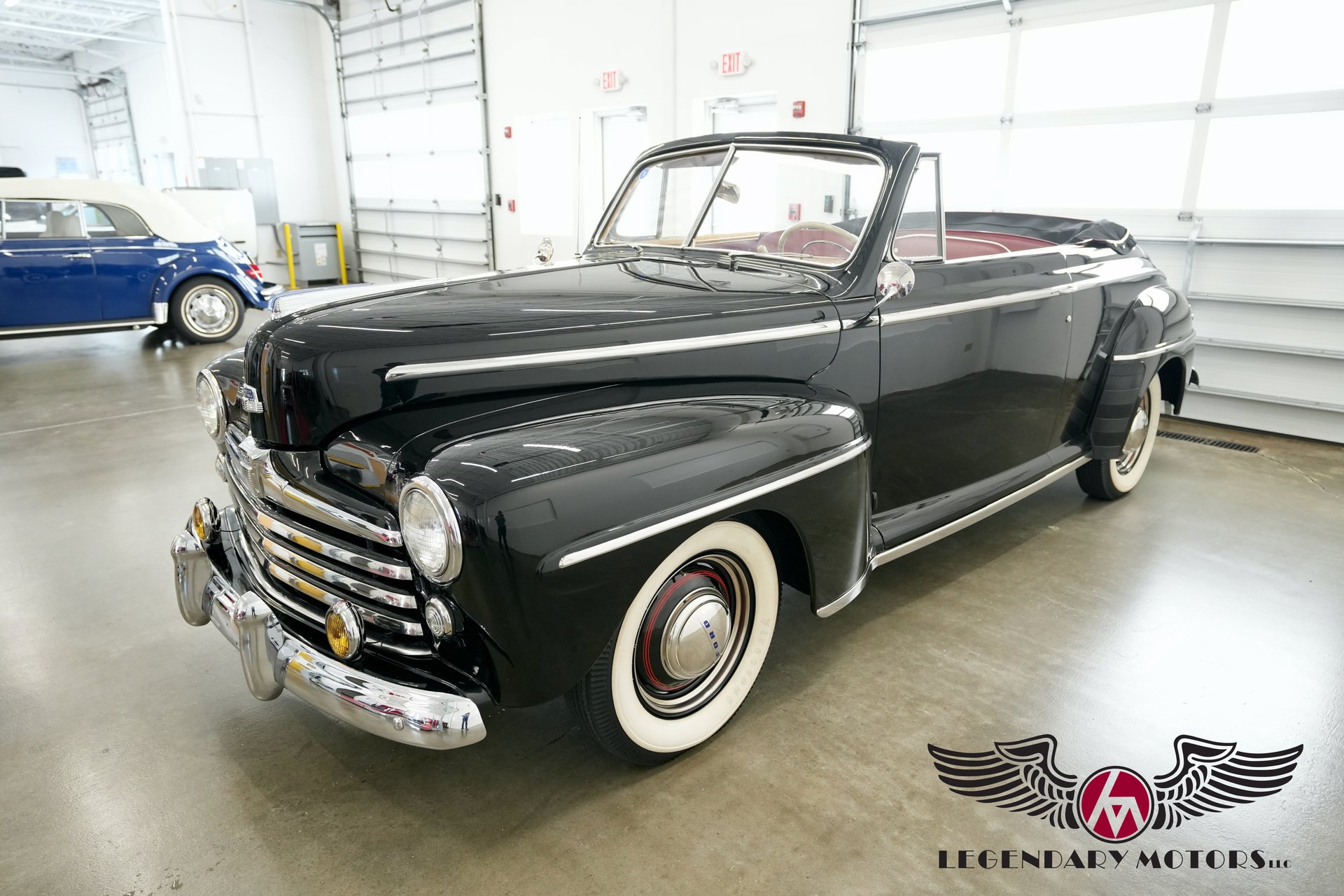
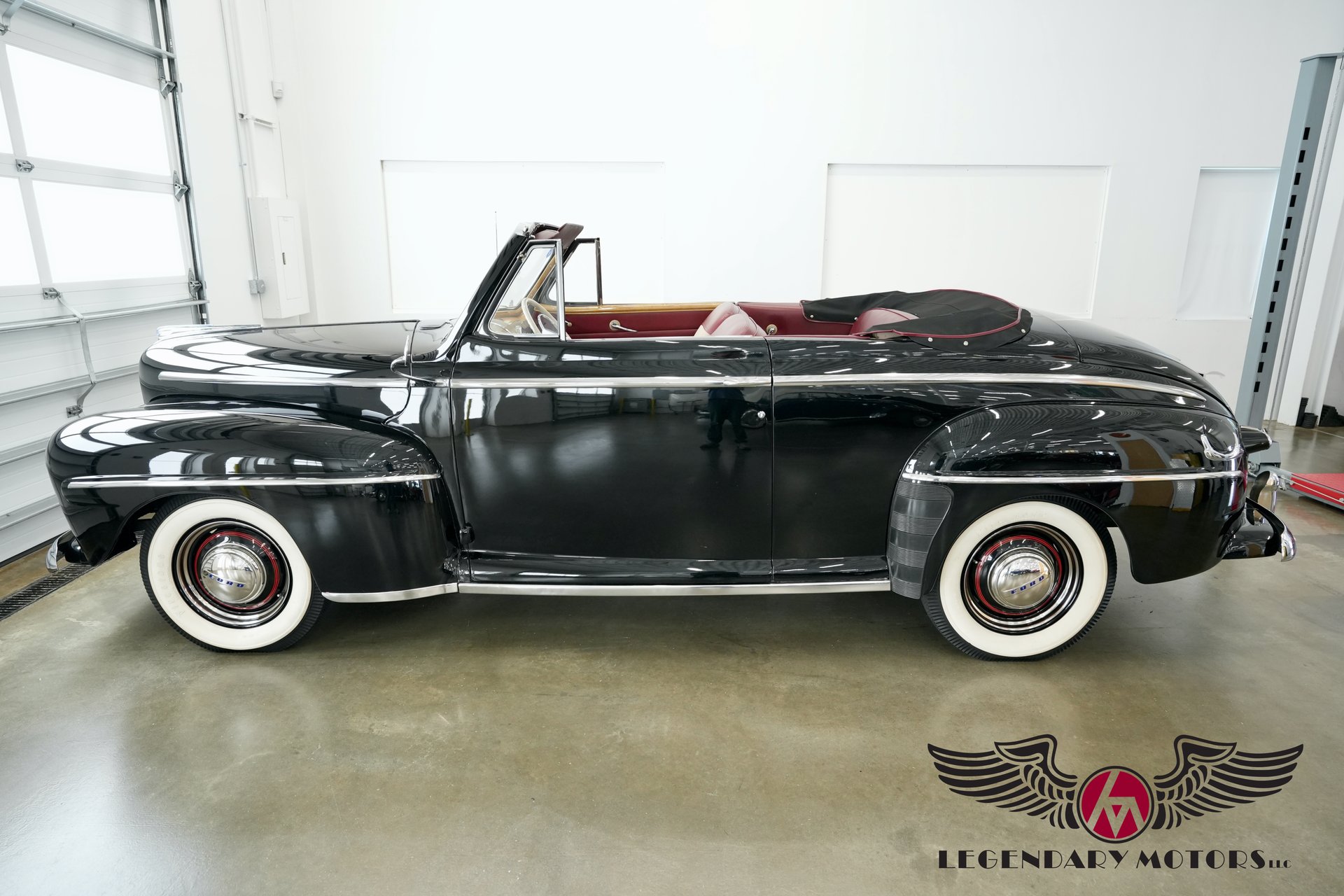
| Super Deluxe convertible | 1941–1942, 1946–1948 | 221 or 239 V8 | 90–100 hp | Low volume | Open car, power top on post-war cars; condition of wood and top frame decides value |
| Super Deluxe Sportsman | 1946–1948 | 239 V8 | 100 hp | Very low volume, about three and a half thousand in total | Wood-sided convertible; the collector flagship, priced like one when right |
| Super Deluxe station wagon | 1941–1942, 1946–1948 | 221 or 239 V8 | 90–100 hp | Low volume | The woodie wagon; buy the wood, not the metal, because the wood is the bill |
A note on the Built column. Ford published production by body style and year, but Super Deluxe totals are routinely conflated with Deluxe and Special totals for the same body in secondary sources. Rather than print per-body figures we cannot stand over, the table grades volume — high, moderate, low — which is what a buyer actually uses: how hard the car is to find and how much a missing body-specific part will hurt. The Sportsman total is the exception: roughly three and a half thousand cars across 1946 to 1948, the great majority for 1947 and only a handful for 1948, consistently reported and the whole point of the car.
Pre-war cars, 1941 and 1942. The 1941 is the design in its purest form and the prettiest to most eyes: a lighter grille treatment, slimmer bumpers and detailing that Ford fattened up after the war. The 221 cubic inch V8 gives 90 hp and entirely adequate performance. The 1942 is mechanically and visually a close relation — a revised grille with a more formal face — built for only a few months before the shutdown. Treat any 1942 as rare by default and verify it ruthlessly: a 1941 with a 1942 grille, or a post-war car backdated on paper, is worth a fraction of a genuine short-run 1942. The title, the serial number and the body details have to agree.
Post-war cars, 1946 to 1948. These are the cars you will actually find. The 1946 brought the bigger 239 V8 and 100 hp, the heavy grille and a cabin that was, if anything, better trimmed than the pre-war car because Ford knew it was selling luxury as much as transport in a starved market. The 1947 is the volume year and the heart of today's market — it dominates our pool with 11 of 25 cars — and differs from the 1946 in trim details, badging and small running changes rather than in any way you can feel from the driver's seat. The 1948 is the run-out car, built alongside the launch of the all-new 1949 line, and is best bought on condition alone. Between a good 1946, a good 1947 and a good 1948 there is nothing to choose except grille and trim correctness for the year claimed. Buy condition, then year.
The bodies. The Tudor and Fordor sedans are the honest cars: roomy, weather-tight, easiest to live with and, for the Fordor especially, the cheapest way into a good Super Deluxe. The business coupe has the short roof, no proper rear seat and the long deck hot-rodders love, so original uncut examples compete with modified-car demand. The club coupe stretches the cabin, adds a usable rear seat and is to many eyes the best-looking closed car of all. The convertible is the summer car: check the top frame, its operating gear and the floor, because open cars collect water. The station wagon is a woodworking project that happens to have an engine — its structural, finger-jointed wood is the car. Sound original wood is rare and valuable; a wagon needing a full wood kit and fitting is a multi-year, five-figure commitment before paint. The Sportsman, a convertible wearing mahogany and maple panelling, was built in tiny numbers as a halo car. Genuine cars carry a large premium and tributes built from ordinary convertibles exist, so paperwork, body numbers and Sportsman-specific structure settle identity — never the wood alone, because wood can be added.

Six or V8. A six-cylinder Super Deluxe is a correct, period car — not a fake. It is also worth materially less than the equivalent V8, slower and harder to sell on, because the flathead is why most buyers come to a 1940s Ford at all. The engine choice shows in the serial prefix, so there is no honest confusion: check the number, price the car as the engine it carries, and walk away from any seller who prices a six as a V8 because a V8 could be fitted later. You pay for the car in front of you.
Engines and gearboxes
The flathead V8: 221 and 239
The engine that defines the Super Deluxe is the Ford flathead V8 — a side-valve V8 with exhaust passages cast through the block, two water pumps, a single downdraft carburettor and a distributor at the front of the camshaft, famously awkward to reach. It is simple, torquey, understressed and, in good order, one of the sweetest-sounding engines ever put in a family car. Its faults are almost all faults of cooling, ignition and age rather than design, which is why a methodical buyer can judge one in twenty minutes.
The 1941 and 1942 cars carry the 221 cubic inch version, rated at 90 hp. The post-war cars carry the 239 version — developed for Mercury before the war — rated at 100 hp, with stronger low-speed pull you feel most pulling away and on grades. Both cruise comfortably at 50 to 60 mph and hold modern traffic on secondary roads; neither is a freeway car in original gearing, and a seller who claims a sustained 75 mph is describing an overdrive, a changed axle ratio or a different drivetrain. Ask which.
Identity first. Displacement is not reliably told from outside, because the 221 and 239 share their external architecture and decades of swaps separate most cars from factory specification. The honest checks are the serial number against the title, casting and head details, and invoices for any claimed rebuild. A Mercury 239 or 255 in a 1941 is a common period-style upgrade and, disclosed, no disgrace. Undisclosed and priced as original, it is a misdescription. The same logic covers our listings pool: cars described with automatic or five-speed gearboxes left no Ford factory that way in 1941 to 1948, so a later drivetrain is very likely fitted — the engine bay confirms it in seconds. Price what is actually fitted.
Carburettion and fuel. The V8 breathes through a single two-barrel downdraft carburettor — Ford's own units and Holley-built equivalents, with the post-war cars on the Holley 94 pattern. Most running faults blamed on it are not its fault. The classic hot-start and flat-spot complaints come, in order, from a weak coil or condenser, vapour lock in modern ethanol fuel, a perished accelerator-pump leather, and only then worn throttle shafts. A proper rebuild with ethanol-resistant parts runs roughly $350 to $700 and should be priced as maintenance. The cam-driven mechanical fuel pump fails by hardening its diaphragm and wearing its pushrod, starving the car on long climbs while idling perfectly in the driveway — the test is a sustained pull, not a blip on the stand. An auxiliary electric priming pump, disclosed and neatly fitted, is sensible ownership; hidden and badly wired, it is a clue to how the rest of the car has been treated.
Ignition. The front-mounted distributor is driven off the cam nose and carries points and condenser in a housing that cops the full heat of the front of the engine. A car that starts instantly cold, misfires warm and recovers is telling you about points, condenser or coil long before valves. The coil fails gradually, which is why many cars carry electronic ignition inside the original housing — invisible, effective, and value-neutral, but know it is there before you order points the car no longer uses. Budget $150 to $400 to sort a tired original ignition with quality parts, and avoid the cheapest reproduction condensers, whose failure rate has sent many owners chasing carburettor faults that never existed.
Cooling, the flathead's whole story. Two water pumps, a large radiator and a serious fan should keep a flathead cool — and a healthy one does not overheat. When one runs hot, something specific is wrong: silt and scale in the block jackets from decades of plain water, a corroded radiator core, collapsed hoses, retarded timing, or a cracked block or blown head gasket. The flathead's exhaust ports run through the water jacket, so the coolant works harder than in an overhead-valve engine and any loss of capacity shows first on a grade or in traffic, not on a short drive. Your test is therefore a long one: twenty minutes of mixed driving, a climb if you can find one, then idle and listen for boiling after switch-off. A radiator recore runs roughly $600 to $1,200, pumps roughly $100 to $200 each, and head gaskets, cheap in themselves, cost $800 to $1,600 fitted for both banks with the heads checked for flatness.
Oil, smoke and wear. A good flathead shows strong oil pressure cold, settling hot, uses modest oil and does not smoke. Blue smoke on start-up that clears is guide and seal wear — liveable. Blue smoke under load is rings and bores, and that is a rebuild conversation. A full specialist rebuild runs roughly $6,000 to $12,000 depending on machining, which is why a documented rebuild is one of the few mechanical claims worth a premium. Listen at cold start for a deep knock that fades as pressure builds, which points to main bearings; a light tick on a side-valve is tappet clearance, not impending death. Check the oil: a fuel smell means flooding or short-trip use; grey emulsion means water in the oil and a gasket or crack investigation before any money moves.

The 226 six
Ford's 226 cubic inch inline six, introduced for 1941, is an overhead-valve engine — a surprise to buyers who assume every period Ford was a flathead. Rated at 90 hp, the same headline figure as the 221 V8, it gives less torque and character but better fuel economy. Today its virtues are smoothness, simplicity and cheap running; its costs are value and desirability. Six-cylinder Super Deluxes are uncommon — most six buyers bought cheaper trim — and engine-specific fittings differ from the V8 cars.
Judge a six like the V8, minus the cooling drama: it runs cooler, starts well and wears slowly, with unremarkable weaknesses — single-barrel carburettor wear, distributor wear, head-gasket seepage on neglected cars. Parts support is adequate rather than enormous, so a six missing engine-specific parts is harder to complete than the price gap suggests. Buy one cheaply, knowingly and for its own sake, ideally as a sedan to use.
Gearboxes and axles
Every factory Super Deluxe in this guide left the factory with a three-speed manual gearbox, column-shifted, with synchromesh on second and third and a sliding, non-synchronised first that you engage at rest or fully double-clutched on the move. There was no factory automatic. There was no factory four-speed or five-speed. That single fact is the most useful sorting tool in today's market, because our own pool's transmission descriptions include automatics, four-speed automatics and five-speed manuals alongside the correct three-speeds in several spellings. Every one of those non-standard descriptions is a modified car, whatever the rest of the listing says. Modified can be excellent — a well-engineered automatic conversion makes a Super Deluxe far easier to use in modern traffic — but it must be bought and priced as modified, with the conversion's quality inspected, not assumed.
The original three-speed is a strong, simple box whose faults are honest ones. Worn second-gear synchromesh shows as a crunch on the second-to-third and third-to-second changes once warm; a box that jumps out of gear on the overrun has worn engagement teeth or a tired detent and will only get worse; whine in first is common and, within reason, period character. Clutch judder on take-up is usually oil on the plate from a rear-main or gearbox-input leak, or a warped plate on a car that has sat. A gearbox rebuild with bearings, synchromesh parts and seals runs roughly $1,200 to $2,500 at a specialist, and a clutch replacement roughly $700 to $1,400 fitted, so neither is a walk-away fault on an otherwise sound car — both are negotiating facts.
The rear axle is a banjo-type Ford axle with torque-tube drive — the driveshaft runs inside a tube rigidly connecting gearbox and axle, and the tube, not the springs, takes the drive thrust. It is a robust layout with two period options worth knowing. The Columbia two-speed axle, a vacuum-shifted overdrive axle offered as a dealer and factory accessory in the period, gives a high cruising ratio at the flick of a switch and transforms a Super Deluxe on the open road. Genuine Columbia installations are desirable, increasingly valuable and increasingly faked in description, so verify the axle unit, the controls and the vacuum plumbing physically. The other common change is a later open-driveshaft axle fitted as part of a drivetrain swap, which again marks the car as modified. Check the torque tube and axle for the leaks every old Ford develops at the pinion and hub seals, listen for axle whine at a steady 40 mph, and check rear wheel bearings by rocking each rear wheel for play. None of these jobs is ruinous; all of them are cheaper negotiated before purchase than discovered after.
Suspension and steering complete the picture. Ford kept transverse leaf springs and solid axles at both ends to the end of this line — independent front suspension arrived only in 1949 — with a worm-and-roller steering box. The car rides surprisingly well, rolls by modern standards and steers lightly once moving. Judge it against its period: some steering play, roll and pedal travel are design, not defect. Wandering that needs constant correction, knocks over every joint, or a car that dives or crabs is defect, and it prices accordingly.
Problem areas
Everything in this section is written for a buyer standing in front of a specific car, and it starts with the evidence from our own pool. Of the 13 Super Deluxes in the pool whose sellers' photo sets we have examined in detail, rust was noted in 8 cars and visible damage in 6, while only 1 showed a noted leak and none showed smoke. Read that the way an experienced Ford buyer would. These are old, restored, modified and survivor cars mixed together, so the sample is small and the absence of smoke or leaks in photographs proves very little — photographs cannot smell hot oil. But rust and damage showing in well over half the photographed cars, on listings written to sell the cars, tells you where the risk concentrates. On a Super Deluxe the body and the trim decide the deal. The mechanicals, as the previous section showed, are almost all fixable at plannable prices.
Rust: the map
A 1941 to 1948 Ford is a steel body on a separate steel frame, and both rust — the body cosmetically and structurally, the frame in ways that end cars. Work in this order, worst first, and do not let fresh paint hurry you. A magnet wrapped in cloth, a torch and a screwdriver for gentle prodding, with the seller's permission, will find more truth in fifteen minutes than a folder of restoration photographs.
Frame. The X-member frame is strong and its danger zones are specific: the centre X where road dirt packs and holds moisture, the side rails at the rear kick-up over the axle, the spring hangers and the body-mount outriggers. Surface scale is normal and treatable. Perforation, flaking that comes away in layers, or previous plate repairs welded over rot are structural findings. Frame repair is fabrication, priced per car, and a badly rotted frame on a closed car usually exceeds the car's value unless the body above it is exceptional. This is why a lift inspection is not optional on a Super Deluxe you intend to keep. From ground level, with a torch, check at least the rear rails and the X from underneath and refuse to be rushed.
Floors and toe boards. Water enters past the windshield seal, the cowl vent and perished door seals, then sits under mats and carpets where it works unseen. Lift every carpet and mat. The front toe boards and the floor under the front seat go first, followed by the rear footwells. Pinholing and surface rust can be cut back and patched properly; floors that flex underfoot or crumble at the edges mean panels, and floor panels fitted and painted properly run roughly $800 to $1,800 a side once trim removal and refinishing are counted. Treat floor rust as a marker, not an isolated fault — a car rotten in the floors has been wet for years, and the sills, cowl and lower doors will have their own story.
Sills, cowl and lower body. The rocker panels and sill boxes trap mud thrown up by the wheels and rot from inside out, exactly as on any car of the era. Press hard along their full length and check the ends where they meet the wheel arches. The cowl sides behind the front wheels, the lower rear quarters behind the rear wheels, and the bottoms of the front fenders are the other mud traps. Bubbling paint low on the body is never just paint. Budget roughly $1,000 to $2,500 per side for sill work cut out, welded and painted properly, and understand that opening a sill on a car this age routinely reveals the floor edge and door pillar wanting work in the same visit. The estimate grows in the metal, not on the phone.
Doors, trunk and tail. Door bottoms fill with water when their drain slots block, which they all do. Run a fingertip along the bottom edge of every closed door and feel for bubbling or filler, then open the door and look at the bottom skin directly. The trunk floor and the spare-wheel well collect leaks from the rear window and trunk seals; lift the spare and the mat and look at the well corners. The tail panel below the trunk lid and the valance behind the rear bumper hide rust behind brightwork. None of these alone kills a car, but four doors, a trunk floor and a tail panel together are a body restoration, and they should be priced as one job, not discovered as four surprises.
The wood cars. On the wagon and Sportsman, add a second map. Wood soft to a thumbnail at the joints, black-stained around screws, lifting at the finger joints or separated from its steel framing is structural failure, not varnish failure — varnish alone is maintenance. A full wagon wood kit runs into five figures before fitting, and fitting is skilled coachbuilding labour at roughly $8,000 to $20,000 depending on how much original wood can be saved. Probe every joint, open every door and gate, and if the wood is soft, price the car as a metal car plus a wood project, because that is what it is.

Chassis, brakes, steering and suspension
Brakes. By 1941 Ford had hydraulic brakes — single-circuit, drums all round, no servo and no dual-circuit split — and in good order they stop the car straight and adequately for period driving. Condition is everything. The standard recommissioning list on a car that has sat is master cylinder, wheel cylinders, hoses, corroded steel lines and contaminated shoes; a full hydraulic refresh with labour runs roughly $900 to $2,000. Judge by pedal feel, straightness under a firm stop from 40 mph and fluid at the backing plates. A pedal that sinks at a standstill means a master cylinder or a leak, and the car should not be driven until it is fixed. Front-disc or dual-circuit conversions, done with quality parts and properly proportioned, are a genuine improvement; done cheaply they are worse than good drums. Ask for the parts list and invoices, exactly as for an engine swap.
Steering and front axle. The beam front axle rides on a transverse leaf spring with kingpins at each end. Worn kingpin bushes give play you feel by rocking the top of each front wheel, vague steering and uneven tyre wear. Remember the grease rule: a dry joint can feel worn and come back once lubricated, so grease first, then judge. A kingpin job runs roughly $600 to $1,200 a side. The steering box wears at the centre of its travel, giving straight-ahead free play that adjustment reduces but cannot cure once the worm is worn. Shackles and spring leaves sag; a leaning car is telling you that work is due. Price the whole front end as a system when a car needs it — together these items are the difference between a car that wanders and one that tracks sweetly.
Rear axle and torque tube. Listen for whine under light load, check for oil at the pinion seal and rear hubs, and check the torque-tube centre bearing if the car clunks on take-up. The enclosed driveline is forgiving, so a noisy one deserves suspicion. Rear springs sag with age; re-arched or replacement springs run roughly $400 to $900 a pair before fitting. And check tyres by date code, not tread depth — old tyres are the most common and most dangerous false economy in the hobby, and a blowout in a car with single-circuit drum brakes is no small event.
Interior, trim and the Super Deluxe premium
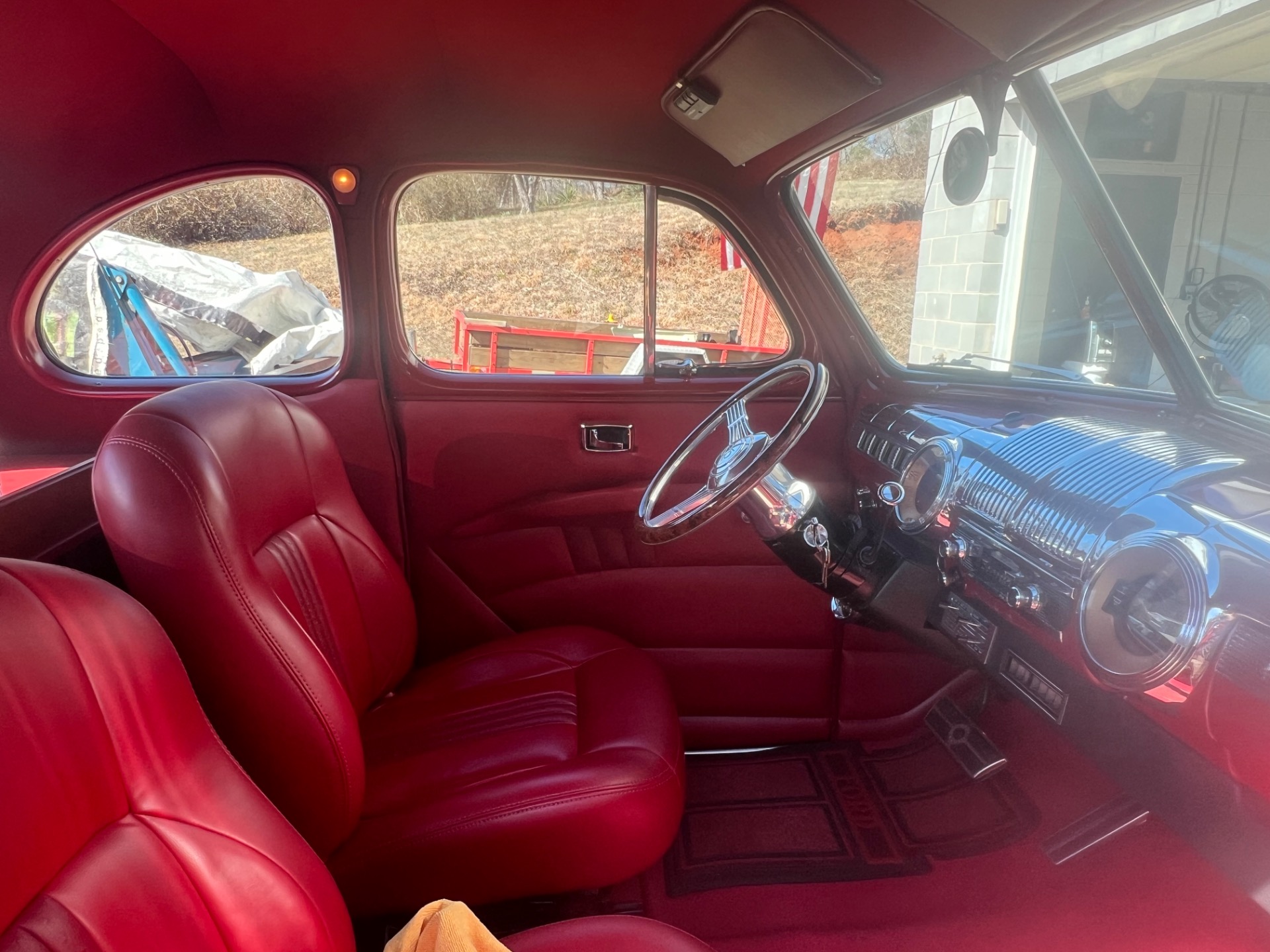
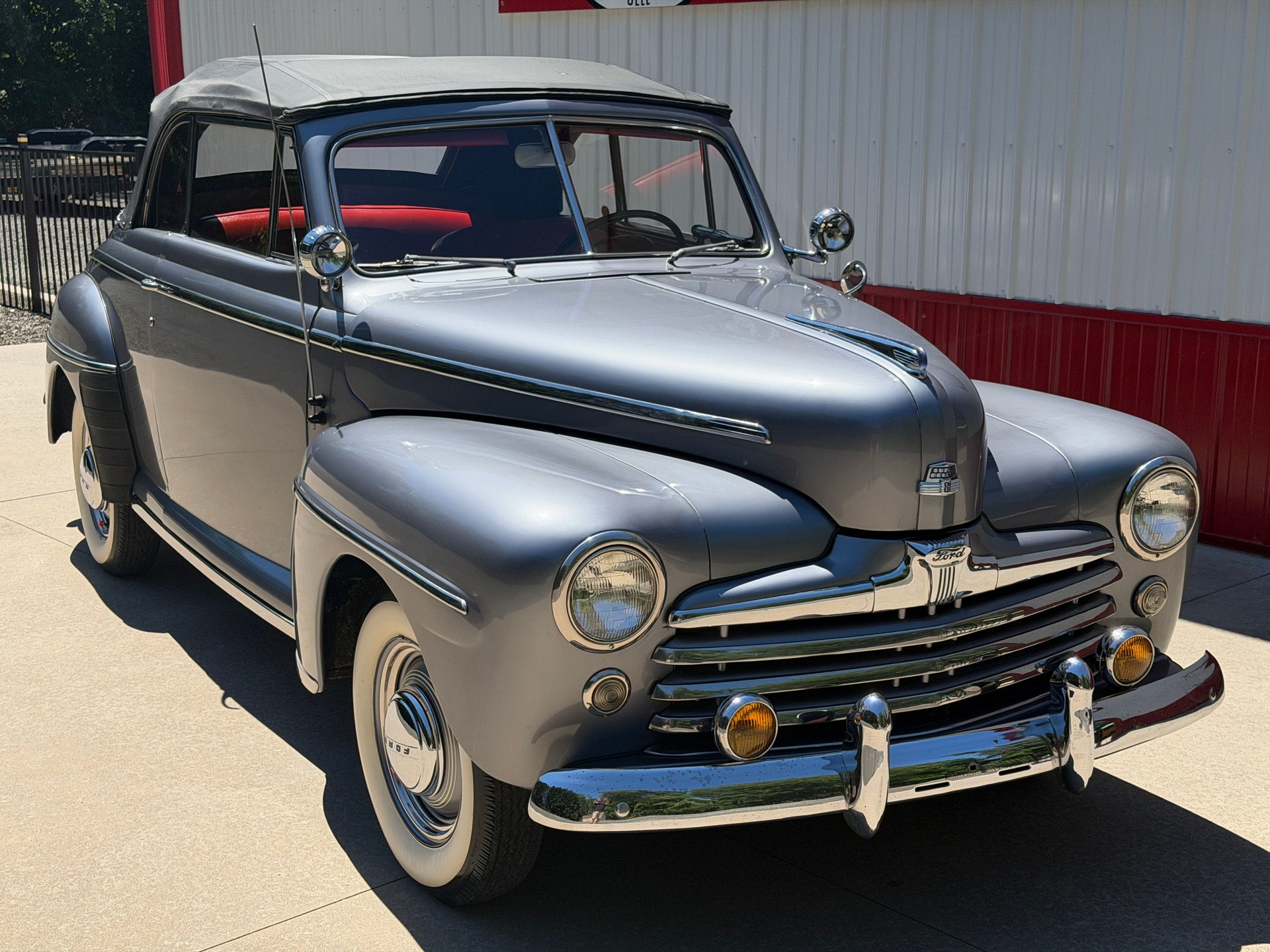
This is where a Super Deluxe earns or loses its name. The mechanical specification is shared with every Ford of the year. The Super Deluxe premium lives in the grille, the stainless side trim, the badging, the woodgrained dashboard and door garnish mouldings, the upgraded cloth or leather trim depending on body, the clock, the armrests and a dozen small fittings. Reproducing missing brightwork is possible for the common pieces and impossible or ruinous for the rare ones, and rechroming or re-plating a full set of period brightwork is a serious bill, typically $2,500 to $6,000 depending on how much pot metal needs repair before plating. Pot metal — the zinc alloy used for many handles, ornaments and grille details — pits from within and cannot be polished back. Pitted pot metal is a replacement or specialist-repair item, so count the pieces and price them individually.
Seats and upholstery. Original broadcloth and mohair-type trims wear at the driver's cushion and bolsters first, fade unevenly and go brittle. Sit in the driver's seat and feel for collapsed springs and padding turned to dust. A full retrim in correct materials runs roughly $3,500 to $8,000 depending on body, and a cheap vinyl retrim destroys the very premium the badge claims. A sound, original, gently worn interior is worth more than a new wrong one — tell them apart by seams, piping and material grain.
Woodgrain and instruments. The painted woodgrain on the dashboard and garnish mouldings cracks, fades and gets painted over in budget restorations. Correct woodgraining is a specialist process, not a paint colour; a full set refinished properly runs roughly $1,200 to $2,800. Check every garnish piece matches the dash — a mismatch means one piece was refinished alone, fine if disclosed, a warning if the car is sold as untouched. The clock rarely works; pay no premium for one without seeing it run. The heater is simple and repairable. The tube radio is specialist work at roughly $400 to $900 for a proper rebuild, so a working one is a genuine plus and a silent one a known cost.
Convertible and wagon specifics. On a convertible, operate the top yourself, twice. Watch for a binding frame, a top that pulls to one side and torn header seals. A new top in correct material, fitted, runs roughly $1,800 to $3,500, frame repair extra. Check the well behind the rear seat and the floors under it for water damage. On a wagon, check every piece of wagon-specific hardware — hinges, latches, tailgate chains and brackets — because it is body-specific, scarce and priced accordingly.
Electrics and the six-volt reality
Most original Super Deluxes are six-volt, positive-earth, with a generator and a cutout or regulator depending on year. Six volts is not a defect. A healthy six-volt system with clean, heavy cables, good earth straps and a sound generator starts a flathead eagerly and runs everything the car was built with. Almost every six-volt complaint traces to resistance: thin modern replacement cables, painted-over earth points, corroded bulb sockets and a tired battery asked to do its work through all three. The fix is cleaning, correct cables and a good battery, at roughly $200 to $500 in parts, not a twelve-volt conversion.
Twelve-volt conversions are common on modified cars. Judge one by its execution: alternator neatly mounted, wiring loomed and fused, gauges converted or correctly resisted. A conversion that left a nest of unfused wire under the dash tells you the standard of every other job on the car — look under the dash and believe what you see. Test every lamp, the horn, the wipers and the heater fan on any viewing. Vacuum wipers slow under acceleration and recover on the overrun; on cars so fitted that is design, not fault. A car where everything electrical works has usually been used and maintained, still the best single predictor of a good old Ford.
How to inspect one
Allow a full hour, bring a torch, a magnet wrapped in cloth and a notebook, and insist on a cold engine when you arrive. If the car passes you, pay for a lift inspection before money changes hands — on a car of this age it is the best money in the purchase. Work in this order, because the early steps can end the viewing.
- Start with the paperwork and the numbers. Match the serial number on the frame and on the transmission case to the title. Decode what the number tells you about the engine the car was built with and check that the engine in the bay agrees in type, if not in individual identity. A six-cylinder car priced as a V8, or a 1941 wearing 1942 or post-war identity, is settled here, at the paperwork, before you fall for the paint. Ask for invoices, not stories: engine rebuilds, wood work, chrome work and brake work all leave paper when they have really been done.
- Cold start. With the engine stone cold, watch the start. A good flathead catches quickly, may need choke depending on temperature, and settles to an even, quiet idle. Watch the exhaust for blue smoke that persists, listen for a deep knock as oil pressure builds, and note how long the oil gauge takes to respond. A car that needs ether, prolonged cranking or throttle pumping to start cold is telling you about compression, ignition or carburettion, and all three are priced differently, so note which symptom you saw.
- The cooling test, done long. Drive at least twenty minutes, including a sustained pull and a period idling in place. Watch the temperature gauge throughout and listen for boiling or smell coolant after switch-off. The flathead that only behaves for five minutes has not passed, as the engines section explains. Check the radiator, hoses and both water pumps for weeping once hot and pressurised, because leaks that are invisible cold announce themselves hot.
- Under the car. On a lift if at all possible, torch along the frame rails, the centre X, the rear kick-up, the spring hangers and the body mounts. Prod suspect areas. Perforation in the frame is structural and reprices or ends the deal. Read any underseal as evidence: old, patchy and honest is normal; a fresh, uniform coat over everything, applied for the sale, is a question the seller needs to answer with photographs of what is underneath.
- Floors, sills and trunk. Lift every carpet and mat. Prod the toe boards, footwells and floor edges. Press the full length of both sills and check their ends at the arches. Lift the spare wheel and trunk mat and inspect the well corners. Water staining, damp smell or fresh matting laid over damp floors all mean the car has been wet, and wet cars rust from the places you have just checked outward.
- Body, gaps and the magnet. Run the magnet over the sills, arch lips, lower doors, lower fenders and rear quarters. Filler announces itself by a weaker pull and a duller tap. Sight down each flank for ripples, check door and deck gaps for accident history, and run a fingertip along every door bottom for bubbling. Count the pitted pot-metal and chrome pieces one by one and write the count down — brightwork is priced by the piece, and memory flatters every car by the drive home.
- Trim completeness against the year. Check the car against correct photographs for its year: grille pattern, side trim, badging, hubcaps, dashboard woodgrain, garnish mouldings and interior pattern. On a Super Deluxe this step is valuation, not pedantry. Missing year-specific trim is the hardest cost to reverse, so a complete, slightly dull car outranks a shiny car wearing the wrong year's grille and trim.
- Kingpins, steering and springs. Grease first in your mind before you condemn: rock each front wheel top to bottom for kingpin play, but remember a dry joint can mimic a worn one. Check steering free play at the centre, look for a lean or a low corner that betrays a tired spring or shackle, and bounce each corner to judge the shock absorbers. Price a front-end refresh as a system if several items fail together.
- The test drive, gearbox and axle. Drive fifteen minutes minimum, including a stretch at 50 to 60 mph. The three-speed should change cleanly into second and third once warm, hold gear on the overrun and engage first at rest without force. Listen for axle whine at a steady speed, feel for clutch judder on take-up, and note any clunk from the torque tube. If the car has an automatic or a five-speed, you are inspecting a conversion: judge shift quality, kickdown, leaks and the neatness of the installation, and confirm the paperwork describes the car as modified.
- Brakes, hard and straight. From 40 mph on a clear, straight road, brake firmly. The car should pull up straight without grabbing, the pedal should stay firm and high, and a second immediate application should feel the same as the first. A sinking pedal, a pull to one side or fluid at any backing plate ends the drive portion of the inspection until the hydraulics are sorted. Check the handbrake holds on a slope; it is a small job when it does not, but it belongs on your list and your offer.
- Heat, electrics and accessories. Whatever the weather, run the heater and fan, work every lamp, the horn, the wipers and every switch. Check the gauges against reality — a fuel gauge that lies and a temperature gauge that reads low are both common and both matter. On a convertible, operate the top twice yourself. On a wagon or Sportsman, open every door, gate and panel and probe the wood at the joints with a thumbnail.
- Interior last, and honestly. Sit in every seat, feel for collapsed springs and dead padding, and check the garnish woodgrain against the dashboard. A sound, original interior is the hardest part of a Super Deluxe to recreate at any price, so weight it heavily — then stand back and photograph the car in profile from twenty feet. Faults you talked yourself out of in person are obvious in that picture.
Values
The market block beneath this guide carries the current numbers — the cars listed now and the recorded sales — refreshed at every build, and it is the only place you should take a figure from. What this section gives you is how to read those numbers, because a Super Deluxe is one of those cars where a single headline figure misleads more than it helps.
Start with the condition spread, which on this car is enormous and is driven by body and trim rather than by mechanics. At one end sits the project: a complete-looking car that has sat for years, with rust in the floors and sills, a tired interior and an engine that turns but has not run in a decade. At the other end sits the sorted driver or the properly restored car, complete in its year-correct trim, with sound wood where wood applies and invoices for the expensive work. Between those two cars lies a gap far wider than the cost of an engine rebuild, because the expensive parts of a Super Deluxe — body metal, chrome and pot metal, wood, interior — are exactly the parts a project needs most. When you compare two listings, compare completeness and body condition first and treat engine claims as secondary. The market does.
Body style drives the second spread. Convertibles, club coupes and wagons command strong premiums over sedans in comparable condition, the Sportsman sits in a class of its own when genuine, and the Fordor sedan is persistently the softest value in the range despite being the most usable closed car. That is fashion, not merit, and it creates the honest buying opportunity in this market: a good Fordor or Tudor bought at sedan money gives you the whole Super Deluxe driving experience for a fraction of convertible money. Six-cylinder cars sit below equivalent V8s by a clear margin for the reasons given in the models section, and a six priced as a V8 is simply mispriced, however good it looks.
Originality and modification pull in opposite directions, and you need to know which market a car belongs to before judging its price. A correct, unmodified car holds the original-car buyer pool at resale. A well-built modified car — modern drivetrain, automatic gearbox, disc brakes, air conditioning — appeals to a different and currently larger pool, and the best sell strongly. The cars that struggle are caught between: modified enough to lose the original buyer, not finished enough to win the modified buyer. Buy half-finished conversions, if at all, at project money with finishing costs counted in full.
Asking and achieved prices part company predictably: sellers anchor on the best comparable they can find — usually a convertible or restored coupe — and apply it to a sedan or a project. Recorded sales, shown in the market block below, are the corrective. Find the sales closest to the car in front of you in body, year, engine and condition, and let those frame your offer. Every honest inspection produces a list, priced in the open item by item — sill work, brake work, trim pieces. A maintained car has a short list, and that shortness, documented, is worth paying for.
Parts and ownership
The Super Deluxe is one of the best-supported American cars of its era: Ford built the underlying car in enormous numbers and the reproduction industry followed the demand. Ordinary parts will not stop you. Body-specific and trim-specific parts will slow you, occasionally and expensively — the same lesson the rest of this guide teaches, from the supply side.
Easy to get: engine service and rebuild parts for the flathead V8, including pistons, bearings, gaskets, water pumps, oil pumps and ignition components; carburettor kits and rebuilt carburettors; clutch and gearbox wear parts; brake hydraulics and shoes; kingpin and suspension kits; springs and shackles; exhaust systems; glass and window rubber; wiring looms made to pattern; and correct-size tyres in both period and radial patterns. Order this week, fit this weekend, at prices that will pleasantly surprise anyone coming from a rarer marque. The six-cylinder engine is supported adequately rather than lavishly — service parts are available, but allow longer lead times and fewer choices.
Harder and dearer: year-correct grille assemblies and stainless side trim, especially for 1941 and for the short-run 1942; pot-metal ornaments, handles and badging in unpitted condition; Super Deluxe interior trim in correct patterns and materials; woodgraining refinishing, which is a craft service rather than a part; convertible top frames and body-specific convertible hardware; station wagon wood, hardware and tailgate fittings; Sportsman wood and Sportsman-specific structure and hardware; and good original sheet metal for the less common bodies. For these, the sources are the specialist Ford suppliers, the swap-meet and club networks, and patience. The Early Ford V8 club network and the marque forums are not optional extras for a Super Deluxe owner — they are the parts department for everything in this paragraph, and membership pays for itself the first time you need a one-year-only trim piece.
Running and keeping one. A sorted Super Deluxe is a realistic regular-use classic for secondary roads, touring speeds and summer use. Fuel consumption sits in the mid-teens per gallon. Servicing is simple and frequent by modern standards — grease regularly, change oil often, keep the cooling system clean and the ignition in order. Budget honestly for the first year: catching up deferred maintenance on a running car, in tyres, brakes, hoses, fluids and ignition, is a real four-figure commitment before you improve anything, and recommissioning a car that has slept for years costs materially more. Storage matters more than mileage: a dry-stored, regularly run car ages slowly, while a damp-stored car rusts with its odometer standing still. Buy use and dryness over shine. Insurance follows the mainstream classic pattern of agreed-value cover, and the one ownership trap specific to this car is identity on modified examples — paperwork must tell one consistent story, sorted while you are still the buyer with leverage.

Which one to buy
- The all-rounder: a post-war V8 Tudor or club coupe, 1946 to 1948. The bigger 239 engine, the deepest choice of cars — 1947 alone accounts for 11 of the 25 cars in our pool — the best parts support and a closed body you can use in any weather. If you want one Super Deluxe to drive and enjoy, buy the best example of this car you can find.
- The value buy: a post-war Fordor sedan with the V8. The same car mechanically, the most room, the softest prices in the range. Fashion discounts it; use does not. A good Fordor at sedan money is the smartest purchase in this guide.
- The pre-war car: a complete 1941. Buy it for the purer styling and the one-year detailing, and only when the trim is complete, because completing a 1941 from parts is the slow way to spend convertible money on a closed car. A genuine 1942 is a specialist purchase for a buyer who can verify it.
- The summer car: a 1947 or 1948 convertible with the V8. Operate the top, inspect the floors twice and pay for documented top, wood-free structure and hydraulic work. The convertible premium is real, so the condition evidence has to be real too.
- The collector car: a genuine Sportsman. Verify identity from numbers and structure, buy the best wood you can possibly afford, and expect a small market at both purchase and resale. A tribute convertible is a convertible and should be priced as one.
- The project with a warning: the station wagon. Buy a wagon only with open eyes and probed wood. Sound original wood makes it the most characterful car here; soft wood makes it a coachbuilding project that happens to include a Ford.
- The modified car, bought knowingly: a well-documented conversion. Automatic gearbox, modern engine or disc brakes are all legitimate for modern traffic — when finished, invoiced and honestly described. Pay for the conversion quality you can inspect, never for a list of parts you are told about.
And the rule that overrides all of the above: buy the most complete, least rusty Super Deluxe you can find, with the engine and body you actually want. Engines, gearboxes, brakes and electrics are all fixable at plannable prices. A rotten frame, a stripped trim set or a wagon full of soft wood costs more to put right than the finished car will be worth — and completeness, once lost, is the one thing no rebuild can make original again.