
Ford Roadster buyer's guide
Ford Roadster -- the model's own buyer's guide: variants, values and what to check.
Years listed: 1932-1937 · Series: Full Size
Overview and history
Ford Roadster is not one car. It is a body style — a two-seat open car with a folding top that disappears, side curtains instead of roll-up windows, and usually a rumble seat in the rear deck — that Ford fitted to three successive generations of chassis between 1928 and the late 1930s. That distinction decides everything about buying one, because a 1929 Model A roadster, a 1932 Model B roadster and a 1936 V8 roadster share a name and a silhouette and almost nothing else: different engines, different brakes, different steering, different values and completely different driving experiences. Your first job as a buyer is always to pin down which generation the car in front of you actually is, and your second job — just as important on this model — is to work out how much of it is still the car Ford built.
The generations run like this. The Model A roadster (1928–31) is the upright, charming one: a 200.5-cubic-inch four-cylinder engine, mechanical brakes, a three-speed sliding-gear box and a top speed you plan journeys around. The 1932 car — Model B with the four, Model 18 with the new flathead V8 — is the famous one, the Deuce, with the pretty grille shell, the longer hood and the proportions that made it the most copied car shape in American history. The 1933–34 cars are sleeker, with skirted fenders and a raked grille; the 1935–36 cars are rounder and more civilised; and the 1937 car is the last of the true factory roadsters, after which the open two-seater disappears from the Ford catalogue and the convertible coupe — with proper windows — takes its place. A car badged or listed as a 1939 roadster is therefore a question, not a fact: Ford sold no factory roadster that year, so a 1939 car wearing the name is a custom build, a rebody or a mislabel, and you price it as what it is once you have established what that is.
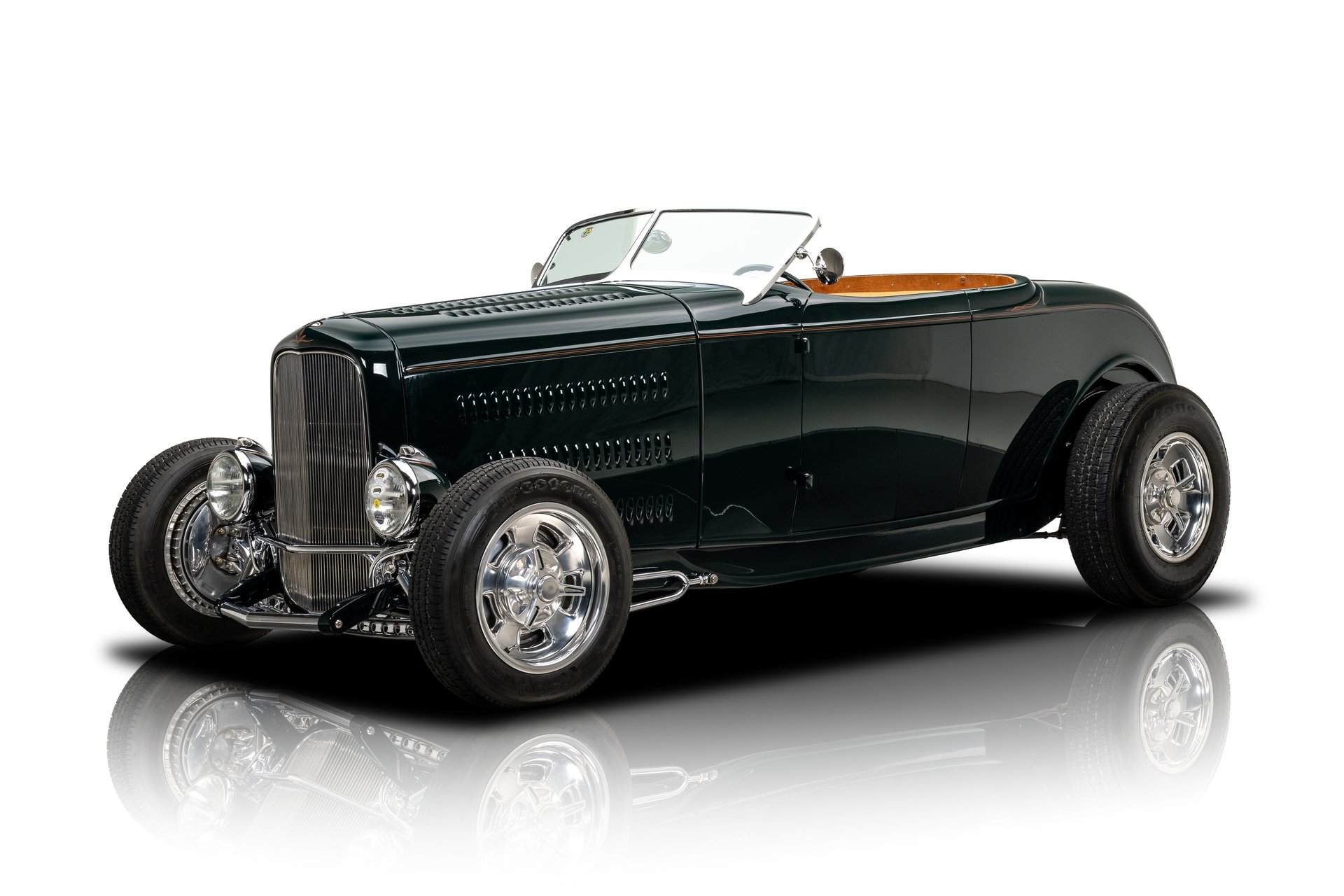
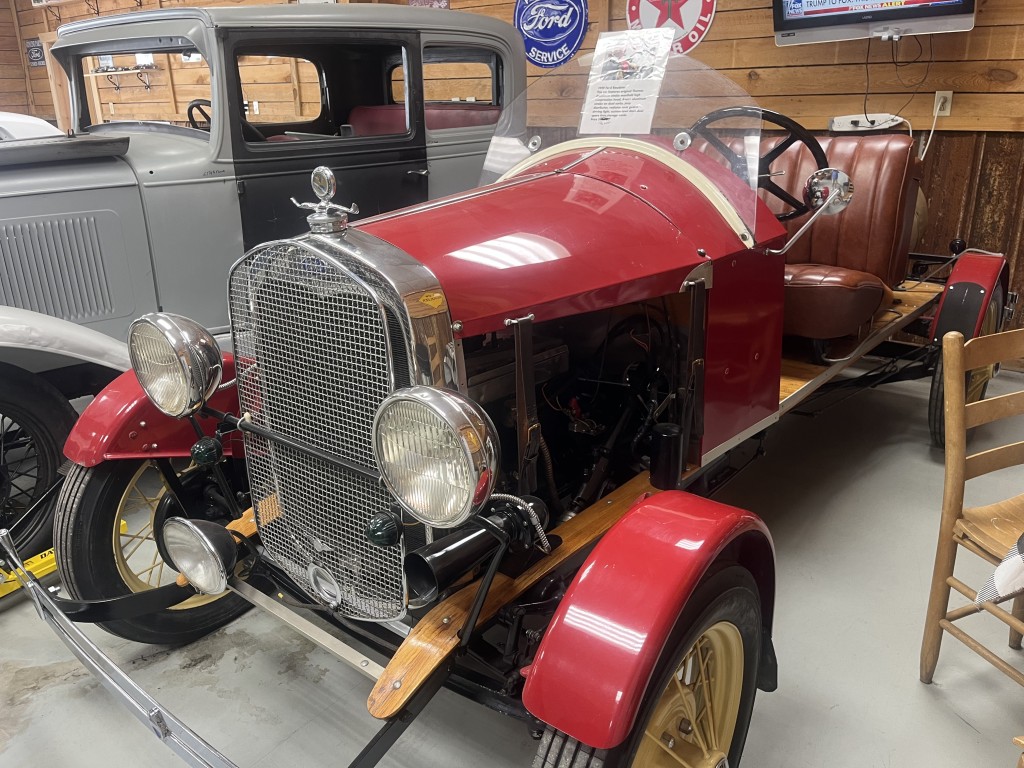
The second thing that defines this market is the hot rod. No classic car has been modified more thoroughly, for longer, than the early Ford roadster — above all the 1932. Engines have been swapped since the 1940s, bodies channelled, tops chopped, frames boxed, axles dropped and brakes converted. Replica bodies in fibreglass have been made since the 1970s and in fresh steel since the 2000s, and complete replica chassis are catalogue items. The result is that the roadster market is really two markets sharing one set of listings: original or faithfully restored Ford roadsters, bought as antiques, and hot rods, bought as individual hand-built cars whose value sits in the quality of the build and the desirability of the parts. Neither market is better. They are priced on different evidence, inspected on different criteria and resold to different buyers, and the single most expensive mistake in this field is paying original-car money for a rod, or rod money for a car whose originality was its only asset. This guide covers both, and tells you at each step which question you are asking.
Our own listings show the shape of the supply clearly. Of the 26 roadsters we currently track, 18 are 1932 cars — the Deuce dominates this market completely — with a handful of 1933–39 cars and just two Model As. The transmissions recorded on those listings tell the hot-rod story by themselves: alongside three-speed manuals you find four- and five-speed manuals and several different automatics, none of which Ford fitted to a roadster in period. Read every listing, therefore, as a build sheet to be verified, not a specification to be trusted.
The models
Work through the generations in order, because the roadster body changes character with each one — and note that within each generation Ford sold the roadster in standard and deluxe trim, the deluxe cars carrying more equipment (a rumble seat as standard on most, better upholstery, more chrome, sometimes a second tail lamp and cowl lamps) rather than more performance.
| Model | Years | Engine | Output | Built | Character |
|---|---|---|---|---|---|
| Model A Roadster | 1928–1929 | 200.5 cu in four | 40 hp | Large numbers; roadsters were a core Model A body | Upright early car; nickel-era brightwork, drum-shaped headlamps on the earliest |
| Model A Roadster (incl. Deluxe) | 1930–1931 | 200.5 cu in four | 40 hp | Large numbers across both years | Restyled, lower and prettier; Deluxe has rumble seat and better trim |
| Model B / Model 18 Roadster | 1932 | 200.5 cu in four (B) or 221 cu in V8 (18) | 50 hp (four) / 65 hp (V8) | One year only; a small fraction of 1932 output, the V8 the rarer and dearer | The Deuce — the most sought-after roadster of all |
| V8 Roadster | 1933–1934 | 221 cu in flathead V8 | 75 hp (1933) / 85 hp (1934) | Low thousands per year and falling | Sleeker and faster; the connoisseur's early V8 |
| V8 Roadster | 1935–1936 | 221 cu in flathead V8 | 85 hp | Low; open cars were a shrinking share of sales | Rounder, softer, more comfortable; 1936 the prettier nose |
| V8 Roadster | 1937 | 221 cu in flathead V8 or 136 cu in V8-60 | 85 hp / 60 hp | Very low; the last year of the type | The final factory roadster; streamlined styling, all-steel top era begins around it |
Production figures for individual open body styles in this era are recorded inconsistently between Ford's own ledgers, body-builder records and modern registers, and roadster totals in particular are quoted with more confidence than the sources support — so the table above gives honest scale rather than invented precision. What is solid is the shape of the story: the Model A roadster was a mass-market car built in serious volume, the 1932 roadster was a one-year body in a Depression year and was never common, and from 1933 on the roadster's share of Ford production shrank every year as closed cars took over the market. Scarcity rises steadily as you move down the table, and so, broadly, does price.
The Model A roadster (1928–31). Two distinct styles. The 1928–29 car is tall and upright, with the narrower cowl, smaller wheels on the earliest cars and a distinctly 1920s feel; the 1930–31 car is restyled — lower, with a higher waistline, a one-piece cowl treatment and a much more finished look. Deluxe roadsters (1930–31) add the rumble seat, upgraded upholstery and extra brightwork. Mechanically all Model A roadsters are the same honest package described in the engines section, and they drive exactly like what they are: a well-developed 1920s car. Charm is the product here. A Model A roadster is a 45-mph car in modern traffic, and no amount of money spent on it changes that without changing what it is.
The 1932 roadster. One year, two engines, endless argument. The four-cylinder Model B car is lighter, simpler and was cheaper new; the V8 Model 18 car is the one the hot-rodders adopted and the one collectors chase. Standard and Deluxe trim again, the Deluxe carrying the rumble seat and better fittings. Because 1932 was a short, Depression-hit production year and because rodders consumed the survivors for eighty years, a genuinely original, unmodified 1932 roadster — original frame, original body, correct engine type — is a rare object, and most cars offered are rods to some degree. That is not a criticism; it is the market. What matters is that the description, and the price, match the degree.
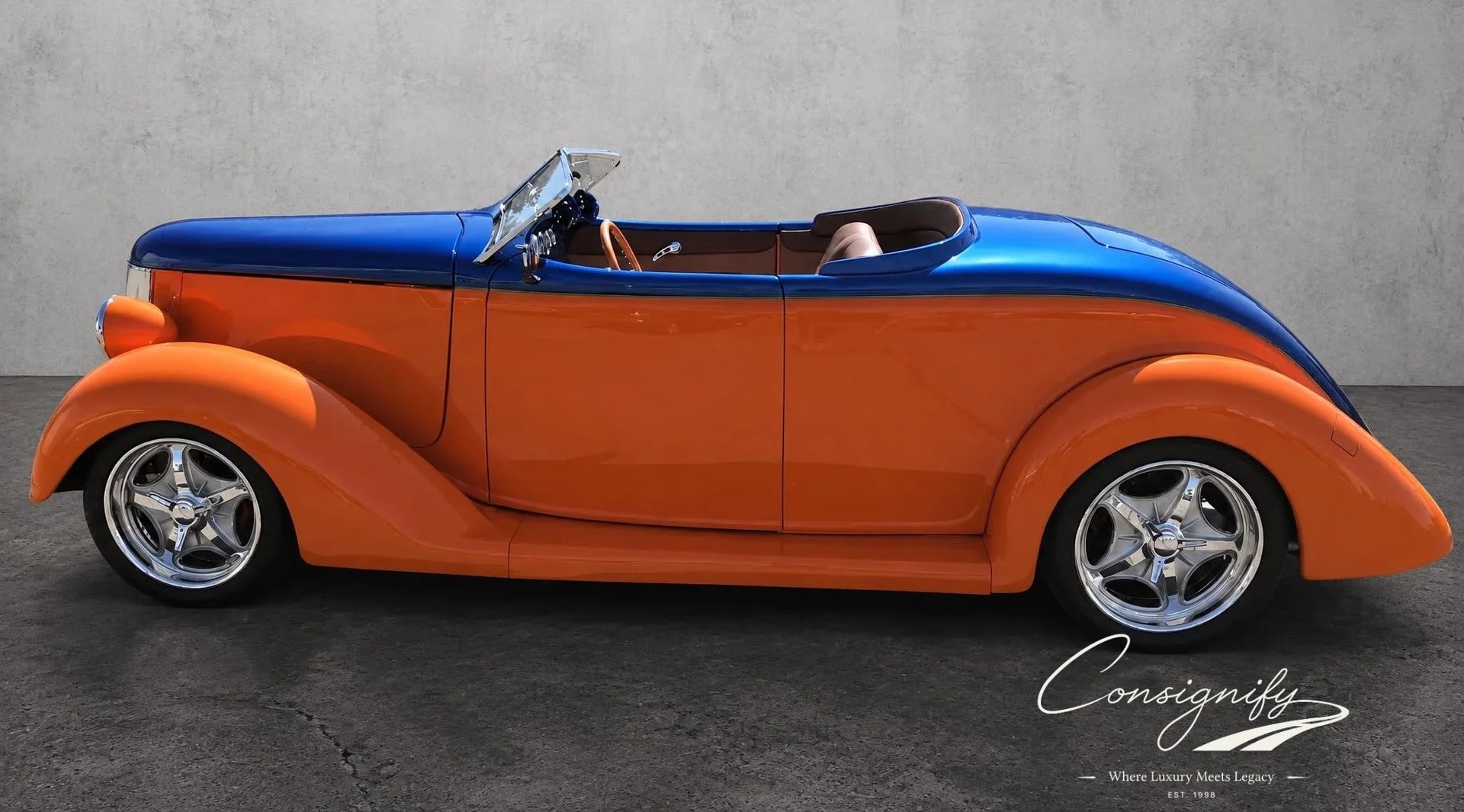
The 1933–34 roadster. The V8 only now — the four-cylinder line effectively ends with 1932 for these cars. The styling is the most elegant of the flathead era: raked grille, skirted fenders, a longer, lower body. The 1934 car, with the uprated 85 hp engine, is the pick of the pair on the road. Original survivors are scarce for the same reason as the Deuce, though the rod scene's focus on 1932 leaves the 1933–34 cars slightly less fought over.
The 1935–36 roadster. Bigger, rounder and more comfortable, with the same 85 hp V8 and steadily improving refinement. The 1936 car, with its narrower, more vertical grille and horizontal hood louvres, is generally rated the prettier. These are touring cars now rather than sports roadsters, and they suit that use well.
The 1937 roadster. The last of the line, with the streamlined, teardrop-lamp styling of the 1937 range and the choice of the full 221 V8 or the small 136-cubic-inch V8-60 — the economy engine, smoother than a four but short on torque in a car of this weight. Very few were built, because buyers had moved to convertibles with windows. A genuine 1937 roadster is a rarity play; check its identity with particular care, because rarity is exactly what invites a cabriolet or a later custom to be described upwards.

Engines and gearboxes
The fours: Model A and Model B
The Model A engine is a 200.5-cubic-inch (3.3-litre) side-valve four, rated at 40 hp, and it is one of the toughest simple engines ever built — provided you respect what it is. It runs on poured Babbitt main and big-end bearings, splash-and-pump lubrication, a low-pressure cooling system with a water pump at the front of the head, and a Zenith updraft carburettor fed by gravity from the cowl-mounted fuel tank. Ignition is by coil and points in a distributor driven from the top of the head, with manual spark advance on a steering-column lever — and that lever is part of driving the car, not a decoration. Retarded at idle and for starting, advanced as speed rises: a Model A driven everywhere on one spark setting runs hot, pings or both, and a seller who does not touch the lever is telling you how the car has been treated.
Judge a four by its sounds and its oil. A healthy one starts readily, ticks over slowly and evenly, and pulls without a deep knock under load. The knock that matters is a dull, heavy thud that comes in as you open the throttle at low speed — that is Babbitt wear in the mains or big ends, and the cure is an engine-out re-Babbitt and line-bore, realistically $3,000–6,000 at a specialist who still does the work. A lighter top-end rattle is usually valve gear or a worn timing gear, cheaper and less urgent. Oil pressure on a Model A is modest by design — the gauge, if fitted, tells you more by change than by number. Overheating is the four's other classic complaint, and the mechanism is usually mundane: a radiator core furred with decades of scale, a slipping fan belt, retarded timing, or a lean mixture. Work through those in order before believing any story about cracked blocks. The block itself cracks from frost, along the water jacket and around the valve seats, and a repaired crack is not automatically a rejection — but a crack into a cylinder or a seat is.
The Model B engine of 1932 looks like the Model A unit and improves it in the ways that matter: output rises to 50 hp through higher compression and better breathing, with a downdraft carburettor on a proper intake manifold, a fuel pump (so the tank moves to the rear of the car), a counterweighted crankshaft on later production and detail improvements throughout. It is smoother and happier at speed than the A engine, and it is the four the speed-equipment industry grew up around — period hop-up parts (high-compression heads, twin carburettors, Riley and Miller overhead-valve conversions) exist in quantity and are a whole sub-market. If a B-powered car carries period speed equipment, that equipment is part of its value and its story; document it, do not let a seller describe it vaguely. Babbitt bearings remain, so the same knock test applies.
One identity trap runs through all the fours: the engine number is the car's original identity on a Model A — the number stamped on the engine pad was the number the car was titled by, and engines were swapped freely all their lives. A Model A whose title number does not match its engine number is common and usually innocent, but it must be explained by paperwork, not by a shrug, because it affects title transfer in strict states.
The flathead V8: 221 and the V8-60
The 221-cubic-inch (3.6-litre) flathead V8 is the engine that made these cars famous: a 90-degree side-valve V8 with the exhaust passages cast through the block, introduced for 1932 at 65 hp, uprated to 75 hp for 1933 with a better carburettor and manifold, and to 85 hp for 1934 with a two-barrel Stromberg and higher compression — the form in which it serves through 1937. It is torquey, unstressed and sweet-running, and it made a cheap Ford genuinely fast by the standards of the day. It also has a set of well-understood weaknesses, and you buy one well by testing for those, not by admiring the idle.
Heat is the flathead's lifelong theme, and it is designed in: the exhaust gases travel through the water jacket on their way out of the block, so the cooling system works harder than on almost any comparable engine. Two water pumps, one on each bank of the head, do the circulating on the early engines. A healthy flathead in a sound car runs at temperature all day; a flathead that boils is telling you something specific, and the causes, in the order you should check them, are: retarded ignition timing, a radiator core restricted by scale, slipping or missing fan performance at low speed, a lean mixture, combustion gas leaking into the water jacket from a head gasket or a crack, and — the flathead special — a block whose water jackets are packed with casting sand, rust and sediment around the rear cylinders, which no amount of radiator work will cure. The distinguishing test for the serious causes is a combustion-leak (block) test on the radiator neck and a proper pressure test of the system; the cure for a silted block is engine-out cleaning, and you price it as such.
Bearings divide the flathead years. The 1932–36 engines run poured Babbitt main bearings, like the fours, and the same load-knock test applies, with the same rebuild economics. From 1937 the engines move to precision insert main bearings, which are cheaper and easier to renew — one of several reasons a later engine in an early car is a common and often sensible upgrade, and also a common undisclosed one. Stud count is your quick external tell for the later engines: the 1938-onward 24-stud head pattern belongs to an engine family that post-dates every car in this guide, so a roadster claiming originality while wearing 24-stud heads has a later engine, whatever the paperwork says. The early engines carry their studs differently and the heads, water pumps and front covers differ in detail year by year; if originality is what you are paying for, you verify the engine's features against the year, feature by feature, not by the seller's summary.
The ignition system is the flathead's other signature. The distributor sits at the front of the engine, driven off the camshaft, with the coil mounted on top of it on the early cars — compact, and awkward to service, which is why it so often has not been serviced. Worn distributor bushings and tired advance mechanisms give a wandering idle, a flat spot and hard hot starting that owners blame on the carburettor. The carburettors themselves — single-barrel on the earliest V8s, then the Stromberg 97 family and Ford/Holley two-barrels — are simple and well supported; the flat-spot complaint is as often vacuum or ignition as fuel. Fuel pumps are mechanical, cam-driven, and modern ethanol fuel eats their diaphragms and the flexible lines: a car that runs out of breath at speed or needs endless cranking after standing is describing its fuel pump and lines before it describes anything expensive. Vapor lock on hot days, from heat soak around the pump and lines, is the classic flathead roadside stop — period-correct and still curable with insulation, an electric auxiliary pump and fresh components.
The V8-60, offered in the 1937 car, is a scaled-down 136-cubic-inch flathead making 60 hp. It is smooth and economical and it was designed for lighter European-style cars; in a full-size American roadster it works hard. Treat a V8-60 car as a rarity and economy curiosity, not a performance buy, and note that its engine-specific parts are markedly scarcer than 221 parts.
Finally, the swapped engine — because in this market it is half the story. Small-block Chevrolet and Ford V8s, later flatheads, overhead-valve conversions and modern crate engines all live under roadster hoods, and a swap done well makes a faster, more usable car. Judge a swap as engineering: engine mounts fabricated or hacked, steering clearance, cooling capacity (a stock early radiator asked to cool a modern V8 is the most common swap failure), exhaust routing, and whether the frame has been boxed to take the torque. A swap described as professional should look professional with the hood open and the car on a lift.
Gearboxes and drivetrain
Every factory roadster in this guide has a three-speed manual gearbox and torque-tube drive to a live rear axle on transverse leaf springs — the chassis architecture Ford kept, in essence, from the Model A to 1948. The differences are in the details. The Model A box is a sliding-gear unit with no synchromesh: clean changes need double-declutching, especially down into second and first, and a graunch from a seller who does not is a driving fault, not necessarily a gearbox fault — but make the seller demonstrate, or drive it yourself long enough to learn whether the box jumps out of gear under load, which is the real wear sign and means worn dogs, gears or bearings inside. From 1932 the Ford box gains synchromesh on second and third, and the later 1930s boxes are progressively slicker; by 1937–39 the standard Ford three-speed is a pleasant, quiet gearbox when its oil is clean and its linkage is adjusted.
The torque tube and enclosed driveline are strong and simple; their wear points are the universal joint at the front of the tube, the radius rods and their mountings, and the rear axle itself — banjo housing, with axle bearings and seals that weep with age and ring-and-pinion wear that whines on the overrun. Period overdrives exist — the Columbia two-speed rear axle is the famous one, an accessory that splits each gear with a vacuum/electric shift — and a working Columbia is a genuine highway asset and a value adder; a non-working one is a stuck axle in one ratio, so test both ranges on the drive. Clutches are single dry plate throughout, mechanical linkage on the early cars; judder is usually oil contamination or a tired driven plate, and the job is engine-or-gearbox-out money, roughly $1,200–2,500 depending on the car and what else you do while it is apart.
Automatics and four- and five-speed manuals in a roadster are always later installations. Judge them as you judge an engine swap: a Turbo-Hydramatic or a modern five-speed behind a small-block in a well-built rod is a feature; an automatic installed with a butchered tunnel, a hanging pedal conversion and no cooling thought is a deduction. Check tunnel and floor modifications from underneath, where the welding tells the truth.
Problem areas
Start with the honest evidence from our own listings. We have photo-checked only four of the roadsters we track in detail — too small a sample to generalise from, and we do not pretend otherwise — and in those four, damage was noted on two cars, while rust, smoke and leaks were not recorded at all. Read that the right way: it says the photographed cars present clean, as dealer cars do, and it says nothing about the metal under the paint, the state of the frame or the inside of the engine, which is where these cars keep their secrets. On an early Ford roadster your inspection has to go looking, because the listing photographs will not do it for you.
Body: steel, rust and the replica question
The roadster body is a light steel shell over wood and steel framing on the early cars, and it rusts in the places water sits and road dirt packs. Work the map in this order. The cowl sides and the lower cowl feet, where water runs down inside the body. The door bottoms and the lower door skins, and the door hinge pillars, whose condition decides whether the doors hang true. The rear quarters behind the doors and ahead of the rear wheels, where dirt thrown up by the wheels packs against the inner structure. The rumble-seat or trunk floor and the panel below the deck opening, which collects every drop that gets past the deck lid seal — lift the rumble cushion or the trunk mat and look at the floor itself, not at the trim. The floor pans around the seat and the toe boards. And the windshield frame and posts, which rot at their bases and are far harder to repair convincingly than a flat panel.
Repair economics follow panel availability. Patch panels and full reproduction panels exist for the popular years — above all 1932 — so a rusty Deuce body is a welding bill; the same rust on a 1935 or 1937 body, where reproduction support is thinner, is a fabrication bill. As rough knowledge figures, a professional floor or lower-body repair programme on a rusty roadster runs $3,000–8,000 before paint, and a quality repaint on an open car, properly prepared, starts around $10,000 and rises quickly with bodywork. That arithmetic is why the body, not the engine, sets the value of an original car.
Now the question that hangs over every roadster viewing: is the body Ford's? Original steel, reproduction steel and fibreglass bodies all exist in this market, and all three can be legitimate — when they are described honestly. A fibreglass body on a rod is a perfectly good car at a fibreglass-body price; it becomes a problem only when it is sold at original-steel money. Your tells: fibreglass feels and sounds different — tap panels with a knuckle, look at panel edges and inner surfaces in the rumble compartment and under the dash, where glassfibre shows mat texture and uniform thickness rather than folded steel edges, spot welds and pressings. Reproduction steel is harder: look for the crispness of original pressings, original spot-weld patterns, the fit of doors and deck lid, and aged metal in hidden places. A body that is claimed original but is uniformly perfect underneath, with no pitting anywhere in the hidden structure, is asking you a question. None of this is a moral judgement — it is a pricing input, and on a 1932 car the gap between original steel and reproduction can be the largest single number in the deal.
Wood matters on the early cars. Body framing, floorboards, seat structure and top bows use wood, and rot or worm in structural wood shows as doors that will not stay adjusted, a body that creaks and shifts on its frame, and top bows that will not fold or align. Replacing body wood is skilled, slow work — price it as a specialist job, not a weekend task, and check by pushing a small screwdriver into hidden wood wherever the seller allows.
Frame, suspension and steering
The frame is the car's skeleton and, on a rod, the most modified part of it — so inspect it as structure first and history second. Early Ford frames are riveted channel sections, and they crack around the crossmembers, the engine mounts and the spring hangers, sag between the axles, and twist in old accidents. Sight along each rail, look for ripples, cracks at the rivet lines, amateur fish-plate repairs and heat marks from straightening. On a 1932, the frame carries the car's serial number, stamped on the left frame rail near the steering box (and repeated elsewhere along the rail on many cars) — find it, read it and match it to the title; the prefix tells you the original engine type, an 18-series number for a V8 car and a B-series number for a four. A frame number that does not match the title, or a stamping that has been ground, filled or restamped, is a stop-and-sort-it moment, not a detail.
Hot-rod chassis work is judged by the same standard as any fabrication. Boxing plates should be welded continuously and neatly, crossmember changes should be square and symmetrical, dropped axles should be forged units from a known maker rather than heated-and-bent originals (a bent-by-heat axle is a genuine safety rejection), and hairpins or split wishbones should mount to solid, gusseted brackets. Fresh thick underseal or powder-coat over everything hides all of this, which is precisely why it is applied — get the car on a lift and look at the welds themselves.
Suspension is transverse leaf springs front and rear across the whole guide period, with lever-arm or, on later and modified cars, tube shock absorbers. Wear shows as broken or sagging spring leaves (count them and compare sides), worn shackles and bushings that let the axle move laterally, and perches and spring eyes worn oval. The test is physical: rock the car, bounce each corner, and on the lift lever the wheels against the spring eyes and shackles feeling for lost motion. Steering is a worm gearbox on the column, and its wear shows as free play at the wheel rim — a little is period character, a quarter-turn is a rebuild. Check the drag link, tie rod ends and kingpins by rocking each front wheel at the top and at the front: kingpin wear and wheel-bearing wear feel similar, and the way you separate them is to have a helper press the brake pedal — play that disappears with the brakes on is in the bearings; play that remains is in the pins and bushings. Kingpin and bushing work is a few hundred dollars in parts and a day of skilled labour; a worn steering box is a specialist rebuild, roughly $800–1,800.
Brakes: the safety divide
No subject divides these cars like brakes, because Ford was the last American maker to adopt hydraulics. The Model A has mechanically operated drum brakes worked by rods; the 1932–36 cars have mechanical brakes worked through a system of cross-shafts and linkage; the 1937–38 cars use cable-operated mechanicals; and only in 1939 does Ford fit hydraulic brakes as standard. A well-maintained mechanical system, correctly adjusted with unworn linkage, stops an early roadster adequately for gentle period driving — that is the truth, and so is the other half of it: most mechanical systems today are not well maintained. Worn clevis pins, ovalled holes, stretched rods, bent linkage and maladjustment multiply lost motion until the pedal travel is mostly slack and one wheel does most of the work. Judge a mechanical-brake car by a hard stop from 30 mph on a straight, empty road: it should pull up straight, with a firm pedal and no grab or fade. Pulling to one side, a pedal that needs pumping up in travel (not pressure — there is none), or a handbrake that will not hold the car on a slope each price a brake overhaul: a full mechanical rebuild with drums, shoes, linkage pins and bushings runs roughly $1,500–3,000 in parts and labour.
Hydraulic conversions are the most common safety modification on driven cars, using 1939–48 Ford or later components, often with a dual-circuit master cylinder on rods. A conversion is a plus when it is done completely — correct backing plates, new lines and hoses, a properly mounted master cylinder, a working handbrake — and a liability when it is half-done. Inspect conversions from underneath like any other fabrication, and ask what the components are, because future parts orders depend on the answer. On any car, rod or original, perished flexible hoses, weeping wheel cylinders and a single-circuit system with old fluid are recommissioning items, not negotiating garnish.
Cooling, electrics and the top
Cooling problems were covered with the engines, but the system hardware deserves its own line here, because on these cars the radiator is an old, expensive component. Original radiators are brass-and-copper honeycomb or tube-and-fin cores; a core restricted by scale can sometimes be cleaned, and a recore is a specialist bill in the region of $800–1,800 depending on the year. Check for weeping seams, solder repairs blooming with corrosion, and a fan belt and water pump in honest condition. A car that has been run for years on plain water carries the damage inside the block as well as the radiator — the two are one system and one budget.
Electrics are six-volt, positive-earth (ground), on all the stock cars in this guide, with a generator and cutout or regulator. Six volts is not a defect — a six-volt system with clean, heavy cables and sound connections starts these low-compression engines perfectly well. What fails is the wiring itself: ninety-year-old insulation, amateur additions, corroded earth straps and a starter that has never been serviced. Dim lamps and slow cranking are connection faults until proven otherwise, and the test is voltage drop measured at the starter while cranking, not a new battery. Twelve-volt conversions on rods are normal and usually welcome; judge them by workmanship and by whether the gauges, lamps and horn were converted properly or merely fed twelve volts and left to die slowly. Wiring a car from scratch with a reproduction harness is a known quantity, roughly $400–900 for the harness depending on year, plus fitting — cheap insurance on an original car with crumbling cloth insulation.
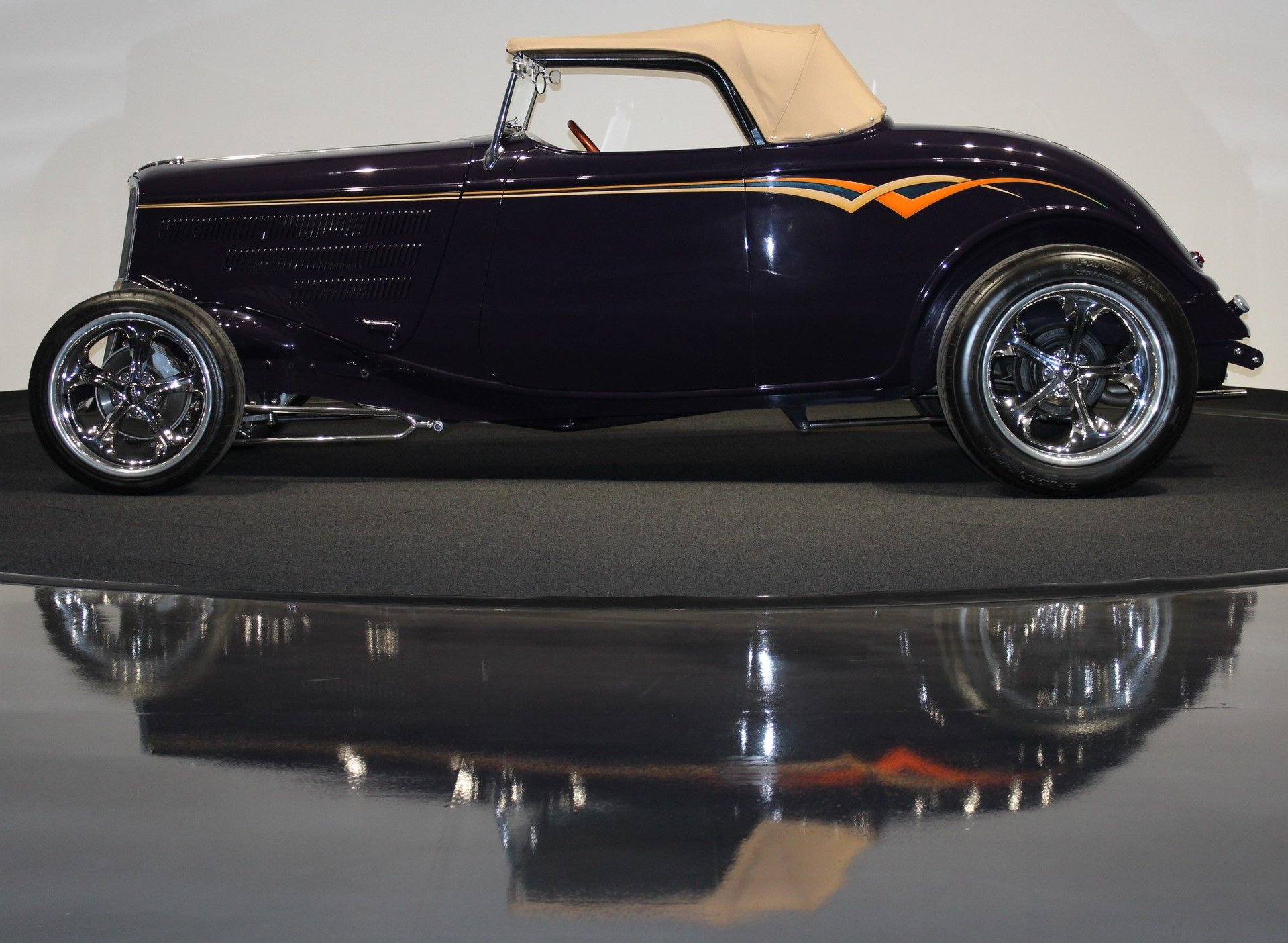
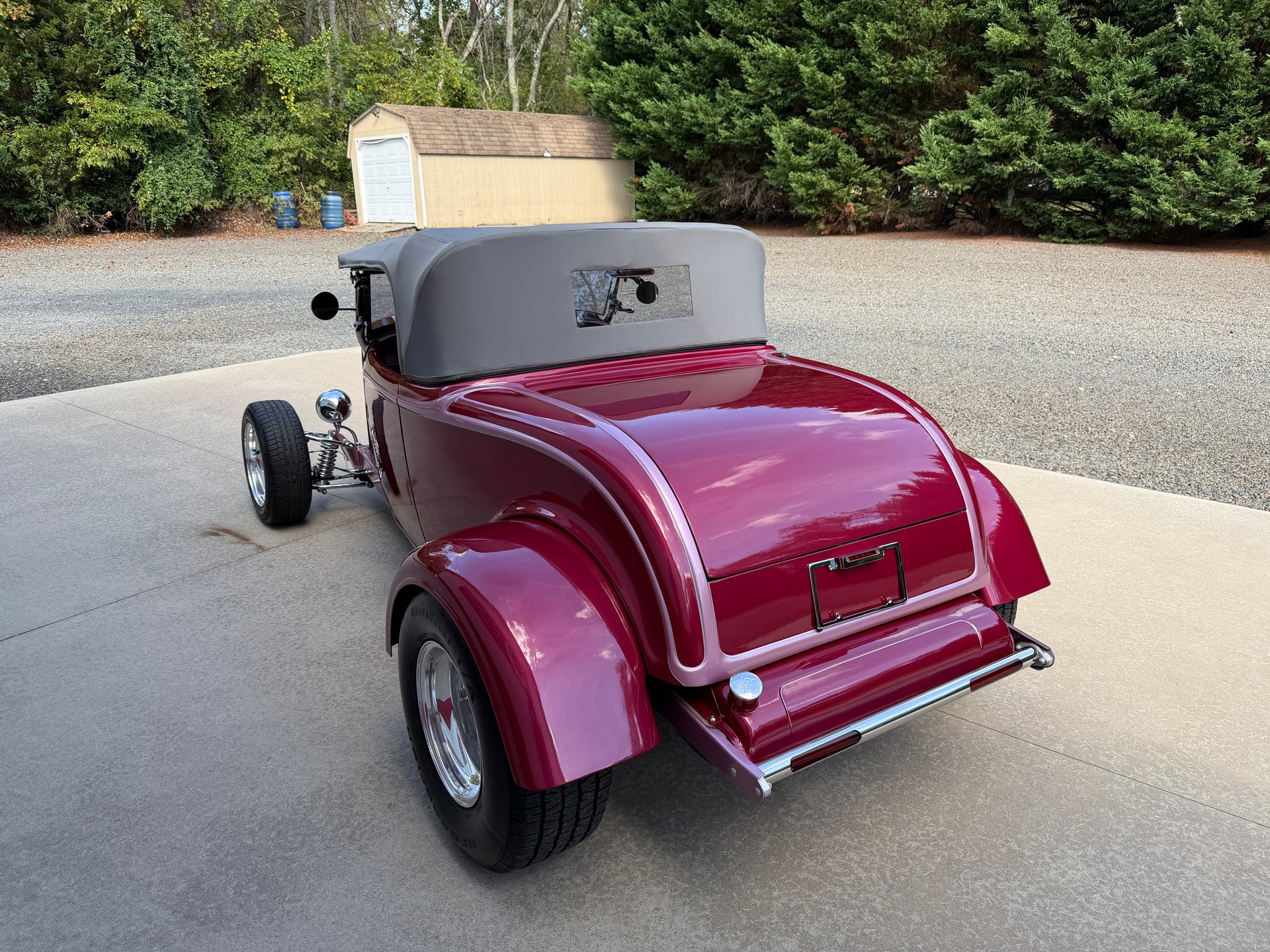
The top and side curtains decide how much you will actually use an open car. The folding top frame (the irons) bends, rusts at the pivots and loses its alignment; the top material itself perishes, and side curtains yellow, crack and shrink until they no longer fit their fasteners. A complete new top with pads and fitting is roughly $1,500–3,500 depending on year and material, and new side curtains are specialist trim work on top of that. Operate the top on the viewing — up and down, fully — because a top that the seller will not demonstrate is a top with a problem, and check that the curtains are actually in the car; a missing set on a Model A or 1932 car is a real deduction, not a detail. Wind wings, rumble-seat upholstery and the deck-lid handle and lock all belong on the same trim checklist.
Interior trim follows the same pattern as the Mercedes guides' rule: original, sound trim is worth money because reproducing it costs money. Leather or leatherette seats split at the seams and piping, horsehair and cotton padding collapse, and door panels warp. A professional retrim of a roadster cockpit in correct materials runs $3,000–7,000 depending on specification — small car, skilled hours. Check the seat springs by sitting in the car, check under the seat for the debris of collapsed padding, and check the floorboards under the mats for the water damage that starts at the cowl and ends in the wood.
How to inspect one
Allow two hours, not one — these are simple cars, but the questions that price them (which body, which frame, which engine, how well built) take time to answer. Bring a torch, a magnet wrapped in cloth, a small screwdriver, a tyre pressure gauge and a phone for photographs. If the car passes you, pay for a lift inspection before money changes hands; the frame, brakes and driveline verdicts all live underneath.
- Paperwork and identity first. Match the title to the car. On a 1932–39 car, find the frame serial on the left frame rail near the steering box and read it yourself; on a Model A, compare the engine number with the title and ask for the paperwork that explains any mismatch. Note the serial prefix — it records the engine type the frame was built with, and a frame that began life behind a four wearing a V8 today is a converted car, which is fine at a converted price.
- Decide which market the car is in. Original, restored-original, period rod or modern rod? Walk the car once with that single question in mind — body material, engine type, brakes, electrics, chassis work — and write down every departure from stock you can see. The list you make here is the negotiation, because each item moves the car between the two markets described in the overview.
- The body material test. Knuckle-tap the doors, quarters and deck, and look at inner panel edges in the rumble compartment and under the dash. Steel with folded edges and spot welds, or glassfibre with mat texture? Check the magnet's pull is even across panels — filler announces itself, especially low on the doors and quarters where the rust map says the damage lives.
- Rust, in the map's order. Cowl feet, door bottoms and hinge pillars, quarters ahead of the rear wheels, deck floor under the cushion or mat, floor pans and toe boards, windshield post bases. Prod with the screwdriver where the seller allows. Doors that hang low or need a lift to latch are telling you about pillars and wood, not about hinges.
- Wood and top. Push the screwdriver into hidden body wood — seat risers, floorboards, body framing at the cowl. Operate the top fully up and down, check the irons for bends and seized pivots, and confirm the side curtains are present and actually fit their fasteners.
- Cold start. Insist the engine is cold. A four should start with the spark retarded and settle to a slow, even tickover; a flathead should fire quickly and idle without a misfire as it warms. Watch for blue smoke at start-up (valve guides and seals), smoke under load later (rings), and listen at low speed under load for the dull Babbitt knock described in the engines section.
- Cooling, watched properly. Let the car reach full temperature and then drive it. Note where the gauge sits at cruise and at idle in traffic, and look for bubbles or combustion smell at the radiator neck on your return. A car that only behaves on a cool morning test drive has not passed — ask for a longer run, and use a combustion-leak test if the seller's story and the gauge disagree.
- Oil and fluids. Pull the dipstick: level, smell and feel. Thin, fuel-smelling oil points at the fuel pump and carburettor; grey emulsion points at water where it should not be. Check gearbox and axle levels if you can — dry or filthy oil in a torque-tube car is deferred maintenance you are about to pay for.
- The drive: gears and driveline. On a Model A, watch the seller drive first if you are new to double-declutching, then drive it yourself and learn whether it jumps out of gear under load. On any car, listen for axle whine on the overrun, clutch judder pulling away, and universal-joint clunk on take-up. If a Columbia two-speed axle is fitted, test both ratios.
- Brakes, honestly tested. From 30 mph on a straight, empty road, brake firmly. Straight stop, firm pedal, no grab, no pull? Then test the handbrake on a slope. On a mechanical-brake car, any pull or excess travel prices the full linkage-and-drum overhaul from the problem areas; on a hydraulic conversion, ask what the components are and inspect the lines and hoses underneath.
- Steering and suspension. Measure free play at the steering wheel rim, then rock each front wheel with a helper on the brake pedal to separate bearing play from kingpin play, exactly as the problem areas describe. Bounce each corner and look along the springs for broken or mismatched leaves.
- Stance and the long look. Stand back and photograph the car from all four sides. It should sit level on its transverse springs, with even arch gaps and flanks that run straight. A car down on one corner, or wearing visibly different tyre sizes or offsets side to side, is showing you spring, frame or build questions that the close-up inspection may have missed — go back and find the cause before you talk money.
Values
The computed market block beneath this guide carries the current listing figures, and it is the only place you should take numbers from — this section teaches you how to read them, because on Ford roadsters the spread within a single year is wider than the spread between years, and a median on its own will mislead you.
The first driver of value is which market the car belongs to. An original-steel, correctly identified 1932 roadster with its numbers in order sits in the collector market, where originality is the currency and every departure from stock is a deduction measured against the cost of putting it right. A hot rod sits in the build market, where the currency is specification and workmanship: a known engine, a properly fabricated chassis, quality paint and trim, and a car that drives as well as it photographs. The two markets overlap in price but not in logic, and the cars that disappoint their buyers are almost always cars bought with one market's money and the other market's expectations.
Within the original market, the hierarchy runs by generation and engine. The 1932 V8 roadster is the peak — one year, the famous shape, the first flathead — followed by the 1933–34 cars, the 1932 four (which the rod world also wants as build material, supporting its value from the other side), the 1935–37 cars, and the Model A, which is the volume car: plentiful, supported by the biggest owner community in the hobby, and priced accordingly, with Deluxe trim and the prettier 1930–31 styling ahead of the earlier cars. Originality premiums are real but conditional: they survive a sympathetic older restoration and evaporate with a colour change, an engine-type change or a reproduction body, each of which moves the car a step toward build-market pricing.
Within the build market, value follows the quality of the ingredients in a predictable order: original steel bodies at the top, reproduction steel next, glassfibre last — not because glassfibre cars are bad, but because the supply of them is effectively unlimited. After the body: the chassis work, the engine and driveline specification, and documented build history. A rod with a photographic build record and receipts from known shops sells like a car with a service history, because that is what it is. A rod with no record is priced on what the buyer can verify on the day, which is why the inspection above matters more, not less, on a modified car.
Condition spreads are brutal at the project end. A project roadster — rusty body, seized or missing engine, no top, no title clarity — is worth its identity and its salvageable panels, and the gap between that car and a driving, presentable example is mostly restoration cost, which on these cars routinely exceeds the finished value unless you do the work yourself. The honest middle of the market is the older restoration or the older, well-kept rod: cosmetically imperfect, mechanically sorted, usable today. Asking prices in this market habitually sit above achieved prices, most of all on rods, where sellers price their own labour at retail. Auction results are your best evidence of achieved money, and a seller who will not discuss them is negotiating against the record.
Two specific cautions. Rarity claims need documents: a claimed low-production variant, a claimed original V8 car, a claimed early production number — each is checkable against the frame serial and factory features, and unchecked rarity is worth nothing. And title clarity is value: a car with a state-issued or reconstructed title, common in the rod world, is a perfectly usable car that will always sell to a smaller pool of buyers than a car with a clean period-number title. Price the pool, not just the car.
Parts and ownership
Early Ford roadsters are among the best-supported pre-war cars in the world, because the Model A community, the early-V8 community and the hot-rod industry all reproduce parts for them — and because so much interchanges across years. The support divides by generation. Model A parts support is close to total: mechanical, trim, top and body parts are catalogued by several large specialists, much of the car can be rebuilt from the catalogues, and the knowledge base — clubs, forums, published references — is the deepest in the hobby. The 1932 car is nearly as well served, helped by the rod industry's devotion to it: reproduction panels, frames, suspension and trim are all available, which cuts both ways — it makes a Deuce easy to keep and easy to replicate, which is why the identity checks in this guide matter. Support for 1933–37 roadster-specific body and trim parts is thinner; mechanical parts for the flathead V8 are excellent, but year-specific open-car panels, top parts and trim are the items you hunt for rather than order.
Easy: service items for all engines (plugs, points, condensers, gaskets, filters where fitted), flathead ignition and carburettor parts, water pumps, brake shoes, drums and hardware, spring and shackle parts, kingpin kits, wiring harnesses, top material, Model A almost-everything. Prices for service parts are modest by classic-car standards, and most are on the shelf.
Harder and dearer: Babbitt work — the shrinking number of shops that pour and line-bore bearings makes this the bottleneck job on fours and early V8s, so book it and budget it early; original radiators and their recores; correct year-specific trim and brightwork; original 1932 body panels in sound condition; V8-60 engine parts; and good original windshields frames and top irons for the later cars. None of it is impossible; all of it takes time, which is why a complete car beats a cheap incomplete one.
Running costs and living with one. Budget the first year honestly. A car fresh out of long storage needs the recommissioning programme from the problem areas — fuel system cleaned end to end against ethanol damage, brakes overhauled, tyres replaced on age regardless of tread, all fluids, hoses and belts — and that programme, done at a shop, is a four-figure commitment before any improvement starts. Thereafter these are inexpensive cars to run: simple servicing any competent owner can do at home, modest fuel consumption on the fours and tolerable on the V8s, and insurance in line with other classics of the value. The ownership reality to accept is the driving envelope. A Model A roadster cruises at 40–45 mph, a good flathead car at 50–55, and both stop and steer by pre-war standards even when perfectly maintained; overdrives, hydraulic brakes and radial tyres widen the envelope on cars where originality allows them. Join the clubs — the Model A and early-V8 communities are welcoming, technically deep and the fastest route to the parts and knowledge that are not in catalogues. In our own small photo-checked sample — four cars examined in detail — damage was noted on two and no rust was recorded, which matches the ownership pattern: these cars are usually bought as finished objects, and the costs arrive as maintenance and improvement, not as rescue.
Which one to buy
- The all-rounder: 1936 V8 roadster. The mature flathead package — 85 hp, the prettier 1936 nose, the most comfortable of the true roadsters — at money well below a comparable 1932, and without the Deuce market's identity minefield.
- The icon: 1932 V8 roadster. The most famous shape in American motoring and a genuinely fine car. Buy it with the identity checks done and the body material established, because that is where its value lives.
- The value buy: Model A Deluxe roadster, 1930–31. The prettiest of the fours, the best parts support in the hobby and a complete motoring culture around it — provided your driving suits a 45-mph car.
- The connoisseur's car: 1934 V8 roadster. The uprated engine in the most elegant body of the era, scarcer than a Deuce and less fought over. Verify originality feature by feature; the reward is a car the cognoscenti rate above the famous one.
- The driver: a well-built rod on a 1932 or 1933–34 shape. If your pleasure is driving rather than preserving, a documented build with a modern driveline, hydraulic brakes and a steel body gives you the look with none of the pre-war compromises — bought at build-market money, with the build record in the file.
- The rarity play: 1937 roadster. The last of the line and genuinely scarce. Only with its identity fully proven, because scarcity is the whole of its premium.
And the rule that overrides all of the above: buy the identity you can prove, in the market the car actually belongs to. Engines can be rebuilt, brakes can be converted and tops can be remade, but a roadster's value is anchored to what its body, frame and numbers verifiably are — and that is the one thing about the car that no amount of later spending can change.
See the 3 Roadster cars currently listed.