
Ford Ranger buyer's guide
Ford Ranger -- the model's own buyer's guide: variants, values and what to check.
Years listed: 1983-2000 · Series: Ranger
Overview and history
The Ford Ranger is the compact pickup that defined the class in America for three decades — and the one that makes the most sense as a classic you actually use. Launched for the 1983 model year to replace the Mazda-built Courier, the Ranger was Ford's first home-grown small truck: a proper ladder-frame pickup, shrunk rather than compromised, with rear-wheel drive, a live rear axle on leaf springs, and a choice of four-cylinder and V6 engines at a time when most small trucks offered one engine and an apology. It became the best-selling compact truck in the United States and stayed in production in its original North American form until 2011 — a long run that means parts, knowledge and surviving trucks are all plentiful.
This guide covers the three generations you will actually meet in the classic listings, which is also where our own pool sits: the first-generation trucks of 1983–92, the second generation of 1993–97, and the third generation of 1998 onward, represented in our listings up to 2004. Across those years the Ranger changed its clothes twice and its front suspension once, but the recipe never changed: a simple frame, a steel bed, and mechanical systems a home mechanic can reach. That simplicity is the whole point of buying one now. A Ranger is not a scaled-down F-150 and should not be judged as one — it is lighter, narrower, easier to park, easier on fuel and far cheaper to keep, while still towing a small trailer, hauling a bed full of building supplies, or crossing a muddy field on the four-wheel-drive versions.
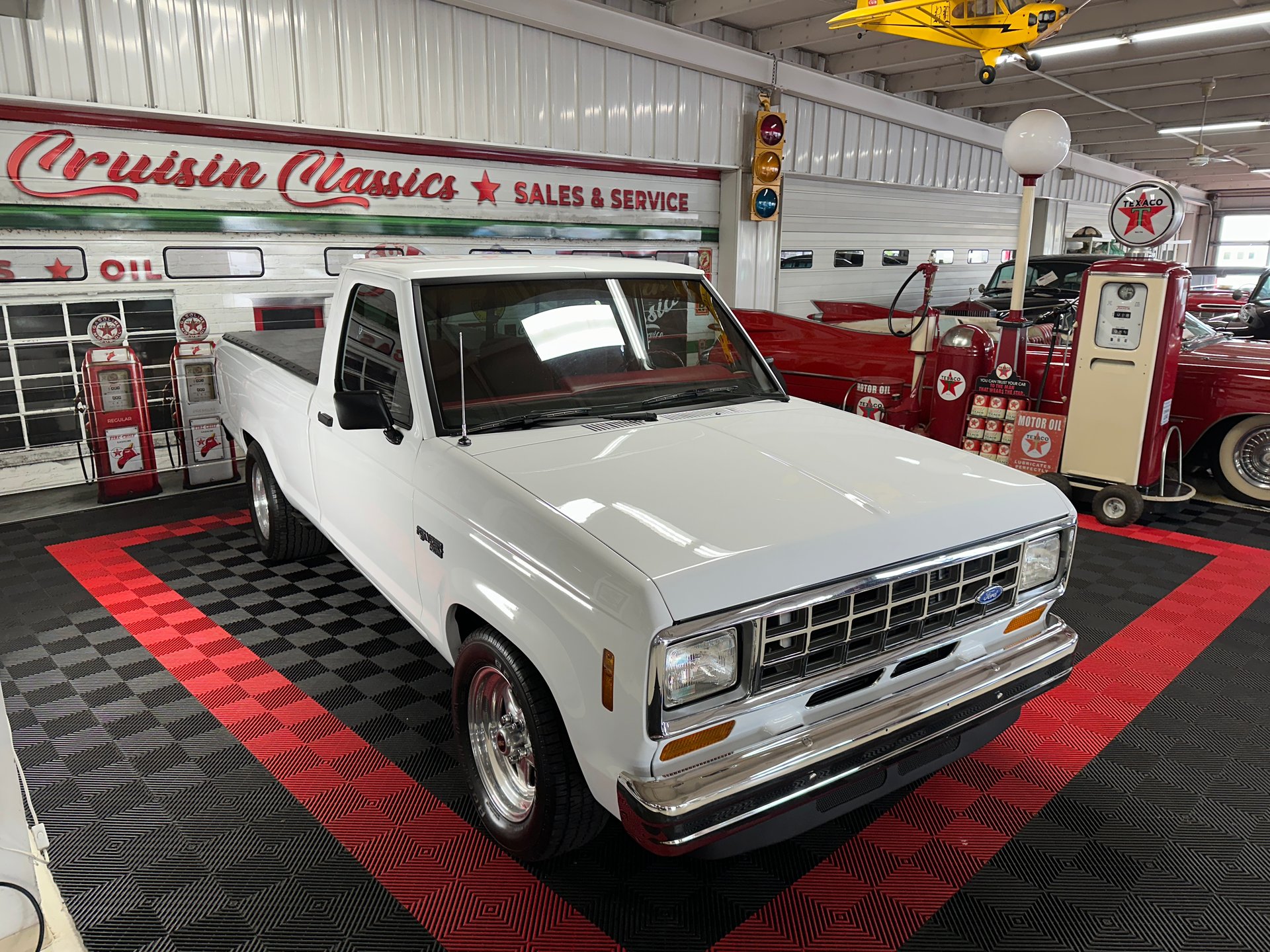
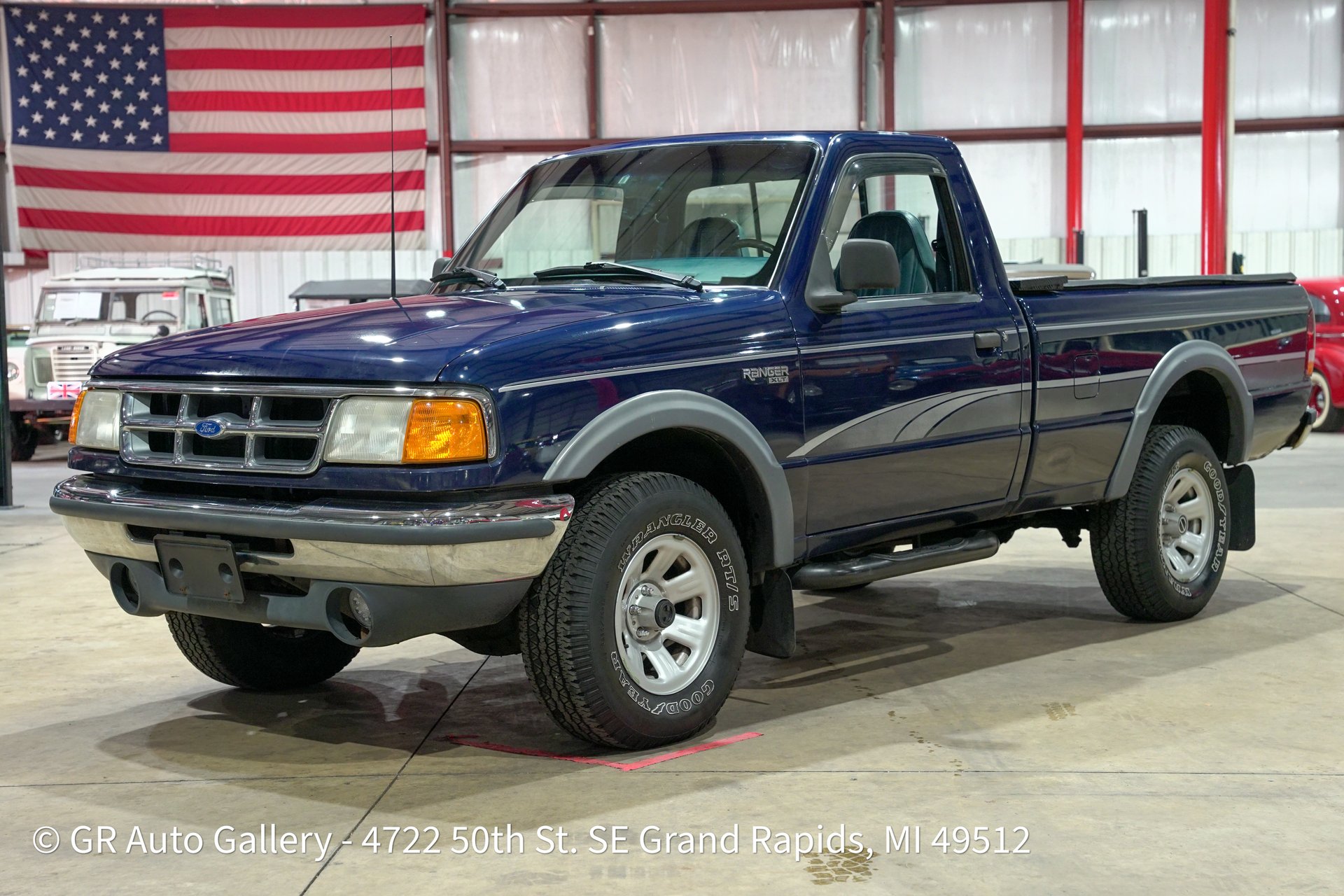
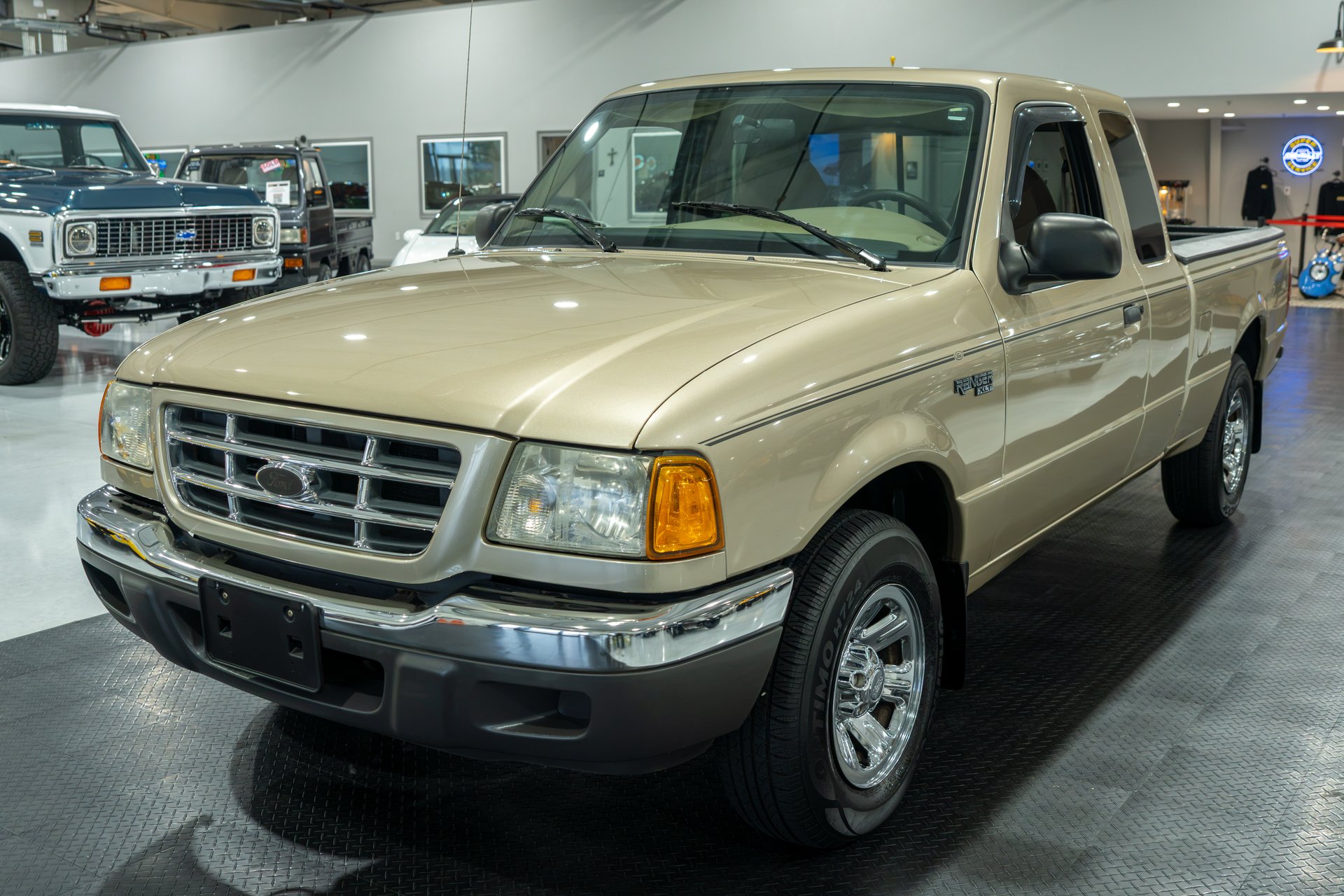
The generations feel different enough that you should decide which one you want before you start shopping. The 1983–92 trucks are the true classics: upright styling, a basic cabin, Twin I-Beam front suspension, and the charming roughness of a truck designed when compact pickups were expected to be cheap first and comfortable second. The 1993–97 generation rounded the styling, civilised the interior, added a driver's airbag partway through, and kept the same honest underpinnings — for many buyers the sweet spot, modern enough to drive daily, old enough to feel like a classic. The 1998-on trucks grew slightly, switched to short-and-long-arm front suspension with rack-and-pinion steering, and gained the strong 4.0 SOHC V6 in 2001; they drive the most like a modern vehicle, but carry the most complex engine in the range and the least classic charm.
One honest note on evidence before we go further. Our examined photo-note sample for the Ranger is very small — just two cars examined in detail at the time of writing — far too small a base to quote rust or damage incidence from, and this guide does not pretend otherwise. What follows is built on the model's long, well-documented service record instead: these trucks were sold in the millions, worked hard, and their failure patterns are thoroughly known, because the repair trade has been fixing them for forty years.
Why buy one at all, when full-size trucks are everywhere? Because the Ranger does the jobs most people actually have: it fits in a normal garage, its engines are ordinary Ford units with ordinary service costs, and because so many led sheltered lives as second vehicles and garden trucks, good survivors keep surfacing at money that buys nothing comparable in the full-size world. The trap is the opposite one: because Rangers were cheap and useful, many were used up completely. The difference between a good one and a worn-out one is not the badge or the mileage — it is rust in the frame and rear spring hangers, and whether previous owners treated simple maintenance as optional.
The models
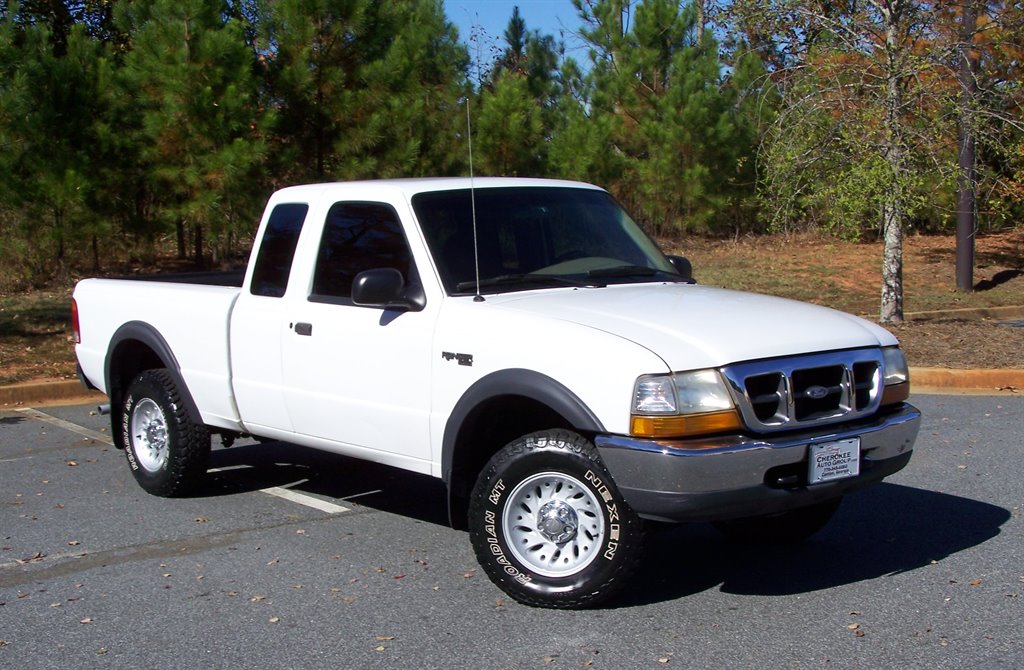
Every North American Ranger of this era is a two-door pickup in one of two cab styles: the regular cab, and the SuperCab extended cab introduced for 1986, which adds a small rear bench or jump seats and a longer wheelbase. There was no factory four-door crew cab for the US market in these generations — a four-door Ranger in an American listing is a later truck, a foreign-market truck, or a mistake in the listing. Beds are the standard roughly six-foot box on most trucks, a seven-foot long bed on some early regular cabs, and the flared Flareside (Ford's stepside-style bed) on the Splash and as an option later. Two-wheel drive is the default; four-wheel drive, badged 4x4, adds a transfer case and a driven front axle, and is worth a clear premium in most regions.
Trim levels climb from the work-spec base and XL, through the mid-range XLT that accounts for most surviving trucks, to the STX (the sporty, often four-wheel-drive trim of the first two generations), the youth-market Splash of 1993–97 with its Flareside bed and lowered stance, and the third generation's Edge (2001 onward) and FX4 packages. Badges, however, are the least reliable part of any old Ranger: decals are cheap, trucks were re-badged, and a forty-year-old pickup's equipment is whatever is physically fitted today. Judge the truck, not the sticker.
Because the Ranger range is organised by engine more than by trim, the table below is organised the way buyers actually shop — by powertrain variant. Ford did not publish production figures split by these variants, and any source giving you a precise build count for, say, a 1991 3.0 XLT is inventing it; total production across the nameplate's North American run ran into the millions, which is why survival and parts supply are non-issues here.
| Model | Years | Engine | Output | Built | Character |
|---|---|---|---|---|---|
| Ranger 2.0 / 2.3 carburetted | 1983–1988 | 2.0 or 2.3 Lima four, carburettor | about 73–90 hp | Not published by variant | The original; simple, slow, cheapest way in |
| Ranger Diesel | 1983–1987 | 2.2 Perkins diesel, then 2.3 Mitsubishi turbo-diesel | about 59–86 hp | Small numbers; not published exactly | Rare economy special; slow, frugal, parts hunt |
| Ranger 2.8 / 2.9 V6 | 1983–1992 | 2.8, then 2.9 Cologne V6 | 115–140 hp | Not published by variant | The first-generation performance choice |
| Ranger 2.3 EFI | 1989–1997 | 2.3 Lima four, electronic injection, twin plugs from 1989 | about 98–112 hp | Not published by variant | The economy default; tough, unhurried |
| Ranger 2.5 | 1998–2001 | 2.5 Lima four, injection | about 119 hp | Not published by variant | Stroked Lima; third-gen economy truck |
| Ranger 2.3 Duratec | 2001–2004 (in our pool) | 2.3 DOHC Duratec four | about 135–143 hp | Not published by variant | The modern four; smoothest and quickest four |
| Ranger 3.0 V6 | 1991–2004 (in our pool) | 3.0 Vulcan V6 | about 145–150 hp | Not published by variant | The torque step up from the fours; very durable |
| Ranger 4.0 OHV V6 | 1990–2000 | 4.0 Cologne V6, overhead valve | 160 hp | Not published by variant | The strong truck of the 1990s; the tow choice |
| Ranger 4.0 SOHC V6 | 2001–2004 (in our pool) | 4.0 Cologne V6, overhead cam | 207 hp | Not published by variant | The fastest Ranger; timing-chain caveat applies |
The first generation (1983–92). The launch range was the carburetted 2.0 and 2.3 fours, the 2.8 Cologne V6, and a 2.2-litre Perkins diesel that sold in small numbers; a Mitsubishi-sourced 2.3 turbo-diesel replaced it for 1985–87 and is the more usable of the two, which is not the same as fast. Fuel injection arrived on the 2.3 for 1986 along with the 2.9 V6, the first-generation engine to have. A 1989 facelift brought flush composite headlamps and the twin-plug 2.3. The 4.0 overhead-valve V6 arrived for 1990 and the 3.0 Vulcan for 1991, and a late truck with either engine is a capable vehicle that still looks like a 1980s pickup.
The second generation (1993–97). A full restyle on the same basic frame: rounder nose, a much improved cabin, and from 1995 a new dashboard with a driver's airbag. Engines carried over — 2.3 four, 3.0 and 4.0 V6s — all proven by then. The Splash, with its Flareside bed, bright colours and (in two-wheel-drive form) factory-lowered suspension, is the period piece of the range and the one most likely to have been modified. From 1994 the same truck was also sold as the Mazda B-Series: a Mazda B2300, B3000 or B4000 of 1994–97 is mechanically the Ranger in this guide wearing different badges, which matters for parts hunting and cross-shopping. In our own listings this generation, especially the 1993–95 trucks, is the heart of the market — the single biggest year cluster in our pool is 1994.
The third generation (1998–2004 in our pool; the generation ran to 2011). Bigger in every dimension, with a new front suspension, rack-and-pinion steering and a stronger frame. The 2.5 replaced the 2.3 four at launch; the all-new 2.3 Duratec twin-cam four replaced that in 2001. The headline change was the 4.0 SOHC V6 for 2001, which lifted output from 160 to 207 hp and made the Ranger a quick truck by any standard — with one serious caveat covered in the engines section. The Edge trim (2001) and the FX4 package (2002), topped by the FX4 Level II (2003) with its Torsen limited-slip rear axle, Bilstein dampers, 31-inch all-terrain tyres and forged Alcoa wheels, are the collectible end of this generation. A genuine Level II is a specific, checkable specification — do not pay Level II money for an FX4 with stickers, and do not pay FX4 money for an Edge.

Engines and gearboxes
The fours: Lima 2.0, 2.3 and 2.5, and the Duratec 2.3
The Lima four is the Ranger's founding engine — a single-overhead-cam, cast-iron four derived from the Pinto engine, fitted in 2.0- and 2.3-litre carburetted forms at launch, fuel-injected from 1986, given a twin-spark-plug cylinder head (eight plugs, two coils, distributorless ignition) for 1989, and stroked to 2.5 litres for 1998–2001. It is not refined and it is not quick — even the best of them makes only around 119 hp — but it is one of the most durable engines Ford ever built, and its failure list is short and cheap. The timing belt is the headline service item: a scheduled replacement (plan on roughly every 60,000 miles if the history is unknown), on a non-interference design, so a snapped belt strands you but does not bend valves. A belt, tensioner and water-pump-while-you-are-there job is a few hundred dollars in parts — budget $400–800 at a shop. An engine with no belt history should be priced as if the belt is due, because it is.
Beyond the belt, Lima troubles are age troubles. Carburetted trucks suffer the usual varnish, choke and vacuum-hose decay of the era, and a hunting idle is more often a perished hose than anything serious. Injected trucks crack exhaust manifolds with heat cycling — listen for ticking from the exhaust side on a cold start that quietens as the manifold expands and seals itself — and twin-plug engines eat coil packs and plug leads, presenting as a misfire under load. Cam-cover and front-seal oil leaks are normal and cheap. What you should not find is bottom-end noise or low oil pressure: a Lima run with oil in it rarely wears out, and one that knocks has usually been run without.
The Duratec 2.3 of 2001 onward is a different engine entirely — an all-alloy, twin-cam, chain-driven four unrelated to the Lima despite the identical displacement, a trap for parts ordering and sellers' descriptions alike. It is smoother, stronger (around 135–143 hp) and more economical, and its timing chain is a life-of-engine item rather than a scheduled belt. Its weaknesses are smaller and more modern: plastic cooling-system parts age and leak, and the intake manifold's swirl-control system can stick or rattle on high-mile engines. The identity test is visual: a Lima is an iron engine with its plugs in a row along the cam cover, while the Duratec is an alloy twin-cam with a plastic intake manifold and the plugs down the centre of the cover. If a 2001–04 truck is described as a simple old-fashioned 2.3, look under the hood and see which 2.3 it has.
The two diesels deserve a sentence for completeness: the 2.2 Perkins (1983–84, roughly 59 hp) and the 2.3 Mitsubishi turbo-diesel (1985–87, roughly 86 hp) were economy specials, are rare now, and are specialist propositions — parts are a hunt and performance is leisurely even by 1980s standards.

The Cologne V6s: 2.8, 2.9, and the 4.0 in both forms
Ford's Cologne V6 family powers most of the V6 Rangers you will meet, in four versions that share a basic architecture but not a reputation. The carburetted 2.8 (1983–85, about 115 hp) is a period piece: adequate, thirsty for its output, and saddled with 1980s emissions plumbing. The injected 2.9 (1986–92, 140 hp) is stronger and much more pleasant, but carries the family's one notorious fault — cylinder heads on the earlier 2.9s, broadly the 1986–88 castings, are prone to cracking, typically between the valve seats, and the trigger is almost always an overheating episode. A 2.9 that has been overheated should be priced as a head job (realistically $1,500–2,500 done properly with improved later castings) or walked away from; one with a documented cool-running history and no coolant loss is a sweet, characterful engine. Hydraulic lifter tick is endemic on neglected 2.9s and often responds to fresh oil, but persistent ticking plus low hot oil pressure is wear, not a quirk. The TFI ignition module on the distributor fails with heat and age, causing sudden cutting-out and intermittent no-starts; it is cheap, and a spare in the glovebox is traditional.
The 4.0 overhead-valve V6 (1990–2000, 160 hp) is the pick of the early V6s and the engine that made the Ranger a real tow vehicle: pushrod-simple, torquey from low revs, and long-lived. Its known faults are lower-intake-manifold gasket leaks (presenting as a rough idle and disappearing coolant), cracked heads on some later castings if overheated — the same discipline applies: no overheating history, no problem — and lifter tick if oil changes were skipped. A healthy 4.0 starts instantly, idles without shaking the truck, and pulls cleanly to 4,500 rpm without smoke.
The 4.0 SOHC (2001 onward, 207 hp) is a development of the same block with overhead cams driven by a jackshaft and a system of timing chains — chains at the front, plus one at the rear of the engine that can only be reached with the engine out. This is the Ranger's single most expensive known weakness. The plastic timing-chain cassettes and hydraulic tensioners wear, and the symptom is a rattling on cold start — often described as a death rattle — that at first lasts a second or two and then progresses. Caught very early, a tensioner replacement is a modest job; ignored, a failed cassette destroys the engine, and a full cassette job including the rear chain is an engine-out repair realistically in the $2,500–4,000 range at a shop. The rule for buyers is absolute: on a 4.0 SOHC, insist on a genuinely cold start, stand at the front of the truck with the hood up, and listen. Any sustained chain rattle from cold is a four-figure negotiation or a walk-away, whatever the seller says about it quietening down when warm. It does quieten down when warm. That is the problem, not the reassurance.
The 3.0 Vulcan V6
The 3.0 Vulcan (1991 onward, about 145–150 hp) is Ford's pushrod V6 from the Taurus, and in the Ranger it is the durability pick of the whole range: unexciting, understressed, and famous for outliving the truck around it. It asks for almost nothing. Almost — because the Vulcan has one fault you must know. On later engines the camshaft synchronizer, a small shaft in the distributor's old position that drives the oil pump and reports cam position, wears and begins to chirp or squeak from the top rear of the engine, often mistaken for a belt noise. This is not a noise to monitor: if the synchronizer fails completely, it can stop driving the oil pump, and the engine destroys itself shortly afterwards. A chirping 3.0 needs the synchronizer replaced promptly — a few hundred dollars in parts and labour — and a quiet one needs nothing but evidence the coolant has been changed, since Vulcans run dirty, rusty coolant when neglected and clog their own heater cores and radiators with it. Brown coolant in a 3.0 is a maintenance confession: budget for a flush, hoses, thermostat and possibly a radiator ($300–800), and check the heater works, because the heater core is where the rust settles first.
Gearboxes, transfer cases and axles
Manual gearboxes are the Ranger default for the first two generations — our own listings split close to evenly between manual and automatic, with manuals ahead — and the box to know is the Mazda-built M5OD-R1 five-speed, standard from 1988 onward (a heavy-duty M5OD-R1HD serves the 4.0 SOHC). Earlier trucks used Toyo Kogyo and Mitsubishi five-speeds and a four-speed; all are judged the same way: clean synchromesh, especially into second and third on a cold box, no bearing whine that rises with road speed, and no jumping out of gear on the overrun. The M5OD has two signature faults. Its three rubber shift-rail plugs perish and leak — and the box runs on automatic transmission fluid, so a slow leak quietly empties it until it whines and then fails; the fix (sealed replacement plugs) is cheap, but a damp top of the gearbox is a small leak with big consequences. And its clutch slave cylinder is concentric, inside the bellhousing, so a leaking slave is a gearbox-out job: clutch and slave together run roughly $800–1,400 at a shop, making a spongy pedal or fluid loss at the bellhousing a real price item. A high biting point means a worn clutch; judder means a worn or contaminated one. Price it, do not excuse it.
Automatics divide by era. The A4LD (1985–94) is a light-duty four-speed derived from the old C3, and the weakest gearbox fitted to the Ranger: fine when maintained, intolerant of heat, towing abuse and neglected fluid, and the first thing to check on an early automatic truck. Its electronic successors — the 4R44E and 4R55E from 1995, and the five-speed 5R44E and 5R55E from 2001 — are stronger, but all are now old, and the test is the same: fluid red or pink and not burnt-smelling, shifts prompt and firm without flaring, overdrive engaging and holding, no delay engaging drive or reverse from cold. A rebuild on any Ranger automatic is realistically $2,200–3,500, so a box that flares, shudders or delays is a rebuild-priced deduction, not a fluid-change hope — a fluid change is maintenance on a healthy box, not a cure for a worn one.
Four-wheel-drive trucks use a part-time system — no centre differential, so four-wheel drive is for loose surfaces only, and a truck run in 4x4 on dry pavement may have wound up and damaged its driveline. Transfer cases are Borg Warner 1350 and later 1354 units, in manual-lever and electric-shift forms; the electric shift motor is the common failure, presenting as a truck that will not engage four-wheel drive from the dash — a few hundred dollars to fix, and a classic bargaining point because sellers assume the whole system is dead. Front axles divide by generation: 4x4 first- and second-generation trucks use a Twin Traction Beam front end (Dana 28 early, the stronger Dana 35 later) with automatic locking hubs famous for failing to engage or release — a manual-hub conversion is a few hundred dollars and counts as an upgrade, not a modification to fear. Third-generation 4x4s use conventional independent front suspension with a Dana 35 centre section and torsion bars. At the back, the 7.5-inch axle serves the fours and lighter V6s and the stronger 8.8-inch the 4.0 trucks — the 8.8 is the one you want for towing or a limited-slip differential.

Problem areas
A Ranger rarely dies of one dramatic failure. It dies of accumulation: a frame rail thinning in a salt state, a spring hanger letting go, a timing chain rattling a little longer each winter, a cooling system run on rust until a head cracks. The good news is that nearly everything is visible if you know where to look, and almost everything except advanced frame rust is fixable at Ford-parts prices. Work through the truck in the order below — structure first, because structure decides whether the rest is worth discussing.
Rust: the frame first, then the body
Rust is the Ranger's life-limiting factor, and the place it matters most is not the place sellers photograph. The cosmetic rust — cab corners, rocker panels, wheel-arch lips, door and tailgate bottoms — is honest, visible and repairable. The structural rust hides underneath, following a map drawn by road salt and trapped mud.
The rear frame and spring hangers. This is the number-one Ranger killer and the first place to look on any truck, on a lift or lying on the ground with a torch. The rear leaf springs hang from brackets riveted to the frame rails, and the hangers and shackles rust from the inside of the bracket outward; mud and salt sit in the pocket where the hanger meets the rail, and the rail itself rusts behind and above the bracket where it cannot be seen from the side. Prod the hangers hard with a screwdriver and pull on them — a hanger that flexes, flakes in layers, or shows the rail swollen and laminar behind it is a truck whose rear suspension is attached to rust. Hangers and shackles are cheap parts (typically $100–250 a pair) but fitting them means drilling or burning out rivets, so a shop job runs roughly $400–900 a side — and that assumes the rail they bolt to is sound. A perforated or paper-thin rail around the hangers is fabrication work, priced per truck, and on a cheap Ranger it exceeds the truck's value. Also check the shock mounts, crossmembers, spare-wheel carrier area, and the rail above the rear axle where salt spray concentrates.
The bed. Bed floors rust from underneath, at the crossmembers and along the seams where the floor meets the wheel tubs, and the front bed panel rusts where leaves and dirt pack between bed and cab and stay wet. Lift any bed liner — a drop-in plastic liner is a rust incubator that traps water against the floor, and sellers know buyers rarely lift them; insist. A bed floor with pinholes at the crossmembers is a patch-or-replace conversation ($500–1,500 depending on ambition); a bed whose mounting points and crossmembers are rotten underneath is structural in the same way the frame is. Check the tailgate's bottom edge and hinges, and the fuel filler neck, which rusts and then leaks on filling.
The cab and the front clip. Cab corners and rocker panels rust on all three generations; on SuperCabs check the rear cab corners and the back of the cab floor, where water off the bed collects. Floors rust from inside when the windshield or rear window seals leak and the carpet stays wet — lift the carpets, and distrust a truck whose carpets you are not allowed to lift. The radiator core support is a known Ranger rust item, particularly its lower corners and mounting feet: a rotten support lets the front clip sag and misaligns the hood and fenders, and fitting a pattern one is a front-clip-off job, realistically $600–1,200 with the part at a shop. Battery trays rust under the battery, and the acid track damages the inner fender below. Finally, brake and fuel lines: steel lines along the frame rail rust in the same salt exposure, and a line that weeps or is scabbed with rust scale is a safety item, not a cosmetic one — a full set of pre-bent lines fitted runs roughly $500–1,000, money you should assume a rust-belt truck needs until the lines prove otherwise.
Reading the geography. Where a Ranger lived explains most of what you find. Our listings concentrate in Georgia, Tennessee, Virginia, Florida and North Carolina — the Southeast is the natural habitat of the surviving Ranger because it escapes the worst of the salt — and a genuine southern history is worth a real premium over an identical northern truck. The reverse check applies too: fresh black underseal blown over the frame, hangers and lines in the week before a sale is a cover-up until the seller proves otherwise. Honest factory coating after thirty years is patchy, thin at the edges and dirty; uniform fresh black is a question, not an answer.
Front suspension, steering and brakes
First- and second-generation two-wheel-drive Rangers use Ford's Twin I-Beam front suspension, and the four-wheel-drive version, Twin Traction Beam, is the same idea with a differential in one beam. It is immensely strong and rides better than its reputation, but it has wear items a buyer must judge. Radius-arm bushings perish, cooked by exhaust heat on the right side especially, and present as a clunk under braking and vague, wandering steering; a bushing set is cheap in parts ($50–150) and a few hours' labour. Ball joints and beam pivot bushings wear and make the truck tramline and chew front tyres. The alignment quirk to know: Twin I-Beam camber is set with eccentric bushings at the upper ball joint, and a truck sitting nose-down on tired springs shows positive camber and wears the outer edges of its front tyres — uneven front tyre wear here is a suspension story first and an alignment story second, so read the tyres as a report on the springs and bushings. Third-generation trucks use a conventional short-and-long-arm layout — coil springs on two-wheel drive, torsion bars on four-wheel drive — with rack-and-pinion steering, and the wear list becomes conventional: ball joints (the lowers work hard and are the classic failure), seized torsion-bar adjusters on 4x4s, and split, leaking rack boots. On all generations, a steering box with play at the straight-ahead is adjustable within limits, but a box loose in the centre and tight at the locks is worn, not maladjusted.
Brakes are discs at the front throughout, drums at the rear on most trucks (four-wheel discs were never the Ranger norm in this era), with rear anti-lock brakes standard early and four-wheel ABS an increasingly common option later. The hardware is cheap and available everywhere. What costs money is neglect: seized calipers and slide pins, perished hoses, rusted rear wheel cylinders, and self-adjusters that stopped adjusting years ago, leaving a long pedal and a handbrake that barely holds. A full hydraulic refresh is realistically $600–1,200 at a shop and should be assumed on any truck that has sat. Judge the test drive accordingly: the truck should stop straight and firmly from 50 mph without judder, pulling, or a pedal that sinks at a standstill.
Driveline, cooling and the systems that strand you
Both rear axles are strong; wear shows as axle seal leaks wetting the rear brakes, worn bearings growling at speed, and pinion seals weeping. A limited-slip 8.8 that chatters in tight turns usually wants correct friction-modified fluid and, at higher miles, a clutch-pack rebuild ($300–600) rather than replacement. Universal joints announce themselves with a clunk on taking up drive. None of it is fatal, and all of it is negotiable.
Cooling is where Rangers are killed by kindness withheld. Radiators with plastic end tanks crack and weep at the seams with age; fan clutches lose their drive and the truck runs hot in traffic while staying cool at speed — the classic overheating pattern that cracks 2.9 and 4.0 cylinder heads, both of which tolerate overheating badly. Water pumps, thermostats and hoses are all cheap; the expensive cooling failure is the one that already happened, so on any V6 ask directly whether the truck has ever overheated, and look for the evidence: fresh sealant, a new radiator on an otherwise neglected truck, coolant stains baked down the block. The heater core is the other cooling job with a sting: on second- and third-generation trucks it is a dashboard-out replacement, so a weak heater or a sweet antifreeze smell in the cab is a labour bill ($700–1,200 at shop rates) attached to a cheap part. Test the heater on every viewing, in July as in January.
Fuel and ignition faults strand more old Rangers than mechanical failures do. The electric fuel pump lives in the tank, and a truck that has sat with old fuel may need the tank dropped and cleaned and the pump replaced ($400–800 at a shop); the inertia switch in the cab, which cuts the pump in a collision, occasionally trips or fails and causes a no-start that mimics pump failure — the first thing to check, and it costs nothing. On twin-plug Lima fours and later coil-pack engines, misfires under load are usually leads, plugs or a coil pack, in that order of price. None of these faults should kill a purchase; all should be diagnosed, not described by the seller as a mystery that clears itself.
Interior, electrics and body hardware
Ranger interiors are simple and mostly durable, which makes the failures easy to spot. Seat foams collapse on the driver's side first and vinyl splits on the entry bolster; a re-trim or a good used seat is the fix, and used trim is findable in a way it is not for rarer classics. Headliners sag on all three generations — a re-cover is a $200–400 job — and door cards warp at the tops on sun-baked southern trucks. Window regulators wear and slow; door latch wear makes doors drop and rattle, and the door-ajar switches built into later latches fail and misbehave the dome light and chime — usually cured with penetrating lubricant in the latch before any parts are bought.
Electrics are period Ford: robust wiring, failures at the connections and switches. The column multi-function switch (indicators, wipers, washers, high beam) is a known wear item on second- and third-generation trucks and a straightforward replacement. Blower motor resistors fail and leave the fan working on high speed only — a cheap part and a ten-minute diagnosis. But the widespread failure to fear is not electrical at all: air conditioning. A system that has sat open or empty for years is a recommissioning job — seals, drier, possibly compressor and condenser, realistically $800–1,800 to make genuinely cold — and a seller's claim that it just needs a recharge should be priced as exactly that job until a gauge set proves otherwise. A Ranger whose air conditioning blows cold, heater blows hot, fan works on every speed and windows all travel fully has passed a test that says more about its maintenance history than any service stamp.
How to inspect one
Allow an hour, bring a torch, a screwdriver for prodding (with the seller's permission), a magnet wrapped in cloth, and a mat for getting underneath — on a Ranger, the underneath is the inspection. If the truck passes you, a lift inspection before money changes hands is money well spent, because the places that decide a Ranger's fate, the rear spring hangers and the frame above them, are far easier to judge from a lift than from a driveway.
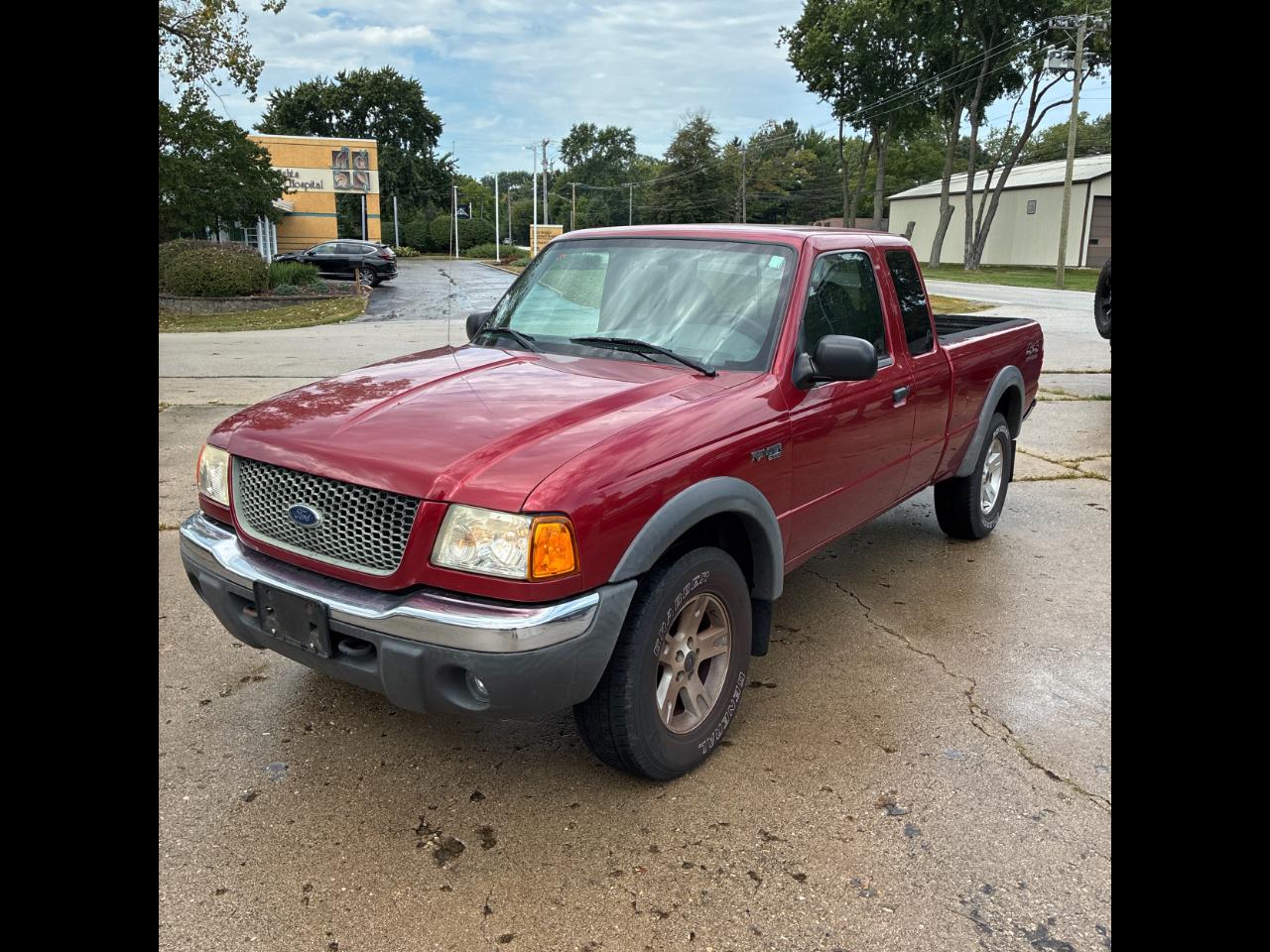
- Paperwork and identity first. Match the VIN on the title to the plate at the base of the windshield and the sticker on the driver's door jamb, and decode the door sticker's codes for the original engine, transmission and axle — on a truck this easy to engine-swap and re-badge, the sticker tells you what it left the factory as, and the truck in front of you should be explained by it. Check the engine visually against the claim: Lima four, Duratec four, Vulcan and Cologne V6s all look different. A thick file of invoices is worth money; a title in someone else's name is a problem to solve before, not after.
- Cold start, and listen before you touch anything. Insist the engine is stone cold when you arrive — a warmed-up truck has had its most expensive sounds hidden from you. On a 4.0 SOHC, listen for timing-chain rattle in the first seconds: sustained rattling is the cassette job from the engines section, priced or walked away from. On any engine, blue smoke at start-up points to valve stem seals, smoke that continues under load points deeper, and a Cologne V6 that ticks loudly and stays ticking needs its oil pressure questioned. A Lima four should settle to a steady, slightly agricultural idle; hunting on an injected truck is usually sensors, hoses or idle control, not the engine itself.
- Underneath: frame, hangers, lines. Torch along both frame rails, but spend your time at the rear: prod the leaf-spring hangers and shackles, the rail behind and above them, the shock mounts and the crossmembers. Flaking in layers, swelling, or a screwdriver that sinks rather than scrapes is structural rust — the decision point of the whole inspection, per the rust section. Read the steel brake and fuel lines with the same suspicion, and the underseal as you go: patchy and dirty is honest, fresh and uniform is a question.
- The bed. Lift any liner. Check the floor at the crossmembers and seams, the front panel where debris packs against the cab, the mounting points from underneath, and the tailgate's bottom edge and hinges. Sight down the bed sides for ripples.
- Cab structure and floors. Prod the cab corners and rockers with the magnet and your fingers, then lift the carpets in both footwells: water tracks from the windshield base, damp sound deadening and rust at the floor seams tell you how long the seals have leaked. Check the core support's lower corners through the grille, and lift or rock the battery to see the tray beneath it.
- Engine bay evidence. Look before you listen to the story. Brown, rusty coolant means the cooling system has been neglected — price the flush and check the heater twice as carefully. The checks that matter most are coolant loss with no visible leak on a 2.9 or 4.0 (think head gaskets and cracked heads), baked coolant stains down the block, and fresh sealant at the intake on a 4.0 overhead-valve engine, which is the lower-intake gasket job announcing itself.
- Suspension and steering by hand. Rock each front wheel top-to-bottom and side-to-side for ball-joint and bearing play. On Twin I-Beam and Twin Traction Beam trucks, check the radius-arm bushings for cracking and movement under a pry bar, and read the front tyres: outer-edge wear with a nose-down stance is the camber-and-springs story from the problem areas, not a tracking voucher. On third-generation trucks, check ball joints and rack boots. Turn the steering lock to lock, engine running: loose in the centre and tight at the ends is worn.
- Gearbox checks, stationary and moving. Manual: engine off, work through every gear — the gate should be positive, not stirring porridge; a sloppy M5OD shifter is usually worn shifter bushings, cheap, while grinding is not. Check the top of the box for leaking shift-rail plugs and ask when the clutch and slave cylinder were done. Automatic: check the dipstick fluid — red or pink is right, brown and burnt is a rebuild conversation — and note any delay engaging drive or reverse from cold.
- The test drive, fifteen minutes minimum. The engine should pull cleanly without hesitation or misfire under load; a 4.0 of either type should feel genuinely strong, a 3.0 steady, a four willing but unhurried — if a four feels dangerously slow rather than merely slow, something is wrong with it. The automatic should shift promptly without flare or shudder and hold overdrive at a cruise. Brake hard from 50 mph: straight, firm, no judder, no pull. Listen for axle growl and universal-joint clunk on throttle changes.
- Four-wheel drive, if fitted. On gravel, engage it — lever or switch — and confirm it engages, drives without binding or banging, and disengages cleanly. An electric-shift truck that will not engage is often just the shift motor, per the engines section, but confirm low range works too, and check the automatic hubs on a Twin Traction Beam truck actually lock: a truck that claims 4x4 and delivers two-wheel drive is priced as a two-wheel-drive truck until proven otherwise.
- Heat, cold and electrics. Whatever the weather, run the heater to full hot and confirm it stays hot at idle, then run the air conditioning and confirm it blows cold, not cool. A sweet smell in the cab or a fogging windshield with the heater on is the heater core pricing itself into your offer. Work the fan on every speed, every window fully down and up, wipers, washers, indicators and lights.
- Interior and details last. Sit in the driver's seat and feel for collapsed foam; check the passenger seat and, on a SuperCab, the rear bench or jump seats. Check the headliner, the door cards at their tops, and the door shuts for alignment. A sound, original interior in a working truck is a maintenance witness — weight it accordingly, and finish by standing back and looking at how the truck sits: level and even, or telling you a spring story you have already read underneath.
Values
The build below this guide carries the live market — the trucks listed now and the recorded sales — refreshed at every build, and that block, not this section, is where the current numbers live. This section teaches you how to read it.
The first thing to understand is the condition spread, which on a Ranger is wider than the model spread. These were inexpensive trucks, and the gap between a worn-out work truck at the bottom of the market and a low-mileage, rust-free, well-kept example at the top is not a percentage — it is a multiple. Almost everything in between is priced by the same three variables, in this order: the state of the frame and rear spring hangers, the engine and whether its known weakness (2.9 heads, 4.0 SOHC chains, 3.0 synchronizer) has been addressed, and originality against the door sticker. Mileage, within reason, comes fourth. A high-mileage southern truck with a clean frame is a better buy than a low-mileage salt-belt truck with laminar rails, every time, and the market increasingly prices it that way.
Second, asking prices and achieved prices part company on Rangers more than on most classics, because so many are sold privately, locally and quickly. Our pool is dominated by private marketplace sellers rather than dealers, which means the advertised figure is an opening position: correctly described, realistically priced trucks sell fast and close to the ask, while optimistic trucks sit, get reduced, and eventually sell for what the first realistic offer would have been. When you read the recorded-sales block, weight completed sales over listings, and recent sales of genuinely comparable trucks — same generation, engine, cab and frame condition — over a headline median that mixes a diesel work truck with a 4.0 SOHC FX4.
Premiums in this market are specific and explicable. Four-wheel drive earns one in most regions. The 4.0 engines earn one over the 3.0, and the 3.0 over the fours, provided the 4.0 SOHC's chains are quiet and documented. SuperCabs earn one over regular cabs for usability. The Splash, the STX and especially a genuine FX4 Level II earn collector interest beyond utility value, and the Level II premium is the one most often claimed for trucks without the specification — verify the Torsen axle and the wheels before paying it. The diesels are a niche: rare in the way that means a small pool of buyers rather than a queue. Two-wheel-drive, four-cylinder, regular-cab trucks are the value end of the market and the rational buy for most people: they do nearly everything and cost the least to keep.
The project-versus-driver gap deserves a final word, because it is where Ranger buyers lose money. A non-running or frame-rotten Ranger is worth very little, because the supply of running, sound ones is still good — this is not a rare vehicle where a project is the only way in. The restoration arithmetic that can work on a scarce classic does not work here: welding, an engine job and a recommissioning together exceed the cost of the good truck you should have bought. Buy the best driver you can find, pay the premium for the clean frame, and let someone else own the project.
Parts and ownership
The Ranger is one of the easiest classic vehicles in America to keep, for one simple reason: Ford built them in the millions, for three decades, with engines shared across the Taurus, Explorer, Mustang and half the Ford range, and the aftermarket followed the volume. Parts supply is close to a non-issue, and most of what a Ranger needs can be ordered today and fitted this weekend at prices near modern-car money.
Easy: service items for every engine (filters, plugs, belts, hoses), Lima timing-belt kits, water pumps, radiators and fan clutches, brake discs, drums, calipers and hydraulics, ball joints and bushings, universal joints, clutch kits and slave cylinders, spring hangers and shackles, fuel pumps, starters and alternators, TFI modules and coil packs, exhaust systems, glass and weatherstrip. The Mazda B-Series connection doubles the used-parts pool for 1994–97 trucks, and the Explorer shares much with the Ranger underneath.
Harder and dearer: the 4.0 SOHC timing-chain cassette job, a labour event rather than a parts problem ($2,500–4,000 fitted, engine out); good 2.9 cylinder heads in the improved later castings; diesel engine parts, a genuine hunt; heater cores, cheap parts at an expensive address on later trucks ($700–1,200 fitted); air-conditioning recommissioning on systems that have sat open ($800–1,800); clean beds, tailgates and core supports in the salt states, where the good ones come off southern trucks; and correct Splash and FX4 Level II trim, findable but no longer cheap. A quality repaint starts in the same territory as any classic, several thousand dollars and up — which is why the standing advice here is to buy the frame and the body and fix the mechanics, in that order.
Running costs. A sorted Ranger is a realistic daily driver and working truck, not a fair-weather toy. Fuel consumption is honest rather than good: the fours are the economical choice, the 4.0s are thirsty in the way of strong period V6s, and none matches a modern truck. Servicing is within any competent independent shop's ability, and most of it within a home mechanic's: these are among the last trucks where a timing belt, a clutch, a set of hangers and a full brake refresh are all driveway jobs with ordinary tools. The budget line that catches new owners is the first year of catching up: on a casually maintained runner, allow $1,500–3,500 to bring servicing, tyres, brakes, cooling and small leaks to standard before you improve anything, and $3,000–6,000 to recommission a truck that has sat for years. Insurance sits in line with other vehicles of similar value, and the Ranger fits the garage the F-150 does not.
Which one to buy
- The all-rounder: a second-generation 3.0 or 4.0 XLT, 1993–97. The civilised cabin and airbag-era safety of the later trucks on the simple, proven underpinnings of the early ones, with the two most durable V6s in the range. This is the Ranger most buyers should shop for.
- The value buy: a two-wheel-drive four-cylinder truck, any generation. The Lima and Duratec fours are the toughest and cheapest Rangers to run, the trucks sit at the value end of the market, and for garden, tip-run and second-car work they give away nothing that matters. A twin-plug 2.3 with a fresh timing belt is classic-truck charm at used-car money.
- The worker: a 4.0 overhead-valve truck, 1990–2000. The strongest simple Ranger — the tow and haul choice, with the 8.8 axle on many examples and none of the SOHC's chain anxiety. Buy it on frame condition and cooling history.
- The modern classic: a 4.0 SOHC FX4 or FX4 Level II, 2002–04. The fastest, best-equipped Rangers of the era, with genuine collector interest — bought strictly on a silent cold start and, for Level II money, a verified specification. The performance is real; so is the cassette bill if you skip the test.
- The classic: a first-generation truck, 1983–92, ideally a 2.9 or late 4.0. The most characterful Rangers, the purest 1980s compact-truck experience, and the generation whose values have the most room to move as survivors thin out. Rust decides everything here: buy the frame.
- The connoisseur's oddity: a diesel. Only for the buyer who wants one specifically. Rare, frugal, slow, and a parts commitment — priced by a market of very few buyers, which cuts both ways.
And the rule that overrides all of the above: buy the least rusty frame you can find, in the specification you can live with. Engines, gearboxes, clutches, chains, brakes and air conditioning are all fixable at prices you can plan for. A rotten frame and spring hangers cost more to put right than the finished truck will be worth — and on a Ranger, that one check, done on your back with a torch, is worth more than every other line of the listing combined.
See the 136 Ranger cars currently listed.