
Ford Mustang buyer's guide
Ford Mustang -- the model's own buyer's guide: variants, values and what to check.
Years listed: 1964-2015 · Series: Mustang Fox
Overview and history
The Mustang recorded simply as "Mustang" in our listings is the standard car — the hardtop coupe Ford sold in the hundreds of thousands, not the fastback, not the convertible, and not the Shelby, Boss or Mach 1 halo car that shares its floorpan. That distinction is the whole guide. Across 2,082 listings in this pool, spanning 1964 to 2015, the weight sits exactly where Ford's volume always sat: 1,213 cars are first-generation (Gen 1) cars, 734 are Fox-body cars, and 88 are SN95 cars, with the remainder a thin tail of later and unclassified listings. The years that dominate tell the same story — 1969 and 1970 together account for more than 550 listings, 1965 and 1966 for more than 270, and 1993 alone for 213 — because this is a guide weighted to where the surviving standard cars actually are: the 1965–73 hardtop first, the 1979–93 Fox coupe and hatchback second, and the 1994–2004 SN95 car as a smaller, younger coda.
Ford launched the Mustang on 17 April 1964 at the New York World's Fair, built on humble Falcon underpinnings under Lee Iacocca's programme for a cheap, stylish, endlessly optionable second car. The trick was never exotic engineering: a long bonnet, a short deck, a base price within reach of a student, and an options list long enough that no two cars needed to leave the factory alike. The launch car — sold as a 1965 model, remembered as the "1964½" — came as a hardtop and a convertible, with the fastback joining for 1965 proper. The hardtop was always the volume body: cheaper than the fastback, more practical than either alternative, and the body most survivors wear today. If you are reading this guide, you are almost certainly going to look at hardtops.
What "standard" means changes completely across the three eras, and a buyer who carries Gen 1 expectations into a Fox viewing — or the reverse — will misjudge the car. A standard 1966 Mustang is a Falcon in a sharp suit: a 200 six or a small-block V8, drum brakes unless optioned, no power anything unless the first owner paid for it, and a structure that rusts in places you can test with a jug of water. A standard 1989 LX is a different proposition: a fuel-injected 5.0 V8 or a 2.3 four, front discs as standard, air conditioning expected to work, and rust that hides in strut towers and torque boxes rather than in a cowl that leaks onto your feet. A standard 1998 car is a modular-V8 or V6 coupe built to modern standards, where the questions shift again — to timing chains, plastic intake manifolds and electronics as much as to metal.
In every era the standard Mustang is the honest car: simpler and cheaper to buy and put right than the special editions, supported by one of the deepest parts networks in the classic world, and traded in numbers large enough that you never have to settle for the first example you see. The fastback and convertible have their own guides here, as do the performance derivatives. This guide follows the standard car through its eras — and through a market in which the plain coupe is permanently, and usefully, the value buy.

The models
Every car in this pool left the factory as a Mustang coupe or hatchback, but the badge covers four distinct standard cars. Read the table as a map of what you will actually find for sale, not as a full Mustang history: Shelby, Boss, Mach 1, Cobra and Saleen cars appear under their own names with their own coverage, and the Mustang II of 1974–78 barely registers in this pool at all — a gap worth naming honestly, because a buyer searching this page for a Mustang II will find almost nothing here rather than no cars anywhere.
| Era / model form | Years | Engines (standard cars) | Character |
|---|---|---|---|
| Gen 1 hardtop, first form | 1965–1966 | 170 / 200 six; 260 / 289 V8 | The original: light, simple, Falcon-based; the default classic Mustang |
| Gen 1 hardtop, grown car | 1967–1968 | 200 six; 289 / 302 V8; 390 big-block option | Wider, heavier, big-block capable; still reads as an early car |
| Gen 1 SportsRoof-era hardtop | 1969–1970 | 250 six; 302 / 351 V8 | The pool's peak years; muscular styling, hardtop now the quiet sibling of the fastback |
| Gen 1 hardtop, final form | 1971–1973 | 250 six; 302 / 351 V8 | The biggest Mustangs ever; softer, heavier, cheapest Gen 1 entry |
| Fox hatchback and notchback coupe | 1979–1986 | 2.3 four; 3.3 / 3.8 six/V6; 5.0 V8 | Four-eyed Foxes; carburettor then early injection; 5.0 HO revives performance from 1982 |
| Fox LX / GT, aero cars | 1987–1993 | 2.3 four; 5.0 HO V8 | The 5.0 era defined: LX notchback and GT hatchback are the Fox standard |
| SN95 coupe | 1994–1998 | 3.8 V6; 4.6 modular V8 (GT) | Rounded restyle on Fox bones; last 5.0 in 1994–95, modular from 1996 |
| SN95 New Edge coupe | 1999–2004 | 3.8 / 3.9 V6; 4.6 modular V8 (GT) | Sharper styling, stronger modular GT; the young end of this pool |
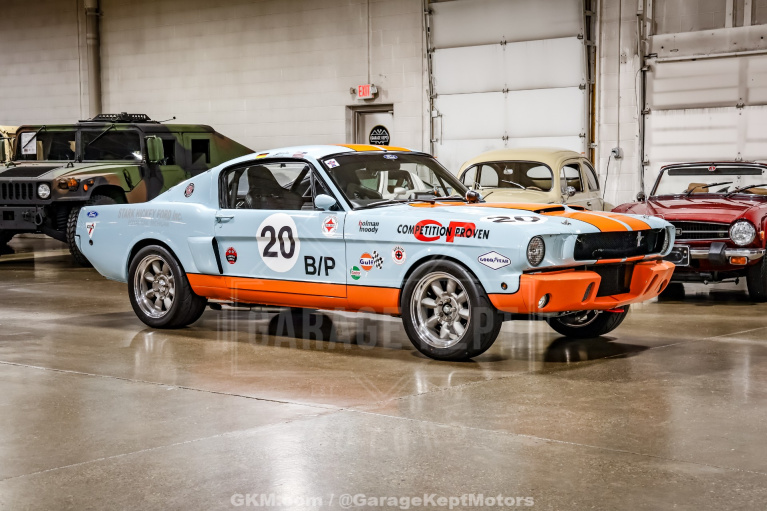
The 1965–66 hardtop. The launch shape, and the lightest Mustang there is. Standard power was the six — a 170 in the earliest cars, the 200 as the settled base engine — with the 260 and then 289 V8 as the option most buyers now want. Trim ran from a bench-seat base car with no options to a "Pony interior" car with buckets, woodgrain and a console. None of that changes the structure: unibody, with torque boxes, frame rails and floors doing the work a chassis does elsewhere, and a cowl vent that is the single most consequential rust test on any Gen 1 car. The 1966 car is the best-supported classic Mustang of all — Ford built over 600,000 Mustangs that model year across all bodies — and the hardtop is the rational way into it.
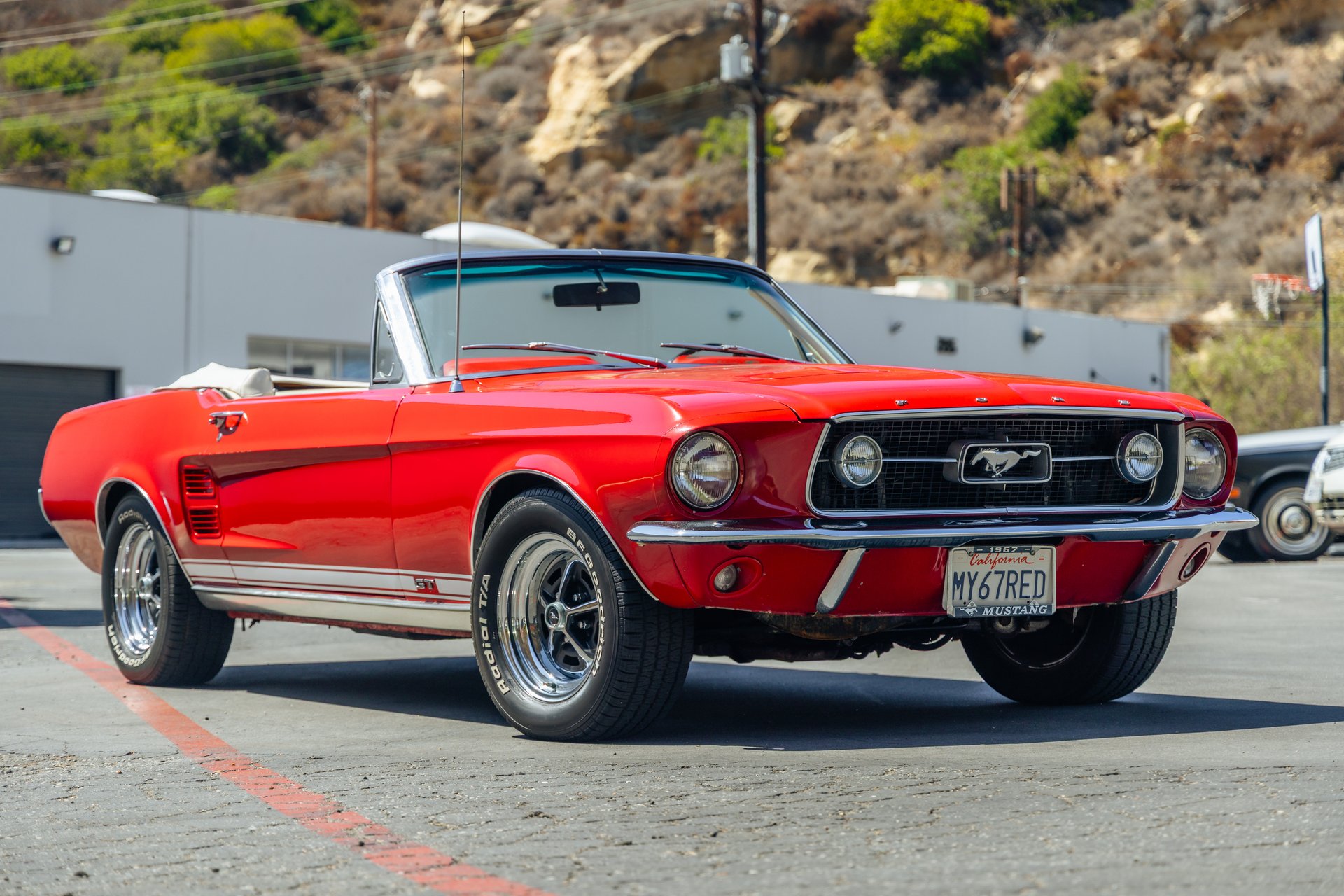
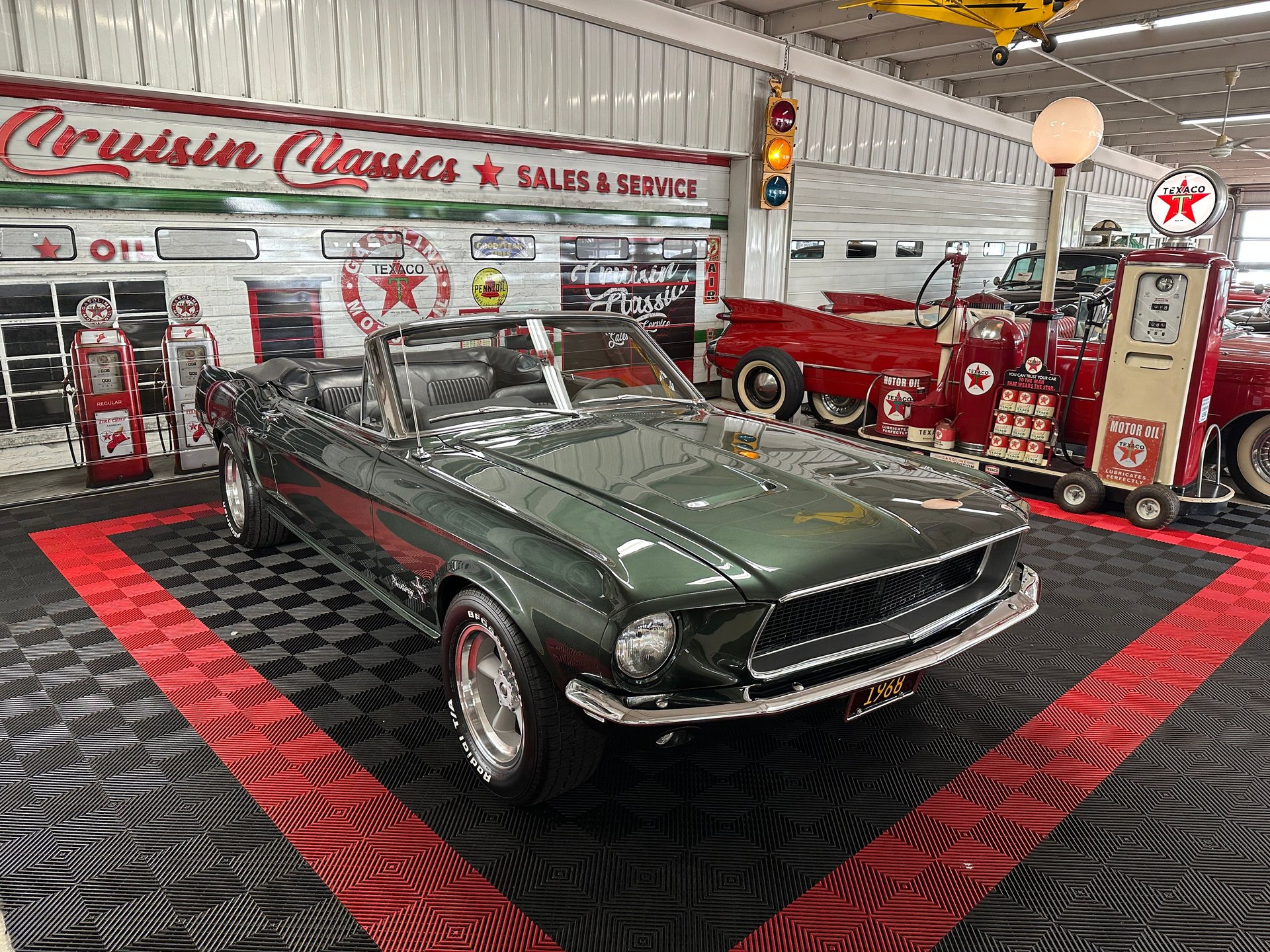
The 1967–68 hardtop. Ford widened the car for 1967, principally to fit the 390 big-block, and the hardtop gained a more formal, muscular presence. The standard car still meant a 200 six or a 289 (joined by the 302 for 1968), but everything feels a size larger — because it is. Federal safety equipment arrives (collapsible column, side markers for 1968) and the dash becomes padded and recessed. Buyers split cleanly: the 1965–66 car is prettier and simpler; the 1967–68 car is roomier and — in 302 form — the sweet spot for an early V8 hardtop without big-block money or weight.
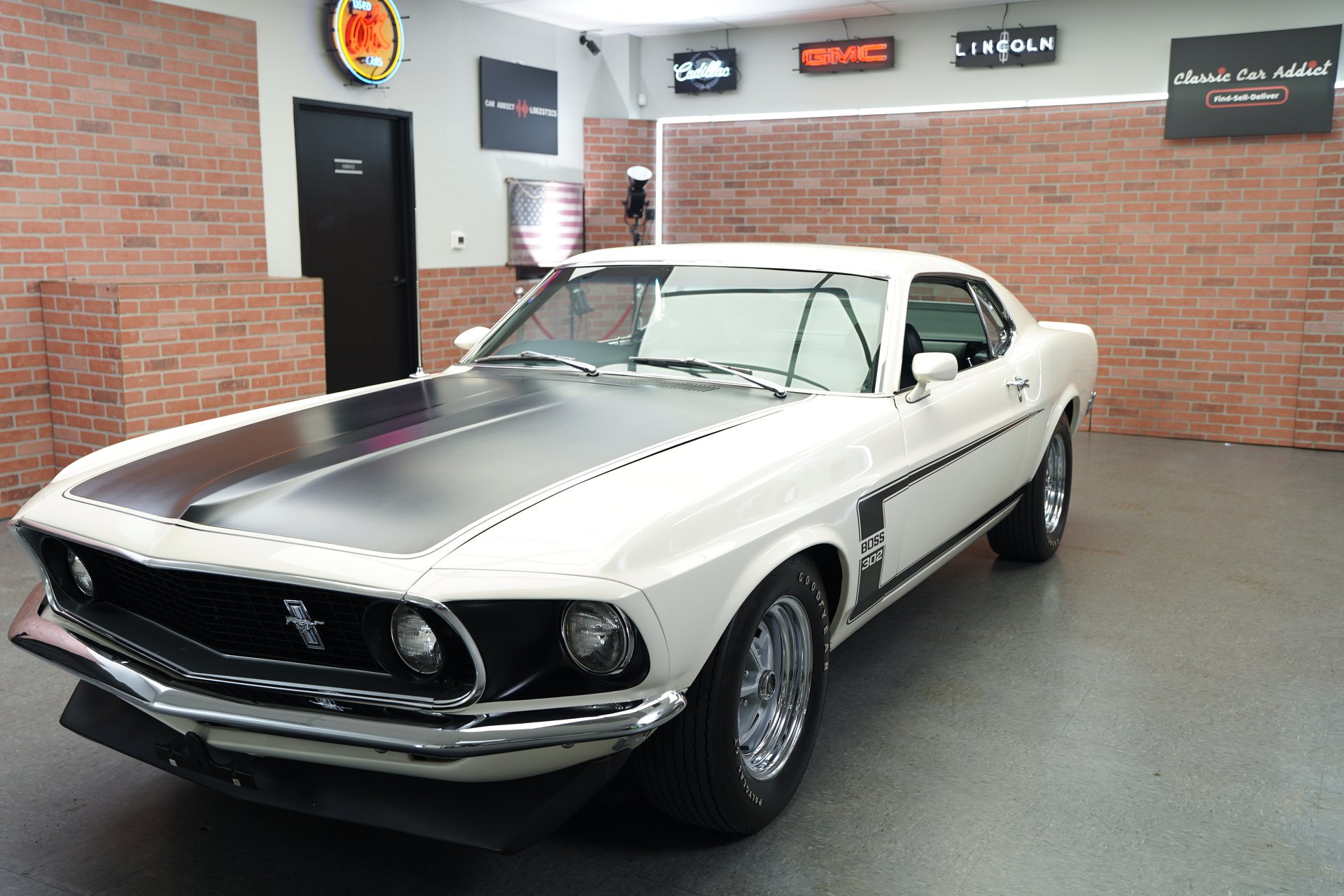
The 1969–70 hardtop. The pool's dominant years — 294 listings for 1969, 259 for 1970 — and the paradox of the standard car is sharpest here. The 1969 redesign made the Mustang longer and more aggressive, and the fastback (now SportsRoof) took the glory with the Mach 1 and Boss cars. The hardtop soldiered on as the fleet and family Mustang, with a 250 six as base and 302 and 351 (Windsor and Cleveland) V8s above it, plus the Grande luxury coupe with its vinyl roof and plusher trim. That supporting role is why hardtops survive in numbers and price below SportsRoof cars today: a 1969–70 hardtop with a 351 is a genuinely quick, handsome car the market persistently undervalues. The 1970 car is a mild facelift; mechanically the two years are near-identical, so buy on condition, not model year.
The 1971–73 hardtop. The last and largest Gen 1 cars, designed around the 429 big-block that emissions and insurance killed almost immediately. Performance in standard form — 250 six, 302, or a detuned 351 — is adequate rather than exciting. What these cars offer now is presence and value: full-size American coupes with Mustang badges, the cheapest route into a Gen 1 title, and increasingly appreciated as cruisers. Rust behaviour matches the earlier cars, only there is more metal to repair. Do not let a seller price a 1972 hardtop as if it were a 1969 car; the market does not, and neither should you.
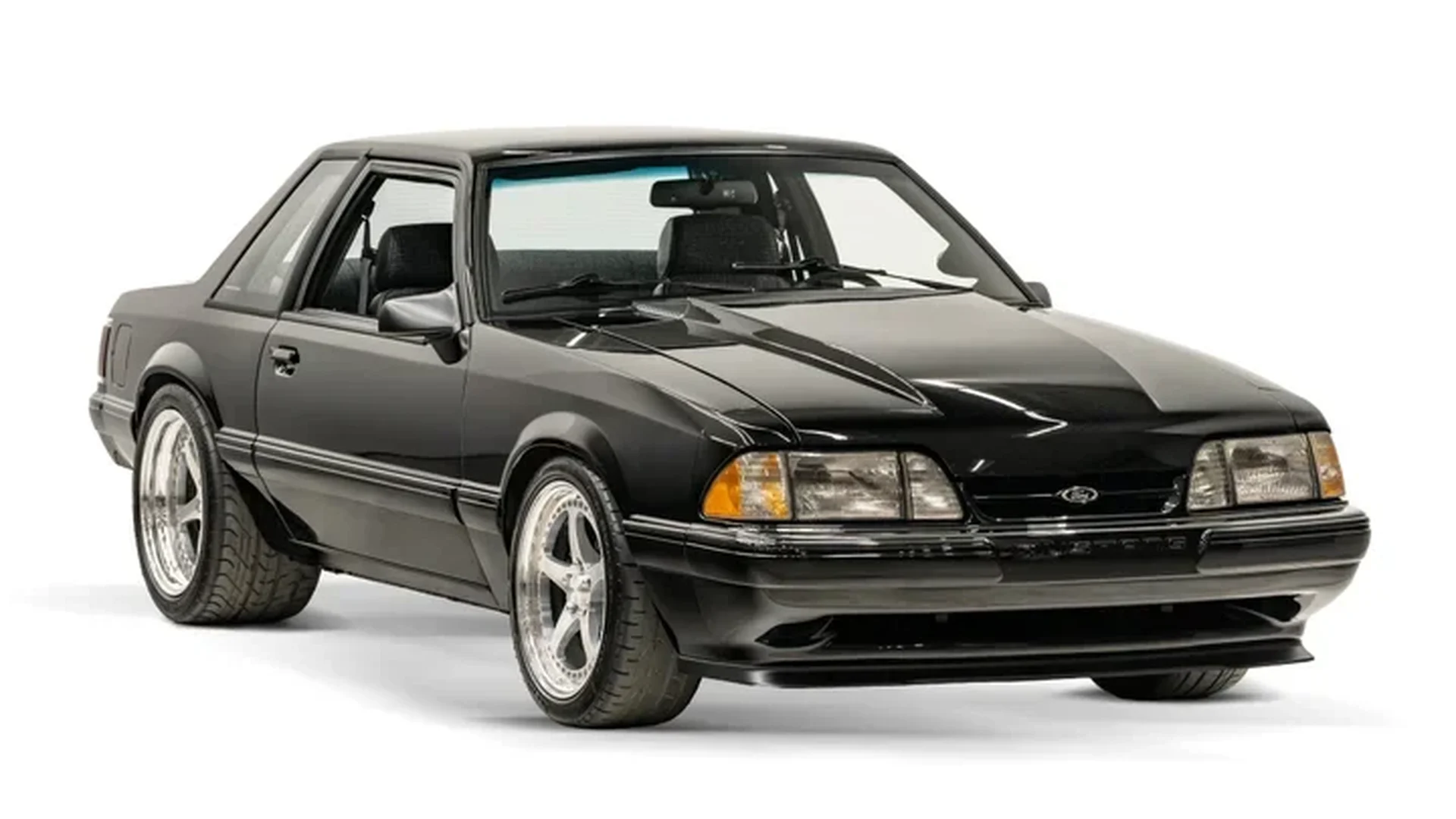
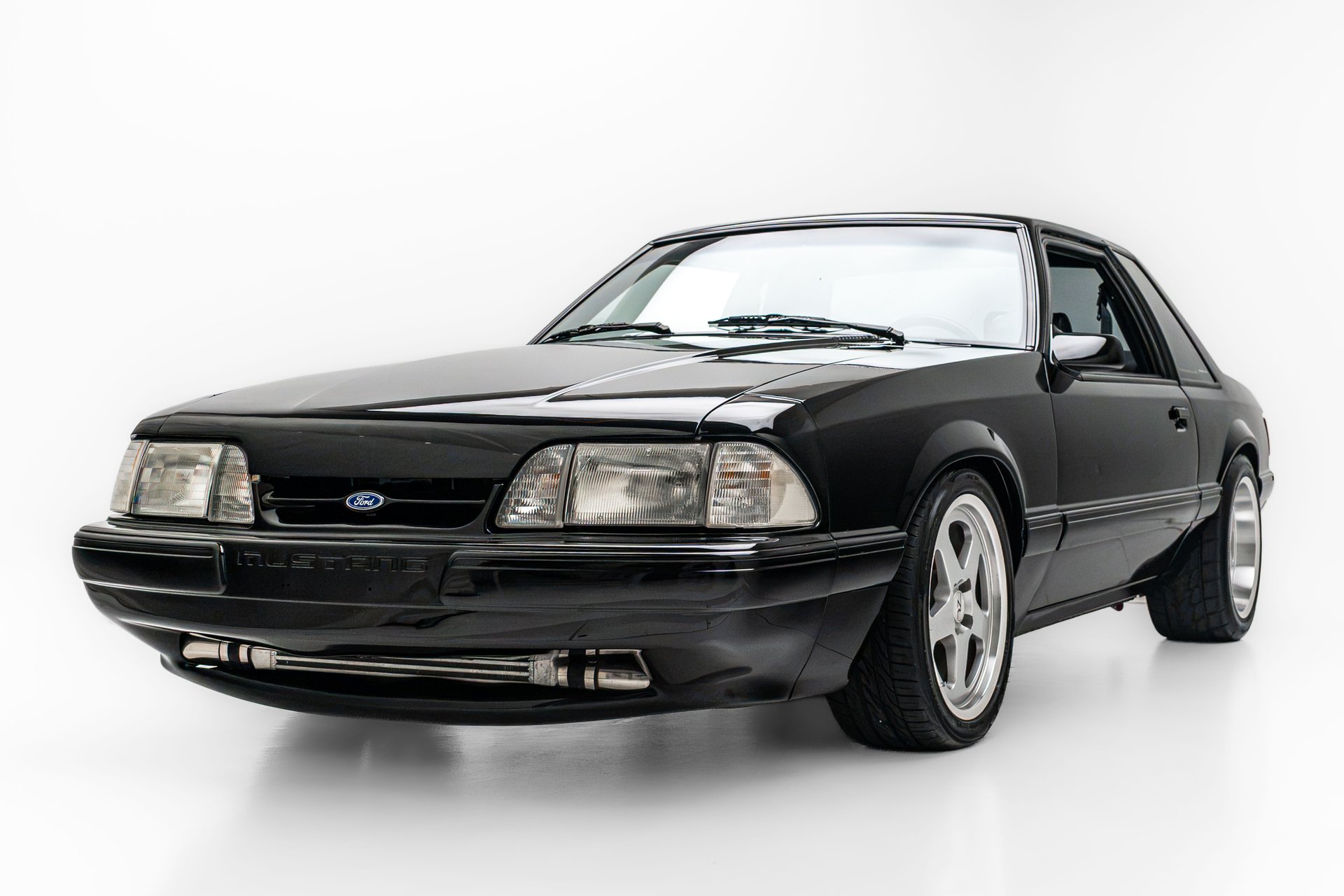
The Fox cars, 1979–93. The Fox platform — shared with the Fairmont — reset the Mustang as a light, boxy, hatchback-or-notchback car, and it is the second great block of this pool with 734 listings. Early cars (1979–86, the "four-eyed" cars for their quad headlamps) came with a 2.3 four as base, sixes in the middle, and the 5.0 V8 returning as the HO from 1982. The standard Fox for most buyers is the 1987–93 aero car: LX trim in notchback or hatchback form with the 2.3 or the 5.0, and the GT — hatchback only in most years, with body kit, fog lamps and standard 5.0 HO. The LX 5.0 notchback is the connoisseur's Fox: lighter than the GT, cleaner-looking, mechanically identical where it matters. The 1993 concentration in the listings (213 cars) reflects final-year production plus Cobra gravity pulling ordinary cars into the pool; treat a plain 1993 LX as a 1991 car with a later plate, not a rarity. The standard Fox story is coupe and hatch; convertibles file under their own coverage.
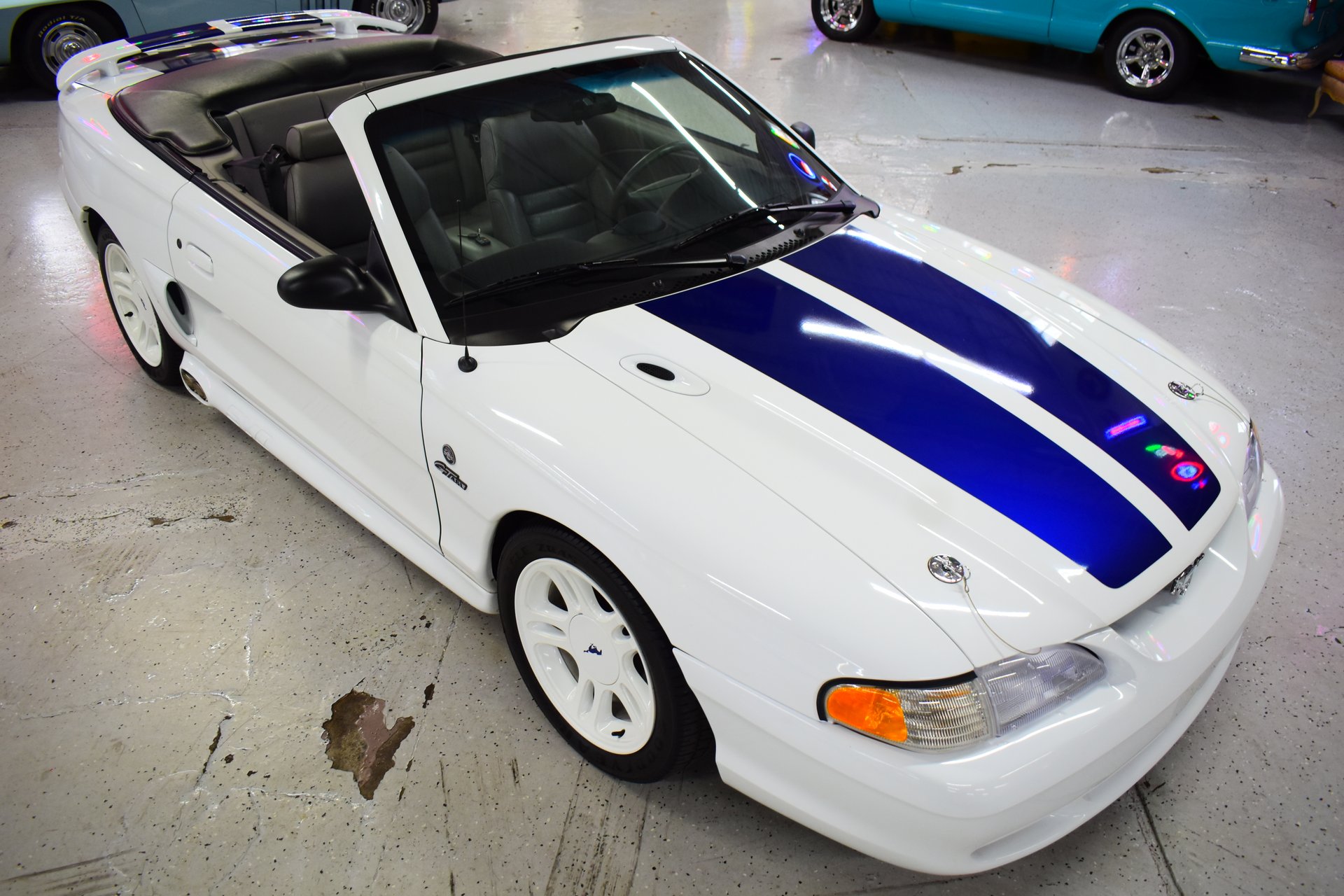
The SN95 cars, 1994–2004. The smallest block in the pool — 88 listings — and the youngest cars here. The 1994 redesign kept the Fox floorpan and, for two years, the 5.0 V8; the base car became a 3.8 V6 coupe, the GT a 4.6 modular V8 car from 1996. The 1999 New Edge facelift sharpened every panel and lifted GT output usefully. These are modern cars — airbags, ABS on most, OBD-II from 1996 — bought differently: originality matters less, service and accident history more, and the best examples are still cheap because the market has not yet decided they are classics. The best 1999–2004 GT coupe you can find is the fastest standard car in this guide for the least money.

Engines and gearboxes
The early sixes and small-blocks: Thriftpower sixes and Windsor V8s
The Gen 1 standard car offers two engine philosophies, and choosing between them is the first real decision in any early Mustang purchase.
The sixes (170, 200, 250). Ford's Thriftpower straight sixes are Falcon engines: overhead-valve, seven main bearings in the 200 and 250, a single-barrel carburettor (Autolite 1100 early, later Carter and Motorcraft units), and a reputation for indifference to neglect. The 170 powered only the earliest cars and feels underpowered today; the 200 is the settled base engine for 1965–70; the 250 adds torque that suits the heavier 1969-on cars. None is quick. All are smooth, simple, cheap to service, and increasingly respected as original when the car around them is honest. A six should start cleanly, idle without a shake, and pull without the flat spot that betrays a worn carburettor, a perished vacuum advance diaphragm, or low compression on one cylinder. The integral log manifold (intake cast into the head) hides exhaust leaks at its face; listen for ticking under load. Ignition and carburettor condition account for nine of ten "tired six" complaints — a compression test settles the tenth. Budget $400–900 for a carburettor rebuild and ignition refresh before condemning the engine itself.
The small-block V8s (260, 289, 302, 351). The Windsor small-block is the engine most buyers picture. The 260 appeared only in the earliest cars; the 289 (2-barrel C-code, 4-barrel A-code, high-performance K-code) defined 1965–67; the 302 replaced it for 1968 and ran, in evolving forms, to 1995; the 351 Windsor (1969 on) and the distinct 351 Cleveland (1970–73, canted-valve heads) top the standard range. In a hardtop you will actually find the C-code 289 or a standard 302 — cooking engines, not performance engines — and that is fine. A healthy small-block starts on the key, shows strong hot oil pressure, and does not smoke blue on start-up (stem seals) or under load (rings). Known behaviours are manageable: rear main seals weep (a damp bellhousing is normal; a steady drip is a $600–1,100 engine-or-gearbox-out job); exhaust manifolds crack and their bolts seize; original carburettors wear their throttle shafts, giving an idle no adjustment holds. The K-code Hi-Po — solid lifters, 271 hp — is the great identity trap: the VIN's fifth character is the engine code (T six, C 289 2-barrel, A 289 4-barrel, K Hi-Po). A "K-code" whose fifth digit is not K is not a K-code, whatever has been bolted on since. The same logic exposes six-to-V8 conversions, covered under Values: the VIN never lies about what the car was born as.
Big-blocks (390, 428) were optioned into 1967–70 shells in small numbers. They are heavy and overheat marginal cooling systems; if you find one in a plain hardtop, verify it by VIN (S-code for the 390 in 1967–68) and price the cooling and suspension work the weight demands.
The Fox era: the 2.3 four and the 5.0 HO
The 2.3 Lima four. The base Fox engine is Ford's overhead-cam 2.3 "Lima" four — carburetted in early cars, fuel-injected from the late 1980s; the turbocharged SVO version belongs to the performance story. In standard form it moves a light notchback adequately and a loaded hatchback slowly. Its virtues are economy and simplicity; its vices are a timing belt that is a service item, a wearing auxiliary shaft drive for distributor and oil pump, and — on carburettor cars — period feedback-carb complexity. A 2.3 car today is bought as an economy classic, a first Fox, or a swap shell — and a converted car is worth less than a factory 5.0 in the same condition, every time. Check the VIN and door tag before paying 5.0 money for any Fox.
The 5.0 HO. The engine that saved the Mustang. Returning for 1982, the 302 Windsor gained a roller camshaft for 1985, sequential fuel injection for 1986, and mass-air metering (most markets from 1989, California in 1988) that made it tolerant of modifications. In the 1987–93 aero cars it settled at 225 hp in period net terms, with torque that makes the light Fox feel quick in any gear. It is tough, with three habitual faults to test for. First, the rear main seal and the rear of the intake manifold both leak oil onto the bellhousing — distinguish them, because the intake gasket is a top-end job ($500–900) and the rear main is gearbox-out ($700–1,200). Second, the harmonic balancer's rubber ring slips with age, making timing readings meaningless — look for wobble at idle and a mark that will not settle. Third, neglect kills the cooling system first, and an overheated 5.0 has often taken its head gaskets with it: milky oil or hoses pressurised from cold are walk-away-or-price-it-in signals. The heater core — a $60 part behind the dashboard, $800–1,400 fitted — is the Fox's big-labour trap: test heat on every viewing, in summer too. A documented, unmodified 5.0 is now the scarce thing; a modified car is worth modified money only if every change is documented and reversible.
The middle Fox engines — the 3.3 six (early), the 3.8 V6 (mid-1980s) — are honest transport with thin enthusiast support. Buy them cheap and do not pay V8 money for their rarity; the market will not return it.
The SN95 modular: the 4.6 and the Essex V6
The 1994–95 GT kept the 5.0 pushrod V8 for two final years — those cars are judged by Fox rules. From 1996 the GT switched to the 4.6 Modular V8: overhead-cam, single-cam two-valve form at first (215 hp, rising to 260 hp in the 1999 New Edge GT), with the four-valve Cobra above it. The modular rewards maintenance and punishes overheating and skipped oil changes. Its signature fault is the plastic intake manifold on 1996–2001 2-valve cars, whose coolant crossover cracks and leaks — an aluminium-crossover replacement ($700–1,200 fitted) is the permanent fix and a plus point. Spark plugs ejected from early heads (too few threads engaged) and timing-chain rattle on cold start are the other checks: hear the first five seconds of a cold start, bonnet up, and ask directly about plug-thread repairs. A maintained 4.6 passes 200,000 miles without drama; an overheated one is an engine replacement, not a rebuild, at standard-car values.
The base SN95 engine is the 3.8 Essex V6 (3.9 in the final 2004 run-out) — adequate, economical, and in 1994–98 form prone to head-gasket failure in the pattern of many 1990s Ford V6s. Test coolant condition and temperature stability under load. Buy the V6 coupe as transport with Mustang styling, not as an appreciating asset.
Gearboxes
Gen 1 boxes. The standard manual is a three-speed, with the Ford Toploader four-speed as the desirable option — one of the strongest manuals of the era, with second-gear synchromesh as its wear tell. Automatics are the Cruise-O-Matic family: the C4 behind sixes and small-blocks (light, tough, cheap to rebuild at $1,500–2,500), the heavier FMX behind some 351s, the C6 behind big-blocks. A C4 that engages promptly and changes without flaring is a good box for the life of the car; delayed engagement cold that improves warm is the classic warning of hardened seals.
Fox boxes. The manual is the Borg-Warner (later Tremec) T5 five-speed: light, pleasant, and marginal for V8 torque if abused; World Class versions from 1985 are stronger. Third-gear synchro wear, whine in first and fifth, and the distinction between a sloppy shifter (bushings — cheap) and one that jumps out of gear under load (engagement teeth — a $1,200–2,200 rebuild) are made on the test drive. Never buy a T5 car undriven through every gear under load and overrun. The automatic is the AOD four-speed, whose TV (throttle valve) cable adjustment is existential — a misadjusted or detached cable destroys the box in miles, not months. Confirm the cable is attached and the box holds overdrive without hunting; budget a TV-pressure check ($150–300) as your first post-purchase job.
SN95 boxes. Manual GTs use the T5 (1994–95), then the T45, judged as the Fox T5; V6 manuals use a lighter T5 variant. Automatics are the AODE, then the 4R70W electronic four-speed — strong, and intolerant of burnt fluid: smell the dipstick for burning and confirm overdrive and lockup engage cleanly at cruise. A fluid and filter service ($200–350) refreshes most lazy changes; lockup shudder that survives it is a converter conversation ($900–1,600).
Across all eras, the gearbox is judged on the drive, not on the ramp. A seller who will not allow a full test drive through every gear has priced that refusal into the car.
Problem areas
Everything in this section follows the evidence pattern of the pool itself. We photo-checked 1,770 cars in this model pool in detail; in those photo sets, rust was noted in 118 cars, visible damage was noted in 89 cars, leaks were noted in 6 cars, and smoke was noted in 1 car. Read those numbers exactly as they are — counts from the photo-note sample, not prevalence rates for all Mustangs — and read them alongside what sellers' photographs systematically hide: undersides, cowl interiors, torque-box seams and strut-tower bases are the places listing photos go least, on every era of Mustang, and they are the places this section spends its time. Assume the metal needs a forensic examination, be pleasantly surprised when a car passes, and remember the ordering that governs every Mustang purchase: structure first, then the faults that need the dashboard or the engine out, then everything else, because almost everything else on a Mustang is cheap.
Rust: the Gen 1 map — cowl, floors, torque boxes
Rust on a Gen 1 Mustang follows the water and the road salt, in a map so consistent that experienced buyers work it in a fixed order and stop the moment the structure fails.
The cowl — the test that comes first. In front of the windscreen, the cowl plenum collects air for the heater — and, when its drains block with leaves and its seams rust through, it pours water onto the front floors and the occupants' feet. Every Gen 1 car that has lived outside has some cowl deterioration; the question is degree. The test costs nothing: pour a jug of water slowly into the cowl grille with a torch in the footwells. On a sound car the water exits behind the front wheels and the footwells stay dry; on a rotten cowl it drips — or streams — down the inner kick panels. A seller who refuses the test has answered it. Repair is the rub: the panel is welded, the windscreen comes out, and a proper replacement is $2,500–5,000 with paint — which is why cowl rust is the most effective negotiator, or walk-away trigger, on an early car. Magnetic cowl covers and sealant in listing photos are confessions, not cures. Check the cowl sides and inner-wing tops on the same water path.
Floor pans. The cowl's victim and the salt belt's casualty. Lift every carpet and prod the pans along their seams and around the seat mounts. Surface scale is a clean-and-treat job; perforation is panel work — sections are cheap ($80–200 in parts) but a full floor fitted and finished runs $1,500–3,500, and floors almost never rot alone. Floor and underside condition is the area sellers' photo sets most often omit, so treat any listing without an underside photograph as an unknown, not a pass. The toe boards, where floor meets firewall, rot with the cowl and are judged with it.
Torque boxes, frame rails and structure. The Mustang has no separate chassis: front frame rails, torque boxes (the gusseted boxes tying the leaf-spring mounts and firewall structure into the shell), rockers and floor together are the structure. Torque boxes crack and rust at their seams — look for separation and staining where the box meets floor and rocker. Front rails rust from inside, especially at the steering mounts and under the battery tray; prod them, do not just look. Rockers on a hardtop are structural, and fresh covers or thick underseal over them is a cover until proven otherwise. Structural welding is fabrication money — $1,000–2,500 per torque box or rail section fitted and painted — and a car needing both sides plus floors plus cowl is a restoration project priced as one, whatever its paint looks like. The definitive check is a lift inspection before money changes hands; on a Gen 1 car it is the best $150–250 you will spend.
Trunk, wheelhouses and the outer skin. The trunk floor rots over the fuel tank and at its drop-offs beside the rear frame rails; lift the mat, remove the spare, and check the seams where the floor meets the wheelhouses and tail panel. Rear wheel lips and lower quarters bubble from water trapped in the quarter seam — run a cloth-wrapped magnet along every lip and feel inside it with your fingertips. Door bottoms fill with water when their drains block; front wing bottoms trap mud against the cowl side; the battery tray rots from the top down under the battery, and the acid track eats the apron beneath it — lift the battery or rock it and torch the apron below. Headlamp buckets, valances and panel edges are cosmetic by comparison: price them, do not fear them. A quality repaint starts around $10,000, which is why bubbling quarters plus structural rust together end most negotiations — welding and paint together exceed the finished hardtop's value unless the car is a verified K-code.
Rust and structure: the Fox and SN95 map
Fox rust is a different map on the same principle: water and salt attack the stressed sheet metal, and the Fox's stressed points are specific.
Torque boxes — again, and worse under power. The Fox rear suspension's control arms mount to torque boxes in the floor, upper and lower, and a lifetime of 5.0 torque — especially with sticky tyres, hard launches or a manual box — tears, cracks and eventually rips them, quite apart from rust weakening the same seams. On any 5.0 viewing, get under the rear of the car with a torch and examine all four torque-box areas for torn seams, cracked spot welds, rust jacking and previous welding. Battle-box reinforcement kits exist because the fault is universal; a car already reinforced neatly has had an honest owner, a car with torn boxes undisclosed has not. Repair and reinforcement fitted runs $800–2,000 depending on damage, and a car with ripped uppers needs the interior out to weld safely. Six- and four-cylinder cars suffer the rust without the tearing; judge them on metal alone.
Strut towers and front frame rails. The front strut towers and the frame rails beneath them rust from the engine-bay side and from underneath, fed by road salt and trapped mud at the tower-to-rail joint. Look down the towers from above for bubbling at their bases and seams, then from below on a lift for perforation — tower failure is structural and, on a cheap Fox, terminal. Cars from dry states command their premium here first. The cowl panel and the floor around it rust less dramatically than on a Gen 1 car (the Fox cowl drains better), but the floor pans themselves — especially under the rear seat, around the seat mounts, and at the seams where road salt sits — perforate on salt-belt cars, and the driver's floor cracks around the seat's rear mounts on high-mileage cars, giving a seat that rocks. Price a floor section as Gen 1 money; price a cracked seat mount as a welding job that must be done before the car is safe.
Hatch, doors, quarters and seams. The hatch rusts along its lower edge and around its window; the notchback's boot lid is less prone but its quarters and wheel lips match the hatch's. Door bottoms bubble on both bodies and hinges sag — lift each door's trailing edge: play is pins and bushings, $150–350 a side fitted, but a door dropped far enough to chip the quarter is a care marker. Windscreen and hatch-glass seams, the spare well and the tank straps complete the circuit. SN95 cars repeat the Fox map — strut towers, torque boxes inherited from the Fox floorpan, floors, quarters, boot floor — with better factory proofing that delays rather than prevents the same salt-belt failures.
Across Fox and SN95, fresh black underseal blown uniformly over everything in the week before a sale is a cover-up until proven otherwise, exactly as on a Gen 1 car. Honest coating after thirty years is patchy, chipped and dirty at the edges.
Suspension, steering and brakes
Gen 1. The front suspension is double-wishbone with the coil spring on the upper arm (the "Shelby drop" relocates those mounts on modified cars — ask if it has been done, and well). Ball joints, bushings and spring perches wear; the recirculating-ball steering box's play is adjusted, then condemned — play at centre that adjustment cannot remove is a $600–1,100 rebuild. Rear leaf springs sag and their bushings perish, dropping the tail — read stance before blaming springs alone, as rusted spring mounts mimic sag. Brakes are drums all round unless the front-disc option was specified: a drum-braked six is period-correct and adequate if maintained; a properly proportioned disc conversion is a usability plus most buyers pay for. Seized cylinders, perished hoses and a tired single-circuit master cylinder on pre-1967 cars (dual-circuit from 1967) are recommissioning certainties on a stored car — $800–1,800 for a full hydraulic refresh.
Fox and SN95. Fox suspension is MacPherson strut, with quad rear shocks on 5.0 cars whose horizontal dampers go soft and let the axle tramp. Ball joints are a safety check, not a haggling point: any play means replacement before use. Rack-and-pinion steering leaks, and a whining pump is the standard neglected-Fox soundtrack ($500–1,000 for rack and pump fitted). SN95 cars keep the pattern with better brakes (ABS common; 1999-on GTs improved further) and the same appetite for bushings and dampers after 100,000 miles. On all Fox/SN95 cars, ancient or cracked tyres tell you how the car has been budgeted — and a 5.0 on worn rears with torn torque boxes has been driven exactly as that combination suggests.
Engines, cooling and driveline wear
Beyond the engine-specific checks, three systems cut across eras. Cooling: a Gen 1 small-block with a marginal radiator or silted block overheats in traffic, and sellers demonstrate such cars on cool mornings on open roads — insist on a hot idle at the end of the drive and watch the gauge for ten minutes. Fox 5.0 cooling is adequate when radiator, fan clutch and shroud are all present; missing shrouds and electric-fan conversions of unknown wiring are overheating appointments. SN95 electric fans fail silently until traffic finds them. Oil leaks: some weeping is period-normal on Gen 1 engines; the leaks that matter reach the exhaust, empty the sump between services, or disguise a worse source — clean, trace, then judge. In our photo sample leaks were noted in only 6 of the 1,770 cars examined, which says more about bays being photographed dry and from above than about Mustangs not leaking: check the underside yourself. Exhausts: manifolds crack, studs snap on removal (budget the drilling), and Fox headers of unknown make warp and blow at the flanges. A blowing exhaust hides engine noises — another reason the cold start matters.
Interior, electrics and trim
Gen 1 interiors are simple and almost entirely reproduced: covers, foam, carpets, headliners, door cards and dash pads are all available, and a full vinyl retrim is $3,000–6,000 fitted — real money, but bounded, which is why a rust-free car with a tired interior beats a shiny car with a rotten cowl every time. Heater boxes leak and their cores fail ($600–1,100 with labour), and a bypassed core — looped hoses in the engine bay — is the seller telling you so. Electrics are points-era simple: dim lights and wandering gauges are earths and regulators, cheap and tedious in equal measure.
Fox interiors age in sunlight: dashes crack, red interiors fade unevenly, driver's bolsters collapse, hatch plastics go brittle. Much is reproduced; correct early four-eye trim is hunted second-hand. The electrical checks that matter are the heater core (test heat always), the blower motor, the ignition switch — a known wear item whose failure mimics random electrical death — and the aero cars' headlamp switches that run hot. SN95 interiors wear better and fail electronically instead: window motors, GEM-module quirks, dead illumination and air conditioning needing a compressor ($800–1,400 fitted) rather than a regas. On any SN95, run every load you can find; a car where everything works has been maintained where it does not show, too.

How to inspect one
Allow at least an hour; bring a torch, a cloth-wrapped magnet, a jug of water for a Gen 1 car, and a screwdriver for prodding (with permission). If the car passes you, pay for a lift inspection before money changes hands. The steps work across eras; where a check belongs to one generation only, the step says so.
- Start with the paperwork and the VIN. On a Gen 1 car, read the VIN on the driver's inner wing apron and the door data plate, and decode the fifth character — the engine the car was born with (T six, C/A/K for the 289 family). On a Fox or SN95, read the VIN at the windscreen base and the door-jamb label, and confirm the engine and body codes match the car in front of you. Title, VIN and plates must agree before anything else matters. A thick history file is worth real money on any era.
- Cold start, bonnet up. Insist the engine is cold when you arrive. A six should settle to an even idle; a small-block or 5.0 should start without smoke that lingers; a 4.6 modular should be silent in its first five seconds — chain rattle then is the SN95 tell. Listen for exhaust blows that quieten as manifolds warm, and watch the temperature gauge begin its story.
- The cowl test (Gen 1 only). Pour a jug of water slowly into the cowl grille with a torch in each footwell. Dry footwells and water exiting behind the front wheels is a pass; drips down the kick panels price a $2,500–5,000 repair or end the viewing. On Fox and SN95 cars, spend the same minutes on the cowl seams, the windscreen surround and the floor beneath the pedals for damp and staining.
- Under the car: structure first. Torch along both rockers, prod the floor seams, and examine the structure your era turns on — Gen 1: torque boxes, front frame rails (especially at the steering mounts and under the battery tray), toe boards and trunk drop-offs. Fox/SN95: all four rear torque boxes for tearing as well as rust, strut-tower bases and front rails, floor seams and seat mounts. Perforation or tearing in structure is not a haggling chip; it reprices the car as a project or ends the inspection.
- Trunk, spare well and quarters. Lift the mat, remove the spare, and check the trunk floor seams, the well corners and (Fox hatch) the spare well and hatch lower edge. Run the magnet along rear wheel lips, lower quarters, door bottoms and (Gen 1) the front wing bottoms. Feel inside the wheel lips with your fingertips. Count the bubbles and price the paint honestly — welding plus paint is where cheap Mustangs stop being cheap.
- Floors and interior from inside. Lift every carpet you are allowed to lift. Wet carpets in a "dry-stored" car mean leaking seals and starting rust. Sit in the driver's seat — it prices the retrim on every era — work the seat adjusters, and on Fox cars check the driver's floor for the cracked seat-mount flex by rocking the seat hard.
- Engine bay specifics by era. Gen 1: rock the battery and torch the apron beneath its tray; check for a looped heater hose (a bypassed, leaking core); read the oil and smell it. Fox 5.0: look for balancer wobble at idle, trace any bellhousing oil to intake or rear main, and confirm the AOD's TV cable is attached if the car is automatic. SN95 4.6: look for coolant staining at the intake crossover and ask about plug-thread repairs. Every era: coolant condition and hoses tell you the maintenance truth faster than the seller does.
- Suspension and steering on the ground. Rock each front wheel top-to-bottom and side-to-side: ball-joint play on any era is a replace-before-use item, not a discount token. Gen 1: check steering-box play at centre. Fox/SN95: bounce each corner (dead dampers, and soft horizontal axle dampers on a 5.0), and lift each door's trailing edge for hinge sag.
- The test drive: every gear, load and overrun. Fifteen minutes minimum, ending in traffic. Manuals: second-gear synchromesh on a Gen 1 Toploader, third-gear synchro and jump-out under load on a Fox/SN95 T5 or T45. Automatics: prompt engagement cold, no flare between gears, and on AOD/4R70W cars a clean, unhunting overdrive and lockup at cruise. A six should pull without a flat spot; a V8 should pull cleanly to 4,000 rpm. Brake hard from speed — straight, no judder, no pull.
- Heat, idle and the dashboard-out tests. Idle the car hot for ten minutes and watch temperature and oil pressure. Then run the heater at full heat on every fan speed, whatever the weather: Gen 1 blower and core, Fox heater core, SN95 air conditioning. A dead Fox heater core or Gen 1 heater box is four-figure labour already scheduled; find it now.
- Electrics: everything, once. Windows, lights (including Fox fog lamps and their hot switches), washers, horn, gauges, radio, and on SN95 cars every switch you can find. Dim or wandering instruments are earths on a Gen 1 car and a maintenance biography on any car: one where everything works has usually been looked after where it does not show, too.
- Stance and the walk-away decision. Stand back and photograph the car side-on from a distance. It should sit level: Gen 1 tail-down is leaf springs or their mounts; Fox/SN95 sag with torn torque boxes is structural, not stance. Look down each flank for ripples and mismatched paint. Then apply the ordering: structure sound, dashboard-out and engine-out faults priced, everything else negotiable. If step 4 failed, no strength in steps 5–12 rescues the car at standard-car money.

Values
There are deliberately no price figures in this section: the market block beneath this guide carries the current listing and recorded-sale numbers for this pool, refreshed at every build, and those are the figures to negotiate from. What follows teaches you how to read them, because the standard market punishes buyers who import fastback thinking into a hardtop purchase.
The standard-car discount is structural, and it is your friend. In every Gen 1 year, the hardtop was the volume body and the fastback the poster car, and the market has priced that hierarchy ever since: the same engine, the same condition and the same history in a hardtop shell change hands below the equivalent SportsRoof, with convertibles priced by their own weather-dependent logic. Fox cars repeat the pattern in miniature — the GT hatchback carries a recognition premium the mechanically identical LX notchback does not, which is why experienced Fox buyers hunt LX 5.0s. Do not resent the discount or try to argue a seller out of it in reverse: if you are buying the standard car, the discount is the reason the purchase makes sense. If you are being asked fastback money for a hardtop, walk — the pool is deep (over 2,000 listings tracked in this model alone) and another car exists.
Condition spread dwarfs model-year spread. The gap between a structurally sound, documented driver and a shiny car with a rotten cowl (Gen 1) or torn torque boxes (Fox) is far larger than the gap between adjacent model years. Read asking figures against the inspection, not the calendar: a 1966 hardtop with a dry cowl, original floors and a tired six is a better purchase at a firm price than a 1969 car with fresh paint over structural welding at a "bargain" one. The project-versus-driver gap is widest on Gen 1 cars, where welding plus paint approaches the finished car's value; it is narrowest on SN95 cars, where mileage and service history, not metal, set the spread.
Asking is not achieving. This pool leans heavily on auction listings — Bring a Trailer accounts for 1,500 of the 2,082 records — which gives you a deep archive of achieved prices to set against dealer asks. Use it. Where a median ask sits well above the auction median, sellers are anchoring to the best car advertised, not to cars that sold, and your offer should anchor to the sold archive, adjusted for the specific car's structure and documentation. Cars that sit for months at an aspirational figure are not evidence the market is rising; they are evidence the figure is wrong.
Six versus V8, and the conversion trap. An original V8 car is worth more than an original six in the same condition, in every era — and a six converted to a V8 is worth less than either, because the conversion is never as complete as the claim: springs, brakes, axle, cooling and steering all differ between six and V8 Gen 1 cars, and most conversions change the engine and little else. The VIN settles identity (fifth digit on a Gen 1 car; engine code on the Fox/SN95 door label), so pay for what the car was born as, plus an allowance for work actually done — never for what the engine bay suggests. The exception runs the other way: an original six-cylinder hardtop in excellent order is a scarcer survivor than a converted car, and the market has begun to price good sixes with respect. Do not pay a premium to convert one.
Originality versus modification. On Gen 1 cars, tasteful usability upgrades (front discs, a five-speed, air conditioning) are value-neutral to mildly positive if documented and reversible. On Fox 5.0s the market has turned: unmodified, documented cars lead, and modified cars price on their parts list minus a suspicion discount. On SN95 cars, buy condition and history and treat modifications as free extras at best. In all eras, documentation — invoices, a Marti Report verifying factory specification, a window sticker, a service book — moves a standard car up its condition band more reliably than any accessory.
Parts and ownership
The standard Mustang is the best-supported classic car in America, full stop — and the support is deepest exactly where this pool is deepest, on the Gen 1 hardtop and the Fox 5.0. Ford built Mustangs in the millions, the reproduction industry followed the volume, and the result is a car whose ownership costs are set by labour and paint, not by parts hunting.
Easy: virtually every service item, brake component, suspension wear part, seal, gasket and piece of brightwork for a 1965–73 car, ordered today and fitted this weekend; sheet metal including floors, quarters, cowl panels and torque boxes, all reproduced; complete interiors in factory colours and patterns. Fox mechanical parts are modern-car easy (the 5.0 shares its ecosystem with a generation of Ford V8s), Fox and SN95 wear parts likewise, and diagnostic knowledge for the SN95's electronics is a forum search away. Glass, rubbers and weatherstrips for all three eras are reproduced or stocked.
Harder and dearer: Gen 1 K-code-specific engine parts and correctly dated castings for a verified rare car (you are paying for numbers, not metal); early four-eye Fox trim and dash components in uncracked condition; SN95 4.6 engines in known-good used form as the cars age out of the breakers' yards; and, across all eras, the labour-heavy assemblies — cowl replacement, torque-box reconstruction, heater cores (Gen 1 box and Fox dash-out alike), and quality paint, where a proper job starts around $10,000 and rises with the welding it reveals. A concours-correct restoration of a standard hardtop costs more than the finished car is worth in almost every specification except the verified K-code; restore a standard car to drive it, and let that arithmetic guide how far you go.
Running costs. A sorted Gen 1 six or small-block returns fuel economy in the mid-to-high teens mpg, insures as an ordinary classic, and is serviced by any competent independent. A Fox 5.0 follows a modern pattern — fuel injection, electronic ignition, contemporary service intervals — and an SN95 adds modern consumables and diagnostics. The budget line that catches new owners of any era is the first year: catching up deferred maintenance on a running car honestly costs $2,000–5,000 before you improve anything, and recommissioning a car that has sat for years runs $4,000–8,000 at a shop — fuel system cleaned end to end (ethanol fuel attacks old rubber and varnishes tanks), every brake component inspected, all fluids, belts and hoses renewed, tyres replaced on age regardless of tread. Buy a car in regular use over a sleeping car at a higher price, in every era, without exception.
These are not fragile cars: the sixes, small-blocks, 5.0 and 4.6 all have documented high-mileage lives when maintained, and the club and forum knowledge base for standard Mustangs is deeper than for any other car in these listings. The Mustang that costs its owner money is never the one being driven; it is the one whose cowl, torque boxes or strut towers were bought unseen.
Which one to buy
- The all-rounder: 1965–66 hardtop, 289 V8. The lightest, prettiest, best-supported classic Mustang, in the specification most buyers actually want. Buy the driest cowl and the most original floors, accept a C-code 2-barrel car happily, and drive it everywhere.
- The value buy: 1969–70 hardtop, 302 or 351. The pool's deepest years and the market's most persistent undervaluation — near-fastback presence and real V8 pace at hardtop money. A Grande with its luxury trim intact is the connoisseur's version of the same bargain.
- The cruiser: 1971–73 hardtop, 302 or 351. The biggest, softest Gen 1 car, bought cheap and driven long distances. Judge it as a full-size coupe that happens to wear the badge, and never pay 1969 money for it.
- The Fox pick: 1989–93 LX 5.0 notchback, T5 manual. Mass-air injection, the mature 5.0, the lightest Fox V8 shell, and no GT recognition premium. Torque boxes and heater core checked, it is the most performance per dollar in this entire guide.
- The Fox value buy: 1987–93 GT hatchback. More choice, softer prices than the notchback cult suggests, and the full 5.0 experience — provided the torque boxes have survived the car's previous social life.
- The modern buy: 1999–2004 GT coupe, 4.6 modular. The fastest standard car here, with modern brakes, air conditioning and diagnostics, at the youngest-car money in the pool. Service history over mileage, aluminium-crossover intake already fitted is a plus.
- The honest starter: an original six-cylinder hardtop, any Gen 1 year. Unconverted, unmolested, structurally sound. Slower, cheaper to run, and increasingly respected — the right first Mustang for a buyer whose budget is real.
And the rule that overrides all of the above: buy the soundest structure you can find, in the specification you can live with. Cowls, floors, torque boxes and strut towers decide what a Mustang costs you; engines, gearboxes, heater cores and interiors are all fixable at prices you can plan for — and the pool is deep enough that you never need to buy a car that fails that test.
See the 1,421 Mustang cars currently listed.