
Ford Mustang Fastback buyer's guide
Ford Mustang Fastback -- the model's own buyer's guide: variants, values and what to check.
Years listed: 1965-1973 · Series: Mustang Gen 1
Overview and history
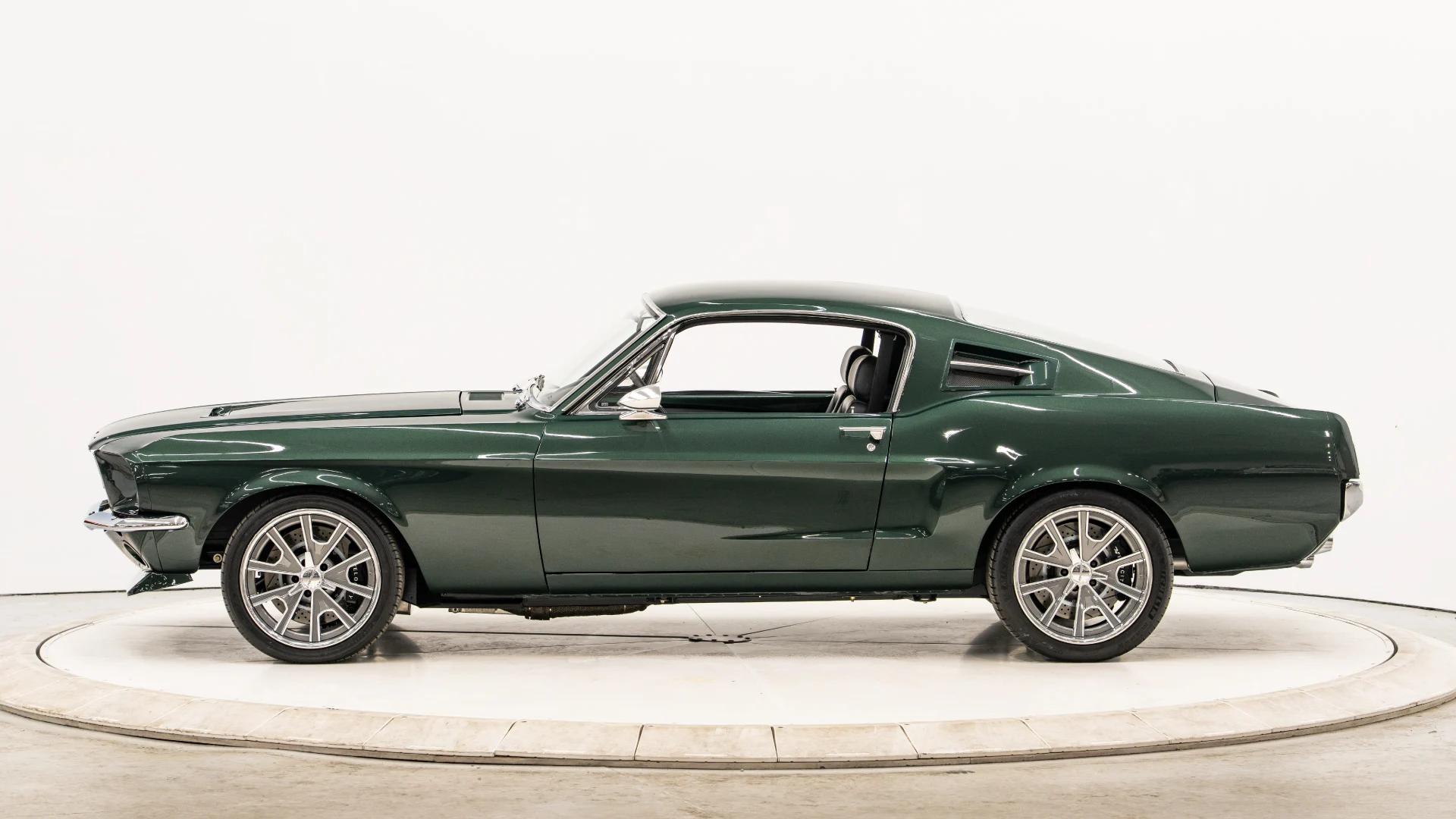
The fastback is the Mustang everybody pictures. When Ford launched the car in April 1964 as a 1965 model — the famous "1964½" cars are early 1965s — there were three body styles: the hardtop coupe, the convertible, and, from August 1964, the 2+2 fastback. The coupe outsold it then and the fastback has outvalued it ever since, and the reason is in the roofline. Where the coupe has a formal notch and a small upright rear window, the fastback carries one unbroken curve from windshield to deck tip, with full-width glass set into the slope and louvred vents in the sail panels on the early cars. It looks like a racing car because it was drawn to. This is the shape of the Shelby GT350, of Bullitt, of the Mach 1 and both Bosses — every Mustang that became a poster was a fastback.
Ford called the 1965–66 car the 2+2, and the name was honest: the rear seat is for occasional use and folds flat to make a carpeted load deck, with a trapdoor through into the trunk. For 1967 the Mustang grew — longer, wider, heavier — to make room for a big-block V8, and the fastback grew with it: a longer slope, concave tail panel, and scoops ahead of the rear wheels. The 1967–68 shell is the one Steve McQueen drove through San Francisco, and the market has never forgotten it. For 1969 Ford renamed the fastback the SportsRoof and built an entire performance hierarchy inside this one body style: the Mach 1 was SportsRoof-only, and so were the Boss 302 and Boss 429. The last act, 1971–73, is the biggest Mustang of all, its SportsRoof roof so shallow-sloped it is nearly a flat deck, sold mostly as the Mach 1.
That arc matters because "Mustang Fastback" in a listing can mean anything from a six-cylinder 1965 2+2 with a three-speed to a Boss 429, and the cars share a silhouette and almost nothing else — not value, not running costs, not the faults you need to hunt. Our own pool makes the spread plain: we track 791 first-generation fastbacks, model years 1965 to 1973, and the early cars dominate — 335 of them are 1965s and another 154 are 1966s, against 172 from 1967 and 84 from 1968, with the 1969–73 SportsRoofs far thinner on the ground. Most shoppers will therefore end up looking at a 1965–68 small-block car, and this guide weights its advice accordingly, while covering the big-block and flagship cars in full.
The models
| Model | Years | Engine | Output | Character |
|---|---|---|---|---|
| 2+2 Fastback (six) | 1965–1969 | 170/200/250 six | 101–120 hp | The economy fastback; most now V8-converted — check the VIN |
| 2+2 Fastback 289 | 1965–1966 | 289 V8, 2- or 4-barrel | 200–225 hp | The classic early car; light, simple, the volume buy |
| Fastback 289 Hi-Po (K-code) | 1965–1967 | 289 Hi-Po V8 | 271 hp | Solid-lifter flagship of the early years; Shelby GT350 base |
| Fastback (small-block) | 1967–1968 | 289/302 V8 | 195–230 hp | The bigger shell with the familiar engines; the Bullitt era |
| Fastback GT 390 | 1967–1969 | 390 FE big-block V8 | 320–325 hp | The torque car; GT equipment, tight engine bay, heavy nose |
| Fastback 428 Cobra Jet | 1968–1970 | 428 FE V8 | 335 hp (rated) | The strongest regular-production street Mustang of the era |
| SportsRoof (base) | 1969–1973 | Six, 302 or 351 V8 | 115–300 hp | The renamed fastback; value lives here away from the badges |
| Mach 1 | 1969–1973 | 351, 390 (1969), 428 (1969–70), 302 (1973) | 250–335 hp | SportsRoof-only flagship line; the fastback as a package |
| Boss 302 | 1969–1970 | 302 Boss V8 | 290 hp (rated) | Trans-Am homologation car; high-revving, 4-speed only |
| Boss 429 | 1969–1970 | 429 Boss V8 | 375 hp (rated) | NASCAR-engine homologation car; Kar Kraft-built, rarest here |
| Boss 351 | 1971 | 351 Cleveland V8 | 330 hp | One year only; the last and arguably best-balanced Boss |
| Shelby GT350 / GT500 | 1965–1970 | 289 Hi-Po / 428, tuned | 306–335 hp | Fastback-only Shelbys (except '66/'68 convertibles and coupes); their own market |
1965–66: the 2+2. The lightest, simplest fastback, on a 108-inch wheelbase. Most carry the 289 V8 in C-code two-barrel (200 hp) or A-code four-barrel (210–225 hp) tune; six-cylinder cars (U-code 170, T-code 200) are the minority and are now frequently V8-converted — fine as a driver, fatal to any "original" claim: the fifth VIN character is the engine the car was born with, and it never changes. The GT package added front disc brakes, dual exhausts, quicker steering, fog lamps and stripes, and required an A- or K-code engine. The "Pony" interior — embossed seat inserts, woodgrain and, in 1966, a five-dial dash — is coded on the door plate, which is why door-plate codes matter.
1967–68: the big-block arrives. The shell was widened specifically to accept the FE big-block, and a 1967–68 GT fastback with the S-code 390 is a genuinely different car from a 289: faster in a straight line, heavier over the nose, harder to work on. Small-block cars continued with the 289 and then, during 1968, the 302. The J-code 302 four-barrel (230 hp) is a sweet spot — one year, GT-eligible, undervalued next to the 390. Mid-1968 brought the car that reset the range: the 428 Cobra Jet, launched in April 1968 and offered in Q-code (non-ram-air) and R-code (ram-air) form. Take one date from this section: there is no such thing as a factory 428 Cobra Jet Mustang before April 1968, whatever a seller's story says.

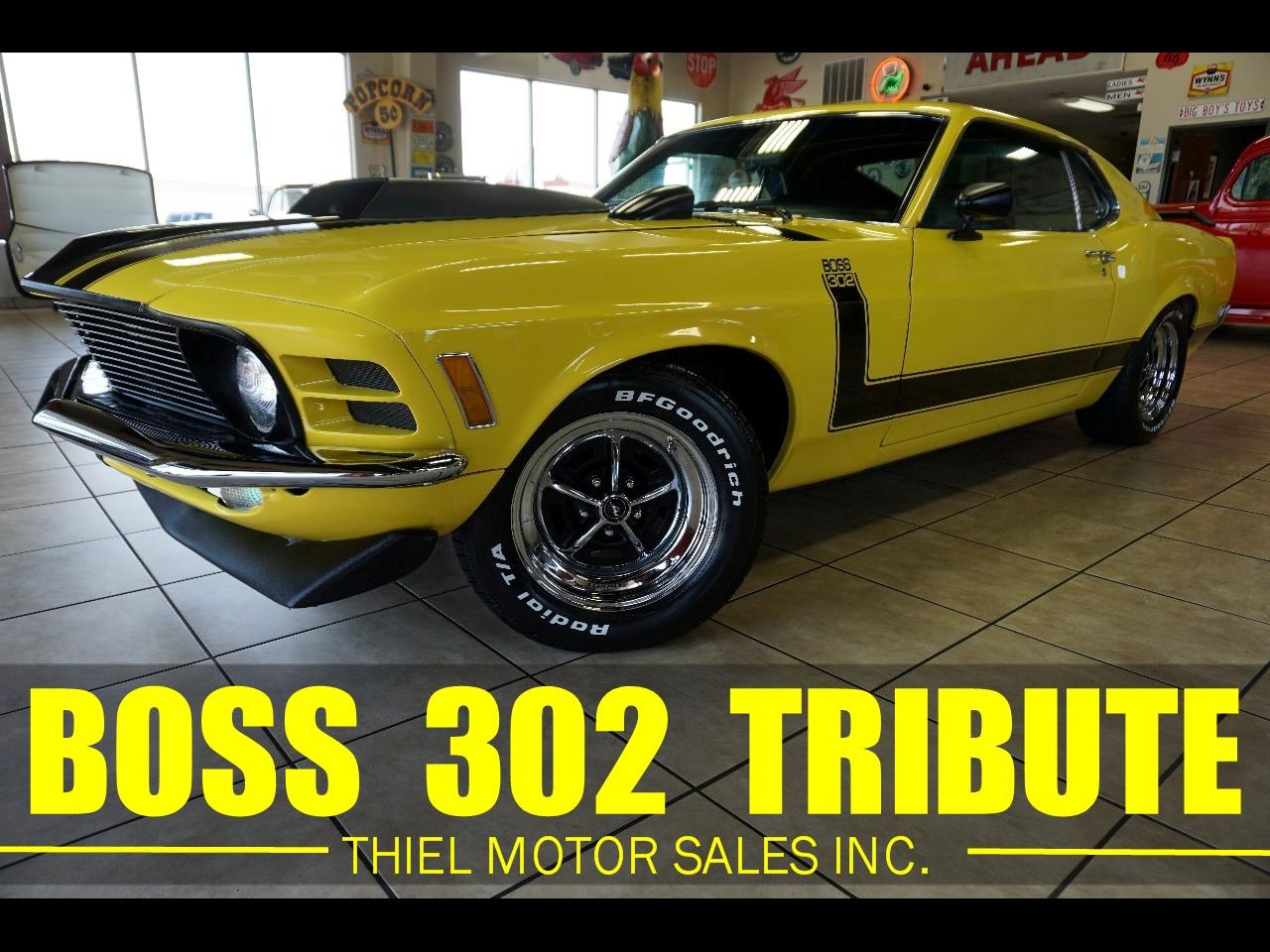
1969–70: SportsRoof, Mach 1 and the Bosses. The Mach 1 was not an engine but a package — SportsRoof body, a 351 two-barrel V8 as standard, handling suspension, stripes, a deluxe interior, and an options ladder climbing through the 351 four-barrel and (for 1969) the 390 to the 428 Cobra Jet with or without the Shaker scoop. That is why Mach 1 values swing so widely: a 1969 H-code 351-2V Mach 1 and an R-code 428 Shaker Mach 1 wear the same stripes and are different cars. The Boss 302 and Boss 429 were homologation specials, covered below; as purchases they are documentation cars first and metal second. Base SportsRoofs with the 302 or 351 are the overlooked cars of these years: same body, most of the look, none of the flagship premium.
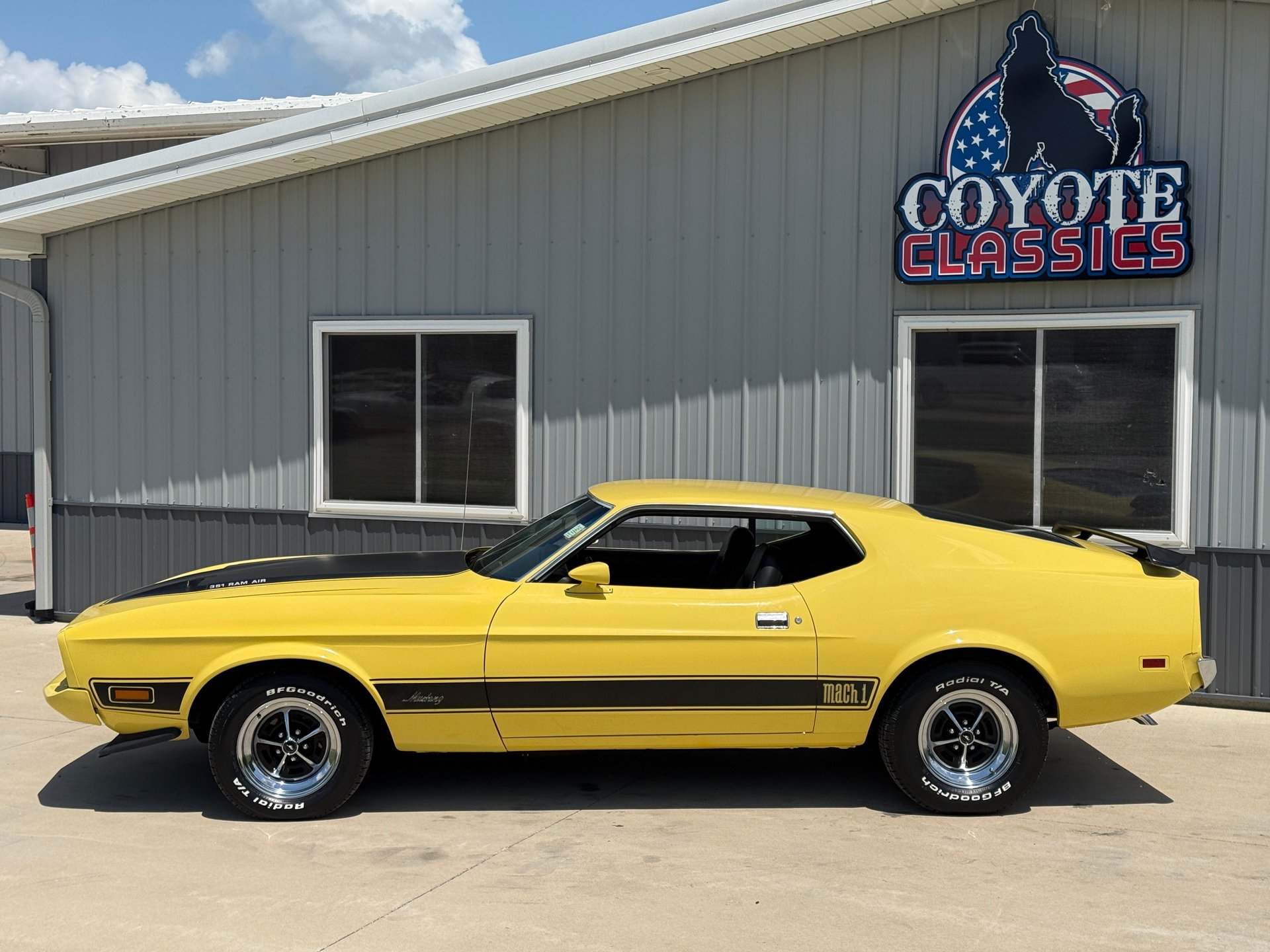
1971–73: the big cars. The last first-generation cars are longer, wider and heavier, with a SportsRoof roofline so shallow it reads almost as a flatback. The Boss 351 ran for 1971 only, the Mach 1 carried on to 1973 with engines from the 302 up to the 351 Cobra Jet and (in 1971) the 429 Cobra Jet, and emissions tuning steadily strangled outputs. These cars are roomier, cheaper like-for-like, and the most rust-prone of the set in the rear quarters — and a 1973 Mach 1 with the 302 is a trim package, not a performance car, so price it as one.
Engines and gearboxes
The 289, including the Hi-Po K-code
The 289 is the default early-fastback engine and one of the easiest classic V8s to own. In C-code form it runs a two-barrel Autolite 2100 for 200 hp; the A-code adds a four-barrel Autolite 4100, higher compression and dual exhausts for 210–225 hp. Both are hydraulic-lifter engines that idle smoothly and pull from low revs. Judge one the ordinary way: instant cold start, no blue smoke on start-up or the overrun (valve stem seals and guides first, rings second), even idle, steady oil pressure, no timing-chain rattle. The Autolite carburettors are simple and rebuildable; flat spots are usually accelerator-pump, float-level or vacuum-leak problems, not a reason to fit a modern carburettor and discard the originality. Cooling is the 289's real weakness in traffic — a marginal radiator, a missing fan shroud and retarded timing will push one into overheating that owners then blame on the design. A car that runs hot needs the system diagnosed, not a bigger radiator fitted over the fault.
The K-code Hi-Po 289 is a different engine wearing the same displacement: a rated 271 hp at 6,000 rpm from solid mechanical lifters, a high-lift cam, free-breathing cast exhaust manifolds, a dual-point distributor with no vacuum advance, a manual-choke four-barrel, screw-in rocker studs, heavier valve springs, a larger harmonic damper and a strengthened bottom end. It does not idle like a C-code and should not: a K-code that ticks evenly at idle and pulls hard past 5,000 rpm is right; one that idles silk-smooth at 600 rpm and runs out of breath early deserves a look at its internals and paperwork, because Hi-Po parts are valuable, portable, and have been swapped in and out of cars for fifty years. K-codes came only with a manual gearbox or, from 1966, a specially built C4 automatic; there was no power steering or air conditioning on a 1965–66 K-code, so options that contradict the specification are questions, not bonuses. Shelby's GT350 tune — aluminium high-rise intake, Holley 715 cfm carburettor, tubular headers — was rated at 306 hp, which tells you how much headroom the Hi-Po had.
The 302 and the Boss 302
The Boss 302 (1969–70) shares only the block architecture with that engine. Ford needed a 5-litre engine for Trans-Am racing, and the Boss is a competition unit: a strengthened four-bolt-main Windsor block topped with canted-valve Cleveland-style heads with very large ports, forged crank and pistons, a solid-lifter cam, an aluminium intake with a 780 cfm Holley, and a character that makes its rated 290 hp feel conservative. It makes its power at the top and comparatively little below 3,500 rpm, came only with a four-speed manual and a Traction-Lok axle, and wants to be driven accordingly — on a viewing it should feel peaky, mechanical and loud, with a lopey idle. Check what carries the money: the G in the fifth VIN position, screw-in core plugs in the block (a quick visual tell of a genuine Boss block), the correct large-port heads, and documentation. Boss engines were raced, blown and replaced; a non-original engine is common, disclosed on honest cars, and priced accordingly. Correct Boss parts cost multiples of standard 302 parts.
The 351: Windsor and Cleveland
Ford's 351 arrived for 1969 in Windsor form: H-code two-barrel (250 hp) and M-code four-barrel (290 hp) — a taller-deck, longer-stroke small-block with strong low- and mid-range torque and none of the FE's weight. It is the engine most Mach 1s actually have, and in a 1969–70 SportsRoof it is arguably the best road engine in this guide: nearly big-block pace, small-block manners, ordinary parts prices. Tell a Windsor from a Cleveland at a glance by the valve covers (six bolts on a Windsor, eight on a Cleveland), the thermostat housing (on the intake manifold on a Windsor, on the block on a Cleveland), and the width of the intake.
From 1970 the 351 Cleveland, with canted-valve heads in two very different forms, took over the four-barrel role. The 4V heads have enormous ports and make top-end power (the 1970 M-code was rated at 300 hp); the 2V heads have smaller ports and make better street engines at real-world revs — a distinction sellers blur and buyers should not. The line produced the last Boss: the Boss 351 of 1971, R-code, rated 330 hp, with a solid-lifter cam, four-bolt mains and the big-port heads — one year only, and a genuinely rapid car. By 1972–73 the performance 351s were the Cobra Jet versions (Q-code), still strong but increasingly emissions-strangled. Cleveland checks: oil pressure (the oiling system prioritises the mains and starves the top end on neglected engines), lifter noise that does not clear, and overheating from a wrong or missing restrictor plate under the thermostat — a Cleveland-specific trap. A Cleveland that runs hot with a new radiator and water pump should have that plate checked before anything else is replaced.
The FE big-blocks: 390, 427 and 428 Cobra Jet
The FE family exists here because Ford widened the 1967 Mustang to take it. The 390 GT (S-code) is a 390 cu in FE with a four-barrel, rated at 320 hp in 1967–68 tune, and its defining characteristic is torque: it pulls hard from low revs in a way no 289 does, at the cost of a heavy nose, a crowded bay, and plug changes that try a saint's patience — look at the plug leads and rear plugs as a maintenance honesty test, because skipped ones stay skipped. GT cars got power front discs, handling suspension and dual exhausts. FEs are durable but run hot in the Mustang bay, leak oil from intake end seals and valve covers as a matter of course, and crack exhaust manifolds; a dry FE is a recently resealed FE, so ask when. One that smokes under load and breathes heavily from the oil filler needs a rebuild, at roughly $7,000–12,000 for a proper specialist job.
The 427 needs a warning rather than a celebration. Ford offered it as a W-code option on paper for 1968, rated at 390 hp, and factory 427 Mustangs are vanishingly rare and contested even among specialists — most "427 Mustangs" are later transplants. Never pay a factory-427 premium without documentation that survives expert scrutiny; a transplant is worth a good shell plus a good engine, nothing more.
The 428 Cobra Jet is the opposite case: common enough to buy, documented enough to verify, and the strongest regular-production street engine in the first-generation Mustang. Launched in April 1968, it is a 428 FE built around 427-style low-riser heads, a 735 cfm Holley on an iron intake, and a functional ram-air option (R-code, with the Shaker or scoop-fed air cleaner; Q-code cars breathe conventionally). Ford rated it at 335 hp, a figure chosen for insurance and drag-racing class reasons and understood at the time to be conservative. Cobra Jet cars got staggered rear shocks on four-speed cars, to control axle tramp — a useful visual tell — plus reinforced shock towers. Beyond the FE checks: confirm the engine code in the VIN (Q or R), look for the ram-air hardware the code promises, and treat a missing Shaker assembly as a four-figure deduction. Super Cobra Jet cars, with the Drag Pack option, exist from 1969 and carry a further premium that only documentation supports.
The Boss 429
The Boss 429 exists because Ford needed to build 500 429 "semi-hemi" engines in production cars to legalise the engine for NASCAR, and chose the Mustang as the host. The stock SportsRoof bay would not take it — the canted-valve, crescent-head design is exceptionally wide — so Ford shipped partially built cars to Kar Kraft in Brighton, Michigan, which reworked the front structure, moved the shock towers, revised the suspension, relocated the battery to the trunk and installed the engine by hand. The result was rated at 375 hp, makes more, came only with a close-ratio four-speed and an oil cooler, with no air conditioning, and was sold for two years: about 859 cars for 1969 and about 499 for 1970. Every Boss 429 carries a Kar Kraft KK number as well as its Ford VIN (fifth character Z), and both numbers, plus the wide heads, aluminium valve covers, trunk-mounted battery and hand-worked front structure, are the car. It is bought on provenance the way a Shelby is: registry knowledge, paperwork, expert inspection. The front structure is unique, so accident or rust repair there is specialist fabrication; and correct Boss 429 parts are among the most expensive in the Ford world, so a car with a replacement or incorrect engine is a different purchase, at a different level of money.
Gearboxes: Toploader, C4, C6 and FMX
Most fastbacks in our listings are manuals — the pool records manuals comfortably ahead of automatics — and the manual to have is the Toploader four-speed, Ford's iron-case box named for its top access plate. It is one of the strongest gearboxes ever fitted to a production car, in wide-ratio (2.78 first) and close-ratio (2.32 first) forms; Hi-Po, GT, Boss and Cobra Jet cars used it, and Hurst shifters became standard from 1970. A good one shifts positively with a mechanical, slightly heavy action. Second-gear synchromesh is the wear point; cold baulking that clears warm is tolerable; a box that jumps out of gear on the overrun needs a rebuild, at roughly $1,500–3,000. The base three-speed manual is honest and unloved; a three-speed car priced like a four-speed is a negotiation. Clutch judder is usually oil contamination or a scored flywheel, not the box.
The automatics divide by duty. The C4 Cruise-O-Matic is the light three-speed behind sixes and small-blocks — smooth, cheap to rebuild (roughly $1,200–2,500), and marginal behind a tuned 351. The C6 is the heavy three-speed behind FE big-blocks: nearly unbreakable in road use; delayed or flaring engagement, especially into reverse cold, is the wear tell, and a rebuild runs roughly $1,800–3,500. The FMX, the cast-iron-case three-speed introduced for 1969 behind 351s, sits between them in strength and is the least loved today — parts and expertise are thinner, so an FMX car with symptoms should be priced with a specialist rebuild in mind. On any automatic, check the fluid: bright red and sweet-smelling is maintained; dark and burnt-smelling is a rebuild being deferred. And check the speedometer against reality — axle-ratio swaps are endemic, and a speedo reading fast usually means a 3.00 axle replaced by a 3.50 or 3.91 with no correction gear, which also means the odometer has over-recorded ever since.

Problem areas
Start with the honest context from our own photo work, because on this model the numbers mislead if read carelessly. We have photo-checked 749 of the 791 fastbacks in our pool, and in those photo notes rust is mentioned for 18 cars, damage for 15, a leak for 1 and smoke for none. Those are counts of what the notes recorded, on a pool heavily weighted to curated auction listings — 703 of the 791 cars came through Bring a Trailer — and they are not a prevalence rate for the model. Nobody should conclude from them that first-generation fastbacks do not rust. They rust structurally, predictably and expensively, and a curated, photographed, auction-presented car is precisely the sample in which rust is least likely to be mentioned. Read the low counts as a warning about the sample, then do the checks below on the actual car, because rust on a Mustang is found from underneath, with a torch, a magnet and your fingers.
Rust: the fastback map first, then the Mustang map
The rear window surround and sail panels. The fastback's rear glass is large, nearly horizontal on the early cars, and set into a channel that traps water under the bright trim. The lower corners are the classic failure: water sits in the channel, rust starts under the trim where no photograph shows it, and by the time bubbles appear in the sail panel paint the channel underneath is perforated. Press and tap around the whole surround, magnet-test along the lower edge and into the C-pillars, and check from inside the trunk and behind the rear seat for staining and scale. A proper repair means glass out, channel sections fabricated and welded, and paint blended across roof and quarters — budget $2,000–5,000 depending on how far it has travelled. A surround that has been filled and painted over will bubble again within a couple of seasons, so fresh paint localised exactly there is a question, not a reassurance.
The sail panels and rear quarters. The broad C-pillar is a moisture trap at its base, where it meets the quarter panel and wheel arch, and where the early cars' extractor vents give water and mud a way in. Rust works outward from the inner structure, so the first sign is often blistering low on the sail or a soft spot inside the arch lip rather than a visible hole. On 1969–73 cars add the quarter lower edges behind the wheels and the SportsRoof's long rear deck seams. Quarter repairs cost more than on a coupe for a simple reason: the panel shapes are fastback-specific, the roof-to-quarter joint has to be remade invisibly, and a poor repair shows as a wavy sail in every photograph for ever.
The trunk and the rear-seat area. Follow the water downhill from that rear window. It runs into the trunk, sits in the floor's low spots and in the drop-off panels either side, and rots the floor over the fuel tank and the drop-offs from inside. Lift the mat, lift the spare, read the seams and the top of the tank — the tank forms part of the trunk floor on 1965–70 cars, so a rusty trunk floor can also be a fuel safety issue, and a perforated tank is replaced, not patched, at roughly $400–800 plus labour. The same water reaches the area under and behind the rear seat: the seat support, the floor under the seat, and the panels around the fold-down mechanism all live there, all hidden until you fold the seat, work the trapdoor on an early car, and lift what can be lifted. A musty smell in a closed fastback, damp rear carpet, or rust staining on the fold-down frame is the rear-window leak announcing itself; price the leak and the metal, not just a carpet set.
The cowl. The shared Mustang trap, and the most expensive common rust on the car. The cowl vent in front of the windshield feeds air through two "hat" sections into the cabin; leaves and debris collect around the hats, hold water, and rot them. The symptom is water on the front floor carpets when it rains or the car is washed, and the test is definitive: with a hand under the dash, pour water into the cowl grille and watch for drips at the outer edges of the footwells. A leaking cowl is a major repair — the panel is welded, access is poor, and a proper job runs roughly $2,500–5,000 at a body shop; sealer trowelled in from above postpones and conceals. Cowl rust almost always travels with floor rust, because the water has been landing there for years.
Floors, rockers and torque boxes. Lift every carpet you can. Floor pans rot from inside out under wet carpet, starting at the seams and seat-bolt areas; surface scale is treatable, perforation is panel work at roughly $800–2,000 a side fitted, and floors rarely rot alone. The rockers are structural, and the inner rockers matter as much as the shiny outer ones — prod from underneath, check the pinch welds, and distrust fresh stone-chip. The torque boxes are the gusseted boxes tying floor to frame rails at the front of the rear leaf-spring mounts (rear torque boxes) and, on later and performance cars, at the front subframe junction. Ford added torque-box reinforcement progressively through 1967–68, and a rotten or torn rear torque box is both structural rust and a handling fault: the leaf spring mounts to it. Proper replacement is roughly $1,000–2,500 a side. If you pay for one lift inspection in your life, this is the area it is for.
Frame rails, aprons and shock towers. The front rails and four engine-bay aprons carry the front suspension and steering. The right-hand apron under the battery tray rots from acid, top down, invisible until the battery comes out — lift it, or look at the apron edges and rail below for staining and lifted paint. Shock towers crack around the suspension mountings and tower-to-apron seams, especially on big-block and hard-driven cars; Ford reinforced the towers on 428 and Boss cars, and amateur tower repairs (big washers, plates welded over cracks) should be priced as re-do work. Rear rails rot around the leaf-spring shackle mounts and bumper brackets. Perforation in any rail is fabrication work priced per car, and rails plus floors plus torque boxes together define a car whose shell is worth less than its parts and its VIN.
The smaller traps. Door bottoms (drain slots block, doors fill, the skin bubbles along the lower edge — run a fingertip along every door bottom), the lower rear corners of the front fenders, headlamp buckets, the tail panel, the hood's front edge, and the decklid's lower lip. None kills a car alone; together they tell you whether it has lived dry. And read fresh underseal honestly: a fifty-year-old underside is patchy, chipped and dirty at the edges — a uniform fresh black coat over everything, applied for the sale, is a cover-up until the seller proves otherwise.


Mechanical: suspension, steering and brakes
The front suspension — coil springs acting on the upper control arms — is simple, well supported and usually worn in the same places: upper-arm shafts creak, ball joints develop play, spring perches collapse, tired springs drop the nose. A full front-end refresh runs roughly $1,500–3,000 fitted. The "Shelby drop" (relocating the upper arms lower, as on the GT350) is a handling improvement often already done — done well it is a plus, done with elongated holes and no alignment record it is a question. The steering box develops centre wear: judge free play at the wheel rim (more than about two inches is worn) and whether the play is in the box or in the cheap tie-rods and idler arm. Period power steering leaks and wanders if worn; a car steering differently left and right usually needs control-valve work, not an alignment.
At the rear, leaf springs sag, shackles wear and axle tramp under power is normal on a standard car — the staggered shocks on four-speed Cobra Jets exist precisely because Ford knew. Axle whine on the overrun is pinion or gear wear on the Ford 8-inch (small cars) or the stronger 9-inch (big-block, performance and many V8 cars); the 9-inch is the desirable unit, and ratio swaps are so common you should verify what is fitted, by the carrier tag or by turning the wheels and counting, not by the door plate's original code. Brakes divide by year: 1965–66 cars have a single-circuit master cylinder as built, which most owners sensibly convert to dual-circuit — check it has been done. Drum cars stop adequately when everything is new, poorly when any part is old; front-disc cars are the ones to use in modern traffic. A full hydraulic refresh runs roughly $800–2,000 and should be assumed on any car that has sat.
Interior: the fastback's own trim problem
The fold-down rear seat and the trapdoor. On 1965–66 2+2s the folding rear seat is the party piece: the back folds flat to make a continuous carpeted deck, and a trapdoor in the panel behind it opens into the trunk. On later SportsRoofs the fold-down ("Sport Deck") became an option, so a 1969–73 car may have a fixed seat — know which you are looking at before valuing it. The mechanism's enemies are rear-window water and fifty years of being forced: check the seat folds and latches without persuasion, the trapdoor hinges and latches are present and unbroken, and the chrome and carpet strips are there, because the complete fastback fold-down hardware set, bought piece by piece, runs into four figures. The fibreglass interior quarter panels unique to the fastback crack around their screw holes, lose grain to bad re-dyes, and are often missing behind a seller's "interior complete" claim — fold the seat and look directly.
Headliner, rear trim and glass. A fastback headliner is fitted with the glass out for a proper job, and a sagging or stained one is often the receipt for a rear-window leak; budget roughly $800–1,500, more if the glass work uncovers channel rust, as it often does. Sail-panel trim, rear window bright trim and the slatted rear-window treatments on some 1969–70 performance cars are all fastback-specific and priced accordingly used. Front-cabin costs are kinder: seat foam and covers are reproduced in every pattern (a front pair retrimmed, roughly $1,000–2,000 fitted), carpets are cheap, dash pads are reproduced, and "Pony" upholstery should be checked against the door-plate trim code. Test the heater blower on every viewing, and on air-conditioned cars assume a full recommission, roughly $1,500–3,000, unless invoices say otherwise.
Electrics
First-generation Mustang electrics are simple — a generator on the very earliest 1965 cars, an alternator thereafter, no electronics anywhere — and fail in simple ways: corroded earths, worn switches, tired regulators, and wiring rerouted for sixty years of stereos and alarms. Dim headlights and a wandering fuel gauge are earth problems until proven otherwise. The checks that matter are functional: every lamp, indicators, horn, wipers on both speeds, blower, instrument lamps, charging light. Rally Pac gauges on 1965–66 cars and factory tachometers on later performance cars are valuable options often inoperative — a dead tach on a K-code or GT is a repair bill, not a footnote. Foil-wrapped fuses, melted insulation near the alternator or an improvised battery-cable run are the tells of neglect. None of it is expensive in parts; all of it is tedious — and a car where everything works, including the courtesy lamps in the sail panels, has usually been used and maintained, the best single sign there is.
How to inspect one
Allow ninety minutes, bring a torch, a cloth-wrapped magnet, a small mirror, and a phone to photograph every number you find. If the car passes you, pay for a lift inspection before money changes hands; on a unibody Mustang it is the best money in the whole purchase. Work in this order, because the early steps can end the viewing honestly and cheaply.
- Identity before everything: the VIN. A first-generation Mustang VIN is eleven characters (in pattern: year, plant, body, engine, sequence — read the actual characters off the car in front of you, never off the listing). Find it in three places and make them agree. On 1965–67 cars there is no dash plate: the VIN is stamped on top of the left (driver's) front inner fender apron in the engine bay, sometimes partly under the fender edge, with a second stamping elsewhere on many cars — clean the area and read the whole stamp, because a re-stamped or patched apron is visible if you look slowly. From 1968 a metal VIN tab appears at the base of the windshield as well (passenger side on early 1968 cars, driver's side thereafter) — it must match the apron and the title exactly. Any disagreement between apron stamp, dash tab and title stops the purchase until it is explained in writing.
- The body code: prove it was born a fastback. The third and fourth characters of the VIN are the body series — 02 denotes the fastback/SportsRoof in the 1965–70 VIN pattern (01 is the hardtop coupe, 03 the convertible; 1971–73 cars use their own series digits, with 05 for a Mach 1). Then read the Body field on the door warranty plate, riveted to the rear edge of the driver's door: it should be a 63-series code — 63A for a standard-trim fastback and 63B for the deluxe ("Pony"/decor) interior on the early cars, with 63C and 63D covering the bench-seat variants that joined for 1967–68, 63C denoting the Mach 1 for 1969–70, and, on 1971–73 cars, 63D for the SportsRoof and 63R for the Mach 1. Codes shifted by year, so decode the plate against the car's own model year — but the principle never shifts: a genuine fastback carries fastback codes in both places, and a car whose VIN body digits say coupe while its roof says fastback is a conversion, priced as a coupe with work done. Photograph the plate and note whether its rivets and patina look undisturbed — and remember a door can be swapped and reproduction plates stamped, which is why the apron stamp in step 1, not this plate, is the authority.
- The engine code and the buck tag. The fifth VIN character is the engine the car was built with — C for a 289 two-barrel, A for a 289 four-barrel, K for the Hi-Po, S for a 390 in 1967–68, Q or R for a 428 Cobra Jet, G for a Boss 302, Z for a Boss 429, and so on by year. If the car has a different engine from its fifth character, it is an engine-swapped car: fine as a driver, priced as one. Where a buck tag survives — the small metal tag screwed to the apron or radiator support on cars from Ford's Metuchen and some other plants — photograph it: it carries build and option information that corroborates or contradicts the seller's specification. For 1969 and later cars, a Marti Report — the licensed production record built from Ford's own data — is the documentary standard: ask whether one exists for any Mach 1, Boss or Cobra Jet car, read it against the car, and treat "the report is coming" as "there is no report."
- Paperwork and story. Title VIN against step 1, registration history, invoices, and any build sheet (sometimes found under the carpet, behind the rear seat or above the glovebox liner — a found build sheet is strong corroboration). On a Shelby, Boss or Cobra Jet, this step is most of the value.
- Cold start. Insist the engine is cold. A carburetted V8 should start with a couple of throttle pumps and settle to an even idle once warm, with no blue smoke beyond a start-up puff. A K-code or Boss should sound mechanical and lopey; a C-code should not. Listen for timing-chain rattle and lifter clatter that does not clear.
- The cowl test. Pour water into the cowl grille — a jug, slowly — while a helper watches the front footwells, carpets lifted if allowed. Drips at the outer footwell edges mean cowl-hat rust, the $2,500–5,000 conversation from the rust section. Do this even on a shiny car, especially on a shiny car.
- The fastback water path. Work the rear as one system: press and magnet-test the rear window surround and sail bases, lift the trunk mat and spare to read the trunk floor and drop-offs, then fold the rear seat (and work the trapdoor on a 1965–66 car) and inspect the seat support, the floor behind it and the fibreglass quarter trim. Damp, staining or fresh sealer anywhere along that path prices the whole path.
- Under the car. Torch along both rockers, prod the torque boxes at the front of the rear spring mounts, read the floor seams, frame rails and shackle mounts. Perforation in rails, torque boxes or rockers is structural and reprices or ends the deal. Read the underseal: patchy and honest is factory age; a fresh uniform coat over everything is a question.
- Body and gaps. Magnet over the quarters, sail bases, door bottoms, fender lowers and around the rear glass. Check panel gaps for accident history, shock towers for cracks and plated repairs (and their reinforcement on any car claiming to be a 428 or Boss). Count the fastback-only trim — rear window brightwork, sail trim, fold-down hardware — and price what is missing before you fall for the paint.
- Suspension, steering and brakes. Rock each front wheel for ball-joint and bearing play, bounce each corner, check steering free play and whether it lives in the box or the linkage. Confirm the master cylinder: single-circuit on an unconverted 1965–66 car is a safety job to price in. Check the rear axle — 8-inch or 9-inch, tag present, ratio as claimed — and the leaf springs for sag.
- The test drive. Twenty minutes, including a fast road. A Toploader should shift positively, with second-gear synchromesh the test on downchanges; an automatic should engage drive and reverse promptly and change without flare. The car should track and brake straight, pull cleanly through the revs its engine is supposed to have — top-end for a K-code or Boss, low-end for a 390 — and show stable temperature and oil pressure at the end, idling hot without distress. Axle whine, tramp under power and an obviously fast speedometer all go on the list, priced.
- Interior and electrics last. Sit in the driver's seat, fold the rear seat yourself, work the trapdoor, test the heater blower, every lamp, the wipers, horn, instruments and any factory tach or Rally Pac. A complete, working, fastback-correct rear interior is the hardest thing on the car to recreate, so weight it as heavily as the paint — and then, if the car has passed, book the lift inspection and verify the numbers from steps 1–3 against the paperwork one final time before you negotiate.

Values
No figures here by design — the market block beneath this guide carries the current listing numbers, refreshed at every build. What follows is how to read them, because on this model the spread inside a single badge is wider than on almost any other classic, and the numbers only make sense once you know what is driving them.
The first driver is the fastback premium itself, and its logic is sound: fewer fastbacks were built than coupes in every year, the fastback carries every performance and screen association the Mustang has, and demand concentrates on the shape. Expect, like for like — same year, same engine code, same condition — a genuine fastback to command a clear premium over the equivalent coupe, and treat that as the market working, not sellers chancing their arm. The corollary is the trap: because the premium exists, conversions exist. A converted car should be valued from the coupe side of the gap, plus the value of the work actually done, and any listing that prices a conversion as a born fastback is asking you to pay for a VIN the car does not have. Steps 1 and 2 of the inspection are, in money terms, the most valuable paragraphs in this guide.
The second driver is the engine code, and within this market it matters more than the badge on the fender. A K-code, a Cobra Jet, a Boss — each is a separate market with its own buyers, and each premium rests on the fifth VIN character plus the survival of the expensive correct components listed in the engines section. At the other end, six-cylinder and two-barrel cars trade on condition and shape alone. The Mach 1 illustrates the point best: "Mach 1" spans a 1969 351 two-barrel car, a 428 Shaker car, and a 1973 302 car besides, so a single Mach 1 median in any market summary is an average of different cars. Read the computed market data by engine code and year, not by badge, and be suspicious of any asking price justified by a flagship sale when the car for sale shares only the stripes.
Third, asking and achieved prices part company predictably. Our pool is dominated by auction listings, where achieved prices are public and condition is photographed in depth — use those sold results, not dealer asking prices, as your anchor, and expect an ask for an ordinary driver-quality car to sit above what the same car would achieve at auction, with the negotiation living in that gap. Exceptional cars invert the rule: a documented, numbers-matching flagship with its correct components can achieve at auction well beyond any sensible ask, because two buyers who both need that exact car meet in the same sale. Condition spread does the rest. Between a rusty project fastback and a sound driver with the same VIN there is a multiple, not a percentage, and between that driver and a correctly restored flagship another one — the welding, paint, trim and component costs in this guide are the arithmetic behind those multiples, and they are why a cheap fastback is so rarely a cheap car.
Originality levers, in the order the market rewards them: a born-fastback VIN with matching apron stamp; a numbers-matching engine on any performance code (the partial VIN stamped on original blocks on later cars, casting dates that precede the build date on all of them); the correct expensive components present — Hi-Po hardware, Shaker assembly, Boss heads; documentation (build sheet, buck tag, Marti Report on a 1969-on car, registry standing on a Shelby or Boss); and an original, complete fastback rear interior. Each lever you cannot tick is a negotiation, and on a flagship car two missing levers is a different price class, not a discount.
Parts and ownership
The first-generation Mustang is, by classic-car standards, an ownership paradise: Ford built them in the millions across the body styles, the fastback shares its mechanicals and most of its structure with the coupe and convertible, and the reproduction industry around the car is the deepest in the hobby. Almost everything mechanical is available new, much of it cheap, and any competent classic workshop can maintain one.
Easy: every service item, brake and suspension component, steering wear parts, carburettor kits and the carburettors themselves, water pumps, radiators, exhaust systems, floor pans, rocker panels, torque boxes and most structural pressings, glass, seals and weatherstrips, seat foam and covers in standard and Pony patterns, carpets, and chrome in reproduction form. Order today, fit this weekend is a realistic rhythm for most of the car — which is why a mechanically tired fastback is a far better purchase than a rusty one: the tired parts are a catalogue and a weekend, the rusty parts are a body shop and a season.
Harder and dearer: fastback-specific panels and trim, where reproduction coverage is thinner and the fit of cheap pressings (quarters especially) can cost more in body-shop hours than the panel saved; complete fold-down rear seat assemblies and their hardware, trapdoor parts for the early cars, fibreglass interior quarter panels, rear window bright trim in good order, and correct headliners fitted properly. Then the flagship components: Hi-Po 289 parts (heads, distributor, manifolds, damper), correct Cobra Jet and ram-air hardware including complete Shaker assemblies, Boss 302 heads and internals, Boss 429 anything, Shelby-specific parts, and dated, correctly coded components for a concours car. None of it is unobtainable; all of it is priced by people who know exactly what it fits.
Running costs. A sorted small-block fastback is a realistic regular-use classic: fuel consumption in the mid-teens mpg for a V8 driven normally (single figures are available if you use a big-block as directed), annual servicing any good independent can handle, and insurance in line with other cars of the value, with agreed-value classic policies widely available. The budget lines that catch new owners are the ones flagged throughout: the first year of deferred-maintenance catch-up on a running car honestly runs $2,000–5,000 before you improve anything; a cowl, floors or torque-box programme is a body-shop season, not a weekend; and a car that has sat for years needs the fuel system cleaned end to end (modern ethanol fuel attacks period rubber and varnishes tanks), every brake component inspected or renewed, and all fluids, hoses and seals replaced before it is driven in anger. Storage matters more to a fastback than to most classics for one specific reason: the rear-window channel and the cowl both punish damp storage, so a dry garage is not a luxury for this model, it is rust prevention. Buy a car that has been in regular use over one that has been asleep, even at a higher price — on a fastback, use is maintenance.
Which one to buy
- The all-rounder: 1967–68 small-block fastback, A-code, J-code or a clean C-code. The bigger shell, the best road manners of the early cars, dual-circuit brakes, and every part available. If you want one fastback to drive and enjoy, this is it.
- The value buy: a base 1969–70 SportsRoof with the 302 or 351. The flagship shape and the Mach 1's body without the Mach 1's premium. Buy on shell condition and completeness, and let the stripes go to someone else.
- The early purist's car: 1965–66 A-code 2+2 with the Pony interior. Light, pretty and simple, with the fold-down seat and trapdoor that define the original idea. Verify the door-plate trim code matches the cabin, and run the cowl test twice.
- The collector's early car: a genuine K-code, 1965–67. The premium is in the VIN letter and the Hi-Po components together — buy only when both are present and documented, and walk away from a K-code story told over ordinary 289 hardware.
- The flagship: a documented 428 Cobra Jet, Mach 1 or Boss — bought on paperwork. Marti Report, buck tag, correct components, registry knowledge where it applies. At this level you are buying provenance that happens to have a car attached; inspect it in that order.
- The big-car bargain: a 1971–73 Mach 1 with the 351. Roomy, dramatic and cheaper like-for-like than any earlier performance fastback. A 1973 302 Mach 1 is a trim package — a good car at trim-package money, a poor one at performance money.
And the rule that overrides all of the above: buy the car whose VIN, apron stamp and door plate agree that it was born a fastback, with the least rust you can find, in the specification you can live with. Engines can be rebuilt, gearboxes swapped, interiors retrimmed and paint redone at prices you can plan for. A rotten unibody costs more to put right than the finished car will be worth, and a coupe's VIN under a fastback roof can never be made into the real thing — and on this model, the real thing is the whole of the value.