
Ford Galaxie 500 buyer's guide
Ford Galaxie 500 -- the model's own buyer's guide: variants, values and what to check.
Years listed: 1959-1969 · Series: Torino
Overview and history
The Galaxie is Ford's full-size flagship of the 1960s — the big, quiet, V8-powered car that sat at the top of the Ford showroom from 1959 to the mid-1970s, and the one that carried Ford's honour in NASCAR, at the drag strip and in the Total Performance years. If the Mustang is the Ford everyone remembers, the Galaxie is the Ford that paid for the decade: built by the million, in two-doors, four-doors, wagons, hardtops and convertibles, and sold to everyone from travelling salesmen to police departments to Junior Johnson.
It arrived part-way through 1959 as a new top trim level above the Fairlane 500, its name cashed in on the space race — Ford spelled it Galaxie, not Galaxy, and the badge carried a star. For 1960 it became a model line in its own right, and from then until the name was retired after 1974 the Galaxie, and from 1962 the Galaxie 500, was the core full-size Ford. The plainer Custom and Custom 500 sat below it for fleet and family buyers, the bucket-seat Galaxie 500 XL sat above it from 1962 as the sporty flagship, the LTD took over the luxury end from 1965, and the short-lived 7-Litre of 1966–67 tried to make a grand tourer out of the big chassis. This guide covers the Galaxie line across those years as one model — because underneath, that is what it is: one evolving full-size platform, restyled often, re-engineered twice, and defined throughout by the same bargain. You got size, silence and straight-line V8 pace for Chevrolet money.
Three engineering generations matter to a buyer. The 1959–64 cars are body-on-frame in the traditional way, with a perimeter frame, coil springs at the front and leaf springs at the rear, and styling that changes almost every year — fins in 1959, a clean slab side in 1960, fins again in miniature in 1961, a formal roofline in 1962, and the famous fastback Sports Hardtop from mid-1963. The 1965–68 cars are a clean-sheet redesign: an all-coil suspension, a stronger perimeter frame, stacked quad headlamps for 1965–67 and a much more modern driving feel. The 1969–72 cars grew again, on a longer wheelbase, with hidden headlamps on the XL and LTD and the big 429 and 460 engines at the top of the range; the Galaxie 500 name then continued to 1974 as the middle full-size trim while the LTD took the flagship role. The cars in our own listings pool run from 1959 to 1969, and they cluster where the market's heart is: 1964 is the single most common year, with 1963 and 1962 close behind, and a strong showing for the finned 1959 originals.
What makes the Galaxie special among big American cars of the period is how seriously Ford took performance in it. This was not a car line that tolerated a racing programme; it was the racing programme. The 406 of 1962 and the 427 of 1963–65 were sold over the counter in ordinary-looking Galaxies, the lightweight Galaxie coupes of 1963–64 went drag racing with fibreglass panels and aluminium bumpers, and the 427 Galaxie was Ford's NASCAR weapon until the smaller Fairlane and Torino took over at the end of the decade. That heritage is why a 1963 R-code fastback is a serious collector car while a 1963 four-door sedan with a 352 is an affordable way into the same shape — and understanding that spread is most of buying a Galaxie well.
The honest summary for a buyer today is this: the mechanicals are simple, strong and superbly supported, the body and frame are where the money goes, and the difference between the best and worst Galaxie you will look at is not the badge on the trunk lid. It is rust in the frame and floors, the state of acres of trim and interior, and whether the engine in the car is the engine the car was born with. Get those three things right and a Galaxie is one of the easiest, most enjoyable big classics to own. Get them wrong and no purchase price is low enough.
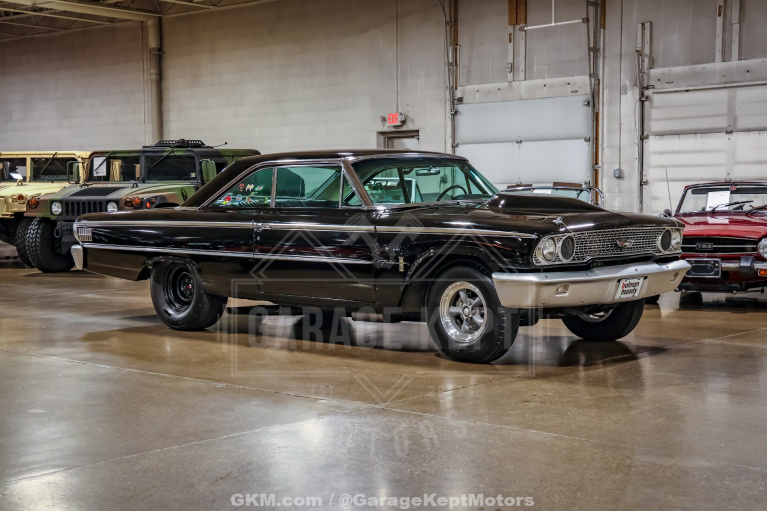
The models
The Galaxie range is wide, and the names shift their meaning as the years pass, so learn the hierarchy before you learn the years. From the bottom: the Custom and Custom 500 were the plain full-size cars — technically separate model lines, but the same shell and chassis, and they matter to a Galaxie buyer because so many parts interchange and because a Custom with a big engine is a sleeper bargain. The Galaxie, and from 1962 the Galaxie 500, was the mainstream well-trimmed car. The Galaxie 500 XL, from 1962, added bucket seats, a console and extra brightwork and was the sporty flagship until the LTD arrived for 1965 and took the luxury end — after which the XL became a performance-trim package and the Galaxie 500 settled into the middle of the range for the rest of its life.
Body styles are the other half of identity. Two-door and four-door sedans with a central pillar were the volume cars. Two-door and four-door hardtops — pillarless, with no frame around the door glass — are the glamorous ones and the ones convertibles were based on. The Sunliner was the convertible, the Starliner the sleek fastback hardtop of 1960–61, and the Sports Hardtop of mid-1963 onward the fastback that defines the performance image. Station wagons wore Country Sedan and Country Squire badges rather than Galaxie ones for most of the run, but they are the same car underneath. Body style moves value more than almost anything except engine: a convertible or fastback is worth a large multiple of the same-year sedan in the same condition, which is exactly why the inspection section of this guide spends so much time on identity.
| Model | Years | Engine | Output | Built | Character |
|---|---|---|---|---|---|
| Galaxie (1959 original) | 1959 | 292 V8 / 352 V8 / 223 six | 200–300 hp | High volume; Galaxie trim launched mid-year | The finned original; style first, pace optional |
| Galaxie Starliner / Sunliner | 1960–1961 | 292 / 352 / 390 V8 | 235–401 hp | Low next to sedans; exact splits not reliably published | The swoopy flagships; Starliner is the 1960–61 icon |
| Galaxie 500 | 1962–1974 | 289 / 352 / 390 / 427 V8 by year | 195–425 hp | The volume line; well over a million across the run | The mainstream car and the default buy |
| Galaxie 500 XL | 1962–1970 | 390 / 406 / 427 / 428 V8 typical | 300–425 hp | A minority of 500 production | Buckets, console, brightwork; the sporty flagship |
| Galaxie 500 Sports Hardtop (fastback) | 1963 1/2–1969 | 289 / 390 / 427 V8 | 195–425 hp | A subset of hardtop production | The NASCAR silhouette; home of the R-code |
| Galaxie 500 7-Litre | 1966–1967 | 428 V8 (7.0 litres) | 345 hp | 11,073 in 1966; fewer in 1967 | The GT flagship; big torque, bucket seats, badges |
| Galaxie 500 (late cars) | 1969–1974 | 302 / 351 / 400 / 429 / 460 V8 | 210–370 hp (gross, to 1971) | High volume as mid-range trim | Bigger, softer, cheaper; LTD took the flagship role |
(Outputs are period SAE gross figures for the headline engines; treat any single number as the brochure claim for the strongest common option, not a promise about the car in front of you. Ford did not publish clean production splits for every trim and body combination, so the table gives figures only where they are genuinely documented and says so where they are not.)
1959–61: the flamboyant start. The 1959 car is a Fairlane-era design wearing Galaxie trim: wide, finned, with a Thunderbird roofline on the hardtops. The 1960 car was all new and much bigger, with an almost finless, wide-shouldered body and the Starliner fastback as its poster car; the 1961 restyle sharpened it, brought back small fins and introduced the 390 engine that would define the line. These are style buys. A 1960 Starliner or a 1961 Sunliner convertible with a 390 is a genuinely glamorous car; a 1959 four-door sedan is a lot of chrome to restore for a modest end value.
1962–64: the performance years. The 1962 car tidied the styling, introduced the Galaxie 500 name and the XL, and brought the 406 racing engine. Mid-1963 brought the sloped Sports Hardtop roof — Ford lowered the roofline to cut drag on the superspeedways and sold the result to the public — and the 427, the engine that makes these the most collectible Galaxies of all. The 1964 car, the most common year in our listings pool, is the last and most developed of the generation: cleaner styling, the fastback established, the 427 in full production and a drag-racing lightweight programme behind it. If you want one Galaxie that does everything the legend promises, a 1963 1/2 or 1964 fastback is it.
1965–68: the modernised cars. The 1965 redesign is the sleeper of the range. All-coil suspension, a much stiffer frame, stacked headlamps and squared, formal styling made it ride and handle a generation better than the 1964 car, and the LTD launched alongside it with luxury-car quiet. The 428 replaced the 427 as the street big-block for 1966, the 7-Litre packaged it as a flagship, and the 1967–68 cars softened the styling again. These are the best Galaxies to use regularly and often the best value, because the market pays its biggest premiums for the earlier fastbacks.
1969–74: the big finish. The 1969 cars grew longer and wider, gained the 429 and later the 460, and leaned into luxury. They are comfortable, torquey and cheap for their size, but they are also the rustiest-prone and the least collectible of the line, and after 1972 emissions tuning steadily strangled the engines. Buy one because you like it and it is solid, not as an investment.

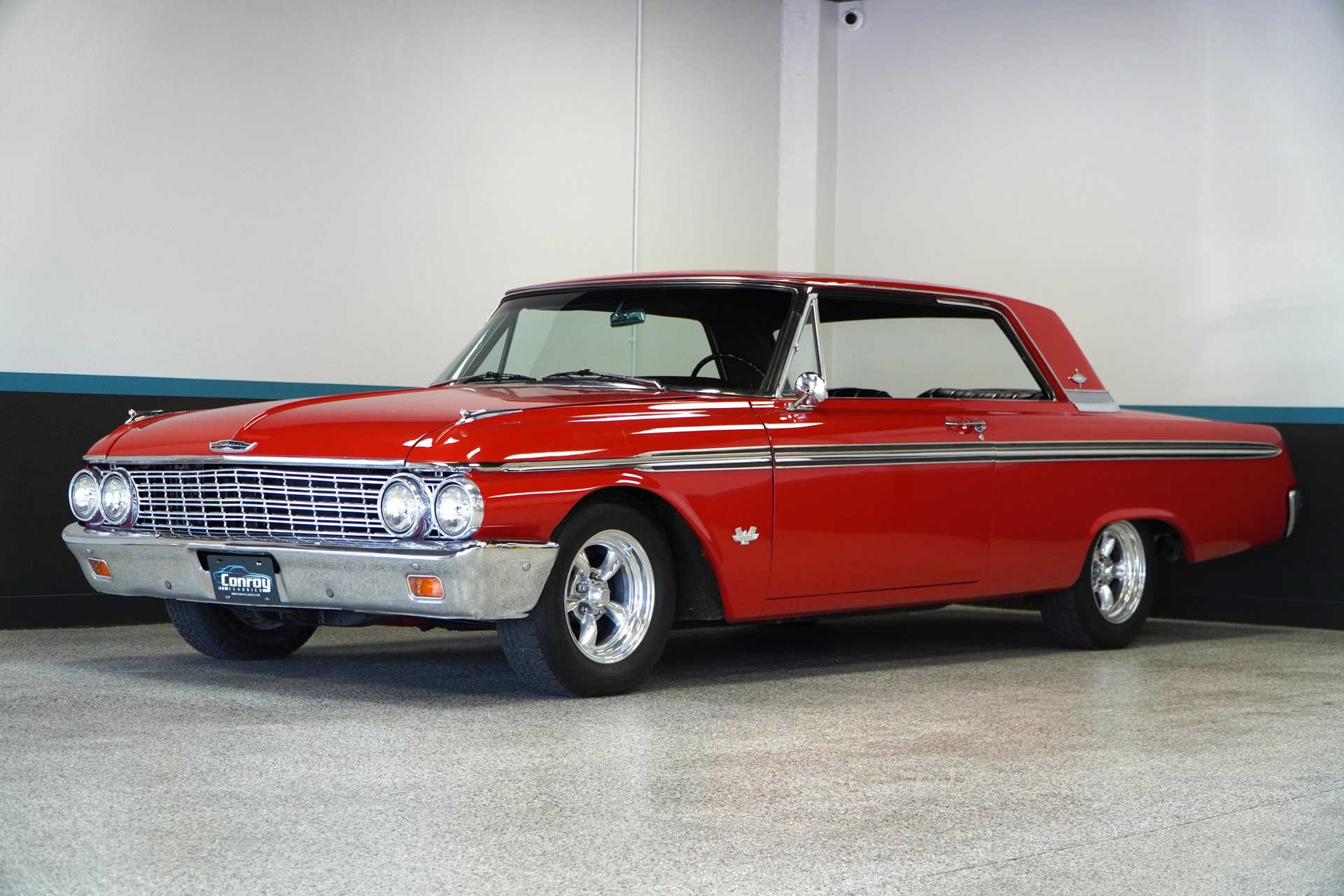
Engines and gearboxes
A Galaxie engine bay can hold anything from a 223-cubic-inch six to a 427 with two four-barrel carburettors, and the engines fall into four families with completely different characters, costs and traps. Learn the families and you can price any car you look at. The fifth character in the VIN — the engine code letter stamped on the data plate in the engine bay and on the door plate — tells you what the car was born with, and on a Galaxie that letter is money: the same fastback body is a pleasant cruiser with a 289 and a blue-chip collector car with an R-code 427. Sellers know this. Verify the letter, then verify the engine itself, because sixty years is plenty of time for a swap.
The six and the small-blocks: Mileage Maker, Windsor and the Y-block inheritance
The base engine for most of the run was the 223 Mileage Maker six (215 in the very first cars), a sturdy overhead-valve straight six that moves a two-ton Galaxie slowly and sips fuel doing it. Six-cylinder Galaxies were fleet and economy buys when new and are the cheapest cars now; they are honest transport and almost never worth converting, because a V8 swap into a six-cylinder car also wants the heavier V8 springs, brakes and rear axle the factory fitted. The early V8 alternative was the Y-block family — 292 and 312 cubic inches — carried over from the 1950s in 1959–62 base cars. The Y-block is a deep-skirt design with a distinctive exhaust note and a known weakness: the top end is oiled through passages that sludge up if oil changes were skipped, starving the rockers. A Y-block that rattles from the rocker covers at idle and quiets with fresh oil and a clean-out is a maintenance story; one that has run dry for years needs rocker shafts and more.
The mainstream small V8 from 1963 onward is the Windsor small-block: the 260 briefly, then the 289, and from 1968 the 302, with the taller-deck 351 Windsor joining for 1969. These are the easiest Galaxie engines to live with — light, simple, with a two-barrel Autolite or Motorcraft carburettor in almost every installation, hydraulic lifters, and parts on every shelf in America. A healthy 289 in a Galaxie gives adequate, relaxed performance and the best fuel economy of any V8 in the range. Weak points are age rather than design: a worn timing chain (slack you can feel by rocking the crank pulley against the distributor rotor), tired valve stem seals that puff blue smoke on start-up after sitting, and exhaust manifolds that crack or whose bolts snap at removal. None of it is expensive. The small-block car's real question is not the engine but the mission: if you want the big-block Galaxie experience, no amount of tuning a 289 will give you its torque, so buy the car whose engine matches the driving you intend to do.
The FE big-blocks: 352, 390, 406, 427 and 428
The FE family — Ford-Edsel, in the period naming — is the heart of the Galaxie story. It is a big, iron, thin-wall-casting big-block introduced at 352 cubic inches in 1958 and stretched through 360, 390, 406, 410, 427 and 428 variants, all sharing the same external dimensions, which creates the family's great trap: you cannot tell an FE's displacement from outside the engine. A 352, a 390 and a 428 look essentially identical in the car. The honest checks are the casting numbers and date codes on the block (behind the starter, which has to come off to read them cleanly), the casting numbers under the valve covers and on the heads, and a stroke measurement through a spark plug hole if the seller will allow it — 3.50 inches of stroke for the 352 and 390's smaller siblings, 3.78 for the 390 and 427, 3.98 for the 428. A car sold as a 390 that turns out to be a 352 is the oldest disappointment in the Galaxie market. Price any FE car on evidence, not on the air-cleaner decal, because decals are cheap and engines are not.
The 352 is the gentle early big-block: smooth, torquey enough, and common in 1959–66 cars. The 390, from 1961, is the workhorse performance engine — the standard big Galaxie motor for a decade, in two-barrel economy form and four-barrel GT form at a period 300 hp and above. It is strong, simple and fully supported. The 406 of 1962–63 was the first true racing FE: high compression, solid lifters in its hottest form, one or three carburettors, and the direct ancestor of the 427. The 427, built 1963–68, is the legend: a 7.0-litre, race-bred engine with cross-bolted main bearing caps on most versions, sold in single four-barrel Q-code form at a rated 410 hp and dual-quad R-code form at 425 hp. The rating was a polite fiction for the insurance and sanctioning bodies; a healthy 427 makes more. R-code cars came with a four-speed manual only, solid lifters, and a thirst and a temper that make them thrilling and slightly antisocial in equal measure. The 428, from 1966, is the street answer: a longer-stroke, hydraulic-lifter engine that makes its 345 hp with less drama, powers the 7-Litre, and is the big-block to choose for a car you intend to drive across states rather than across a drag strip.
FE ownership realities are consistent across the family. The exhaust manifold bolts seize and snap — budget for machine-shop time on any manifold or head work, and treat a car with a blowing manifold gasket as a job with an unknown tail. The rear main seal and the intake manifold end seals weep oil on cars that sit. The intake manifold itself is famously, almost comically heavy in cast iron, and the pushrods pass through it, so top-end work is a two-person lift and a known labour cost — a full FE intake reseal and tune is a few hundred dollars in parts and the better part of a day in labour. Solid-lifter 406 and 427 engines need their valve lash checked on schedule, roughly every 10,000 miles in period terms, and a neglected one announces itself with a top-end clatter that no oil change will cure. A professionally rebuilt FE long block is a five-figure proposition once machining, quality parts and assembly are counted, so an FE with documented recent engine work is worth a real premium over one with shiny paint on the valve covers and no paperwork.
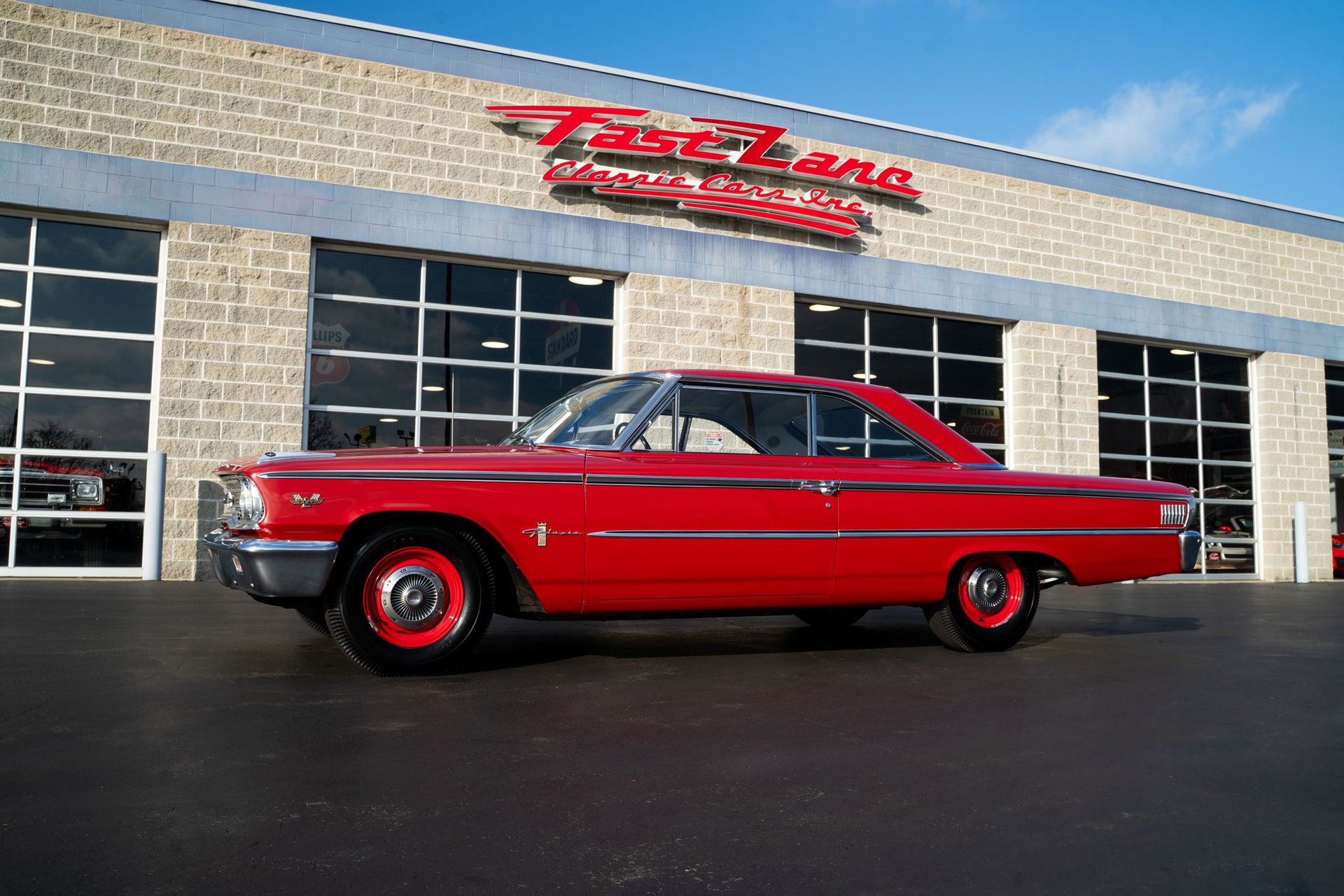
The late big-blocks: 400, 429 and 460
For 1969 the Galaxie gained the 385-series engines, the 429 and its 460 big brother, while the FE 390 and 428 wound down. The 429 is a modern, thin-wall big-block with canted-valve heads, enormous torque and a much lighter feel on the road than its size suggests; the 460, standard in Lincolns and optional in big Fords from the early 1970s, is the same architecture stretched. These engines are tough, cheap to rebuild by big-block standards, and almost impossible to overheat in normal use — but the cars around them are smog-era machines, and from 1972 the ratings fall as compression drops and retarded ignition and air pumps arrive. A 1969–71 429 Galaxie is a genuinely quick, comfortable car. The mid-1970s 400, a tall-deck small-block-family engine offered in the last Galaxie 500s, is the opposite: adequate, unloved and not a reason to buy a car. Judge late cars on body and trim condition first, because the engines are rarely the problem and rarely the prize.
Gearboxes
Most Galaxies are automatics, and there are three families. The early Fordomatic and Cruise-O-Matic three-speeds (the MX and its lighter FX sibling, later marketed as the FMX) are iron-cased, smooth and durable, with a period quirk: many start in second gear unless you select first manually or floor the throttle — a first-gear start only on demand is correct behaviour, not slip. The C4 three-speed served the small-blocks from the mid-1960s, light and simple and cheap to rebuild. The C6, from 1966, is the heavy-duty box behind 390s, 428s and the 429/460 cars, and it is one of the strongest automatics of the era; a C6 that shifts firmly and does not flare on the 2–3 change is usually a fluid-and-filter service away from perfect. A full rebuild of any of these boxes at a competent transmission shop runs in the low-to-mid thousands of dollars fitted, with the C6 at the top of that range — real money, but a known quantity, and documented recent transmission work should be credited in the price.
Manuals are the minority and split two ways. The base three-speed column-shift manual is a cruiser's box, all synchromesh except first in early cars, and perfectly pleasant. The prize is the Borg-Warner T-10 and, from the mid-1960s, Ford's own Toploader four-speed behind the 390, 406 and 427 — the Toploader is one of the great gearboxes of the muscle era, strong enough that it became the default swap into everything else. On any four-speed car, test second-gear synchromesh on a fast downchange, listen for bearing whine in first and third, and check whether the shifter is the original linkage or a later Hurst conversion — the conversion is a driving improvement and an originality deduction, and a good seller will tell you which you are looking at. Clutch work on a big Ford is straightforward and comparatively cheap; a worn Toploader rebuild is specialist work and priced like it, so a manual car that crunches into second is not a small negotiation point.
One driveline note covers every Galaxie: the rear axle is the Ford 9-inch in performance and big-block cars and lighter units in economy cars, and the 9-inch is as close to unbreakable as production axles get. Whine on the overrun is usually pinion bearing or gear wear — a rebuild with new gears is a known, bounded job — while a clunk on taking up drive is more often worn universal joints or axle splines than the axle itself. Check for a leaking pinion seal and for oil flung inside the rear wheels from tired axle seals, both cheap parts with real labour attached.
Problem areas
Everything in this section follows one rule: on a Galaxie, the mechanical problems are priced in hundreds and low thousands, and the structural problems are priced in the value of the car. We have examined the photo sets of 48 Galaxies in our own store in detail, and rust was noted in 20 of those 48 cars — better than four in ten, on cars being offered for sale by sellers with every reason to show their best side. Visible damage was noted in 8 of the 48. Treat those proportions as the market telling you where to spend your inspection time: frame, floors and body first, engine second, cosmetics last.
Rust and structure: the frame is the car
A Galaxie is a body on a separate frame, and that cuts both ways. A rusty body panel can be repaired without touching the structure — but a rusty frame cannot be ignored, because the frame is what the suspension, the body and the engine all hang from, and a Galaxie frame that has thinned where it matters is a parts car wearing a whole car's price tag.
The frame. Work the full length of both rails with a torch and a light hammer or screwdriver handle, and spend your time where the water and road salt collect. The classic Galaxie rot spots are the torque-box areas where the frame kicks up over the rear axle, the rear rails behind the axle, the side rails under the doors where the factory drain holes block with mud, and — on the 1965–68 cars especially — the front rails around the steering box and idler arm mounts and the crossmember under the engine. Surface scale is normal and treatable. Flaking, lamination and perforation are not. Frame repair on a Galaxie means cutting out and fabricating sections or, in the worst case, a frame swap, and either is body-off work priced in the many thousands of dollars before paint. A car with a perforated frame rail is not a bargain at any plausible discount unless you are buying it for its engine and trim. This is the single most important paragraph in this guide.
Floors, trunk and torque boxes. The water gets in past the windshield and rear window seals, past the cowl vents and down the A-pillars, and it sits under the carpets and the trunk mat. Lift every carpet you can and press the floor pans hard, especially the front footwells under the pedals and the rear pans under the back seat. The trunk floor rots around the spare wheel well and above the fuel tank, and the drop-off panels at the trunk sides hide rot behind the rear wheels. Replacement floor pans and trunk sections are available and a pan fitted and painted is a job in the high hundreds to low thousands of dollars per side — but floors, like the frame, rarely rot alone. Floor rust is a marker: it tells you the seals failed years ago and the water has been travelling, so a car with holed floors gets a frame inspection twice as careful as a dry car.
Body panels. The cosmetic map is predictable: the bottoms of the front fenders behind the wheels, the lower rear quarters ahead of and behind the rear wheel opening, door bottoms where the drain slots block, the dogleg at the base of the C-pillar on hardtops, and the leading edge of the hood and the deck lid seams. On 1959–61 cars add the elaborate brows over the headlamps and the acres of die-cast trim, which pits and is expensive to restore well. Bubbling at the base of the windshield or rear window usually means the channel underneath has gone, which is a glass-out welding job, not a paint job. A magnet wrapped in cloth, run over the lower quarters and sills of the bolt-on rocker area, will find the filler that listing photographs are lit to hide. Full professional rust repair and repaint on a big Galaxie is a five-figure commitment at any good shop — the car is simply enormous, with more square feet of panel than almost anything else on the road — which is why the buying rule at the end of this guide exists.
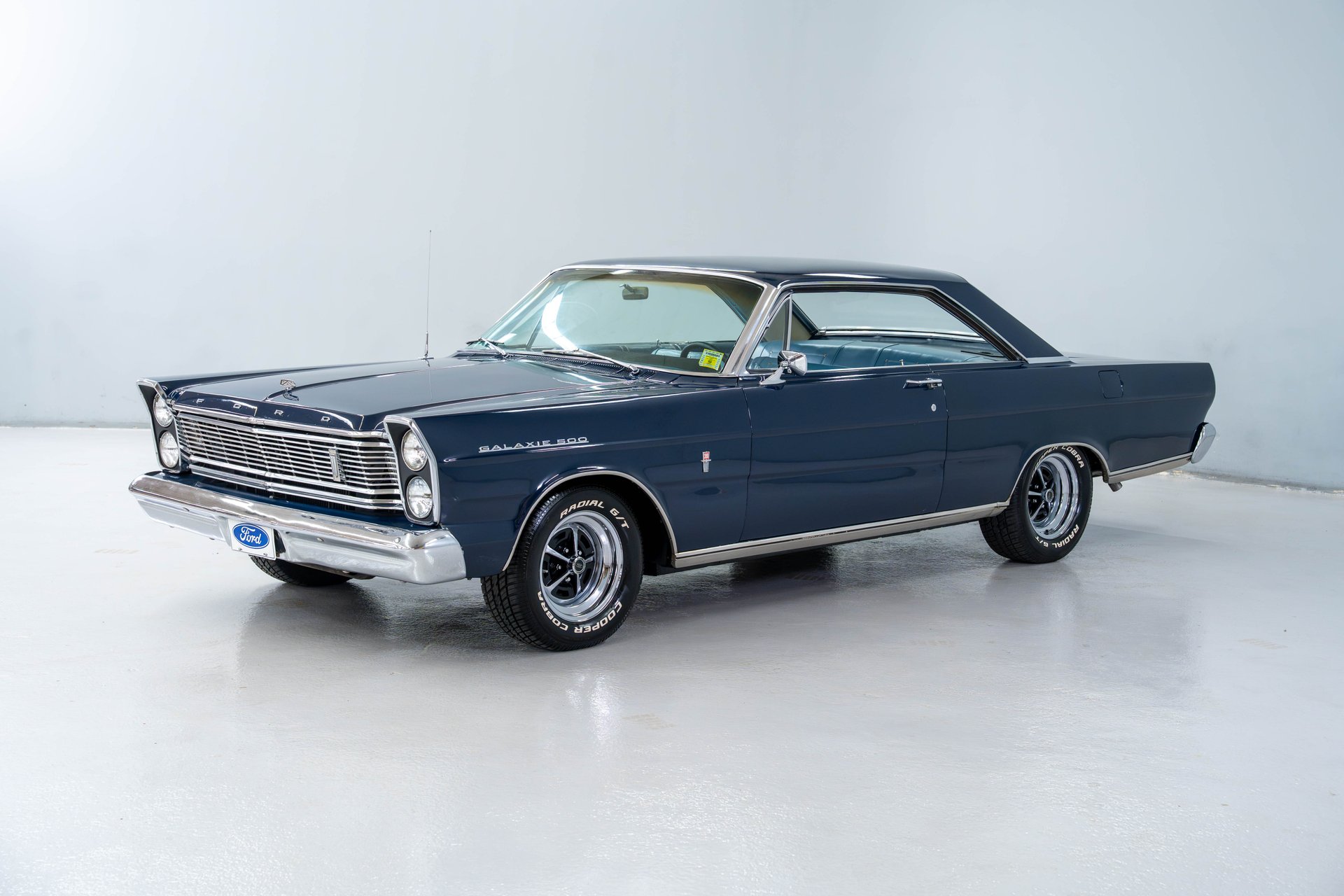
Suspension, steering and brakes
The 1959–64 cars run coil springs and unequal-length arms at the front and leaf springs on a live axle at the rear; the 1965 redesign brought coils at all four corners with a three-link rear axle located by a Panhard rod, and the later cars refined that layout. All of it is conventional, strong and cheap in parts — the costs are in the accumulated wear of a two-ton car that may have had no suspension work in forty years.
Front end. Ball joints, control-arm bushings and tie-rod ends wear together, and a Galaxie with original front suspension will wander, creak over bumps and wear its front tires on the inner edges. A full front-end refresh — joints, bushings, tie rods, alignment — is a job in the low thousands of dollars fitted, and it transforms the car; budget it into any purchase that does not document it. Power steering on these cars is a linkage-type system on early cars and an integral box later, and both weep from the control valve and hoses with age — a damp system that still works is a reseal; a groaning pump run dry for years is a pump and possibly a box. Steering boxes wear in the straight-ahead position, giving play at the wheel that no adjustment fully removes; a rebuilt box is a few hundred dollars plus fitting. Kingpins are not a Galaxie issue — Ford used ball joints throughout the Galaxie era — so anyone diagnosing kingpin wear on one is guessing.
Rear suspension. On leaf-spring cars, sagging rear springs and worn shackle bushings drop the tail and spoil the stance; new leaf springs are available and moderately priced, and fitting them is a half-day job. On the 1965-on coil cars, tired rear coils and worn trailing-arm bushings do the same work, and a car that sits tail-down with the rear wheels steering slightly under power has bushings in its near future. Air shocks fitted to prop up a sagging rear are a tell, not a fix — ask why they are there.
Brakes. Early Galaxies stop — eventually — with drum brakes all round, single-circuit hydraulics on cars before 1967, and no servo assistance on base cars. A drum-brake Galaxie in perfect order stops adequately for period driving; one with oval drums, contaminated linings or a perished single-circuit system is a genuine hazard in modern traffic, and a full hydraulic rebuild with drums, shoes, cylinders and hoses is a job in the high hundreds to low thousands of dollars. Front disc brakes arrived as an option in the mid-1960s and spread through the range by 1969, and disc conversion kits for the earlier cars are among the best money you can spend on one you intend to drive. Whatever the brakes, a car that has sat for years needs the whole hydraulic system treated as guilty: flex hoses perish internally and act as one-way valves, wheel cylinders seize, and old fluid carries water. Recommissioning brakes is never the place to save money.
Interior, trim and electrics
The Galaxie cabin is vast, handsome and — in XL and LTD form — genuinely luxurious, and it is the second great money pit after the body. Vinyl seat covers, foam and seat springs all age; the driver's seat goes first, collapsing at the entry bolster and splitting along the seams, and a professional retrim of a Galaxie interior in correct-pattern material runs from the low thousands for a sedan in vinyl to well beyond that for an XL with buckets, console and door cards all done properly. NOS and reproduction trim availability is good for the popular 1963–66 cars and patchy for 1959–61 and the late cars. Dash pads crack in the sun, the padded dashes of the later cars warp, and the bright plastic chrome on interior trim flakes — all cosmetic, all visible every time you drive the car, and all priced per piece.
Convertibles add a whole system: top frame, hydraulics or electrics, weatherstrips and a well liner, and a top that goes up crooked or leaks at the header rail is a day of adjustment or a four-figure top replacement. On any convertible, work the top twice, look at the floor from underneath with extra care, and treat water staining under the rear seat as structural information, not upholstery information.
Electrics are the Galaxie's friendliest system: a simple 12-volt layout, an alternator from 1963 (generators before), and failures that are almost always connections, grounds and switches rather than components. The known repeat offenders are the headlamp switch, whose internal breaker cycles the lights on a hot night when the wiring has aged; the voltage regulator on generator cars; vacuum-operated headlamp doors on the 1969 XL and LTD, which sag or wink as the vacuum motors and hoses perish; and power window motors on the better-trimmed cars, slow with age and grease turned to glue. Air conditioning, where fitted, will almost always need a full recommission — compressor seals, hoses, drier and a charge — a job comfortably into four figures done properly, so a car advertised with air that blows warm is a car without air for pricing purposes.
Engines in service: the faults that actually appear
The engine families are covered in their own section; the faults you will actually meet on viewings are these. Oil leaks, everywhere, on everything: rear main seals, valve cover gaskets, timing covers and the FE intake end seals, and on a car that has sat, every one of them at once. Overheating that is blamed on the engine and is almost always the cooling system — a radiator core furred to half capacity, a collapsed bottom hose, a missing fan shroud. A car that runs hot in traffic but cool on the road has an airflow or fan clutch problem; one that heats steadily under load has a flow problem; one that pressurises the system from cold has a head gasket problem, and the three diagnoses have three very different prices. Flat spots and poor starting on carburetted cars are usually perished vacuum hoses, a worn carburettor throttle shaft or a choke that no longer pulls off — a carburettor rebuild is a few hundred dollars, while the four-barrel Autolite 4100 and the Holleys on performance cars deserve a specialist and cost accordingly. And on any car, a seller who has warmed the engine before you arrive is hiding one of three things: a cold-start fault, oil smoke on start-up, or a rattle that fades as the oil pressure rises. Insist on a cold start, in the inspection and in your negotiation.
How to inspect one
Allow two hours and go in daylight, with a torch, a magnet wrapped in cloth, a tyre pressure gauge and a friend to work the pedals and lights while you walk around. If the car passes you, pay for a lift inspection before money changes hands — on a car whose whole value sits in its frame, the lift fee is the best money in the purchase.

- Paperwork and identity first. Match the VIN on the title to the plate on the driver's door and the data plate in the engine bay. Read the fifth character, the engine code, and write down what the car was born as — then check the warranty plate codes for transmission, axle, trim and colour. A car whose codes describe a different car from the one in front of you is a story you are being asked to pay for.
- Cold start, insisted upon. The engine must be stone cold. A small-block or FE should fire on the choke, settle to a fast idle and come down cleanly. Blue smoke at start-up that clears is valve stem seals; smoke that stays is deeper. Listen for a rattle that fades as oil pressure rises — timing chain or lifters — and for the solid-lifter tick of a 406 or 427, which should be even across all cylinders.
- The frame, on the ground first. Torch along both rails: torque boxes, the kick-up over the rear axle, the rails under the doors, the front rails at the steering box on 1965–68 cars. Prod with a screwdriver where the metal looks laminated. Perforation in a rail or torque box ends the inspection unless the price already treats the car as a project — this is the frame test from the rust section, and it outranks everything below it.
- Floors and trunk. Lift the carpets in all four footwells and press hard. Then the trunk: mat up, spare wheel out, and look at the well, the floor over the tank and the drop-offs behind the rear wheels. Water staining is history; holes are a welding quote; damp today is a leak still in progress.
- Body and gaps. Walk the magnet over the lower fenders, quarters, door bottoms and rocker area. Sight down each flank for ripples. Open and close every door — on a convertible or hardtop, note whether the gaps change with the top down. Bubbling at the glass channels means glass-out work, so price it as welding, not paint.
- The engine, identified and judged. Read the casting evidence before you believe the air-cleaner decal: on an FE, that means block and head casting numbers and, if the claim is 390, 427 or 428 money, a stroke check through a plug hole. Check for oil in the coolant and coolant in the oil, pull the oil filler cap and look for mayonnaise emulsion, and read the leaks underneath as a recommissioning list with prices attached.
- Cooling under load. With the engine warm, watch the gauge through ten minutes of idling and then on the drive. A car that creeps up at idle and settles at speed wants airflow work; one that heats under load wants radiator flow; one that pushes coolant from stone cold wants a head gasket conversation before any other negotiation.
- The drive. Fifteen minutes minimum, with a fast road. An automatic should engage drive and reverse without a long pause or a thump, change up firmly and not flare on the 2–3 shift; remember that an early Cruise-O-Matic starting in second is correct. A manual should take a fast change down into second without a crunch. The car should track straight, brake straight and sit level — pull on the wheel over bumps tells you the front end wants the refresh priced in the problem areas.
- Brakes, honestly tested. From speed, brake firmly twice. A drum car will need a firm leg and will not stop like a modern car, but it must stop straight, without pulling, judder or a pedal that sinks. A sinking pedal or a single-circuit system with any weep anywhere is a full hydraulic rebuild in the budget, no exceptions.
- Electrics and equipment, everything worked. Headlamps on full beam for five minutes (a cycling headlamp switch shows itself hot), heater blower on all speeds, wipers and washers, every window, the radio, and on a 1969 XL or LTD the vacuum headlamp doors up and down twice. Air conditioning that does not blow cold is priced as absent.
- Interior and trim, priced piece by piece. Sit in the driver's seat and feel for the frame through the pad. List every missing or damaged trim piece, dash crack and chrome flaw, then check the reproduction availability of each before you assume it can be replaced — on a 1959–61 or a late car, assume hunting time, not a catalogue.
- Stance and underside, last look. Stand back: level side to side, tail neither dragging nor jacked on air shocks. Then, if you can, get it on a lift and repeat steps 3 and 4 from underneath with the wheels off the ground — frame, floors, brake and fuel lines, pinion seal, exhaust. The lift inspection is where Galaxie purchases are actually decided.
Values
The build's market block beneath this guide carries the live numbers — what Galaxies are listed at now and what recorded sales have achieved — and that is where any figure in this section would go stale, so the Values section of a Galaxie guide teaches you to read the spread instead. And on a Galaxie the spread is the story: few classic cars cover a wider range, because the same nameplate covers a four-door sedan built in the hundreds of thousands and a dual-quad 427 fastback built in tiny numbers, and the market prices those two cars as if they belonged to different hobbies.
Three things drive a Galaxie's position in that spread, in this order. Body style first. Convertibles and the 1963 1/2-on fastback hardtops sit at the top; two-door hardtops follow; four-door hardtops and two-door sedans sit in the middle; four-door sedans and the plainest late cars sit at the bottom, whatever their condition. Engine second — and verified, not badged. A genuine 427 or 428 car commands a large premium over a 390, a 390 over a 352 or 289, and the premium belongs to the paperwork and the casting numbers, not to the decal. A cloned performance car is worth the sum of a good base car plus the value of the hardware fitted, and not a penny of the original car's rarity. Condition third, but absolutely. The project-to-driver gap on a Galaxie is wider than on most classics because the restoration costs — body, frame, paint on an enormous shell, interior — are so high relative to the finished value of the ordinary cars. For a mainstream sedan or hardtop, the cost of turning a project into a good driver routinely exceeds the difference in asking prices between the two, which is why the cheap Galaxie is so often the expensive one.
Asking prices and achieved prices part company on these cars in a predictable way. Sellers of ordinary cars anchor on the glamorous ones — the sedan advertised by reference to fastback money — while auction results for honest drivers tend to land well below optimistic dealer asking prices, and the very best cars, the documented 427s and the exceptional convertibles, achieve their money because several buyers want the same car. Originality pays where it is verifiable: a matching-numbers engine, a build sheet, dealer paperwork and an unbroken ownership story all add real value on the performance cars and a smaller but genuine premium on the rest. Colour helps or hurts at the margins — period reds, blacks and whites sell a big Ford more easily than the beiges and greens — and a colour change done to a high standard hurts a driver far less than it hurts a collector car.
Negotiation reality: the Galaxie market is deep, patient and national. There is almost always another one, in the same year and body style, within a season's searching — the exception being the genuine performance cars, where the supply is fixed and shrinking. Let that asymmetry set your temperament. Walk away from an ordinary car with a rusty frame without a backward glance; stretch, carefully and with verification, for the right 427.
Parts and ownership
The Galaxie is one of the best-supported big American classics, for a simple reason: Ford built them in enormous numbers, the mechanicals are shared across the full-size Ford range and half the performance Fords of the decade, and the American reproduction industry has followed the demand. A competent owner with a workshop manual can do almost everything on the car at home, and any established American-classic specialist will know the FE and the C6 by heart.
Easy: engine service parts for every family including the FE — gaskets, pumps, timing sets, ignition — plus carburettor kits for the Autolite and Motorcraft units, brake drums, shoes, cylinders and hoses, suspension joints and bushings, leaf and coil springs, exhaust systems, glass for the common body styles, weatherstrips for the popular years, and interior kits for the 1963–66 cars in the common colours. Order this week, fit this weekend, at prices that will make a European-classic owner wince with envy.
Harder and dearer: year-specific brightwork, above all the grilles, side trim and die-cast ornaments of the 1959–61 cars and the one-year 1965 front end; correct FE performance hardware — 427 blocks, heads and intakes are genuinely scarce and priced as the collector parts they are; XL and LTD interior pieces in the less common colours; convertible top frames and well parts; vacuum headlamp door components for the 1969 cars; and good original sheet metal for the less common body styles. None of it is unobtainable, but the hunting time is part of the ownership cost, and a complete car beats a cheap incomplete one by more than the price of the missing pieces.
Running costs. A sorted Galaxie is a realistic regular-use classic: fuel consumption in the low-to-mid teens in miles per gallon for a small-block, single figures to low teens for a big-block driven as it begs to be driven, tyres in the common sizes cheap, insurance in line with other cars of similar value. The budget line that catches new owners is, as always, the first year: catching up deferred maintenance on a running car — brakes, hoses, belts, fluids, a carburettor rebuild, front-end wear — is a real four-figure sum even doing the labour yourself, and recommissioning a car that has sat for years, with the fuel system cleaned end to end against modern ethanol fuel, every seal weeping and the brakes rebuilt from the master cylinder out, is several times that at a shop. Buy the car that has been driven, over the car that has been stored, unless the stored car is priced as the project it truly is.
Which one to buy
- The all-rounder: 1965–66 Galaxie 500 with a 390. The modernised chassis, the stacked-lamp looks, the workhorse big-block and prices that still reward the buyer. If you want one Galaxie to drive everywhere, this is it.
- The icon: 1963 1/2 or 1964 Sports Hardtop. The fastback silhouette and the heart of the legend, in anything from a 289 cruiser to a 427. Buy the best body you can find and let the engine be the one the budget honestly stretches to.
- The collector car: a genuine R-code 427. Verified by VIN, castings and paperwork, bought with an expert beside you. A real one is a blue-chip Ford; a claimed one that fails verification is a hot rod and must be priced as one.
- The value buy: a 1967–68 Galaxie 500 or a 1969–71 429 car. The market overlooks them, the engineering is the most developed of the line, and a solid example costs a fraction of the earlier fastbacks to buy and the same to run.
- The glamour buy: a 1960 Starliner or a 1961–64 Sunliner convertible. Style in industrial quantities. Buy on structure and trim completeness, because those are the bills.
- The gentle entry: a small-block sedan or hardtop, 1963–66. The cheapest way into a real Galaxie that you can actually use — provided the frame passes step 3 of the inspection, because cheap stops being cheap the moment welding starts.
And the rule that overrides all of the above: buy the least rusty frame and body you can find, in the specification you can live with. Engines, gearboxes, brakes and interiors on a Galaxie are all fixable at prices you can plan for. A rotten frame costs more to put right than the finished car will be worth — and it is the one thing about a Galaxie that can never be made original again.
See the 31 Galaxie 500 cars currently listed.