
Ford F1 buyer's guide
Ford F1 -- the model's own buyer's guide: variants, values and what to check.
Years listed: 1949-1982 · Series: F-Series
Overview and history
The Ford F-1 is where the F-Series begins — the half-ton pickup at the bottom of the first F-Series range, launched in January 1948 as Ford's first genuinely postwar truck. Everything before it was a warmed-over pre-war design; the F-1 was a clean sheet, and Ford spent heavily to say so. The advertising called the range "Bonus-Built" — built with extra strength in reserve — and the cab was sold as the "Million Dollar Cab," a claim about how much Ford said it had spent developing a truck cab that treated the driver like a human being: wider, taller, with more glass, a proper adjustable bench seat, ventilation through wing windows and a cowl vent, and what Ford called "Level Action" cab suspension, rubber-mounted at the front and spring-mounted at the rear to take the shake out of a working truck.
The range ran from the F-1 half-ton through the F-8 heavy trucks, all sharing the same styling: separate front fenders flowing into the cab, headlights carried in the fender tops, a wide horizontal-bar grille, and a one-piece hood that opened from the front. The F-1 rode a 114-inch wheelbase and was rated at a nominal half ton, though period payload figures were generous by modern standards. It was sold as a pickup with a 6½-foot bed, a panel truck, and a bare chassis for stake, platform and specialist bodies.
Production ran from 1948 to 1952, in two clear halves. The 1948–50 trucks are the original design; the 1951 trucks got a thorough facelift — a new grille, a redesigned dashboard, a larger rear window and the "Five Star" cab trim options — and for 1952 the elderly flathead six was replaced by a modern overhead-valve six. In 1953 the whole range was redesigned and renamed: the F-1 became the F-100, and the F-1 name ended.
That last fact is the single most useful thing in this guide, so take it now: a genuine F-1 is a 1948–52 truck, and nothing else. Trucks advertised as "F1s" from 1953 onward — and you will see plenty, including trucks from the 1960s and 1970s — are F-100s wearing a borrowed name, whether through seller ignorance or optimism. They are different trucks, with different values, and this guide does not cover them. Learn the 1948–52 shape and you cannot be caught.
The range proved the concept immediately: the F-Series became the backbone of Ford's truck business and, in time, the best-selling truck line in America — a run that starts with this truck. But the F-1's own five years were transitional ones, and that is part of its character now: it is a pre-war mechanical package — flathead engines, beam axles, drum brakes, a 6-volt electrical system — wearing the first modern truck body Ford ever built. Buyers who understand that the charm and the limitations come from the same place get on with these trucks very well.
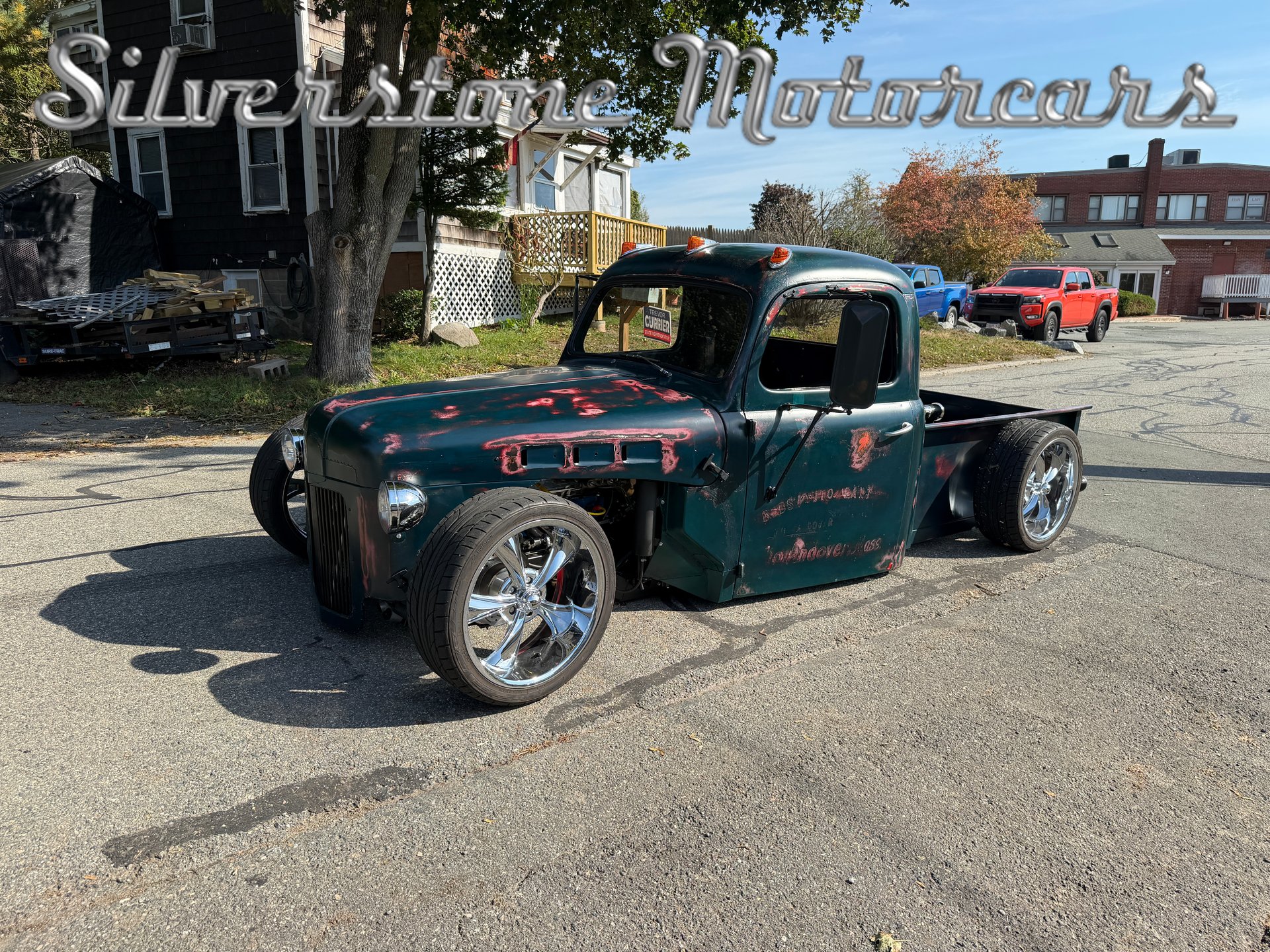
These were working trucks, bought to earn money and used hard, and that history defines today's market. Almost every survivor has worked, been parked, been fixed with whatever was at hand, and — because the F-1 became a hot-rodder's favourite — a very large share have been modified: later V8s, automatic gearboxes, disc brakes, lowered suspension. An F-1 is therefore really two different purchases wearing one badge: the original flathead truck, and the restomod built inside an F-1 shell. Both are legitimate. Confusing one for the other is where money is lost, and most of this guide is about telling them apart.

The models
Every F-1 is built on the same 114-inch-wheelbase half-ton chassis. What varies is the body, the engine, and — from 1951 — the cab trim level. There were two engines for most of the run, both flatheads carried over from pre-war practice: the 226 cu in six and the famous 239 cu in V8. For the final year, 1952, the six became a new overhead-valve design.
| Model | Years | Engine | Output | Built | Character |
|---|---|---|---|---|---|
| F-1 Pickup | 1948–1950 | 226 cu in flathead six | 95 hp | Not published by variant | The working base truck; simple, slow, honest |
| F-1 Pickup | 1948–1950 | 239 cu in flathead V8 | 100 hp | Not published by variant | The one most buyers picture; the classic flathead truck |
| F-1 Pickup | 1951–1952 | 226 six (1951) / 239 V8 | 95 / 100 hp | Not published by variant | The facelift truck: new grille, new dash, bigger rear window |
| F-1 Pickup | 1952 | 215 cu in overhead-valve six | 101 hp | Not published by variant | The modern engine in the old truck; smooth and underrated |
| F-1 Pickup (V8) | 1952 | 239 cu in flathead V8 | 106 hp | Not published by variant | The last and strongest flathead F-1 |
| F-1 Panel Truck | 1948–1952 | 226 six / 239 V8 | 95–106 hp | Not published by variant | The enclosed delivery body; rarer, cheaper, harder to restore |
| F-1 Chassis-cab / stake / platform | 1948–1952 | 226 six / 239 V8 | 95–106 hp | Not published by variant | Bought for a job; survival is low, originality lower |
(Ford published production by model line and calendar year rather than by F-1 body variant, and period output figures are SAE gross ratings — the optimistic, engine-on-a-stand numbers every American maker quoted in the period. Treat any source quoting exact F-1 production by body style with suspicion.)
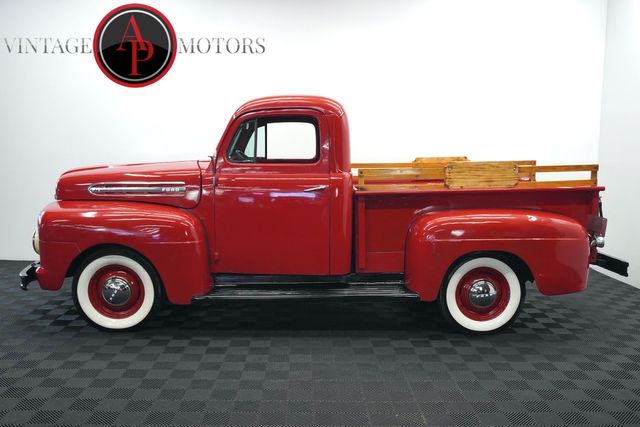
The pickup is the market: a 6½-foot bed with a wooden floor — planks separated by steel skid strips — over a steel frame, with the spare wheel carried under the bed or, optionally, in a cut-out in the left front fender. Most pickups were sold with the standard cab. From 1951 Ford offered the Five Star cab (and a Five Star Extra package above it): extra trim, better upholstery, more sound deadening, twin horns and sun visors, and additional brightwork. A genuine Five Star truck is worth a modest premium and is identified by its equipment and trim, not by a badge alone — the packages were trim, not a separate model.

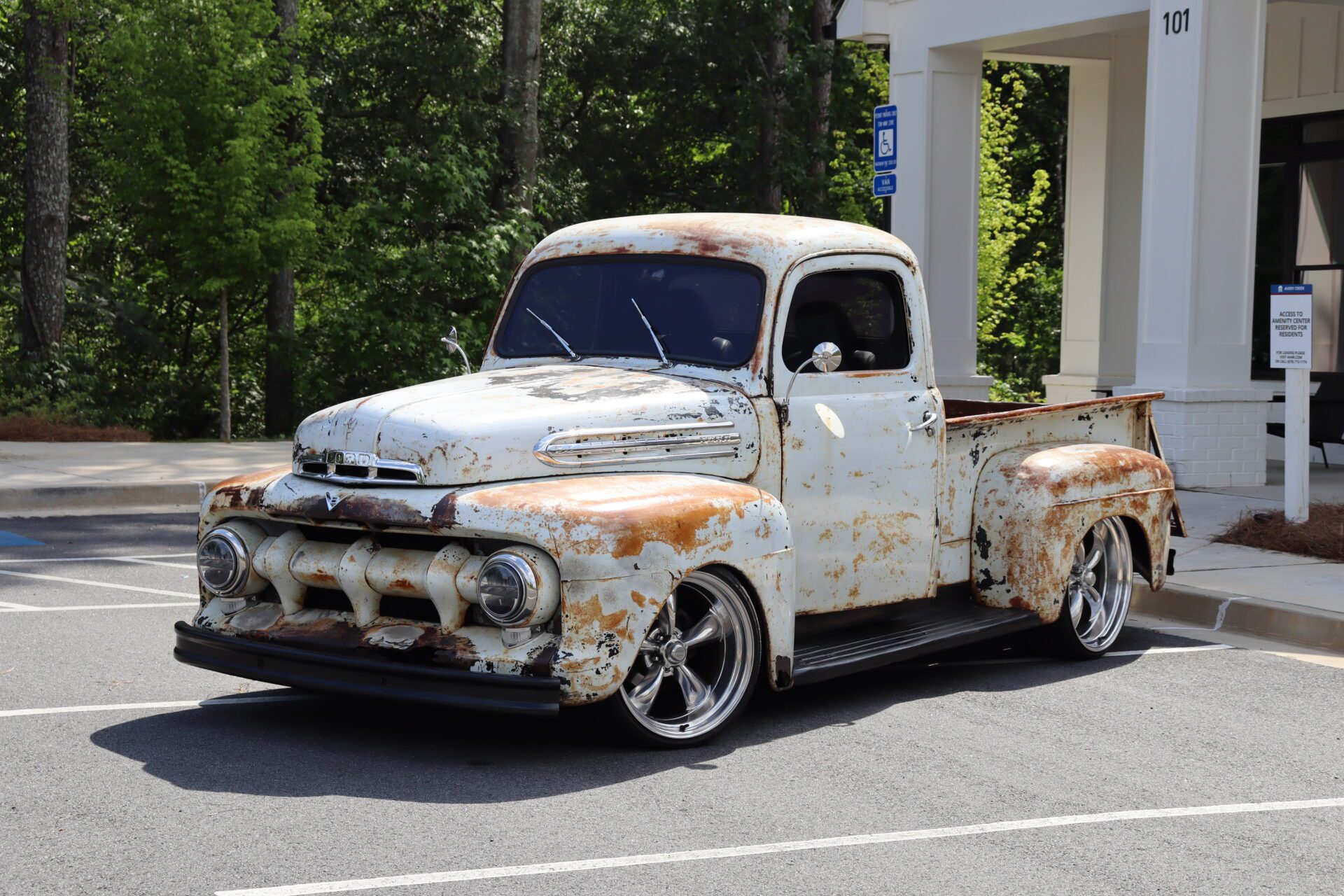
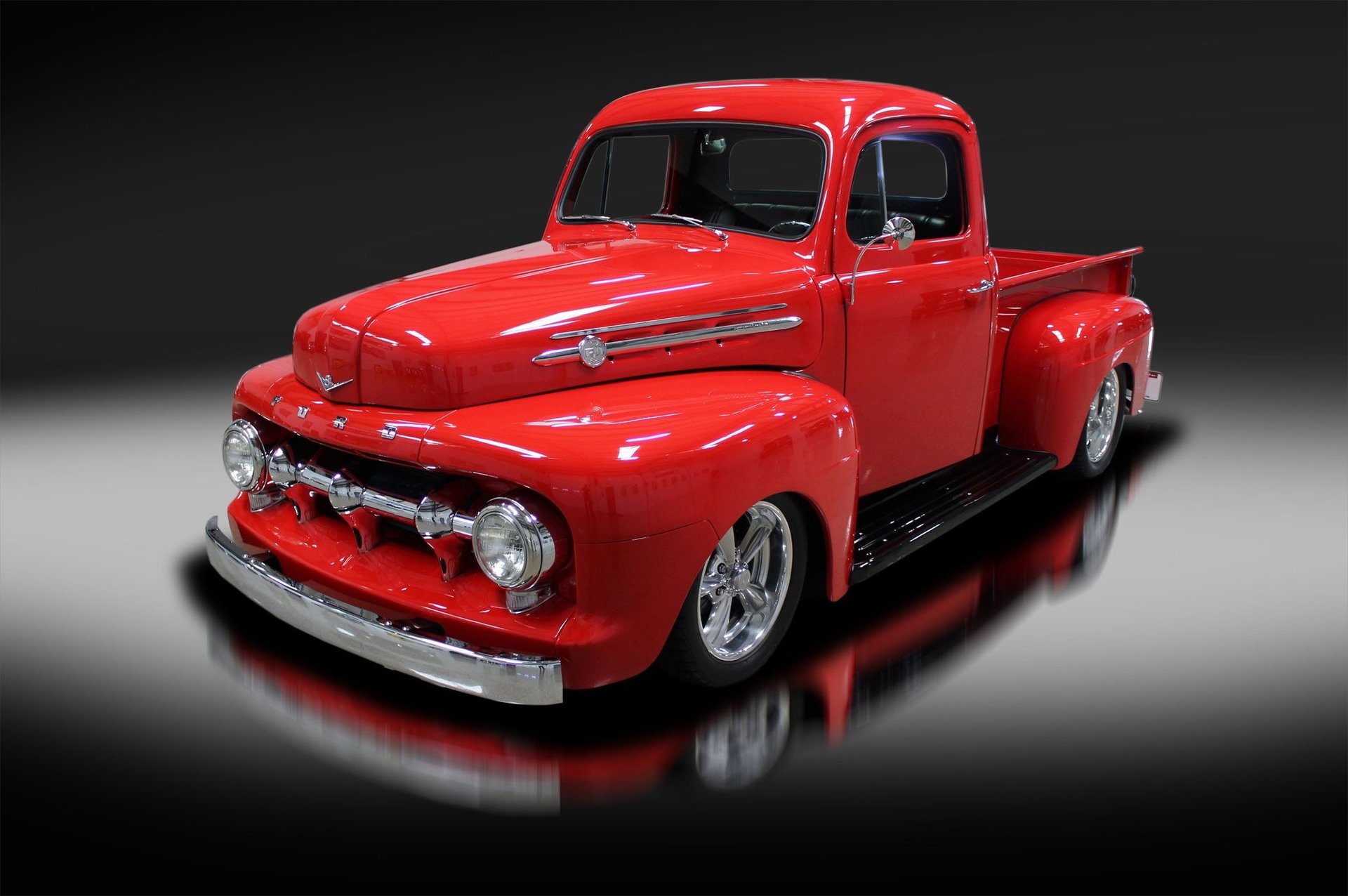
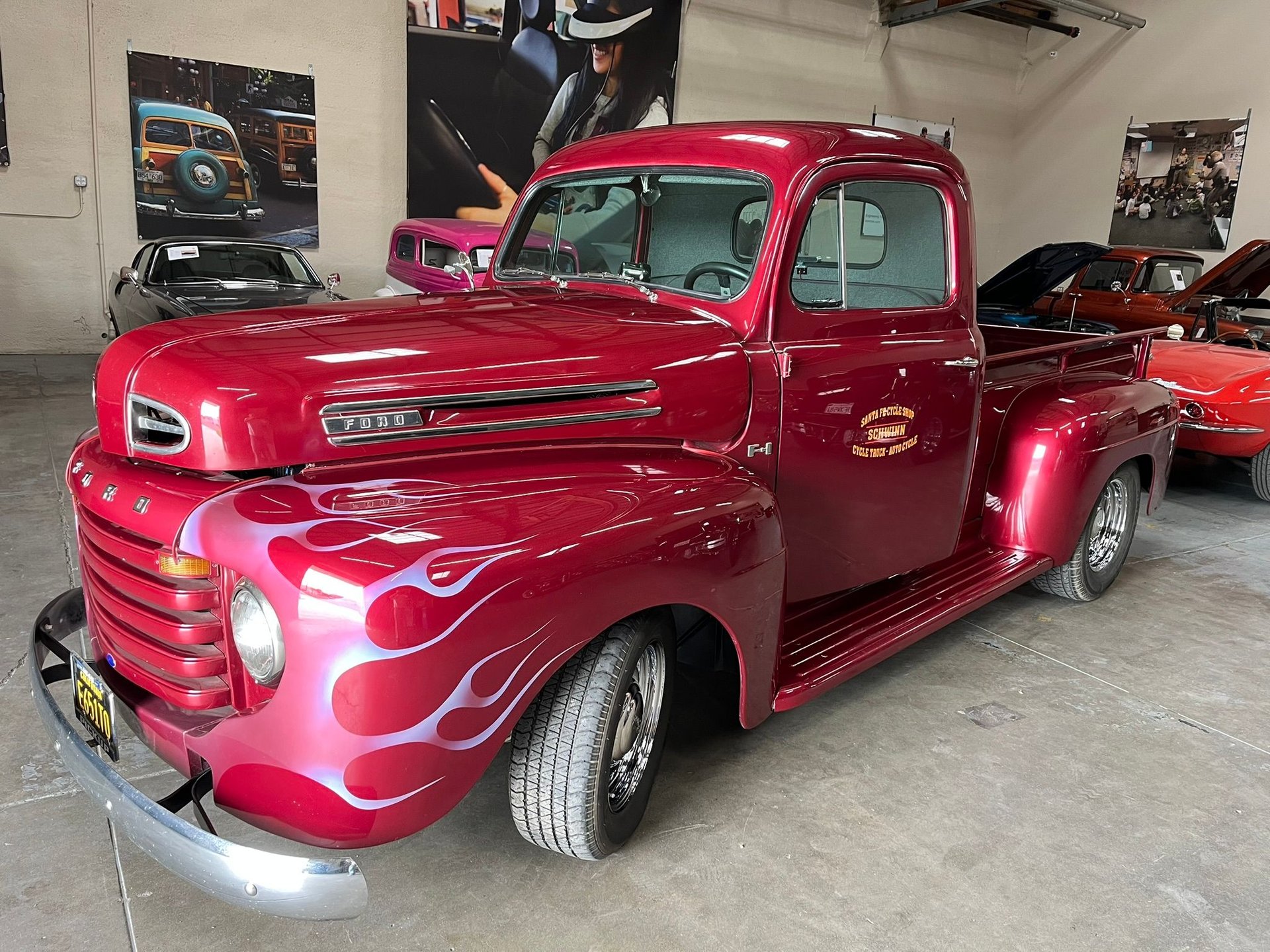
The 1948–50 versus 1951–52 split matters more than any other distinction in the range. The early trucks have the multi-bar grille, a simpler dash with the instruments in a single cluster ahead of the driver, and a smaller rear window. The facelift trucks have the single-bar grille with three protruding teeth, a completely redesigned dashboard, a wider rear window, and detail improvements throughout. Neither is "better" in the abstract: the early trucks are purer and more sought-after by traditionalists, the late trucks are nicer to sit in and the 1952 overhead-valve six is a genuinely better engine than either flathead for regular use.
The panel truck shares everything forward of the cab and replaces the bed with a tall enclosed body. Panels were bought by laundries, bakeries, florists and utilities, worked to death, and scrapped; survivors are far rarer than pickups but worth less, because the big flat body sides are expensive to repair and the market for them is thin. The same applies, more so, to the chassis-cab variants: a stake or platform F-1 is a curiosity, and most have had their bodies changed at least once.
Reading a truck's specification from the truck. Because so many F-1s have been re-engined, re-cabbed and re-bodied over seventy-five years, learn to read what a truck is rather than what it is called. The cab styles divide by year as described above; the bed divides by construction — an original bed has the wooden floor and pressed-steel sides with rolled top rails, and the tailgate carries the Ford script. A steel diamond-plate floor, a flat fabricated bed, or a later F-100 bed are all substitutions, common on working trucks and restomods alike. The panel body divides by its rear doors and side panels: original panels have the tall, nearly windowless body with the spare often carried inside, and they rust along every lower seam where the body meets the frame. None of these observations is a criticism of the truck in front of you. They are how you establish which of the rows in the table above you are actually buying — the necessary first step before any discussion of price, because a 1949 cab on a 1952 chassis with a 1960s engine is three trucks' worth of parts wearing one title, and it should be priced as a creation, not as a 1949 F-1.
The neighbours. The F-2 and F-3 were the ¾-ton and 1-ton versions on longer wheelbases, visually near-identical and sometimes re-badged or misdescribed. An F-1 should measure 114 inches between axle centres; measure any truck whose paperwork and appearance disagree. And repeat the warning from the overview: from 1953 the half-ton is the F-100 — different cab, different grille, wraparound styling on later ones. There is no such thing as a 1955 or a 1967 "F1," and a listing that says otherwise is telling you the seller does not know the truck — price everything else they say accordingly.
Engines and gearboxes
The 226 flathead six (1948–1951)
The base engine is Ford's 226 cu in (3.7-litre) side-valve six, a design with pre-war roots, rated at 95 hp. It is a long-stroke, low-revving engine built for torque and indifference to fuel quality, and in character it is exactly that: unhurried, flexible, and very hard to kill if the oil is changed and the cooling system kept clean. It drives through a single-barrel downdraft carburettor and breathes through a combined intake/exhaust manifold arrangement typical of the period.
A healthy 226 starts readily on the 6-volt system, idles with a slow, even chug, and pulls from walking pace without complaint. What it will not do is cruise at modern highway speeds: with the standard axle gearing the engine is busy at 55 mph and working hard at 65. Judge a six-cylinder truck as a 45–55 mph vehicle and it will delight you; judge it as a modern pickup and it will not.
The six's weaknesses are the flathead weaknesses described for the V8 below — cooling-system neglect and block cracking — with one addition: the exhaust manifold and its gaskets live a hard life, and a blowing manifold gasket, ticking when cold and quietening as things expand, is near-universal. Parts support for the 226 is noticeably thinner than for the V8: the hot-rod world revolves around the V8, so six-specific parts — manifolds, carburettor parts, engine internals — take more hunting. That cuts both ways: it is the main reason six-cylinder trucks are cheaper.
The 239 flathead V8 (1948–1952)
The engine that made the F-1's reputation: Ford's 239 cu in (3.9-litre) flathead V8, rated at 100 hp for 1948–51 and 106 hp for 1952. In the truck it is the 8RT version of the car engine, with a truck-specification single two-barrel downdraft carburettor (the Ford/Holley "94" pattern), a heavier flywheel and truck cooling and exhaust arrangements. The distributor sits at the front of the engine, driven from the camshaft; the water pumps — there are two, one per bank — are mounted at the front of the block and double as the front engine mounts, a piece of flathead architecture every buyer should understand before purchase.
The flathead's virtues are real: it is smooth, torquey, sounds wonderful, and will run, after a fashion, in a state of tune that would stop a modern engine. Its vices are equally real and all traceable to the layout. The exhaust passages run through the block, between the cylinders, so the engine puts an enormous heat load into its own coolant; the centre exhaust ports of the two middle cylinders are siamesed, making the middle of the block the hottest region; and the cooling system's capacity for neglect is zero. A flathead with a clean radiator, sound hoses, working thermostats and a flushed block runs at temperature all day. A flathead with a silted block and a half-blocked radiator overheats in traffic, and overheating is what cracks blocks and blows head gaskets.
The crack question is the flathead's defining inspection. Blocks crack most commonly in the valve-seat area and between the valve seat and the cylinder bore, and on the pan rail and in the lifter valley. A crack between seat and bore is usually fatal to the block's value as a rebuild core. You cannot reliably detect this on a viewing — it needs a hot engine, a cooling-system pressure test, and ideally a strip-down — which is why the inspection section treats a cooling system that pressurises, bubbles in the header tank, or loses water with no visible leak as a stop-and-think finding rather than a detail. A documented rebuild by a known flathead shop, with the block crack-tested, is worth a substantial premium for exactly this reason.
One more piece of flathead architecture to understand: the valves. A flathead's valves sit beside the cylinders, in the block, operated by solid tappets, and there is no rocker cover to lift and no feeler-gauge adjustment in the modern sense — valve clearances are set by grinding the valve stems or fitting adjustable tappets, an engine-out or at least heads-and-manifolds-off job in practice. The practical consequences for a buyer are two. A flathead that ticks gently and evenly is normal; a flathead with one loud, rhythmic tick has a valve or tappet problem whose cure is not an afternoon's work. And an engine that has "just had the valves done" should come with an invoice saying exactly what was done, because the job is involved enough that nobody does it casually. Compression is the buyer's friend here: a simple compression test, all cylinders, tells you more about a flathead's health — rings, valves, head gasket — in twenty minutes than an hour of listening, and a seller who refuses one has answered a question. Expect figures in the region of 90–110 psi on a healthy stock engine, and care less about the absolute numbers than about evenness: one cylinder 25 psi down on its neighbours is a finding, whatever the others read.
Running behaviour. Expect the flathead to need its choke from cold, to warm up slowly, and to suffer the period complaint of vapour lock in hot weather — fuel boiling in the pump and lines after a hot restart, cured by cooling and patience, and mitigated in modern use by an auxiliary electric pump and attention to fuel-line routing away from exhaust heat. Modern ethanol-blended fuel attacks period rubber and cork throughout the fuel system; budget for a carburettor rebuild with ethanol-resistant parts on any truck that has sat. Ignition is by points and a 6-volt coil; the front-mounted distributor is awkward to reach but the work itself is simple. A full flathead rebuild, done properly with crack-testing, machining, new pistons, bearings, pumps and gaskets, runs roughly $4,500–7,500 at a specialist — which is why the engine's documented state moves the value of the whole truck more than any other single item.
The 215 overhead-valve six (1952)
For the F-1's final year Ford replaced the flathead six with an all-new 215 cu in (3.5-litre) overhead-valve six, rated at 101 hp. This is the engine that became the pattern for Ford's sixes for the next decade: seven main bearings, modern valve gear, better breathing, better cooling behaviour, and none of the flathead's through-the-block exhaust heat. It is smoother, starts better, tolerates modern traffic better, and is cheaper to keep.
It is also the engine the market undervalues, because it is neither the romantic flathead V8 nor the traditional flathead six. If you intend to drive your F-1 rather than show it, a 1952 truck with this engine is the thinking buyer's pick — with one caution: one year only in the F-1 means one year's worth of F-1-specific installation parts, though the engine family's long subsequent life in F-100s keeps mechanical parts obtainable.
Gearboxes — and the automatic that never was
All F-1s were sold with manual gearboxes, floor-shifted. The standard box is a light-duty three-speed, synchronised on second and top, with a non-synchronised first you select at a standstill. A heavy-duty three-speed was optional, and above that sat the optional four-speed: a truck box with a very low, non-synchronised "granny" first intended for starting heavy loads on grades, and no synchromesh to speak of — a box you drive with double-declutching and respect. In normal use you ignore the four-speed's first entirely and drive it as a three-speed starting in second.
Judge any manual box on second-gear synchromesh (it goes first), on noise in neutral that disappears with the clutch down (input bearing), and on whether it stays in gear under load and on the overrun. Rebuilds are straightforward and comparatively cheap — roughly $800–1,800 depending on box and parts — because these are simple, well-understood units and the early-Ford trade supports them.
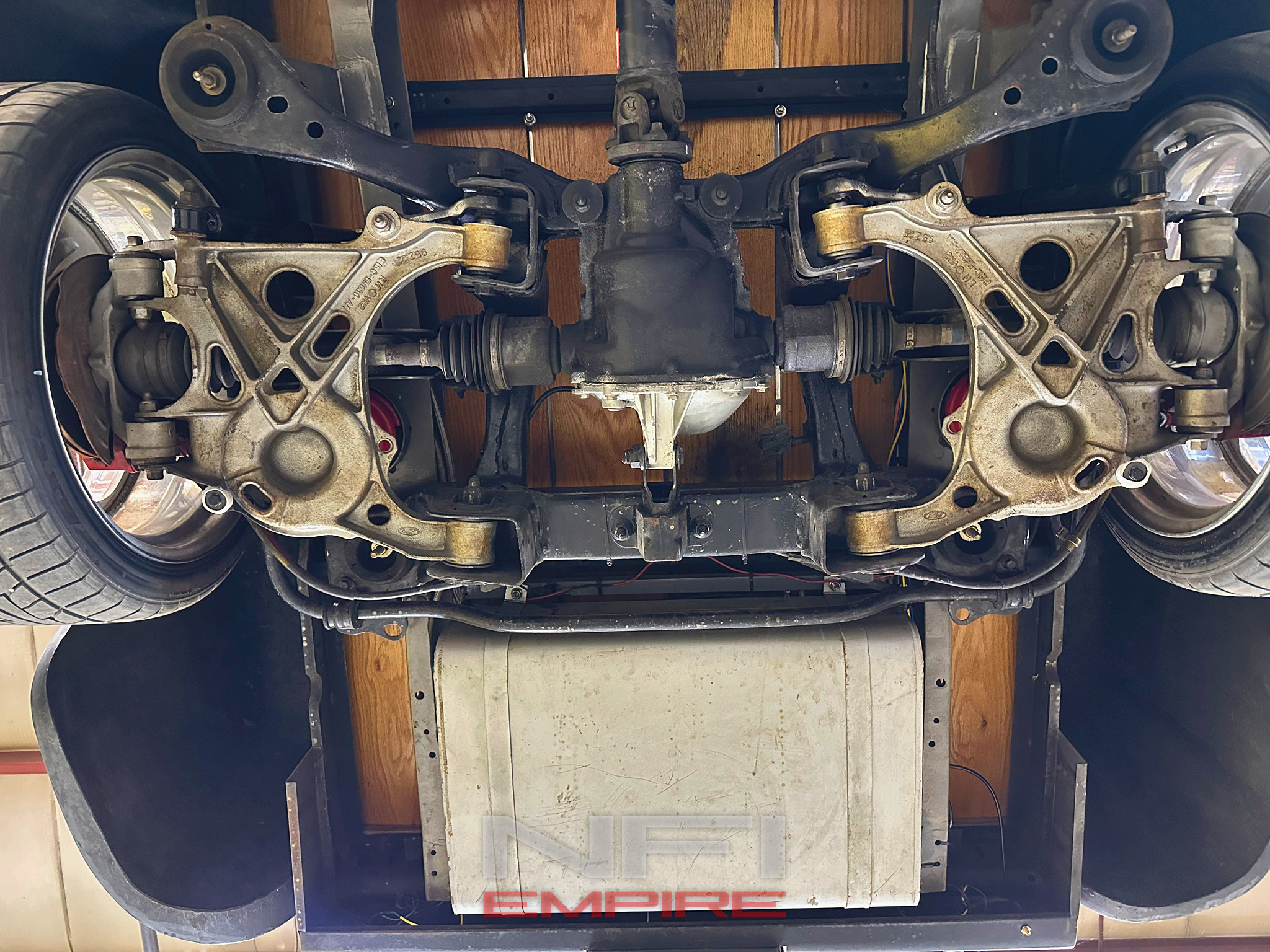
Now the trap, and it is a large one: Ford never fitted an automatic gearbox to the F-1. The Fordomatic did not reach Ford trucks until the F-100 era. Therefore every F-1 with an automatic — and in today's market they are numerous, a large share of the trucks advertised — has had an engine-and-gearbox swap or at minimum a gearbox conversion, whatever the listing implies. The same logic catches other modernisations: front disc brakes, independent front suspension (usually a Mustang II-pattern clip or a subframe graft), power steering, a 12-volt electrical system and a later rear axle are all conversions. None of this makes a truck bad. It makes it a different product — a restomod — which must be judged on the quality of the conversion work and priced against other restomods, not against original trucks. The inspection section gives you the tells.
Problem areas
An F-1 is a simple machine, and almost everything on it can be repaired with hand tools and patience. The exceptions — the findings that should change the price or end the viewing — are a rotten cab and frame, a cracked flathead block, and a badly executed conversion. Our own photo-checking of F-1 listings is a small sample so far — six trucks examined in detail — but it points the same way as the wider market's experience: five of the six showed rust somewhere, and all six showed damage or wear that mattered. Treat any F-1 as guilty on bodywork until your own inspection acquits it.
Rust: the map
Rust on an F-1 follows water, mud and trapped debris. Work through it in this order:
Cab corners, cowl and floor. The structural heart of the cab and the most expensive rust on the truck. The rear cab corners trap mud thrown up by the rear wheels and rot from inside; the front of the cab rots where the cowl meets the floor and around the front cab mounts; the floor itself goes over the frame rails and at the toe boards, where water from a leaking windshield sits under the rubber mat. Prod the cab corners from underneath, lift the floor mat and look at the whole floor, and check the front cab-mount area with the truck's weight on its wheels — a cab that has dropped at the front because its mounts have rotted will show uneven door gaps and doors that bind. Repair panels exist for all of it, but the labour adds up: a pair of cab corners, floors and mount repairs, welded and painted, is realistically $2,500–5,500 at a shop, and it is the job that decides whether a cheap truck was cheap.
Front fenders, running boards and doors. The front fenders rot at their lower rear edges, where they meet the running boards and collect everything the front wheel throws back, and around the headlight pods on the facelift trucks. Running boards themselves rust under their rubber covering and bend under decades of boots. Door bottoms fill with water through perished window seals and rot from the inside — run a fingertip along the bottom edge and feel for bubbling, then check the drain holes are clear. Fender and door repair sections are reproduced; running boards are available new. Price a pair of front fenders properly repaired and painted at roughly $800–1,800, more if the inner structure has gone.
The bed. The pickup bed floor is wood — boards with steel skid strips — and it rots, splits and gets replaced with plywood, diamond plate or whatever was cheap, in roughly that order of frequency. A correct new bed-wood kit with strips and hardware runs roughly $600–1,200 in parts and is a satisfying weekend-scale job; the steel around it is the real question. Bed sides rust at the bottom edges and at the stake pockets, the front bed panel rusts where debris sits against it, and the rear valance and the area around the tailgate take the knocks. Check the subframe rails under the bed floor while you are there — a sagging bed is often rotted cross-sills, not a bent frame.
The frame. F-1 frames are sturdy riveted channel sections and outright frame failure is less common than cab failure — but check the areas that trap mud: around the rear spring hangers and shackles, under the cab mounts, at the front crossmember, and anywhere a previous owner has plated a repair. Surface rust and scale are normal and treatable; flaking, thinning and perforation around spring hangers are structural and should be priced as fabrication work, or walked away from. Also sight along the frame for accident damage and for the cuts and welds of a front-clip conversion — a subframe graft done badly shows here first, in weld quality and in alignment of the front sheetmetal.
The flathead engines: what actually goes wrong
Beyond the block-cracking covered in the engines section, the flathead's everyday problems are cooling, fuel and ignition, in that order. Cooling: two water pumps, two thermostats, a radiator that silts, and a block that silts worse. A truck that runs cool at a steady 45 mph but boils in traffic has a capacity problem — radiator or block silt — not a thermostat problem; changing thermostats at it wastes money. A professional radiator recore runs roughly $600–1,100; block flushing and pump replacement are labour-heavy but parts-cheap. Fuel: the mechanical pump's diaphragm hardens with age and ethanol, the glass sediment bowl shows the tank's rust honestly, and a truck that has sat will need the tank cleaned or replaced ($300–700 for a reproduction tank, fitted) and the carburettor rebuilt. Ignition: points, condenser and coil are service items, and half the "carburettor problems" on flatheads are a tired condenser or a coil breaking down hot. Work through ignition before fuel on any misfiring truck; it is cheaper and more often right.
The 226 six shares the cooling and fuel story and adds manifold-gasket leaks; the 1952 overhead-valve six is the most trouble-free engine in the range and its problems are the ordinary ones of any old engine — oil leaks, a worn timing chain, tired valve seals smoking on start-up.
Steering, suspension and brakes
The F-1 rides on beam axles front and rear, on semi-elliptic leaf springs, with lever-arm or tube dampers depending on year and specification. Steering is by a worm-and-roller box; the front axle pivots on kingpins, and kingpin wear is the front end's defining check. Rock each front wheel top-to-bottom: play that disappears when an assistant presses the brake pedal is wheel bearing; play that stays is kingpin and bush wear. A kingpin kit itself is cheap — the money is in the labour and reaming, roughly $500–1,000 a side fitted. Worn spring-eye bushes and shackles knock over bumps and let the axles wander; a full set of bushes and pins is a modest parts bill and transforms how a truck drives. Steering-box wear shows as free play at the wheel rim; an inch or two is period-normal, a quarter-turn is a rebuild.
Brakes are hydraulic drums all round, single-circuit, with no servo. They are adequate when maintained and terrifying when not: the standard recommissioning list is a master cylinder, wheel cylinders, hoses and shoes — roughly $700–1,500 in parts and labour for the lot — and any truck that has sat for years needs all of it before it needs anything else. A pedal that sinks slowly at a standstill is a master cylinder or a leak, and either way the truck should not be driven until it is fixed. Disc-brake conversions are common and, done with a proper kit and a dual-circuit master cylinder, are a genuine safety improvement — but they move the truck into restomod territory for originality purposes, and a badly proportioned conversion (front discs with an untouched single-circuit master) is worse than honest drums.
Cab, trim and the small stuff that adds up
The F-1 cab is a pleasant place when complete: bench seat, painted metal dash on early trucks, rubber mats, cardboard headliner and door panels. Almost all of it is reproduced — seat covers, headliners, door panels, rubber seals, glass — which is good news with a price attached: a full cab retrim with seat rebuild, panels, headliner, seals and mats runs roughly $1,500–3,500 in parts before labour. Glass is flat and cheap to have cut except the curved windshield sections, which are reproduced. Instruments are simple and rebuildable; the fuel gauge and its sender are the usual non-workers, almost always a sender or an earth rather than the gauge. Wiring on an original truck is cloth-braided and, by now, perished wherever it flexes or gets hot; a full reproduction harness is roughly $400–800 and is money well spent on any truck you intend to drive — electrical fires in 6-volt trucks with rotten cloth insulation are a real, documented end for old Fords. Brightwork is minimal on standard trucks, which keeps costs down; Five Star trucks carry more, and the facelift grille bar and teeth are the pieces to check for damage, as good ones are increasingly hunted.
Electrics: the 6-volt system
Every F-1 left the factory with a 6-volt, positive-earth electrical system, a generator, and cloth-braided wiring. Seventy-five years on, the system's reputation for dim lights and slow cranking is mostly a maintenance verdict rather than a design verdict: a 6-volt system in good order — fat, clean cables, bright earth connections, a healthy generator and regulator, a good battery — starts a flathead perfectly well, because it was designed to. What it cannot tolerate is resistance. Voltage drop that a 12-volt system shrugs off halves your cranking speed on a 6-volt truck, so the diagnostic order is always cables and earths first, starter and generator second, battery last. The starter itself is a simple, rebuildable unit; the generator's brushes and the regulator's points are service items.
The wiring is the safety issue, not the voltage. Original cloth insulation perishes, cracks and sheds, particularly where the harness passes near the exhaust and through the cab bulkhead, and a short on an unfused 6-volt circuit has all the current it needs to start a fire. Inspect the harness along its whole accessible length on any original truck; a harness that crumbles between your fingers is a replacement, not a repair, and the reproduction harnesses noted in the parts section are the correct answer. A 12-volt conversion — alternator, coil, bulbs, gauges reworked or resisted, starter usually retained — is the commonest electrical modification and, done completely, makes the truck easier to live with and to get parts for. Done partially, it leaves a truck where some circuits are 12-volt and some are not, and the next owner's fault-finding becomes archaeology. If a truck has been converted, ask who did it and whether the gauges and fuel sender were dealt with properly; those are the items the partial conversions skip.
The conversion question
Because so many F-1s have been modified, judging conversion work is a core skill, not an optional extra. The hierarchy of concern runs like this. Cosmetic and bolt-on changes — wheels, a later bench seat, a stereo — are reversible and barely matter. Drivetrain swaps — a small-block Ford or Chevrolet V8, a later six, an automatic gearbox, a later rear axle — are permanent in practice and stand or fall on execution: engine mounts properly engineered rather than torched-and-welded, cooling sized for the engine, exhaust routed clear of everything, wiring done as a system rather than an accumulation. Structural conversions — Mustang II-pattern front clips, subframe grafts, disc conversions, chassis shortening — are the ones to inspect like a surveyor: weld quality, alignment, whether the front sheetmetal still fits its gaps, whether the steering geometry was thought through. A well-built restomod is a pleasure and a bad one is dangerous, and the difference is visible in the engine bay and under the front end if you look slowly. Price accordingly: the market pays for documented, professionally built conversions and discounts amateur ones below the price of an honest original truck, because undoing bad work costs more than doing it once.
How to inspect one
Allow at least an hour, bring a torch, a tape measure, a magnet wrapped in cloth and a tyre-pressure gauge, and arrange the viewing so the engine is cold when you arrive. If the truck passes you, pay for a lift inspection before money changes hands — the cab mounts, frame and spring hangers cannot be judged properly from a driveway.
- Start with identity. The serial number is stamped on the frame rail and repeated on the rating plate. Match both to the title. The serial decodes the truck's series, engine and plant: an early truck's code begins, for example, 88HC for a six or 98RC for a V8. A title that describes a different year, engine or series from the truck in front of you is a problem to solve before money moves, not after.
- Measure it. Wheelbase should be 114 inches. A truck that measures short has been cut; a truck that measures long is an F-2 or F-3 in F-1 clothes. Sight down both sides for ripples and check the cab-to-bed gap is even on both sides.
- Cold start. On the 6-volt starter a healthy engine turns slowly but surely and fires with choke. Watch for blue smoke at start-up (valve seals or wear), listen for knocks in the first seconds (bearings), and note whether it settles to an even idle as the choke comes off.
- The cooling check. With the engine warming, watch the temperature gauge's story and feel the top hoses: both banks of a flathead should warm together. Once hot, look for bubbles in the header tank, a cooling system that pressurises suspiciously fast, or water loss with no visible leak — the flathead crack warning signs from the problem areas. A truck that has "always needed topping up" is telling you something.
- The cab rust circuit. Cab corners from underneath, floor under the mat, toe boards, front cab mounts, door bottoms, cowl sides. Prod with the screwdriver where the seller permits. Perforation in cab corners and floors is a welding bill you can price; perforation around the cab mounts is structural and reprices the truck.
- Frame and hangers. Torch along both rails: spring hangers and shackles, the area under the cab, the front crossmember. Scale is fine; flaking, thinning and old plated repairs are findings. Look for the cuts and welds of a front clip while you are there.
- The bed. Lift what you can of the floor covering. Wood condition, cross-sills, bed-side bottoms, stake pockets, front panel. Check the tailgate for straightness — it is the panel every load hit first.
- Kingpins and steering. Rock each front wheel top-to-bottom, then with the brake applied, to separate kingpin play from bearing play as described in the problem areas. Count the steering free play at the rim. Knock over a bump on the test drive confirms worn shackles or bushes.
- Originality audit. Decide, deliberately, which truck this is. Flathead or swap? 6-volt or 12? Drums or discs? Beam axle or clip? Stock bed floor or steel? Write the list down: it determines which market the truck belongs in and therefore what it is worth. A seller pricing a swap as an original is the commonest overpricing in this market.
- The test drive. Fifteen minutes minimum, including a stretch at 50–55 mph. A three-speed should pull cleanly in top from 25 mph; a four-speed is driven from second. Listen for gearbox whine under load, axle whine on the overrun, and brake pull under a firm stop from speed — drums that are round and adjusted stop straight. Note the temperature gauge throughout: a flathead that climbs steadily in traffic is showing you its cooling bill.
- Heat and electrics. Whatever the weather, run the heater, work every light, the wipers, the horn and the gauges. On a 6-volt truck, dim lights at idle that brighten with revs are normal generator behaviour; lights that flicker or die are wiring, and the wiring section of the problem areas tells you what a harness costs.
- Paperwork and parts. Ask for invoices — flathead rebuild receipts, conversion documentation, title history. A documented engine rebuild or a professionally documented conversion is worth real money in either market. A thick file on an ordinary truck beats a thin file on a shiny one.
Two closing checks before you commit. First, the compression test from the engines section: twenty minutes, all cylinders, figures written down — on a flathead it substitutes for a strip-down you are not going to get, and on a swapped engine it tells you whether the modern V8 is as healthy as its paint. Second, price the truck's needs as a list, in dollars, before you negotiate: cab welding, brake refresh, harness, tyres, cooling work. F-1 asking prices are soft precisely because sellers rarely do this arithmetic; the buyer who has done it knows what the truck is worth to the dollar, and knows which of the trucks they have seen this month is actually the cheap one.
Values
The market block beneath this guide carries the current listing figures, refreshed at every build; what follows is how to read them. The F-1 market splits cleanly in two, and almost every pricing mistake comes from reading a truck against the wrong half.
Original trucks — flathead-powered, beam-axled, drum-braked — are priced on body and documentation. The spread between a project and a finished truck is enormous, wider than for most classics of the era, because the expensive work on an F-1 is the cab: welding cab corners, floors and mounts, then paint, costs what it costs regardless of which engine sits in front of the cab. A rust-free original cab is therefore the single biggest value driver in this market, ahead of engine, ahead of year, ahead of the V8-versus-six question. Within originals, the V8 carries a premium over the six, the 1948–50 trucks carry a small premium over the facelift for traditional buyers, genuine Five Star cabs add a little, and panel trucks trail pickups by a wide margin despite being rarer — rarity without demand is not value.
Restomods are priced like hot rods: on the quality of the build, the desirability of the drivetrain, and the finish. A professionally built truck with a modern V8, automatic, discs and air conditioning is a different product at a different price from an original, and the best of them outprice all but the best originals. The trap is the middle: the amateur conversion, shiny on top and improvised underneath, is worth less than the honest project truck it started as, because the next owner pays to undo before they pay to do. When a listing prices a conversion at the top of the market, the documentation of who built it is the whole question.
Asking prices in this market are optimistic as a matter of custom, and the gap between asking and achieved is widest on over-described trucks — the "F1" that is really an F-100, the "original" with a small-block under the hood. Both errors are detectable in five minutes with the identity checks in the inspection section, and both are worth real money to the buyer who catches them. The project-versus-driver gap is the other durable feature: a driving, stopping, cooling truck with needs is worth a large multiple of the same truck as a non-runner, because recommissioning a sitter — brakes, fuel system, cooling, tyres, wiring — is a four-figure bill before any improvement begins. Buy the driver unless the project is genuinely rust-free; in this market, rust-free projects are the only projects that make arithmetic sense.
Parts and ownership
The F-1 is one of the best-supported American classics of its era. Ford built the F-Series in huge numbers, the early-Ford trade never went away, and the hot-rod world's love of the flathead means the mechanical supply chain is deep. The major specialists — Dennis Carpenter, LMC Truck, Mac's Antique Auto Parts, C&G Early Ford Parts, Bob Drake Reproductions — between them list most of what a truck can need, and the flathead engine trade (H&H Flatheads and its peers) supports the V8 to racing standard.
Easy: service items, brake hydraulics and shoes, kingpin and suspension bush kits, water pumps, gaskets, carburettor kits, clutch parts, exhaust systems, bed-wood kits, glass and rubbers, cab repair panels — cab corners, floors, fender patches — and reproduction wiring harnesses. Most of it is order-today, fit-this-weekend, at prices that embarrass European classics of the same age.
Harder and dearer: 226 six engine internals and manifolds (the six lives in the V8's shadow), good flathead V8 blocks — a crack-tested, rebuildable 239 block is a valuable object in itself — Five Star trim pieces, the facelift grille bar and teeth in undamaged condition, panel-truck body panels, and correct early details that the reproduction trade has not bothered with because the hot-rod market does not ask. A quality repaint on a truck this size starts where it starts on any classic — the cab is small, which helps; the bed sides and fenders add up, which doesn't.
The ownership rhythm. Budget for involvement. These trucks predate sealed-for-life everything: the chassis wants a grease gun at intervals measured in hundreds of miles by the period book — in modern use, a thorough greasing and a look underneath a few times a year — engine oil wants changing at 2,000-mile intervals or annually at the least, points want checking and setting as a routine, and the cooling system wants flushing and fresh coolant on a cycle, not when it boils. None of it is difficult and all of it is documented in reproduction owner's and shop manuals, which are cheap and should be the first purchase after the truck itself. Owners who enjoy that rhythm find the F-1 one of the most satisfying classics there is, because every job is comprehensible and almost every job finishes the same day it starts. Owners who want a classic that asks nothing between annual services should buy the restomod with the modern drivetrain — and pay the restomod price for it, knowingly.
Running costs. A sorted F-1 is a realistic regular-use classic within its performance envelope: fuel consumption in the mid-teens mpg for a V8, less thirst for the sixes, servicing that any competent owner can do at home with a grease gun and a manual — these trucks want frequent, simple attention (chassis greasing, oil changes, points and plugs) rather than rare, expensive attention. Insurance is in line with other classics of the value. The budget line that catches new owners is the first year: catching up deferred maintenance on a running truck honestly costs $1,500–4,000, and recommissioning a truck that has sat for years runs $3,500–7,000 at a shop once brakes, fuel, cooling, tyres and wiring are all counted. Cars — trucks — that have sat need the fuel system cleaned end to end, because modern ethanol fuel attacks old rubber and leaves varnish in tanks and carburettors. Buy a truck in regular use over one that has been asleep, even at a higher price; with F-1s the premium for a driver is the cheapest money in the whole purchase.
Which one to buy
- The all-rounder: 1951–52 V8 pickup. The facelift cab is the nicer place to sit, the flathead V8 is the engine with the deepest support, and the market in these trucks is the deepest to buy from and sell into. If you want one F-1 to drive and enjoy, this is it.
- The traditionalist's truck: 1948–50 V8. The original design, multi-bar grille and all — the purest expression of the first F-Series, and the one the flathead faithful want. Buy on cab condition; everything else follows.
- The value buy: a six-cylinder standard cab. The 226 flathead six (1948–51) is the cheapest route into a genuine original F-1, mechanically simple and honest. Accept the performance, check the cooling system twice, and enjoy paying less for the truck everyone else walked past.
- The driver's pick: 1952 with the 215 overhead-valve six. The modern engine in the old truck — smoother, cooler-running, cheaper to keep, and priced below the flatheads because it lacks the romance. If your F-1 will earn its keep being driven, this is the one.
- The restomod route: a documented professional build. Modern drivetrain, discs, air conditioning, an F-1 silhouette — a genuinely usable classic truck. Buy the documentation and the weld quality, never the paint; and pay hot-rod money, not original-truck money, only when the build justifies it.
- The brave buy: a panel truck. Rarer than any pickup, cheaper than any pickup, and a magnificent thing finished. Go in knowing the body panels are the hard part and the resale market is thin.
And the rule that overrides all of the above: buy the cab and the frame, and let the engine be whatever it is. Flatheads can be rebuilt, sixes swapped, brakes renewed and wiring replaced at prices you can plan for. A rotten cab and a tired frame cost more to put right than the finished truck will be worth — and on a working truck that has earned its living for seventy-five years, they are the two things that decide whether you bought a classic or a project-shaped liability.
See the 35 F1 cars currently listed.