
Ford F-250 Long Bed buyer's guide
Ford F-250 Long Bed -- the model's own buyer's guide: variants, values and what to check.
Years listed: 1963-2001 · Series: F-Series
Overview and history
The F-250 is the three-quarter-ton step in Ford's F-Series, and it has been in continuous production longer than almost any nameplate you can buy a classic example of. Ford introduced the F-250 badge for 1953, renaming the F-2 of the 1948–52 first generation, and the formula it set then is the formula every F-250 since has followed: a heavier frame, heavier springs and axles, and higher payload and towing ratings than the half-ton F-100 (later F-150), wrapped in bodywork that looks almost identical. That last point matters to a buyer today. An F-250 is not a trim level and it is not a badge you can trust on a fender — it is a chassis specification, and the difference between a genuine three-quarter-ton and a half-ton wearing F-250 emblems is the frame, the axles, the springs and the door-plate codes, not the sheet metal.
Our listings pool for this guide spans trucks from the early 1950s to 2001, and it clusters where the classic market lives: the 1967–72 fifth generation (1972 alone is the single most common year in the pool), the 1973–79 sixth generation, the heavy-duty 1992–97 trucks owners call OBS (old body style), and the first Super Duty generation of 1999–2001. Earlier trucks appear less often, and the 1980s trucks sit in a value trough between the collectible 1970s trucks and the diesel-driven 1990s market. Treat this guide as a cross-generation orientation: what an F-250 is in each era, which engines and gearboxes define each era, and the checks that carry across all of them.
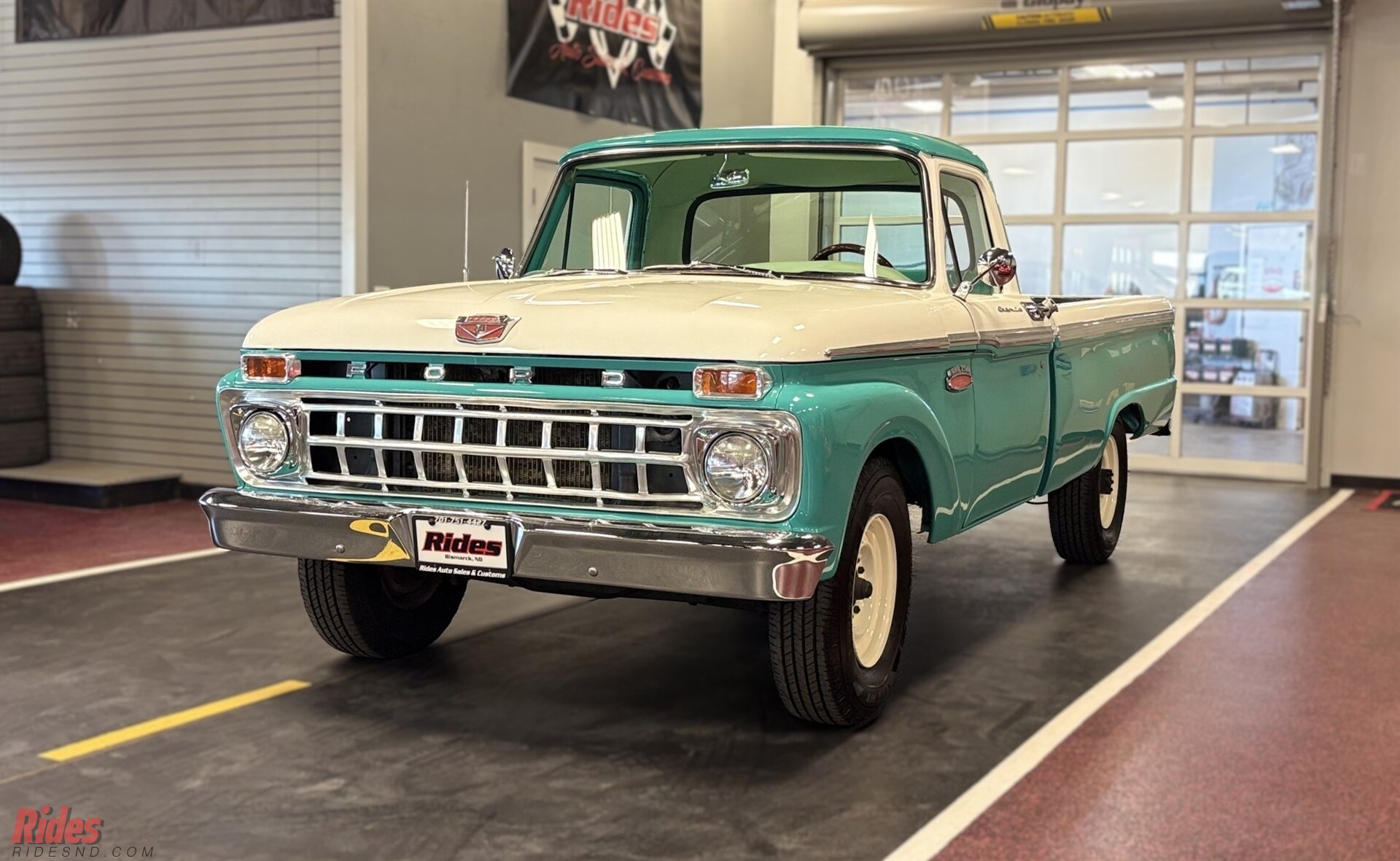
Three ideas run through the whole history. The first is the Camper Special. From the mid-1960s through the 1970s Ford sold a factory package aimed at slide-in campers: heavier rear springs, a higher-capacity cooling and charging system, dual mirrors, wiring for the camper and, on many trucks, a distinctive tool box in the bedside. Camper Specials were bought to work one month a year and garaged the rest, which is why they survive in disproportionate numbers and disproportionately good condition — a pattern the 1965 Camper Special in our pool illustrates. The second idea is the four-wheel-drive split. A two-wheel-drive F-250 is a tow and haul truck that rides on Ford's Twin I-Beam front suspension from 1965 onward; a four-wheel-drive F-250 is a different machine underneath, with a solid front axle on early trucks, a divorced transfer case on the tall 1973–77 trucks everyone calls Highboys, an independent Twin Traction Beam from 1980 to 1997, and a solid axle again on the Super Duty. Never price one against the other. The third idea is diesel. From 1983 the F-250 offered a diesel V8, first the indirect-injection 6.9 and 7.3, then from mid-1994 the direct-injection 7.3 Power Stroke — and the diesel trucks, particularly the Power Strokes, now anchor the top of the 1990s market in a way no one predicted when they were sold as work trucks.
These were working vehicles, and that defines the survivors. The mechanicals — the 300 six, the FE and 460 V8s, the IDI and Power Stroke diesels, the C6 automatic and the heavy manual gearboxes — are fundamentally tough and were designed to be rebuilt. What kills an F-250 is what killed it in service: rust in the cab and bed, a frame worn or cracked at its mounting points, a front end driven for a decade on worn bushings, and deferred maintenance once the truck became cheap. In our own photo checks of F-250 listings, rust was noted in 43 of the 76 trucks examined, and visible damage in 25 of the 76 — so assume the forensic examination this guide prescribes is necessary, and be pleased when a truck passes it.
The models
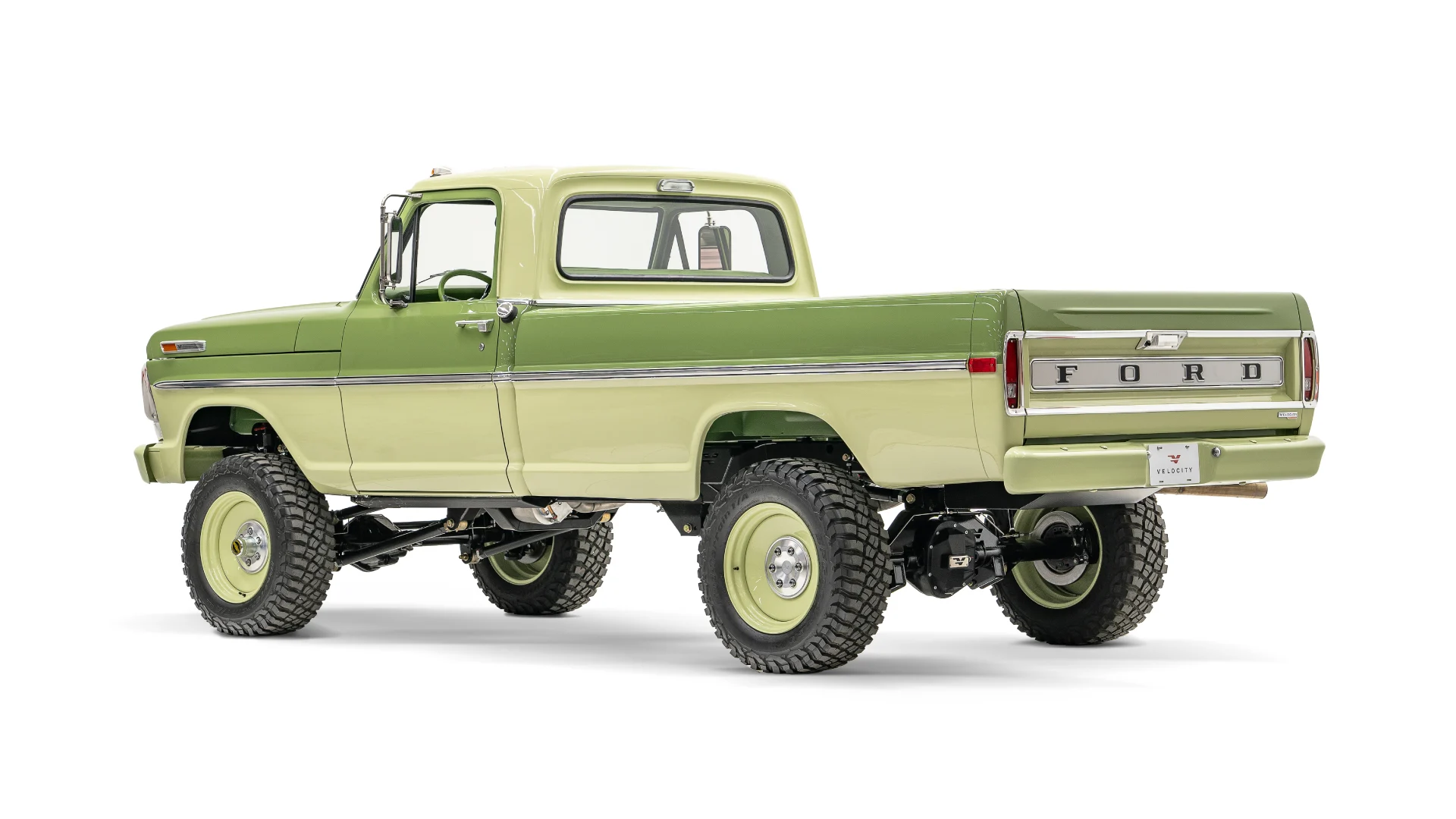
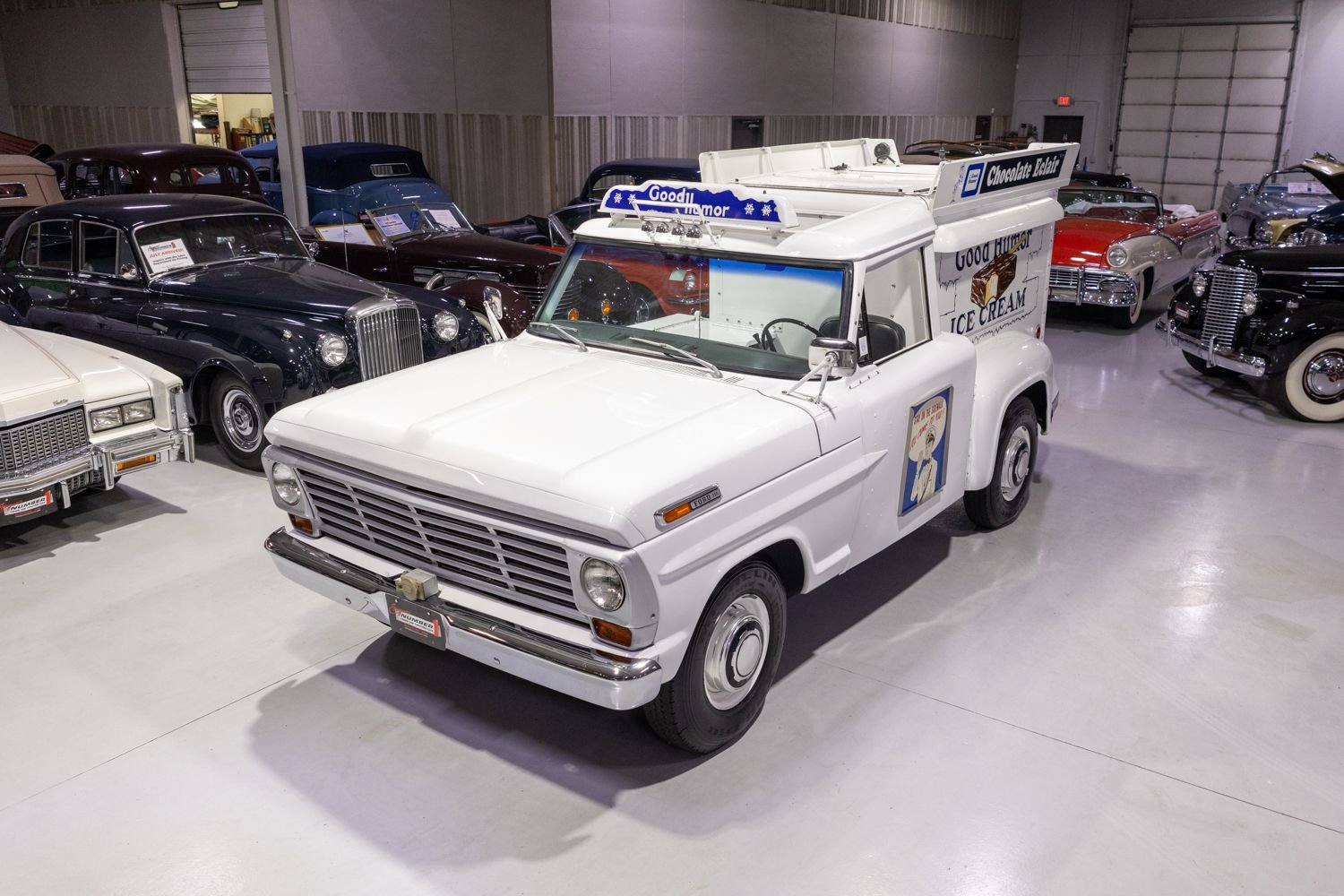
Every F-250 is a pickup (chassis-cab and special-body trucks exist — one truck in our pool is a 1969 Good Humor ice cream truck on an F-250 chassis — but the market is pickups). Within that, the choices that matter are generation, cab, bed, drive and engine, in that order. Cabs run from the regular cab through the SuperCab extended cab (from 1974) to the true four-door Crew Cab, offered in small numbers from the 1960s and increasingly common in the 1990s. Beds are the 6.5-foot short bed (Styleside/Flareside on early trucks) and the 8-foot long bed; most F-250s are long beds, and the long bed is what the payload ratings assume. Trim climbs from Custom through Ranger, Ranger XLT and Lariat on the older trucks, and from XL through XLT to XLT Lariat and later Lariat on the newer ones — trim changes the cabin, never the chassis.
| Model era | Years | Engine | Output | Built | Character |
|---|---|---|---|---|---|
| Early F-250 (second generation) | 1953–1956 | 223 six; 239/272 Y-block V8 | about 115–170 hp (gross) | F-Series totals only; no F-250 split published | The first F-250s; flathead only in 1953, Y-block after |
| Third generation | 1957–1960 | 223 six; 272/292 Y-block V8 | about 139–212 hp (gross) | F-Series totals only | First Styleside bed; the pre-Twin I-Beam truck |
| Fourth generation | 1961–1966 | 240/300 six; 352 FE V8 | about 150–208 hp (gross) | F-Series totals only | Twin I-Beam arrives 1965; Camper Special era begins |
| Fifth generation (Bumpside) | 1967–1972 | 240/300 six; 360/390 FE V8 | about 165–255 hp (gross) | F-Series totals only | The classic-market core; the pool's most common era |
| Sixth generation (Dentside) | 1973–1979 | 300 six; 360/390 FE, 351M/400, 460 V8 | about 115–245 hp (net) | F-Series totals only | Highboy 4x4s, SuperCab and Crew Cab spread |
| Seventh generation (Bullnose) | 1980–1986 | 300 six; 302/351 V8; 460; 6.9 IDI diesel | about 115–212 hp; diesel 170 hp | F-Series totals only | Lighter, squarer truck; first diesel F-250 in 1983 |
| Eighth/ninth generation HD (OBS) | 1987–1997 | 4.9 six; 5.8/7.5 V8; 7.3 IDI; 7.3 Power Stroke | about 150–245 hp; Power Stroke 210–215 hp | F-Series totals only | EFI throughout; the Power Stroke from mid-1994 |
| Light-duty F-250 (tenth generation) | 1997–1999 | 4.6/5.4 Triton V8 | about 235–260 hp | F-Series totals only | A heavy F-150 in all but name — see the warning below |
| Super Duty F-250 | 1999–2001 | 5.4 Triton; 6.8 V10; 7.3 Power Stroke | 260 hp; 310 hp; 235–275 hp | Super Duty built at Kentucky Truck Plant | A separate, heavier platform; solid-axle 4x4 returns |
(Outputs are period figures: gross ratings before 1972, net ratings after, which is why the numbers appear to fall across the 1972 line. Ford published F-Series production in aggregate, with no clean F-250 breakout for these years, so the Built column says so rather than inventing one.)
The early trucks (1953–66). Buy these as classics first and trucks second. The 1953–56 trucks introduced the name and are handsome, simple machines; the 1957–60 trucks added the Styleside bed; the 1961–66 trucks are the sweet spot of the early era, because from 1965 the two-wheel-drive trucks get Twin I-Beam front suspension and the engine range settles into the durable 240/300 sixes and the 352 FE. A warning on the 1961–63 trucks: Ford's integral unibody pickup construction applied to the F-100 and some F-250 Stylesides, and unibody trucks have their own rust and identity checks — confirm what you are looking at from the door plate, not the seller's description. The Camper Special package, sold from the mid-1960s, is the survivor spec to hunt in this era.
The Bumpside and Dentside trucks (1967–79). This is the heart of the classic F-250 market, and the era our pool reflects most strongly. The 1967–72 Bumpside (named for the character line along the flank) and the 1973–79 Dentside (named for its recessed line) share the same chassis thinking: Twin I-Beam two-wheel drive, solid-axle four-wheel drive, FE V8s giving way to the 351M/400 and the 460, and cabs growing to SuperCab (1974) and Crew Cab. The Highboy — the tall, divorced-transfer-case four-wheel-drive built to early 1977 — is a sub-market of its own, covered in the problem-areas section. A good Bumpside or Dentside is a usable, tow-capable classic; a rusty one is a parts truck at classic prices.
The 1980s trucks (1980–91). The 1980 redesign made the truck lighter and more aerodynamic and, in 1983, added the 6.9-litre indirect-injection diesel — the engine that created the diesel F-250. The 1987 facelift brought electronic fuel injection across the petrol range and the 7.3 IDI diesel. These trucks were bought to work and mostly used up, so condition spread is enormous; they are currently the cheapest way into a genuinely capable three-quarter-ton, and the market knows it least.
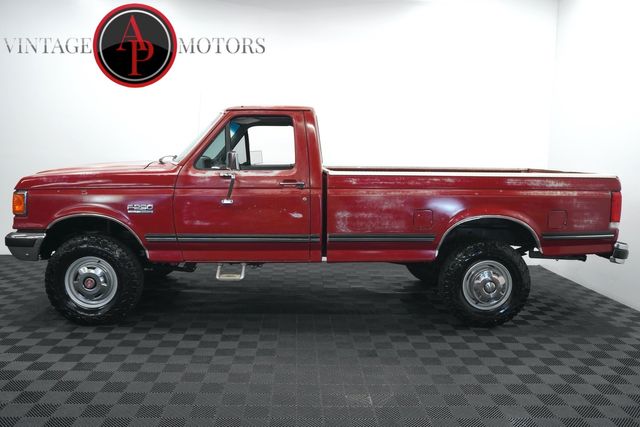
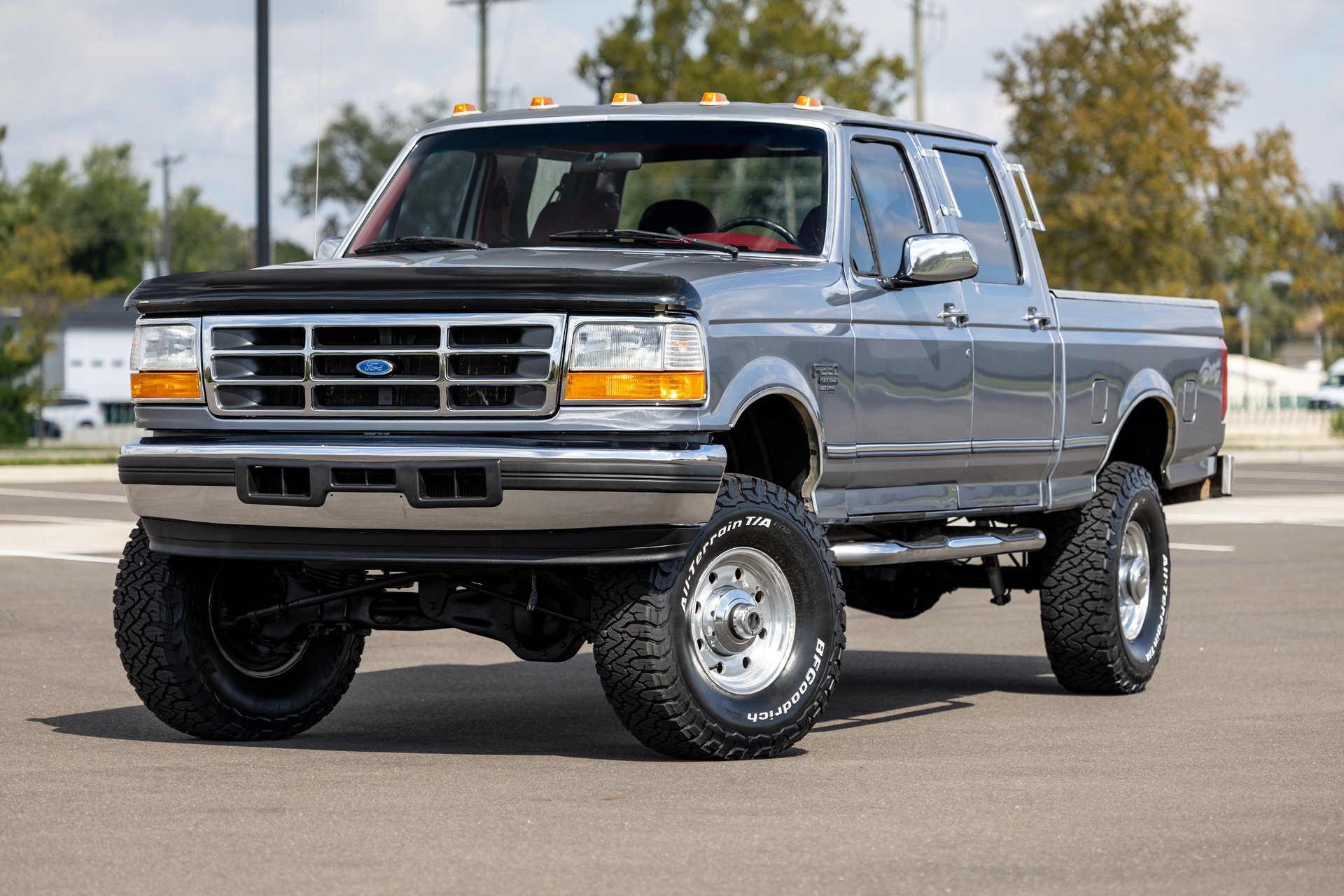
The OBS heavy-duty trucks (1992–97). The 1992 facelift on the same basic chassis produced the trucks now called OBS, and in mid-1994 the 7.3 Power Stroke direct-injection diesel replaced the IDI. A 1994 truck can be either engine — the single most important identity check in this whole guide, detailed in the engines section. For 1997 Ford split the badge: the heavy-duty F-250 continued on the old chassis (sold into 1998 in small numbers) while a new light-duty F-250 appeared on the rounded 1997 F-150 platform.
The light-duty trap (1997–99). The light-duty F-250 is an F-150 with heavier springs, a semi-floating axle and unique seven-lug wheels. It is a perfectly good truck, but it is not a three-quarter-ton in the traditional sense, shares almost nothing with the heavy-duty truck, and must never be priced as one. Seven wheel lugs instead of eight is the ten-second tell.
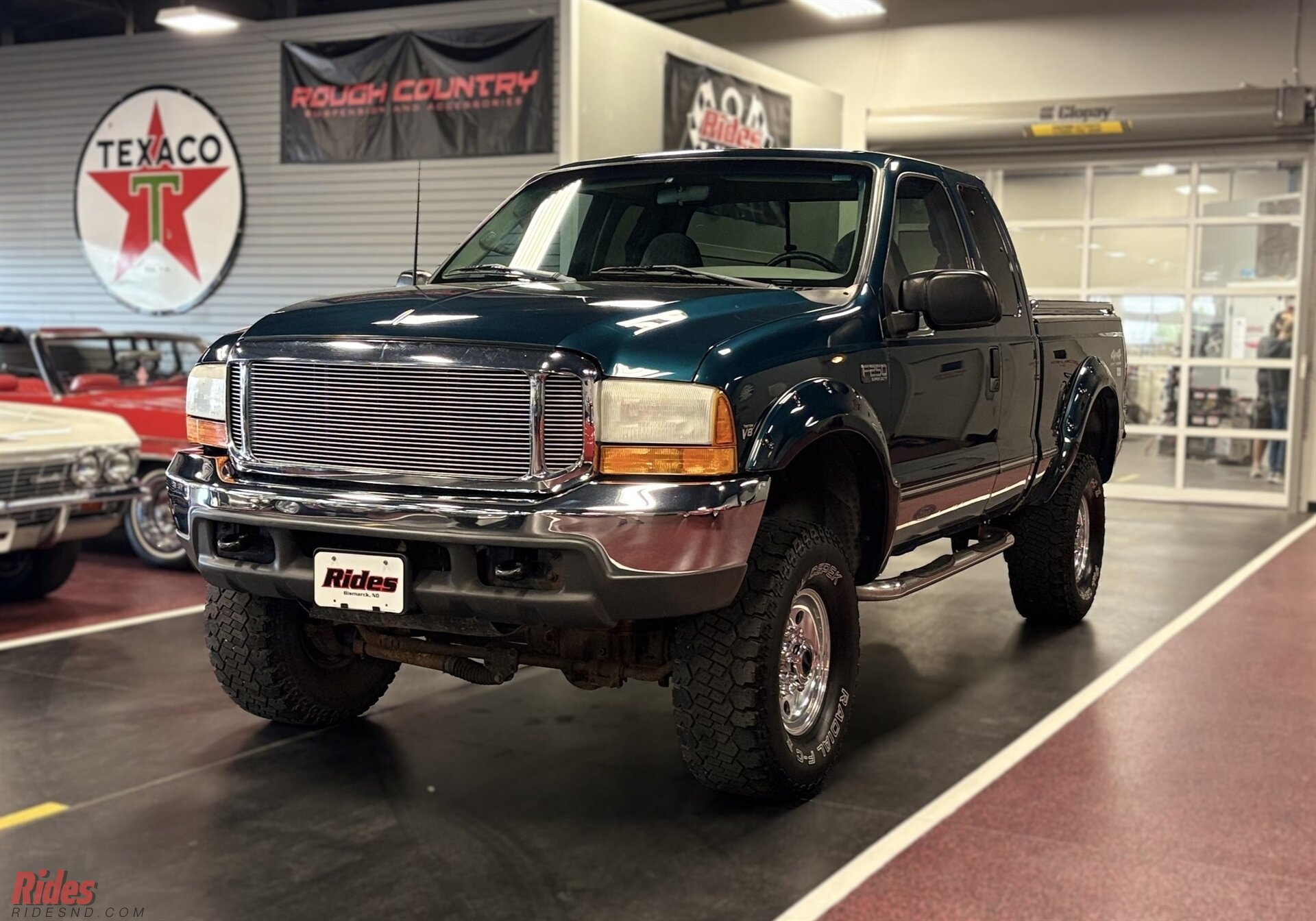
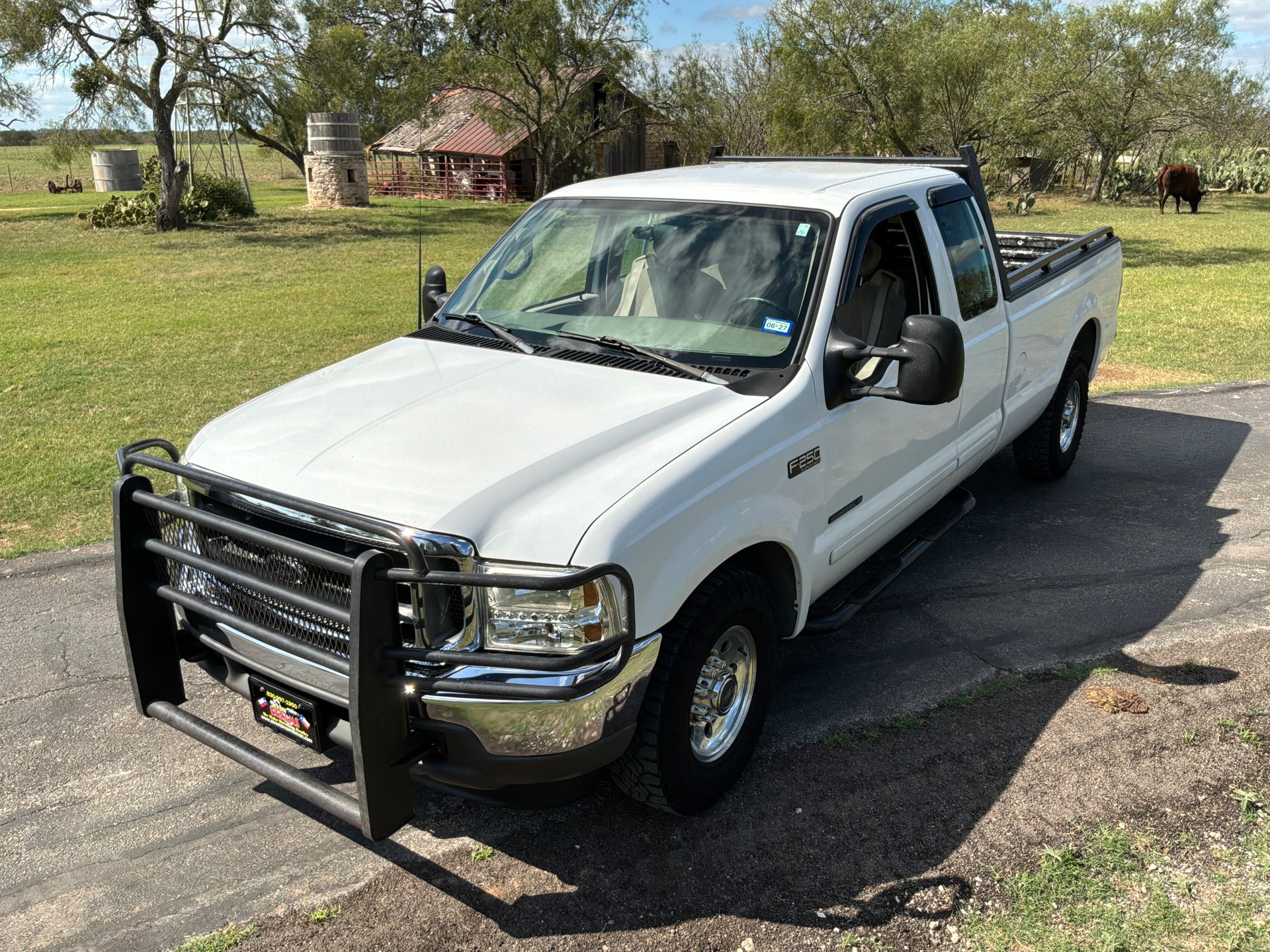
The Super Duty (1999–2001 in our pool). For 1999 Ford split Super Duty onto its own heavier platform, built in Kentucky, with its own styling, a solid front axle on four-wheel-drive trucks, the 5.4 Triton V8, a 6.8 V10 petrol option unique to the heavy trucks, and the 7.3 Power Stroke in rising states of tune. Early 1999 trucks (built before roughly March 1999, called Early 99 by owners) differ in turbo, injectors, suspension and badges from late 1999 trucks — a distinction that matters for parts and for value, and one sellers rarely volunteer.

Engines and gearboxes
The sixes: 223, 240 and the 300 (4.9)
The straight six is the F-250's founding engine and, in 300 cubic inch form, arguably its best. The early trucks use the 223 overhead-valve six; the 1965 redesign brought the 240 and its longer-stroke brother, the 300, and the 300 — renamed 4.9 litres when Ford went metric in the 1980s, and fuel-injected from 1987 — stayed in the range until 1996. It is a low-revving, seven-main-bearing engine with gear-driven timing (no chain to stretch), enormous low-speed torque for its size and a service life that routinely outlasts the truck around it. A healthy 300 starts easily, idles with a slow, even lope, pulls from walking pace in top gear and shows no smoke. Judge it on oil pressure, coolant condition and the state of its exhaust manifold, not on mileage.
The six's known faults are specific. The exhaust manifold cracks, typically at the centre ports, and on fuel-injected trucks the combined intake/exhaust assembly warps and leaks — listen for a tick that is loudest cold and quietens as the manifold expands, and budget accordingly: a manifold set and gaskets fitted runs roughly $500–1,100 depending on how many studs snap on removal, and snapped studs are the rule, not the exception. Carburetted sixes (a one-barrel Carter or Autolite on most trucks) suffer ethanol-fuel varnish and worn throttle shafts after long storage; a rebuild is cheap, roughly $250–500, and transforms a truck sellers describe as needing a tune-up. The fibre timing gear on early engines can shed teeth with age — the engine stops dead and no parts are damaged, but the diagnosis catches people out. On injected 4.9s, a failed MAP sensor or a perished vacuum line gives a rich, hunting idle that owners misdiagnose as a worn engine. Compression is the truth: a 300 with even compression across all six has years left, whatever the odometer says — and treat the odometer itself with suspicion, because five-digit odometers on pre-1990s trucks have usually been around at least once.
The petrol V8s: Y-block, FE, the 335 series, Windsor and the 460
The V8 story has four chapters, and identifying which chapter a truck belongs to is the first pricing skill. The 1954–60 trucks use the Y-block (239, 272, 292), an overhead-valve V8 with a deep-skirt block, solid lifters and a reputation for top-end oiling trouble: the oil passages to the rocker shafts sludge up, the rockers starve and tick, and the fix ranges from cleaning the passages to an external oiling kit. The FE family (352, 360, 390) powers the 1965–76 trucks and is the classic F-250 V8: a big, understressed iron engine, hydraulic lifters, and torque that suits a three-quarter-ton perfectly. The trap is identification. The 360 and 390 share the same block castings and external dimensions — the difference is crankshaft stroke (3.50 inches against 3.78) — so a casting number cannot tell you which engine a truck has, and a great many advertised 390s are 360s. The honest test is mechanical: remove a spark plug, bring the piston to top dead centre on a dowel through the plug hole, rotate to bottom dead centre and measure the travel. A seller who will not allow it has answered the question. FE exhaust manifold bolts snap as a way of life — the manifolds crack and the rear bolts seize — and a manifold and bolt job with the inevitable drilling runs roughly $600–1,400 a side at a shop, which is why headers appear on so many trucks. The 351M and 400 (the 335 series) replaced the FE in the late 1970s: adequate, emissions-strangled engines with a known appetite for timing chains and cracked exhaust manifolds, best bought cheap and judged on condition. The Windsor small-blocks (302, and the 351W that matters in an F-250) are the 1980s petrol mainstay — durable, well supported, and in injected form genuinely pleasant — while the 460 (7.5 litres, 385 series) is the heavyweight: offered from 1973, dropped for a few years in the early 1980s, then back to 1997. The 460 is simple, torquey and thirsty, with exhaust manifold bolts and cracked manifolds as its signature fault and a timing set and water pump as its standard recommissioning jobs. A 460 truck that runs cool, holds oil pressure and has quiet manifolds is a genuinely capable tow vehicle; expect fuel consumption in single figures when towing, and do not let a seller tell you otherwise.
The diesels: 6.9 IDI, 7.3 IDI and the 7.3 Power Stroke
Ford's first F-250 diesel, from 1983, was the 6.9-litre indirect-injection V8 built by International Harvester (later Navistar): a heavy, all-iron engine with a Stanadyne rotary injection pump, glow plugs, and no turbocharger, rated at 170 hp. The 7.3 IDI replaced it for 1988 — same architecture, larger bore — and a factory turbo version arrived for 1993–94. These are simple, tolerant engines that start on glow plugs, clatter loudly when cold (normal), and fail in knowable ways. The glow plug system is the first: the controller and plugs are service items, a truck that needs ether to start has a glow system fault (and ether itself damages these engines — walk away from a seller who demonstrates an ether start as a feature), and a set of plugs plus a controller is roughly $250–600 fitted. The injector return-line caps and O-rings perish and leak fuel and let air in, giving hard starts that mimic pump failure; the return-line kit costs under $100 in parts and an afternoon. The injection pump and injectors wear together around 100,000–150,000 miles, presenting as hard hot starts, smoke and lost power; a rebuilt pump and injector set fitted runs roughly $1,500–2,800. The 7.3 IDI carries one structural warning the 6.9 largely escapes: cylinder-wall cavitation. Vibration pits the outside of the cylinder liners where the coolant touches them, and neglected coolant — specifically, coolant without supplemental coolant additives (SCA) to Ford's specification — lets the pits perforate into the cylinder. The signs are coolant loss with no visible leak, white smoke and eventually coolant in the oil. Test strips for SCA are cheap; a perforated block is an engine. Ask for coolant service history on any 7.3 IDI and price silence as risk.
The 7.3 Power Stroke, from mid-1994, is a different engine sharing only the displacement: direct injection, turbocharged from the factory, with HEUI injection — hydraulically actuated injectors fired by high-pressure engine oil, controlled electronically. It made 210–215 hp in the OBS trucks and 235–275 hp in the Super Duty, with torque that transformed what an F-250 could tow. Its failure modes are electronic and specific. The cam position sensor (CPS) fails and the engine stalls or will not start, often with the tachometer dead while cranking — a cheap part (roughly $30–60) that every owner carries as a spare, and its presence in the glovebox is a good sign, not a bad one. The under-valve-cover harnesses (UVCH) chafe and burn at their connectors, giving a dead cylinder bank and a violent misfire; the harness set is roughly $150–350 in parts. The injector control pressure (ICP) sensor leaks oil into its connector and gives erratic running. Glow plug relays fail. The high-pressure oil pump (HPOP) and injector O-rings wear with age, presenting as long cranking when hot. None of this is fatal to the engine's value — a Power Stroke with documented injector, harness and sensor work is a known quantity — but a truck that cranks long, idles rough and has no paperwork is a diagnostic project, priced as one. The 1994 identity check bears repeating: a 1994 diesel can be a 7.3 IDI turbo or a 7.3 Power Stroke, engines with almost nothing in common. The Power Stroke says so on its badges and engine cover and carries a different engine code on the door plate and in the VIN than the IDI truck. Verify from the plate and the hardware, never from the advert.
The Super Duty petrol engines: 5.4 Triton and 6.8 V10
The 1999 Super Duty petrol range is modular: the 5.4-litre two-valve Triton V8 (260 hp) and the 6.8-litre V10 (310 hp), the V10 being effectively the 5.4 with two cylinders added and a balance shaft. Both are overhead-cam engines with chain-driven cams, coil-on-plug ignition on later builds, and one famous fault: spark plugs that eject from the cylinder head. The early two-valve heads carry only a few threads of plug engagement, and a plug that loosens can blow out, taking the threads with it and giving a sudden loud exhaust chug and a dead cylinder. The repair is a thread insert kit, roughly $400–800 per hole fitted, and the prevention is correct plug torque and plugs changed on schedule with the engine cold. Ask when the plugs were last done on any Triton or V10 truck; a truck with one insert already fitted is not a reject — it is a truck whose weak point has declared itself and been fixed — but a truck with a current chug is a negotiation, not a purchase. The V10 is otherwise an underrated engine: smoother than the 5.4, stronger for towing than its reputation suggests, and cheaper to buy than the diesel because the market only wants the diesel. Exhaust manifold studs break on both engines, as on the FE and 460 before them — listen for the cold tick.
Gearboxes and transfer cases
Four manual gearboxes do most of the work in this guide's span. The early trucks use three- and four-speed column and floor shifts, including the heavy T-18 and T-19 four-speeds with a non-synchromesh, very low first gear (the granny gear) — superb for launching a loaded truck, and judged on second-gear synchromesh wear and whine in third. The NP435 four-speed is the other classic truck box, similarly tough. The 1980s and OBS trucks use the T-19, then the ZF five-speed (S5-42, and the stronger S5-47 behind later diesels): an all-synchromesh five-speed with an overdrive top, the gearbox most diesel buyers want, with two known traits — the dual-mass flywheel fitted to diesel trucks fails and rattles, and the standard fix is a single-mass flywheel and clutch conversion at roughly $900–1,600 fitted; and the ZF's rollover noise at idle in neutral is a characteristic, not a fault. The Super Duty diesel manual is the ZF six-speed, stronger again. The light-duty M5OD five-speed belongs to F-150s and the light-duty F-250 only — its presence tells you which truck you are looking at. Automatics are simpler to judge: the C6 three-speed is one of the strongest automatics ever fitted to a pickup, rebuilds at roughly $1,800–3,200, and fails by losing reverse or flaring on the 2–3 shift; the E4OD four-speed overdrive that replaced it (1989 onward, becoming the 4R100 in the Super Duty) is electronically controlled, sensitive to overheating and old fluid, and a $2,500–4,500 rebuild proposition — a transmission temperature gauge and an auxiliary cooler in a truck's history are strong evidence of a caring owner. Transfer cases run from the gear-driven NP205 (including the divorced unit in the Highboy) through the NP208 and Borg Warner 1345/1356 chain cases to the Super Duty's NV271/273; check engagement on a loose surface, listen for chain slap in the chain cases, and check the divorced NP205's intermediate shaft and mounts on a Highboy with particular care, because its jackshaft and extra mounts are wear items no other F-250 has.
Problem areas
Everything in this section is drawn from how these trucks actually age. In our photo examination of F-250 listings we noted rust in 43 of the 76 trucks checked and visible damage in 25 of the 76 — figures that match the trucks' working lives. Almost everything mechanical on an F-250 can be rebuilt with money and patience; structural rust, a cracked frame and a worn-out diesel injection system are the three bills that reliably turn a bargain into a write-off, and they are the three this section teaches you to find first.
Rust: the map
Rust on an F-250 follows water, road salt and trapped mud, in that order, and the map changes less across fifty years than you would expect.
Cab corners, floor pans and rocker panels. The single most important check on any pre-Super Duty truck. The cab corners behind the doors trap mud thrown up by the rear wheels and rot from the inside out; the floor pans collect water from perished windshield seals and cowl leaks and rot under the mats where nobody looks. Press hard along the cab corners, lift every mat and prod the floor seams. Patch panels exist for all of it, and a corner or floor section fitted and painted runs roughly $600–1,500 a side — but cab rust rarely travels alone, so treat the first perforation as a survey result, not a shopping list.
The cowl, drip rails and windshield surround. The cowl vent and the seams at the base of the windshield leak into the cab and feed the floor rust above; the drip rails over the doors hold seam sealer that cracks and lets the rail rot under its own paint. Bubbling along a drip rail or staining down the A-pillar is a leak in progress, and the repair is cutting and welding in a place that shows — price it as bodywork, not as a patch.
The bed. Bed floors rust over the crossmembers, wheel arches bubble from the inside where the inner and outer skins trap mud, and the front bed panel rusts where debris collects against the cab. On Camper Special trucks, check the bedside tool box: its floor rusts out invisibly and its presence in a listing photograph is a specification clue, not a condition report. A bed floor replacement is panel work at roughly $1,200–2,800 fitted and painted; arch repair sections are cheaper, but a bed rusty in floor, arches and front panel at once is usually a bed swap or a walk-away.
Core support and inner fenders. The radiator core support rusts at its lower mounts, worst on diesel trucks and salt-belt trucks, and a collapsed support drops the whole front clip out of alignment — read uneven panel gaps at the front of a truck as a core support question before you read them as accident history. Inner fenders and the battery tray area rot from acid and road spray. A core support replacement is roughly $800–1,800 fitted, and it is fiddly, rusty-bolt work rather than skilled work.
Frame and hangers. The frame itself is strong, but check the rear spring hangers and shackles (they rust through and let the spring eye drop), the frame rails behind the rear wheels on salt-belt trucks, the crossmembers over the fuel tanks, and — on 1980s and 1990s trucks — the radius arm brackets and Twin I-Beam pivot brackets, which are riveted on and rust at the rivets. A perforated hanger is a bolt-on repair at roughly $300–700 a side fitted; a perforated frame rail is fabrication, priced per truck, and usually ends the negotiation.

Front suspension, steering and axles
The two-wheel-drive trucks from 1965 to 1997 ride on Twin I-Beam: two long beams, one per wheel, pivoting from the opposite side of the frame, with coil springs on F-250s and kingpins on early trucks giving way to ball joints. The design is immensely strong and its wear pattern is diagnostic. Worn radius arm bushings (the arms that locate the beams fore and aft) give a clunk on braking and steering wander; worn pivot bushings give camber change and inner tyre wear; worn kingpins or ball joints give play you can feel rocking the wheel. None of it is expensive in parts — a full front-end bushing and joint refresh runs roughly $800–1,800 fitted with an alignment — but an alignment on a Twin I-Beam truck requires bending the beams to correct camber, which fewer and fewer shops will do: ask locally before you buy, not after. Steering boxes (Ford's own and the Saginaw units) wear at centre and leak at the sector shaft; a rebuilt box is roughly $350–700 exchanged, and play must be judged at the wheel with the engine running, because a dry, unassisted check overstates it.
Four-wheel-drive trucks divide by era. The early solid-axle trucks use Dana 44 front axles (closed-knuckle on the earliest, open-knuckle later) — check kingpin or ball joint play, hub engagement and swivel leaks. The Highboy (1973 to early 1977) is its own case: a divorced NP205 transfer case mounted separately from the gearbox, a tall factory ride height, and power-assisted steering by a ram system that leaks and wanders when worn. A Highboy's height is factory, not a lift kit — verify the divorced case before paying the Highboy premium, because a standard truck on lift blocks is worth standard money. From 1980 to 1997 the F-250 four-wheel drive uses Twin Traction Beam — a Dana 44 or Dana 50 centre section in a pivoting beam housing. It rides better than a solid axle and wears its pivot bushings and ball joints the same way; the Dana 50 is the stronger unit. The Super Duty returns to a solid Dana 50 (later 60) axle on leaf springs: check unit bearings (a sealed hub assembly at roughly $250–450 a side fitted), ball joints, and the vacuum-operated hub and seal system on trucks with shift-on-the-fly — a failed vacuum seal gives you a truck that says it is in four-wheel drive and is not. At the rear, axles run from the Dana 60 and 70 through the Ford/Sterling 10.25-inch: listen for pinion bearing whine, check for a leaking pinion seal, and on Sterling axles check the tone ring and speed sensor, because on 1987-and-later trucks the speedometer and rear anti-lock brakes both read from the rear axle — a dead speedometer on an OBS truck is an axle sensor until proven otherwise.
Drivetrain, brakes and fuel system
The dual fuel tank system fitted to most 1970s–90s trucks deserves its own paragraph. Two tanks, a selector valve on the frame rail (mechanical on early trucks, electric later) and, on injected trucks, pumps in each tank. The valves fail and cross-feed — one tank fills the other and overflows it — the senders fail, and the rear tank rusts on its top face where it meets the skid plate and straps. On injected trucks a weak in-tank pump gives a truck that runs on one tank and starves on the other, which is a gift of a diagnostic: switch tanks on the test drive and see what changes. A tank, pump and sender refresh for one tank runs roughly $500–1,100 fitted. Single-tank Super Duty trucks escape all of this and substitute a fuel bowl, lift pump (mechanical on OBS Power Strokes, electric on Super Duty) and filter discipline: a Power Stroke with a neglected fuel filter is a Power Stroke being slowly starved, and the filter history is a fair proxy for the whole service history.
Brakes divide by era too. Early trucks run drums at the rear and, on the earliest F-250s, drums all round; front discs spread through the 1970s and rear anti-lock (RABS) arrived in 1987. Judge the system, not the pedal: seized rear wheel cylinders, perished hoses, rusted hard lines along the frame rail (a salt-belt certainty — budget roughly $600–1,400 for a full hard-line set fitted) and, on diesel trucks, the vacuum pump. Diesels make no manifold vacuum, so an engine-driven vacuum pump (IDI) or the pump and hydroboost arrangement (Power Stroke) runs the brake booster: a hard pedal is a pump diagnosis before it is a booster diagnosis, and a vacuum pump is roughly $200–450 fitted. The parking brake cables seize on every generation and are the cheapest neglected item on the truck — and the one an inspection station will fail you for.
Frames crack in known places when trucks have been worked hard: at the steering box mounting on hard-used later trucks, at the rear shock mounts, and around the gooseneck or fifth-wheel mounting holes drilled in the bed and frame of trucks that have towed heavy all their lives. A bed full of mounting holes and a frame drilled for a gooseneck is not a defect — it is a biography. Read it, and check the rear springs for the sag and the broken leaf that biography usually includes: a replacement rear spring pair fitted runs roughly $600–1,200.
Cab, interior and electrics
Truck interiors wear honestly, and the bill depends on era. Bench seats collapse on the driver's side; the foam and spring frame are rebuildable (roughly $400–900 for a bench rebuilt and re-covered in vinyl, more for correct cloth or leather on a Lariat). Headliners sag, door cards warp at the bottom where the door drains block — clear the drain holes on any truck you buy — and OBS trucks crack their dashboards under sun while Super Duty trucks tear the driver's entry bolster. None of this is structural, all of it is visible, and a genuinely tidy original interior on a work truck is the rarest condition signal there is: it means the truck was owned, not just used.
Electrics fail at grounds, switches and the ignition switch itself. The column-mounted ignition switch on 1970s–90s trucks separates and gives intermittent everything; window regulators and motors wear on the driver's door first; the blower motor and its resistor pack are service items on every generation. On EEC-IV injected trucks, add corroded engine grounds and a tired TFI ignition module (on petrol engines) to the intermittent-cutting-out differential before condemning a fuel pump. On Super Duty trucks, check every function of the generic electronic module era — wipers, windows, dome light delays — because water leaks at the windshield fuse box area give electrical symptoms that look like five separate faults and are one leak. Air conditioning, where fitted, is R12 on pre-1994 trucks: a working R12 system is a bonus, a converted R134a system is normal, and a disconnected compressor is a system rebuild at roughly $800–1,800, not a re-gas.

How to inspect one
Allow at least an hour, bring a torch, a magnet wrapped in cloth, a tyre tread gauge and — for a diesel — a cold engine. Insist on a cold start on any truck, and doubly so on a Power Stroke or IDI: a warm diesel hides glow plug, compression and harness faults that a cold one announces immediately. If the truck passes you, pay for a lift inspection before money changes hands; on a three-quarter-ton the underside is where the money is.
- Start with the paperwork and the plate. Match the VIN on the title to the plate on the driver's door (the warranty plate on older trucks, the certification label on later ones) and to the frame stamping where accessible. Decode the plate's engine, transmission and axle codes and compare them with the truck in front of you: the plate settles the 360-versus-390 question's starting point, the IDI-versus-Power Stroke question on a 1994 truck, and the heavy-duty versus light-duty question on a 1997 truck. Count the wheel lugs while you are there — eight is a heavy truck, seven is the light-duty truck.
- Cold start. A petrol six or V8 should start on the choke or injection without drama and settle without blue smoke. An IDI should start after one glow cycle, clatter and smooth out. A Power Stroke should start after its wait-to-start light, idle evenly and show a live tachometer while cranking — a dead tach on a cranking Power Stroke is the cam position sensor until proven otherwise. Blue smoke that clears is valve seals; smoke that stays is rings or, on a diesel, injector and compression questions.
- The rust circuit. Work the map from the problem-areas section in order: cab corners, floor pans under the mats, rocker panels, drip rails, cowl seams, bed floor over the crossmembers, wheel arches, core support mounts, rear spring hangers. Run the magnet over the cab corners and arches — filler announces itself. Perforation in cab corners, floors or hangers is welding priced into the offer; perforation in the frame rail ends the inspection.
- Under the truck. Torch along both frame rails, the crossmembers, the tank straps and the brake hard lines. Check the rear spring packs for a broken leaf and sag, the hangers and shackles for rust, and the bed and frame for gooseneck drilling and the biography it tells. On a Highboy, spend extra minutes on the divorced transfer case, its mounts and its intermediate shaft — no other F-250 has them, and no other F-250's premium depends on them.
- Front end. Rock each front wheel top-to-bottom and side-to-side for kingpin, ball joint and bearing play. On a Twin I-Beam or Twin Traction Beam truck, look at the radius arm and pivot bushings for cracking and offset, and read the front tyres: inner-edge wear is the beams telling you their bushings and camber story. Check the steering box for sector-shaft play and leaks, engine running.
- Engine bay, petrol. Check the exhaust manifolds first — cracks, missing bolts, the cold-start tick test on the drive. Smell the oil for fuel, look at the coolant for oil, and on an FE truck remember that no casting number settles 360 against 390: the dowel stroke test through a plug hole does. On a six, even compression across all six cylinders outweighs any odometer reading.
- Engine bay, diesel. On an IDI, ask for the coolant additive history and look for coolant loss evidence — the cavitation question on a 7.3 IDI is answered by paperwork or not at all. Check the return lines for wetness and the glow system by the cold start you already did. On a Power Stroke, check the ICP sensor connector for oil, the valley of the engine for oil and fuel leaks, the fuel filter's apparent age, and ask directly about injectors, under-cover harnesses and the cam sensor — and whether a spare sensor is in the glovebox.
- Tanks and fuel. On a dual-tank truck, run the engine on each tank in turn and watch the gauge behaviour: cross-filling, a dead sender or starvation on one tank localises the fault to that tank's pump, sender or the selector valve, exactly as the problem-areas section describes. Smell for fuel at the rear tank's top face and straps.
- The test drive. Twenty minutes minimum, including a highway stretch and a rough surface. A C6 should shift firmly; an E4OD or 4R100 should shift without flare or shudder, and its fluid should be red, not brown. A manual should take second gear cleanly cold — second-gear synchromesh goes first on the T-18, T-19 and ZF boxes alike. Brake hard from speed: the truck should stop straight, and a hard pedal on a diesel is the vacuum or hydroboost question, not a pad question. Engage four-wheel drive on a loose surface and confirm the front axle actually drives — on a Super Duty, do not trust the dash light alone.
- Heat and electrics. Let it idle hot. Watch temperature stability (a 460 or a diesel that creeps hot at idle has a fan clutch, radiator or water pump conversation coming), oil pressure behaviour, and charging. Work every electrical item: windows, blower on all speeds, wipers, washers, lights, horn, gauges — and on an OBS truck confirm the speedometer reads, because it reads from the rear axle sensor and its silence is a sensor, a tone ring or a wiring fault, not a cable.
- Stance and load. Stand back and read the truck level: a sagging rear is springs or hangers, a nose-down Twin I-Beam truck is pivot bushings and springs, a Highboy should sit tall and even because tall is factory. Look down each flank for ripples and check the bed-to-cab alignment — a cab and bed that no longer line up are telling you about mounts, core support or frame, in that order.
- Interior last. Sit in the driver's seat and feel for the collapsed side of the bench or bucket; check the floor under the mats once more now the truck is warm and any cowl leak has had its chance. A sound, honest interior on a work truck is the hardest thing to recreate and the best evidence of an owned rather than used-up truck — weight it heavily, then decide.
Values
The build beneath this guide carries the current listings and recorded sales for the F-250, refreshed at every build, and this section teaches you how to read that market rather than repeating its figures — because the F-250 market is really five markets wearing one badge, and an average across them means nothing.
The first market is the early classic truck, 1953 to 1966, where value follows the same rules as any 1950s and 1960s classic: originality, body condition and specification, with Camper Specials and well-documented survivors at the top and modified or rusty trucks falling away steeply. The second is the Bumpside and Dentside market, the deepest classic segment, where the spread between a project and a finished truck is wide but the ladder between them is climbable — specification matters (four-wheel drive, Crew Cab and Highboy trucks carry real premiums, and a verified 390 outearns the 360 it is so often confused with), and condition matters more. The third market is the 1980s trough: capable trucks, thin demand, and the gentlest prices in the whole span relative to what the truck can do — the value in this market is bought, not sold, and it rewards the buyer who plans to keep and use the truck. The fourth market is the OBS diesel market, and it behaves differently from everything above it: the 7.3 Power Stroke, and above all the 1994-and-a-half to 1997 Power Stroke in a crew cab or extended cab four-wheel drive, carries a premium driven by working demand as much as collector demand, because the truck is still bought to tow. In that market, documentation is value — injector history, transmission history and coolant and service records move a truck between price bands more surely than paint does — and a manual-gearbox diesel carries its own premium because so few were built relative to demand. The fifth market is the early Super Duty, where the 7.3 Power Stroke again anchors the top, the V10 sits as the thinking buyer's discount for nearly the same capability, and the 5.4 prices as the lightest-duty of the three.
Across all five, three reading rules hold. First, asking and achieved prices diverge most where sellers price a badge instead of a specification: the light-duty truck priced as a heavy-duty, the 360 priced as a 390, the standard truck priced as a Highboy. The identity checks in this guide exist to close exactly those gaps, and a seller's reaction to them is itself market information. Second, the project-to-driver gap is dominated by three bills — structural welding, diesel injection work and automatic gearbox rebuilds — and a truck needing two of the three is a project at any price that pretends otherwise. Third, rust-belt and sun-belt examples of the same truck are effectively different goods: a dry-climate truck with tired mechanics is almost always the better buy than a shiny salt-belt truck, because everything mechanical on an F-250 is rebuildable at predictable cost and a rotted cab is not.
Parts and ownership
The F-250 is one of the best-supported classic trucks you can own, for a simple reason: Ford built F-Series trucks in enormous numbers, the mechanicals were shared across decades, and the working-truck aftermarket never stopped supplying them. The division of the parts world follows the generations.
Easy: service items for every engine in this guide, brake components, suspension bushings and joints, kingpin kits, steering boxes on exchange, C6 and ZF rebuild parts, clutch kits including single-mass conversions, fuel tanks, senders and selector valves, glass, weatherstrips and the common rust repair panels — cab corners, floor sections, bed floors and arches — for the 1967–97 trucks. Order today, fit this weekend, at prices close to modern-truck money.
Harder and dearer: IDI injection pumps and quality injector sets (rebuild lead times, not rarity, are the issue), Power Stroke injectors and high-pressure oil components, E4OD and 4R100 rebuilds done properly (a cheap rebuild is the dearest kind), Highboy-specific steering ram and divorced-case parts, unibody-era body panels, Y-block engine internals, correct trim and badges for the 1960s trucks, and crack-free OBS dashboards. A quality repaint on a long-bed truck starts where a car's repaint starts and climbs with the panel area — which is why the mantra of this guide is to buy the body and the frame, and fix the mechanics.
Running costs. Budget the first year honestly. Catching up deferred maintenance on a running truck — fluids, belts, hoses, brake hydraulics, tyres aged out rather than worn out, and the front-end wear the inspection found — runs roughly $1,500–4,000 before you improve anything. Recommissioning a truck that has sat for years runs $3,500–7,500 at a shop: the fuel system cleaned end to end (modern ethanol fuel attacks old rubber and leaves varnish in tanks and carburettors), every brake component inspected, the cooling system rebuilt as a system, and all seals assessed. Diesels add filter discipline and coolant additive testing on the IDI; Power Strokes add the sensor and harness items as rolling maintenance rather than repairs. Fuel consumption is what it is — a 460 or a V10 working hard uses fuel in the high single figures per gallon, a 300 six or a diesel returns meaningfully better. A sorted F-250 is a realistic working classic: it can tow, haul and commute while it holds value, which is more than most classics can claim.
Which one to buy
- The all-rounder: 1995–97 OBS F-250 HD, 7.3 Power Stroke, automatic or ZF five-speed. The strongest blend of classic status, towing ability, parts support and documented market in the whole span — buy the service history as much as the truck.
- The classic buy: 1967–72 Bumpside, 360 or verified 390, Camper Special if you can find one. The best-looking, best-supported early truck, usable every day, with the survivor specification that history keeps rewarding.
- The value buy: 1980–86 Bullnose with the 300 six or a 460. The capability-per-money peak of the entire range. A sorted 300 six truck will outlive its owner; a 460 truck will out-tow almost anything in this guide.
- The four-wheel-drive buy: a genuine Highboy, 1973 to early 1977. Verified divorced transfer case, verified height, verified premium — and never pay the premium for a lifted standard truck.
- The working buy: 1999–2001 Super Duty with the 6.8 V10. The diesel's capability at the petrol discount, with one spark-plug question to ask and manifold studs to listen for. If you must have the diesel, the same years with the 7.3 Power Stroke are the strongest trucks here.
- The one to avoid at the price: the 1997–99 light-duty F-250 priced as a heavy-duty. Seven lugs, F-150 platform, decent truck, wrong price whenever the badge does the talking.
And the rule that overrides all of the above: buy the least rusty, straightest-framed truck you can find, in the specification you have verified from the plate. Engines, gearboxes, injection pumps and interiors are all fixable at prices you can plan for. A rotten cab and a cracked frame cost more to put right than the finished truck will be worth — on a truck built to work for fifty years, the frame and the cab are the truck.