
Ford F-150 Short Bed buyer's guide
Ford F-150 Short Bed -- the model's own buyer's guide: variants, values and what to check.
Years listed: 1954-2001 · Series: F-Series
Overview and history
The Ford F-150 is not one truck. It is a badge that has sat, since 1975, on the volume half-ton pickup in the best-selling vehicle line in America — which means that when you go shopping for a classic F-150 you are really shopping across four distinct generations of truck, built to different rules, with different engines, different rust habits and different ideas about what a pickup is for. This guide covers the classic-era trucks that fill our listings: the sixth-generation trucks of 1975–79 that launched the badge, the seventh-generation trucks of 1980–86, the eighth-generation trucks of 1987–91, the ninth-generation trucks of 1992–96, and the tenth-generation trucks of 1997–2004 that closed the era, including the supercharged SVT Lightning. Learn to tell those generations apart at a glance and most of the buying decisions in this guide make themselves.
Start with the name, because it catches buyers out. Ford's half-ton was the F-100 from 1953 to 1983. The F-150 arrived for 1975, slotted between the F-100 and the F-250, with a slightly higher gross vehicle weight rating — and that rating was the point. Federal emissions rules at the time required catalytic converters and unleaded fuel on lighter trucks first; a half-ton rated just over the threshold could keep running simpler emissions equipment and leaded fuel a while longer. Ford sold the two badges side by side for nine years, the F-150 steadily took the volume, and when the F-100 was dropped after 1983 the F-150 simply became the half-ton. The practical consequence for you is that listings filed under F-150 routinely include earlier F-100s — our own pool reaches back to trucks of the 1950s and 1960s wearing the F-150 label for search purposes — and the badge on a 1960s or early-1970s truck tells you nothing. Judge those trucks as F-100s of their own generation, check the VIN plate and the title rather than the listing headline, and do not pay an F-150 premium for a name the truck never carried from the factory.
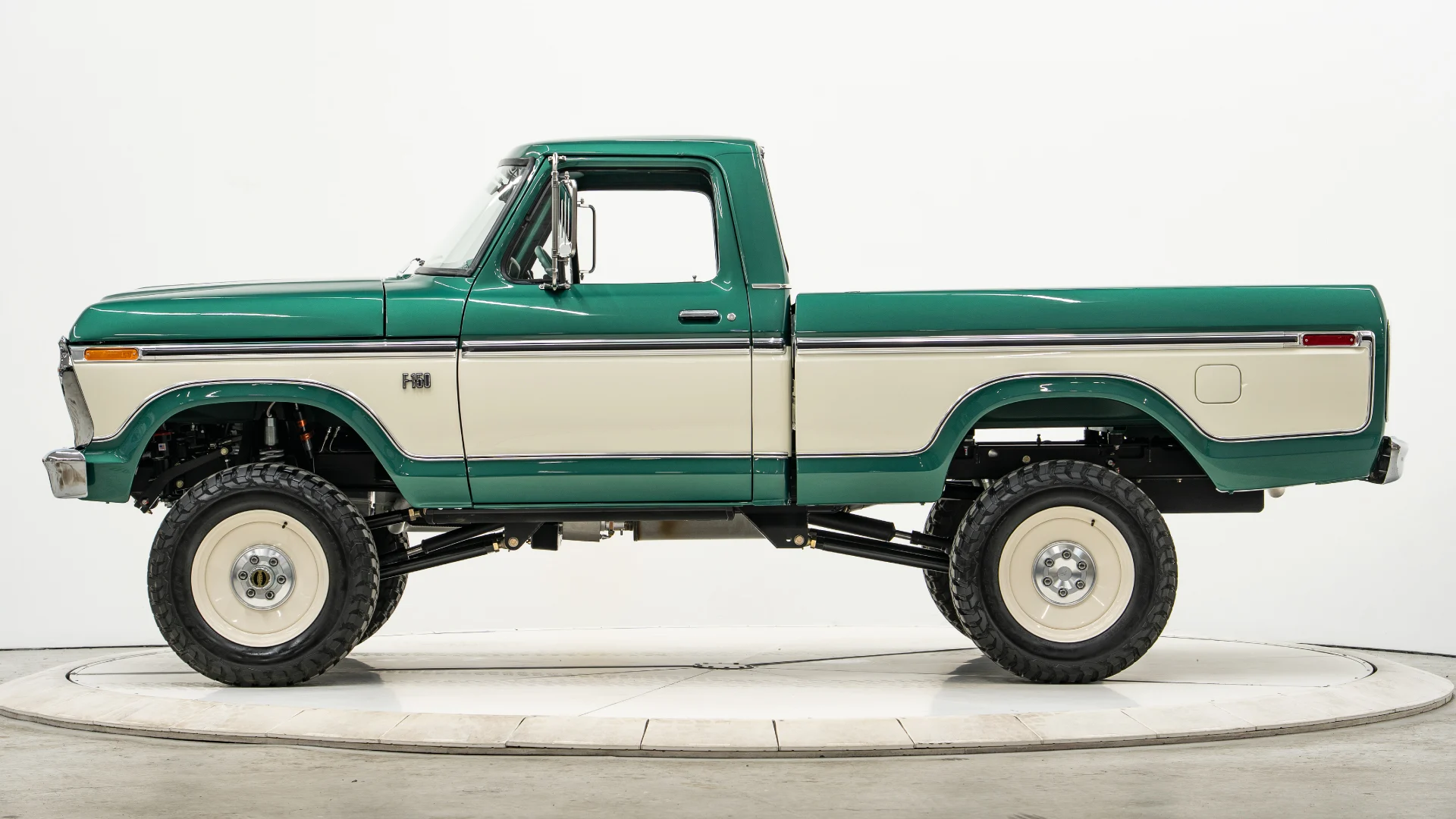
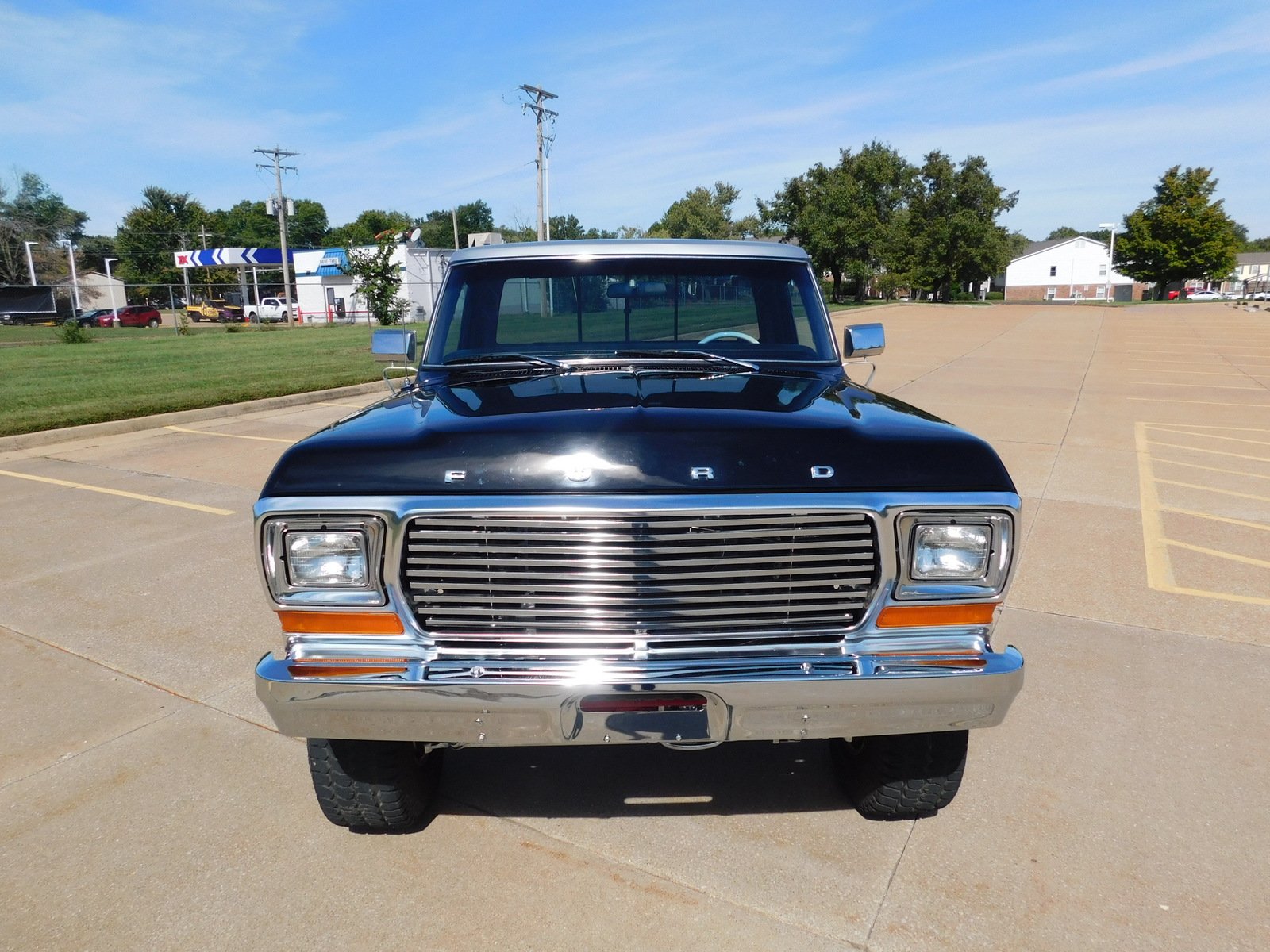
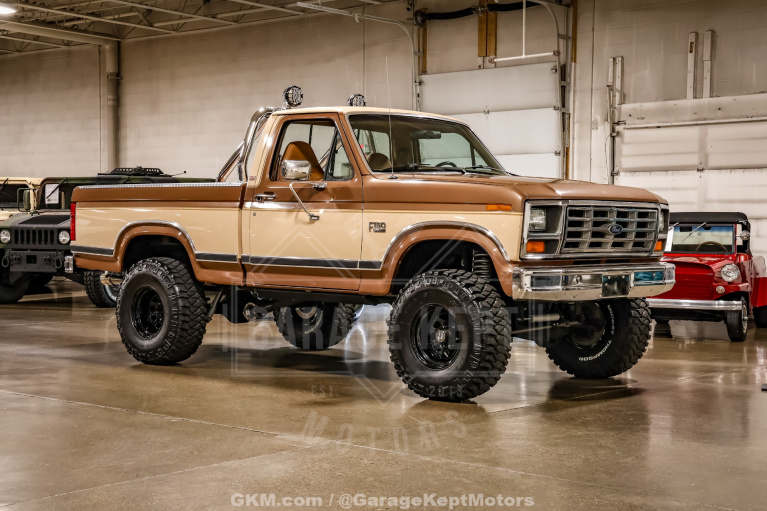
The generations in the classic pool break down like this. The sixth-generation F-Series of 1973–79 — the "Dentside," named for the concave character line pressed into its flanks — is the truck that made the F-150: square, upright, all steel, with trim that climbed from work-truck Custom through Ranger to Ranger XLT and, from 1978, the plush Ranger Lariat. The seventh generation of 1980–86 — the "Bullnose," for its sloped, more aerodynamic front — was lighter, more fuel-conscious after the second fuel crisis, and the last of the carburettors. The eighth generation of 1987–91 — the "Bricknose," flatter and more angular again — brought electronic fuel injection across the range and the first genuinely modern cab. The ninth generation of 1992–96 — the last of the straight-edged trucks, often called the OBS, for Old Body Style — smoothed the same basic architecture once more, added a driver's airbag for 1994, and produced the first SVT Lightning. The tenth generation of 1997–2004 broke cleanly with all of it: rounded, car-like styling, overhead-cam Triton V8s, a coil-spring front end on two-wheel-drive trucks, and a second Lightning that was a genuine performance vehicle. Our listings mirror that arc: the pool clusters heavily in 1977–79 and again in 1985–96, with a thinner tail of 1997–2004 trucks and the occasional Lightning at the top.
What unites all of them is the formula underneath: a separate steel ladder frame, a live rear axle on leaf springs, a Styleside or Flareside bed, rear-wheel drive or part-time four-wheel drive, and engines chosen for torque and longevity rather than revs. These were working tools bought by the million, used hard, maintained unevenly and parked outside. That history defines the market exactly as it does for any working classic: the mechanicals are fundamentally tough and almost everything mechanical is fixable at sane money, so the difference between a good F-150 and a money pit is rust, accident damage and deferred maintenance — in that order. In the 43 trucks in our pool whose seller photo sets we have examined in detail, rust was mentioned in 19 and visible damage in 18, which is a fair summary of what you will find in the field: nearly half the trucks you look at will be carrying body problems the headline photos do not lead with.
One more orientation point before the detail. An F-150 is specified by four choices layered over the generation: cab, bed, drive and trim. Every combination exists, values and usability swing widely between them, and sellers describe them loosely. The rest of this guide teaches you to decode what is actually in front of you.
The models
Every classic F-150 is a body-on-frame half-ton pickup, but the generations differ enough that the table below is best read as five trucks sharing a name. Outputs are period net figures for US-market trucks and vary by year and emissions tune; production of mainstream F-150s ran to hundreds of thousands a year within an F-Series line that topped a million in its best years, and Ford did not publish clean per-trim splits for the volume models — so the Built column gives exact figures only where they are genuinely documented, principally the limited-production Lightnings, and says so honestly elsewhere.
| Model | Years | Engine | Output | Built | Character |
|---|---|---|---|---|---|
| F-150 (sixth gen, Dentside) | 1975–1979 | 300 six; 302, 351M, 400, 460 V8s | 118–220 hp | Very high volume; trim splits not published | The original; square steel classic, Ranger XLT the sweet spot |
| F-150 (seventh gen, Bullnose) | 1980–1986 | 300 six; 302, 351W, 460 V8s | 115–245 hp | Very high volume; trim splits not published | Lighter, leaner-era truck; last carburettors, first overdrive automatics |
| F-150 (eighth gen, Bricknose) | 1987–1991 | 4.9 six; 5.0, 5.8 V8s, all EFI | 145–210 hp | Very high volume; trim splits not published | Fuel injection arrives; modern cab, old-school frame and steering |
| F-150 (ninth gen, OBS) | 1992–1996 | 4.9 six; 5.0, 5.8 V8s | 145–210 hp | Very high volume; trim splits not published | The last straight-edged truck; the classic-buyer's current favourite |
| F-150 Lightning (first gen) | 1993–1995 | 5.8 V8 (351W), GT40 heads | 240 hp | 11,563 | SVT's handling truck; lowered, tuned chassis, Regular Cab short bed only |
| F-150 (tenth gen) | 1997–2004 | 4.2 V6; 4.6, 5.4 Triton V8s | 202–260 hp | Very high volume; trim splits not published | The aero truck; overhead-cam engines, car-like cab, new failure modes |
| F-150 SVT Lightning (second gen) | 1999–2004 | 5.4 Triton V8, supercharged | 360–380 hp | 28,124 | A muscle truck in the modern sense; fast enough to embarrass sports cars |
Cabs and beds matter as much as generations. The Regular Cab is the classic shape and the lightest, simplest truck. The SuperCab adds a rear bench and — depending on generation — small rear-hinged access or simply a longer cab you climb into from the front doors; it is the usable family-and-tools compromise and it carries a longer wheelbase, which rides better and turns worse. The tenth generation added the SuperCrew with four full doors for 2001, a genuinely car-replacing format that sits at the modern end of this guide. Beds divide into long beds of about eight feet on Regular Cabs and the short bed of about six and a half feet fitted to most SuperCabs and all Lightnings; the short-bed Regular Cab is the combination the classic market prizes, because it is the best-proportioned and the handiest to live with. The Flareside, with its separate rear fenders and stepped bed sides, is the style option on every generation that offered it — prettier to most eyes, narrower in the load bay, and worth checking harder for rust and damage in those separate fender panels.
Drive is the other fork. Two-wheel-drive trucks steer through Ford's Twin I-Beam independent front suspension — two long beams, each pivoting from the opposite side of the frame, giving near-independent wheel movement with beam-axle toughness. Four-wheel-drive trucks of the sixth through ninth generations use the Twin Traction Beam, a driven development of the same idea, with a transfer case (a New Process or Borg-Warner unit depending on year), manual or automatic locking front hubs, and a low range you will actually use. Tenth-generation four-wheel-drive trucks moved to a conventional short-and-long-arm independent front end with torsion bars. A 4x4 costs more to buy, more to feed and more to fix, and it holds its value better; a 2WD truck is the cheaper, simpler classic and the better tow-and-highway tool at this age. Decide which life you are buying for before you shop, because converting one into the other is never economic.
Trim is where sellers get creative. The ladder runs Custom (or XL on later trucks) at the work end — vinyl, rubber mats, painted bumpers — through Ranger, XLT and Lariat in the 1970s, and through XL, XLT and Lariat from the 1980s on, with special editions layered over the top: the Explorer packages, the Eddie Bauer trucks of the ninth generation with their two-tone paint and branded interior, and the Sandbox and other dealer or regional specials that appear in listings from time to time. Trim is furniture: seats, carpets, chrome, air conditioning, cruise control, power windows. It is also the easiest thing to add, swap or fake over forty years, so never price a truck on its badges. Check the door data plate and the VIN against the specification the seller claims, and treat a Lariat badge on a truck with a vinyl bench and no headliner as a question, not an answer. The Lightning is the honourable exception — it is an engineering package, not a trim package, with its own engine tune, suspension, wheels and interior, and it is covered in its own right in the engines section below.
Engines and gearboxes
The six and the small V8s: 300, 302 and 351 Windsor
The engine that built the F-150's reputation is the one buyers overlook: the 300 cubic inch (4.9-litre) inline six, Ford's big car-derived six reworked for truck duty with a long stroke, seven main bearings and a single one-barrel carburettor on early trucks. Output looks modest on paper — roughly 118 to 150 hp depending on year and tune — but the figure that matters is torque, delivered low and flat, and the 300 makes its pulling power where a working truck lives. It is famously durable: bottom ends that outlast two bodies are normal, the failure points are peripheral (exhaust manifold cracking, carburettor wear, tired ignition), and from 1987 it gained electronic fuel injection and became the 4.9 EFI, the pick of the work-truck engines. A healthy 300 starts readily, idles with a slight lope, pulls cleanly from walking pace in a high gear and shows no blue smoke. If you want a classic F-150 to work and to keep forever, this is your engine, and the market's indifference to it is your discount.
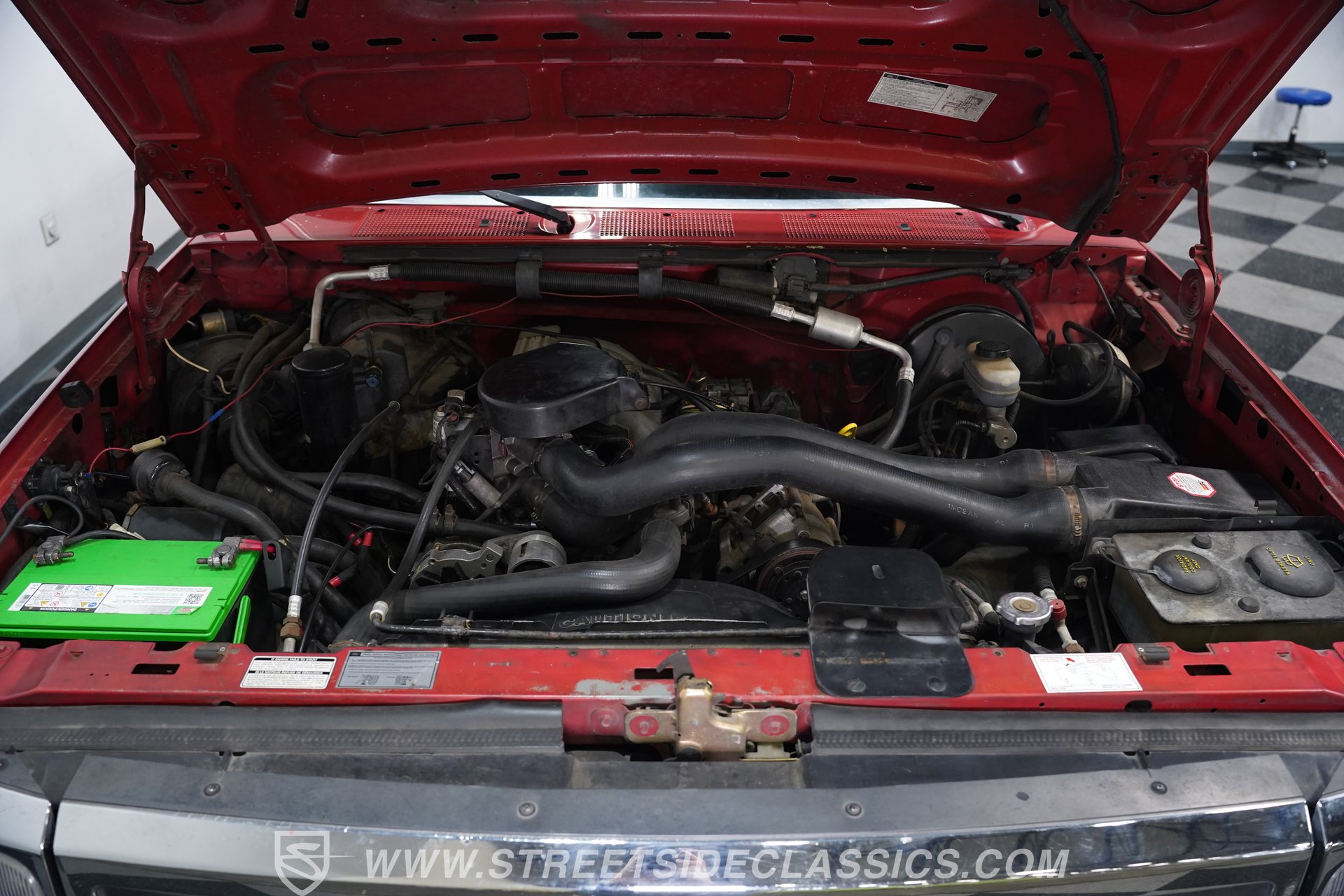
The 302 (5.0-litre) small-block V8 is the default V8 of the classic era and the easiest to live with. In carburetted Bullnose form it makes modest power and drinks accordingly; the turning point is 1985, when the F-150's 302 became the first in the range to get electronic fuel injection, and from 1987 the injected 5.0 was standard practice — sequential injection and mass-air metering arrived progressively through the ninth generation, lifting output to around 205 hp in its best truck tune and transforming cold starting, altitude behaviour and fuel economy. The 351 Windsor (5.8-litre) is the same architecture with a taller deck and more of everything: more torque, more thirst, and in 210 hp injected form the strongest of the regular production pushrod V8s. Both Windsors are simple, well-understood engines with total parts support. Their shared habits are oil leaks from the rear main seal and the intake end seals, worn timing chains on high-mileage carburetted engines, and — on injected trucks — a generation of ageing sensors and vacuum plumbing that produces idle and driveability faults the engine itself gets blamed for. Read the fault before you condemn the motor: on an EEC-IV truck, a hunting idle is a throttle-body clean, an idle air control valve or a vacuum leak far more often than it is a worn engine.
The big-blocks and the modifieds: 351M, 400 and 460
The Dentside trucks offered heavier iron. The 351M and 400 belong to Ford's 335 series, built on the big-block-pattern bellhousing with a tall deck; they were emissions-era engines, tuned soft, and in period they made roughly 156 to 169 hp with generous low-end torque. They are smooth, lazy and tough, but they are the least loved engines in this guide for good reasons: economy is poor even by the standards of the day, performance parts support is thin next to the Windsor's, and the 351M in particular is frequently confused — by sellers as much as buyers — with the entirely different 351 Windsor and 351 Cleveland. The engine in front of you is identified by its details, not its badge: the 351M and 400 have their thermostat housing in the block and eight valve-cover bolts, and the honest check is the casting and the VIN engine code. The 460 (7.5-litre) 385-series big-block is a different proposition: a genuine heavyweight with around 220 to 245 hp in its better years and torque that makes towing figures from the brochure feel conservative. It was the top option through the Dentside and Bullnose years and the engine of the serious tow rigs. It is thirsty in a way that recalibrates your expectations — single-figure miles per gallon working hard is normal, not a fault — and its specific costs are exhaust manifold bolts that snap in the heads and a appetite for starters and cooling-system capacity. Buy a 460 for what it does, not for economy, and budget the fuel as part of the purchase price.
The Triton era: 4.2 V6, 4.6 and 5.4 — and the Lightnings
The tenth generation replaced pushrods with overhead cams and changed the ownership equation. The base engine was the 4.2-litre Essex V6, around 202 hp, an adequate and generally sturdy unit whose known early weakness was lower intake manifold and front-cover gasket failures that could leak coolant internally — ask about gasket history on a 1997–98 truck. The Triton V8s, 4.6 and 5.4 litres, are modular-family engines: iron blocks, aluminium heads, one overhead cam per bank and two valves per cylinder in the classic-era trucks. The 4.6 makes 220 to 231 hp and is the sweeter, freer-revving engine; the 5.4 makes 235 to 260 hp with the torque a truck actually wants, and it is the engine most tenth-generation buyers should choose. Both are long-lived when the oil has been changed, and both share the family's defining fault, dealt with in the problem areas below: spark plugs that either launch themselves out of the heads or refuse to come out at all, depending on year. Treat plug history on a Triton as a service item on the level of a timing belt on another vehicle — documented recent plugs, correctly torqued, are worth money.
The two Lightnings bookend the classic era and could hardly differ more. The 1993–95 Lightning is a chassis truck: SVT took the 351 Windsor, fitted GT40 cylinder heads and intake hardware for 240 hp, and spent the real money underneath — a lowered, stiffened suspension with a proper front anti-roll bar, a limited-slip 8.8-inch rear axle with 4.10 gears, and the heavy-duty E4OD automatic. It is quick rather than fast by modern measure and it handles like no other stock pickup of its day. The 1999–2004 Lightning is a powertrain truck: a 5.4 Triton with an Eaton supercharger, 360 hp in 1999–2000 and 380 hp from 2001 with a revised intake, driving through the heavy-duty 4R100 automatic. It remains genuinely fast — and it concentrates all the Triton risks in one vehicle, with a supercharger, an intercooler circuit and a much higher state of tune on top. Both Lightnings were Regular Cab, short-bed, two-wheel-drive only, and both are numbered, documented vehicles: an undocumented Lightning is a claim to be verified against SVT records, not a premium to be paid on trust.

Gearboxes and four-wheel drive
The manual gearboxes are the simple end of the story. Early trucks run three-speed column shifts and heavy-duty four-speeds — the New Process 435 and Borg-Warner T18/T19 family, with a very low first gear intended for work, not for traffic — and they are near-indestructible, judged on synchromesh wear in second and third and on clutch condition. From the late 1980s the five-speed Mazda-built M5OD became the standard manual: lighter, pleasanter, with an overdrive fifth, and the box to check more carefully, because its shift forks and synchros wear and its rubber shift-rail plugs can leak the box dry. A five-speed truck that whines in every gear but fourth is telling you it has run low on oil. The heavy-duty ZF five-speed belongs to the F-250 world and appears in half-tons mainly as a swap.
Automatics carry most of the market — 80 of the trucks in our pool are listed as plain automatics, with manuals a clear minority — and there are four families to know. The C6 three-speed behind Dentside and Bullnose trucks is one of the strongest automatics Ford ever made; it has no overdrive, so a C6 truck cruises busily and drinks, but it fails slowly and warns you first. The AOD four-speed overdrive automatic of the 1980s transformed cruising economy and is the fussier box: its throttle-valve cable sets line pressure, and a cable that is misadjusted, disconnected or melted at its grommet can burn the transmission in a few miles without the driver noticing anything wrong — on any AOD truck, check the cable and its brass bushing at the throttle linkage before the test drive, and treat a missing or slack cable as a transmission rebuild already in progress, roughly $1,800–3,200 at a specialist. The E4OD of 1989 onward is the electronically controlled heavy-duty overdrive box, standard behind the 5.8 and in Lightnings; it is strong when maintained, expensive when not ($2,500–4,500 for a quality rebuild), and its classic faults are electronic — a failed manual lever position sensor or chafed wiring producing harsh or erratic shifts that condemn a healthy gearbox. The tenth generation's 4R70W and the Lightning's 4R100 continue the same story: fluid history is destiny, and a documented fluid-and-filter service is worth more than any seller assurance. Four-wheel-drive systems are conventional and honest: a chain- or gear-drive transfer case with low range, manual hubs you get out and turn (stronger, and the ones to prefer at this age) or automatic hubs (convenient, and a known wear point), and on Twin Traction Beam trucks a front differential mounted in the beam itself. Test low range and hub engagement on every 4x4 viewing; a transfer case that has never been used in fifteen years is a repair, not a feature.
Problem areas
Everything in this section is drawn from the trucks themselves and from what forty years of work does to a body-on-frame pickup. Of the 43 trucks in our pool whose photo sets we examined in detail, rust featured in 19 and visible damage in 18 — so go in expecting to find body problems and be pleasantly surprised by the truck that has none. Leaks, by contrast, featured in only 4 of the 43, and smoke in none of them, which matches the mechanical story told below: these powertrains are tough, and what kills classic F-150s is the body, the frame and the accumulation of small deferred jobs, not the engines. Work through the truck in the order given here — structure first, then running gear, then systems, then cosmetics — because that is the order in which problems stop being negotiable and start being walk-away reasons.
Rust and damage: the map
Rust on an F-150 follows the water, the mud and the road salt, and every generation has its own geography. Learn the map for the truck in front of you and check it in this order.
Cab corners, rocker panels and floor pans. The universal starting point on every generation from Dentside to OBS. The cab corners behind the doors trap mud thrown up by the rear wheels and rot from the inside out; the rockers do the same work at the front; and the floor pans collect whatever the windshield seal, the cowl and the heater box let in, where it sits under rubber mats and carpet. Press hard along the rockers, get under the truck and look at the cab corners from behind, and lift the mats in both footwells. Surface rust is a treatment job; perforation at a cab mount is a structural conversation, because the cab sits on the frame at four mounts and a corner that has gone through usually has company at the mount itself. Cab corner and rocker repair panels are cheap and available; the cost is the labour of cutting, welding and painting, realistically $800–2,000 a side done properly, and floors run $600–1,500 a side fitted. Fresh underseal blown over the cab underside the week before a sale is a cover-up until the seller proves otherwise — honest forty-year-old underseal is patchy, chipped and dirty, and a uniform fresh black coat over mounts, seams and brake lines is there to stop you reading the metal.
The bed. A truck bed lives a harder life than any car panel, and it shows in three places. The wheel arches lip rusts where the inner and outer skins meet and trap wet mud — run a fingertip around the inside of the arch lip and feel for bubbling under the paint. The bed floor rusts in the low channels and at the front corners where water stands, and a plastic bedliner, fitted to half the trucks you will see, hides the floor completely: a liner is a reason to look harder, not a feature, and a seller who will not let you lift or remove it has answered your question. The tailgate rusts along its bottom edge and around the handle, and takes the dents of a working life besides. Bed floors and tailgates are replaceable and panels exist, but a bed that needs a floor, two arch repairs and a tailgate is a four-figure body shop visit before paint, and it is telling you how the whole truck was treated.
The frame. The ladder frame itself is heavy-gauge steel and rarely rots through in southern trucks, but northern and salt-belt trucks are a different population: check the frame rails around the rear spring hangers and shackles, where mud packs and stays wet; around the steering box mounting on the driver's side rail, where stress and rust work together and cracking is a known Dentside and Bullnose failure; and at the crossmembers, especially the one carrying the rear fuel tank. Spring hangers and shackles are replaceable with rivets or bolts and the job is a known $400–900 per side fitted; a cracked or perforated rail at the steering box is fabrication work priced per truck and a legitimate walk-away on anything but a rare truck at project money. While you are under there, check the cab and bed mounts: perished rubber mounts let the cab sit crooked, and the classic tell is a truck whose cab and bed lines do not agree when you sight down the side.
Generation specifics. On Dentsides, add the drip rail above the windshield and doors, the cowl sides and the bottom of the tailgate; the 1970s trucks also rust in the front fenders behind the wheels and at the core support, where battery acid and stone damage start it. On Bullnose and Bricknose trucks the core support is a headline item — it carries the radiator and the front body mounts, it rusts at its lower corners and mounts, and a sagging nose with uneven hood gaps is often a core support, not accident damage. On OBS trucks the same list applies, with rear wheel arches and cab corners leading. On tenth-generation trucks the steel is better protected and the frame generally fares better, but cab corners and rockers still go, bed arches still bubble, and the aluminium hood and panels can show corrosion at their edges that presents as paint blistering rather than brown rust. Damage deserves the same forensic approach: our photo sample found it in 18 of 43 trucks, and on a pickup the question is never whether it has been worked but whether the frame took it. Sight down both flanks for ripples, check bed-to-cab alignment, and treat mismatched paint on a frame horn or a replaced core support as a prompt to get the truck on a lift, not as a haggling point.
Front suspension, steering and brakes
The Twin I-Beam front end is the F-150's signature engineering and its most misunderstood wear item. Each front wheel rides on the end of a long forged beam pivoting from the opposite frame rail, located by a radius arm running back to a frame bracket. The wear points are the axle pivot bushings where the beams meet the frame, the radius arm bushings at those rear brackets — rubber doughnuts that perish, compress and let the whole front end shift under braking — and the kingpins on earlier trucks or ball joints on later ones. Worn radius arm bushings present as a clunk on braking and acceleration, vague wandering steering and front tyres wearing on one edge; the bushings themselves are cheap, a set fitted runs roughly $300–700, and the difference they make to how the truck drives is out of all proportion to the cost. Camber on a Twin I-Beam truck is set by spring height, so a truck sitting nose-down on sagging springs shows its front wheels tipping in at the top and eats the inside edges of its tyres — read the stance and the tyre wear together and you have the diagnosis before you touch a spanner. Four-wheel-drive Twin Traction Beam trucks add pivot bushings of their own and a differential that lives in the left beam; the checks are the same, plus U-joints and hub engagement.
Steering on the classic trucks is a recirculating-ball box with a long linkage, and it was never sports-car precise — but it should be consistent. Play at the wheel comes from the box itself, the rag joint in the column, worn tie-rod ends and, on high-mileage trucks, a frame rail flexing or cracking around the box, which is why the steering box mount is a rust-and-structure check and not just a steering check. A box rebuild or quality replacement runs $400–800 fitted; budget it on any truck with a quarter-turn of free play. Brakes are front disc and rear drum on the classic generations, discs all round on later tenth-generation trucks, and the system is simple and cheap in parts. What is not cheap is undoing twenty years of standing: seized rear wheel cylinders, perished flex hoses, a rusted-through steel line over the rear axle and a master cylinder bypassing internally are the standard recommissioning list, $700–1,800 for a full hydraulic refresh with labour. Judge the pedal and the pull on the test drive, and look for the rust band on discs of a truck that has stood. ABS arrived progressively — rear-wheel ABS on later 1980s trucks, four-wheel ABS through the 1990s — and a lit ABS lamp on an OBS or tenth-generation truck is usually a sensor or tone ring, but price a diagnosis, not a guess.
Engines, fuel systems and electrics in service
The engines themselves are covered above; in service, the failures cluster around them. Fuel delivery is the classic-era headline. Trucks with dual tanks — a very common fitment — use a selector valve and, on injected trucks, in-tank pumps and a reservoir arrangement that produced a famous fault: fuel returning to the wrong tank, cross-filling it until it overflows, which was the subject of period recalls. On any dual-tank truck, run it on both tanks on the test drive, switch between them, and check the gauge behaviour and for fuel smell; a truck that only ever runs on one tank is hiding a pump, a valve or a rusted tank, priced at $300–800 per tank-and-pump side to put right. Carburetted trucks suffer the period complaints — choke faults, hardened accelerator pumps, ethanol fuel attacking old rubber and leaving varnish in tanks that have stood — and a truck that has sat needs its fuel system cleaned end to end before any other diagnosis is meaningful. Injected trucks substitute electronic ageing: throttle position and idle air control faults, cracked vacuum elbows, tired oxygen sensors and, on the EEC-IV trucks, capacitors in the engine computer itself now failing with age and producing intermittent faults that move around. None of it is ruinous; all of it rewards a seller with invoices over a seller with adjectives.
The Triton engines of the tenth generation have one fault that dominates their ownership story, and it comes in two opposite forms. On the early 5.4 and 4.6 two-valve engines, roughly 1997–2002, the spark plug threads in the aluminium heads engage only a few turns, and a plug can loosen and blow out of the head under pressure, taking the threads with it and announcing itself with a loud chuffing, a dead cylinder and a coil pack ejected onto the top of the engine. The repair is a thread insert done properly in the vehicle, $400–900 per cylinder at a specialist, and it is a permanent fix when done well — so a truck with one documented insert repair is not a reject, while a truck with a blowout history and no paperwork is a negotiation. The opposite fault arrived with the later three-valve engines at the very end of this guide's period: two-piece plugs that carbon-lock into the heads and snap on removal. On any Triton truck, ask when the plugs were last changed, by whom, and whether any inserts are fitted; price the answer accordingly, and never let a seller do a quick plug change the day before you view the truck. Add exhaust manifold studs that corrode and snap, giving a ticking exhaust leak on cold start that fades as the engine warms — a $600–1,200 job, mostly labour and broken-stud extraction — and the Triton picture is complete: a strong engine with three known, priced, fixable faults.
Cooling and charging are shared across the generations. Radiators silt, water pumps weep, and the big V8s in particular have no cooling reserve for neglect in southern heat; a truck that creeps up in traffic has a cause — fan clutch, silted radiator, collapsing hose — and it is findable and priced, $300–900 for the usual combination. Charging faults on the older trucks are alternator and regulator wear; on the later ones, add corroded battery cables that test fine cold and fail hot. The electrics generally follow the rule of every vehicle in this programme: fifty-to-twenty-year-old wiring fails at its connections, not in the middle of its runs, so dim lights, lazy windows and intermittent accessories are earth points and switch contacts — cheap parts, tedious diagnosis — and a truck on which everything electrical works, windows, blower on all speeds, gauges, lights and wipers, is a truck that has been used and maintained, which is the best single sign there is.
Interior, trim and the working life
The cab is where a working truck keeps its diary. The bench seat — vinyl in work trims, cloth in XLTs, split benches and buckets in later and higher-spec trucks — collapses on the driver's side first: sit in the driver's seat, not the passenger's, and if you can feel the frame through the pad, price foam and covering together, roughly $400–900 for a bench retrimmed in vinyl, more in cloth or leather. The dashboard top cracks in the sun on every generation up to the OBS, worst on southern trucks, and a cracked dash is cosmetic but very visible; replacement pads and quality covers exist, and a crack-free original dash on a Dentside or Bullnose is genuinely worth money. Headliners sag, door cards warp at their lower edges where water has been through the doors, and the door window channels and weatherstripping perish, which is how the water that rots the floors gets in — budget a full rubber kit on a truck you intend to keep, $300–700 in parts depending on generation, and treat it as rust prevention, not cosmetics. Heater and air conditioning deserve the test-drive treatment whatever the weather: the blower must run on all speeds, the heater must blow hot, and the air conditioning on a classic-era truck may be R12, converted to R134a, or abandoned mid-conversion — a working, documented conversion is a feature, a compressor with its hoses capped is a $800–1,800 recommissioning. Finally, read the truck's working life honestly: a worn bed floor, a fifth-wheel or gooseneck plate in the bed, a brake controller under the dash and a receiver hitch with polished edges are not defects — they are evidence the truck did the work it was built for, maintained by someone who needed it to work. The trucks to fear are not the worked ones but the neglected ones: no hitch, no wear, and no maintenance either.
How to inspect one
Allow at least an hour, bring a torch, a magnet wrapped in cloth, a small screwdriver for prodding (with the seller's permission) and a tyre tread gauge. If the truck passes you, pay for a lift inspection before money changes hands — on a vehicle whose frame, mounts and tanks all live underneath, it is the best money in the whole purchase.
- Start with the paperwork and the plates. Match the VIN on the title to the plate on the driver's door jamb and the stamping on the frame. Decode the door data plate: it carries the model year, body, trim, axle, transmission and paint codes, and it settles badge claims, engine claims and colour claims in one reading. Check the engine against its code in the VIN — the Windsor-versus-351M confusion and the badge-swapped trims in the models section are both exposed here, in two minutes, for free.
- Cold start. Insist the engine is cold when you arrive; a warmed-up truck is a seller managing a symptom. A carburetted truck should start with the choke routine and settle; an injected truck should start at once, hot or cold. Watch for blue smoke at start-up (valve stem seals or worse), listen for a timing-chain rattle that lasts beyond a second or two, and on a Triton listen for the ticking of a manifold leak or the chuffing of a loose plug.
- Structure first, underneath. Torch along both frame rails, checking the steering box mounting area for cracks, the rear spring hangers and shackles for perforation, and the crossmembers. Prod the cab corners, rockers and cab mounts. Read the underseal as you go — patchy and honest is factory, a fresh uniform black coat over everything is a question, not an answer. Perforation at a cab mount or a cracked rail at the steering box decides whether you continue at all.
- Floors and cab. Lift the mats and carpets in both footwells and prod the pans. Check the cowl and windshield seal for the water path that feeds floor rust, look at the drip rail on a Dentside, and on a Bullnose or Bricknose check the core support's lower corners and mounts — a sagging nose with uneven hood gaps usually starts there.
- The bed. Lift or remove any bedliner, or walk away from the bed question unanswered and price accordingly. Check the floor channels and front corners, run a fingertip inside the wheel arch lips for bubbling, and work the tailgate, checking its bottom edge and handle. Sight down both flanks for ripples and check that the cab and bed lines agree — a truck whose cab sits crooked on perished mounts and a truck with a bent frame present the same way, and step 3 is how you tell them apart.
- Engine bay and fluids. Pull the dipstick: the level, the colour and the smell all report. Check the coolant for oil and rust, the brake fluid for darkness, and the transmission fluid on an automatic for colour and burnt smell — dark, burnt-smelling fluid in an E4OD or AOD is a rebuild being scheduled. On an AOD truck, find the throttle-valve cable at the throttle linkage and confirm it is connected, correctly bushed and under tension before you drive anywhere.
- Fuel system, both tanks. If the truck has dual tanks, run it on each in turn, switch between them while driving, and watch the gauge and listen to the pumps. Cross-filling, a gauge that lies, or a truck the seller says to keep on one tank are all priced faults, and this is the only step that finds them.
- Front end and steering. Rock each front wheel top-to-bottom and side-to-side for bearing, kingpin or ball-joint play. Look at the radius arm and pivot bushings for perished, extruded rubber. Read the front tyres: inside-edge wear with a nose-down stance is the sagging-spring camber story from the suspension section, and it prices as springs and bushings, not as a mystery. Check for free play at the steering wheel and find its source — box, rag joint, linkage or frame.
- The test drive. Twenty minutes minimum, including a highway stretch, bumps, braking and — on a 4x4 — a patch of loose ground for low range and hub engagement. The automatic should change firmly without flaring, engage reverse without a long pause, and hold overdrive without hunting. The truck should track straight, brake straight, and return to centre after a turn. On a Lightning, this drive is the verification: the first-generation car should feel taut and flat, the second-generation car should be effortlessly, unmistakably fast — a slow Lightning is a standard truck in costume until the paperwork says otherwise.
- Heat, electrics and cab systems. Let it idle hot. Watch the temperature gauge for creep, check the oil pressure behaviour, and run the heater and blower on every speed whatever the weather. Work every window, the wipers, washers, lights, horn and gauges. Test the air conditioning and ask which refrigerant it runs and what conversion history exists.
- Stance and ride. Stand back and take a photograph from the side. An F-150 should sit level or very slightly nose-down, the arches at even heights, the front wheels upright. Tail-down is springs or loads; front wheels tipping in is the camber story; a lean to one side is a spring or a mount. Faults you talk yourself out of in person are obvious in a photograph.
- Interior last. Sit in every seat, drive from the driver's seat, and check the dash top, headliner and door cards. A sound, original, crack-free cab is the hardest part of the truck to recreate, so weight it heavily — and then add up every priced fault from the steps above before you talk numbers, because on an F-150 the list, not the engine, is what you are buying.
Values
The market content that follows this guide — the trucks listed now and the recorded sales — carries every current figure, refreshed at each build, and this section exists to teach you how to read it rather than to repeat numbers that would date. Read it with the F-150's structure in mind, because no model in this programme spreads its values across a wider range for reasons that have so little to do with the badge.
The first driver is generation, and the market's centre of gravity is clear: the Dentside trucks of 1975–79 are the established classic, with the strongest following, the best event and parts culture and the firmest values for good trucks, while the OBS trucks of 1992–96 are the rising generation, bought by people who remember them new and want the last of the straight-edged trucks. Bullnose and Bricknose trucks sit between, historically the value end of the market and still the cheapest route into a sound classic F-150, though good ones are thinning out precisely because they were cheap enough to use up. Tenth-generation trucks divide: ordinary examples are valued as used trucks as much as classics, and their market follows condition and specification more than nostalgia, while the Lightnings of both generations are their own market entirely, priced on documentation, originality and mileage in the way of all numbered performance vehicles.
The second driver is configuration, and it routinely outweighs trim and even year. Short-bed Regular Cabs lead; long beds, however useful, are the discount end. Four-wheel drive carries a premium over two-wheel drive in most regions and most generations, and it keeps that premium on resale. A genuine big-block Dentside, a genuine Eddie Bauer, and any truck with a documented, desirable factory specification earns its premium only when the door plate proves it — the market pays for decoded trucks, not for badges, and the spread between a verified truck and a claimed one is one of the widest in this market.
The third driver is condition, and specifically rust. The spread between a rust-free, original-paint, documented truck and a shiny one with cab corners full of filler is enormous, and it is rational — the body work is the expensive part, and the mechanical work is not. Project trucks are priced accordingly: a non-running or structurally rusty F-150 is worth its parts and its paperwork, and the gap between project money and driver money is smaller than the cost of crossing it. Asking prices in this market run ahead of achieved prices, particularly on the fashionable generations; auction results are the corrective. Negotiate from your inspection list: every priced fault in the problem areas section is a documented, costed deduction, and a seller who has maintained a truck properly will recognise the arithmetic, because they have been paying the same bills.
Parts and ownership
The F-150 is one of the best-supported classic vehicles in America, for the simple reason that Ford built them in the millions and the aftermarket followed the numbers. Entire catalogues exist for the Dentside, Bullnose, Bricknose and OBS generations — the big classic-truck suppliers between them cover body panels, interiors, trim, weatherstripping and mechanical parts to a depth most car owners never see — and the tenth-generation trucks remain supported by ordinary parts channels as recent used vehicles.
Easy: service items, filters, ignition parts, brake components, suspension bushings and wear parts, steering components, water pumps, radiators, exhaust systems, glass and most seals for every generation; cab corners, rockers, floor pans, bed floors and wheel-arch repair panels for the steel generations; complete interior kits — seat covers, foam, carpets, dash pads, headliners — for the popular trims. Order today, fit this weekend, at prices close to modern-truck money.
Harder and dearer: generation-correct trim and brightwork in good original condition, crack-free original dash pads for the early trucks, 351M and 400 performance and dress-up parts (the support exists but is thin beside the Windsor's), correct GT40 hardware and SVT-specific parts for the first Lightning, supercharger and intercooler components for the second, E4OD and 4R100 rebuilds done to a proper standard, and quality paint — a good repaint on a truck, with its bed, cab and separate panels, starts where a car's repaint starts and climbs with bodywork. The mantra of this guide stands: buy the body, the frame and the interior, and fix the mechanics.
Running costs. A sorted classic F-150 is a realistic regular-use vehicle: the six and the small V8s return fuel economy in the mid-teens in ordinary use, the big-blocks considerably less, and servicing is within the ability of any good independent shop and most home mechanics. Insurance sits in line with other classics of similar value. The budget line that catches new owners is the first year: catching up deferred maintenance on a running truck honestly costs a four-figure sum before you improve anything — fluids, belts, hoses, brake hydraulics, bushings, tyres with dates on them — and recommissioning a truck that has sat for years costs more, because the fuel system, the brakes and every rubber component arrive at once. Buy a truck that has been in regular use over one that has been asleep, even at a higher price: the F-150's worst enemy was never work. It was standing still.
Which one to buy
- The all-rounder: a ninth-generation OBS XLT, 5.0 or 5.8, short bed. Injected, air-conditioned, the best-supported of the modern-feeling trucks and the deepest market to buy from and sell into. If you want one classic F-150 to use for everything, this is it.
- The classic: a Dentside Ranger XLT, 1977–79. The shape the market wants, the trim to have, and the generation with the strongest following. Buy the best body you can find and let the engine be whichever of the V8s the right truck happens to carry.
- The value buy: a Bullnose or Bricknose with the 300 six or the 4.9 EFI. The cheapest sound trucks in the programme, with the toughest engine Ford ever fitted to a half-ton. A sorted six-cylinder Bricknose is the most truck per pound of money in this guide.
- The workhorse: a long-bed 460 Dentside or Bullnose, or a 5.8 OBS. Bought for towing and hauling rather than showing, priced on condition and honesty rather than fashion — and the fuel bills are part of the specification, so go in with your eyes open.
- The driver's truck: the first-generation Lightning. A handling pickup, numbered and documented, and still the connoisseur's choice of the two. Verify it against SVT records and pay for paperwork as much as paint.
- The modern classic: the second-generation Lightning. Genuinely fast, genuinely usable, and the truck in this guide most likely to be bought by someone cross-shopping modern performance cars. Plug history and supercharger health are the price of admission.
- The family truck: a SuperCab OBS or a tenth-generation SuperCrew. The rear seat turns the classic into the household's second car, and at the tenth-generation end you gain the safety and refinement of a modern truck with it.
And the rule that overrides all of the above: buy the least rusty truck you can find, on the straightest frame, in the configuration you will actually use. Engines, gearboxes, bushings and blower motors are all fixable at prices you can plan for. A rotten cab, a rusted bed and a cracked frame cost more to put right than the finished truck will be worth — and on a vehicle built by the million, there is always another one, so you never have to rescue the wrong truck out of impatience.