
Ford Custom buyer's guide
Ford Custom -- the model's own buyer's guide: variants, values and what to check.
Years listed: 1935-1954 · Series: Full Size
Overview and history
The Ford Custom is two different buying propositions sharing one word, and telling them apart is the first job this guide has to do — because the cars filed under this name in our listings span 1935 to 1954, and they do not all mean the same thing by it.
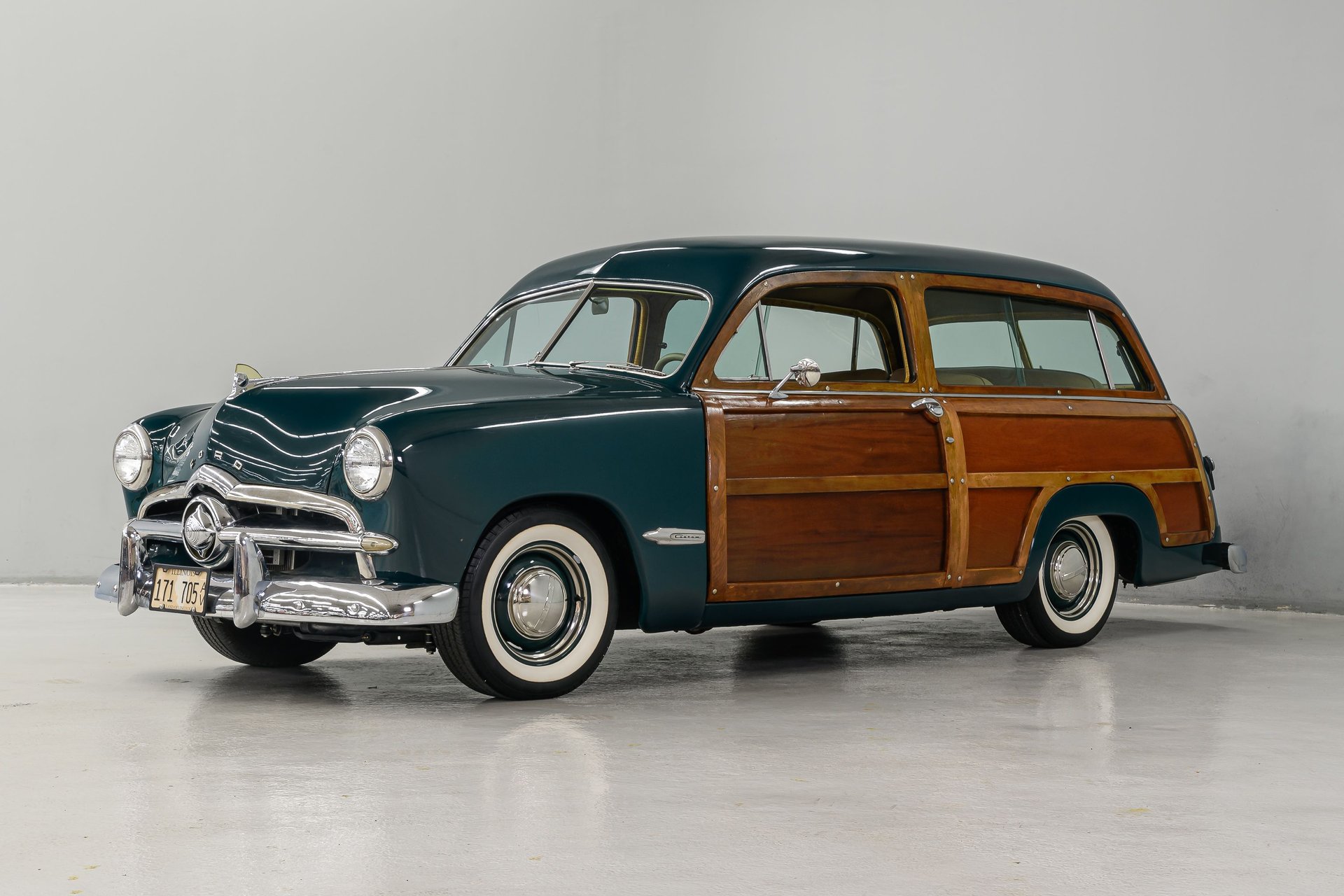
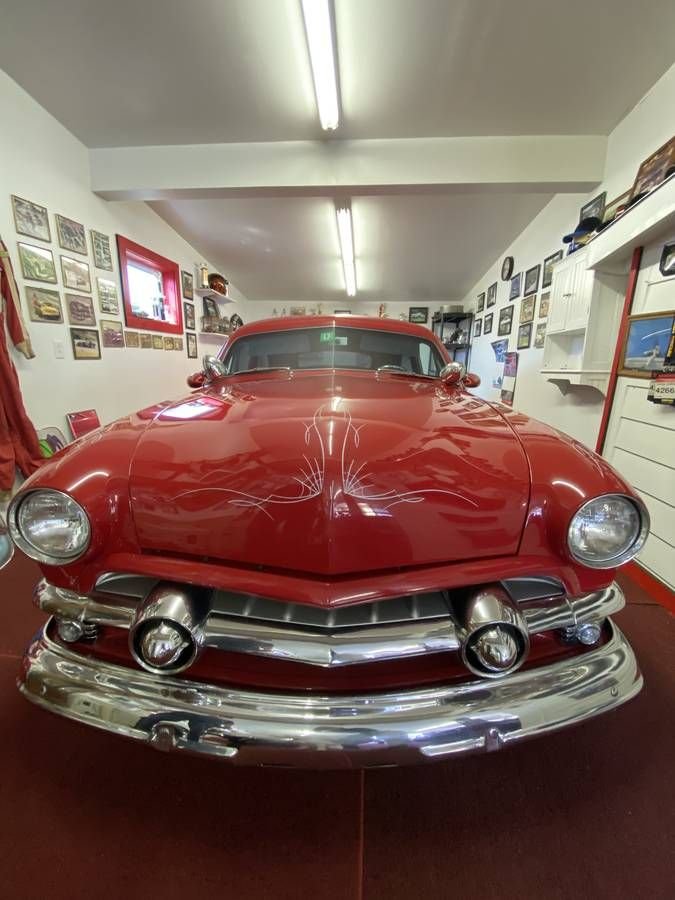
From 1949 to 1951, Custom was a factory trim line: the better-equipped version of Ford's all-new postwar car, the "shoebox" Ford that saved the company. Those cars — Tudor and Fordor sedans, club coupes, business coupes, convertibles and the wood-bodied Country Squire station wagon — are the core of the market for this name, and they are the heart of our pool too: 11 of the 27 Customs we track are 1949–51 cars. They carry flathead power, three pedals or an early automatic, six-volt electrics and a parts supply as deep as any American classic's. A good one is a usable, tourable, genuinely significant car — the first Ford designed after the war, styled under George Walker with the famous "bullet nose" spinner grille for 1950 and the twin-bullet grille for 1951, and built in numbers well past a million across the three years.
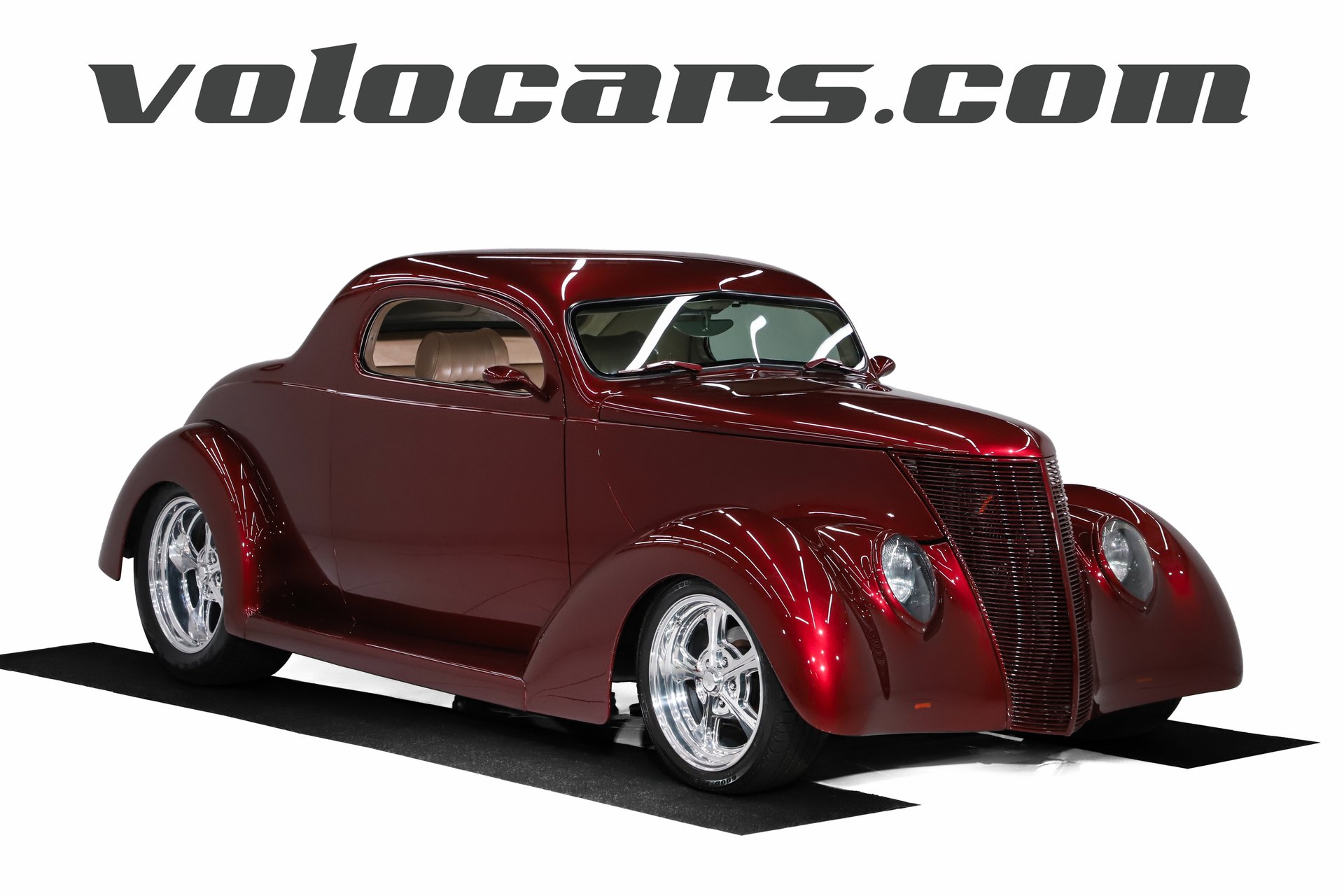
Before 1949, Ford of the United States did not sell a car called Custom. The 1935–48 cars in our pool — the 1936 and 1937 coupes, the 1940 coupe, the 1946–48 Tudor sedans — wear the word the other way round: custom as a description, not a badge. Some are period-style customs and street rods with swapped engines, modern automatic gearboxes, updated front clips and Jaguar independent rear suspension; some are largely stock flathead cars whose sellers simply reached for the word. Either way, you are not buying a trim level, you are buying a build — and a build is judged car by car, weld by weld, in a way a factory car never has to be. Five of our pool are immediate postwar 1946–47 cars and nine are 1935–42 cars, so nearly half of what you will shop under this name needs that second, harder kind of inspection.
After the shoebox, the name mutated rather than died. For 1952–54 the mid-range Ford became the Customline — one word — and the two latest cars in our pool, a 1952 and a 1954, belong to that generation: overhead-valve engines arriving, twelve-volt electrics still a few years away. From 1957 the Custom, Custom 300 and Custom 500 names returned on the full-size Fords and ran, mostly as the fleet and value end of the big-car range, into the 1970s. None of those later cars appears in our current pool at all, so this guide mentions them only to stop you confusing them with what is actually for sale here.
That spread defines the ownership split. The factory shoebox Custom is a known quantity: every weakness is documented, every wear part is reproduced, and condition is everything. The prewar custom is an individual: its value and its safety live in the quality of work you cannot see in a listing photograph. Weight your inspection accordingly, and never let a shiny prewar coupe borrow the shoebox's reputation — or a tired shoebox borrow a street rod's shine.
The models
Read the table below as two tables in one. The 1949–51 rows are factory models with factory specifications. The prewar and immediate postwar rows are the cars our pool actually files under this name — period Fords, most of them modified to some degree — so their engine column describes what Ford fitted originally, and the text after the table explains what may be sitting there now.
| Model | Years | Engine | Output | Built | Character |
|---|---|---|---|---|---|
| Custom Tudor / Fordor sedan | 1949–1951 | 226 six or 239 flathead V8 | 95 / 100 hp | High volume | The core shoebox; the default buy |
| Custom club coupe / business coupe | 1949–1951 | 226 six or 239 flathead V8 | 95 / 100 hp | High volume | Short roof, long trunk; the hot-rodder's favourite then and now |
| Custom convertible | 1949–1951 | 239 flathead V8 mostly | 100 hp | Low volume | Open shoebox; check the top frame and hydraulics first |
| Custom Country Squire wagon | 1949–1951 | 239 flathead V8 mostly | 100 hp | Low volume | Real wood to 1951; the collector flagship of the range |
| Custom Victoria hardtop | 1951 | 239 flathead V8 | 100 hp | One year only | Ford's first hardtop; rare, pillarless, desirable |
| Crestliner (Custom-based special) | 1950–1951 | 239 flathead V8 | 100 hp | Low volume | Two-tone Tudor with special trim; verify the trim is real |
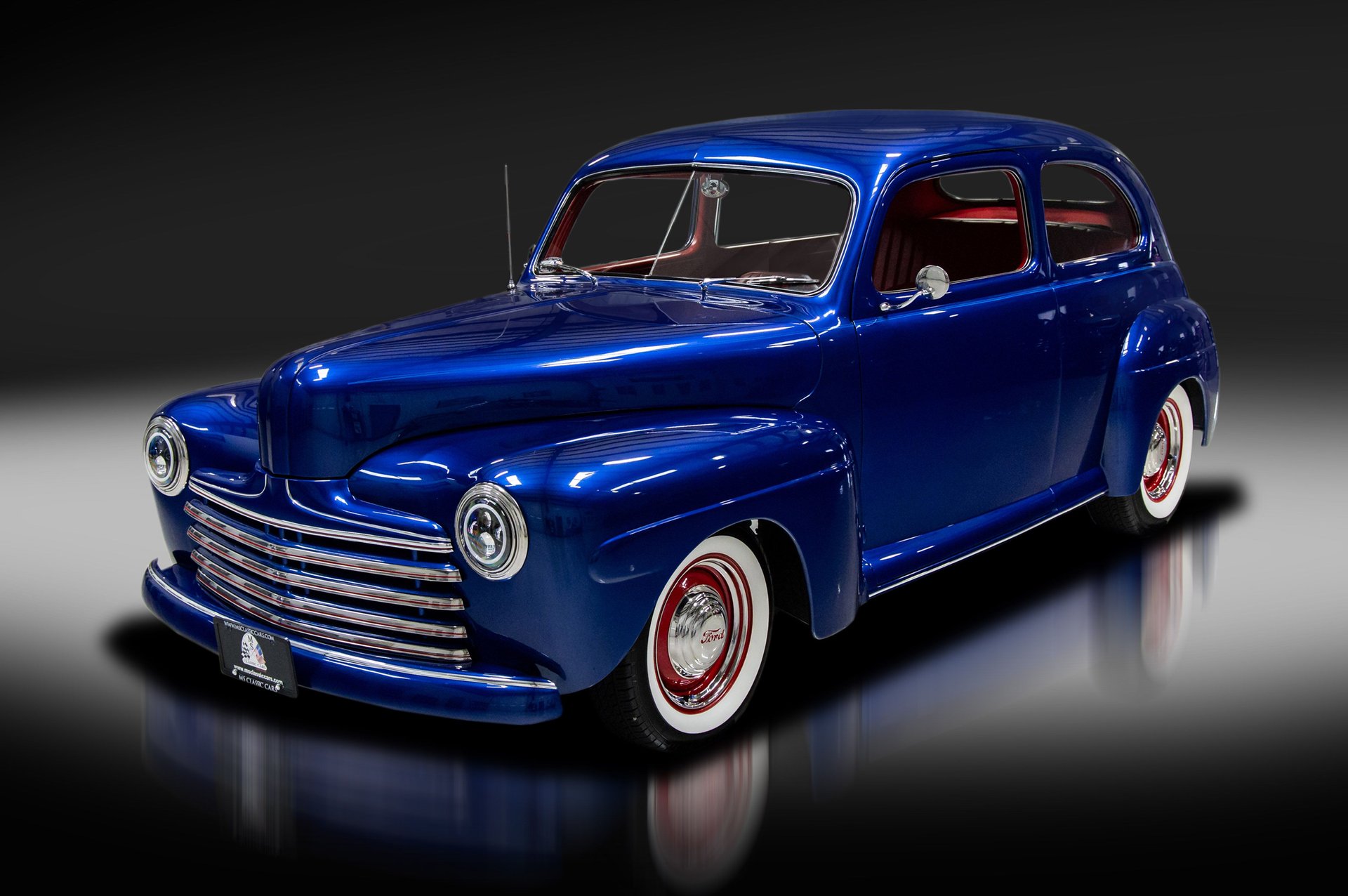
| Deluxe / Super Deluxe cars filed as Custom | 1946–1948 | 226 six or 239 flathead V8 | 90 / 100 hp | High volume | Postwar carryover cars; Custom here is a seller's word, not a badge |
| Prewar coupes and roadsters filed as Custom | 1935–1942 | 221 flathead V8 originally; swaps common | 85 hp as built | High volume as built | Street rods and customs; judge the build, not the badge |
| Customline-generation cars filed as Custom | 1952–1954 | 215 / 223 six or 239 flathead, then Y-block V8 | 101–130 hp | High volume | The successor cars; overhead valves arrive for 1954 |
(Outputs are period gross figures for the US cars. Ford shuffled the trim names almost yearly — 1949's plain Ford and Custom became Deluxe and Custom Deluxe for 1950, then Deluxe and Custom again for 1951 — so badge a car by its year and its trim, its brightwork, upholstery and body plate, never by a seller's one-word description.)
The shoebox sedans and coupes (1949–51). This is where most buyers should start. The Tudor two-door sedan is the commonest body, the Fordor four-door the most practical, and the club coupe — short, formal roof, long deck — the prettiest. The business coupe, with a cargo platform instead of a rear seat on early cars, was the salesman's car and is now the rarest of the closed coupes in unmodified form. All of them share the same ladder frame, the same engines and the same rust map, so buy on condition and body style, in that order.
The convertible and the Country Squire. The glamour cars, priced like it, with two extra inspections attached. The convertible's power top runs on period hydraulics and a frame that bends if it has been forced; the Squire's wood is structural as well as decorative on the early cars, and a wagon with soft wood is a restoration, not a driver. Both were built in far smaller numbers than the sedans, and both were the first to be restored and the first to be faked from lesser cars — check body numbers against the paperwork with extra care.
The Victoria and the Crestliner (1950–51). Ford's answers to the hardtop and the two-tone special. The 1951 Victoria was Ford's first pillarless hardtop and is genuinely scarce. The Crestliner was a Custom Tudor in a special two-tone scheme with gold trim accents and a dressed-up interior; because the recipe is paint and trim, it is also copyable, so a Crestliner premium needs paperwork, not just paint.
The 1946–48 cars. Mechanically these are the prewar Ford warmed over: transverse leaf springs at both ends, a torque tube driving the rear axle, mechanical brakes long gone — hydraulic since 1939 — and the same flathead V8 in 239 form. Ford called them Deluxe and Super Deluxe. In our pool they arrive as Customs because sellers use the word loosely, and many have been mildly customised over the decades: shaved handles, later wheels, a swapped engine. A stock one is a charming, simple car. A modified one is judged like any other build.
The prewar cars (1935–42). The 1935–36 cars still have mechanical brakes on the earliest examples and a fabric roof insert; by 1937 the all-steel top, the 85 hp 221 V8 and the teardrop styling had made the shape that defines the era, and the 1939–40 cars added hydraulic brakes and, on the 1940, the lines every street rod builder since has copied. Almost no prewar car in today's market is exactly as Ford built it, and the pool proves it: one of our 1940 coupes is listed with a 383-cubic-inch General Motors stroker V8, an overdrive automatic and Jaguar independent suspension at both ends. That can be a wonderful car. It is just not a Ford in any mechanical sense, and it must be inspected — and valued — as a one-off build.
The Customline generation (1952–54). Ford restyled the car for 1952 and renamed the middle trim Customline. Underneath, the flathead V8 lasted to 1953, the old flathead six gave way to an overhead-valve six for 1952, and for 1954 the Y-block overhead-valve V8 arrived. These are good cars and often better drivers than the shoebox, but they sit under this guide only because the store files them here — if your heart is set on one, everything in the engines and problem sections about the 1952–54 cars applies, and the shoebox-specific advice does not.

Engines and gearboxes
The flathead V8: 221, 239 and the engine that defines these cars
Nearly every factory car in this guide was built around Ford's flathead V8, and understanding it is most of understanding the Custom. It is a side-valve V8 — valves in the block beside the cylinders, not in the heads — with the exhaust passages cast through the block itself, which is why these engines run hot by design and why cooling is the whole game. The 221-cubic-inch version (85 hp) powers the 1937–42 cars; the 239 (100 hp) powers the 1946–53 cars, in its 8BA form from 1949 with a revised distributor drive, improved cooling passages and a proper thermostat housing arrangement in each head. The Mercury version of the 239, with a longer stroke crankshaft, is the swap every period hot-rodder wanted and many of these cars quietly have — the only honest way to tell is to measure the stroke through a spark plug hole or check casting and crankshaft markings during a rebuild, because externally the engines are near-identical.
A healthy flathead starts readily, idles with a soft, even lope, shows good oil pressure hot — around 30–40 psi at road speed on a sound engine, with a low hot idle reading normal — and holds temperature in the 180–195 degree range with both thermostats working. Two water pumps, one per bank, are driven off the front of the engine; two thermostats, one per head outlet, control flow. That duplication is your diagnostic friend: an engine that runs hot on one bank only — felt as uneven head temperatures, or one side boiling while the other behaves — has a local fault, a failed thermostat, a weak pump or a blocked passage on that side. An engine hot on both sides at speed but cool in traffic points at the radiator core or slipping fan belt drive; hot in traffic but cool at speed points at airflow, the fan, or retarded ignition timing. Never accept "flatheads all overheat" as a diagnosis. They run warm. A sorted one, with a clean block, a sound radiator and correct timing, runs at temperature all day — and a car that genuinely cannot is hiding sludge in the block water jackets, a cracked block, or both, until proven otherwise.
The flathead's known failures are specific. Cracks form in the block between the valve seats and the cylinder bores and around the centre exhaust ports, usually from a past overheating episode; a car that loses coolant with no visible leak, blows bubbles into the radiator at idle, or shows a spark plug steam-cleaned compared with its neighbours needs a pressure test and a combustion-gas test in the coolant before any money moves. Head gaskets fail after overheating and warp the long cast-iron heads if the engine was run hard while hot. The stock ignition is a points distributor — on the 8BA it sits accessibly at the front top of the engine, a real improvement over the earlier front-mounted units buried behind the fan — and worn points, a tired coil or a perished vacuum advance diaphragm give the classic flathead misfire under load that owners blame on the carburettor. Test the advance can with a hand vacuum pump: it must hold vacuum. Carburetion is a single two-barrel downdraft on most cars — the Ford/Holley 94 family and its Stromberg 97 predecessor on earlier cars — and its period fault is vapour lock and percolation on a hot restart, because the fuel sits in a bowl directly above a hot engine breathing modern ethanol-blended petrol that boils at a lower temperature than the fuel the car was designed for. An electric booster pump and an insulated fuel line are the accepted cures, not a character trait to live with.
Rebuild economics matter. A full flathead rebuild by a specialist — machining, pistons, bearings, valve work in the block, crack repair if it is repairable — realistically runs $5,000–9,000, and a cracked-beyond-repair block means finding another core. That is why the temperature gauge's story and the coolant tests price the car, not the chrome.
The sixes and the overhead-valve successors
The six-cylinder cars are the honest end of the range. The 226-cubic-inch flathead six (the H-series, 95 hp in the shoebox, 90 hp just before it) is a side-valve engine like the V8 but simpler: one head, one water pump, no bank-to-bank mysteries, and a reputation for outlasting the car around it if the oil was changed. Its faults are the flathead family's faults in miniature — overheating from silted water jackets, valve seat wear, and timing gear wear giving a rattling front cover and wandering ignition timing. In 1952 the flathead six was replaced by the 215-cubic-inch overhead-valve six (101 hp), enlarged to 223 cubic inches for 1954 (115 hp), and for 1954 the V8 became the 239-cubic-inch Y-block overhead-valve engine (130 hp), named for its deep-skirted block. The Y-block is a different inspection: its top-end oiling runs through external-feeling passages that sludge up, so a Y-block that rattles at the rockers and shows low oil feed to the heads has usually been starved by dirty oil, and its rear main seal and the cross-over exhaust passage in the intake manifold — which burns out and blows — are the known leaks and noises. None of these engines is exotic, and all of them reward the same checks: cold start, oil pressure hot, coolant condition, and a compression test with all plugs out, throttle open, readings within about ten percent across the set.
The swapped cars: small-block Chevrolets, Turbo 350s and everything else
A large share of the prewar and postwar cars in this pool no longer carry a Ford engine at all, and our own listings say so plainly — one transmission entry in the pool is literally a Turbo 350 automatic, General Motors' three-speed, which only arrives behind a swapped engine. The commonest transplant is the Chevrolet small-block V8 in 350 or stroker 383 form, followed by later Ford small-blocks and the occasional big-block. A swap is not a defect. A bad swap is, and the difference is visible if you know where to look.
Check the engine mounts first: fabricated mounts should be fully welded, gusseted where they meet the frame, and free of cracks in the paint around the welds — cracked paint at a mount is movement, and movement is a failing weld announcing itself. Check the cooling next, because it is where most swaps fail: a small-block in a prewar engine bay needs a radiator with real capacity, a shrouded fan — electric, engine-driven or both — and hoses that do not kink or chafe. A swapped car that runs at 210 degrees and climbing in traffic has an undersized radiator or an unshrouded fan, and the fix is a radiator and fan package at $800–1,800 fitted, not a thermostat swap. Check the exhaust clearance to the steering box and frame rails, the wiring — a swap done well uses a proper loom, relays for the fan and headlights, and fused circuits; a swap done badly uses household connectors and tape — and check that the transmission crossmember is a fabricated, bolted member and not the original Ford crossmember cut and left weak. Finally, check the paperwork: the title should follow the frame number, not the engine, and an engine swap does not change the car's identity — but a car whose frame number has been ground, restamped or lost to a frame swap is a legal problem, not a mechanical one, and no shine justifies it.
Gearboxes: three on the tree, overdrive, and Fordomatic
The standard gearbox across every factory car here is Ford's three-speed manual, shifted from a column lever — three on the tree — with synchromesh on second and top. First gear is unsynchronised, so it engages cleanly only at a standstill or walking pace; grinding into first at speed is driver error, but grinding into second on a fast upchange is worn synchromesh and a gearbox-out conversation at $1,200–2,500 for a rebuild. The linkage is the usual culprit for vague selection: worn bushings in the column and at the gearbox levers make a sound box feel broken, and a $100 bushing kit plus an afternoon restores it — test by selecting each gear at a standstill with the engine off; a box that selects cleanly standing still but baulks on the move has a clutch or synchromesh fault, while a box that baulks standing still has a linkage fault. Clutch judder on take-up is a contaminated or warped plate, oil from a leaking rear main seal being the usual contaminant on a flathead.
The option worth hunting is the Borg-Warner overdrive, offered on the manual cars: a planetary unit behind the gearbox with a freewheel, a governor, a solenoid and a kickdown switch under the accelerator pedal. Engaged, it drops cruising revs by roughly a third and transforms a shoebox on the highway. Its faults are electrical nine times out of ten — a failed solenoid, a governor whose contacts are dirty, a kickdown switch out of adjustment, or the dash cable left pushed in, which locks the unit out entirely. The test is simple: above about 30 mph in top gear, lift off the throttle and the overdrive should engage with a soft clunk and a clear drop in revs; press the accelerator to the floor and it should kick back down. A car where nothing happens needs the circuit tested component by component — a solenoid is a $150–300 part, not a gearbox rebuild.
From 1951, Fordomatic arrived: Ford's first automatic, a torque-converter gearbox built under licence from Borg-Warner designs, which in Drive starts in its intermediate gear and changes up to direct top, with a manually selected Low for a true first-gear start. It should engage Drive or Reverse promptly from idle, change once, cleanly, at part throttle, and hold top without hunting. Delayed engagement when cold is worn seals; flaring on the single upchange is band and servo wear; a car that creeps violently or stalls at idle in gear has an idle-speed or converter problem. A Fordomatic rebuild is specialist work at $2,500–4,500, and the fluid tells the truth before the road test does — pull the dipstick: bright red and sweet is maintained, brown and burnt-smelling is a rebuild being priced into the car whether the seller admits it or not. The swapped cars run whatever came with the engine — Turbo Hydra-matic 350s and 700R4/200-4R overdrive automatics behind Chevrolet engines, Ford C4s and C6s behind later Ford engines — and the same dipstick-and-engagement rules apply, with one addition: confirm the speedometer reads sanely and the kickdown linkage or cable is actually connected, because a disconnected kickdown on a Turbo 350 gives lazy, early changes that owners mistake for a tired box.
Problem areas
Everything in this section is drawn from the cars themselves and from seventy years of these Fords being driven, parked, restored and driven again. Our own pool is small enough to quote honestly: we have examined the photo sets of 12 of the Customs we track in detail, and rust was noted on 3 of those 12 cars and visible damage on 3 — a quarter of a small sample, and a floor rather than a ceiling, because sellers' photographs are taken to flatter. Treat every car as guilty until your own inspection clears it. The mechanicals on these cars are simple and fixable; the body and, on a modified car, the build quality are where the money goes.
Rust: the map
Rust on a shoebox or prewar Ford follows the water and the road salt, and it is structural sooner than a newcomer expects, because these are body-on-frame cars whose bodies still carry real loads at their mounts.
Rocker panels and the inner sill structure. The single most important check on a 1949–51 car. The rockers sit in the spray of the front wheels, fill with mud through their drain slots, and rot from the inside out; by the time the outer paint bubbles, the inner structure and the floor edge it carries are usually involved. Press hard along the full length with the heel of your hand, get under the car with a torch and look at the inner face, and be suspicious of fresh underseal, fresh paint low on the car, or new rocker covers fitted over old metal. A rocker cut out, welded and painted runs roughly $1,200–2,800 per side done properly, and the job almost always grows into the floor edge and the lower door pillar.
Floor pans and body mounts. Water comes past the windshield seal, the cowl vent — a notorious leak on these cars, with a drain that blocks and a trough that rusts — and the door seals, then sits under the carpets and the sound deadening. Lift the carpets in all four footwells and in the trunk. Surface rust is a clean-up; perforation at a body mount is structural, because the body is bolted to the frame through those points and a mount that tears out in a collision or under jacking is a safety failure, not a cosmetic one. Prod every mount area with a screwdriver, with the seller's permission. Floor sections are reproduced and a side fitted runs $600–1,500, but floors, like rockers, rarely rot alone.
Trunk floor, spare wheel well and rear body panel. The trunk seal and the rear window seal leak, and the water collects under the spare wheel where nobody looks. Lift the wheel and the mat on every viewing. The rear valance and the lower rear quarters behind the wheels trap mud against the inner structure; the fuel tank sits behind the rear panel on the shoebox cars and its straps and the floor above it rust together, so a fuel smell in the trunk is a rust clue as well as a fuel clue.
Front fenders, headlamp areas and the grille surround. Prewar cars rot around the headlamp mountings and along the fender beads where the fenders bolt to the running boards and aprons; shoebox cars rot at the bottom of the front fenders behind the wheels and around the headlamp rims. None of it is structural, all of it is panel work, and a full set of small panel repairs plus paint matching adds up to a four-figure bill faster than buyers expect — a quality repaint on one of these cars starts around $8,000 and rises quickly with panel work, which is the arithmetic that makes a solid original body worth more than any engine option.
Door bottoms, cowl sides and the prewar wood. Door drain holes block, the doors hold water, and the bottoms bubble from inside — run a fingertip along the lowest edge of every door and feel for roughness under the paint. On the 1935–36 cars, check the roof insert surround and the body wood framing around the doors and roof; on the Country Squire, the wood is the car: probe every joint and panel edge for softness, look for black water staining bleeding from the joints, mismatched varnish where one panel has been replaced, and screws that no longer bite. Rebuilding a woody body with new structural wood is a specialist job that can run $15,000–30,000, which is why a Squire with sound original wood is the flagship and one with soft wood is a project at any price.
The frame. Surface rust on a frame is normal and harmless. The failures are specific: rust swelling and cracking at the centre crossmember on the prewar X-member frames, thinning at the rear spring hangers, and damage where a modified car has been boxed, notched or C-notched for lowering without proper plating and weld penetration. On any lowered or clipped car, get it on a lift and read the welds: a good weld is even, fully fused and painted as part of the car; a bad one is porous, undercut, cracked through its paint, or visibly a series of tacks. Frame repair on a straight factory car is fabrication at $1,500–4,000 for a localised repair; frame repair on a badly built rod can mean starting the chassis again.
Chassis, steering and brakes: kingpins, springs and stopping
The 1949 redesign replaced the prewar transverse-leaf suspension with independent front suspension — coil springs, unequal-length control arms and kingpins — and an open driveshaft with parallel leaf springs at the rear, in place of the torque tube. The prewar cars keep the old layout: a solid front axle on a transverse leaf spring, radius rods, and a torque tube enclosing the driveshaft. Both layouts are durable and both fail in knowable ways.
Kingpins and front suspension. On the shoebox front end, worn kingpin bushings give play you feel by rocking the front wheel top to bottom with the car jacked under the lower control arm; worn ball joints are not part of this design, so any seller blaming them has not looked. Play side to side, hands at nine and three, is tie-rod ends, drag link wear or steering box play — the worm-and-roller box adjusts, but a box that is tight at the straight-ahead and loose on lock has a worn worm, and a rebuild runs $600–1,200. Kingpin and bushing renewal with the reaming done properly is $700–1,400 a side fitted. On prewar axles, the equivalent checks are kingpin play in the axle eyes, worn spring shackles and bushings, and a front spring that has sagged or lost a leaf — a car that sits nose-down with the axle near the frame is riding on a tired spring, not a stance the builder chose, whatever the listing says. Radius rod and wishbone mounting points crack on hard-used prewar cars; look at the ball socket at the rear of the wishbone and the frame around it.
Steering feel. All of these cars steer slowly by modern standards — around four turns lock to lock — and heavily at parking speed. That is correct. What is not correct is a dead band at the straight-ahead wide enough to wander in, a knock over bumps, or a car that darts under braking, which is brake imbalance or loose front-end parts, not character. On a car with a modern front clip — the Mustang II-style independent suspension is the commonest swap under prewar and postwar rods — judge it as modern suspension: ball joint and bushing play, rack boots split and leaking, and, above all, the quality of the clip's installation, its welds to the frame and whether the frame was boxed where the clip was fitted.
Brakes. Hydraulic four-wheel drums on everything from 1939 onward; mechanical brakes on the 1935–38 cars unless converted — and a conversion is a safety item to verify, not assume: check that it is a complete hydraulic system with a properly mounted master cylinder and sound lines, not a partial kit. Drum systems fail by sitting: wheel cylinders weep and then seize, hoses perish internally and act as one-way valves holding a brake on, and the single-circuit master cylinder on all of these cars means one failed hose or cylinder is a total brake failure, which is why a dual-circuit conversion is the first upgrade most experienced owners make and a selling point when it has been done well. Pull up firmly from 40 mph on the test drive: the car should stop straight with a firm pedal that does not sink. A pedal that sinks slowly at a standstill is a master cylinder bypassing internally; a pedal that needs pumping is air or adjustment; a car that pulls has a contaminated shoe, a seized cylinder or a collapsed hose on the side it pulls away from. A full hydraulic refresh — master and wheel cylinders, hoses, shoes and machining — runs $900–2,000 with labour, and budget it on any car that has sat.
Interior, electrics and the six-volt question
Electrics. Every factory car in this guide is six-volt, positive ground, with a generator — not an alternator — and a cutout or voltage regulator on the firewall. Six volts is not a defect; it is a system that tolerates no neglect. The cables are twice the size of twelve-volt cables for a reason, and most "six-volt problems" are undersized replacement cables, dirty ground straps or a tired battery: a healthy six-volt car cranks briskly, its headlights are adequate if yellow by modern standards, and its gauges read true. The diagnostic order is grounds first — battery to frame, frame to engine — then cable size and condition, then the generator brushes and regulator. A car converted to twelve volts has usually gained brighter lights and easier starting and lost originality; judge the conversion by its execution — a proper conversion changes the bulbs, the coil, the gauges' voltage feed or the gauges themselves, the heater and wiper motors' supply, and the battery and cables as a system. A conversion that changed only the battery and the alternator and left the six-volt starter spinning twice as fast and the fuel gauge reading nonsense is a half-finished job you will finish at $800–2,000. On swapped cars, the same rule as the engine applies: a tidy loom with relays and fuses is a build done properly; tape and household connectors are a fire with a fuse missing.
Interior and trim. Shoebox interiors are vinyl and cloth or broadcloth, with a metal dashboard painted or trimmed to match, and they wear honestly: the driver's seat cushion splits and its padding packs down, the headliner sags and stains at the rear window, and the rubber floor mats crack and hide the floor rust you are looking for — which is why the inspection insists on lifting them. A complete professional retrim of a sedan in correct-style materials runs $4,000–8,000; a convertible or a Squire with wood and leatherette to match costs more. Brightwork is the other bill: shoebox stainless trim survives well and polishes, but prewar chrome — bumpers, grille, headlamp rims — pits, and re-plating a full set runs $3,000–6,000. Count the missing and damaged trim pieces on any car and price them individually, because one-year-only pieces — 1951 grille bullets, Crestliner trim, Victoria brightwork — are the parts that turn up at swap meets priced like jewellery.
The heater, the radio and the small stuff. Test the heater on every viewing: the core leaks into the passenger footwell and is the hidden source of many a "mystery" wet carpet and the rust that follows it, and a core replacement is cheap in parts and long in labour. Vacuum wipers — standard on the prewar cars and many shoeboxes — slow to a stop when you accelerate, because they run on manifold vacuum; that is correct behaviour, and an electric conversion is a convenience, not a fault to price. The period tube radios are specialist repair at $300–800 and most no longer work; treat a working one as a bonus. On convertibles, run the top twice and look at the rear window panel, the top fabric at the folds, and the hydraulic rams for weeping — a top mechanism overhaul with fabric runs $2,500–5,000.
How to inspect one
Allow at least an hour, bring a torch, a magnet wrapped in cloth, a screwdriver for prodding with the seller's permission, and a hand vacuum pump if you can borrow one. If the car passes you, pay for a lift inspection before money changes hands — on any car in this guide it is the best money in the whole purchase.
- Start with the paperwork and the numbers. Match the title to the car's serial number. On a shoebox the number is on the patent plate and stamped on the frame; on a prewar car the frame number — on the left frame rail near the steering box, and repeated along the rail — is the car's identity, because the engine number and the frame number were the same when the car was built and any engine swap breaks that match. A car whose frame number is ground off, restamped or missing is a stop, not a negotiation. Decode the body plate for year, body style and trim, and check the car against it.
- Cold start. Insist the engine is cold when you arrive — a flathead's faults hide warm. A healthy engine starts within a few turns, shows oil pressure promptly, and does not smoke beyond a puff. Blue smoke that persists is oil burning; white vapour that does not clear is coolant; a rattle from low in the block that stays is bearings, and that ends the inspection at this price level.
- The temperature story. With the seller's agreement, let the car idle and then drive it until it is fully warm. Watch where the gauge settles and whether it climbs in traffic. Ask directly when it last overheated and what was done. Then run the coolant checks from the engine section: bubbles in the radiator at idle, a combustion-gas test if you can, and a look at every spark plug you can reach for the one that is steam-cleaned.
- Under the car. Torch along both rockers, prod the floor at every body mount, check the trunk floor seams, the frame at the crossmember and spring hangers, and on a modified car read every weld on mounts, clips and crossmembers. Perforation at a mount or a cracked mount weld is structural. This step decides whether you continue at all.
- Trunk and spare wheel well. Lift the wheel and the mat. Look for water staining, rust in the well corners, a damp smell and daylight where there should be metal. Check the fuel tank straps and the floor above the tank while you are there.
- Floors inside. Lift all the carpets and mats. Look for water tracks from the windshield base, the cowl vent and the heater, and prod the pans. Wet carpets in a dry-stored car mean leaking seals, a leaking heater core and rust already started.
- Body, gaps and wood. Run the magnet over the rockers, lower doors, rear quarters and fender bottoms — filler announces itself. Check door bottoms for bubbling and drain slots for blockage. On a Squire, probe the wood joints; on a convertible, run the top twice and inspect the frame, rams and fabric at the folds.
- Front end and steering. Rock each front wheel top to bottom for kingpin play and side to side for linkage wear. On a prewar car add the spring shackles, the wishbone ball and the axle eyes. On a clipped car, check ball joints, rack boots and the clip welds. Vagueness at the straight-ahead on the drive, plus a knock, is a front-end rebuild priced into the offer.
- The test drive. Fifteen minutes minimum, including a stretch at highway speed. The manual should select every gear cleanly and hold top without jumping out under load or on the overrun — a box that jumps out of top has worn engagement teeth, not a linkage quirk. Test the overdrive engagement and kickdown if fitted. A Fordomatic should engage promptly, change once cleanly and not hunt. Brake firmly from speed: straight, firm, no sink, no pull.
- Heat, electrics and the charging system. Let it idle hot. Check the temperature and oil pressure behaviour, run the heater and blower, work the lights, horn, wipers and every gauge, and watch the ammeter or charge light: a generator car should show a charge at road speed and settle at idle. Dim lights and a slow crank on a six-volt car mean cables and grounds until proven otherwise — price the cure, not a conversion, until you have tested them.
- Stance and ride. Stand back. A shoebox should sit level; a prewar car level on its springs. A corner down is a spring or a mount; a car sitting oddly after a clip or lowering job is telling you the geometry was never finished. Look down each flank for ripples and mismatched reflections.
- Interior last. Sit in every seat and feel for packed-down padding and broken springs. Check the headliner at the rear window for water staining, the dashboard brightwork, and count the missing trim pieces by name. A sound, complete interior is the hardest thing to recreate on these cars, so weight it heavily — and on a modified car, finish by asking the builder's questions: who built it, when, and what is documented. A build with a folder of receipts and photographs is a different car from the same build with none.
Values
The market block beneath this guide carries the current numbers — what is listed now, at what asks, and what recorded sales have achieved — and it is refreshed as the market moves, so this section teaches you how to read it rather than repeating figures that would stale.
Start with the condition spread, because on these cars it is wider than on almost anything else of the era. The same badge covers a rusted field car that has not run in thirty years, an honest older restoration that drives anywhere, and a concours Squire or Victoria — and those three cars have almost nothing in common except the name. When you compare a listing against the recorded sales, compare it against cars in its own condition band and its own body style, or the comparison is meaningless. Sedans carry the market's floor because they were built in the greatest numbers; coupes sit a step above; convertibles, Victorias and Country Squires sit at the top of the factory range, in that general order, because they were scarce when new and expensive to restore now.
The second lesson is the asking-versus-achieved gap. These are emotional cars sold largely by dealers and estates, and asking prices are routinely set by hope, by the cost of a restoration the market will not repay, or by comparison with a better car. Recorded auction and sale results are the discipline: a car that has sat listed for months at a figure no sale supports is not evidence the market is rising, it is evidence that one seller is waiting. Use the sold archive, discount project cars for the restoration arithmetic in the problem sections — body and wood first, mechanics second — and remember that a modified car's value is set by the quality and documentation of its build, not by the cost of its parts list. A street rod is worth what the next builder thinks of the work, and undocumented work is discounted ruthlessly.
Two premiums are real and worth paying when they are genuine. Originality in a factory car — matching numbers where they can be checked, correct trim, an unmolested body — holds its value because the supply only shrinks. And documentation in a modified car — build photographs, receipts, a named builder — is worth a clear premium over an identical-looking car with no history, because it converts unknown welds and wiring into known ones. The trap at the other end is the fresh cosmetic restoration over an unexamined body: new paint is the cheapest way to make a rusty car look valuable for exactly as long as it takes the bubbles to come back, and the inspection section exists to catch it before the market block's numbers tempt you.
Parts and ownership
The factory cars in this guide are among the best-supported American classics you can own. Ford built the shoebox in the millions across its run, the flathead V8 powered Fords for two decades, and the reproduction industry has served both for generations. Service items, brake parts, suspension wear parts, kingpin kits, water pumps, gaskets, glass, weatherstrips and most interior materials are order-today parts at sensible prices, and a network of flathead specialists still rebuilds engines, gearboxes and overdrive units to order.
Easy: filters, plugs, points and coils, brake hydraulics and shoes, wheel bearings, water pumps, thermostats, fuel pumps, exhaust systems in standard form, floor and rocker repair panels, glass and seals. Any competent general classic workshop can service a stock Custom, and a flathead specialist can do everything else.
Harder and dearer: an uncracked flathead block if yours is cracked, Fordomatic internal parts and the specialists who know the box, Borg-Warner overdrive solenoids and governors (available, but hunted), convertible top frames and hydraulic rams, Country Squire structural wood and the craftsmen who shape it, one-year trim — 1951 grille and brightwork, Crestliner pieces, Victoria mouldings — and prewar chrome in good order. None of it is unobtainable; all of it rewards buying a complete car over a cheaper incomplete one.
Running costs. A sorted shoebox or postwar Custom is a realistic regular-use classic: fuel consumption in the mid-teens per gallon for a V8, less for a six, servicing that amounts to oil, points, plugs and grease at short, period intervals — these cars expect attention every few thousand miles, not once a year — and insurance in line with other cars of the value. The budget line that catches new owners is the first year: catching up deferred maintenance on a running car, and recommissioning one that has sat — fuel system cleaned end to end, every brake component inspected, all fluids, hoses and seals renewed — costs real money before you improve anything, and the problem sections put figures on the individual jobs. Buy a car in regular use over one that has been asleep, even at a higher price, and on a modified car budget for finishing the last ten percent of the build, because there is always a last ten percent.
Which one to buy
- The all-rounder: a 1949–51 Custom Tudor or club coupe with the flathead V8. The core of the market, the best parts support, a car you can tour in and sell on without explaining it. Buy the least rusty one, in the colour you can live with.
- The value buy: a six-cylinder shoebox sedan. The same body, the same presence, a simpler and longer-lived engine, and a market that undervalues it because the V8 badge carries the romance. A sorted six is the cheapest honest route into the postwar Ford.
- The cruiser: a 1951 Custom with Fordomatic and overdrive-era options. The last shoebox year, the first automatic, the twin-bullet grille — the most developed version of the car Ford built, and the easiest to live with in modern traffic.
- The collector car: the Country Squire or the 1951 Victoria. Scarcity, presence and the strongest top of the market — bought strictly on wood condition for the Squire and on originality for the Victoria, with paperwork to match.
- The traditionalist: a stock 1946–48 Super Deluxe-era car. Filed here as a Custom, badged by Ford as a Deluxe — prewar engineering with postwar manners, bought on frame, spring and torque-tube condition.
- The street rod: a prewar coupe, bought as a build. Judge the welds, the cooling, the wiring and the documentation, in that order, and let the engine choice — flathead, Ford small-block or Chevrolet small-block — follow the quality of the work rather than lead it.
And the rule that overrides all of the above: buy the body first — the least rusty, straightest, most complete car you can find — and on a modified car, buy the build quality and its paperwork with the same suspicion. Engines, gearboxes, brakes and electrics on these Fords are all fixable at prices you can plan for. A rotten shell, soft structural wood or a badly welded chassis costs more to put right than the finished car will be worth, and it is the one thing about the car that can never be made original again.
See the 8 Custom cars currently listed.