
Ford Crown Victoria LX Sedan 4D buyer's guide
Ford Crown Victoria LX Sedan 4D -- the model's own buyer's guide: variants, values and what to check.
Years listed: 1955-2005 · Series: Torino
Overview and history
The Crown Victoria is not one car. It is two completely different Fords, separated by twenty-three years, sharing nothing but a name — and any buyer's guide that pretends otherwise will mislead you at exactly the moment you are about to spend money. Read this first section carefully, because which Crown Victoria you are looking at decides everything else in this guide.
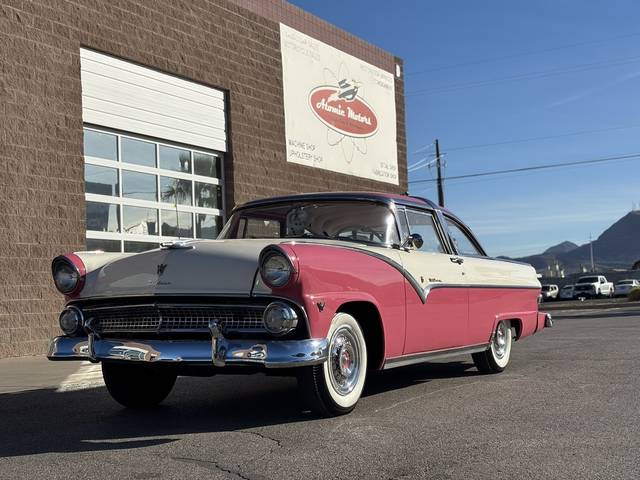
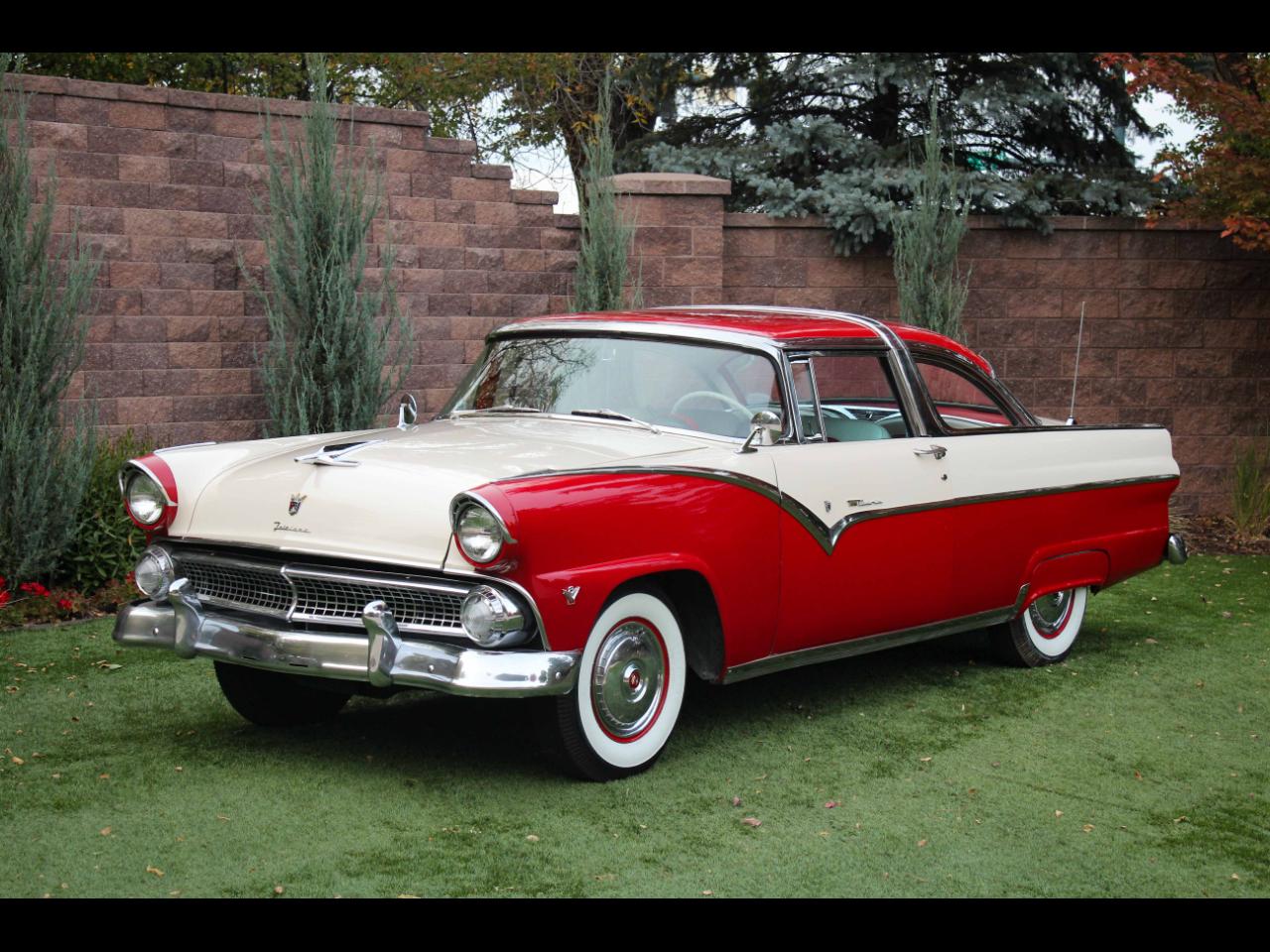
The first Crown Victoria arrived for 1955 as the flagship trim of the new Ford Fairlane range: a two-door hardtop coupe distinguished by a broad stainless-steel band — the "tiara" — that swept over the roof and down the B-pillars, like a crown. Underneath it was a mainstream mid-fifties Ford: Y-block V8 or six up front, body on a separate frame, drum brakes all round. Its party trick was the Crown Victoria Skyliner, whose front roof section was tinted transparent acrylic, so the front-seat passengers sat under glass. It lasted just two model years, 1955 and 1956, killed not by failure but by fashion moving on and by buyers discovering that a glass roof in July is a greenhouse. Today the 1955–56 cars are genuine fifties classics, collected in the same world as the Tri-Five Chevrolets they were built to fight.
The second Crown Victoria is the Panther. Ford's Panther platform underpinned the full-size, rear-wheel-drive, body-on-frame Ford from 1979 to 2011 — the longest-lived American sedan formula of the modern era. The car wore LTD and LTD Crown Victoria badges from 1979 to 1991, then simply Crown Victoria from the aerodynamic 1992 redesign until the very last one rolled out of the St. Thomas, Ontario plant in September 2011, bound for export. Its sisters were the Mercury Grand Marquis and the Lincoln Town Car. The Panther Crown Victoria became the default American police car and taxi of its era — the Police Interceptor, fleet code P71, is the version most survivors are — precisely because it was simple, huge, tough and cheap to fix with a hammer and a parts store. When Ford ended it, an entire ecosystem of patrol fleets, cab companies and limo operators had to find something else, and nothing since has filled the hole in quite the same way.
Now the honest disclosure about our own listings, because it shapes this guide. We currently track 25 Crown Victorias for sale or recently sold — 17 for sale and 8 sold — and the pool splits almost exactly in half between the two cars. Thirteen are the original 1955–56 cars: eleven from 1955 and two from 1956. Twelve are Panthers, spanning 1988 to 2005, taking in the last of the boxy LTD Crown Victorias, the 1992–97 aero cars and the 1998-onwards facelift cars. Sixteen of the 25 came through dealers and nine through Facebook Marketplace sellers, which tells its own story: the fifties cars trade through the classic dealer network, while Panthers still change hands like used cars, because until recently that is what they were. Of the nine cars in our pool whose sellers' photo sets we have examined in detail, rust was noted in five and visible damage in four — a fair summary of both ends of this market, as you will see.
So this guide is written in two voices. Where a section divides cleanly by era, it says so. Where the buying logic is the same — read the metal before the mechanicals, buy condition over specification, distrust a story you cannot verify — it applies to both. A 1955 Skyliner and a 2004 Police Interceptor have no part in common, but the buyer who inspects either one properly is doing the same job.


The models
The 1955–56 Fairlane Crown Victoria
Every original Crown Victoria is a two-door hardtop in Ford's Fairlane range — there was no four-door, no wagon and no convertible wearing this badge in 1955–56, so a listing describing one is describing something else. The line-up is simple: the standard Crown Victoria with its steel roof and tiara band, and the Crown Victoria Skyliner with the acrylic front roof. Both years look similar at a glance and differ in the details collectors pay for: 1955 cars are six-volt with a positive earth, wear the eggcrate grille and carry the Fairlane's first-year trim; 1956 cars went twelve-volt, gained Ford's Lifeguard safety package (a deep-dish steering wheel, stronger door latches, and optional padding and belts), grew small fins and took the more powerful Thunderbird V8 options. The 1956 is the more usable car; the 1955 is the more collectible shape, and the Skyliner premium applies to both.
The Panther cars, 1979–2011
The Panther range divides into four civilian generations and one parallel universe of fleet cars. The 1979–91 LTD Crown Victoria is the boxy original: formal roofline, pushrod small-block V8s, and — from 1990–91 — the last of the square shape with a driver's airbag. The 1992–97 car was a clean-sheet body on the same bones, all rounded aero styling, powered exclusively by the new 4.6-litre Modular V8, with rear air suspension on the options list. The 1998–2002 facelift put the formal grille and upright face back, added a Watts linkage to the rear axle for 1998, and is the generation most ex-police survivors come from. The 2003–11 cars look similar but were heavily re-engineered underneath: rack-and-pinion steering replaced the old recirculating-ball box, the front suspension and frame were redesigned, and these are the sharpest-driving Panthers of all.
Across all of them, trim ran base (later LX), and the fleet codes matter more than the badges: P71 is the Police Interceptor package, P72 the commercial and taxi specification, and P70 the long-wheelbase taxi built on a wheelbase stretched by about six inches, all of it in rear legroom for cab work. Civilian cars with the Handling and Performance Package — dual exhausts, a shorter axle ratio, uprated suspension — are the connoisseur's Panther, and the short-lived LX Sport of the early 2000s added bucket seats and a floor shifter to the same idea.
| Model | Years | Engine | Output | Built | Character |
|---|---|---|---|---|---|
| Crown Victoria (Fairlane) | 1955 | 223 six / 272 Y-block V8 | 120 / 162 hp | about 33,000 | The original; six-volt electrics, first-year trim |
| Crown Victoria Skyliner | 1955–1956 | 272 / 292 / 312 Y-block V8 | 162–225 hp | about 2,600 over both years | Glass front roof; the collector flagship of the fifties car |
| Crown Victoria (Fairlane) | 1956 | 223 six / 272 / 292 / 312 V8 | 137–225 hp | about 9,200 | Twelve-volt, Lifeguard safety kit, stronger V8 options |
| LTD Crown Victoria | 1979–1991 | 5.0 (302) / 5.8 (351W) pushrod V8 | 130–180 hp | volume production; no clean variant split published | The boxy Panther; carburettor early, injected late |
| Crown Victoria (aero) | 1992–1997 | 4.6 Modular SOHC V8 | 190 hp (210 dual exhaust) | volume production; no clean variant split published | The rounded redesign; the gentleman's Panther |
| Crown Victoria | 1998–2002 | 4.6 Modular SOHC V8 | 200–235 hp | volume production; no clean variant split published | Formal grille returns; Watts-link rear axle |
| Crown Victoria LX | 2003–2011 | 4.6 Modular SOHC V8 | 224–239 hp | volume production; no clean variant split published | Rack-and-pinion steering; the best-driving civilian car |
| Police Interceptor (P71) | 1997–2011 | 4.6 Modular SOHC V8 | 235–250 hp | the bulk of late production | Heavy-duty everything; a working life is the price |
| Commercial / taxi (P70/P72) | 1990s–2011 | 4.6 Modular SOHC V8 | 220–250 hp | fleet production | Built to be abused; buy only on condition, never on price |
(Outputs are period Ford ratings and vary slightly by year, exhaust and market. Panther production figures by individual variant were never published in a form we can honestly reproduce, so the table says so rather than inventing numbers — the fifties figures are the commonly documented Ford production counts, rounded.)

Engines and gearboxes
The fifties cars: Mileage Maker six and Y-block V8s
The 1955–56 Crown Victoria offers Ford's 223-cubic-inch Mileage Maker overhead-valve six (120 hp in 1955, 137 hp in 1956) and a ladder of Y-block V8s. The Y-block takes its name from the deep-skirted block casting, and it is a tough, torquey, old-fashioned engine: 272 cubic inches as the standard V8 (162 hp), then in 1956 the 292 Thunderbird V8 (about 200 hp) and the 312 Thunderbird Special (215–225 hp depending on transmission and carburettor) at the top. Most Crown Victorias are V8s, and the 312 cars are the ones collectors chase. All breathe through a single carburettor — two-barrel on lesser cars, four-barrel Holley or Carter on the strong ones — and the intake manifold carries an exhaust crossover passage that warms the carburettor base, a feature that matters in the problem areas below.
A healthy Y-block starts readily, idles with a soft lope and pulls without hesitation. Its known weakness is top-end oiling: oil reaches the rocker shafts through passages that sludge up on neglected engines, and a starved top end wears rocker arms and shafts while ticking at you. Pull a rocker cover on any car you are serious about, or at minimum listen at the covers and look for oil actually reaching the rockers. Rear main seals leak — they were rope seals when new — and a Y-block that does not mark its territory slightly is either fresh or empty. Budget a four-figure sum for a proper engine rebuild only if compression is uneven; most survivors need seals, a carburettor rebuild, a fuel system clean and ignition work rather than surgery. A carburettor rebuild runs roughly $300–700, a fuel-system recommission with tank cleaning $500–1,200, and a full Y-block rebuild at a specialist $4,000–7,000 if it truly comes to that.
The electrical divide matters more than the engine choice. A 1955 is a six-volt, positive-earth car with a generator: dim lights by modern standards, slow cranking, and starting that depends on fat cables and clean earths. Many have been converted to twelve volts or to an alternator; a well-documented conversion is a plus for a driver, a deduction for a show car. The 1956 is twelve-volt, negative earth from the factory, and simply easier to live with. Vacuum-operated wipers on both years slow to a crawl when you accelerate — that is correct behaviour, not a fault, though it tells you why electric conversions are common.
The pushrod Panthers: 5.0 and 5.8 Windsor, 1979–1991
The boxy LTD Crown Victoria runs Ford's Windsor small-blocks: the 302-cubic-inch 5.0 as the standard engine and the taller-deck 351-cubic-inch 5.8, mostly in police and trailer-tow service. The story of the 5.0 in this car is a fuel-system timeline. Early cars carry carburettors, including Ford's 7200 Variable Venturi unit, which was troublesome when new and is the first thing to blame for a late-seventies or early-eighties car that hunts, stalls and drinks fuel — the honest cure is a conventional carburettor conversion, and many cars have already had one. Central fuel injection (throttle-body) followed in the mid-eighties, and from 1986 the 5.0 gained sequential electronic injection, at which point it became the engine of legend: 150 hp, understressed, and capable of intergalactic mileages on oil changes alone. The injected 5.0 is the pushrod Panther to buy. The 351W makes more torque and similar horsepower in these emissions-era tunes, but drinks more and was usually bought to work — a 351 car is very often an ex-police car, with everything that implies.
These are pushrod engines with a timing chain, a distributor and parts in every auto store in America. Failure modes are the familiar Windsor ones: timing-chain stretch making the idle lazy, rear main and intake end-seal oil leaks, tired valve stem seals puffing blue on start-up, and cooling systems scaled up after years of tap water. None of it is exotic, and a full refresh of hoses, seals and ignition parts is a few hundred dollars in parts. What kills these cars is never the engine; it is the body and frame around it, which is why the rust section below is longer than this one.
The 4.6 Modular, 1992–2011
From 1992 the only engine is Ford's 4.6-litre Modular V8: an iron-block, aluminium-head, overhead-cam two-valve V8 making 190 hp with a single exhaust and 210 hp with the dual exhaust that came with the handling package and most fleet orders. Power crept up across the facelift (200 hp, then 215 with duals), the improved Performance Improved cylinder heads for 2001 took civilian cars to 220–235 hp, and the Police Interceptor finished the run at 250 hp with the help of a freer-breathing intake borrowed from the Mercury Marauder programme. It is one of the most durable engines Ford has ever built — taxi fleets routinely ran these past 300,000 miles — but it has three specific traps, and the problem areas section gives each of them in full: the plastic intake manifold whose coolant crossover cracks on 1996–2001 cars, spark plugs that can blow out of the shallow-threaded early heads, and timing-chain guides that wear on high-mileage or oil-starved engines and announce themselves with a start-up rattle.
Read the 4.6 the way fleet buyers do. Oil consumption of a quart between changes on a high-miler is normal; smoke under load is not. A silent engine with clean oil and a documented intake-manifold replacement (on the affected years) is worth more than a lower-mileage car without paperwork, because on a Panther the odometer is the least reliable narrator — police cars idle for a living, and from 2006 the Interceptor's dash carries an engine-hour meter that tells the truer story. A car showing 120,000 miles and 9,000 idle hours has lived a harder life than a civilian car showing 180,000 highway miles.
Gearboxes
No Panther Crown Victoria was ever sold with a factory manual gearbox, and every 1955–56 car started life with one of three choices. Hold both facts, because our own pool contains listings with manual gearboxes recorded against Crown Victorias — those belong, if anywhere, to the fifties cars.
Fifties transmissions. Standard was a three-speed manual with a column change, with overdrive as the keen driver's option and the two-speed Fordomatic automatic as the popular one. The manual is simple and strong; judge it on second-gear synchromesh and clutch judder. The overdrive is a genuinely useful cruising device when its solenoids and kickdown switch work, and a wiring exercise when they do not. The Fordomatic starts in its intermediate gear unless you select low or floor it, so a lazy-feeling pull-away is design, not slip; flaring, delayed reverse and burnt-smelling fluid are the real warnings. A Fordomatic rebuild runs roughly $1,800–3,000 at a transmission shop that still knows them.
Panther automatics. All are four-speed automatics, but there are three generations and the differences matter. The AOD (1980–92) is a purely mechanical box controlled by a throttle-valve cable — and that cable is the single most important component on an early Panther. Its plastic adjustment bushing at the throttle body crumbles with age; when it fails, line pressure collapses and the transmission can destroy itself within a few miles of driving. Check the bushing on sight, replace it as preventive maintenance for a few dollars in parts, and treat any AOD car that "just started slipping" as a car priced for a rebuild, roughly $1,800–3,200 fitted. The electronically controlled AOD-E (1993–94) and 4R70W (1995 on) deleted the cable and are stronger and better mannered; the 4R75W and 4R75E of the mid-2000s are stronger again. On any of them, judge the 1–2 and 2–3 shifts for firmness, check for torque-converter shudder at light throttle around 40 mph (often curable with fresh fluid of the correct specification, occasionally a converter), and smell the fluid: dark and burnt means the box has been hot, and hot is what shortens its life. Fleet cars got fluid changes on schedule and private cars mostly did not — ask.

Problem areas
Two cars, two failure maps — but one shared truth: on both, the metal decides. Engines for the fifties cars and the Panthers alike are fundamentally long-lived; bodies, frames and the specific plastic-and-fleet problems detailed below are what turn a cheap Crown Victoria into an expensive one. Our photo sample agrees in miniature: of the nine cars in the current pool whose photo sets we examined closely, rust was noted in five and visible damage in four. Work through this section in order — structure first, then the era-specific traps.
Rust and structure: the fifties map
A 1955–56 Ford is a body on a separate frame, and both halves rot. Start with the body. The rocker panels below the doors are the classic failure: they collect road filth, rot from inside, and carry the door alignment with them, so check door gaps and prod the full rocker length, especially at the front where the fender meets it. The front fenders rust in the brow over the headlamps — water sits in the seam — and at their lower trailing edges behind the wheels. Floor pans go over the body braces, the trunk floor goes over the fuel tank and at its rear corners, and the lower rear quarters bubble behind the wheel openings. None of this is hidden technology: bring a magnet in a cloth, a torch and a screwdriver, and prod every seam. A rocker or floor section cut out, welded and painted runs roughly $800–2,000 a side depending on how far the rot has travelled; a car needing rockers, floors and quarters on both sides is a restoration project whatever the paint looks like, and fresh two-tone paint over new rockers is the oldest trick in the fifties market.
Then the frame. Surface scale is normal; perforation is not, and the places to hunt are the front crossmember area, the side rails where body mounts sit, and the rear kick-up over the axle. Body mounts themselves perish and let the body settle, which shows as uneven panel gaps a seller will blame on adjustment. A bent or rotted frame on a fifties Ford is repairable — these frames are simple steel — but it reprices the car completely. While you are underneath, look at the brake and fuel lines, which will be as old as the frame unless documented otherwise, and remember that both years run a single-circuit brake master cylinder as built: a failure anywhere is a failure everywhere. Many drivers have been converted to a dual-circuit master cylinder; it is a sensible, reversible safety upgrade, and its presence tells you the previous owner drove the car rather than worshipped it.
The Skyliner adds its own line item. The acrylic roof panel crazes, yellows and cracks with age and sun, the seals perish and leak onto the headliner and seats, and the panel turns the front compartment into a greenhouse on a sunny day — the factory solution was a snap-in sunshade, and period complaints are why the option died after 1956. An original panel in clear, uncracked condition is genuinely valuable; a cracked or badly crazed one is a specialist replacement measured in thousands, not hundreds, and a steel-roof conversion on a claimed Skyliner destroys the car's identity and most of its premium. Verify the body tag and trim codes before paying Skyliner money for anything.
Rust and structure: the Panther map
The Panther's enemy is not the body you can see — galvanised panels hold up reasonably — but the frame and the hardware under it, above all on salt-belt cars. The frame rails collect mud and rot from inside, worst around the front suspension mounts, the body-mount points and the rear rails; a Panther with a perforated frame is scrap wearing a registration, because frame repair on a car worth this little rarely pencils out. Get the car on a lift and prod, do not just look. The rocker panels and the bottoms of the doors go next, then the trunk floor corners and the wheel-arch lips. Fuel and brake lines rust along the frame rail, the fuel-tank straps rust through and let the tank shift, and the rear body mounts collapse and give the car a tail-down stance that sellers blame on springs.
Two Panther-specific structural checks deserve their own sentences. First, the 2003-onwards cars: the redesigned frame is stronger, but the front aluminium control arms and their ball joints live in the splash zone, and corrosion plus wear is the standard finding. Second, any ex-police or ex-taxi car: look at the roof and pillars for the scars of its working life — light-bar and antenna holes, sometimes filled with silicone or plugs, spotlight holes through the driver's A-pillar, and drilled holes in the trunk and floor from equipment mounting. Each hole is a water path and a rust seed, and a roof full of them is a leak you will chase for years. A civilian car that never wore equipment is worth a real premium for this reason alone.
The 4.6's plastic intake manifold, and its other traps
The single most famous Panther fault deserves its mechanism. From 1996 to 2001 the 4.6 was built with an all-plastic intake manifold whose front coolant crossover passage — coolant, under pressure, at full operating temperature, in nylon — cracks with heat cycles and age, typically without warning, and dumps coolant over the front of the engine. Ford replaced manifolds under an extended programme on many cars and later production used an aluminium crossover; the aftermarket sells both patterns. The check takes ten seconds: look at the front of the manifold where the thermostat housing and alternator sit and identify the crossover material. Plastic on a 1996–2001 car with no invoice for replacement means the job is in your future — budget roughly $600–1,200 fitted for a quality replacement manifold and gaskets, and treat a seller's invoice for the later aluminium-crossover part as genuine added value. Cars before 1996 and from 2002 on are not affected in the same way, which is one reason the 2003-onwards cars are the low-drama buy.
Spark plugs are the second trap, and it is a torque problem. The early two-valve 4.6 heads carry only a few threads of plug engagement, and a plug installed carelessly — over-torqued, under-torqued, or changed hot — can eventually blow out of the head, taking the threads with it and announcing itself with a sudden loud chuffing and a misfire. It is fixable in the car with a proper thread-repair kit, roughly $400–800 a hole at a shop, but the prevention is free: plugs changed cold, to the specified torque, with no anti-seize unless the plug maker calls for it. Ask when the plugs were last done and by whom; a car with a documented recent set, correctly done, has had its risk retired for years.
Timing-chain wear is the third. The 4.6 uses long chains with plastic-faced guides and hydraulic tensioners. On engines that have seen stretched oil intervals — fleet cars usually have not, neglected private cars have — the guides wear, and the symptom is a brief rattle on cold start that quiets as pressure builds, progressing to a constant rattle and eventually chain slap. A rattle that lasts more than a second or two on a cold start is a four-figure job priced into the offer (roughly $1,200–2,200 for chains, guides and tensioners fitted), not a quirk. Add the smaller regulars: the heater hose outlet nipple at the rear of the intake on some years, tired coil-on-plug boots causing a light-load misfire from 1998 on (cheap, one at a time), and an idle-air control valve that gums up and makes the idle hunt or stall on earlier cars.
Panther chassis, electrics and the fleet-wear file
The Panther front suspension depends on the year. Cars to 2002 use a recirculating-ball steering box with a linkage full of joints — pitman arm, idler arm, tie-rod ends — and wear shows as wander, play at the wheel and a car that needs constant small corrections on the highway; none of the parts is expensive, but the full set plus an alignment is a $600–1,200 day. Ball joints on these cars are sealed and dry out, creaking over bumps before they wear loose; a dry creak on a test drive is a joint asking to be replaced. The 2003-onwards rack-and-pinion cars steer far better and wear their racks and inner tie-rods instead — check for fluid in the rack boots and play with the wheel rocked at nine and three. At the rear, the 8.8-inch axle is strong; its wear items are axle shafts that groove where the wheel bearing rides (a grumble from the rear at speed, cured with repair bearings or shafts) and, on limited-slip cars, clutch packs that chatter on tight turns when the oil is old.
Rear air suspension, fitted to many civilian cars, is a decision point. The air springs' rubber bladders perish and crack with age, the car sinks overnight, and the compressor runs itself to death compensating. A car sitting level after standing for days has a healthy system or new bags; a car down at the rear has a bill coming — roughly $300–600 for quality replacement air springs, more if the compressor has died too — and many owners convert to coil springs, which is cheaper and permanent but deletes a feature and should be disclosed. Converted cars are fine to buy; undisclosed conversions discovered later are a character reference for the seller.
Inside, the Panther's repeat offenders are the blend-door actuator behind the dashboard (clicking from the dash, air stuck at one temperature; the part is cheap and the access is not — budget $400–900 fitted), the heater core on high-mileage cars (a sweet smell and a misting windscreen; another dashboard-out job), cable-type window regulators that strip and drop the glass ($150–350 a door fitted), and the lighting control module on 2003–05 cars, whose internal relay can fail and take the headlights intermittent — a known fault with a known repair, and worth asking about directly on those years. Add the cruise-control deactivation switch on the master cylinder of many nineties and 2000s Fords, the subject of a long-running recall for fire risk: check the recall has been done, because the fix is a fused harness and five minutes, and an unfixed car is a genuine hazard, not a bargaining chip.
Finally, fleet wear itself, because most Panthers for sale have worked. A Police Interceptor's honest virtues are real: heavy-duty cooling, a larger alternator, external oil coolers, steel wheels, a calibrated speedometer, dual exhausts and maintenance done on schedule by people who logged it. Its honest vices are equally real: idle hours that wear the engine without moving the odometer, a driver's seat and door card worn by duty belts and thousands of entries, holes and wiring scars from equipment (see the structure section), a transmission that has done pursuit and kerb work, and a rear seat that has carried unwilling passengers and may be vinyl for a reason. Taxis add a second shift of the same life and, on the long-wheelbase P70, the highest mileages of all. None of this disqualifies a car — it prices it. The mistake is paying civilian money for a fleet car because the paint is shiny; fleet resprays are cheap and common, and the door jambs, the certification label and the build codes tell the truth the paint is hiding. The certification label on the driver's door carries the axle and trim codes, and the VIN and paperwork should agree with the P71, P72 or P70 story the seller is telling. Where they disagree, believe the label.
Fifties mechanical traps: oiling, electrics and heat
The Y-block's oiling weakness, introduced in the engines section, is the main mechanical trap on the 1955–56 cars: sludge closes the feed to the rocker shafts, the top end starves, and the wear is invisible from outside until you hear it or pull a cover. A car with documented regular oil changes and a quiet top end is the one to buy; a car that ticks at the covers and has no history gets priced for top-end work at minimum. The exhaust crossover in the intake manifold is the second: its heat-riser valve seizes, usually shut, cooking the carburettor base and cooking the fuel in it — hard hot starting, vapour locking in traffic and a flat spot that owners blame on the carburettor. Freeing or replacing the valve and verifying the crossover is clear belongs on any recommissioning list. Fuel pumps on these cars also drive the vacuum wipers, so a worn pump shows up twice: weak fuel delivery and wipers that die on hills.
The 1955's six-volt system is the third trap, and it is mostly about condition rather than design: tired generators, resistive cables and poor earths make starting a lottery, and half the "unreliable" 1955s in the world are one new set of heavy cables and cleaned earth points away from being fine. Budget the recommissioning properly — ignition service, carburettor rebuild, fuel tank and line clean, full brake hydraulics, hoses and belts — at roughly $2,000–4,000 at a shop on a car that has sat, before you improve anything. Cars that have been in regular use need a fraction of it, which is why a driven 1956 with miles on it is usually a better buy than a 1955 that has slept for a decade, whatever the odometers say.
How to inspect one
Allow an hour, bring a torch, a magnet wrapped in cloth and a small screwdriver for prodding, and decide before you arrive which Crown Victoria you are inspecting — the fifties steps and the Panther steps diverge after the paperwork, and this list flags which is which. If the car passes you, a lift inspection before money changes hands is money well spent on either era.
- Paperwork and identity first. Match the VIN on the title to the car's plates and stampings. On a 1955–56 car, decode the body and trim codes before paying any Skyliner or 312 premium — the codes, not the seller's description, prove the glass roof and the engine the car left the factory with. On a Panther, read the certification label on the driver's door: the codes there confirm or deny a P71, P72 or P70 fleet story, and a civilian LX claim that the label contradicts is finished as a negotiation.
- Cold start, whichever era. Insist the engine is cold. A Panther 4.6 should fire at once and idle cleanly; listen in the first two seconds for the timing-chain rattle described in the problem areas, and on a 2006-onwards Interceptor, call up the engine-hour meter and read it against the odometer. A Y-block should start without drama, tick over evenly and show no smoke beyond a first puff; a six-volt 1955 that cranks slowly but starts has told you about its cables, not its engine.
- The Panther manifold check (1996–2001 cars). Open the bonnet and identify the intake manifold's front coolant crossover: aluminium is the later, safe pattern; plastic with no replacement invoice is the cracking-prone original, and you price the replacement job from the problem areas into your offer on the spot. While you are there, look for coolant staining around the thermostat housing and down the front of the engine — the leak often starts as a weep before it lets go.
- Underneath: frame before everything. On a Panther, prod the frame rails at the body mounts, front suspension pickups and rear rails, and check the brake and fuel lines, tank straps and rear body mounts; perforation ends the inspection. On a fifties car, work the same logic over its frame and then the body: rockers, floor pans over the braces, trunk floor, front fender brows and lower rear quarters, magnet in hand, exactly as mapped in the rust sections.
- The roof and the holes. On a Skyliner, inspect the acrylic panel against the light for crazing and cracks, check its seals and look at the headliner and front seats for the water damage a leaking panel leaves. On an ex-fleet Panther, walk the roof and A-pillars for light-bar, antenna and spotlight holes and their fillers, and check the trunk and floor for equipment drilling — every filled hole is a future leak, per the structure section.
- Suspension and steering by year. Rock each front wheel for play. On a pre-2003 Panther, work the steering from lock to lock and feel for the box-and-linkage play and dry ball-joint creak described in the chassis section; on a 2003-onwards car, check the rack boots for fluid and the inner tie-rods for knock. On a fifties car, bounce each corner, check the ball joints and kingpin-era hardware for play, and look at the body mounts — a car sitting unevenly is telling you about mounts or springs.
- The AOD cable test (1980–92 Panthers). Find the throttle-valve cable bushing at the throttle body. If the plastic bushing is cracked, loose or missing, do not test-drive the car until it is replaced — the problem areas explain how a few miles on a failed bushing can kill the transmission. On any Panther automatic, then assess the shifts on the drive: firm and clean is right; flaring, a long delay into reverse or converter shudder at a steady 40 mph is money off.
- The test drive. Fifteen minutes, including a highway stretch and some tight low-speed turns. A Panther should track straight with no wander (steering wear), no rear-axle grumble (bearing grooves) and no limited-slip chatter on the turns (old oil or worn clutches). A fifties car should pull cleanly without the flat spot that points at the heat-riser and crossover problems, and its brakes — drums, single circuit as built — should stop it straight and without a spongy pedal.
- Heat and electrics, both eras. Let the car idle hot and watch the temperature gauge stay settled. On a Panther, run the climate control through every mode and listen behind the dash for the blend-door actuator's clicking, check for the sweet smell and misting screen of a tired heater core, work every window (regulators), and on a 2003–05 car switch the headlights on and off repeatedly — the lighting module fault from the problem areas is intermittent by nature. On a fifties car, work the lights, wipers and heater, and on a 1955 remember the wipers slowing under acceleration is correct, not a fault.
- Air suspension, if fitted (Panther). Ask the seller not to start the car before you arrive, and note the rear ride height as you walk up: a car sitting level after standing has healthy air springs; a car down at the back has the leak the problem areas describe, and you should hear the compressor run — briefly is fine, constantly is a compressor being worked to death. Confirm whether a coil conversion is already fitted, and get the seller to say so plainly.
- Interior as evidence. On a Panther, judge the driver's seat, door card and pedal rubbers against the claimed mileage and life: a worn driver's bolster, a vinyl rear seat and duty-belt scuffs on a supposedly civilian car mean the paperwork in step 1 needs a second look. On a fifties car, sit in both front seats, check for the sagging springs and perished trim that a retrim budget has to cover, and lift the trunk mat and spare to check the floor beneath.
- Stance and the walk-away lines. Stand back and look at the car level from all four sides: Panthers sit tail-down for collapsed rear mounts or dead air suspension and fifties cars sit unevenly for mounts and springs. Then apply the two walk-away rules this guide has built: structural rot — frame on a Panther, frame or widespread body rot on a fifties car — ends it regardless of price, and an identity that does not match its paperwork (a Skyliner that is not, a civilian car that is a P71) ends it regardless of condition.
Values
The build below this guide carries the live numbers — what is listed now and what recorded sales have achieved — and those figures move, so this section teaches you how to read them rather than repeating them. The first thing to understand is that "Crown Victoria" prices describe two unrelated markets sharing a results page, and any average across the whole name is meaningless. Separate the fifties cars from the Panthers before you draw any conclusion from a median.
In the fifties market, value is a condition-and-identity market. The spread between a project and a finished car is enormous, because the restoration costs — metalwork, paint, chrome, a Skyliner panel if it needs one — do not scale down for a cheap starting point. Within the era, the premiums stack predictably: Skyliners over steel-roof cars, 1956's stronger Thunderbird V8s over the base 272, the 312 over everything, and documented originality over restored-to-a-story. Asking prices in this world are frequently aspirational, especially for freshly painted cars, and achieved prices follow provable condition — the cars that sell are the ones whose rockers, frames and codes survive inspection. A cheap 1955 with needs is the most expensive way into this market; the project-versus-driver gap is at its widest here, and the driver is nearly always the better buy.
In the Panther market, value is a provenance-and-condition market, and the odometer is the weakest evidence in it. The hierarchy runs civilian cars first — a genuine LX with private history sits at the top — then well-kept late Police Interceptors, then everything fleet, with high-mileage taxis at the bottom regardless of how they present. Within the Interceptors, the late 2003-onwards cars with the steering and chassis revisions, a documented intake-manifold replacement where the years require it, and a readable, moderate engine-hour count are the ones that hold money. Colour matters more than you would expect: black, white and the dark blues are plentiful because fleets ordered them, and an unusual civilian colour on a civilian car is a small premium in itself. Asking and achieved prices diverge in a specific way here — private sellers price ex-police cars against civilian cars and wait, while fleet-history cars priced honestly move quickly, because the enthusiast market for a good P71 is real and informed.
Two negotiation realities apply to both eras. First, deferred maintenance is quantifiable in a way sellers dislike: the inspection above produces a list with real job costs attached, and presenting that list moves prices more reliably than any general argument about the market. Second, neither market rewards rarity claims that the paperwork cannot support — a Panther is not rare, a fifties Crown Victoria is not rare, and in both cases the scarce thing is condition. Pay for the car in front of you, verified, and let the live figures below confirm you are inside the market rather than above it.
Parts and ownership
Ownership splits as cleanly as everything else about this name. The Panther is one of the cheapest serious cars in the world to run; the fifties car is a mainstream classic with mainstream classic costs and excellent support for a car of its age.
The Panther: easy and cheap. Almost everything is available, much of it from ordinary parts stores, because the fleet aftermarket never stopped making it. Service items, brake parts, suspension joints, window regulators, coil packs, alternators and starters are inexpensive and usually same-day. The intake manifold replacement described earlier runs roughly $600–1,200 fitted; ball joints and steering wear parts are a few hundred dollars a corner in parts terms; air springs run roughly $300–600 a pair, or a coil conversion kit for similar money ends the subject permanently. The transmission rebuild at roughly $1,800–3,200 is the biggest routine bill, and a timing-chain set at $1,200–2,200 the second. A sorted Panther asks for oil, tyres and brake pads and repays you with the running costs of the taxi it was designed to be. Insurance is ordinary used-car money, fuel consumption is what a two-ton V8 sedan promises, and any competent general workshop can maintain one — the specialist knowledge in this guide is buying knowledge, not ownership knowledge.
The Panther: watch-outs. Heater cores and blend-door actuators are cheap parts behind expensive labour, because the dashboard comes out; a quality repaint costs more than most Panthers are worth, which is why you buy paint and body condition rather than planning to create them; and ex-fleet cars consume the small stuff — seat foam, door seals, switches, locks — at a rate civilian cars do not. None of it is scarce. The only genuine scarcity is un-holed, un-abused civilian body shells, which is the market telling you the same thing this guide does.
The fifties cars: well supported, honestly priced. Ford built these cars in volume and the classic Ford trade — the reproduction houses that serve the whole 1955–57 Ford world — covers them well: patch panels for rockers, floors and quarters, weatherstrips, glass, chrome trim reproduction, brake and suspension parts, and Y-block engine components are all catalogue items. Mechanical parts are straightforward; a carburettor rebuild runs roughly $300–700, a Fordomatic rebuild $1,800–3,000, and a full engine rebuild $4,000–7,000 at a specialist if compression forces the issue. The expensive list is the cosmetic and structural one: metalwork and paint on a rotted car runs well into five figures done properly, a full retrim is a four-figure job before you reach for leather, and Skyliner acrylic panels and good original brightwork are hunted parts where patience matters more than money. Six-volt electrical parts for a 1955 are available but specialist; twelve-volt and alternator conversions are common, reversible and worth more to a driver than to a judge.
Running one. Both eras reward use. A Panther that sits grows the same faults as any modern car — flat-spotted tyres, tired brake hydraulics, a battery on its way out — and a fifties car that sits grows worse ones, because ethanol fuel attacks its rubber and varnishes its tank while seals dry out. Budget a first-year catch-up on any new purchase: a few hundred dollars of fluids, filters and small parts on a good Panther, and the $2,000–4,000 recommissioning figure from the problem areas on a fifties car that has been asleep. After that, the Crown Victoria in either of its lives is what it always was: a big, simple Ford that asks little and gives back a great deal, provided you bought the right one — which is the subject of the final section.
Which one to buy
- The all-rounder (Panther): a 2003–2011 civilian LX. Rack-and-pinion steering, the strongest transmission of the run, no plastic-manifold trap, and a private-car life. This is the Crown Victoria to own if you want to drive one daily, and the deepest pool of knowledge and parts sits behind it.
- The value buy (Panther): a late, honest Police Interceptor. A 2004-onwards P71 with moderate engine hours, a documented service life and its holes and wear declared is the most car per dollar in this entire guide — provided you pay fleet money for it and not a cent of civilian money.
- The driver's fifties car: a 1956 Crown Victoria with a Thunderbird V8. Twelve volts, the Lifeguard safety package and the 292 or 312 under the bonnet make it the usable classic of the first era. Verify the engine by its numbers, not by the seller's adjectives.
- The collector car: a 1955–56 Crown Victoria Skyliner. The glass roof is the whole point, so the acrylic panel's condition and the body codes proving the car was born with it are the purchase. A verified, clear-panelled Skyliner is the flagship of the name's first life.
- The entry point: a steel-roof 1955 Crown Victoria V8. The tiara band, the shape and the Y-block without the Skyliner premium or the glass-roof risk. Six-volt electrics are a condition problem, not a character flaw — budget the cables and earths and drive it.
- The one to avoid at any price: a mislabelled car. A Panther priced as civilian that the door label proves is a P71, P72 or P70, or a fifties car priced as a Skyliner or a 312 that its codes do not support. The cars are common enough in both eras that no buyer needs to fund a fiction.
And the rule that overrides all of the above: buy verified condition and verified identity, in whichever era you choose — the metal and the paperwork decide what a Crown Victoria is worth, and everything else is a story. Engines, gearboxes, intake manifolds and air springs all have known prices. A rotted frame, a cracked glass roof bought as perfect, or a fleet car bought as a civilian one are the mistakes that cannot be un-bought.
See the 14 Crown Victoria LX Sedan 4D cars currently listed.