
Dodge Viper GTS buyer's guide
Dodge Viper GTS -- the model's own buyer's guide: variants, values and what to check.
Years listed: 1992-2005 · Series: Viper
Overview and history
The Dodge Viper is the most deliberately uncivilised car a major American manufacturer has ever sold, and it stayed that way, in essence, for a quarter of a century. It began as a show car at the 1989 Detroit auto show — a back-to-basics roadster in the spirit of the Shelby Cobra, pushed by Chrysler president Bob Lutz and styled by Tom Gale's team — and the reaction was so strong that Chrysler committed to building it. Production cars reached customers for the 1992 model year, built by hand at the New Mack Avenue plant in Detroit and, from late 1995, at the Conner Avenue plant that remained the Viper's home for the rest of its life.
The formula never really changed: a huge V10 in front, a six-speed manual gearbox behind it, rear-wheel drive, a steel tube frame wearing composite body panels, and as little between the driver and the consequences as the law of the day allowed. The first cars had no exterior door handles, no side windows (zip-in vinyl curtains instead), no air conditioning, no airbags and no anti-lock brakes. That was not cost-cutting theatre; it was the point. The Viper was a halo car and a rolling argument that Chrysler still knew how to build excitement.
Five generations followed. The first (1992–95) was the raw RT/10 roadster alone. The second (1996–2002) added the GTS coupe — the car most people picture, usually in blue with white stripes — and with it windows, airbags and eventually ABS. The third generation (2003–06) restyled the car as the SRT-10, sharper-edged and more powerful, roadster first and coupe from 2005. The fourth (2008–10) brought a bigger 8.4-litre engine and 600 hp. The fifth (2013–17) relaunched the car under the SRT badge before it returned to Dodge, adding the electronic safety nets the early cars famously lacked, and ended with the extreme ACR of 2016–17. Production finished in August 2017. Across all five generations the total build was in the low thirty-thousands — small numbers for a car with this one's fame.
On our own pages the market is dominated by the early cars. We currently track 43 Vipers in the US, 21 for sale and 22 recorded sold, and the years run from 1992 to 2005: the first two generations make up the bulk of the listings, with the Gen 3 SRT-10s of 2004–05 behind them and nothing later on the site as we write. Red and Viper Red cars lead the colour count, with white, green, yellow and blue behind them, and the sellers are overwhelmingly dealers — this is a car that now trades through specialists rather than driveways.
A Viper is not a fragile car, but it is an unforgiving one, and the two facts shape everything in this guide. The mechanicals are truck-strong and comparatively simple. The risks that actually cost owners money are heat damage to the bodywork, accident history, aged tyres on a car with the torque to overwhelm them, and deferred maintenance on cars that have sat in collections doing a few hundred miles a year. Buy on condition and evidence, not on the badge and the noise — though the noise, admittedly, is magnificent.
The models
Every Viper is a two-seater with the same basic layout; what changes across the range is the body (open RT/10 or closed GTS/SRT coupe), the generation, and the level of equipment and driver assistance — which, in the early cars, is none at all. Because our listings concentrate on 1992–2005, the first three generations get the fullest treatment here; the Gen 4 and Gen 5 cars are covered in outline so you can place them, and because a buyer cross-shopping the whole model will meet them elsewhere.
| Model | Years | Engine | Output | Built | Character |
|---|---|---|---|---|---|
| RT/10 (Gen 1) | 1992–1995 | 8.0 V10 | 400 hp | low thousands a year | The original: no handles, no windows, no mercy |
| RT/10 (Gen 2) | 1996–2002 | 8.0 V10 | 415 hp, 450 from 1998 | — | Civilised at the edges; glass windows, airbags |
| GTS (Gen 2) | 1996–2002 | 8.0 V10 | 450 hp | — | The icon: coupe body, double-bubble roof, stripes |
| GTS ACR (Gen 2) | 1999–2002 | 8.0 V10 | 460 hp | hundreds | Track pack: adjustable suspension, no radio or air-con as standard |
| SRT-10 roadster (Gen 3) | 2003–2006 | 8.3 V10 | 500 hp | — | Sharper, faster, proper folding roof |
| SRT-10 coupe (Gen 3) | 2005–2006 | 8.3 V10 | 500 hp | — | The GTS idea reborn, double-bubble roof included |
| Gen 4 coupe/roadster | 2008–2010 | 8.4 V10 | 600 hp | low thousands total | Variable valve timing, huge pace, still no nannies |
| Gen 5 (SRT/Dodge) | 2013–2017 | 8.4 V10 | 640–645 hp | a few thousand | Electronics arrive; ACR is the track flagship |
(Outputs are the factory ratings. Production figures for individual variants are quoted only where they are well established; treat any seller's precise rarity claim as a claim, and check it against the VIN and the build records.)
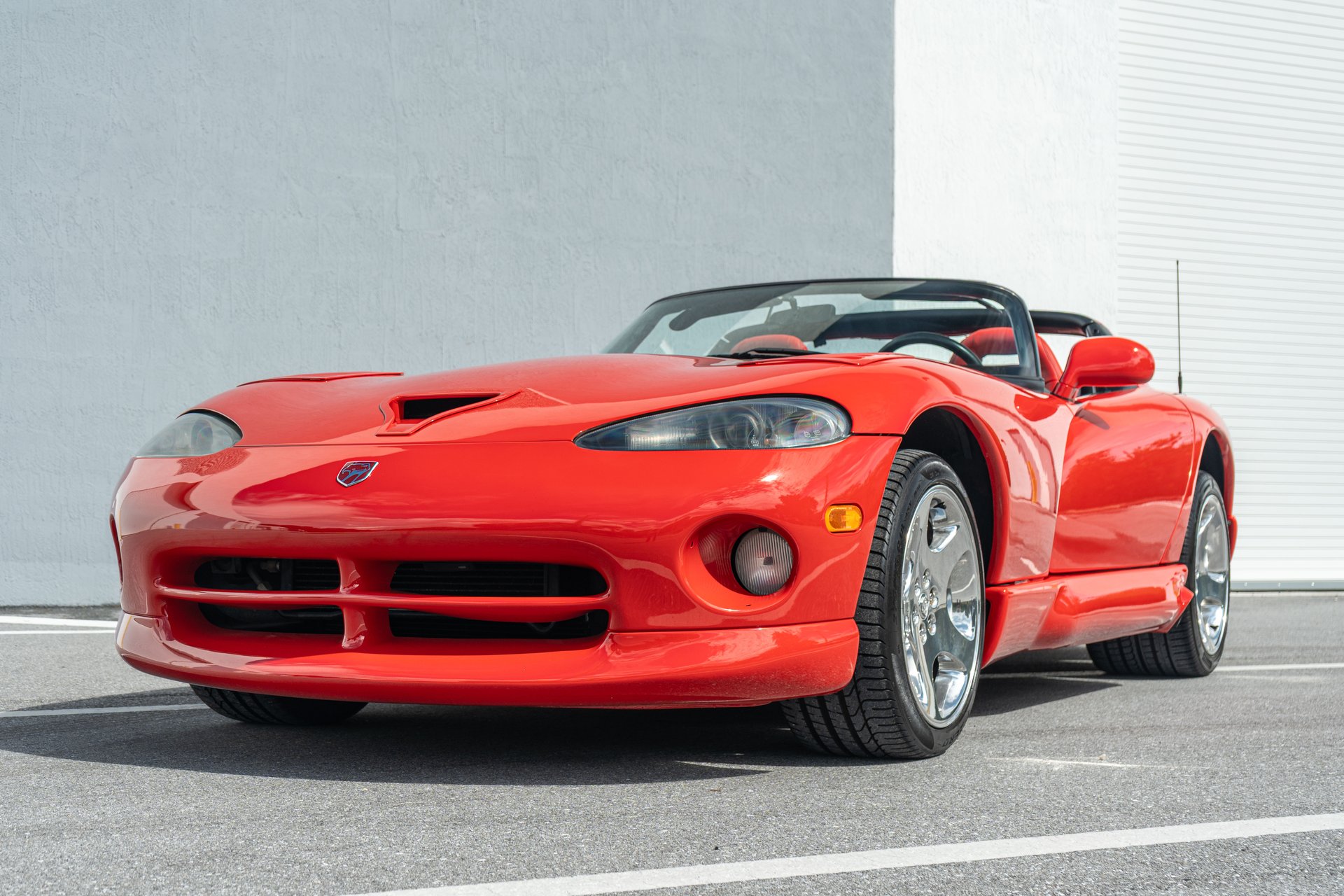
Gen 1 RT/10 (1992–95). The original, and the purest. A removable hardtop and a soft top were both offered, but early cars have zip-in side curtains rather than windows, no air conditioning as standard (it became available as an option part-way through the run), and side-exit exhausts that run through the sills and make the sill covers hot enough to burn a careless calf — a genuine ownership hazard, not a figure of speech. Wheels are 17-inch. There is no ABS, no traction control and no airbag. The steering wheel is fixed and the pedals are offset; the driving position is a compromise you accept because of everything else. The 1992 cars are the most collectible of the generation; the run-out 1995 cars are the most sorted. Our listings include a 1992 and a pair of 1993s through to a cluster of 1995s — five of them — which is a fair picture of where the surviving stock sits.
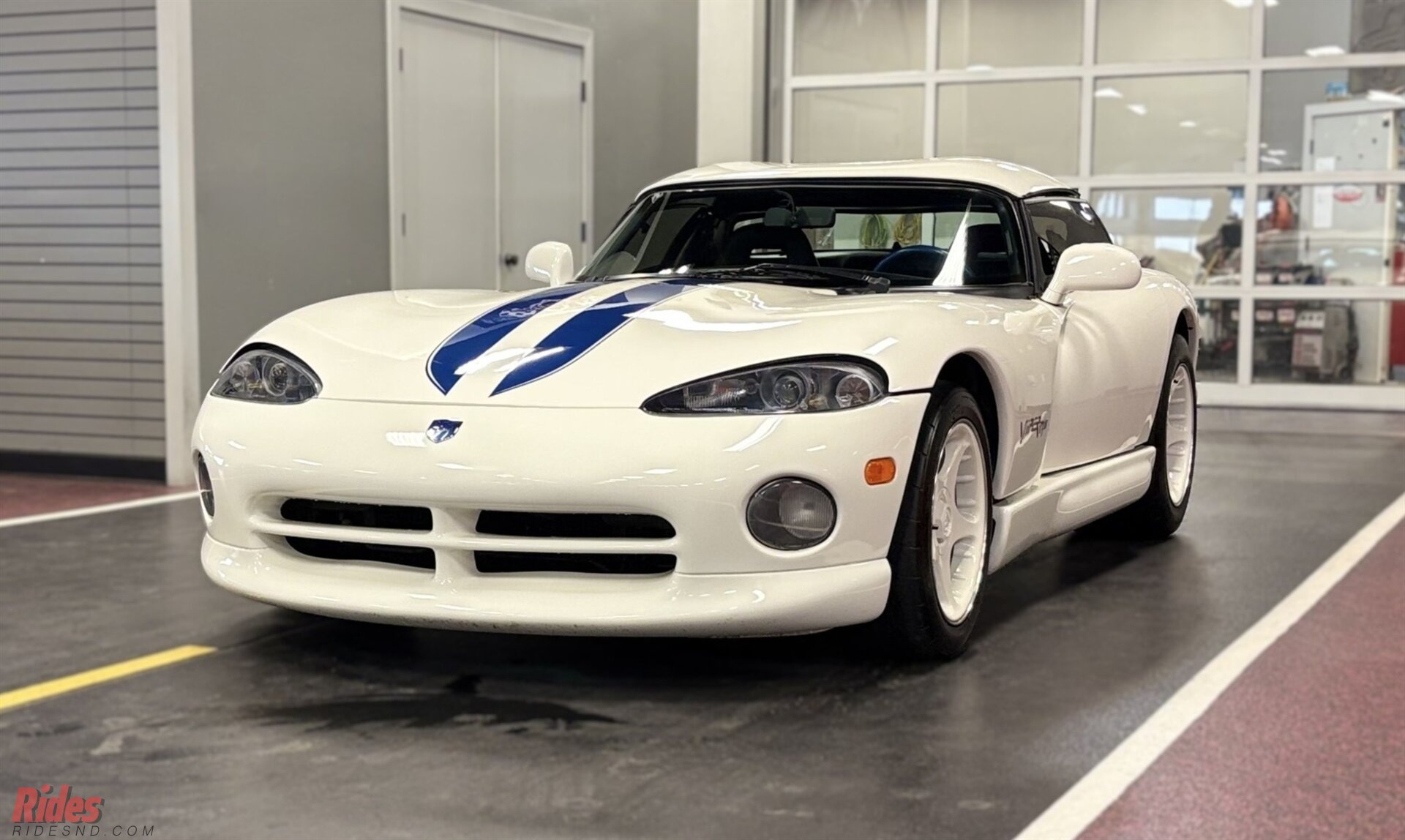
Gen 2 RT/10 and GTS (1996–2002). The second generation kept the shape and fixed the worst hardships: proper glass windows, exterior door handles, airbags, air conditioning that worked, and the exhaust rerouted to the rear, which ended the sill-burn problem. The GTS coupe arrived for 1996 with the famous double-bubble roof (the bubbles clear a helmet), a proper rear hatch, and 450 hp. Blue with white stripes was the launch combination and remains the most sought-after. ABS arrived for 2001 — late, and worth having. The 2002 cars closed the generation, with red-with-white-stripes Final Edition coupes marking the end of the line; as with every numbered Viper, the edition's value is in its documentation. The RT/10 continued alongside the coupe to 2002. This generation is the core of today's market: the 1996 model year is the single most common in our listings, and 1997–2001 cars make up most of the rest. The ACR (1999–2002) was the factory track package on the GTS: a small power increase to 460 hp from a smoother intake and freer exhaust, adjustable Koni dampers, five-point harnesses, BBS wheels, and the radio and air conditioning deleted to save weight (both could be added back as the comfort package, and many were). A genuine ACR is a documented car — the package is easy to imitate and hard to prove, so paperwork matters.

Gen 3 SRT-10 (2003–06). A full restyle under the SRT badge: creased, angular bodywork, a proper folding soft top on the roadster, and the engine grown to 8.3 litres and 500 hp. The coupe returned for 2005 with the double-bubble roof as a deliberate nod to the GTS. These cars are quicker, roomier and easier to live with, and they are where our listings end: a handful of 2004s and 2005s, including a 2005 Commemorative Edition car (a numbered special in white with blue stripes). They are also the generation where values sit closest to the earlier cars while offering more of everything — a point the buying section returns to.
Gen 4 (2008–10) and Gen 5 (2013–17). The Gen 4 kept the Gen 3 body with detail changes, grew the engine to 8.4 litres with variable valve timing, and reached 600 hp; its ACR (2008–10) added serious aerodynamics and set production-car lap records at the Nürburgring and Laguna Seca. After a two-year gap the Gen 5 arrived for 2013, initially badged SRT rather than Dodge, with a hand-built feel to the interior, carbon-fibre bonnet and roof panels, and — finally — stability control and traction control, which US law by then required. The 2016–17 ACR, with its enormous adjustable wing and carbon brakes, is the fastest track Viper of all. None of these later cars currently appears in our listings, so this guide treats them as context: the inspection principles below apply to them unchanged, with electronics and carbon parts added to the bill when things go wrong.
Engines and gearboxes
The 8.0-litre V10: Gen 1 and Gen 2
The Viper's engine has a famous origin story that happens to be true. Chrysler's truck line already had an iron-block V10 in development for its heavy pickups; for the Viper the block was recast in aluminium with cast-iron liners, Lamborghini — then owned by Chrysler — contributed engineering work on the conversion, and the result was an 8.0-litre (488 cu in) overhead-valve V10 with two valves per cylinder, a single camshaft in the block, pushrods and hydraulic lifters. No overhead cams, no four-valve heads, no variable anything. It made 400 hp and 465 lb-ft of torque in Gen 1 form, and the torque is the story: the car will pull top gear from barely above idle, and will also spin its rear tyres in the first three gears if you ask clumsily.
Gen 2 cars gained power in steps: the GTS launched at 450 hp with a revised engine, the RT/10 followed at 415 hp and then matched the coupe at 450 hp from 1998, aided by a freer exhaust once the pipes moved to the rear of the car. The ACR's 460 hp came from intake and exhaust changes, not internal ones. One internal change matters to buyers: the earlier engines used forged pistons, while the later Gen 2 engines (from around the 2000 model year) switched to cast pistons. For a road car it makes no difference you can feel; for anyone planning forced induction it is the first question, and it is why the forged-piston cars are the tuner favourites.
In service the 8.0 is a tough, understressed engine whose problems are nearly all in the ancillaries and the cooling system rather than the rotating assembly. Oil pressure should be strong; the gauge on the dash is a real gauge and worth watching. Head gaskets on the earliest cars are a known weak point — the original gasket material on 1992–93 engines in particular can fail between a waterway and the outside of the block or into a cylinder, and many early cars have already had the improved gaskets fitted; ask. Coolant leaks at the front of the engine are more often the water pump or the thermostat housing than the radiator. The engine runs hot by design in a tight bay, and the cooling fan and its controls do real work on these cars — a fan that does not cut in, or a temperature gauge that keeps climbing in traffic, is a fault to fix before the next drive, not a quirk.
Oil consumption deserves a word because it alarms new owners. A quart between services can be normal on a hard-used early car; what matters is the pattern — blue smoke on start-up that clears is usually valve stem seals, smoke under load is rings, and either on a low-mileage garage car more likely means years of sitting than wear. The pushrod valvetrain is not silent even when healthy: a light, even ticking is normal, a single loud tick is a lifter or a bent pushrod asking to be investigated. Timing is by chain, and chain failure is rare enough not to be a service anxiety on these engines.
Fuel and ignition are conventional electronic injection and distributorless ignition, and they age conventionally: tired plug leads and plugs (ten of each, and the rear cylinders are awkward to reach), failing oxygen sensors, and idle-air control motors that stick and give a wandering or hanging idle. A car that will not idle cleanly is almost never an engine rebuild; work the cheap causes first. Budget-wise, a major service with plugs, leads, fluids and filters is a few hundred dollars in parts; a head-gasket job at a specialist is a four-figure bill, roughly $2,000–3,500 depending on whether the heads need machining; a full rebuild is $10,000 and up, which is why the ancillary checks matter — the engine itself rarely forces your hand.
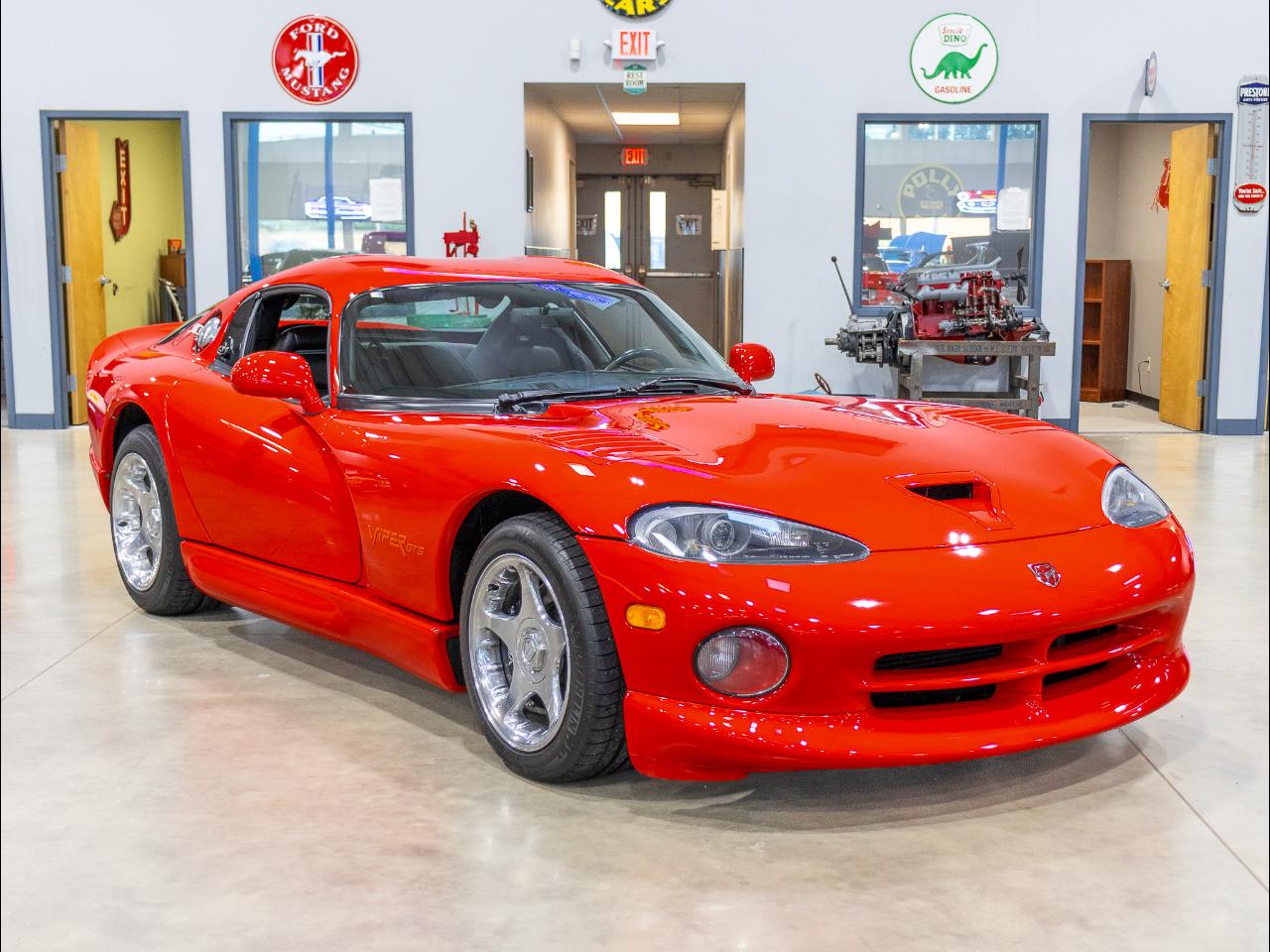
The 8.3 and 8.4: Gen 3, Gen 4 and Gen 5
The Gen 3 engine grew to 8.3 litres (505 cu in) and 500 hp — 525 lb-ft of torque — with a redesigned block, a new intake and revised heads, still pushrod, still two valves per cylinder. It is a stronger engine everywhere and the one to choose if outright pace is the point. Its known sensitivities are the same family as the earlier cars: cooling system health in traffic, oil leaks from covers and senders, and ancillaries ageing on cars that sit. The crankshaft-driven oil pump and the oiling system were revised for this generation, and sustained high-rpm track use is where oiling questions get asked of any Viper — road use never troubles it.
The Gen 4's 8.4-litre engine added variable valve timing on the exhaust side, a first for a pushrod engine in production, and made 600 hp. The Gen 5 version of the 8.4 reached 640 hp, then 645, with a composite intake manifold and further internal lightening. Both are durable in the same truck-engine way, but everything around them costs more: electronic throttle on the Gen 4 and 5, more sensors, and on Gen 5 cars a level of trim and electronics that turns small faults into dealer-level diagnostics. If you are buying one of the later cars, a history with a Viper-knowledgeable shop is worth more than a low odometer.
Gearboxes: the T56 and TR6060
Every Viper ever sold has a six-speed manual — there was never an automatic option, in any generation, and any listing suggesting otherwise is misdescribed. Gen 1 to Gen 3 cars use the Borg-Warner, later Tremec, T56; Gen 4 and Gen 5 cars use the strengthened Tremec TR6060 development of the same box. The T56 is a strong, widely understood gearbox — it served in Corvettes, Mustangs and Camaros of the era, which keeps parts and knowledge plentiful. Its character is heavy: a long, deliberate shift, a heavy clutch, and synchromesh that resents being rushed, especially into second when cold. Judge it warm. A box that crunches second on every change, hot or cold, has worn synchromesh, and a rebuild runs roughly $2,500–4,500 at a transmission specialist; a clutch is $1,200–2,000 fitted, and on a car used hard it is a consumable, not a scandal.
Two checks separate the good from the tired. First, the clutch's biting point and behaviour pulling away: judder suggests a contaminated or warped plate or a tired flywheel surface; slip under full throttle in a high gear is a clutch at the end of its life. Second, listen for a rattle at idle in neutral that stops when the clutch is pressed — usually the release bearing or gearbox chatter, common and not fatal, but a bargaining point. The rear axle is a Dana 44-based limited-slip unit and is strong; clunks on take-up point to worn universal joints or axle backlash, both fixable for hundreds rather than thousands. Gear oil and axle oil are cheap and often neglected on low-mileage cars — a car whose fluids are all ancient is telling you how it has been kept, whatever the odometer says. The clutch hydraulics deserve the same suspicion: the slave cylinder lives in the bellhousing's heat, its fluid is almost never changed, and a pedal that goes vague or a bite point that wanders as the car warms up is usually hydraulics before it is the clutch itself — a fluid change is trivial money, a slave cylinder is a gearbox-out job at $800–1,500 fitted, so test the pedal cold and again at the end of the test drive and compare. Finally, a word on gearing expectations: the T56's top gears are tall cruising ratios, and fifth and sixth exist for the highway, not for acceleration. A car that feels reluctant in top at motorway speed is geared that way from the factory, not down on power — judge the engine in third and fourth, where the Viper does its real work.
Problem areas
We have gone through the sellers' photo sets for 16 of the Vipers currently in our system, and the pattern in those photographs matches the model's reputation. Damage mentions appear in 10 of the 16 examined sets — chips, cracks, repairs, the physical evidence of a hard, fast life — while leaks show in 4 and rust, the obsession of most guides on this site, in only 1. That is the Viper in a sentence: the shell does not rot like a steel classic, but the car collects physical damage, heat damage and neglect, and each of those is priced differently. Work through the car in the order below.
Frame, bodywork and heat damage
Underneath the composite panels a Viper is a steel tube frame, and the frame is where the serious money hides. The panels — the front clip, doors, sills, rear quarters — are fibreglass and other composites, and they crack, craze and repair differently from steel: look for star cracks in the paint, ripples along the long flat surfaces in raking light, and edges that no longer match their neighbours. The one-piece front clip on Gen 1 and Gen 2 cars hinges forward and is the single most expensive panel on the car; a clip that sits unevenly, with mismatched gaps at the doors and sills, has usually been off, repaired or replaced, and each of those has a different meaning for value.
The sills are the Viper's signature problem area, for two different reasons by generation. On Gen 1 cars the exhaust runs inside the sill covers, and the heat discolours, bubbles and can eventually distort the sill paintwork — cosmetic at first, but it also bakes the cover itself over the years, and repainting a sill cover to match is a few hundred dollars a side while replacing a damaged cover costs more and needs a paint match. On all generations the sills are also the lowest, widest part of the car and collect stone chips, kerb scrapes and jacking damage. Get the car on a lift and look at the frame rails behind the front wheels and ahead of the rears: accident energy on a Viper goes into the frame, and bent or repaired rails — fresh welds, non-factory seams, sections that do not match side to side — are the difference between a car with a story and a car to walk away from. Frame straightening and section replacement is specialist work priced per car, starting in the low thousands and climbing fast; there is no cheap version of a bent Viper.
Heat is the second theme. The engine bay is tight and the V10 sheds enormous heat, and on early cars especially the bonnet louvres are functional, not decorative. Heat damage shows as blistered or discoloured paint on the bonnet above the exhaust manifolds, hardened and split vacuum hoses and wiring insulation in the bay, and tired bonnet and boot seals. None of it is structural, all of it is evidence: a bay full of heat-tired rubber is a bay that has run hot, which takes you straight to the cooling checks below. On RT/10s, add the roof and weather equipment: the removable hardtop's seals, the soft top's stitching, and on Gen 1 cars the zip-in side curtains, which yellow, stiffen and tear — a complete, supple set of weather gear with the car is worth money, because assembling one afterwards is a hunt.

Tyres, wheels, suspension and brakes
If you read one part of this guide twice, read this one. A Viper makes its torque early and in bulk, the rear tyres are enormous — 335-section on the early cars, wider still later — and on Gen 1 and Gen 2 cars there is no traction control and no stability control to catch a mistake. The tyres are therefore not a maintenance item; they are the car's entire safety system. Tyre rubber hardens with age long before the tread wears out, and a Viper that has sat in a collection on its original or ancient tyres is a genuinely dangerous car: full throttle in second gear on ten-year-old rubber, in the wet or on a cold morning, is how these cars get crashed by careful people.
So the check is the date code, not the tread depth. Every tyre carries a four-digit DOT date code on its sidewall — the week and year of manufacture. On any Viper you are considering, read all four codes. Tyres older than about six years should be budgeted for replacement whatever they look like, and a matched new set in Viper sizes is a serious purchase: roughly $1,500–2,500 for the set in the common sizes, more for the widest later fitments, and availability in the early 17-inch sizes comes and goes, so check supply before you buy the car, not after. A seller who has just fitted fresh, correctly sized tyres has spent real money and usually kept the rest of the car the same way.
Wheels are forged or cast alloys depending on generation and are vulnerable to kerb damage and cracking; spin each wheel on the lift and look for run-out and weld repairs on the inner rim. Suspension is double wishbones all round with coil-over dampers — a proper layout, and its wear items are ball joints, bushes and dampers rather than anything exotic; tired dampers show as oil misting on the body of the unit and a car that floats and crashes over bumps instead of thumping once. ACR cars carry adjustable dampers whose settings and condition are part of the car's value — seized adjusters are common on cars that have never been adjusted. Brakes on Gen 1 and Gen 2 cars are the system's weak point relative to the performance: the car is fast and heavy, the brakes are adequate rather than generous, and hard use fades them. ABS only arrived for 2001. On the test drive, brake firmly from speed twice in succession; a pedal that lengthens or a car that pulls is a hydraulic refresh — hoses, fluid, pads, possibly caliper rebuilds — at $800–2,000 depending on how far you go. Gen 3 cars gained bigger brakes and standard ABS, and are noticeably better here.
Cooling, leaks and electrics
The cooling system works hard on every Viper and is the mechanical system most likely to strand you. Radiators silt up, water pumps weep, thermostat housings leak, and the electric fan and its relay and sender are all load-bearing. In our photo sample, leaks were noted in 4 of 16 cars — on a Viper, a leak is most often coolant or oil at the front of the engine, and both are visible in listing photographs if you look at the bay and the underside rather than the paint. On a viewing, run the car to full temperature and let it idle: the gauge should stabilise, the fan should cycle, and the temperature should not creep. A car that runs hotter and hotter at idle has a fault — fan, radiator, pump or a head gasket on an early car — and the order in which you test those is cheapest first. A radiator is a few hundred dollars; a fan motor or relay less; a head gasket is the four-figure job from the engine section.
Oil leaks are the other staple: rocker cover gaskets, the front crank seal and oil cooler lines on equipped cars all weep with age, and a dry engine bay on a thirty-year-old Viper usually means it has just been cleaned — check again after the test drive. The power steering system uses a pump driven hard by very wide front tyres, and groaning on full lock with frothy fluid means air in the system from a leaking hose or a low reservoir.
Electrics are period Chrysler: broadly simple on the early cars, and the failures are earths, senders and switches rather than looms. The oil pressure and temperature gauges are real instruments fed by senders that fail and read low or dead — a sender is a small part, but verify any low oil-pressure reading mechanically before you either panic or dismiss it. Window regulators on Gen 2 cars wear; the headlamp mechanisms and motors on the pop-up cars (Gen 1 and Gen 2) stick after years of sleep. Air conditioning on cars that have it is a conventional system whose compressor and hoses age like any other; on Gen 1 cars it may simply not be fitted at all, which in Florida or Texas is a value question, not a fault. Gen 3 cars add a proper convertible top mechanism and more body electronics; Gen 5 cars, not in our current listings, add a full modern suite where a specialist scan tool is part of any inspection.
The cabin, finally, wears in predictable places. The seats are deeply bolstered and you climb over the wide sill to reach them, so the driver's outer bolster and the sill cover take the scuffs of every entry — worn bolster leather and a scuffed sill are honest wear, priced in hundreds to retrim or repaint, not a red flag. What is a flag is a cabin that does not match the mileage: a 5,000-mile car with a shiny, worn steering wheel rim and polished pedal rubbers has either lived a harder life than the odometer claims or had its instruments changed, and either way the file should explain it. Dash tops crack in sun-state cars — and our listings cluster in Florida, Texas and Arizona — and the simple plastics of the early cars scratch and fade rather than break. On Gen 1 cars the interior is so basic that there is little to go wrong beyond the gauges and the heater controls; on Gen 3 cars the seats, trim and top mechanism are all better made and all more expensive when they do fail.
Accident history, identity and the paperwork
More Vipers have been crashed than their production numbers would suggest — the combination of torque, wide tyres, cold rubber and no electronic safety net saw to that, and a proportion of the cars offered today are repaired, sometimes well and sometimes not. This is why the frame check above matters, and why the paperwork matters just as much. Run a title and history check on any car you are serious about; look for salvage and rebuilt titles, accident reports, and odometer inconsistencies. Then verify the car itself: the VIN plate at the base of the windscreen, the labels on the doors and panels, and the title must all agree, and on a special edition — an ACR, a Commemorative Edition, a Final Edition — the build documentation is part of what you are paying for. The 2005 Commemorative Edition in our listings is numbered 26 of 100; a numbered car without its supporting paperwork is a claim, not a fact.
Mileage needs reading with Viper eyes. Very low mileage is common — many cars were second or third toys — and it is not automatically good news: a 4,000-mile car that has sat for a decade needs its tyres, hoses, seals, fluids and brakes recommissioning before it needs anything else, a bill of roughly $2,000–4,000 at a shop before you drive it properly. A 40,000-mile car with continuous history, fresh tyres and evidence of use is frequently the better and safer purchase. The odometer is the least important number on a Viper; the service file is the most important document.

How to inspect one
Allow a full hour, bring a torch, and arrange lift access if the car passes the first pass — on a Viper the underside and the tyre date codes are worth more than anything you can learn from the driver's seat. Insist on a cold start: a car presented warm has had its cold-start behaviour, its fan cycle and half its leaks hidden from you.
- Paperwork and identity first. Match the VIN at the windscreen base to the title and the door labels. Run the history check before you fall for the car: salvage titles and accident records are common in this market. On an ACR or numbered edition, ask for the build documentation now, not after the deposit.
- Tyre date codes. Read the four-digit DOT code on every tyre before anything else. Older than about six years means a replacement set in the budget — $1,500–2,500 — and it means you will drive the test drive gently, because the car is not safe to explore on old rubber.
- Cold start and idle. From cold, the V10 should fire at once and settle to a lumpy but even idle. Blue smoke that clears points to valve stem seals; smoke that stays is rings. A single loud tick among the valvetrain noise is a lifter or pushrod; an even light tick is normal.
- The dipstick and the filler cap. Check oil level and condition — black and ancient means the services were skipped whatever the file says. Coolant should be clean and at level; oil in the coolant or mayonnaise under the filler cap on an early car points at the head-gasket question from the engine section.
- Heat and bodywork. Read the bonnet for blistering over the manifolds, the sills for heat discoloration (Gen 1) or chips and scrapes (all cars), and run your eyes along the flanks in raking light for star cracks and ripples in the composite panels. Check the front clip's shutlines at the doors and cowl — uneven fit means the clip has been off.
- On the lift: frame and underside. Work along both frame rails looking for bends, fresh welds and mismatched sections; check the sill structure, the exhaust run, and the floor for oil and coolant leaks. Spin every wheel for rim run-out and look at the inner rims for weld repairs. This step, with step 1, decides whether the car is a Viper or a story.
- Cooling system, live. With the engine at full temperature, let it idle for five minutes. The fan must cut in, the gauge must stabilise, and the temperature must not creep. Creep means radiator, fan circuit, pump or head gasket — in ascending order of cost — and you price the worst plausible cause until the seller proves the cheap one.
- Clutch and gearbox, warm. Drive long enough to get the T56 fully warm. Second gear should engage cleanly hot; a crunch that survives warm-up is synchromesh wear. Test the clutch for slip at full throttle in fourth, and for judder pulling away. Listen at idle in neutral for release-bearing rattle, clutch down versus clutch up.
- Brakes and steering. Two firm stops from speed: the car should pull up straight, and the pedal should feel the same the second time. On a pre-2001 car remember there is no ABS — a locked wheel on the test is your fault, not the car's. Steering should be heavy, direct and free of groans on full lock; groaning is the power steering system asking for hoses and fluid.
- Traction respect on the test drive. Short-shift, feed the throttle in rather than stamping on it, and never use full throttle in the first two gears on a surface you have not read. You are assessing the car, not qualifying. Any seller who encourages you to "open it up" in a car on old tyres is telling you how the car has been treated.
- Electrics and weather gear. Work the windows, lamps (including the pop-up mechanisms on Gen 1 and 2 cars), gauges, wipers, heater and air conditioning where fitted. On an RT/10, fit the roof: hardtop seals, soft top condition, and on a Gen 1 the side curtains — yellowed, torn or missing curtains are a real deduction, because replacements are a hunt.
- The file, last. Read the service history end to end. You are looking for continuity — fluids changed on time even in low-mileage years, tyres replaced by age, cooling work done — and for the gaps. On a Viper, a thick file is not a nicety; it is the difference between a car that has been kept and a car that has been stored.
Values
The figures in the market block beneath this guide are computed from our own listings, and they need reading the Viper way, because this market behaves differently from most classics. The first thing to notice is the shape of our own sample: 43 cars tracked, 21 for sale and 22 recorded sold — roughly half the cars we have listed have actually changed hands, which tells you the market is real and turning over, not a museum of unsold asking prices. Cars that sit are usually priced on a story — rarity, a famous colour, a tiny odometer — that the evidence does not support.
The condition spread is the widest of any car in this guide series, and it is driven by evidence, not mileage. At the top sit documented cars: continuous history, fresh tyres fitted by age rather than wear, cooling system sorted, frame verified straight, special editions with their build paperwork. In the middle sit honest drivers with miles on them and files to match. At the bottom sit the three kinds of cheap Viper, and each is cheap for a reason you can name: the repaired car, where the accident is in the history report or the frame rails; the stored car, cosmetically lovely and mechanically asleep, whose recommissioning bill arrives with the keys; and the modified car, where forced induction or a body kit has narrowed the next buyer pool to people who want exactly that car. None of the three is automatically a bad buy. All three are bad buys at sorted-car money.
Asking prices and achieved prices diverge in the usual way, with one Viper-specific twist: because so many cars are sold by dealers — nearly all of our listings are dealer cars — the asking price often includes the recommissioning the dealer has (or has not) done. Ask what has actually been done to the car in the current ownership: a fresh set of tyres, a cooling-system overhaul and a full fluid service are real work with real cost, and they justify a stronger price far better than a detail and a photograph. Conversely, a dealer car offered on aged tyres with no recent service evidence is priced on hope.
Within the model, the premiums follow a clear logic. The 1992 cars carry a first-year premium. The GTS in its launch colours is the Gen 2 blue-chip, and a documented ACR stands above a standard GTS because the package cannot be retro-fitted into existence. Numbered editions — the Commemorative Edition, the later Final Editions — hold a premium exactly as strong as their paperwork. Gen 3 SRT-10s are the value end of the model in the sense that matters to a driver: the most performance and the most usable car, without the early cars' collector premium, though the market has been narrowing that gap as the early cars climb. Colour matters more than it should: red is the classic launch colour and the most common in our listings, blue with white stripes is the GTS signature, and the less common period colours — green, yellow, the bright blues — pull their own followings.
The project-versus-driver gap is really a recommissioning gap. A running, driving Viper that needs tyres, brakes, fluids and cooling attention is a known quantity, and the gap between it and a sorted car is roughly the cost of that work. A non-running Viper is a different animal: the engine is tough, but a car that will not run cannot demonstrate its gearbox, clutch, cooling or electrics, and the discount should reflect everything you cannot test, not just the fault named in the listing. Buy the car you can assess.
Parts and ownership
The Viper's parts position is better than its production numbers suggest, for two reasons. The first is that Chrysler built the car from its corporate parts bin wherever it could: the gearbox served across the industry, the engine's wearing parts are conventional, and switchgear, senders and service items cross-reference to far more common vehicles. The second is that the aftermarket adopted the car early and never left — the Viper has a deep specialist trade in the US, from dedicated breakers holding stocks of used panels and trim to performance shops that know the V10 the way Porsche shops know the flat six.
Easy: service items across all generations — filters, plugs, leads, belts, hoses, brake pads and discs, clutch components for the T56 cars, suspension wear parts, dampers in standard specification, cooling system components including radiators and water pumps. Order today, fit this week, at prices that reflect the parts-bin origins rather than the car's drama.
Harder and dearer: body panels, above all the one-piece front clip for Gen 1 and Gen 2 cars, which is the panel every accident seems to find; RT/10 weather equipment, especially Gen 1 side curtains and good hardtop seals; ACR-specific suspension hardware; interior trim in the correct finishes; and Gen 5 carbon-fibre panels and electronics, where the bill and the wait both grow. A quality repaint of a full car, composite panels and all, is a five-figure job at a good shop — which is why the buying rule for a Viper is to buy the body and the frame, and fix the mechanics.
Running costs. The honest budget lines are tyres, fuel and the first year. Tyres are the big recurring cost: a set is a four-figure purchase, the rears wear faster than the fronts under any enthusiastic use, and replacement by age — not tread — is part of the deal on a low-mileage car. Fuel consumption is what an 8-litre engine promises: expect the low teens in mixed use and single figures if you use the performance. Servicing itself is moderate — the engine is simple, access is mostly good under the forward-hinging clip, and any competent performance-car shop can do routine work, though a Viper specialist earns their fee at diagnosis time. Insurance is specialist-classic territory and generally reasonable for the performance, with agreed-value policies the norm; several insurers will ask about your experience, and they are right to. The first-year catch-up on a car bought without recent evidence — tyres, all fluids, brake hydraulics, cooling attention, hoses and belts as needed — is realistically a few thousand dollars before you improve anything, and it should be in the purchase budget from the start, not discovered afterwards.
Ownership itself has a rhythm the early cars impose. The Gen 1 RT/10 is a fair-weather car in a literal sense: the weather gear is a kit of parts, the cabin leaks enthusiasm and a little rain, and there is no air conditioning to rescue a summer traffic jam on many cars. Gen 2 cars fixed most of that. All generations share one trait: the car is wide, the nose is long and low, and ground clearance over speed bumps and driveway aprons is a planning exercise. Join the owner's community — the Viper clubs are active, their technical archives are deep, and the classified knowledge about which specialist to trust in which state is worth the membership on its own. Our listings cluster in Florida, California, Texas, Arizona and Ohio, and each of those states has established Viper expertise; a car a long way from the nearest specialist is not a problem, but it is a logistics line in the budget.
Which one to buy
- The icon: Gen 2 GTS (1996–2002). The shape, the stripes, the double-bubble roof, 450 hp and just enough civilisation — windows, airbags, air conditioning — to use the car properly. The 2001–02 cars add ABS. If you want one Viper that is also the model's blue-chip, this is it.
- The purist's car: Gen 1 RT/10 (1992–95). The original statement, with side exhausts, no windows and no safety net of any kind. Buy it for what it is, budget for its weather gear and its head gaskets, and respect it every single mile. The 1992 cars are the collectible end; the 1995s are the sorted end.
- The value buy: Gen 3 SRT-10 (2003–06). Five hundred horsepower, a proper folding roof or the coupe's double-bubble profile, standard ABS and the strongest brakes of the early cars — without the first two generations' collector premium. The Commemorative Edition adds numbered-edition collectibility where the paperwork supports it. If you intend to drive the car hard and often, buy this generation.
- The track car: GTS ACR (1999–2002) — or a later ACR if your budget reaches. Adjustable suspension, harnesses, deleted luxuries and a premium that lives entirely in documentation. Verify the package from build records; an undocumented "ACR" is a GTS and should be priced as one.
- The roadster for the road: Gen 2 RT/10 (1996–2002). Open car, real windows, rear-exit exhaust so the sills stay cool, and the same 450 hp as the coupe in later years. The most usable of the early open cars.
- The modern car: Gen 5 (2013–17). Not currently in our listings, but the one to cross-shop if you want the full performance with stability control, a proper interior and carbon panels. Everything costs more when it breaks; everything works better until it does.
And the rule that overrides all of the above: buy the car with the straight frame, the fresh tyres and the thick history file, in whichever generation fits your budget. Engines, clutches, brakes and cooling systems are all fixable at prices you can plan for. A bent frame, a fabricated identity or a decade of silent storage are the three things that turn the most exciting car America ever built into the most expensive way to learn why the checks in this guide exist.
See the 25 Viper GTS cars currently listed.