
Dodge Ram 2500 Regular Cab Long Bed buyer's guide
Dodge Ram 2500 Regular Cab Long Bed -- the model's own buyer's guide: variants, values and what to check.
Years listed: 1982-2001 · Series: D-Series
Overview and history
The Dodge Ram 2500 is not a trim level or a styling package. It is the three-quarter-ton working truck in the Ram line — the point in the range where a pickup stops being a light-duty runabout and becomes a machine rated to haul a loaded bed, tow a heavy trailer, carry a slide-in camper or work a snowplough for a living. That single fact explains almost everything about how these trucks were bought, how they were used, and how you should judge one today. A Ram 1500 might have lived as a family vehicle. A Ram 2500 was bought because its owner needed payload and towing capacity, and most of them earned their keep.
The name itself has two layers. Dodge had built D-series pickups for decades, with D200 and later D250 designating the three-quarter-ton two-wheel-drive truck and W200 and W250 the four-wheel-drive equivalent. When Dodge relaunched its full-size pickups for 1981 with the Ram name and the ram's-head identity, the 250 badge continued in that role. The first-generation Ram 250 and Ram 2500 story therefore starts with a conservative, square-rigged truck whose basic cab and frame dated back to 1972, updated with new styling, new trim and, crucially, a diesel option that would change the model's destiny.
That diesel arrived for 1989. Dodge put the Cummins B-series 5.9-litre turbocharged inline six — an engine developed for agricultural and industrial work — into the D250 and W250. Nothing else in the American three-quarter-ton market offered anything quite like it. The Ford and General Motors diesels of the period were V8s derived from an earlier generation of thinking; the Cummins was a direct-injected, turbocharged straight six with enormous low-speed torque, a cast-iron block and head, and a reputation for outlasting the truck around it. The early Cummins Rams were loud, rough and slow by modern standards, and they sold anyway, because the engine did the work and kept doing it. If you are reading this guide because of one engine, this is almost certainly it.
The second generation, launched for the 1994 model year, is the truck most buyers picture and the truck that dominates our listings. Dodge replaced the old flat-sided styling with a deliberate, big-rig-inspired design by Phillip E. Payne and his team: a tall, dropped-hood profile with separate front fenders falling away from a high central bonnet, a large upright grille, and a cab that looked like the front of a semi tractor scaled down to pickup size. It was a gamble — internal research had shown the look polarised people — and it paid off completely. Ram sales multiplied, the styling forced Ford and GM to rethink their own trucks, and the 1994 to 2002 generation, coded BR for two-wheel drive and BE for four-wheel drive, became a modern classic in its own working lifetime.
Under the new skin the formula was the same, only stronger: a ladder frame, a solid front axle on four-wheel-drive models, leaf springs at the rear, and Magnum petrol V8s, a Magnum V10 or the Cummins turbo diesel. Regular Cab and Club Cab bodies came first, in short-bed and long-bed forms; a Quad Cab with small rear-hinged doors joined for 1998. Trim ran from ST through SLT to Laramie SLT. Gross weight ratings split the range into a light-duty 2500 around the petrol engines and a heavy-duty 2500 around the Cummins and the V10.
Our own listings pool reflects that history honestly. The Ram 2500s we track are overwhelmingly second-generation trucks from 1994 to 2001, with the 1994 and 1995 cars the single biggest group, a scattering of 1997 to 2001 trucks behind them, and a lone early 1980s first-generation car at the edge of the pool as a reminder of where the name began. Texas is the biggest single state in the pool, which fits the model: these were national work trucks, but the surviving, saleable examples now concentrate where rust is slower and diesel culture is strong. Treat any individual listing as a worked vehicle until it proves otherwise. Mileage alone tells you very little — a Cummins engine is barely run in at mileages that would finish a petrol V8, while the truck around it may be completely worn out. The engine outlasting the body, the gearbox and the front axle is the central buying problem of the model, and it runs through every section of this guide.
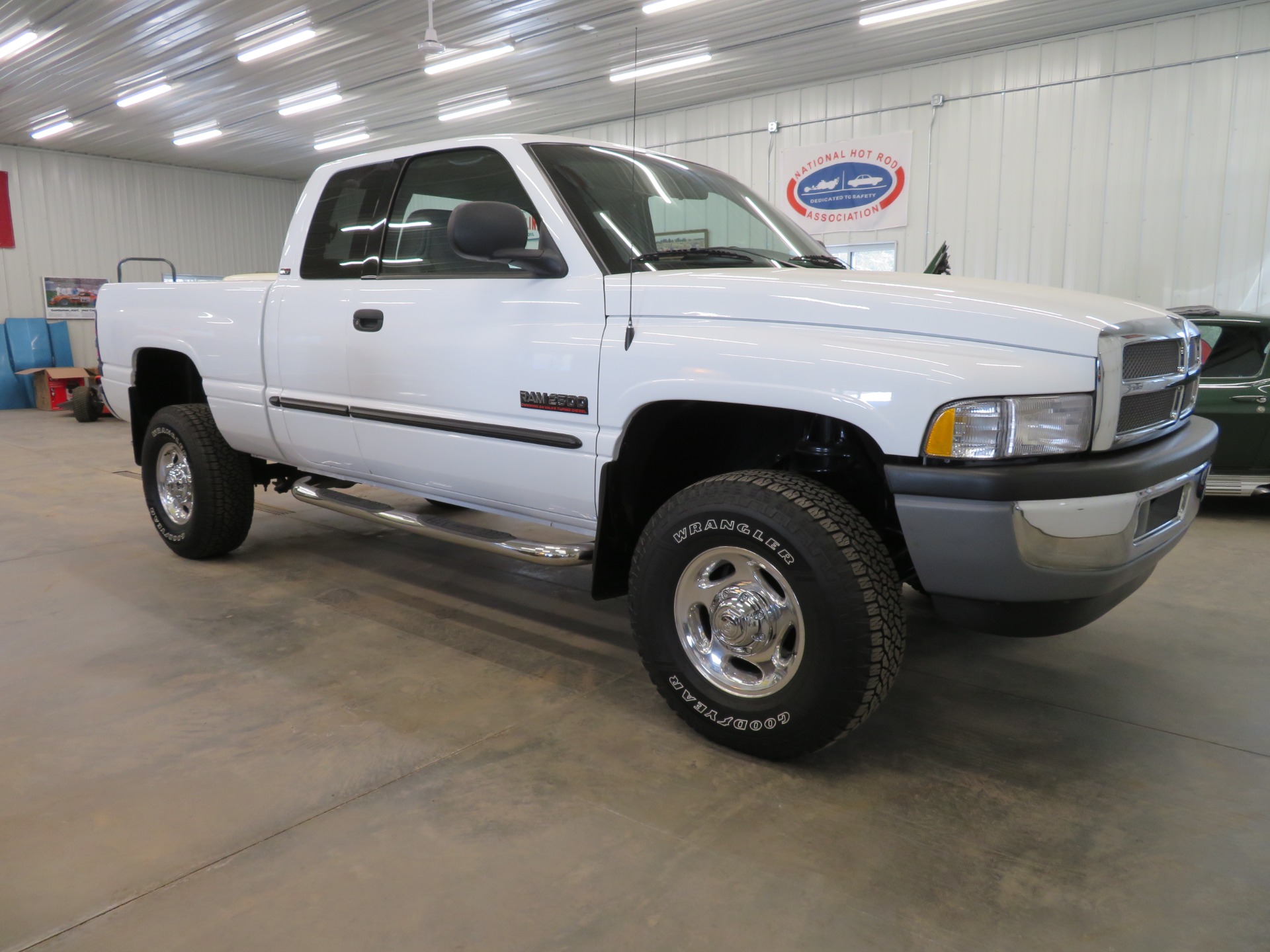

The models
Every Ram 2500 is a three-quarter-ton pickup, but the badge covers a wider spread of trucks than the single name suggests. You need to decode four things on any car you view: the generation, the cab and bed, the drive — two-wheel drive or four — and, most important of all, whether it is a light-duty or heavy-duty 2500, because that decides which engines, gearboxes and axles the truck could have been built with. A seller who describes a truck simply as a Ram 2500 has told you the weight class and almost nothing else.
| Model | Years | Engine | Output | Built | Character |
|---|---|---|---|---|---|
| Ram D250 / W250 | 1981–1993 | 5.9 V8 petrol; 5.9 Cummins diesel from 1989 | 190 hp petrol; 160 hp diesel | Not published by trim | The first-generation truck; the 1989-on Cummins cars are the collectible ones |
| Ram 2500 ST | 1994–2002 | 5.2 or 5.9 Magnum V8; 5.9 Cummins; 8.0 V10 | 220–300 hp by engine | Not published by trim | The work truck; vinyl, steel wheels, fewest toys to fail |
| Ram 2500 SLT | 1994–2002 | 5.9 Magnum V8; 5.9 Cummins; 8.0 V10 | 230–310 hp by engine | Not published by trim | The volume trim; cloth, air conditioning, cruise, better wheels |
| Ram 2500 Laramie SLT | 1994–c.1998 | 5.9 Magnum V8; 5.9 Cummins; 8.0 V10 | 230–310 hp by engine | Not published by trim | The top early trim; leather available, full electrics, the plush hauler |
| Ram 2500 Cummins 12-valve | 1994–1998 | 5.9 Cummins 6BT, mechanical injection | 160–215 hp | Not published by engine and trim | The mechanical diesel; simplest, loudest, most sought after |
| Ram 2500 Cummins 24-valve | 1998–2002 | 5.9 Cummins ISB, electronic injection | 235 hp; 245 hp High Output | Not published by engine and trim | The electronic diesel; quieter, stronger stock, more to diagnose |
| Ram 2500 V10 | 1994–2002 | 8.0 Magnum V10 petrol | 300–310 hp | Not published by trim | The petrol heavy hauler; Cummins torque without the diesel, at a fuel price |
Dodge did not publish a trustworthy production split by 2500 trim and engine, so be suspicious of rarity claims for an ordinary truck: rarity here is a combination of engine, gearbox, cab, drive and condition.
The first-generation cars, 1981 to 1993. The D250 is two-wheel drive, the W250 four-wheel drive. Most were petrol V8s, and a petrol first-generation truck is now a simple, honest old pickup valued as such. Everything changes from 1989, when the Cummins arrived with 160 hp and 400 lb-ft of torque, a Getrag five-speed manual or a three-speed automatic with no overdrive and no lock-up converter in its first form. These early Cummins trucks are crude — the cab is a 1972 design, sound insulation is minimal, and the ride is unforgiving — but the engine is the original 12-valve in its purest form, and clean W250 Cummins regular cabs have a following of their own. Watch the badging trap in both directions: a first-generation truck is a 250, not a 2500, whatever a listing headline says, and the extra zero tells you nothing about the truck in front of you.
The petrol trucks. The light-duty 2500 was built around the 5.2-litre Magnum V8, the heavy-duty petrol truck around the 5.9-litre Magnum V8, and the 8.0-litre Magnum V10 — 300 hp at launch, later 310 hp, and 450 lb-ft — was Dodge's answer for buyers who needed diesel-level towing without a diesel. The V8s are the cheapest 2500s to buy and the rational choice for occasional towing; the V10 pulls almost like the Cummins and drinks heavily doing it, so it suits low-mileage towing work.
The Cummins trucks. These divide cleanly in two, and the dividing line falls in the middle of the 1998 model year. The 12-valve cars use the Cummins 6BT with fully mechanical fuel injection — a Bosch VE rotary pump on the first-generation trucks and the legendary Bosch P7100 inline pump, the P-pump, on the 1994 to 1998 second-generation cars. No engine computer controls the fuel; a knowledgeable owner can service and even uprate the system with hand tools. The 24-valve cars from mid-1998 use the Cummins ISB with electronic control and the Bosch VP44 rotary injection pump. They are stronger as standard, quieter, cleaner and easier to live with, and they swap mechanical simplicity for an electronic fuel system with two well-known weak points covered in detail below. Neither is simply better. They are different ownership propositions, and the Which one to buy section at the end of this guide picks between them by use, not by fashion.
Cabs and beds. The Regular Cab seats two or three across a bench and came with the eight-foot long bed. The Club Cab adds a rear bench, offered with a short bed of about six and a half feet or the long bed. The Quad Cab from 1998 keeps the Club Cab's dimensions but cuts two small, rear-hinged doors into the back of the cab — check their latches and hinges carefully, as they become a rattle and a water leak when they wear. There is no true crew cab in this generation, and a listing that calls a Club Cab a crew cab is describing the truck the seller wishes it were.
Trim. ST is the worker: vinyl or basic cloth, manual windows on many cars, steel wheels. SLT adds cloth, air conditioning in most markets, cruise, tilt steering and alloy wheels. Laramie SLT adds leather availability and full power equipment; by the end of production the line had settled into ST, SLT and SLT Plus. Trim matters less than condition, with one exception: the dashboard plastics are the same brittle material in every trim, so a Laramie badge does not protect you from the cracked-dash problem described below.

Engines and gearboxes
The Cummins 5.9: 12-valve 6BT
The engine that defines the model. The Cummins B-series is a 5.9-litre, 359-cubic-inch inline six with a cast-iron block and head, gear-driven camshaft, twelve valves and a single turbocharger. In the first-generation Ram it arrived for 1989 with a Bosch VE rotary injection pump, 160 hp and 400 lb-ft. In the second-generation truck from 1994 it gained the Bosch P7100 inline injection pump — the P-pump — an industrial-grade unit with individual plungers for each cylinder, capable of delivering far more fuel than the stock engine can use, which is why this generation became the foundation of diesel tuning culture.
Outputs rose through the run and depend on gearbox and model year, which is why you should never quote a single figure for a 12-valve. A 1994 truck with the automatic made about 160 hp and 400 lb-ft; the manual version made about 175 hp and 420 lb-ft. By 1996 to 1998 the manual cars were at 215 hp and 440 lb-ft, with the automatics a step behind at around 180 to 185 hp. All of them feel stronger than the numbers suggest, because the torque arrives low and stays. The engine is entirely mechanical in its fuel control: throttle cable, mechanical governor in the pump, no electronic control unit deciding whether you may have fuel. Starting in cold weather depends on the grid heater in the intake — the Cummins uses a heated grid rather than glow plugs — and on two healthy batteries, because a big straight six with high compression takes real cranking effort.
A healthy 12-valve starts quickly after the wait-to-start light goes out, idles with a loud, even, mechanical clatter, and pulls without a miss or a cloud. It will sound agricultural to a petrol driver; that is normal. What is not normal is a hard start when warm, a hunting idle, white smoke that does not clear as it warms, or a heavy black haze under light load on a stock truck — all signs of pump timing, injector or fuelling problems. Oil leaks from the front and tappet covers are common and usually manageable; fuel leaks are not, because diesel on a hot engine is a fire risk, not a cosmetic fault.
The 12-valve has one famous internal trap, the killer dowel pin, covered fully in Problem areas — evidence that it has been tabbed is a genuine selling point. Servicing is straightforward: oil and fuel filters on schedule, valve clearances checked periodically — the 12-valve has adjustable valves, not hydraulic lifters — and clean fuel above all. A well-kept example is a 300,000-mile engine and more.
The Cummins 5.9: 24-valve ISB
From the middle of the 1998 model year the ISB replaced the 6BT. It is still a 5.9-litre inline six, still cast iron, but with a four-valve-per-cylinder head — twenty-four valves in total — electronic engine management and the Bosch VP44 rotary injection pump, which meters and times fuel electronically under the control of the engine computer. Standard output was 235 hp and 460 lb-ft with either gearbox. The High Output version, offered from 2000 and paired only with the six-speed manual, made 245 hp and 505 lb-ft, with a higher compression ratio and other internal changes to suit.
On the road the 24-valve is the easier engine to live with: cleaner starting, quieter idle, crisper response, superb stock towing. The trade is diagnostic complexity — a badly running 24-valve may have a mechanical, sensor, lift pump, VP44 or wiring fault, and guessing is expensive. A scan tool helps, but the single most valuable measurement is fuel pressure supplied to the VP44, at idle and under load.
The ISB has its own named trap, the 53 block. Some blocks cast in Brazil and used roughly from 1998 to 2001 carry the number 53 cast into the side of the block, low on the driver's side, and that casting is prone to cracking in the water jacket on the passenger side, below the exhaust manifold area, weeping coolant down the block. Not every 53 block cracks, and a truck that has survived this long at high mileage without cracking has given you useful evidence, but a 53 casting plus a coolant loss the seller cannot explain is a walk-away combination. The inspection section tells you exactly where to look for the number.
The petrol engines: Magnum V8s and the V10
The Magnum V8s are the last development of Chrysler's LA small-block family: pushrod, cast-iron, sequential fuel injection, and thoroughly conventional. The 5.2-litre, 318-cubic-inch version makes about 220 hp and 300 lb-ft and appears in the light-duty 2500. The 5.9-litre, 360-cubic-inch version makes 230 hp in early second-generation form, rising to 245 hp later, with around 330 to 335 lb-ft — the standard heavy-duty petrol engine. Both are simple, cheap to service, tolerant of ordinary maintenance and thirsty. Expect single-figure to low-teen fuel economy in working use, worse towing. Their characteristic faults are covered below: a failed plenum gasket at the bottom of the intake manifold that causes oil consumption and pinging, worn timing chains, cracked exhaust manifolds and ordinary age-related sensor and ignition wear. None of it is exotic, all of it is fixable at ordinary shop prices, and a petrol truck with a full service history is a far better buy than a neglected diesel bought only for the badge on the fender.
The 8.0-litre Magnum V10 is a different creation: 488 cubic inches, a cast-iron block based on the V8 architecture with two extra cylinders, 300 hp at launch and 310 hp later, and 450 lb-ft of torque. It tows with a smoothness the diesel cannot match and a fuel bill the diesel owner would not tolerate. V10-specific parts are less common than V8 or Cummins parts, so check availability before you agree a price. On all engines, treat the cooling system as a working system, not an accessory: overheating history matters, so ask directly and treat a seller's shrug on temperature as information.
Gearboxes, transfer cases and axles
Gearbox choice is the second-biggest decision in a Ram 2500 after the engine, and on Cummins trucks it is the decision that most often decides whether the truck is a pleasure or a bill.
The automatics. First-generation Cummins trucks used the A518, a three-speed with overdrive derived from the TorqueFlite line, in place of the earliest three-speed. Second-generation trucks use four-speed automatics: the 46RH, hydraulically controlled, for 1994 and 1995 petrol cars, replaced by the electronically controlled 46RE from 1996; and the heavier 47RH then 47RE behind the Cummins and the V10. The 47-series is the stronger box, but stronger is relative: in stock form, behind a tuned Cummins making far more torque than the factory ever planned, the automatic is the fuse in the system. Torque converter failure, overheating, slipping under load, delayed or flaring shifts and burnt fluid are the standard story. A stock truck, driven stock, serviced with fluid and filter changes and fitted with a healthy cooler, can give long service. A tuned truck on its original automatic is a rebuild waiting for a date. A full rebuild with an uprated converter and valve body work is a major job-cost item, realistically in the region of $3,500 to $6,000 for the repair at a specialist, and more with billet internals for high-power trucks — so documented transmission work with invoices is worth real money, and a vague claim that the box was done should be priced as if it was not.
The manuals. The NV4500 five-speed was the standard manual for most of the second-generation run: a heavy, cast-iron-cased box with a granny-low first gear in effect, an overdrive fifth, and a reputation for strength with one known weakness — fifth gear can work its mainshaft nut loose and lose drive in fifth, a fault with well-established repair kits. The Getrag G360 five-speed in the first-generation Cummins trucks is lighter duty and less loved; check it carefully for noise and jumping out of gear. From 2000 the High Output Cummins came with the NV5600 six-speed, a much heavier and more desirable box that adds a gear, handles the HO torque, and is the gearbox serious manual buyers hunt for. Manual trucks command a premium with Cummins buyers for a good reason: the manual removes the automatic question from the purchase entirely. Judge any manual on synchromesh into third and second, on whether it stays in fifth under load and on release-bearing and clutch judder from a standing start with a load simulation — a hill start will tell you more than a flat car park.
Clutch replacement on a Cummins manual is heavy but predictable; budget in the region of $1,200 to $2,500 for the repair including parts and labour.
Transfer cases and axles. Four-wheel-drive trucks use a New Process or New Venture chain-driven transfer case — the NP241 in most 2500s, with a heavier NP241HD on some diesel cars — with part-time four-wheel drive and low range, engaged by a floor lever on most trucks. It is a simple system: test that high and low range engage, that the truck drives in four-wheel drive without binding or chain slap noise on turns on a loose surface, and that the front axle disconnect system works. These trucks use a centre axle disconnect on the front Dana 60, vacuum-actuated on most second-generation cars, and a truck that shows four-wheel drive on the lever but delivers no front drive usually has a vacuum or shift-fork fault in that disconnect rather than a broken transfer case — cheaper, but still a fault to price.
Axles are Dana units: a Dana 60 at the front of four-wheel-drive 2500s and a Dana 60, 70 or 80 at the rear depending on engine, gearbox and rating, with the Dana 80 the heavy diesel and manual unit. They are strong and rebuildable; what wears is everything attached — bearings, universal joints, pinion seals and limited-slip packs. A pinion whine that rises with road speed and a clunk on taking up drive are an axle asking for money.

Problem areas
A Ram 2500 concentrates its problems in predictable places, and they are not the places a car buyer instinctively checks. The engines — Cummins especially — have the strongest reputations, so sellers lead with them. The money, however, usually goes on the fuel system around the diesel, the automatic gearbox behind it, the steering and front axle under it, the dashboard inside it, and the rust underneath it. Work through this section in that order of cost, not in the order a listing presents the truck.
One honest note on our own evidence before the detail. Our photo-note sample for this model is very small — just four trucks examined in detail, with rust mentioned in two of them and damage in one — far too small a base to quote as a rate for the model as a whole. The patterns below therefore rest on the well-documented behaviour of the model generally, not on a percentage dressed up from four cars. If a claim in this guide cannot be checked on the truck in front of you, treat it as a prompt for a check, never as a statistic.
Rust, frame and body: the map
A second-generation Ram is a steel truck now between roughly twenty-four and thirty-two years old, and most of them worked outdoors. Rust follows water, salt and mud, in this order.
Cab corners, rocker panels and door bottoms. The classic second-generation rot spots. The cab corners behind the doors trap mud thrown up by the front wheels and rot from the inside; rocker panels bubble along their lower edge; door bottoms hold water when their drain holes block. Press and prod all of them. Surface bubbling is a repair; a cab corner you can push a finger through is a welding and paint job, realistically $800 to $2,000 for the repair per side done properly with metal cut out and replaced, and it rarely travels alone — a truck with both cab corners gone usually has rockers and arch work waiting behind them.
Wheel arches and bed. Rear wheel arches bubble from the inner side where the outer skin and inner tub meet. The bed floor rusts under drop-in bed liners, which trap water against the steel for decades — always lift or slide a liner back, or at minimum look at the bed floor from underneath. A bed floor with heavy pitting or holes is a panel job, not a tidy-up. Check the bed's front panel and the cab's back panel for the dents that come from loads sliding forward under braking; they tell you the truck worked, which is fine, but they also crack paint and start rust.
Frame. The ladder frame is heavy-gauge steel and generally durable, but it rusts at the rear spring hangers and shackles, around the fuel tank straps, at crossmembers, and where the steering box mounts. Surface scale is normal. Flaking, layered rust, thinning around spring hanger rivets, or perforation near a hanger or crossmember is structural — frame repair is fabrication, priced per truck, and a badly rotted frame can make even a good Cummins irrelevant: you are no longer buying a truck, you are buying an engine with a liability attached. Fresh black underseal blown uniformly over everything the week before a sale is a cover-up until proved otherwise.
The smaller traps. Tailgate bottoms, front fender bottoms, battery trays, and floor pans under wet carpets — windshield and rear window seals perish, and the first sign is often a damp smell rather than visible rust. Brake and fuel hard lines run along the frame and corrode in salt states; a full set is a day's labour to price in, not discover.
The Cummins fuel system: dowel pin, lift pump, VP44 and the 53 block
Four named faults account for most of the serious Cummins money. Learn all four; each has a test or a check that costs nothing at a viewing.
The killer dowel pin — 12-valve. Inside the front timing case of the 12-valve, a steel dowel pin locates the case on the block. Over time and vibration the pin can walk forward out of its bore. If it falls, it drops into the timing gears. The best outcome is a cracked timing case and an oil leak; the worst is broken gears and a wrecked engine. The fix, done preventatively, is cheap in parts — a tab that bolts over the pin so it cannot move — but it requires removing the front cover, so the labour is the bill: realistically $600 to $1,200 for the repair at a shop including the associated seals and gaskets. Many trucks have already had it done. Ask directly, ask for the invoice or a photo, and if there is no evidence, price the job in and get it done. Do not accept an oil leak at the front of a 12-valve as just an old-truck leak until you know it is not a cracked case telling you the pin has already fallen.
Lift pump and VP44 — 24-valve. The VP44 injection pump on the ISB is lubricated and cooled by the fuel flowing through it. That fuel is delivered by a small electric lift pump mounted on the engine, and that lift pump is weak, wears, and fails gradually. As its pressure falls, the VP44 starves, overheats and dies — often without the lift pump ever quite stopping, so the truck still runs while the damage is done. This is the single most common expensive failure chain on the 24-valve. A replacement VP44 fitted is realistically $1,800 to $3,000 for the repair depending on part source and labour, and fitting a new VP44 without testing or replacing the lift pump and verifying supply pressure is how owners buy the same pump twice. A healthy system shows solid supply pressure — owners fit permanent fuel pressure gauges for exactly this reason, and a truck that already has one, reading healthily under load, is a truck whose owner understood the assignment. A truck with a dead VP44 code, a hard-start habit, a dead pedal symptom where the engine briefly stops responding to the throttle, or power that comes and goes, is describing this system. The dead pedal and intermittent power faults can also be the accelerator pedal position sensor, which is a far cheaper part — diagnosis first, parts second.
Injector and pump wear — both engines. Injectors wear with mileage and dirty fuel, giving a smoky, rough idle and poor economy on a 12-valve; a set of rebuilt injectors is a manageable job. Pump timing slipped or set badly by a previous tuner gives hard starting, smoke and high exhaust temperatures. Ask what has been done to the fuelling on any modified truck: a turned-up P-pump, a fuel plate change, larger injectors and a bigger turbo are all legitimate on a well-built truck, and all capable of shortening the life of the engine, clutch or automatic behind it if done without gauges and supporting work. A modified truck needs paperwork for every modification, not a list recited from memory.
The 53 block — 24-valve, mainly 1998 to 2001. As described in the engines section, blocks with the casting number 53 low on the driver's side of the block are prone to a crack in the water jacket on the passenger side. The symptom is a slow coolant loss and a rusty or coolant-stained track down the passenger side of the block, often misdiagnosed for months as a hose or a water pump. There is no cheap permanent repair that a buyer should rely on; a cracked block is an engine-out, block-replacement conversation. Check the number on any 24-valve, check the coolant level and the passenger side of the block for staining, and ask the seller to account for any regular coolant top-ups.
Petrol-specific: the plenum gasket. On the Magnum V8s, the intake manifold has a steel plenum plate on its underside, sealed by a gasket that fails. When it does, the engine draws oil from the lifter valley into the intake, giving oil consumption with no external leak, spark plug fouling, pinging under load and a pool of oil visible down the throttle body bores when you look into the manifold. The repair — manifold off, new gasket or an aftermarket plate kit, realistically $500 to $1,100 for the repair fitted — is well understood. Diagnose it by looking down the throttle body with a torch for oil pooling and by the oil consumption history, not by guessing.
Automatic gearbox, steering and the front axle
The automatic, again — because it is that important. Everything in the gearbox section applies here as a fault list: slipping under load, shudder as the torque converter clutch applies, delayed engagement of drive or reverse when hot, flaring between gears, and fluid that is dark or smells burnt. Add one more: overheating. These gearboxes live or die by fluid temperature when towing. A truck with an auxiliary cooler, a transmission temperature gauge and service records has been owned by someone who knew. A truck that has towed heavy on a stock cooler with no service history is the opposite. Price an unknown automatic behind a Cummins as a future rebuild and you will rarely be disappointed; price it as fine because it shifted well on a ten-minute drive and you may be.
Track bar, steering box and death wobble. The four-wheel-drive second-generation Ram uses a track bar — a Panhard rod — to locate the solid front axle sideways, ball-jointed at one end, and that joint wears. Worn track bar joints, a worn steering box, tired tie-rod and drag-link ends, worn ball joints and worn control arm bushes combine into the model's most famous driving fault: looseness and wander at speed, and in its extreme form the violent front-axle shake owners call death wobble, usually triggered by a bump at highway speed on a worn front end. Death wobble is not one part; it is the sum of every worn part in the front end oscillating together, and replacing one component at a time rarely cures it. The correct approach is a systematic front-end inspection — track bar first, then steering box play, then every joint, with the truck's weight on its wheels and an assistant rocking the steering while you watch each joint for movement. A thorough front-end refresh with quality parts is realistically $1,200 to $3,000 for the repair depending on how many components are gone and whether the steering box itself needs replacement or an uprated brace. Budget for the system, not the single part a forum post names.
On any truck, check the steering box mounting area of the frame for cracks — a known stress point — and the sector shaft for play and leaks. Two-wheel-drive trucks use independent front suspension and do not share the track bar problem, but wear their ball joints and bushes on the same schedule.
Brakes. A three-quarter-ton truck is heavy empty and very heavy loaded. Front discs and rear drums on most second-generation 2500s — rear discs arrived on later trucks — with vacuum-boosted brakes on petrol cars and a hydroboost system driven by the power steering pump on diesels. A hard pedal, a pedal that sinks, pulling under braking, a rear end that locks early on drum-brake trucks, and seized slide pins and calipers are all common on trucks that have sat. Budget realistically $800 to $1,800 for a full brake refresh with parts and labour if the system has been neglected, and treat brake condition as a safety item, not a negotiating detail: test stopping hard from speed on the test drive, in a straight line, hands light on the wheel.
Unit bearings and driveline. Front unit bearings, driveshaft universal joints, the centre bearing on two-piece rear shafts and the front axle disconnect collar all wear, announcing themselves with vibration, clunks on taking up drive, or a rumble that changes with load — together, the sound of a driveline needing a systematic refresh.
Cab, electrics and the famous dashboard
The dashboard. The second-generation Ram's dashboard top is made of a plastic that becomes brittle with heat and ultraviolet light, and it cracks — not as a possibility, but as the model's defining interior fault. Cracks start around the defroster vents and speaker grilles and spread until sections can break away entirely. An uncracked original dash today means a garaged low-mile example or a truck that has already had a replacement. Options range from a fitted dash cap — cosmetic, a few hundred dollars for the part — to a full replacement dash at realistically $800 to $1,800 for the job. Photograph the dash on every truck and price what you find.
Heater core and air conditioning. The heater core lives behind the dashboard, and replacing it is a dashboard-out job — which is why a truck needing a core and a cracked dash sometimes gets both done together. A sweet coolant smell in the cab, a windshield that fogs and does not clear, damp passenger carpet and coolant loss with no external leak all point at the core. Price it as labour: realistically $900 to $1,600 for the repair fitted. A system that blows cold at the viewing may simply have been recharged for the viewing, so ask when it was last serviced and look for dye stains at the fittings.
Electrics. Simpler than any modern truck, and still worth a full check. The headlight switch carries heavy current and its connector can overheat and melt, especially with uprated bulbs — dim or intermittent headlights and a hot switch are the signs, and a relay harness is the established cure. Window regulators, lock actuators and Quad Cab rear door latches wear. A diesel that cranks slowly on two mismatched, different-age batteries is telling you its owner deferred the basics — diesel batteries are replaced as a matched pair.

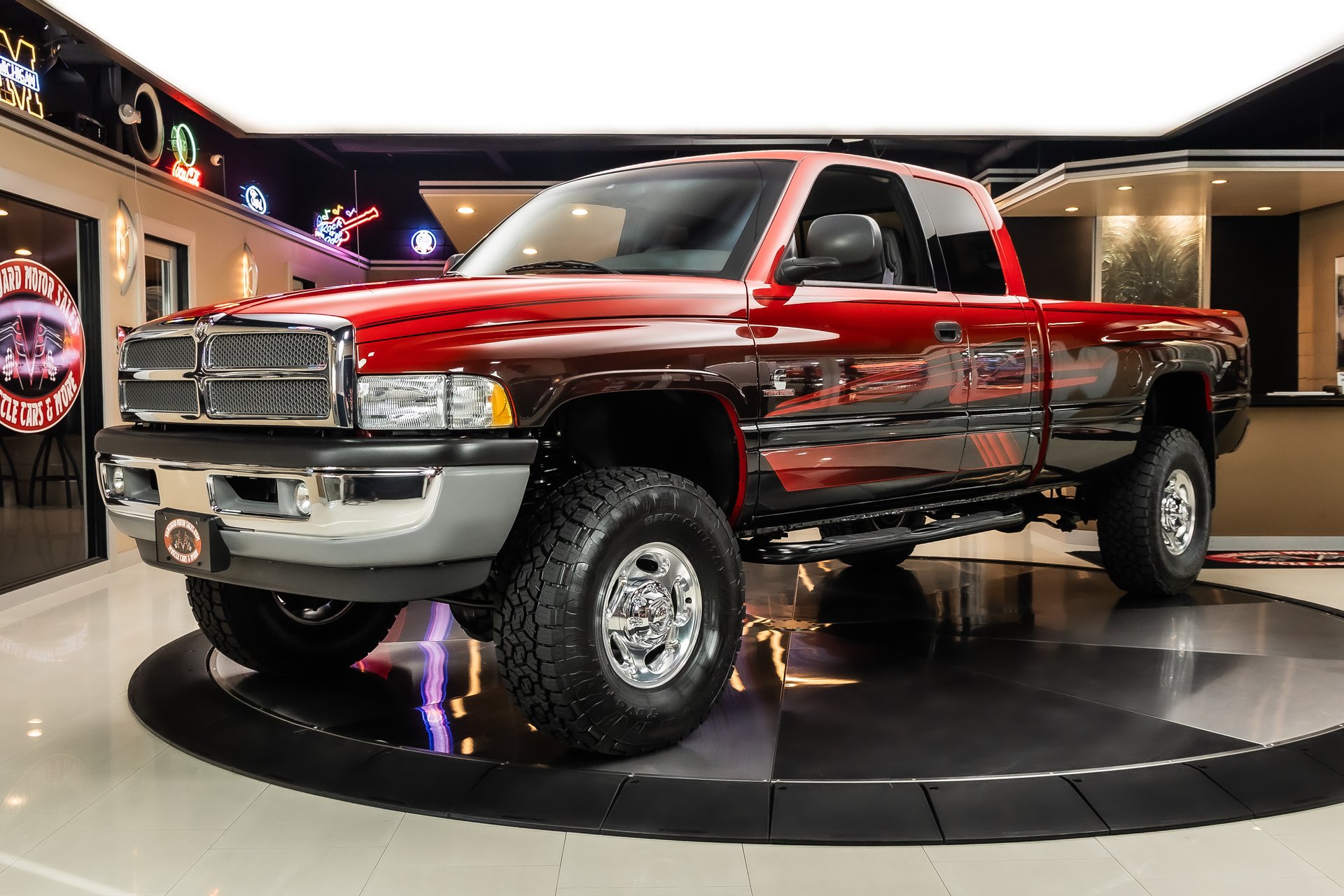
How to inspect one
Allow at least an hour, with the truck cold, on ground where you can get underneath it, and available for a drive long enough to get engine and gearbox fully hot. Bring a torch, a magnet wrapped in cloth, and a rag for the dipsticks. If the truck passes you, pay for a lift inspection with Cummins experience before money changes hands.
- Start with the paperwork and the VIN. Match the VIN on the title to the plate on the dashboard visible through the windshield and to the door label. Decode the VIN for year, engine and assembly plant, and check it against what the seller claims — a truck sold as a 1998 could be a 12-valve or a 24-valve depending on its build, and the paperwork plus the engine in front of you settles it. Ask for service records, and look specifically for the items this guide names: dowel pin work on a 12-valve, lift pump and VP44 history on a 24-valve, automatic gearbox service or rebuild, front-end work, and coolant system work. A thick, dated file is worth real money.
- Cold start, from outside the cab. Insist the engine is cold. On a diesel, watch the wait-to-start light, listen to how eagerly it cranks — slow cranking points at batteries, cables or the starter — and watch the exhaust at start-up. A brief puff is normal; sustained white smoke suggests unburnt fuel from a cold or fuelling fault, blue smoke points at oil, and heavy black smoke on a stock truck points at over-fuelling or an air restriction. On a petrol V8, listen for timing chain rattle and exhaust manifold ticking as it warms.
- The fuel system check that prices a Cummins. On a 12-valve, ask directly about the killer dowel pin from the Problem areas section and look for a front-cover oil leak that might mean it has already moved. On a 24-valve, look for the casting number low on the driver's side of the block — if it is a 53, examine the passenger side of the block for coolant staining with extra care — and ask about lift pump replacement and any fuel pressure gauge readings. A seller who can show you healthy fuel pressure under load has answered the biggest question on the truck. If there is no gauge, a long test drive that includes full-throttle work is the minimum substitute, and a pre-purchase inspection should include a pressure test.
- Underneath: frame first, then rust in the order of the rust map. Torch along both frame rails, the rear spring hangers and shackles, the crossmembers, the fuel tank straps and the steering box mount. Perforation or heavy flaking at hangers or mounts is structural — that is the walk-away check. Then work the body: cab corners, rockers, door bottoms, wheel arches, and the bed floor from below. Read any underseal as you go: thin, patchy and dirty is honest; fresh and uniform over everything is a question.
- Fluids, with your eyes and your fingers. Engine oil level and condition on the dipstick; automatic gearbox fluid colour and smell — red and sweet is healthy, brown and burnt is a rebuild conversation; coolant level, colour and any sign of oil in it or of sealant residue in the filler neck; power steering and brake fluid. On a diesel, low coolant with no explanation connects straight back to the 53 block and heater core checks in Problem areas, so do not let it pass as a top-up.
- The front end, weight on wheels. With an assistant rocking the steering wheel gently, watch the track bar ends, tie-rod and drag-link joints, and the steering box output for movement that should not be there — this is the death wobble check from Problem areas, done joint by joint. Then rock each front wheel for bearing and ball joint play. Any single worn joint is a part; play in four places is a front-end budget, and you should price the system, not the part.
- Cab and dashboard before the drive. Photograph the dashboard top. Work every crack and loose section with your eyes, then test the heater and air conditioning through all fan speeds and temperature settings — remember the heater core test from Problem areas: a sweet smell, a fogging windshield or a damp passenger carpet is a dashboard-out job. Work every window, lock, light and gauge. Check the headlights for the dimming and intermittence that point at the headlight switch and its connector. Sit in the driver's seat and feel for a collapsed cushion and a cracked frame.
- The test drive: long, hot and loaded with questions. Fifteen minutes is a minimum; thirty is better. The automatic should engage promptly, shift without flaring, and show no converter shudder under steady load; a manual should select every gear cleanly, stay in fifth under load — the NV4500 fifth-gear check — and take up drive without judder. A Cummins should pull cleanly from low revs without a miss, a dead pedal or a power cut; a V8 should pull without pinging under load, which connects back to the plenum gasket test. Note the temperature gauge's whole story, not just its final reading.
- Brakes, steering and the bump test. Brake hard from speed in a straight line: the truck should stop straight, without judder, pulling or a sinking pedal. At highway speed on a safe, uneven surface, feel for wander and for any building oscillation after a bump — the first tremor of death wobble is information, even if the full shake never arrives. Check the steering returns, centres and has no dead band around straight ahead.
- Four-wheel drive, properly tested. On a loose or gravel surface, engage four-wheel drive high and low. Drive in both, turn gently, and confirm the front axle is actually driving — the centre axle disconnect fault in Problem areas can leave you with a lever that moves and no front drive. Listen for transfer case chain noise and for front universal joint clicks on lock.
- Bed, tailgate and towing equipment. Lift any bed liner, check the bed floor and wheel tubs, work the tailgate, and inspect the tow hitch, its frame mounting, the trailer wiring and the brake controller. A bent hitch mount, amateur frame welding or household wiring splices tell you how the towing life was managed. Check the spare and its carrier.
- Stance, tyres and the final walk-around. Stand back: the truck should sit level side to side, and the rear spring packs should show no cracked or shifted leaves. Read all four tyres for uneven wear that confirms or contradicts step 6, and check their age as well as tread — old, cracked tyres on a heavy truck are a safety item and a real bill. Finish by comparing the truck against the paperwork one last time: engine, cab, drive and year all as described, or the price changes.
Values
There are no listing prices in this section, by design: the market figures for the Ram 2500 live in the computed market block that appears beneath this guide and is refreshed from our own listings, and that block — not a number written into prose that would date — is where you should read what trucks are actually being asked and what recorded sales have achieved. What this section gives you is how to read that block like a buyer who understands the model.
Start with the condition and specification spread, because on this model it is wider than on almost any car. The Ram 2500 market is really several markets wearing one badge: a petrol two-wheel-drive work truck in ST trim sits in a different value world from a manual Cummins Quad Cab four-wheel drive with documented work, and both differ again from a clean first-generation Cummins bought as a collectible. When you look at a median in the market block, ask which of those markets is doing the work in the sample.
The premiums are consistent, and they follow the problem areas. The Cummins carries a premium over the petrol engines, the 12-valve carries a premium within the Cummins market for its mechanical simplicity, a manual gearbox carries a premium over the automatic because it removes the biggest repair risk, four-wheel drive carries a premium over two, and the Quad Cab carries a premium over the Club Cab for its usability. None of those premiums is fashion alone: each one prices a real difference in capability, running cost or future repair exposure. The V10 is the instructive exception — a genuinely capable heavy hauler that usually trades below the Cummins, because its fuel cost narrows its audience to low-mileage towing work. For the right buyer that gap is the opportunity in the range.
Then read asking against achieved. Work trucks are often advertised by sellers who price the engine and forget the truck: the ad leads with a low-mileage Cummins and says nothing about the automatic, the front end, the dash or the cab corners. Recorded sales, by contrast, price the whole truck with its faults visible. Where the market block shows a gap between asking and achieved medians, that gap is usually the cost of the deferred work in this guide, being negotiated in public. A truck priced at the top of its group needs documented evidence for the expensive items, and a seller who cannot produce it is asking you to pay for work that may not have been done.
The project-to-driver gap is equally instructive. A non-running or rough Cummins truck is not a cheap route into the model, because the parts that make it run again — an injection pump, a gearbox rebuild, a front-end refresh, a dashboard — are the most expensive parts on the truck. The gap between a project and a sorted driver is often smaller than the cost of closing it, which is why sorted trucks hold their money and projects change hands repeatedly. Petrol projects are the exception: their faults are cheaper, so a rough V8 truck with a sound frame and cab can be a rational buy for a handy owner.
Finally, geography and rust move values as much as specification: a dry-state truck with a clean frame and cab corners is worth a real premium over an identical salt-belt truck, because that advantage cannot be retrofitted at any sensible price.
Parts and ownership
The Ram 2500 is one of the best-supported working trucks of its era: Dodge built a great many Rams, the Cummins was built in larger numbers again across industrial applications, and the aftermarket still develops parts for it. Ownership is nevertheless a heavy-vehicle proposition — bigger components, higher torques, dearer tyres, a large oil capacity, and jobs that are trivial on a car are heavy work here. Budget for truck-sized bills even when parts are reasonably priced.
Easy and widely available: service items for all engines — filters, belts, hoses, thermostats, water pumps — brake components, universal joints, steering and suspension wear parts including track bars and upgraded steering components, alternator and starter motors, batteries, exhaust systems, and most Cummins service parts including injectors and lift pumps. The aftermarket for the front end and the fuel system is particularly strong because the faults are so well known: improved track bars, steering box braces, better lift pump kits with filters and water separators, and dowel pin tab kits are all established products, not experiments. A VP44 replacement is available from multiple rebuilders, realistically as a part in the region of $1,200 to $2,000 before fitting, which is why the fitted repair figures in Problem areas are higher.
Harder, dearer or slower: automatic gearbox rebuilds done to a standard that survives behind a Cummins — cheap rebuilds exist and are a false economy — NV5600 six-speed parts, which are scarcer than NV4500 parts, V10-specific engine parts, good uncracked original dashboards, clean rust-free bed and cab panels in salt-belt regions, and quality interior trim in the less common colours. A quality repaint on a full-size truck, with the bed removed and the rust cut out properly, starts at modern truck money and rises quickly; that is why this guide keeps returning to buying the body and frame first.
Running costs. A sorted Ram 2500 is a realistic working classic. The Cummins returns fuel economy that embarrasses the petrol trucks — owners in steady highway use commonly see figures in the high teens to low twenties miles per gallon, against low teens or worse for the V8 and single figures towing with the V10 — but it asks for its money elsewhere: large oil capacity, fuel filters on schedule, two batteries at a time, heavy-duty tyres, and the standing possibility of a four-figure fuel-system or gearbox bill. The petrol trucks reverse the equation: worse economy, cheaper and simpler repairs. The first-year budget is the line that catches new owners on any version. Catching up deferred maintenance on a running truck — fluids throughout, brakes, front-end wear items, tyres, belts, hoses and the small faults — honestly costs in the region of $2,000 to $5,000 before you improve anything, and recommissioning a truck that has sat for years, with a fuel system to clean end to end and a brake system to renew, runs higher. Trucks that have sat need the fuel tank and lines inspected, old diesel or stale petrol dealt with, every seal and hose assessed, and all fluids changed before they are driven in anger. Buy a truck in regular use over one that has been asleep, even at a higher price: on a working truck, asleep is the most expensive condition there is.
Which one to buy
- The all-rounder: Cummins 24-valve SLT Quad Cab four-wheel drive, automatic or manual. The most usable cab, the strongest stock diesel, four-wheel drive and a trim level with the equipment you actually want. Buy it on fuel pressure evidence and gearbox history, and it will do every job the model was built for.
- The purist's truck: Cummins 12-valve, manual gearbox. Mechanical injection, the P-pump, no engine computer in the fuel path, and the NV4500 doing the work the automatic struggles with. The most sought-after combination in the range — verify the dowel pin has been tabbed, and pay for documented simplicity, not for a seller's story about it.
- The value buy: 5.9 Magnum V8 SLT. The same cab, frame and capability for ordinary towing, without the Cummins premium, and with petrol repair prices when it breaks. Accept the fuel economy, check the plenum gasket, and you have the cheapest honest route into a good 2500.
- The heavy hauler on a budget: V10. Near-diesel towing ability at below-diesel money, ideal if the truck tows hard but drives few total miles. The fuel bill rules it out as a daily; as a dedicated tow vehicle it is the range's quiet bargain.
- The collector's truck: first-generation W250 Cummins regular cab, 1989 to 1993. The original Cummins Ram, crude, loud and increasingly collectible in clean, unmodified form. Buy originality and condition; modifications that add value to a second-generation work truck subtract it here.
- The work truck: ST, any engine, bought on frame and cab. If the job is work rather than pleasure, the cheapest sound truck with a clean frame, honest cab corners and a service history beats a higher trim with rust and stories, every time.
And the rule that overrides all of the above: buy the frame, the cab and the fuel system, in that order — the engine's reputation is not a substitute for evidence on the individual truck. A Cummins badge will not weld a rotted spring hanger, a new VP44 will not straighten a cracked dash's value, and the strongest engine in the world is only worth owning inside a truck that is safe, solid and documented enough to use. The best Ram 2500 is the one whose expensive questions have already been answered, on paper, by the person selling it.
See the 21 Ram 2500 Regular Cab Long Bed cars currently listed.