
Dodge Ram 1500 Laramie Pickup 2D 8 ft buyer's guide
Dodge Ram 1500 Laramie Pickup 2D 8 ft -- the model's own buyer's guide: variants, values and what to check.
Years listed: 1987-1999 · Series: D-Series
Overview and history
The Dodge Ram 1500 is two very different trucks wearing one name, and understanding which one you are standing in front of matters more than the badge on the tailgate. Before 1994 the half-ton Dodge was the D150 — a square, conservative pickup whose basic cab and chassis dated back to 1972, renamed Ram for 1981 and kept alive through the eighties on value, toughness and a loyal fleet and farm following while Ford and General Motors took the volume. From 1994 the Ram 1500 was something else entirely: a clean-sheet truck with big-rig styling, a proper modern cab, Magnum V8 power and the sales to match. The redesign did not just update the Dodge pickup. It changed what an American pickup was expected to look and feel like, and it pulled Dodge from a distant third in the truck market into a genuine fight with the Ford F-150 and the Chevrolet C/K.
The first story starts earlier. Dodge had built its D-Series pickups since 1961, and the third generation launched for 1972 brought the rounded cab and the Club Cab extended cab for 1973 — Dodge was first with that idea. By the late seventies the design was ageing, and the 1981 relaunch was deliberately modest: a new grille, the Ram name revived from Dodge trucks of the thirties, and the ram's-head hood ornament. Underneath it was still the 1972 truck, with torsion-bar front suspension on two-wheel-drive models, leaf springs at the rear, and the slant six and LA small-block V8s doing the work. That continuity is its character today: an old-fashioned truck by design, not by neglect — slow steering, a bench seat, and mechanicals any small-town shop already knows.
Through the eighties Dodge improved it in steps. Throttle-body injection arrived in 1988, a four-speed overdrive automatic joined the range, the 3.9-litre V6 replaced the slant six, and a facelift came for 1991. Most important, the LA V8s were reworked into the Magnum engines — the 5.2 in 1992 and the 5.9 in 1993, with multi-point injection and a useful jump in power. A first-generation truck with a Magnum badge is a different proposition, and the models section separates them. Dodge did not chase refinement in this era, which is why survivors divide so sharply between worked-to-death farm trucks and unusually honest, low-use originals.
The second generation, coded BR for two-wheel drive and BE for four-wheel drive, arrived for 1994 and landed like a brick through the segment's window. The design team, working under a brief that owners wanted a truck that looked like a truck, drew a raised bonnet line, dropped front fenders and a huge upright grille echoing a Kenworth or Peterbilt tractor. Nothing else looked like it. The cab was larger and stiffer, the seating position higher, and storage was designed in, including the wide centre console that doubled as a work surface. It was named Motor Trend Truck of the Year for 1994, and Ram sales roughly tripled within a few model years.
Under the new skin the engineering was evolutionary in the right places. The Magnum engines carried over, the frame was stiffer, two-wheel-drive trucks used coil springs and double wishbones at the front, and four-wheel-drive 1500s kept a solid front axle on coils and links — a combination that gave the Dodge a reputation for toughness off road and for steering wear on it. The cab range grew through the run: regular cab, Club Cab extended cab with a rear bench but no rear doors, and for 1998 the Quad Cab, with rear-hinged rear doors. That last change sounds small and is not. A Quad Cab is a genuinely usable family vehicle; a Club Cab is a regular cab with storage behind you. Price them differently.
Production of the 1500 in this form ran through 2001. That run, the numbers built, and the truck's working life mean the market today is deep and very uneven. A second-generation Ram 1500 is not rare, and you should never buy one as if it were. What is rare is a straight, rust-light, unmodified V8 truck with a serviced transmission and a dashboard that has not crumbled — and the art of buying one is telling that truck apart from the similar one that needs its purchase price spent again within a year.
One naming trap before you go further. There was no factory diesel Ram 1500 in either generation here, and no Cummins in a half-ton of this era — that engine lived in the 2500 and 3500. A 1500 advertised as a Cummins is a conversion, a misdescribed heavier truck, or a badge, priced and inspected as a special. The same applies to the 8.0-litre V10, which belonged to the heavier trucks. The 1500 story is a six-cylinder story at the bottom and a small-block V8 story everywhere that matters.
The models
Every Ram 1500 in this guide is a full-size, body-on-frame pickup with a front engine and rear-wheel drive or part-time four-wheel drive. The badge changed in 1994 — D150 and W150 before it, Ram 1500 after it — but the logic never did: the number means half-ton nominal payload class, the letter or the badge tells you the era, and the trim tells you how the first owner intended to use it. Read a listing in that order: generation first, cab and bed second, engine third, trim last. Sellers reverse that order because trim photographs best.
| Model | Years | Engine | Output | Built | Character |
|---|---|---|---|---|---|
| Ram D150 / W150 | 1987-1989 | 3.7 slant six, 3.9 V6, 5.2 / 5.9 LA V8 | About 100-190 hp | Not separated in factory totals | The late square truck; TBI from 1988, simplest of the Rams here |
| Ram D150 / W150 Magnum | 1990-1993 | 3.9 V6, 5.2 Magnum (1992), 5.9 Magnum (1993) | 125-230 hp | Not separated in factory totals | The facelift first generation; Magnum V8s are the ones to seek |
| Ram 1500 ST | 1994-2001 | 3.9 Magnum V6, 5.2 / 5.9 Magnum V8 | 175-245 hp | Not separated in factory totals | The work specification; vinyl, steel wheels, fewest toys to fail |
| Ram 1500 SLT / Laramie SLT | 1994-2001 | 5.2 / 5.9 Magnum V8, V6 available early | 220-245 hp | Not separated in factory totals | The volume private-owner truck; cloth or leather, chrome, alloys |
| Ram 1500 Sport | 1995-2001 | 5.2 / 5.9 Magnum V8 | 220-245 hp | Not separated in factory totals | Body-colour grille and bumpers; appearance pack on SLT running gear |
| Ram 1500 SS/T | 1997-1998 | 5.9 Magnum V8 | 245 hp | Limited run, no reliable split published | Striped, lowered-stance street truck; verify it is a real SS/T |
| Ram 1500 Indy Ram | 1996 | 5.9 Magnum V8 | 230 hp | Limited run, no reliable split published | Blue-and-white pace-truck replica; collectible only if original and documented |
(Outputs are period factory ratings and vary a little by year and emissions specification; treat any single figure in a listing as a claim to check against the year, not as a constant. Dodge published Ram line totals rather than a clean surviving split by half-ton trim, so no built figure is given where the factory record does not support one.)
Cabs and beds decide the truck. Both generations come as a regular cab with a 6.5-foot or 8-foot bed and as an extended Club Cab, and second-generation trucks add the Quad Cab from 1998. The 8-foot bed is the work choice and the one contractors bought, which cuts both ways — most useful, and most likely to have lived a hard life. The short bed is the private-owner choice and the easiest to live with daily. Check cab and bed against the wheelbase in person; extended-cab short-bed and regular-cab long-bed trucks sit on similar footprints and are routinely confused in listings.
First generation, 1987 to 1993. The D in D150 means two-wheel drive; a W150 is the four-wheel-drive equivalent, with a solid front axle and leaf springs. Trim ran from plain working trucks through Prospector packages to LE models with two-tone paint and chrome, but trim matters far less than condition and engine. A slant-six truck is a slow, simple, characterful vehicle for local work and shows; a V6 is a little quicker and less charming; the V8s are the usable all-rounders. The 1992 and 1993 Magnum V8 trucks are the pick of the generation — square shape, simple chassis, modern injection. If you are buying a first-generation truck for anything beyond nostalgia, start there.
Second generation: ST, SLT and Laramie SLT. The ST is the fleet and farm specification — vinyl or plain cloth, steel wheels, often a V6 or 5.2 V8, and a life spent working. Do not dismiss it: fewer electric toys to fail, an interior that hides wear honestly, and a well-kept ST is a better truck than a tired Laramie. The SLT added chrome, alloys, better cloth and air conditioning. Laramie SLT sat at the top, with leather available and the full toy list. On a twenty-five-year-old truck the Laramie premium should be paid for condition, not the badge: every power accessory it added is now a potential fault, and its leather is usually the first surface to split.
Sport, SS/T and Indy Ram. The Sport is appearance — body-colour grille and bumpers on SLT running gear — which makes a good one a sweet spot: the look, no mechanical penalty. The SS/T of 1997 and 1998 is a real model: a 5.9 V8 with a freer exhaust, lowered stance, 17-inch wheels and stripes. The 1996 Indy Ram is its blue-and-white predecessor, marking the Ram's turn as Indianapolis 500 pace vehicle. Both attract replicas, because stripes and wheels are easy to add. Verify either from the VIN, the option codes and paperwork that reaches back. An undocumented striped truck is a 5.9 SLT with stripes, priced as one however good it looks.


Engines and gearboxes
The sixes: the slant six and the 3.9 Magnum V6
The base-engine story spans two completely different sixes. The 3.7-litre slant six, Chrysler's 225-cubic-inch legend, powered the earliest trucks here and bowed out after 1987. It leans visibly in the bay — the cylinders are inclined, hence the name — and it is one of the toughest engines ever put in an American pickup. Output is modest, around 100 hp, and the experience matches: unhurried, torquey at low speed, and unbothered by neglect that would stop a lesser engine. The known work is ordinary: carburettor rebuilds, choke behaviour and rocker-cover oil leaks. Buy one for what it is and it will not disappoint you; buy one expecting to tow in modern traffic and it will.
The 3.9-litre V6 that replaced it is a cut-down LA V8 — the 5.2 architecture with two cylinders removed — and it shares that family's parts, habits and sound, including an uneven idle that is normal for its 90-degree layout. In first-generation trucks it ran a carburettor and then throttle-body injection at about 125 hp. As the 3.9 Magnum it gained multi-point injection and a rating of 175 hp. It is durable and understressed, and in a regular-cab two-wheel-drive truck it gives adequate performance and the best fuel economy in this guide, which is a relative term everywhere here. Its weaknesses are the family ones — timing chain stretch, water pump and cooling neglect — plus one of its own: worked hard in a heavy Quad Cab or four-wheel-drive truck, a V6 lives at high throttle openings, wears faster, and returns little economy advantage. The V6 is the right engine in a light truck used lightly. In a heavy truck it is the wrong engine, and no discount quite fixes that.
On either six, cold start should be clean without prolonged cranking. A Magnum V6 that needs throttle to start and stalls at the first junction is usually asking about idle air control, battery voltage during cranking, or a tired fuel pump, in that order of cost — test before replacing. Listen for timing-chain rattle on a high-mileage example: a slack chain retards the cam timing and takes the edge off an engine owners then describe as tired.
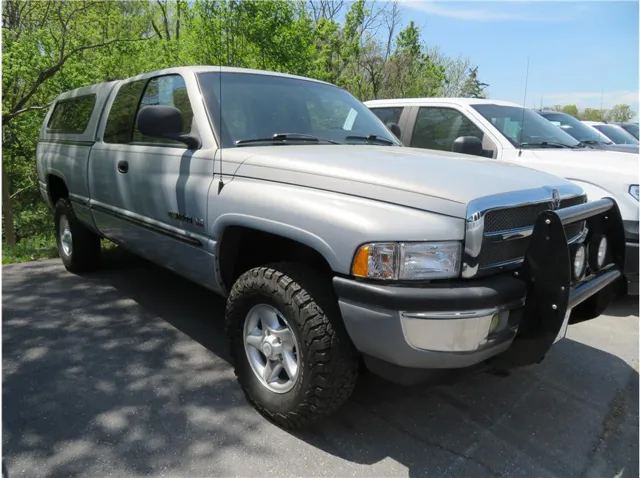
The V8s: LA 5.2 and 5.9, and the Magnum transformation
The V8s are why most people buy these trucks, and there are two families that share a surname and a block architecture but not a driving experience. The LA engines — the 318-cubic-inch 5.2 and the 360-cubic-inch 5.9 — are Chrysler's small-blocks of the sixties, updated through the eighties with electronic ignition, feedback carburation on the earliest trucks here, and then throttle-body injection from 1988. In that form the 5.2 makes roughly 140 to 170 hp depending on year, and the 5.9 about 190 hp, with the torque to do real work and a flat, unstressed delivery. They are simple, they are tolerant, and they respond to ordinary maintenance. Their limits are breathing and economy: the heads and intake were designed for an earlier era, and a TBI truck will never feel sharp by modern standards.
The Magnum rework changed that without changing the castings' basic identity. For 1992 the 5.2 and for 1993 the 5.9 received new cylinder heads with better ports and swirl, a higher compression ratio, a roller-cam-friendly valvetrain specification, multi-point sequential fuel injection with an injector per cylinder, a tuned intake manifold and a distributor still at the back of the engine, driving the oil pump and carrying the cam position signal. The results were 220 hp for the 5.2 Magnum and 230 hp for the early 5.9 Magnum, rising to 245 hp for later 5.9s including the SS/T tune, with torque figures that make the 5.9 the towing choice of the range. On the road a Magnum truck is immediately recognisable: it starts instantly, idles cleanly, pulls from low revs and revs with an eagerness no TBI truck has. If you test a Magnum that feels flat, something specific is wrong — and the single most likely something has its own heading in the problem areas, the intake plenum gasket.
Identification matters because swaps and badge games happen. A Magnum engine wears Magnum valve covers, has the multi-point intake with fuel rails and injectors visible, and in a correct truck matches the VIN's engine digit. An LA TBI engine has the big round air cleaner over a throttle body that looks like a carburettor. Sellers call any 5.2 a 318 and any 5.9 a 360, which is fair, but they also call TBI trucks Magnums, which is not. Price the engine you can see, not the word in the advert. The 5.9 also carries an external-balance distinction that matters when engines and transmissions are mixed: it uses a weighted flexplate or flywheel and the correct torque converter balance. A vibration that arrives with an engine or gearbox swap and resists wheel balancing is often this, and it is a parts-matching fault, not a mystery.
Both families share the same fundamentals. The cooling system is generous when maintained and unforgiving when the radiator is half-blocked and the viscous fan coupling is dead: a Magnum hot in traffic and cool on the highway is telling you about airflow, while one that heats steadily under load is telling you about coolant flow or a head gasket — not a routine Magnum failure, so treat overheating as a symptom, not a verdict. Distributor wear matters because the distributor also drives the oil pump: a wandering timing mark at idle, on an engine with a tight chain, points there. Plugs on a Magnum with the plenum fault below come out oil-fouled at the rear cylinders first — reading them is a genuine diagnostic. Exhaust manifolds crack and bolts break on towing trucks: a ticking loud cold and quiet warm is a manifold leak until proved otherwise.
There is no diesel and no V10 for a correct 1500. The Cummins and the V10 were heavier-truck engines, with heavier running gear to carry them. A half-ton wearing either has been built by somebody, and every question about originality, cooling and transmission matching gets louder, not quieter.
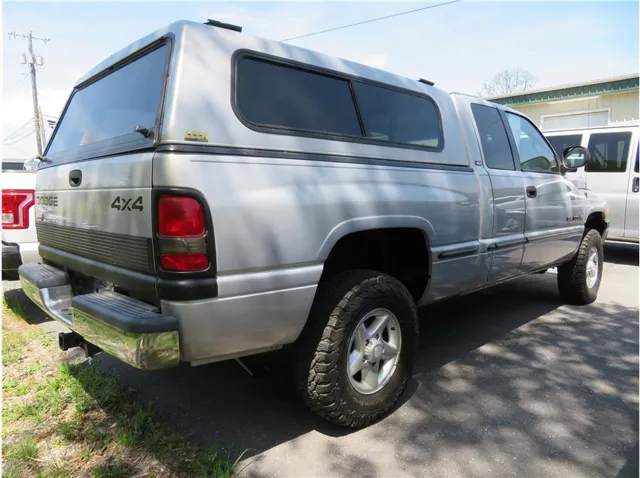
Gearboxes
First-generation trucks offer a three-speed TorqueFlite automatic, the A727 in heavy use and its lighter relatives, a four-speed overdrive automatic from the late eighties, and manual gearboxes including the near-indestructible NP435 four-speed with a crawler first gear in working trucks and lighter-duty manuals in lighter ones. The three-speed TorqueFlite is one of the strongest automatics ever made and the simplest to rebuild; its penalty is revs at highway speed and the fuel bill that follows. The early overdrive automatics, the A518 family that became the 46RH, added a lock-up converter and an overdrive unit behind a TorqueFlite-derived main case. They drive far better and they introduce the theme that dominates second-generation ownership: the overdrive Dodge automatic is a good gearbox that is killed by heat and neglected fluid, rarely by design.
Second-generation automatics are the 42RE behind the V6, the 44RE behind the 5.2, and the 46RE behind the 5.9, with the hydraulically controlled RH equivalents on the earliest 1994 and 1995 trucks. The RE suffix means electronic governor control through a governor pressure sensor and solenoid inside the transmission, and those two components are the source of the model's most misdiagnosed fault: a truck that starts in second or third gear, shifts late, hunts between gears at light throttle, or throws a governor pressure fault is very often asking for a sensor and solenoid — a sump-off job in the hundreds — and is routinely quoted as a full rebuild in the thousands. Test that distinction on any truck that shifts oddly but pulls cleanly in each gear once it gets there. A gearbox that flares on the 2-3 shift, slips under load in overdrive, shudders on lock-up, or produces dark burnt fluid and debris in the pan is a different matter: that is internal wear, and a rebuild at a competent shop runs roughly 2,500 to 4,500 dollars fitted depending on specification and converter. Heat is the accelerant in every case. The factory cooler line on many trucks contains a check valve intended to stop converter drain-back; with age it traps debris, restricts flow and cooks the gearbox it was meant to protect. Many specialists remove it and fit an auxiliary cooler on a tow vehicle. Ask whether either has been done, and look.
Manual second-generation trucks use the NV3500 five-speed behind V6 and 5.2 engines, a light, pleasant box whose synchromesh — second and third first — tells you how it has been driven, and whose clutch hydraulics are replaced as a sealed unit when the slave fails. The NV4500 belongs to the heavier trucks and appears in a 1500 only as a swap. Manuals carry a small enthusiast premium because they remove the automatic question entirely. Judge one on synchromesh from cold, clutch judder, and noise in neutral that disappears with the clutch down, which points at the input bearing.
Four-wheel-drive trucks use a part-time transfer case — NP208 family in first-generation trucks, NV231 in most second-generation 1500s, NV241 behind some specifications — with, on later solid-axle trucks, a vacuum-operated central axle disconnect. That disconnect is a system to test, not assume: vacuum motor, lines and fork wear give you a lever that moves and front wheels that are not driven. Test four-wheel drive on loose ground, high and low, and listen for chain slap from a stretched transfer-case chain.

Problem areas
A Ram 1500 rarely fails in one dramatic place. It declines by systems — a transmission run hot, a dashboard baked by sun, a track bar worn a fraction at a time until the steering is all suggestion — and the seller's description declines with it, so that by the time a truck is cheap, four or five medium jobs are stacked on top of each other. Your job is to unstack them in the right order. Structure and safety first, then the faults that strand you, then the faults that merely empty your wallet slowly. Almost everything below is fixable at a price you can know in advance. The exceptions, as on any steel truck of this age, are advanced rust in the frame and cab structure, and a truck whose problems are actually one problem — neglect — showing in every system at once.
Rust, paint and the structure: the map
Start with the frame, because on a body-on-frame truck the frame is the car. Dodge frames are strong channel sections that survive well in dry states and suffer in the salt belt in predictable places: around the spring hangers and shock mounts, the crossmembers under the bed, and behind the front wheels where spray packs mud against the steel. Surface scale is normal. Perforation, layered flaking under a screwdriver prod, and cracked spring hangers are structural. Pay particular attention where fuel and brake lines run along the left rail — lines rot in the same conditions that rot the frame. A proper frame repair is fabrication priced per truck, and on a common 1500 it ends most purchase arguments: walk away and buy the next truck, because there is always a next truck.
The cab rots from the bottom inward. Rocker panels and cab corners trap water and bubble from inside. Door bottoms fill through blocked drain slots; run a fingertip along the lower edge of every open door for bubbling under presentable paint. On second-generation trucks the rear wheel-arch lips are the signature rust: a double-skinned lip that bubbles at the top of the arch and spreads into the bed side. Small bubbles are a repair panel and paint; arches that crunch under thumb pressure mean the inner structure is going too. Floors go where water sits — under carpet in the footwells, fed by windscreen and rear-window leaks — so press the floor through the carpet for the crunch of scale and smell the cab: a musty truck is a wet truck whatever the seller says about storage.
The bed is a record of the truck's life. A rippled floor and a bowed tailgate describe hard commercial use honestly and matter little on a work truck. What matters is rust at the bed floor supports, wheel tubs perforated into the arch problem above, and a bed that does not sit square to the cab — gaps that differ side to side point to a bent frame, broken mounts or accident repair, each needing an explanation in metal, not in words.
Paint is the second-generation truck's other body story. Chrysler, like its rivals, had clear-coat adhesion failures through the nineties, and Rams delaminate in a recognisable pattern: the clear coat goes milky and lifts on the horizontal surfaces — bonnet, roof, bed rails — while the vertical panels keep their shine, until sheets of clear and colour peel away. White, blue and silver show it first. There is no cheap cure: a delaminating panel must go back to sound material, and a truck peeling on every horizontal surface needs a full respray at proper money, rising fast with arch and cab-corner metalwork done at the same time. Price peeling as paintwork, not patina, and distrust a fresh cheap respray over it — it peels again, usually within a year.
Magnum drivetrain faults: plenum, transmission and rear axle
The intake plenum gasket — owners call it the belly pan — is the Magnum V8's defining fault and the one to understand before you look at any 5.2 or 5.9 from 1992 onward. The Magnum intake manifold is aluminium, and bolted underneath it is a stamped steel plate that closes the valley. The gasket between dissimilar metals, heat-cycled for decades, eventually blows inward. The engine then breathes crankcase air and oil mist through the failure: oil consumption rises sharply with no external leak and no blue smoke dramatic enough to notice, the rear spark plugs oil-foul, the engine pings under load on fuel it used to accept because oil in the charge lowers its effective octane, low-speed performance dulls, and in bad cases the catalytic converter dies from the oil it has been fed. The test is specific and takes a minute. Remove the air cleaner, open the throttle blades, and look down the intake with a torch: a dry aluminium floor is healthy, a floor pooled or filmed with oil is a failed gasket. A second test is vacuum at the breather with the PCV system arranged as the workshop procedure describes, but the torch test settles most trucks in person. The repair is an intake-off job — gasket and plate, with the improved aluminium plenum plate many specialists fit in place of the steel one so the expansion rates match — realistically 600 to 1,200 dollars at a shop with the ancillary hoses, thermostat and bypass hose the job should include while access is open. Documented plenum work is a selling point worth paying for. An undiagnosed oil-drinking Magnum is not a tired engine; it is this gasket until the torch proves otherwise.
The automatic transmission is the second wallet item and it was covered mechanically in the gearboxes section, so here the buyer's version: assume any RE automatic with no service history is on borrowed time, and budget accordingly rather than hoping. Fluid should be red and sweet-smelling, the level checked hot and idling in neutral as Chrysler specifies — checking in park misreads it, a detail that catches out owners from other marques and has condemned good gearboxes. Shifts should be prompt and consistent hot and cold. A truck that is fine cold and loses overdrive or lock-up hot is describing heat and wear, not an adjustment. Towing history multiplies everything: a 1500 that has towed at its limit on the factory cooling alone will have a tired converter and dark fluid even at moderate mileage. Manual trucks sidestep all of this and substitute clutch and synchromesh, which are cheaper to judge and cheaper to fix.
The Chrysler 9.25-inch rear axle under most V8 1500s is strong, with two wear signatures. The first is bearing noise — a whine that changes between drive and coast — which is a rebuild, not an oil change. The second is the limited-slip differential: its clutch packs wear and chatter on tight turns, groan when the correct friction modifier is missing, or quietly become an open differential. Test on a full-lock turn at walking pace. Four-wheel-drive front axles add unit wheel bearings, clicking axle joints and the vacuum disconnect described earlier. On a lifted truck with oversize tyres, all of these are accelerated, and big tyres on stock gearing also blunt performance and overwork the automatic — a modified truck needs its gearing and cooling story told convincingly before its looks earn it anything.
Cooling closes this system out. Radiators silt, water pumps weep and wobble, fan couplings freewheel when they should drive, and the small bypass hose at the front of a Magnum intake is a classic sudden coolant loss. Heater cores clog and leak into the passenger footwell — sweet smell, misting screen, damp carpet — and on a second-generation truck that is a dashboard-out job: any dash-out fault costs labour first and parts second.
Steering, suspension and brakes
Steering wander follows the second-generation four-wheel-drive 1500 through its life, and it is a system fault with named components, not a personality trait. The solid front axle is located by a track bar whose frame-end joint wears and lets the axle shift sideways a few millimetres with every input. The driver corrects, the axle shifts back, and the truck proceeds in a series of negotiations. Rock the wheel with the engine running while a helper watches the track bar ends: movement at the joint before the axle responds is wear you can see. Add a worn steering box, tie-rod ends, ball joints and shaft coupling, and a neglected truck can have play in five places at once, each modest and the sum undriveable. The cure is to replace what is worn and align it properly — realistically 800 to 2,000 dollars depending on the pile. Two-wheel-drive trucks wear more conventionally and steer far better when sorted, which is one reason a two-wheel-drive Ram is the nicer daily driver.
Death wobble is the violent version, distinct from wander. Worn track bar location plus worn joints, out-of-round tyres and incorrect caster can set the whole front axle oscillating after a bump at speed, violently enough that the only cure in the moment is to slow until it stops. A truck that does this is not safe to drive home and negotiate later. If a seller describes an occasional shimmy, drive over broken pavement at forty to fifty miles an hour, hands light, somewhere a wobble can be managed, and treat any onset as a full front-end budget, not a tyre balance.
Suspension wear follows load and lift: springs sag or crack, shock absorbers die and let a heavy truck pitch, and every rubber bush is now a suspect. Anti-roll bar links knock over low-speed one-wheel bumps in a way owners misdiagnose as ball joints; the timing gives it away. Brakes are front discs and rear drums on most 1500s, and the faults are age faults: seized calipers, perished hoses, corroded lines in salt country, and out-of-adjustment drums leaving a long pedal and a vague handbrake. A brake refresh is ordinary money — 800 to 1,800 dollars at a shop depending on line work — but it is not optional money, and a truck that pulls under braking is not a test-drive-and-see truck.
Cab, interior and electrics
The second-generation dashboard is the interior fault everyone knows, and it deserves its reputation. The dash top and structure were moulded in a plastic that embrittles with heat and ultraviolet light, and on trucks that have lived in sun it cracks — first hairlines around the defroster vents and speaker grilles, then open cracks, then, on the worst trucks, a dash top in pieces that rattles, drops fragments into the vents, and cannot take any load at all. Southern trucks suffer most; a garaged northern truck can be perfect. There is no glue repair that lasts. The fixes in ascending order are a moulded dash cap glued over the ruin for a few hundred dollars fitted, which looks acceptable and feels hard, and a full replacement dash structure, which is a dashboard-out, steering-column-down, day-of-labour job with a part that has become harder to source in the right colour. Price a shattered dash as the replacement job, not the cap, unless the cap genuinely satisfies you. And connect the dots: a truck needing a dash-out heater core, a dash-out evaporator and a dash replacement is one labour bill if you plan it and three if you do not.
Air conditioning on second-generation trucks commonly fails at the evaporator, in the same dashboard, and at the condenser, while first-generation systems are often converted from their original refrigerant — ask whether the conversion used compatible oil and seals, because a paper conversion leaks from every O-ring. Blend doors give weak heat or air that will not change direction, again threatening dashboard labour. Test heat and cold in every setting, whatever the weather.
Seats wear the way working trucks wear. The driver's cushion collapses at the entry bolster, cloth splits, Laramie leather cracks and tears, and the foam crumbles so re-covering alone does not restore the seat — budget pads and covers together, roughly 400 to 900 dollars a front seat. Headliners sag, door cards warp, and window regulators leave windows that need helping up by hand. The trap is arithmetic: ten small interior jobs is a thousand dollars and a month of evenings, so count them out loud on the viewing and put the total in the offer.
Electrics fail at the era's usual places. The ignition switch and connector on second-generation trucks carry heavy loads, heat and melt, giving intermittent loss of blower, windows or instruments — if blower and windows die together, look at the switch before either motor. Fuel gauges lie because the sender track wears, and the fuel pump module is the commonest no-start on a high-mileage second-generation truck: cranking with spark and no fuel pressure wants a pump, a bed-lift or tank-drop job at 500 to 1,000 dollars fitted. Listen at the filler for the prime whine; silence is information. Corroded ground straps produce the full haunted-truck repertoire of dim lights, slow cranking and gauges with opinions. A truck where every electrical item works has been maintained by somebody who cared, and that signal is worth more than any single item here.
How to inspect one
Allow ninety minutes, bring a torch, a magnet wrapped in cloth and a helper if you can, and insist on a cold engine when you arrive. A Ram warmed up for you has had its cold-start and cold-shift evidence removed. Work in this order: the early steps can end the viewing cheaply.
- Start with the paperwork and the identity. Match the VIN on the title to the plate at the base of the windscreen and the door label, and read the engine digit against the engine you can see: Magnum valve covers and fuel rails for a Magnum, a throttle body under a round air cleaner for a TBI truck. Check the option label for the axle ratio, limited-slip and trim codes, and on a claimed SS/T or Indy Ram, stop here until the codes and paperwork support the claim. A striped truck that fails step 1 is a regular 5.9, priced as one.
- Cold start. From stone cold, the truck should crank briefly and settle to a clean idle without throttle. Prolonged cranking points to fuel pressure bleeding away or a tired pump — listen at the filler cap for the prime whine as the key turns. Blue smoke at start-up that clears is valve seals; smoke that stays is deeper. A rattle from the front of the engine that fades is a timing chain asking to be budgeted.
- The plenum test on any Magnum V8. Engine off, air cleaner removed, throttle held open, torch down the intake bores. A dry floor passes. Oil pooled or filmed across the floor is the failed belly-pan gasket from the problem areas, and it explains oil consumption, pinging and fouled rear plugs in one look. Pull a rear spark plug if the seller allows: oil fouling there confirms the torch.
- Frame and underside. Torch along both frame rails, spring hangers, crossmembers and the left rail where the lines run. Prod scale with a screwdriver where you are allowed. Perforation at hangers or rails ends the inspection. Surface scale, honest and dry, does not. Read the coating as you go: patchy factory finish is normal, fresh black stone-chip over everything, including lines and mounts, is a question the seller must answer.
- Cab and bed rust, in the map order. Rocker panels and cab corners, door bottoms with the doors open and your fingertip on the lower seam, rear wheel-arch lips with thumb pressure at the top of each arch, floors pressed through the carpet in all footwells, and the bed floor supports from underneath. Crunch, holes or soft metal at the cab corners and arches are panel-and-paint money; add it up before you fall for the engine.
- Paint in flat light. Stand where the light rakes across the bonnet and roof. Milky, lifting or missing clear coat on the horizontal surfaces is the delamination fault, and it prices as respray work per panel, not as a polish. Run the magnet over arches, cab corners and lower doors for filler. Check that cab and bed gaps agree side to side.
- Transmission, hot and cold. Check automatic fluid hot, idling in neutral, as Chrysler specifies: red and sweet passes, dark and burnt fails into a rebuild budget. Drive it cold first if you can — note lazy or stacked shifts — then again fully hot. A truck that starts in the wrong gear or hunts at light throttle but pulls cleanly in each gear may need the governor sensor and solenoid; a truck that flares, slips under load or shudders on lock-up needs the box. On a manual, test second and third synchromesh from cold and the clutch for judder and a high bite.
- Steering with a helper. Engine running, helper rocking the wheel through the free play while you watch the track bar ends, drag link, tie rods and steering box from the front. Movement at the track bar joint before the axle answers is the wander fault made visible. Then drive it: the truck should track straight hands-light on a flat road, return to centre, and show no knock over one-wheel bumps. Any oscillation after a bump at speed is a full front-end budget and a truck you do not drive far until it is spent.
- The test drive, loaded with questions. Fifteen minutes minimum, including highway speed, a rough stretch, full-lock turns and a loose-surface test of four-wheel drive, high and low, on any 4x4. On full lock, listen for limited-slip chatter and clicking axle joints. Brake hard from speed twice: straight, no pull, no judder, a pedal firm on the second stop. Watch the temperature gauge throughout — steady passes; climbing in traffic or under load is a cooling diagnosis handed to you free.
- Heat, air and the dashboard. Run the heater hot and the air conditioning cold through every setting. A sweet smell or misting screen is heater-core money, and on a second-generation truck that money is dashboard labour. Then judge the dash: hairlines around the vents are age, open cracks are a replacement budget. Work every window and the blower on all speeds in one pass — blower and windows failing together points at the ignition switch, not at two motors.
- Electrics and the fuel pump tell. Listen for the pump prime. Watch the fuel gauge against what the seller says is in the tank, and every warning lamp proving on and going out, including the anti-lock lamp. Slow cranking with a good battery is cables and grounds until proved otherwise.
- Interior and stance last. Sit in the driver's seat and feel for a collapsed bolster; then the passenger seat, the control sample for how the driver's should feel. Stand back and photograph the side: cab and bed level, flanks straight. A truck that sits crooked is telling you its last story — hear it before you agree a price.
Values
The build below this guide carries the live market for the Ram 1500 — the trucks listed now and the recorded sales — refreshed as the stock changes, and that block is where every current figure belongs. This section teaches you how to read it, because on a truck built in these numbers, over this many years, in this many specifications, a single median figure hides more than it reveals.
The first spread is condition, and it is wider than on almost any car of the era. At the bottom are parts trucks, non-runners and salt-belt trucks with structural rust, priced as a source of panels and a rebuildable engine. In the middle is the honest working band where most transactions happen: running trucks with miles, rust beginning, and a transmission history you may not be able to prove. At the top are dry-state, low-mileage, unmodified V8 examples with paint that has not peeled, a dashboard in one piece, and paperwork. The gap between middle and top is not a premium for shiny paint. It is the avoided cost of the plenum job, the transmission rebuild, the front-end rebuild and the respray. Compare two trucks as purchase price plus the stack of jobs each is carrying. The cheaper truck is frequently the more expensive purchase.
Specification moves value in a predictable order. A V8 moves a truck out of the work-fleet band that caps V6 values, and the 5.9 moves it further than the 5.2 wherever towing, a Quad Cab or four-wheel drive adds weight. Four-wheel drive carries a real premium in snow and farm country and a smaller one where it is never used — and it buys you the solid-axle steering wear, so the premium should shrink by the state of the track bar on the specific truck. A Quad Cab is worth more than a Club Cab in family use and no more to a work buyer, and an 8-foot bed is worth most to the smallest group of buyers, the ones who need it. First-generation values follow a different logic: the premium is for originality, a late Magnum engine, and survival itself, because a square Dodge that has not been worked to death is genuinely scarce even though the model never was.
Special editions need a cold eye. A documented SS/T or Indy Ram carries a collector premium over the equivalent SLT; an undocumented truck wearing the stripes carries none of it, and the recorded sales will show you the difference if you separate verified trucks from tributes. The Sport sits between: a modest premium for the look, never a reason to forgive mechanical faults.
Asking and achieved prices part company for a familiar reason: sellers price the truck they remember buying, buyers price the stack of jobs in front of them. Clean trucks priced inside the honest band sell quickly and quietly, which is why the sales record is a better guide than the loudest listings. Region matters throughout, because a rust-free frame in a salt state is worth transporting money, while the same truck in a dry state is simply a good local truck. Negotiate on evidence: the plenum test, the transmission fluid, the track bar movement and the arch rust are each a priced job, and a seller who has watched you find them has already heard your offer being built.
Parts and ownership
The Ram 1500 is one of the easiest American vehicles of its era to keep: Dodge built Rams in the millions across the generations sharing these engines and gearboxes, the aftermarket followed the numbers, and any competent independent shop already owns the knowledge. What has changed is the split between mechanical parts, which remain plentiful and cheap, and trim and cab parts, which are entering the salvage economy.
Easy and cheap: service items for every engine — filters, plugs, leads, belts and hoses — brake parts, water pumps, alternators, starters, radiators, suspension wear parts including ball joints and track bars, steering joints and exchange boxes, exhausts, and the wear components of the automatics. Order today, fit this week, at prices close to modern-truck money describes most of that list. A quality remanufactured long engine is a realistic, warrantied option on a truck whose body justifies it.
Harder, dearer or slower: the second-generation dashboard structure in the right colour — the signature scarcity, and a purchase criterion rather than a parts order. Heater cores and evaporators are available parts attached to an expensive address, so combine dash work into one visit. Plenum repair kits are sensibly priced, but the job wants ancillary hoses and thermostat done alongside. Governor sensors and solenoids for the RE automatics are cheap relative to the rebuild they are mistaken for. Good chrome, straight tailgates, unrusted first-generation beds, and correct SS/T and Indy Ram wheels and decals live in the salvage market now: buy them when you see them, not when you need them.
Running costs. Fuel defines Ram ownership. A V8 returns economy in the low-to-mid teens in mixed use, less towing, and the V6 improves on that by a margin that disappears when it is worked hard. Budget for it as a truck cost, not a surprise. Tyres and servicing are ordinary — except that your first service on any automatic truck should include the transmission fluid and filter the previous owner probably skipped. Agreed-value cover for a first-generation survivor or a verified special edition is worth arranging with photographs, because a market-value settlement will not replace either.
The pattern that works is a first-year catch-up, honestly budgeted: full service, transmission service, brake and cooling attention, and the small faults you counted on the viewing, before you improve anything. Treat a documented plenum job, transmission rebuild or front-end rebuild as money the seller has already spent for you. Trucks that have sat need the fuel system cleaned end to end and every brake component inspected before they are driven in anger. Bought right and caught up once, a Ram then asks for ordinary truck maintenance and gives back what it was built for: it works, it carries, it tows, and it does not require specialist permission to fix.
Which one to buy
- The all-rounder: a second-generation 5.2 or 5.9 SLT regular or Quad Cab. The modern cab, Magnum power, the deepest parts support and the widest choice of trucks to buy from. If you want one Ram to use for everything, this is it — bought on transmission history, dash condition and arch rust, in that order.
- The value buy: a second-generation ST with a V8. The work specification has fewer toys to fail, an interior that wears honestly, and a price that reflects a badge snobbery the truck itself does not deserve. A cared-for ST is the cheapest route into a good second-generation Ram.
- The classic truck: a 1992 or 1993 first-generation D150 with a Magnum V8. The square shape and simple chassis with modern injection and real performance. Scarce in honest condition, and worth stretching for when the frame and cab pass the inspection.
- The family and tow choice: a 1998 to 2001 Quad Cab 5.9 with four-wheel drive. Rear doors that make the back seat real, the strongest engine in the range, and all-weather traction — provided the track bar and front joints pass the helper test and the automatic has a service story.
- The street truck: a verified SS/T, or a Sport if the paperwork is thin. The look and the 5.9 are genuine — on a documented truck. An undocumented striped truck is an SLT with stripes, bought at that price.
- The simple life: a manual-gearbox truck, either generation. You trade a little convenience for the removal of the model's biggest single bill. Judge it on synchromesh and clutch.
And the rule that overrides all of the above: buy the least rusty, least modified truck you can find, with the transmission and dashboard already proved, in the specification you can live with. Engines can be rebuilt, plenums resealed and front ends renewed at prices you can plan for. A rotten frame and a cab coming apart at its corners cost more to put right than the finished truck will be worth — and a Ram 1500 is common enough that walking away is always an option.
See the 25 Ram 1500 Laramie Pickup 2D 8 ft cars currently listed.