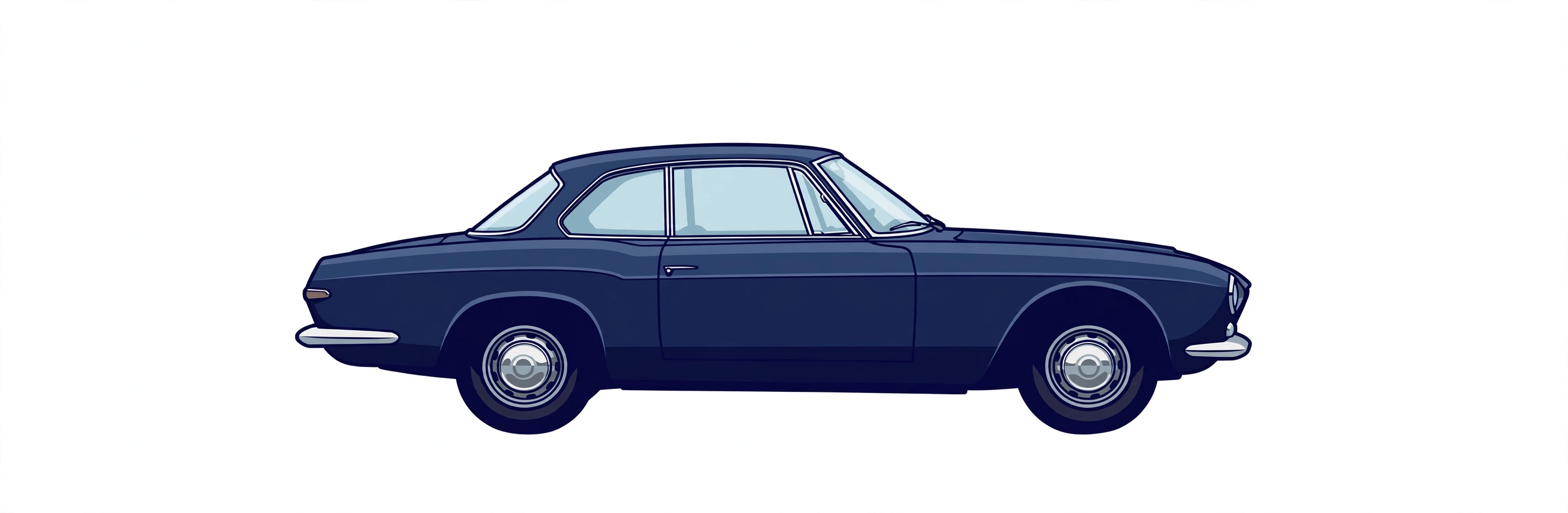
Dodge D100 buyer's guide
Dodge D100 -- the model's own buyer's guide: variants, values and what to check.
Years listed: 1968-1988 · Series: D-Series
Overview and history
The D100 is Dodge's half-ton pickup in its classic era — the light-duty two-wheel-drive truck in the D-series range, built from 1961 to 1993 in three broad generations, and the truck that carried Dodge through the years when Ford and Chevrolet owned the pickup market between them. It was never the best-selling half-ton in America, and that is precisely why buyers look for one now: a D100 is mechanically simple, honestly styled, cheaper to buy than the equivalent Ford F-100 or Chevrolet C10, and built around some of the toughest engines Chrysler ever made — the 225 Slant Six and the LA-family small-block V8s.
The naming is simple once you know it. In Dodge's system, D means two-wheel drive (W meant four-wheel drive), and the number is the weight class: the D100 is the half-ton, the D200 the three-quarter-ton, the D300 the one-ton. Everything in this guide is the half-ton. The D100's story falls into three chapters, and you should decide which chapter you want before you look at a single listing, because they drive, rust and cost differently.
The first generation, 1961–71, is the Sweptline. Dodge launched the D-series for 1961 with styling from the Virgil Exner era — quad headlamps on the earliest cars, a wide, flat-sided body and the Sweptline bed, whose sides run in one clean sweep from cab to tailgate. Underneath it was a thoroughly conventional truck: a separate ladder frame, a solid front axle on leaf springs, and a choice of the 225 Slant Six or small-block V8 power. The Sweptline was facelifted several times — the grille and headlamp treatment changed for 1965 and again toward the end of the run — and it gained the Adventurer trim package and the Club Cab's rivals never quite matched its working-truck honesty. These are the trucks collectors have woken up to most recently, and the ones where rust does the pricing.
The second generation, 1972–80, is the truck most people picture. Dodge redesigned the D-series completely for 1972 with rounder, more modern styling, a coil-sprung independent front suspension in place of the beam axle, front disc brakes, and the fuel tank moved out of the cab. The Club Cab — an extended cab with a small rear bench and jump seats — arrived for 1973 and was a genuine Dodge first that Ford and GM took years to answer. This is also the generation of the special editions: the Warlock, the Macho Power Wagon's two-wheel-drive cousins, and the Li'l Red Express of 1978–79 — although be careful there, because the Li'l Red Express was built on the heavier-duty D150 platform rather than the D100, a distinction sellers blur constantly and one we return to in the models section.
The third chapter begins in 1981, when the trucks were rebranded as the Dodge Ram, and it is the most confusing for badge-watchers. The half-ton Ram was the D150, and the D100 badge went quiet — then returned in the mid-1980s as the entry-level half-ton below the D150, the basic work truck of the late first-generation Ram range. Those late D100s, built through to the end of the first-generation Ram run in 1993, are the youngest and cheapest way into the model: square, simple trucks with the Slant Six or the 318 V8, increasingly with throttle-body fuel injection and overdrive automatics. The Cummins diesel story belongs to the heavier D250 and D350 from 1989, not the D100 — no factory D100 carried the Cummins — but it transformed the reputation and the parts ecosystem of the whole late range, and late D100s trade in its glow.
On this site the D100 pool is small and honest about what the market actually holds: 15 trucks filed at the time of writing, 12 offered for sale and 3 recorded sold, spanning 1967 to 1988 — Sweptlines, seventies trucks and late Ram-era cars, with automatics outnumbering manuals roughly three to one, exactly as Dodge sold them. That spread is the guide in miniature. You are not choosing between trim levels on a new-truck order sheet; you are choosing between three different trucks that happen to share a badge, separated by thirty years of development, and the right one depends entirely on whether you want a hobby, a hauler or a daily-driver classic.
One more framing point before the detail. These were working trucks, and most of them worked. A D100's history is written in its bed floor, its cab corners and its maintenance gaps, not in its mileage — odometers on these trucks are five-digit, frequently replaced and routinely wrong, so buy on condition and evidence, never on the number in the cluster. The good news is that almost everything mechanical on a D100 is fixable with ordinary tools and ordinary money. The bad news, as with every old truck, is that the body is the bill. This guide works through both.

The models
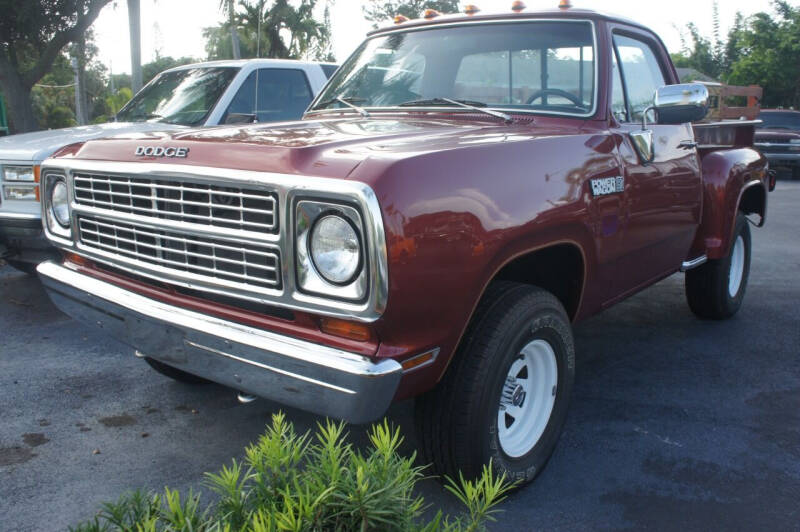
Every D100 is a two-wheel-drive half-ton pickup on a separate frame, but the badge covers three generations, two bed lengths, two cab styles and a thirty-year spread of equipment. Short-wheelbase trucks ride on a wheelbase of about 114 inches; long-bed trucks on about 131 inches. Beds came as the Sweptline (flush-sided, styleside in rival language) or the Utiline (the traditional step-side with separate rear fenders), and the Utiline survived as an option far longer at Dodge than at Ford or GM — a genuine D100 character point, and the bed the Li'l Red Express made famous.
| Model | Years | Engine | Output | Built | Character |
|---|---|---|---|---|---|
| D100 Sweptline (six) | 1961–1971 | 225 Slant Six | 145 hp (gross, early) | Not separately published | The basic working truck; slow, simple, indestructible |
| D100 Sweptline (V8) | 1961–1971 | 318 LA V8 (273 early) | 230 hp (gross) | Not separately published | The collector's Sweptline; the one values follow |
| D100 (1972–80) | 1972–1980 | 225 six / 318 / 360 V8 | 95–175 hp (net) | Not separately published | The modernised truck: IFS, discs, Club Cab from 1973 |
| D100 Adventurer | 1972–1980 | 318 / 360 V8 typically | As above | Not separately published | Top trim: better seat, chrome, two-tone paint |
| D100 Ram (base) | Mid-1980s–1993 | 225 six / 3.9 V6 / 318 V8 | 95–170 hp | Not separately published | The entry-level Ram half-ton; youngest, cheapest, simplest |
A note on the table itself: Dodge did not publish clean per-model production splits for the D-series the way Mercedes published W108 figures, and any source that gives you a precise build count for, say, a 1974 D100 Club Cab is inventing it. Outputs also straddle the 1972 change from gross to net ratings, so a 1971 318 rated at 230 hp and a 1972 318 rated around 150 hp are near enough the same engine wearing two different measuring sticks. Judge these trucks by what is under the hood and how it runs, not by the brochure number.
The Sweptline years, 1961–71. The first-generation truck is the most characterful and the most demanding. Early cars (1961–64) carry quad headlamps and the most Exner-era detailing; the 1965 facelift cleaned the front end up and is the look most buyers want. Trim ran from the bare Custom up through the Adventurer, and the Camper Special and High Performance packages existed on the heavier trucks rather than the half-ton. What matters on a Sweptline is specification honesty: the Slant Six was the volume engine and many V8-badged trucks started life as sixes, and vice versa. The VIN plate on the driver's door jamb and the engine stampings settle what a truck actually is — the inspection section walks you through it. Bed choice matters to value: a genuine Sweptline bed is the collector default, while a Utiline step-side has its own following and is correct on plenty of trucks.
The 1972–80 trucks. The redesign is the usability leap: independent front suspension, disc brakes, a roomier cab, and from 1973 the Club Cab, which added roughly a foot and a half of cab behind the doors with a small bench — the ancestor of every extended cab since. Trim climbed from Custom through Adventurer to Adventurer SE. The special editions of the late seventies — Warlock, with its black paint, gold pinstriping and oak bed rails, and the Li'l Red Express — were factory packages on the D150 Adventurer platform, not the D100. That distinction is not pedantry: a listing in our own pool describes a 1978 truck as a "D100 Lil Red Express", and no such factory vehicle exists. A genuine Li'l Red Express is a 1978 or 1979 D150 with the high-performance 360, the Utiline bed, the vertical exhaust stacks behind the cab and the door decals; anything filed as a D100 wearing that name is a tribute, a misfile, or a seller's hope, and must be priced as the D100 underneath. Check the VIN before you pay a Li'l Red premium for any truck.
The Ram-era D100, mid-1980s–1993. When Dodge rebranded the range as Ram for 1981, the half-ton became the D150 and the D100 nameplate rested; it returned mid-decade as the base half-ton, a deliberately plain truck aimed at fleets and price buyers. These are mechanically the best-developed of all D100s — the 318 gained throttle-body injection in 1988, overdrive automatics spread through the range, and rustproofing, while still not a Dodge strength, improved. They are also the least collectible today, which makes them the value buy of this entire guide: a late D100 gives you the classic square Ram shape with modern-enough manners at working-truck money. The 1987 trucks are the most common in our pool — three of the fifteen — which matches the market: the late eighties trucks are the survivors, because they are young enough to have lived gentler lives.
What the pool tells you. Of the 15 D100s filed here, the years run 1967, 1968, 1970, two 1971s, 1975, two 1978s, 1979, two 1985s, three 1987s and a 1988 — no early-sixties trucks, nothing from the nineties, and a clear centre of gravity in the seventies and eighties. Eight of the fifteen came through Facebook Marketplace and five through dealers, which is the D100 market in a sentence: these trucks trade locally, between private sellers, far more than they pass through the classic trade. Buy accordingly — the inspection is yours to do, because nobody has done it for you.


Engines and gearboxes
The Slant Six: 225 (and the early 170)
The standard D100 engine for most of the model's life is the 225-cubic-inch Slant Six, Chrysler's famous inclined inline six, so named because the block is canted 30 degrees to the passenger side. The cant was packaging, not whimsy: it lowered the hood line and made room for long intake runners, and it gave the engine its unmistakable lean under the hood — a D100 whose six stands upright is not a Slant Six at all. Early Sweptlines also offered the smaller 170 version; the 225 is the one to have and the one nearly every survivor carries.
The Slant Six's reputation for indestructibility is earned, but it is not magic, and it rests on specific design choices. It is a seven-main-bearing, overhead-valve six with a forged crankshaft in most years, a chain-driven cam, and conservative tuning that never asks much of any component. It produces its power low — torque peaks in the low 2,000s rpm — which is exactly right for a working truck. Period output is about 145 hp gross in early form, falling to roughly 95–110 hp in the net-rated, emissions-era seventies and eighties. In a half-ton truck that means adequate, never quick: a six-cylinder D100 cruises happily at 55–60 mph and works hard beyond it, especially with the automatic.
What actually goes wrong is a short, well-understood list. The exhaust manifold cracks — the cast manifold wraps around the intake in the famous (and genuinely effective) "Dutra" style layout, and decades of heat cycling crack it at the centre ports; listen for a ticking that quietens as the engine warms, and budget $250–600 for a manifold and fitting if it is blown, because a cracked manifold also leans the mixture and cooks the choke behaviour. The single-barrel carburettors — Carter BBS and Holley 1920 across the years — wear at the throttle shaft and clog their idle circuits; a six that will not idle cleanly after a proper tune is usually wearing a worn carburettor body, and a rebuilt or replacement carburettor at $200–450 settles it. Solid lifters on early engines want periodic valve adjustment; hydraulic lifters arrived later and mostly end that chore. Oil leaks come from the valve cover and the rear main, in that order, and are annoyances rather than verdicts. The one mechanical killer is neglect of oil changes on a high-mileage engine: worn timing chains give a rattle at the front cover and retarded, lazy timing that no amount of distributor twiddling quite fixes.
From 1988 the six was joined — and in many trucks replaced — by the 3.9-litre V6, a 318 V8 with two cylinders cut off, sharing the LA family's architecture, parts and habits. It is a perfectly serviceable engine and smoother than its sawn-off origins suggest, but it has no following, and a V6 D100 is worth less than a Slant Six truck to the classic buyer while costing much the same to run. Buy one on condition alone.
The LA small-block V8s: 273, 318, 340 and 360
The V8 story is the LA family, Chrysler's lightweight small block, introduced in the D100 as the 273 in the mid-sixties and then dominated by the 318 from 1967 onward. The 318 is the default D100 V8 by an enormous margin — in our pool's era it is the engine behind most V8 trucks you will ever view — and it deserves its reputation: a 318.0-cubic-inch, thin-wall-cast small block with hydraulic lifters, a two-barrel Carter BBD carburettor in most years, and a bottom end that routinely outlives the truck around it. It makes roughly 230 hp in late-sixties gross terms and around 140–155 hp in seventies net form, with torque that arrives early and stays — the right shape for a pickup.
The 340, the high-performance LA of muscle-car fame, was never a regular D100 offering, so treat any "factory 340 truck" claim with the same suspicion as a Li'l Red Express badge: possible as a swap, unproven until the stampings say so. The 360, the long-stroke LA introduced in 1971, is the torque option in the seventies trucks and the engine of the period performance packages: two-barrel in working trucks, four-barrel in the hotter ones, roughly 175–180 hp net in mid-seventies form. It drinks more fuel than a 318 for a real but modest performance gain, and its parts interchange with the 318 keeps ownership costs sane.
LA failure modes are mechanical and honest. Timing chains stretch — the factory nylon-toothed cam sprocket on many years is the weak point, shedding teeth into the oil pan and letting timing wander; a steel double-roller chain set is a $150–350 parts job that any 100,000-mile LA without a documented chain should be assumed to need. The two-barrel Carter BBD is a good carburettor with one famous fault: the idle tubes clog and the choke pull-off diaphragms perish, giving a truck that stalls at junctions when cold. Four-barrel Thermoquad cars (mostly 360s) add their own chapter — the Thermoquad's plastic float bowl warps and leaks with heat and age, and a fuel smell on a hot Thermoquad truck is a fire risk, not a quirk: budget $400–800 for a specialist rebuild or a replacement carburettor. Oil pressure on a worn LA falls at hot idle; the gauge sender lies often enough that you verify with a mechanical gauge before condemning bearings. Freeze plugs rot from the inside of neglected cooling systems, and the ones behind the engine mounts and at the back of the block turn a $5 part into an engine-out day.
Fuel delivery changed at the end of the eighties: for 1988 the 318 and 360 gained throttle-body injection — a Holley-built TBI unit on a conventional intake — which transformed cold starting and drivability and removed the carburettor from the fault list, replacing it with a shorter electronic one: throttle-position sensors, idle air control motors and in-tank or frame-rail fuel pumps that fail after long storage. An injected late D100 that cranks without firing is a fuel-pressure check first, at roughly 14–15 psi at the throttle body, before any sensor is replaced on suspicion.
The big blocks and the Cummins context
Big-block power — the 383 and, in the seventies, the 440 — existed in the D-series line and turns up in half-tons only rarely; the heavy trucks took most of them. A genuine big-block D100 is a curiosity worth verifying carefully, because 440 swaps into these trucks are common and easy, and a swapped truck is worth swap money, not factory money. The RB engines themselves are immensely strong, with their own tells: exhaust manifold bolts that snap in the head, and Carter AVS or Thermoquad carburettors with the same age faults as the small blocks'.
The Cummins needs its own paragraph because buyers keep asking. The 5.9-litre Cummins 12-valve turbo diesel arrived for 1989 in the D250 and D350 only — Dodge never fitted it to the half-ton D100, whose frame, front suspension and axle were not rated for the diesel's weight and torque. So there is no factory Cummins D100, full stop; a "Cummins D100" listing is a heavier truck misfiled, a diesel swap, or a badge. Where the Cummins matters to a D100 buyer is context: it made the whole 1989–93 range desirable, it is why late first-generation Ram parts support is so strong, and it inflates the asking prices of every square Dodge truck of the period by association. Do not pay the Cummins halo price for a gasoline half-ton.
Gearboxes
Manual D100s use Chrysler's own boxes. The standard fitment for most years is a three-speed column-shift manual (the A230 in later form), with the A833 four-speed — floor-shifted, and one of the great American gearboxes — as the option worth having; from the mid-seventies the A833 was also built in an overdrive version with a tall fourth gear, recognisable by its aluminium case and the shifter pattern's long throw into overdrive. The heavy NP435 four-speed with its crawler first gear belongs mostly to the heavier trucks but appears in working D100s; first gear in an NP435 is a stump-puller you will use twice a year, and the box is nearly unbreakable. Manual checks are universal: second-gear synchromesh goes first on the A833, clutch judder on take-off means oil on the plate or a tired pressure plate, and a column-shift three-speed with sloppy linkage is a bushing kit, not a gearbox rebuild — $50–150 in parts and an afternoon.
Most D100s — nine of the thirteen transmissions recorded in our pool are automatics — carry the TorqueFlite, and this is good news, because the TorqueFlite is the strongest automatic of its era. Light-duty trucks behind sixes and 318s use the 904-family box (A904, later A998/A999); V8 trucks, and especially 360s, typically carry the A727, the heavy-duty TorqueFlite whose reputation was made in drag racing. Both are three-speeds, hydraulically controlled, with no electronics to fail. A healthy TorqueFlite shifts firmly and promptly; flaring on the 2–3 change, a delay engaging Drive or Reverse from cold, or dark, burnt-smelling fluid all point to a rebuild at $1,200–2,500 depending on box and region. The classic cheap fault is the kickdown linkage: if the throttle-pressure linkage is disconnected or maladjusted, the box shifts early and soft and will burn its clutches in short order — a truck that shifts suspiciously early is a linkage check before it is a rebuild quote. Neutral safety switches and the rooster-comb detents are small money. From the late eighties, overdrive automatics (the A500 behind the V6 and 318, the A518 behind the 360) spread through the range: the overdrive unit is a TorqueFlite with an added tail section, and its checks are the same plus one — confirm overdrive and torque-converter lockup actually engage on a cruise, because a late truck stuck in third is a 55-mph truck drinking fuel, usually from a failed solenoid or a computer input rather than a dead box.
Problem areas
Everything in this section comes from the trucks themselves — from what rots, wears and fails on D100s season after season. The headline is the same as for every old pickup: the mechanicals are tough and cheap, the body is the money. Our own photo-checked sample on this site is small — just 2 D100s examined in detail at the time of writing, with rust noted on 1 of the 2 — so treat that as a hint, not a statistic; the wider market's lesson, visible in every listing photo set with a low camera angle, is that a D100's underside and cab corners decide its value. Work through the truck in this order: rust first, because it is the only fault class that can exceed the truck's value; then the running gear; then the systems that make it usable.
Rust: the map
Dodge rustproofing in this era was minimal — bare or lightly primed steel in the box sections, mud traps designed in, and forty to sixty years to work. Rust on a D100 follows the water and the road dirt, in a predictable map.
Cab corners and rocker panels. The single most common structural failure. The cab corner behind each door traps mud thrown by the front wheels, and the rocker below the door does the same; both rot from the inside out, so bubbling paint at the cab corner means the panel behind it is already thin or holed. Press firmly along both rockers and poke the corners with a screwdriver (with permission). Repair panels are available and cheap as steel; the cost is the labour — cutting out, welding and painting a pair of cab corners and rockers runs roughly $800–2,000 at a body shop, and it is the job that separates a hobbyist truck from a body-shop truck.
Floor pans and the cowl. The windshield seal perishes, the cowl vent and its drains clog with leaves, and water runs down inside the cowl and sits under the floor mats — vinyl mats and rubber flooring hide it perfectly, which is why so many D100 floors are discovered by the new owner's left foot. Lift every mat and prod the pans, especially at the front footwells and along the transmission tunnel seams. Floors are flat, simple pressings: patch panels or sheet steel, $400–1,200 a side fitted and painted, but floor rust rarely travels alone — read it as a marker for the cowl, the cab mounts and the corners.
Cab mounts and the frame. The cab sits on rubber mounts on the frame, and the mount pockets in the cab floor rot while the mounts themselves perish; a cab that sits visibly crooked or knocks over bumps is telling you. The frame itself is a simple ladder of channel steel and is usually the last thing to die — but check the rear spring hangers and shackles, the crossmember under the transmission, and the frame rails around the steering box on high-mileage trucks, where flexing and road salt combine. Surface rust on a frame is normal and honest; flaking, scaling and perforation at hangers is structural work at $500–1,500 per repair area in fabrication, and a perforated frame rail is the one finding that should end the viewing.
The bed. A working truck's bed floor is dented, scratched and rusted at the seams and wheel tubs — that is patina, and it is fine. What is not fine is rust at the bed's front panel and the cross-sills beneath the floor, which is structural to the bed, and rust-through in the Sweptline's flat bed sides at the bottom edge, where the double-skinned lower section holds moisture. Utiline beds add the separate rear fenders and the wooden bed floor on early trucks — wood is a consumable, replaceable at $300–700 in materials, and a rotten wood floor over sound cross-sills is a weekend, not a warning. Tailgates bend and rust at the bottom edge and are becoming genuinely hard to find straight; a good tailgate is worth money in the truck's favour.
The smaller traps. Drip rails above the doors rust under their sealant and leak onto the headliner. Door bottoms fill with water when the drain holes block. The battery tray rots and drips acid onto the inner fender beneath it. On Sweptline trucks the cowl sides and the panel below the windshield are known rust starters, and the fresh-air vent doors seize. None of these alone kills a truck; together they price the bodywork honestly, and a truck with all of them is a restoration, whatever the listing calls it.
Chassis, steering and suspension
The Sweptline's solid front axle rides on leaf springs and locates on kingpins, and kingpin and bushing wear is the front end's whole story: worn kingpins give wandering steering, uneven front tyre wear and a knock over bumps. Rock each front wheel top and bottom with the truck jacked up; play at the kingpin is a rebuild — new pins and bushings, reamed to fit — at $400–900 a side fitted. As with every greased joint, grease it first and judge second: a dry joint feels worse than it is. Leaf spring packs sag, crack leaves at the centre bolt, and eat their bushings; a Sweptline that sits nose-down or leans is springs, not stance.
The 1972 redesign replaced all of that with coil-spring independent suspension and ball joints, which ride and steer immeasurably better and wear more conventionally: upper and lower ball joints, control-arm bushings and tie-rod ends, all cheap parts ($30–80 each) whose combined neglect makes a seventies truck steer like a boat. Squeeze every rubber boot and rock the wheels; a full front-end refresh with alignment runs $800–1,600 at a shop and transforms the truck, so price it in rather than walk away.
Steering boxes — manual and power — wear at the sector shaft and leak from its seal; a power box weeping onto the frame rail is the classic D100 driveway spot. Manual steering on a six-cylinder truck is heavy but manageable; on a V8 truck it is a workout, and a manual-steering V8 with wide modern tyres is a truck you will not enjoy parking. The rag joint (the fabric coupling in the column) perishes and adds slop that owners blame on the box — a $25 part and the first check. Rear axles: early trucks use the Chrysler 8¾-inch axle, famously strong, with the pre-1965 tapered-axle variant needing a hub puller for brake work — ask before assuming a drum will come off. Later trucks use the 9¼-inch corporate axle, whose weakness is pinion-bearing and axle-bearing wear announced by a whine that rises with road speed; a whine under load that vanishes on the overrun is pinion bearings, and a rebuild is $600–1,200. Limited-slip units (Sure-Grip) exist and are a genuine plus in a working truck.
Brakes split by generation: Sweptlines are drums all round, adequate when maintained and miserable when not — budget $500–1,000 to go through a neglected drum system end to end with cylinders, shoes, hoses and a master cylinder. From 1972, front discs with a vacuum booster make the truck stop like a modern vehicle; the faults are seized calipers, perished hoses and corroded hard lines, and a full hydraulic refresh is $600–1,400. On any D100, the steel brake lines along the frame rail are a safety inspection, not a cosmetic one: a line that flakes when scraped is a line about to fail, and replacing the set is $300–800 in parts and labour and non-negotiable.
Electrics, fuel system and the working systems
Fifty-year-old truck electrics fail at connections and at three specific Chrysler weak points. First, the bulkhead connector: on sixties and seventies trucks the main harness passes through the firewall at a multi-pin connector, and the ammeter circuit runs the full charging current through it. The terminals corrode, heat up, and melt the connector — the classic D-series fault, announced by a flickering ammeter, intermittent electrics or a no-charge condition, and a genuine fire risk if bodged. Inspect the bulkhead connector on any truck of that era for heat damage; cleaning, tightening or bypassing the ammeter feed with a proper fused run is a $100–300 fix that prevents a harness fire. Second, the ballast resistor: the ceramic resistor on the firewall of the electronic-ignition trucks fails open and gives the most misdiagnosed fault in Mopar ownership — the engine fires while cranking and dies the instant the key returns to Run. It is a $10 part; carry a spare and you will never be stranded by it. Third, the Lean Burn system: from 1976 many trucks carry Chrysler's Electronic Lean Burn (later Electronic Spark Control), a computer mounted on the air cleaner that manages spark and mixture, and whose ageing electronics and vacuum sensors cause stumbles, surging and no-starts that defy carburettor logic. The established cure is conversion to the earlier electronic ignition or a points-style setup with a conventional distributor and carburettor tune — $300–700 in parts — and a truck already converted, with the work done neatly, is worth more than a "factory original" Lean Burn truck that barely runs.
Fuel systems age by material: steel tanks rust inside (in-cab tanks on the Sweptlines, behind the seat — check for a fuel smell in the cab, which on these trucks is a tank or sender fault until proven otherwise, and one reason the 1972 relocation under the bed matters), rubber lines perish and now suffer ethanol attack, and mechanical fuel pumps weaken. Sending units fail on nearly all of them, so a dead fuel gauge is normal and a working one is a pleasant surprise. Carburettors are covered in the engine section; the system-level point is that a truck that has sat for years needs the tank dropped and cleaned, lines replaced and the carburettor rebuilt before any other diagnosis means anything — $500–1,200 done properly, and the first job on any recommission.
Heating and ventilation are simple and mostly durable; the heater core leaks into the passenger footwell (sweet smell, misting windshield) and is a $400–900 job because of access. Air conditioning, where fitted, is the York or RV2 compressor era's hardware: assume it does not work, price a $800–1,800 recommission with seals, receiver-drier and a refrigerant conversion, and treat working cold air as a bonus worth paying a little for. Interiors are vinyl, hard plastic and painted steel — durable, sun-cracked at the dash pad, and split at the driver's seat bolster; a bench-seat retrim is $400–900, dash pads are reproduced for the popular years, and the honest truth is that a D100 interior is the cheapest classic interior in America to make presentable. Glass is flat or gently curved and available; windshield rubbers perish and feed the floor rust described above, so budget a seal ($100–200 plus fitting) into any truck with a cracked or lifted screen rubber.
How to inspect one
Allow an hour, bring a torch, a magnet wrapped in cloth, a screwdriver for prodding (with the seller's permission), and a friend to work the steering and pedals while you watch. These are simple trucks and a methodical hour tells you nearly everything; the order below puts the walk-away checks first.

- Start with the paperwork and the VIN. The VIN plate sits on the driver's door jamb on most years. Match it to the title, then read what it tells you: the series digit confirms the truck is a D100 and not a rebadged heavier or lighter model, and the engine code confirms what it left the factory with — a six or a V8. On any truck priced as something special (a Li'l Red Express, a big-block truck, a "factory 340"), the VIN is the whole argument: the Li'l Red Express was a D150, so a D100 VIN ends that conversation, whatever the decals say. Check the engine stamping against the paperwork too — on LA V8s the displacement is stamped on a pad on the block; a "360" that stamps as a 318 is priced as a 318.
- Cold start. Insist the engine is cold when you arrive. A Slant Six or 318 should fire readily, hot or cold; watch for blue smoke on start-up (valve stem seals, common and tolerable) versus blue smoke under load (rings, not tolerable), and listen for the Slant Six's exhaust-manifold tick as it warms and the LA's timing-chain rattle at the front cover.
- Under the cab first. Torch along both rockers, prod the cab corners behind the doors, and check the cab mounts — the rust map in the problem-areas section is your route. Perforation in the cab corners is a welding bill; perforation in a frame rail or a rear spring hanger ends the inspection.
- Floors from inside. Lift every mat. Prod the front footwells and tunnel seams. Wet carpet or a musty smell in a "dry-stored" truck means the windshield seal or cowl is leaking and the pans are going — the cowl and floor checks together settle whether this is a driver or a body restoration.
- The bed. Read the bed as the truck's diary: a straight, solid bed floor with honest dents is a working truck that was looked after; a rotted front panel, soft cross-sills and a tailgate rusted through at the bottom are a bed rebuild. Check the bed sides low down on Sweptline beds and the wheel tubs for filler.
- Body and gaps with the magnet. Run the magnet over the cab corners, rockers, lower doors, bed sides and around the wheel arches — filler announces itself by the magnet's indifference. Check door bottoms for bubbling and drain holes for blockage, the battery tray for acid damage, and the drip rails for lifted sealant. Count the panels that need paint-level work and price them before you fall for the engine.
- Front end. Sweptline: jack each front wheel and rock it top and bottom for kingpin play — then grease the pins and judge again before pricing a rebuild, per the chassis section. 1972-on: rock for ball-joint and bushing play, squeeze the boots, and have your friend saw the steering wheel while you watch the linkage for lost motion at the tie-rod ends and the rag joint.
- Underneath on a lift if it passes so far. Frame rails, spring hangers, brake lines along the rail, fuel lines, and the rear axle for pinion-seal leaks. Flaking brake lines are a safety job priced into the offer, full stop. Check the transmission and engine for the leaks every old truck has, and distinguish weeping seals (normal) from a drip trail (a bill).
- The test drive. Fifteen minutes minimum, with a hill and a stretch at 55 mph. A TorqueFlite should shift firmly and promptly — early, soft shifts mean check the kickdown linkage before you price a rebuild, exactly as the gearbox section explains. A manual's second-gear synchromesh and clutch take-up are the tests. Listen for rear-axle whine under load, feel for steering wander (front end) and brake pull (a seized caliper or collapsed hose).
- Electrics in five minutes. Work everything: lights, indicators, horn, wipers, heater fan on all speeds, gauges. Then look at the bulkhead connector for heat damage on a sixties or seventies truck, and note the ammeter's behaviour — flicker there is the connector talking. If the truck has Lean Burn hardware on the air cleaner, ask directly whether it has been converted, and price the conversion if it has not and the truck runs poorly.
- Fuel system and hot behaviour. Let it idle fully hot. Smell for fuel in the cab (in-cab tank trucks) and around a Thermoquad. A truck that restarts hot, idles cleanly and shows steady oil pressure at a hot idle has passed the tests that strand people; a truck that will not restart hot is a fuel-pressure and ignition check, not a mystery.
- Stance and the whole picture. Stand back. The truck should sit level side to side, with any rake explained by springs you have already checked. Look down each flank for ripples. Then weigh it as the guide's rule says: body first, specification second, mileage last — because on a D100 the mileage is the one number you cannot believe anyway.
Values
The figures that matter for this model are computed from this site's own listings and recorded sales, and they sit below this guide — the listed-now summary and the market block are refreshed every time the site rebuilds, so use them rather than any number quoted elsewhere. What follows is how to read them.
The D100 market is condition-stratified more than specification-stratified. The badge spans three generations and thirty years, so the spread between the cheapest and dearest D100 on offer at any moment is enormous — but it is not random. At the bottom sit the projects: rusty-cabbed, long-parked trucks whose value is their parts and their title. The middle of the market is working drivers — seventies and eighties trucks, mostly automatics, mostly 318s, presentable and usable — and this is where the honest value lives. At the top sit two different kinds of truck wearing similar price tags: genuinely restored Sweptlines, where the money is in the bodywork and the provenance, and modified trucks, where the money is in the build and the value is exactly as durable as the next buyer's taste. Read any asking figure by deciding which of those three markets the truck is actually in, because sellers routinely price a middle-market truck with top-market confidence.
Generation drives the pattern underneath. Sweptlines carry the collector premium and the steepest condition curve — a solid 1960s truck is scarce because so many rusted, so the gap between a sound Sweptline and a rusty one is the widest in the range. The 1972–80 trucks are the volume of the classic market: plentiful, usable and priced by cab corners and Club Cab desirability. The Ram-era D100s are the floor of the market and its best value — mechanically the best trucks here, priced as used pickups rather than classics, though the Cummins-era halo lifts even gasoline half-tons of 1989–93, and sellers of late trucks increasingly ask for that halo. Do not pay it on a D100: the diesel premium belongs to the D250 and D350.
Two cautions apply to every figure in the block below. These are asking prices, not achieved prices — D100s trade heavily through local and social marketplaces where negotiation is the norm, and achieved figures habitually land below asking, sometimes well below for trucks that sit. And the sample is small: with a pool this size, a single exceptional truck — a high-dollar restomod, say — drags every summary figure upward and says nothing about the value of the honest driver you are actually looking at. The recorded-sales side of the block is the corrective; weight it over the asking side whenever the two disagree.
The negotiation reality of the D100 is friendly: these are not auction-stage classics, most sellers are private, and a buyer who arrives having done the inspection in this guide — who can name the cab corners, the kingpins or the bulkhead connector as costed items rather than vague worries — negotiates from evidence. The cheap trucks at the bottom of the listings share the same story everywhere: rust, storage, or both. A mid-priced truck with a sound cab, a documented engine and a clean frame is better value than the cheapest example of a fancier specification, every time.
Parts and ownership
The D100 is one of the cheapest classics in America to keep, for a structural reason: Dodge built these trucks for three decades with enormous parts interchange across the range, the engines powered everything Chrysler made, and the truck aftermarket — built around the far more numerous Ford and Chevy — still covers the Dodge because so many of its wear parts are generic or shared.
Easy: service items for the Slant Six and LA V8s (filters, plugs, points and condensers where fitted, ignition leads), carburettor rebuild kits for the Carter BBD and Holley 1920, brake shoes, cylinders, discs and pads, suspension wear parts for the 1972-on front end, kingpin kits for the Sweptlines, steering wear parts, water pumps, alternators, starters, exhaust systems, glass rubbers and weatherstrip, and sheet-metal repair panels for cab corners, rockers and floors. Order today, fit this weekend, at prices close to modern-truck money.
Harder and dearer: straight tailgates and good Sweptline bed sides, Club Cab-specific trim and rear glass, early quad-headlamp grilles and Sweptline brightwork, Utiline rear fenders in steel, in-cab fuel tanks in good order, Thermoquad carburettors in rebuildable condition, Lean Burn computers (nobody rebuilds them — the conversion is the part), and original-pattern interior trim for the Adventurer packages. Big-block truck exhaust manifolds crack and are priced accordingly. A quality repaint starts around $6,000–10,000 for a truck done properly — which is why, as with the W108 doctrine elsewhere on this site, you buy the body and fix the mechanics.
Running costs. A sorted D100 is a realistic regular-use classic: the Slant Six returns fuel economy in the high teens on a gentle run, the 318 in the low-to-mid teens, and the 360 rather less, and insurance and registration sit in line with other classic trucks. Servicing is within any competent home mechanic — these are pushrod engines with room around them, and the Slant Six in particular can be maintained with a basic toolkit and a grease gun. The budget line that catches new owners is the first year: catching up deferred maintenance on a running truck — brakes, hoses, belts, tyres, fluids, the brake-line inspection — honestly costs $1,500–4,000, and recommissioning a truck that has sat for years, with the fuel system cleaned end to end and every seal suspect, runs $3,000–6,000 at a shop. Buy a truck in regular use over a sleeping one, even at a higher price: on a D100, use is maintenance.
Which one to buy
- The all-rounder: a 1972–80 D100 with the 318. Independent front suspension, disc brakes, the tank out of the cab and the best all-round parts support. If you want one D100 to drive, haul and keep, this is it — a Club Cab if you ever carry more than one passenger.
- The value buy: a Ram-era D100, mid-1980s to 1993. The youngest, cheapest and mechanically most developed trucks in the guide, priced as used pickups. An injected 1988-on 318 truck with an overdrive automatic is the most usable classic pickup per dollar in this entire market.
- The character buy: a Sweptline, 1965–71, V8 if you can. The collector's D100, with the steepest condition curve — buy the best body you can find and let the specification follow, because a solid six-cylinder Sweptline beats a rusty V8 one at any price.
- The worker: a 360-powered 1970s truck. The torque engine in the usable generation, ideally with the A727 automatic and a Sure-Grip axle. Bought on condition, it will earn its keep as it appreciates gently.
- The budget classic: a Slant Six truck, any generation. The cheapest to buy and the cheapest to run, with the toughest engine of the set. Accept the pace, enjoy the simplicity, and spend the saving on the body.
- The one to verify before anything else: anything wearing a special name. Li'l Red Express, Warlock, factory big-block, factory 340 — every one of these claims is settled by the VIN plate and the engine stampings, and on a D100 the Li'l Red claim in particular usually dissolves, because that package was built on the D150.
And the rule that overrides all of the above: buy the least rusty cab and the straightest frame you can find, in the generation you can live with. Engines, gearboxes, brakes, steering boxes and interiors on a D100 are all fixable at prices you can plan for, with parts you can buy this week. A rotten cab and a perforated frame cost more to put right than the finished truck will be worth — and they are the two things about a D100 that can never be made original again.
See the 10 D100 cars currently listed.