
Chrysler windsor buyer's guide
Chrysler windsor -- the model's own buyer's guide: variants, values and what to check.
Years listed: 1940-1958 · Series: Full Size
Overview and history
The Windsor is the Chrysler that spent more than two decades doing the unglamorous middle of the range properly. Introduced for 1939 and built, with the wartime pause, through 1961, it sat above the entry-level Royal and below the straight-eight New Yorker: a six-cylinder car at first, solidly engineered, conservatively styled and aimed squarely at the buyer who wanted Chrysler quality without Chrysler flagship money. When the V8 era arrived the Windsor changed character without changing its job — from 1955 it carried Chrysler's polyspherical-head V8s, adopted Virgil Exner's Forward Look fins, and finished its life in 1960–61 as a big wedge-engined car that shared almost nothing with the 1939 original except the name and the brief.
That long life is what makes buying one interesting, and what makes the nameplate confusing. A Windsor can be a pre-war fastback on a fluid coupling, a post-war car with a semi-automatic transmission, an early-fifties six, or a finned 1958 hardtop with push-button TorqueFlite and torsion-bar suspension. These cars share a badge and a philosophy; they share very few parts, manners or failure modes. So the first rule of Windsor buying is to stop shopping for a name and start shopping for an era — decide which of the car's several lives you want, then judge cars inside that era against each other.
The cars filed on this site show the spread honestly. The pool is small — fifteen cars, twelve offered for sale and three recorded sold — and it clusters at the two ends buyers chase: the immediate pre- and post-war sixes, and the mid-to-late-fifties Forward Look V8s, with 1940 and 1947–51 cars alongside 1955–58 cars. That is the market in miniature. The early cars survive because they were built like agricultural machinery and were cheap for decades; the finned cars survive because people loved how they looked; the worthy early-fifties cars in the middle are simply thinner on the ground.
What every Windsor shares is the engineering character Chrysler was famous for: over-built mechanicals, conservative tuning, generous metal, and a preference for durability over novelty — punctuated every few years by a genuine novelty such as Fluid Drive, push-button transmission controls or torsion-bar suspension. A good Windsor is a calm, torquey, comfortable car. A bad one is almost never bad in the engine; it is bad in the body, the brakes, the wiring and twenty years of deferred small jobs, and this guide is weighted accordingly.
The Windsor was also a volume car, and volume is the buyer's friend: mechanical parts support is broad, club knowledge is deep, and there is almost no mechanical problem somebody has not solved and documented. What volume does not guarantee is body and trim survival — Chrysler built plenty of Windsors, but not plenty of spare 1957 grilles or unworn seat cloth. Buy the car for its shell, its trim completeness and its history, and let the famously tough mechanicals be the part you are willing to fix.

The models
The Windsor's family tree divides into four chapters: the pre-war cars (1939–42), the post-war sixes (1946–50), the transitional early-fifties cars (1951–54), and the V8 Forward Look cars (1955–61). Within each chapter the range was simple — a ladder of body styles on one chassis and one engine, with trim sub-series (notably Windsor Deluxe) doing the upselling. Body styles included two- and four-door sedans, club coupes, convertibles, hardtops from 1950, and wagons in some years; the six-cylinder Town and Country variants of the 1940s also rode on Windsor underpinnings.
| Model | Years | Engine | Output | Built | Character |
|---|---|---|---|---|---|
| Windsor C-22 / C-30 series | 1939–1942 | 241.5 cu in L-head six | about 108–112 hp | Volume production; wartime cut short | The original: Royal-based, fluid coupling, pre-war manners |
| Windsor C-38 / C-40 (post-war) | 1946–1948 | 250.6 cu in Spitfire six | about 114 hp | Large post-war runs | The seller's-market car; Fluid Drive, high demand, honest trim |
| Windsor C-45 / C-48 (second series) | 1949–1950 | 250.6 cu in Spitfire six | about 116 hp | Large runs | All-new post-war body, key-start, hardtop arrives |
| Windsor and Windsor Deluxe | 1951–1954 | 264.5 cu in Spitfire six (Deluxe) | about 119 hp | Steady early-fifties volume | The last sixes; Saratoga took the Hemi, Windsor kept the six |
| Windsor Deluxe (Forward Look) | 1955–1956 | 301 / 331 cu in poly V8 | about 188–225 hp | Strong mid-fifties volume | Exner styling, V8 pace, PowerFlite push-buttons for 1956 |
| Windsor (finned era) | 1957–1958 | 354 cu in poly V8 | about 285 hp | 1958 run hit by recession | The dramatic one: torsion bars, TorqueFlite, big fins |
| Windsor (wedge era) | 1959–1961 | 361 / 383 cu in wedge V8 | about 265–305 hp | Falling as Newport arrived | The last Windsors; unibody from 1960, name ends after 1961 |
Production figures for individual Windsor body styles are inconsistently published and often folded into combined Chrysler totals, so treat any precise figure a seller quotes with suspicion; the honest statement is that the Windsor was a high-volume line in the forties and early fifties and a shrinking one by the end of the fifties, which is precisely the survival pattern the listings show.
The pre-war cars (1939–42). The first Windsor took the Royal's formula — the L-head six, a sturdy X-braced frame, hydraulic brakes all round — and added wheelbase, trim and equipment. The period's big news was the fluid coupling, which let the car idle in gear and pull away smoothly and made these cars notably easy to drive in traffic. Styling moved quickly: the 1939 cars still look thirties, the 1941–42 cars are smoother and lower, and the wartime-shortened 1942 run is the rarest of the group. These are slow, stately cars, happiest at 45–55 mph, bought today for presence and simplicity.
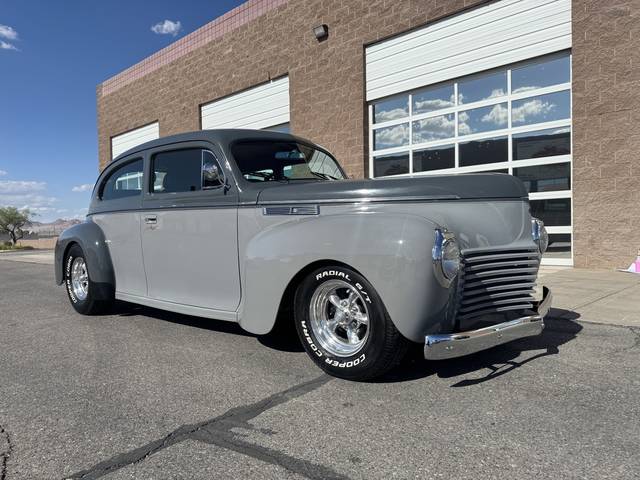
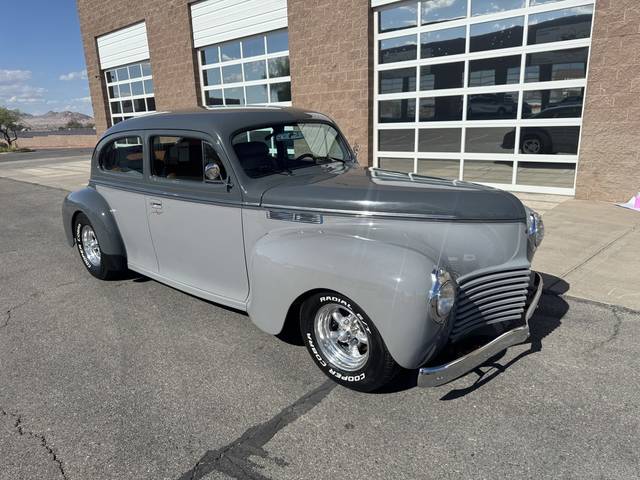
The post-war sixes (1946–50). Chrysler restarted in 1946 with warmed-over 1942 designs, and the Windsor was the core of the range. The 1946–48 cars kept the pre-war body with detail changes; the 1949 second-series cars brought genuinely new, slab-sided styling, key starting, and a wider cabin. The engine throughout is the 250.6 cu in Spitfire six, and the transmission story is the era's signature: Fluid Drive, in its several forms, covered in the gearbox section. These are the Windsors you will meet most often — two of the cars in the current pool are 1947s, with 1949, 1950 and 1951 cars alongside — and the easiest to live with: simple, well supported, and slow enough that nothing is ever stressed.
The transitional cars (1951–54). For 1951 Chrysler split its range by engine: the new FirePower Hemi V8 went into the Saratoga and New Yorker, and the Windsor kept the six — enlarged to 264.5 cu in in Deluxe form — as the sensible Chrysler. Styling was tidied rather than transformed, power steering arrived as an option, and the two-speed PowerFlite automatic joined the list at the end of the period. These are the quiet corner of the Windsor world: mechanically the most developed of the sixes, and often the best value per usable mile in the whole nameplate.

The Forward Look V8s (1955–61). Everything changed in 1955. Exner's styling swept the fins in, the six disappeared from the Windsor line, and in its place came Chrysler's polyspherical-head V8 — first the 301, then the 331, then the 354 — giving the Windsor genuine pace for the first time in its life. The 1957 cars added the torsion-bar front suspension, standard TorqueFlite three-speed automatic availability, quad headlamps where state law allowed, and the tallest fins of the run. The 1959 cars switched to the wedge-head B-series V8s (361 and 383), the 1960 cars went unibody, and for 1961 the new entry-level Newport squeezed the Windsor from below; the name was retired after that year, its mid-range job taken by the non-letter Chrysler 300 for 1962. In the current pool the finned cars are well represented — 1955, 1956, 1957 and two 1958 cars — and they are where most of the money and most of the restoration risk in the Windsor market now sits.
A note on badges: Windsor Deluxe is a trim-and-engine sub-series, not a separate model; Newport in this era is a hardtop body style name before it became a model in 1961; and a Spitfire badge means the six in the forties and the poly V8 in the fifties. Always order parts, and judge cars, by year, engine and body — never by badge alone.
Engines and gearboxes
The Spitfire sixes: 241.5, 250.6 and 264.5 cu in L-heads
Every six-cylinder Windsor runs a version of Chrysler's flathead straight six — an L-head, side-valve engine with a cast-iron block and head and a design philosophy that put thick bearings, generous oil passages and a mild state of tune ahead of power. The 1939–42 cars use the 241.5 cu in version; the 1946–50 cars the 250.6 cu in Spitfire; the 1951–54 Windsor Deluxe the 264.5. Outputs cluster between roughly 108 and 119 hp, and torque — the figure that matters — is strong and low in the rev range. These are among the most durable American engines of their period, and after seventy-plus years their condition is decided by oil and cooling-system history, not by mileage, because almost no odometer reading on a car this old means anything.
What right looks like: a healthy Spitfire six starts readily (six-volt cars crank slowly by modern standards — judge the start, not the cranking speed), idles with a slow, even, sewing-machine steadiness, pulls without a flat spot through its modest rev range, and shows steady oil pressure that rises with revs. A light top-end tick that quiets as the engine warms is common and usually valve clearance or a tired lifter-era equivalent — on a side-valve engine, tappet clearances are set by hand and drift with wear, and a car that has had them done recently will sound measurably sweeter. Blue smoke on start-up that clears is valve guides and age; blue smoke under load is rings and bore wear, and that is a rebuild conversation. Grey-white smoke that does not clear, a cooling system that pressurises within minutes of a cold start, or mayonnaise emulsion under the oil filler cap all point at the head gasket or a cracked casting — the six's head is a simple flat slab, gaskets are cheap and available, but a warped head skim and a full cooling-system flush should be priced into any car showing the symptoms, realistically a few hundred dollars in parts and machining if you do the labour, and $800–1,500 done at a shop with the radiator attended to at the same time.
The flathead's known habits deserve naming, because sellers describe them as character. First, heat: cooling passages in an elderly block accumulate scale and silt, especially at the rear cylinders, and a six that runs hot in traffic but cool on the road is telling you about block silt and radiator core condition, not the thermostat. The cure is unglamorous: radiator flow test and recore if needed (budget $400–800), block flushing, and a water pump check; the distribution tube inside the block that feeds coolant along the cylinders is a known rot item, and replacing it is a radiator-out, weekend-scale job that transforms a marginal cooler. Second, vapour lock: modern ethanol-blended fuel boils earlier than the fuel the car was designed for, and the classic symptom — starts cold, runs well, refuses to restart after a ten-minute heat soak — is fuel percolation, not ignition. An electric auxiliary pump, heat shielding and fresh fuel hose are the standard, cheap, reversible fixes. Third, the single Carter downdraft carburettor is simple and rebuildable; its wear point is the throttle shaft bushes, which leak air and spoil the idle, and a rebuild kit plus a re-bush at $150–400 cures most running complaints blamed on grander things.
Do not let anyone sell you a six on the phrase numbers-matching without showing you the engine number, stamped on a pad on the block: engines were swapped freely across the Chrysler six family for decades because they interchange so easily. A replacement six of the right family is no disgrace and barely affects value; a seller who does not know which six is in the car is telling you something about the car's whole file.
The polyspherical V8s: 301, 331 and 354, and the wedge 361 and 383
For 1955 the Windsor went V8, and the engine it got was Chrysler's polyspherical-head design — the poly, or Spitfire V8. The poly shares its bottom-end architecture with the famous FirePower Hemi but uses a simpler, cheaper cylinder head with canted valves in a polyspherical combustion chamber and a single rocker shaft per head instead of the Hemi's two. It is heavier and less glamorous than the Hemi and it does not respond to tuning the same way, but in period it gave the Windsor 188 hp in 301 cu in form at launch, rising through the 331 to the 354 of 1957–58 at around 285 hp in four-barrel form — and it is a strong, torquey, understressed engine that suits the car perfectly. The 1959–61 cars replaced it with the wedge-head B-series: the 361 and the 383 Golden Lion, engines with a vast later life in Chrysler products, excellent parts support and the same lazy, durable character.
A healthy poly starts promptly, idles with a soft lope, and pulls hard from low revs. The checks that matter are specific. Oil leaks: rear main, valley and rocker-cover gaskets weep with age, and a dry poly is rarer than a wet one — judge quantity, not presence. Oil on the exhaust manifolds and a burnt smell after a run means rocker gaskets at least, a $100–250 job and a bargaining lever rather than a walk-away. Exhaust manifolds crack around the heat-riser passage, and the heat riser itself seizes, cooking the intake crossover and making the car run rich and flat when hot. Listen for a ticking that rises with revs and ask whether the riser is free; freeing it is a few hundred dollars, a cracked manifold a used-parts hunt at $200–500 plus fitting. The Carter carburettors are well understood; the automatic choke ages out, giving rich cold running and black smoke on start-up that sellers will call normal for about thirty seconds longer than you should believe it — a choke service and carburettor rebuild at $300–700 is among the best money you can spend on a finned Windsor.
The wedge cars (1959–61) trade the poly's quirks for the B-series' own — manifold bolts that snap on removal, the same oil weeps — and in return you get the best parts availability of any Windsor engine. On both V8 families, verify identity by the stamped engine number, because swaps run both ways: polys were pulled for Hemis in the hot-rod years and Hemis pulled for resale in the restoration years. A poly car with its poly is an honest car; a poly car advertised as a Hemi car needs paperwork, not enthusiasm.
Timing chains on the V8s stretch and the nylon-toothed cam sprockets shed teeth with age; a rattling front cover and a distributor twisted far from its index mark to make the car run are the tells. A chain set is cheap in parts ($100–250); fitted at a shop, budget $600–1,200. Hardened valve stem seals give the classic puff of blue smoke on start-up — harmless, and fixable with the heads on for $300–600. None of this is exotic: on a V8 Windsor everything is known, available and priced like ordinary classic-car work — which is exactly why the body, not the engine, should decide your purchase.
Gearboxes: Fluid Drive, Gyrol, PowerFlite and TorqueFlite
No part of the Windsor confuses buyers more than its transmissions, because Chrysler spent the forties selling several different things under overlapping names. Learn the taxonomy and the cars stop being mysterious.
Plain manual and Fluid Drive (1939–42, and the base post-war offering). The fluid coupling is not an automatic gearbox. It is a sealed, oil-filled coupling between the engine and a conventional clutch and three-speed manual, which lets the car come to a stop in gear without stalling and smooths every engagement. You still shift with the clutch in the normal way, though the coupling lets lazy drivers pull away in top gear around town at the cost of glacial acceleration. Failure modes are few: the coupling's seal can weep (a slow drip at the bellhousing), and the gearbox behind it wears like any three-speed — second-gear synchromesh goes first, and a crunch downshifting into second that doubling the clutch cures is wear, not adjustment. Clutch replacement is ordinary work; budget $600–1,200 fitted.
The semi-automatics: Fluid Drive with Gyrol / M-4 and M-6 (1946–53). The famous one. Behind the fluid coupling sits a four-speed gearbox of which you select two ranges — low and high — with the lever; within each range the box shifts itself between its two gears, actuated by a hydraulic governor and solenoid, the shift triggered when you lift off the accelerator above a threshold speed. Driving one well is a skill: pull away in high range, lift at 25–30 mph, feel the clunk as the box shifts itself, and drive on. The components — governor, solenoid, interrupter switch, wiring, and the correct oil — are all simple, all old, and all testable. A semi-automatic that will not upshift is almost always electrical or governor-related, not internally broken: a failed solenoid, a chafed wire at the bellhousing, low coupling oil, or an idle speed set too high. Specialists exist within the Chrysler club world, rebuilt solenoids and governors are available, and a diagnostic-and-repair visit is typically $500–1,500 — but a generalist shop that has never seen one will quote you a rebuild it does not need. The test on a viewing is absolute: the car must demonstrate its self-shift, in both ranges, on the road, or you price it as a manual with a fault.
PowerFlite (1953–56, option then standard on V8s). Chrysler's first fully automatic: a two-speed planetary box with a torque converter, lever-controlled on the early cars and by the famous dashboard push-buttons from 1956. Two speeds sound inadequate and in the V8 cars are not — the poly's torque fills the gap — but in a six a PowerFlite makes a slow car slower, and six-plus-PowerFlite is the least desirable drivetrain in the range. Wear shows as flaring on the single upshift, delayed reverse on a cold morning, and converter shudder; a rebuild runs $1,800–3,000. The push-button control is mechanical, and its failures are cable stretch presenting as buttons that will not hold a range — an adjustment job, not a gearbox job. Check every button selects and holds.
TorqueFlite (1956/57 onwards). The three-speed A-466 TorqueFlite, cast-iron cased in these years, is one of the great automatics: strong, smooth, and well supported to this day — in the finned Windsors it is the transmission to have. Shifts should be clean at light throttle and firm under load; flaring between second and third, a long delay into reverse, or brown, burnt-smelling fluid all price a rebuild at $2,000–3,500. A car that occasionally finds neutral instead of drive from the buttons is usually a cable adjustment, not a box. Fluid and filter service on either automatic is cheap insurance and the first invoice you should raise on any car you buy.
Across all eras, one rule: judge the transmission on a proper drive, from cold, through every mode it offers, including a hill start and a kickdown. Transmissions are the one Windsor system where a seller's driveway demonstration proves nothing.

Problem areas
Everything in this section reflects what actually goes wrong with Windsors, era by era — and, where this site's own examined cars can speak, what the photographs of real listings show. We photo-checked three Windsors for this guide's pool, and rust was mentioned in the notes on all three of them — three of three, a small sample, but it matches the wider truth of the model: on a Windsor you do not ask whether there is rust, you ask where, how much, and whether it is structural. Treat the body examination below as the centre of the whole purchase.
Rust: the map
Chrysler bodies of this era were well made from good steel, dipped and coated by the standards of the day, and they rot in predictable places — where water sits, where mud packs, and where two panels trap moisture between them. Work the map in this order, worst consequences first.
Sills, rocker panels and floor edges. The structural heart of the pre-1960 cars and the first place to look on any Windsor. The rockers collect road mud thrown by the front wheels and rot from inside; the floor pans rot from inside too, fed by leaking windshield seals, cowl vents and heater boxes, with the water sitting under rubber mats and sound deadening where nobody sees it. Lift every mat. Prod the floor at its edges, at the seat mounts and around the body mounts, and press hard along the full length of both rockers. Surface scale is treatable; perforation at a body mount or a rocker that flexes under a hard thumb is structural, and structural welding on these cars is panel-by-panel fabrication: a rocker replaced and painted runs roughly $800–2,000 a side, a floor section $500–1,500 a side fitted, and a car needing both sides of everything is a restoration project priced as one, whatever the paint looks like.
The finned cars' special traps (1955–61). Exner's bodies added rust addresses of their own. The headlamp brows and front fender tops trap mud behind the lamps; the long rear quarters and fin bases hold water along their seams; the rear valance and tail-lamp surrounds rot quietly behind bright trim; and the wraparound windshield and backlight seals leak onto floors and into the trunk. On a 1957–58 car, budget your attention for the brow tops, the lower rear quarters and the trunk floor corners. Eyebrow and quarter repairs are fabrication over compound curves — $1,000–2,500 a side done properly — which is why a finned car with genuinely solid original quarters is worth a clear premium over a prettier car with filler in them.
Trunk floor and spare wheel well. Universal across the eras: the trunk seal and the backlight seal leak, the water collects under the spare and in the well corners, and the floor rots from the top down under its mat. Lift the spare on every viewing. Staining and surface rust are a clean-and-treat afternoon; a perforated trunk floor is a panel job at $600–1,500 fitted and painted, and it travels with company — check the rear valance and the fuel tank straps and tank top while you are in there, because a tank that has sat in a damp well rusts on its top face where you cannot see it until it weeps fuel.
Frames on the body-on-frame cars (1939–59). The frame is heavy-gauge and rarely rots through mid-rail; it rots at the traps: the rear kick-up over the axle, the spring hangers and shackle mounts, the body-mount outriggers, and anywhere a previous owner has plated once already. On a lift, wire-brush any suspicious area — a uniform fresh coat of black over everything, seams and fasteners included, is a cover-up signal the seller needs to answer with evidence, not adjectives. Frame repairs are fabrication, priced per car, and a genuinely rotten frame on a volume Windsor is usually a walk-away, because a better car exists.
The unibody cars (1960–61). The last Windsors concentrate their structural risk in the front stub frame and its mounting points, the torsion-bar crossmember area, the floor and the rear spring mounts. The same rules apply with higher stakes, because there is no separate frame to forgive a rotten shell. If you are buying a 1960–61 car, the lift inspection is not optional.
The smaller traps. Door bottoms (drain slots block, doors fill, the bottom seam bubbles — run a fingertip along every door's lower edge), the cowl sides and vent box on the forties cars, the battery tray and the inner fender beneath it, and the lower windshield pillars on the finned cars. None alone kills a car; together they are the biography of how it has lived, and the bills add up in hundreds that become thousands.
Suspension, steering and brakes
The forties and early-fifties cars use independent front suspension with coil springs and kingpins, and a live rear axle on leaf springs. Kingpins and their bushings wear when grease intervals are skipped — and they were skipped for decades on most cars — giving play you can feel rocking the front wheel top-to-bottom, vague steering and uneven tire wear. Judge play the honest way: grease the front end first if the seller allows, because a dry joint feels worse than it is; a kingpin and bushing job runs roughly $400–900 a side. Steering boxes wear in the straight-ahead position; a car that wanders wants a box adjustment first and a rebuild ($400–800) only if adjustment cannot recover it. Leaf springs sag and crack leaves; a car sitting low at one rear corner is usually a spring, not a frame, and a replacement pair is $400–900 fitted. Lever-type shock absorbers on the early cars are rebuildable; budget $150–300 a corner.
The 1957-onward cars replace the front coils with Chrysler's Torsion-Aire layout: longitudinal torsion bars, whose ride height is set by an adjuster bolt at the crossmember. This is a genuinely good system with two ownership traps. First, ride height is adjustable, so a finned car sitting nose-down or lopsided may simply need setting up on the adjusters — a cheap fix — or may be hiding a tired or cracked bar, which is not. Check that both adjusters have thread left and that the car sits level side to side at equal arch heights. Second, the torsion-bar sockets and the crossmember they anchor into live exactly where road filth collects, and rust there is structural on a car whose front suspension literally hangs from those points. Ball joints replaced kingpins in this layout; play is checked the same way, by rocking the wheel, and a full front-end wear-parts refresh (ball joints, tie-rod ends, bushings) runs $800–1,800 fitted and aligned. Power steering, common on the later cars, is a Chrysler-built system with a pump that whines when worn and hoses that weep; a pump rebuild is $200–400, and groaning at full lock with frothy fluid is air and age, not necessarily a dead pump.
Brakes are hydraulic drums on everything in this guide's era — Chrysler was a pioneer of four-wheel hydraulics — and the systems are effective when maintained and treacherous when not. The enemy is sitting: wheel cylinders seize and leak, master cylinders pit internally and sink the pedal slowly at a stop, steel lines rust, and flexible hoses perish internally and act as one-way valves, holding a brake on. A car that has stood for years needs the whole hydraulic system gone through — cylinders, master, hoses, lines end to end — and the honest budget for a full rebuild with drums machined or replaced is $800–2,000 with labour. On the later cars, a long pedal and a handbrake that barely holds are self-adjuster and shoe problems more often than hydraulic ones. Test the brakes from speed on the drive: straight, firm, no pull, a pedal that neither sinks nor pumps up. A car that dives to one side has a seized cylinder or a collapsed hose, and it is not safe to drive home until it is fixed.
Engines and transmissions in old age
The wear items are covered in the engines section; what belongs here is the pattern of age failure. Oil leaks are near-universal — rear mains, rocker covers, timing covers — and the correct question is never is it leaking but how much, from where, and onto what. Oil onto exhaust manifolds is a fire-risk fix-now; a damp sump gasket is a live-with-it. Cooling systems are the second pattern: silted radiators, tired pumps, rotted distribution tubes on the sixes — overheating on these cars is almost always maintenance debt, not design, and a car that runs cool in traffic has had money spent in the right places. The third pattern is fuel systems after storage: tanks rust inside and shed scale that blocks filters and jets every few hundred miles until the tank is cleaned or replaced ($300–800 for cleaning and sealing), rubber lines perish with modern fuel, and pump diaphragms fail. Any Windsor that has sat for more than a couple of years should be priced as needing full fuel-system recommissioning, $500–1,500 all-in with the carburettor rebuilt.
The semi-automatic gearboxes deserve a second mention here because their failure pattern is so often misread: a Fluid Drive car that creeps, will not self-shift, or shifts violently is usually suffering electrics, governor or oil level, in that order — all cheap — and the population of cars condemned as needing a transmission rebuild by shops that did not understand the system is large. Conversely, a TorqueFlite or PowerFlite that slips, flares or delays is usually genuinely worn, and no adjustment will save it; price the rebuild from the ranges in the gearbox section and negotiate with the invoice logic on your side.
Interior, trim and electrics
Windsor cabins are honest places: broadcloth and vinyl on the early cars, increasingly elaborate two-tone trim through the fifties. The wear points are consistent. Seat springs and padding collapse on the driver's side first and covers wear through at the entry bolster — sit in the driver's seat of any car you view, because it is the seat that prices the interior. A single front seat rebuilt runs $500–1,200; a full professional retrim runs from $4,000 upward, which is why an original, sound interior is the most valuable cosmetic asset a Windsor can have. Headliners sag and stain from the same leaks that rot the floors; a full rubber kit for a finned car is $400–900 in parts before fitting. Chrome is the other big ledger: re-chroming a bumper runs $600–1,200, a grille more, and pitted pot-metal trim is specialist work priced per piece — count the bad pieces and multiply honestly before you fall for the paint.
Test the heater on every viewing, whatever the weather: heater cores leak (sweet smell, misting windshield, damp passenger carpet — $100–250 in parts and, on the later cars, a long labour day to reach), blower motors tire, and cable controls seize. On the finned cars the labour to reach components is the cost, not the parts.
Electrics split by era. The six-volt cars (to 1955) fail at connections and grounds: dim lamps, slow cranking and intermittent accessories are almost always corroded terminals, a tired ground strap or a generator and regulator needing attention — a generator rebuild is $200–400, a regulator $50–150, and a systematic clean of every ground is free and transformative. Six-volt cars also punish thin modern battery cables; correct heavy cables matter. The twelve-volt finned cars are conventionally reliable, with specific items: power window and seat motors that tire ($150–400 a motor fitted), the electroluminescent instrument lighting on the last cars, which fails dim and is specialist work, and search-tuner radios, a specialist hobby of their own. On any Windsor, a car where every electrical item works has been used and maintained; a list of small dead items is a reliable proxy for storage and neglect.

How to inspect one
Allow a full hour for the car and another half hour for the drive, and bring a torch, a magnet wrapped in cloth and — for the finned cars — a tape measure for the wheel-arch heights. If the car passes you, pay for a lift inspection before money changes hands; on a unibody 1960–61 car it is the whole ballgame.
- Start with the paperwork and the numbers. Match the title to the serial number plate — on the forties cars it lives on a front door pillar, on later cars check the door jamb and cowl plate — then find the engine number on its stamped pad and confirm the engine is the family the year promises: a six in a pre-1955 car, a poly in a 1955–58 car, a wedge in a 1959–61 car. Swaps are common and not fatal, but an undisclosed one reprices the car. Ask for invoices and old photographs; on a Windsor a thick file is worth real money.
- Cold start, from genuinely cold. Insist the engine has not run that day. A six should catch and settle to an even idle; a V8 should start promptly without a long crank or a cloud. Watch the exhaust: a puff of blue that clears is valve seals; continuous blue is rings; white that does not clear and smells sweet is coolant, and on a flathead six that means head gasket until proved otherwise. Listen for a timing-chain rattle at the front of a V8 and for a hot-restart story — ask the seller, directly, whether it restarts happily after a ten-minute stop, and test exactly that later in the visit.
- Oil, water and the dipstick story. Pull the dipstick: level, colour, and smell. Thin oil that smells of fuel on a carburetted car points at a failing mechanical fuel pump diaphragm or chronic rich running. Check the coolant for oil emulsion and the oil filler for mayonnaise. On the sixes, ask when the cooling system last had real attention — radiator flow, block flush, distribution tube — because the answer prices the car's summer reliability.
- Under the car: the rust map, in order. Torch along both rockers, prod the floor edges and body mounts, check the trunk-side rear quarters, the frame kick-up and spring hangers on the frame cars, and the front stub and torsion-bar crossmember on a 1960–61. Perforation at mounts, hangers or the crossmember is structural and decides the purchase. Read the underseal as you go: patchy, aged and honest is factory; a fresh uniform black coat over seams, fasteners and brake lines is a question, not an answer.
- Trunk and floors inside. Lift the spare wheel and the trunk mat: staining is housekeeping, perforation is a panel. Then lift the interior mats in all four footwells and prod the pans at their edges. Wet carpet in a dry-stored car means leaking seals and rust already started; on a finned car, check the headlamp brow tops and the fin bases from inside the trunk where you can reach them.
- Body, gaps and the magnet. Run the cloth-wrapped magnet over the rockers, lower doors, rear quarters and — on the finned cars — the fender brows and fin seams. Filler announces itself by a dead response. Check door bottoms with a fingertip, open and close every door for sag on its hinges, and count the chrome and pot-metal pieces that need work, pricing them from the problem-areas section as you go. Panel gaps on these cars were good when new; a bad gap is accident or hinge history, not character.
- Suspension and steering, standing still. Rock each front wheel top-to-bottom and side-to-side: kingpin or ball-joint play in the first, bearing or tie-rod play in the second. Remember the grease-first rule from the problem areas — dry kingpins exaggerate their wear — so treat moderate play as a priced question, not a verdict. On a 1957-onward car, measure all four wheel-arch heights: level and equal is right; nose-down or one corner low sends you to the torsion-bar adjusters and sockets to find out why. Bounce each corner: the car should settle in one movement; anything more is shock absorbers.
- The transmission demonstration. This is the step sellers hope you will skip. On a Fluid Drive semi-automatic car, drive it and make the box show you its self-shift in high range, then in low range, with a clean lift-off change and a kickdown — the test the gearbox section describes. On a PowerFlite or TorqueFlite car, work every push-button or lever position from cold: engagement should be prompt, reverse included, the upshifts clean, with no flare and no shudder. Pull the transmission dipstick where fitted and judge the fluid by colour and smell. A transmission that cannot be demonstrated working is priced as a transmission that does not work.
- The test drive. Twenty minutes minimum, including a stretch at 50–60 mph, a hill start, and a full-lock parking manoeuvre. The car should track straight with the wheel centred, pull cleanly without a flat spot, and hold its temperature in traffic at the end of the drive, not just at the start. Brake hard from speed twice: straight, firm, no pull, a pedal that neither sinks nor pumps up. Power steering, where fitted, should be silent at full lock.
- Heat soak and hot restart. Park, switch off, and spend ten minutes on paperwork while the engine heat-soaks. Then restart. A car that cranks and will not catch hot is showing you vapour lock or a tired coil — both fixable, both worth money off. Let it idle hot for five more minutes and watch the temperature gauge throughout.
- Interior and electrics, every switch. Sit in the driver's seat first and feel for collapsed springs and padding; then work everything: heater and blower, every window crank or switch, wipers, lamps, horn, radio and gauges. On a six-volt car, judge lamps and cranking by six-volt standards — slow and dim by modern measure is normal; worse than the era's normal is grounds and generator. Every dead item goes on the list with a price from the problem-areas section.
- Stance and the walk-away check. Stand back and look at the car whole: level, even gaps, trim lines running true. Then re-read your list. A Windsor with a sound shell, a demonstrated transmission and a tired interior is buyable. One with structural rust, an undemonstrated semi-automatic and pretty paint is not, at any price that leaves the repair money unspent. The cheap Windsor that stays cheap does not exist; buy the one whose bills somebody else has paid.
Values
The figures that matter for this model are computed from this site's own listings and recorded sales, and they sit below this guide — the listed-now summary and the market block are refreshed every time the site rebuilds, so use them rather than any number quoted elsewhere. What follows is how to read them, and for the Windsor that reading matters more than usual, because this is really four different markets wearing one nameplate.
The pre- and post-war sixes are the volume market: honest, complete, driving cars change hands across a wide band set almost entirely by body condition and originality, because mechanically they are all but identical and indefinitely rebuildable. Within that band, the premium items are consistent — a convertible or an unusual body style over a sedan, an original interior over a redone one, a demonstrated Fluid Drive semi-automatic over a car whose transmission story is a shrug. The early-fifties cars sit in the same broad market a notch quieter: less sought after, often better bought, and the spread between a tired example and a sorted one is mostly the cost of the sorting, which means a sorted car at the top of the band is frequently the cheapest way to own one.
The finned V8 cars are a different economy. There the specification and the silhouette do the pricing — the tall-fin 1957–58 cars lead, hardtops lead sedans, and originality of engine and trim moves money in a way it never does on the sixes — and the condition spread is the widest in the whole Windsor story, because the cost of putting a rusty finned car right is so much higher than the cost of putting a rusty forties car right. Read the bottom of the finned market with particular care: the cheapest finned Windsors are cheap for structural reasons, and the gap between a project and a driver in this corner of the market is not a discount, it is a restoration bill wearing a price tag.
Two cautions apply to every figure in the block below. First, the Windsor sample at any one time is small — a handful of cars per era — so a single exceptional or desperate listing moves the medians violently; read the range and the individual cars, not the headline number. Second, these are asking prices: sellers of forties cars in particular routinely ask for the best car in the country and settle for the car they actually have, and auction results are the corrective. Judge any car against the condition spread for its own era, insist its price reflects its rust map, its transmission demonstration and its interior, and remember that in every era the car in the middle of the band with a sound shell and a thick file beats the cheapest example of a more glamorous year.
Parts and ownership
The Windsor's parts story is two stories. Mechanically, it is one of the best-supported American cars of its period: the flathead six served across Chrysler's divisions and in industrial and marine use for decades, so gaskets, bearings, pistons, water pumps, ignition parts and carburettor kits are reproduced, stocked by the pre-war and post-war Chrysler specialists, and priced like working parts rather than relics. The poly V8 shares its bottom end with a famous family and is well served; the wedge 361 and 383 sit inside the vast Mopar B-engine ecosystem and are the easiest Windsor engines of all to feed. Brake hydraulics, wheel bearings, kingpin kits, universal joints and steering wear parts are all obtainable without drama for every era of the car.
Easy: engine service and rebuild parts for all three engine families, carburettor kits, ignition, brake cylinders and hoses, exhaust systems in standard patterns, shock absorbers, leaf and coil springs, glass for the common body styles, weatherstrip in reproduction for the popular years, and — for the finned cars — a growing reproduction trade in lenses, emblems and trim clips.
Harder and dearer: body panels. Nobody reproduces a 1949 Windsor rear quarter or a 1957 fin top; repair sections and floors exist for some years, but serious panel work is fabrication or donor metal, and that is the deep reason the rust sections of this guide carry the weight they do. Trim is the second hard country: pot-metal grilles, tail-lamp housings and ornaments pit and are specialist re-plating work at per-piece prices; correct seat cloth for the forties and fifties cars is reproduced in limited patterns by the specialist trimmers, at a price; semi-automatic transmission internals are less the problem than the knowledge — the governors, solenoids and switches are findable, and the club network knows who rebuilds them — while six-volt electrical hardware is available but demands you buy the correct heavy-gauge items rather than modern substitutes. A quality repaint on a finned car, with its two-tone and its acreage, starts in the same five-figure territory as any large fifties car once chrome removal and refitting are counted, which is why the ownership mantra for a Windsor is the same as for the body: buy the shell and the trim, fix the mechanicals.
Running costs. A sorted Windsor is a realistic regular-use classic. The sixes return fuel economy in the high teens on a run and cruise at 50–55 mph in genuine comfort; the V8s are thirstier, in the low-to-mid teens, and cruise effortlessly at highway speed. Servicing is within any competent classic shop's ability, and much of it — grease intervals on the early cars are short, a few thousand miles — is satisfying owner work. The budget line that catches new owners is recommissioning: a car that has sat needs its fuel system cleaned end to end, its brake hydraulics renewed, its cooling system proven and every hose and belt replaced, and the honest all-in figure at a shop runs from roughly $2,500 for a sound six to $5,000 and beyond for a finned V8 with electrical faults on top. Join the marque clubs — the Chrysler community is generous with interchange information and knows the one specialist who understands semi-automatics in your state — and buy a car in regular use over a sleeping beauty every time. A used Windsor is almost always a healthier Windsor.
Which one to buy
- The all-rounder: a 1949–50 post-war six. The developed post-war body, the 250.6 Spitfire six at its sweetest, parts everywhere, and a car you can drive anywhere at its own pace. If you want one Windsor to own for years, this is it.
- The value buy: a 1951–54 Windsor Deluxe. The last and best of the sixes, quietly styled, usually priced below both the forties cars and the finned cars for no mechanical reason. A sorted Deluxe with power steering is the most usable Windsor per dollar in the whole range.
- The character buy: a 1940–42 pre-war car. Fluid coupling, pre-war manners, immense presence — bought for love, driven at 50 mph. Choose the best body you can find; mechanical simplicity forgives the rest.
- The cruiser: a 1955–56 Windsor Deluxe V8. The Forward Look with the poly V8 and without the tallest fins' rust traps and prices. Push-button PowerFlite on the 1956 car is period theatre that also happens to work well.
- The collector car: a 1957–58 Windsor hardtop. The full finned statement: torsion bars, TorqueFlite, the 354 poly. Buy it on quarters, brows and fin seams, verify the engine, and pay for originality — here it is what holds value.
- The last of the line: a 1960–61 wedge car. The newest Windsor there is: unibody, 361 or 383 power, the best parts support of all — inspected on a lift, without exception, because the shell is the structure.
And the rule that overrides all of the above: buy the least rusty, most complete Windsor you can find, in the era you actually want. Engines, gearboxes, brakes and electrics are all fixable at prices you can plan for. A rotten shell, a pitted grille set and a missing interior are the bills that never stop — and the one part of a Windsor that can never be made original again.
See the 11 windsor cars currently listed.