
Chrysler New Yorker buyer's guide
Chrysler New Yorker -- the model's own buyer's guide: variants, values and what to check.
Years listed: 1949-1994 · Series: Full Size
Overview and history
The Chrysler New Yorker is not one car. It is a nameplate that Chrysler kept at or near the top of its mainstream range for nearly six decades — from a straight-eight flagship of the late 1930s, through the first-generation Hemi cars of the 1950s, the finned Forward Look flagships, the vast fuselage-styled C-bodies of the early 1970s, and on to front-wheel-drive sedans that shared almost nothing with the earlier cars except the badge, the ambition and a certain idea of American comfort. That breadth is exactly why the New Yorker confuses buyers. Two cars wearing the same name can differ in every meaningful way: frame construction, engine architecture, parts supply, running costs and what a good one is even supposed to feel like. This guide is a cross-generation orientation. It concentrates on the years that dominate the cars actually offered for sale — in our current listings pool that means the 1949 Town & Country era, the 1953–56 Hemi cars, the 1964–68 cars and the 1972–76 big C-bodies — and treats the later front-drive cars honestly and briefly, because they are a different ownership proposition wearing a familiar name.
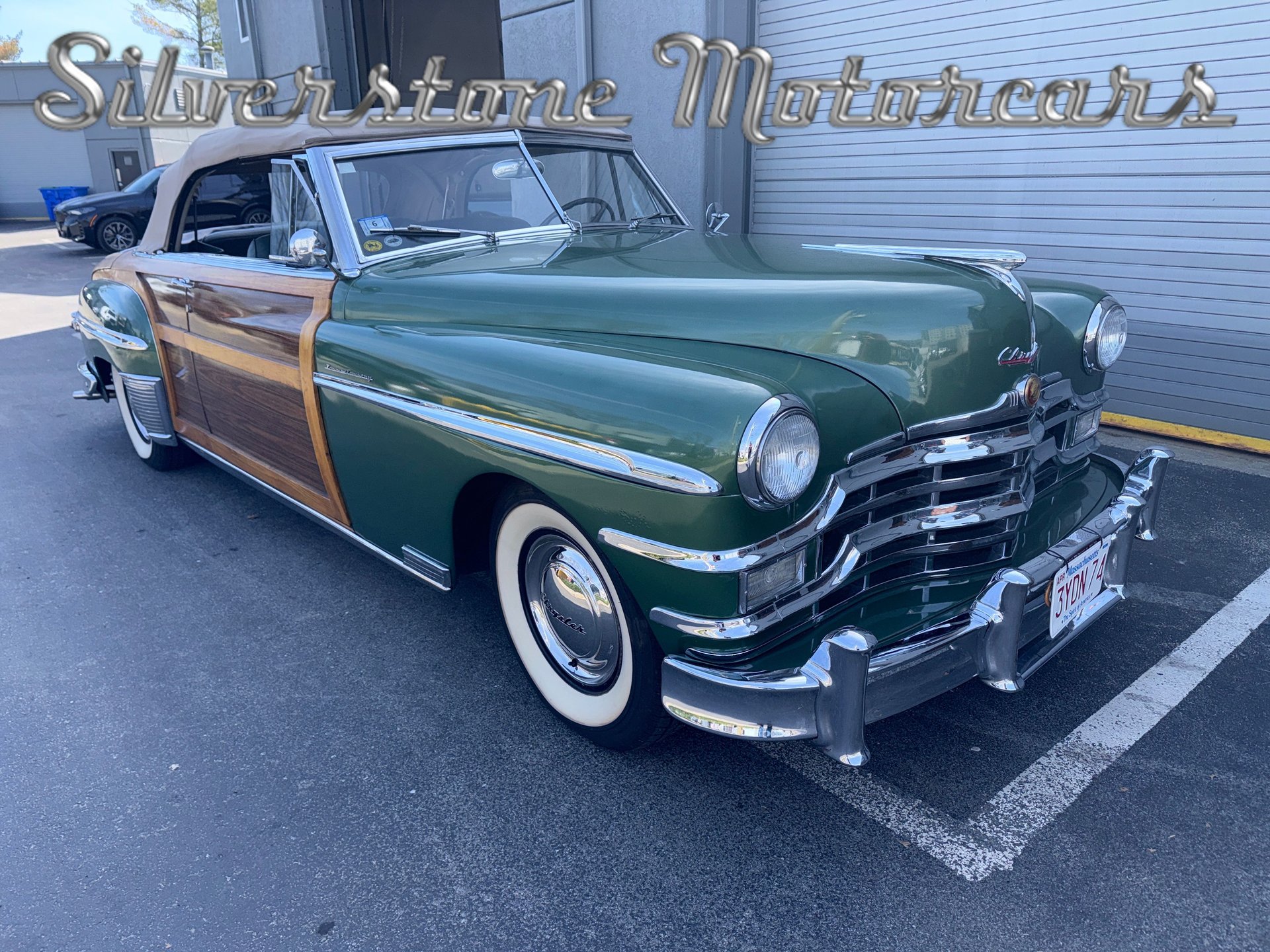
The name arrived for 1939, as a top series built on Chrysler's straight-eight engineering: long hood, formal sedan and coupe bodywork, and the semi-automatic transmissions Chrysler was then pioneering. After the war the New Yorker resumed as Chrysler's prestige line, and in 1949 it carried one of the most collectible American cars of the decade, the Town & Country — wood-framed bodywork, first as a convertible and then, for 1949–50, as a pioneering hardtop coupe whose roof was steel but whose doors and rear quarters still wore real ash framing with mahogany-veneer panels. The green metallic 1949 Town & Country in our photo pool is that car, and it sits at the opposite end of the New Yorker story from everything else in this guide: hand-finished, low-volume, and priced by wood condition as much as by metal.
The turning point came in 1951, when Chrysler put its new FirePower engine — the original hemispherical-head V8, 331 cubic inches — into the New Yorker and reset what an American luxury car was expected to do. Through the mid-1950s the New Yorker was a serious, expensive, well-engineered car: Hemi power, increasingly effective automatic transmissions, and from 1955 Virgil Exner's Forward Look styling, which dropped the dumpy early-fifties silhouette in a single model year. The 1957 cars added torsion-bar front suspension and the tallest fins in the industry, and for two years the 392-cubic-inch Hemi made the New Yorker one of the fastest sedans in America. When the Hemi gave way to the cheaper-to-build 413 wedge-head V8 for 1959, the car lost some engineering romance and gained torque, durability and a parts future that is still paying out today.
The 1960s rationalised the car. Unibody construction replaced the separate frame across Chrysler's full-size range in 1960; Elwood Engel's crisp, squared styling replaced the fins for 1963; and in 1965 the all-new C-body platform gave the New Yorker the form it would keep, through several reskins, until 1978: a very large, body-on-frame-in-spirit but unit-constructed sedan, hardtop and wagon, powered by big-block wedge V8s and driving through the TorqueFlite automatic, one of the best gearboxes of the twentieth century. The 1969–73 "fuselage" cars rounded the flanks and hid the headlamps; the 1974–78 cars, sold increasingly as the New Yorker Brougham, squared everything off again, grew 5-mph bumpers, and carried the name through the emissions and fuel-economy squeeze with 400- and 440-cubic-inch engines strangled progressively by period emissions equipment.
After 1978 the nameplate downsized twice — to the R-body of 1979–81, then onto front-wheel-drive platforms: a rebadged LeBaron, the extended-K car, the Dynasty-based car of 1988–93 (the 1991–92 cars in our pool are these), and finally the cab-forward LH car of 1994–96, after which the name was retired. Those later cars share no panel, no bolt and no driving characteristic with a 1955 car, and this guide will not pretend otherwise. When someone says "New Yorker," your first question is always: which decade?
What unites the classic-era cars — the ones this guide is really about — is a consistent character. These were not sporting cars and were never meant to be. They were bought by people who wanted quiet, torque, a soft ride, power assistance for everything, and a car that felt carved rather than assembled. Chrysler engineered them conservatively and, in the TorqueFlite, the torsion-bar front suspension and the big-block engines, sometimes brilliantly. Their weakness, then and now, was never the mechanical core. It is the sheer acreage of bodywork and trim, the complexity of the luxury equipment layered on top, and decades of being worth too little to maintain properly. In the pool of cars we currently track, automatics account for effectively the whole market, and the cars are spread across the whole country rather than concentrated in the dry Southwest — a polite way of saying that where a New Yorker has lived matters as much as what it is. Buy one with your eyes on the body, the trim and the electrics, and treat the engine and gearbox — the parts sellers talk about most — as the most fixable part of the package.
The models
Read the New Yorker range as a sequence of generations, not a list of trim levels. Within any one generation the body styles repeat — four-door sedan, two- and four-door hardtop, convertible in the earlier years, station wagon (often wearing the Town & Country name from the 1960s onward) — and the differences that matter are the platform, the engine family and the transmission. Badges within a generation (Newport below, New Yorker in the middle, Imperial above, in the years when Imperial was a separate marque from 1955 to 1975) mostly buy trim, wheelbase in some years, and standard equipment. A New Yorker is the sweet spot of that hierarchy for a buyer today: better trimmed and usually better kept than a Newport, without the Imperial's rarity pricing and model-specific trim problems.
| Model | Years | Engine | Output | Built | Character |
|---|---|---|---|---|---|
| New Yorker (straight-eight) | 1946–1950 | 323.5 cu in straight-eight | 135 hp | Not reliably separated | Postwar flagship; Town & Country woodie is the collector car |
| New Yorker Town & Country hardtop | 1949–1950 | 323.5 cu in straight-eight | 135 hp | Low hundreds–low thousands; verify by registry | Real ash-and-mahogany bodywork on a hardtop shell |
| New Yorker (first Hemi) | 1951–1954 | 331 cu in FirePower Hemi V8 | 180 hp | Not reliably separated | The engineering landmark; stately, understressed |
| New Yorker (Forward Look) | 1955–1956 | 331, then 354 cu in Hemi V8 | 250 hp, then 280 hp | Not reliably separated | Exner styling arrives; the '56 is the stronger car |
| New Yorker (big Hemi) | 1957–1958 | 392 cu in Hemi V8 | 325 hp, then 345 hp | Not reliably separated | Tall fins, torsion bars, genuine pace; the extrovert |
| New Yorker (first wedge) | 1959–1962 | 413 cu in RB wedge V8 | 350 hp (330 hp for 1962) | Not reliably separated | Hemi romance gone, torque and durability in its place |
| New Yorker (Engel cars) | 1963–1964 | 413 cu in RB wedge V8 | 340 hp | Not reliably separated | Clean, squared styling; last pushbutton TorqueFlite |
| New Yorker (early C-body) | 1965–1968 | 413, then 440 cu in RB wedge V8 | 340 hp; 440: 350 hp, TNT 375 hp | Not reliably separated | The mature formula; 440 cars are the drivers' pick |
| New Yorker (fuselage) | 1969–1973 | 440 cu in RB wedge V8 | Gross 350/375 hp to 1971; net ratings from 1972 | Not reliably separated | Rounded fuselage styling, hidden lamps, huge and quiet |
| New Yorker Brougham (formal) | 1974–1978 | 440 or 400 cu in V8 | Net, roughly 230 hp (440) and 190 hp (400) by late years | Not reliably separated | Formal upright styling, opera windows, Lean Burn era |
| New Yorker (Dynasty-based) | 1988–1993 | 3.0 V6, then 3.3 V6 | 141 hp, then 147 hp | Not reliably separated | Front-drive; a different car — see the later-cars note |
| New Yorker (LH) | 1994–1996 | 3.5 V6 | 214 hp | Not reliably separated | Cab-forward finale; the name retired after 1996 |
A note on the production column: figures for individual New Yorker variants circulate, but they are frequently misquoted between sedan, hardtop and series totals, so this guide will not print numbers it cannot stand behind. Treat any seller-quoted figure as a claim to check against a marque registry — and treat "rare" with suspicion on the high-volume C-body cars, which Chrysler built in very large numbers. Rarity here is real at the edges — Town & Country woodies, convertibles, 1957–58 cars, wagons, factory 440 TNT cars — and mostly imaginary in the middle of the range.
The postwar cars (1946–50). Reheated prewar engineering, built like bank vaults: a separate frame, a smooth and torquey straight-eight, and semi-automatic transmission options that were advanced in 1946 and are a specialist subject now. The ordinary sedans are dignified, slow and cheap to buy; the Town & Country convertible and the 1949–50 Town & Country hardtop are blue-chip woodie collectibles whose value lives in their wood. Do not confuse the two markets, and do not let a seller of a plain sedan borrow the woodie's prices.

The first Hemi cars (1951–54). The 331 FirePower made the New Yorker's reputation among engineers. These are tall, formal, heavy cars with excellent engines and improving transmissions — the transmission, not the engine, is the dividing line in these years. A 1953 car, like the examples in our pool, is the archetype: Hemi power, and a driving experience that is all torque and silence.

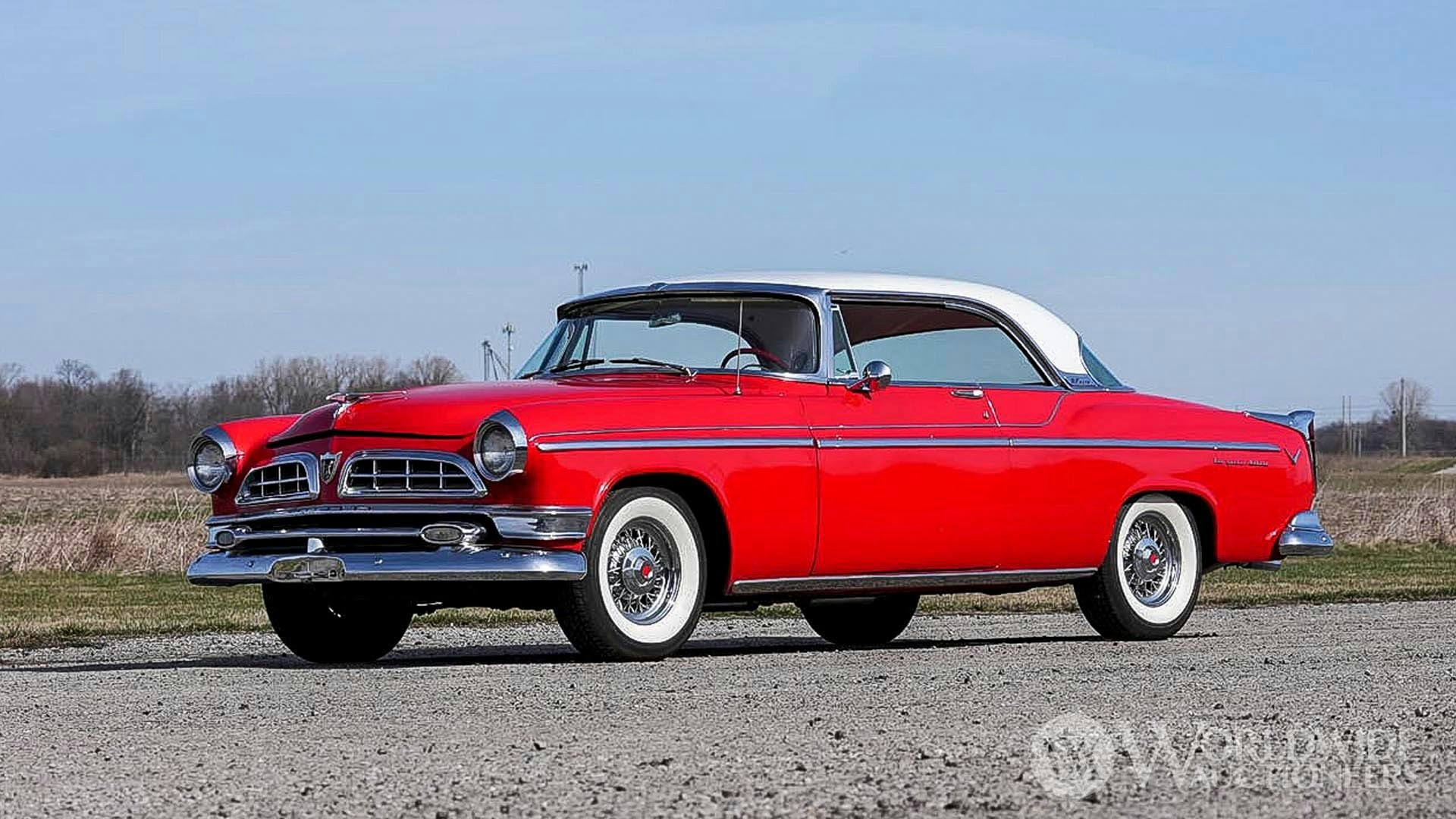
The Forward Look cars (1955–59). Two sub-eras. The 1955–56 cars are the tasteful ones: fins still modest, the Hemi growing from 331 to 354 cubic inches and 280 hp, and (for 1956) the pushbutton TorqueFlite arriving at the very end of the run. The 1957–59 cars are the dramatic ones: torsion-bar front suspension, fins to the sky, the 392 Hemi for two years, then the 413 wedge. Quality control at Chrysler slipped in 1957 as the all-new bodies were rushed out, and the rust record of the 1957–59 cars reflects it — these are the cars where the body inspection in this guide matters most, and where a genuinely solid original is worth a real premium over a shiny one.
The transitional cars (1960–64). Unibody from 1960, fins shrinking yearly, then Engel's razor-edged 1963–64 cars, which many Chrysler hands rate as the best-built of the classic run: the 413 in a mature state, the pushbutton TorqueFlite in its final form (1964 is the last pushbutton year), and styling that has aged well. The blue 1964 car in our pool is the type.
The C-bodies (1965–73). The heartland of the market, and of our listings. The 1965–68 cars established the formula — slab sides, stacked or concealed lamps depending on year, 413 then 440 power — and the 1969–73 fuselage cars rounded it. These are the easiest New Yorkers to own: the best parts supply, the strongest club and forum knowledge, engines and gearboxes any good American V8 shop understands, and enough surviving cars that you can be choosy. The ivory 1966 car and the blue 1973 440 car in our photo pool bracket the sub-era nicely: same basic architecture, eight years apart, the later car bigger, softer and quieter.

The formal cars (1974–78). The New Yorker Brougham became one of the largest American cars ever sold: upright grille, opera windows, loose-pillow velour, and by 1976 the first of Chrysler's electronic Lean Burn engine controls. They are magnificent highway cars and absurd objects by modern measure — a 1976 Brougham hardtop like the Spinnaker White car in our pool is over eighteen feet long — and they are the cheapest way into the nameplate per pound, because the market has never known quite what to do with them. Buy on condition and originality; the emissions-era engine bay is the trap, covered in the problem areas.

The later cars (1979–96), briefly and honestly. The R-body (1979–81) is a downsized echo of the C-body with small-block power — pleasant, rare, and an orphan for trim. The front-drive cars are competent period sedans: the 1983–88 cars are K-car relatives in formal dress; the 1988–93 cars (the 1991–92 cars in our pool are these) pair 3.0 or 3.3 V6s with the Ultradrive automatic whose early reliability problems defined the car's reputation; the 1994–96 LH cars are genuinely good modern sedans. Buy any of them as you would any thirty-year-old sedan — on history, transmission behaviour and rust — and do not pay classic-C-body money for the badge. The rest of this guide speaks to the rear-drive cars unless it says otherwise.
Engines and gearboxes
The straight-eight and the first FirePower: 1946–1954
The postwar New Yorker runs Chrysler's 323.5-cubic-inch L-head straight-eight, rated at 135 hp. It is a smooth, quiet, low-revving engine whose virtues are torque and manners rather than speed, and whose vices are age-related: bearing and oil-pump wear after very high mileages, cooling systems furred up by decades of hard water, and exhaust manifolds that crack and are no longer easy to find. Judge it as you would any flathead-era engine — oil pressure hot, water temperature steady, no bubbles in the radiator, no mayonnaise under the filler cap — and remember that a rebuild, when it comes, is a full machine-shop job on a long, heavy block; budget $6,000–10,000 for a proper straight-eight rebuild with the ancillaries done at the same time, and check who near you will actually take one on before you buy a car that needs it.
The 331 FirePower of 1951 changed the terms. The hemispherical chamber — valves inclined across the head, plug near the centre — breathed better than any wedge or flathead of its day, and the 331 made 180 hp from a massively overbuilt engine: forged crank, full-pressure lubrication, a bottom end that later made these engines drag-racing royalty. In a New Yorker it is tuned for silence, and it should start readily, idle almost inaudibly and pull the car's weight without strain. The checks are the ones age dictates: oil leaks from the rear of the block are common and usually seals, not catastrophe; cooling is the weak point in modern traffic, and a FirePower that creeps hot in a queue needs radiator, pump and thermostat dealt with as a system ($800–1,800 for a recore and refresh), not a succession of hopeful flushes. Price engine work with your eyes open — Hemi-specific parts carry a Hemi premium, and a full 331 rebuild by a shop that knows the engine runs $8,000–14,000, which is why a documented, healthy engine is worth more on these cars than any other single feature.
The Hemi grows up: 354 and 392, 1955–1958
For 1955 the 331 was bored and stroked in stages — the 331 itself was uprated to 250 hp in the New Yorker for 1955, then replaced by the 354 for 1956 at 280 hp, and for 1957 by the 392, the largest of the first-generation Hemis, at 325 hp in the New Yorker and 345 hp for 1958. All three are the same architecture and the same ownership story: immensely strong, increasingly powerful, and increasingly expensive to put right. The 392 in particular is a genuinely quick engine in a big car — these were among the fastest American sedans of their years — and it is also the engine every early-Hemi hot-rodder wants, which means New Yorker 392s have been pulled for other projects for sixty years. Verify what is actually in the car. The engine number is stamped on a machined pad at the front of the block, on the top surface in front of the valley cover on these engines; decode it against the car's year and series before you value the car as a 392 car, because a 331 or a later 426-era engine in a 1957 shell is a different car at a different price, whatever the valve covers say.
Running checks are the same across the family. A healthy Hemi is mechanically quiet — shaft-mounted rockers, hydraulic lifters — and a clattering top end means wear, low oil pressure or both; oil pressure strong cold and fading at a hot idle is bearing wear announcing itself. The failure mode to know is heat soak with modern ethanol fuel: a car that starts cold, runs well, then refuses to restart hot is usually boiling fuel in the carburettor or a tired coil — test fuel and spark during the fault, on the day, rather than paying for a rebuild on a guess. A proper Carter rebuild runs $400–800; an ethanol-compatible fuel-system refresh (pump, hoses, tank clean, carburettor) runs $800–1,500 and is close to mandatory on any car that has sat.
One myth to bury, because it inflates prices: the New Yorker Hemi is not a racing engine "detuned" — the castings, camshafts and ancillaries are passenger-car specification throughout. Its value is that it is a real, early Chrysler Hemi in the car it was born in, which is quite enough.
The RB wedge: 413 and 440, 1959–1978
From 1959 the New Yorker runs Chrysler's raised-block (RB) wedge-head big-block: 413 cubic inches to 1965, joined and then replaced by the 440 from 1966, with the 400 B-block appearing in the lean years of the late 1970s. This is one of the great ownership engines. The wedge head gives up the Hemi's breathing and gains everything else: cheaper castings, hydraulic lifters, a single shaft of rocker gear per head, and a torque curve that suits a 4,500-pound luxury car perfectly — the 413 made its 350 hp with a peak torque figure north of 450 lb-ft, and the 440 in standard New Yorker tune made 350 hp (the high-performance TNT version, with a hotter cam, better exhaust manifolds and a dual-snorkel air cleaner, made 375 hp and is the engine to verify carefully, because badges and air cleaners are easy to add and a genuine TNT car is worth more).
Distinguishing the RB engines from each other is a core buyer skill, because 383s, 400s, 413s and 440s all look alike at a glance and sellers misdescribe them in both directions. The RB engines carry their identification on a machined pad at the front of the block, beside the distributor on the driver's side top surface: the stamped codes there give you the displacement and year. Learn to find that pad, clean it with a rag, and read it — it settles the 413-versus-440 question that the air cleaner decal cannot. The 400, a B-block (low-deck) engine, has its pad in a different position at the front of the block near the distributor as well but is a visibly shorter-deck engine; if in doubt, the casting numbers on the side of the block settle it. Never value a car as a 440 TNT on the strength of a pie-tin air cleaner lid.
In service, these engines fail in a short, known list of ways. The nylon-toothed timing sprocket fitted to many of them sheds its teeth with age — the chain goes slack, the idle goes lumpy and uneven, valve timing wanders, and eventually the chain jumps. Any RB car without a documented timing-chain replacement should be priced as needing one: $600–1,200 at a shop, parts cheap, and it transforms how the car runs. The exhaust manifold bolts at the rear of the heads seize and snap, and the manifolds themselves crack — a ticking that is loud cold and fades as the engine warms is a manifold or its gasket until proven otherwise; extraction of snapped studs is the expensive part of an otherwise cheap job. The factory Carter and later Thermoquad carburettors are good units with two known diseases: the Thermoquad's phenolic (plastic) centre body warps and its well plugs leak, giving hard hot starting and a rich idle, and every one of these carburettors suffers with ethanol fuel left sitting — varnish, swollen floats, perished accelerator-pump cups. A Thermoquad rebuilt by a specialist who knows the model runs $500–900 and is money well spent; a generic parts-store remanufacture is a lottery.
From 1972 the published power figures fall off a cliff — the 440 drops from a gross 350 hp to net figures in the low 200s by the mid-1970s, and the late 400 is rated around 190 hp. Understand what changed: the industry switched from gross (engine alone on a dyno, no accessories) to net (as installed, with exhaust and accessories) ratings in 1972, compression ratios genuinely fell, and emissions tuning genuinely softened the engines — but a 1973 440 New Yorker, like the blue car in our pool, is not a slow car in the way the numbers suggest. It is a slightly softer, much quieter version of the same torque-rich experience. What does ruin these later cars is neglected emissions equipment: EGR valves stuck open (a stumble and a stall at idle), vacuum hoses by the dozen perished and cross-connected by guesswork, and from 1976 Chrysler's Lean Burn system, which put an early computer in charge of the spark. Lean Burn gets its own entry in the problem areas, because on a 1976–78 car it is the single most common reason the car runs badly — and the fix (conversion to a conventional electronic ignition with a vacuum-advance distributor, a well-documented $400–900 job with parts) is equally well known.

The later engines, in brief
The R-body cars run 318 and 360 small-blocks — durable and well understood. On the front-drive cars: the 2.2 four (1983–88) is a K-car engine with a K-car's head-gasket history; the Mitsubishi-built 3.0 V6 (1988–90) is known for valve-guide oil consumption — blue smoke at start-up and after a long idle is the tell; the 3.3 (1990–93) is Chrysler's own and the safer buy; the LH 3.5 (1994–96) is a strong modern engine with a timing belt that must have documented changes. On the later cars you are buying condition and history, not engineering romance.
Gearboxes
The gearbox story divides the range as sharply as the engines do, and on the early cars it matters more than the engine.
Fluid Drive and the semi-automatics (to 1953). Postwar cars drive through a fluid coupling combined, on most, with a semi-automatic transmission — Presto-matic, Tip-Toe Shift — in which a clutch selects a range and the shifts within it happen automatically. They work pleasantly when right and are a genuine specialist subject when wrong: parts and knowledge are both scarce. Budget a specialist assessment ($150–300) before purchase and a four-figure reserve behind it — and buy an early car that demonstrably works, in both ranges, from cold, on your test drive.
PowerFlite (1953–56). Chrysler's first fully automatic, a two-speed with a torque converter, arrived during 1953 (standard on Imperial, spreading across the range thereafter) and is a strong, simple box that suits the Hemi cars well. Two speeds means a wide gap between them and leisurely performance; what you are checking is engagement without a long delay, no flare on the single upshift, and clean, red, unburnt fluid. A PowerFlite rebuild by a shop that knows it runs $2,500–4,000; parts support is thinner than for the TorqueFlite, so a documented rebuild is a selling point worth paying for.
TorqueFlite (1956 onward). The three-speed TorqueFlite — pushbutton-controlled from its 1956 introduction through 1964, lever-controlled from 1965 — is simply one of the best automatic transmissions ever built: strong enough for drag racing in its A727 form, smooth enough for a luxury car, and supported today by every automatic shop in America. In a New Yorker it should engage drive and reverse promptly, shift almost imperceptibly at light throttle, kick down cleanly, and hold the car on a hill without creeping backwards. The faults to test for are the classic automatic ones, and they are diagnostic gold because each points somewhere specific: a long delay engaging drive from cold that improves warm is hardened internal seals (a rebuild is coming, $2,000–3,500 for an A727 done properly); flare — revs rising — on the 2–3 shift is band or clutch wear; a shudder in reverse is the reverse band or servo. The pushbutton cars add one mechanism of their own: a cable from the button cluster to the box, which stretches and misaligns, giving buttons that don't quite select what they promise. That is an adjustment, not a rebuild — but make the seller demonstrate every button, including park, on your drive.
Manual gearboxes exist in the earliest postwar cars and are vanishingly rare in anything after the early 1950s; in our current listings pool, automatics account for effectively the entire market. If a manual car surfaces, judge it on clutch take-up and synchromesh and treat it as the curiosity it is.
One driveline note for every rear-drive car: a clunk on taking up drive, or a drone that comes and goes with throttle at 50 mph, is usually U-joints ($200–450 fitted) before it is the axle — but a howling axle that has run low on oil is a $1,000-plus conversation, so check for leaks and listen on and off the throttle on the drive.
Problem areas
Everything in this section follows the same order a good inspection does: structure first, then the running gear, then the expensive-to-recreate luxury layer. A note on evidence before we start. Our photo-check sample for the New Yorker is small — we have examined the sellers' photo sets in detail for 8 of the cars we currently track — and in that sample rust was noted in 2 of the 8 cars and visible damage in 2 of the 8. Read those figures the honest way: they tell you rust and damage are present in the pool, not that three-quarters of New Yorkers are rust-free. Sellers' photographs systematically avoid undersides, trunk floors and sill close-ups, and on cars of this size and age the absence of a rust photograph is evidence of nothing at all. Assume the car in front of you needs the full examination below, whatever the listing shows.
Rust: the map
The map changes at 1960. The pre-1960 cars are body-on-frame: a rusty body is serious, but the frame is a separate, heavy structure that rusts more slowly and can be repaired in sections, and a car with a sound frame and rusty floors is a viable project. The 1960-and-later cars are unibody: the body is the structure, the front suspension hangs from a stub frame (subframe) bolted to that body, and rust in the load paths is a structural verdict, not a cosmetic one. Learn which car you are looking at and grade accordingly.
Floors and trunk floor — all years. The universal starting point, because the water paths are the same on every generation: windshield and rear-window seals perish, the cowl vents and their drains block, and the water runs down inside the car and sits under carpets and trunk mats, exactly where nobody looks. Lift every carpet you are allowed to lift. Surface rust and staining are normal and treatable; soft, holed or previously patched floors are a welding budget — $800–2,000 a side for floor sections cut out, welded and finished properly, more when the rust has run into the seat mounts and crossmembers. In the trunk, lift the spare wheel and look at the well and the drop-offs behind the rear wheels, where the quarter panels form pockets that fill with wet road dirt. On the 1969–73 fuselage cars, add the area under the rear window: the rounded body hides a shelf at the base of the glass that traps water, and rust there stains the parcel shelf inside before it shows outside.
Sills and lower quarters. The sills on the unibody cars are structural box sections; on the finned 1957–59 cars the lower rear quarters and the famous brows over the headlamps also trap water. Press hard along the sills, look at the jacking points, and be suspicious of fresh underseal, fresh stone-chip, or sill covers that look newer than everything around them. On any Chrysler of this era, learn to read the coating: factory underseal is patchy, thin at the edges and honestly dirty after sixty years; a uniform coat of fresh black over everything — seams, bolts, brake pipes — applied the week before sale is a cover-up until proven otherwise. Sill replacement runs $1,000–2,500 a side done properly with the doors off and the gaps re-hung, and it is structural work: get it quoted by someone who does it, not estimated by the seller.
The torsion-bar crossmember and stub frame — the Chrysler-specific trap. From 1957, Chrysler's full-size cars suspend their front wheels on longitudinal torsion bars, and the rear ends of those bars anchor in a crossmember that is part of the body's structure. That crossmember lives low, catches road salt, and rots — and when it lets go, the front suspension loses its spring anchor, which is as serious as it sounds. On any torsion-bar car (1957 onward), get underneath with a torch and inspect the crossmember where the bars enter it, the surrounding floor, and the stub frame rails that carry the engine and front suspension forward of the firewall. Perforation here is fabrication work priced per car, and it is the single most common reason an otherwise presentable 1960s Chrysler is actually a parts car. Sellers' photos almost never show it. This is the area your paid lift inspection exists for.
The smaller traps, by era. Pre-1955: door bottoms (drain holes block, doors fill) and, on the Town & Country, the wood-to-steel seams — water rots the ash framing from behind, and the first signs are lifting veneer or a door dropped on its hinges. Wood repair is coachbuilding: a full re-wood is a five-figure job, which is why the wood inspection outranks everything else on those cars. 1955–59: fender tops and headlamp brows, fender bottoms behind the wheels, the dogleg ahead of the rear arch. C-bodies: cowl sides at the windshield pillars, rear-quarter bottoms, the trunk-lid lip — and the roof skin under a vinyl roof: a padded roof that feels crunchy or bubbles at its edges is hiding a rusted roof, a roof-skin repair rather than a vinyl replacement. Formal cars: add opera-window surrounds and every trim clip hole, each one a water entry with rust starting beneath the moulding.

Suspension, steering and brakes
The torsion-bar front suspension (1957 onward; the earlier cars use coil springs and kingpins, and want the same grease-and-play checks as any car of their period) is durable and rides beautifully when right. Its wear items are ball joints, control-arm bushings and the idler and pitman arms in the steering linkage, and its characteristic fault is a car that sits low at the front or unevenly side to side — torsion bars are adjustable for ride height, so a car cranked up on its adjusters to hide sagging bars or worn bushings will show uneven adjuster threads and tired geometry. Check the stance first (the inspection section returns to this), then rock each front wheel for ball-joint play, and price a front-end refresh honestly: ball joints, bushings, tie-rod ends and an alignment run $1,200–2,500 at a shop, and on a two-ton car that has never had one, it transforms the driving experience more than any other single spend.
Power steering on these cars is full-time, very light, and leak-prone at the pump, the hoses and the steering box seals. A groan on full lock is low fluid or a dying pump ($250–600 for a pump, hoses extra); a box that leaks from the sector shaft seal is a reseal or exchange box ($500–1,100 fitted). The steering itself should have no dead spot at centre — wear in the box shows as a vague inch or two at the wheel, and while adjustment takes up some of it, a box adjusted tight to hide wear will bind off-centre, which you feel as a notch as you wind lock on. Test for exactly that on the drive.
Brakes divide by era. The early cars use drums all round, and servicing them is a specialist subject now — $800–1,800 to go through drums, cylinders, hoses and master cylinder properly. Front discs arrive as an option in the mid-1960s and spread through the range by the early 1970s, with big, cheap, available parts. Across all eras the standing-car syndrome is the same: seized calipers or wheel cylinders, flexible hoses perished internally so they act as one-way valves and hold a brake on (a wheel hot after a gentle drive is the tell), and master cylinders bypassing internally, giving a pedal that sinks slowly at a stop. A full hydraulic refresh is $800–2,000 with labour — non-negotiable money on any car that has sat.
Rear axles are Chrysler's strong 8¾-inch unit in most classic cars: pinion seals weep, and the Sure-Grip limited-slip (where fitted) chatters on tight turns if the oil lacks the limited-slip additive — cured by an oil change for $100, or a centre-section rebuild if the clutch plates are worn. Note too that the C-body automatic temperature control uses vacuum servos and water valves whose diaphragms have all perished by now; a car whose heat and air conditioning work on only one setting is usually in this system, not the compressor.
Interior, trim and the luxury layer
This is where New Yorker money hides, because the cars were sold on their cabins and the cabins are model-specific.
Seats and upholstery. The C-body and formal cars offer some of the most comfortable seats ever fitted to an American car — deep, sprung, and trimmed in cloth, vinyl or leather, with the Brougham's loose-pillow velour the signature fabric of the formal years. What fails is underneath: foam crumbles, spring decks sag, and the driver's cushion collapses first. Sit in the driver's seat, always — it is the one that prices the job. Re-foaming and repairing a front seat runs $400–900; a full retrim in correct material runs $3,000–7,000 for the set in cloth or vinyl and well into five figures in leather, and correct reproduction fabrics for the Brougham patterns are a specialist hunt. A sound original interior is worth more than a repaint. Weight it accordingly.
Trim — the completeness rule. Every New Yorker generation carries bright trim that is specific to the model, the year and often the body style: grille castings, side spears, rocker mouldings, opera-window frames, Brougham scripts, hood ornaments. Almost none of it is reproduced. Missing or damaged trim is sourced used, piece by piece, at prices set by scarcity — a correct grille casting or a set of rocker mouldings for a finned car can run into four figures when one surfaces. So the rule for every New Yorker is the same: inventory the trim against photographs of a correct car before you value the one in front of you, and treat "the trim is in the trunk" as a claim to be verified piece by piece, laid out on the ground, not accepted. The 1976 Brougham in our photo pool makes the point: it is the most trim-laden New Yorker of all, and therefore the car where a completeness check pays the highest return.
Wood — Town & Country only, and absolute. On the 1949–50 Town & Country, inspect the wood as a structural material: sound ash is hard, tight-grained and rings when tapped; rotten ash is soft at the joints, dark-stained from water tracking along the grain, and gives under a fingernail at the panel edges. Check the door frames at the lower corners, the joints at the roof rails, and every place a screw or hinge loads the wood. Veneer can be replaced by a specialist; framing cannot be faked. A car with sound framing and tired veneer is a restoration candidate; a car with rotten framing is a commitment to a coachbuilder.
Headliners, dashboards and the rest. Sagging headliners are a trimmer's job ($600–1,200 fitted); dash pads crack and are year-specific; pushbutton clusters (1956–64) crack around their bezels and are used-parts only. Power-window motors fail one at a time — a full working set on a fifty-year-old car is a genuine sign of a maintained life. A new vinyl top on a formal car is $800–1,500 fitted, but only after the roof skin underneath has been dealt with.
Electrics and the Lean Burn problem
Fifty- to seventy-year-old electrics fail at connections, earths and switches, and the New Yorker adds sheer quantity: power windows, power seats, power aerials, automatic headlamp dimmers in the early years, concealed headlamps with electric or vacuum actuation on the fuselage cars, and climate systems run by vacuum and microswitches. The diagnostic principle is the exemplar one for any car of the era: work the whole car, switch by switch, on the viewing. A car where everything works has been used and maintained; a car with a list of dead accessories has usually been stored and neglected, and the list will grow after you buy it. Earth (ground) faults cause most of the dim lights, wandering gauges and intermittent accessories, and are cheap in parts and tedious in time. Generators on the earliest cars and alternators from 1960 onward are both well supported; the charging-system check is the same — around 14 volts at the battery with the engine running and the lights on, and no flicker.
Concealed headlamps deserve their own sentence: on the 1969–73 cars the doors are operated electrically (with vacuum systems on some related models), the motors and relays are old, and a door that opens slowly, unevenly or not at all is usually motor brushes, a relay or a seized pivot rather than anything exotic — $200–600 to put right per side with used and rebuilt parts, and a manual override exists, which the seller should be able to show you. If they can't, the doors have probably not worked for years.
Lean Burn (1976–78, and related early engine management). Chrysler's Electronic Lean Burn put a computer — mounted, notoriously, on the air-cleaner housing, in the heat and vibration — in control of ignition timing, with a spark-control computer taking inputs from a thicket of sensors and vacuum switches. When new it worked adequately. Now, the computers fail, the sensors drift, and the vacuum plumbing perishes, and the symptoms — stumbling, stalling, surging, poor starting, a car that runs differently every day — get blamed on the carburettor, which is usually innocent. The test that distinguishes causes is substitution and simplification: a car that runs cleanly with a conventional vacuum-advance distributor and a standard electronic ignition module temporarily fitted has a Lean Burn fault, full stop. The permanent conversion — conventional distributor, ignition module, and the carburettor freed of its computer-managed elements — is the accepted, documented fix, $400–900 in parts and labour, and a car already converted, with the work done neatly, is worth more to a driver than a car with its failing original system, whatever originality purists say. Price an unconverted, badly running 1976–78 car as a conversion plus a carburettor rebuild, and you will rarely go wrong.
The last electrical trap is the previous owner: these cars passed through their cheap years in hands that fixed electrics with household wire and optimism. Cut-and-rejoined under-dash wiring, added fuse boxes and trailer splices are all common — and wiring bodges correlate with maintenance bodges everywhere else on the car.
How to inspect one
Allow two hours, not one — these are big cars with a lot of places to hide trouble — and bring a torch, a cloth-wrapped magnet, a tyre-pressure gauge, a long screwdriver for prodding (with the seller's permission) and a friend to work the controls while you watch the lights. If the car passes you, pay for a lift inspection before money changes hands; on a unibody Chrysler, the lift is where the torsion-bar crossmember and stub frame from the rust section can actually be seen, and it is the best money in the whole purchase.
- Paperwork and identity first. Match the VIN on the title to the plate on the car — door pillar on the classic cars, base of the windshield on later ones; the location varies by year, so look it up before you go. Then verify the engine against the badge: read the displacement code on the machined pad beside the distributor on an RB, the stamping at the front of the block on a Hemi. A 440 TNT, 392 or Town & Country claim is worth money, and each is settled by numbers, not decals. Ask for the history file — a folder of invoices is worth more than a polish.
- Cold start, from outside the car. Insist the engine is stone cold when you arrive. Stand behind it for the start: a puff of blue smoke that clears is valve seals (budget it, don't flee); continuous blue smoke is rings or, on a 3.0 V6 later car, valve guides; white sweet-smelling vapour that does not clear is coolant, and that ends the viewing until explained. Listen at the front of an RB engine for timing-chain rattle and slack — a loose, irregular slapping at idle that a seller calls "character" is the nylon sprocket story from the engine section. A Hemi should settle to a near-silent idle; clatter is information.
- The stance check. Stand twenty feet away, front and side, on level ground. The car should sit level side to side and at a sensible height: nose-down or one corner low points to torsion-bar adjustment used to mask wear, tired rear springs, or both. Photograph it from the side — stance faults you talk yourself out of in person are obvious in a picture. Then bounce each corner: it should rise and settle once. Wallowing is shock absorbers; a corner that stays down is spring or bar trouble.
- Under the car — the structural pass. Torch along both sills, prod the jacking points, then go to the Chrysler-specific places: the torsion-bar crossmember where the bars anchor (1957 onward), the stub-frame rails, the floor seams above them. Perforation in the crossmember or stub frame is structural and reprices the car as a project or ends the deal. Read the underseal as you go — patchy and honest is factory; fresh, uniform and black over everything is a question. On a frame car (pre-1960), grade the frame rails and body mounts the same way.
- Trunk and floors. Lift the spare wheel, the trunk mat and every carpet you can. Look for water tracks from the rear window (especially on the fuselage cars), rust in the spare-wheel well and the quarter drop-offs, and damp that contradicts a "dry-stored" story. In the cabin, prod the floors at the seat mounts and at the base of the windshield pillars, where cowl rust starts its work.
- Body, gaps and trim inventory. Run the magnet over sills, lower doors, arch lips and doglegs; feel door bottoms for bubbling and a vinyl roof for crunch. Then inventory the trim piece by piece against photographs of a correct example — grille, spears, rocker mouldings, scripts, opera-window frames. Price anything missing as used-parts hunting, not a catalogue order: there is no catalogue. On a Town & Country, do the wood properly: tap the framing, test lower door corners and hinge posts, and look for dark water tracking in the grain.
- Engine bay systems check. With the engine warm, check oil pressure behaviour at idle and at speed, look for the RB exhaust-manifold tick cold (it fades warm — arrive early enough to hear it), and inspect the vacuum plumbing on a 1970s car: perished, capped-off or creatively rerouted hoses are the Lean Burn era in miniature. On a 1976–78 car, identify whether Lean Burn still runs the engine — computer on the air cleaner, or a conversion already fitted — and file the answer; it changes both the price and your first month with the car.
- Gearbox, in the driveway before the road. From cold, select drive and reverse in turn. Prompt, gentle engagement is right; a long delay cold that improves warm is hardened seals and a rebuild in the future; a delay plus a thump is worse. On a pushbutton car (1956–64), press every button, including park, and confirm the box does what the button says — cable misadjustment is cheap, but you want to know. On a semi-automatic early car, confirm both ranges engage and the automatic shifts within them actually happen; this is the step where an early car passes or fails.
- The test drive — at least twenty minutes. These cars reveal themselves at two speeds: a crawl in traffic (temperature stability, idle quality, a brake pedal that does not sink, steering with no dead spot or notch) and a steady 50–60 mph (driveline drone on and off the throttle, Sure-Grip chatter in a tight turn afterwards). The TorqueFlite should shift almost imperceptibly at light throttle and kick down cleanly. Brake firmly from speed twice — straight, no pull, no judder — then feel the wheels: one hot wheel is a dragging brake or a collapsed hose.
- Every switch, every accessory. Work the whole luxury layer: windows (all, both directions), seat adjusters, lights including the concealed lamps on a fuselage car — time them, and ask the seller to show you the manual override — wipers, washers, heater and air conditioning on every setting, radio, aerial, clock. A dead list is a negotiation document and a character reference for the car's last decade, in that order. Test the heater whatever the weather: vacuum-servo climate faults hide behind "the air conditioning just needs gas."
- Fluids and leaks, back at base. After the drive, park over clean ground for ten minutes, then read the drips: engine oil from the rear of the block (Hemi) or the rocker covers (RB), steering fluid at pump and box, transmission fluid at pan and cooler lines, coolant at the cowl and heater valve. Transmission fluid should be red and sweet-smelling, not brown and burnt; engine oil should not smell of petrol or sit above its mark. Small leaks on a sixty-year-old car are normal; a car dry everywhere has usually just been cleaned — look for the clean patches in the grime that show where the leaks live.
- Interior last, from the driver's seat. Sit where the owner sits. Feel for collapsed foam and spring deck through the cushion, look for the driver's bolster wear, check the dash pad and pushbutton bezel (on the cars that have them), the headliner's seams, and the window-frame and door-card condition. Then stand back and total the car honestly: structure, engine identity, gearbox behaviour, trim completeness, interior. Those five, in that order, are the price. Everything else is a job list.
Values
The market block beneath this guide carries the current numbers — what is listed now, and what recorded sales have achieved — and it is refreshed as the market moves, so this section deliberately carries no prices of its own. What it can teach you, durably, is how to read those numbers, because the New Yorker market is one where the spread between the cheapest and the dearest car wearing the same badge is wider than almost anything else in this guide series, and the reasons are structural, not accidental.
Start with the condition spread, which on these cars is really three separate markets wearing one name. At the bottom are the project cars: stored, incomplete, structurally suspect or all three, disproportionately the big 1970s cars and the plain early-fifties sedans, which were worth so little for so long that they were parked rather than repaired. In the middle are the honest drivers — sound structure, tired cosmetics, working luxury equipment — and this is where most New Yorkers actually change hands, and where the value in the whole market lives. At the top are the exceptional cars: genuine Town & Country woodies with sound wood, 1957–58 Hemi cars with verified engines, convertibles, and low-mileage original C-bodies with their interiors intact. The top market and the bottom market barely interact: a project Brougham tells you nothing about a good one, and a headline price for a woodie tells you nothing about a sedan. When you read the figures below this guide, read them by generation and body style, and discount any average that mixes them.
Asking prices and achieved prices part company predictably on these cars. The New Yorker was never a blue-chip nameplate in the way a contemporary Cadillac or a Hemi muscle car became, and sellers — particularly estates and first-time sellers of family cars — routinely ask prices borrowed from the wrong comparison: the woodie's price applied to a sedan, the convertible's to a hardtop, a restored car's to an original. Auction and recorded-sale results are the corrective, and the gap between ask and achieved is usually widest on the formal 1974–78 cars and the early-fifties sedans, and narrowest on the cars with a genuine enthusiast following — the Forward Look cars and the better C-bodies. Build your offer from achieved money for the same generation and body style, adjusted for the five things the inspection prices: structure, engine identity, gearbox, trim completeness and interior.
Variant premiums follow scarcity of the right kind. The Town & Country premium is real and is paid for wood, not for the badge — a rotten-framed car does not earn it. The 392 cars carry a premium over the 354 and 331 cars, and it is paid for a verified engine, which is why the stamping matters. The 440 TNT premium over a standard 440 is real but modest, and equally verification-dependent. Convertibles outrun hardtops, hardtops outrun sedans, and wagons — Town & Country wagons in the C-body years — have a following of their own that has strengthened as survivors have thinned. The Brougham premium, by contrast, is mostly not there: the market prices the formal cars as the sum of their size and condition, which makes a genuinely good one the cheapest classic luxury per foot of car available anywhere in this guide — provided you have somewhere to keep eighteen feet of it.
The project-versus-driver gap is where buyers lose money. On a New Yorker that distance is not an engine rebuild; it is structure, trim and interior — the three things that cannot be bought off a shelf. A cheap car needing all three costs more to finish than a good car costs to buy, and is worth less when finished. The rational purchase is almost always the best-condition car you can find in the generation you want, bought at achieved-price money — and the figures beneath this guide tell you what that money currently is.
Parts and ownership
Parts support for the New Yorker is a tale of two cars. The mechanical core of the rear-drive cars — RB and Hemi engines, TorqueFlite transmissions, the 8¾ axle, brakes and suspension wear parts — is supported about as well as any American classic of the period: Chrysler built these drivetrains by the million, the muscle-car industry keeps the RB and the TorqueFlite in reproduction almost end to end, and any competent American V8 shop can maintain the running gear. The body, trim and interior layer is the opposite: vast, model-specific, and almost entirely dependent on used parts, NOS (new old stock) finds and the marque clubs.
Easy: engine service and wear parts for the 413/440 (gaskets, timing sets, water pumps, ignition, carburettor kits), TorqueFlite service and rebuild parts, brake hydraulics and friction parts for the disc-brake cars, suspension wear parts, U-joints, alternators and starters, exhaust systems in standard form, glass rubbers and weatherstrips for the common C-body styles. Order this week, fit this weekend, at prices close to modern-car money.
Harder and dearer: first-generation Hemi internals and rocker gear (available, at Hemi prices, from the early-Hemi specialists), PowerFlite and semi-automatic transmission parts and knowledge, drum-brake hardware for the earliest cars, Thermoquad and Lean Burn components (the conversion route is usually cheaper than the cure), concealed-headlamp motors, climate-control vacuum servos, and anything to do with the Town & Country's wood — which is not a parts problem at all but a craftsman problem, solved by finding one of the small number of woodie specialists and joining their waiting list.
The used-only layer: bright trim, grille castings, scripts and ornaments, dash pads, pushbutton clusters, seat fabrics in the correct Brougham patterns, opera-window frames, wagon-specific body parts. This is sourced through the clubs — the Chrysler clubs and the WPC (Walter P. Chrysler) Club ecosystem, marque forums, swap meets and the used-parts dealers who specialise in Mopar. Join the club before you buy the car; on a New Yorker the membership is a parts department.
Running costs. A sorted rear-drive New Yorker is a realistic regular-use classic: fuel in the low-to-mid teens (single figures from a badly tuned Lean Burn car is a symptom, not a characteristic), tyres in sizes that still exist, and servicing any good independent can handle. The budget line that catches new owners is the first year: catching up deferred maintenance on a running car — fluids, hoses, belts, brake hydraulics, a timing chain on an RB, tyres aged out rather than worn out — honestly runs $2,000–5,000 before you improve anything, and recommissioning a car that has sat for years runs $4,000–8,000 at a shop. On the later front-drive cars, the Ultradrive transmission on the 1988–93 cars is the big-ticket watch item — a documented service history is worth real money, and a car that shifts oddly should be priced as a transmission job until a specialist says otherwise.
One practical note: a formal-era car is over eighteen feet long and will not fit a standard modern garage bay with room to walk around it. Measure your space before you fall for a Brougham — it is the most common reason these cars come back to market within a year.
Which one to buy
- The all-rounder: a 1965–68 C-body with the 440. The mature formula — the best parts support in the range, the strongest engine in its most usable tune, the TorqueFlite at its best, and a deep market to buy from. If you want one New Yorker to drive, tour and keep, this is it.
- The value buy: a 1974–78 New Yorker Brougham in genuinely good condition. The most car, the most luxury and the most presence for the money anywhere in the range — bought strictly on condition, trim completeness and a Lean Burn answer (converted, or priced as a conversion). Measure your garage first.
- The driver's classic: a 1963–64 car. Engel's styling, the 413 in its mature form, the last and best of the pushbutton TorqueFlites, and build quality the finned cars don't match. Undervalued next to the cars either side of it.
- The extrovert: a 1957–58 392 Hemi car. The fins, the pace, the engine everyone wants — bought on body condition above all, because this generation rusted when new and a verified, solid one is the exception. Verify the engine stamping before you pay the 392 premium.
- The engineering connoisseur's car: a 1951–54 331 Hemi sedan. The original FirePower in a dignified, massively built car, at sedan money. Buy the transmission as carefully as the engine — a car whose gearbox demonstrably works, in all its ranges, is worth a premium over a prettier one that doesn't.
- The blue-chip: a 1949–50 Town & Country. Convertible or hardtop, bought on the wood and only on the wood: sound framing, honest veneer, and a specialist's written opinion before money moves. This is the one New Yorker that is also an investment decision, and it should be made like one.
- The modern-usable: a 1994–96 LH car. If you want the badge with airbags, fuel injection and a timing-belt service history instead of a carburettor, the last New Yorkers are good cars — bought as used modern cars, on history, at used-modern-car money.
And the rule that overrides all of the above: buy the structure, the trim and the interior — in that order — and let the engine and gearbox be the things you fix. On a New Yorker the mechanical core is the toughest and best-supported part of the car; it is the rusted torsion-bar crossmember, the missing grille casting and the collapsed Brougham interior that turn a bargain into a sentence. The least rusty, most complete car you can find, in the generation you actually want, is the right car — even when it is not the cheapest one.
See the 26 New Yorker cars currently listed.