
Chrysler Imperial Sedan 4D buyer's guide
Chrysler Imperial Sedan 4D -- the model's own buyer's guide: variants, values and what to check.
Years listed: 1938-1983 · Series: Full Size
Overview and history
The Imperial is not one car but three, wearing one name across half a century, and the first job in buying one is knowing which of the three you are standing in front of. From 1926 to 1954 Imperial was simply the top Chrysler — the best-trimmed, longest-wheelbase version of the flagship Chrysler line. From 1955 to 1975 it was something more ambitious: a separate marque in its own right, registered apart from Chrysler, sold through its own dealer organisation and aimed squarely at Cadillac and Lincoln rather than at Buick. Then, after a six-year silence, the name returned twice as a Chrysler again — the 1981–83 Imperial coupe and the front-wheel-drive 1990–93 Chrysler Imperial sedan. This guide concentrates on the separate-marque cars of 1955–75, because they are the heart of the market and of our listings, and covers the earlier Chrysler Imperials and the later revivals where they differ.
Our own pool shows the spread plainly. We currently track 21 Imperials, 16 of them for sale and 5 sold, and they run from 1937 to 1983. Four are pre-marque Chrysler Imperials — a 1937 car, two from 1938 and a 1951. Sixteen are separate-marque cars: one from 1956, nine from the Virgil Exner Forward Look years of 1957–63 (three each from 1957 and 1962, plus 1958, 1959 and 1963 cars), two from 1964, one from 1968 and three fuselage-era cars (one from 1970, two from 1972). The last car in the pool is a 1983 coupe from the revival. There are no 1974–75 formal-era cars and no 1990–93 sedans in the pool as we write, so weight what follows accordingly: this is an Exner-heavy market, with the later cars present in smaller numbers. Thirteen of the 21 cars reached us through Facebook Marketplace and seven through dealers, with one sold through Bring a Trailer — a mix that explains both the breadth of years and the number of honest, unrestored cars in the listings.
The separate marque was Chrysler Corporation's answer to a humiliation. In the early 1950s buyers compared the Imperial with a Cadillac in Chrysler showrooms and bought the Cadillac — partly because the Imperial was, visibly, a Chrysler with better upholstery. For 1955 Chrysler split Imperial off as its own division, with Exner styling, a hemi V8 and its own identity. The styling turned radical in 1957 with the Forward Look: fins growing from the front fenders, a wraparound windshield, gun-sight taillights and, from 1961, freestanding headlamp pods. Underneath, the 1957 cars brought torsion-bar front suspension and the pushbutton TorqueFlite, and Imperials stayed on a separate frame until 1967 — seven years after the rest of the range went unitary.
That conservatism underneath and flamboyance on top is the Imperial character in one sentence. These are immensely strong, heavy, quiet cars — most weigh well over two tons. Elwood Engel, who had styled the 1961 Lincoln Continental, took over from Exner and gave the 1964–66 cars their slab sides and formal roofs; the 1969–73 fuselage cars rounded everything into a single flowing hull; and the 1974–75 cars added opera windows for a market disappearing underneath them. Sales never beat Cadillac — in the best year, 1957, Imperial built about 37,600 cars against Cadillac's six-figure output — and the marque was wound up after 1975, its design living on as the Chrysler New Yorker Brougham.
The ownership proposition follows from all of that. An Imperial gives you Cadillac scale and presence with a stronger engine line, a better automatic gearbox and far lower production — at prices that have historically trailed the equivalent Cadillac. The costs sit where they always sit on a big, low-production luxury car: body and trim, not mechanics. The chrome, the leather, the one-year-only fin trim and the rust repairs are what empty wallets, and they are what most of this guide is about.

The models
Across the separate-marque years the range settled into three trim levels, and learning them saves you from the commonest pricing mistake in the Imperial market — paying Crown money for a Custom. From 1957 the ladder ran Custom (the entry car, confusingly named), Crown (the volume middle, and the badge most cars wear) and LeBaron (the flagship, with a smaller, more formal rear window on the hardtop sedans, heavier upholstery and a higher price). Before 1957 the cars were simply Imperials, with the Crown Imperial name reserved for the long-wheelbase limousines. From 1970 the range contracted as sales fell, and by the fuselage years the LeBaron was effectively the whole line. Body styles across the era cover two- and four-door hardtops, four-door sedans, convertibles (built in small numbers, and none after 1968) and station wagons in 1957–58 only under the Town & Country name shared with Chrysler — true Imperial wagons are rare enough that any example needs its paperwork read twice.
| Model | Years | Engine | Output | Built | Character |
|---|---|---|---|---|---|
| Chrysler Imperial (pre-marque) | 1937–38 in pool | 273.8 cu in straight-eight | 110 hp | Small thousands per year | Coachbuilt-era flagship Chrysler; eight-cylinder smoothness |
| Chrysler Imperial (postwar) | 1951 in pool | 331 cu in Hemi V8 | 180 hp | About 11,000 (1951, all Imperials) | First-year Hemi in a conservative shell |
| Imperial (first marque cars) | 1955–56 | 331 / 354 cu in Hemi V8 | 250 / 280 hp | About 21,900 combined | The foundation cars; restrained styling, Hemi power |
| Imperial Custom / Crown / LeBaron | 1957–59 | 392 cu in Hemi, then 413 Wedge | 325–350 hp | About 71,000 combined | Peak Forward Look; the fins-and-chrome archetype |
| Imperial Custom / Crown / LeBaron | 1960–63 | 413 cu in Wedge V8 | 350, then 340 hp | About 58,400 combined | Freestanding headlights from 1961; still on a frame |
| Imperial Crown / LeBaron | 1964–66 | 413, then 440 cu in Wedge | 340–350 hp | About 55,400 combined | Engel's slab-sided formal cars; last of the frame |
| Imperial Crown / LeBaron | 1967–68 | 440 cu in Wedge V8 | 350 hp | About 33,000 combined | First unibody Imperials; last convertibles in 1968 |
| Imperial LeBaron | 1969–73 | 440 cu in Wedge V8 | 350 gross, falling to about 225 net | About 75,100 combined | The fuselage cars; biggest, quietest, cheapest to buy |
| Imperial LeBaron | 1974–75 | 440 cu in Wedge V8 | About 215 hp net | About 23,300 combined | The formal finale; the design continued as a Chrysler |
| Imperial coupe (revival) | 1981–83 | 318 cu in V8, fuel-injected | 140 hp | About 12,400 combined | Personal-luxury coupe; the injected engine is the story |
(Outputs are period gross ratings until the industry switched to net ratings for 1972, after which the figures drop on paper far more than they did on the road. Built figures are rounded marque totals for the years grouped in each row, not per-trim counts — per-trim splits survive unevenly and sellers who quote an exact tiny figure for a common trim should be asked for their source.)
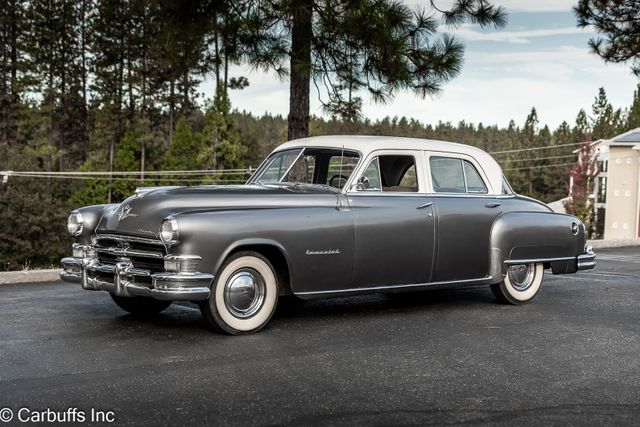
The pre-marque cars (to 1954). The 1937–38 cars in our pool are Chrysler's flagship straight-eights: long, formal, beautifully finished and mechanically simple, with hydraulic brakes and independent front suspension that were advanced for their day. The 1951 car is a different proposition — the first year of the 331 Hemi, in a shorter, postwar body. Buy these as pre-war and early-postwar flagships, with the parts and club world that implies, not as cheap entries to the V8 marque cars.
The foundation cars (1955–56). Exner's first Imperials are the most restrained of the marque era — modest fins in 1956, none to speak of in 1955 — and the most undervalued: the Hemi and the build quality without the Forward Look's rust-prone extremities. The 1956 car in our pool, a black sedan, is the type exactly.
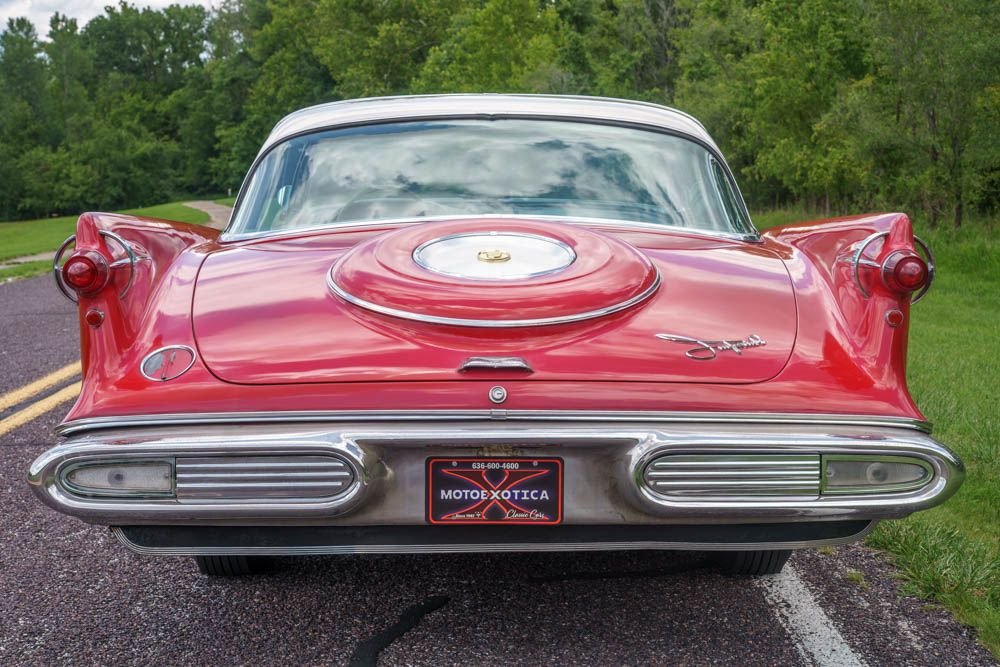
The Forward Look cars (1957–63). The core of the market and of our pool — nine of our 21 cars. The 1957–59 cars are the flamboyant ones, Hemi-powered for two years and 413-powered from 1959. The 1960 car kept the fins; the 1961–63 cars traded them for freestanding headlamp pods and ever-stranger detailing. Condition for condition, the 1957 is the blue-chip, the 1959 the connoisseur's pick, and the 1961–63 cars the value route into the same mechanical package.
The Engel cars (1964–66). Two 1964 Crowns sit in our pool, and they are the thinking buyer's Imperials: Lincoln-like restraint, the same 413 and then 440 power, the last of the separate frames in 1966, and styling that has aged better than the fins. The convertible ended after 1966 in this body; the four-door hardtop LeBaron is the connoisseur's sedan.
The unibody and fuselage cars (1967–75). The 1967–68 cars — one 1968 sedan is in our pool — kept the Engel look on the new unitary C-body structure. The 1969–73 fuselage cars, represented by a 1970 and two 1972s, are the largest Imperials ever built and, year for year, the cheapest to buy. The 1974–75 formal cars are absent from our pool; treat them as fuselage cars with heavier trim, opera windows and more emissions equipment.
The revival coupe (1981–83). One 1983 car sits in our pool. These are Cordoba-based personal coupes with bustle-back styling, Mark Cross leather, digital instruments and a 318 V8 with an electronic fuel-injection system so troublesome that Chrysler itself offered a carburettor conversion, which many cars received. A converted car is not a defect — it is usually the more usable car — but it must be disclosed and priced as what it is, and an unconverted car must be test-driven long and hard, as the engines section explains.


Engines and gearboxes
The Hemis: 331, 354 and 392 (1951–58)
Every Imperial engine story starts with the Hemi — Chrysler's hemispherical-head V8, launched in 1951 at 331 cubic inches (5.4 litres) and 180 hp, and fitted to the postwar Imperial in our pool in its first year. The design's virtues are real: a deep-skirt block, excellent breathing through opposed valves, and a bottom end built far beyond the outputs asked of it. The 1955 marque cars used the 331 at 250 hp; the 1956 cars got the 354 at 280 hp; and the 1957–58 cars got the ultimate first-generation Hemi, the 392 (6.4 litres), at 325 hp in 1957 and 345 hp in 1958, fed by a single four-barrel Carter carburettor in most cars, with dual four-barrels a rare option worth verifying rather than assuming.
On the road a healthy Hemi starts willingly, idles with a slight lope and pulls its two tons without strain. What to listen for is the valvetrain. The 392 uses hydraulic lifters and adjustable rocker gear that wears at the shaft and the pushrod seats; a sewing-machine tick at hot idle that follows engine speed is usually lifter bleed-down or rocker wear, not impending doom, but a heavy knock under load is a bottom-end conversation and the engine is too valuable to gamble on. Oil pressure is the other tell: these engines should hold strong pressure hot, and a gauge that sags at idle and recovers with revs on a car with unknown history means bearing wear until proven otherwise. The 392's one structural weakness is the same as every first-generation Hemi's — the cost of putting it right. A full rebuild with correct pistons, a reground crank and rebuilt heads is specialist work, realistically a five-figure job at a shop that knows the engine, and Hemi-specific parts (rocker assemblies, pistons, the dual-point distributor fitted to many cars) carry Hemi prices. That is why a documented Hemi rebuild is worth a clear premium and a smoky, knocking 392 in a cheap 1957 is not the bargain it looks like. Blue smoke on start-up that clears is valve seals — a manageable job. Smoke under load is rings, and rings mean the rebuild conversation.
Two cheaper Hemi traps catch buyers. The first is the charging and ignition system: these are 12-volt cars from 1956 (the 1955 and earlier cars are 6-volt, positive earth habits and all — check what you are jump-starting), and fifty years of resistance in the wiring shows up as slow cranking blamed on the starter. Test voltage at the starter under load before condemning anything. The second is cooling. A 392 in a 1957 engine bay has little spare radiator capacity, and a car that creeps hot in traffic usually has a silted radiator core or a missing fan shroud, not a head-gasket failure — but verify with a cold-start check for bubbles in the header tank, because a Hemi head gasket done properly is heads-off money.
The Wedges: 413 and 440 (1959–78)
For 1959 Chrysler replaced the expensive Hemi with the raised-block Wedge — the RB engine — and the Imperial got the 413 (6.8 litres) at 350 hp, dropping to 340 hp from 1962. The 440 (7.2 litres) replaced it for 1966, again at 350 gross hp, and stayed to the end of the marque in 1975 and beyond into the New Yorker years. Net ratings from 1972 make the paper figures fall — about 225 hp for the 1972 single-exhaust cars, a little more with dual exhausts — but the torque, around 480 lb-ft gross in the early 440s, is what you feel, and even the smog-era 440 moves an Imperial adequately.
The Wedge is the engine you want if you intend to drive the car. It is a simpler, cheaper engine than the Hemi in every dimension: a single cam in the block, hydraulic lifters, a distributor at the front of the engine where you can actually reach it, and a parts supply that benefits from the 440's second life in muscle cars and motorhomes. A healthy 413 or 440 starts on the key, idles evenly at a low tickover and pulls from walking pace without a downchange. The checks are specific. First, the exhaust manifolds: the passenger-side manifold on 440s is prone to cracking and to snapping its studs, and a ticking that is loud cold and quiet hot is usually a manifold leak, not a lifter — price a manifold-and-stud job, with the risk of head-off stud extraction, before you price a valvetrain. Second, the carburettor: Carter AFB four-barrels on the earlier cars, AVS and then the spread-bore Thermoquad on the fuselage cars. The Thermoquad's plastic centre bowl warps and its well plugs leak with age and ethanol fuel, giving hard hot starts and a rich idle that owners chase through the ignition for months; a rebuilt Thermoquad from a specialist, or a documented replacement, is a selling point, and the job cost for a proper rebuild sits in the few-hundred-dollar range rather than the thousands. Third, oil leaks: rear main seals and valve-cover gaskets weep on cars that have sat, and a dry engine on a regularly used car is worth more than a detailed engine on a stored one.
Emissions-era cars add their own layer. The 1973-on 440s carry EGR, retarded timing and, from 1975, a catalytic converter; all of it makes a neglected car run badly in ways that feel expensive and are usually a weekend of hoses, a freed EGR valve and correct timing. Note what Imperials do not have: Chrysler's Lean Burn spark control arrived in 1976, after the marque ended, so a seller blaming Lean Burn on a 1974–75 Imperial does not know the car. The fuselage 440s also drive a great deal of vacuum equipment — headlamp doors, climate control, door locks on some years — so a vacuum leak hunt is part of Wedge ownership.
The small engines at the edges: straight-eight and the 318 (to 1954, and 1981–83)
The pre-marque cars in our pool bracket the V8 era. The 1937–38 cars run Chrysler's L-head straight-eight, 273.8 cubic inches in 1937 at about 110 hp: a quiet, torquey, low-revving engine whose checks are the pre-war checks — oil pressure hot, water in the oil, babbit bearing knock on a cold start that fades as pressure builds, and the condition of the overdrive where fitted. Parts come from the pre-war Chrysler world and the clubs, not from the V8 trade. Judge these cars as you would any late-thirties flagship and you will not go far wrong.
The 1981–83 coupe is the opposite case: a thoroughly modern engine with one period system on top of it. The 318 (5.2-litre) LA small-block is one of the most durable V8s Chrysler ever made, but the Imperial version carried an electronic fuel-injection system — a low-pressure, two-injector throttle-body arrangement controlled by an early digital computer — that was unreliable when new and is the defining issue of these cars now. Symptoms are stalling, surging, hard starting and a car that runs one day and refuses the next. Chrysler's own fix, offered under warranty and sold afterwards as a kit, replaced the injection with a conventional carburettor and a standard ignition, and a large share of surviving cars were converted. So the inspection question is binary: open the hood and identify what is actually fitted. A converted car with the paperwork is the usable buy. An unconverted car that demonstrably starts cold, idles, restarts hot and drives cleanly for half an hour is a survivor worth preserving. An unconverted car with any running fault is a conversion cost — parts and labour in the low thousands if the kit parts must be gathered used — waiting to be paid, and should be priced that way whatever the seller says about it just needing a tune.
Gearboxes
Almost every Imperial you will ever see is an automatic, and it is one of the best gearboxes of the era. The 1955 cars used the two-speed PowerFlite; the TorqueFlite three-speed arrived for 1956 and, in its cast-iron A466 form with pushbutton control, powered the Forward Look cars. The aluminium-case A727 TorqueFlite took over in the early 1960s — pushbutton-operated by cable through the end of the 1964 model year, lever-operated from 1965 — and stayed, in progressively updated form, to the end of the marque and into the revival coupe, which used a smaller TorqueFlite variant behind the 318. Manual gearboxes were effectively unavailable on marque-era Imperials; if a listing claims one, read the car, not the listing — the single manual entry in our pool's transmission data sits among 15 automatics and is far more likely a data error than a car, which is itself a lesson in verifying Imperial listings against the vehicle.
The TorqueFlite's reputation for strength is earned, but age sets three tests. Engagement: from neutral, Drive and Reverse should engage promptly and without a thump; a long delay, especially into Reverse on a cold morning, is worn seals hardening with age, and it progresses to a rebuild — a TorqueFlite rebuild at a competent shop is a known-quantity job in the region of a few thousand dollars, not a marque-specific ransom, because the gearbox was built by the million. Shifts: changes should be firm and complete, with kickdown arriving on a full throttle opening; flaring on the 2–3 change is the classic wear sign. Fluid: bright red and sweet-smelling is health; dark and burnt is a negotiation. On pushbutton cars, add the selector itself — the buttons work through a cable to the gearbox, cables stretch and the pushbutton mechanism wears, and a car that selects gears reluctantly or hunts for neutral has a cable-and-adjustment job, not necessarily a gearbox job; test every button, including Park, which on the cast-iron cars is a separate lever, not a button at all — a detail sellers of 1957–59 cars get wrong in listings often enough to be worth checking in person. The parking pawl on lever cars and the sprag clutch in the 727 both suffer if a car has been rocked out of snow or mud in Drive and Reverse; ask how a stored car was moved, and never hold a 727 car on the throttle against the brake.
Problem areas
Everything in this section is written for a buyer in front of a specific car. Our photo evidence on Imperials is thin and we will say so rather than dress it up: for 3 of the cars in our pool we have examined the sellers' photo sets in detail, and rust appeared in 2 of those 3, as did visible damage in 2 of the 3 — a tiny sample that proves nothing statistically except the point the rest of this section makes from the cars' construction, which is that you examine an Imperial's body as if rust is present until the car proves otherwise. The mechanical systems can almost all be fixed with money and patience. The body, the trim and the model-specific brightwork are where Imperials go from bargain to burden.
Rust: the map
Rust on an Imperial follows its construction, and the construction changes in 1967, so the map has two halves. The 1955–66 cars are body-on-frame: a heavy separate chassis with the body bolted to it. The frame itself is strong and rarely rots to failure except at the rear kick-up over the axle and around the body-mount outriggers, but the body above it rots in the usual water traps, and because the frame hides the body's underside edges, rot can be well advanced before it shows in a photograph. The 1967-on cars are unitary C-bodies, shared with the big Chryslers: now the front stub frame that carries the engine and the torsion bars, the floor pans, the rear spring hangers and the sills are all structure, and rust in any of them is a structural repair, not a cosmetic one. A unibody Imperial with a rotten torsion-bar crossmember is the single most expensive rust case in this guide — the member carries the front suspension loads, repair sections are a fabrication job, and the bill is priced per car by a shop that has seen it, not from a catalogue.
Work through any car in this order:
Sills and rocker panels. The universal starting point. They trap road salt and mud, they rot from inside, and on the finned cars the rocker line is partly hidden by trim that holds moisture against the metal. Press hard along the full length, look at the jacking points, and distrust fresh stone-chip or new sill covers. A sill cut out, welded and painted properly runs roughly in the low thousands per side once paint is included; both sides plus the surprises behind them is the commonest five-figure surprise on a cheap Imperial.
Floors and trunk. Windshield and rear-window seals perish, the water runs inside the pillars and sits under the carpets and the trunk mat. Lift everything. On unitbody cars, prod the floor seams and the spare-wheel well; on frame cars, check the trunk floor extensions and the rear body mounts while you are there. Surface scale is a clean-and-treat job you can do yourself; perforation at a seam or a mount is welding and paint, priced as a repair job per panel rather than per hour of your optimism.
The fin and quarter problem (1957–63). The Forward Look cars concentrate rust where the styling concentrates water: the bases of the fins, the rear quarter panels behind the wheels, the eyebrows over the headlamps on the early cars and the lower rear valance. The 1961–63 freestanding headlamp pods sit in apertures that trap mud against the fender tops. None of these panels is reproduced in steel in any depth, so repair means fabrication — a skilled shop cutting and shaping, at fabrication rates — and a finned car needing both rear quarters is a car to price as a restoration project whatever its paint looks like from ten feet.
Fuselage and formal cars (1969–75). The smooth hull hides its traps better. The vinyl roofs fitted to most LeBarons rust the roof skin and the rear-window channel underneath the covering, and the first sign is bubbling at the vinyl's edges or a soft feel under the padding — budget a roof-skin repair and a new vinyl top as one job if you find it, because you will not know the extent until the covering is off. Rear quarters rot behind the skirts where fitted, the trunk floor goes at its seams, and the front stub frame and torsion-bar crossmember carry the structural risk described above. The sheer size of these cars cuts both ways: there is a great deal of metal to inspect, and a great deal of it is flat, sound and original on a dry-climate car.
The smaller traps, all years. Door bottoms (drain holes block, doors fill, the bottom seam bubbles — run a fingertip along every door's lower edge), the battery tray and the inner fender beneath it, the cowl sides where leaves collect, and the bottoms of the front fenders behind the wheels. On convertibles, add the header rail, the well behind the rear seat and the floor under it, and check the top frame for seized or bent links, because convertible-specific metalwork is the scarcest metalwork of all on these cars.
Suspension, steering and brakes
The front suspension is Chrysler's torsion-bar system: longitudinal torsion bars anchored in a crossmember at the back and in the lower control arms at the front, with the car's ride height set by adjuster bolts. It is a good system — it is why these heavy cars handle as well as they do — and its checks are mechanical, not mysterious. A car sitting low at the front or uneven side to side has tired bars, a seized adjuster or, on unitbody cars, the crossmember problem from the rust section; winding the adjusters up to mask sag is a seller's trick, so measure the stance and then look underneath. Ball joints and control-arm bushings wear with weight and age, and the test is the standard one: rock the front wheel top to bottom and side to side on a jack, and price a front-end refresh — joints, bushings, alignment — as a four-figure job with labour if you find play in more than one joint. Torsion bars themselves rarely break on Imperials, but a broken bar drops that corner onto its bump stop and the car is undriveable until it is replaced, with a good used bar the usual source.
Steering is power-assisted on effectively every marque-era car, through a recirculating-ball box with a pump driven from the engine. Vagueness at the straight-ahead is usually a worn centre link, idler arm and tie-rod ends before it is the box itself; leaks come from the pump and the hoses first and the box seals second. A full front-end and steering refresh with an alignment is one of the best-value jobs on the car — it transforms how an Imperial feels — but get it quoted as a system, because replacing one joint at a time on a two-ton car is false economy.
Brakes divide by era. The 1950s cars use drums all round, including Chrysler's twin-leading-shoe front drums, effective when set up correctly and exasperating when they are not — a finned Imperial that pulls under braking usually needs the drums set up by someone who knows the system. Front discs arrived in 1967, and the 1967–69 cars use a four-piston fixed-caliper system with rotors that have become genuinely scarce and expensive; measure the rotors on any car of those years before you agree a price. From 1970 the single-piston system is conventional, cheap and fully supported. On any car that has stood, budget for the sitting list: perished hoses, seized cylinders or calipers, a master cylinder that bypasses internally (the pedal sinks slowly at a stop — the definitive test) and decade-old fluid. A full hydraulic refresh with labour is a four-figure job and should be assumed, not discovered, on a car without recent invoices.
Interior, chrome and trim
This is where Imperial money goes. Start with the trim ladder from the models section: a LeBaron's interior — leather on many cars, heavier carpet, more wood-tone and chrome — costs materially more to restore than a Custom's, and a Crown sits between. Seat padding collapses before coverings wear out, so sit in every seat: a cushion you can feel the springs through is a pads-and-covering job, and a professional retrim in leather runs well into five figures for a full interior, which is why a sound original cabin is worth more than a rebuilt engine in these cars. Door cards warp at their lower edges from the door-bottom water in the rust section; headliners sag and stain at the rear from the rear-window leak; and the fuselage cars' vast padded dashes crack in the sun across the speaker grille and the glovebox lid.
Chrome and stainless are the second wallet. An Imperial carries brightwork by the yard — bumpers, grille, window surrounds, side spears, fin trim — much of it year-specific and some of it trim-level-specific, and re-plating is priced per piece at rates that make a full car's brightwork a serious five-figure conversation if every piece needs doing. Pitting on pot-metal pieces (grilles, taillight housings, fin caps) is worse than pitting on steel bumpers, because pot metal pits from inside the casting and a re-plate over active pitting does not last. The buyer's method is counting: walk the car, count the pieces that need plating, and multiply honestly. Glass is the third item: the wraparound windshields of 1957–60 are reproduced at a price and with a wait; later glass is easier; and a delaminating or cracked curved windshield on a finned car is a cost to settle before purchase, not after.
Year-specific trim is the trap that separates Imperials from their Chrysler cousins. A New Yorker shares the Imperial's mechanicals in many years, but not its grilles, fin trim, LeBaron rear-window treatment or badges — and Imperial-specific pieces surface slowly and sell dear. Verify the grille, side trim, taillight assemblies and hubcaps are present and correct before you value the car, and test any seller's assurance that missing pieces are easy to find with one evening of searching before you pay for it.
Electrics, climate and accessories
An Imperial was the most electrically loaded American car of its day in several of these years, and the systems divide into the merely old and the genuinely troublesome. The merely old: generators on the early cars and alternators from 1960, conventional wiring whose enemy is resistance at the bulkhead connector and at earth points — dim lamps, slow windows and a wandering gauge are earth-and-connector jobs, cheap in parts and tedious in time. Power windows deserve a test on every switch, from both the master panel and each door: the motors are strong, the wiring through the door jambs chafes and breaks, and a window that works from one switch and not the other has told you exactly where the fault lives. Power seats, power vent windows on the finned cars, the signal-seeking radios and the power antenna are all fixable by the specialists who support the era; price them as individual jobs, and let a car where everything works stand as evidence of its maintenance, because on an Imperial that evidence is meaningful.
The genuinely troublesome system is automatic climate control. Chrysler's Auto-Temp, fitted to many Imperials from the late 1960s, and the Auto-Temp II that followed it in the fuselage years, control temperature and fan through a vacuum-and-electrics servo that is the single most notorious component in this guide. A working system is a delight; a failed one gives you heat at random, no heat, or a servo that cycles forever, and the diagnosis separates owners who know the system from shops that replace parts at your expense. The servo unit itself can be rebuilt by the handful of specialists who do them — a job cost in the hundreds for the unit, plus the labour of access — and the vacuum hoses and water valve around it perish and mimic servo failure, so the test sequence matters: prove vacuum supply and the water valve before condemning the servo. On any fuselage car, run the climate system through its full range on the test drive, hot and cold, and treat a car advertised with air conditioning that does not blow cold as a car without air conditioning for pricing purposes, because the gap between those two things on an Imperial is a compressor, hoses, a drier and a charge at minimum, and the servo at worst.
Air suspension is the myth to bury here, because it attaches itself to big luxury cars of the era: no Imperial in this guide has it. Imperials ride on torsion bars at the front and leaf springs at the rear throughout the marque era, with self-levelling offered on some contemporary Lincolns and Cadillacs but not here. A seller describing air suspension on an Imperial is describing a car he has not looked underneath, and everything else he says should be weighted accordingly. The revival coupe's electronics are a different world — digital instruments that fail by the segment and the fuel-injection system covered in the engines section — and on those cars the test is simply to run everything, twice, hot and cold.
How to inspect one
Allow two hours, not one, and bring a torch, a cloth-wrapped magnet, a tape measure and a friend to work switches while you watch lamps. If the car passes you, pay for a lift inspection before money changes hands; on a unitbody car it is the only way to see the crossmember and stub frame the rust section puts at the top of the risk list.

- Start with the paperwork and the identity. Match the serial number on the car to the title, and decode the data plate for year, body and trim before you judge anything else. Establish which trim you are actually looking at — Custom, Crown or LeBaron — from the plate and the car's own features, not from the listing, because the pricing gap between trims is the commonest money mistake in this market. On a 1981–83 coupe, record whether the car is fuel-injected or converted, and ask for the conversion paperwork.
- Cold start. Insist the engine is stone cold when you arrive. A Hemi or Wedge should start promptly and settle; watch the exhaust for blue smoke (seals if it clears, rings if it does not), listen for valvetrain tick and manifold tick while it warms, and check the oil pressure gauge's story hot at the end of the drive, not just cold at the start.
- Under the hood, engine-specific. On a Hemi, look for the correct carburettor arrangement and price any dual-carb claim against the paperwork. On a Wedge, inspect the passenger-side exhaust manifold for cracks and missing studs, and the carburettor for Thermoquad bowl warpage symptoms on fuselage cars — hard hot starting and a rich idle. On a revival coupe, identify the fuel system fitted before you drive anywhere, per step 1.
- Under the car. Torch along both sills, the floor seams, the trunk floor from below, the rear quarters behind the wheels and — on 1967-on cars — the torsion-bar crossmember and front stub frame, which settle the car's structural future in one look. On frame cars, check the rear kick-up and the body mounts. Perforation in sills, crossmember or spring hangers is structural: reprice as a project or walk away, per the rust map.
- Stance and torsion bars. Measure the front ride height on both sides and compare. A car low or uneven at the front has the tired bars, seized adjusters or crossmember trouble from the suspension section; a car wound up hard on its adjusters to sit level is telling you the same thing more politely. Stand back and sight down each flank for the fuselage cars' long, straight lines — ripples show panel history.
- Trunk and spare well. Lift the mat and the spare. Look for water staining, seam rust and a damp smell, then check the rear-window seal and, on vinyl-roof cars, feel the roof skin at the vinyl's edges for the softness and bubbling that mean rust underneath the covering.
- Body, gaps and brightwork. Run the magnet over the sills, quarters, fin bases and lower doors — filler announces itself. Check every door bottom with a fingertip. Then count the chrome: every pitted grille, housing and spear is a per-piece re-plating cost, so count them and multiply honestly before you fall for the car.
- Suspension and steering on the move. Drive over broken pavement at low speed and listen for knocks; rock each front wheel on a jack if the seller allows it. On the road the steering should be light, centred and free of wander — vagueness is the centre link, idler and tie-rods conversation from the problem areas, priced as a system.
- The test drive, gearbox included. Twenty minutes minimum, with a highway stretch. The TorqueFlite should engage promptly in Drive and Reverse, change firmly and kick down on full throttle; flaring on the 2–3 change and a long cold delay into Reverse are the wear signs to price. On pushbutton cars, test every button, and find the separate Park lever on the cast-iron cars before you need it.
- Brakes, era by era. From speed, brake firmly: the car should stop straight. On drum cars, pulling means the twin-leading-shoe setup needs an expert hand, not necessarily new parts. On 1967–69 cars, ask about rotor condition and price the scarce-rotor problem if there is any judder or scoring. At a standstill, hold the pedal: a pedal that sinks slowly is a bypassing master cylinder, whatever the seller says.
- Climate and electrics, everything, twice. Run the climate control through its full range, hot and cold — on Auto-Temp and Auto-Temp II cars this is the servo test from the problem areas, and it is done on the drive, not in the driveway. Work every window from every switch, the seat, the locks, the lamps, the washers and the radio. A car where everything works has been maintained; a car where three things do not has told you its maintenance standard.
- Interior last, and weight it heavily. Sit in every seat and feel for the springs. Check the door cards' lower edges, the headliner's rear corners for water staining, and the dash top on fuselage cars. Then reconcile the whole car against its trim level and its paperwork one final time: a sound, original, correct-trim interior in a structurally honest car is the Imperial to buy, because it is the part you cannot recreate at any sane price.
Values
The Imperial market is a condition market and a trim market before it is a year market, and the listings block beneath this guide — which carries the current figures from our own store — will teach you more if you read it with those two facts in hand. Within any single year, the spread between a structurally sound, correct-trim car with a working climate system and a rusty entry-trim car with dead accessories is not a percentage; it is a multiple. The cheap car at the bottom of the listings is almost never the same car as the dear one at the top with a discount attached. It is a different purchase — a restoration project with a parts bill attached — and it should be compared against other projects, not against drivers.
Asking prices and achieved prices part company on Imperials more than on the equivalent Cadillacs, for a structural reason: the buyer pool is smaller, so a seller can ask Cadillac money and wait. Time on market is information — a car listed through a season at a firm price is the market giving its opinion. Auction results, where a model has them, are the cleanest read on achieved money, but read them by trim and condition, not by headline: a LeBaron convertible result tells you nothing transferable about a Custom sedan beyond the direction of the badge premium.
The premiums themselves are consistent enough to plan around. Convertibles carry the largest premium in every year they were offered, followed by the LeBaron trim, followed by the two-door hardtops over the sedans. The 1957 cars carry a year premium as the Forward Look's debut; the 392 Hemi cars of 1957–58 carry an engine premium over the 413 cars that follow them; and the Engel cars of 1964–66 have been closing their historic discount to the finned cars as buyers have come to value the restraint — and the cheaper restoration — of the later styling. At the other end, the fuselage LeBarons of 1969–73 remain the value centre of the whole marque: the biggest cars, the strongest engine in its most supported form, and the lowest entry cost per pound of Imperial, because the market still prices the fins it remembers over the hull it has forgotten. The revival coupes sit in their own small market where originality of the fuel system, paradoxically, cuts both ways — a documented carburettor conversion makes the car usable and a demonstrably working original system makes it rare, and the two buyers are not the same buyer.
The project-versus-driver gap is the last thing to internalise. On an Imperial the gap is the cost of the work plus the trim, chrome and interior costs the problem areas price out — which is why a driver with tired paint and a sound body is routinely the cheapest Imperial you can own, and a shiny project with rust in its sills or crossmember the most expensive. Buy the condition, then the trim, then the year, in that order.
Parts and ownership
The Imperial's parts story is two stories, and knowing which one a given part belongs to is most of ownership. The mechanical story is excellent. The 413 and 440 Wedges share their internals, service parts and gaskets with the entire big-block Chrysler world — the same engines powered Dodges, Plymouths, motorhomes and boats — so engine, gearbox, brake (from 1970), steering and suspension service parts are available off the shelf at ordinary prices from the general Mopar trade. The TorqueFlite is supported everywhere. Even the Hemi, for all its glamour, has a dedicated reproduction trade behind it because of the engine's racing afterlife; what it does not have is cheap parts, and the distinction matters — Hemi ownership is a supported expense, not an unsupported one.
Easy: filters, plugs, points and ignition service parts, belts and hoses, Wedge engine internals and gaskets, TorqueFlite service and rebuild parts, brake hydraulics and friction parts for the drum cars and the 1970-on disc cars, suspension joints and bushings, exhaust systems in standard form, batteries, and glass rubbers and seals for the volume years.
Harder and dearer: 1967–69 front brake rotors (genuinely scarce — the standout mechanical exception), Hemi valvetrain and piston parts at Hemi prices, the Auto-Temp and Auto-Temp II servos (specialist rebuild rather than replacement), pushbutton selector cables and mechanisms for the 1956–64 cars, curved windshields for the finned years, and the revival coupe's original fuel-injection components, which are effectively a used-parts hunt and the strongest argument for the converted car.
The trim divide. Body and trim parts are where the low production bites. Year-specific grilles, fin and side trim, LeBaron-specific pieces, convertible top frames and interior trim in the correct patterns are swap-meet, specialist-breaker and patience parts, not catalogue parts. The Chrysler New Yorker of the same year is a legitimate mechanical donor and a partial structural donor; it is not a trim donor, and a car bought cheap because its Imperial-specific trim is missing will usually stay expensive for exactly that reason. The club scene — the Imperial clubs and the wider Chrysler clubs — is a real part of the supply chain here: join before you buy, because the members know which breaker has the grille and which reproduction run is being organised this year.
Running costs. A sorted Imperial is a realistic regular-use classic of the heavyweight kind: fuel consumption in the low-to-mid teens per gallon in mixed use, tyres in sizes that remain available but not cheap, and servicing any competent independent who knows carburetted V8s can handle. The budget line that catches new owners is the first year of catching up: hoses, hydraulics, a climate system made to work and the deferred jobs the previous owner itemised as character. Cars that have sat need the fuel system cleaned end to end — ethanol fuel attacks period rubber and leaves varnish in tanks and Thermoquad bowls alike — every brake component inspected, and all fluids changed before the first long drive. Buy a car in regular use over a sleeping car at the same money, every time.
Which one to buy
- The all-rounder: 1964–66 Crown or LeBaron. Engel styling, the 413 or 440, the last frames in 1966 and the best balance of presence, usability and restoration cost in the marque. If you want one Imperial to drive, this is it.
- The value buy: 1969–73 LeBaron. The fuselage cars are the cheapest Imperials per pound and per mile of comfort, with the best-supported engine and brakes of the era. Buy the best body you can find and let the market's indifference pay you.
- The showpiece: 1957 Crown or LeBaron. The Forward Look at full strength with the 392 Hemi. Verify the trim, count the chrome and inspect the fin bases twice — a correct, sound 1957 is the blue-chip Imperial.
- The connoisseur's car: 1959 Crown or LeBaron. The last and most developed of the finned cars, the first of the 413s, and rarer in good order than the 1957 everyone asks for. The thinking collector's Forward Look.
- The character buy: 1961–63 Crown. Freestanding headlamps, the strangest detailing Imperial ever signed, and the same mechanical package as the finned cars at a friendlier entry point — the value route into Exner's last phase.
- The usable revival: 1981–83 coupe, converted. Buy the carburettor-converted car with paperwork, enjoy the Mark Cross interior and the digital dash, and leave the original-injection survivors to the specialists who collect them.
- The pre-war flagship: 1937–38 Chrysler Imperial. A different hobby from the V8 cars — buy it as the finest Chrysler of its year, through the pre-war clubs, and not as a cheap Imperial.
And the rule that overrides all of the above: buy the least rusty car you can find, in the correct trim, with its Imperial-specific trim present. Engines, gearboxes, brakes and climate servos are all fixable at prices you can plan for. A rotten shell, a missing grille or a wrong-trim car priced as a LeBaron cannot be made right for what the finished car will be worth.