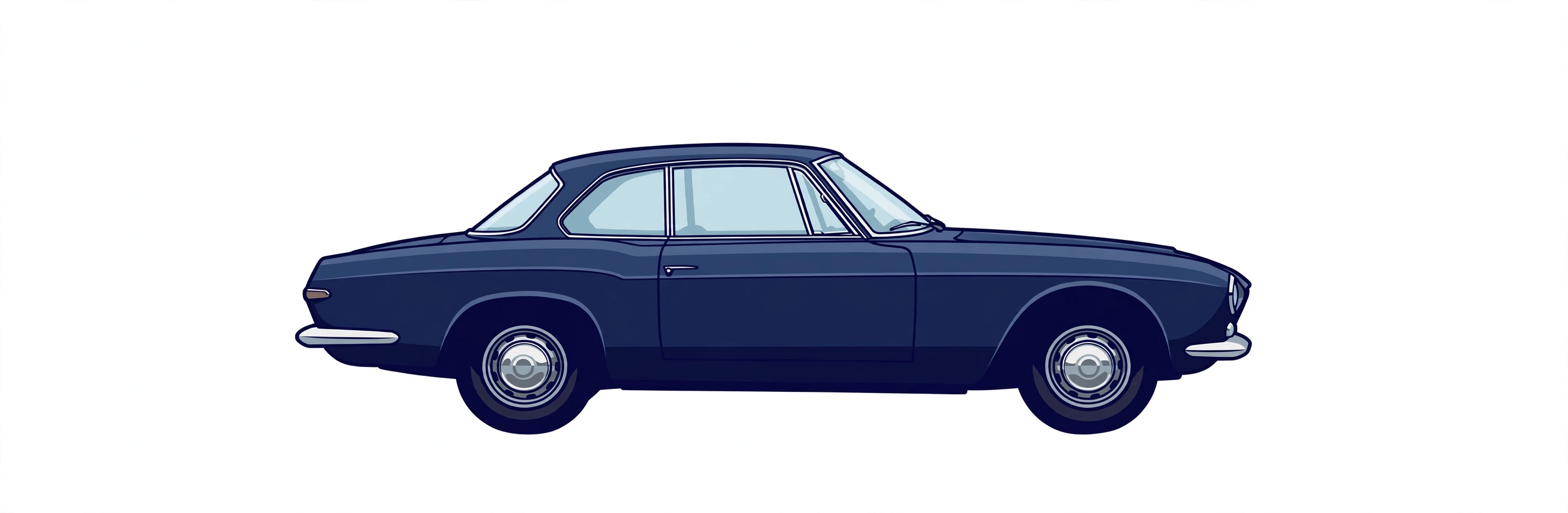
Chrysler 300 Series buyer's guide
Chrysler 300 Series -- the model's own buyer's guide: variants, values and what to check.
Years listed: 1955-1968 · Series: 300
Overview and history
The Chrysler 300 is not one car. It is three different ideas wearing the same three numbers, and the first job in buying one is knowing which idea you are standing in front of. The first idea is the letter car: the C-300 of 1955 and the 300B through 300L that follow it to 1965, a low-volume, high-power flagship built in tiny numbers to give Chrysler a performance halo. The second idea is the non-letter 300: from 1962 onwards Chrysler sells a cheaper, volume 300 alongside the letter car, and from 1966 to 1971 the non-letter car is the only 300 there is — a big, well-trimmed, big-block coupe, sedan and convertible that trades the letter cars' exclusivity for usability. The third idea is the modern revival, the front-wheel-drive 300M of 1999 to 2004 and the rear-wheel-drive 300 and 300C of 2005 to 2023. Those modern cars matter to this guide only as a disambiguation exercise, because the classic market, and the cars in our listings, belong to the first two ideas.
Our current pool makes the weighting plain. We track 20 cars under this model name, 14 of them for sale and six sold, and every one of them is a classic-era car: one from 1955, single cars from 1960, 1961, 1963 and 1969, and the bulk of the pool — cars from 1962, 1964, 1965, 1966 and 1968 — sitting squarely in the years when the non-letter car dominates supply. So this is a guide weighted to the sixties cars you can actually buy, with the letter cars covered in the depth their prices demand, because a mistake on a letter car costs ten times what a mistake on a non-letter car costs.
The story starts in 1955 because the C-300 starts a race. Chrysler fits its 331 cubic inch FirePower Hemi V8 with two four-barrel carburettors, rates it at 300 horsepower gross, and creates the first American production car to reach that figure — which is where the name comes from. The car is a hardtop coupe based on the New Yorker, with Imperial-grade trim, leather, a two-speed PowerFlite automatic, and a competition record underwritten by Carl Kiekhaefer's Mercury Outboards team, which campaigns 300s in NASCAR and wins relentlessly in 1955 and 1956. The letter sequence that follows is literal: 300B for 1956, 300C for 1957 — note that the original is the C-300, with the C in front, and the car everyone calls a 300C is the 1957 car, a confusion that matters when you read listings, including one in our own pool — then a letter a year, skipping I because it reads as a one, through to the 300L of 1965.
Under Virgil Exner's Forward Look styling the letter cars gain fins, quad headlamps and, from 1957, the three-speed TorqueFlite automatic that becomes their defining gearbox. The Hemi gives way to the 413 cubic inch wedge-head RB engine in 1959, and in 1960 and 1961 the 300F and 300G get the most theatrical induction system ever fitted to an American production car: long cross-ram manifolds with a carburettor perched over each rocker cover. By 1962 the fins are gone, the letter car is dying of its own cost, and Chrysler launches the non-letter 300 as a sporty series below the New Yorker. The two lines run together for four years. From 1965 both sit on the new full-size C-body platform; the 300L ends the letter line that year, and the non-letter car carries on through the slab-sided 1965 to 1968 cars and the fuselage-styled 1969 to 1971 cars before the name is dropped.
What defines a 300 today is the same thing that defined it then: a very large Chrysler with the strongest engine the corporation would sell you, trimmed a step above ordinary. The mechanicals are fundamentally tough, and the difference between a good 300 and a money pit is rust, deferred maintenance and, on letter cars, whether the expensive identity pieces are still on the car.
The models
Read every 300 badge as two questions: is there a letter after the numbers, and if there is, is the letter real? A letter car and a non-letter car of the same year share a body and much of their trim, but they do not share an engine specification, a production figure or a market. The table below separates them. Outputs are period SAE gross figures, the optimistic test-stand numbers of the day; production figures are given only for the letter cars, where they are genuinely documented, and the volume non-letter cars are described as what they are — volume production, built in numbers an order of magnitude larger.
| Model | Years | Engine | Output | Built | Character |
|---|---|---|---|---|---|
| C-300 | 1955 | 331 Hemi V8, dual quads | 300 hp | 1,725 | The original; hardtop only, the 300 hp headline car |
| 300B | 1956 | 354 Hemi V8, dual quads | 340 hp | 1,102 | More power, same idea; the Kiekhaefer race years |
| 300C | 1957 | 392 Hemi V8, dual quads | 375 hp | 2,402 | The icon: fins, TorqueFlite, first convertible letter car |
| 300D | 1958 | 392 Hemi V8, dual quads | 380 hp | 809 | Last Hemi letter car; rarest of the early cars but one |
| 300E | 1959 | 413 wedge V8, dual quads | 380 hp | 690 | First wedge letter car; the rarest letter car of all |
| 300F | 1960 | 413 cross-ram V8 | 375 hp | 1,217 | Long-ram induction arrives; unibody construction |
| 300G | 1961 | 413 cross-ram V8 | 375 hp | 1,617 | Last of the finned cars; cross-ram at its peak |
| 300H | 1962 | 413 wedge V8, dual quads | 380 hp | 570 | Fins gone, cross-ram gone; letter car in decline |
| 300J | 1963 | 413 cross-ram V8 | 390 hp | 400 | Hardtop only, cross-ram returns; no I, by design |
| 300K | 1964 | 413 wedge V8 | 360 hp | 3,647 | The letter car goes volume; cross-ram a rare option |
| 300L | 1965 | 413 wedge V8 | 360 hp | 2,845 | The last letter car; C-body, single four-barrel |
| 300, non-letter | 1962–1964 | 383 wedge V8 | 305 hp | Volume production | The affordable 300: same shape, gentler specification |
| 300, non-letter | 1965–1968 | 383 or 440 wedge V8 | 325–350 hp | Volume production | The core of today's market; coupes and convertibles |
| 300, non-letter | 1969–1971 | 440 wedge V8 | 350 hp | Volume production | Fuselage styling, hidden headlamps, the last of the line |
| 300 Hurst | 1970 | 440 TNT wedge V8 | 375 hp | About 500 | Hurst-built special: glassfibre hood and rear spoiler |
| 300M | 1999–2004 | 3.5 V6 | 253 hp | Volume production | Front-wheel-drive revival; a different car entirely |
| 300 and 300C | 2005–2023 | V6 or 5.7 Hemi V8 | 292–363 hp | Volume production | Rear-wheel-drive revival; modern car, modern rules |
The Hemi letter cars, 1955 to 1958. The C-300, B, C and D are the cars the legend is built on. All are dual-quad Hemi cars, all are rare, and the 300C of 1957 — the first with TorqueFlite, the first offered as a convertible, and the most flamboyantly finned — is the one the market treats as the blue-chip. In our pool the era is represented by a single 1955 car: these cars surface rarely and sell through specialists and auctions more than through open listings.
The wedge letter cars, 1959 to 1965. The 300E swaps Hemi for 413 wedge and is now the rarest letter car, because nobody valued it when new. The F and G are the cross-ram cars and the enthusiast's peak: the induction system alone is a major value component, and its presence or absence is a first-order price question. The H, J and K show the line fading — the J is a fascinating 400-built anomaly with the cross-ram back as standard, the K sells in real numbers with a single four-barrel and the ram set-up reduced to an option — and the L of 1965 closes the line as a handsome, fast, comparatively conventional C-body. Our pool holds a 1960 300F and a 1961 300G, the two cross-ram flagships, which is a richer letter-car showing than most listing pools manage.

The non-letter cars, 1962 to 1971. This is the 300 you will actually buy, and 15 or more of our 20 pool cars are from these years. The 1962 to 1964 cars share the letter cars' finless body with a 383 and plainer trim. The 1965 to 1968 C-body cars are the sweet spot of supply: big, slab-sided, handsome, with a 383 standard and the 440 increasingly common, in two-door hardtop, four-door hardtop and convertible form — our pool's 1966 and 1968 cars, four of each year, are exactly this. The 1969 to 1971 fuselage cars add hidden headlamps, a standard 440 and the most seventies styling of the run; the 1970 Hurst car, built by Hurst Performance with a glassfibre hood carrying a scoop, a rear spoiler and the 375 hp 440 TNT engine, is the one non-letter 300 the collector market chases. Convertibles are the minority body throughout — in our pool only three cars are recorded as convertibles against a majority whose body style is not recorded at all, a gap in the data we flag rather than fill.
The modern cars, briefly. The 300M is a front-wheel-drive V6 sedan with no mechanical relationship to anything above. The 2005 to 2023 car returns to rear-wheel drive and offers a 5.7 litre Hemi in 300C form, which is why sellers borrow the letter-car language for it. Neither appears in our classic pool, and neither is covered by the mechanical sections that follow.
Engines and gearboxes
The FirePower Hemis: 331, 354 and 392, 1955 to 1958
The first-generation Chrysler Hemi is the engine that makes the early letter cars what they are, and you judge it differently from every later 300 engine. The hemispherical combustion chambers, with the valves inclined towards each other and a spark plug down the centre of the chamber, breathe better than any wedge chamber of the day, which is how a 331 cubic inch engine makes 300 horsepower in 1955. The architecture is distinctive and visible: two rocker shafts per head, spark plug tubes running through the rocker covers, and a wide, heavy engine that fills the bay. The sequence runs 331 in the C-300, 354 in the 300B — rated at 340 hp, with a higher-output version offered — and the raised-deck 392 in the 300C and 300D, at 375 and 380 hp. All letter-car Hemis run two four-barrel Carter carburettors on a single manifold, solid or hydraulic lifters depending on year and specification, and a thirst that was famous when fuel was cheap.
A healthy Hemi starts willingly, idles with a lope that is period-correct rather than a fault, and pulls hard and cleanly. What you are listening for is valvetrain noise that does not settle, a misfire under load that points to the plug tubes filling with oil past tired seals — the plugs sit in wells, and oil in the wells drowns them — and smoke that tells you whether you are looking at guides and seals or at rings. The honest warning is about money, not reliability: a first-generation Hemi rebuild is specialist work at specialist prices, with a full rebuild realistically in the $12,000 to $20,000 range at a shop that knows the engine, because parts are lower-volume and the machining is not big-block-Chevrolet work. Dual-quad carburettor set-up is the other running cost: two Carters that have drifted out of synchronisation give you a rich idle, a flat spot and terrible economy, and the cure is a proper rebuild and set-up of the pair as a pair, roughly $800 to $1,500, not a tweak of whichever carburettor is easier to reach. Verify identity by the engine number stamped on the block at the front, by the driver's side of the valley on these engines, and by the plain fact of the architecture: a car sold as a Hemi letter car with a wedge engine in the bay is a different, far cheaper car, whatever the paperwork says.
One myth to bury here. The modern Hemi in a 2005-onwards 300C shares a name and a chamber idea with these engines and essentially nothing else — no parts, no architecture, no character.### The RB wedge and the cross-ram cars: the 413, 1959 to 1965
From 1959 the letter cars run the RB — raised-block — wedge engine in 413 cubic inch form, and the wedge is a completely different ownership proposition: cheaper to build in period, cheaper to rebuild now, and in cross-ram form just as characterful as the Hemi. The standard letter-car 413 runs two four-barrel carburettors and makes 380 hp in the 300E and 300H. The 300L and the standard 300K run a single four-barrel at 360 hp. Between those bookends sit the cars everyone remembers.
Cross-ram induction, 300F, 300G and 300J. The long-ram system fits two separate inlet manifolds, one for each bank, and each manifold crosses over the engine so that the carburettor for the left bank sits over the right rocker cover and vice versa. The tuned tube length — about 30 inches from carburettor to valve on the long-ram cars — uses the pressure pulse in the inlet tract to pack more charge into the cylinder in the low and middle rev range, which is exactly where a two-ton car needs help. The result is 375 hp on the F and G and a surge of mid-range torque that defines how the cars drive. A shorter-ram version, aimed higher in the rev range and rated at 400 hp, was offered for competition use on the F and G and is genuinely rare; treat any claim of one as a claim to be proved from hardware and paperwork, not from a badge.
The cross-ram is also the system's own problem area, covered again below: two Carter AFB carburettors living outboard in the coolest, dampest corners of the engine bay, a long way from the exhaust heat that helps a carburettor behave on a cold morning. Cold starting needs patience and a working choke set-up on both carburettors, warm-up is slow, and an out-of-sync pair makes the car surge and stumble in ways owners blame on ignition. The test that distinguishes causes is boring and decisive: with the engine warm, the car must idle evenly, pull cleanly from low revs in top gear and return to the same idle after a hard run. A car that only behaves when fully hot and freshly tuned is a car whose carburettors, choke pull-offs and linkage all want the rebuild-and-set-up bill — budget $1,000 to $1,800 for the pair done properly — not a car with character. And check the hardware is present at all: ram manifolds, the correct carburettors and the long air cleaners are valuable parts in their own right, cars were separated from them over the decades, and a cross-ram car wearing a single four-barrel on a standard manifold has lost a five-figure chunk of its identity and value.
The volume wedges: 383, 413 and 440, 1962 to 1971
The non-letter cars run the workhorse end of the same families, and this is the best news in the whole guide, because these are among the toughest, best-supported American V8s ever built. The 383 is a B-series, low-deck wedge: 305 hp in the early non-letter cars, 325 hp in later 300 tune with a four-barrel Carter. The 440 is the big RB, introduced for 1966 and fitted to 300s in growing numbers from 1967, standard on the fuselage cars: 350 hp in standard form, 375 hp as the 440 TNT — also badged Magnum in other Chrysler lines — with the higher-compression, hotter-cam specification in the Hurst car and as an option elsewhere. The non-letter 1965 cars and the letter cars share the 413 described above. All of these engines share one architecture — iron block and heads, a single camshaft in the block, hydraulic lifters, Carter AFB or AVS four-barrel carburetion on the performance versions — and one ownership profile: an engine that tolerates use, forgives ordinary maintenance and announces real trouble honestly.
Judge a wedge on oil pressure, smoke and noise, in that order. A healthy big-block shows strong pressure hot at speed and a lower but steady reading at a hot idle; pressure that falls away as the engine warms, with a rumble from the bottom end, is bearings, and that is an engine-out rebuild at $6,000 to $12,000 depending on specification and how much else you do while it is out. Blue smoke on start-up that clears is valve stem seals, a known and comparatively cheap job; blue smoke under load is rings and bores. A ticking that follows engine speed is usually a lifter or a leaking exhaust manifold joint — the manifolds crack and the studs seize, and drilling out broken studs is the labour that turns a gasket job into a $600 to $1,200 bill — while a ticking that changes with load points you towards the exhaust side first, before you condemn the valvetrain. Cooling is the system that kills these engines in modern traffic: a 440 in a two-ton car with a marginal radiator, a tired viscous fan drive and a blocked core overheats in queues, and a wedge that has been run hot repeatedly is a wedge with warped surfaces and a head-gasket bill in its future. The temperature gauge's behaviour on the test drive is a mechanical inspection, not a comfort check. Carburetion is the everyday item: the Carter AVS and the later ThermoQuad, fitted as the seventies arrive, both suffer from age, worn throttle shafts and, on the ThermoQuad, a plastic main body that warps and leaks — a fault owners misdiagnose as ignition for years. A professional rebuild of the single carburettor runs $400 to $800 and transforms a car that has been blamed on everything else.
Gearboxes: PowerFlite, TorqueFlite and the rare manuals
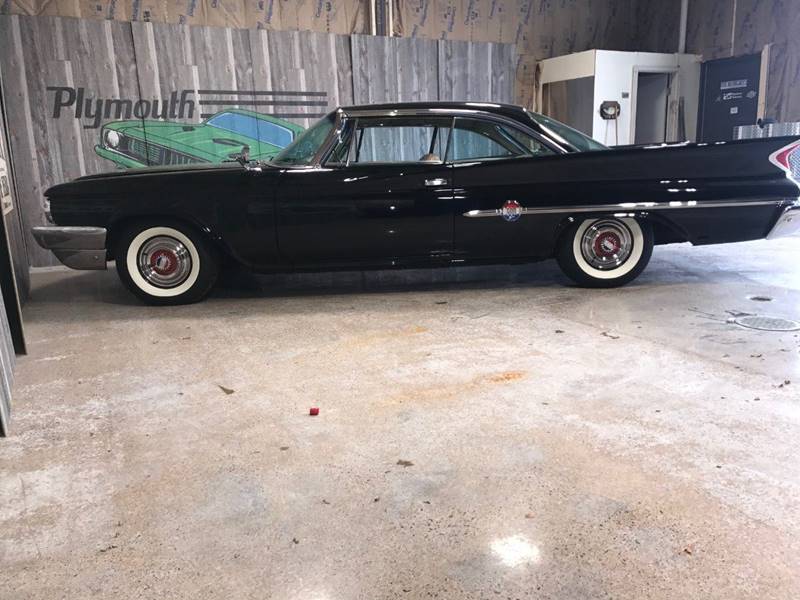
The C-300 and 300B use the two-speed PowerFlite automatic, a simple, sturdy box whose two ratios make the cars feel long-legged and relaxed and whose behaviour you should judge gently: a firm shift and an unhurried manner are correct, while slip, flare or a refusal to engage from cold is a rebuild conversation. From the 300C of 1957 the letter cars, and in time every 300, use the three-speed TorqueFlite — the A727 in the big-block cars — and this is one of the strongest automatic transmissions ever fitted to a production car. Pushbutton control runs to the end of 1964, with the buttons on the dash to the left of the wheel on the early cars; from 1965 the control is a conventional lever. Manual gearboxes are the exception everywhere: a three-speed manual is the nominal base fitment on many non-letter cars and almost nobody ordered it, a four-speed manual appears in small numbers — famously a French Pont-a-Mousson four-speed in a handful of 300Fs, and Chrysler's own four-speed in some later cars — and our pool records exactly one manual car, a four-speed, among its automatics. A genuine manual 300 is a rarity to verify, not a discount to apologise for.
TorqueFlite behaviour is the test, and it hinges on one piece of linkage most buyers have never heard of. The TorqueFlite has no vacuum modulator: shift timing and firmness are set by a mechanical throttle-pressure linkage — the kickdown linkage — running from the carburettor to the lever on the side of the gearbox. If that linkage is disconnected, bent or misadjusted, the box shifts early and soft, flares between ratios and, because line pressure stays low, burns its clutches doing it. A TorqueFlite that shifts badly is therefore a linkage adjustment until proved otherwise, and a car that has been driven for years with the linkage wrong is a car whose box has been wearing out quietly the whole time. On the test drive you want clean, firm upshifts, a prompt kickdown when you ask for it, no delay engaging drive or reverse from rest, and no slip under a full-throttle pull. Fluid tells the same story: bright and sweet-smelling is health, dark and burnt is a box living on borrowed time. A TorqueFlite rebuild at a competent shop runs roughly $2,000 to $3,500 fitted, which makes it one of the cheaper major units in this guide to put right — but only if the linkage is set up correctly afterwards, or you will be paying twice.
Problem areas
Start with the honest evidence from our own pool, and read it for what it is. Of the 20 cars we track under this model, we have examined the sellers' photo sets in detail for seven. Rust is mentioned in the notes for three of those seven, visible damage for one, and there are no mentions of smoke or leaks in that small sample. Seven cars prove nothing about the other thirteen — and a listing photograph set is chosen by the seller, so it understates underside and structural trouble by design — but a rust incidence of three in seven in the sample you can see is exactly the pattern the wider 300 market shows: these are large, old, mostly northern-used cars, and the body and structure decide value long before the engine does. Almost everything mechanical on a 300 can be fixed with money and patience at prices this guide quotes. Structural rust, missing letter-car hardware and a ruined interior are the three things that reliably turn a bargain into a write-off.
Rust and structure: frames, unibodies and the torsion-bar problem
The first structural divide is the year. Cars to 1959 carry a separate body on a frame; from 1960 the 300 is a unibody, with the structure in the shell itself and bolt-on front stub framing carrying the engine and front suspension. Neither is immune, and each fails in its own places.
On the frame cars, inspect the frame rails themselves, especially around the rear spring hangers, the body mounts and the low points where road dirt sits against the steel, plus the body above it: floor pans, the trunk floor, rocker panels and the lower quarters behind the rear wheels. A frame that is perforated at a spring hanger or a body mount is not a patch-and-paint job; it is fabrication, and it prices the car as a project whatever the paint looks like.
On the unibody cars, which are most of what you will look at, work through the structure in this order. First, the front stub frame and the torsion-bar crossmember. Chrysler's front suspension hangs from torsion bars anchored in a crossmember under the front floor, and that crossmember and its surrounding floor live exactly where water, salt and mud collect. Rot here is the single most dangerous rust on a C-body 300: the anchor points carry suspension loads, a soft crossmember lets the front end move, and the repair is structural welding in the area you least want to be welding. Get the car on a lift, prod the crossmember and the stub-frame rails hard, and walk away from perforation that the seller describes as surface rust. Second, the floors and the cowl. Windscreen seals and the heater and fresh-air intake pass water into the front footwells, where it sits under carpet and underlay and rots the pan from the top down, invisibly, until the seat mounts soften. Lift the carpets on both sides, front and rear. Third, the trunk floor and the spare-wheel well, fed by the rear window and trunk seals, and the rear leaf-spring mounts and shackle areas at the back of the unibody rails, where the springs hang and where rot is again structural, not cosmetic. Fourth, the visible skin: rocker panels, lower front fenders behind the wheels, door bottoms with their drain slots blocked, the lower rear quarters, and the dogleg and wheel-arch lips. Skin rust is expensive in aggregate — cutting out, welding and painting a rocker and quarter properly runs $1,500 to $3,500 a side at a body shop, and a full, quality repaint on a car this size starts around $12,000 to $18,000 — but skin rust alone does not condemn a car the way crossmember or spring-mount rust does.
Learn to read underseal the way the car deserves. Honest, aged underseal is patchy, chipped at the edges and dirty. A uniform coat of fresh black stone-chip blown over rails, crossmember, brake pipes and floor seams in the weeks before a sale is a cover-up until the seller proves otherwise, because nobody re-underseals a sound underside for your benefit. None of this means the car is rotten; it means the inspection has to be done with a torch, a screwdriver for prodding where the seller permits it, and a lift — not from the listing photographs.

Suspension, steering and brakes
The front suspension is torsion bars, upper and lower control arms, ball joints and an anti-roll bar, and it is a strong layout that wears in predictable places. Worn ball joints and idler-arm and tie-rod wear give you wandering steering, a knock over bumps and feathered front tyre wear; a full front-end refresh with joints, bushes and alignment runs roughly $1,200 to $2,500 in parts and labour and transforms a car that felt vague and old. Torsion bars themselves rarely break, but the ride height is set by their adjusters, and a car sitting low at the front has usually been wound down to compensate for tired bars or has a crossmember problem underneath — which is why stance is a structural check as well as a suspension one. At the rear, leaf springs sag, shackles and bushes perish and the axle sits down; new springs and bushes are ordinary money, but judge the mounts before the springs, for the reason given in the rust section. Power steering on these cars is a recirculating-ball box with a pump-driven assist: play at the wheel is box wear or linkage wear, and the test is whether the play lives in the joints, which are cheap, or in the box itself, which is a rebuild at roughly $400 to $800. Leaks from the pump, the hoses and the box are endemic and usually cheap; a car that groans and goes heavy at parking speed wants the pump and fluid attended to before the box is condemned.
Brakes are the era's weak point, and the specification changes under you, so check what the car in front of you actually has. Early cars are drum-braked all round, with power assistance common; front disc brakes arrive as an option in the mid-sixties and become the expected fitment on the fuselage cars, with a dual-circuit master cylinder arriving for 1967 across the industry. A drum-braked two-ton car driven in modern traffic is a car you drive with anticipation, and a conversion or a disc-braked later car is worth real money to a buyer who intends to use the car. Whatever the specification, twenty years of sitting is the enemy: seized wheel cylinders and calipers, perished flexible hoses, a corroded master cylinder and contaminated fluid are the standard recommissioning list, at $800 to $2,000 for a full hydraulic refresh. Test the servo — the vacuum booster — by holding the pedal down and starting the engine: the pedal should sink slightly as vacuum builds. A hard pedal with a hiss is a failed booster or a split vacuum hose. And test the brakes hard from speed on the drive: a 300 should stop straight; a pull is a sticking caliper or cylinder or a collapsed hose acting as a one-way valve, all fixable, none ignorable.
Engines and transmissions in service
The engine problems that matter are mostly covered where the engines are introduced, so this is the service summary. On Hemis, the costs are valvetrain wear, plug-well oil seals and the price of any internal work; never buy a Hemi car that needs engine work at a price that assumes wedge money will fix it. On wedges, the killers are overheating history, bottom-end wear announced by falling hot oil pressure, and exhaust manifold cracks and seized studs. On cross-ram cars, add the induction hardware itself: missing manifolds, incorrect carburettors and perished linkage are value faults, not tuning faults. On all cars, the fuel system after long storage is a recommissioning job in its own right: modern ethanol fuel attacks old rubber, varnishes tanks and lines, and gums carburettors, and a car that has sat for years needs the tank, lines, pump and carburettor cleaned or renewed end to end — budget $800 to $2,000 before you judge how the engine runs, because a stored car running badly on its own stale fuel system is telling you about storage, not about the engine.
TorqueFlite problems divide cleanly into linkage and internals, as the gearbox section explains, and the order in which you test them saves you money: linkage adjustment first, fluid condition second, rebuild last. A box that slips in every gear with burnt fluid has been dying for a while; a box that shifts early and softly with clean fluid is very often an afternoon's linkage work. The rear axle is a Chrysler 8¾-inch unit on most of these cars, one of the strongest axles in the business; whine on the overrun is pinion bearing or gear wear, a Sure-Grip limited-slip differential that chatters in tight turns usually wants its special additive changed before it wants a rebuild, and a leaking pinion seal is a small job that owners defer until it is a low-oil job, which is not small.
Electrics, interior, trim and convertibles
Electrics on a 300 fail at connections, switches and motors rather than in the middle of wires, and the big cars carry a lot of all three: power windows, power seats, power aerials, air conditioning and, on the 1968 and 1969 cars, headlamps hidden behind the grille that must present themselves when you switch the lights on. Test every one of those systems on every viewing, because each dead motor is a bill and, more importantly, because a car where everything works has usually been used and maintained, which is the best single predictor of condition there is. The ammeter-and-bulkhead-connector era Chryslers deserve one specific check: the main charging feed passes through a connector in the bulkhead and through the ammeter in the dash, the connections corrode and heat up, and melted bulkhead connectors and scorched wiring behind the dash are a known fault on sixties Chryslers. Smell for hot insulation, look at the connector block where the harness passes into the cabin, and treat evidence of overheating there as a safety job, not a quirk. Charging that flickers at idle, lights that brighten dramatically with revs and intermittent accessories are the early warnings. Air conditioning, where fitted, is period hardware: budget for a compressor, seals and a receiver-drier conversation at $800 to $2,000 if it blows warm, and decide honestly whether you need it working or merely present.
The interior is where a 300 hides its largest non-structural bill. Seats are wide, heavy and trimmed in vinyl, cloth-and-vinyl or leather depending on series and year, and the letter cars and better non-letter cars carry trim that is specific to them. Foam and padding collapse with age, the driver's seat goes first, and once you can feel the frame through the cushion you are pricing pads and covers together: re-trimming a pair of front seats properly runs $1,500 to $3,000, and a full interior in the correct materials runs well into five figures. Dash pads crack in the sun, the padded dashes of the fuselage cars warp, and the extraordinary dashboards of the early sixties cars — with their pushbutton transmission controls and, on some years, electroluminescent instrument lighting that dims and dies with its power supply — are specialist repairs when they fail. Brightwork is the other aggregate cost: these are chrome-era cars, the die-cast pot-metal trim pits in a way that cannot be polished out, and re-plating a full set of bumpers and die-cast trim is a serious bill, realistically $3,000 to $8,000 depending on how much of the car you do. Count the pitted pieces on the viewing and price them, because sellers count them as patina.
Convertibles — three are recorded in our pool — add the top mechanism, its hydraulics or electric motor, the top frame pivots and the well behind the rear seat, which collects water and rots the floor around it. Run the top up and down twice, watch for a frame that moves unevenly, and look at the well and the rear floor. A new top fitted properly runs $1,500 to $3,000; frame and hydraulic work is on top of that. A convertible that has lived outside with a torn top is a floor-pan car as well as a top car.
How to inspect one
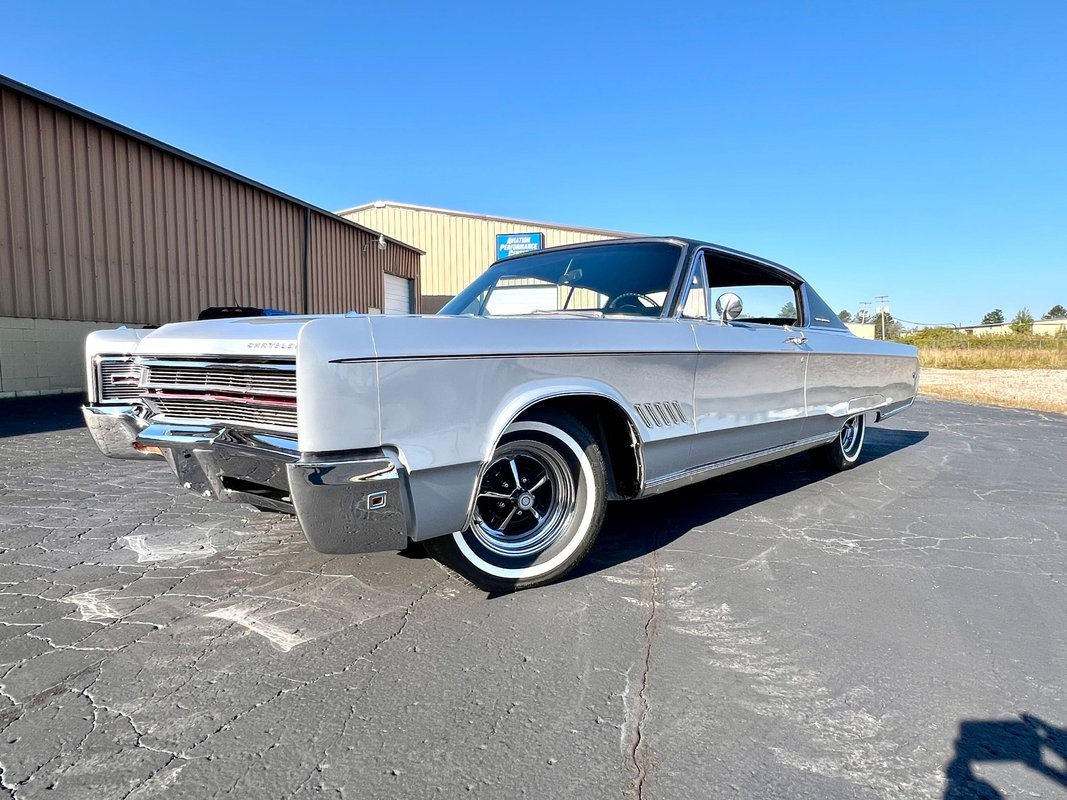
Allow at least an hour, bring a torch, a cloth-wrapped magnet and a friend to work the controls while you watch the car. If the car passes you, pay for a lift inspection before money changes hands — on a unibody 300 it is the inspection that decides the purchase, because the torsion-bar crossmember, the stub frame and the spring mounts cannot be judged from a driveway.
- Start with identity, before condition. Match the VIN on the title to the plate on the car — on the classic cars, the plate on the driver's door hinge pillar — and read the fender data plate under the hood, which carries the car's series, body, engine and trim codes as built. This step is where letter-car claims live or die: the plate and the series code distinguish a letter car from a non-letter car of the same year, and no badge, title description or seller story outranks them. Check the engine in the bay against the claim at the same time — Hemi architecture on an early car, cross-ram manifolds on an F, G or J — because the wrong engine is a price fact, not a detail.
- Cold start, and insist on it. The engine must be stone cold when you arrive. A wedge should start promptly and settle; a cross-ram car is allowed a patient cold routine, but it must improve steadily as it warms and must not need throttle held against it indefinitely. Watch the exhaust: blue at start-up that clears is seals, blue that stays is deeper, white that does not clear is coolant until proved otherwise, and black is carburetion.
- Oil, water and the dipstick story. Read the oil level and its condition, look for emulsion under the filler cap, check the coolant for rust and oil, and note the automatic transmission fluid's colour and smell while the car is warm later. On a Hemi, pull a plug lead's seal and look down a plug tube for oil. These five minutes price more of the engine than the test drive does.
- Under the car, on a lift if at all possible. Work the rust map from the problem areas section in order: torsion-bar crossmember and front stub frame first, then floors and cowl seams, trunk floor and spare well, rear spring mounts, rockers and quarters last. Prod where the seller permits. Perforation at the crossmember, a spring mount or a stub-frame rail ends the inspection at any price above project money; honest, patchy underseal is a good sign, a fresh uniform black coat over everything is a question you put to the seller directly.
- Trunk and floors inside. Lift the spare wheel, the trunk mat and all four carpets. Look for water tracks from the screen seals and the heater intake, staining in the well corners and softness around the seat mounts. On a convertible, add the top well behind the rear seat. A dry, honestly aged trunk and floors are worth more than any single mechanical virtue on these cars.
- Body, gaps and brightwork. Run the magnet over the rockers, arches, lower doors and lower quarters — filler announces itself. Check door bottoms and their drain slots, panel gaps for accident history, and the alignment of the long hood and trunk lid. Then count the pitted pot-metal and chrome pieces and price the count, not the impression.
- Stance and suspension. Stand back and look: the car should sit level side to side, with the front height set by the torsion bars and the rear on its leaves. A low front is tired bars, maladjustment or the crossmember fault from step 4 — distinguish them before you price them. Rock each front corner, bounce the car and listen, then on the drive feel for wander, knocks and steering play, and judge whether the play lives in the linkage or in the steering box.
- The TorqueFlite test. From rest, engagement of drive and reverse should be prompt, without a long pause or a thump. On the road you want firm, clean upshifts, a kickdown that arrives when you ask for it, and no flare or slip on a full-throttle pull. Remember the gearbox section's rule: early, soft shifts point first at the throttle-pressure kickdown linkage, so check its connection and condition at the carburettor before you price a rebuild — and ask yourself how long the car has been driven that way.
- The brake test. Hold the pedal and start the engine: it should sink slightly as the servo builds vacuum. Then brake hard from speed on a clear road. The car must stop straight, without judder, a pull or a pedal that sinks or goes hard. Note what the car actually wears — drums or front discs — and drive a drum-braked car the way you will have to drive it in traffic, because that experience is part of what you are buying.
- Heat and cooling under load. Give the car at least fifteen minutes including a climb or a fast stretch and a spell idling in traffic. The temperature gauge must stabilise and stay stable, the fan drive must engage as it warms, and there must be no coolant smell, no bubbling into the overflow and no temperature creep at idle. A big-block that creeps hot on the viewing will overheat on your first summer queue, and overheating history is engine history.
- Every electrical system, worked. Windows, seats, aerial, lights — including, on a 1968 or 1969 car, the hidden headlamps presenting and retracting — washers, horn, instruments, heater blower on every speed and the air conditioning for what it is worth. Then look at the bulkhead connector and the wiring behind the dash area for heat damage, as the electrics section describes. A car where everything works is telling you it has been maintained; believe it.
- Interior last, and weight it heavily. Sit in every seat, feel for collapsed padding and frame through the cushion, check the dash pad, the headlining and the door cards, and run a convertible top through two full cycles. A sound, original interior is the hardest thing on a 300 to recreate at any price, so a car that passes steps 1 to 11 with its interior intact has earned a premium — and a car that fails step 1 or step 4 has earned a walk, whatever its interior looks like.

Values
The market for the 300 is really several markets stacked on top of each other, and the first skill in reading it is refusing to average them. At the top sit the Hemi letter cars and the best cross-ram cars, sold as collector pieces, often through auctions and specialists, where provenance, originality of the expensive hardware and documented history move the result more than condition alone. Below them sit the later letter cars, the Hurst and the best convertibles, in a market of knowledgeable buyers who pay for verified identity and completeness. Below those sits the broad market this guide mostly serves: the non-letter coupes, sedans and convertibles of the sixties, bought to be driven, where condition is almost everything and specification is secondary. And at the bottom of every one of those markets sit the same cars: rusty, stored, incomplete or wrong-engined examples whose asking prices look like bargains and whose restoration arithmetic does not work at any purchase price, because the welding, paint and trim bills on a car this size are the same whether the finished car is a letter car or not.
Read asking prices with that spread in mind, and read them against achieved prices wherever the site's recorded sales let you. Sellers of big Chryslers routinely ask driver money for project cars and collector money for driver cars, and the gap between asking and achieved is widest exactly where identity is doing the work — a car priced as a letter car that you cannot verify as a letter car is not an expensive car, it is a mispriced non-letter car. The premiums that survive scrutiny are narrow and specific: a verified letter, the cross-ram hardware present and correct on the cars that should have it, a Hemi that is the car's own engine, a convertible body in sound structural order, a manual gearbox that the paperwork supports, and an original interior that does not need to be remade. The discounts that should survive your scrutiny are equally specific: structural rust anywhere in the crossmember, stub frame or spring mounts, a missing or substituted engine, a TorqueFlite with burnt fluid and a history of running with its linkage wrong, and any car whose data plate does not match its story.
The project-versus-driver gap is wider on a 300 than on a smaller classic, because the fixed costs of putting one right — body and paint on this much sheet metal, a big interior, a full brightwork set — are large and largely independent of the variant. That is why the honest driver, bought at a fair driver price and improved in use, is almost always the cheapest 300 to own. Negotiate from the inspection, not from the listing: price the specific welding, trim pieces and gearbox or carburettor work your viewing found, in the ranges the earlier sections give. The computed market block beneath this guide carries the current numbers — read it after you have decided which of the stacked markets the car in front of you actually belongs to.
Parts and ownership
A volume 300 is one of the best-supported American classics you can own, and a letter car is two cars in one: a well-supported big Chrysler underneath, and a low-production flagship on top whose specific parts obey low-production rules. Plan for both halves honestly.
Easy: service items for the wedge engines — filters, plugs, points and ignition consumables, gaskets and seals — plus brake hydraulics and friction parts, suspension joints and bushes, steering linkage, water pumps, alternators, starters, exhaust systems in standard form, TorqueFlite service and rebuild parts, and glass rubbers and weatherstrip for the volume bodies. The 383, 413 and 440 share a deep aftermarket built on the muscle-car trade, including performance parts you do not need and standard parts you do, and a good general American-parts supplier covers most of a non-letter car's needs off the shelf.
Harder and dearer: first-generation Hemi internals and the specialists who machine them, dual-quad and cross-ram carburettor cores and linkage, the ram manifolds and long air cleaners themselves, letter-car-specific trim, grilles and die-cast, early-sixties dash and instrument components including the electroluminescent lighting power supply, convertible top frames and hydraulics, and correct pot-metal brightwork in unpitted condition. None of it is unobtainable — the letter-car clubs and the Chrysler specialist trade are active and knowledgeable — but it is bought by searching and waiting, not by ordering, and a car missing those pieces should be priced as missing them.
Running costs. A sorted 300 is a realistic regular-use classic with a period appetite: fuel consumption in the low-to-middle teens per gallon in mixed use, and servicing that any competent independent mechanic can handle, because the technology is a carburettor, a distributor and a very strong automatic. The budget line that catches new owners is the first year. Catching up deferred maintenance on a running car — fluids, hoses, belts, brake hydraulics inspected end to end, the kickdown linkage set up, the cooling system made honest — realistically runs $2,000 to $5,000 before you improve anything, and recommissioning a car that has sat for years runs $4,000 to $8,000 at a shop. The owners' clubs for both the letter cars and the C-body cars are a genuine parts-and-knowledge resource worth joining before you buy, not after. Buy a car in regular use over a sleeping car at the same price, every time: use is what keeps a TorqueFlite, a brake system and a cooling system honest.
Which one to buy
- The all-rounder: a 1965 to 1968 non-letter 300 with a 440. The deepest supply in our pool, the strongest parts support, a big-block and TorqueFlite in a handsome C-body. If you want one 300 to drive, this is it.
- The value buy: a 383 non-letter car. The same ownership experience with a gentler specification and price. A sorted 383 beats a neglected 440 car on every measure except bragging rights.
- The collector car: the 1957 300C. The icon of the letter line — Hemi, TorqueFlite, fins, convertible available — and priced like one when it is right. Verify engine, data plate and history ruthlessly, because the premium rides entirely on identity.
- The enthusiast's letter car: the 1960 300F or 1961 300G. The cross-ram cars, with the most characterful induction system Detroit ever sold. Pay for ram hardware present and correct; walk from a car priced as a ram car without it.
- The connoisseur's car: the 1959 300E. The rarest letter car, overlooked because it traded the Hemi for a wedge before the cross-ram made the wedge glamorous. A good one is a specialist's bargain.
- The seventies statement: a 1969 to 1971 fuselage car, or the 1970 Hurst. Hidden headlamps, a standard 440 and the boldest styling of the run. The Hurst is the collectible; the ordinary convertible is the same experience for driver money.
And the rule that overrides all of the above: buy the least rusty, most complete car you can find, with its identity verified on the plate, in the specification you can live with. Engines, gearboxes, brakes and carburettors are all fixable at prices you can plan for. A rotten crossmember, a missing cross-ram and a substituted engine are faults money cannot put back to original — and on a 300, original is where the value lives.
See the 13 300 Series cars currently listed.