
Chevrolet Suburban buyer's guide
Chevrolet Suburban -- the model's own buyer's guide: variants, values and what to check.
Years listed: 1962-2004 · Series: C/K Trucks
Overview and history
The Chevrolet Suburban is the longest-running nameplate in American motoring, and it earns that title honestly. Chevrolet put the Suburban Carryall name on a steel-bodied station wagon built on a truck chassis in 1935, and there has been a Suburban in the catalogue ever since — through the war years, the fins, the fuel crises and the SUV boom the Suburban itself did more to create than any other vehicle. The formula never changed because it never needed to: a full truck frame, a truck engine up front, three rows of seats or a van-sized cargo hold behind them, and a tailgate or pair of rear doors at the back. Everything else is variation on that one durable idea.
That matters because a Suburban is not one classic vehicle but at least four quite different ones wearing the same badge, and the right checks and the right money depend entirely on which generation is in front of you. A 1969 three-door is a collector truck with a wagon body. A 1988 square-body is a simple working classic you can maintain with hand tools. A 1997 GMT400 is a modern-feeling family hauler with electronic injection. A 2002 GMT800 2500 is a heavy tow vehicle that happens to seat nine. Treat them as one model and you will compare the wrong things and pay the wrong price.
Be plain about what our own listings actually hold, because that is the market this guide serves. We currently track 28 Suburbans — 18 for sale and 10 sold at the time of writing — with years running from 1962 to 2004. The weight of the pool is where the weight of surviving Suburbans sits in America: the square-body of 1973 to 1991 and the two generations after it, GMT400 (1992 to 1999) and GMT800 (2000 to 2006). The commonest year is 1988, and the early-2000s cars are strongly represented, including several 2500s. There are a handful of earlier cars — a 1962, a 1969 and a pair of 1972s — but no 1930s to 1950s Suburbans in the current pool, no panel trucks, and nothing post-2006. The generations this guide inspects and recommends in depth are the ones the listings hold: roughly, the late 1960s to 2006, with the square-body at the centre of gravity.
Two splits run through every generation and matter more than trim badges. The first is weight class: a 1500 is a half-ton, with lighter axles, springs, brakes and transmission, sized for family work and moderate towing; a 2500 is a three-quarter-ton, with a full-floating rear axle on most versions, eight-lug wheels, heavier running gear, and — in the later generations — the big engines, the 454, the 6.0 and the 8.1, that never came in the half-ton. The second is drive: two-wheel-drive cars (C-series, and R-series in the late square-body years) are simpler and ride better, while the four-wheel-drive K and V trucks add a transfer case, a driven front end and a second set of seals and joints to inspect. Neither split is good versus bad; both are purpose choices.
The Suburban's working life is the other fact that shapes every purchase. These were bought to work — towing, hauling crews, rural family transport — and most were used exactly that way for twenty or thirty years before anyone called them classics. The cars in our listings sit in states like North Carolina, Colorado, Wisconsin, Missouri, Georgia and North Dakota: working-truck country, not coastal collector country. A Suburban that has towed heavy on its original transmission and brake lines is a very different proposition from a garaged family car with the same odometer reading. Mileage alone tells you almost nothing; configuration, condition and evidence of care tell you nearly everything.


The models
Start with the generations, because on a Suburban the generation decides the engineering and the badge decides only the equipment. Chevrolet's naming shifted as the trucks went — C and K through the 1980s, then R and V for the last square-bodies from 1987, then back to C and K on the GMT400 — so read a listing by year and specification, not by the letters alone.
| Model | Years | Engine | Output | Built | Character |
|---|---|---|---|---|---|
| Suburban (1960–66 generation) | 1960–1966 | 230/250 six, 283/327 V8 | 120–220 hp | Not separated in Chevrolet truck totals | The early classic; simple, scarce in our listings |
| Suburban (Action Line) | 1967–1972 | 250/292 six, 307/327/350 V8, 396 big-block | 155–310 hp | Not separated in Chevrolet truck totals | Three-door wagon; the collector generation |
| Suburban C/K 10 and 20 (square-body) | 1973–1986 | 250 six, 305/350/400 V8, 454 V8, 6.2 diesel | 130–240 hp | Not separated in Chevrolet truck totals | The workhorse classic; carburettors, then diesel choice |
| Suburban R/V 1500 and 2500 (square-body, late) | 1987–1991 | 305/350 TBI V8, 454 TBI, 6.2 diesel | 170–255 hp | Not separated in Chevrolet truck totals | Fuel injection arrives; the most usable square-bodies |
| Suburban C/K 1500 (GMT400) | 1992–1999 | 350 TBI, then 5.7 Vortec; 6.5 turbo diesel option | 200–255 hp | Not separated in Chevrolet truck totals | The modern classic; Vortec cars from 1996 are the pick |
| Suburban C/K 2500 (GMT400) | 1992–1999 | 350, 454 Vortec, 6.5 turbo diesel | 230–290 hp | Not separated in Chevrolet truck totals | Eight-lug tow truck; 4L80-E transmission |
| Suburban 1500 (GMT800) | 2000–2006 | 5.3 Vortec V8 | 285–295 hp | Not separated in Chevrolet truck totals | Coil-sprung rear, the family all-rounder |
| Suburban 2500 (GMT800) | 2000–2006 | 6.0 V8, 8.1 big-block V8 | 300–340 hp | Not separated in Chevrolet truck totals | The heavy tow choice; leaf springs, 4L80-E |
A note on the Built column: Chevrolet published production by truck line, not by Suburban body style, so treat any precise Suburban-only figure for a single year with suspicion. Rarity here is a matter of configuration — a big-block K20, a diesel 2500 or a well-kept three-door is uncommon because few were ordered that way and fewer survived. Judge scarcity by the specification in front of you.
The 1960 to 1966 cars. The generation that opens our pool's span, represented by a single 1962 car. C10-based wagons, six-cylinder power as standard and small-block V8s as the option everyone wants now; torsion-bar front suspension on the earliest, coil springs later. Buy them as collector vehicles, judged on originality and body condition. Mechanical parts support is good; Suburban-specific body and trim is thinner, because the wagon shares less with the pickup than later generations do.
The 1967 to 1972 Action Line cars. The prettiest Suburbans ever made, and the ones collectors chase hardest. The defining quirk is the door layout: one door on the driver's side and two on the passenger side — a genuine three-door wagon, a layout no other Suburban has. Engines run from the 250 and 292 sixes through the 307, 327 and 350 small-blocks to a 396 big-block option, and a listed 1972 car in our pool is a K20 Custom Deluxe 4x4 — close to the specification collectors want most. Buy these on body and originality: mechanical parts are easy, straight unrusted wagon sheet metal is the scarce resource, and a patched three-door is worth a fraction of an honest one.
The 1973 to 1991 square-body. The generation that defines the classic Suburban: eighteen model years, an upright flat-panel body, half-ton and three-quarter-ton, two- and four-wheel drive, small-block and 454 petrol engines, and from 1982 the 6.2-litre Detroit diesel. Trim climbed from Custom Deluxe through Scottsdale to Silverado, and the rear came two ways — a tailgate, or the side-hinged panel doors everyone calls barn doors. For 1987 the two-wheel-drive became the R-series and the four-wheel-drive the V-series, and the same year brought throttle-body injection across the petrol range — which is why the 1987 to 1991 cars are the usability sweet spot of the run, and why 1988, the commonest year in our pool, is such a representative buy. Our photo-checked sample underlines what these trucks are: of the 16 listings we examined in detail across the pool, damage of some kind was noted on 6 cars — working trucks carry working scars.

The 1992 to 1999 GMT400. The rounded redesign that made the Suburban the default American family vehicle of the 1990s. A driver airbag from 1995, and a two-step engine story: the 350 with throttle-body injection to 1995, then the Vortec 5700 from 1996 with proper multi-point injection and a useful jump in power and economy. The 2500 offered the Vortec 7400 — the fuel-injected 454 — and the 6.5 turbo diesel, and four-wheel-drive cars swapped the solid front axle for torsion-bar independent suspension, transforming the ride and adding its own wear items. Trim runs from Cheyenne and LS to the leather LT that tops most listings — a 1999 K1500 LT is a typical pool car. These are the simplest modern Suburbans, and the generation many buyers should start with.
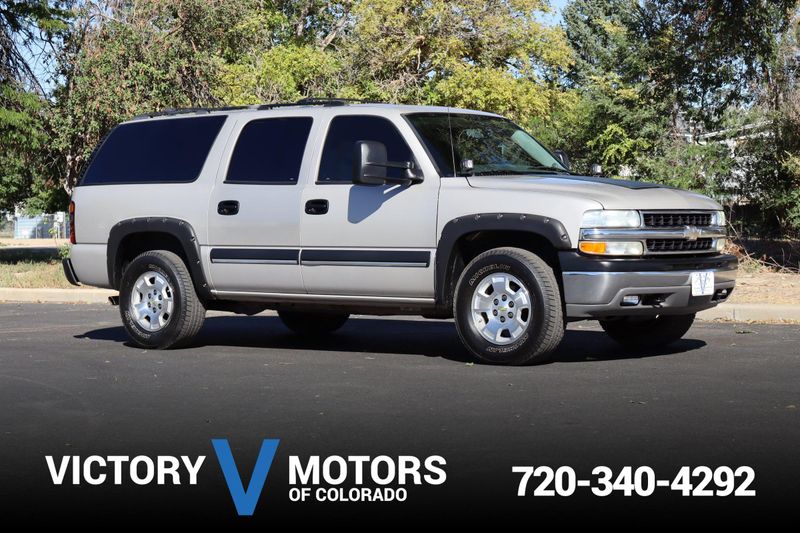
The 2000 to 2006 GMT800. The last generation our pool holds, and the most car-like to drive: hydroformed frame rails, rack-and-pinion steering on two-wheel-drive 1500s, four-wheel disc brakes, and the LS-family engines — the 5.3 in the 1500, the 6.0 and the huge 8.1 big-block in the 2500. The 1500 rides on rear coil springs and tows moderately; the 2500 keeps leaf springs, eight-lug hubs and the heavy-duty transmission, and is a serious tow vehicle. Our pool holds several in the specifications that matter — 2500 LTs from 2000, 2001 and 2002 among them — because a GMT800 2500 does the job of a much newer truck for classic money. It also brings the generation's signature faults, brake-line corrosion chief among them, covered in full in the problem section.
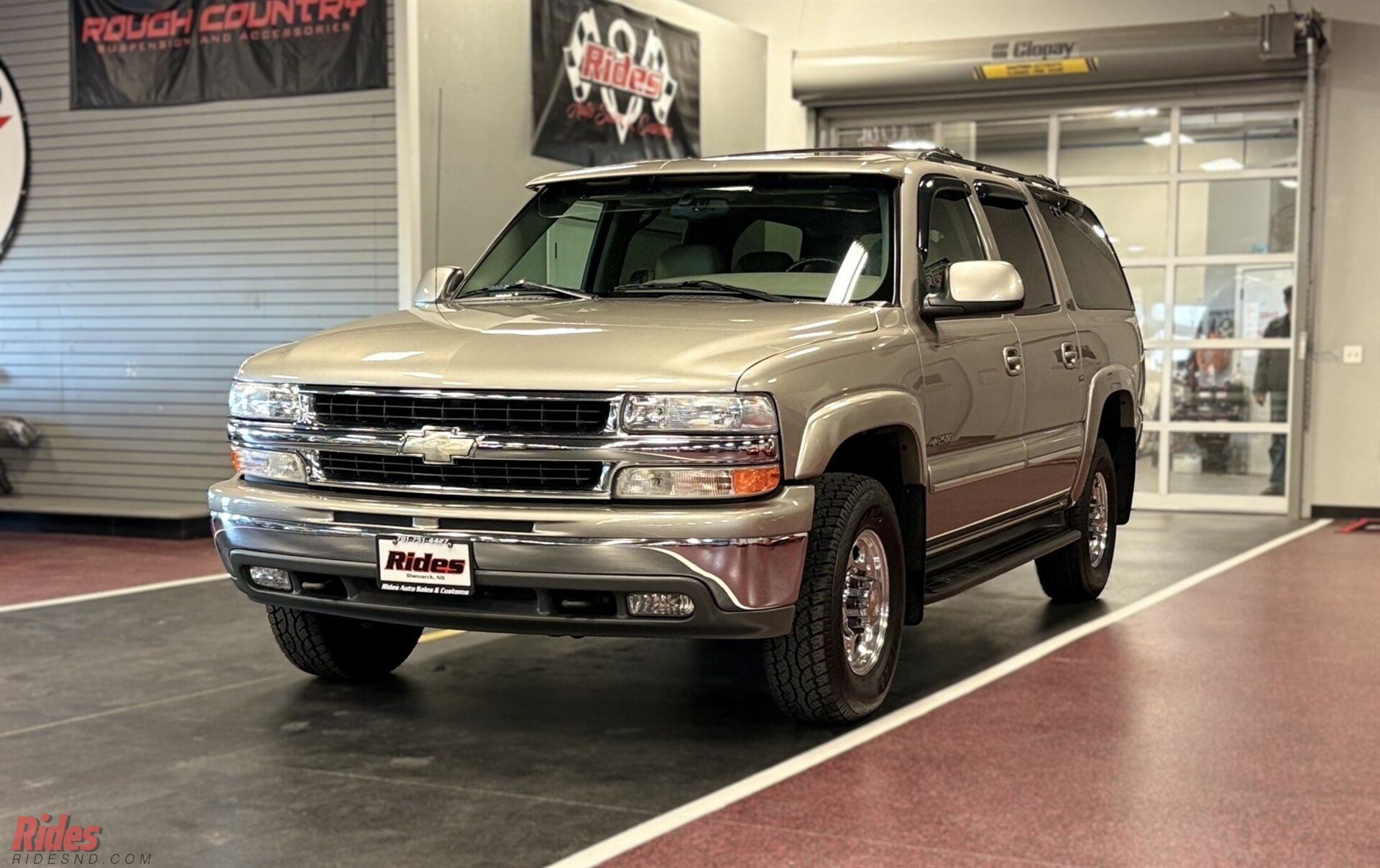
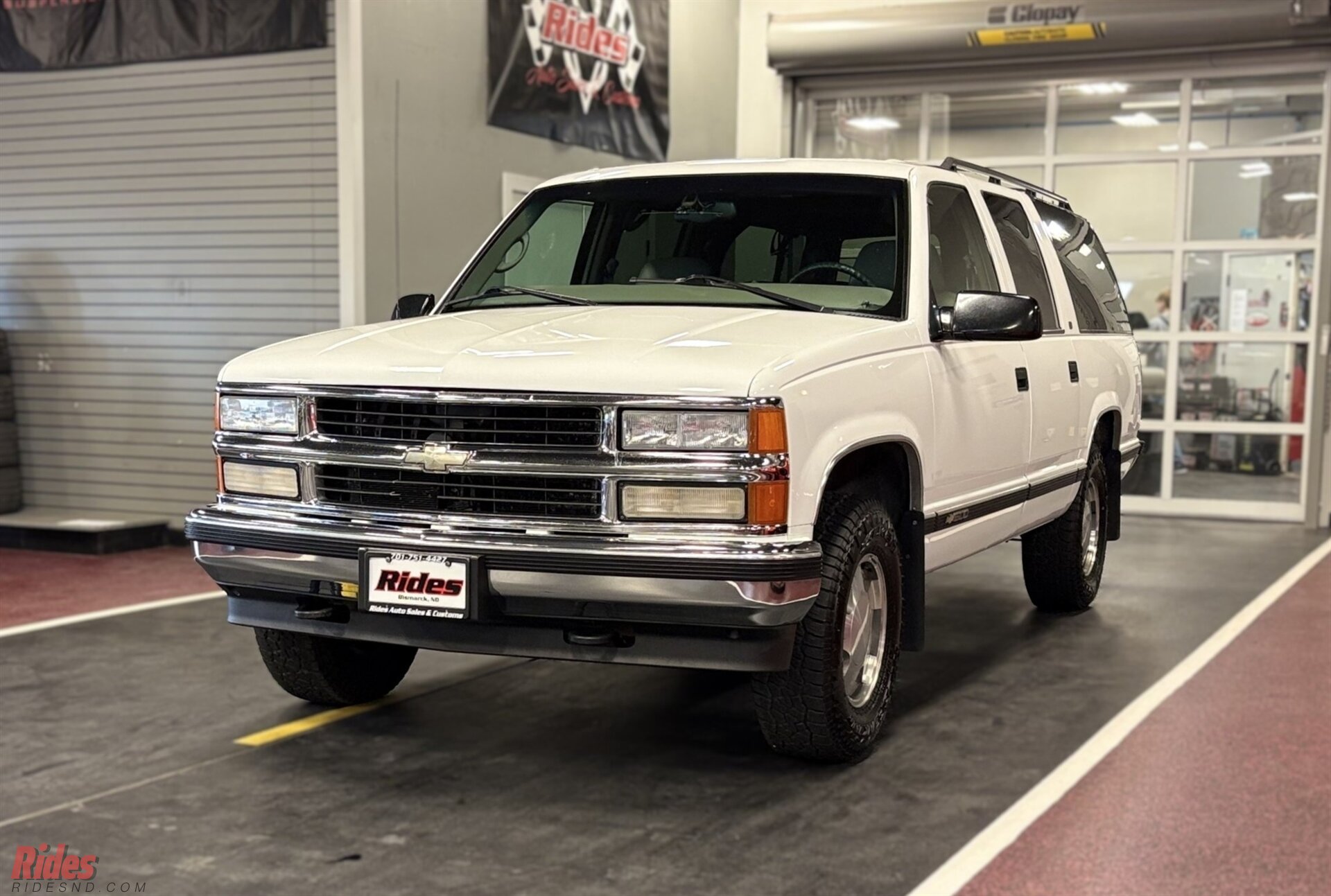
Trim and badges, honestly read. Silverado, LS and LT are trim levels, not models — they buy cloth or leather, power equipment and chrome, not different engineering. The badges that change the engineering are the numbers — 10, 20, 1500, 2500 — and the engine the truck actually carries. Verify both from the vehicle: the VIN decodes year, engine and weight class, and the Service Parts Identification label in the glovebox lists the option codes the truck was built with. A truck advertised as a 454 that carries a 350 is common enough that the codes, not the seller's description, settle every argument.
Engines and gearboxes
Every engine fitted to the Suburbans in our pool is a pushrod Chevrolet unit of known character, and none is fragile. What separates a good one from a bill is the fuel system wrapped around it — carburettor, throttle-body or Vortec injection, diesel mechanicals — and the maintenance the previous owners actually did.
The small-blocks: 305, 327, 350 and the Vortec 5.7 and 5.3
The Chevrolet small-block is the spine of the Suburban story. It appears as the 283 and 327 in the early cars, the 307 and then the 350 in the Action Line years, and the 350 — with the smaller 305 as the economy option — through the square-body and GMT400 years, before its LS-family descendants, the 5.3 and 6.0, took over in the GMT800. If you buy one Suburban, the odds are strong it will have a small-block in it, so learn this family properly.
Carburettor small-blocks (to 1986). Square-bodies to the mid-1980s breathe through a Rochester Quadrajet four-barrel, and its reputation splits in two: properly rebuilt it is excellent and economical; worn, it is a misery of flat spots, hard hot starting and a choke that never behaves. The wear that matters is in the throttle shaft bores — air leaks past the shafts and no idle adjustment holds — and in the well plugs under the fuel bowl, which weep and give an overnight drain-down that presents as long cranking every morning. The test is behavioural: a sorted car starts on the choke, settles as it warms, and pulls cleanly from low revs in a high gear. Hesitation a seller calls character is a carburettor bill — a professional rebuild runs roughly $400 to $800, a quality remanufactured unit fitted $700 to $1,200. And a warning on the 305: merely adequate in a Suburban, and a 305 truck that has towed is a tired truck. The 350 is the engine the square-body wants.
Throttle-body injection (1987 to 1995). The TBI 350 is the simplest fuel injection Chevrolet ever made: two injectors in a throttle body, low fuel pressure, and almost nothing to go wrong beyond an idle air control valve, a tired fuel pump and perished vacuum hoses. Output was modest — around 210 hp in GMT400 form — but starting, idling and altitude behaviour transformed the trucks' usability. A TBI car that runs badly is suffering neglect, not a design fault. Budget $300 to $700 for a pump, filters, plugs, wires and sensors to recommission one that has sat.
The Vortec 5700 (1996 to 1999). The GMT400's step change: the iron small-block with proper sequential injection under a plastic plenum, 255 hp, and sharper response and economy together. It is a strong engine with one signature fault, covered in the problem section: the lower intake manifold gaskets, whose plastic carrier frames crack and leak coolant externally or, worse, internally into the oil. A Vortec with milky oil, falling coolant and no visible leak is showing you that fault, and the gasket job — $600 to $1,100, parts cheap and the money labour — wants doing at once, because coolant in the oil destroys bearings. The injection unit under the plenum — the poppet-valve spider — also ages: sticking poppets give a fixed single-cylinder misfire that resists plug and wire changes, and the upgraded multi-port conversion is the permanent fix at $350 to $600 in parts.
The LS-family engines: 5.3 and 6.0 (2000 to 2006). Iron-block in the Suburban, with aluminium heads, coil-per-cylinder ignition and no distributor. The 5.3 LM7 makes 285 hp early and 295 hp later — smooth, strong and long-lived; the 6.0 LQ4 in the 2500 makes 300 hp in a heavier-duty tune. Their known habits are specific. Cold piston slap — a diesel-like rattle for the first minute from cold that fades completely as the engine warms — is common and on its own is noise, not damage; a rattle that stays hot is not slap. Oil consumption through valve stem seals and the crankcase ventilation system is the other regular complaint: a quart between changes on a hard-worked 150,000-mile engine is typical, a quart every 500 miles is a worn engine. Knock sensors live under the intake manifold, where water collects in their wells and rots them; the failure shows as a fault code and retarded timing, and the fix — manifold off, sensors and harness replaced, wells sealed — runs $500 to $900. None of this should scare you off an LS Suburban. It should price the truck in front of you.
The big-blocks: 396, 454 and the 8.1
The big-block is the Suburban's heavy artillery, offered in every generation in our pool: the 396 in the Action Line cars, the 454 from 1973 through the GMT400 years, and the 8.1-litre Vortec 8100 — a stroked, thoroughly reworked big-block — in the GMT800 2500 from 2001. All three share a character: enormous low-rev torque, a relaxed gait with a trailer behind, and fuel consumption you should measure honestly before you buy. A working big-block returns single figures to low teens per gallon depending on load, and no tune-up changes that arithmetic.
The carburettor 454 is a simple, understressed engine whose main enemies are heat and neglect: exhaust manifold bolts that snap in the heads, a cooling system shedding big-block heat through a forty-year-old radiator, and valve stem seals that give the classic puff of blue smoke on start-up. The Vortec 7400 of 1996 to 2000 added multi-point injection and 290 hp, and shares the era's intake-gasket vigilance with its small-block brother. The 8.1 is the strongest engine ever fitted to a Suburban — 340 hp, torque that peaks low and stays — and the most specialised: it drinks oil at a rate many owners find hard to accept (a quart in 1,000 to 1,500 miles of towing can be normal for the design), its crankshaft position sensor can fail heat-soaked and leave a hot engine that cranks and will not restart until it cools, and its parts support is thinner than the small-block's. Price an 8.1 for what it is — the ultimate petrol tow Suburban — and check it hot, not just from cold.
The diesels: 6.2 and 6.5
Chevrolet offered a diesel Suburban from 1982, and the diesels have a devoted following and a set of faults entirely their own. Judge them as diesels, not as slow petrol engines.
The 6.2-litre Detroit diesel (1982 to 1993) is an indirect-injection, mechanically injected V8 built for economy rather than power: around 130 to 150 hp, no turbocharger, and fuel consumption in the high teens — remarkable for a vehicle this size. Its failure modes are the classic diesel ones: glow plugs and their controller (a diesel that starts on six cylinders and catches the rest in a cloud has glow-plug work due — a set and controller run $200 to $450 fitted), air leaks that let the fuel system lose prime overnight, and head gaskets and heads that suffer badly if the engine has been overheated, which the 6.2 tolerates poorly. A 6.2 with a deep knock is an engine at the end, not a repair. Buy one for economy and simplicity, run it gently, and never let it get hot.
The 6.5-litre turbo diesel (1994 to 1999, GMT400) added a turbocharger and electronic control of the injection pump, and with them the Suburban diesel's most famous fault: the pump-mounted driver, the small electronic module bolted to the side of the Stanadyne DS4 injection pump, cooks in engine heat and fails intermittently — stalling at speed, refusing a hot restart, then behaving perfectly when cold. The known fix is to relocate the driver on an extension harness to a cooler spot, and a truck that has already had it done competently is worth more than one that has not; the job runs $300 to $600 in parts. Beyond that: cooling capacity worked hard when towing, harmonic balancer pulleys whose rubber separates and then takes the crankshaft's health with them if ignored (inspect the rubber ring; replacement $250 to $500 fitted), and glow-plug and starter systems that must be strong because the engine asks a lot of both. A sorted 6.5 2500 is a characterful, economical tow truck. A neglected one is a diagnostic career.
Gearboxes
Almost every Suburban in our pool is an automatic — the transmission listings in our own data are automatic across the board — and there are four automatics you will meet, in two weight classes that you must not confuse.
The square-body cars use the three-speed Turbo Hydra-Matic 350 and 400 and, from the early 1980s, the four-speed overdrive 700R4. The TH400 is one of the strongest automatics ever fitted to a light truck, and the big-block and three-quarter-ton partner. The 700R4's overdrive relaxes a square-body on the highway, but its life depends on one humble part: the throttle-valve cable, which controls line pressure as well as kickdown. A misadjusted or disconnected TV cable drops line pressure and burns the clutch packs, sometimes within a few dozen miles — check it is present and adjusted before the test drive, and treat a seller who has driven with it wrong as a rebuild in waiting. A TH350 or TH400 rebuild runs $1,800 to $3,000; a 700R4 done properly, $2,200 to $3,500.
The GMT400 and GMT800 half-tons use the 4L60-E, the electronically controlled descendant of the 700R4, and the 2500s use the 4L80-E, the electronic descendant of the TH400 and a far stronger box. This pairing is one of the great Suburban buying rules: the 4L60-E is adequate in a gently lived family 1500 and marginal in one that has towed heavy for years — its classic failures are a worn sun shell that takes away reverse and second, and clutch wear that shows as a flare on the two-to-three shift — while the 4L80-E shrugs off the same work. A 4L60-E rebuild runs $2,500 to $4,000 fitted; a 4L80-E, $3,000 to $4,500, but you will buy the 4L80-E job far less often. On either box, fluid tells the story: bright red is serviced, brown is overdue, black and burnt is a negotiation. Manuals exist in the early cars and are rare enough to be a curiosity; judge one on clutch bite, synchromesh and noise in neutral.
Four-wheel-drive trucks add a transfer case — chain-driven New Process and later New Venture units, part-time on older trucks, with an automatic mode on many GMT800s — and its own checks: clean engagement of high and low range, a front axle actuator that engages without a long delay, and no clunks from a driveline wound up by four-wheel drive on dry pavement. Transfer-case fluid is the forgotten service; ask when it was last changed, and change it the week you buy if the answer is a shrug.
Problem areas
A Suburban fails like the truck it is: rust where road salt and trapped water reach, wear in the systems that carry its weight and tow load, and age in the rubber, plastic and wiring. Our own photo evidence sets the tone: we examined the sellers' photo sets for 16 of the 28 Suburbans in our pool, and rust was noted in the photos of 5 of those 16 cars, visible damage in 6 of the 16. Read that the right way — listing photographs are taken to flatter, and even in photographs chosen by sellers a third of the cars showed rust. The cars you view in person will be worse, not better. Inspect accordingly.
Rust: the map for a long-wheelbase body
A Suburban rusts like the pickup it is based on, plus in the places its extra four feet of wagon body create. The wheelbase is long, the body is heavy, and the rear half of the wagon — the part a pickup does not have — holds water in ways the truck engineers of 1973 never fully solved. Work through it in this order, because the order is the order of expense.
Rocker panels and cab corners. The single most important rust check on any square-body, and nearly as important on a GMT400. The rockers run the full length of the cabin under the doors, catch everything the front wheels throw up, and rot from the inside out: the outer panel can look presentable over structure turned to lace. Press hard along the full length, look from underneath with a torch, and be suspicious of fresh underseal, fresh paint low on the body, or sill covers newer than everything around them. Behind the rear door, water and mud pack into the cab corner and stay; cab-corner rust is the signature square-body repair, and on a Suburban the panel work is bigger than on a pickup. Patch panels are cheap — the square-body's saving grace — but labour is the bill: rocker and cab corner cut out, welded and painted runs roughly $1,200 to $2,800 per side, and a car needing both sides has a five-figure body conversation in front of it.
The rear quarters and the wheel arches. The rear arches rust from the lip inward, driven by mud and salt packed into the arch and trapped by the inner wheelhouse seam. The long quarter behind the rear wheel is a big, flat expanse that shows every repair, and its lower edge collects road filth and rots. Run your hand inside the arch lip; bubbling paint outside means the metal underneath is already thin. Arch and lower-quarter sections for the square-body are weld-in work, $800 to $2,000 a side painted. On GMT400 and GMT800 cars the same places go more slowly, announced by paint blistering at the lip and along the bottom of the quarter.
The tail end: barn doors, tailgate and the rear floor. Suburban-specific, and where the wagon body earns its own paragraph. The tailgate cars carry a heavy gate with a window that retracts into it on earlier trucks; its bottom edge and window channels hold water, the hardware wears under the gate's weight, and a gate that needs a shoulder to close is telling you its hinges and lower structure are tired. The barn-door cars — two side-hinged panel doors — are the more practical closure and the one most buyers prefer, but their lower edges, centre seal and hinges rust and wear, and the doors drop on worn pins until they chafe and leak. Whichever the truck has, open it and look at what it was hiding: the rear cargo floor, its rear crossmember and the body mounts beneath. Water past the rear seals — and on a thirty-year-old Suburban, water gets past the rear seals — runs forward under the cargo trim and sits on the floor pan. Lift the carpet or mat. A stained, soft or perforated rear floor is common, repairable with sections at $600 to $1,500 fitted, and a marker that the truck has been wet inside for years, which sends you looking harder at every other floor.
Floors, front to back. The front footwells rust from water entering at the windshield seal, cowl and heater box, as on the pickups; behind them, the mid and rear footwells have their own sources — door seals, side glass seals on older wagons, and drip-rail leaks that track down inside the pillars. Lift every carpet you can. Surface rust that wires off is a clean, treat and seal job; a floor you can flex with thumb pressure is a panel. Square-body floor sections are available and the job is well understood, $700 to $1,600 a side fitted — but floors rarely rot alone, and a truck with a holed rear floor and both rockers gone is a body project however sweetly the engine runs.
The frame. Chevrolet truck frames are strong, and surface rust is normal — but three places matter: the rear frame horns and spring hanger areas, which collect packed mud and salt and can thin seriously; the rail beside the fuel tank, in a permanently damp pocket; and, on GMT800 cars, the left rail where the brake lines run — the next subsection's signature fault. Wire-wheel heavy scale before judging it; a frame perforated at a spring hanger is a specialist repair and, on a cheap truck, a walk-away.

Brake lines, fuel lines and the fuel pump: the GMT800 signature faults
Every generation has one fault that defines buying it, and for the GMT800 it is brake-line corrosion. The steel lines run along the frame rail and across the rear axle, their coating did not keep pace with road salt, and on salt-belt trucks they corrode until a line fails — characteristically under a hard stop, the worst possible moment. It is the first safety check on any 2000 to 2006 Suburban from a northern state, and our pool holds GMT800 cars in Wisconsin, Colorado and North Dakota, so it applies to trucks exactly like the ones listed here. Inspect every accessible inch, especially through clips and along the rail. Flaking, pitted or weeping lines mean the set: a full replacement in pre-bent stainless or copper-nickel, fitted, runs $900 to $1,800. A seller who has already done the lines in stainless has spent real money on your behalf — ask for the invoice and credit it.
The fuel pump is the GMT800's other signature job, shared with the GMT400: it lives inside the tank, it is a wear item with a typical life of 120,000 to 180,000 miles, and when it fails the truck stops. The labour is the tank drop — or the shortcut some owners take of cutting an access hatch in the cargo floor, which you should look for under the rear carpet, because a badly sealed hatch is a rust and fume path of its own. A pump replaced properly runs $700 to $1,200 fitted. Warning signs are a pump whine you can hear in the cabin, long cranking, and hesitation under load at low fuel. On GMT400 cars the pump relay and its oil-pressure switch backup are cheap suspects before you condemn the pump itself.
Vortec intake gaskets, and the GMT400 watch-list
The GMT400's defining engine fault belongs here in full. The lower intake manifold gaskets on the 1996 to 1999 Vortec 5.7 — and the same design family on the Vortec 7400 — use a plastic carrier frame with moulded sealing beads. Heat cycles crack the plastic, the beads lose their seal, and the engine loses coolant. The dangerous version leaks internally, into the lifter valley and the oil: the level appears to rise, the filler cap turns milky, and an owner who misreads it runs the bearings on contaminated oil. The cheap version simply drips externally. Diagnose by evidence: coolant loss with no drip under the truck, mayonnaise under the filler cap and a sweet exhaust smell means intake gaskets until proven otherwise. The repair, an updated gasket set with the manifold off and on, runs $600 to $1,100 fitted — a known, bounded job. Price it; do not flee the truck.
Around it, the GMT400 watch-list: door hinge pins and bushings wear until the heavy front doors sag — budget $150 to $350 a side; blend-door actuators fail and give air that will not change direction or temperature; the wiper module develops cracked solder joints and wipers that park where they please, a cheap board-level fix; and the four-wheel-drive independent front suspension wears idler and pitman arms, ball joints and torsion-bar mounts, showing as wander and feathered front tyres. None is expensive alone; together, on a neglected truck, they are the difference between a cheap Suburban and a dear one.
Suspension, steering and the weight of the thing
A Suburban is among the heaviest light vehicles on the road, and everything that carries it wears accordingly. Square-body four-wheel-drive cars wear their solid axle's steering knuckles and spring bushings; two-wheel-drive cars wear ball joints and control-arm bushings. GMT400 and GMT800 four-wheel-drive cars use torsion-bar independent suspension; GMT800 two-wheel-drive 1500s use coils with rack-and-pinion steering; 2500s keep heavier torsion bars and a steering box. The universal checks are the same: play at each front wheel, steering free play before the road wheels answer, and tyre wear that tells the truth — feathered edges mean joints and alignment, a cupped tread means tired dampers.
At the rear, know which suspension the truck has, because the faults differ. Square-body and GMT400 Suburbans and all 2500s ride on leaf springs: look for a broken leaf, flattened springs on a tail-down truck, perished shackle bushings and leaking dampers. The GMT800 1500 rides on coil springs with a five-link axle, which rides far better and wears its link bushings and dampers instead. Autoride air systems on upmarket GMT800s age out — a truck level in the morning and down by evening has an air leak, and honest fixes run $600 to $1,400, whether you repair the air system or convert to conventional dampers. Brakes deserve respect throughout: four-wheel discs on GMT800s, discs and rear drums before that, and the rear brakes are always the neglected end — budget $800 to $1,600 for a full hydraulic and friction refresh on a truck whose brakes are unknown, and treat a soft pedal or a pulled stop as work already owed.
Interior, electrics and the cost of size
The cabin is huge, so there is more of everything to age: three rows of seats, yards of headlining, and on later trucks two air-conditioning systems with refrigerant lines running the length of the body — a rear leak is a long-line repair, $500 to $1,200. On square-bodies the plastics embrittle and the dash pad splits in the sun, and a good original interior is worth real money because retrimming three rows runs $3,000 to $6,000 in vinyl, and more in leather. On GMT400 and GMT800 LTs the driver's seat bolster wears first; judge the whole cabin from that seat. Electrically these are simple trucks, and faults are usually earths, switches and motors: test every window, both blowers, the rear wiper, and on GMT800s the instrument cluster, whose stepper motors fail and leave gauges dead — a cluster rebuild runs $200 to $400. A truck where everything electrical works has usually been used and maintained, which remains the best single predictor of a good Suburban.
How to inspect one
Allow a full hour, and bring a torch, a magnet wrapped in cloth and a cheap code reader for a 1996 or later truck. The order below is deliberate: identity and structure first, because either can end the viewing in ten minutes, and cosmetics last, because they should never rescue a truck that failed the early steps.
- Start with the paperwork and the codes. Match the VIN on the title to the dashboard plate and the door label. Then read the Service Parts Identification label in the glovebox: its codes decode the engine, transmission, axle ratio and suspension the truck was built with. Compare them against the seller's claims — a truck advertised as a 2500 or a 454 should carry the codes for it. Invoices for a transmission, intake gaskets, brake lines or a fuel pump are worth real money; note which big jobs are documented as done.
- Cold start. Insist the engine is stone cold, and be there when it is first turned over. A petrol small-block should fire at once — TBI and Vortec cars on the key, carburettor cars after a pump of the throttle and a moment on the choke — and a diesel should start on its glow plugs without prolonged cranking or a cloud that does not clear. Blue smoke that clears in seconds is valve stem seals; smoke that stays is wear. Listen for the LS engines' cold piston slap, and confirm it fades completely as the engine warms.
- Under the bonnet, fluids first. Read the oil — and on a Vortec, look under the filler cap for mayonnaise and a suspiciously high level, the intake-gasket tell from the problem section. Low coolant with no explanation needs an answer before money moves. Check the transmission fluid where a dipstick is fitted — bright red is serviced, black and burnt-smelling is a rebuild priced into your offer.
- The rust circuit. Work the map from the problem section in order: rockers pressed hard along their full length, cab corners, rear arch lips from inside, the bottom edges of the barn doors or tailgate, the rear cargo floor with the trim lifted, then every footwell carpet you can raise. Run the magnet over the arch lips and rocker bottoms — filler announces itself. Perforation in rockers, cab corners or rear floor is structural money: price it from the problem section or walk away, and let a seller who will not let you lift the rear trim answer the question for you.
- Underneath, on a lift if you can. The best money in the whole inspection: frame rails at the spring hangers and beside the tank, body mounts, a broken spring leaf, damper leaks, the full exhaust. On a GMT800, spend your longest minute on the brake lines along the left frame rail — the corrosion check from the problem section, done with a torch, is a pass-or-price item, never a shrug. Assume the seller's photographs have not shown you this view.
- Weight class and running gear, verified physically. Count the wheel lugs — six on a 1500, eight on a 2500 — because lugs do not lie when badges and listings do. Look for the full-floating axle hubs on a 2500. Check the tyres for size, age and matching, and read their wear for the suspension story from the problem section. Rock each front wheel for bearing and ball-joint play.
- The transmission test. Drive long enough to get the box fully warm — a faulty 4L60-E or 700R4 will often behave cold and flare or shudder hot. Every shift should be clean; a flare on the two-to-three shift, a delay engaging reverse, or reverse missing are the named faults from the gearboxes section, each a rebuild priced into the offer. On a 700R4, check the throttle-valve cable before you blame the box. On a 4L80-E, expect firmer shifts — that is its character, not a fault.
- Four-wheel drive, if fitted. Engage high and low range on a loose surface if you can. Engagement should be prompt — a long delay points at the front axle actuator — and the truck should pull evenly without binding or clunking. Check the transfer case for leaks. A seized actuator and a clunking driveline are both price conversations.
- The tow and brake test. Brake firmly from highway speed, twice: straight and hard, no pull, no judder, no sinking pedal. Ask what the truck has towed, and look for the evidence — a tow package and an auxiliary transmission cooler are good signs, a sagging rear and a cooked dipstick are the other kind. If you intend to tow, the 2500's case rests on this step and step 7 together.
- Heat, cooling and air conditioning. Let the truck idle hot for ten minutes; the gauge should settle and stay, and a big-block or 6.2 diesel that creeps upward is showing you cooling work. Run the heater, then the air conditioning — front and rear systems both, on every fan speed. Cold at the front and warm at the back is the long rear refrigerant line making itself known.
- Electrics and the cabin, completely. Work every window, both blowers, the rear wiper, washers, lights and horn. On a GMT800, compare every gauge against reality — one reading nonsense is the stepper-motor cluster fault. Sit in all three rows: the driver's cushion prices the interior, and the third row and cargo area tell you whether it was a family car or a work van with seats.
- Stance and the final look. Stand back. A Suburban should sit even side to side, and level or very slightly nose-down. A tail-down leaf-sprung truck has tired springs; a GMT800 down at one corner after standing has the air leak from the problem section. Look down each flank for ripples and mismatched paint — and only then judge the cosmetics. A truck that has passed steps 1 to 11 has earned the right to be judged on its paint.

Values
The build of this page carries the live market numbers — the listings summary and recorded-sales block below this guide are computed from the market itself — so this section does something more durable: it teaches you how to read those numbers on a Suburban, where the naive reading misleads more than on almost any other classic.
The first lesson is that Suburban is not one market but at least four, stacked on top of each other, and the figures blend them. The early cars trade as collector vehicles, where originality, the three-door body and rarities like a K20 or a big-block set the price. The square-bodies trade as working classics, with the widest spread in the range: the cheap end is very cheap, and the good end climbs as clean survivors thin out. The GMT400s trade as usable modern classics, priced on mileage, rust and whether the Vortec-era jobs are done. The GMT800s, especially the 2500s, trade partly as used tow trucks, which puts a floor under a good one — a buyer who needs to tow tomorrow is competing with you. A median for the model as a whole averages those four markets and describes none of them: always narrow the comparison to the generation, weight class and drive layout of the truck in front of you.
The second lesson is the condition spread, driven by three things in a fixed order: rust, rust, and whether the generation's signature job has been done. A rust-free square-body is worth a multiple of a rusty one with the same specification, because the repair bills in the problem section exceed the finished value of all but the best trucks. Behind rust come the bounded big jobs — GMT800 brake lines, Vortec intake gaskets, a 4L60-E rebuild, a fuel pump — and the market prices them rationally when documented: a truck with invoices for its generation's jobs is worth a premium over an identical truck without them, usually less than the jobs cost, which makes the documented truck the value buy. A non-running Suburban is worth its parts and its body, no more, because recommissioning a truck that has sat consumes the apparent saving before you improve anything.
Premiums attach to specification in a stable pattern. Four-wheel drive carries a premium in the collector generations and the square-body, a smaller one later. The 2500 carries one where its engines are exclusive — a big-block or diesel 2500 is genuinely scarcer — and the 8.1 sits at the top of its generation for the same reason. Barn doors are preferred over the tailgate at the margin. Originality premiums are real on early cars and modest later, where sensible upgrades — a relocated diesel pump driver, stainless brake lines, a transmission cooler — add value. Trim alone carries no premium: an LT badge on a rusty truck is worth nothing.
Finally, negotiation reality. Suburbans are big, thirsty and expensive to house, which thins the buyer pool and gives a prepared buyer leverage — especially in winter, and on any truck whose seller has already bought its replacement. Asking prices on later generations often carry room because sellers anchor on what newer trucks cost; achieved prices track condition far more closely. Go in with the inspection done and the generation's jobs priced from this guide, and you will buy well in any of the four markets.
Parts and ownership
The Suburban's great ownership advantage is that it is a Chevrolet truck, and Chevrolet trucks are the best-supported old vehicles in America. The mechanical parts situation is close to ideal: the small-block and big-block engines were built in the tens of millions, the transmissions are known to every transmission shop in the country, and the running gear shares almost everything with the C/K pickups that surround every Suburban in every salvage yard and parts catalogue in the land.
Easy: engine service parts for every petrol engine in this guide — filters, plugs, ignition components, water pumps, gaskets including the Vortec intake set; brake discs, drums, pads, hoses and hydraulics; suspension wear parts, ball joints, bushings and dampers for every generation; exhaust systems; radiators and cooling parts; starters, alternators and fuel pumps; and glass seals and weatherstripping for the square-body and GMT400. Order today, fit this weekend, at prices that will make a European-classic owner weep.
Harder and dearer: Suburban-specific body and trim. The wagon's unique panels — rear quarters, cargo-area trim, third-row hardware, barn-door hinges and seals, the Action Line's three-door parts — were never reproduced at pickup volumes, and good pieces take hunting. Diesel parts sit in between: 6.2 and 6.5 service parts are available, but injection pumps and their electronics are specialist items, and the 6.5's pump driver comes from the diesel aftermarket. GMT800 trim and electronics — clusters, seat motors, Autoride components — increasingly come from rebuilders rather than new stock. A quality repaint on a vehicle this size is one of the largest costs in any restoration, which is another reason to buy the body first.
Running costs. Fuel is the headline: a petrol Suburban returns low teens per gallon for a gently driven small-block, single figures for a towing big-block, and the diesels' high-teens economy is a large part of their following. Against that, servicing is cheap and simple — any competent independent shop can maintain any truck here, and no job on a petrol Suburban needs a dealer computer. Insurance is in line with other classics of similar value. The budget line that catches new owners is the first year of deferred maintenance: allow a four-figure sum on a running truck for tyres, brakes, fluids and the faults the inspection found, and expect recommissioning a truck that has sat to cost more than the cheap examples sell for — which is why this guide steers you to trucks in regular use. Once sorted, a Suburban will carry seven people and their luggage and tow a classic car to a show, on parts bought over any counter in America.
Which one to buy
- The all-rounder: a GMT400 1500 with the Vortec 5.7 (1996 to 1999). Modern enough to use daily, simple enough to maintain anywhere, strong enough for real work. An LT with documented intake gaskets is the easiest classic Suburban to own.
- The classic buy: a late square-body, 1987 to 1991. Throttle-body injection, the best parts support of any generation, and the square-body look the market loves. An injected 350 in a rust-free body is the square-body at its best.
- The tow truck: a GMT800 2500 with the 6.0 or the 8.1. Eight lugs, leaf springs, the 4L80-E and the strongest engines ever fitted to the badge. Buy it on brake lines and transmission history, and it will out-tow trucks three times its price.
- The value buy: a two-wheel-drive GMT400 or GMT800 1500. The market pays for four-wheel drive and big badges; the two-wheel-drive half-ton does ninety percent of the work for notably less money, rides better and carries fewer systems to fail.
- The collector car: a 1967 to 1972 three-door. A big-block or K20 car in an honest, unpatched body is what the collectors' market is built around. Verify the body before the engine — panels are the scarcity.
- The economy buy: a 6.2 or 6.5 diesel 2500. High-teens economy and a characterful drive, bought with eyes open: glow plugs and cooling on the 6.2, the relocated pump driver and harmonic balancer on the 6.5.
- The family classic: a GMT800 1500. The most car-like Suburban in the pool, and the one your family will enjoy riding in — with the brake-line inspection as the price of admission.
And the rule that overrides all of the above: buy the least rusty Suburban you can find, in the weight class your work actually needs. Engines, transmissions, intake gaskets, brake lines and fuel pumps are all fixable at prices this guide has put numbers on. A rotten long-wheelbase body — rockers, cab corners, rear quarters and rear floor together — costs more to put right than the finished truck will be worth, and a half-ton bought to do a three-quarter-ton's towing will cost you a transmission to learn the difference.
See the 19 Suburban cars currently listed.