
Chevrolet SSR buyer's guide
Chevrolet SSR -- the model's own buyer's guide: variants, values and what to check.
Years listed: 2003-2005 · Series: SSR
Overview and history
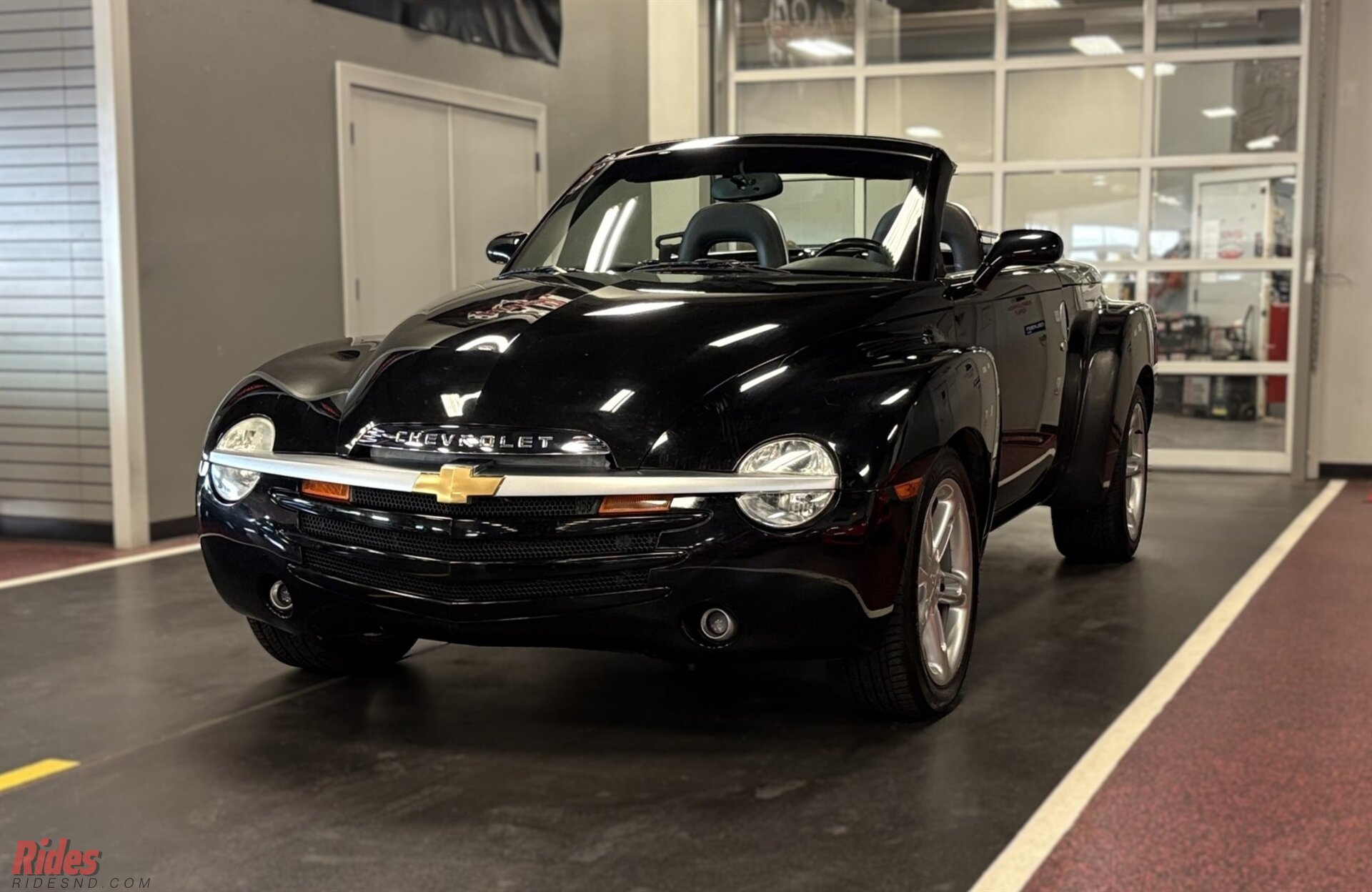
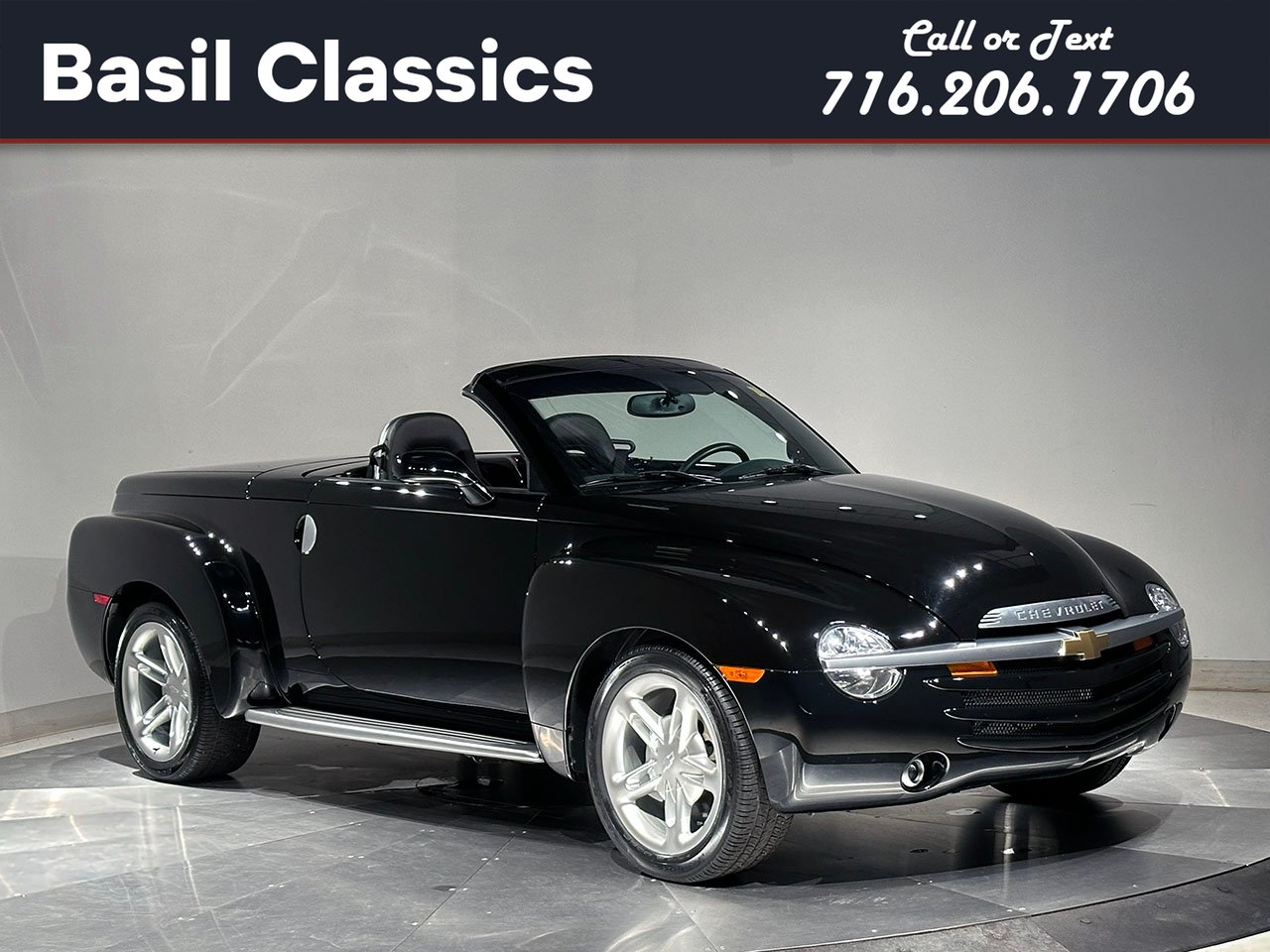
The Chevrolet SSR is the strangest production vehicle General Motors built in the 2000s, and that is precisely why you are reading a buyer's guide to it now. The name stands for Super Sport Roadster. The car underneath the name is a two-seat, rear-wheel-drive pickup truck with a power-retractable steel hardtop, retro styling copied from Chevrolet's Advance Design trucks of 1947 to 1955, a Corvette-family V8 under a long sculpted bonnet, and a short carpeted pickup bed under a hard tonneau cover. It is not a practical truck. It is not a sports car in the Corvette sense either. It is a factory hot rod and a rolling design statement that Chevrolet actually put into series production, and almost everything a buyer needs to understand follows from that decision.
The SSR started as a concept for the 2000 Detroit auto show circuit, drawn under GM design chief Wayne Cherry with early sketch work credited to Andre Hudson. The reaction was strong enough that GM approved production, and the show car's proportions survived remarkably intact: the separate-looking front fenders, wide rear fenders, round lamps in a full-width grille bar and teardrop cab. Underneath, to avoid a bespoke platform, GM based the SSR on a shortened, heavily adapted version of the GMT370 architecture underpinning the long-wheelbase TrailBlazer EXT. The frame rails are hydroformed, the suspension is double wishbones at the front and a five-link live axle at the rear, and the structure was stiffened hard — because the roof does not stow in a boot. It folds in sections and stacks vertically in a well between the seats and the bed, under a powered tonneau panel. That single choice defines the SSR's character, its weight, and most of its inspection list.
Production ran at the Lansing Craft Centre in Michigan from 2003 to 2006. The first cars, for the 2003 model year, carried the 5.3-litre LM4 V8 and a four-speed automatic only, and they were criticised — fairly — for being slower than they looked. For 2005 Chevrolet answered with the 6.0-litre LS2 from the Corvette parts shelf, a big jump in power, and the option buyers had asked for from the start: a six-speed manual gearbox. The 2006 cars, built in a shortened final run before the Lansing Craft Centre closed and SSR production ended in March 2006, are the Final Production Run cars, identified by factory badging. Total production across the four model years was a little over 24,000 cars — low enough that the SSR was always a niche vehicle, high enough that a buyer today has a real market to shop in rather than a handful of museum pieces.
On Classic Listings we currently track 34 SSRs, 18 for sale and 16 recorded as sold, and the sample's shape is useful in itself. By year, 10 are 2003 cars, 15 are 2004 cars and 9 are 2005 cars — the early 5.3 automatics dominate the listings you will actually see, LS2 cars are the minority, and no 2006 Final Production Run car appears in the current sample at all. Only 2 of the 34 are listed with a six-speed manual. Black is the most common colour with 7 cars, then yellow with 6 and red with 5. Almost all come through dealers, and Florida accounts for 15 of the 34 — a disproportionate share of the market living in a hot, humid, sun-heavy state, which matters for a car whose weak points are heat, hydraulics, ageing plastics and a roof that needs exercise.
This model guide goes deep on the variants a buyer cross-shops — the 2003–04 5.3 automatic, the 2005–06 LS2 automatic, the rare LS2 manual, the Signature Series and Final Production Run cars — and on the colour and option decoding, the 1SB and 2SB groups, chrome package and two-tones, that separates a correctly described car from a hopefully described one. A companion series guide covers the line as a whole. Here the question is narrower: standing in front of one specific SSR, which variant is it really, what breaks on it, and how do you test it before money moves?
The short version: the engines are the strongest part of the car, the roof is the part that prices it, and the cooling system decides whether a summer test drive ends at the seller's kerb or on a recovery truck. Buy the roof cycle, the temperature gauge and the paperwork, in that order.
The models
Every SSR is the same basic vehicle — two seats, rear drive, retractable hardtop, short bed — so the model range is really a short list of powertrain and production variants laid over one body. That makes the table below simpler than most, and it makes the decoding after it more important, because the differences that move money on an SSR are a build year, an engine code, a gearbox, a badge and a paint code, not a different bodyshell.
| Model | Years | Engine | Output | Built | Character |
|---|---|---|---|---|---|
| SSR 5.3 Automatic | 2003–2004 | 5.3 V8 (LM4), automatic | 300 hp | The bulk of production | The original car; cruiser pace, lowest entry point |
| SSR LS2 Automatic | 2005–2006 | 6.0 V8 (LS2), automatic | 390 hp (2005), 400 hp (2006) | A minority of production | The car the concept promised; strong and relaxed |
| SSR LS2 6-Speed Manual | 2005–2006 | 6.0 V8 (LS2), Tremec T-56 manual | 390 hp (2005), 400 hp (2006) | Rare; a small fraction of LS2 cars | The driver's SSR and the collector's default target |
| Signature Series | 2003 | 5.3 V8 (LM4), automatic | 300 hp | The first 25 production cars | Numbered, documented launch cars; provenance premium |
| Final Production Run | 2006 | 6.0 V8 (LS2), auto or manual | 400 hp | The closing 2006 build | Badged last-run cars; two-tones and chrome cluster here |
(Outputs are the factory SAE net figures quoted for the US market. Treat any seller-quoted figure far above these numbers as a claim about modification, not about a factory variant — there was no factory supercharged SSR, no factory big-block car and no factory all-wheel-drive version, whatever a listing headline says.)
The 2003–04 5.3 automatic. The default SSR, and the car you will meet most often: 25 of our 34 tracked cars are 2003 or 2004 models. The LM4 is an all-aluminium 5.3 version of the Vortec 5300 family, and 300 hp moving a little over 4,700 lb gives honest cruiser performance rather than sports-car pace. The market has priced that verdict in ever since: early cars are the cheapest way in and the easiest to find, with the full design, the full roof theatre and the simplest drivetrain in the range. You also get the oldest version of everything that ages — earliest roof hardware and clusters, most heat cycles on wiring and plastics. Judge an early car with even less mercy than an LS2 car, because the price gap between variants will not pay for a roof rebuild and a repaint.
The 2005–06 LS2 automatic. The LS2 transformed the SSR. Ninety extra horsepower in 2005, and a further small rise for 2006, turned a car that felt under-engined into one that finally matched its looks, with the torque to pull the weight without effort. The automatic LS2 is the all-round SSR most buyers should target: the performance is real, the driving is effortless, and you are not paying the manual car's scarcity premium. The LS2 cars also brought detail improvements across the car, and the 2005 model year is where the option structure and colour palette widened. In our sample the LS2 population is thin — 9 tracked cars are 2005 models and none are 2006 — so a buyer set on an LS2 is shopping a smaller pool and should expect to travel, wait, or pay for condition when the right car appears.
The LS2 six-speed manual. From 2005, Chevrolet offered the Tremec T-56 six-speed from the Corvette programme, with a heavy-duty clutch and a lower, performance final drive than the automatic cars. Take-up was low — the SSR's natural buyer was a cruiser buyer — and that is now the point. The manual changes the car's character completely: you manage the LS2's torque yourself, and you own the variant every future collector asks about first. Only 2 of our 34 tracked cars are listed as manuals — expect a genuine one to be advertised loudly, priced firmly and gone quickly, and verify it thoroughly, because the premium invites optimistic descriptions.
Signature Series. The first 25 production SSRs built for 2003 were set aside as the Signature Series: numbered cars, finished in Ultra Violet, carrying special badging and a package of signed and numbered memorabilia, several of which were sold through charity and promotional channels with documented provenance. These are provenance cars, not performance cars — mechanically they are early 5.3 automatics, with every early-car caveat that implies. Their value lives in the number, the paperwork and the completeness of the Signature package. A car claimed as a Signature Series car without the documentation is an Ultra Violet 2003 SSR, and should be priced as one until the paper proves otherwise.
Final Production Run. The last 2006 cars were built as the Final Production Run, wearing a special badge identifying them as the closing build before production ended in March 2006. Mechanically they are the most developed SSRs — LS2 power at its highest factory rating, the manual available, the chrome package and two-tone paint combinations concentrated in this final period. As with the Signature Series, the badge is a claim to verify against the build documentation and the VIN sequence, not a fact a seller's description establishes. A genuine, documented Final Production Run manual in a two-tone finish is close to the top of the SSR market; an ordinary 2006 car with a badge added later is an ordinary 2006 car.
Colour and option decoding. SSR colours carry evocative factory names, and listings use them loosely, so decode from the car, not the advert. The core palette across the run was Redline Red, Slingshot Yellow, Smokin' Asphalt (the black), Ricochet Silver Metallic and Ultra Violet Metallic — the last a 2004 colour in the main run, as well as the Signature Series finish. Aqua Blur, a blue-green that changes character completely between shade and sunlight, joined for the LS2 years, and Pacific Blue arrived for 2006. Two-tone combinations, pairing a main colour with silver or black over the top surfaces, are a late-run feature and a genuine value factor when factory-applied. The paint code is on the service parts identification label, and it settles every argument: a car repainted into a rarer colour is worth the colour it left the factory in, minus a question about why it was repainted.
Equipment came in preferred equipment groups, and the codes you will meet constantly are 1SB and 2SB. In broad terms 1SB is the well-equipped core specification most SSRs carry, while 2SB on later cars layers on the comfort items buyers look for — heated seats with driver memory, upgraded Bose audio, electrochromic mirrors and the auxiliary gauge package among them. Exact content shifts by year, so the label on the car, not a forum list, is the authority. The chrome package, a late-run option, swapped the satin brightwork for chrome — handles, grille bar, interior trim — and is the easiest claim to check: the finish is either chrome or satin. Also identify on the car itself the running boards, the carpeted bed kit with wood slats, the console auxiliary gauges, the windbreak and the towing package. None makes a bad car good; all make a good car worth more, and each should be present and working, not just listed.


Engines and gearboxes
The 5.3: LM4 Vortec 5300
The LM4 is the engine that surprises people who only know the SSR by reputation. It belongs to GM's Gen III small-block family, the same architecture as the LS1 Corvette engine, in its truck form: a 5.3-litre (325 cu in) V8 with an aluminium block and aluminium heads in the LM4's case, a cast-iron crankshaft, sequential fuel injection and a drive-by-wire throttle. In the SSR it was rated at 300 hp with 331 lb-ft of torque. It is not a Corvette engine detuned so much as a truck engine civilised — the emphasis is on a flat torque curve, tolerance of indifferent fuel and maintenance, and a service life measured in hundreds of thousands of miles in the pickups and SUVs that share its internals.
That toughness is the early SSR's great strength. The LM4 has no exotic failure mode. The known Gen III watchpoints apply: oil consumption rises as the PCV system and valve stem seals tire; the knock sensors live under the intake manifold in a valley that collects water, and a corroded sensor or harness brings a warning light and a retarded, flat-feeling engine rather than a breakdown; intake gaskets can weep; and exhaust manifold bolts snap at the rear of the heads, giving a cold-start tick that quietens as the manifold expands — a fiddly extraction job, not an engine problem. A healthy LM4 starts instantly, idles evenly and shows no smoke beyond condensation. Budget $150–400 for knock-sensor and harness renewal, $400–900 for manifold bolt extraction, and treat any LM4 that rattles from the bottom end, smokes under load or shows milky oil as neglect made audible — those are not LM4 habits.
What the LM4 asks of a buyer is honesty about pace: 300 hp in a vehicle that weighs like a modern SUV is simply adequate, and the car settles into its natural role as a loud, comfortable cruiser. If that is the car you want, the 5.3 is the cheapest, simplest route to it. If you know you will spend every drive wishing for the LS2, believe yourself now — the conversion conversation is always dearer than buying the right car first.
The 6.0: LS2
The LS2 arrived for 2005 and it is a different order of engine. A 6.0-litre (364 cu in) Gen IV small-block, aluminium block and heads, rated at 390 hp and 405 lb-ft in 2005 SSR tune and 400 hp for 2006, it is the engine the Corvette C6 and the Pontiac GTO carried, with the SSR version using its own intake and exhaust packaging to fit under the low bonnet and around the retro body. The performance gap over the LM4 is not subtle: the LS2 car is quicker everywhere, overtakes without planning, and finally feels like the factory hot rod the styling advertised. It also runs hotter, works its cooling system harder, and exposes every weakness in the SSR's thermal management — which is why the cooling material in the problem areas section matters twice as much on an LS2 car.
Mechanically the LS2 shares the Gen III/IV family virtues: a deep-skirt block, six-bolt main bearing caps, coil-near-plug ignition and a bottom end with enormous headroom over its factory output. Its specific watchpoints are the family ones plus heat. Oil pressure that sags at a hot idle deserves investigation rather than reassurance — check the gauge against reality, because the instrument cluster itself lies on these cars, as the electrics section explains. The LS2's oil pickup O-ring hardens with age and heat and can aerate the oil, giving flickering pressure and valvetrain noise; renewal is a sump-off job at roughly $600–1,200 with labour. Harmonic balancer wobble is visible at idle on a tired car and is a $500–1,000 job done properly with a new bolt. As with the LM4, none of this is exotic, all of it is documented, and every part is available — the LS2 is one of the best-supported performance engines in the world, and the SSR inherits that support wholesale.
The LS2 also demands honesty about modifications. These engines respond so well to camshafts, headers, intakes and tunes that many LS2 SSRs have been modified: ask what was fitted, who tuned it, and whether the cooling was upgraded to match, because extra power on the standard cooling package is the classic recipe for a car that overheats in traffic. A standard, documented LS2 is the safer money; an anonymous tune with no paperwork is a discount, not a discovery.
Gearboxes: 4L65-E automatic and Tremec T-56 manual
Every automatic SSR uses a four-speed automatic from GM's Hydra-Matic family — the 4L60-E in the early cars and its strengthened 4L65-E development, with uprated internals including five-pinion gearsets, behind the LS2. Treat them as one family for buying purposes. It is a conventional torque-converter automatic, electronically controlled, with overdrive top gear, and its behaviour should be unremarkable: clean, firm shifts, no flare between gears, no delay engaging drive or reverse, no shudder on a light-throttle upshift. Its enemies are heat and old fluid. The SSR is heavy, its engine bay is hot, and a car that has towed or lived in Florida traffic on factory-fill fluid for twenty years is a car whose gearbox service history is worth money. A fluid and filter service runs $250–450; a full rebuild at a competent transmission shop is roughly $2,800–4,500, which is real money but a known quantity, and the 4L60-E/4L65-E family is rebuilt every day in every town in America. Test it hot, not just cold — a box that shifts beautifully for ten minutes and starts to flare at full temperature has told you its story, and the test drive in the inspection section is structured to give it the time to do so.
The manual is the Tremec T-56 six-speed, the same basic gearbox family as the period Corvette and Camaro, fitted only to LS2 cars from 2005. It is a strong, mechanical, slightly heavy-shifting box that suits the SSR's hot-rod character perfectly. Judge it on the standard manual tests: synchromesh that survives a brisk second-to-third and third-to-second change without a crunch, a clutch whose bite point is neither at the carpet nor at the top of the pedal, no judder pulling away, and no whine in the cruising gears. Clutch replacement is a $1,200–2,000 job at shop rates; the hydraulics — master and slave cylinders — are the more common complaint, giving a pedal that sinks, a bite point that migrates, or gears that become hard to engage when hot, and renewal at $600–1,100 is the cure rather than adjustment. Also check the manual car's rear axle behaviour: the manual cars run a performance final drive and a heavy-duty axle specification, and clonks on taking up drive point to worn universal joints or axle wear that the automatic's torque converter would have masked. A manual car that shifts cleanly, clutches smoothly and runs quiet is the single most desirable mechanical specification in the SSR range. Guard that verdict with the verification steps in the inspection checklist, because a gearbox is the easiest specification to claim in an advert and the claim is worth real money.
Problem areas
Everything in this section is the SSR distilled into its buying risks. For the site's own evidence: we examined the photo notes for 9 SSRs in detail. Rust was mentioned in none of the 9, smoke in none, and leaks in none — a reminder that the SSR's problems are not the corrosion problems of a 1960s car. Damage, though, was mentioned in 5 of the 9 examined sets, which matches the SSR's real profile: a low, wide, retro-styled vehicle with expensive, unusually shaped panels, big blind spots and twenty years of parking lots behind it. The body damage in the photographs is the visible risk. The roof, the cooling system and the electrics are the priced risks, and they are the ones a seller's photographs will never show you. Work through them in that order.
The retractable hardtop: roof control module, microswitches and hydraulics
The roof is the SSR. It is also a powered, sequenced machine of interlocking panels, and it must be judged as a machine, not as a feature. The sequence runs like this: the windows index down, the roof tonneau cover — the panel directly behind the cab, often called the roof door — unlatches and opens, the folding steel roof panels unlock from the windscreen header, fold and stack vertically into the storage well, the tonneau closes over them, and the windows return. Raising the roof reverses the whole choreography. Every step is confirmed to the roof control module by microswitches and position sensors before the next step is allowed to begin, and the hydraulic system — an electric pump driving hydraulic rams — provides the muscle for the heavy movements. The bed lid behind it is a separate, simpler powered-and-strut arrangement, and the two systems share the buyer's inspection even though they do not share parts.
This architecture gives you a diagnostic gift: a healthy roof completes the full cycle, down and up, smoothly, in well under a minute each way, with even speed, no graunching, no hesitation at the changeover points, no warning chimes or messages, and both panels latched positively at the end. A sick roof tells you exactly where it is sick by where it stops. Learn the failure catalogue before you view a car.
Stops mid-cycle, or refuses to start. The module will not move a roof whose inputs disagree, and the usual disagreement comes from the microswitches and latches at the windscreen header and tonneau. A bent, corroded or drifted switch reports a panel as unlatched when it is latched, and the sequence halts to protect the mechanism. Diagnosis is a scan-tool and test-light job following the switch sequence in order — tedious, methodical and cheap in parts: switches and latch adjustment typically run $150–600 once the culprit is found. Ask for the invoice that names the switch, not a story about the roof being sorted.
Tonneau opens but the roof will not fold, or moves slowly and strains. Now suspect hydraulics. Ageing pump and ram seals weep fluid into the storage well; low fluid makes the pump noisy and movement slow and uneven, and a ram with a failed seal can move one side faster than the other, twisting the mechanism until the sequence trips. Look into the well for the oily film and dust paste of leaked fluid, and smell for it. Topping up is not a fix — the fluid went somewhere. A pump or ram reseal programme runs roughly $800–2,500 depending on how many components weep, and correct fluid and bleeding make it specialist work.
Roof works, but the tonneau or bed lid will not stay up. The gas struts die with age and heat — and 15 of our 34 tracked cars are Florida cars, living in exactly the heat that kills struts fastest. Struts are $100–300 a pair fitted, trivial money, but check hinge and latch alignment while you are there: a lid that has been dropped or forced distorts its hinges, and that is body-shop money.
Water in the cabin or the roof well. The roof seals meet at joins as the panels stack and unfold, and perished or shrunken rubber lets water past where you cannot see it until carpets or well trim are wet. Water here reaches wiring, module connections and seat mechanisms, so treat damp as a priced roof fault — seal renewal runs $400–1,200 in parts with careful fitting — not a detailing item.
The roof verdict that matters is binary at viewing level: three full cycles, down and up, without a fault, a noise or a helping hand. A roof that fails that test is not automatically a car to walk away from — the faults are diagnosable and the parts and knowledge exist in the SSR community — but it is a car whose price must carry the repair, with a written estimate behind the number. A seller who will not cycle the roof at all has given you the answer the cycle would have given.

Cooling: the SSR's thermal problem
If the roof prices an SSR, the cooling system decides whether it survives its first summer with you. The SSR packages big V8s in a tight, low, retro-styled engine bay with a small grille opening, and its factory electric cooling fan package is widely regarded by owners as marginal — adequate for a standard car in a northern climate, short of margin for an LS2 car in southern traffic with the air conditioning running. Fifteen of our 34 tracked cars are in Florida. Treat cooling as a first-order inspection item on every car, and the first-order item on an LS2.
The failure mode is a slow creep, not a sudden boil. In traffic the gauge climbs past its normal position, the air conditioning warms as the condenser heat-soaks, and if the driver keeps going the car boils — an overheated aluminium-headed small-block is a head-gasket conversation at $2,000–3,500, or worse. The causes layer up: a fan running at reduced speed or dead on one of its speeds (a fan that roars at full speed but never runs low passes a casual check and fails a traffic jam), a radiator silted internally after twenty years, a thermostat sticking partly closed, a weakening water pump, and old coolant turned acidic, accelerating all of it.
The test is in the checklist: a long traffic drive and hot idle, watching the gauge rather than the seller's reassurance. A car that holds a steady temperature through twenty minutes of mixed traffic and idling has passed the most important mechanical test you can give it. Budget for prevention: cooling service with thermostat at $300–600, fan motor or module at $350–800 fitted, radiator at $600–1,200 fitted — all cheaper than one overheating event. An upgraded, documented fan package on a southern LS2 car is a selling point, not a modification to fear.
Electrics: gauge cluster stepper motors, fuse block and the small failures
The SSR's electrical signature fault is shared with millions of period GM trucks, but matters more here because the temperature and oil pressure gauges are your early warning for the real mechanical risks. Each gauge is driven by a small stepper motor, and the motors fitted to GM clusters of this era fail with age: needles stick, sweep erratically, peg, drop to zero, or read a plausible but wrong value. A fast speedometer is an annoyance; a dying temperature-gauge motor can show a calm needle on a cooking engine. So the cluster check is a safety check: on start-up every needle should sweep its full travel smoothly and settle accurately, and any stutter condemns its motor. The cure is a rebuild with updated stepper motors — $250–550 through the specialist rebuilders — and a receipt for that job removes one of the model's certainties. Never accept a gauge reading as evidence of engine health until you have watched the sweep; the checklist cross-references this deliberately.
The second electrical fault belongs mainly to the LS2 cars: heat-related failure of the underhood fuse block. On affected cars the engine cuts out when hot — typically after a heat soak — and restarts when cool, because a conductor within the fuse block fractures or loses contact as it expands. It is maddening to diagnose because the car behaves perfectly in a cool workshop. The tell is the pattern: hot stall, cool restart, no stored fault that explains it. The fix is fuse block repair or replacement, roughly $400–900 with diagnosis, and a car with a documented fuse block renewal has had the LS2's nastiest intermittent fault removed. Ask LS2 sellers directly whether the car has ever cut out hot. The honest ones with the receipt are the ones to buy.
Around those two items sits the usual twenty-year-old GM undergrowth. The ignition switch is a known wear item giving intermittent no-crank, dropping accessories and unexplained warning lights, routinely misdiagnosed as battery or starter; a switch is $200–450 fitted. Window indexing, which drops the glass slightly as the door opens to clear the roof seal, must work on both doors — a window that does not index tears the seal and lets water in. The interior door handles are fragile plastic; broken or flexing handles are common, replacements and reinforcement kits run $150–400 a side fitted, and a broken handle is a small price point and a large clue about the car's treatment. Test every consumer on the viewing: on an SSR the electrics are the roof's nervous system and the engine's instruments, and they are priced accordingly.
Body, bed and chassis: damage, panels and the underside
The SSR body is steel over a substantial frame, with plastic bumper covers and composite elements in the bed area, and it does not rust the way the classics of earlier decades rust — our examined photo notes recorded no rust mentions at all in 9 cars. Do not let that relax you into skipping the underside. Surface corrosion on the frame and suspension, accident repairs hidden under the retro curves, and damage to the low nose and the wide fenders are the body risks here, and all three are lift-and-torch items.
Start with the damage pattern the photos teach. The SSR is wide, its fenders are its widest points, the driver's view of the corners is poor and the front overhang is low. Look for scraped and cracked bumper covers, fender crown dents, kerbed wheels — large, staggered in width, expensive to replace like-for-like — and nose contact under the front valance. Gaps on a straight car are even side to side, and the shapes are so simple that a repaired panel declares itself by a wavy reflection. Sight down both flanks and check every shut line; a repainted panel is not a rejection, but an undocumented repainted corner plus a misaligned lid is a story you price.
The bed deserves its own minute. Open the lid — it should power-release and rise on its struts — and inspect the floor, the carpet kit and slats if fitted, and the seal. Water staining, a perished seal or a bent hinge speaks of care and of leaks into the rear body. Check the tonneau behind the cab separately: it is roof hardware, not bed hardware, and confusing the two covers in your inspection is expensive.
Underneath, the frame should be straight, the hydroformed rails free of kinks or weld repairs, the exhaust intact, and bushes, joints and dampers consistent with the mileage. Clonks, uneven wear across the wide rear tyres or tram-wheeling point to alignment and wear items at $400–1,500. Tyres are a budget line in themselves: mismatched brands across an axle on a 400 hp rear-drive car are a handling fault, not a saving, and a correct-quality set runs $900–1,600 fitted.
Interior, trim and the parts that date
The cabin ages in specific places: dash top and painted panels scratch and fade in sun — weight the Florida-heavy sample — and seat leather wears on the driver's bolster first. Interior condition is the fastest honest signal of how an SSR has lived. The expensive items are the ones shared with the roof and electrics: window seals, door handles, seat mechanisms and the console auxiliary gauges, which are stepper-driven like the cluster and fail the same way. Check the air conditioning properly — a re-gas that lasts one season is a leak being sold as a service.
Trim completeness closes the section. The SSR's brightwork, badges, centre caps, sill plates and fittings are shared with no truck, and missing or wrong pieces — satin parts on a chrome-package car, a missing windbreak, absent bed slats on a car advertised with the kit — are deductions item by item. Badges are cheap and documentation is not: a claimed special car's badging should match its paperwork exactly.
How to inspect one
Allow ninety minutes, bring a torch, and arrange the viewing so the car is cold and the roof can be cycled in the open. The order below is deliberate: identity and roof first, because either can end the viewing, then the cooling test built into a long drive, then the details. Cross-references point back to the problem areas section, where the mechanisms and the prices live.

- Paperwork and identity first. Match the VIN on the title to the plate at the base of the windscreen and the labels on the car. Decode the build year from the VIN, confirm the engine matches the year — LM4 5.3 in a 2003–04 car, LS2 6.0 in a 2005–06 car — and find the service parts identification label for the paint code and the equipment group codes, 1SB or 2SB among them. A claimed Signature Series or Final Production Run car needs its documentation produced at this step, not promised later. No paperwork, no premium: price the car in front of you, not the car in the story.
- Cold start and the gauge sweep. Insist the engine is cold. Before you start it, turn the ignition on and watch the instrument cluster sweep test from the electrics section: every needle should sweep its full travel smoothly and settle. A sticking, pegging or stuttering needle condemns a stepper motor and invalidates that gauge as evidence for the rest of the viewing. Then start the engine. A small-block should fire at once, idle evenly, and show no blue smoke, no bottom-end rattle and no cold ticking beyond a second or two.
- The roof cycle test — three full cycles. This is the inspection. With the engine running and clear space around the car, lower and raise the roof until you have seen three full cycles each way. Watch the sequence from the roof section: windows index, tonneau opens, panels fold and stack, tonneau closes, latches pull home — both sides moving together. Any halt, strain, asymmetry, warning message or helping hand fails the test and moves the car into priced-repair territory with a written estimate. Do not accept one demonstration cycle, and do not accept a video.
- Roof well, seals and water evidence. With the roof down, torch into the storage well: look for hydraulic fluid film, dust paste, corrosion and damp trim, per the hydraulics checks in the problem areas. Run a finger along every accessible roof seal for perishing and shrinkage. Feel the cabin carpets and look for water tracks. Damp anywhere in this system is a roof fault with a price, not a valet item.
- Bed lid and tonneau hardware. Release the bed lid: it should rise on its struts and hold without support. Check the lid seal, hinges and shut line, the bed floor, and the carpet and slat kit if fitted. Then re-check the roof tonneau panel behind the cab as the separate piece of roof hardware it is — hinges, seal and alignment — exactly as the body section separates them.
- Body and damage walk-round. Sight down both flanks for the wavy reflections of repaired panels, check fender crowns, nose and bumper corners for the damage pattern the photo evidence teaches, and compare every shut line side to side. Check the wheels for kerbing and the tyres for matching brands across each axle, correct staggered sizes and even wear. Five of the nine photo sets we examined mentioned damage; assume it is there and make the car prove otherwise.
- Cooling, part one — static checks. Cold engine: coolant level and colour, hose condition, radiator fins, fan blades and shroud, water pump weep, belt condition. Ask when the coolant, thermostat and fan were last touched and look for the invoices. An upgraded fan package with receipts on a southern car is a point in its favour; fresh coolant with no explanation on a car with a temperature story is a question.
- The long test drive — cooling, part two. Drive at least twenty minutes, mixing traffic, idling and open road, air conditioning on. The temperature gauge — whose stepper motor you verified in step 2 — should settle and hold through traffic and a long idle. Watch oil pressure hot, and note any hot cut-out, however brief: on an LS2 car, a hot stall that clears is the fuse block pattern until proven otherwise.
- Gearbox under load. Automatic: shifts firm and clean cold and fully hot, no flare, no shudder, no delay into reverse — repeat reverse engagement at full temperature, where the 4L65-E family tells the truth. Manual: work the T-56 through brisk changes both ways, test second and third synchromesh, feel the clutch bite pulling away three times, and listen for axle clonk as drive takes up.
- Electrics sweep. Work everything yourself: both windows including door-open indexing, seats, mirrors, audio, auxiliary gauges, lights, wipers, air conditioning at the vents, and both interior door handles for flex. Then switch off, wait, and restart hot — ignition switch and fuse block faults both prefer a hot restart, and this is your cheapest chance to meet them.
- Underside on a lift. If the car has passed so far, pay for a lift inspection: rails straight and unkinked, no weld repairs, bushes and joints consistent with the mileage, exhaust intact, no leaks, and honest surface condition rather than fresh underseal blown over everything — per the body section, a fresh uniform coat is a question, not an answer.
- Interior and trim last. Sit in both seats, work the mechanisms, check dash and painted panels for sun damage, confirm any chrome package claim with your eyes — chrome or satin, no third option — and inventory the model-specific trim. A complete, honest interior on a car that has passed the roof and cooling tests confirms a kept car. Buy that car.
Values
The market block beneath this guide carries the current numbers — the cars listed now and the recorded sales — and it is refreshed as the market moves, so this section deliberately carries no figures of its own. What it can teach you, durably, is how to read those numbers when you look at them, because the SSR market has a shape that a single median figure flattens into uselessness.
Start with the spread, not the centre. The SSR was built in small numbers, bought largely as a leisure vehicle, and kept in wildly different ways: garaged, documented, low-mileage cars that were somebody's prize sit in the same listings as sun-baked, high-mileage cars that were somebody's daily transport in Florida. The condition spread is therefore enormous, and the gap between the best and the worst car in the market on any given week is wider than the gap between the variants. Read any median as the middle of that spread, not as the price of the car you are looking at, and locate your car within the spread by the tests in this guide — roof, cooling, cluster, paperwork — before you locate it by year or colour.
Variant premiums are real and they rank consistently. The LS2 cars stand above the 5.3 cars because the performance difference is real and the supply is smaller. The manual stands above the automatic LS2 because the supply is smaller still — remember that only a small minority of the cars we track are listed as manuals at all — and because the manual is the variant the collector market has settled on. Documented Signature Series and Final Production Run cars carry provenance premiums that belong entirely to their paperwork: the same car without the documents is an early 5.3 or a late LS2 respectively, and the honest way to value a claimed special is to price the underlying car first and then decide, with the documents in your hand, what the provenance adds. Colour moves money at the margins — Ultra Violet, Aqua Blur, Pacific Blue and factory two-tones attract attention and competition — but colour never rescues condition, and a repaint into a fashionable colour is worth less than honest original paint in a common one.
Asking and achieved prices part company in a predictable place: the roof. A seller whose car cycles perfectly will say so and hold a firm price, and the market supports it, because every experienced buyer runs the cycle test. A car with an untested or intermittent roof is frequently advertised at sorted-car money by a seller who has not priced the repair — or hopes you will not test it. So documented work on roof hydraulics, cooling, cluster and fuse block is worth more than cosmetic freshness: those are the bills the next owner otherwise pays in the first year. The project-versus-driver gap is steep. A cosmetically tired but mechanically sorted driver is the value end of this market; a shiny car with a sick roof and a creeping temperature gauge is the most expensive SSR you can buy at almost any asking price.
Parts and ownership
The SSR's parts story is two stories, and knowing which one a given component belongs to is most of ownership. The first story is the drivetrain, and it is excellent: the LM4 and LS2 belong to the most widely supported engine family of the modern era, the automatic gearboxes are rebuilt everywhere, and service parts — filters, plugs, coils, belts, brakes, suspension wear items — are ordinary GM catalogue stock at ordinary prices. A competent independent shop that knows small-blocks can maintain an SSR's mechanical core without drama, and a full service with fluids runs $250–500 depending on what is due. The second story is everything SSR-specific: roof hydraulics and switches, tonneau and bed hardware, body panels and lamps, interior trim, badges and the staggered wheels. Those parts were made for one low-volume vehicle for four model years, supply runs through remaining GM stock, the specialist breakers and the owner-community network, and prices and waiting times reflect it.
Easy: engine service and wear parts for both V8s, ignition components, automatic gearbox service and rebuild, brake discs and pads, dampers and bushes, tyres in the staggered factory sizes from the major brands, batteries, and the instrument cluster rebuild through the established stepper-motor specialists at $250–550. Cooling service parts — thermostats, hoses, water pumps, fan motors — are available and sensibly priced, which is another reason the cooling refresh in the problem areas section is cheap insurance.
Harder and dearer: roof hydraulic rams and pumps (reseal and replacement programmes at $800–2,500 as priced earlier), roof control modules and the microswitch set, where diagnosis time outweighs parts cost; undamaged original body panels, especially fenders and the nose, where the damage pattern in our photo sample keeps demand steady; factory wheels in the correct staggered widths and finishes; chrome-package trim pieces; and complete, correct interiors. A quality repaint of the SSR's large, curvaceous panels starts around $8,000 and climbs with preparation — which is why this guide keeps repeating that original paint and a working roof are the car.
Running costs. Fuel consumption is small-block consumption in a heavy vehicle: expect the mid-teens in mixed use, better on a highway run in overdrive, worse in the manual if you drive it as it invites. Insurance sits in the modern-classic band, and agreed-value cover is straightforward given the defined production run. The rhythm that keeps an SSR valuable is exercise: cycle the roof regularly even in winter, because seals, switches and hydraulics that move stay alive while ones that sit seize and weep; keep coolant on a two-year rhythm; and use a battery maintainer, because low voltage on a car this dependent on modules mimics expensive failures. Budget for the first year honestly: catching up deferred maintenance — cooling refresh, gearbox service, tyres, struts, small electrics — runs $2,000–4,500 at shop rates before you improve anything, plus any known roof fault on top. A sorted SSR asks little beyond that: a simple, over-engineered drivetrain in a complicated hat.
Which one to buy
- The all-rounder: LS2 automatic, 2005–06. The performance the styling promises, the easiest driving in the range, and no scarcity premium for the gearbox. In a documented, cooling-sorted example this is the SSR most buyers should own.
- The driver's car: LS2 six-speed manual. The Tremec T-56 transforms the car, and it is the variant the collector market wants first. Verify the specification ruthlessly, pay for the right car, and expect competition when one appears — they are a small minority of the cars in the market.
- The value buy: 2003–04 5.3 automatic. The full SSR design and roof theatre for the lowest entry cost in the range, with the simplest drivetrain to maintain. Buy it with your eyes open about pace, and spend the saving on the best-condition example rather than the cheapest.
- The provenance buy: Signature Series. A numbered, documented 2003 car is a piece of the model's launch history. The premium lives in the paperwork and the completeness of the package — without them, it is an Ultra Violet early car and should be priced as one.
- The last-of-the-line buy: Final Production Run, 2006. The most developed specification, the highest factory output, the chrome package and two-tone combinations concentrated here. Genuine badging plus build documentation is the whole claim; check both.
- The colour buy: Ultra Violet, Aqua Blur, Pacific Blue or a factory two-tone. On two otherwise equal cars, the rare factory colour is the tiebreaker that holds its audience at resale. Confirm it on the paint code, never on the description.
And the rule that overrides all of the above: buy the SSR whose roof cycles three times without a fault and whose temperature gauge never moves in traffic — in the specification you can live with, at whatever end of the market that car sits. Engines are the strongest part of this car and its panels are its most visible risk, but the roof and the cooling system are where an SSR's money goes. A 5.3 car that passes both tests is a better purchase than an LS2 manual that fails either one.
See the 9 SSR cars currently listed.