
Chevrolet Silverado buyer's guide
Chevrolet Silverado -- the model's own buyer's guide: variants, values and what to check.
Years listed: 1967-2001 · Series: C/K Trucks
Overview and history
The Silverado is two things at once, and understanding that is the key to buying one well. From 1975 to 1998, Silverado was not a model at all: it was the top trim package on Chevrolet's C/K pickup line, the badge that bought you the best upholstery, the bright trim, the carpet and the sound deadening on a truck that underneath was the same working machine as the cheapest Scottsdale or Cheyenne. From 1999 onwards, Silverado became the model name itself — the badge on the tailgate of Chevrolet's full-size pickup, with Cheyenne, LS, LT and later LTZ and High Country taking over the trim-level job Silverado used to do. A buyer searching this name is therefore shopping across two eras that share a badge, a basic layout and a philosophy, but not a single panel, frame or engine management system.
That philosophy never changed: a separate steel frame, a front engine driving the rear wheels (with four-wheel drive as the factory alternative), leaf springs at the rear, a live rear axle, and engines chosen for torque and durability rather than sophistication. Chevrolet built these trucks by the million, for farmers, fleets, contractors and families, and built them to be repaired by the people who owned them. That is why so many survive, why the parts trade is enormous, and why the buying questions are almost never about rarity. They are about rust, about which of several very different engines and gearboxes is fitted, and about how hard the truck has worked.
The generations that matter here run like this. The 1967–72 "Action Line" C/K trucks predate the badge but sit in the same family tree; the badge arrived on the 1973–87 "Rounded Line" — the Square Body — where Silverado topped the trim ladder from 1975. The 1988–98 GMT400 ("OBS") trucks kept C/K naming and the Silverado trim, and added fuel injection throughout and a far more car-like cab. The 1999–2006 GMT800 made Silverado the model, introduced the LS-family Vortec V8s, and split the range into 1500 and 2500HD/3500HD lines. Later generations — GMT900, K2XX, T1XX — are modern trucks, covered here in outline so a cross-generation shopper can place them.
Our own listings underline how wide the name stretches. We currently track 54 Silverados, 39 of them for sale, and the years run from the early 1970s to 2001 — Square Bodies and GMT400s make up the bulk of the pool, with early GMT800s behind them. Texas, Michigan, Kansas, Pennsylvania and Florida supply most of the trucks, which is itself a buying lesson: a Michigan or Pennsylvania truck and a Texas truck may share a badge and a model year and be entirely different propositions underneath, because the northern truck has spent two decades being sprayed with road salt. Automatics dominate the pool, as they do the whole market — manuals exist, and are prized by the buyers who want them, but you will look at a lot of automatic trucks first.

The models
Read every Silverado badge in two parts. The number tells you the capacity class: 10, 1500 or half-ton; 20, 2500 or three-quarter-ton; 30, 3500 or one-ton. The letter tells you the drive: C for two-wheel drive, K for four-wheel drive, on the older trucks — so a C10 is a two-wheel-drive half-ton and a K20 a four-wheel-drive three-quarter-ton. The GMT800 dropped the C/K letters from the badges but kept the logic: a 1500 is a half-ton, a 2500HD is a heavy three-quarter-ton on a stronger frame, and four-wheel drive became an option line rather than a letter. After the number, everything else — Silverado on an old truck, LS or LT on a new one — is trim, and trim is the least important part of the truck.
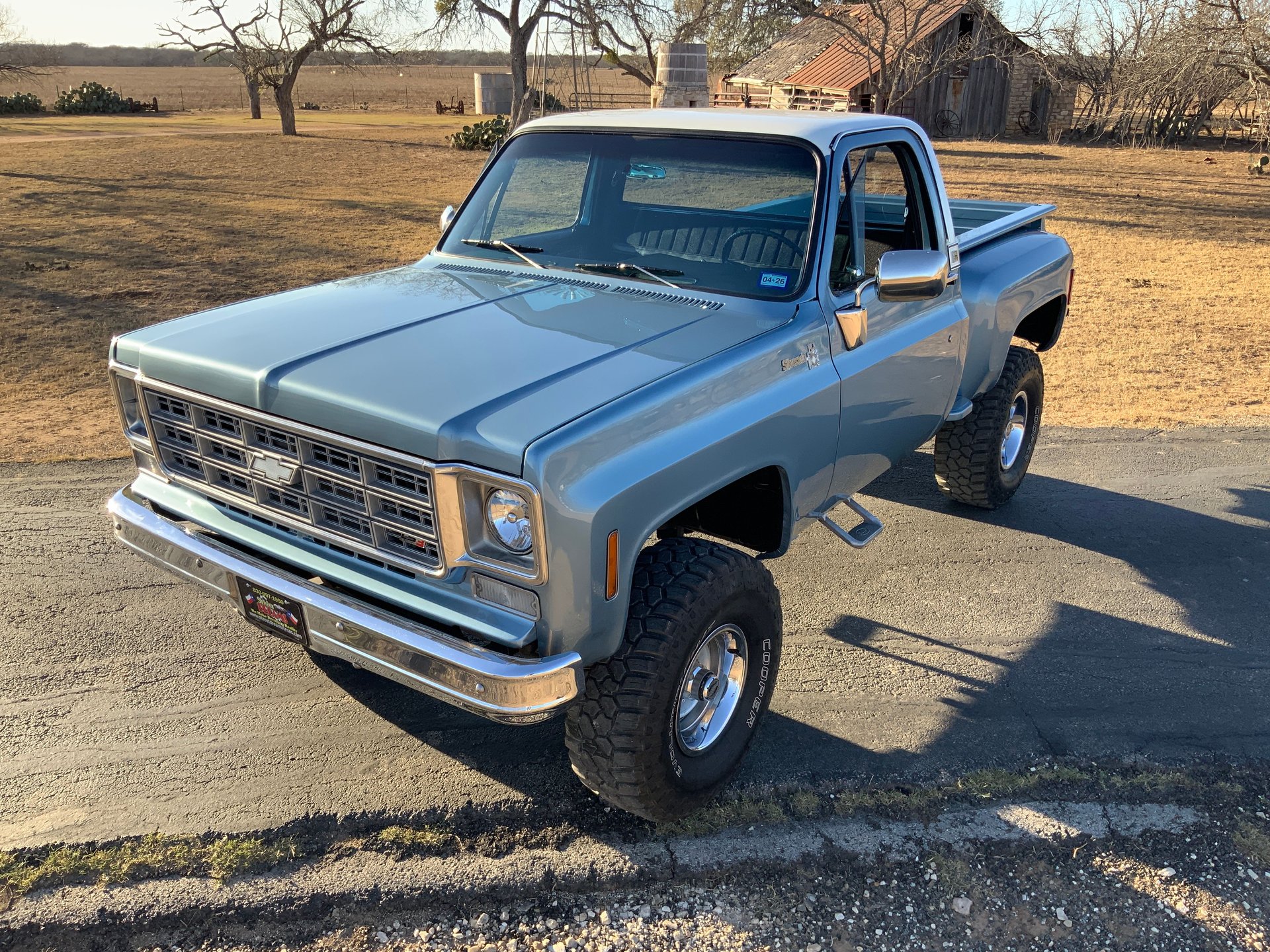
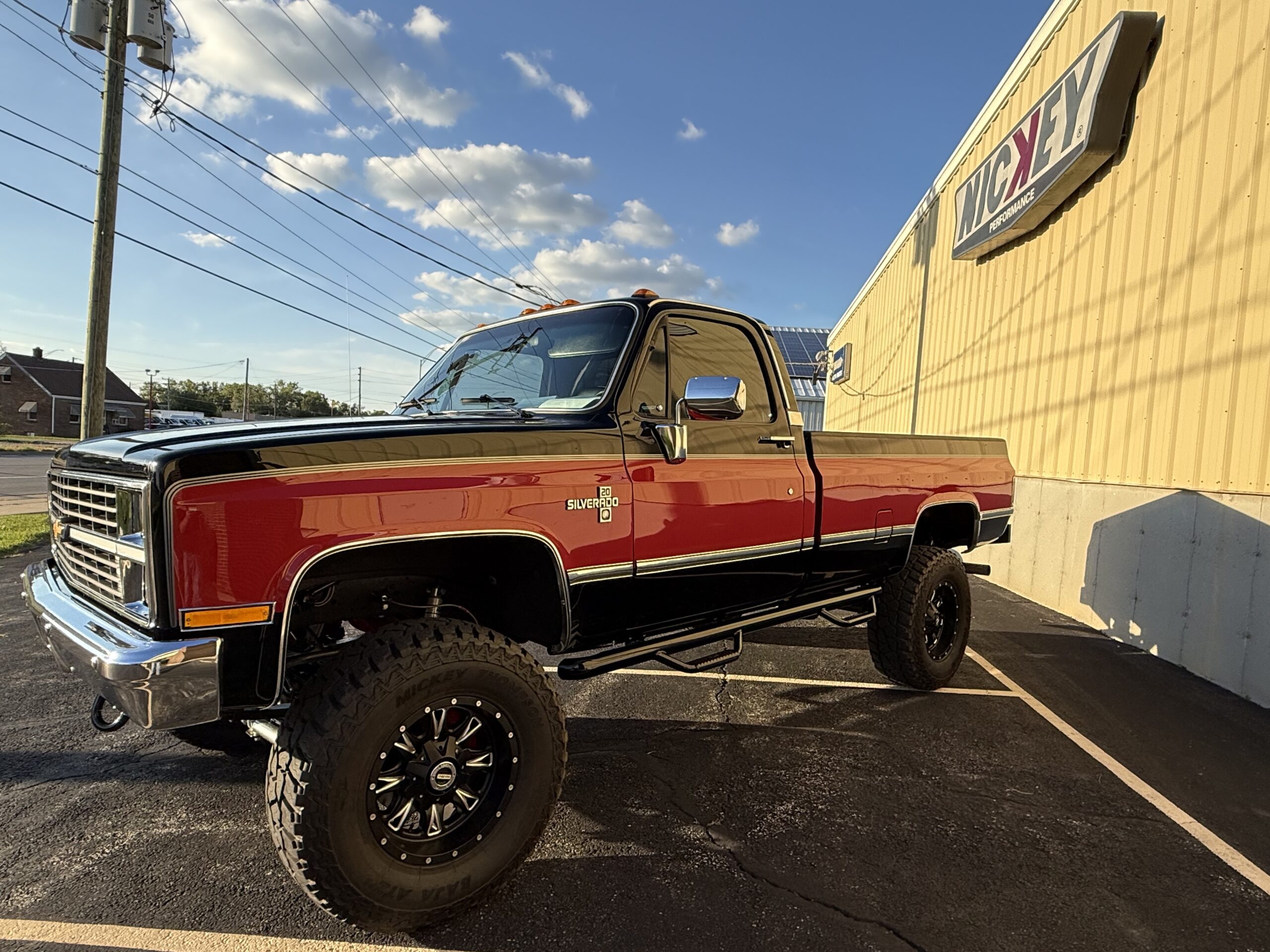
Bed and cab matter more. The short bed (6.5 feet on most generations, 5.8 feet on later crew cabs) on a regular cab is the sporting, collectable combination; the long bed (8 feet) is the working combination and rides better laden. Stepside beds (called Sportside on the GMT400) with their separate rear fenders are rarer and carry a style premium on early trucks. Extended cabs arrived in the Square Body's later years in limited form and became common on the GMT400; crew cabs were largely the preserve of the heavier trucks until the GMT800 made them mainstream. A regular-cab short-bed is the easiest truck to sell on, in every generation, and sellers know it.
| Model | Years | Engine | Output | Built | Character |
|---|---|---|---|---|---|
| C/K Silverado trim (Square Body) | 1975–1987 | 250 six to 454 V8; 6.2 diesel from 1982 | about 100–230 hp | — | The collectable classic; square styling, simple mechanicals, rust decides everything |
| C/K Silverado trim (GMT400) | 1988–1998 | 4.3 V6 to 454 V8; 6.5 diesel | about 160–290 hp | — | The OBS; injected, civilised, still cheap to run, the rising-value generation |
| Silverado 1500 (GMT800) | 1999–2006 | 4.3 V6; 4.8, 5.3, 6.0 Vortec V8 | about 200–345 hp | — | LS power, modern brakes and steering; a used truck still, priced like one |
| Silverado 2500HD / 3500HD (GMT800) | 2001–2006 | 6.0 or 8.1 petrol V8; 6.6 Duramax diesel | about 300–360 hp | — | The tow rigs; Duramax trucks hold money, thirst and workload decide condition |
| Silverado 1500 (GMT900) | 2007–2013 | 4.3 V6 to 6.2 V8; 4.8, 5.3, 6.0 | about 195–403 hp | — | Bigger, quieter, more complex; cylinder deactivation is the headline risk |
| Silverado 1500 (K2XX) | 2014–2018 | 4.3 V6; 5.3, 6.2 direct-injection V8 | about 285–420 hp | — | Aluminium panels arrive, eight-speed automatics bring their own fault |
| Silverado 1500 (T1XX) | 2019 onwards | 2.7 turbo four; 5.3, 6.2 V8; 3.0 diesel six | about 277–420 hp | — | The modern truck; buy on history and warranty logic, not classic logic |
Production figures by trim package were not published in a form that separates Silverado from the rest of the C/K line — Chevrolet built full-size pickups in the millions across these generations, and the honest entry for a trim-level badge is the dash in the table above, not an invented number. Outputs are period net ratings and vary by year, market and exhaust specification; treat them as orientation, and check the specific truck's rating plate and engine code rather than the badge.
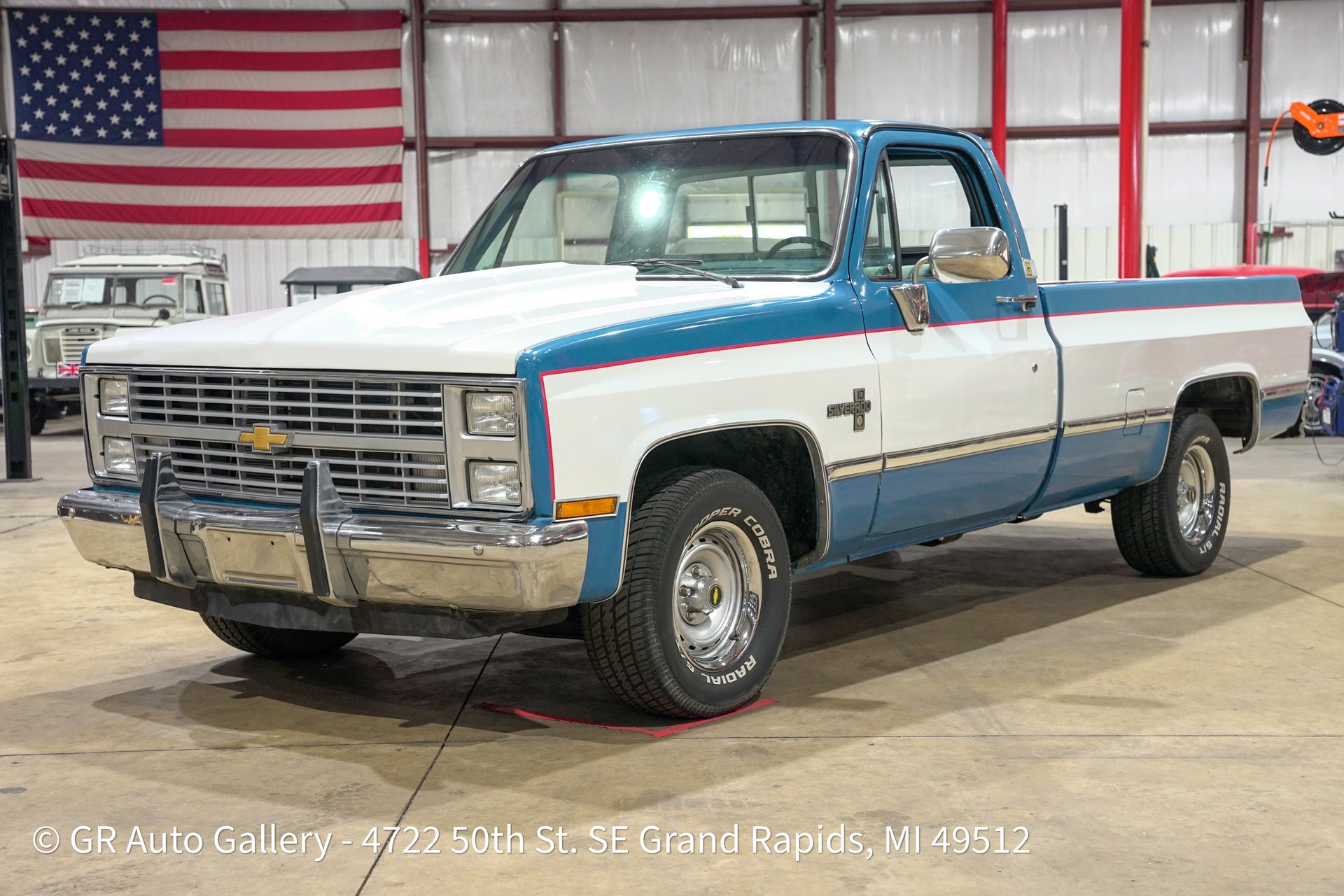
The Square Body Silverado (1975–87). The top trim on the longest-lived of all the generations. Inside you got the full gauge cluster or the better warning-light pack depending on year, plusher bench or bucket seats, carpet, bright window mouldings and two-tone paint options that define the look today. Mechanically identical to a base truck in the same specification — which is good news, because it means a Silverado is no more fragile than a farm truck, and bad news, because a seller's trim premium buys you nothing structural. K-series four-wheel-drive trucks, short beds and big-block 20- and 30-series trucks are the sought-after combinations; the 1973–74 trucks predate the Silverado badge, so a claimed 1973 Silverado is a trim swap or a mistake, and the data plate settles it.
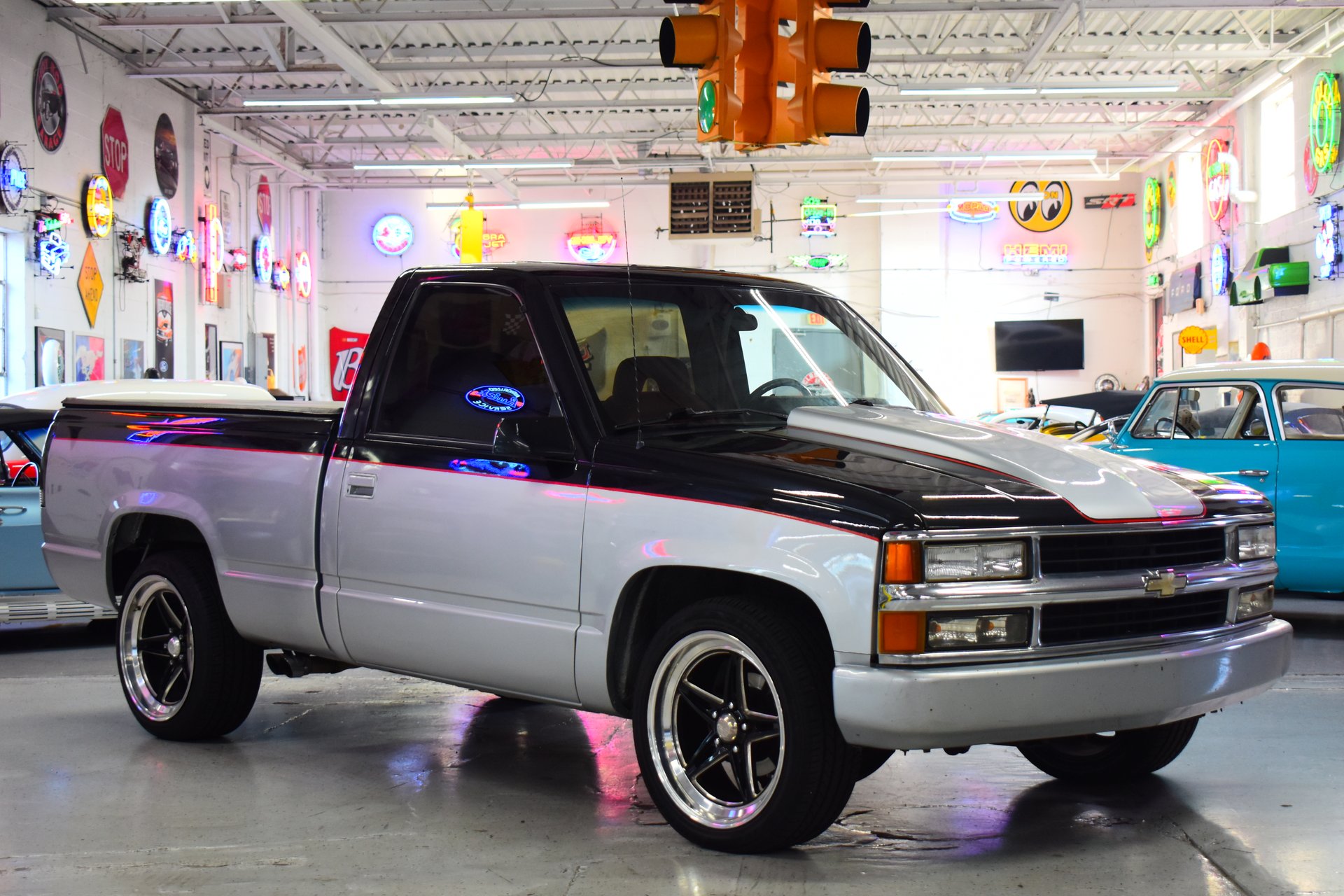
The GMT400 Silverado (1988–98, with Classic carryovers to 2000). The generation that made the pickup a plausible family car: a proper dashboard, available bucket seats and console, usable extended cabs. The 1500 is the mainstream truck; the 2500 and 3500 add bigger brakes and, on heavier trucks, the 454 big-block and the 6.5 diesel. The limited-run 454 SS (1990–93) — a regular-cab short-bed 1500 with the 454 — is the factory performance truck of the era. Base trucks dressed with Silverado badges are common, so decode the trim code on the glovebox label rather than trusting the fender.
The GMT800 Silverado (1999–2006; HD from 2001). The name-change generation, and the one where specification spreads widest: a 1500 could be a vinyl-seat V6 fleet truck or a leather-trimmed 5.3 extended cab; the SS (2003–06) put the high-output 6.0 in an all-wheel-drive 1500; the HD trucks added the Duramax and the Allison automatic. From this generation on, the option codes on the glovebox label are the truck's true specification sheet — engine, axle ratio, transmission and trim in three-character codes — and learning to read that label is the most useful skill a GMT800 buyer can acquire.
The later trucks (2007 onwards). Each step — GMT900, K2XX, T1XX — made the truck quieter, quicker, more economical and further from the home mechanic. Buy these on service history, software updates completed and the specific known faults in the problem areas section, not on classic-truck logic.
Engines and gearboxes
The petrol workhorses: small-block, big-block and the sixes
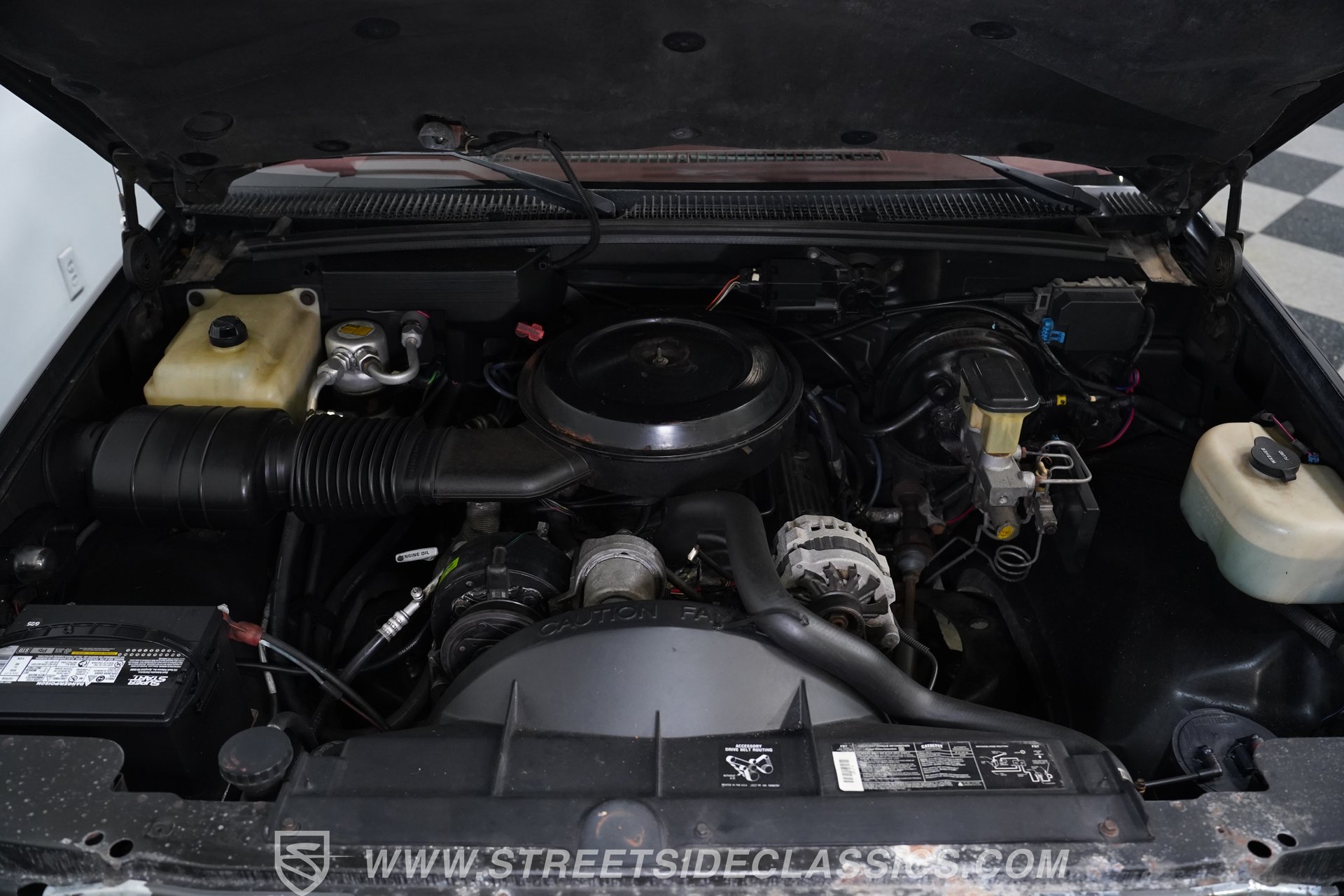
Almost every petrol Silverado you will meet runs a Chevrolet small-block V8, and that is the best news in this guide. The family — 305 cubic inches (5.0 litres), 350 (5.7) and, in the 1970s, the 400 (6.6) — shares one architecture: an iron block and iron heads, a camshaft in the valley, pushrods, a distributor at the back of the engine and a design that any machine shop in America knows by heart. The 350 is the one to want. The 305, fitted to save fuel on paper in the late 1970s and 1980s, gives away real torque for economy it rarely delivered in a heavy truck, and a 305 truck should be cheaper for it. The 400 small-block has a following but runs hotter by design — its siamesed cylinder bores leave no coolant passage between cylinders — and overheated 400s crack; check any 400 truck's cooling story carefully.
The big-block is a different ownership proposition. The 454 (7.4 litres, Mark IV) in Square Body and GMT400 heavy trucks, and the 454 SS, is an effortless towing engine that drinks fuel at a rate modern buyers underestimate — single-figure miles per gallon under load is normal, not a fault. Its known weaknesses are exhaust manifold bolts that snap in the heads, valve stem seals that harden and give a puff of blue smoke at start-up, and cooling systems that must be entirely up to scratch. The later Vortec 7400 and the GMT800 HD's 8.1-litre Vortec 8100 carried the idea further, with appetites to match.
Fuel delivery divides the eras, and each system has its own test. Carburettor trucks (to 1986) mostly run a Rochester Quadrajet: a fine carburettor when the throttle shaft bushes are tight and the well plugs are sealed, and a flat-spotted, hard-starting nuisance when they are not — wear in the primary throttle shaft bores is the classic cause of an idle no adjustment will stabilise. Throttle-body injection (TBI, 1987–95) is the simplicity sweet spot: two injectors in a unit that looks like a carburettor, running at roughly 9–13 psi of fuel pressure, diagnosable with a test light and a pressure gauge, and fixable for small money; a TBI truck that surges or stalls is usually confessing to a vacuum leak, a tired idle air motor or a failing throttle position sensor, in that order. The 1996–98 Vortec engines use central sequential injection with poppet-style injectors fed from a central unit, and they are pressure-sensitive in a way TBI never was: the system wants around 60–66 psi at key-on, a weak pump or a leaking internal regulator shows up first as long cranking and a lean misfire, and the poppets can stick on trucks that have sat on stale fuel. Budget for a fuel pressure test — gauge on the test port, key on, engine off — before you buy any Vortec truck with a starting complaint; it separates a pump bill from an injector bill in five minutes.
Two petrol faults recur on the injected small-blocks. The intake manifold gasket on the 1996–2000 Vortec 4.3, 5.0 and 5.7 deteriorates and leaks coolant externally at the front corners or internally into the oil; an undocumented Vortec truck should be assumed to need them — a job in the region of $600–1,200 at a shop, and a destroyed engine if an internal leak is driven on. Distributor wear on the same engines gives a wandering timing signal and a misfire under load. Both are priced into a good offer rather than walked away from.
The LS generation: Vortec 4800, 5300, 6000 and the later V8s
The GMT800's Vortec V8s are LS-family engines in truck dress — iron blocks in most applications, aluminium heads, a deep-skirt block, six-bolt main bearing caps and no distributor at all, with a coil near each plug. The 4.8 (LR4) and 5.3 (LM7, with the flex-fuel L59 variant) are the volume engines; the 6.0 came as the LQ4 in HD trucks and the high-output, aluminium-head LQ9 in the SS and top trims. These are strong, long-lived engines whose common faults are refreshingly minor: exhaust manifold bolts that snap at the rear of the heads (a ticking on cold start that fades as the manifold expands is the tell), knock sensors buried under the intake manifold that fail and take their short harness with them, oil pressure senders that leak or lie, and, on high-mileage engines, a flickering low oil pressure at hot idle that traces to a perished O-ring on the oil pump pick-up tube — a small part behind a big job, and a classic misdiagnosis as a worn-out engine. Cold piston slap — a diesel-like rattle for the first minute on some 1999–2002 engines — was a factory-acknowledged characteristic that shortens no engine's life measurably, but it frightens buyers and should be priced, not panicked over.
The later V8s add one major system each, and each system is the thing to interrogate. GMT900 trucks with the 5.3, 6.0 and some 6.2 engines carry Active Fuel Management, which deactivates four cylinders by collapsing their lifters with oil pressure. The lifters are the weak point: a ticking top end, a misfire on a deactivation cylinder and oil consumption through the system are the standard presentation, a lifter failure can take the camshaft with it, and the repair — heads off, lifters and often cam replaced — runs roughly $2,500–4,500 at a shop, which is why a documented fix or a delete conversion is a selling point and an undocumented noisy GMT900 should be bid as if the job is due. K2XX engines are direct-injected EcoTec3 units, stronger and cleaner, with intake valves that coke because fuel no longer washes them — walnut-blasting is the periodic cure — and the T1XX adds Dynamic Fuel Management on many V8s, with lifter failures on 2019–21 5.3 and 6.2 engines common enough that a buyer should ask directly whether lifters have been replaced and listen hard on the test drive.
The diesels: 6.2, 6.5 and Duramax
Chevrolet's first truck diesel of this era, the 6.2-litre Detroit Diesel (1982–93), is a economy-first engine: no turbocharger, modest power, excellent fuel economy by period standards, and a reputation for durability when not asked to tow like a big-block. Its injection pump and glow plug system are its service points, and its crankshaft and harmonic balancer deserve inspection on high-mileage examples — a perished balancer lets crank-damaging vibration through. The 6.5 that followed (1992–2000) added a turbocharger on most truck versions and, from 1994, electronic injection control whose pump-mounted driver module (the PMD) overheats in its factory position and causes stalling that cures on cooling and returns when hot; a relocated PMD on a remote heatsink is the recognised fix, and a truck already carrying one has had an owner who knew the model. Head gasket and cooling problems on hard-worked 6.5s are real, and a 6.5 should be bought as an enthusiast's economy diesel, never as a cheap substitute for a Duramax.
The 6.6 Duramax (2001 onwards) is a modern common-rail diesel co-developed with Isuzu, and it is the engine that makes GMT800 HD trucks hold their value. The generations have names and distinct faults. The LB7 (2001–04) had injector failures serious enough to draw extended factory coverage — injectors live under the valve covers, replacement is a major job in the region of $3,500–5,500 for a full set fitted, and paperwork for a done set transforms an LB7's value. The LLY (2004.5–05) runs hotter under sustained load and can overheat towing in mountains; the LBZ (2006–07) is the most sought-after of the early engines, strong and pre-diesel-particulate-filter, and priced accordingly. All Duramax trucks reward a buyer who checks for fuel in the oil (failed injector seals or a cracked injector body on LB7s), coolant loss, and whether the truck has been tuned — a turned-up diesel with a stock transmission is a bill being passed to you.
Gearboxes, transfer cases and axles
The automatics divide by era and by strength. The three-speed Turbo-Hydramatic 350 and 400 in Square Bodies are as tough and as simple as automatics get; the TH400 in particular is nearly unkillable and cheap to rebuild, in the region of $1,500–2,500 exchange. The four-speed overdrive 700R4 (later renamed 4L60) that followed is the opposite: a good cruising gearbox whose life depends on the TV cable being correctly adjusted — a misadjusted cable on an early 700R4 is not a minor fault but a death sentence measured in miles, because the cable controls line pressure, not just kickdown — and on not towing in overdrive. Its electronic descendant, the 4L60-E, carried the GMT400 and GMT800 1500s and is the acknowledged weak link of those trucks under hard use: loss of third and fourth, or a flare on the 2–3 shift, means a rebuild at roughly $2,000–3,500 fitted, and a truck with a documented recent rebuild by a reputable shop is worth a premium over an identical truck on its original box at high mileage. The heavier 4L80-E behind big-blocks, diesels and HD trucks is a TH400 descendant with an overdrive added, and is dramatically stronger; the Allison 1000 five- and six-speed behind the Duramax and 8.1 is stronger again, with its own servicing costs and a well-earned reputation — but check for a tuned engine ahead of it, as above. Later six-, eight- and ten-speeds are generally durable, with one famous exception: the 8L90 eight-speed in 2015–19 trucks can shudder under light load from a torque converter and fluid specification problem; a fluid exchange to the revised specification cures many, a converter cures the rest, and a shuddering truck should be priced with the converter in mind.
Manual gearboxes are the minority choice and mostly good ones. The SM465 four-speed has a crawler first and a shift that cannot be hurried; the NV3500 five-speed is lighter-duty and should be judged on synchromesh into third; the NV4500 behind diesels and HD trucks is the strong one. Buy a manual because you want it, not as an investment.
Four-wheel-drive systems are part-time on almost everything in the classic range: a floor-shifted transfer case (the gear-driven NP205 in early trucks is the connoisseur's unit; the chain-driven NP208 and NP241 that followed are lighter and perfectly adequate), locking front hubs, and a front axle that changed from a live axle on Square Body K trucks to independent torsion-bar suspension on the GMT400 — which is why GMT400 4x4s ride like cars and Square Body 4x4s ride like trucks. GMT800 Autotrac (NP246) adds an automatic mode; its encoder motor is the common failure, announced by service-4WD lights, and is a moderate repair. Never engage part-time four-wheel drive on dry tarmac — a seller who demonstrates it locked on asphalt is telling you about their mechanical sympathy.
Axle ratios decide how a truck feels: tall ratios (3.08, 3.42) cruise quietly and tow reluctantly; 3.73 is the all-round choice; 4.10 trucks feel eager and drink accordingly. The G80 automatic locking differential is common and useful, though it locks with a clunk that alarms first-time passengers. A whine that rises with road speed is axle wear to price, not character.
Problem areas
Everything in this section is drawn from the trucks themselves. We have photo-checked 28 of the Silverados in our listings in detail, and rust is mentioned in the notes on 16 of those 28 trucks — well over half. Damage of some kind also appears on 16 of the 28, and fluid leaks on 4. That pattern is the Silverado market in miniature: these are old working trucks, most of them carry the marks of work, and the buyer's job is to separate the honest marks from the structural ones. Work through the truck in the order below — body first, because body decides value; then the systems that decide whether it drives home.
Rust and the body: the map
Rust on a Chevrolet truck follows the salt and the trapped mud, and it is remarkably consistent from one generation to the next. Learn the map once and you can assess any truck from 1973 to 2006 in ten minutes.
Cab corners and rocker panels. The single most important check, on every generation. The rear corners of the cab trap wet mud thrown up by the front of the rear wheels, the inner structure has no meaningful drainage, and the corner rots from the inside out — paint bubbles at the bottom rear corner of the cab are the last stage, not the first. Press hard along the rockers, crouch and look at the inner rocker from underneath, and be suspicious of fresh stone-chip paint or new trim covering exactly these areas. Extended and crew cabs add a second pair of corners and a longer rocker to check. Pattern repair panels are cheap — cab corners and rockers are among the best-served panels in the classic truck trade — but welding them in properly, with the inner structure repaired rather than plated over, runs roughly $800–2,000 per side painted, and a truck needing both sides, both corners and the floors below is a body project, not a driver. GMT800 trucks rust here just as GMT400s do, and faster than their age suggests: a 2003 truck from the salt belt can be worse than a 1989 truck from Texas, which is why state of origin appears in this guide before model year.
Floor pans and cab mounts. Water enters past the windscreen seal and the cowl, and sits under the rubber mat or carpet; on work trucks, wet boots do the same job year round. Lift the mats on both sides. Surface scale brushes off and treats; perforation around the cab mounts matters, because the cab sits on the frame at those points and a rotted mount area is structural. Check the cab mount rubbers and the frame brackets while you are under there — collapsed mounts make doors shut badly and are routinely misdiagnosed as hinge wear. Floor sections are available and fitting one side runs roughly $600–1,500, but floors rarely rot alone: floor rust is a marker for the whole underside.
The frame. The frame is the truck. Surface rust on a frame is normal and cosmetic; the failures that matter are perforation and thinning at the known points: the rear section behind the cab where salt and mud sit on top of the rails, around the rear spring hangers and shackles, at the fuel tank crossmembers, and — on GMT800 trucks especially — anywhere the factory wax coating has cracked and held brine against the steel. GMT800 frame rust is the generation's defining structural issue, severe enough in the salt belt to write off otherwise sound trucks; prod suspect areas with a screwdriver, and treat a seller's fresh black undercoat over everything as a question, not an answer. On Square Bodies, add one specific check: the frame rail at the steering box. The box's leverage can crack the rail around its mounting bolts, particularly on lifted trucks with big tyres; cracks are repairable with a weld-in reinforcement plate, roughly $400–900 fitted, but a cracked rail you discover after purchase is a negotiation you have already lost. A bent frame — from a plough, a crash or chronic overloading — shows in uneven bed-to-cab gaps and a truck that dog-tracks down the road; walk away from a bent HD truck entirely.
Bed, wheel arches and tailgate. The rear wheel arch lip traps mud against the bedside and rots in a neat crescent on Square Bodies and GMT400s alike; run a fingertip inside the lip and feel for bubbling and filler. Bed floors rust where water sits under loads and bedliners — a drop-in plastic liner is a rust incubator, so lift it or look from underneath — and the front bed panel and the cab's rear panel rust together where leaves collect between them. Tailgates bend in the middle from being used as loading ramps and workbenches, and their internal latches seize. None of this is structural, all of it is visible, and together it prices the truck's cosmetic tier honestly.
The smaller traps. Front fenders rust behind the front wheels where the inner brace traps mud — the same spot on every generation. Door bottoms fill with water when their drain slots block: feel along the bottom edge for bubbling. Battery trays rot under the battery, windscreen surrounds on Square Bodies rust under the seal and leak toward the fusebox, and drip-rail sealant cracks and lets water into the A-pillars. Individually small jobs; collectively they tell you whether the truck lived inside or outside.


Chassis, steering, brakes and suspension
Front suspension splits by generation. Two-wheel-drive trucks use coil springs and unequal-length arms throughout — a simple, durable layout whose wear items are ball joints, bushes and dampers, all cheap and all testable by rocking the wheel and bouncing the corner. Square Body K trucks carry a live front axle on leaf springs: kingpin and spring bush wear gives wandering steering, and the fix is labour more than parts. GMT400 and GMT800 four-wheel-drives use torsion bars and independent suspension, which rides well and wears its upper ball joints and idler and pitman arms instead; the GMT400 and GMT800 steering linkage — centre link, idler arm, pitman arm, tie rods — wears as a system, and play at the steering wheel with the engine running is the sum of all of it. A full linkage refresh with quality parts runs roughly $700–1,400 fitted and transforms a vague truck, so price it in rather than fearing it. GMT800 trucks add a famous clunk of their own: the intermediate steering shaft develops play and rattles over rough roads and in slow turns; it is annoying rather than dangerous, the shaft is replaceable for a few hundred dollars fitted, and generations of owners have been sold steering boxes they did not need because of it — diagnose the shaft first by holding it while an assistant rocks the wheel.
Rear suspension is leaf springs on everything in this guide, and the faults are rust and fatigue. Shackles and hangers rust through where they meet the frame (see the frame section above — a hanger tearing away is a structural failure, not a wear item), springs sag and occasionally crack a leaf, and the levelling test is simply to stand behind the truck on flat ground: a truck that lists has a spring, hanger or mount problem on the low side. Air helper springs and lift blocks in the history suggest a truck that has carried weight; ask what, and how often.
Brakes carry the most dangerous rust on these trucks. The steel hydraulic lines run along the frame in the salt spray, and on GMT400 and especially GMT800 trucks they corrode until one bursts under a hard pedal. Look at every visible inch along the driver's side frame rail: heavy flaking scale means the set is due, and a full replacement in pre-bent stainless or copper-nickel runs roughly $800–1,800 fitted. Treat a truck with one shiny new line section as a truck whose other lines are the same age as the burst one. The rest is conventional and cheap: front discs, rear drums on most half-tons, Hydroboost assistance on diesels and HDs (a hard pedal with the steering loaded points at the pump, not the brakes), and corroding GMT800 ABS sensors that give a pulsing pedal in the last few feet of a stop — the sensor or hub is the cure, not the module. A truck that has sat for years needs the full hydraulic refresh, roughly $600–1,500 at a shop.
Fuel systems rust from the outside and rot from the inside. Steel tanks rust at the straps and seams on every generation; the dual-tank option on many Square Bodies adds a selector valve and dash switch that fail and strand owners convinced they have run out of fuel with a full second tank. Inside the tank, the electric pump on injected trucks is the most common single cause of a no-start in the whole classic range: it is cooled by the fuel around it, running habitually near-empty shortens its life, and replacement runs roughly $500–900 fitted. A recent pump with an invoice is genuinely valuable; a truck that needs repeated cranking to start is confessing to a tired pump or check valve.
Cab, interior and electrics
The cab is where these trucks age most visibly after the body rust. Square Body dashboards crack in the sun almost without exception — a crack-free original pad is genuinely rare, and a dash cap is the budget answer most trucks wear. Bench seat foam collapses on the driver's side first, and a truck you sink into needs a foam and cover job at roughly $400–900 for a bench done properly. Door hinge pins and bushings wear on every generation — lift the open door at its rear edge and feel for play — and a sagging door is a pin kit and an hour, not a door. GMT800 doors add cable-type window regulators that fail with the window down, usually in the rain, and blend-door actuators that click and leave the heater blowing the wrong temperature at the wrong vent.
Electrical faults follow a pattern by era. Square Bodies suffer at the bulkhead connector and the fusebox when the windscreen leaks onto them, and their gauges are only loosely related to the truth until the earths are cleaned. GMT400 trucks have one celebrated fault: the windscreen wiper pulse board, whose solder joints crack and give wipers that park mid-screen, work only on one speed or operate when switched off — a board costs little and fits in minutes once you know it is the board, and it is misdiagnosed as a motor or a switch constantly. GMT800 trucks answer with the instrument cluster: the stepper motors behind the gauges fail on 2003–06 trucks in particular, giving speedometers that stick, read low or die, fuel gauges that wander, and clusters that have often already been rebuilt once — a rebuild with all motors replaced runs roughly $200–400 exchange, and a truck with a dead gauge should be priced as a cluster rebuild, not an engine fault, until proven otherwise. Across all generations, test every window, the blower on every speed, the wipers and washers, the lights including the brake lights, and the air conditioning: a working system on a 30-year-old truck signals an owner who fixed things, and a string of small electrical deaths signals the opposite, which matters more than any single item.
On air conditioning: Square Bodies ran R12 originally and most survivors carry conversions of varying thoroughness; a system on any era that needs gas every summer has a leak, and the leak is the repair, not the regas.
How to inspect one
Allow at least an hour, bring a torch, a magnet wrapped in cloth, a screwdriver for prodding (with the seller's permission) and a code reader if you are looking at a 1996-or-later truck. If the truck passes you, pay for a lift inspection before money changes hands — on a rust-belt truck it is the best money in the whole purchase.
- Start with the paperwork and the codes. Match the VIN on the title to the plate at the base of the windscreen and the door label. Then decode the truck itself: the option label in the glovebox (the service parts label on Square Bodies) lists engine, gearbox, axle ratio and trim in three-character codes. Check the engine the codes promise against the engine in the bay — a truck sold as a 350 that decodes as a 305 is repriced by that label in one minute.
- Cold start. Insist the engine is cold when you arrive. A petrol V8 should start promptly and settle to an even idle: a puff of blue smoke that clears points to valve stem seals, smoke that continues is rings or worse, and a cold ticking that fades is the GMT800 exhaust manifold bolt story from the engine section. A diesel should start on its glow plugs without extended cranking; clouds of white smoke that clear are glow plugs or timing, smoke that stays is compression or injectors.
- Rust: cab first. Crouch at the rear corners of the cab and press hard; work along both rockers, inner and outer; prod the floor at the cab mounts from underneath; check the door bottoms and the bottom rear corners of the front fenders. Perforation in cab corners, rockers or mount areas is structural money. This step decides whether you continue at all — everything after it is pricing, but this one is permission.
- Frame and underside. Torch along both frame rails, concentrating behind the cab, at the spring hangers and shackles, and around the tank crossmembers. On a Square Body, inspect the rail at the steering box for cracks. On a GMT800, treat cracked wax coating and flaking rails as the serious finding it is. Read the brake and fuel lines along the driver's side rail while you are under there — flaking steel lines are a safety job already due. Fresh uniform underseal over everything is a question, not an answer.
- Bed and body. Run the magnet over the rear wheel arch lips, the lower bedsides, the cab corners and the fender bottoms; filler announces itself. Lift any drop-in bedliner, or inspect the bed floor from underneath. Check the bed-to-cab gap is even on both sides, the tailgate is straight and latches at both sides, and look down each flank for ripples and mismatched paint.
- Engine bay. Look for the leaks our photo notes keep finding: rocker cover gaskets on small-blocks, the intake corners on Vortec engines, the oil pressure sender on LS-family engines, power steering fluid at the Hydroboost on diesels. Check the coolant's colour and the underside of the oil filler cap — emulsion means coolant and oil are meeting. On a Vortec truck, note the distributor for play if you can reach it. On a Duramax, pull the oil filler and look for fuel smell on the dipstick.
- Fuel pressure and starting behaviour, on injected trucks. If the seller allows a gauge, a TBI truck should show roughly 9–13 psi and a Vortec central-injection truck around 60–66 psi at key-on. Without a gauge, use the evidence you have: long cranking, a pump you cannot hear prime, or a truck that starts better after two key cycles is confessing to a tired pump or a leaking regulator — price the job from the problem areas section into your offer.
- Steering and suspension. With the engine running, rock the steering wheel: free play before the wheels answer is the sum of the linkage wear described above. Rock each front wheel top-to-bottom and side-to-side for ball joint and bearing play. Bounce each corner and watch it settle in one movement. Stand behind the truck and check it sits level, then check the spring hangers again with the truck's weight on them.
- The test drive. Fifteen minutes minimum, including a highway stretch and a rough road. The automatic should engage drive and reverse without a long pause or a thump; a 4L60-E that flares on the 2–3 shift or has lost overdrive is a rebuild being handed to you. Feel for the GMT800 intermediate shaft clunk over bumps, and brake pull or judder from a firm stop. A manual should take third without a crunch.
- Four-wheel drive, properly tested. On a loose surface, engage four-wheel drive high and low, and cycle an Autotrac truck through its modes. Listen for chain rattle from the transfer case under load, and check the front hubs engage and release.
- Heat, electrics and the cab. Let the truck idle hot and watch the temperature gauge behave. Run the heater and blower on every speed, the air conditioning, every window, the wipers and washers, and every gauge — on a 2003–06 GMT800, a sticking or dead gauge is the cluster, priced in the problem areas section. Lift the open doors for hinge play, sit in the driver's seat and feel for collapsed foam, and test every seat belt's retractor.
- Load the story, not just the truck. Ask what it has towed and whether it has ploughed snow, and look for the evidence: a brake controller, plough mounts or their bolt holes in the front frame, helper springs, a gooseneck ball. A truck that has ploughed fifteen Michigan winters is a different purchase from a Texas truck that towed a boat, whatever the odometers say.
- Finish with the history file. A documented gearbox rebuild, Duramax injectors, a PMD relocation, Vortec intake gaskets or brake lines replaced as a set are real money spent by someone else, worth more than low mileage without a file. Price an undocumented truck as if every known job is due — statistically, several are.
Values
The build's market block beneath this guide carries the current numbers — what is listed now, and what recorded sales have achieved — and this section teaches you how to read them, because on Silverados the spread inside a single model year is wider than the spread between generations. Condition, origin and specification move the money; the badge moves it least.
Start with the condition spread, which on these trucks is really a rust spread. The same Square Body exists at every level from a parts truck with a perforated frame to a restored show truck, and that distance is most of the market. Read any median as the middle of the spread, not the price of the truck in front of you: a genuinely rust-free, documented truck sits well above the middle and is usually worth it, because the welding and paint it saves you are the most expensive work on any old truck. A rust-belt truck with bubbling cab corners sits at the bottom however shiny its photographs.
Asking prices and achieved prices part company most visibly on the fashionable combinations. Regular-cab short-bed Square Bodies and GMT400s are the trucks the nostalgia market wants, and sellers price them for the buyer they hope exists; auction results and recorded sales for comparable trucks are the corrective, and the market block below shows both. The unfashionable combinations — long beds, two-wheel-drive heavy trucks, V6 fleet specifications — are where the value sits: they were bought to work, they are priced as used trucks rather than as classics, and a sound one gives you the same frame, the same engines and the same parts support for a fraction of the fashionable truck's money.
Premiums that are real, and why: four-wheel drive over two-wheel drive in the classic generations, because the K trucks are rarer survivors and more useful; the 350 over the 305, and any big-block over a small-block in a heavy truck; a Duramax over a petrol HD, with the LBZ years at the top of that tree because they combine the strongest early specification with the simplest emissions equipment; short beds over long; and originality on Square Bodies, where an unmodified truck now outsells a modified one of equal condition because so few survive unmodified. Premiums that are mostly theatre: the Silverado trim badge itself on an old truck, dealer-fitted accessories, and lift kits, which subtract buyers faster than they add them.
Restomods are worth what their build quality makes them worth: judge an engine swap by its cooling, wiring, mounts and paperwork, never by its dyno sheet — a half-finished swap is a project wearing a finished truck's asking price.
The project-versus-driver gap is the last lesson. On a Silverado, a project truck is cheap for structural reasons, and the work it needs — cab corners, rockers, floors, lines, a gearbox — is priced in the problem areas and parts sections of this guide in plain figures. Add those figures to the project before you compare it with the driver; on these trucks the driver wins that comparison so consistently that the cheap truck is usually the expensive way to own the same vehicle. Negotiate from the inspection list, item by item, with the job costs named: sellers of old trucks expect it, and a list beats a percentage off, every time.
Parts and ownership
The Silverado's parts situation is the best in the classic vehicle world. Chevrolet built these trucks in the millions, the design changed slowly, and an entire industry exists to keep them working — from the restoration catalogues for the Square Body and GMT400 to every local parts store stocking the service items off the shelf.
Easy and cheap: service items for every engine in this guide, brake discs, drums, pads, calipers and hoses, ball joints, tie rods and linkage parts, dampers, leaf springs and hangers, water pumps, alternators, starters, radiators, exhaust systems in standard form, glass, weatherstrips and the common rust repair panels — cab corners, rockers, arch sections and floor pans are pressed in quantity and priced like it. A full brake line set in modern corrosion-resistant material is a stocked item, not a fabrication job. This is the ownership experience the badge buys you: almost nothing mechanical is rare.
Harder and dearer: trim, which is where the money quietly goes. Crack-free Square Body dash pads, good original grille and brightwork, unworn seat covers in the correct patterns, GMT400 and GMT800 interior plastics in the right colours, and uncracked GMT800 dashboards are all scarcer than any mechanical part, because the sun destroyed them faster than the trucks wore out. Duramax injectors for the LB7 are a specialist purchase with a fitting bill to match (a full set fitted runs roughly $3,500–5,500, as the engine section notes); Allison transmissions want a specialist rather than a generalist; and 6.5 diesel injection components, 454 SS-specific parts and the trim for short-run models reward patience and club knowledge. None of it is unobtainable; all of it should be checked against the specific truck before you assume the catalogue covers it.
Running costs. A Square Body or GMT400 in regular use wants oil and filters on schedule, grease where there are nipples, fluids changed rather than topped up, and a yearly hour underneath with a wire brush and rust treatment if it lives where roads are salted — the cheapest rust repair in this guide. Fuel is the cost new owners underestimate: a small-block returns economy in the low-to-mid teens in miles per gallon, a big-block works in single figures under load, and the diesels are the economy choices of their eras. A running truck bought without history typically needs $1,500–4,000 of deferred maintenance in its first year; a truck that has sat needs its fuel system cleaned end to end and its brakes gone through before it turns a wheel in anger. Any competent independent mechanic can maintain the pre-2007 trucks.
Buy the truck the way you will own it: a daily-driven Silverado rewards the newest, simplest specification you can find — a TBI GMT400 is arguably the easiest classic truck in America to live with — while a weekend Square Body rewards originality and dry storage. Either way, the parts trade means you are never more than a phone call from keeping it on the road, which is more than most classics can promise.
Which one to buy
- The all-rounder: GMT400 Silverado 1500, 350 TBI or Vortec. Injected, civilised, cheap to run, still priced as a used truck in most of the country. The 1988–95 TBI trucks are the simplest; the 1996–98 Vortec trucks are quicker and want their intake gaskets documented. If you want one classic Silverado to use, this is it.
- The classic: Square Body Silverado, 1975–87. The styling, the simplicity and the rising market. A 1987 truck adds throttle-body injection to the classic shape and is the connoisseur's shortcut. Buy the driest-state, least-modified example you can find, in whatever trim it wears.
- The value buy: a long-bed or two-wheel-drive heavy truck. A C20 or C2500 long-bed does everything the fashionable short-bed does except attract a crowd, for a fraction of the money.
- The tow rig: GMT800 2500HD with the Duramax LBZ, or a 6.0 petrol if your towing is occasional. The Duramax earns its premium in fuel and resale; the petrol truck earns its discount back every time a diesel bill would have landed. Either way, buy the history file and the frame, not the mileage.
- The performance truck: 454 SS (1990–93) or Silverado SS (2003–06). Factory hot-rod pickups with followings of their own. Verify the specification against the option codes — clones exist in both generations, and a clone is worth standard-truck money.
- The one to want with your eyes open: any 6.5 diesel. Economical and characterful — and a specialist's engine whose faults are specific, as the engine section sets out. Buy one from an owner who can explain the PMD's location.
And the rule that overrides all of the above: buy the least rusty truck you can find, from the driest state you can manage, in the specification you can live with. Engines, gearboxes, brake lines and clusters are all fixable at prices this guide has named. A rotten cab and a perforated frame cost more to put right than the finished truck will be worth — and they are the one thing about a Silverado that can never be made original again.
See the 45 Silverado cars currently listed.