
Chevrolet S-10 buyer's guide
Chevrolet S-10 -- the model's own buyer's guide: variants, values and what to check.
Years listed: 1982-2003 · Series: S-10
Overview and history
The Chevrolet S-10 is the truck that invented the modern American compact pickup — and then spent twenty-two years proving how many different jobs one small truck could do. Launched for the 1982 model year, it was General Motors' answer to the imported mini-trucks from Toyota, Datsun and Mazda that had spent the 1970s eating the bottom of the American market, and to Ford's incoming Ranger. Where the imports were spartan and the full-size C10 was increasingly a lifestyle vehicle, the S-10 was engineered from the start as a proper Chevrolet: a separate ladder frame, a choice of four-cylinder and V6 power, rear- or four-wheel drive, and a payload and towing capacity that let it work for a living while still fitting in a suburban garage and a young buyer's budget.
That formula made it an enormous seller. The S-10 and its GMC twin — the S-15, later the Sonoma — were built in the millions across two generations, in regular, extended and, late in life, crew cab forms, and they spawned the S-10 Blazer, one of the founding vehicles of the SUV boom. On Classic Listings we currently track 60 S-10s spanning 1982 to 2003: hard-worked first-generation regular cabs, the more numerous second-generation trucks of the 1990s, and a tail of well-kept late LS and Xtreme trucks.
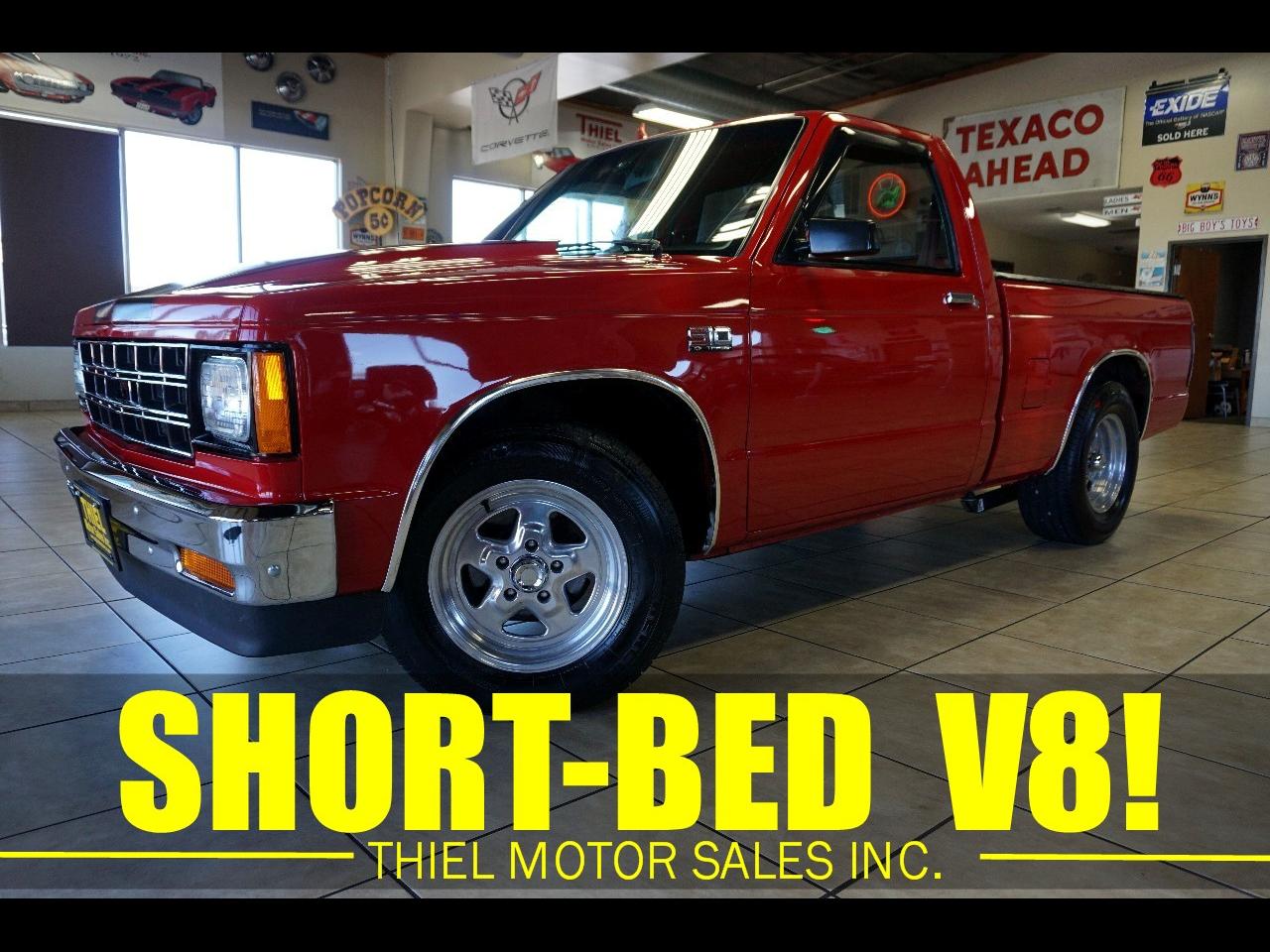
The first generation ran from 1982 to 1993, with a facelift in 1991 that squared off the nose and modernised the interior. It is the honest, angular truck most people picture: steel bumpers, a simple bench or bucket interior, and mechanicals you can service on a driveway with hand tools. The second generation arrived for 1994 with rounded, aerodynamic styling, a far better cabin, standard anti-lock brakes on most versions, and the 4.3-litre Vortec V6 as its defining engine. It was facelifted in 1998 with a new nose and interior revisions and ran to 2004, when the Colorado replaced it. Along the way the range produced genuine performance landmarks — the turbocharged GMC Syclone of 1991, for a time the quickest production pickup in the world, the S-10 SS, the off-road ZR2, and the street-styled Xtreme — as well as curiosities like the 1997–98 S-10 Electric, a factory battery-electric pickup built in tiny numbers for fleet lease.
Why buy one now? Three reasons. Utility: an S-10 is still a real truck — frame, proper bed, parts support good enough for daily use — at a size modern mid-size trucks have abandoned. Simplicity: even the newest S-10 predates the fully networked era, so a competent home mechanic can do almost everything this guide describes. Character: the mini-truck, sport-truck and nostalgia markets have converged on the S-10 at once, so the best early trucks are no longer throwaway vehicles.
That history defines what you are shopping for. These trucks were bought to work, and most did. Survivors divide sharply into cherished low-mileage trucks that were always second vehicles, and honest work trucks carrying decades of deferred maintenance. Almost everything mechanical is cheap and fixable; what separates a good buy from a money pit is frame and cab rust, the state of the 4.3's intake and cooling system, and whether previous owners serviced the truck or merely repaired it when it stopped.


The models
Every S-10 pickup shares the same basic recipe — ladder frame, front engine, rear-wheel drive with part-time four-wheel drive optional — so the badge and the build sheet matter more than the silhouette. Cab and bed come first: regular cab with a 6-foot short bed or a roughly 7.5-foot long bed; extended cab (called Club Coupe on early trucks, and fitted with a driver's-side third door from 1996 on the second generation) on the short bed only; and a crew cab with a very short bed for 2001–04. Two-wheel-drive trucks sit low on coil springs at the front; four-wheel-drive trucks ride higher on torsion bars and are the ones to buy for snow, farms and trails. Trim climbs from the base work truck through LS to the dressed-up EL and Durango packages on early trucks. The table below is an orientation across the years in our pool, not a trim-by-trim catalogue — production totals are given only where they are genuinely well documented, because Chevrolet built S-10s in such volume, across so many plants and cab and drive combinations, that most published per-variant figures are estimates wearing a suit.
| Model | Years | Engine | Output | Built | Character |
|---|---|---|---|---|---|
| S-10 base / EL / Durango, Gen 1 | 1982–1993 | 1.9 / 2.0 / 2.5 four; 2.8 V6; 2.2 diesel early | 62–125 hp | Very large numbers; no reliable per-trim split | The original mini-truck; simple, light, rust decides value |
| S-10 4x4 / Baja, Gen 1 | 1983–1993 | 2.8 V6, later 4.3 V6 | 110–160 hp | Large numbers | Torsion-bar front end, real off-road ability, Baja adds factory off-road dress |
| S-10 Blazer | 1983–1994 | 2.8 V6, later 4.3 V6 | 110–195 hp | Large numbers | The SUV sibling; same frame and running gear, different body rust map |
| GMC Syclone (S-10 platform) | 1991 | 4.3 V6 turbo, all-wheel drive | 280 hp | 2,995 | The performance landmark; a GMC, but the S-10's halo car |
| S-10 SS | 1994–1998 | 4.3 V6 | 180–195 hp | About 2,700 across the run | Lowered, monochrome street truck; regular cab only |
| S-10 base / LS, Gen 2 | 1994–2004 | 2.2 four; 4.3 V6 | 118–190 hp | Very large numbers | The default used buy; best cabin, best parts support |
| S-10 ZR2 | 1994–2003 | 4.3 V6 | 190 hp | Moderate numbers | Factory wide-track off-roader; extended cab or regular cab, 4x4 only |
| S-10 Xtreme | 1999–2004 | 2.2 four; 4.3 V6 | 120–190 hp | Moderate numbers | Factory ground-effects street truck; ZQ8 suspension underneath |
| S-10 Crew Cab | 2001–2004 | 4.3 V6, 4x4 only | 190 hp | Moderate numbers | Four full doors, very short bed; the family S-10 |
| S-10 Electric | 1997–1998 | Electric motor, lead-acid then nickel-metal hydride | About 114 hp | Fewer than 500 leased | Factory EV curiosity; a collector artefact, not a used buy |
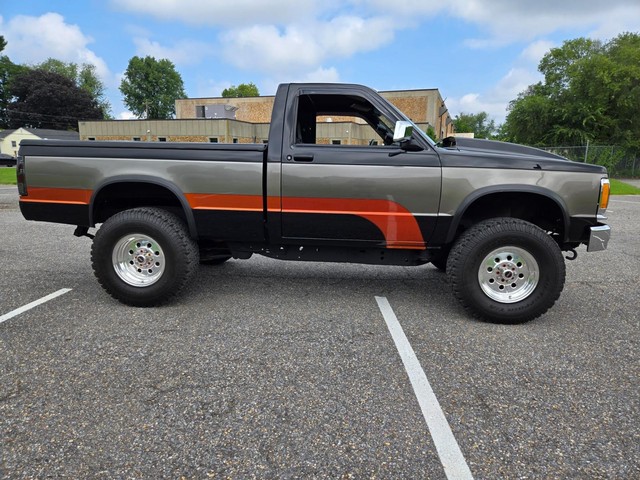
First generation, 1982–93. The early trucks are the lightest and simplest S-10s, and the most varied under the hood. Base trucks came with four-cylinder power and a four- or five-speed manual; the 2.8 V6 and an automatic turned the truck into something that could tow and commute without drama. EL and Durango were appearance and comfort packages rather than separate models — better trim, two-tone paint, chrome — and the Cameo of 1989–91 added a sporty body kit that is now prized by the sport-truck scene. The Baja package, offered from the late 1980s, dressed a 4x4 with off-road equipment and graphics. Four-wheel-drive trucks from 1983 onward used a part-time system with a floor or, later, dash-mounted control, and from 1988 the 4.3 V6 progressively replaced the 2.8 as the serious engine. The 1991 facelift brought a new grille shared with the full-size trucks, composite headlights on many versions, and anti-lock brakes at the rear, and it is the pick of the generation if you want an early truck to use rather than to show.
The Blazer question. The S-10 Blazer (1983–94) is not a pickup, but you will meet Blazers in every S-10 search, and everything in the engines, gearboxes and mechanical problem sections below applies to them unchanged. Judge a Blazer by its own body: tailgate and rear-quarter rust matter more than bed condition. Good two-doors have their own following and no longer price like parts trucks.
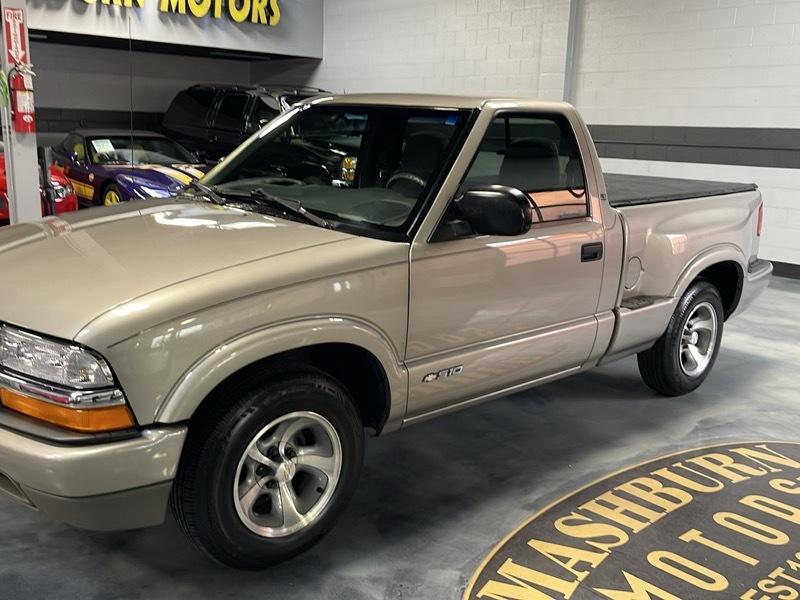
Second generation, 1994–2004. The 1994 redesign is the bigger step than the styling suggests. The cab is roomier and far quieter, the dashboard is a proper car-like design, driver airbags arrived and then dual airbags, and four-wheel anti-lock brakes became widely standard. The engine range simplifies usefully: a 2.2-litre four for economy trucks and the 4.3 V6 for everything else, with the manual gearbox still offered on both. The 1998 facelift brought stacked headlights, a new grille and bumper, and interior updates. Extended cabs gained a third door on the driver's side from 1996 — check its hinges and latch with special care, because it is both a convenience and a known rattle and alignment point.
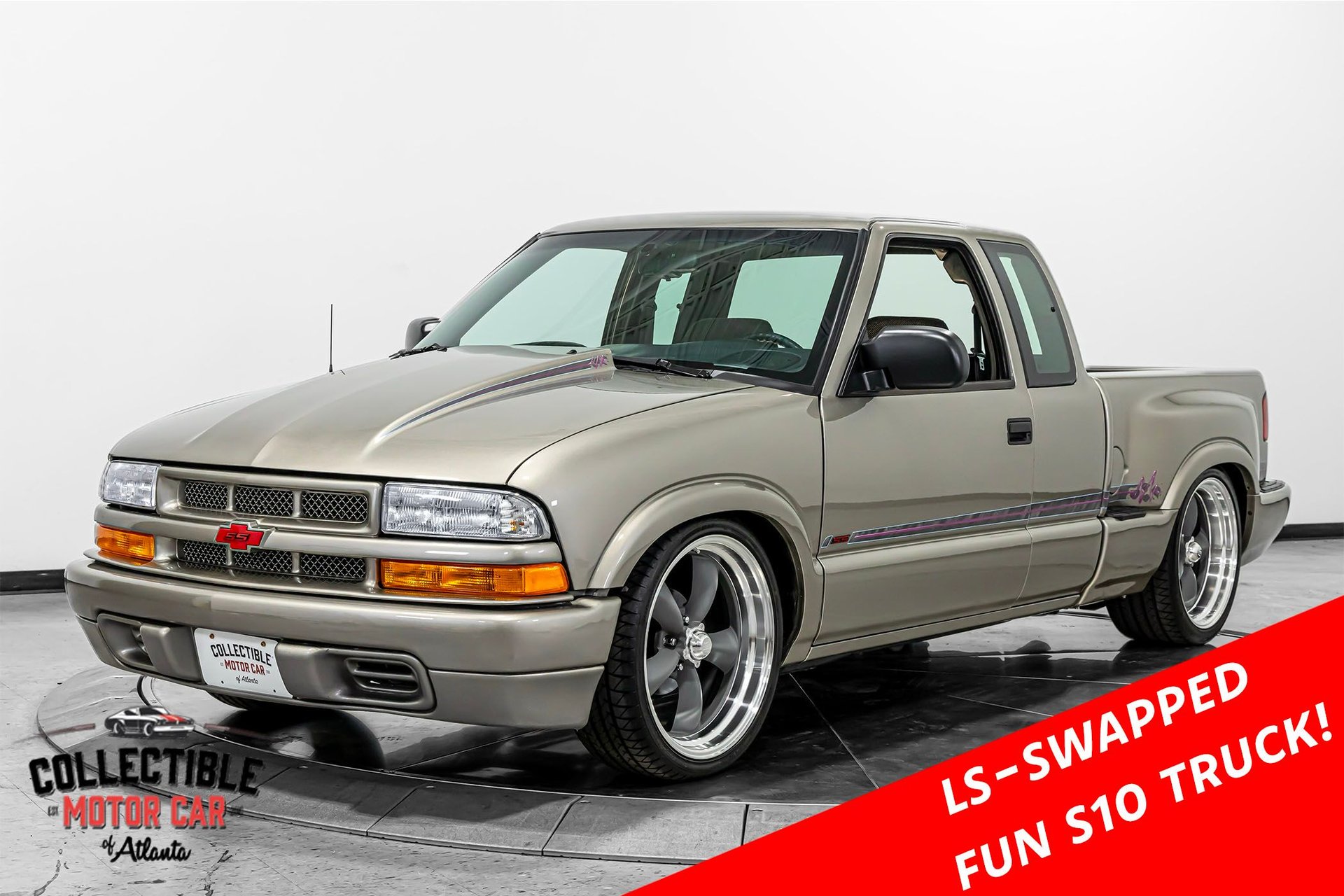
The specials. The SS (1994–98) is a lowered regular-cab two-wheel-drive truck with the strongest 4.3 then offered, a limited-slip differential, monochrome paint and specific wheels; subtle, fun, and increasingly hard to find unmodified. The ZR2 is the opposite idea executed just as well: a wider track, lifted and reinforced suspension, larger tyres, skid plates and Bilstein dampers — a genuinely capable trail truck whose specific parts you must verify are still present, not replaced with standard components. The Xtreme (1999–2004) applies the ZQ8 sport suspension and a full ground-effects kit; the body kit is the value, and cracked or missing skirts and valances are expensive to put right, so completeness prices these trucks. The crew cab (2001–04) came only as a 4x4 with the 4.3 and automatic and a very short bed — buy it as a family classic, not a work truck. The Syclone belongs to GMC, but no S-10 orientation is complete without it: one year, 2,995 built, a turbocharged 4.3 with all-wheel drive. Treat any Syclone as a separate collector purchase — cladding, turbo and transfer case originality are the value.
Engines and gearboxes
The fours: Isuzu, Iron Duke and the 2.2
The S-10 opened with borrowed and basic four-cylinder power, and you need to know which four is in front of you because they have almost nothing in common. The earliest base trucks (1982–85) used a 1.9-litre overhead-cam Isuzu four of about 62 hp, with a 2.0-litre Chevrolet overhead-valve four of about 83 hp alongside it, and a 2.2-litre Isuzu diesel of about 62 hp offered briefly for the economy market. All three are slow and are now curiosities rather than daily choices — the diesel especially, as parts and expertise are thin. A healthy one starts cleanly and pulls without smoke; blue smoke and hard starting mean wear you cannot tune away.
From 1985 the four that matters is the 2.5-litre Iron Duke — GM's long-lived overhead-valve four, in the S-10 with throttle-body injection for most of its life and outputs around 92 hp early and up to about 105 hp in its later, improved form. The Iron Duke's reputation is earned: it is understressed, tolerant of neglect and famously long-lived, with a timing gear drive instead of a chain on many versions that removes one whole wear item. Its vices are refinement and specific leaks rather than fragility. Expect a coarse idle, modest power that makes a loaded truck or an automatic-equipped truck feel strained, oil seepage from the rocker cover and the rear main area with age, and throttle-body injector and idle-control faults that present as stalling at junctions and a wandering idle. None of that is terminal. A compression test and a look at the oil tell you the truth: even, dry compressions and clean oil mean an engine that will outlast the body around it.
The second generation replaced the Iron Duke with the 2.2-litre LN2 overhead-valve four (1994–2003), rated around 118–120 hp. It is a better daily engine — smoother, stronger and well supported — with two known conversations attached. Head gasket failure is the headline: overheating, coolant loss with no visible leak, mayonnaise under the oil filler cap and bubbles in the expansion tank are the sequence, and a truck that has been run hot after the gasket started to go can need head work as well as a gasket, a repair in the region of 900 to 1,800 dollars done properly with machining. The second is timing chain and tensioner wear at high mileage, announced by a rattle from the front of the engine that does not fade. Judge a 2.2 truck on its temperature gauge story: a needle that sits steady in traffic and a heater that blows properly hot are worth more than a seller's assurance.
The V6s: 2.8 and the 4.3 Vortec
The 2.8-litre 60-degree V6 (LR2) carried the first generation's middle ground from 1982 to 1989, carburetted at first and then throttle-body injected, making roughly 110–125 hp. It is a willing, revvy engine that suits the light early truck, and in injected form it is simple and reliable. Its age shows in oil leaks — rocker covers, intake ends, rear main — and carburettor wear on the earliest trucks. What kills them is overheating and neglect, not design. An injected 2.8 with a manual gearbox is a sweet, honest combination; if you want to tow or run a 4x4 on modern highways, keep reading.
The 4.3-litre V6 is the S-10's defining engine, fitted from 1988 to the end of production in ever-evolving form, and the engine most readers of this guide will buy. It is a 90-degree V6 derived from Chevrolet's small-block V8 architecture — effectively a three-quarter 5.7 — with the toughness that implies: a strong bottom end, a balance shaft on later versions to tame the inherent vibration, and torque outputs that made the little truck feel effortless. Early carburetted and throttle-body versions (LB1 and LB4) made around 155–160 hp. The Vortec era brought central port injection and outputs around 180–195 hp for the L35, with the later LF6 and LU3 sequential-injection versions at 180–190 hp depending on year and application. The Syclone's turbocharged LB4 derivative, at 280 hp with its air-to-water intercooler, sits at the top of the family tree and is covered as a special above.
A healthy 4.3 starts instantly, idles with a slight, characteristic lope that should be even rather than lumpy, and pulls hard from low revs without hesitation or smoke. The engine itself rarely wears out before 200,000 miles if the oil has been changed. What fails is everything bolted to it, and two systems dominate the problem section for a reason. The intake manifold gaskets on the Vortec versions degrade and leak coolant internally and externally — the single most important 4.3 check on any viewing. And the central port injection system on 1992–95 trucks, the so-called spider injector assembly inside the intake, leaks and clogs with age, causing hard starting, misfires and fuel in the oil; the later sequential systems are far more robust and an upgraded spider conversion is a well-trodden fix for the early trucks. Add the usual small-block family items — a water pump that weeps from its tell-tale hole, an alternator and starter that are cheap and easy, and exhaust manifolds that crack or lose studs — and you have the whole picture: budget for the intake and injection story, verify the cooling system, and the 4.3 will repay you with the best all-round S-10 driving experience there is.
Gearboxes and drive
Manual gearboxes are a strength of the range. Early fours used four- and five-speed units sourced to suit the engine, and the Borg-Warner T-5 five-speed that served so many 1980s GM cars is the common manual behind the 2.8 and early 4.3 trucks. The T-5 is light, pleasant and well understood; judge it on second- and third-gear synchromesh when cold, on bearing whine in the intermediate gears, and on a clutch whose bite point and judder tell you whether a clutch replacement — a few hundred dollars in parts, and a straightforward driveway or shop job — is already due. Second-generation trucks used the New Venture NV1500 behind the 2.2 and the stronger NV3500 behind the 4.3. The NV3500 is the one to have with a V6: a robust, if slightly notchy, five-speed that tolerates the 4.3's torque indefinitely if its oil has been changed. A manual truck that shifts cleanly cold, does not jump out of gear on the overrun and has a quiet release bearing is a genuinely desirable S-10, and manuals are a minority of the pool — in our current listings automatics outnumber manuals by roughly three to one — so a good one rewards patience.
Automatics did most of the selling. Early trucks used three- and four-speed units, and the 700R4 and its electronic successor the 4L60-E became the standard automatic behind the V6s. The 4L60-E is a good gearbox with a known personality: shifts should be prompt and consistent, with no flare on the 2–3 change, no shudder on torque-converter lock-up at highway speed, and no delay engaging drive or reverse from cold. Fluid tells the story before the road does — pull the dipstick, and bright red, sweet-smelling fluid is what you want; dark, burnt-smelling fluid on a truck with no service record means a rebuild conversation in the region of 1,800 to 3,200 dollars fitted is part of the price, whether you have it now or later. Heat and towing kill these boxes, so a truck that has towed needs a cooler and a fluid history, and a truck that has neither needs the test drive in the inspection section done in full.
Four-wheel drive is a part-time system with a two-speed transfer case — the New Process and New Venture 231 and 233 cases in most applications — low range, and front axle engagement by vacuum or electric actuator depending on year. Its failures are almost all from disuse: actuators that no longer engage the front axle, perished vacuum lines, shift motors on push-button trucks seized in place. Test engagement and low range on every 4x4 viewing, on loose ground, and listen for chain slap from a stretched transfer-case chain. The ZR2's wider track and the Syclone's all-wheel-drive Borg-Warner case are the exceptions to standard-parts thinking — verify them as original equipment.
Problem areas
An S-10 rarely fails all at once. It fails the way working trucks do: a leak tolerated, a service skipped, a rust bubble watched for three winters — until the next owner inherits the whole list at once. Work through this section in the order it is written. The frame and cab decide whether the truck is worth saving at all; the 4.3's intake and cooling decide what the first year costs; and everything after that is priced, fixable work. In the photo sets we examined in detail for this guide — 12 trucks — rust was noted in 3 and visible damage in 1, and that modest count flatters the wider pool, because photographed listings systematically avoid the underside. Treat every truck as guilty underneath until you have seen it on a lift or on your back with a torch.
Rust: the frame, the cab and the bed
Start with the frame, because on an S-10 the frame is the truck. Surface rust on a ladder frame is normal and largely cosmetic; what condemns a truck is perforation and flaking, layered scale, especially around the rear spring hangers and shackles, the crossmembers, the fuel and brake line runs, and the section under the cab where road salt sits. Prod with a screwdriver, with permission, and tap with a small hammer if the seller allows: sound steel rings, rotten steel crunches and gives. A frame that is perforated at a spring hanger or cracked at a crossmember is fabrication work priced per truck, and on a standard S-10 it usually exceeds the value of the finished vehicle — that is a walk-away, or a parts-truck price, however good the engine is. Pay particular attention to trucks from the salt belt, and to any frame wearing a fresh, uniform coat of black paint or underseal applied over everything including lines and fittings: nobody refinishes a sound frame the week before a sale for your benefit.
The cab follows a predictable map. Cab corners — the small panels behind the doors at the base of the cab — rot first and worst, because they collect everything the front wheels throw up and hold it wet. Rocker panels under the doors go next, from the inside out, so bubbling paint at the bottom of a rocker means the panel is already thin; press firmly along its length and check the pinch weld underneath. Door bottoms fill with water when their drain slots block, and bubble along the lower edge. The floor pans collect leaks from the windshield seal and the cowl, and sit wet under carpets and rubber mats — lift them in both footwells, because a floor that is holed at the seat mounts or the cab mounts is structural, not cosmetic. Around the windshield, rust at the base of the pillars and along the header is the expensive end of cab rust: it means glass out, fabrication and paint, and it leaks onto the fuse box and the driver's feet on the way. A cab-corner and rocker repair done properly — cut out, welded, sealed and painted — runs roughly 800 to 2,000 dollars a side at a body shop, which is why two rotten sides reprice a cheap truck completely.
The bed is more forgiving but tells the truth about the truck's life. The bed floor rusts over the rear wheel arches and along the cross-supports underneath, where mud sits between floor and support; a floor that flexes underfoot or shows daylight at the seams is a panel or a bed swap. Wheel-arch lips bubble from trapped mud behind them. The tailgate rusts along its bottom edge and at the handle, and sags when its hinges and the bed corners tire. A dented, scratched but solid bed is the honest signature of a working truck and should not scare you; a bed resprayed over filler at the arches, with fresh paint stopping suspiciously at the character line, should. On extended and crew cabs, add the rear cab corners, the third-door lower edge and seal on 1996-on trucks, and the cab-to-bed gap, where trapped leaves and dirt hold moisture against both panels.
Two myths to bury here. First, a Southern or Western truck is not automatically a sound truck: beach air, farm chemicals and a life parked on grass all rot frames, and the check is the same wherever the truck lived. Second, fibreglass or filler repairs to cab corners are not a fix you can price as done — they are a postponement, and the metal underneath continues to go. Price any filled corner as a corner that still needs cutting out.
The 4.3's intake, cooling and fuel systems
If the frame is the S-10's structural story, the Vortec 4.3's intake manifold gasket is its mechanical one. The factory gaskets on the 1996-on Vortec engines used a plastic carrier that degrades with heat cycles and with the long-life coolant chemistry of the period, and the failure is progressive: first a coolant weep at the front or rear of the intake, then coolant loss with no puddle because it is going into the valley and the oil, then overheating, and in the worst case coolant in the oil taking out the bearings of an otherwise perfect engine. The checks are specific. Look for coolant crust and staining at the intake-to-head joints and at the rear of the intake. Check the oil filler cap and the dipstick for emulsion. Check the coolant level and colour in the reservoir — a truck that is low on coolant with no explanation is a truck mid-failure. And ask directly whether the intake gaskets have been done, and for the invoice: a documented replacement with the updated metal-carrier gaskets is one of the most valuable lines in a 4.3 truck's history file, worth a premium. Doing the job yourself or at a shop runs roughly 600 to 1,200 dollars in parts and labour, and it is the first job to schedule on any undocumented Vortec truck, before the failure schedules it for you.
Cooling follows from it. Radiators silt and their plastic end tanks crack with age; water pumps weep and then wobble; heater cores clog and leak into the passenger footwell, announced by a sweet smell and a misting windscreen — and a heater core on a second-generation truck is a dashboard-out job whose labour dwarfs the part. Thermostats stick, fan clutches on mechanical-fan trucks freewheel when they should drive, and electric fans on late trucks fail at the motor or the relay. The test is unglamorous: from cold, watch the gauge climb and settle, confirm the heater blows hot, idle the truck for fifteen minutes after the test drive and watch that the temperature stays put. A 4.3 that runs hot is not a character trait; it is the intake, the radiator or the pump, in some order, and each is cheaper before the head gaskets join the list.
Fuel delivery has its own chapter. The 1992–95 central port injection spider assembly — a central injector feeding poppet valves through nylon lines inside the intake — leaks internally with age, washing cylinders, diluting oil and causing hard hot starting, a rich idle and wandering misfires. Diagnosis needs a fuel pressure and leak-down test: pressure that will not hold after the pump stops is the spider or the regulator, and the modern fix is the upgraded multi-port conversion spider, a few hundred dollars in parts plus the same intake-off labour as the gaskets, which is why the two jobs are so often done together. Throttle-body trucks fail more simply — injector seals, idle air control valves, tired pumps. On all trucks, a noisy in-tank pump, or one that needs two key cycles to build pressure, is a tired pump; the part is cheap and access is the labour. Fuel and brake lines along the frame rail corrode together, and a weeping line is a replace-the-run job, not a patch.
Chassis, steering, brakes and suspension
The two-wheel-drive front suspension is a conventional double-wishbone design on coil springs, and its wear items are ball joints, tie-rod ends, idler and pitman arms, and control-arm bushes. The classic S-10 front-end story is the idler arm: it wears, the steering goes vague with play at the straight-ahead, and the front tyres wear their inner edges. Rock each front wheel at the top and at the sides with the truck lifted, watch the idler arm and centre link for movement that does not reach the wheels, and price a front-end refresh — joints, arms and an alignment — at roughly 700 to 1,500 dollars fitted depending on how much of it the truck needs. Ball joints that have been greased live; sealed, dry, knocking joints on a high-mileage truck are a safety item, not a negotiation detail. Four-wheel-drive trucks substitute torsion bars and their own ball joint and CV axle story: torn CV boots and clicking on full lock mean axle shafts, and a front differential that whines or carries glitter in its oil has been run dry or drowned.
Steering boxes wear loose at the straight-ahead and leak from the sector shaft seal; a box whose play adjustment cannot remove without binding is a replacement, a few hundred dollars for a rebuilt unit plus fitting. Power steering pumps whine when low or tired, and hoses weep at their crimps. None of it is exotic, but it adds up — a truck that wanders, knocks and leaks at the front is asking for the full list at once.
Brakes are discs at the front and, on most trucks, drums at the rear, with rear-only anti-lock on early trucks and four-wheel ABS on later ones. The hardware is cheap; the state of it is what you are buying. Seized rear wheel cylinders, perished hoses, torn calliper boots and lipped discs are the standard recommissioning list after a truck has sat, and a full hydraulic refresh runs roughly 600 to 1,400 dollars in parts and labour. The ABS units on 1990s trucks can fail internally and give a low, long pedal that bleeding never fixes — a pedal that sinks under steady pressure is the master cylinder or the ABS modulator, diagnosed before money changes hands, not after. Parking brake cables seize in their guides, and one that does not hold on a slope is a safety item on any manual truck.
At the rear, leaf springs sag, crack leaves and wear their bushes, and the hangers and shackles are where frame rust and suspension meet — a shackle rusted through its hanger is both a structural and a suspension failure. Dampers are cheap and almost always overdue. The rear axle — the 7.5-inch and, on some V6 and ZR2 trucks, the stronger 8.5-inch 10-bolt — is tough, with pinion seals that weep and, on hard-used trucks, axle bearings that rumble. A limited-slip differential needs the correct additive at fluid changes or it will chatter on tight turns. Check the spare and its carrier too: a seized carrier and a perished tyre are the norm, not the exception.
Cab, electrics and the small things that price a truck
Second-generation interiors wear well and first-generation interiors wear honestly, but both have a checklist. Heater blower resistor packs on later trucks take speeds away one by one until only the highest remains — that symptom is the resistor, cheap and accessible, not the motor. Air conditioning on a truck of this age is a system, not a feature: compressors leak at the shaft seal, condensers corrode, and a system that blows cool but not cold after a regas is leaking somewhere, with a proper diagnose and repair running from a few hundred dollars to over a thousand if the compressor has gone. Wipers develop a mind of their own from a failing wiper module — a well-known fault with a well-known fix. Door hinges sag on their pins, worst on regular-cab doors and the third door, and a door that must be lifted to latch is pins and bushes, cheap in parts and fiddly in labour.
Electrics fail at connections and grounds, as they do on every vehicle of the era. The dashboard grounds behind the instrument cluster cause wandering gauges and phantom warnings; the fuel gauge sender in the tank is a notorious liar on high-mileage trucks, so never judge range or a running fault by the gauge alone; and the ignition switch and its harness on second-generation trucks cause intermittent no-crank and stalling faults that mimic far more expensive failures. Window regulators slow and then stop, door lock actuators tire, and the tailgate and bed wiring on trucks that have had toppers, trailers and bed swaps spliced in deserves a look with every light and the trailer socket tested. Individually these are small jobs. Collectively they are how you tell a maintained truck from a survived one: on a maintained truck, everything you touch works.
Finally, read the truck's paperwork faults. Odometer discrepancies and title brands matter more on the specials — an SS, ZR2 or Xtreme is cloned from a standard truck often enough that the option codes on the glovebox service label are your primary evidence, checked against the VIN plate and title before any premium is paid. Engine swaps are common — small-block V8 conversions are the S-10's folk tradition — and a conversion is neither good nor bad in itself: a documented, properly cooled and wired one can be a fine truck, while an undocumented one is someone else's unfinished project. Price the finishing, not the promise.
How to inspect one
Allow an hour, bring a torch, a magnet wrapped in cloth, a screwdriver for prodding with the seller's permission, and a code reader if you have one. Insist on a cold start — arrange it when you book the viewing, and treat a truck that is warm when you arrive as a truck whose cold behaviour the seller chose not to show you. If the truck passes you, a lift inspection before money changes hands is money well spent on any S-10, because the frame check in step 3 is the whole purchase.
- Paperwork and identity first. Match the VIN on the title to the plate at the base of the windshield and the door label. On any truck carrying a premium badge — SS, ZR2, Xtreme — decode the option codes on the glovebox service label and confirm the package code is there; badges and body kits bolt on, factory codes do not lie. Ask for service records and look specifically for three lines: intake manifold gaskets on a Vortec 4.3, automatic gearbox fluid changes, and timing or cooling work on a 2.2. A thick file is worth real money on this model.
- Cold start and first listen. From stone cold, the truck should start promptly and settle. A 4.3 idles with an even lope; a hunting, lumpy idle points to the injection and intake story in the problem section. Watch the exhaust: blue smoke on start-up that clears is valve stem seals, continuous blue smoke is wear, white sweet-smelling vapour that does not clear is coolant, and black richness that lingers on an injected truck is a sensor or injection fault. Listen for a timing rattle on a 2.2 and for lifter tick that does not fade on a V6.
- Underneath: the frame decides. Torch along both frame rails, prod the spring hangers and shackles, the crossmembers and the rail under the cab, and tap suspect scale. Perforation at a hanger, a crossmember or the cab section ends the inspection at parts-truck money. Read any coating as you go — honest, patchy factory protection is normal; a fresh uniform black coat over lines and fittings is a question. Check the fuel and brake lines along the rail while you are there, and the spare wheel carrier.
- Cab rust, in order. Cab corners behind the doors, rocker panels pressed hard along their length, door bottoms and their drain slots, then floors: lift the carpets or mats in both footwells and prod around the seat and cab mounts. Check the windshield base and pillars for bubbling. Two rotten cab sides plus floors is a body-shop programme, not a weekend — reprice or walk.
- Bed and tailgate. Walk the bed floor, bounce your weight over the wheel arches, look underneath at the floor supports, and run the magnet over the arch lips. Work the tailgate up and down, check its bottom edge and the handle, and sight down both bed sides for ripples and mismatched paint.
- Under the hood: the 4.3 checks. On a Vortec truck, look for coolant crust at the intake joints, check the reservoir level and colour, and pull the oil filler cap and dipstick looking for emulsion and for oil that smells of fuel — the intake gasket and spider injection evidence from the problem section, in that order. Check the radiator end tanks, the water pump tell-tale, every hose by squeezing, and the belt and its tensioner. On a 2.2, the same coolant discipline applies, plus a careful look for head gasket evidence: bubbles, oil in coolant, coolant in oil.
- Gearbox evidence before you move. Pull the automatic's dipstick: bright red and sweet is right, dark and burnt reprices the truck by a rebuild. On a manual, note the clutch bite point and listen to the release bearing with the pedal down and up. On a 4x4, engage four-wheel drive and low range on loose ground if the seller permits — an actuator or shift motor that has seized from disuse announces itself here, not on the road.
- The test drive. Fifteen minutes minimum, including a highway stretch and some broken pavement. The automatic should shift promptly with no flare on the change into third and no shudder as the converter locks at speed. The steering should track straight with modest play; wander plus a knock over bumps is the front-end list — idler arm first — pricing itself. Brake firmly from speed twice: straight, no judder, no pull, and a pedal that stays firm under steady pressure at the next stop. On a manual, test second- and third-gear synchromesh cold and hot and check the truck does not jump out of gear on the overrun.
- Heat soak and idle. After the drive, let it idle for ten minutes. The temperature gauge should sit steady, the heater should blow properly hot, and the fan — clutch or electric — should cut in and control the temperature. A gauge that creeps at idle is the cooling system asking for the money the problem section describes. Switch off, wait five minutes and restart: a hot restart that cranks long or stumbles on a central-port-injected 4.3 points back at the spider and fuel pressure.
- Electrics and cab, everything touched. Work every window, the locks, the wipers on every setting including intermittent, the washers, lights, indicators, horn and radio. Run the heater blower on every speed — speeds missing one by one is the resistor pack. If air conditioning is claimed, it must blow genuinely cold at idle after ten minutes, not cool-ish for the first minute. Sit in every seat, check the belts, and on an extended cab open and close the third door and check its latch and seal.
- Stance and tyres. Stand back and look: a two-wheel-drive truck sits level, a 4x4 sits level and higher, and a ZR2 sits wide and higher still. Sag at one corner is a spring or a mount; a rear that sits low with tired leaves shows in the arch gap. Read the tyres as a record — inner-edge wear at the front is the front-end story, mismatched budget tyres on a claimed cherished truck tell their own tale.
- Price the list, then decide. Write down everything you found, grouped as the problem section groups it: structural, first-year mechanical, and small. Structural rust reprices or ends the deal; the mechanical list is negotiable money with known costs; the small list is your evidence of how the truck has been kept. An S-10 that passes the frame, shows a documented intake job and drives straight and cool is a truck to stretch for.

Values
The market block beneath this guide carries the live numbers — what is listed now, and what recorded sales have achieved — and it is refreshed as the market moves, so this section deliberately teaches you how to read those figures rather than repeating a snapshot that would date. The S-10 market has three tiers that barely talk to each other, and knowing which tier a truck belongs to matters more than any single asking figure.
The bottom tier is the working truck: high mileage, visible wear, a list of deferred jobs, bought on utility. Here the spread between asking and achieved is at its widest, because sellers anchor on what tidy trucks fetch while buyers price the work list from the inspection — frame attention, intake gaskets, front-end parts, tyres — and the achieved figure is the asking figure minus that list, every time. A work truck with a sound frame is genuinely good value in this tier; a work truck with a rotten frame is worth its engine and its parts, whatever the badge says.
The middle tier is the honest driver: a documented, maintained truck, usually a second-generation LS with the 4.3, presentable paint, everything working, bought to use and enjoy. This is the deepest part of the market and the most liquid — good trucks sell quickly at fair money, and the premium within the tier goes to the evidence, not the shine: the intake gasket invoice, the gearbox fluid history, the rust-free underside photographs. Two otherwise identical trucks can sit a long way apart in this tier on paperwork alone, and rightly so.
The top tier is the collector truck: low-mileage first-generation survivors, Cameos, unmodified SS and Xtreme trucks, correct ZR2s, and above them all the Syclone, which trades in a different market entirely and should be comped against its own kind, never against ordinary S-10s. Here originality is the currency — correct wheels, intact Xtreme cladding, ZR2 suspension still present — and modification subtracts rather than adds, however much it cost. Crew cabs occupy a small niche of their own: supply is thin, and condition outweighs mileage.
Three reading rules apply across all tiers. First, condition spread is enormous because the trucks were tools: the gap between a project and a sorted example of the same variant is routinely the cost of the sorting, so never average the two and call it the market. Second, geography moves money — a rust-free frame commands its premium precisely where rust is the norm, and a salt-belt buyer should expect to pay for a dry-state truck or travel for one. Third, asking prices on the specials are aspirational until the option codes are verified; an unverified premium badge is a standard truck with a story, priced as one until the glovebox label says otherwise.
Parts and ownership
The S-10 is one of the best-supported classic trucks you can own, for the simplest of reasons: Chevrolet built them in the millions, the mechanicals are shared across an enormous GM ecosystem, and the mini-truck and sport-truck scenes keep the reproduction trade busy. Ownership divides cleanly into what is easy, what is merely priced, and what needs hunting.
Easy: service items for every engine — filters, plugs, belts, hoses — brake discs, pads, drums, shoes and hydraulics, suspension wear parts including ball joints, idler arms and dampers, water pumps, alternators, starters, exhaust systems in standard form, radiators, clutch kits for the manual gearboxes, and glass rubbers and weatherstrips for the common cab styles. Most of it is order-today, fit-this-weekend, at prices close to modern-car money, and the 4.3 shares its service ecosystem with the full-size trucks and vans that used the same engine family.
Priced but available: the updated intake manifold gasket sets for the Vortec 4.3 and the upgraded multi-port spider conversion for the early central-port trucks — both are established, well-documented fixes rather than improvisations. Rebuilt steering boxes and 4L60-E gearboxes are exchange items from a deep trade. Air conditioning compressors and condensers, heater cores, transfer-case shift motors and actuators, and ZR2-specific suspension components all exist, with the ZR2's wider-track parts commanding the premium their lower production earns. Xtreme body cladding and SS-specific trim sit here too when they can be found — completeness on a truck you already own is worth protecting, because a missing skirt is a search, not an order.
Harder: first-generation trim in the less common colours, Cameo and Baja graphics and dress parts, long-bed and crew-cab body panels in rust-free condition, Syclone cladding and turbo parts, and S-10 Electric components, which are a closed historical chapter. For all of it, the breaker and enthusiast network is the supply line: S-10 forums and owner groups are active and generous with cross-references to the GMC Sonoma and the Blazer and Jimmy lines, which share far more than their badges suggest.
Running costs and living with one. A sorted S-10 is a realistic daily classic. Fuel consumption is honest truck economy — the fours are frugal, the 4.3 thirstier — insurance sits in line with other classics of similar value, and any competent independent shop can service the truck. The budget line that catches new owners is the first year: catching up deferred maintenance — intake gaskets where undocumented, a cooling refresh, front-end wear items, fluids throughout — is a real programme of work, and recommissioning a truck that has sat adds the fuel system end to end, every brake component, and every hardened seal and hose. Buy a truck in regular use over a sleeping one, even at a higher price — on this model more than most, use is maintenance.
Which one to buy
- The all-rounder: second-generation LS with the 4.3 V6. The best cabin, the strongest engine in its most developed form, the deepest parts support and the widest choice on the market. A documented intake gasket job and a clean frame make it the default S-10, and deservedly so.
- The value buy: a first-generation truck with the injected 2.8 or the Iron Duke. Simple, light and honest, and still priced as a used truck rather than a collector piece in most regions. Buy the structure, enjoy the simplicity, and accept the pace.
- The worker: a long-bed regular cab with the 4.3 and an automatic. The most bed and the most torque the range offers in a standard truck. Prioritise frame, gearbox fluid history and cooling over trim and paint — it will earn its keep while the collector trucks are at shows.
- The off-roader: ZR2. A genuinely engineered factory package, not a sticker — wider track, proper dampers, real clearance. Verify the specific suspension and the option code, because a standard 4x4 in ZR2 clothes is worth standard 4x4 money.
- The street truck: Xtreme with the 4.3, or an SS if you can find an unmodified one. The ZQ8 suspension makes the Xtreme the best-handling S-10 of all, and completeness of the body kit is the value. The SS is rarer and subtler; originality is everything on both.
- The family classic: crew cab 4x4. Four doors, the 4.3, automatic, and a bed sized for weekends rather than work. Thin supply means condition decides — buy the best one that appears rather than waiting for a perfect specification.
- The collector car: Syclone, Cameo, or a low-mileage first-generation survivor. Three different collections, one rule: documented originality, verified codes, and a premium paid only for evidence. The Syclone in particular is its own market and its own inspection — do not improvise either.
- The first classic: a 2.2 five-speed, second generation. Cheap to buy, cheap to run, manual, and new enough to use daily while you learn the model — with the head gasket check from the inspection done before, not after, the purchase.
And the rule that overrides all of the above: buy the frame and the cab first, the engine second, and the badge last. Gearboxes, intake gaskets, front ends and brakes are all fixable at prices you can plan for. A rotten frame or a rotten cab costs more to put right than the finished truck will be worth — and on a truck built in the millions, the right one is always still out there.
See the 49 S-10 cars currently listed.