
Chevrolet Nova buyer's guide
Chevrolet Nova -- the model's own buyer's guide: variants, values and what to check.
Years listed: 1962-1978 · Series: Nova
Overview and history
The Chevrolet Nova is not one car. It is four distinct generations of compact Chevrolet wearing, at various times, two different names — Chevy II and Nova — across a production run that stretches from the autumn of 1961, when the first cars arrived as 1962 models, to the end of the 1979 model year. That matters more with a Nova than with almost any other American classic, because the car a seller is describing as "a Nova" might be a featherweight 1962 economy convertible with a four-cylinder engine and drum brakes all round, or it might be a 1969 big-block SS 396 that was, pound for pound, one of the quickest production cars Chevrolet ever sold. The badge stayed broadly the same. Almost everything underneath it changed.
The story starts with a failure. Chevrolet's radical rear-engined Corvair, launched for 1960, was supposed to answer the Ford Falcon, but buyers who wanted a simple, conventional compact walked past it. Chevrolet developed the Chevy II in a hurry — legend inside the division says eighteen months from sketch to showroom — as a deliberately orthodox car: front engine, rear drive, unit construction, a four or a six, and styling like a scaled-down full-size Chevrolet. It worked immediately: cheap, roomy, easy to service, and it sold in the hundreds of thousands.
Nova began as the name of the top trim series within the Chevy II range — the Chevy II Nova 400 — not as a model in its own right. Through the sixties the name climbed as the economy-car image fell away. By 1968, with the third generation, Nova had become the headline and Chevy II was demoted to a small badge; for 1969 Chevrolet dropped Chevy II altogether and the car was simply the Nova. That naming drift is your first buying lesson: on the early cars, "Nova" describes trim, not identity, and a 1963 Nova convertible and a 1963 Chevy II 100 sedan are the same basic automobile at different equipment levels, while a 1962 car advertised as a Nova should be a Nova 400 series car — check the paperwork rather than the seller's shorthand.
Three forces shaped what the Nova became. The first was weight: even the third-generation cars are light by modern standards, and the 1962–67 cars lighter still. The second was Chevrolet's engine catalogue: the bay was designed into the corporate parts system, so everything from the 153 four to the 396 big-block was either a factory option or a straightforward transplant later. The third was the Super Sport package and the dealer-performance era it fed. An SS with a 327 in 1966, a 350 or 396 in 1968–70, or a 427 transplanted by Yenko under the COPO system was a genuine muscle car in a compact shell — and because ordinary cars looked nearly identical, the Nova became one of the most cloned and misdescribed cars in the American market. That fact runs through this whole guide: identity is worth more than condition, and condition more than specification.
The generations break down cleanly. The 1962–65 first generation is the upright economy car — sedan, hardtop, convertible and wagon — with the SS arriving for 1963 as trim before V8 power came for 1964. The 1966–67 second generation restyled the same idea into the prettiest Nova of all, and the first with serious factory performance in the 350-horsepower 327. The 1968–74 third generation, on the X-body platform, is the muscle-era Nova: a 111-inch wheelbase, a separate front subframe, factory big-blocks for 1968–70, and the SS at its peak. The 1975–79 fourth generation civilised the same platform for the emissions era — plusher, quieter, slower — and is still recognisably a Nova underneath.
Our own listings tell you where today's market concentrates. We currently track 182 Novas for sale or recently sold, spanning 1962 to 1978 in the pool this guide draws on: 1972 is the most common year, followed by 1967, then 1969, 1966 and 1964 — the market splits between the pretty second-generation cars and the muscle-era third-generation cars. Coupes dominate over sedans and wagons, automatics outnumber manuals widely, and red, black and blue account for most cars offered. Most Novas built were six-cylinder sedans; most Novas you will be offered are V8 coupes. The distance between those two sentences is where the money is made and lost.
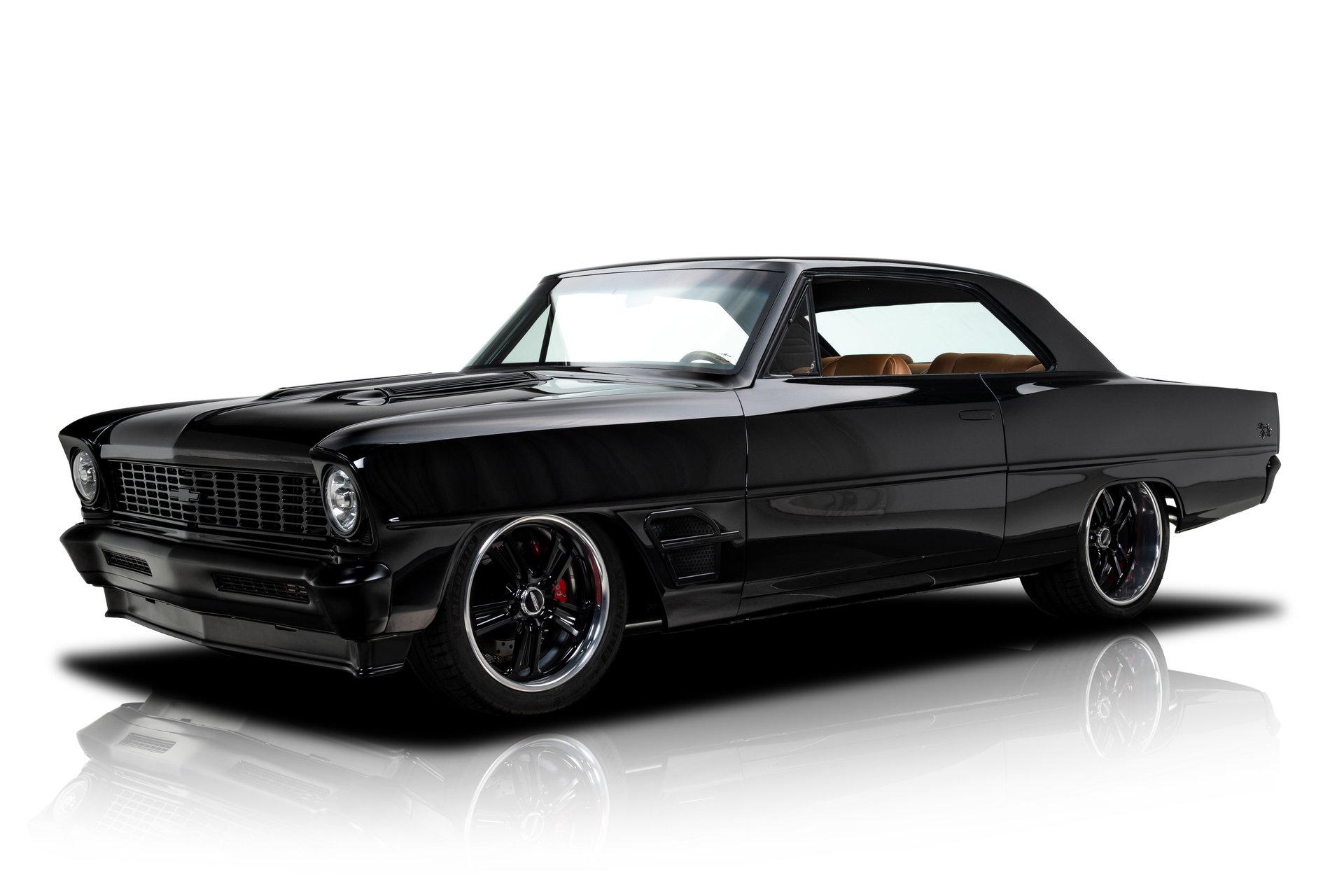
The models
Read this section as a map of four generations first and a list of badges second. Within each generation the hierarchy is consistent: a base series, a mid-range series, and Nova or SS trim at the top in the early years; then, from 1968, a single Nova range with the Super Sport as an option package rather than a separate series. That administrative detail has a practical consequence you will meet again in the inspection section: on a 1963–67 car, the series is built into the VIN and the car either is or is not an SS from the factory; on a 1968 and later car, the SS is a package on an ordinary Nova, the VIN alone will not confirm it, and documentation carries the argument.
| Model | Years | Engine | Output | Built | Character |
|---|---|---|---|---|---|
| Chevy II 100 / 300 | 1962–1965 | 153 four / 194 six | 90 / 120 hp | — | The economy original; sedan, wagon, hardtop |
| Chevy II Nova 400 / Nova SS | 1962–1965 | 194 six, then 283 V8 | 120–220 hp | — | Top trim first, performance from 1964 |
| Chevy II Nova SS | 1966–1967 | 194 six / 283 / 327 V8 | 120–350 hp | — | The pretty car; L79 327 is the collector peak |
| Nova coupe and sedan | 1968–1974 | 153 four / 230, 250 six / 307, 350 V8 | 90–300 hp | — | The X-body muscle-era base car |
| Nova SS | 1968–1972 | 350 / 396 (402) V8 | 255–375 hp | — | Factory muscle; big-block cars to 1970 only |
| Nova Rally / Custom / hatchback | 1971–1974 | Six / 307 / 350 V8 | 105–175 hp net | — | Appearance packages and a useful hatch from 1973 |
| Nova / Nova Concours | 1975–1979 | 250 six / 262, 305, 350 V8 | 105–170 hp net | — | The civilised last generation; comfort over speed |
Production figures are shown as a dash where Chevrolet's published totals do not map honestly onto a single trim line; this guide does not invent precision the factory records do not support. Outputs are gross ratings to 1971, net from 1972 on.
First generation, 1962–65. The launch range offered two-door and four-door sedans, a four-door wagon, a two-door hardtop and a convertible, in Chevy II 100, 300 and Nova 400 series. Engines were the 153 four and the 194 six; there was no factory V8 at all for 1962–63, a gap dealers and owners filled with transplants almost immediately — which is why an early car with a V8 today tells you nothing about its birth without paperwork. The SS package arrived for 1963 on the Nova 400 sport coupe and convertible: bucket seats, bright trim and badging, but still six-cylinder power as standard. For 1964 the 283 V8 joined the option list and the Nova began its second life; a 1965 facelift tidied the front end. These are simple, light, honest cars — and the most rust-prone of all Novas, for reasons the problem-areas section maps in detail.
Second generation, 1966–67. The restyle kept the wheelbase and basic structure but clothed it in a longer, lower, more expensive-looking body: sport coupe, sport sedan and wagon, with the SS sold as a distinct model, recognisable by its blacked-out trim and bucket-seat interior. The engine list ran from the 194 six through the 283 to the 327, topped by the L79 — a 350-horsepower, high-compression small-block shared with the Corvette catalogue and, in this light shell, a genuinely rapid car. The 1967 cars add detail changes, federally driven safety equipment and a revised front end. If the third generation is the Nova as muscle car, the 1966–67 SS is the Nova as a balanced sporting coupe — which is why L79 claims need the hardest verification of any in this guide.
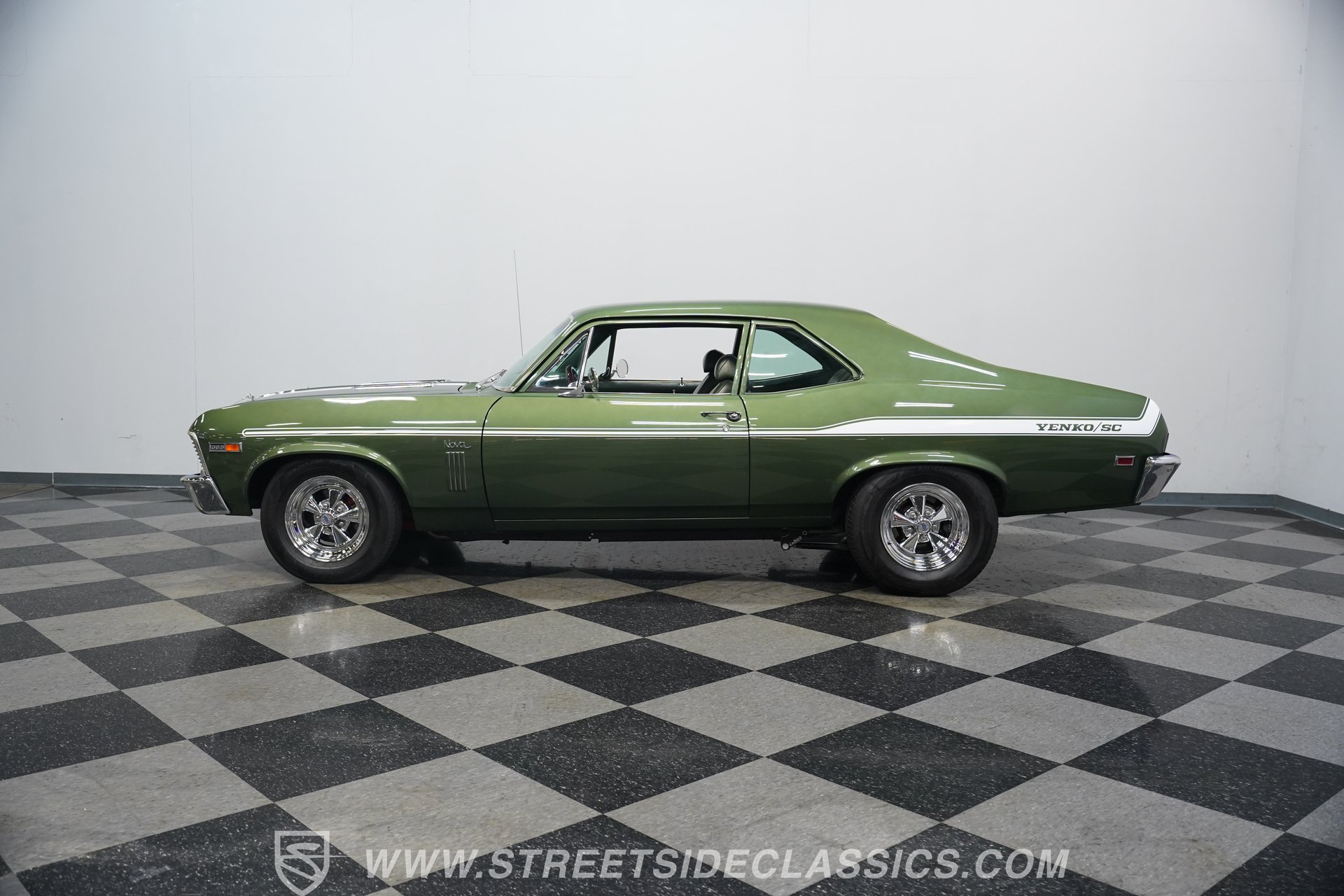
Third generation, 1968–74. The X-body redesign moved the Nova onto a 111-inch wheelbase with a bolt-on front subframe carrying the engine and front suspension — the Camaro arrangement — while the rear stayed with leaf springs. Body styles settled to a two-door coupe and four-door sedan, joined for 1973 by a genuinely useful hatchback coupe. The SS became an option package: disc brakes, heavy-duty suspension, the 350 V8 as the entry engine and, for 1968–70, the 396 big-block in 325-, 350- and 375-horsepower forms, the last of these, the L78, being the fastest factory Nova of all. Yenko Chevrolet's COPO conversions went a step further, fitting the 427 big-block to a small run of 1969 cars; original Yenko Novas are among the most valuable American compacts in existence and among the most tribute-copied, and the green 1969 car pictured in this guide is explicitly a tribute, which is the honest way to sell one. After 1970 the big-block left the catalogue, the SS settled into a 350-powered appearance-and-chassis package, outputs fell through the early seventies as compression dropped and ratings switched to net, and the Rally package offered SS looks without SS running gear. The 1973–74 cars gained heavier bumpers and the hatchback, and make underrated drivers.
Fourth generation, 1975–79. The last X-body Novas were reworked for quietness, ride and safety, with plusher interiors and, at the top, the luxurious Nova Concours. Performance was a memory — 250 six, short-lived 262 V8, 305 and a detuned 350 — but as usable, comfortable classics these cars are better than their reputation, and the SS name lingered as a modest package to the end. Rear-drive Nova production ended with the 1979 model year; the name returned later on an unrelated front-drive car, which is not covered here and shares nothing with the cars in this guide but the badge.
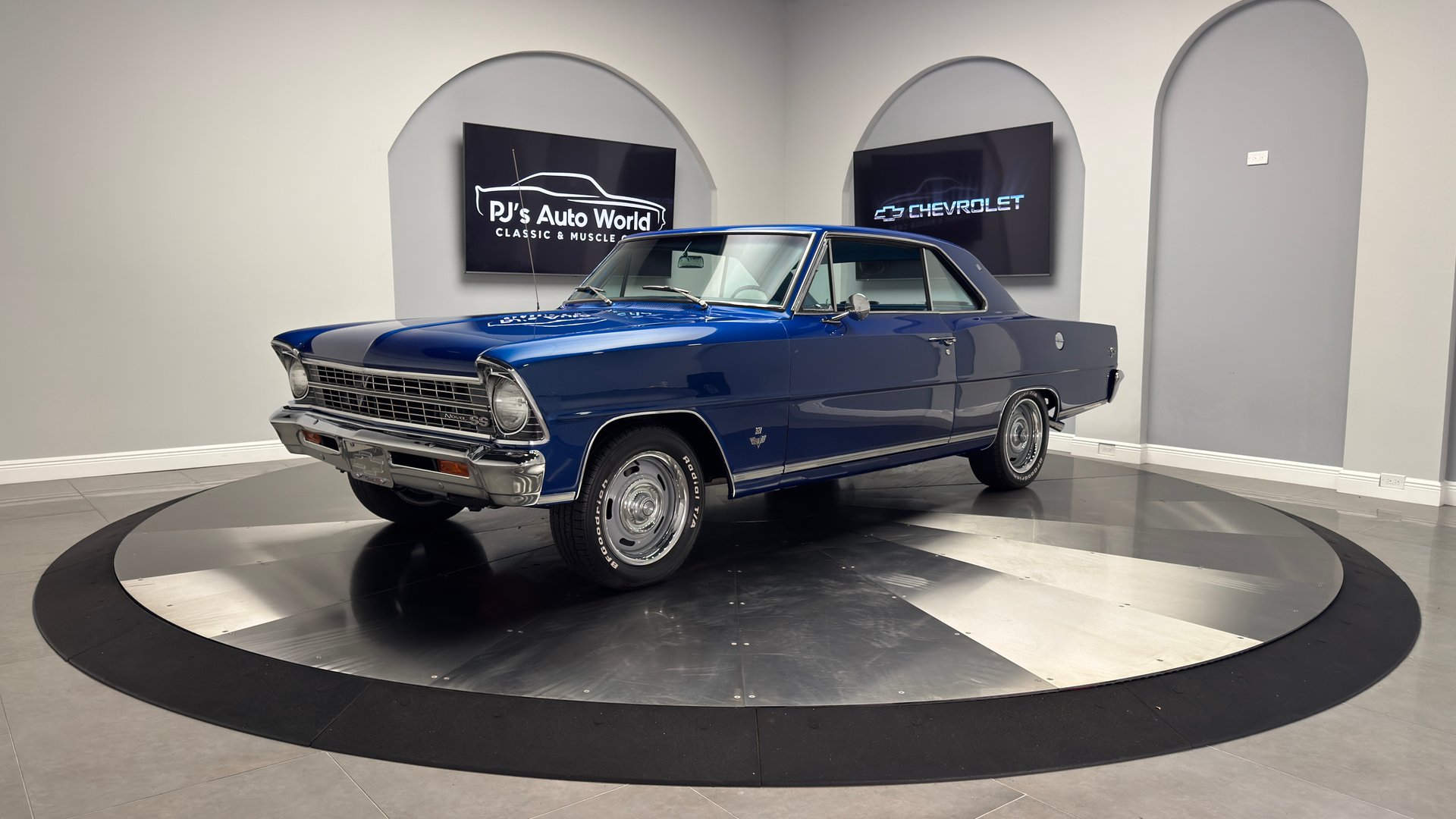
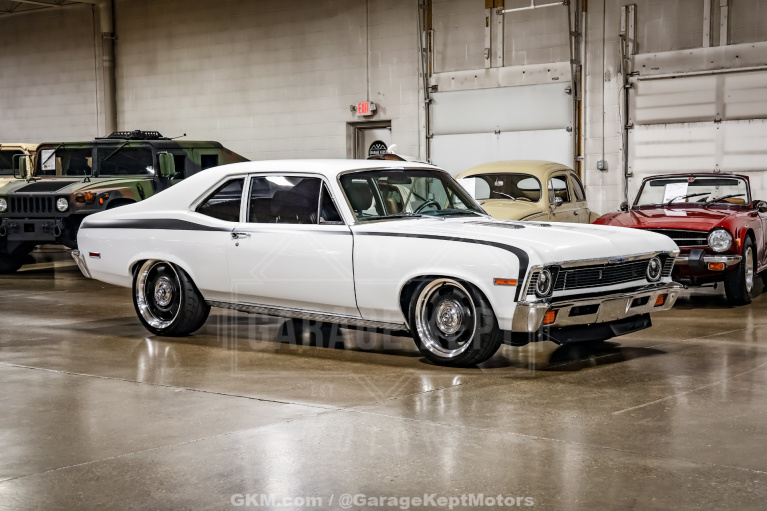
Engines and gearboxes
Every Nova engine belongs to one of three Chevrolet families — the four and the inline sixes, the small-block V8, and for three short years the big-block — each with its own character, failure modes and identity checks. These are among the best-understood engines in the world: parts, knowledge and machine-shop experience exist everywhere. But interchangeability cuts both ways: a Nova bay accepts almost anything Chevrolet built, fifty years of owners have acted on that, and the engine in front of you is frequently not the engine the car was born with. Judge the engine that is there on its health, and the car's originality on its numbers — two separate judgements, never blurred.
The four and the sixes: 153, 194, 230 and 250
The 153-cubic-inch four, offered from 1962 to 1970, is derived from the six with two cylinders removed: iron block and head, overhead valves, a single-barrel carburettor and about 90 horsepower in period gross terms. It is a willing, rattly, fundamentally tough engine that suits a 1962–63 car used gently and nothing else — a four-cylinder Nova works hard at modern highway speeds, and sustained high revs are where its age shows. Parts are the thinnest of any Nova engine simply because demand is small; the sixes and V8s are far better supported.
The inline sixes are the cars' natural base engines and deserve more respect than the market gives them. The 194 (120 hp) powered early cars; the 230 (140 hp) arrived for 1964; the 250 (155 hp gross in its best years, around 105 hp net in its last) became the standard six of the third and fourth generations and ran to 1979. All share the same architecture: seven main bearings, a single-barrel carburettor on most cars, simple points ignition on the early ones and electronic ignition later. They are smooth, torquey at low speed and extraordinarily long-lived if the oil has been changed, and their failure modes are mundane: a worn carburettor that will not idle cleanly, a leaking rocker-cover or pushrod-cover gasket misting the bay with oil, tired valve seals puffing blue on start-up, and — on cars that have sat — a fuel system full of varnish from evaporated modern fuel. A six that starts from cold without drama, idles evenly and shows no blue smoke under load is a good engine, full stop, and in a sedan or wagon it is arguably the correct engine. Do not let a seller apologise for it, and do not pay a V8 price for a six-cylinder car with a V8 dropped in unless the conversion's quality — mounts, cooling, brakes, rear axle — justifies it, because Chevrolet built the V8 cars with heavier supporting hardware for a reason.
One trap: the integrated-head 250 fitted to some mid-seventies cars combined the intake manifold with the cylinder head casting. These heads crack and are increasingly hard to replace like-for-like; a conventional earlier head is the usual cure. Ask which head a 1975–79 six is wearing if the car has had engine work.
The small-block V8: 283, 307, 327, 350 and the smog-era 262 and 305
The small-block is the Nova's defining engine, and it arrived in stages. The 283 (from 1964) came in 195-horsepower two-barrel and 220-horsepower four-barrel forms and suits the light early cars beautifully. The 327 (from 1965 in the Nova, in the years that matter) is the second generation's performance engine: 250- and 300-horsepower versions are sweet, strong road engines, and the L79 at 350 horsepower — high compression, a performance camshaft, a big four-barrel on an aluminium intake — is the connoisseur's small-block, revving hard and making a 1966–67 Nova SS a genuinely quick car by any era's standards. The 307 (1968–73) is the economy V8 of the third generation: a 200-horsepower two-barrel engine that is smooth, unstressed and unloved, and therefore the cheapest way into a factory V8 car — judge it on condition, because a tired 307 impresses nobody and a good one is a perfectly pleasant driver. The 350 is the muscle-era mainstay from 1968 on: the L48 at 295–300 horsepower gross is the standard SS engine and the best all-round Nova powerplant ever fitted, strong everywhere and cheap to keep; the LT-1 at 360 horsepower gross for 1970, ordered through the COPO system in the famous Yenko Deuce cars, is the exotic exception, a solid-lifter, high-compression engine that needs an expert's eye and a corresponding budget. After 1971 compression and outputs fell year by year; the 262 (1975–76, about 110 hp) and the 305 (from 1976, roughly 145–165 hp net) are emissions-era engines that run sweetly when healthy but offer economy-car performance in a heavier shell.
Mechanically the small-block's virtues and vices are the same in a Nova as everywhere else, with Nova-specific emphasis on three points. First, cooling: the early cars have small radiators and tight bays, and a transplanted or tuned engine on a standard six-cylinder radiator will overheat in traffic — check what radiator, shroud and fan the car actually has, and watch the gauge on the test drive's idle at the end, not the cruise at the start. Second, the rear main seal and the timing cover weep oil on almost every unrestored engine; misting is normal, dripping onto the exhaust is a job. Third, camshaft wear: flat-tappet small-blocks depend on oil with adequate anti-wear additives, modern oils vary, and a top-end tick with a misfire on one cylinder can be a wiped cam lobe — a compression test and a rocker-cover-off look at rocker movement settle it. A healthy small-block of any variant should start hot or cold without throttle pumping, hold steady oil pressure (the gauge high at speed, lower but stable at a hot idle), pull cleanly without smoke under load, and show no blue haze on the overrun — that last is valve stem seals, a known and fixable job, not a rebuild.
Identity lives in the numbers. The block casting number and date sit at the back of the block; the stamped pad at the front of the right-hand deck carries the assembly code whose suffix identifies the engine's original application and, on many cars, a partial VIN tying the block to a specific chassis. Learn the suffix for the engine the car claims — an L79, an L48, an L78 — and compare it with the pad before you compare anything else. Restamped pads exist. A pad whose broach marks look wrong, whose characters sit unevenly, or whose story requires three coincidences is a pad to price as a replacement engine, whatever the seller believes.
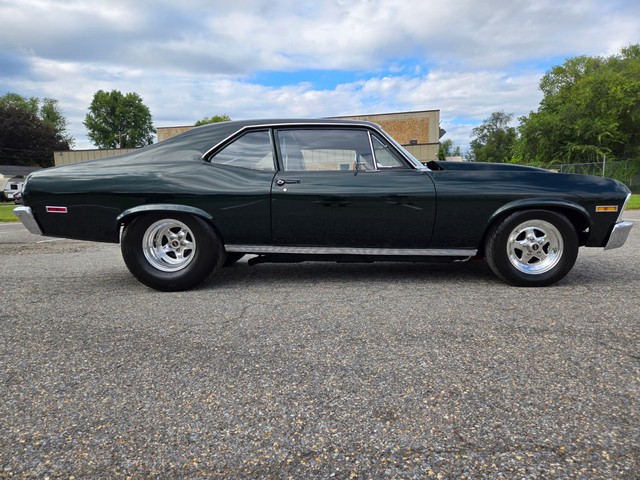
The big-block: 396 and 402
For 1968–70 Chevrolet offered the Mark IV big-block in the Nova SS, and it transformed the car — mostly in a straight line. Three versions matter. The L35 at 325 horsepower is the torquey, hydraulic-cam road engine. The L34 at 350 horsepower adds compression and appetite. The L78 at 375 horsepower — solid lifters, high compression, an aluminium intake on most applications and a Holley carburettor — is the flagship: violent in a shell this light, demanding of its rear tyres, its cooling system and its driver, and the engine around which the Nova's muscle reputation is built. For 1970 the nominal 396 was actually bored to 402 cubic inches while keeping the 396 badges, a standard Chevrolet practice of the period; a 1970 car whose block codes to 402 is correct, not suspect. Yenko's COPO 427 conversions of 1969 stand outside the factory list entirely — dealer-built with factory blessing, documented by Yenko paperwork, and never to be valued on a seller's say-so.
Big-block Novas carry big-block problems. The engine fills the bay, so everything runs hotter and access is worse; exhaust manifolds crack and their bolts seize; the cars are nose-heavy and understeer unless the suspension is set up for the weight; and rarity plus value has made the L78 Nova one of the most faked cars in the hobby — with a big-block car, the paperwork is a mechanical component. A real one, verified, is a landmark car. An unverified one is a 350 Nova with a story, and must be priced as exactly that.
Gearboxes
The manual cars use Chevrolet's standard transmissions: a column-shifted three-speed on base cars, and the four-speeds that matter — Saginaw units on milder applications and the Muncie M20 wide-ratio, M21 close-ratio and heavy-duty M22, the famous "rock crusher" with its near-straight-cut gear whine, behind the strong engines. Judge any manual on second-gear synchromesh (it goes first), on clutch judder pulling away, and on clean selection — Hurst shifters on performance cars should select without forcing. A Muncie rebuild by a specialist is a known quantity; a noisy M22 is noisy by design, and distinguishing design whine from bearing growl is a test-drive skill worth borrowing from a marque-literate passenger if you do not have it yourself.
Automatics dominate our listings, and there are three. The two-speed Powerglide, aluminium-case from 1963, served the early and base cars: simple, nearly unbreakable, and slow — correct in a 1963 convertible, a compromise in anything performance-badged. The three-speed Turbo Hydra-Matic 350 is the third generation's standard automatic and the right box for most cars; the Turbo 400 went behind big-blocks and is stronger still. Judge the fluid first — bright red and sweet-smelling is health; dark and burnt is a rebuild conversation — then the shifts: firm and prompt is correct, flaring or a long pause engaging reverse is wear. A TH350 or TH400 rebuild is a routine, budgetable job, one reason automatic Novas make such sensible buys. Four-speed cars carry a premium, so verify a claimed original four-speed by its stamped numbers and the paperwork, not the hole in the floor, which any converter can cut.
Problem areas
Everything in this section follows the same order a Nova itself fails in: the shell first, because the Nova is a unit-construction car and the shell is the structure; identity second, because no other car in this price class is misdescribed so often; then the running gear, brakes and cabin. Our own photo-checking gives the section its proportions. Of the 108 Novas in our store whose sellers' photo sets we have examined in detail, rust was recorded in 17 cars and visible damage in 10 — roughly one car in six showing rust somewhere in its photographs, and those are the photographs sellers chose to publish. Read that as a floor, not a ceiling: the areas that rot worst on a Nova are the areas listing photographs least often show, and a car whose photos contain no underside, no trunk floor and no door bottoms has not been cleared of rust. It has merely not been asked the question.
Rust: the map
A Nova has no separate chassis. The 1962–67 cars are a unit body throughout; the 1968-on cars bolt a front subframe to a unit body, and the subframe is replaceable while the body is not. Rust therefore grades from cosmetic to structural with nothing in between, and it follows the water and the road dirt in a predictable pattern. Work through it in this order.
Rear wheelwells, quarter panels and the trunk drop-offs. The Nova's signature rot. The rear wheels throw water and mud into the wheelwell lip and the lower quarter, the seams trap it, and the panels rust from the inside out — bubbling paint at the wheelarch lip or behind the rear wheel is the visible tip of a repair that usually extends into the inner well and the trunk floor extensions either side of the spare-wheel area. Prod the lip with a thumb; sound metal resists, filler and thin rust crunch. Full quarter panels and patch panels are available for the popular years, which makes this repairable — but price it honestly: a quarter cut out, welded, filled and painted to a standard that lasts is a four-figure job per side at a body shop once paint blending is counted, and a car needing both quarters, both wells and a trunk floor is a restoration project whatever its paint looks like from ten feet.
Floor pans and the toe boards. Water enters past perished windshield seals, through a leaking heater box on the right side, and up from below once the factory undercoating cracks. It sits under carpets and deadening, and the pans rust in the footwells first, the driver's side worst. Lift every carpet you can; surface scale is treatable, perforation is a pan replacement — a few hundred dollars in panels and a day or more of labour per side fitted and sealed. But floors rarely rot alone: a perforated floor beside a perforated rocker is a shell telling you its whole story at once.
Rocker panels and the lower cowl. The rockers are structural on a unit body and they collect what the front wheels throw back. Check the full length, especially the front ends where they meet the cowl and the rear ends ahead of the rear wheels, and be suspicious of fresh stone-chip paint along the sill line — it is the oldest cosmetic cover in the trade. The cowl, around the windshield base and down its sides behind the front fenders, traps leaves and moisture against seams you cannot see without a torch and a mirror; water entering here reappears as wet front carpets and rusty toe boards, so a car with damp front footwells and a seller blaming the door seals deserves a hard look at the cowl before you accept the story.
Front fenders, door bottoms and the hood and trunk edges. Fenders rust at the lower rear corner behind the front wheel and around the headlamp openings; doors rust along the bottom skin where the drain holes block and the door fills with water — run a fingertip along every door bottom and feel for the first roughness under the paint, then check the drains are clear. Trunk lids and hoods go at their folded edges. None of these alone condemns a car, and bolt-on panels are the cheapest rust to fix, but count them: four doors' bottoms, two fenders and a trunk lid is a paint-shop programme, not a weekend.
The front subframe and its mounts, 1968 on. The subframe rusts around its mounting points and where road dirt packs against the rails, and the rubber body mounts perish and collapse, transmitting noise and misaligning everything bolted to the frame. Perforation at a mounting point is fabrication or a replacement subframe — used frames exist, but it is engine-out territory and priced accordingly. On 1962–67 cars the equivalent check is the front frame rails and torque boxes; rust or cracking around suspension pick-up points on any generation is the closest thing a Nova has to an automatic walk-away.
The battery tray and inner fender. Acid eats the tray and the inner fender beneath it, invisibly, under the battery. Lift the battery or at least rock it and torch the tray edges. A tray is cheap; the apron damage beneath it is panel work. Small in area, diagnostic in value: a seller who has maintained this corner has usually maintained the rest.
Identity: SS clones, tributes and swapped engines
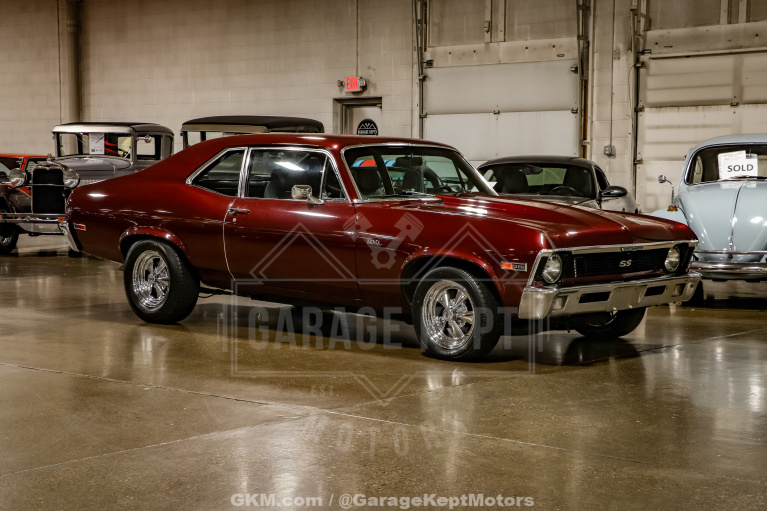
This is the Nova's defining problem area, and it is a problem of paperwork rather than metal. The SS package, especially from 1968 when it became an option rather than a series, added badges, trim, heavy-duty suspension and bigger engines to a standard shell — and every one of those additions can be bought from a catalogue today and bolted to a base car tomorrow. SS-badged cars vastly outnumber factory SS production, "tribute" is sometimes declared honestly and sometimes discovered by the buyer a year later, and the difference between a real 1969 L78 SS 396 and a well-built clone is not how they drive — a good clone drives identically — but what they are worth and what they will resell for.
Protect yourself with the hierarchy of evidence, in this order. First, the VIN and the cowl trim tag: on 1963–67 cars the VIN series identifies an SS outright, which makes the second-generation cars the easiest performance Novas to verify; on 1968–72 cars the VIN identifies body style and, from 1972, the original engine, but not the SS package, so it can disprove a claim (a 1972 car whose VIN codes a six was never an SS) more readily than it can prove one. Second, the engine and transmission stampings described in the engines section, checked against the claimed specification. Third, factory paperwork: the build sheet — often found under the rear seat, above the fuel tank or inside a door trim — the Protect-o-Plate, the original invoice or window sticker. A car with a legible build sheet matching its VIN, engine and options is verified in a way no badge can argue with. Fourth, the physical tells an experienced eye checks anyway: SS cars left the factory with specific equipment — front disc brakes on most later SS applications, a 12-bolt rear axle behind the strong engines where lesser cars carry the 10-bolt, multi-leaf rear springs, specific sway bars — and a claimed SS wearing a 10-bolt, single-leaf springs and drum brakes all round has explaining to do, though fifty years of parts swapping means absence of a tell is a question, not always a verdict.
Price the car in front of you, not the car in the story. A declared tribute, like the 1969 Yenko tribute in our listings pool, is a legitimate and enjoyable car — value it as the excellent Nova it is, not as the car it honours. An undeclared clone sold at real-SS money is the single most expensive mistake available in this market, and it is entirely avoidable with an hour's number-checking.
Front suspension, steering, brakes and the rear axle
The early cars, 1962–67, use a simple front suspension that is, by now, almost always worn somewhere: coil springs, upper and lower arms, and alignment set by eccentric bolts notorious for slipping or seizing — a car that will not hold its settings usually needs the eccentrics and bushings renewed, not another alignment. Rubber bushings perish whether the car is driven or not, so judge by condition, not mileage. Worn idler arms and tie-rod ends give the classic symptoms — a dead band on centre, a highway wander, a knock over bumps — and manual steering boxes wear in the straight-ahead position first. None of this is expensive: a full front-end refresh is a routine job, and kits are sold complete. Power steering adds a pump and box that leak with age; budget for seals or exchange units.
The 1968-on cars use the Camaro-pattern front suspension on the subframe, with better geometry and the same perishables. The check that matters most is the subframe mounts, covered above, because a collapsed mount mimics worn suspension and no amount of new bushings cures it. At the rear, all classic Novas ride on leaf springs: single-leaf (mono-leaf) on many base cars, multi-leaf packs on SS and heavy-duty applications. Mono-leafs sag and can crack; a tail-down stance is springs first, shocks second — dampers never set ride height on a leaf-sprung car. Rear axle identification matters for value as well as strength: count the differential cover bolts, ten or twelve. The 12-bolt is the strong unit performance cars need; a big-block car on a 10-bolt is either a clone, a swapped axle, or a car about to need one. Positraction units chatter on tight turns if their clutch packs are worn or their oil lacks the correct additive — a cheap cure worth trying before condemning the unit.
Brakes are where originality and safety argue loudest. Most Novas left the factory with four-wheel drums, and pre-1967 cars have a single-circuit master cylinder: one hydraulic failure means no brakes at all. Front discs became common on later and SS cars. Judge any car on the pedal (firm, high, no slow sink — sink is a master cylinder), on straight-line stopping, and on the hard lines along the floor and rear axle, which rust from the outside. A full hydraulic refresh is one of the cheapest safety programmes in the hobby, and a declared disc conversion on an early car is accepted by most buyers as an improvement. Handbrakes seize from disuse; budget the cables into any recommissioning.
Interior, trim and electrics
Nova interiors were built to a price and trimmed in vinyl that survives sun better than most, so failures are mechanical and cosmetic rather than catastrophic. Seat foam collapses on the driver's side first — sit in the driver's seat, because a Nova you perch on rather than sit in needs seat work, and bucket-seat SS interiors cost far more to retrim than a bench. Headliners sag, door cards warp at their lower edges where water has reached them, and dash pads crack in sun-state cars; reproduction pieces exist for the popular years, while correct matches for uncommon trim colours take hunting. Heater cores leak into the right front footwell — a sweet smell and a misting windshield are the tells — and on air-conditioned cars the job is long; a bypassed core, two hoses looped in the bay, is a seller's confession that the core has failed and the dashboard work declined. Window regulators wear, and the bright trim that distinguishes an SS or Nova 400 dents and pits — on early cars it can cost more to restore well than the panels it decorates.
Electrics follow the universal rule: fifty-year-old systems fail at connections, grounds and switches, not in the middle of wires. The Nova adds two specifics. The engine-to-body ground strap corrodes and produces a catalogue of phantom faults — slow cranking, dim lights, a wandering fuel gauge — for the price of one braided strap, so check it before paying anyone to diagnose anything. And the charging system changed across the run, generator on the earliest cars, alternator thereafter, externally regulated before the internally regulated units of the seventies; mismatched conversions are common and usually work, but a car whose charging warning light glows at idle is telling you to budget for the alternator, the regulator or the wiring between them. Factory gauges, where fitted, are worth testing rather than admiring: senders fail, printed circuit boards on later dashes corrode at their connectors, and an oil-pressure gauge that reads nothing is a sender until a mechanical gauge proves otherwise — a five-minute test that should precede any engine verdict.
How to inspect one
Allow ninety minutes, bring a torch, a cloth-wrapped magnet and a notebook, and insist on two conditions before you travel: the engine cold, and access to a lift. On a Nova the lift inspection is not a formality — the rust map lives under the car, and the identity checks live on stampings you read best from below.

- Paperwork and identity first. Match the VIN on the title to the plate on the car — its location varies by generation — and read the cowl trim tag for series, body style, paint and trim. On a 1963–67 car, settle the SS question from the VIN series now. On a 1968–72 SS claim, ask for the build sheet, Protect-o-Plate or invoice before you look at anything else. A seller with paperwork produces it early; a seller with a story produces it all afternoon.
- The engine numbers. Find the stamped pad at the front of the block's right deck and read the suffix against the claimed engine — L79, L48, L78, or an honest base engine. Check the block casting date is plausible for the car's build date. Whatever the pad says is what you are buying; price a mismatch as a replacement engine and let any premium be the seller's problem to prove, not yours to assume.
- Cold start. With the engine stone cold, watch and listen. It should fire without extended cranking, settle to an even idle, and show no blue smoke beyond a start-up puff (valve seals) and no smoke that persists (rings or worse). Listen for a top-end tick that stays — cam wear or a lifter — and look underneath for the first drips as pressure builds.
- Underneath: the structural pass. On the lift, work the rust map in order: rear wheelwells and trunk drop-offs from below, floor pans and toe boards, rockers full length, cowl sides, and on a 1968-on car the subframe and all its mounting points, plus the body mounts themselves. Perforation in rockers, torque boxes or mounting points is structural money. Fresh, uniform underseal over everything — seams, lines, mounts — is a question the seller must answer, because nobody re-underseals a sound Nova the week before a sale for your benefit.
- Trunk and floors from above. Lift the trunk mat and the spare, and look at the well, the drop-offs and the extensions for staining, scale and perforation. Inside, lift every carpet you can: front footwells for heater-core and cowl leaks, rears for pan condition. A damp smell in a dry-stored car is a leak with a history.
- Body and panels. Run the magnet over the wheelarch lips, lower quarters, rocker ends and door bottoms — filler announces itself by the magnet's indifference. Check door bottoms with a fingertip, fender corners, hood and trunk edges, and panel gaps for accident history. Count the trim: missing or damaged stainless on an early Nova 400 or SS is a real cost line, not a detail.
- Rear axle and springs. Count the differential cover bolts — ten or twelve — and compare with what the car's specification demands. Read the stance: tail-down is leaf springs (sagged mono-leafs especially), not shock absorbers. Look for cracked leaves, perished spring-eye bushings and a weeping pinion seal, and check the fuel tank straps and the tank itself while you are there.
- Steering and suspension by hand. Rock each front wheel top-to-bottom and side-to-side for bearing and joint play; bounce each corner and watch it settle in one movement. On an early car, ask whether the alignment eccentrics are free — seized eccentrics turn a cheap alignment into a front-end job. Look at the tyres: uneven wear is the suspension's written confession.
- The test drive. Fifteen minutes minimum, including highway speed and a rough surface. A V8 should pull cleanly without hesitation or smoke; a six should be smooth at cruise. Note the steering's dead band on centre, any knock over bumps, and whether the car tracks straight hands-light. Automatics should shift firmly without flaring; manuals live or die on second-gear synchromesh and a clutch that takes up without judder.
- Brakes, properly tested. From speed, brake firmly: the car should stop straight, the pedal high and firm with no slow sink under sustained pressure. Ask which system the car has — drums or discs, single or dual master cylinder — and treat a pre-1967 single-circuit car as a car whose first job, whatever its condition, is a hydraulic inspection end to end.
- Heat and electrics at the end of the drive. Let it idle hot and watch the temperature gauge behave, especially on a V8 conversion or a big-block. Then work everything: heater and blower (a sweet smell or misting glass is the heater core), lights, wipers, washers, horn, gauges, radio, and every window. Check the charging light is out and stays out at idle.
- Interior last, from the driver's seat. Sit where the wear is. Feel for collapsed foam, look at the dash pad in raking light, the headliner seams, the door-card bottoms. A sound original interior in the correct colour is the hardest part of a Nova to recreate at any price, so weight it as heavily as the engine — then add up the whole car: shell, identity, mechanics, cabin. The Nova you want is the one where those four sums agree with the asking price.
Values
The build's market block beneath this guide carries the current numbers, refreshed as the market moves, so this section carries no figures of its own. What it can teach you, durably, is how the Nova market is structured — because the structure changes far more slowly than the prices, and it decides whether a given car is dear or cheap at whatever number is asked.
Start with the condition spread, which on a Nova is wider than on almost any comparable car. The same model-year coupe can be a rusted six-cylinder shell, a tidy driver, a restored SS or a documented big-block car, and those are four different markets wearing one name. The spread is driven first by the shell: because rust repair and paint are the two most expensive programmes in the hobby, a genuinely solid original car commands a premium that looks irrational until you price two quarters, a trunk floor and a quality repaint. It is driven second by identity, and here the Nova is extreme: the premium for a verified SS over an identical-looking clone, and for a documented L78 or L79 over a claimed one, is not a percentage nicety but a multiple, because what is being bought is provability. It is driven third by engine-and-gearbox specification in the ordinary way — factory V8 over six, four-speed over automatic, the charismatic engines over the worthy ones — with the important Nova twist that conversions scramble every one of those signals, so the market pays for originality it can check and discounts everything it has to take on trust.
Asking and achieved prices part company predictably. Dealer asking prices, which dominate our listings, sit at the optimistic end, particularly for tribute and clone cars priced by reference to the genuine article; auction results are the colder water. Expect the widest gaps where verification is hardest — big-block claims, L79 claims, Yenko associations — and the narrowest on honest driver-quality cars. A project Nova is cheap because its two big bills, body and paint, are still ahead of it, and the finished value of all but the rarest specifications does not repay professional restoration of both. That is why the market's centre of gravity sits on presentable coupes of the popular years, while sedans, wagons and the 1975–79 cars trade in a quieter, condition-led market where specification premiums are modest.
Negotiation reality: on a verified car in the popular specifications, expect firmness — sellers know what proof is worth. On an unverified performance claim, price the car as what it demonstrably is, offer the seller the opportunity to document it into the higher bracket, and be willing to walk away, because another Nova is always coming to market. On a rusty car at driver money, the negotiation is the inspection report: quarters, floors, subframe mounts and paint, itemised, are the argument. The cheapest Nova to own is rarely the cheapest Nova to buy — the gap between a project and a driver is almost always smaller than the cost of turning the first into the second.

Parts and ownership
The Nova is one of the best-supported American classics in existence: it shares its mechanical life with the Camaro and Chevelle, was built in large numbers, and the performance aftermarket adopted it decades ago. Almost anything you need exists; the skill is knowing which supply channel — reproduction, service parts, or good used original — a given item belongs to.
Easy: everything consumable and mechanical. Service items, brake components including disc-conversion kits, suspension and steering wear parts, cooling parts, carburettors and rebuild kits, ignition parts, exhaust systems, glass and weatherstrip, floor pans, quarter panels, trunk floors and most other sheet metal for the popular years, seat covers, carpets and headliners in the common colours. Order today, fit this weekend, at prices that make European classic owners wince.
Harder and dearer: correct, date-coded components for the documented performance cars — the right carburettor, distributor, alternator and manifolds for an L78 or L79 application — because the Corvette and Camaro markets compete for the same castings; early-car trim, particularly 1962–65 Nova 400 and SS stainless, which is reproduced selectively and restored expensively; four-cylinder 153 parts, where low demand means thin stock; integrated-head six-cylinder castings; and Concours-era trim for the 1975–79 cars, which the reproduction industry has largely passed by. None of it is unobtainable. All of it rewards patience over urgency.
Running costs. A sorted Nova is a realistic regular-use classic: the engines are understressed in road tune, servicing is within any competent owner's ability, fuel consumption ranges from frugal in a six to enthusiastic in a big-block, and insurance is in line with other American classics of similar value. The budget line that catches new owners is the first year: a full brake hydraulic inspection and usually work, every rubber hose and belt, perished suspension bushings, and the fuel system cleaned end to end, because modern ethanol-blended fuel attacks old rubber and leaves varnish in tanks and carburettors on cars that sit. Recommissioning a Nova that has slept for years is a bigger programme of the same items plus tyres, which age out long before they wear out. Buy a car in regular use over a sleeping car at the same money, every time.

Which one to buy
- The all-rounder: 1968–72 Nova with the 350. The L48-powered third-generation coupe is the Nova at its most complete — strong, simple, supported by the best parts supply in the range, and available as a genuine SS or an honest base car at two very different prices for much the same driving experience. If you want one Nova to drive everywhere, this is it.
- The value buy: a six-cylinder or 307 car, bought on its shell. The market discounts the unglamorous specifications heavily and the shell is identical. A rust-free 250-six sedan or a 307 coupe at driver money is the cheapest route into Nova ownership that does not begin with a welder — and it leaves the V8 conversion, if you ever want it, as your choice rather than a previous owner's.
- The connoisseur's car: 1966–67 Nova SS, L79 if verified. The prettiest Nova with the sweetest small-block. Buy the paperwork as much as the car: a documented L79 is a landmark, an undocumented one is a 327 Nova with a claim attached, and the two must never be priced alike.
- The collector car: 1969–70 SS 396, L78 above all. The fastest factory Nova and the peak of the muscle era in a compact shell. Verify ruthlessly — VIN logic, engine pad, build sheet, 12-bolt, the physical tells — because this is the most cloned specification in the range and the premium is entirely a premium for proof.
- The charmer: 1962–65 Chevy II, hardtop, convertible or wagon. The original idea, light and simple and full of period character, with the SS trim cars the prettiest of them. Buy on shell condition above all — these are the most rust-prone Novas — and enjoy the four and six for what they are rather than apologising for them.
- The sensible modern classic: 1975–79 Nova. Quieter, plusher, cheaper, and better suited to regular use than anything earlier here. The Concours cars are genuinely pleasant. Performance is modest, but as a supported, usable, rear-drive classic they are the range's quiet bargain.
And the rule that overrides all of the above: buy the car you can verify, with the least rust you can find, in the specification you can live with. Engines can be rebuilt and interiors retrimmed at prices you can plan for. A rotten shell costs more to put right than the finished car will usually repay, and an identity that cannot be proved can never be proved later.
See the 140 Nova cars currently listed.