
Chevrolet Monte Carlo buyer's guide
Chevrolet Monte Carlo -- the model's own buyer's guide: variants, values and what to check.
Years listed: 1970-1988 · Series: Monte Carlo
Overview and history
The Chevrolet Monte Carlo is not one car. It is a name Chevrolet kept returning to for nearly four decades, and the cars that carry it fall into two completely different families: the rear-wheel-drive coupes of 1970 to 1988, and the front-wheel-drive coupes that followed in the 1990s and 2000s. This guide is about the first family — the rear-drive cars, which are the ones in our listings, every one of the 89 Monte Carlos we currently track dating from between 1970 and 1988. If you are looking at a 1995-or-later Monte Carlo, you are looking at a Lumina-based front-drive car with a transverse V6, and almost nothing in this guide applies to it — a distinction worth settling first, because sellers and parts catalogues blur the two together under one name.
The original idea, launched in September 1969 as a 1970 model, was precise. Pontiac's Grand Prix had shown that a personal luxury coupe — long hood, short deck, formal roofline, plush interior, big V8 — could sell in serious numbers. Chevrolet wanted its own version, built on familiar hardware so it could be priced below the Pontiac. The Monte Carlo was based on the intermediate A-body platform shared with the Chevelle, but on a longer 116-inch wheelbase, with the extra length spent ahead of the windshield — which is why a first-generation car looks the way it does: the proportions are the platform decision made visible. Underneath you will find Chevelle suspension, Chevelle brakes and ordinary Chevrolet small-block and big-block V8s. On top of it you got a quieter, plusher, more deliberately adult car than a Chevelle SS — no muscle car theatre, just woodgrain trim, deep seats and a hood that seems to go on forever.
That formula worked through three distinct rear-drive generations. The first, 1970 to 1972, is the muscle-era car: the biggest engines, the cleanest styling, and the SS 454 at the top of the range. The second, 1973 to 1977, is the Colonnade car — larger, heavier, softer, styled for the brougham decade with a fixed B-pillar, opera windows on Landau models and optional swivel bucket seats. The third, 1978 to 1988, is the downsized car: roughly 800 pounds lighter than the one it replaced, on a 108-inch wheelbase, initially sold as an A-body and renamed a G-body from 1982. That generation lived longest, and produced the version many younger buyers picture first — the Monte Carlo SS of 1983 to 1988, with its sloped aerodynamic nose, high-output 305 V8 and NASCAR connection, including the rare Aerocoupe built to homologate a sloped rear window for racing.
Through all three generations the character stays recognisable. A Monte Carlo is a coupe first and a performance car second — even the SS models were tuned more for presence and torque than for lap times. The ride is soft, the steering is light, the interiors lean toward comfort, and the engines are the familiar, tough, infinitely rebuildable Chevrolet V8s that powered half of America. That ordinariness underneath is the car's great ownership virtue: there is almost nothing on one that a competent general mechanic has not seen before.
What happened after these cars were cheap defines today's market. First-generation cars were used hard in the muscle era and then worn out; Colonnade cars were driven into the ground in rust-belt winters; G-body coupes became commuter appliances while SS models were modified, raced in some cases, and preserved in others. Across all three generations the pattern is the one you will meet in the problem areas section below — the mechanicals are fundamentally durable, and the difference between a good Monte Carlo and a money pit is rust, deferred maintenance and undocumented modification, in roughly that order.
The models
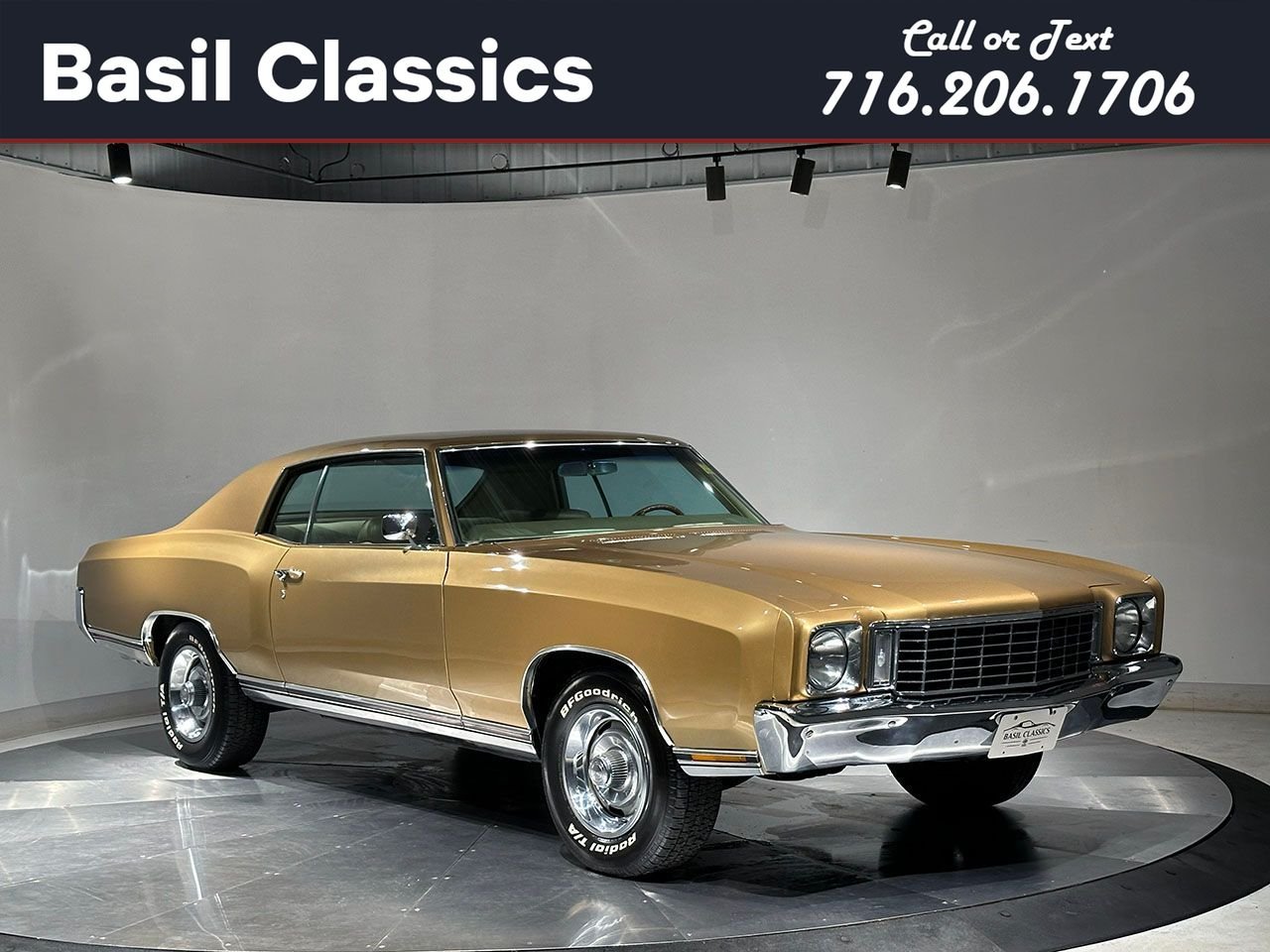
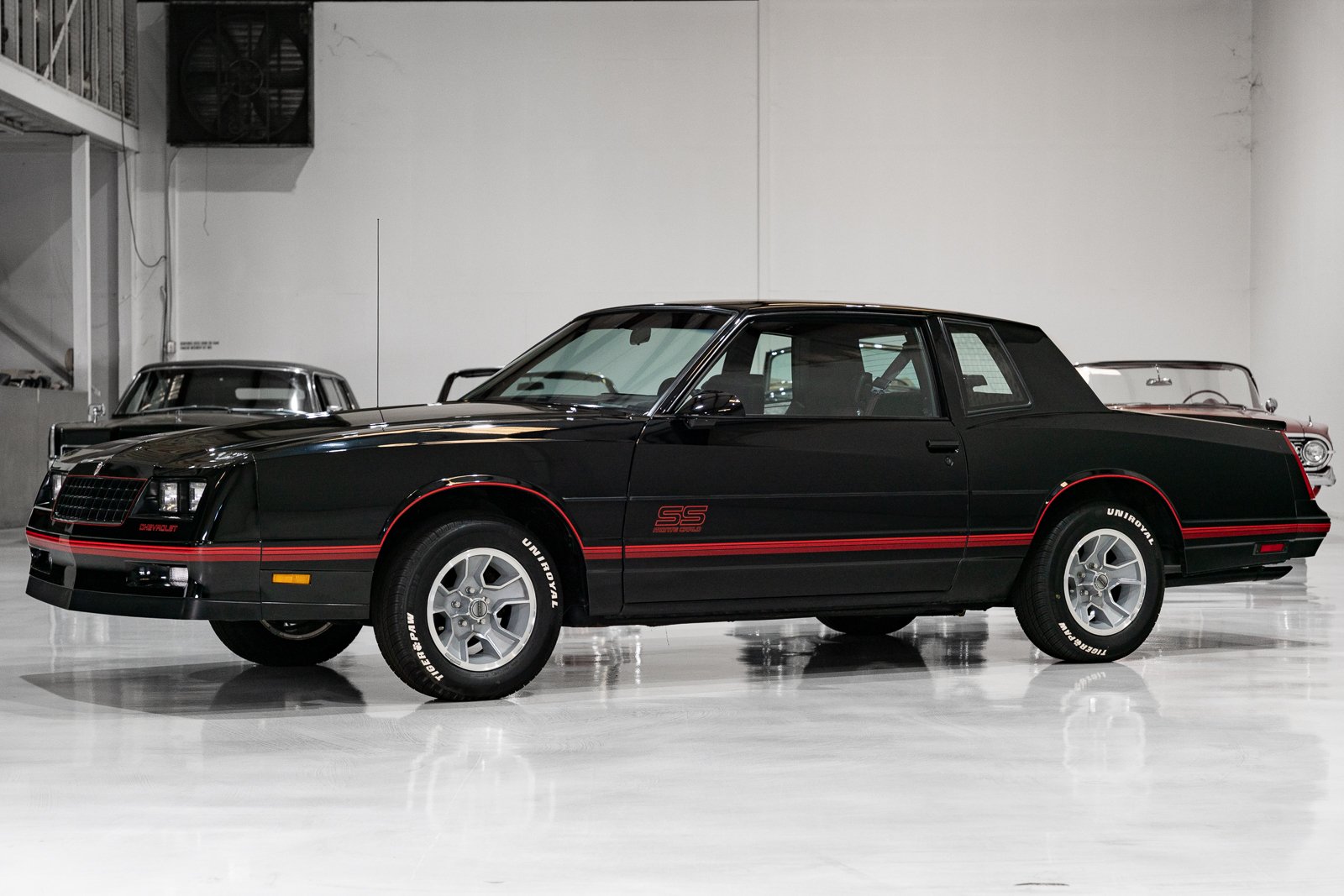
Every rear-drive Monte Carlo is a two-door coupe. There was never a factory convertible, a sedan or a wagon wearing the name in this period, so if you are offered one, you are looking at a conversion or a misdescription. What changes across the years is the trim ladder, the body generation and the engine list. Read the table by generation first and trim second — a 1972 and a 1984 Monte Carlo share a name and almost no parts beyond engine-family hardware.
| Model | Years | Engine | Output | Built | Character |
|---|---|---|---|---|---|
| Monte Carlo (base) | 1970–1972 | 350 small-block V8, 402 and 454 optional | 250–300 hp (350) | High volume, roughly 130,000–180,000 a year | The original personal coupe; the value entry point |
| Monte Carlo SS 454 | 1970–1971 | 454 big-block V8 (LS5; LS6 in 1970) | 360 hp (LS5), 450 hp (LS6, 1970) | 3,823 in 1970; 1,919 in 1971 | The muscle flagship; rare, verified by paperwork or not at all |
| Monte Carlo / S / Landau | 1973–1977 | 350 and 400 small-block, 454 to 1975, 305 from 1976 | 145–245 hp depending on year | Very high volume; 1973 alone approached 290,000 | The Colonnade brougham; soft, heavy, Landau vinyl-top luxury |
| Monte Carlo (base) | 1978–1980 | 200 and 231 V6, 267, 305 and 350 V8 | 95–170 hp | High volume | The downsized car; light, simple, V6 cars are slow |
| Monte Carlo Turbo | 1980–1981 | 231 Buick turbo V6 | 170 hp | Low volume | A curiosity; turbo hardware makes it a specialist buy |
| Monte Carlo (base / CL / LS) | 1981–1988 | 229 and 262 V6, 305 V8, 350 diesel to 1985 | 110–150 hp | High volume | The G-body cruiser; LS is the luxury trim from 1986 |
| Monte Carlo SS | 1983–1988 | 305 high-output V8 (L69) | 180 hp | Tens of thousands across the run | The collector G-body; aero nose, firmer suspension, stripes |
| Monte Carlo SS Aerocoupe | 1986–1987 | 305 high-output V8 (L69) | 180 hp | 200 in 1986; 6,052 in 1987 | The NASCAR homologation car; sloped rear glass, premium priced |
(Outputs are period factory ratings. Note the rating system itself changed in 1972, from gross to net figures, which is why a 1972 engine that is mechanically near-identical to a 1971 engine carries a much lower published number. Compare outputs within an era, not across that line.)
The first generation, 1970–1972. The base car came standard with a 350-cubic-inch small-block — 250 hp with a two-barrel carburettor, 300 hp with a four-barrel — and that is the engine in the great majority of surviving cars. Options ran upward through the 402 big-block (badged and sold as a 400, 330 hp) to the 454. The SS 454 package, available in 1970 and 1971 only, brought the LS5 454 at 360 hp, heavy-duty suspension, wider wheels and discreet badging; in 1970 only, the 450 hp LS6 could be ordered, and genuine LS6 cars are among the rarest Chevrolets of the era. Two traps live here. First, the SS package was mostly bolt-on equipment, so cloning one is easy and has been done for forty years — no single VIN digit proves an SS, which makes original paperwork, the build sheet (often found under the rear seat or above the fuel tank) and matching engine stampings the only real evidence. Second, 1971 and 1972 cars lost compression and then net ratings arrived, so later first-generation cars are measurably milder than a 1970 — not worse cars, but price them as what they are.
The Colonnade generation, 1973–1977. The 1973 redesign was total: a bigger body, with the Colonnade roof — a fixed centre pillar with frameless door glass — that General Motors adopted across its intermediates for rollover standards expected at the time. Trim ran from the base car through the Monte Carlo S to the Landau, with a padded vinyl half-roof, opera windows and plusher trim. Engines were the 350 as standard, with the 400 small-block and, through 1975, the 454 optional; from 1976 the 305 joined the list as the economy choice and emissions-era ratings fell across the board. The signature interior option is the swivel bucket seat, which rotates outward to ease entry — delightful when it works, and a specific thing to test, because worn swivel bases rock and rattle. These are the heaviest, softest, most period-charming Monte Carlos: buy one for that character, not for performance, and buy the best-preserved one you can find, because Colonnade-specific trim is the hardest in this guide to replace.
The downsized generation, 1978–1988. The 1978 car was a clean-sheet response to fuel-economy rules: shorter, narrower and roughly 800 pounds lighter, on a 108-inch wheelbase. The base engine was now a V6 — a 200-cubic-inch Chevrolet unit in 1978, joined and then replaced by other sixes detailed in the engines section — with the 267, 305 and 350 V8s optional. Styling was crisp for 1978 to 1980, then softened with the 1981 restyle; the platform designation changed from A-body to G-body for 1982 with no fundamental change to the car. The trim ladder gained the CL in the early 1980s and the LS for 1986 to 1988, recognisable by its smoother, flush-face front end. Two specialised variants — the turbocharged Buick V6 car of 1980 and 1981, and the Oldsmobile diesel V8 offered into the mid-1980s — are covered, with warnings attached, in the engines section.
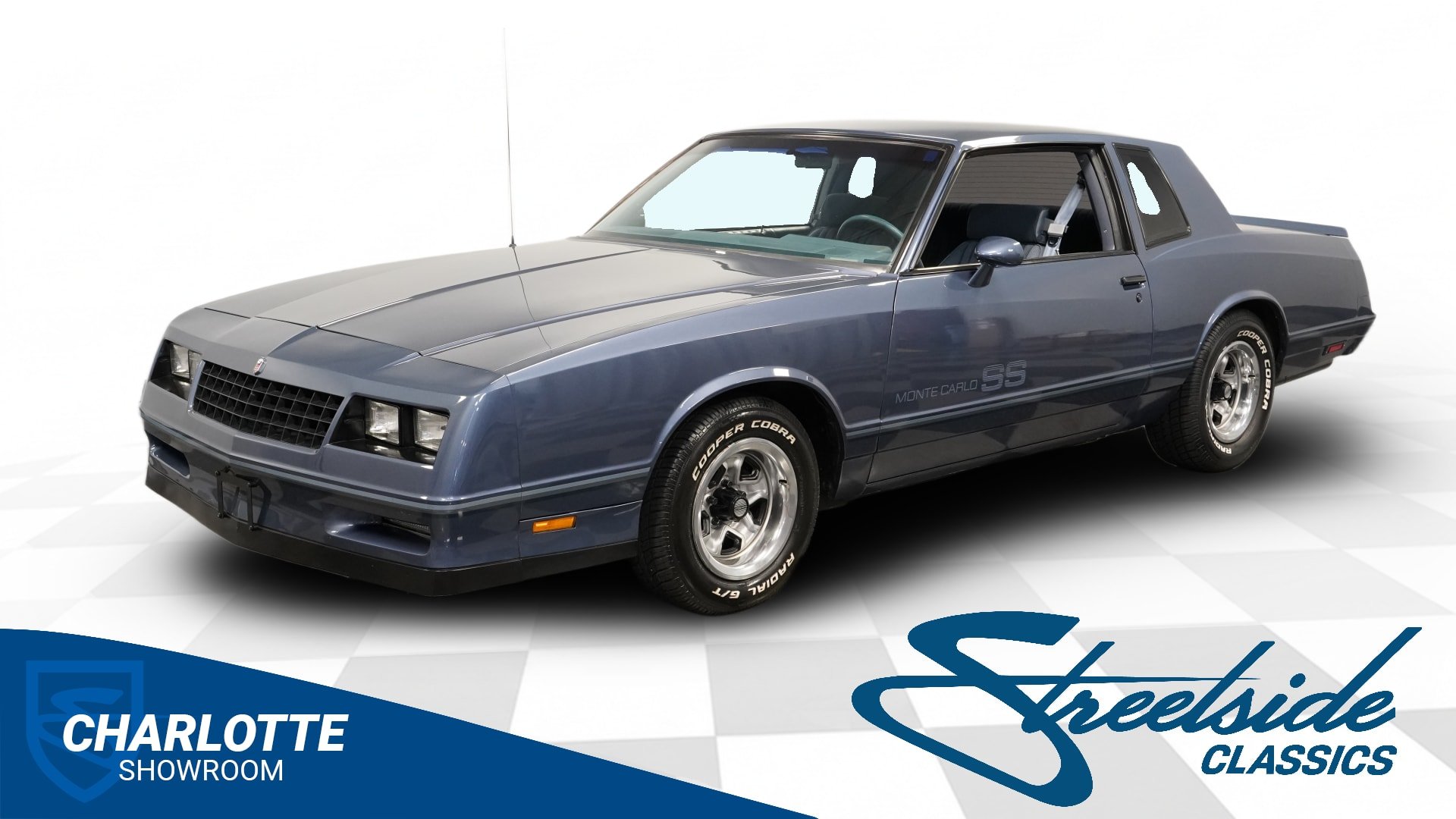
The SS, 1983–1988. Chevrolet revived the SS name for 1983 on the G-body, and this time the package was mostly appearance and chassis: the high-output L69 305 (180 hp), a sloped aerodynamic nose developed for NASCAR, a rear spoiler, stripes, firmer suspension, quicker steering and, from partway through the run, an overdrive automatic and a stronger rear axle. It is a genuinely enjoyable car — the best-handling rear-drive Monte Carlo by a wide margin — but the same bolt-on warning applies as with the SS 454: noses, stripes and spoilers have been fitted to thousands of ordinary coupes. On an SS the paperwork trail is better than on the 1970 car, because the L69 and the SS equipment were coded options a knowledgeable seller can document. The Aerocoupe of 1986 and 1987 is the SS with a steeply sloped rear window and shortened decklid, built so the shape could be used in NASCAR; the 1986 run of 200 cars is the rarest production Monte Carlo of the G-body era. Aerocoupe rear glass and its seals are unique parts — check their condition as you would a rare engine, because replacing them is not a catalogue order.

Engines and gearboxes
The Monte Carlo engine story is the Chevrolet engine story of the same years, which is good news: every engine here is a mainstream General Motors unit with deep parts support and a half-century of accumulated workshop knowledge. What differs between them is not basic toughness but specification — compression ratio, camshaft, carburettor and emissions equipment changed almost yearly through the 1970s — which is why casting numbers, the stamped engine code and the paperwork matter more than the badge on the fender.
The small-block V8s: 305, 350 and 400
The small-block Chevrolet is the default Monte Carlo engine and the one most buyers should want. The 350 (5.7 litres) powered the base car from 1970, in 250 hp two-barrel and 300 hp four-barrel forms in the launch year, and continued as an option into the downsized era. The 400 small-block (6.6 litres, offered in the early and Colonnade years) is a different engine from the 402 big-block despite the near-identical displacement and shared showroom badging — the 400 is a small-block with siamesed cylinder bores, and it runs warmer by design; confirm which 400 a car actually has before pricing engine work, because parts and behaviour differ. The 305 (5.0 litres), introduced in 1976, became the standard V8 of the G-body years: less powerful than the 350, just as durable, and in ordinary coupes entirely adequate.
Mechanically these engines are simple and honest: cast-iron block and heads, a single camshaft in the block, hydraulic lifters, pushrods and rocker arms. The failure pattern is age, not design. The nylon-toothed timing sprocket fitted in many emissions-era engines sheds its teeth with age, and the chain jumps — an original high-mileage small-block that suddenly will not start, or runs gutlessly after a backfire, should have the timing set suspected early; a steel replacement set is cheap insurance. Valve stem seals harden and crumble, giving the classic puff of blue smoke at start-up after sitting, which clears as the engine warms — worth fixing, but not an engine-out verdict; smoke that continues under load is rings or bores, and that is a rebuild conversation. Rear main seals, rocker cover gaskets and intake end seals all weep: an oily small-block is normal, and what you are judging is degree. Oil pressure is the quick health check — a healthy engine holds strong pressure hot at cruising speed, and a gauge that sags badly at a hot idle alongside bearing rumble is a tired bottom end, whatever the odometer says.
Carburetion is where these engines earn their reputation for trouble, and the reputation mostly belongs to one unit: the Rochester Quadrajet four-barrel, fitted to most four-barrel Monte Carlos from the start and, in feedback form, to the G-body cars. The Quadrajet is a good carburettor — small primaries for economy, huge vacuum-operated secondaries for power — with two age-related faults. The fuel wells in the float bowl are sealed with plugs that eventually leak, draining the bowl overnight and giving long cranking on a cold start that owners blame on the fuel pump or the choke; and the primary throttle shaft wears its bore, admitting air the idle circuit cannot account for, which presents as an idle that will not settle and mixture screws that seem to do nothing. Both faults are fixable by a specialist, and a properly rebuilt Quadrajet transforms a car — budget $400 to $800 for a quality rebuild, against which cheap exchange carburettors are a false economy. On 1970 to 1972 cars also check the choke stove and its heat tubes, which rot and leave the choke hanging on.
The SS G-body's engine deserves its own paragraph. The L69 high-output 305, standard in the SS from 1983 to 1988 and optional elsewhere, made 180 hp from a higher-lift camshaft, a freer-flowing exhaust, a dual-snorkel air cleaner and specific Quadrajet calibration. It is a pleasant, willing engine, noticeably keener than the standard 150 hp 305, and the single most misrepresented component in the G-body market: standard 305s are described as high-output engines in adverts constantly. The engine code stamped on the pad at the front of the block, and the correct air cleaner and exhaust, are the evidence — not the seller's memory.
The big-block V8s: 402 and 454
The big-block cars are the first-generation flagships. The 402 is a slightly overbored 396, sold as a 400, making 330 hp in the Monte Carlo — a torquey, understressed engine that suits the car's character perfectly and is the connoisseur's quiet pick of the range. The 454 (7.4 litres) came as the LS5 at 360 hp in the SS 454, and in 1970 the LS6 at 450 hp with solid lifters, an aluminium intake and a Holley carburettor — a genuine muscle-car engine in a formal coupe, and priced accordingly today.
Big-blocks share the small-block's basic virtues and add two specific checks. They run hotter, and their cooling systems — radiator capacity, fan clutch, shroud intact — must be judged carefully, because a big-block that has overheated repeatedly will find every weak gasket and warp-prone surface. And they are heavy enough to change the car: a big-block Monte Carlo sits lower at the front on tired springs and steers more heavily, so stance and front suspension condition matter more on these cars than on a 350 car. Exhaust manifolds crack, and the correct castings for a numbers-matching car are hunted parts; a big-block car with headers is not a defect, but on an SS 454 being sold at matching-numbers money, headers in place of the original manifolds are a negotiation point, because the originals are part of what the premium is paying for. A full big-block rebuild at a reputable shop runs roughly $5,000 to $9,000 depending on machining and specification, which is why a documented recent rebuild with invoices is worth real money and an undocumented claim of one is worth none.
Identity is the big-block buyer's main work. The engine stamping pad carries a code that decodes to the engine's original application, and on a claimed SS 454 the partial VIN stamped with it should match the car. Engines get swapped in these cars constantly — a 454 into a 350 car is a weekend project with forty years of precedent — and a swapped car can be a fine driver, but it must be priced as a swapped car, not as the car its fender badges claim it is.
The sixes, the turbo and the diesel
The downsized cars made six-cylinder Monte Carlos common for the first time, and the sixes are a mixed family. The Chevrolet 200 and later 229 V6s are 90-degree engines derived from the small-block V8 architecture — simple, torquey enough at low speed, and slow in a way modern drivers find startling; judge them on smoothness and oil pressure rather than performance. The Buick 231 (3.8-litre) V6, fitted in some years and markets, is a different engine entirely, with its own parts and a strong reputation — and it is the basis of the turbo car.
The Turbo Monte Carlo of 1980 and 1981 used Buick's draw-through turbocharged 231, with the turbo blowing through a Quadrajet, making 170 hp — the same headline figure as a 350 V8 of the same year, delivered with turbo lag and a distinctive character. These cars live or die on the turbocharger itself, the wastegate and the carburettor's enrichment system, all of which need a specialist who remembers draw-through systems; a turbo car that smokes under boost, or makes no boost, is a project with a price to match. Treat it as a fascinating specialist buy, never as a cheap way into a fast Monte Carlo.
The diesel option — Oldsmobile's 350-cubic-inch (5.7-litre) diesel V8, offered into the mid-1980s — needs the clearest warning in this section. The diesel 350 has a well-earned reputation for head-gasket, head-bolt and injection-pump problems, and unconverted survivors are rare precisely because so many were converted to gasoline small-blocks. Judge a converted car like any other small-block car, plus one check: confirm the conversion was done completely, including fuel system cleaning, rather than leaving diesel components in the chain. An original running diesel is a curiosity for a committed enthusiast. Do not buy one by accident because the advert said V8 and you assumed gasoline.
Emissions-era equipment overlays all of the G-body engines. From 1981, most cars carry Computer Command Control — an early engine computer managing a feedback Quadrajet and electronic spark timing. When it fails, the cause is usually not the computer but its inputs: oxygen and coolant temperature sensors, and a thicket of vacuum hoses that crack, collapse and get reconnected wrongly by previous owners. A G-body that hunts at idle, surges at a cruise or shows a permanently lit check-engine light is usually a vacuum-hose and sensor afternoon — roughly $300 to $700 at a shop for a full hose replacement and tune, and the single most common recommissioning job on these cars.
Gearboxes
Almost every Monte Carlo you will meet is an automatic. The first-generation cars used the two-speed Powerglide on cheaper specifications, the three-speed Turbo Hydra-Matic 350 behind small-blocks and the stronger Turbo Hydra-Matic 400 behind big-blocks. Manual gearboxes — a three-speed as standard on early base cars and a four-speed as a rare option — are genuinely scarce in the first generation and almost unknown later; a factory four-speed first-generation car is a documented rarity, so apply the same paperwork standard as for an SS.
The Colonnade cars standardised on the Turbo Hydra-Matic 350 and 400. The G-body cars began with the light-duty Turbo Hydra-Matic 200 three-speed and its lock-up variant the 200C — the weakest boxes in this guide, adequate behind a V6, marginal behind a V8, and the first suspect when a G-body's transmission slips or shudders — alongside the 350 in earlier years, and gained the 200-4R four-speed overdrive automatic in the mid-1980s, standard in later SS models. The 200-4R is the desirable G-body box: an overdrive top gear that makes highway cruising relaxed, and enough strength when rebuilt with updated parts. A 200-4R rebuild runs roughly $1,800 to $3,000; a Turbo 350 or 400 rebuild roughly $1,500 to $2,800; in both cases insist on a torque converter in the price, because reusing a converter full of debris from a failed box is how fresh rebuilds die young.
Judging any of them is the same routine. The fluid should be red and smell faintly sweet; brown, burnt-smelling fluid means the box has been overheating its clutches, whatever the seller says about a recent change. Engagement of drive and reverse should be prompt, without a thump or a long pause. Changes should be firm and consistent, kickdown should arrive when demanded, and an overdrive car's lock-up converter should engage smoothly at a cruise without shuddering. A box that flares — revs rising between gears — or delays reverse on a cold morning is negotiating its rebuild price into your offer. Selector position tells you nothing about specification, since the same boxes came with column and floor shifters; identification is on the transmission pan shape and the car's option codes.
Problem areas
Everything in this section follows the same logic as the rest of the Monte Carlo story: the mechanical hardware is mainstream Chevrolet and rarely fatal, while the body, the trim and forty years of previous owners are where the money goes. To ground that in the cars themselves: we have photo-examined 37 of the Monte Carlos in our listings in detail, and visible damage was noted in 11 of those 37 cars, rust in 6, and fluid leaks in 1. Read those numbers the right way — sellers' photographs systematically understate rust, because nobody photographs the underside of a car they are trying to sell. Treat the figures as a floor, not a ceiling.
Rust and the body: the map
Rust on a Monte Carlo follows the water and the road salt, and each generation has its own worst places. Work through them in this order, because the order is also roughly the order of repair cost.
Frames first, because everything else bolts to them. All rear-drive Monte Carlos sit on a separate perimeter frame, which is a mercy — a frame can be repaired or even replaced in a way a rotten monocoque cannot — but the frame has known weak points. On G-body cars the rear frame rails, from just behind the rear wheels to the back bumper, are the notorious one: the rails are boxed sections that trap moisture and salt, and they rot from the inside out, so a rail that looks merely scabby outside can be paper-thin. Prod the full length of both rear rails with a screwdriver, and check where the rear bumper and the fuel tank straps mount. On first-generation and Colonnade cars the equivalent checks are the frame sections under the doors, the torque-box areas where the body mounts sit, and the rails around the rear spring pockets. Frame repair sections for G-bodies are reproduced and a competent welder can fit them — budget roughly $800 to $2,000 per side for rail work done properly with the body supported — but a car needing both rear rails, floors and mounts is a restoration project whatever the paint looks like, and should be priced as one.
Body mounts. The body sits on the frame on rubber cushions, and on any of these cars the rubber is old. Perished mounts let the body shift and clunk over bumps and misalign door gaps that then get blamed on hinges — and on G-body cars the mount bolts seize into their cages and spin, turning a rubber replacement job into cutting and welding. A set of mounts is cheap as parts, roughly $150 to $300, but fitting them to a rusty car is labour. Uneven door gaps plus a clunk from under the floor over sharp bumps is the mounts introducing themselves.
Floor pans and trunk floor. Water gets in past windshield and rear window seals, past the cowl vents and, on T-top cars, past the roof seals, and it sits under carpets and in the trunk well. Lift the carpets in both footwells and the trunk mat and spare: surface rust is a clean-and-treat job, holes are panel work at roughly $600 to $1,500 a side fitted. On first-generation cars check the trunk floor extensions and the drop-offs behind the rear wheels; on Colonnade cars check the floor under the rear seat, where water from the opera window and rear glass seals collects unnoticed; on G-bodies check the spare wheel well and the floor at the base of the firewall. Floor rust rarely travels alone — it is a marker for how the whole shell has lived.
The outer skin. The cosmetic rust map is consistent across generations: the bottoms of the front fenders behind the wheels, the lower rear quarters, the bottoms of the doors where the drain slots block and the door fills with water, the trunk lid edges, and the panel below the rear window. Run a fingertip along the bottom edge of every door and feel for bubbling; look at the bottom six inches of the car before anything shiny. A magnet wrapped in cloth over the lower quarters and sills tells you where filler is doing the talking. None of these panels alone kills a car — quarters, door skins and fenders for the popular generations are reproduced — but they add up, and Colonnade reproduction supply is thinner, so Colonnade sheet metal damage is worth more negotiation than the same damage on a G-body.
Vinyl tops and T-tops: the two roof traps. Landau models across all generations carried padded vinyl roofs, and vinyl traps moisture against the steel beneath it. The vinyl can look presentable while the roof skin and the pillars underneath are perforating — press along the vinyl, especially around the rear window and at the base of the pillars, and treat crunching or softness as a roof-skin repair, not a re-covering job; stripping, repairing and re-covering a vinyl roof runs roughly $1,200 to $2,500 done properly. T-tops, offered on the downsized cars, leak at the seals and rot the roof rails and the floor below when the drain tubes block. A T-top car should be judged with a hose test if the seller permits, and its seals priced as a consumable — replacement seal kits run a few hundred dollars in parts, and fitting them well is fiddly rather than difficult.
Fresh underseal and fresh paint. Learn to read coatings. Old factory underseal and honest surface rust look patchy and consistent with the car's age. A uniform coat of fresh black stone-chip blown over everything underneath in the week before a sale is a cover-up until the seller proves otherwise. The same suspicion applies to a cheap fresh repaint over unphotographed bodywork: a quality repaint starts around $8,000 and rises steeply with the bodywork beneath it — which is why the mantra of this guide is to buy the body and fix the mechanics.
Chassis, suspension, steering and brakes
The chassis hardware is conventional: independent front suspension with coil springs and unequal-length arms, a live rear axle on coil springs with trailing arms, recirculating-ball power steering on most cars, and front disc brakes with rear drums on the great majority (four-wheel discs were never a mainstream Monte Carlo fitment in this period). None of it is exotic, and all of it wears.
Front suspension. Ball joints, tie-rod ends, idler arms and control-arm bushings are the wear list. The test is the classic one: with the front of the car supported, rock each front wheel top-to-bottom and side-to-side and watch which joint moves. Worn idler arms and centre links give the vague, wandering steering that sellers describe as character; a full front-end refresh with quality parts runs roughly $800 to $1,800 fitted and aligned, and transforms the car. Sagging front springs are endemic, worst on big-block cars, and a car sitting nose-down with the front tires tucked is telling you its springs are finished. On G-body SS models, check that the quicker-ratio steering box is still present — boxes get swapped with standard units during cheap repairs, and the difference is part of what an SS premium buys.
The G-body rear axle. Standard G-body cars carry the 7.5-inch 10-bolt rear axle, which is adequate for a stock 305 and marginal for anything stronger; the SS gained the slightly larger 7.625-inch version partway through production, and the strongest factory G-body axle, the 8.5-inch, was never standard in the Monte Carlo — so an 8.5 under an SS is an upgrade someone fitted, not originality. Axle checks are simple: listen for whine that changes with throttle, check for leaks at the pinion seal and axle ends, and on a limited-slip car (a desirable option, coded G80) test that both wheels drive — a worn clutch-pack limited-slip behaves like an open axle and is a rebuild, roughly $600 to $1,200, not a catastrophe.
Brakes and the standing-car problem. Brake parts are cheap and everywhere; undoing twenty years of standing is the cost. Seized calipers, perished flexible hoses, corroded hard lines and a tired master cylinder are the standard recommissioning list — budget roughly $700 to $1,800 for a full hydraulic refresh with labour. Judge the discs for rust bands and lips, and on any car that has sat, assume the fuel system needs the same treatment end to end: modern ethanol fuel attacks old rubber hose and leaves varnish in tanks and carburettors, and a car that runs badly after storage is usually varnished, not worn.
Interior, trim and electrics
The cabin is where Monte Carlo generations differ most in ownership cost, because mechanical parts interchange across half of General Motors while trim does not.
Seats and soft trim. Bench and bucket interiors wear in the expected places: the driver's cushion and entry bolster first, then split seams and cracked, sun-dried dash pads — a cracked pad is nearly universal on G-body cars from sunny states, and good originals are hunted. The Colonnade swivel bucket mechanism deserves its specific test: sit, swivel, and feel for rock in the base. Seat foam and covers for the popular models are reproduced; a professional retrim of a pair of buckets runs roughly $1,500 to $3,000, so a sound original interior is worth real money against a tired one.
Generation-specific trim. First-generation cars need their woodgrain, chrome and one-year-only 1970 and 1972 details checked piece by piece, because small trim is where restorations stall. Colonnade cars are the hardest: Landau opera windows, padded roof mouldings, and one-year grilles and lamps are thin on the reproduction market, and a Colonnade missing its specific trim is a car you may never finish to a high standard. G-body cars are the best served — the SS revival created a reproduction industry around them — but interior plastic in the correct colour, not gone chalky in the sun, is still a find, not an order.
Electrics. Forty-year-old General Motors electrics fail at connections, grounds and switches rather than in the middle of harnesses. Power windows slow to a crawl on worn motors and dried regulator grease; the cure is usually cleaning, lubrication and a motor, roughly $150 to $400 a door fitted. Gauges lie when their senders and grounds age — verify an odd oil pressure or temperature reading with a mechanical gauge before anyone condemns an engine. Air conditioning deserves a decision at purchase: most systems were built for R12, many have been converted to R134a with varying thoroughness, and a dead system on a car you intend to use in a southern summer is an $800 to $2,500 conversation. Test the heater and blower on every viewing regardless of season — heater cores leak into the passenger footwell (a sweet smell and a damp carpet are the tells) and core replacement is a dashboard-deep job, roughly $700 to $1,400 fitted.

How to inspect one
Allow at least an hour, bring a torch, a magnet wrapped in cloth and a screwdriver for prodding (with the seller's permission). If the car passes you, pay for a lift inspection before money changes hands — on any Monte Carlo, and above all on a G-body, the underside is where the verdict lives, and a lift shows you in ten minutes what an hour of driveway crawling will miss.
- Start with the paperwork and the identity. Match the VIN on the title to the plate on the dashboard (visible through the windshield on later cars) or door jamb, and to the car's stampings. On a claimed SS of any era, this step carries the whole purchase: there is no substitute for a build sheet, original invoice or window sticker tying the equipment to this car. Check the engine stamping pad against the seller's story — a claimed SS 454 or L69 high-output car whose engine codes say ordinary 350 or standard 305 is an ordinary car with badges, and it must be priced as one.
- Cold start. Insist the engine is cold when you arrive; a warmed-up car is a seller hiding a cold-start fault. A healthy small-block or big-block starts readily, may puff a trace of blue from the stem seals and then runs clean. Listen for timing-chain rattle, lifter clatter that does not fade, and any bottom-end knock under light load as it warms.
- Under the hood, read the systems, not the shine. Check oil condition and level, coolant colour (rusty coolant means a neglected cooling system, and on a big-block that matters double), and the state of every vacuum hose on an emissions-era car. On a Quadrajet car, note whether it cranks long from cold — the leaking fuel-well plugs from the engines section announcing themselves. Chrome dress-up and fresh paint on the engine tell you nothing; original, undisturbed grime on a running car often tells you something good.
- Under the car: frame first. Torch along both frame rails for their full length. On a G-body, spend your longest minute on the rear rails behind the rear wheels, prodding for the thin, crunchy metal described in the rust section. Check body mount points, floor seams, spring pockets and the areas around the fuel tank straps. Perforation in frame rails is structural money; decide at this step whether you are still looking at the same car at the same price.
- Floors, trunk and the water path. Lift all the carpets and the trunk mat and spare wheel. Look for water tracks from the windshield base, damp at the base of the firewall (heater core or cowl leak), rust in the spare wheel well and, on a vinyl-top car, any sign that roof water has been travelling down the pillars. On a T-top car, examine the roof rails and the seals and ask for the hose test.
- Body and gaps. Walk the car slowly in good light, looking down each flank for ripples. Run the magnet over the lower quarters, fenders, doors and sills. Feel every door bottom for bubbling, press along a vinyl roof for crunch, and check panel gaps for the unevenness that points to perished body mounts or old accident work. Count missing or damaged trim, and price it by generation — a G-body SS stripe kit is a catalogue order; missing Colonnade Landau trim can be a year of searching.
- Suspension and steering. Rock each front wheel top-to-bottom and side-to-side for ball joint, bearing and tie-rod play. Bounce each corner and watch it settle. Stand back and judge the stance: nose-down means springs, a lean means springs or mounts, and on an SS check the steering for the quicker, heavier feel the correct box gives. Note the rear axle type while you are underneath, and whether a claimed limited-slip car carries the option code.
- The test drive. Fifteen minutes minimum, including a highway stretch. The automatic should engage promptly, change firmly without flaring, kick down when asked, and on an overdrive car lock up smoothly at a cruise. A V8 should pull cleanly through the rev range; a flat spot or hesitation is carburettion or ignition until proved otherwise. A V6 car should be judged on smoothness, not speed — but it should still reach and hold highway pace without distress.
- Brakes, heat and electrics. Brake hard from speed: the car should stop straight, without judder or a sinking pedal. Let it idle hot and watch the temperature and oil pressure gauges — then verify any suspicious gauge reading against behaviour, because senders lie. Run the heater and blower on every speed, work every window, the lights, wipers, washers and horn, and test the air conditioning and price it honestly if it is dead.
- The SS and Aerocoupe checks, if that is the car. Confirm the high-output engine hardware (air cleaner, exhaust, engine code) and the firmer suspension and quicker steering against your memory of an ordinary coupe, and on an Aerocoupe examine the unique rear glass, its seals and the shortened decklid with the care you would give a rare engine — those parts define the car's value and are the hardest on it to replace.
- Interior last, and sit in every seat. Feel for collapsed foam, split seams and rocking swivel bases on a Colonnade car. Check the dash pad for cracks, the headliner for sag, and every switch for function. A sound, original, complete interior — above all on a Colonnade or a first-generation car — is the hardest thing about a Monte Carlo to recreate, so weight it as heavily as the engine.
- Decide on evidence, in the right order. Frame, then body and trim completeness, then paperwork and identity, then mechanical condition — the order of how hard each is to put right. A Monte Carlo with a sound frame, a complete body and honest paperwork but a tired engine is a good purchase at the right price. The same money spent the other way round buys you a shiny problem.

Values
The market content computed from our own listings is appended beneath this guide and refreshed at every build, so this section deliberately carries no figures of its own. What it gives you instead is how to read that market — which, for the Monte Carlo, means first understanding that you are looking at three different markets wearing one name.
The first-generation cars trade as muscle-era classics. Within them the spread is driven by engine and evidence: a documented SS 454 sits in a different world from a 350 car, and a 350 car with a 454 swapped in sits with the 350 cars, however the advert is worded, because the premium buys originality and the paperwork that proves it. Condition spreads are wide, which is why the cheapest first-generation car in the listings is so often the most expensive one to own. The 1970 cars carry a small launch-year premium; the milder 1972 cars should be priced a step behind in equal condition.
The Colonnade cars are the value end of the Monte Carlo world, and the reason is demand, not quality: for decades they were simply unfashionable, and low asking prices for ordinary examples reflect that. The exception is preservation — a genuinely original Landau with its trim complete and its vinyl roof sound is scarce now, because so few were preserved, and worth more than the general Colonnade level suggests. What does not create value is rarity claimed for a trim variation nobody collects. Price a Colonnade on preservation and completeness, and you will not go far wrong.
The G-body market splits in two. Ordinary coupes — V6 cars most of all — are inexpensive classic transport, priced by condition and little else. The SS is a collector market of its own: originality, the correct high-output engine, documented low mileage and desirable colours at the top, modified cars spreading widely with the quality and reversibility of the work. The Aerocoupe stands above the SS, the short-run 1986 car above the 1987, and in both cases the unique rear glass and the documentation carry the premium — an Aerocoupe with damaged rear glass is no bargain at any discount that ignores the difficulty of putting that right.
Three negotiation realities apply across all three markets. First, asking prices habitually run ahead of achieved prices, because sellers price from the best comparable they can find rather than the median; the recorded-sales evidence appended below this guide is the corrective, and the first thing to study before making an offer. Second, the project-versus-driver gap is where money is made and lost: the expensive work on a Monte Carlo is body, paint and trim, so a mechanically tired car with a sound shell is almost always a better buy than a shiny car with frame or roof rust, even when the shiny car is cheaper. Third, modifications move value in opposite directions depending on the car — an engine swap on an ordinary G-body coupe may add usable value, while the same work on a documented SS 454 or an Aerocoupe subtracts collector value in proportion to how hard it is to undo.
Parts and ownership
The Monte Carlo is one of the easiest American classics of its era to keep, for a structural reason: almost everything mechanical on the car was shared with other General Motors products built in the millions. The small-block and big-block Chevrolet engines need no introduction to any parts counter in America. The G-body cars in particular sit on one of the most thoroughly reproduced platforms in the hobby, because the same architecture underpins the Buick Regal and Grand National, the Oldsmobile Cutlass and the Pontiac Grand Prix, and the performance aftermarket built around those cars supplies the Monte Carlo almost as a by-product.
Easy: engine service and rebuild parts for every V8 and the common sixes, carburettor rebuild kits, ignition components, brake discs, pads, calipers and hydraulics, suspension and steering wear parts, shocks and springs, exhaust systems, cooling system components, weatherstripping for the popular body styles, glass for standard coupes, and for G-body cars a deep catalogue of reproduction interior, trim and SS-specific items including stripe kits and the aero nose. Order today, fit this weekend is a realistic description for most mechanical needs.
Harder and dearer: first-generation one-year trim (1970 and 1972 grilles, lamps and brightwork), Colonnade Landau trim and opera window components, Aerocoupe rear glass and its seals, SS 454-specific original exhaust manifolds and other numbers-matching hardware, turbocharger components for the 1980 and 1981 turbo cars, diesel-specific parts for the Oldsmobile diesel, and un-cracked original dash pads and sun-faded interior plastics in the correct colours. None of this is unobtainable; all of it takes time and searching rather than a catalogue, and that is precisely why the inspection weights completeness of trim so heavily.
Running costs. A sorted Monte Carlo is a realistic regular-use classic. Fuel consumption is period-typical — a V8 car will live in the low-to-mid teens in miles per gallon in mixed use, a V6 somewhat better — and servicing is within the ability of any competent general shop. Insurance is in line with other classics of similar value, and agreed-value policies are readily available. The budget line that catches new owners is the first year: catching up deferred maintenance on a running, driving car honestly costs $2,000 to $5,000 before you improve anything — tires, brakes, hoses, fluids, a carburettor rebuild and the vacuum-hose and sensor work on an emissions-era car — and recommissioning a car that has sat for years runs roughly $4,000 to $8,000 at shop rates. Buy a car in regular recent use over one that has been asleep, even at a higher price: on these cars, use is maintenance.
Which one to buy
- The all-rounder: a 1970–1972 car with the 350 or 402. The original formula in its cleanest form — classic styling, a tough, simple V8, strong parts support and a deep market. If you want one Monte Carlo to drive and enjoy, this is it.
- The value buy: a Colonnade Landau, bought on preservation. The cheapest route into a distinctive rear-drive Monte Carlo, provided you buy the best-preserved, most complete car you can find and accept brougham pace. Completeness of trim is the whole game here.
- The collector car: a documented SS 454. The flagship of the first generation, priced like one when it is right. Verify originality ruthlessly — build sheet, engine stampings, paperwork — because an undocumented car is a 350 coupe with a big engine, and must be paid for as one.
- The driver's G-body: a Monte Carlo SS, 1983–1988. The best-handling, most usable rear-drive Monte Carlo, with the strongest reproduction support in the range. Buy the most original car you can; leave heavily modified ones to buyers who want exactly those modifications.
- The rarity: an SS Aerocoupe, 1987 for usability, 1986 for scarcity. A genuine homologation special with a verifiable production story. Inspect the rear glass and seals as carefully as the engine, and expect to pay for both the rarity and the condition.
- The cruiser: a G-body LS or a well-kept standard coupe. If your driving is distance, comfort and air conditioning, the late luxury-trim cars deliver the Monte Carlo experience at ordinary-coupe money. Seek out a V8 over a V6 for anything beyond local use.
- The specialist buy: the Turbo, 1980–1981. Fascinating, characterful and dependent on turbo knowledge that is no longer common. Buy it because that is exactly what you want, or not at all.
And the rule that overrides all of the above: buy the soundest frame and the most complete body you can find, in the specification you can live with. Engines, gearboxes, brakes and carburettors are all fixable at prices you can plan for, from parts you can actually buy. A rotten rear frame rail, a perforated roof under its vinyl, or a Colonnade missing its trim will cost more than the finished car will ever repay.
See the 56 Monte Carlo cars currently listed.