
Chevrolet Malibu buyer's guide
Chevrolet Malibu -- the model's own buyer's guide: variants, values and what to check.
Years listed: 1964-1983 · Series: Chevelle
Overview and history
The Chevrolet Malibu is not one car. It is a name that sat, in turn, on the top trim of a brand-new intermediate, on the middle of a bloated Colonnade coupe, and finally on the whole car itself — and if you do not know which of those Malibus you are looking at, you will misjudge its value, its parts book and its faults in the first five minutes. This guide covers the rear-wheel-drive classic years in the Classic Listings pool, 1964 to 1983. The front-wheel-drive Malibu revived in 1997 shares the badge and nothing else, and it is not the car anyone means in this market.
Malibu began as the flagship series of the Chevelle, launched for 1964 to fill the gap between the compact Chevy II and the full-size Impala. The Chevelle answered Ford's Fairlane on a new A-body platform: a full perimeter frame, coil springs at all four corners, a 115-inch wheelbase, and bodies from a two-door sport coupe and convertible through sedans to a wagon. Malibu was the well-trimmed version — plusher seats, brighter trim, carpeting where the base Chevelle 300 made do with less — and the Malibu SS, with bucket seats and a console, was Chevrolet's quiet entry into the performance market in the year the Pontiac GTO made all the noise.
That positioning held, with two full redesigns, through the muscle years. The second-generation car of 1968 to 1972 is the Malibu most buyers picture: the Coke-bottle sport coupe, the convertible, and — wearing SS396 and SS454 badges over Malibu bones — some of the most valuable American cars of their era. The third generation of 1973 to 1977, the Colonnade cars, pushed Malibu down a rung: the new Laguna became the flagship Chevelle, Malibu became the volume middle, and the base car was simply Chevelle. Then, for 1978, Chevrolet downsized the whole line, dropped the Chevelle name altogether, and Malibu became the model. The 1978 to 1983 cars — coupes, sedans and wagons on what was redesignated the G-body in 1982 — are smaller, lighter, simpler Malibus, built in the emissions era and valued very differently from the cars that came before them.
The pool behind this guide shows that spread plainly. Classic Listings currently tracks 46 Malibus, all filed under the Chevelle family, spanning 1964 and 1983. Thirteen are 1964 and 1965 cars, thirteen are from the peak 1968 to 1972 generation, and the rest divide between the 1966 and 1967 cars, the Colonnade years and the downsized final cars. Automatics dominate the pool, as they dominated production. Treat that as a map of what you will actually be offered: early and 1968 to 1972 cars in numbers, Colonnade and G-body cars as the cheaper, thinner tail.
Why does a mid-trim Chevrolet deserve this much care? Because the Malibu is the car the whole classic Chevelle market is built on. Every SS396 and SS454 started life in the same body and frame family, every clone starts life as a Malibu, and the difference between a fairly priced Malibu and a misrepresented SS is paperwork and stampings. The mechanicals, by contrast, are among the best understood in the hobby, with a parts supply most European classics can only envy. Buy the right shell, with the right identity, and almost everything else can be fixed at a price you can plan for. Buy a rotten frame or a faked SS, and no amount of cheap engine parts will save the arithmetic.
The models
Every classic Malibu is a Chevelle underneath, so start with the body and the generation, then read the trim. Four generations cover the classic run, and they drive, rust and price differently.
| Model | Years | Engine | Output | Built | Character |
|---|---|---|---|---|---|
| Malibu and Malibu SS (first generation) | 1964–1967 | 194/230 six; 283/327 V8 | 120–350 hp | Volume production; Malibu the top Chevelle series | The neat, light original; SS and L79 cars the prizes |
| Malibu (second generation) | 1968–1972 | 230/250 six; 307/350/400 V8 | 140–360 hp | Volume production; the core of today's market | The classic shape; coupe and convertible lead values |
| Chevelle SS396 / SS454 (on Malibu) | 1968–1972 | 396/402/454 big-block | 325–450 hp | LS6 subset: 4,475 cars in 1970 | The muscle flagship; identity paperwork is everything |
| Malibu (Colonnade) | 1973–1977 | 250 six; 305/350/400 V8 | 100–175 hp net | Volume production | Big, soft and cheap; Laguna sits above it |
| Malibu and Malibu Classic (downsized) | 1978–1983 | 200/229 V6; 267/305 V8; diesels | 95–150 hp net | Volume production | The light, simple last rear-drive car; wagon the sleeper pick |
Outputs are period figures: gross to 1971, net from 1972. Chevrolet did not publish clean Malibu-only production splits for most years — Malibu was a series inside Chevelle totals — so the Built column says so rather than inventing precision. Where a subset figure is genuinely documented, as with the 1970 LS6, it is given and labelled.
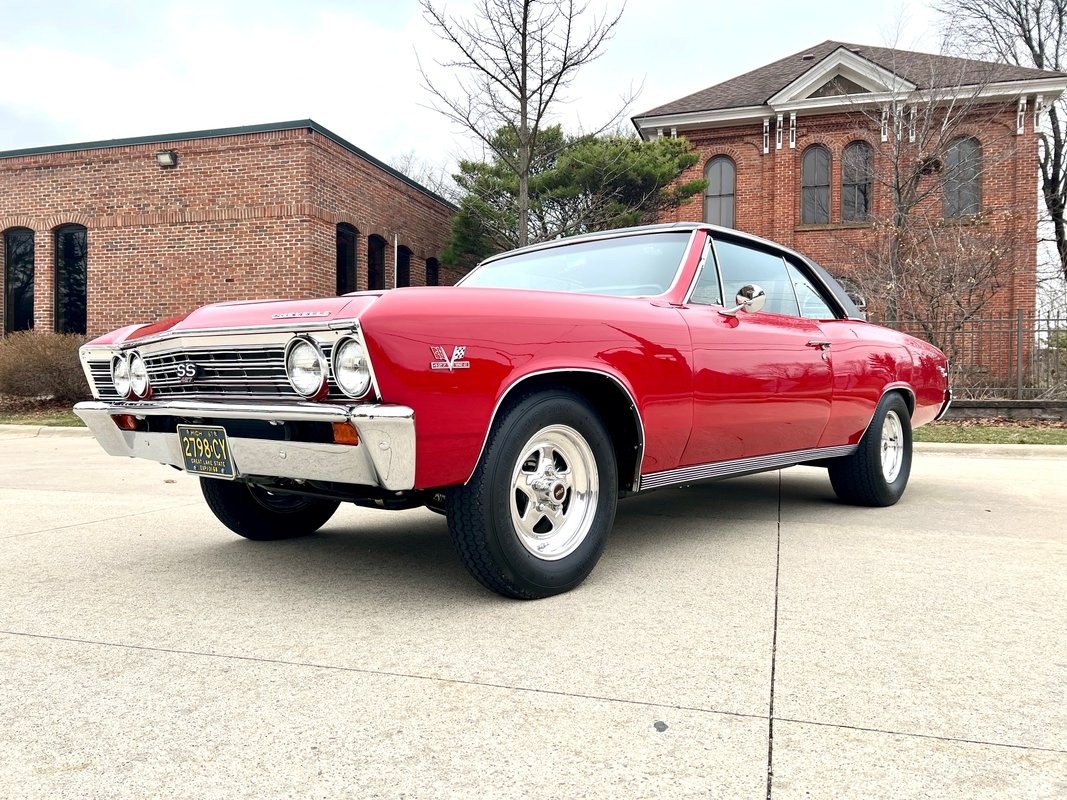
First generation, 1964 to 1967. Bodies: two-door sport coupe (a true hardtop), convertible, four-door sedan, four-door hardtop from 1966, and wagons. The 1964 and 1965 cars are slim, upright and light. The 1966 redesign added Coke-bottle rear quarters and a tunnel-back roof on the sport coupe; 1967 refined the front end and added a dual-circuit brake master cylinder and an energy-absorbing steering column. The Malibu SS was a separate series in 1964 and 1965, with buckets and console; from 1966 the performance car became the SS396, a separate series in its own right. A 1964 or 1965 Malibu SS with a six exists — SS was trim, not an engine guarantee — so never price an early SS on the badge alone.
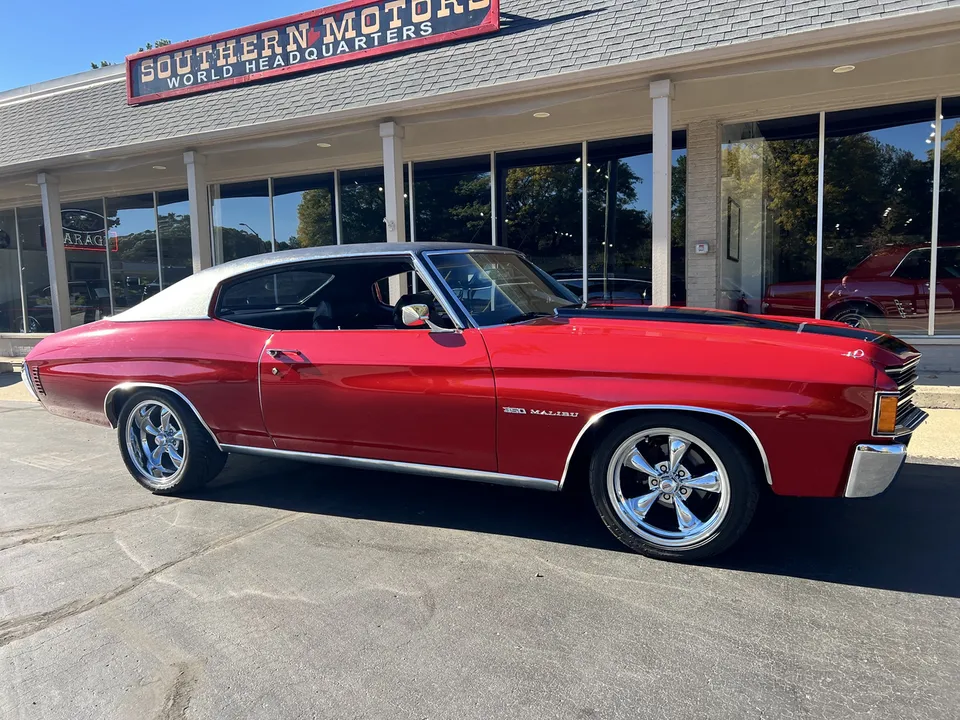
Second generation, 1968 to 1972. The redesign split the wheelbases: 112 inches for two-doors, 116 for four-doors and wagons. The sport coupe got the semi-fastback roof that defines the era, and the range ran Chevelle 300 Deluxe at the bottom, Malibu in the middle and SS396, then SS454, on top — although from 1969 the SS was an option package (RPO Z15) applied to a Malibu coupe, convertible or El Camino rather than a separate series, a distinction that matters enormously when you verify one. Facelifts came yearly: 1970 brought the squared face and the 454; 1971 went to single headlamps; 1972 brought net-only power ratings. The El Camino shares this platform, but it is a separate buying proposition and is not counted as a Malibu here.
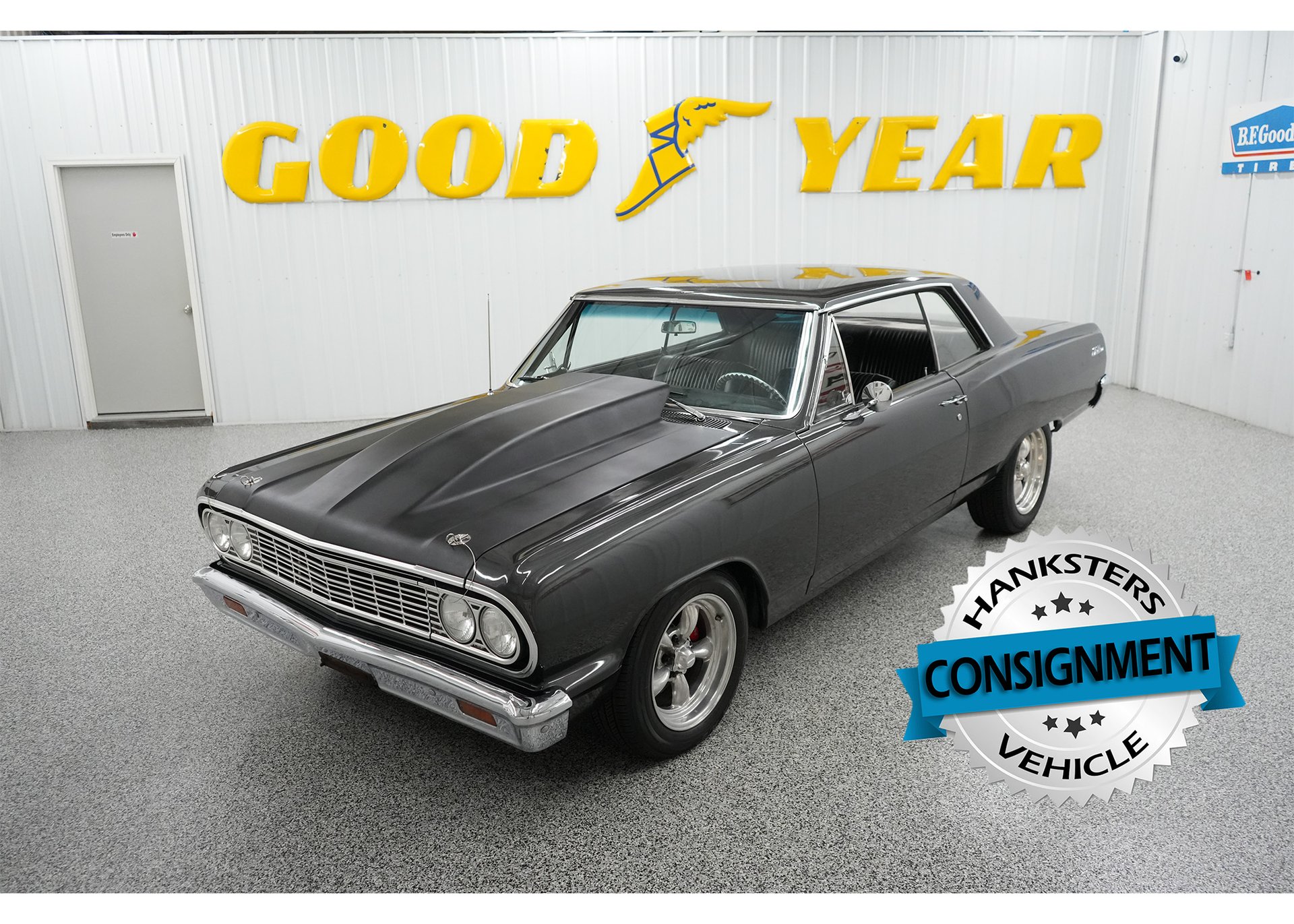
Colonnade, 1973 to 1977. The 1973 redesign kept the frame but clothed it in the Colonnade body: a fixed centre pillar, opera windows on coupes, and heavy 5 mph bumpers. Hardtop and convertible bodies were gone — every coupe is a pillared coupe. The Laguna, with its urethane nose, was the flagship; from 1974 the Laguna Type S-3 carried the performance flag, half-heartedly, while Malibu became the best-selling middle series. These are big, quiet, softly sprung cars — and today the cheapest way into a V8 Chevelle-shaped car.
Downsized, 1978 to 1983. The 1978 car lost roughly 600 pounds and a foot of length against 1977, on a 108.1-inch wheelbase. Chevelle disappeared from the catalogue; the car was Malibu, with Malibu Classic as the plusher series and a Landau coupe for the personal-luxury buyer. The wagon is arguably the most useful classic in this guide: a light, simple, V8-capable rear-drive wagon from an era when nobody else was building one. Production ended after 1983, closing the rear-drive Malibu story. A handful of late cars carry diesel engines, covered below; they are curiosities, not recommendations, unless exceptionally preserved.
Wagons, in every generation. Do not skip them. Malibu wagons — two-doors only in 1964 and 1965, four-doors thereafter — were family workhorses, so survivors are scarce and usually honest. A good wagon costs less than the equivalent coupe, carries more, and draws more attention than a row of restored coupes. Rust and tailgate condition decide them.
The SS question, stated once and plainly. An SS is not a trim level you can read off a badge, a hood or a stripe. From 1966 to 1968 an SS396 has its own VIN series, 138, distinct from a Malibu's 136 — that check is absolute. From 1969 to 1972 the SS was an option on a Malibu, the VIN cannot prove it, and only a build sheet, a window sticker, a Protect-O-Plate and matching numbers, or an unbroken history can. The market is full of Malibu coupes wearing SS badges and stripes. Priced as Malibus, some are fine cars. Priced as SS cars without paperwork, they are the single most expensive mistake available in this market.

Engines and gearboxes
A Malibu engine bay can hold anything from a 90-horsepower emissions-era V6 to a 450-horsepower LS6 big-block. Work through them by family, and remember the rating change that confuses every newcomer: to 1970 power is SAE gross; in 1971 GM quoted both gross and net; from 1972 only net, measured as installed. A 1972 350 rated at 175 net horsepower is not simply a weaker engine than a 1970 350 rated at 250 gross — the ruler changed. Judge an engine by its code, its suffix stamp and how it runs, never by comparing brochure figures across that divide.
The sixes and the small V6s
The base engine for 1964 was Chevrolet's straight six in 194 cu in form, 120 hp, with the 230 at 140 hp as the step up — a seven-main-bearing family in its later form, a single Rochester one-barrel, and a reputation for running forever on neglected oil. The 250 replaced the 230 as the main six from 1967, at 155 hp gross early on, and carried on in ever more strangled net-rated forms into 1979. Faults are simple: exhaust manifold cracks, a worn Rochester Monojet that idles badly and is cheap to rebuild, side-cover and rear-main weeps, and hardened valve stem seals giving a puff of blue smoke on start-up. None of it is expensive. What kills a six-cylinder Malibu is not the engine — six-cylinder cars were the cheapest cars, and their bodies received the least care.
From 1978 the downsized cars introduced V6s: a 200 cu in (3.3-litre) 90-degree V6, essentially a 305 V8 with two cylinders removed, at about 95 hp net, then a 229, with a Buick-built 231 fitted in some years. They share the small-block's habits, including timing cover and rear main weeps, and add a characteristic rough idle a seller will call normal — and, up to a point, it is. A V6 Malibu is a cruiser, priced as one. A V6 car in superb body condition is a rational buy with a V8 swap in its future only if you price the swap honestly, mounts, exhaust, cooling and front springs included.
The small-block V8s: 283, 307, 327, 305 and 350
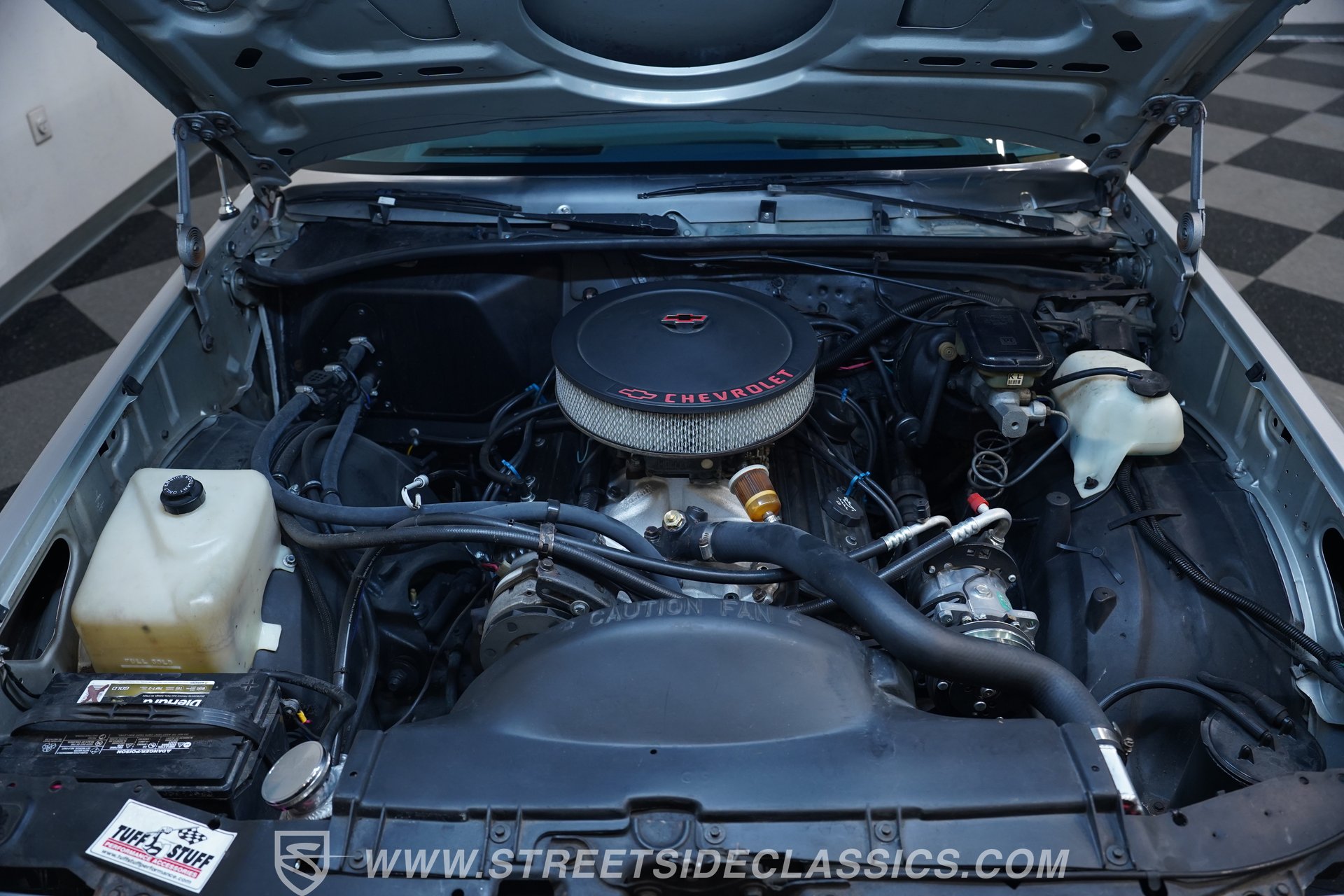
This is the heart of the Malibu range. The small-block Chevrolet is a pushrod V8 with an interchangeability that means almost any part fits almost any year — both its glory and the buyer's central trap: an engine bay tells you what is fitted now, not what the car was born with. The casting number and date at the back of the block, and the stamped suffix on the front pad, are the identity. Learn to read them, or pay someone who can, before you pay a premium for a numbers-matching claim.
The 283 was the early V8: 195 hp with a two-barrel, 220 hp with a four-barrel, sweet and a little soft in a car of this weight. The 327 from 1965 is the early performance pick, from 250 hp to the L79 at 350 hp — a genuine high-performance engine that still revs eagerly. A real L79 car is a collector car; a 327 with L79 badges and a suffix stamp that says otherwise is a 327, priced as a 327. The unloved 307 (1968 to 1973) is durable, dull and the engine most often replaced — which makes a 307 car the cheapest honest V8 Malibu you can buy, and a fine base if the body is right. The 350, available from 1969, is the best all-round answer: 245 to 300 hp gross in early four-barrel form, falling to 145 to 175 hp net in the emissions years as compression dropped and cams went mild. The 305, from 1976, runs well when maintained and disappoints anyone expecting a 350. The 400 small-block (1970 to 1976, siamesed cylinders, externally balanced) gives big torque and a specific warning: it runs hotter by design and its steam holes must match the heads fitted, so a 400 with mismatched heads overheats in a way no radiator upgrade fully cures. The little 267 (1979 to 1982) exists to meet economy targets; treat it as a placeholder engine in a body bought for its condition.
Running faults across the family are well mapped. Hydraulic lifters tick at start-up after sitting — oil drain-down, harmless if it fades in seconds, a worn cam lobe if one lifter never quiets. Flat cam lobes were a genuine period problem on late-1970s soft cams and show as a rhythmic misfire under load; a cam and lifters is realistically a repair cost of $900 to $2,000 fitted. Timing chains stretch and retard the cam, and the nylon-toothed cam sprocket on quiet-running engines sheds teeth with age; a chain set is cheap parts and moderate labour. The Rochester 2GC two-barrel is simple and robust; the Quadrajet four-barrel is superb when tight and a bogging nuisance when its throttle shaft bores wear and leak air or its well plugs weep fuel overnight, giving a long morning crank. The Quadrajet bog is almost never the concept — it is air-valve spring tension, a perished vacuum break, or low fuel pressure — and a specialist rebuild, $400 to $800, transforms a car three owners have cursed. A small-block that runs hot in traffic usually has a silted radiator, a missing fan shroud, a slipping fan clutch or a perished vacuum advance canister, in roughly that order — all cheap — before it has the head gasket failure everyone fears.
The big-blocks: 396, 402 and 454
The Mark IV big-block is why SS cars cost what they do. From 1966 it was the SS396's standard and only engine, a canted-valve V8 of enormous strength and torque. The 396 came in three period tunes: L35 at 325 hp, the sensible hydraulic-cam road engine; L34 at 350 to 360 hp; and L78 at 375 hp, with a Holley on an aluminium intake and a temperament that wants revs and maintenance. From 1970 the advertised 396 was actually 402 cu in, still badged as a 396 or, in 1971 and 1972, increasingly as a Turbo-Jet 400 — a naming collision with the 400 small-block that still confuses listings: the engine code settles it, the badge does not. The 454 arrived for 1970 as the LS5 at 360 hp gross, a magnificent road engine, and as the LS6 at 450 hp gross with 11.25:1 compression and solid lifters — the peak of the muscle era, and the most faked engine in this guide. The LS7 was never factory-fitted to a production Chevelle, whatever a listing says; it was a crate engine, so an LS7 claim means a swap until paperwork proves otherwise.
Big-block ownership is big-block cooling, weight and thirst. These engines fill the bay, cook their starter motors with exhaust heat (the classic hot-start click, cured by a heat shield or a modern high-torque starter), crack exhaust manifolds, and punish a marginal cooling system a small-block would forgive. A rebuild done properly is a $6,000 to $12,000 commitment at a reputable shop, which is why a documented rebuild with invoices is worth a real premium and an undocumented fresh paint job on an engine is worth nothing extra. Originality is priced block by block: casting number, casting date close before the car's build date, and a VIN derivative stamp matching the car. On a claimed LS6, all three, plus paperwork, or you are buying an LS5-priced car at best.
The emissions-era engines and the diesels
From 1973 the story is subtraction: compression fell, exhaust gas recirculation arrived, air injection plumbing filled the bay, and from 1975 a catalytic converter strangled most cars further. The engines themselves are the same honest small-blocks, and most running faults are faults of the add-ons: EGR valves carboned open, a thicket of perished vacuum hoses each producing its own small misfire, and from 1981 the Computer Command Control system, an electronically adjusted Quadrajet that works well when intact and baffles everyone when a previous owner has removed half of it. Budget a vacuum hose and service day before condemning any late car that runs badly; many run badly for $100 of rubber and an afternoon.
The diesels are a footnote with teeth. The Oldsmobile-built 350 diesel V8 was offered from 1978, and a 4.3-litre diesel V6 joined for 1982 and 1983. The 350 diesel's reputation — head gasket failures, injection pump wear — was earned in period and has not improved. A running diesel wagon is a fascinating survivor, not a cheap way into Malibu ownership: parts and expertise are thin, and a diesel car converted to petrol needs its title, fuel system and wiring checked like any other swap.
Gearboxes
The default manual was a three-speed, column-shifted in most cars — durable, unhurried and today mainly a sign of a low-option original car. The four-speeds are the desirable manuals: Muncie M20 wide-ratio for most performance applications, M21 close-ratio for the higher-revving cars, and the heavy-duty M22, the so-called Rock Crusher for its gear whine, behind the strongest big-blocks. A Muncie is identified by its casting numbers and input shaft rings, not by the seller's memory, and its faults are honest ones: worn synchronisers, worst on second gear, and jumping out of gear under load. A specialist rebuild runs $1,200 to $2,500 plus clutch. Saginaw four-speeds sat behind sixes and mild V8s in the 1970s and should not be priced as Muncies. A juddering clutch take-up is usually oil contamination or a scored flywheel, not the gearbox.
Automatics will decide most purchases. The two-speed Powerglide is nearly indestructible, saps performance with its single shift, and suits a six or a mild 283 cruiser perfectly; it is cheap to rebuild, around $1,000 to $1,800. The three-speed Turbo Hydra-Matic is the better road gearbox in both forms: the TH350 (1969 on) is light, strong and cheap to service, and the TH400 (big-block and SS cars) is one of the strongest automatics ever fitted to a production car. Judge either the same way: fluid that is red and smells of nothing much, firm shifts without flare, prompt engagement of drive and reverse from cold, and no delay that lengthens as the box warms — that last symptom is hardened seals and a rebuild, $1,800 to $3,200 for a TH350 and more for a TH400 done properly. A TH350 that will not kick down usually wants its cable adjusted; a TH400 uses an electric switch. The light-duty TH200 fitted to many 1978 on cars is the weak link of the late range — adequate behind a V6, marginal behind a V8, and the first thing to budget for on a hard-driven G-body. In the listing pool automatics outnumber manuals widely, which matches production and means a genuine four-speed car — verified as such, not converted last year — carries a real premium.
Problem areas
Everything in this section is ordered by what ends purchases, not by what is easiest to fix. On a Malibu the mechanicals are famous, documented and affordable. The body and frame are not immortal, and the identity of performance cars is a problem area in its own right. A note on evidence before the detail: in the small photo-checked sample supplied for this guide — 9 cars examined in detail from their sellers' photo sets — rust was noted in 1 car, and smoke, leaks and visible damage were noted in none. Treat that as a reminder of how sellers photograph cars, not as a verdict on the model: nine cars is too small a sample to generalise from, the photographs are chosen by the seller, and the rust that matters on these cars lives in the places listing photographs least often show. Inspect as if the sample said nothing, because for your car, it did.
Rust: the map
Rust on a Malibu follows water, salt and trapped mud, in that order, and it follows the same map in every generation with generation-specific additions noted below. Work through it in this order.
Frame first, because everything bolts to it. The A-body perimeter frame is strong in the middle and vulnerable at its ends and at every place road salt sits. The classic failure is the rear frame rails from the rear axle kick-up to the back bumper, worst on 1964 to 1967 cars and on any car from the salt belt: the rail is a boxed and open section that fills with mud through its holes and rots from inside, so a rail that looks sound can be tissue-thin around the rear body mounts and the trailing-arm mounts. Prod with a screwdriver, tap with a small hammer and listen for the change from a ring to a thud, and look for the tell-tale flakes inside the rail through its access holes. The front frame horns and the steering box and idler mounting areas come next, then the centre crossmember under the transmission and the body mount outriggers. Frame repair sections and solid used frames exist, and a frame swap is a known job on these cars — but it is a body-off job, and a car needing it must be priced as a body-off project, typically a repair cost well into five figures at a shop once mounts, brake and fuel lines and refitting are counted. A cracked frame at the steering box mounting, a known stress point especially on cars run with wide front tyres and no brace, is a welding repair that must be done properly and gusseted, not a dab of weld over a crack.
Floor pans and the trunk floor. Water enters past the windscreen seal, the cowl vents and the rear window, and it sits under carpets and the trunk mat. Lift every carpet you are allowed to lift. Surface rust with solid metal is a clean, treat and paint job; perforation at the seat belt anchorages, the body mount points or the seat risers is structural and a safety conversation, not a cosmetic one. Replacement pans are available for the 1964 to 1972 cars in full and partial sections, and a pan fitted and painted runs roughly a repair cost of $800 to $2,000 a side depending on how much surrounding metal goes with it. The trunk floor rots over the fuel tank and at its drop-offs beside the quarters; the spare wheel well on wagons and the load floor under a wagon's rear seat deserve the same minute. Floors rarely rot alone: floor rust plus sill-area and lower quarter rust is one water story told in three places.
Lower quarters, wheel arches and fenders. The rear quarters rot at the bottom behind the wheel, where the skins trap mud, at the arch lip, and — expensively — at the lower front where the quarter meets the rocker. Front fenders go at the bottom behind the wheel and around the headlamp bowls. Patch panels exist for the common areas on 1964 to 1972 cars at modest prices; full quarter skins, fitting and paint are where the money goes, and a pair of quarters properly done can exceed the value of a Colonnade or G-body car outright — which is why later cars must be bought on body condition above all else. Bubbling under a vinyl roof is its own warning: vinyl traps moisture against a roof skin often finished to a lower standard because it was going to be covered, and the cure can be a roof skin, not a paint touch-up.
Rocker panels, doors and the cowl. Rockers are structural on these framed cars in a way they are not on a unibody — they carry the body mounts and the door apertures — and they rot from inside, announced by bubbling at the ends. Door bottoms fill with water when their drain slots block; run a fingertip along every door bottom, feel for filler and bubbling, and check the drains are clear. The cowl and the plenum at the base of the windscreen rot where leaves compost in the vent boxes, and the leak that results drips onto the front floors and the fuse box, linking a body fault to half the electrical faults in the next subsection. On 1968 to 1972 cars check the panel below the rear window with particular care: the window channel rusts, water enters the trunk and the package shelf, and on sport coupes the flowing roofline hides filler beautifully until the magnet finds it.
Generation additions. Colonnade cars add rust at the opera window frames and in the elongated doors, whose bottoms and hinge pillars carry more weight than the hinges enjoy. Downsized cars are better protected and younger, and they still rot in the rear frame rails, the floor over the frame, the door bottoms, and — on wagons — the tailgate and spare well; a G-body with a soft rear rail has the same body-off arithmetic as a 1965 car, at a third of the finished value. Convertibles in every year need a specific minute: floor braces, reinforced rockers, and the well behind the rear seat where the folded top sits damp.
Frame, suspension, steering and brakes
The chassis layout never fundamentally changed: double wishbones at the front with coil springs, a live rear axle on coil springs located by four trailing arms, and an anti-roll bar at the front on most V8 cars. Its wear items are predictable. Front ball joints and the idler arm produce vague steering and inside-edge tyre wear; a full front-end refresh is a repair cost of $800 to $1,800 fitted, and it transforms a sloppy car. Rubber bushings perish with age rather than mileage: control arm bushings crack and shift under braking, and soft rear trailing arm bushings let the axle steer the car under power — the classic symptom is a car that changes line when you lift off in a bend. Polyurethane replacements sharpen response and transmit more harshness; rubber for a cruiser, polyurethane for a car you drive hard, is the experienced answer. Springs sag, most visibly at the rear on wagons and big-block coupes; a car sitting nose-up is usually telling you its front springs or its engine are not what you think. Shock absorbers are cheap and universally neglected.
Steering uses a recirculating-ball box, manual or power-assisted, with play that adjusts at the box within limits and play that does not — in the linkage and the rag joint, the fabric column coupling that perishes and adds a dead quarter-turn at the wheel. A steering box rebuild or quality replacement is $400 to $900 fitted; a car that wanders with a tight box and new idler wants its alignment and rear bushings checked before its second box.
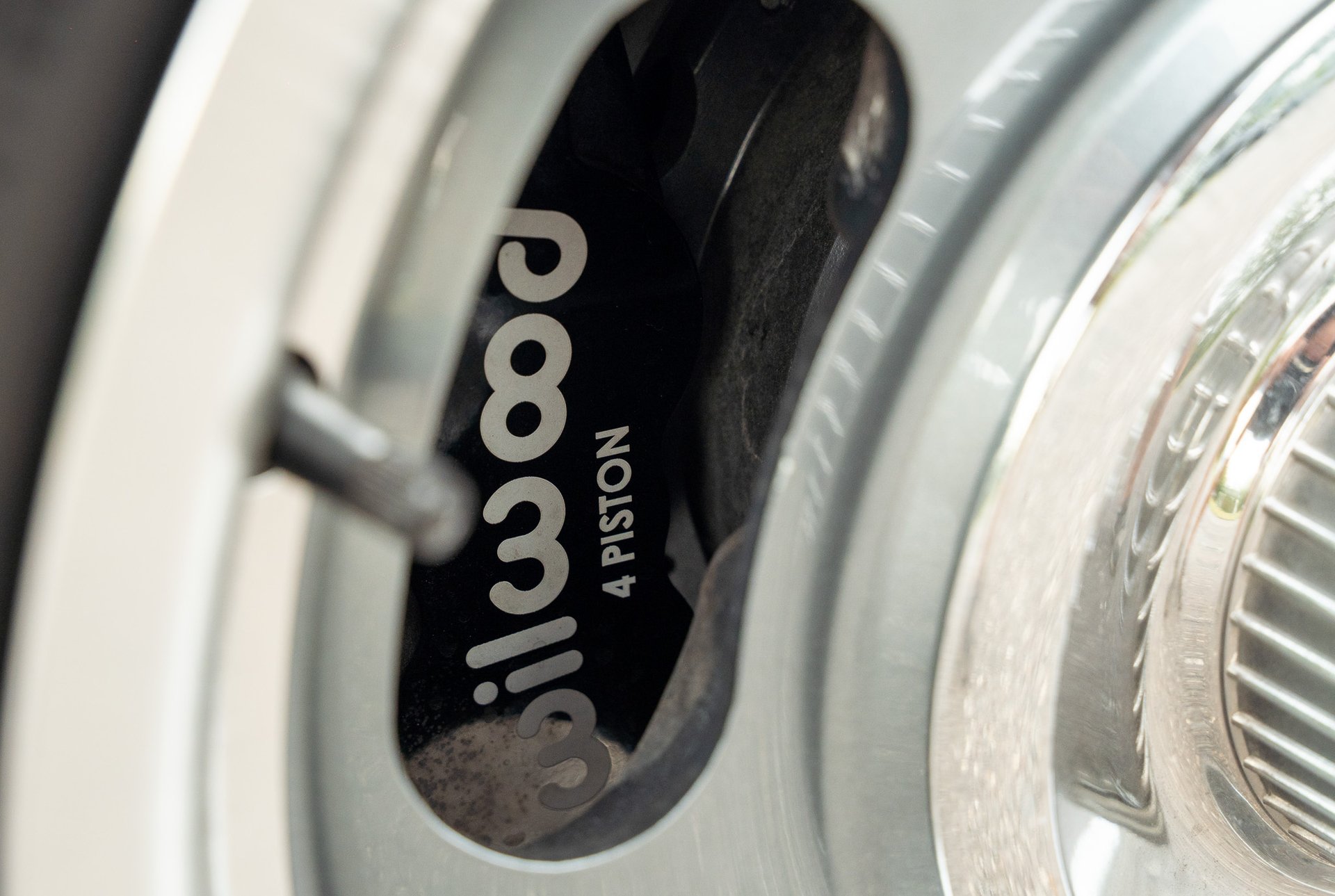
Brakes are the era in miniature. Base 1964 to 1966 cars stop on four drums with a single-circuit master cylinder — adequate when perfectly maintained, unforgiving of any single failure, and the first upgrade any regular driver should make is the dual-circuit conversion 1967 made standard. Front discs were optional from 1967, standard on SS cars, and the norm by the Colonnade years. What costs money is undoing decades of sitting — seized calipers and wheel cylinders, perished flex hoses, a pitted master cylinder bore, and hard lines rusted thin along the frame rail. A full hydraulic refresh is $900 to $2,200 with labour, and any car that has sat for years needs it as a condition of being driven, not as an improvement.
Interior, trim, glass and electrics
The cabin decides how a Malibu feels, and its costs hide in plain sight. Seat frames crack at the hinge on bucket cars; seat padding collapses with age so you sit in the seat rather than on it, and a re-trim with correct-pattern covers, new foam and labour runs $1,500 to $3,500 for a front and rear set in vinyl. Headliners sag and are cheap in parts and fiddly in labour. The dashboard pad cracks in the sun belt and is a replacement, not a repair; Colonnade and G-body pads are harder to source in good colours than early ones — mechanical parts are plentiful, correct soft trim in the right colour is the late-car scarcity. Door cards warp at their lower edges from the same water that rots the door bottoms. Carpets are cheap and tell the truth: lift them and read the floor and the smell together.
Brightwork is a generation-specific trap. Early cars wear stainless and aluminium that polish well and pot-metal that pits; SS trim and correct single-year grilles carry single-year prices. The Colonnade urethane Laguna nose cracks and is a specialist repair. G-body bright film trim ages by peeling. Glass is available for the popular bodies; a scratched windscreen on a wagon or Colonnade coupe should be priced after a phone call, not assumed.
Electrics fail at connections, grounds and switches, in that order, on every generation. The engine-to-body ground strap, the cluster ground and the tail lamp grounds account for most dim lamps, wandering gauges and phantom faults. Power windows slow from dried grease and worn regulators before their motors fail. Air conditioning divides into cars with a complete, sealed system wanting a service, and cars with compressors missing and hoses cut, which want a system, at a repair cost of $1,200 to $2,500 to restore properly. Price those two cars very differently. On late computer-controlled cars, an intact, unhacked engine harness is a feature worth paying for, and a harness full of mystery connectors is a discount you should take in full.
Identity, clones and the paperwork problem
This is a problem area, not a footnote, because it is where the largest sums are lost. The mechanisms are simple. A Malibu coupe becomes an SS with badges, a domed hood, stripes, bucket seats and a big-block — every one of those parts bolts on, all of them are reproduced, and none of them proves anything. An engine becomes matching-numbers with a restamped pad, which is why you read the pad's broach marks and character fonts as carefully as its digits, and why a pad that has been decked smooth and restamped in a different hand announces itself to a magnifier. A trim tag gets swapped or reproduced, which is why you check its rivets, its codes against the car's equipment and build date, and its paint and trim codes against the colours in the places resprays miss — inside the trunk, under the carpets, behind the door cards.
Defences exist, and they are generation-specific. From 1966 to 1968 the SS396 VIN series 138 separates a factory SS from a Malibu's 136 absolutely. From 1969 the SS is RPO Z15 on a Malibu, the VIN is silent, and the hierarchy of proof is: original build sheet (found, in surviving cars, above the fuel tank, inside a seat spring or under the carpet — a seller who has one and shows it is telling you something good about the car), then window sticker and Protect-O-Plate agreeing with the stampings, then matching engine stamps, then an unbroken history. Canadian-built cars are a gift here: GM Canada can document a Canadian-built car's original options from the VIN in a way US records cannot. Apply the same scepticism, scaled to the money, to L79s, LS6s and four-speed conversions sold as factory four-speeds. The rule is not that undocumented cars are bad cars. It is that they are priced as what they can be proved to be.

How to inspect one
Allow at least an hour, bring a torch, a cloth-wrapped magnet, a small hammer for tapping frame rails and a notebook, and arrange a lift inspection before money changes hands on any car priced as a good one. Inspect in this order: identity first, because it prices everything else; structure second, because it can end the inspection; mechanicals third, because they are the fixable part.
- Paperwork and VIN first. Match the title to the VIN plate — on 1964 to 1967 cars on the driver's door hinge pillar, from 1968 at the base of the windscreen, visible through the glass. On a 1966 to 1968 car claimed as an SS396 the series digits must read as the 138 SS series, not a Malibu's 136. Check the trim tag for build date, paint and trim codes, and compare the paint code with the colour in the trunk and under the carpets. A mismatch is a question, and the answer should be a respray story, not surprise.
- Engine identity before engine condition. Read the casting number and date at the rear of the block and the stamped suffix and VIN derivative on the front pad. A claimed L79, L78 or LS6 lives or dies here. Note what is actually fitted without excitement: a replacement block or a later 350 in a driver-quality Malibu is normal history, priced as such, and only a fraud when sold as something else.
- Cold start, insisted upon. The engine should be stone cold when you arrive. A six or small-block should start with modest cranking, settle to an even idle and show no blue smoke beyond a start-up puff from tired valve seals. Listen for a lifter that never quiets, a timing chain rattle at the front cover, and an exhaust tick that fades as a manifold warms and expands. A car presented already warm has had its most honest minute taken from you; ask why, politely, and price the unknown.
- Frame, with the hammer. On the ground with a torch, and later on a lift if the car survives the hour: tap along both rear rails from the axle kick-up to the bumper, around every body mount, the front horns and the steering box mounting. The hammer test from the rust section settles the rails — a ring is metal, a thud is a repair bill. Prod the rocker ends and the floor at the seat belt anchors. Perforation in a rear rail, a body mount or a belt anchor ends the inspection for any car priced as a driver; continue only if the car is priced as a body-off project and you want a body-off project.
- Floors, trunk and the water path. Lift the carpets in all footwells and the trunk mat and spare. Look for water tracks from the windscreen base and the cowl, staining down the rear window channel into the trunk on 1968 to 1972 coupes, and damp in the convertible well or the wagon load floor. Run the magnet over the lower quarters, the arch lips, the fender bottoms and the panel below the rear window. Check every door bottom with a fingertip and every drain slot with your eyes.
- Panel fit and accident history. Stand at each corner and look down the flanks. Door gaps should be even and consistent side to side; a sport coupe door that drops as it opens wants hinge pins at best and a bent or rusted pillar at worst. Look in the engine bay at the inner fenders and radiator support for straightening marks and non-factory welds, and under the car at the front horns for the same story told from below.
- Suspension and steering by hand. With the front raised or on a lift, rock each front wheel top to bottom and side to side: top-to-bottom play is ball joints, side-to-side is linkage and idler. Push down hard on each corner and watch it settle in one movement. Turn the steering lock to lock and feel for the dead spot in the middle and the notchiness of a worn box. Check the rag joint visually. Price what you find using the ranges in the problem areas section, and remember a full front-end refresh is a known, bounded cost — unlike the frame in step 4.
- The test drive, fifteen minutes minimum. Include a cold pull-away, a motorway or fast-road stretch, a hard stop from speed and a full-lock car park manoeuvre. An automatic should engage drive and reverse promptly, shift firmly without flare, and kick down when asked — a TH350 that will not kick down is usually its cable, as the gearbox section explains. A manual should take second gear cleanly going up and down; second-gear synchromesh is the Muncie test. The car should track straight hands-light, stop straight with no pull or judder, and show no axle steer when you lift off mid-bend.
- Heat, pressure and charging, hot. At the end of the drive, let it idle. A big-block or 400 small-block whose temperature creeps upward at idle is showing you its cooling system honestly. A small-block with 20 psi oil pressure at a hot idle and 40 or more running is a used engine behaving normally; flickering near zero is not. Smell the coolant and the automatic fluid: burnt fluid is a gearbox budget, fuel in the oil is an engine conversation.
- Electrics and comfort, everything, once. Work every window, the blower on all speeds, washers, wipers, horn, every lamp and the gauges. Run the air conditioning if fitted and decide which of the two air-conditioning cars described in the problem areas section this is. Test the heater even in summer — a leaking heater core announces itself as a sweet smell and a misting windscreen.
- Stance and underside, standing back. A Malibu should sit level side to side: a wagon down at the back wants springs and a floor and rail check above them; a coupe sitting nose-high wants its engine identity re-read, because a small-block on big-block springs sits exactly like that. Photograph the car in side profile from a distance — stance faults you talked yourself out of in person are obvious in a picture.
- Interior and originality last, deliberately. Sit in every seat, feel for the collapsed driver's cushion, and check the soft trim in its correct colour, because late-car trim scarcity is priced here. Then assemble the verdict in this order: identity proved or unproved, structure sound or priced, mechanicals listed with their costs. A Malibu that passes steps 1 to 5 and needs a front end, a carburettor rebuild and a hydraulic refresh is a good purchase. One that fails step 1 or step 4 and charms you at step 12 is not.
Values
The Classic Listings build appends the live market block beneath this guide — the cars listed now and the recorded sales — and that block, refreshed at every build, is where the numbers live. This section teaches you how to read it, because on a Malibu the spread inside a single model year is wider than the spread between model years, and a median read without condition will mislead you more than no number at all.
Start with the condition spread, which on these cars is really a structure spread. A rust-free, documented car and a cosmetically bright car over soft rails can share a year and a badge, and they are different purchases by a multiple, not a percentage. When you read the market block, sort by the evidence offered: underside photographs, stampings shown, paperwork named. Listings with that evidence sit at the top of the market for a reason, and comparing an unevidenced car against their prices is the commonest way buyers overpay.
Generation sets the band. The 1968 to 1972 coupes and convertibles carry the market, with SS-proved cars in a band of their own above Malibus; first-generation cars sit below them except for proved Malibu SS, L79 and convertible examples, which have their own collector demand; Colonnade cars sit markedly lower, priced as the big cruisers they are, with Laguna and S-3 cars earning a modest premium over an equivalent Malibu for rarity rather than performance; and the downsized cars are the entry point, coupes and sedans priced as usable classics and good wagons beginning to be recognised as the scarce survivors they are. Within every band, a verified four-speed, a verified performance engine and a desirable factory colour move a car upward, and a colour change, a vinyl roof over bubbling skin and an automatic behind a six move it downward.
Asking and achieved prices diverge in a pattern worth knowing. Sellers of ordinary Malibus anchor on the best SS-adjacent asking price they have seen and concede slowly; auction results for ordinary cars therefore tend to sit below the asking median for the same description, while genuinely proved, rust-free cars achieve close to ask. Read the recorded sales, not the listings, when you want to know what a car is worth.
The project-to-driver gap is the Malibu's defining value feature. A running, structurally sound car that needs cosmetics is worth disproportionately more than a non-running car needing the same cosmetics, because recommissioning a long-parked car — fuel system end to end, every brake component, tyres, belts, hoses and the faults that only appear at operating temperature — consumes the difference quickly and invisibly. Convertibles carry a premium in the first two generations and demand a structural discount just as quickly if the reinforced rockers are soft. Wagons invert the usual logic: worth less for decades and used up accordingly, a genuinely good one now competes with coupe money. Negotiate on evidence, in the inspection's order — identity gaps first, structure second, mechanical lists third with costs attached — and sellers concede on documented facts in a way they never concede on opinion.
Parts and ownership
The Malibu is one of the best-supported American classics ever built, because Chevrolet built Chevelles in the millions, the performance aftermarket adopted the platform wholesale, and the same mechanical parts serve a generation of GM intermediates. Ownership divides cleanly into what is easy, what is dear, and what is scarce — and the scarce list is not the one newcomers expect.
Easy: almost every mechanical wear item. Engine internals for sixes, small-blocks and big-blocks, gasket sets, water pumps, timing sets, carburettor kits, ignition parts, brake discs, drums, calipers, hoses and master cylinders, ball joints, bushings in rubber and polyurethane, springs, exhaust systems in standard and performance form, glass rubbers and weatherstrips for the popular bodies, and sheet metal patch panels and full skins for the 1964 to 1972 cars. Order today, fit this weekend, at prices close to modern-car money. The depth of the reproduction market for 1964 to 1972 cars in particular means a restoration can be planned from catalogues rather than from salvage yards.
Harder and dearer: correct, date-coded components for a numbers car — the right Quadrajet or Holley with the right date, a correctly stamped alternator or distributor, an M22 with the right codes — because you are competing with every SS restorer in the country for the same small pool. NOS trim for single model years, Colonnade urethane noses, convertible top frames and hardware, and quality rechroming of pot-metal all sit in this band. A quality repaint, properly prepared over sound metal, starts in five figures at a reputable shop, which is the economic root of this guide's repeated advice: buy the body, fix the mechanics.
Scarce: correct soft trim in unfashionable colours for Colonnade and downsized cars, late wagon-specific trim and tailgate parts, diesel-specific components, and good used rear frame sections for any generation — the salvage supply of rust-free frames has been consumed by the same rust that creates the demand. On a late car, a complete, unbroken interior in the right colour is a buying argument in itself, because you cannot catalogue-order your way to one.
Running costs. A sorted Malibu is a realistic regular-use classic. Fuel consumption runs from the low twenties miles per gallon on a gentle six-cylinder highway trip to single figures in town for a big-block driven as intended, with small-blocks in the mid-teens in mixed use. Servicing is within any competent mechanic's ability: oil and filter every 3,000 miles, coolant and brake fluid every two years, and automatic fluid and filter on a schedule previous owners routinely skipped — which is why the fluid check in the inspection matters. The Chevelle and Malibu club ecosystem is large, technical and generous with casting-number knowledge. The budget line that catches new owners is the first year: catching up deferred maintenance honestly costs a few thousand before you improve anything. Buy a car in regular use over a sleeping car at the same price, every time.
Which one to buy
- The all-rounder: 1968 to 1972 Malibu sport coupe, 350 and TH350. The classic shape, the deepest parts support, and a market you can buy into and sell out of. If you want one Malibu to drive and enjoy, this is it.
- The value buy: a 307 or six-cylinder car with a superb body. The engine everyone overlooks in the shell everyone needs. Priced honestly, driven as it is or upgraded later with your eyes open about the true cost of a swap, it is the cheapest route into a good Malibu.
- The early charmer: 1965 Malibu SS or an L79 car, proved. Light, neat and genuinely quick in L79 form — and proved is the operative word. The stampings and the series codes exist to settle these cars; make them settle yours.
- The muscle car: a documented SS396, or a 1970 SS454. Buy the paperwork first and the car second. An LS6 is a documented subset car or it is a story, and an undocumented SS-priced car is a Malibu with a very expensive stripe.
- The cruiser: a Colonnade Malibu or Laguna. Big, soft, cheap and honest. Buy the best body you can find, because the mechanical refresh is affordable and the sheet metal economics are not.
- The useful classic: a 1978 to 1983 Malibu Classic wagon. The light rear-drive wagon nothing else replaces. A preserved V8 wagon is the sleeper pick of this guide.
- The family entry: a downsized coupe or sedan. The simplest, cheapest Malibus to run, with the TH200 caveat priced in on V8 cars.
And the rule that overrides all of the above: buy the least rusty, best-documented car you can find, in the generation you actually want. Engines, gearboxes and brakes on a Malibu are all fixable at prices you can plan for. A rotten frame costs more to put right than most finished Malibus are worth, and an unprovable SS identity can never be made provable after the fact.
See the 42 Malibu cars currently listed.