
Chevrolet Impala Coupe buyer's guide
Chevrolet Impala Coupe -- the model's own buyer's guide: variants, values and what to check.
Years listed: 1959-1967 · Series: Impala
Overview and history
The Impala Coupe is not one car but a decade of them, and the first thing to understand as a buyer is that the name moved faster than the metal underneath it. When Chevrolet launched the Impala for 1958, it was not a model line at all — it was the prestige trim level of the Bel Air range, offered only as a two-door Sport Coupe hardtop and a convertible, at the very top of the catalogue. Within two years it had become a full series, within four it had spawned the Super Sport, and by the middle of the 1960s the Impala was the best-selling single nameplate in America, with annual production passing a million cars. The two-door hardtop was always the emotional centre of the range: the car in the advertisements, the car in the songs, and the car that makes up the coupe listings you will be shopping from.
The generations matter more than the badge, because Chevrolet redesigned its big cars on a short cycle and almost nothing carries over cleanly from one to the next. The 1958 car is a one-year-only design, built on the new X-frame chassis with coil springs at all four corners, recognisable by its sculpted rear quarters and triple taillights — the triple lamp became an Impala signature for decades. The 1959 and 1960 cars share the dramatic low, wide body General Motors spread across all its divisions for 1959: horizontal fins, cat-eye taillights on the 1959, a cleaner rear on the 1960, and a wraparound windscreen. The 1961 to 1964 cars are the ones the performance legend was built on — the finless 1961 with its famous bubble top roofline, the squared-up 1962 to 1964 cars, the 409 engine, and the drag strips. The 1965 redesign brought the perimeter frame that finally replaced the X-frame and the rounded, muscular styling that made the 1965 Impala one of the best-selling cars of the decade. The 1967 and 1968 cars took that formula into the Coke-bottle era — longer, heavier, more sculpted, with hideaway headlights available on the 1968 and big-block power increasingly framed as luxury torque rather than drag-strip theatre.
On Classic Listings the coupe pool is a faithful cross-section of that story. Of the 21 Impala Coupes currently filed, five are 1962 cars, three are 1960s and three are 1965s, with pairs of 1961, 1963 and 1964 cars and single examples from 1958, 1959, 1967 and 1968. Twelve are offered for sale and nine are recorded as sold, and the supply leans heavily on dealer stock — 16 of the 21 came through dealers, four through Bring a Trailer and one through eBay — which means most cars you view have been prepared for sale and described in the language of the showroom rather than the long-term owner. That is a reading instruction, not a criticism: preparation concentrates on what photographs, and the things that decide whether an Impala is a good buy — the frame, the floors, the brightwork, the honesty of the engine — are precisely what a cosmetic preparation can leave untouched.
Many of the cars in the pool today are restored, some are restomods wearing modern running gear under period sheet metal — the pool includes a 1962 SS described as a Pro Touring car and listings carrying modern overdrive automatics — and a minority are honest survivors. Each population is priced and judged by different rules, and much of this guide is about knowing which one the car in front of you belongs to before you argue about its price.
What unites every generation is the formula: a big, comfortable, rear-wheel-drive coupe on a full frame, a small-block or big-block V8 in the overwhelming majority of cases, coil springs all round, and a cabin trimmed to feel a class above the Chevrolet badge. They are simple cars — no injection pumps, no exotic metallurgy, no unobtainable electronics — but simple is not the same as cheap to put right. An Impala wears a very large amount of chrome and stainless trim, is upholstered in patterned vinyl that has to be reproduced to be replaced, and is built on a frame that rusts where you cannot see it. Buy the structure and the trim, and the mechanical simplicity will reward you. Buy the shine, and you may own the most expensive lesson in the classic Chevrolet world.
The models
Every car in this guide is a two-door coupe, but "coupe" covers two distinct bodies. The Sport Coupe is the pillarless hardtop — no B-pillar, frameless door glass on most years, and a roofline styled as the centrepiece of the car. Alongside it in some years sat a pillared two-door sedan, cheaper and plainer, which belongs to the Biscayne and Bel Air end of the range rather than to this guide. Within the hardtop line, the trim ladder runs Bel Air Impala for 1958 only, then Impala as a series from 1959, with the Super Sport — the SS — arriving partway through 1961 as first an option package and then a distinct performance-luxury identity. From 1965 the Caprice sat above the Impala as Chevrolet's luxury flagship; Caprice coupes are filed separately, and everything here is the Impala line itself.
| Model | Years | Engine | Output | Built | Character |
|---|---|---|---|---|---|
| Bel Air Impala Sport Coupe | 1958 | 283 V8 or 348 V8 | 185–315 hp | 55,989 hardtops | The one-year original; tri-power 348 is the prize |
| Impala Sport Coupe | 1959–1960 | 283 or 348 V8, 235 six | 135–335 hp | Coupe share of about 470,000 Impalas | The finned icon; style first, structure second |
| Impala Sport Coupe | 1961 | 283, 348 or 409 V8 | 170–360 hp | Bubble top year; SS arrives mid-year | The collector's early car; verify the roof and the engine |
| Impala SS | 1961–1964 | 283, 327, 409 V8 | 170–425 hp | SS a minority of Impala output | The performance flagship; 409 cars carry the premium |
| Impala Sport Coupe | 1962–1964 | 283, 327, 409 V8, 230 six | 140–425 hp | Impala passed 400,000 a year | The volume classic; huge choice, huge spread |
| Impala SS | 1965–1967 | 283, 327, 396, 427 V8 | 195–425 hp | SS peaks mid-decade, then fades | Big-block luxury performance; comfort with teeth |
| Impala Sport Coupe / Custom Coupe | 1965–1968 | 250 six, 307, 327, 396, 427 V8 | 155–425 hp | Impala over a million in 1965 alone | The Coke-bottle cars; formal roof Custom Coupe from 1967 |
(Outputs are period gross SAE figures, which flatter every engine in this table by modern net standards; treat them as relative rankings, not measurements. Production figures are the commonly published factory totals for the body style or series as noted, and where a coupe-only split was never published cleanly the table says so rather than inventing one.)
1958: the Bel Air Impala. The launch car came only as a hardtop coupe and convertible, lower and longer than the 1957 Chevrolets, with a lattice grille, quad headlights and triple taillights set into deeply sculpted rear fenders. Engines ran from the 283 small-block to the new 348 big-block, including a tri-power 348 rated at 280 hp and a 315 hp version at the very top. The pool's single 1958 car is exactly the specification collectors chase: a Sport Coupe with the 348 tri-power and a four-speed manual. One-year-only sheet metal and trim make the 1958 the most expensive Impala to restore correctly.
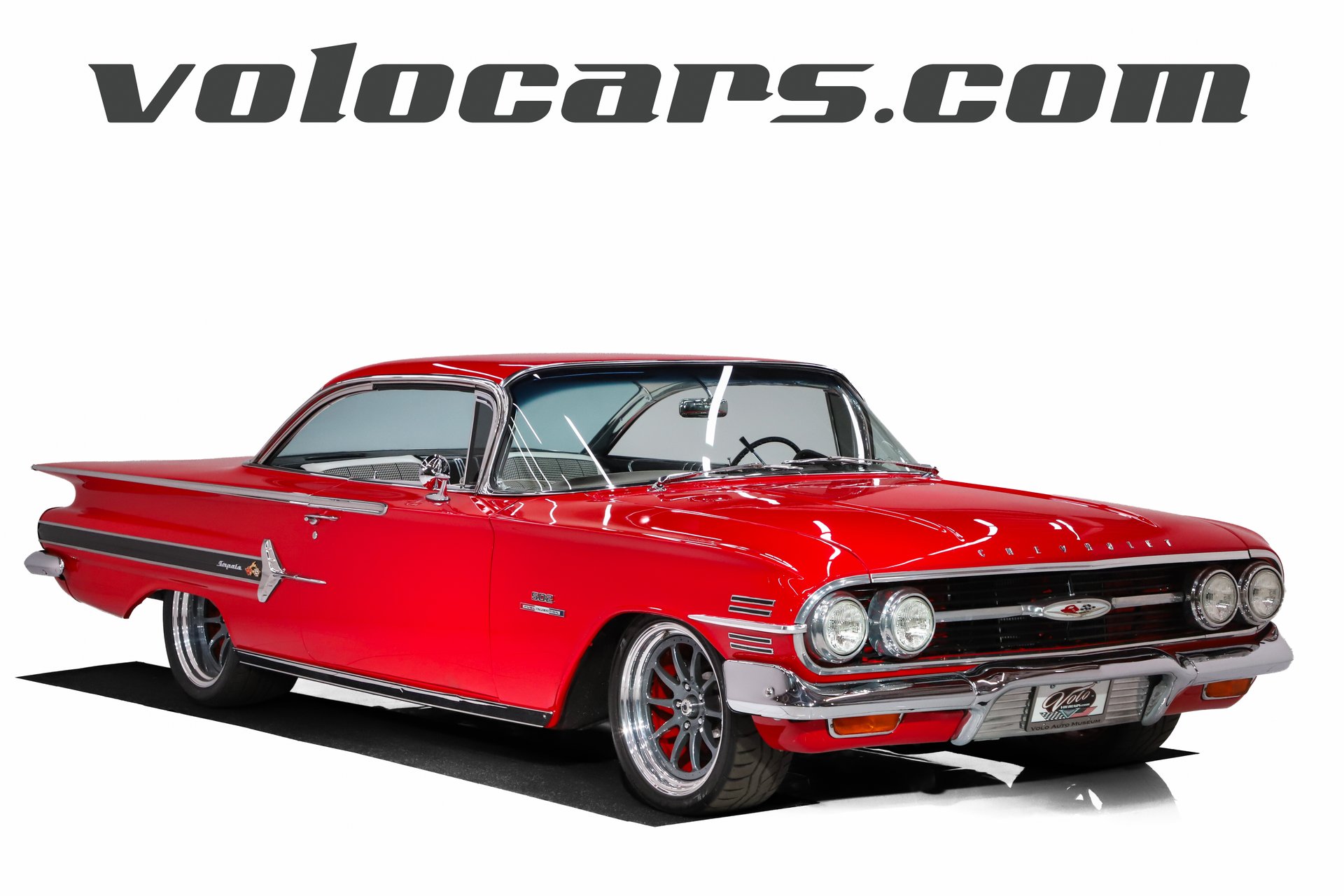
1959–1960: the finned cars. The 1959 body was an all-GM statement — thin roof pillars, a huge wraparound windscreen, horizontal tail fins with teardrop lamps — and the 1960 refined it with a simpler grille and cone-shaped rear lamps. Engines centred on the 283 and the 348, the latter growing to 335 hp in top tri-power form. These are the most style-led cars in the guide, and the ones where the gap between a restored showpiece and a structurally tired car is widest. Three 1960 cars and one 1959 sit in the current pool.
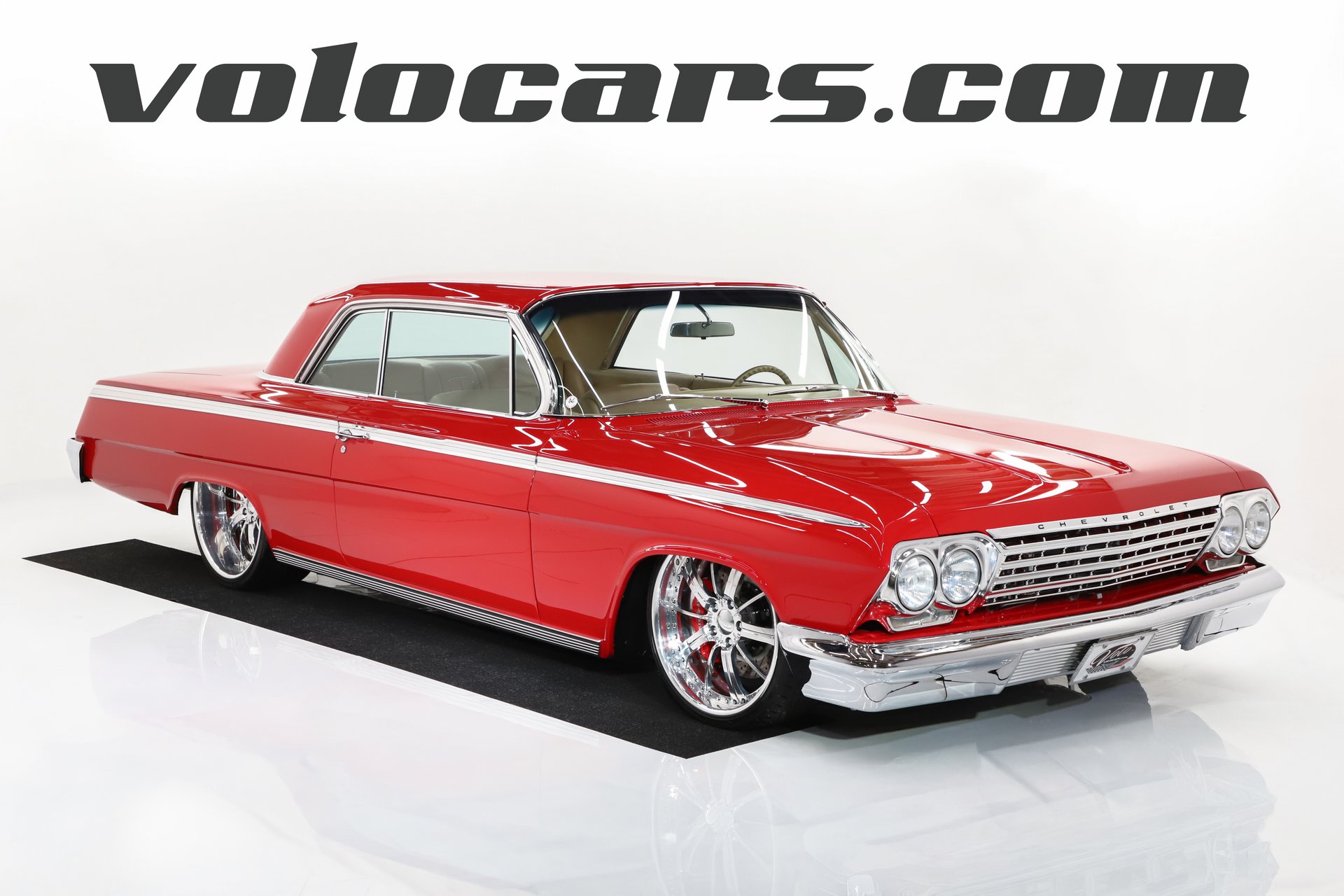
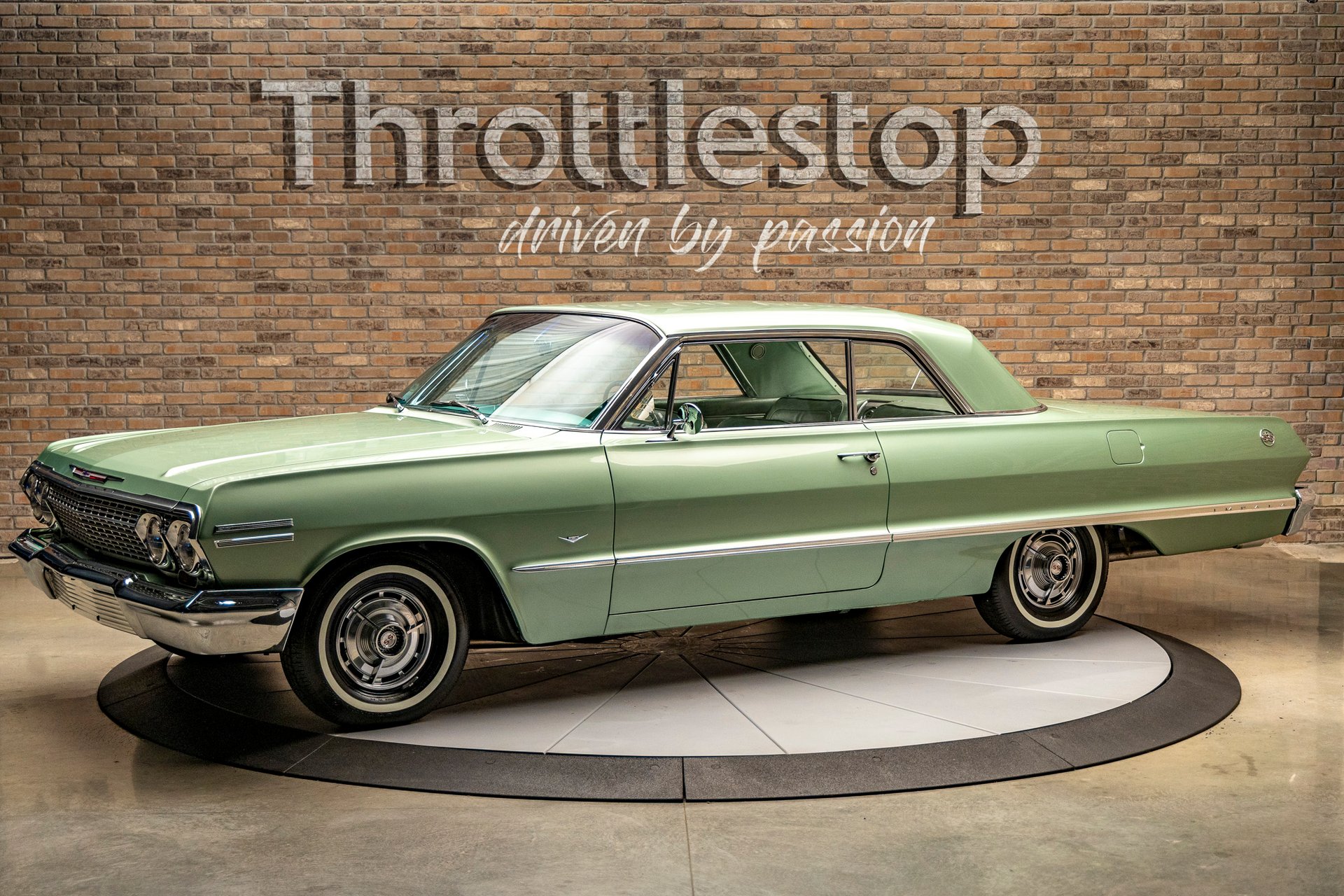
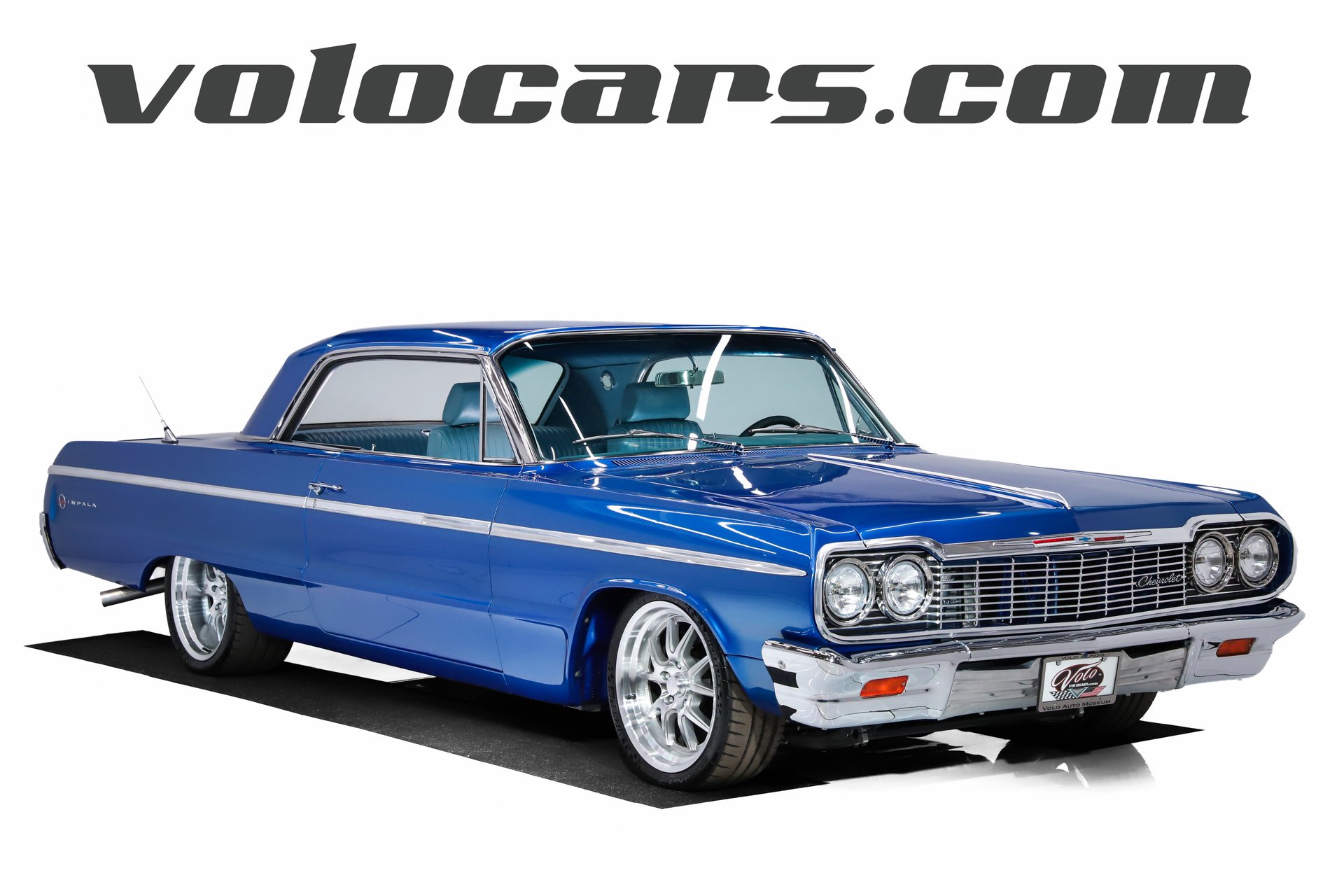
1961–1964: the performance years. The 1961 restyle cut the fins away and gave the Sport Coupe its bubble top — a thin, rounded roof with a large wraparound rear window that is now the most sought-after roofline of the run. Mid-year, Chevrolet introduced the SS package: heavy-duty suspension and brakes, spinner wheel covers, a passenger grab bar, special badging, and availability restricted to the bigger engines. The 409 arrived the same year, and by 1962 the combination of a 409 and a four-speed had made the Impala SS a drag-strip institution. The 1962 to 1964 cars share a family look — clean flanks, six taillights, aluminium rear cove trim on the SS — and they dominate today's pool: nine of the 21 cars are from 1962 to 1964. For 1963 only, the Z11 package put a 427-cubic-inch version of the W-series engine and aluminium front panels into a handful of coupes for drag racing; genuine Z11 cars are museum pieces, and any claim to one needs paperwork, not enthusiasm.
1965–1968: the best-sellers and the Coke-bottle cars. The 1965 car was longer, rounder and more luxurious, on the new perimeter frame, with a fastback Sport Coupe and an SS that increasingly sold luxury as much as speed. The 409 was replaced partway through 1965 by the new Mark IV big-block, sold as the Turbo-Jet 396, and a 427 followed for 1966. The 1967 cars added sculpted Coke-bottle rear quarters and a formal-roof Custom Coupe alongside the fastback; the 1968 kept that body with a new front end, hideaway headlights on SS models, and the SS increasingly becoming the SS427. Three 1965 cars and one each from 1967 and 1968 — an SS Custom Coupe in Tripoli Turquoise — are in the pool.


Engines and gearboxes
The sixes and the small-blocks: Blue Flame, Turbo-Fire 283, 307 and 327
Start with the engines almost nobody buys the car for, because they define the honest end of it. The base engine in the early cars was the 235-cubic-inch Blue Flame six, an overhead-valve straight six of pre-war ancestry, giving 135 to 145 hp. It is smooth, unstressed and nearly indestructible, and it makes a two-ton coupe slow in a way modern traffic notices. From 1963 the six became the thinner-wall 230, and from 1966 the 250. Six-cylinder coupes are rare survivors, and in the current pool effectively every car is a V8. If you find a genuine six-cylinder hardtop, you are buying rarity and originality, not performance — pay for it on that basis alone.
The small-block V8 is the engine the Impala was really built around. The 283 Turbo-Fire powered the majority of early Impalas, most commonly as a 185 hp two-barrel or a 220 hp four-barrel — sweet, willing engines that suit the car perfectly at legal speeds. A claimed factory fuel-injected 283 Impala needs the same paperwork scepticism as a Z11; Ramjet injection is a Corvette and 1957-car story far more than an Impala one. The 327 arrived for 1962 and is the pick of the small-blocks: 250 hp in base four-barrel form, 300 hp with the larger-port heads and bigger carburettor, and in the L79 version from 1965 a genuine 350 hp that makes it one of the great street small-blocks. The 307 replaced the 283 as the base V8 for 1968 — an emissions-era engine that does nothing badly and nothing memorably.
Mechanically, all the small-blocks share one architecture and one set of checks. They are overhead-valve, hydraulic-lifter engines with a chain-driven camshaft, and they are famously tolerant: a healthy one starts instantly, shows strong oil pressure — 30 to 40 psi hot at cruise — and does not smoke. Blue smoke at start-up that clears is valve stem seals, a cheap and classic job; blue smoke under load is rings or bores, and that is a rebuild. The timing chain stretches with age and retards the cam; a car that feels flat and runs hot at cruise with no other fault is often simply a worn chain, and a chain and gear set is a modest job, roughly $600–1,200 fitted, that transforms such cars. Rear main seals weep with age — monitor, do not panic — and the harmonic balancer's outer ring can slip on its rubber, which makes timing marks lie; if a small-block will not time up sensibly, check the balancer against true top dead centre before condemning anything else.
The W-series big-blocks: 348 and 409
The 348 was Chevrolet's first big-block, introduced for 1958 as the Turbo-Thrust V8 — a W-series engine, named for the shape of its combustion chambers, with the chamber formed in the cylinder bore rather than the head and the valves arranged in a single row. It is a torquey, lazy engine in single four-barrel form at 250 hp, and a genuinely quick one with the tri-power setup — three Rochester two-barrels on a progressive linkage, 280 hp at launch and up to 335 hp by 1960 and 1961 with higher compression and a solid-lifter cam. The 409, from mid-1961, is the same architecture bored and stroked to 409 cubic inches, and it is the engine the songs are about: 360 hp in its first year, 409 hp in the famous dual-quad version for 1962, and 425 hp for the 1963 to 1965 dual-quad cars. The Z11 427 of 1963 was a stroked, aluminium-trimmed racing development of the same family, built in tiny numbers.
W-series ownership is a specialist world inside the Chevrolet world. The engines are strong but sixty years old, parts come from a small number of dedicated suppliers, and a rebuild is a $8,000–15,000 conversation rather than a small-block's $4,000–8,000. Valve train wear shows as a top-end tick that adjustment does not cure — the solid-lifter performance versions need their clearances set roughly every tune-up, and an owner who has not done it is telling you about the rest of the maintenance. The tri-power linkage is the classic trap: the centre carburettor does all the ordinary running and the outer two open progressively at wide throttle, so a car can drive sweetly around town on a setup whose end carburettors are seized, leaking or disconnected. Test it at full throttle, and look at the linkage with the air cleaner off. The dual-quad 409s use two Carter AFB carburettors in tandem — simpler in concept, thirstier, and sensitive to float levels and heat soak. On any W-series car, verify the engine is what the badge claims: a 348 dressed as a 409 is the oldest value trick in this market. The block pad stamp, the casting date against the car's build date, and the trim plate codes are the evidence; badges and air-cleaner decals are decoration.
The Mark IV big-blocks: 396 and 427
For 1965 Chevrolet replaced the W-series with the Mark IV big-block — the porcupine-head engine, named for its canted valves, and the ancestor of every big-block Chevrolet that followed. In the Impala it arrived as the 396 Turbo-Jet partway through 1965, in 325 hp form for the big cars, and from 1966 the 427 joined it at 390 hp in the Impala's hydraulic-lifter tune. These are the engines of the late cars in the pool — the 1965 to 1968 SS and Custom Coupes — and they change the car's character completely: where a 409 wants revs and drama, a 396 or 427 delivers a deep, quiet surge and makes the big coupe feel effortless rather than fast.
The Mark IV's faults are well understood. Oil consumption on a high-mileage example is usually valve guides and seals first, rings second. The flat-tappet cams in all of these engines — small-block, W-series and Mark IV alike — depend on oil chemistry modern oils no longer provide as standard: the zinc and phosphorus anti-wear additives (ZDDP) were reduced in modern formulations, and a freshly rebuilt flat-tappet engine run on ordinary modern oil can wipe a cam lobe in its first thousand miles. Ask any seller of a rebuilt car what oil it runs and what the break-in procedure was; a blank look is data. On a car you buy, use an oil formulated for flat-tappet engines or a ZDDP supplement, and treat that as non-negotiable. Cooling is the other theme: the big cars run hot in traffic if the radiator is silted, the fan clutch is dead or the shroud is missing. One that creeps up at idle but cools at speed is describing airflow; one that climbs at speed is describing the radiator or water pump. Neither is a reason to walk away; both are reasons to price a cooling refresh — a recored or replacement radiator runs roughly $500–1,000 fitted — into the offer. Exhaust manifolds crack, especially the right-hand one, and a ticking that fades as the engine warms is the signature.
Gearboxes: Powerglide, Turboglide, Turbo Hydra-Matic and the manuals
The transmission census in the current pool tells the Impala story in miniature: plain automatics lead, with two-speed automatics, manuals and modern overdrive automatics all represented — because the pool contains both period cars and restomods, and the gearbox is where you tell them apart. Read it as an identity document. A period 1958 to 1964 car should carry a two-speed Powerglide, the short-lived Turboglide, or a manual; a period 1965 to 1968 car a Powerglide, a Turbo Hydra-Matic, or a manual. A car wearing a 4L60E or 4L70E overdrive automatic — both appear in the pool — is telling you plainly that it is a restomod, and it should be judged and priced as one: by the quality of the build, not by originality.
The Powerglide is the default early automatic: a two-speed with a torque converter, aluminium-cased from 1962 and cast-iron before that, and one of the toughest transmissions ever made. In an Impala it gives a long, sliding single change and leisurely performance, which suits a 283 cruiser and frustrates a 409. It should engage promptly and change once, cleanly. Slipping on the change means a rebuild — roughly $1,500–2,500, cheap by automatic standards because the box is simple and the parts are everywhere. The cast-iron Powerglide in the earliest cars is heavier and its parts support thinner; check which one a 1958 to 1961 car carries.
The Turboglide, offered from 1958 to 1961, was Chevrolet's continuously variable experiment — a complex multi-element converter automatic that was troublesome when new and is a specialist commitment now. Few survive in working order, and many Turboglide cars were converted to Powerglide decades ago. Price a working original as if a conversion may one day be your problem.
The Turbo Hydra-Matic — the TH400 in the big cars — is the three-speed automatic the later cars deserved: strong, smooth and cheap to rebuild at roughly $1,800–3,000. Flaring on the 2–3 change and delayed engagement when cold are the wear signatures. The vacuum modulator governs part-throttle change quality, and its diaphragm failure lets the engine draw transmission fluid up the vacuum line — white smoke at the exhaust and a falling fluid level with no leak underneath is the classic tell, and the modulator itself is a cheap part.
The manuals divide into the column-shift three-speed — the least desirable today — and the four-speeds, which are where the money is. Early performance cars used the Borg-Warner T-10; the Muncie four-speed then took over, in M20 wide-ratio, M21 close-ratio and, from 1966 in high-performance applications, M22 heavy-duty forms. On any four-speed SS, test second-gear synchromesh on a fast downchange and listen for bearing whine in first and third. A Muncie rebuild runs roughly $1,500–2,500. And apply the identity rule again: four-speeds get transplanted into cars that left the factory as Powerglides precisely because they add value. The trim plate and build sheet settle it — the shifter coming through the floor settles nothing.
Problem areas
An Impala's problems divide cleanly into the ones that cost money and the ones that cost the car. The mechanical ones — carburettors, cam wear, tired transmissions, worn suspension — are all fixable at prices you can plan for, because these are among the best-supported classics in the world. The structural ones are different. These are full-frame cars, which fools buyers into thinking rust is a bodywork issue. It is not: the frame itself rusts, the body mounts rust, the floors rust, and on the early cars the X-frame puts its weakest points exactly where road salt and trapped mud do their worst work. It is worth noting what the site's own evidence says about how these cars present: of the 13 Impala Coupes whose photo sets were examined in detail for this guide, rust was noted in 3 and visible damage in 2 — a reminder that the listed pool is largely dealer-prepared stock that photographs well, and that your inspection has to go looking for trouble the photographs were not taken to show. Nothing in the examined sets flagged smoke or leaks, which says more about photographs than about engines; you cannot smell oil in a listing.
Rust and structure: the frame first, then the floors
The X-frame cars, 1958 to 1964. The early chassis is an X-frame: two rails that cross in the middle of the car, with no perimeter rails along the sills. It was chosen for a low floor and a low stance, and it has two consequences for a buyer sixty years on. First, side structure is provided by the body more than the frame, so rotten rocker panels and floor edges on an X-frame car are structural news, not cosmetics. Second, the frame's centre section and its outriggers — the torque boxes where the body mounts — trap mud and rot from the inside. The inspection is a torch-and-tap exercise along the full length of both rails, paying particular attention to the rear kick-up over the axle, the spring pockets, and the areas around every body mount. Surface scale is normal and treatable. Perforation, flaking layers, or a rail that rings dull instead of sharp under a light hammer is fabrication work: a frame section repair runs roughly $1,500–4,000 depending on extent, and a frame so rotten it needs replacement ends the conversation for any car that is not a 409 or a tri-power rarity — a replacement frame has to come from a donor car, and the labour to swap everything over is a restoration, not a repair.
The perimeter-frame cars, 1965 to 1968. The later frame runs rails around the outside of the body, which is better for the car and simpler to judge: the rust moves to predictable places — the rails behind the rear wheels, the sections under the body mounts, and the front crossmember area. The same tap test applies. On both frame types, check the body mounts themselves: the rubber cushions perish and the steel cups rust, and a car sitting visibly unevenly side to side, or with door gaps that wander, is often describing mount collapse rather than suspension. A body-mount kit is cheap — roughly $150–300 in parts — but fitting it means lifting the body, and on a car whose mount bolts snap in rusted cages the labour grows quickly; budget $800–1,500 fitted and treat it as a known cost on any unrestored car.
Floors and trunk. Water gets in past the windscreen and rear window seals, past the cowl vents, and through the fresh-air vent boxes in the front footwells, and it sits under the carpets and the trunk mat. Lift every carpet you can and press the floor along the seams and around the seat mounts; on the 1959 and 1960 cars, check the huge rear window's lower corners with particular care. The trunk floor rusts over the fuel tank and in the drop-off wells behind the rear wheels. Replacement pans are reproduced and affordable as panels — typically $150–400 — but the fitted cost with welding, sealing and paint is $800–2,000 per major section, and floors almost never rot alone. Rocker panels are structural on the X-frame cars as noted, and on all cars the inner rocker is the hidden half of the job: outer panels welded over rotten inners is the classic cheap restoration, detected from underneath at the pinch weld and inner face, not at the shiny outer skin.
The outer body. Lower rear quarters, the bottoms of the front fenders behind the wheels, door bottoms where the drain holes block, and the brows over the headlights on the finned cars are the standard borderland. The 1958 car adds its own traps: the deeply sculpted rear quarters and one-year-only panels mean rust there cannot always be answered with a reproduction panel. On the 1959 and 1960 cars the thin roof pillars and vast curved glass make windscreen-frame rust a serious item — the glass is expensive and the frame repair is skilled work. Bubbling under a vinyl roof, where fitted on later cars, means the roof skin is rusting unseen; a car with a vinyl roof and no history of it being lifted is a car with an uninspected roof, full stop.
Suspension, steering and brakes
The front suspension is a conventional double-wishbone design with coil springs, and the rear is a live axle on coil springs, located by trailing arms and, on most cars, a Panhard rod. Nothing here is exotic, and everything here wears. Ball joints, control-arm bushes, tie-rod ends and the idler arm are the wear set: a full front-end rebuild runs roughly $1,200–2,500 fitted and transforms a wandering car. Judge it by rocking each jacked front wheel, and by the test drive — a tight Impala steers with a light, slightly remote precision; a worn one tramlines, knocks over broken surfaces and wears its front tyres on the edges. Coil springs sag with age; a set is $300–600 in parts and one of the best-value jobs on the car.
The rear axle is the 8.2-inch 10-bolt in most cars, with the stronger 12-bolt under big-block and performance applications — check which one a claimed performance car actually carries, because the 12-bolt is part of what the badge promises. Axle whine on the overrun is pinion bearing or gear wear; a rebuild runs roughly $1,200–2,200. Trailing-arm bushes perish and let the axle steer the car under power, felt as a vague weave on acceleration. Positraction units were optional throughout; the clutch-type units need the correct additive in the oil or they chatter on turns.
Steering is a recirculating-ball box, manual on base cars and power-assisted on most well-optioned ones. Play at the wheel centre is box wear or linkage wear — distinguish them by having a helper rock the wheel while you watch the linkage from underneath. A box rebuild runs roughly $400–800. Brakes are the item to be least sentimental about: drums all round were standard into the mid-1960s, front discs became available from 1967, and a drum-braked two-ton coupe on modern roads is adequate only when everything is in perfect order. Budget for a full hydraulic refresh on any car that has sat at roughly $800–1,800, and treat a front-disc conversion kit, at roughly $800–1,500 in parts, as the single best safety upgrade the market offers these cars. A car that pulls under braking is describing a seized cylinder, a contaminated shoe or a collapsing hose, in roughly that order.
Interior, trim and brightwork
The Impala's cabin is where restoration costs hide, because the trim was the product. Seats were upholstered in patterned cloth-and-vinyl or all-vinyl, in colours keyed to the exterior, and the patterns changed every year. Reproduction seat covers and door panels exist for the popular years — budget roughly $1,500–3,000 for a set, plus fitting — but an unusual year-and-trim combination may be a special order, and a good original interior in a rare colour is worth a real premium. The foam under the covers collapses with age, so sit in every seat: a cover over collapsed foam feels like a park bench, and the fix — covers off, foam replaced — runs $600–1,200 per bench or bucket pair beyond the covers themselves. On SS cars, check the console plastic for cracks and the bucket frames at their mounts.
The brightwork is the other budget line. An Impala wears stainless and chrome everywhere — window surrounds, side spears that differ by year and trim, grilles, bumpers, and on the SS the engine-turned aluminium cove and tail panels. Stainless can be straightened and polished at roughly $50–100 per piece; bumpers need re-plating at roughly $600–1,200 each. What cannot be fixed is absence: year-specific side trim for a 1958 or a 1961 is a hunting exercise, and a car missing its mouldings should be priced for months of searching. Inventory the trim piece by piece, in daylight, before you talk about the engine. Headliners sag, dash pads crack — a replacement pad is $300–600 where reproduced — and air conditioning will almost certainly need recommissioning: a full revival with conversion to modern refrigerant runs roughly $1,200–2,500. Price a non-working system as absent, not as a small fix.
Electrics and the small systems
Period Chevrolet electrics are simple, and their failures are simple too: corroded grounds, perished insulation where the harness passes the firewall, and worn switches. The generator on cars to 1962 and the alternator from 1963 are both cheap; a charging fault is a $150–400 conversation, not a crisis. The real trap is the modified car: decades of accessory fitting and well-meant repairs leave many Impalas with a harness that matches no diagram, and fault-finding in it is labour by the hour with no ceiling. Look at the wiring with the same suspicion you give the underseal — factory looms are taped, routed and clipped; a bird's nest of crimp connectors is a statement about the car's whole maintenance history. Electric windows and seats fail on switches and motors — budget $200–500 per faulty unit fitted — and the 1968 cars' vacuum hideaway headlights fail on perished hoses and actuators. Heater cores leak into the passenger footwell and are a dashboard-deep job at $800–1,500 fitted; a sweet smell and a misting windscreen are the tells, and a bypassed heater — two hoses looped together in the bay — is the previous owner's confession.

How to inspect one
Allow two hours, not one — an Impala is a lot of car, and the checks that matter are underneath it. Bring a torch, a magnet wrapped in cloth, a helper for the steering and brake checks, and a notebook for the trim inventory. If the car survives your inspection, pay for a lift inspection at a shop that knows old Chevrolets before money moves; on a full-frame car the lift is where the verdict lives.
- Paperwork and identity first. Match the VIN on the title to the plate on the driver's door jamb or pillar and, where accessible, the partial VIN stamped on the frame. Decode the trim plate on the firewall: it carries the build date, the body style, the original paint and trim codes, and accessory codes. A car whose trim plate says it was born a six-cylinder Bel Air green is not made into an original SS by a 409 and a set of badges. Ask for the build sheet, the protect-o-plate and invoices — on these cars, documentation is a physical part of the value.
- Cold start. Insist the engine is cold when you arrive; a warmed-up car is a car whose cold-start story you will never hear. A carburetted V8 with a working choke should fire with one pump of the throttle, fast-idle, and step down cleanly. Watch the exhaust: blue at start-up that clears is valve seals, blue that stays is deeper, white that persists is coolant until proven otherwise, and black is a choke or carburettor conversation.
- The engine's identity. With the air cleaner off, read the stamped pad at the front of the block and the casting number at the rear, and compare the casting date with the car's build date from the trim plate in step 1. On a 348, 409, 396 or 427 car this step prices the car — the pad stamp is the difference between a factory big-block car and a tribute, exactly as the engines section warns. Check the carburettor setup matches the claim: tri-power linkages complete and connected, dual quads with both float bowls fuelling, no disconnected secondaries.
- Underneath: the frame. Torch the full length of both rails. On a 1958 to 1964 car, spend your time on the X-frame's centre, the body-mount outriggers and torque boxes, the rear kick-up and the spring pockets. On a 1965 to 1968 car, work the perimeter rails, the sections behind the rear wheels and the front crossmember. Tap suspect areas with a light hammer or screwdriver handle: sound metal rings, rotten metal thuds and flakes. Perforation in a rail is the walk-away line unless the car's rarity justifies fabrication — the standard set in the rust section.
- Floors, trunk and mounts. Lift the carpets in both footwells and the rear, press along the seams and seat mounts, then empty the trunk and lift the mat and the spare: check the floor over the tank, the drop-off wells and the spare well. Look at the body mounts as you go — perished rubber and rusted cups explain uneven stance and wandering door gaps, and they are a priced job, not a surprise.
- Body, gaps and the magnet. Work around the car panel by panel: lower quarters, fender bottoms, door bottoms with a fingertip along the drain edge, headlight brows, and the windscreen frame — especially on the 1959 and 1960 cars. The magnet tells you where filler lives; a thin skim over a repair is normal on a restored car, thick filler over a lower quarter is a rust repair you are being asked not to see. Sight down each flank for ripples and check that both doors close with the same effort and gaps.
- The trim inventory. List every piece of stainless, chrome and year-specific moulding as present, damaged or missing. Check the bumpers for straightness and plate quality and the SS cove and tail panels for dents and corrosion. Missing trim on a 1958 or 1961 is a sourcing project — make sure the price you offer knows about it.
- Suspension and steering. Rock each front wheel top-to-bottom and side-to-side for ball-joint and bearing play. Have your helper rock the steering wheel while you watch the linkage underneath to separate box play from joint play. Bounce each corner: the car should settle in one movement. Read the stance — a lean or a nose-down or tail-down sit points to springs or mounts — and read the front tyres for edge wear.
- The test drive. Twenty minutes minimum, including a highway stretch and a rough surface. A Powerglide car changes once; a Turbo Hydra-Matic car changes twice and kicks down on demand; a four-speed gets the fast downchange into second that tests its synchromesh. At full throttle, confirm the tri-power or dual-quad secondaries actually open — the test the engines section insists on. The car should track and brake straight, and cruise without a weave from the rear axle or a drone from its bearings.
- Heat and electrics at idle. Let the car idle hot after the drive. Watch the temperature gauge, check for coolant smells and footwell damp that betray the heater core, and work everything electrical: lights, wipers, horn, heater fan on all speeds, windows if fitted, and the hideaway headlights on a 1968. A car where everything works has been used and maintained; a car where nothing does has been stored and neglected, whatever the paint says.
- Interior, honestly. Sit in every seat and feel for collapsed foam under good covers. Check the headliner, the dash pad for cracks, the carpet for the damp that steps 5 and 10 predict, and the seat belts' webbing and anchorages. Weight what you find heavily: interior correctness is the slowest, most year-specific part of any Impala restoration.
- The oil and the underside, again. Finish underneath, engine warm. Read the leaks — a weeping rear main seal is a monitoring item, a dripping front seal or a wet Powerglide pan is a job — and pull both dipsticks. Engine oil that smells of fuel points at a flooding carburettor or a failing pump diaphragm; transmission fluid should be red and sweet, not brown and burnt. Then price the car on the worst three things you found, not on the best.

Values
The figures that matter for these cars are computed from this site's own listings and recorded sales, and they sit below this guide — the listed-now summary and the market block are refreshed every time the site rebuilds, so use them rather than any number quoted in a forum thread or an old price guide. What follows is how to read them, because the Impala Coupe market is really several markets sharing one name, and the headline figures conceal more than they reveal.
The first split is by generation, and it is not a smooth ladder. The 1958 car trades as a one-year collectible, priced on correctness and completeness because so much of it fits nothing else. The 1959 and 1960 cars trade on style — they are bought with the eyes, and their values track the quality of the restoration and the completeness of the trim more than the engine under the hood. The 1961 to 1964 cars carry the performance premium: within this group the spread between an ordinary small-block Sport Coupe and a verified 409 SS is the widest in the whole guide, wider than the spread between generations, because here the engine's identity — factory-fitted, documented, numbers-matching — is the value, and a car that cannot prove its engine cannot command its engine's price. The 1965 to 1968 cars are the value end of the classic Impala world relative to their size and presence: they were built in the largest numbers, they drive the best of the group, and the market prices them as usable classics first and collectibles second, with the big-block SS cars standing a clear step above the small-block coupes.
The second split is by honesty of description, and it is the one this guide most wants you to use. The listed pool mixes three populations: original and restored cars sold as what they are; restomod and Pro Touring builds, whose value lies in the quality and cost of the build and which should be compared with the cost of building one, not with the price of an original car; and tribute cars, built to look like a specification they were not born with. A tribute is not a dishonest car when it is sold as one — but it must be priced as a tribute, and the moment a seller's language blurs the line, the trim plate and the block pad from steps 1 and 3 of the inspection become the whole negotiation.
Two cautions apply to every figure in the market block. The sample behind this model is small — the current pool is 21 cars, 12 offered for sale and 9 recorded sold — so a single exceptional restoration or a single tired car moves the apparent centre of the market far more than it would for a model listed in the hundreds; read the range and the individual cars, not just the middle figure. And asking prices here are an opening position, not a result: dealer-prepared cars are routinely listed at the price of the best comparable sale and negotiated from there, while the recorded sales in the block below are the corrective — where the two disagree, believe the sales. Finally, read any car against its condition band, not the generation's headline: a mid-priced car with a sound frame, complete trim and a documented engine is better value than the cheapest example of a more desirable specification, every time.
Parts and ownership
The Impala's great ownership advantage is scale. Chevrolet built these cars by the million, the American classic industry grew up around them, and the reproduction trade serves the popular years — 1962 to 1965 above all — to a standard owners of most European classics would find startling. Almost everything mechanical is available new, most trim is reproduced for the mainstream years, and the knowledge base is deep and cheap. The trap is to assume this applies equally to every year. It does not: the 1958 car and the one-year details of 1959, 1961 and 1968 sit at the thin end of the catalogue, and the difference between restoring a 1963 and restoring a 1958 is the difference between ordering and hunting.
Easy and cheap: engine internals and service parts for the 283, 327 and the Mark IV big-blocks; carburettor kits for the Rochester and Carter units; brake components, including the disc-conversion kits; suspension wear parts, springs and body-mount kits; exhaust systems; radiators and cooling parts; glass rubbers and weatherstripping for the popular years; and electrical consumables — regulators, switches, motors. Most of this is order-today, fit-this-weekend, at prices at or below modern-car levels.
Available, at a price: W-series 348 and 409 internals and heads, from a small number of dedicated specialists — a full rebuild is the $8,000–15,000 job noted in the engines section; tri-power and dual-quad carburettor cores and linkage parts; Muncie and T-10 gearbox parts; 12-bolt axle components; quality chrome re-plating at $600–1,200 per bumper; stainless straightening and polishing; correct-pattern seat covers and door panels at $1,500–3,000 a set for the mainstream years; and air-conditioning recommissioning at $1,200–2,500. None of this stops you owning the car; all of it belongs in the budget before you buy, not after.
Genuinely hard: 1958-only sheet metal and trim; year-specific side mouldings for the low-volume years; un-cracked original dash pads in the right colour; the large curved glass for the 1959 and 1960 cars; Turboglide components and the expertise to set one up; Z11 and genuine 409 engine documentation-grade parts, where the market in originals overlaps with the market in fakes; and NOS brightwork of any kind, which trades at multiples of reproduction prices. If the car you are buying needs something from this list, price the search as well as the part.
Running costs. A sorted Impala is a realistic regular-use classic. Fuel consumption sits in the low-to-mid teens in miles per gallon for a small-block cruiser and in single figures to low teens for a big-block driven as its maker intended; a car doing dramatically worse than its specification suggests is telling you about its carburettor, timing chain or tune. Servicing is simple: oil and filter every 3,000 miles with a flat-tappet-appropriate oil, chassis lubrication on the early cars at the same interval, coolant every two years, and an annual brake and hose inspection. Insurance through a classic policy is inexpensive for the value covered; storage is the only logistical demand — these are full-size cars, close to eighteen feet long in the later years. The budget line that catches new owners is the first year: catching up deferred maintenance on a running, presentable car honestly costs $2,000–5,000 before you improve anything, and recommissioning a car that has sat for years runs $4,000–9,000 at a shop. Buy a car in regular use over a sleeping beauty at the same price.
Which one to buy
- The all-rounder: 1965 Impala SS, 327 or 396. The perimeter frame, the best ride and brakes of the run, the deepest parts support and a genuinely luxurious cabin. If you want one Impala Coupe to drive everywhere, this is it.
- The icon: 1959 or 1960 Sport Coupe, 348. Bought with the eyes and owned with pride. Pay for trim completeness and a sound frame, accept the running costs of the W-series engine, and you own the most recognisable Chevrolet of the decade.
- The performance car: 1962–1964 Impala SS 409. The legend, with the paperwork. A documented, numbers-matching dual-quad car is the blue-chip of this guide; a car that cannot document its engine is a tribute and must be bought at a tribute's price.
- The value buy: 1966–1968 small-block coupe. The most car for the money in the guide — full-size presence, the best road manners, the cheapest entry — provided the frame rails behind the rear wheels pass step 4 of the inspection.
- The collector's car: 1958 Bel Air Impala, 348 tri-power. One year only, the launch specification, and the hardest restoration in the range. Buy the most complete example you can find rather than the cheapest; the missing pieces are the expensive ones.
- The driver's project: 1961 bubble top, small-block. The most sought-after roofline of the run without the 409's entry price — a car you can improve for years and never tire of looking at.
- The restomod route: a Pro Touring or overdrive-equipped build. If your driving is modern — distance, traffic, air conditioning — a well-built restomod is the rational buy. Judge the build sheet and the body, and never pay originality money.
And the rule that overrides all of the above: buy the soundest frame and the most complete trim you can find, in the generation you can live with. Engines can be rebuilt, gearboxes swapped, interiors retrimmed and carburettors replaced, all at prices printed in this guide. A rotten X-frame, missing one-year mouldings or a roof rusting unseen under vinyl are the three things that turn an Impala into a liability — and the three things listing photographs are least likely to show you.