
Chevrolet El Camino buyer's guide
Chevrolet El Camino -- the model's own buyer's guide: variants, values and what to check.
Years listed: 1959-1987 · Series: Chevelle
Overview and history
The Chevrolet El Camino is two vehicles in one body, and that is both its charm and the whole point of buying one carefully. From the front bumper to the back of the cab it is a Chevrolet passenger car — Impala, then Chevelle, then Malibu — with the same engines, gearboxes, suspension and brakes as the car it is based on. Behind the cab it is a pickup, with an open steel bed, a tailgate and a working payload. Chevrolet called it a coupe utility. Everyone else calls it a car-truck, and across five generations it was the most successful car-truck America ever built.
The idea was not new. Ford had launched the Ranchero for 1957 and proved there was a market for a stylish, car-based pickup. Chevrolet answered for 1959, basing the first El Camino on the Brookwood wagon floor and the dramatic new Impala styling of that year — fins, cat-eye tail lamps and all. It sold respectably, but the full-size car-truck was expensive to build and the market was cooling, so Chevrolet dropped it after 1960.
The El Camino that matters returned for 1964 on the new intermediate Chevelle A-body: smaller, cheaper, far better balanced, and arriving just as the muscle-car era began. Within two years you could order it with a big-block 396, within six with a 454, and the El Camino SS became a genuine muscle car that happened to have a bed. That second life, from 1964 to 1977 on successive A-bodies, is the heart of today's market. A final G-body generation ran from 1978 to 1987 — lighter, more economical, less muscular, and now climbing in interest because it is usable, affordable and unmistakably of its era.
Our own listings tell the same story. We track 103 El Caminos spanning 1959 to 1987, and the weight of the pool sits where you would expect: 1972 is the most common year, followed by 1970, 1969, 1966, 1971, 1967 and 1968. The muscle-era A-body cars dominate because they were built in the largest numbers and are the cars buyers actively hunt. The 1959 cars appear in small numbers and trade as styling collectibles; the late G-body cars appear steadily and trade as drivers.
Why buy one instead of the Chevelle or Malibu it is based on? Character first: nothing else on a cruise night looks like it, and the bed makes it genuinely useful in a way no coupe can match. Value second: for most years an equivalent-condition El Camino costs noticeably less than the equivalent Chevelle SS coupe — the same drivetrain and the same front half of the car, for less money.
That usefulness cuts both ways, and it is the theme of this guide. An El Camino has two ways to be worn out — as a car and as a truck — and you must inspect it for both: rust, engine and trim, plus a bed floor that may have carried gravel for twenty years, a tailgate slammed ten thousand times, rear springs overloaded into a permanent sag, and a smuggler's box — the storage compartment under the front of the bed on the A-body cars — that traps water and rots where most buyers never open. Buy the right car and you get the most versatile classic Chevrolet there is. Buy the wrong one and you have bought a rusty pickup and a rusty car in a single transaction.
The models
Every El Camino follows its donor car, so the cleanest way to read the range is by generation. The badge logic is shared: the base car is simply El Camino, the better-trimmed car is the Custom (later Classic, then Conquista), and the performance car from 1966 to 1977 is the SS — first as the SS396, then simply SS with the engine chosen from the option list. GMC sold a badge-engineered twin, the Sprint (later Caballero), mechanically the same vehicle and outside this guide's scope except for parts interchange.
| Model | Years | Engine | Output | Built | Character |
|---|---|---|---|---|---|
| El Camino (full-size) | 1959–1960 | 235 six; 283 and 348 V8s | 135–335 hp | about 36,400 | The finned original; styling collectible, X-frame car |
| El Camino and Custom (A-body) | 1964–1967 | 194 and 230 sixes; 283 and 327 V8s | 120–350 hp | about 137,200 | The balanced original A-body; light, simple, tuneable |
| SS396 | 1966–1968 | 396 big-block V8 | 325–375 hp | included above, then SS totals below | The first muscle El Camino; the 1966–67 cars are the purists' pick |
| El Camino and Custom (A-body) | 1968–1972 | 230 and 250 sixes; 307, 350, 400 small-blocks | 140–300 hp | about 236,600 all 1968–72 El Caminos | The volume heartland; every spec from work truck to street machine |
| SS (second A-body run) | 1968–1972 | 396 (402 from 1970), 454 big-blocks; 350 in later years | 240–450 hp | SS is a share of the total above | The muscle flagship; LS5 and LS6 454s at the top |
| El Camino and Classic | 1973–1977 | 250 six; 305, 350, 400 small-blocks; 454 to 1975 | 100–245 hp | built in large numbers as a range | Colonnade styling, comfort first; SS softer, value strong |
| El Camino, Conquista and SS (G-body) | 1978–1987 | 3.8 V6; 305 and 350 V8s; 4.3 V6 and diesel in later years | 95–190 hp | built in declining numbers to 1987 | Downsized driver; Choo Choo SS is trim, not muscle |
(Outputs are period gross figures to 1971 and net figures from 1972 on, exactly as Chevrolet quoted them at the time — which is why a 1972 engine that is mechanically near-identical to a 1971 engine carries a much lower number on paper. Judge late cars by how they drive, not by the brochure drop. Production totals are the commonly published Chevrolet yearly figures summed by generation and rounded; treat them as orientation, not as a rarity certificate for an individual car.)
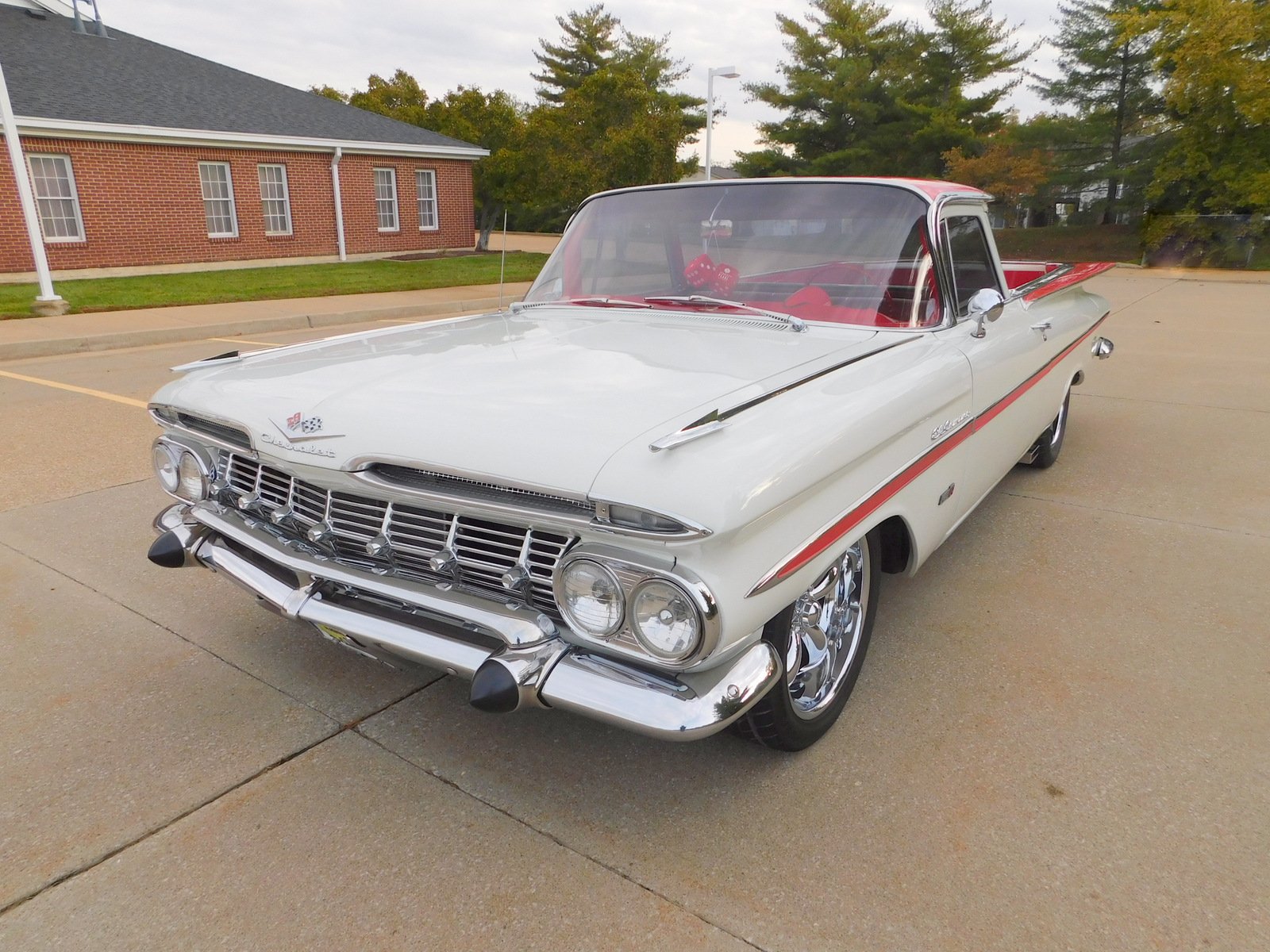
The first generation, 1959–60. Based on the Brookwood wagon floor with a steel bed in place of the rear seat. Trim followed the Bel Air and Impala lines, the styling is pure 1959, and the top engine was the 348, up to 335 hp with triple two-barrel carburettors. These cars are bought for looks and rarity. They ride on the X-frame chassis and parts follow the full-size car world, not the Chevelle world; a good one is a show car that can still carry a load, a bad one a full-size restoration with a truck bed attached.
The second generation, 1964–67. The car that made the formula work. The 1964 is the plainest; 1965 sharpens the styling; 1966 introduces the SS396 as its own model; 1967 adds safety equipment and the last of the clean, pre-emissions big-blocks. Six-cylinder and small-block Custom cars are the value entry into A-body ownership — same body, suspension and parts support as a Chevelle, for less money. The SS396, in 325, 350 or 375 hp form, is a genuine muscle car and is priced like one when the numbers match.
The third generation, 1968–72. The biggest, most varied and most collected run. The 1968 restyle gives the long-hood shape that defines the muscle El Camino. The SS is now an option package rather than a separate model — the single most important identity fact in this guide: from 1968 onward the badges alone prove nothing, because any Custom could be dressed as an SS in an afternoon, then or now. The engine ladder runs from a 230 six to the LS6 454 of 1970 — 450 hp gross, the most powerful engine Chevrolet ever put in an El Camino, and a car whose value lives or dies on documentation. The 1971–72 cars soften on compression but gain in availability and are often the best drivers. In our pool this generation is the market: 1968–72 accounts for the clear majority of the cars we track.
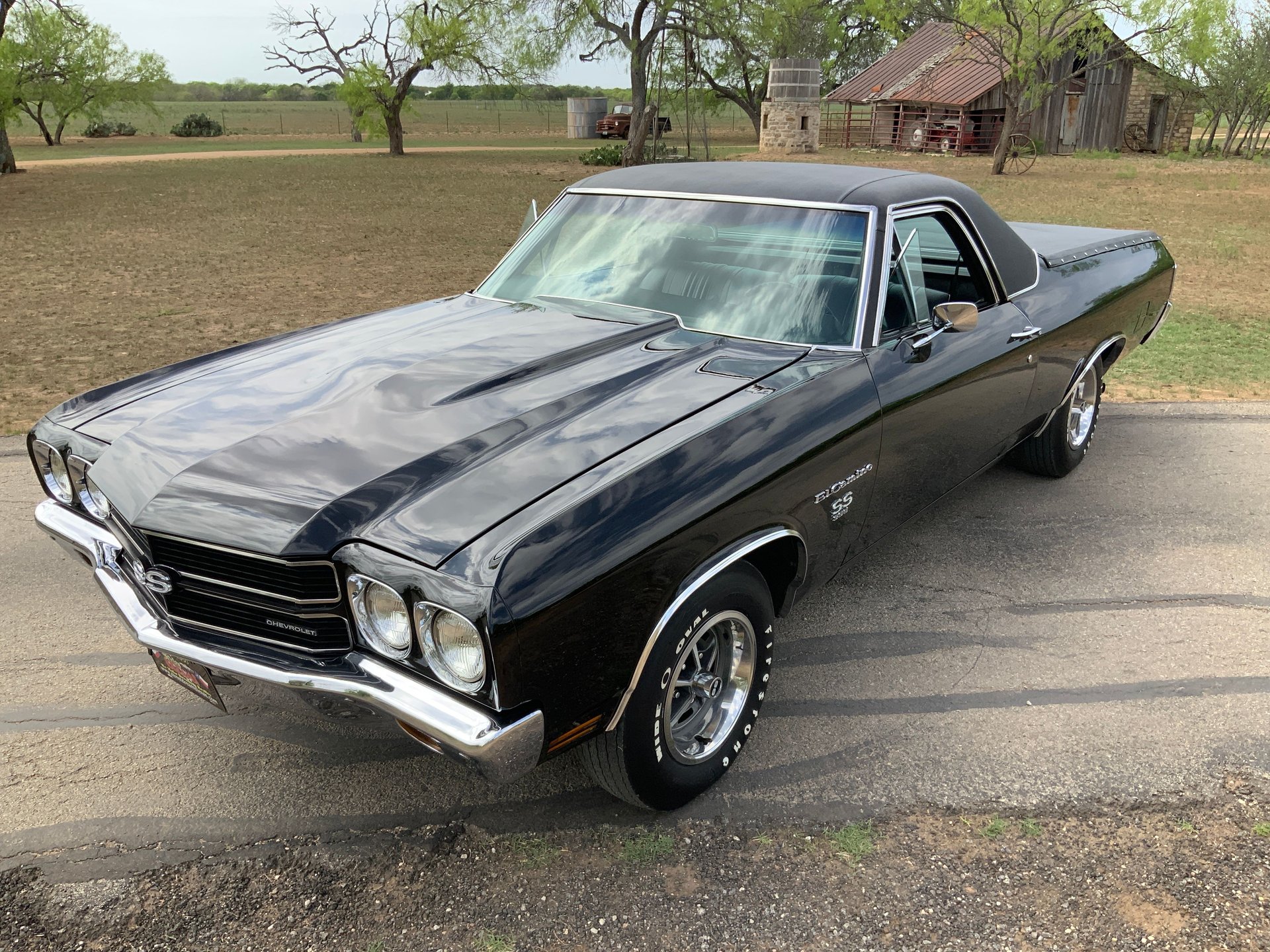
The fourth generation, 1973–77. The Colonnade cars: bigger, heavier, softer, built for comfort and safety, with the SS surviving as a handling and appearance package increasingly separated from outright power, especially after the 454 leaves after 1975. Ignored for years, which is now their virtue — good original examples survive at driver money, the ride is the best of any El Camino, and parts remain strong through Malibu and Monte Carlo interchange. Buy one for use, not for speculation.
The fifth generation, 1978–87. Downsized onto the G-body Malibu platform: roughly half a tonne lighter than a Colonnade car, a V6 standard and the 305 V8 the common upgrade. The Royal Knight and Black Knight specials and the Choo Choo Customs SS of 1983–87 are appearance packages — the Choo Choo cars, converted in Chattanooga, Tennessee, carry an aerodynamic nose and door decals and are collectible as Choo Choo cars, not as performance cars, because underneath is a standard 305. The Conquista two-tone trim is the luxury pick. In our pool the mid-1980s cars appear regularly and are almost always automatics in driver condition — exactly what they should be.
One identity warning the inspection section returns to: tribute and clone cars are a normal, legitimate part of this market — until they are sold as originals. Our pool contains cars openly listed as SS Tributes, and an honestly described tribute, priced as the Custom it is, can be an excellent buy. The trap is the tribute priced as a numbers-matching SS. The defence is paperwork and stampings, never badges or a seller's confidence.
Engines and gearboxes
The El Camino used whatever Chevrolet put in the donor car that year, which is excellent news: there is no orphan El Camino engine. Every engine below is a mainstream Chevrolet unit with mainstream parts support, organised by family in the order you will meet them.
The sixes and the small-block V8s
The early sixes and the 348 (1959–60). The base engine is the 235 Blue Flame six, 135 hp, with roots in the 1930s — tough, torquey at low speed, and out of its depth at modern highway pace. The volume V8 is the 283, in two- and four-barrel forms, and it is the sweet spot for a first-generation car: light, free-revving and supported by the entire small-block aftermarket. The 348 is a W-series big-block, unrelated to the later Mark IV 396 and 454, with its own parts ecosystem — strong and characterful, spectacular with triple carburettors, but heavier, thirstier and dearer to rebuild. Check a 348 car for its own specialists before you buy, not after.
The A-body sixes. The 1964–67 cars use the 194 and then the 230 version of Chevrolet's third-generation inline six; the 1968–72 cars use the 230 and then the 250. Simple, honest engines — seven main bearings, a single-barrel carburettor — making a light, economical working vehicle rather than a performance one. They are also the engines most often swapped out, so a surviving original six-cylinder car is now genuinely uncommon. Judge a six on oil pressure, even running and freedom from lifter tick, and accept the pace. Many buyers buy a six-cylinder car exactly for its body, with a V8 swap planned. Price it as a body, not as a finished car.
The small-block V8s: 283, 327, 307, 350, 305 and 400. The centre of gravity of the whole El Camino world. The 283 (to 1967) and 327 (to 1968) are the early performance small-blocks: a 327 in 300 or 350 hp form makes a second-generation car genuinely quick, and the 350 hp L79 is a connoisseur engine in any Chevelle-family car. The 307 from 1968 is a low-compression economy engine — adequate, unloved, and the engine most likely to be found tired in a cheap third-generation car. The 350, offered from 1969 from a mild two-barrel to the 300 hp L48, is the best all-round El Camino engine ever made: parts everywhere, knowledge everywhere, enough torque for the car and a light load. The 400 small-block is a torque engine with siamesed cylinders and its own cooling sensitivities — check overheating history carefully, because a cooked 400 warps and cracks in ways a 350 shrugs off. The 305 of the later years is the emissions-era default: smooth, durable, modest, and entirely adequate in the lighter late cars. A 305 car sold on a promised swap is a project, priced as one.
Across all small-blocks the checks are the same. Cold oil pressure and a quiet valvetrain first. Blue smoke at start-up that clears is valve stem seals — a bounded job. Blue smoke under load is rings and bore wear — a rebuild conversation. The Rochester Quadrajet fitted to most 350s is superb when its throttle shafts are tight and a flat-spotted misery when the shaft bores wear and leak air — wiggle the primary shaft before blaming the engine. Fuel pressure to a mechanical-pump carburettor should sit around 5 to 7 psi; an unregulated electric pump pushing more floods needle valves and mimics a carburettor fault. Budget $600 to $1,200 for a proper carburettor rebuild and set-up, and $3,500 to $6,500 for a quality small-block rebuild with machining.
The big-blocks: 396, 402 and 454
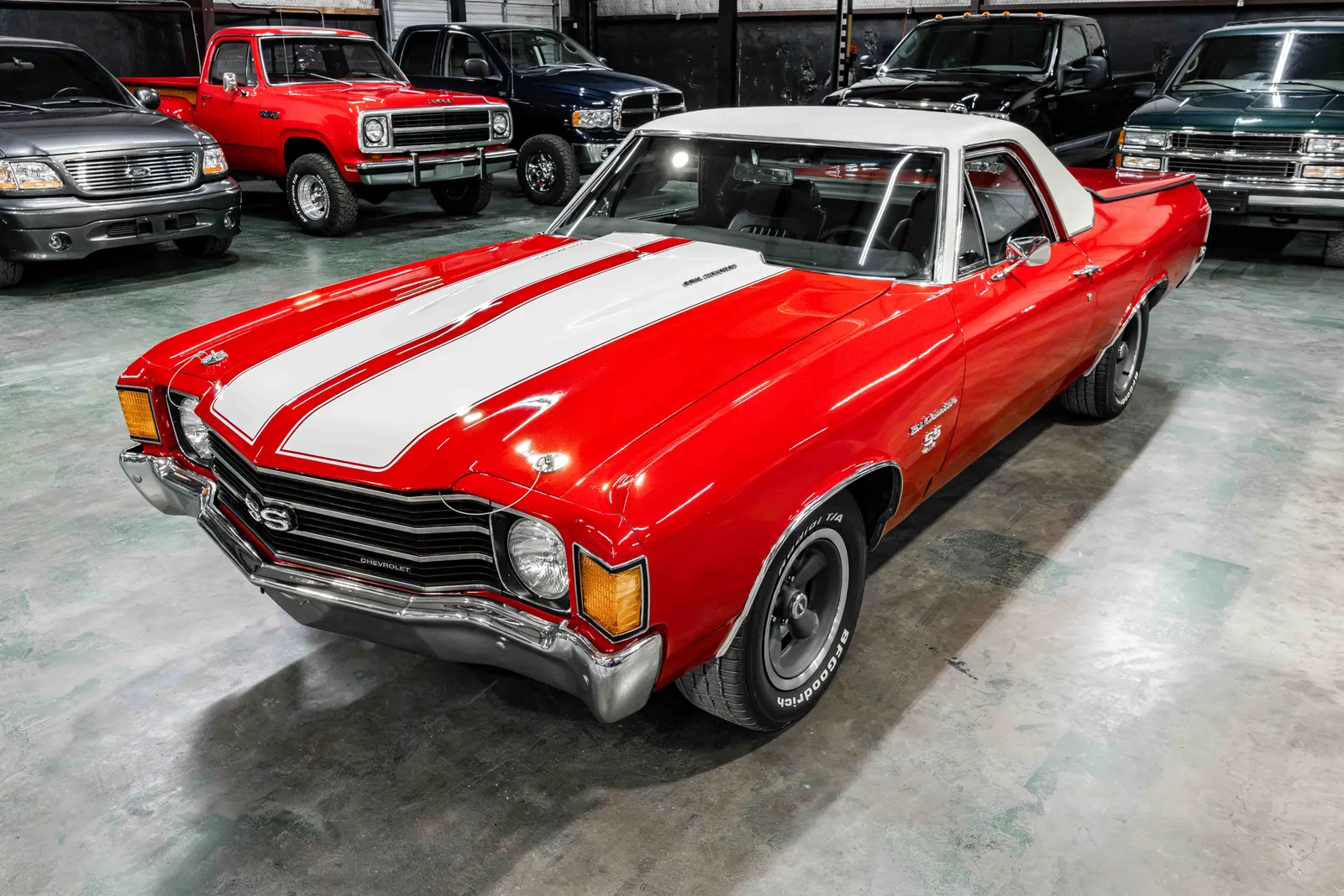
The Mark IV big-block is why the SS El Camino exists, and it comes in three capacities that sellers routinely confuse — sometimes innocently, sometimes not. The 396 was built from 1965 to 1969 in 325, 350, 360 and 375 hp forms; the 375 hp L78, with its solid lifters, aluminium intake and Holley carburettor, is the serious collector engine of the second generation. From 1970 the engine was bored to 402 cubic inches but continued to be badged and sold as a 396 — and in SS396 badging later as a Turbo-Jet 400 in some literature, which is not the 400 small-block. A 1970 or later SS396 is a 402. That is factory-correct, not a discrepancy, and any seller who presents it as one has not done the homework you are about to do with the casting numbers.
The 454 arrived for 1970 in two forms that live in different price universes. The LS5, at 360 hp gross, is a hydraulic-lifter street engine — strong, tractable and the realistic top of most buyers' lists. The LS6, at 450 hp gross with solid lifters, an aluminium intake and a Holley, is the most powerful and most valuable El Camino ever built, and the most cloned. There is no visual shortcut: an LS6 claim stands on the engine stamp, the casting numbers and dates, and ideally the build sheet or dealer paperwork. Without them you are buying an LS5-priced car with a story attached, and you should pay accordingly. For 1971 the LS6 was listed but built in only tiny numbers in the El Camino, and the LS5 continues as the top regular option into the emissions years until the 454 leaves the range after 1975.
Big-block checks are specific. These engines run hot in a tight bay, so the cooling system is part of the engine inspection: a correct shroud, a sound clutch fan, and the right multi-row radiator rather than a small-block unit asked to do a big-block's job. Oil consumption on a hydraulic big-block that has sat is usually valve seals first. Solid-lifter cars need their clearances checked as a service item — a seller who has never heard of valve lash on an L78 or LS6 car has not been maintaining the engine he is describing. Exhaust manifolds crack on cars run hot; headers create ground-clearance and starter-heat problems of their own, so judge a header car by the whole installation. A proper big-block rebuild is a $6,000 to $10,000 job with machining, and an LS6-specification rebuild runs beyond that — which is why documented engine work moves a big-block car's price more than any other item in its file.
Emissions-era V8s, the V6s and the diesel
The Colonnade and G-body cars run the same small-block families under tightening emissions control: air pumps, EGR, catalytic converters from 1975, electronic control in stages. The engines remain durable; what ages is the control layer. A late car that hunts at idle or stalls when cold usually suffers a perished vacuum hose, a failed sensor or a computer-controlled Quadrajet needing a specialist rebuild rather than a replacement engine. Budget $400 to $900 for a proper computer-carburettor rebuild and set-up, and treat a car with its emissions equipment present and working as worth more than a stripped one — in states with visual inspection the stripped car is the one with the problem. The 3.8 V6 (and the later 4.3) is adequate, economical and almost never the reason anyone buys the car, which makes V6 cars the cheapest solid G-body bodies in the market. The early-1980s 5.7 diesel, based on the Oldsmobile design, earned its early reputation and improved later; buy one only with specialist advice and at a price that assumes a permanently small market.
Gearboxes
Four gearboxes cover almost the whole range, and the El Camino follows Chevelle and Malibu practice exactly.
Three-speed manual. The standard box on sixes and base V8s for most of the run — column-shifted in working cars, increasingly rare and usually found worn. Synchromesh on second is the wear point. Nobody restores an El Camino for its three-speed manual; a car so equipped is priced as the body and engine it carries.
Four-speed manual — Muncie M20, M21 and M22, and Saginaw. The muscle gearbox. The wide-ratio M20 suits street cars alike; the close-ratio M21 wants a deeper rear axle; the M22 Rock Crusher, with its straight-cut whine, belongs to the highest-output cars and is itself a value item — verify the case numbers on any M22 claim, because M20s have been re-badged for decades. Test second-gear synchromesh cold and hot, listen for input-bearing rumble in neutral that disappears with the clutch down, and check the linkage for slop. A Muncie rebuild runs roughly $1,200 to $2,500; a correct M22 commands a premium a rebuilt M20 in M22 clothing does not deserve.
Powerglide. The two-speed automatic fitted to sixes and small-blocks into the early 1970s. Simple, strong, slow, and entirely in keeping with a working or cruising car. It should engage without a long delay and must not slip under a full-throttle start; a rebuild is a $900 to $1,800 job.
Turbo Hydra-Matic — TH350 and TH400, then the overdrives. The default El Camino automatic, and the box in the large majority of cars you will view — automatics account for well over three quarters of our tracked cars with a recorded transmission. The TH350 serves small-blocks and sixes; the TH400 serves big-blocks and is one of the strongest production automatics ever made. Both should shift firmly, kick down on full throttle and engage reverse without a pause or thump. Flaring, a cold engagement delay that warms away, or dark, burnt-smelling fluid all price a rebuild — roughly $1,500 to $3,000 for a TH350 and $1,800 to $3,500 for a TH400, fitted. The G-body cars add the 200-4R and 700R4 overdrives: an overdrive transforms a late car on the highway and the 200-4R is worth seeking — but only if lock-up and overdrive engage cleanly, because a hunting overdrive box is a specialist bill, not an adjustment.
A final trap, shared with the whole Chevelle family: the shifter tells you nothing about the box. Column and floor shifters were fitted to the same automatics and four-speed humps were cut into automatic floors. Read the car from its stampings and the hardware underneath — never from the furniture in the cabin.
Problem areas
Everything in this section is drawn from the cars themselves. We currently track 103 El Caminos for sale or recently sold in the US, and for 53 of them we have gone through the sellers' photo sets in detail. Rust is mentioned in the notes for 16 of those 53 cars — roughly three in ten — and visible damage of some kind in 19. Read those numbers the right way: sellers photograph the best of a car, not the worst, so photo incidence is a floor, not a ceiling. Assume an El Camino needs the forensic examination this section describes, and be pleased when a car passes it. Almost everything mechanical on an El Camino is a mainstream Chevrolet job at a mainstream price. Structural rust, a ruined bed and a falsified identity are the three things that reliably turn a bargain into a loss, and they are where this section spends its time.
Rust and the body: the map
Rust on an El Camino follows the water and the load, and the order below is the order of financial consequence.
Frame first — because the frame depends on the generation. The 1959–60 cars ride on Chevrolet's X-frame, with no full perimeter rails: check the centre X section, the crossmembers and the body mounts for thinning and perforation. The 1964–77 A-body cars use a perimeter frame with boxed sections that trap mud: the critical points are the rear rails over and behind the axle, the sections under the bed, the front rails at the steering box, and every body-mount point, where the cushion holds moisture against the steel. The G-body frame is lighter and rots in the same places. Frame repair is fabrication, priced per car, and a perforated rear rail on a cheap car is a walk-away unless you weld yourself. Budget $1,500 to $4,000 for a properly engineered localised frame repair fitted, and understand that a frame needing work in three places is a body-off conversation exceeding the value of all but the best-documented SS cars.
The bed floor and the smuggler's box. The El Camino's signature failure, with no equivalent on the donor cars. The bed floor is a large, nearly flat panel that lives outdoors, gets scratched to bare metal by loads, and holds water in its ribs. Surface rust in the ribs is normal and treatable. Perforation at the front of the bed, around the drains and along the wheel tubs means panel work: a repair section fitted and finished runs roughly $1,200 to $3,000. Under the front of the A-body bed sits the storage compartment owners call the smuggler's box, with a lid in the bed floor. Open it on every viewing. Water enters past the lid seal and the rear window, sits in the compartment, and rots the floor of the box and the cab back panel beneath it, invisibly, on cars whose beds look sound. A dry, solid smuggler's box is one of the best signs a third-generation car can give you. A wet, holed one means welding in the least accessible place on the car.
Cab floors, toe boards and the cowl. Water from a leaking windshield seal and a blocked cowl plenum drains into the front footwells, exactly as on a Chevelle — but the El Camino adds a second source: the rear window and the panel behind the seats, which leaks into the rear of the cab and the smuggler's box below. Lift the carpets front and back. Prod the toe boards, the floor seams and the area under the seat. Floor sections are available and a single side fitted runs roughly $600 to $1,500, but floors, like beds, rarely rot alone: price the company they keep.
Rear quarters, wheel arches and the bed sides. The rear wheel arch is the El Camino's most visible rust, because the arch is part of a huge rear quarter that doubles as the bed side — there is no small repair panel that fixes a small problem cheaply. Bubbling at the arch lip means the inner arch and the outer skin are both involved. A quarter repair, blended and painted, runs roughly $1,000 to $2,500 a side for localised work, and a full quarter replacement with paint is a $3,000 to $6,000 conversation per side. This is why arch rust matters more on an El Camino than the same rust on a Chevelle coupe: the panel is bigger, the paint match covers more area, and the bed side is the first thing anyone sees.
Doors, fenders and the tailgate. Door bottoms rot from blocked drains — run a fingertip along the bottom edge for bubbling and check the drain slots. Fender heels trap mud against the cowl. The tailgate is El Camino-specific: a double-skinned panel that fills with water, rots along its bottom edge, bends under loads stood on it when open, and wears its hinges until it rattles and misaligns. A gate that sits flush and latches without a slam is a genuine value point. Repairing and painting one runs roughly $500 to $1,500; a good used gate is hunted and priced accordingly.
The fresh-paint and fresh-underseal trap. Learn to read coatings. Factory underseal is patchy, thin at the edges and honestly dirty after fifty years. A uniform coat of fresh black blown over the frame and floor seams the week before a sale is a cover-up until the seller proves otherwise — nobody re-underseals a sound car for your benefit. The same applies above: a cheap respray over arch bubbles buys the seller one season. Use a cloth-wrapped magnet over the quarters, bed sides and lower doors, and tap panels with a knuckle — filler changes the sound before it changes the magnet.

Suspension, steering, brakes and the working-truck wear
An El Camino's chassis is the donor car's chassis with a pickup's life behind it, and the second half of that sentence is the inspection.
Rear springs and overload damage. A working El Camino will at some point have been overloaded — cement and engines in the bed are its natural cargo — and the evidence is sagged rear coil springs, air-shock bodges, and, on the hardest-used cars, cracked spring seats and worn control-arm bushes that let the axle steer the car over bumps. The car should sit level or very slightly nose-down. A tail-down car needs springs and bushes, roughly $500 to $1,200 fitted; a tail-down car with air shocks pumped hard to hide it needs the same bill plus the honesty discount. Helper air bags inside the rear coils are a legitimate load fitment — check they hold air evenly, because an uneven pair makes the car lean.
Front suspension and steering. Double-wishbone front suspension with ball joints, exactly as the donor car. Wear shows as vague steering, knocks over bumps and uneven tyre wear. A full front-end refresh with alignment runs roughly $800 to $1,800 fitted. Power steering boxes leak at the pitman seal and develop centre play — a rebuild or quality replacement runs $400 to $900 fitted. Judge steering on the road: centre play plus highway wander is a bill, not a characteristic.
Brakes. Front discs arrive through the late 1960s and are standard in effect by the early 1970s; earlier cars may carry drums all round, adequate when maintained and marginal when not. The standard recommissioning list on a car that has sat — seized calipers or wheel cylinders, perished hoses, a tired master cylinder — runs roughly $800 to $2,000 for a full hydraulic refresh with labour. One car-truck extra: the rear brakes do the work when the bed is loaded, so a car that stops well empty with seized rear cylinders will not stop well loaded. Test them hard from speed and look for pull and judder.
Wheels, tyres and the bed-load question. Deeply scored bed floors, a front bed panel bent by loads sliding forward under braking, and a tailgate bowed by standing loads all tell the same story. None of it is fatal — it is the car's job — but it prices the car as a working vehicle, not as the unmarked survivor the asking price may claim. Damage mentions in 19 of our 53 examined cars fit a fleet that has worked for a living: expect marks, and pay for the cars that do not have them.
Interior, glass, trim and electrics
Cab trim is car trim — with one shortage. Seats, dash, door cards and instruments follow the donor car, and Chevelle, Malibu and Monte Carlo interchange keeps most of it obtainable. The shortage is El Camino-specific trim: bed mouldings, rear window and bed rail trim, tailgate trim and the smuggler's box lid and seals. Straight, complete, unpitted bed trim is worth real money because reproduction coverage is thinner here than for any Chevelle coupe panel. Price a car missing its bed trim as a car with a parts hunt attached; re-chroming and straightening a full set runs roughly $800 to $2,000.
Seats and the bench-versus-bucket question. Most El Caminos left the factory with a bench; buckets and a console are the desirable option and the most common conversion. A converted car is fine to buy — just do not pay the factory-bucket premium without paperwork, and check the conversion for proper floor reinforcement and seat tracks rather than bolts through the pan. Pads collapse and covers split at the driver's bolster; a quality retrim runs roughly $1,500 to $3,500 for the front seat or seats, and a complete professional interior refresh $4,000 to $8,000.
Glass and seals. The rear window is El Camino-specific in its surround, and it is the leak that matters most: a perished rear seal wets the cab rear, the smuggler's box and the front of the bed in one path. Windshield seals leak onto the toe boards as on any A-body. Seal sets are cheap; the labour is in the glass handling, roughly $300 to $700 for a reseal with any localised rust treated while access is open — the only time to treat it.
Electrics. Period Chevrolet electrics fail at connections and earth points, not in the looms. The El Camino additions are the rear lamp wiring, which lives in the weather and chafes at the tailgate hinge path, and any trailer wiring a working car has accumulated — often scotch-locked into the rear loom. Bad trailer wiring is the most common cause of bizarre rear-lamp behaviour on these cars; remove it properly at recommissioning. Air conditioning follows donor-car practice; a complete overhaul with compressor and refrigerant conversion runs roughly $1,200 to $2,500, and cold air in July is worth a premium.
The sitting-car tax. El Caminos sit — in barns, in yards, as the third vehicle — more than almost any other Chevrolet. A car that has sat for years needs the fuel system cleaned end to end (ethanol fuel attacks old rubber and leaves varnish in tanks and carburettors), every brake component inspected, all fluids changed and every seal assumed guilty. In our photo sample smoke is mentioned in only 1 of 53 examined cars — encouraging, but that reflects cars photographed, not cars cold-started in front of a buyer. The cold start in the inspection section is where that question is settled.
How to inspect one
Allow at least an hour, bring a torch, a cloth-wrapped magnet and a friend to work lights and brakes while you watch. If the car passes you, pay for a lift inspection before money changes hands — on a car whose frame lives under a bed, the lift is not optional, it is the inspection. Work in this order, because the early steps can end the viewing cheaply.
- Start with the paperwork and the identity. Match the VIN on the title to the plate on the car — on A-body cars the plate sits at the driver's door hinge pillar and on the dash visible through the windshield on later cars; confirm the stampings agree and that the title matches the seller. On any SS claim from 1968 onward, ask for the build sheet, the protect-o-plate, the original window sticker or dealer invoice, because the SS became a package that year and the VIN alone will not prove it. On a big-block claim, record the engine stamp and casting numbers and check them against the year and the story. A seller with paperwork shows it in the first five minutes. A seller without it prices the car as unproven, whatever the badges say.
- Cold start. Insist the engine is cold when you arrive — a warmed-up car is a seller managing a symptom. A healthy small-block or big-block starts promptly, shows strong oil pressure and settles without blue smoke. Blue smoke at start-up that clears is valve seals; smoke that stays is deeper. Listen for lifter tick that does not fade, timing-chain rattle, and the exhaust leak at the manifold that ticks in time with the engine and is so often described as a lifter.
- The bed, before anything pretty. Walk the bed first, because it is the panel no coupe buyer ever checks and the one that prices this car. Look along the floor ribs for perforation, especially at the front and around the wheel tubs. Check the front bed panel for bending from loads sliding forward. Work the tailgate: it should sit flush, latch without a slam and open without dropping on worn hinges. On a 1964–77 car, lift the smuggler's box lid and look inside with the torch — dry and solid is a major plus, wet and holed is welding in the worst place on the car, exactly as the rust section describes.
- Under the car. On the lift or on stands with proper light: frame rails front and rear, the sections under the bed, body-mount points, the steering box mounting, cab floor seams and the bed underside. Perforation in frame rails or at mounts is structural and ends most negotiations. Read the underseal as you go — patchy and honest is factory; a fresh uniform black coat over everything is a question, not an answer. Prod suspect areas with a screwdriver only with the seller's permission, and note where permission is refused.
- Quarters, arches and gaps. Run the magnet over the rear arches, the bed sides, the lower doors and the fender heels. Feel every door bottom edge for bubbling and check the drain slots. Stand behind the car and check the bed sides for the ripples of old repairs — a long, flat bed side shows filler work that a curved coupe panel hides. Check the tailgate alignment against both bed sides; a gate that fits one side and not the other is telling you about the bed, not the gate.
- Engine bay honesty. Look for the story, not the shine. Correct radiator and shroud for the engine fitted — a big-block on a small-block radiator will overheat and the seller may call it a gauge fault. Wiggle the Quadrajet primary throttle shaft; play there explains flat spots better than any tune-up story. Check fluids by level and smell: dark, burnt automatic fluid, fuel-smelling oil and coolant with oil in it are each a priced conversation. Count the bodges — household wire, scotch locks, missing vacuum hoses — because they predict the electrics better than any single test.
- Suspension and steering by hand. Rock each front wheel for ball-joint and bearing play. Push down each corner and watch it settle in one movement; a car that keeps bouncing needs dampers, one that does not come back to level needs springs. Check the rear for air shocks or helper bags and ask why they are there. Turn the steering lock to lock and listen for pump groan and box notchiness at centre.
- The test drive. Fifteen minutes minimum, including a highway stretch and a steep hill. An automatic should engage without delay, shift firmly and kick down cleanly; flaring or a cold delay that warms away prices the rebuild from the gearbox section. A manual should take second gear cold without a crunch — Muncie synchromesh is the test. Brake hard from speed twice: straight, no judder, no pull. Note the temperature gauge's whole story, not just its final reading.
- Heat, cooling and electrics under load. Let the car idle hot after the drive. Watch the temperature, check for coolant weeping, and run the heater on every speed — the blower motor is buried labour on these cars. Work every light, the wipers, washers, horn and gauges, and have your friend check the rear lamps while you brake and indicate: trailer-wiring faults show here and nowhere else.
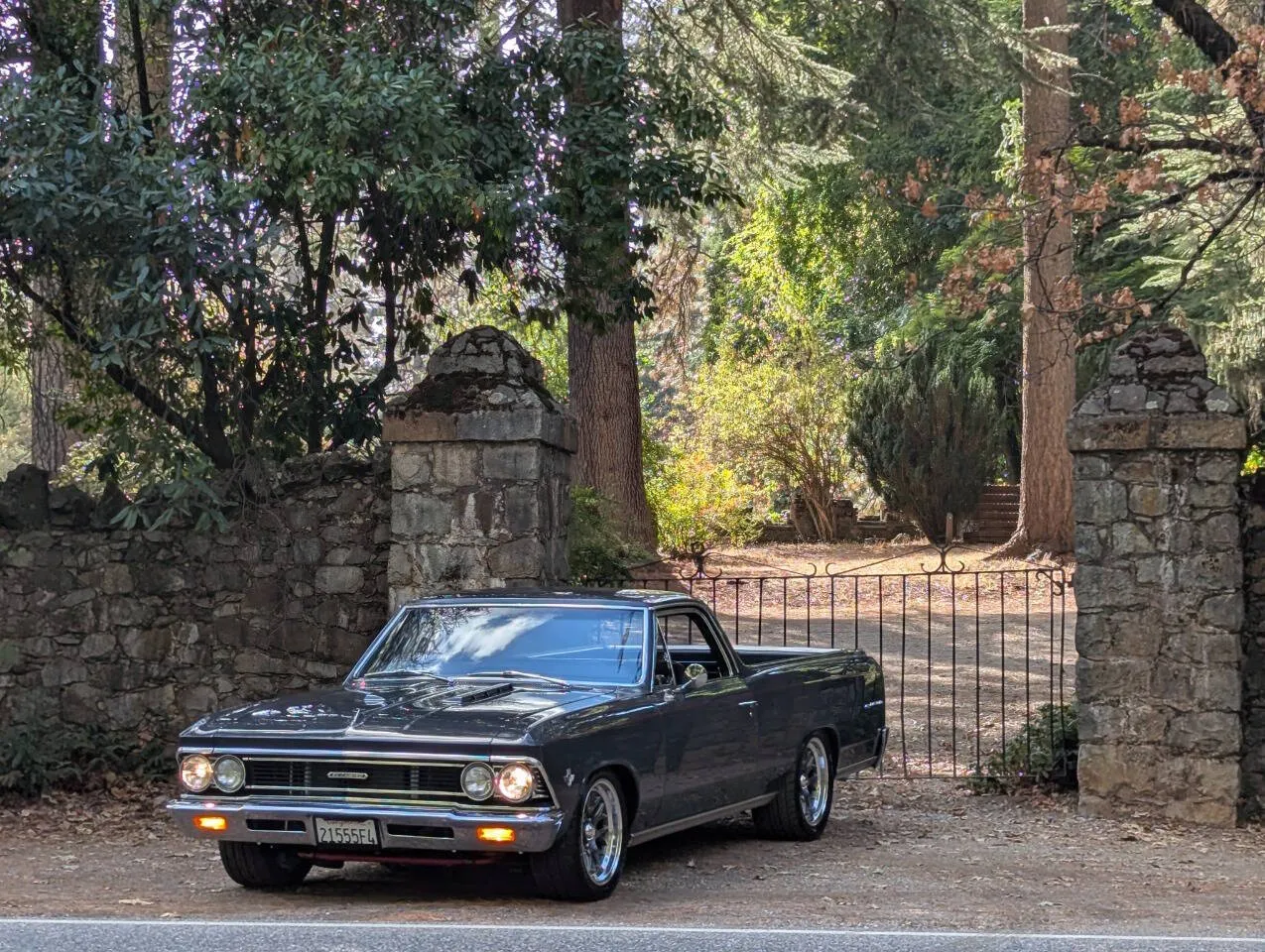
- Stance and the load test. Stand back and photograph the car from the side, as in the figure above. Then, with permission, put real weight in the bed — two adults standing carefully in it is enough — and watch the rear settle and recover. A car that sags and stays down needs the spring and bush work priced in the problem-areas section.
- Interior and glass last, but properly. Sit in the driver's seat — it prices the retrim. Feel for collapsed pads, check the headliner and rear cab trim, and run a fingertip around the rear window seal inside the cab for damp. Damp behind the seats connects directly to the smuggler's box finding in step 3: follow the water, because the car already has.
- Decide on the body, the bed and the paperwork — in that order. Add up three separate bills: structure (frame, floors, bed, quarters), mechanics (engine, gearbox, brakes, suspension) and identity (is it the car it is sold as). Mechanics can be planned and priced. Structure compounds. Identity cannot be fixed at any price. If the three bills still leave the car cheaper than a sorted equivalent, you have found the right way to buy an El Camino.

Values
The build's market block beneath this guide carries the live numbers — what is listed now, at what asking prices, and what recorded sales have achieved — refreshed at every build. This section teaches you how to read that block for an El Camino, because this market punishes a buyer who reads a single median and stops thinking.
Start with the condition spread, which on an El Camino is wider than on almost any other Chevrolet of the era: the same model year can be a rusted working pickup, an honest driver, a restored show car or a documented muscle flagship, and all four appear in the same listings feed under the same two words. You are not looking at disagreement about one car — you are looking at four different markets sharing a nameplate. Place any car into its market first — project, driver, restored or documented performance car — and only then compare it with the figures for that market. Comparing a project with the restored median is how buyers talk themselves into overpaying for welding.
Within each condition band, three things drive the premium, in this order. First, generation and engine together: a documented big-block SS from 1968 to 1972 sits at the top, a small-block car of the same years below it, a Colonnade car below that, and a G-body car at the driver end — except that the best G-body cars, Choo Choo SS conversions and low-mileage Conquistas, now overlap the tired end of the A-body market, because condition has begun to beat generation at the boundary. Second, documentation: the gap between a documented SS and an identical-looking undocumented car is the largest single value step on any El Camino, and it is rational, because the undocumented car can never be upgraded into the documented one. Third, the bed and body: a straight, unperforated bed, a fitting tailgate and honest quarters are scarcer than production figures suggest, because so many survivors worked for a living, and the market pays for it.
Asking and achieved prices part company in a predictable place. Sellers of tribute SS cars ask documented-car money and achieve tribute money, eventually, after the listing ages. Sellers of honest drivers ask driver money and achieve close to it, because the buyer pool for a usable El Camino is deep and practical. Auction results are the discipline: dominated by the better cars, excluding projects almost entirely, and still tending to sit below median asking for equivalent cars. Use the auction evidence to negotiate, not the asking evidence to justify.
The project-versus-driver gap is where El Camino money is most often lost. A project is cheap because its bills are structural — bed, quarters, floors, frame — and those bills at shop rates routinely exceed the price difference to a sound driver before paint is even discussed. The driver costs more on the day and less in the year. The real exception is the buyer who welds and paints himself, for whom a structurally honest but cosmetically tired car is the value buy of the range. Know which buyer you are. Colour and specification move money less than condition and documentation, except on documented big-block cars in period performance colours, which combine every premium at once, and on the 1959 cars, where the styling is the value. For everything else, buy the condition — and let the market block tell you what that condition costs this month.
Parts and ownership
The El Camino is one of the best-supported classic Chevrolets you can own, for one simple reason: it is a Chevelle, a Malibu or a Monte Carlo from the cab forward, and those are among the best-supported American cars of the era. The ownership art is knowing where the interchange ends.
Easy: everything mechanical. Service items, ignition parts, water pumps, alternators and starters for every engine in this guide; brake discs, drums, calipers and hoses; ball joints, bushes, springs and dampers; exhaust systems; carburettor kits; gearbox rebuild parts for Powerglide, TH350 and TH400; windshield and door glass through the donor-car trade. Order today, fit this weekend, at prices close to modern-car money. A shop that knows Chevelles knows ninety percent of your El Camino.
Harder and dearer: the El Camino's own panels and trim. Bed floor sections and wheel tubs are available but dearer than Chevelle floor pans; rear quarters are big panels with big fitting bills; bed mouldings, rear window surrounds, tailgate skins and hardware, and smuggler's box lids and seals are the hunt items — reproduction exists for the common years, good used stock is fought over, and the 1959–60 and 1973–77 cars are thinner served than the 1968–72 heartland. The parts that make an El Camino an El Camino are the parts to inspect hardest at purchase, because the Chevelle catalogue cannot simply replace them.
Running costs. A sorted El Camino is a realistic regular-use classic. Fuel consumption is period Chevrolet: gentle in a six or a 305, serious in a big-block driven as intended. Routine servicing is within any competent home mechanic's ability, and the specialist network for the performance engines is deep and national. Insurance follows the donor-car market, with agreed-value cover strongly advised on documented SS and 1959 cars. The budget line that catches new owners is the first year: catching up deferred maintenance honestly costs a few thousand dollars before you improve anything, and recommissioning a car that has sat for years is a larger bill again, best estimated with the repair ranges in the problem-areas section open in front of you.
Using it. Own an El Camino as intended and it rewards you: it is the classic that can collect its own parts. Two disciplines protect the value you bought. Keep the bed drains clear and the smuggler's box dry — check both twice a year; the car's signature rust starts in exactly those two places and both checks take five minutes. And keep the paperwork file growing: every invoice and photograph adds to the one asset a future buyer cannot recreate. On an SS car, the file is not administration. The file is part of the car.

Which one to buy
- The all-rounder: 1968–72 Custom with a 350. The heartland car — best parts support, deepest market, enough performance for any modern road, and a bed you can use without anxiety. If you want one El Camino to own and drive, this is it.
- The value buy: 1966–67 small-block Custom, or a tired-but-honest 1973–77 Classic. The second-generation cars are the lightest, prettiest A-bodies; the Colonnade cars are the cheapest sound El Caminos in America. Either, bought on body condition, beats a cheap muscle car bought on badges.
- The muscle car: documented 1970 SS with an LS5 454 — or an LS6 only with paperwork in hand. The LS5 gives the full big-block experience at a sustainable price. The LS6 is the flagship, but only when the stampings and documents make it one; without them, buy the LS5 and keep the difference.
- The purist's car: 1966–67 SS396. A separate model, not a package, which removes the identity argument entirely — and the 375 hp L78 is the sharpest El Camino of all. Verify the engine, pay for the car, enjoy the certainty.
- The styling collectible: 1959. Bought for its looks, judged by full-size Chevrolet standards rather than Chevelle ones. A good 1959 is a show car that carries its own detailing kit in the bed, and there is nothing wrong with that being the whole point.
- The daily driver: 1978–87 with a 305 and an overdrive automatic where fitted. The lightest, cheapest to run and easiest to live with El Camino. A Choo Choo SS adds the collectible nose; a Conquista adds the comfort. Buy the best body and bed you can find and ignore the mileage.
- The working classic: any honest six-cylinder or 307 car, priced as a body. If your plan is a V8 swap and a truck you actually use, start with the straightest, driest shell and let someone else pay the originality premium. A swapped car is worth swapped-car money when you sell it, forever.
And the rule that overrides all of the above: buy the driest bed, the straightest frame and the most honest paperwork you can find, in the generation you can live with. Engines, gearboxes, brakes and interiors are all fixable at prices you can plan for. A perforated bed over a rotten smuggler's box, a bent frame under fresh underseal, or an SS identity that exists only in badges cannot be made right afterwards — walk away from all three.
See the 68 El Camino cars currently listed.