
Chevrolet Chevelle buyer's guide
Chevrolet Chevelle -- the model's own buyer's guide: variants, values and what to check.
Years listed: 1963-1974 · Series: Chevelle
Overview and history
The Chevrolet Chevelle is not one car. It is three different answers, over fourteen model years, to the same question: what should a mid-size Chevrolet be when it has to be a family sedan on Monday, a wagon on Saturday, and — if you ticked the right boxes — one of the fastest street cars in America on Friday night? That breadth is the whole point of this guide, and also the trap in it. A buyer who says "I want a Chevelle" has not yet said anything useful. A 1965 sedan with a 230 six and a Powerglide, a 1967 SS396 convertible with a Muncie four-speed, a 1970 LS6 hardtop and a 1973 Laguna coupe share a nameplate and almost nothing else in how they drive, what they cost to put right, or what you must verify before paying. This model guide is the orientation companion to the Chevelle series guide: it organises the choice by generation and body style, so you can narrow to the car that fits your use before you get lost in any single listing.
Chevrolet launched the Chevelle for 1964 as its new intermediate, slotted between the compact Chevy II and the full-size Impala line, on General Motors' new A-body platform shared with the Pontiac Tempest and LeMans, the Oldsmobile F-85 and Cutlass, and the Buick Special and Skylark. Ford's Fairlane had shown there was a market between compact and full-size, and GM wanted a car big enough for a family, small enough to feel wieldy, and — crucially — with room under the hood for the small-block and, very soon, the big-block V8s that would define the muscle-car era. The first cars arrived as the Chevelle 300 at the bottom, the Malibu in the middle and the Malibu SS at the top, in coupes and hardtops, sedans, convertibles, wagons, and the El Camino coupe-utility that has always been filed with this family because it is one underneath.
The arc divides into three generations. The first, 1964 to 1967, is the upright, lighter car: squared styling for 1964–65, a smoother restyle for 1966–67, a 115-inch wheelbase, and escalation from the SS as a trim package to the SS396 as a separate big-block model from 1966. The second, 1968 to 1972, is the one most buyers picture: the long-hood Coke-bottle body, a split wheelbase — 112 inches for two-doors, 116 for four-doors, wagons and El Camino — and the horsepower peak in the 1970 LS6 454 before insurance and emissions pulled output down through 1971–72. The third, 1973 to 1977, is the Colonnade car: larger, heavier, federally bumpered, with the Laguna carrying the performance flag in detuned form. After 1977 the Chevelle name was retired and Malibu carried on alone.
Our own listings show where supply sits, and it is not evenly spread. We track 626 Chevelles, 399 for sale and 227 recorded sold, and the year distribution is a steep hill centred on the second generation: 1970 alone accounts for 157 cars, then 1969 with 100, 1967 with 85, 1966 with 75, 1968 with 61, 1971 with 47 and 1972 with 39, against 32 for 1965, 24 for 1964, and only a handful of 1973 and 1974 cars. In other words, you will mostly be offered 1966 to 1972 cars; a good first-generation car in a less fashionable body style takes a deliberate hunt, and a Colonnade car a harder one still. Body-style recording tells the same story: coupes dominate by a wide margin, convertibles are the next clearly identified group, and sedans and wagons appear only in single figures in the classified field, though plenty of hardtops are filed simply as coupes. Read that as a market signal, not production history — sellers file the desirable two-doors carefully and the four-doors loosely, which is why a surviving sedan or wagon in honest condition is rarer than production numbers suggest.
Two facts govern every Chevelle purchase. First, these cars were built in enormous numbers and specification spreads, so originality is a spectrum you place a specific car on, not a yes-or-no badge. Engines were swapped, SS badges added, and whole cars built up from Malibus in period and ever since — some honestly described as tributes, some not. Second, the A-body is a body-on-frame car, which changes the inspection completely compared with a unibody classic: a Chevelle can look straight and shiny on top while its frame rails, body mounts and floor supports are rotten underneath, and it can also have panel rust that is genuinely only cosmetic. Sorting one from the other, and a real SS from a dressed Malibu, is most of the work that follows.
The models
Start with the ladder, because Chevelle badging confuses buyers who expect the badge to name the engine. It rarely does. From the bottom: Chevelle 300 (the plain family car), 300 Deluxe, Malibu (the volume seller and the basis for almost every desirable car from 1969 onward), and Malibu SS, then SS396 and SS454 (a separate model in some years, an option package in others — the root of the authentication problem below). Across the ladder sit the body-style lines: El Camino, the Nomad, Greenbrier and Concours wagons, the Heavy Chevy of 1971–72, and the Laguna that replaced the SS idea in 1973. Engines were ordered separately from trim: a Malibu could leave with a six, a 307, a 350 or — with the SS package — a big-block, and a plain 300 could out-power a showroom Malibu if the first buyer ticked the boxes that way.
| Model | Years | Engine | Output | Built | Character |
|---|---|---|---|---|---|
| Chevelle 300 / 300 Deluxe sedan | 1964–1969 | 194/230 six, 283/307 V8 | 120–200 hp | Volume line, built in the hundreds of thousands across the run | The honest family car; plain trim, the survivor bargain |
| Malibu coupe / hardtop | 1964–1977 | Six, 283–350 small-block; big-block only with SS | 120–330 hp depending on year and engine | The core of production in every generation | The all-rounder; best trim, widest choice, the car most listings actually are |
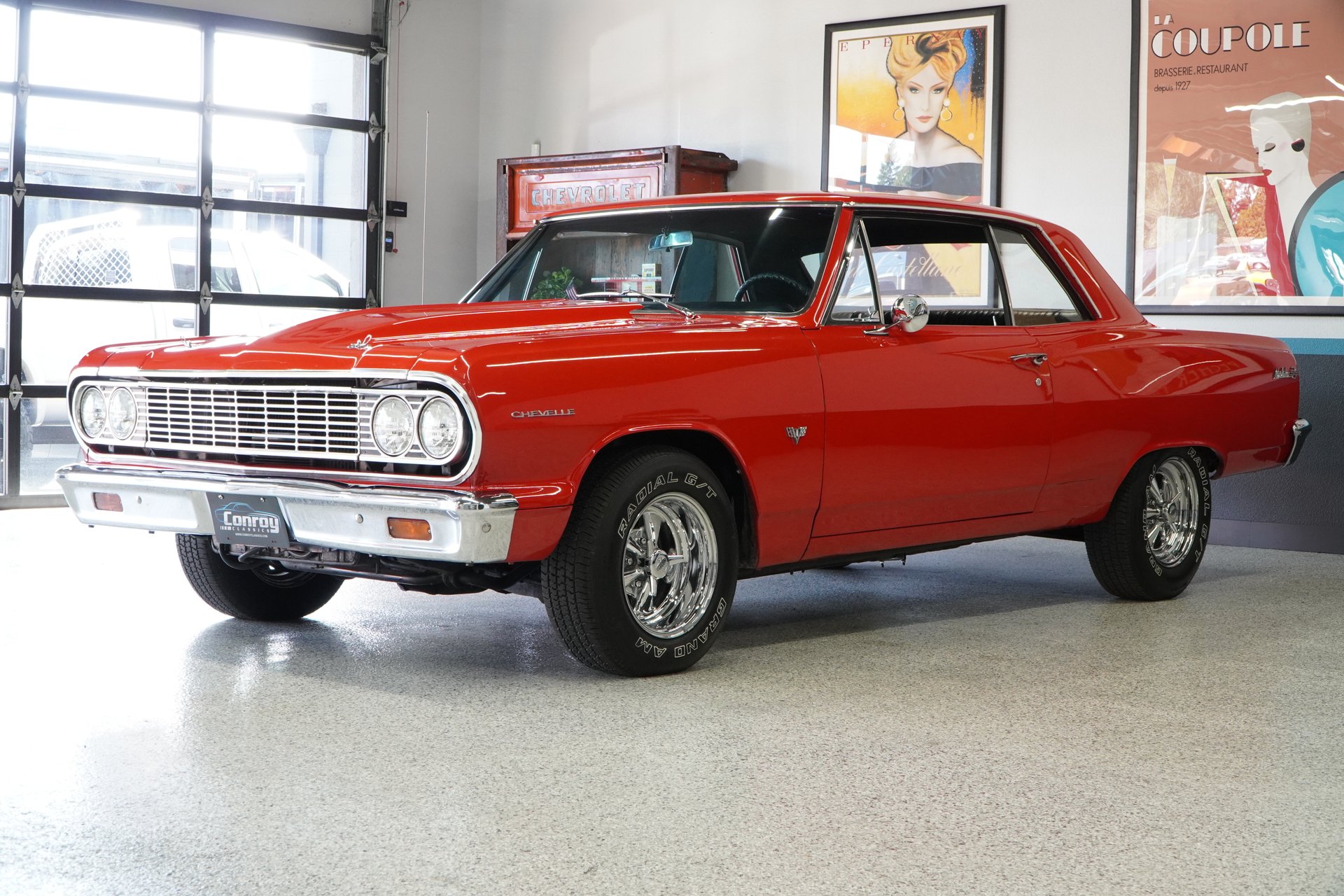
| Malibu SS | 1964–1965 | 283 or 327 small-block | 195–350 hp | About 76,800 in 1964 and about 101,500 in 1965 including convertibles | Bucket-seat sport trim, not yet big-block; the 327 L79 is the jewel |
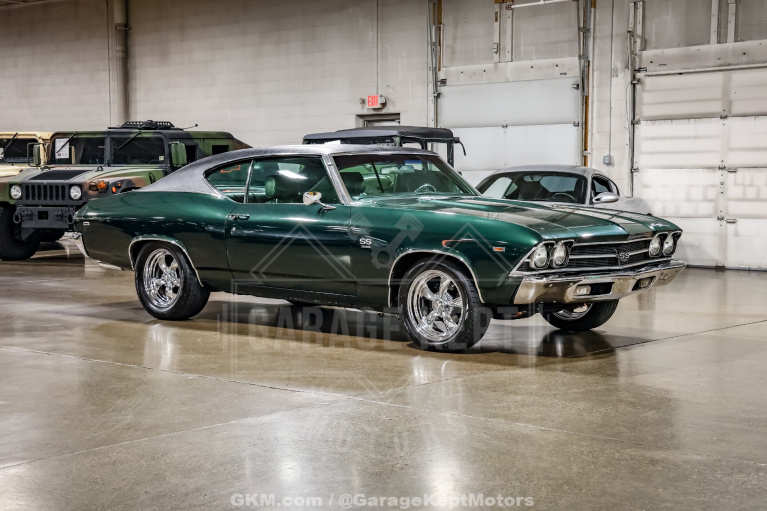
| SS396 | 1966–1968 as a separate series; 1969–1970 as RPO Z25 option | 396 big-block (402 from late 1969 build for 1970) | 325, 350 or 375 hp | 72,272 in 1966; 63,006 in 1967; 62,785 in 1968; option counts thereafter | The defining muscle Chevelle; 138-series VIN in 1966–68 is the authentication gift |
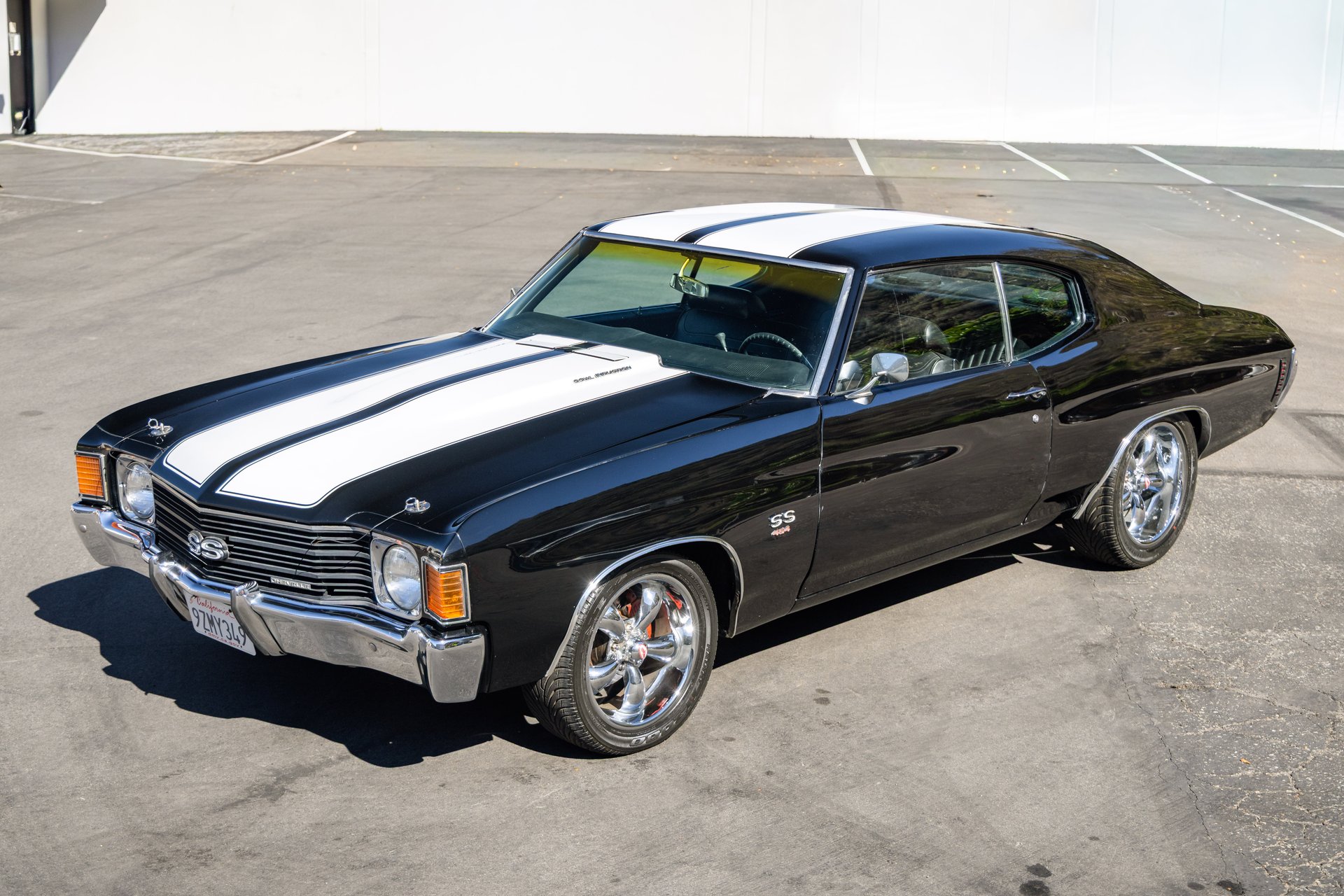
| SS454 | 1970–1972 as SS option content | 454 big-block, LS5 or LS6 | LS5 360 hp (1970), 365 hp (1971), 270 hp net (1972); LS6 450 hp (1970 only) | LS6 coupe production about 4,475 in 1970 within total SS output | LS5 is the strong street car; LS6 is the king of the range and priced like it |
| COPO Chevelle | 1969 | 427 big-block, L72 | 425 hp | About 323 built, including Yenko-ordered cars | COPO end-run around GM's displacement limit; documentation is everything |
| El Camino / El Camino Custom | 1964–1977 in this family | As Malibu, six through big-block; SS versions available | As Malibu / SS | Tens of thousands a year in peak years | Coupe-utility on the wagon chassis; work wear and bed rust decide value |
| Nomad / Greenbrier / Concours wagon | 1964–1972 | Six and small-block V8s, big-block rare | 120–300 hp | Steady family volume, low survival | Two- and four-door wagons early, four-door later; tailgate and spare-well rust are the story |
| Heavy Chevy | 1971–1972 | 307, 350 or 402 V8 | 200–300 hp gross, falling with net ratings | About 6,700 in 1971 and about 9,500 in 1972 | SS-look graphics without the SS insurance hit; Malibu-based |
| Laguna / Laguna Type S-3 | 1973–1977 | 350, 400 small-block, 454 big-block (to 1975) | 145–235 hp net by year | Laguna was the top line; S-3 a fraction of it | Colonnade flagship; urethane nose early, louvered opera windows on the S-3 |
Production figures are the widely documented factory totals; outputs are gross ratings to 1971 and net from 1972, which is why a 1972 car can read far lower than a similar 1970 car without being that much slower — the ruler changed, not just the engine.
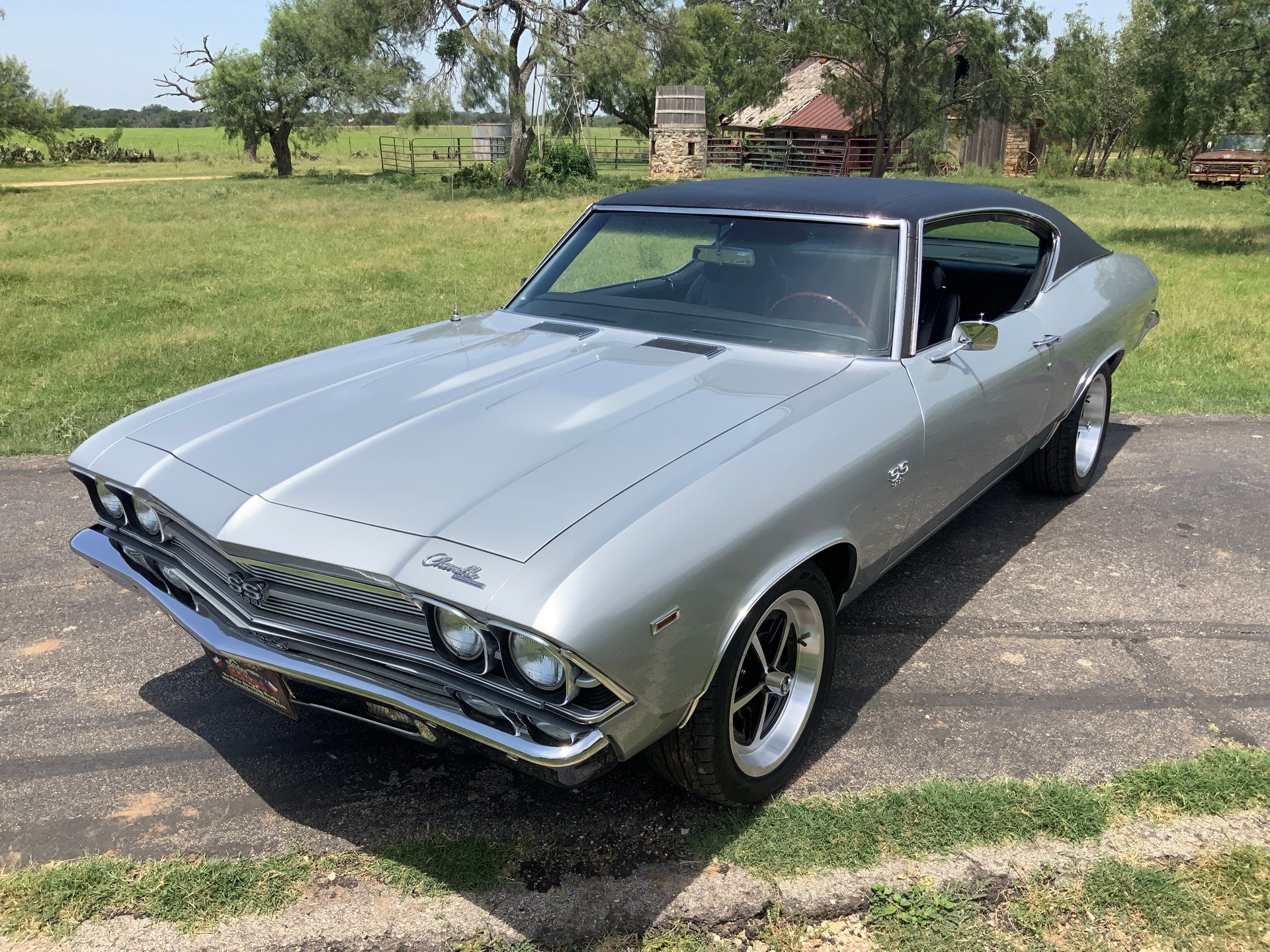
The first generation, 1964 to 1967 — the choice inside the choice. The 1964 and 1965 cars are the lightest, simplest Chevelles: flat glass, upright pillars, a 115-inch wheelbase across the range, and trim that runs from stark (300) to genuinely plush for the class (Malibu SS with buckets and console). The SS in these two years is a trim package around small-block power — do not let a seller price a 1965 SS as a big-block car, and do not overlook the 327 L79, the high-revving 350 hp small-block that is the thinking driver's early Chevelle. The 1966 restyle brought stacked headlights, the tunnel-back coupe roofline, and the SS396 as its own series with the 138 VIN prefix — the single most useful authentication fact in this market. The 1967 car refined the shell, added a dual-circuit brake master cylinder, and gave the SS396 its most developed first-generation form. For a nimble classic you will actually drive, a 1966 or 1967 small-block Malibu hardtop is hard to beat; for investment-grade muscle, the documented 1967 SS396 is the first-generation car the market rewards.
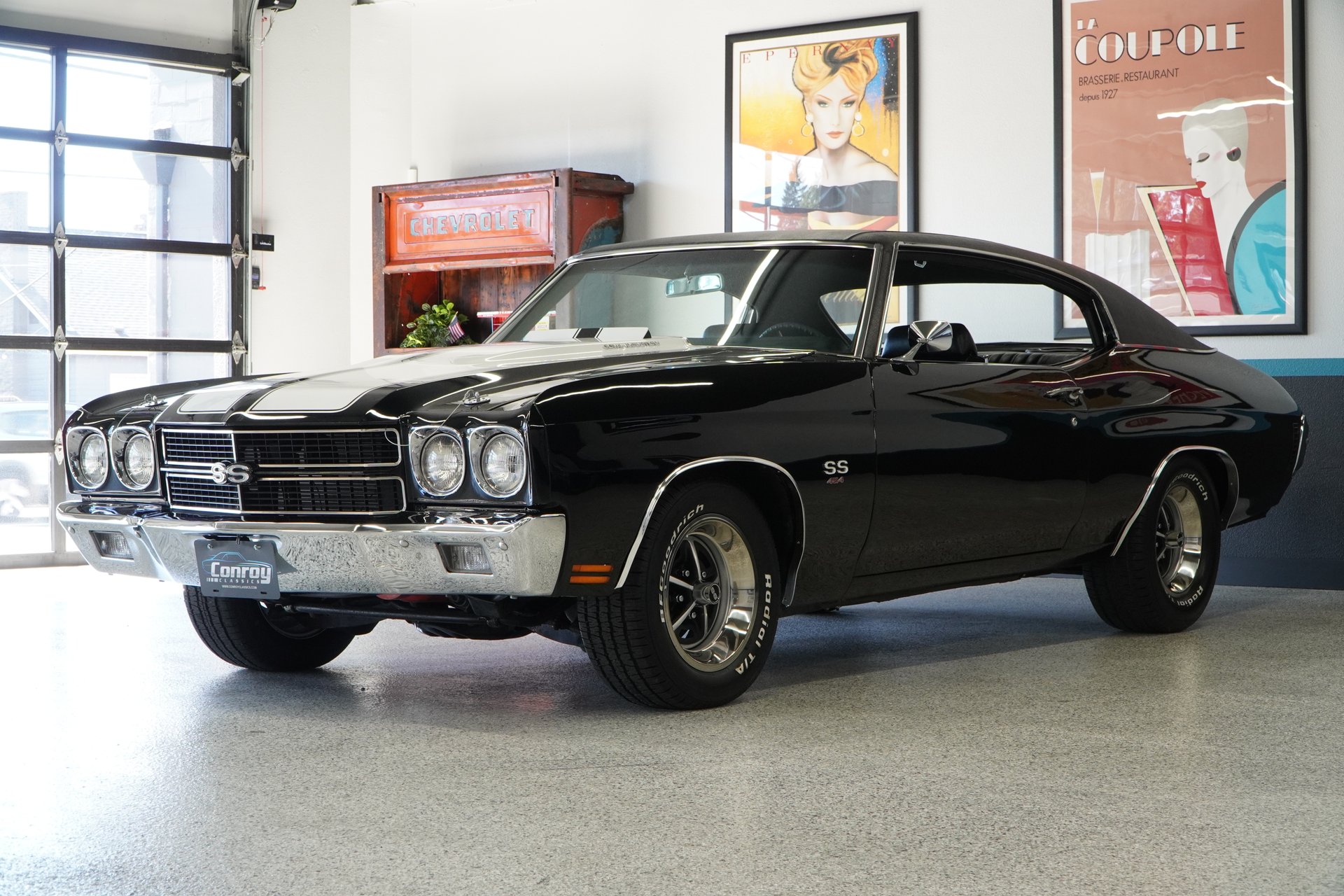
The second generation, 1968 to 1972 — where the market lives. The 1968 car is all new: swooping fenders, a fastback hardtop coupe on the shorter 112-inch wheelbase, four-doors and wagons stretched to 116 inches, and the SS396 still a separate 138-series model for this one last year. The 1969 car keeps the shell and makes the pivotal change: SS396 becomes RPO Z25, an option on Malibu bodies, which means from 1969 the VIN alone can no longer prove an SS — the build sheet, the original engine and the paper trail have to do it. It is also the COPO year, when dealers such as Yenko used the Central Office Production Order system to fit the 427 L72 that GM's rules forbade as a regular option. The 1970 car is the peak: single-year front end, optional cowl-induction hood, the 402 confusingly marketed as both SS396 and Turbo-Jet 400, and the new 454 in LS5 and LS6 form on top. The 1971–72 cars share a face-lifted shell, fall under net ratings, and add the Heavy Chevy; a good 1971 or 1972 SS454 is a better road car than its paper figures suggest and usually costs less than the equivalent 1970 — the value end of peak muscle.
The third generation, 1973 to 1977 — buy it for what it is. The Colonnade cars are bigger, quieter and softer than what came before, with 5 mph bumpers (front in 1973, both ends by 1974), a pillared coupe layout with fixed rear quarter glass, and handling tuned for the emissions-controlled seventies. The Laguna, with its body-colour urethane nose in 1973 to 1975, was the top model, and the Laguna Type S-3 from 1974 added the slatted opera windows and a sportier brief. The 454 survived to 1975 in low-compression net-rated form. Buy a Colonnade car for what it is — a comfortable, distinctive, affordable seventies cruiser, at a Colonnade price — not for a 1970 experience it never promised. Supply is thin: only a handful of 1973 and 1974 cars appear in our listings at all, so the individual car's condition matters more than any year hierarchy.
Body styles, and what each is for. The sport coupe and sport hardtop are the default muscle and collector choice, and the bodies the SS package was built around. Distinguish them — a sport coupe has a B-pillar, a hardtop does not, and the hardtop's pillarless glass is both its charm and its leak and alignment headache fifty years on. The convertible is the summer car and, in SS form, the rarest regular-production body in most years: it pays a premium, demands the most from frame and floors because the roof stiffens nothing, and its top frame, hydraulics and quarter trim are convertible-specific and priced accordingly. The four-door sedan and hardtop are the survivor buys: bought as family cars, often garaged, often six or small-V8 automatics with original paint and interiors intact, and almost never cloned — nobody fakes a four-door, which is its own authentication. The wagons — two-door Nomad early, four-door Nomad, Greenbrier and Concours thereafter — are the family-classic choice, on the long 116-inch chassis, with a tailgate that is either a treasure or a rust trap and wagon-only glass and trim that can be hard to source. The El Camino is its own culture: part car, part truck, on the wagon chassis, bought to be used and judged by its bed floor and cab corners. In our store the colours follow the muscle skew — red first, then black, then blue — which tells you the pool is dominated by repainted two-doors; an original-paint sedan or wagon in a quiet period colour is, paradoxically, one of the rarest sights in the market.
Engines and gearboxes
The sixes and the small-blocks: the cars most Chevelles actually are
Start at the bottom, because that is where most Chevelles started and where the honest drivers still are. The base engine was Chevrolet's inline six: 194 cu in for the earliest cheapest cars, then 230, and from 1967 the longer-stroke 250. These are seven-main-bearing, overhead-valve sixes with a single one-barrel carburettor — Rochester Monojet in later years — and a reputation for running neglected longer than they should. They will not make a Chevelle fast. They will make it simple, economical by period standards, and cheap to rebuild completely. Test as for any old six: even compression, no bottom-end knock under load, no chronic overheating from a silted block, and an exhaust manifold that is not cracked — a ticking that fades as the engine warms is the classic tell. A six-cylinder car is also the commonest starting point for a V8 swap, so on any car presented as an original V8, check the VIN's engine digit before you credit the engine in it now.
The small-block V8 is the Chevelle's natural engine, and it arrived in a ladder that buyers still recite: 283 cu in in 1964 and 1965, 327 cu in as the step-up, 307 cu in replacing the 283 as the base V8 from 1968, 350 cu in from 1969 as the engine the range would live on, and 400 cu in small-block in the seventies cars. All are the classic Chevrolet small-block: cast-iron block and heads in Chevelle service, hydraulic lifters except in the hottest solid-lifter variants, a Rochester two-barrel on the mild cars, a Rochester Quadrajet four-barrel on most stronger ones, and single exhausts on the cooking versions against duals on the performance ones. Three small-blocks deserve naming. The 327 L79, at 350 hp in its hottest mid-sixties tune, is a high-compression engine that revs like no big-block will; verify it by suffix code and components, because an L79 badge on an ordinary 327 is the small-block version of the SS clone problem. The 350 in L48 and later forms is the sweet spot of the later cars: torquey, understressed, Quadrajet-fed, with the best parts supply in this guide. The 400 small-block, with siamesed bores, runs hotter by design and suffers when its steam holes are ignored in a head swap — a 400 that overheats needs the cause found, not a bigger radiator.
Judging any small-block is a short script. Cold start: a puff of blue that clears is valve stem seals, a budgetable job; smoke that persists under load is rings and bore wear. Oil pressure strong cold and collapsing hot at idle, with a knock on a throttle blip, is bearing wear. A Quadrajet that bogs opening its secondaries is usually air-valve adjustment or a perished vacuum break, not a bad carburettor — a proper specialist rebuild transforms cars owners had blamed on ignition. Budget $400 to $800 for that rebuild and $4,500 to $8,000 for a complete small-block rebuild as job-cost estimates: a tired small-block is a plannable expense, never a walk-away on its own.

The big-blocks: 396, 402, 427 and 454
The Mark IV big-block arrived in mid-1965 in the tiny Z16 Malibu SS 396 run — 201 built — before becoming the SS396's only engine from 1966. The 396 ladder ran in three tunes: the 325 hp L35, the sweetest road engine; the 350 hp L34; and the 375 hp L78, with solid lifters, an aluminium intake, a Holley four-barrel and big-port heads — an engine that wants revs, valve-lash attention and premium fuel, and is the fastest 396 by a clear margin. The L78 could be ordered with L89 aluminium heads, which saved weight without adding much power and are now so valuable that verifying them — casting numbers and dates, not a seller's assurance — is a job in itself.
Displacement language needs care from 1970: the 396 grew to 402 cu in, yet the car was still sold as the SS396 and, in non-SS form, as the Turbo-Jet 400 — no mechanical relation to the 400 small-block. The 454, new for 1970, came as the LS5, a hydraulic-cam, Quadrajet, high-torque street engine rated 360 hp in 1970, and the LS6, at 450 hp the highest-rated engine Chevrolet ever put in a production Chevelle: solid lifters, closed-chamber heads, an aluminium intake and a Holley 780, low-rise intake under the flat or cowl hood, and a thirst and an idle to match. The LS6 was a 1970-only Chevelle offering in this form, and its value rests entirely on documentation and matching numbers — block casting and date, suffix stamp, cylinder-head castings, and the paper that ties them to the car's VIN. The 1969 COPO 427, the L72 at 425 hp, sits in the same evidentiary class: a real one is a documented car first and an engine second, and an undocumented 427 in a 1969 Malibu is a 427 in a Malibu, priced as such, however fast it is.
Mechanically, the big-block is tough with known habits. It is heavy — why SS cars got specific springs, and why a big-block swapped onto small-block springs sits nose-down. It runs hot in traffic in marginal cooling systems, wears its timing chain, weeps from its rear main seal, and the L78 and LS6 solid-lifter cars need valve lash checked as a service item, not ignored until it clatters. Low oil pressure hot, bearing knock, or metallic glitter in the oil is the serious end. Exhaust manifolds crack and their studs seize. A proper big-block rebuild runs $7,000 to $12,000 as a job-cost range, more for an LS6-correct build — so price a tired one with the rebuild already subtracted.
Gearboxes, axles and the driveline choices that change the car
Our store's transmission figures tell the market's split plainly: automatics lead, but manuals are a very large minority, with a substantial block recorded specifically as four-speed manuals on top of the general manual count — a distribution no ordinary family-car range would show, and a reminder that the Chevelle pool is selected for performance cars. The choice matters, because the gearbox changes the car's character as much as a step up the engine ladder does.
The manual ladder ran from a Saginaw three-speed through the Saginaw four-speed to the Muncie four-speeds every performance buyer wants: wide-ratio M20, close-ratio M21, and the heavy-duty M22 Rock Crusher, named for its gear whine and fitted to the hardest cars — L78s and LS6s. Identify a Muncie by case, side cover, input-shaft rings and stamped codes, not by the shifter fitted; the M22 premium is large enough that M22 claims need LS6-level scepticism. Judge any manual on second-gear synchromesh (it goes first), jumping out of gear, clutch judder, and a linkage adjusted to disguise wear. A Muncie rebuild runs $1,500 to $3,000 as a job cost.
The automatics are simpler and, for most road use, better than their reputation. The two-speed Powerglide served sixes and mild V8s: unburstable, slow, with a yawning ratio gap a six exposes. The Turbo Hydra-Matic is the performance automatic — TH350 behind small-blocks, TH400 behind big-blocks, identifiable by its pan shape and strong enough that drag racers built a generation around it. A TH400 that shifts firmly, kicks down, and neither flares on the two-three change nor delays engagement from cold is good; burnt, dark fluid or slip means a rebuild at $1,800 to $3,500 fitted as a job cost. Overdrive automatics and five-speeds in restomod cars are later swaps — judge them as modifications, but never pay an originality premium for them.
At the back sits the axle the market argues about: 10-bolt in ordinary cars, 12-bolt in performance service, Positraction the option that matters. A 12-bolt Positraction under an alleged SS is supporting evidence, not proof — axles swap in an afternoon — and its absence under a claimed high-specification SS needs an answer. Ratios run from highway 2.73 and 3.08 through 3.31 and 3.55 all-rounders to 3.73 and 4.10 in the serious cars; a 4.10 car is thrilling for ten miles and wearing for a hundred, so match the axle to your use. Whine that changes pitch on the overrun is ring-and-pinion wear or set-up; a clunk on take-up is as often universal joints or bushings as the differential — work through the cheap causes first.
Problem areas
Read this section against our own examined-photo evidence, stated with its limits. We have photo-note records for 493 Chevelles: rust is mentioned in 59 cars, visible damage in 51, fluid leaks in only 4, with no smoke mentions recorded. Do not misread that as a clean bill of health. Photo notes record what sellers' photographs show; sellers photograph the top of a Chevelle, not its frame rails, and purchase-deciding rust lives underneath and under carpets and trunk mats where listing photographs rarely go. About one car in eight showing rust even in flattering pictures means the forensic examination underneath is where the real answer sits.
Rust and the frame: the map that decides the car
A Chevelle is body-on-frame, so split this section into two diseases with two prognoses. Frame rust can end a car's life or demand repair that dwarfs panel work. Body rust ranges from equally serious at mounts and supports down to genuinely cosmetic on an outer panel well served by reproduction metal. Confusing the two — either way — is how buyers overpay for rotten cars and walk away from sound ones.
The frame itself. The perimeter frame rots where water and salt sit: rear rails around the rear crossmember and spring mounts; side rails under the doors, collecting mud from the front wheels; the front crossmember and horns; and every body-mount pocket, where a perished cushion holds moisture against the steel. Convertibles and El Caminos often used heavier boxed sections because their bodies contribute less stiffness — same checks, higher stakes. The test is physical: on a lift, work the rails end to end with a light and a screwdriver (with permission) and feel for the change from ringing steel to the dull give of scale and perforation. Surface rust is normal and treatable; thinning, layered flaking, holes and patch plates welded over uncut rot reprice or end a deal. A single rail section professionally repaired can run $1,500 to $4,000 as a job cost; a frame needing replacement turns the purchase into a restoration project. Check straightness too: a diamond or sag shows in uneven gaps and a car that crabs on the road.
Floors, trunk and body mounts. Water enters from above — windshield and rear-window channels, cowl seams, a convertible's well, a wagon's tailgate apertures — and settles in the lowest closed places. Lift every carpet. Front footwells go first where the cowl leaks, the under-rear-seat pan where the rear window channel leaks, and the trunk floor and its drop-offs where the seals have passed water for decades. On El Caminos the bed floor and the well behind the cab hold water the same way; on wagons, the spare-wheel well and tailgate are the trap. Prod the body-mount areas: a floor can be patched, but a collapsed mount means the body is sitting down on the frame, which is why such a car's doors have dropped. A floor or trunk section cut out and welded runs roughly $800 to $2,000 a section as a job cost, and floors rarely rot alone — price the system, not the first hole.
Outer panels and the water path. Rear quarters rot behind the wheel and along the lower edge; the arch lip is the tell, and filler announces itself to a cloth-wrapped magnet. Front fenders go at the bottom behind the wheel. Door bottoms fill with water when their drains block and bubble along the lower skin — open every door and look at the bottom edge, not the face. Bubbles at the base of the windshield mean the channel is going, the glass must come out to fix it, and the water has already visited the front floors and dash wiring. The rear window channel on fastback coupes is the same story and the commonest hidden-rust finding on a shiny 1968 to 1970 car. Convertibles add the top well and rear seat pan; wagons the tailgate and roof ditch rails; El Caminos the bed seams and cab corners. None alone need kill a car; together they are its biography, and a car showing three will show the fourth on a lift.

Identity, SS authentication and the clone problem
This is the Chevelle market's central trap, and it deserves its own problem-area heading because more money is lost here than on any mechanical fault. The rule changes by year, and a buyer must know which year they are standing in front of.
1964 and 1965. The Malibu SS is a trim series with its own VIN model numbers, bucket seats and small-block power, supportable by VIN and trim tag. It was never a regular-production big-block car beyond the 201 Z16s of 1965 — documented museum-grade cars, not barn finds. Any other 1964 or 1965 car presented as a factory big-block car is a swap.
1966 to 1968. The buyer's gift years. The SS396 is a separate series and its VIN begins with the 138 series prefix — 13817 for the sport coupe, 13867 for the convertible, with the corresponding hardtop codes in the sequence — against the Malibu's 136 prefix in the same body. A car claiming to be a 1966 to 1968 SS396 whose VIN begins 136 is a Malibu with SS equipment added, whatever paperwork story accompanies it, unless the seller can produce factory documentation that survives expert scrutiny — and in practice, for these years, the VIN is the verdict. Check also that the trim (cowl) tag agrees on body style, build date and plant, and that its rivets and patina look undisturbed; tags swap too, though a swapped tag cannot change a stamped VIN.
1969 onward. The gift is withdrawn. From 1969 the SS is RPO Z25 (and, for the 454 cars, the associated SS equipment content) applied to an ordinary Malibu-series VIN, so a genuine SS and a base Malibu share the same VIN prefix and the same body. Authentication from 1969 rests on a chain, and you judge the chain, not any single link: the build sheet (found, in surviving cars, under or behind the rear seat, above the fuel tank, inside door panels, under the carpet — a seller who has it has the strongest single document there is); the Protect-o-Plate and original dealer paperwork; the original engine, whose block casting number and date and stamped suffix and partial VIN must all be consistent with the car and with each other; the correct SS-only equipment that is troublesome to fake completely — hood, big-block steering and suspension details, brake configuration; and Canadian documentation where it exists, because GM of Canada's records service can document Canadian cars in a way US records cannot, which is why a documented Canadian SS carries a confidence premium. A car with none of this chain is a tribute for pricing purposes, even if every part is correct — the market pays for proof, not plausibility, and so must you.
Learn the clone tells that cost nothing to check: SS badges against the trim tag's story; a big-block on small-block springs, nose down; a 10-bolt axle and small brakes under a claimed high-output car; drum brakes and single exhaust on a claimed L78; fresh paint over hard-to-change details — firewall, inner fenders, frame — telling a plainer story; a stamp pad decked smooth or restamped in digits that do not match factory broach marks. None alone convicts a car — fifty years of honest repairs change parts too. Three together acquit you of paying SS money. The honest tribute, sold as a tribute, is a good purchase at Malibu money; the dishonest one is the most expensive Chevelle you can buy.
Suspension, steering, brakes and the chassis wear underneath
The A-body chassis is conventional and strong: unequal-length control arms and coils at the front, a four-link live axle at the rear, recirculating-ball steering, and brakes from four-wheel drums through front-disc options to standard front discs on later performance cars. Its faults are age and deferred maintenance, not design.
At the front, ball joints, bushings and tie-rod ends wear together; a car that wanders or knocks over bumps is usually asking for a front-end rebuild, not a single part. Price a full refresh — joints, bushings, tie rods, idler, alignment — at $1,200 to $2,500 fitted as a job cost. Big-block and SS cars carry heavier springs and a front anti-roll bar; a car that rolls and dives like a six while wearing SS badges is telling you something from the previous section again. Measure ride height side to side: a car down on one corner may have a broken spring, a collapsed mount, or a bent frame — three very different purchases.
At the rear, the four-link's bushings are the whole story: perished, they let the axle steer the car under power, clunk on take-up, and hop under hard acceleration in a way owners blame on the engine. Steering boxes wear at centre, giving free play exactly where you drive; play plus leaks plus worn linkage is a system bill, not a drop of oil. Brakes deserve the same thinking: a car that has stood will want calipers or wheel cylinders, hoses, a master cylinder and fluid as one job — $800 to $2,000 as a job-cost range for a full hydraulic refresh. Judge a drum-brake six honestly as adequate period braking unless your use is mountain or freeway work, in which case price a front-disc conversion rather than apologising for it.
Interior, trim, glass and electrical wear
The cabin is vinyl, cloth and painted metal in plain cars, rising to buckets, consoles and full instrumentation in Malibus and SS cars — and it is where a garaged original and a tired car differ most honestly. Seat foams collapse and vinyl splits at the driver's bolster first; sit in the driver's seat, because it prices the retrim. A bench-to-bucket conversion in a clone often betrays itself in floor brackets and trim that do not match the trim tag's interior code — decoding the tag is a two-minute check that settles arguments. Dash pads crack in sun-state cars. A professional interior to factory pattern runs from about $3,500 for a bench-seat car to $8,000 and beyond for a bucket-and-console SS convertible with a new top, as job-cost ranges — which is why an original, unfaded interior is worth real money even in a sedan nobody else wanted.
Glass and seals are a system: hardtop side glass that no longer meets its seals whistles and leaks, usually after repeated adjustment for worn regulators and settled doors. Perished windshield and rear-window seals are not cosmetic at all — they are where the water that rots floors and channels gets in. Electrics fail at their connections: dim lights and slow windows are earths and switch contacts; blower and wiper motors and convertible top hydraulics are the bigger items, and a top that struggles up is describing pump wear, not character. Air conditioning will almost always need a full recommission at $1,500 to $3,500 as a job cost, so price "air just needs a charge" as "air does not work."
How to inspect one
Allow at least an hour, and if it goes well, pay for a lift inspection before money changes hands. Bring a torch, a cloth-wrapped magnet, a small screwdriver for prodding (with permission) and a phone for photographs of every tag, stamp and fault — on a Chevelle, photographs of the numbers are worth more than photographs of the paint. Work in this order; the early steps can end the inspection.
- Paperwork and VIN first. Match the title VIN to the VIN plate — door pillar on early cars, dashboard plate through the windshield from 1968 — and decode its series and engine digits on the spot. A claimed 1966 to 1968 SS396 must carry the 138 prefix from the identity section; if it does not, reprice it as a Malibu before looking further. On a 1969-onwards SS claim, ask for the build sheet, Protect-o-Plate and history file now, not after the drive.
- The trim (cowl) tag. Photograph it, decode body style, build week, assembly plant, paint and trim codes, and check its story against the car: a car trimmed in a colour its tag never carried has been redone or retagged, and either fact belongs in the price. Check that the tag's rivets and surface look undisturbed, and that the build date is consistent with dated components you will meet later — glass, engine casting, axle.
- Cold start. Insist the engine is cold on arrival; a warmed-up car is a seller managing a symptom. A healthy small-block or big-block starts promptly, settles to an even idle (lumpy by design on L78 and LS6 solid-lifter cars), and shows no bearing knock, no persistent blue smoke, and no coolant bubbling. Watch the exhaust for the first minute: a clearing puff is stem seals; continuing smoke under the load you will apply on the drive is rings.
- Engine identity. Read the block casting number and date, the suffix and partial VIN on the front pad, and the head castings where accessible. They must agree with each other and with the car's build date — castings precede assembly by days to weeks, never follow it. A decked, blank or restamped pad ends a numbers-matching claim: the car may still be worth buying, but not at matching-numbers money.
- Underneath, on a lift if at all possible. Work the frame end to end as the rust section directs: rear rails and crossmember, side rails, front crossmember and horns, every mount pocket; then floors from below and trunk drop-offs. Perforation in frame or mounts is structural and reprices or ends the deal; honest surface rust and documented old repairs do not. Read fresh underseal as a question — nobody re-coats a sound underside the week before a sale for your benefit.
- Floors, trunk and the water path from inside. Lift the carpets in all footwells and under the rear seat; lift the trunk mat and, on a wagon, the spare; drop the El Camino's well cover. Look for water tracks from the windshield base and rear window, prod the pans, and check the rear window channel on coupes and the windshield channel everywhere. Wet carpets in a dry-stored car mean leaking seals and rust already started.
- Body, panels and gaps. Walk the car with the magnet over quarters, lower fenders, door bottoms and arch lips. Sight down each flank for ripples. Open and close every door, hood and trunk: dropped doors point to hinges, mounts or structure, in ascending order of expense. Price missing or wrong trim — wagons, El Caminos and convertibles especially — as a deduction, not a shrug.
- Suspension and steering by hand. Rock each front wheel top-to-bottom and side-to-side for ball-joint, bushing and bearing play. Bounce each corner and watch it settle. Check ride height corner to corner and note a low corner for the mount, spring or frame question from step 5. Turn the steering lock to lock and feel for centre wear and notchiness. Look at tyre wear: feathered fronts are alignment and worn joints; a rear tyre wearing unevenly on a four-link car points at bushings.
- The test drive, fifteen minutes minimum. Town, a fast stretch and a hill if you can. The engine should pull cleanly — a Quadrajet bog is tuning, a misfire under load is ignition or fuel until proven otherwise. A manual must take second cleanly both ways, stay in gear on the overrun, and bite without judder; an automatic must shift firmly, kick down, and engage without delay or thump. Note axle whine and take-up clunks, and brake hard from speed: straight, no judder, no pull.
- Heat and electrics at idle. Let it idle hot. Temperature stable, oil pressure present, no new leaks on the ground — our photo records mention leaks in only a handful of cars because leaks show after a run, not in a listing photograph. Work everything: lights, wipers, washers, blower, windows, horn, gauges, and the top or air conditioning if fitted, each priced as not working until seen working.
- Stance and road manners, judged from outside. Stand back and photograph the car in profile from both sides, as you would a horse. It should sit level side to side, with the rake its springs intend. A nose-down big-block car suggests small-block springs under a swap; a tail-down car suggests springs, mounts or load history; a car down on one corner returns you to step 5. Stance faults you talk yourself out of in person are obvious in a photograph later.
- Interior and trim tag, last. Sit in every seat; feel for collapsed foam and the driver's bolster wear that prices a retrim. Decode the trim code against what you are sitting on. Check headliner or top, dash pad, hardtop glass fit and every window. A sound original interior is the hardest thing about a Chevelle to recreate, so weight it as heavily as the engine — on a sedan or wagon it may be the best reason to buy that car.
Values
The build's market block beneath this guide carries the current numbers — what is listed now and what recorded sales have achieved — and this section deliberately carries none. What it teaches instead is how to read those numbers for a Chevelle, because this market punishes a buyer who reads a headline figure without asking which Chevelle it describes.
The first driver is the condition-and-proof spread, and on a Chevelle it is wider than on almost any comparable car because two cars that photograph identically can be different objects: a documented, numbers-matching 1970 SS454 and a well-built tribute on a Malibu shell are separated not by condition but by evidence, and the market pays for the evidence. Read any median, therefore, as a blend of real cars, tributes, projects and survivors, and place the car in front of you in that blend by its paperwork before you place it by its paint. The second driver is the year hierarchy: 1970 tops demand and supply at once, keeping good cars liquid; 1966–67 SS396 cars trade in a smaller market where the VIN settles the main question; 1971–72 cars offer most of the experience for less; first-generation small-block and Colonnade cars trade in condition-led markets where the best example is barely dearer than a mediocre one, so buy the best.
Asking and achieved prices diverge predictably. Listings for the fashionable cars — 1970 SS coupes above all — are set against the best documented result the seller can point to, while achieved prices sort ruthlessly by proof and by underside. A car with a build sheet, matching engine and photographed solid frame achieves close to its ask; without the sheet, or with a frame story found on a lift, it renegotiates on the spot. A non-running project is not a driver minus an engine — its frame, floors, brakes, fuel system and interior are all unproven at once, and the market discounts every unknown, correctly. Survivors invert the logic: an original-paint sedan or wagon with a tired engine can be the value buy of the range, because its honesty is verifiable and its needs are the cheap, plannable kind.
Premiums attach, in order, to documentation; to the LS6, COPO, L78 and L89 names when — only when — documentation carries them; to genuine SS convertibles; to four-speeds behind big-blocks; and to Canadian-documented cars. Discounts attach to tributes priced as real, rust discovered late, and any car whose story changes between listing and viewing. Your leverage is never the existence of another car — there is always another car — it is the specific, photographed, costed list of what this car needs. Sellers who resist the inspection that produces it have priced their car for a buyer who will not do one.
Parts and ownership
The Chevelle is one of the best-supported American classics, and that support is itself a buying argument: the A-body was built in the millions, the performance aftermarket adopted the Chevelle as a core car, and the restoration trade reproduces everything from floor pans to factory-pattern interior kits. Difficulty is rarely whether a part exists; it is whether the part for your specific year, body style and trim exists, and what originality costs when only an original will do.
Easy and cheap: service items for every engine — filters, plugs, points, belts, hoses; standard-spec engine internals; Rochester and Holley carburettor kits; brake hydraulics and friction parts; suspension wear parts and springs; exhausts; weatherstripping; floor pans, trunk floors, quarters and most sheet metal for two-door second-generation cars; and factory-pattern interior trim for mainstream models. Order today, fit this weekend is a realistic rhythm for a 1968 to 1972 Malibu or SS.
Harder, dearer or slower: date-coded, numbers-correct components — correctly cast blocks and heads, L89 aluminium heads, M22 gearboxes, smog equipment, complete cowl-induction assemblies; convertible sheet metal, top frames and quarter trim; wagon tailgates, rear glass and wagon-only trim; undamaged El Camino bed trim; Colonnade urethane noses and Laguna trim; and NOS brightwork, where original stock is finite. The rule follows: the more specific the car, the more its value lives in the parts that are hard to replace — inspect those parts as value, not decoration.
Running costs and living with one. A sorted Chevelle is a realistic regular-use classic. Fuel consumption runs from the low twenties mpg for a gentle six on a run to single figures in town for a hard-driven LS6, with small-block automatics in the mid-teens as the honest middle. Servicing suits any competent classic workshop: oil, plugs, ignition checks, valve lash on the solid-lifter cars as a scheduled item, fluids on a two-year rhythm. The budget line that catches new owners is the first year: reckon $2,500 to $6,000 to catch up a running car (brakes, bushings, tyres, fluids, fuel system cleaned of ethanol varnish) and $5,000 to $10,000 for a car that has sat for years, as knowledge estimates, before any cosmetic work. High-compression L78, L79 and LS6 cars want the highest octane available; hardened valve seats are a sensible inclusion in any head rebuild. Our listings cluster in Florida, Michigan, Illinois, Texas and Pennsylvania — a fair map of where the cars, and the winters that test them, live.
Which one to buy
- The all-rounder: 1968–1972 Malibu or SS coupe with a 350 or LS5 454. The deepest market, the best parts support, and the complete Chevelle experience. Buy the best-documented, least rusty example rather than the highest badge.
- The authenticated muscle car: 1966 or 1967 SS396. The years where the 138-series VIN proves it for you, in the lighter shell. An L35 automatic is the sweet road buy; an L78 four-speed is the collector buy.
- The peak car: 1970 SS454 LS6. Buy it only with its chain of proof complete — build sheet or equivalent documentation, matching stamps, correct components — and the frame inspection passed. An LS6 without the chain is an expensive Malibu, and should be bought, if at all, at that price.
- The value muscle buy: 1971 or 1972 SS454 or SS402. Net ratings frighten paper buyers and delight drivers. Most of the car for a visibly smaller commitment.
- The driver's early car: 1965–1967 Malibu hardtop with a 327, ideally the L79. Light, revving, pretty, cheap to run by big-block standards — the thinking alternative to an SS396.
- The summer car: any genuine SS convertible, 1966–1970. Rarest body, strongest premium, highest stakes — frame, floors, top and hydraulics all priced before you fall for it. A documented driver beats a shiny car with a story.
- The survivor buy: an original four-door sedan or Concours wagon, six or small V8, automatic. Nobody cloned it, nobody raced it, and its original paint and interior are unrepeatable at any budget. The cheapest honest entry into the family, and often its best-preserved car.
- The working classic: El Camino, 1968–1972, small-block or SS. Buy it on bed, cab corners and frame, use it as meant to be used, and accept honest work wear as patina.
- The seventies cruiser: Laguna or Laguna Type S-3, 1973–1976. Comfortable, distinctive, bought for Colonnade money. Judge the individual car; supply is thin.
And the rule that overrides all of the above: buy the proof and the frame first, and the badge and the paint last. Engines, gearboxes, brakes and interiors are all fixable at plannable prices. A Chevelle whose identity rests on a story, or whose frame on scale and patches, costs more to put right than the finished car will ever be worth — and neither can ever be made original again.
See the 439 Chevelle cars currently listed.