
Chevrolet Chevelle Hardtop buyer's guide
Chevrolet Chevelle Hardtop -- the model's own buyer's guide: variants, values and what to check.
Years listed: 1965-1972 · Series: Chevelle
Overview and history
The Chevelle hardtop is the car most people picture when they picture a Chevelle at all: a two-door, pillarless coupe with side glass that drops clean away, a long bonnet, and — in the right years — a big-block V8 that made it the defining American muscle car of its era. This guide covers that body style only, across both classic generations, from 1964 to the last of the line in 1972. Convertibles, sedans, wagons and the El Camino share the platform and are covered elsewhere; here the focus stays on the hardtop, because it is the body the market wants, the body the clones imitate, and the body whose values, rust traps and identity checks you need before you buy one.
Chevrolet launched the Chevelle for 1964 as its new mid-size A-body, slotted between the compact Chevy II and the full-size Impala. The timing was exact: Pontiac had just invented the muscle car by putting a big engine in its mid-size Tempest to create the GTO, and Chevrolet needed an answer in the same size class. The first Chevelles were tidy, squared-off cars on a 115-inch wheelbase, offered as the basic 300 series, the better-trimmed Malibu, and the Malibu SS. In hardtop form — Chevrolet called it the Sport Coupe — the car already had the pillarless profile that defines the type: no B-pillar, a thin roof, and side windows that meet with nothing between them. That roof is the joy of the car and also one of its weaknesses, because a pillarless shell flexes more than a pillared sedan and asks more of its door seals, window regulators and body mounts.
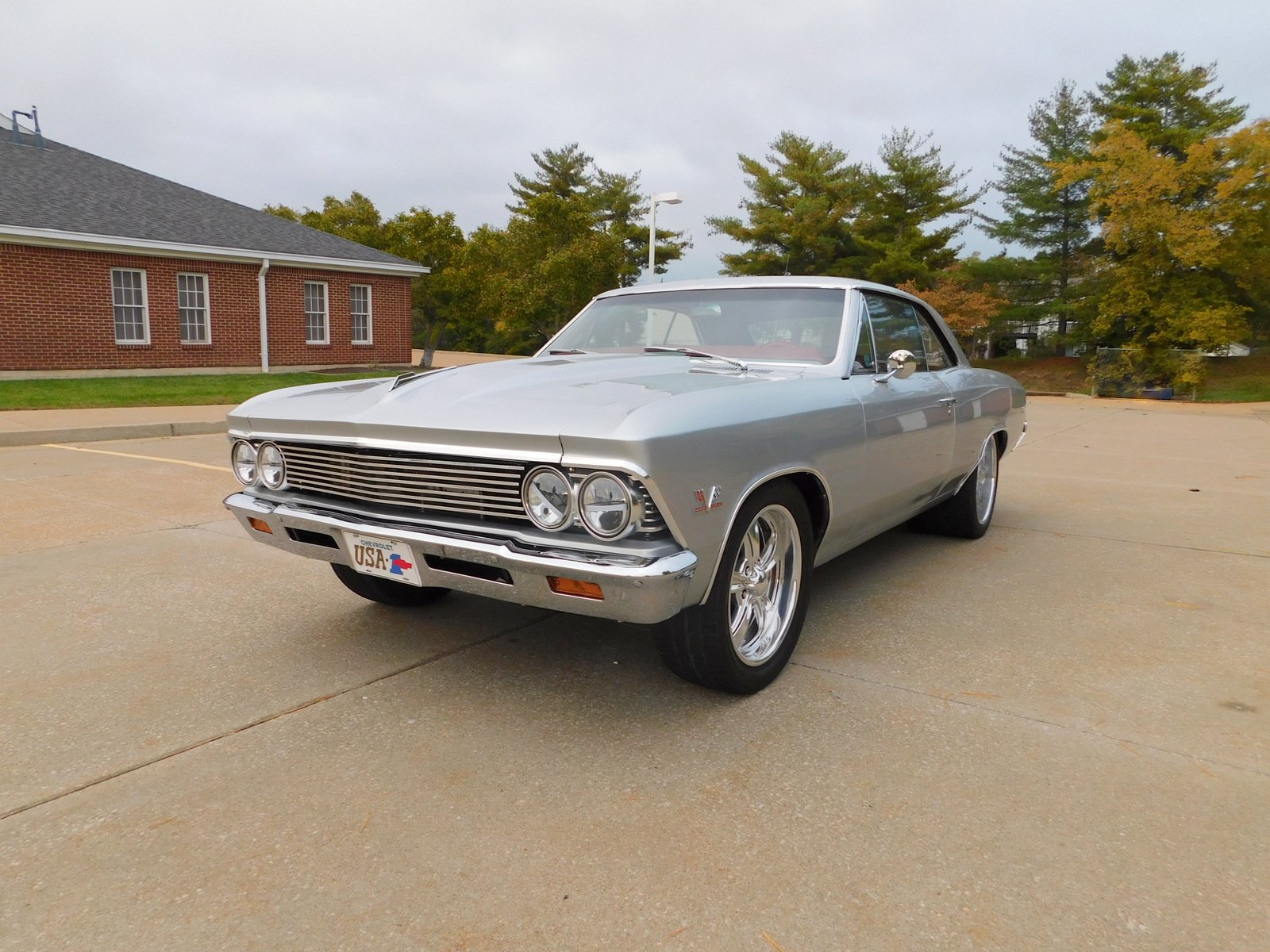
The performance story built quickly. For 1965 a handful of cars — 201 in total, by the accepted count — received the new Mark IV big-block 396 as the Z16 SS396 package, with a strengthened frame and heavy-duty suspension. For 1966 the SS396 became a series in its own right, identifiable by a 138 VIN prefix, and the Chevelle found the shape it is remembered for: stacked headlamps, a power-bulge bonnet on the SS, and clean, muscular flanks. A facelift for 1967 sharpened the front wings and tidied the rear, and that first generation closed as one of the most handsome American coupes of the decade.
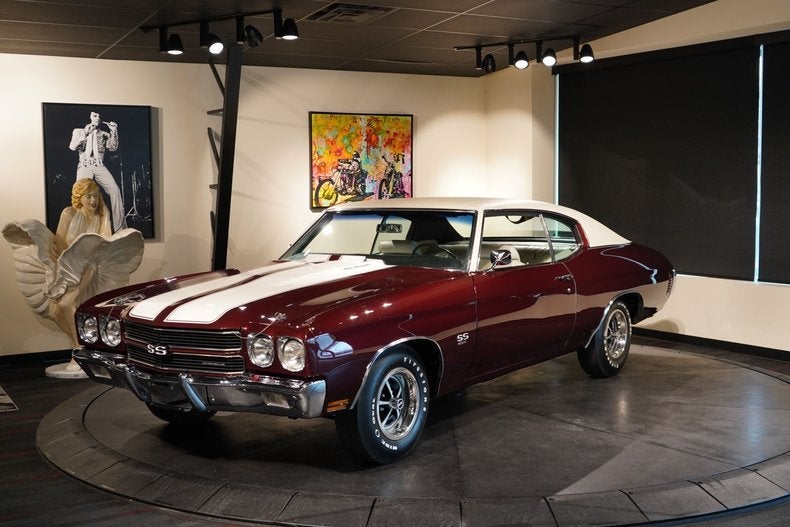
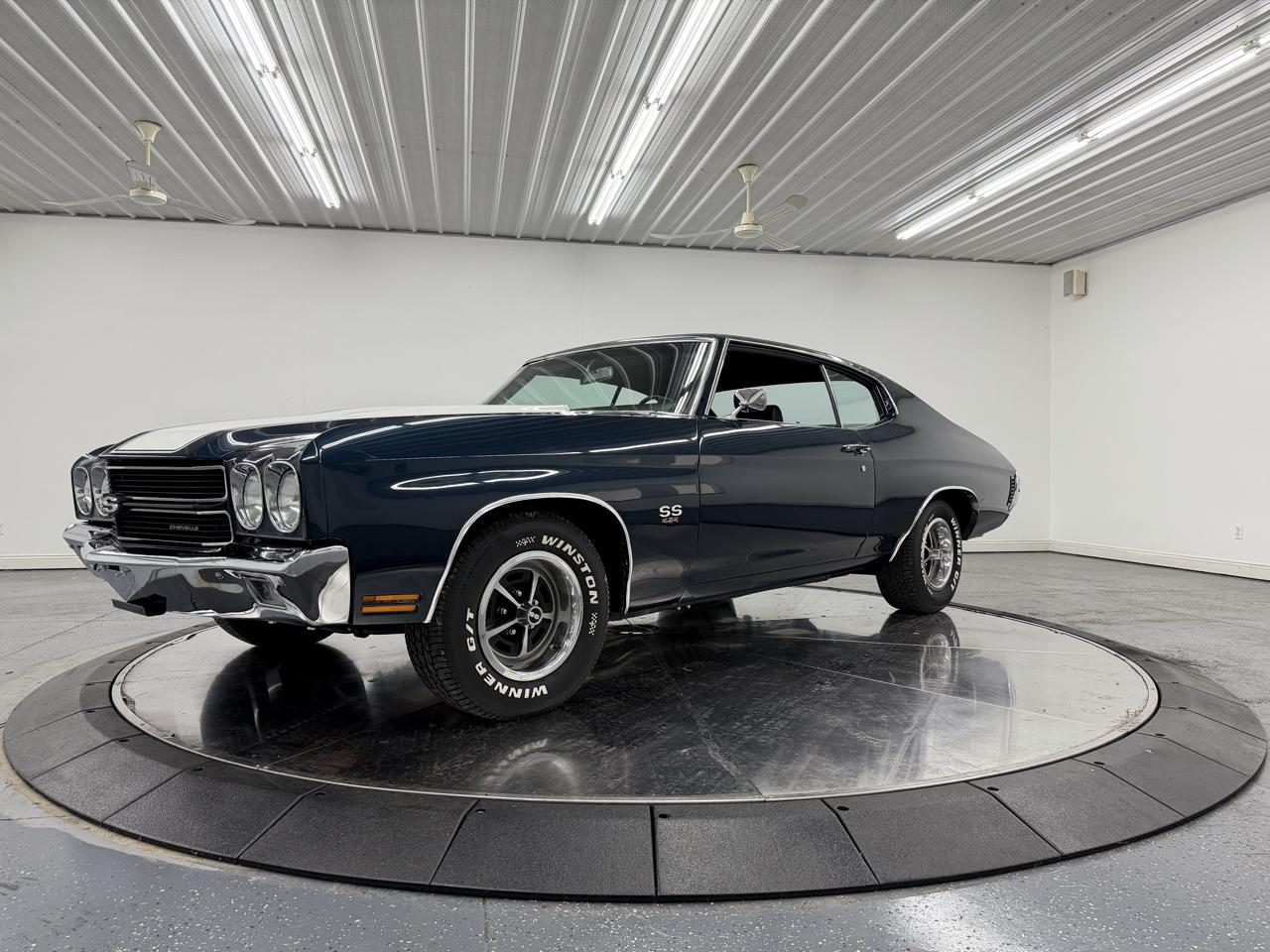
The second generation, from 1968 to 1972, is the car the market is built around. The two-door wheelbase shortened to 112 inches, the styling went to the full Coke-bottle curve with hips over the rear wheels, and the performance ladder climbed to its 1970 summit. The SS396 was a separate series in 1968 and an option package, RPO Z25, on the Malibu for 1969. For 1970 Chevrolet took the big-block to 454 cubic inches and offered the LS6, conservatively rated at 450 horsepower; the same year the nominal 396 was in fact a 402, though the badges and almost every seller still call it a 396. After 1970 the tide went out: compression fell for 1971 for low-lead fuel, ratings switched from gross to net for 1972 — which makes the later cars look weaker on paper than they feel — and insurance surcharges bit. The 1971 and 1972 hardtops remain handsome, fast in SS454 form, and often better value precisely because the market worships 1970.
Our own listings underline where the hardtop market lives. We currently track 92 Chevelle hardtops, 38 for sale and 54 recorded as sold, spanning 1964 to 1972. The centre of gravity is unmistakable: 1970 accounts for 23 of the 92, followed by 1967 with 15, then 1971 and 1969 with 13 each, 1966 with 11 and 1972 with 9. The early cars are thin — just three from 1965 and a single 1964 — and 1968 contributes only four. Almost all of them, 87 of the 92, arrived through dealers, so you are usually buying a presented, retail car at a retail margin, and the verification work matters more, not less, for that.
Why does the hardtop dominate? Partly survival — coupes were garaged where sedans were used up — and partly desire: it was the body in the SS advertising and the posters. That cuts both ways today. Genuine SS hardtops carry the strongest premiums in the Chevelle world, which is exactly why the clone problem, dealt with at length below, is the single most important subject in this guide. A Malibu dressed as an SS and priced as an SS is a financial trap, and telling the two apart is a learnable skill: VIN prefixes for the years that have them, build sheets, engine stampings, and a short list of parts a cloner almost never bothers to change.
The other defining fact is construction. Every Chevelle is body-on-frame: a separate perimeter frame, coil springs at all four corners, and a body that unbolts. That makes it more forgiving to restore than a unibody rival, but it does not make rust harmless, because the frame itself rusts, the body mounts collapse, and the cowl and trunk rot where sellers photograph least. Work in this guides order: identity first, structure second, engine third, cosmetics last. Get them in the wrong order — fall for the paint, believe the badges — and this is one of the easiest cars in the world to overpay for.
The models
Every Chevelle hardtop is a two-door pillarless coupe, but the badge on the flank tells you where the car sat in the range, and the range moved a lot in nine years. Read the table as a map, then the notes below it as the traps. Production figures are given only where the factory record is genuinely settled; for several trim and body combinations Chevrolet recorded production by series rather than by body style, and honest totals for a single body style simply do not exist — where that is the case the table says so rather than inventing a number.
| Model | Years | Engine | Output | Built | Character |
|---|---|---|---|---|---|
| Chevelle 300 Sport Coupe | 1964-1965 | 194 or 230 six, 283 V8 optional | 120-195 hp | Not recorded by body | The plain car; rubber mats, thin trim, the honest base |
| Malibu Sport Coupe | 1964-1972 | Six or small-block V8, big-block in SS years by package | 120-300 hp | Not recorded by body | The volume hardtop and the default classic buy |
| Malibu SS / SS396 | 1964-1965, then 1966-1968 as SS396 series | 283-327 small-block, then 396 big-block | 195-375 hp | Z16 of 1965: 201; SS396 series totals recorded by series, not body | The genuine early SS; VIN tells the truth for 1966-1968 |
| SS396 / SS454 as RPO Z25 and Z15 | 1969-1972 | 396 (402 from 1970), 454 from 1970 | 325-450 hp | Recorded as option totals, not body splits | The muscle peak; identity by paperwork, not by VIN after 1968 |
| Malibu 350 and Heavy Chevy | 1971-1972 | 350 small-block | 245-270 hp gross | Not recorded by body | The insurance-era answer; lighter, cheaper, underrated |
The base cars: 300 and 300 Deluxe. The entry hardtops are rare today precisely because nobody preserved them. They came with six-cylinder engines as standard — the 194 and later the 230 and 250 Turbo-Thrift sixes — vinyl bench seats, rubber floor covering in the earliest cars and the least brightwork. As classics they have two uses: as honest, cheap entry cars if you find a sound one, and, far more commonly, as the raw material from which SS clones are built. Any very shiny SS that started life cheap should be checked twice as hard, and the trim tag, explained in the inspection section, is where a base-car origin shows.
The Malibu. The Malibu was the mainstream Chevelle from first year to last, and the Malibu Sport Coupe is the hardtop most buyers will actually purchase: better trim, carpet, a wide engine choice from the 230 six through the 283, 307 and 327 small-blocks to the 350, and in the second generation the platform onto which the SS package was hung. A Malibu with a 327 or a 350, air conditioning and a sound body is not a consolation prize; it is the sweet spot for a car you intend to drive, because you are not paying the SS premium for badges. There are far more good Malibus than good genuine SS cars, and the price gap between them is where careful buyers win.
The early SS, 1964 and 1965. The Malibu SS of 1964 and 1965 was a trim and bucket-seat package with small-block power, up to the 327 in 300 horsepower L79 form, which is a genuinely quick and now sought-after combination. The exception that proves the rule is the 1965 Z16: 201 cars, all with the new 396 big-block at 375 horsepower, a boxed and strengthened convertible-type frame, heavy-duty suspension and brakes, and a distinctive rear treatment. A Z16 is a museum-grade rarity. Assume any claimed Z16 is not one until paperwork of museum quality proves otherwise.
The SS396 series, 1966 to 1968. For 1966 Chevrolet made the SS396 a separate series, and this is the buyers gift: the VIN begins 138 for a genuine SS396 hardtop of 1966, 1967 or 1968 — 13817 for the coupe — while a Malibu carries 136 and a base car 134 or 133. No paperwork argument, no badge, no seller story outranks that prefix in those three years. Power came in three states of tune: the L35 at 325 horsepower as standard, the L34 at 360, and the aluminium-head L89 option on top of the L34, plus the L78 at 375 horsepower with solid lifters for the buyer who wanted the race engine. For 1968 the SS396 kept its separate series status in the new body; from 1969 it did not, and everything changes.
The package years, 1969 to 1972. From 1969 the SS became RPO Z25, an option on the Malibu, and the VIN reverted to telling you only that the car is a Malibu V8. There is no VIN code for a 1969 to 1972 SS. Identity in these years rests on the build sheet — the broadcast copy the factory left in the car, most often found under the rear seat, above the fuel tank, inside a door trim or under the carpet — on the Protect-o-Plate warranty card, on original dealer paperwork, and on the cluster of SS-only hardware described in the problem and inspection sections. The 454 arrived for 1970 as RPO Z15, in LS5 form at 360 horsepower and LS6 form at 450, while the nominal SS396 was in fact a 402, RPO Z25, in L34 350 horsepower and L78 375 horsepower forms. For 1971 the LS6 left the Chevelle catalogue, compression fell across the range, and for 1972 the ratings became net figures — an SS454 quoted at 270 net horsepower is not a slower car than the number suggests, it is the same idea measured honestly at the wheels end of the accessories. The Heavy Chevy of 1971 and 1972, RPO YF3, was Chevrolets answer to insurance surcharges: SS looks, stripes and a domed bonnet, with a 350 under it. Heavy Chevys are interesting and comparatively rare, and they are also, predictably, re-badged as SS cars. Check them the same way.

Engines and gearboxes
The sixes and the small-blocks: Turbo-Thrift, Turbo-Fire 283, 307, 327 and 350
The six-cylinder cars are, today, the rarest survivors in original form, because so many have been converted to V8 power. The Turbo-Thrift sixes — 194 cubic inches at the start, then the 230 and the longer-stroke 250 — are simple, torquey engines with a single-barrel Rochester carburettor and no vices beyond age: worn valve guides that puff blue on start-up, perished vacuum advance units, and exhaust manifolds that crack along the centre. A hardtop that still has its six deserves respect, but be honest about conversions: swapping a six car to a V8 is not the bolt-in weekend job sellers describe. Mounts, linkage, radiator, front springs and fuel-line routing all differ, and a badly done swap announces itself in a nose-high stance, overheating in traffic, and wiring rejoined with household connectors. Judge a converted car as a hot rod, on the quality of the work, never as an original V8 car.
The small-block V8 is the engine the Chevelle was designed around, and in its successive forms it powers the majority of hardtops you will view. The 283 Turbo-Fire of the early cars is smooth, understressed and limited by its small bore; the 307 that replaced it from 1968 is a low-compression economy version that runs forever and excites nobody. The 327 is the connoisseur small-block: in L30 form at 250 or 275 horsepower it is a sweet, free-revving road engine, and in L79 form at 350 horsepower — high compression, a hydraulic performance camshaft, aluminium intake and a Holley carburettor — it is one of the great small-blocks of the era, with performance close to a mild big-block and better balance over the front axle. The 350 that arrived for 1969 became the default: L65, L48 and in SS350 form for 1971 and 1972 a useful 270 gross horsepower. All of these engines share the small-block virtues — cheap parts, total specialist familiarity, and tolerance of neglect — and the same age faults: rear main seals that weep, timing chains that stretch and retard the cam timing, flat-tappet camshafts that wear a lobe if the oil has been poor, and, on cars that have sat, stuck rings that give a smoky first start and sometimes clear with use and sometimes do not.
Carburation divides the small-blocks by tune: Rochester 2GC two-barrels and Quadrajet four-barrels on mild engines, a Holley on the L79. The Quadrajet is the misunderstood one — a bog on acceleration is usually a worn air-valve cam, a leaking well plug or a failed choke pull-off, all cheap, and a correctly set-up Quadrajet is the best road carburettor these cars ever wore. Budget roughly 400 to 700 dollars for a proper specialist rebuild. Identity on any of these engines lives on the stamp pad in front of the right-hand head: a suffix identifying the original application plus, on most cars from 1968 onward, a partial VIN that should match the car. A pad decked smooth in a rebuild has lost that evidence forever.
The big-blocks: Mark IV 396, 402 and 454
The Mark IV big-block is the engine that made the Chevelle a legend, and it is a completely different design from the small-block: a big, heavy, canted-valve V8 with a reputation for torque that the figures only partly explain, because what you feel is the way a 396 or a 454 fills in the midrange at part throttle and makes a heavy coupe feel weightless. There are three displacements in the Chevelle story and one permanent confusion. The 396 of 1965 to 1969 is a true 396. The 396 of 1970 to 1972 is a 402 — Chevrolet bored the block by 0.030 inch for production reasons and kept the 396 name, badges and air-cleaner decals because the marketing was already made. The 454 of 1970 to 1972 is the long-stroke version, and it divides into the LS5, a hydraulic-cam, high-compression-in-1970 road engine of real civility, and the LS6, a solid-lifter, aluminium-intake, 780 cfm Holley, 11.25 to 1 compression engine for 1970 only in the Chevelle, rated at 450 horsepower and understood by everyone, then and now, to be a conservative number.
Tune is everything in a big-block, and the ladder matters because cloners exploit the gaps. The L35 396 at 325 horsepower is the standard SS engine: hydraulic lifters, a Quadrajet or Holley depending on year, oval-port heads, and a torque curve that makes it the best road engine of the big-blocks for most drivers. The L34 at 350 to 360 horsepower adds compression, a hotter hydraulic cam and better breathing. The L78 at 375 horsepower is the race-bred version: solid lifters that need periodic adjustment and clatter lightly when correct, rectangular-port heads, an aluminium intake and a Holley, and a power curve that wakes up above 3,500 rpm and pulls hard to 6,000. The L89 was not an engine but an option — aluminium heads on an L78 or L34 build — that saved weight, added cost and added almost no power, and is now among the most faked specifications in the hobby because the heads carry the value. An L89 claim needs paperwork, not a casting number alone.
The failure modes are mechanical and knowable. Big-blocks run hot when their cooling is neglected: a car that creeps up in traffic but cools at speed is short of airflow — shroud missing, fan clutch free-wheeling — while a car that heats at speed is short of water flow or has combustion gas in the coolant, a head-gasket conversation. Oil consumption is most often valve guides and seals, shown as blue smoke on start-up and the overrun; smoke under sustained load is rings or bores. On solid-lifter engines a quiet idle is a warning, not a virtue: clearances closed up to silence the clatter burn exhaust valves, so light, even clatter is the healthy sound. Exhaust manifolds crack and tick when cold like a lifter; the tick that fades as the manifold expands is the manifold, the tick that stays is in the valve train. A full big-block rebuild at a competent machine shop runs roughly 6,000 to 12,000 dollars depending on specification, and it should include hardened exhaust seats, because these heads predate unleaded fuel and will sink their exhaust valves without them.
Numbers are the whole game on a big-block car priced as genuine. The stamp pad carries the assembly date and suffix — CTX, CRV and their kin identify the build — and the partial VIN. The block casting number and date sit at the rear of the block by the bellhousing; the head castings hide under the rocker covers. Learn the sequence before you view: the casting date must precede the cars build date by a plausible interval, the stamp suffix must match the claimed engine, and the partial VIN must match the car. Any one mismatch does not always condemn a car — engines were replaced under warranty and in service — but it moves the car out of the matching-numbers price class and into the driver class, and the price must move with it.
Gearboxes: Powerglide, Turbo Hydra-Matic, Muncie and Saginaw
Most hardtops you will view are automatics, and there are three. The two-speed Powerglide, standard on sixes and mild V8s in the early years, is a strong, simple box whose single shift makes a small-engined car feel slow and makes a torquey V8 car feel oddly effortless; it suits a cruiser and disappoints a performance buyer. The Turbo Hydra-Matic 350, from 1969 in volume, is the better road box for small-blocks: three speeds, a proper kickdown, and cheap, total parts support. The Turbo Hydra-Matic 400 is the big-block box, one of the strongest automatics of the era, identifiable by its distinctive pan shape, and the correct partner for any 396, 402 or 454; in our tracked hardtops the automatic listings name the TH400 repeatedly alongside the four-speed manuals, which reflects the genuine SS build pattern. Judge any automatic the same way: fluid that is red and smells sweet rather than brown and burnt, a firm shift without flaring under load, a kickdown that actually arrives, and no delay or thump engaging reverse. A rebuild on a TH350 or TH400 at a specialist runs roughly 1,800 to 3,500 dollars fitted; a Powerglide is cheaper. The trap is the swapped box: a TH350 behind a big-block priced as original, or a modern overdrive automatic in a car sold as numbers-matching. Look underneath, read the pan, and check the crossmember and the speedometer drive before you accept the listing description.
The manuals divide into Saginaw and Muncie, and the difference is money. The Saginaw three- and four-speeds served the mild engines and are wrong for an SS. The Muncie four-speed is the performance box: M20 wide-ratio for most road cars, M21 close-ratio for high-revving engines with deep rear gears, and M22, the famous Rock Crusher, whose straight-cut gears whine in the lower gears — a whine that is correct and should be present; a silent M22 is a reason to look closer, not a bonus. M22s are faked by swapping internals into M20 cases, so a claimed Rock Crusher needs its paperwork and its noise. Clutch judder on take-up means a contaminated or warped plate or tired mounts; a clutch replacement with the flywheel resurfaced runs roughly 900 to 1,600 dollars fitted. Rear axles complete the driveline: the 10-bolt served the mild cars, the 12-bolt was the heavy-duty unit behind big-blocks, and a genuine SS big-block car on a 10-bolt needs an explanation. Positraction, RPO G80, was optional on either; budget roughly 1,200 to 2,500 dollars for an axle rebuild if it whines under load or clunks on the turn.

Problem areas
Our own photo evidence sets the tone for this section. We photo-checked 42 of the Chevelle hardtops in our listings in detail: rust was noted in 6 of the 42 and visible damage in 4, with no smoke or leak mentions recorded in that sample. Read those numbers the right way round. Dealer photographs are chosen to sell cars, undersides and trunk wells are the views sellers omit, and a low count in listing photos is evidence of careful photography, not of sound metal. The Chevelle is a fifty- to sixty-year-old body-on-frame car that lived, in most cases, as ordinary transport through salted winters before anyone thought it collectible. Inspect it as a guilty car that must prove itself innocent, in the order below: identity, structure, then everything else.
Identity: clones, tributes and re-bodied cars
The Chevelle hardtop carries the most developed clone problem of any Chevrolet of its era, for a simple reason: the SS premium is large, the visual difference between a Malibu and an SS is a bonnet, badges, stripes and trim, and for the most valuable years the VIN does not settle the question. Understand the three categories and price them differently. A genuine SS has factory evidence: the 138 VIN for 1966 to 1968, or build-sheet and paperwork evidence for 1969 to 1972. A tribute or clone is a Malibu or base car dressed as an SS; honestly sold, it is a legitimate car worth Malibu money plus something for the quality of the build. A misrepresented clone — a tribute priced and described as genuine — is the trap, and it is common enough that you should assume the burden of proof sits with the car, not with your suspicion.
Work the checks in sequence. First, the VIN and the trim tag. For 1966 to 1968 the 138 prefix ends the argument. For all years, the Fisher Body trim tag on the cowl carries the build week, body style code, original paint codes and original trim code: a car whose tag says green bench-seat and now presents as a black bucket-seat SS has been built by someone, and the question becomes when and how honestly. A missing or freshly re-riveted trim tag on a premium-priced car is a walk-away signal until explained with paperwork. Second, the hardware a cloner skips. Genuine SS cars received a package, not just badges: the domed bonnet appropriate to the year, heavy-duty suspension, and on big-block cars the boxed rear lower control arms, rear anti-roll bar, 12-bolt axle and the correct brake specification. A claimed SS with a 10-bolt axle, no rear bar, standard springs and a flat bonnet has four explanations to give you. Third, the paperwork hierarchy. A build sheet matching the cars VIN, trim and options is the strongest evidence for 1969 to 1972; a Protect-o-Plate and original window sticker support it; restoration receipts prove only that money was spent. A build sheet for a different VIN, or one suspiciously clean for fifty years under a seat, is a tell. Fourth, the engine stampings from the previous section. A genuine SS can lose its original engine and remain genuine, worth SS-minus-matching money; a clone with a genuine SS engine transplanted in remains a clone. Identity lives in the body and its paperwork, and confusing the two is how buyers overpay.
Two myths to bury. The first is that you can decode an SS from the VIN on a 1970: you cannot, for any 1969 to 1972 car, and anyone who tells you a letter in the VIN proves an SS in those years is mistaken or selling. The second is that Canadian-built cars are an exception to be waved away: Oshawa production is actually a buyers friend, because Canadian documentation services can supply factory records for Oshawa cars that settle specification in a way US records often cannot. A Canadian SS with its factory record in hand is better evidenced than a US car with a story.
Rust and structure: frame, cowl, floors and trunk
Body-on-frame construction changes the rust calculus, it does not abolish it. Start with the frame, because it is the cars skeleton and the item sellers photograph least. The perimeter frame rusts at the rear rails behind the rear wheels, at the kick-up over the rear axle, at the body-mount points where the cushions trap salt and moisture, and along the side rails where the factory drain holes block. Surface scale is normal and treatable; perforation at a mount or a rail, or a frame that has been plated over in patches, is structural work — a frame section repair or, in the worst cases, a frame swap, which is a body-off job running into five figures with labour and the recommissioning that follows. Push a screwdriver, with permission, at the rear rails and around every mount you can reach, and look for the fresh black underseal that appears only on the frame and nowhere else on the car: selective underseal is a confession.
The body mounts themselves are a diagnostic. The rubber cushions compress and perish, the bolts corrode, and a car with collapsed mounts sits low and uneven, creaks over driveways, and shows door gaps that wander, because the body is no longer where the factory put it. On a hardtop this matters doubly: the pillarless shell depends on the frame and mounts for stiffness, so tired mounts mean flex, door glass that misaligns with the quarter glass, and seals that whistle however often they are adjusted. Price a mount set at roughly 800 to 2,000 dollars fitted, and more if the captive nuts spin or the mount-point metal needs work.
The cowl and windshield frame are the hardtops hidden rot centre. Water enters past the windshield seal and cowl vents, sits in the plenum, and rots the cowl sides, dash corners and front floor from above while salt attacks from below. The evidence is a damp front carpet, a musty smell no valet removes, and staining below the dash corners. Cowl repair is panel work in a structurally busy area — budget roughly 1,500 to 3,500 dollars a side for proper cut-out and weld-in work with paint — and it is the job most often hidden by a fresh carpet and a strong air freshener. Floors are the best-understood repair on the car: pans are reproduced and a fitted section runs roughly 800 to 1,800 dollars a side. What floors tell you matters more than what they cost: a car that needed floors has had water inside it, and the cowl, trunk and wiring all deserve the suspicion that follows.
The trunk is the other water trap: the rear window and trunk seals leak, and water sits in the well and the drop-offs behind the rear wheels, under the mat where nobody looks. Lift the mat and the spare on every car. Staining is a clean, treat and seal job; perforation of the well or drop-offs is panel replacement at roughly 700 to 1,600 dollars fitted and painted, and perforation where the trunk floor meets the rear mounts is structural again. Rear quarters rust at the arch lip and at the bottom behind the wheel; find filler with the cloth-wrapped magnet, and price a proper quarter replacement at 2,500 to 5,000 dollars a side with paint. Door bottoms, front wing lowers and the battery tray area complete the map — totalled honestly against the price before emotion does the arithmetic.
Suspension, steering, brakes and the hardtop shell
The Chevelle suspension is conventional and strong: wishbones and coils at the front, a live axle on coils and four links at the rear. Its enemies are age and the big-blocks weight. Worn ball joints, idler arms and tie-rod ends make a car wander; the test is a firm rock of each jacked front wheel, feeling for the clonk of a joint rather than tyre flex. Springs sag asymmetrically — measure the four arch heights and distrust a car an inch lower on one corner without an explanation. A big-block conversion on small-block springs sits nose-down and bottoms over bumps, a conversion tell worth more than a sellers description. A full front-end rebuild with joints, bushes and alignment runs roughly 1,200 to 2,500 dollars fitted. On steering, check power systems for pump and box leaks and full-lock squeal, and inspect the rag joint in the column coupling on every car: its rubber disc cracks with age, and its failure is a loss of steering, not a rattle.
Brakes tell you how a car has been kept. Early cars may carry drums all round; front discs arrived as an option and became central to the SS specification in the later years. Judge fifty years of maintenance: seized calipers or wheel cylinders, perished flex hoses, a master cylinder weeping into the booster, thin and scored discs or drums. Budget roughly 900 to 2,000 dollars for a full hydraulic refresh, and treat a seller who has done this work recently, with receipts, as a seller whose other claims gain credibility.
The hardtop shell has two problems no sedan has. The first is glass. With no B-pillar, the door glass must seal against the rear quarter glass and the roof rail weatherstrip in a chain of adjustments — door hinge wear drops the door, the glass tilts, the quarter glass regulator wears, and the chain leaks wind and water at every link. Sagging doors are diagnosed at the handle: lift the closed door by its handle and feel for hinge play before you blame the striker. Window regulators, especially the quarter-glass units, wear their rollers and rivets; parts are reproduced, but the labour is fiddly, trim-out work. The second is flex and its cosmetic signature: stress cracks in the paint at the base of the roof quarters and around the rear window on hard-driven big-block cars, and roof-rail and drip-rail rust where water sits in the channel above the pillarless opening. None of this condemns the body style — it is the price of the profile everyone wants — but a hardtop whose doors shut with a clean, even clunk and whose glass seals at speed is a car that has been kept straight, and it should be priced above one that pops, whistles and leaks.
Interior, electrics and trim
The interior is where clone work and honest wear are easiest to confuse, so read it as evidence. Bucket seats and a console were also Malibu options, so their presence proves nothing, while their absence on a claimed SS needs explaining for the years when buckets were standard SS equipment. Seat frames crack at the hinge, foam collapses on the drivers cushion first, and the correct test is to sit in the drivers seat: a seat that lets you feel its frame is a retrim budget of roughly 1,500 to 3,500 dollars for a pair of buckets rebuilt with foam, covers and labour. The dash pad cracks from the speaker grille outward in sun-state cars, and the SS gauge cluster cloners fit carries a tell — check the tachometer redline against the claimed engine, because a 5,000 rpm tachometer in a claimed L78 car unravels a story. The headliner sags at the rear bows and is stained by the same rear-window leaks that rot the trunk.
Electrics are the Chevelles simplest system and its most abused. The factory wiring is robust; the fifty years of additions are not. An engine bay and under-dash full of crimped alarm and stereo splices, and a fuse box with circuits bridged by oversized fuses, price the car as needing a recommission: reproduction harnesses run roughly 600 to 1,200 dollars for the main sets, plus fitting. Most electrical ghosts are an earth strap between engine and body corroded or lost in an engine swap. Air conditioning deserves its own verdict: a complete, working factory system is a genuine asset, while a system with its compressor missing is a 1,500 to 3,000 dollar recommission, not a minor note. Trim closes the account: side mouldings, wheel-arch trims and window surrounds are reproduced for the popular years and thin for 1964 and 1965, rechroming bumpers runs roughly 600 to 1,000 dollars each, and a car missing year-specific trim is missing money.

How to inspect one
Allow two hours, bring a torch, a cloth-wrapped magnet, a friend to work the lights while you watch, and the year-specific VIN and trim-tag decoders on your phone. Insist the car is cold when you arrive and that you can get it on a lift — on a Chevelle the underside and paperwork are worth more than everything the paint can tell you.
- Paperwork and identity first. Match the VIN plate at the windshield base to the title. For 1966 to 1968, check the prefix: 138 means SS396 series, 136 means Malibu, and no story overrides it. For 1969 to 1972, ask directly for the build sheet, Protect-o-Plate or original dealer papers for any SS claim, and treat their absence as a price fact, not an insult. Read the trim tag on the cowl: build week, body style, original paint and trim codes against the car in front of you.
- Engine stampings before the test drive. Find the stamp pad in front of the right-hand head. Read the suffix and, where present, the partial VIN, and compare both with the claim. Look at the block casting date at the rear of the block. A decked, blank pad on a matching-numbers-priced car ends the premium part of the negotiation.
- Cold start. From stone cold, a carburetted car should need its choke routine and then settle; watch for blue smoke at start-up (guides and seals), smoke under a blip after a minute of idling (rings), and listen for lifter clatter that should fade on a hydraulic engine and stay light and even on a solid-lifter L78 or LS6. A car presented already warm has had this test taken from you — note it.
- The frame and mounts. On the lift, work the frame rails front to back: rear rails, the kick-up, every body-mount point. Prod suspect scale with a screwdriver. Check the body-mount cushions for collapse and the bolts for corrosion, and look for selective fresh underseal on the frame alone.
- Floors, cowl and trunk. Lift the carpets or at least their corners; press the front floors and look under the dash for cowl staining and damp. In the trunk, lift the mat and the spare, and inspect the well, the drop-offs and the seam where the trunk floor meets the rear mounts.
- The magnet walk. Run the cloth-wrapped magnet over the rear quarters, the arch lips, the lower doors, the wing bottoms and around the rear window. Where it weakens or falls, there is filler; a little in an arch lip is period life, a quarter made of it is a price cut of thousands.
- Doors, glass and seals — the hardtop test. Open and close both doors; lift each closed door by the handle to feel hinge wear. Wind every window fully down and up, watching the door glass meet the quarter glass. On the drive, listen at 50 mph for whistle at the roof rails. Check the drip rails and the paint at the base of the roof quarters for rust and stress cracks.
- SS hardware audit. Underneath and under the bonnet, count the package: correct domed bonnet for the year, 12-bolt axle on a big-block claim, boxed rear lower arms and rear anti-roll bar, front bar diameter, brake specification. Every missing item moves the car one step from genuine SS toward tribute, and the price should move in step.
- Suspension and steering. Rock each front wheel for joint play, measure the four arch heights for spring sag, inspect the rag joint in the steering coupling for cracks, and check the power steering, if fitted, for leaks and full-lock noise. Note the stance: nose-down on a big-block car suggests small-block springs and a conversion history.
- The test drive. Twenty minutes, mixed roads. The automatic should shift firmly, kick down, and engage reverse without delay or thump; the manual should find every gear without baulking, with a clutch that bites cleanly without judder. A big-block should pull from low revs without bogging — Quadrajet or Holley faults show here — and the car should track straight, brake straight from speed without judder, and show stable temperature in traffic and at pace.
- Electrics, heater and air conditioning. Work everything: lights, indicators, horn, wipers and washers, every gauge, the heater fan on all speeds, and the air conditioning if fitted, which should blow measurably cold within two minutes or be priced as a recommission. Look under the dash for spliced wiring while your friend works the switches.
- Interior as evidence, last. Sit in the drivers seat and feel for the frame. Read the tachometer redline against the claimed engine, the seat and console specification against the year, the trim code against the colours. A coherent interior supports a coherent car; a collage supports a collage price.
If the car passes, the final step is verification, not negotiation: a specialist inspection on a lift, with the numbers decoded in writing. On a premium SS claim that report is the cheapest money in the purchase, because it converts the sellers story into a document you can price, insure and one day sell with.
Values
The market figures for this model are carried in the computed market block beneath this guide — the cars listed now and the recorded sales — refreshed at every build, so this section teaches you how to read that block rather than repeating numbers that would age. Read it with the Chevelles unusual market shape in mind: this is not one market but at least four, stacked on top of each other and sharing a silhouette, and almost every expensive mistake in Chevelle buying comes from pricing a car in the wrong layer.
The bottom layer is the honest Malibu and base-car market: six-cylinder and small-block hardtops, where prices are driven by body condition above all, because the mechanical story is cheap and known. The next layer is driver-quality SS and clone territory, where genuine and tribute cars trade side by side and the spread between them is the price of evidence: a documented genuine car, a genuine car without its original engine, and a well-built tribute are three different values wearing the same stripes, in that order. Above that sits the matching-numbers, high-specification market — L78 and LS6 cars, four-speed cars, the strongest paperwork — where a build sheet, a Protect-o-Plate and a coherent history carry a substantial premium over an identical car with a gap in its story. The top layer is the genuinely rare: the 1965 Z16, documented L89 cars, low-mileage unrestored survivors, priced individually and often at auction. A single exceptional result there tells you nothing about a dealer car that merely resembles it.
Three reading rules apply to the figures below this guide. First, asking prices are an opening position, and the gap between asking and achieved is widest where evidence is thinnest: the recorded sales, not the listings, show what buyers paid when the paperwork was read. Our tracked pool — 38 hardtops for sale against 54 recorded sold — gives you both sides, and the sold side is the one to weight. Second, condition spread within a single year and badge is wider than the spread between years: a rust-free, correctly restored 1967 will correctly cost more than a tired 1970 with needs in every system, and paying the 1970 premium for a 1970 that needs a frame is the most common way to buy the wrong car here. Third, specification details move money out of proportion to their cost: a factory four-speed, factory air conditioning, an original colour on the trim tag and an original engine with legible stampings all carry premiums, while a colour change, a swapped engine or a replaced trim tag each take value away even when the work is excellent. Finally, a project that needs structure, paint, interior and recommissioning is not a discounted finished car: honestly totalled with the job prices in this guide, it usually costs more finished than buying the finished car, unless the specification is genuinely rare or your own labour is the point.
Parts and ownership
The Chevelle hardtop is one of the best-supported American classics in existence. Chevrolet built the A-body in the millions, the aftermarket adopted the Chevelle as a core platform, and almost everything that wears, breaks or goes missing is reproduced. The ownership risk is not finding parts; it is buying a car whose problems are the expensive kind — structure, paint, identity — in a market where the mechanical kind is so easily fixed it should never have driven your decision.
Easy and cheap: service items for every engine, filters, plugs, points and electronic ignition conversions, carburettor kits and rebuilt units, water pumps, radiators and shrouds, brake hydraulics, discs, drums and hoses, ball joints, bushes, springs and shock absorbers, steering boxes and pumps, clutch kits, automatic rebuild parts, weatherstrips and window rollers, seat covers and foam, carpets and headliners, and most bright trim for the volume years, 1966 to 1972. A mainstream parts order placed on a Monday is on the car by the weekend, at prices that make European classics of the same age look punitive. A realistic first-year catch-up budget on a running, driving car — fluids, ignition, carburettor service, brake inspection and hoses, tyres if aged, and the small leaks — runs roughly 1,500 to 3,500 dollars in parts and modest labour if you are paying a shop, and noticeably less if you work on the car yourself, which the Chevelles simple construction genuinely allows.
Harder, dearer or slower: correct, date-coded components for a matching-numbers car — the right casting-number block, heads, intake, carburettor and distributor with the right dates — which are hunted at swap meets and through specialists and priced by scarcity, not by function. Year-specific trim for 1964 and 1965, NOS brightwork, correct SS bonnets for the package years, 12-bolt axle housings in the right codes, Muncie M22 gear sets, factory air-conditioning components in complete working order, and quality paint and panel work anywhere: a proper repaint with the trim removed and the panels prepared runs from roughly 10,000 dollars upward, and show-standard work is multiples of that. None of this is unobtainable. All of it is the reason the mantra of this guide is to buy structure and identity, and let the mechanicals be the negotiation, never the other way round.
Running the car. A sorted Chevelle is a realistic regular-use classic. Fuel consumption ranges from the low twenties for a gentle six or mild small-block on a run to the low teens, or worse, for a big-block driven as intended; the high-compression 1970 engines want the best premium fuel available, and every flat-tappet engine here wants oil with adequate zinc content, because camshaft wear from low-zinc oil is a real and avoidable failure. Insure on an agreed value that reflects your cars evidence class — insuring a tribute at genuine-SS value buys you an argument after a loss, not cover. Storage matters more than mileage: a dry garage, monthly driving rather than seasons of rest, and the trunk and cowl drains kept clear. Join the marque community early: the clubs and forums hold the decoding knowledge, the build-sheet registries and the warnings about known misrepresented cars.
Which one to buy
- The all-rounder: a 1968 to 1972 Malibu hardtop with a 350 small-block. The handsome second-generation shape, the best parts support in the range, no SS premium and no clone anxiety. In automatic form it is an effortless cruiser; with a four-speed it is a genuinely engaging car. This is the Chevelle to buy if you want to drive one.
- The value buy: a 1966 or 1967 Malibu or a documented SS396. The first-generation cars are prettier to many eyes, cheaper than the 1970 peak, and the SS396 of these years carries the gift of the 138 VIN, so you can buy a genuine car with certainty at a price the package years cannot match for equivalent evidence.
- The muscle car, honestly bought: a documented 1970 SS454 LS5. The peak shape with the great road engine — torque everywhere, hydraulic lifters, no solid-lifter maintenance — at a clear step below LS6 money. Buy it on its build sheet and stampings, and enjoy the car the legend is actually about.
- The collector car: a documented 1970 LS6 or a 1969 to 1970 L78, four-speed preferred. The top of the classic Chevelle market, bought only with a complete evidence chain and a specialist inspection in writing. At this level you are buying paperwork with a car attached, and you should be pleased that it is so.
- The cruiser: a 1971 or 1972 SS454 or Malibu 350 with factory air conditioning. The detuned years ride and run beautifully, cost less because the market over-worships 1970, and suit distance work better than any high-compression car. Read net horsepower figures as the measurement change they are, not as a verdict.
- The project for the right person: a sound-framed six-cylinder or 307 hardtop. The cheapest route into the body everyone wants, bought strictly on structure. Keep it honest, and never let it acquire badges it did not earn while it is yours.
And the rule that overrides all of the above: buy identity and structure first — the paperwork that proves what the car is, and the frame, cowl and floors that prove it will last — and let engines, gearboxes and cosmetics compete only between cars that pass those two tests. A Chevelle hardtops mechanicals can all be rebuilt from a catalogue. Its identity and shell are the car itself, the two things no cheque after purchase can replace.