
Chevrolet Chevelle Convertible buyer's guide
Chevrolet Chevelle Convertible -- the model's own buyer's guide: variants, values and what to check.
Years listed: 1964-1972 · Series: Chevelle
Overview and history
The Chevelle convertible is the open version of the car that defined the American intermediate — and, in SS form, helped invent the muscle car. Chevrolet launched the Chevelle for 1964 as its answer to Ford's Fairlane: a mid-size car on a new A-body platform, bigger than the Nova, smaller and lighter than the Impala, sold in every body style a family or a hot-rodder could want. The convertible sat at the top of the range from the first day, in the Malibu series and the bucket-seated Malibu SS. Drop the top on a 1964 Malibu and you have the classic early-sixties recipe in its purest form: a separate chassis, coil springs all round, a straight six if you were sensible, a small-block V8 if you were not, and room for five real people with the roof folded under a vinyl boot.
That breadth is the first thing to understand about buying one now. "Chevelle convertible" covers nine model years, two generations, engines from a 194-cubic-inch six making about 120 horsepower to the 454-cubic-inch LS6 rated at 450 — the most powerful production engine Chevrolet had ever put in a passenger car to that point. It covers gentle Malibu cruisers, and it covers some of the most cloned, re-badged and misrepresented muscle cars in the hobby. The buying skills differ by end of the range: for a Malibu, condition is almost everything; for an SS, proof is almost everything, and condition is the rest.
The first generation ran from 1964 to 1967 on a 115-inch wheelbase. The styling was clean and upright for 1964–65, then dramatically reworked for 1966 with flowing, kicked-up rear quarters — the "Coke-bottle" shape. The important mechanical story is the arrival of the big-block. A handful of 1965 Malibu SS cars — the famous Z16 package, 201 built in total and all but one of them coupes — received the new Mark IV 396 V8. For 1966 the SS 396 became a series in its own right, and the convertible was one of only two body styles offered. If you want an early SS convertible, a 1966 or 1967 car is what you will actually find.
The second generation, 1968 to 1972, is the car most people picture. The coupe and convertible wheelbase shortened to 112 inches, the styling went fully curvaceous, and from 1969 the SS stopped being a separate series and became an option package — precisely why paperwork matters so much more on the later cars. Performance peaked in 1970 — new 454 engines, the functional cowl-induction hood, the LS6 — then ebbed as compression fell, insurance rose and emissions rules bit. Ratings switched from gross to net for 1972, making the later cars look weaker on paper than they feel on the road. When the Chevelle was redesigned for 1973 in the heavy "Colonnade" style, the convertible was dropped and never returned. The 1972 car is the last Chevelle convertible, full stop.
Our own listings underline how the market splits. We track 210 Chevelle convertibles, 79 currently for sale and 131 recorded sold, spanning every year from 1964 to 1972 — with 1970 the most common year, followed by 1967, 1969 and 1966. Buyers chase the SS-era heartland cars hardest, but every year is represented, and the early Malibus are neither rare nor forgotten. Automatics outnumber manuals in the pool, but not by much.
These were mass-produced cars, used as cars, not cosseted as collectibles — and convertibles led harder lives than coupes: tops leaked, floors filled with water, and an open car parked outside deteriorates in ways a closed car does not. The survivors divide sharply: documented, numbers-matching SS cars and lovingly kept Malibus at one end; shiny repaints over tired metal and six-cylinder Malibus wearing SS badges at the other. Almost everything mechanical can be fixed with a credit card and a catalogue. What cannot be bought back is an honest shell, a straight convertible frame and a provable identity. Buy those three things and the rest is a hobby. Buy without them and the rest is an expense.
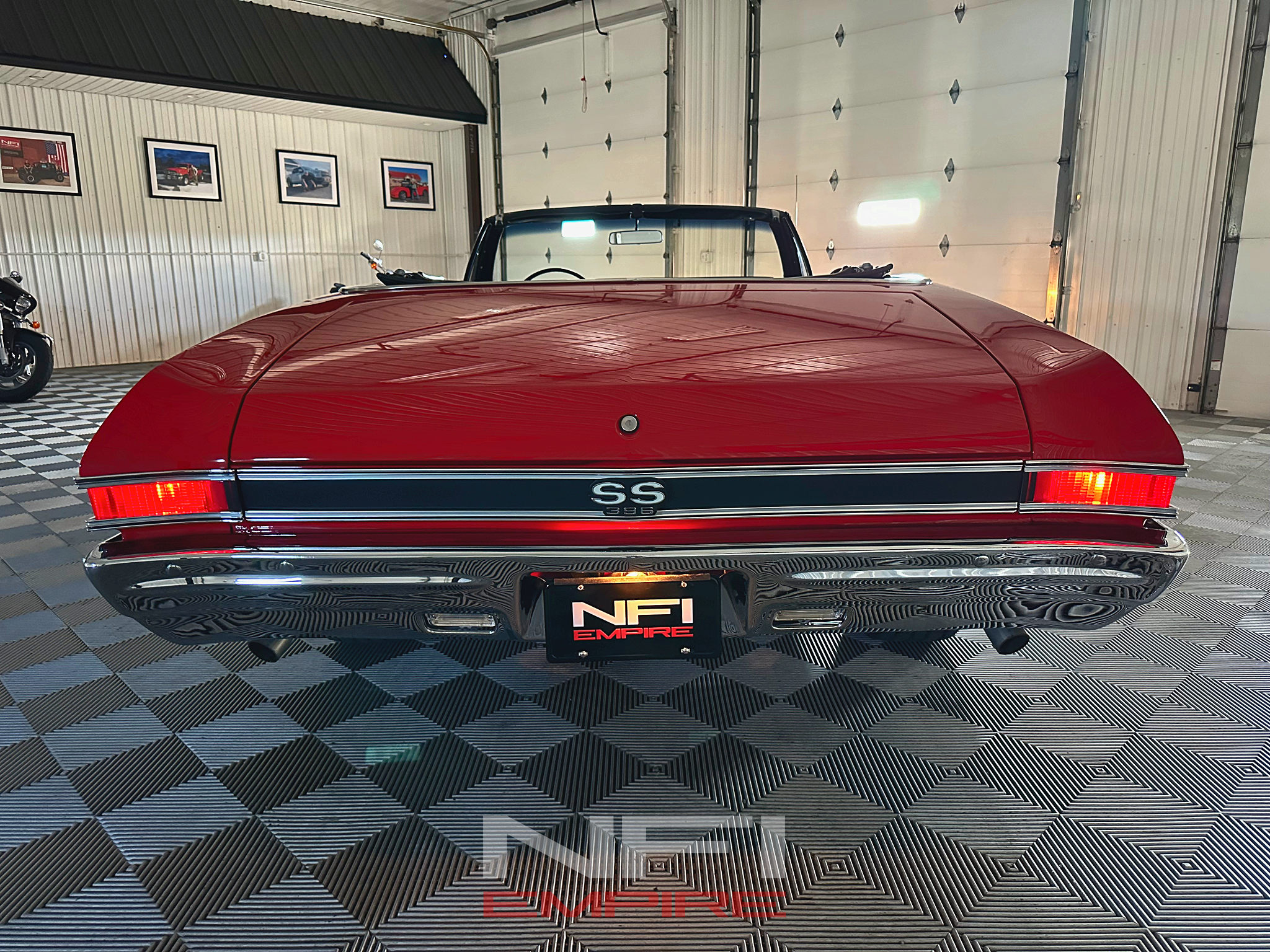
The models
Every Chevelle convertible is a Malibu at heart. There was no convertible in the cheaper 300 or 300 Deluxe series: if it left the factory as a Chevelle convertible between 1964 and 1972, it started life as a Malibu (1964–72), a Malibu SS (1964–65), an SS 396 (1966–68) or a Malibu carrying the SS option package (1969–72). That short list is your first identity tool, because it tells you which claims are even possible. A "1967 Malibu SS convertible" is a misdescription — by 1967 the SS was its own series — and a "1971 SS 396" needs translating: by then the big-block in an SS was a 402 sold under a Turbo-Jet 400 badge, or a 454. Sellers use loose language innocently as often as dishonestly, but the VIN, trim tag and paperwork use exact language, and those are what you are paying for.
| Model | Years | Engine | Output | Built | Character |
|---|---|---|---|---|---|
| Malibu Convertible | 1964–1965 | 194/230 six; 283/327 V8 | 120–300 hp | Not separately recorded by engine | The genteel original; sixes cruise, the 327 transforms it |
| Malibu SS Convertible | 1964–1965 | 283/327 V8 | 195–350 hp | Not separately recorded by engine | Buckets, console, bright trim; the L79 327 is the sleeper |
| Malibu Convertible | 1966–1967 | 194/250 six; 283/327 V8 | 120–325 hp | Not separately recorded by engine | The cruiser under the SS flagship; most were small-blocks |
| SS 396 Convertible | 1966–1968 | 396 big-block V8 | 325–375 hp | A few thousand a year; no clean factory total by body and engine survives in one figure | A separate series — the VIN proves it, which is the whole point |
| Malibu Convertible (non-SS) | 1968–1972 | 250 six; 307/350/400 V8 | 155–300 hp | Not separately recorded by engine | The honest open tourer; the pool most good drivers come from |
| SS 396 / SS 454 Convertible | 1969–1970 | 396 (402)/454 big-block V8 | 325–450 hp | Not separately recorded; LS6 convertibles were a tiny handful | An option package now, not a series — paperwork is the proof |
| SS Convertible | 1971–1972 | 350/402/454 V8 | 245–270 hp net by 1972 | Not separately recorded | Softer, heavier, still a real SS when documented; 1972 is the last convertible year |
(Outputs are period gross SAE figures except 1972, where Chevrolet published net ratings — the two scales are not directly comparable. Chevrolet published production by series and body style rather than by body style and engine together, so convertible-by-engine totals are not quoted here rather than guessed.)
The 1964–65 cars. The first Malibu convertibles are the lightest, simplest Chevelles: a 283 two-barrel car is a sweet, unstressed cruiser, and the optional 327s — up to 300 hp in 1964, and the remarkable 350 hp L79 in 1965 — make genuinely quick cars of them. The Malibu SS added buckets, a console on floor-shift cars and brightwork, but no mandatory performance hardware: plenty were built with the mild 283, and an early SS badge promises trim, not speed. The Z16 of 1965 deserves its legend — 396 big-block, heavy-duty chassis, 201 built — but essentially none were convertibles, so treat any "Z16 convertible" claim as a demand for factory documentation of the highest order.
The SS 396 years, 1966–68. For three years the SS 396 was a standalone series, giving these cars the strongest identity protection of any Chevelle convertible. A genuine SS convertible carries a VIN beginning 13867 — 138 for the series, 67 for the convertible body — stamped where anyone can read it. No 13867 VIN, no factory SS, whatever the badges say. Within the series you chose your 396: the 325 hp L35 as standard, the 350 hp L34 (360 hp in 1968) as the popular upgrade, and the solid-lifter 375 hp L78 for the committed. The Malibu convertible continued alongside, mostly sixes and small-blocks, and is the value route into the shape.
The package years, 1969–72. From 1969 the SS became option Z15 on the Malibu coupe and convertible (and the El Camino), and the VIN went silent: an SS and a plain Malibu share the same 13667 prefix. Proof from here on is documentary — build sheet, Protect-o-Plate, a numbers-matching big-block where an SS required one. The range widened confusingly: in 1970 an SS 454 came with the 360 hp LS5 or the 450 hp LS6, while the "SS 396" actually displaced 402 cubic inches, a bored-out 396 Chevrolet kept badging as a 396 (and, on some paperwork, as a Turbo-Jet 400). For 1971–72 the package could be ordered with smaller V8s too, so a documented SS 350 is a real thing and a "big-block SS" claim for those years needs the engine checked, not assumed. The one late gift is 1972: the VIN's fifth character codes the original engine, and a W means the car left the factory with the 454 — the closest thing to VIN proof the package years offer.

Trim, tops and colours. All Chevelle convertibles came with a folding vinyl top — glass rear window on later cars, plastic on earlier ones, many swapped either way — and a power mechanism on most; manual tops exist on early, cheaply specified cars. Bench seats are standard Malibu fare; buckets with a console mark the SS cars and were optional elsewhere, and a bench-seat SS is entirely possible in the package years. Read colours off the trim tag, not off the paint in front of you: a colour change is not a sin, but an undisclosed one tells you how the rest of the description was written.
Engines and gearboxes
The sixes and small-blocks: Turbo-Thrift, 283, 307, 327 and 350
Most Chevelle convertibles were not SS cars, and most of those were not big-blocks. The base engine for most of the run was the overhead-valve straight six — the 194 Turbo-Thrift (about 120 hp) early on, joined and then replaced by the 230 and, from 1966, the 250 (155 hp). These are simple, torquey, understressed engines that suit a cruising convertible better than their figures suggest: seven main bearings, hydraulic lifters and almost no vices beyond oil leaks, worn valve guides and a single-barrel Rochester that is cheap to rebuild. A six is not a consolation prize if the car is priced as a six — but check the VIN, because a six-cylinder car is also the favourite starting point for an SS clone, and a clone priced honestly as a tribute is a different purchase from one priced as a discovery.
The small-blocks are the heartland engines. The 283 (195 hp two-barrel, 220 hp four-barrel) powered most early V8 Malibus; the 327 above it is one of the great Chevrolet engines, offered at 250 and 300 hp in 1964, and in L79 form — 350 hp in 1965, 325 hp later, hydraulic cam, aluminium intake, Holley four-barrel — that turns a Malibu SS into a car that will embarrass a mild big-block away from the lights. From 1968 the volume small-block became the pedestrian 307 (200 hp); from 1969 the 350 arrived in 250, 255 and 300 hp forms and became the default sensible V8. A 400 small-block (402 cubic inches, sharing a displacement with the bored big-block by coincidence) was offered in non-SS cars for 1970–72; it is torquey but thin-walled, runs hotter and tolerates overboring poorly, so a rebuilt 400 needs its paperwork read.
All of these engines share the small-block's tells. They should start readily, idle without a shake, and show no blue smoke beyond a puff on a cold start (worn valve stem seals — an afternoon's work with the heads on). Smoke under load is rings or bores and is a rebuild conversation. The flat-tappet cams in every engine in this guide were designed for oils carrying more zinc anti-wear additive (ZDDP) than most modern oils contain: a freshly rebuilt engine run in on the wrong oil can wipe a cam lobe in its first thousand miles, presenting as a mysterious misfire, popping back through the carburettor and one rocker barely moving with the covers off. Ask any seller of a recently rebuilt car what oil the break-in used. It is a five-second question that separates engine builders from engine assemblers.
Carburation divides by ambition. Two-barrel cars use Rochester 2GVs; four-barrel small-blocks and most big-blocks use the Rochester Quadrajet, superb when tight and miserable when the throttle shafts have worn their bores — check for play at the shaft, because a Quadrajet sucking air at idle cannot be tuned around, and rebushing the baseplate is the fix. The performance engines used Holleys: simpler, thirstier, endlessly rebuildable. A bog as the secondaries open is more often ignition timing, a dead accelerator pump or a perished vacuum advance diaphragm than the carburettor's main circuits — work through the cheap causes in that order before paying for a rebuild, realistically $350–700 for a Quadrajet done properly, less for a Holley.
The big-blocks: Mark IV 396, 402 and 454
The Mark IV big-block is why the SS exists. Introduced for 1965, it is a heavy, deep-skirted engine with canted-valve ("porcupine") heads, and in Chevelle service it came in three displacements that cause endless confusion. The 396 was the original (1965–69). From the autumn of 1969 Chevrolet bored it to 402 but kept selling it as the 396 — so a "1970 SS 396" with a 402 under the hood is factory-correct, not a swap, and the casting numbers and build sheet are how you confirm it. The 454 arrived for 1970 as the flagship, in LS5 form (360 hp, hydraulic cam, Quadrajet) and LS6 form (450 hp, solid lifters, 11.25:1 compression, an aluminium intake and a 780 cfm Holley) — the LS6 convertible is the rarest and most valuable production Chevelle convertible of all, built in tiny numbers, and the most forged. For 1971 the LS6 disappeared from the Chevelle order sheet (it survived a year in the Corvette), compression fell across the range, and the LS5 (365 hp gross, 285 net) carried the flagship role into 1972 at 270 net horsepower.
Judge a big-block on behaviour and numbers together. Behaviour first: it should fire instantly, idle with a lope appropriate to its cam (an L78 or LS6 will never idle like an L35, and a seller who has "tuned the lumpiness out" of a solid-lifter car has usually tuned the timing wrong), hold oil pressure — roughly 35–45 psi hot at cruise is healthy — and pull without detonation. High-compression early engines (the L78 and LS6 ran over 11:1) will ping on modern regular fuel under load; that is chemistry, not a defect, but chronic detonation destroys pistons, so a car that pinks everywhere needs its timing, fuel or octane addressed, in that order. Big-blocks run hot in traffic when anything in the cooling system is marginal — the correct shroud, clutch fan and core matter more than an aluminium radiator bought to mask them. Rear main seals weep and manifold bolts seize; together such leaks describe an engine that wants a reseal, not a rebuild.
Numbers second, because on a big-block SS the numbers are the value. The engine's partial VIN is stamped on the pad at the front of the block, beside the assembly code giving the plant, build date and suffix identifying the original application and rating. On a claimed numbers-matching car, that partial VIN must match the car's VIN, the suffix must match the claimed engine (an LS5 suffix on a car sold as an LS6 ends the conversation), and the casting date must precede the car's build date by a plausible few weeks. Restamps exist and are good; look for a pad machined suspiciously smooth and fonts that wander. If the money is LS6 money, pay a marque expert to read the pad before you pay the seller — a few hundred dollars, and the cheapest insurance in this guide.

Gearboxes: Powerglide, Turbo Hydra-Matic and the Muncies
The automatic story has three chapters. The two-speed Powerglide was the base automatic in the early cars and behind sixes and mild small-blocks throughout the first generation: nearly indestructible, performance-sapping with its wide ratio gap, and correct in a cruiser — but a Powerglide behind a claimed performance engine deserves a paperwork check, because the hot engines were not sold that way. The three-speed Turbo Hydra-Matic came in two strengths: the TH350 behind small-blocks from 1969, and the TH400 — one of the strongest automatics ever built — behind big-blocks from the SS 396's debut. A healthy Turbo Hydra-Matic shifts firmly, engages Drive and Reverse without a delay you can count, and does not flare (rev without drive) on the 2–3 change. Flaring, delayed engagement that improves as the box warms, or brown, burnt-smelling fluid all point the same way: a rebuild, realistically $1,800–3,200 for a TH400 removed, rebuilt and refitted. Check the fluid colour on every automatic you view; it is a thirty-second test sellers cannot rehearse.
Manuals are where the driver's cars live. The base box was a three-speed Saginaw, column-shifted on bench-seat cars; the four-speeds that matter are Muncies — the wide-ratio M20, the close-ratio M21, and the heavy-duty M22 "Rock Crusher," named for the noise its gears make and fitted only to the serious engines. A Muncie should select every gear cleanly, stay in gear on the overrun (jumping out of second or third under load means worn synchro hubs and sliders, a box-out rebuild at $1,200–2,500), and whine only if it is an M22 — an M20 that whines like a Rock Crusher is a bearing bill, not a bonus. Clutches judder when the flywheel is scored or oil has reached the disc; price the cause, not just the disc. A Muncie carries its own date and partial VIN stampings, and Hurst shifters replaced the factory linkage on so many cars that an original shifter is now a talking point rather than an expectation.
In our tracked pool, automatics account for a little over half the cars and manuals for most of the rest, which matches how these cars are used now: the four-speed big-block is the poster car, but the automatic cruiser covers the most miles. Buy the gearbox that suits your driving — a conversion is common and value-relevant: on a documented SS it subtracts, on a Malibu cruiser it is simply a preference.

Problem areas
Everything in this section follows from one fact: a convertible is a coupe with its roof structure removed, living outdoors in the rain. The Chevelle compensates with a stronger, boxed frame and a top mechanism that is itself a small hydraulic machine, and both become inspection items in their own right. Work through the car in the order below — structure first, because structure prices everything else. A note on our own evidence: we have photo-checked 193 of the Chevelle convertibles we track, and the sellers' photo sets record remarkably little visible damage — damage of any kind was noted in only 4 of the 193 cars. Read that as an experienced buyer does: not as proof these cars do not rust (they do, in the places mapped below), but as proof that listing photographs avoid the places that matter. The underside, the trunk floor under the mat and the floors under the carpets are exactly where sellers' cameras do not go. Your inspection has to.
Rust and structure: the map
The frame. Unlike the open-channel frame under coupes and sedans, the convertible (like the El Camino and wagon) used a fully boxed frame to recover the stiffness the missing roof took away. That is good news for rigidity and bad news for corrosion: box sections rust from inside out, hold mud and salt against their inner faces, and can look presentable in black paint while the metal has thinned to lace. Attack with a torch, a small hammer and a screwdriver the side rails under the doors, the rear kick-up over the back axle, the rear crossmember and the body-mount pockets. Surface scale is normal; flaking, swelling or a screwdriver going through is a frame repair, and frame repairs on a convertible are jig work, easily into five figures once the body comes off. Tap along both rails: sound steel rings, rotten steel thuds. A frame bent as well as rusty — read the door gaps and whether the top latches meet the header evenly — usually means accident history, and a twisted convertible will never have a top that seals or doors that shut cleanly.
Floor pans. The classic Chevelle convertible failure, and it starts from above, not below. The top leaks — at the header seal, around the rear window, past perished quarter seals — and the water sits under the carpet and its sound-deadening, rusting the pans from inside while the underside still wears its factory undercoat. Lift every carpet. The front pans go at the toe boards and around the drain plugs; the rear pans go in broad sheets; the braces underneath trap mud and rot in sympathy. Pans are cheap as panels and expensive as labour: one section cut out, welded, sealed and painted is realistically $800–1,800, and a full floor both sides with braces is a $3,500–6,000 conversation. Treat floor rust as a marker, not an isolated event — a car that has filled with water has also been wetting its seat frames, wiring and door bottoms.
Trunk floor. The trunk floor rusts from leaks around the tail panel, the seal and the rear window draining into the well, and it hides under the mat and the spare. Lift both. The extensions dropping down behind the rear wheels — the drop-offs — rot early and are visible from underneath, up behind the quarters. A perforated trunk floor is a panel job at $900–2,000 fitted and painted; drop-offs and inner wheelhouses in the same state double the conversation. Look at the top of the fuel tank and its straps: tanks rust from the top down where straps hold dirt against them, and a weeping tank is a fire risk, not a charm point. (The build sheet is often glued to the top of the tank on cars that still have one — a reason to lower a tank carefully rather than rip it out.)
Rocker panels, quarters and the cowl. The rockers are structural on a convertible in a way they are not on a framed coupe — they tie the cowl to the rear body and resist the flex the roof would have handled — so bubbling along a rocker, especially at its ends, deserves prodding, not photographing. Rear quarters rust at the arch lip, at the bottom behind the wheel and along the lower edge; filler announces itself to a cloth-wrapped magnet that slides over steel and drags over plastic. The cowl and windshield frame are the convertible-specific trap: the header rail, where the top latches pull down thousands of times in a car's life, corrodes under its trim and around the latch receivers, and the A-pillars rot where leaves and water collect behind the front fenders. Header and pillar repair is fabrication in thin, visible metal — expensive and hard to hide — so a soft windshield frame is a much worse buy than a soft floor, even though the floor sounds more serious. Door bottoms fill with water when their drains block; run a fingertip along the bottom edge of each open door for bubbling.
Body mounts and panel fit. The rubber mounts perish and compress, letting the body settle on the frame — dropped doors, uneven gaps, a top that no longer meets the header squarely. A set is cheap parts and a miserable, bolt-snapping day of labour — budget $800–1,500 fitted — but doors that shut with a clean clunk tell you body and frame are still in agreement.
The convertible top: frame, hydraulics and fabric
The top is a system, and you test it as a system. With the engine running (the pump draws real current), lower and raise it in full, twice, watching and listening the whole way.
The mechanism. The power top runs an electric motor driving a hydraulic pump behind the rear seat, feeding two lift cylinders through plastic lines. Slow, jerky or one-sided movement means low fluid (the reservoir takes automatic transmission fluid), air in the system, a tired pump or a cylinder bypassing internally — a cylinder that creeps down overnight confirms it. A full hydraulic refresh runs roughly $900–1,800 in parts and labour, and leaking cylinders drip onto the rear floor and top well, quietly feeding the floor rust above. The top frame itself bends: side rails and bows take the damage when a top has been forced or caught by wind, and a bent frame never seals, however new the fabric. Sight along each rail, check the pivots for elongated holes, and confirm the front bow meets the header evenly. Straightening is specialist work; a replacement used frame is a hunt.
The fabric and the seals. Vinyl tops last a decade or so in sun before the stitching and fold lines give up; canvas was not factory fare, so a canvas top is a later choice, not an originality point. Look at the fabric where it folds, the stitching around the rear window, and the pads and straps that keep the bows spaced — a top fitted without new pads wrinkles and chafes through from inside. A quality top fitted with pads, straps and a new well liner runs roughly $1,800–3,200; fitting is skilled work, and a cheap fit looks cheap forever. Early plastic rear windows yellow and crack (the window curtain alone can sometimes be replaced, if the fabric is young); later glass windows are heavier and kinder to visibility. Every seal — header, side rails, quarter windows — perishes, and a full set is a few hundred dollars that transforms how wet the car gets. Assume you will buy it; the question is whether the water the old seals let in has already done its work on the floors.
The well, the boot and the electrics. Lift the well liner: the top well is a sump, and rust in its floor and the panel behind the rear seat is convertible rust at its most characteristic. Check the boot and its snaps, the latches, and the top switch and wiring — the circuit runs through a breaker that tires with age and gives an intermittent top stopping mid-travel, a fault owners misdiagnose as a dead pump for years. A top that works on the day but has a rusty well behind it has been demonstrated, not maintained.

Suspension, steering, brakes and the rear axle
The chassis hardware is conventional GM A-body: wishbones and coils at the front, a live rear axle on coils located by four links, and a recirculating-ball steering box. Everything wears, everything is available, and the wear tells you how the car has been kept.
Front end. Ball joints, tie-rod ends, the centre link and the idler arm all develop play, and the test is physical: with the front jacked and supported, rock each wheel top-to-bottom and side-to-side, then watch the joints while a helper rocks the steering. A full front-end rebuild is $900–1,800 fitted and aligned — not a disaster, but a car that wanders and wears its front tyres on the inner edges is asking for it, and the ask belongs in your offer. The steering box wears around the straight-ahead position; a box tight at centre and loose at the locks (or the reverse) is worn, and a rebuilt box is a few hundred dollars. Power steering pumps whine when low or tired, and hoses weep as a matter of course.
Rear axle and suspension. The standard axle is the 10-bolt; SS and heavy-duty applications used the stronger 12-bolt — supporting evidence under a claimed SS, while a 10-bolt under a claimed big-block SS is a question, not a verdict. Rear control-arm bushings perish and let the axle steer the car under power — a wiggle or clunk as you get on and off the throttle — and boxed lower arms with a sway bar were the F41 recipe. Axle whine that rises with road speed is bearings or a worn ring and pinion; a 12-bolt rebuild runs $1,200–2,200. Positraction was optional: turn one raised rear wheel and the other turning the same way suggests a working limited-slip, the opposite way an open diff, whatever the seller says. A limited-slip that chatters in tight turns usually wants its fluid and additive changed before it wants a rebuild.
Brakes. Early cars came with drums all round and, before 1967, a single-circuit master cylinder — upgrade it on any car you intend to drive in modern traffic, as most owners already have. Front discs were optional from 1967; a proper conversion with a dual master cylinder and proportioning valve is $800–1,600 in parts, but check it was done completely, not just calipers hung on drum spindles. Seized calipers, perished hoses and a master cylinder bypassing internally (the pedal sinks slowly at a long red light) are the standard post-storage list, $600–1,400 for a full hydraulic refresh. Pulling under braking is a caliper, a hose or an alignment telling on itself.
Interior, trim and electrics
Convertible interiors live in sunlight and weather. Vinyl splits along its stitching and at the top of the rear seat back, where the sun hits it with the top down; the foam under the covers collapses, so sit in every seat — a spring frame poking through the rear cushion is a retrim, not a cushion swap. A full refresh in correct-pattern vinyl runs roughly $2,500–5,000 in parts with fitting on top, and the convertible-specific pieces (rear seat, quarter trim panels curving around the top mechanism) are the hardest to source and easiest to get wrong. Dash pads crack in the sun — 1968–72 pads split along their speaker perforations — and the brightwork pits: count the windshield header trim and top-well mouldings carefully, because they are thin, damaged by every boot snap ever fitted, and not all reproduced.
Electrics fail at connections, with two convertible additions: the top circuit, and water. Wiring that has lived in a wet car corrodes inside its insulation and at the fuse box, giving gauges, lights and accessories that work in combinations decided by humidity. Fusible links fail with age, the external regulator on early cars overcharges or undercharges, and every ground strap matters on a car whose body is rubber-mounted to its frame. A car where everything works — courtesy lights, clock and top, twice in a row — has usually been used and maintained, which remains the best single sign there is.
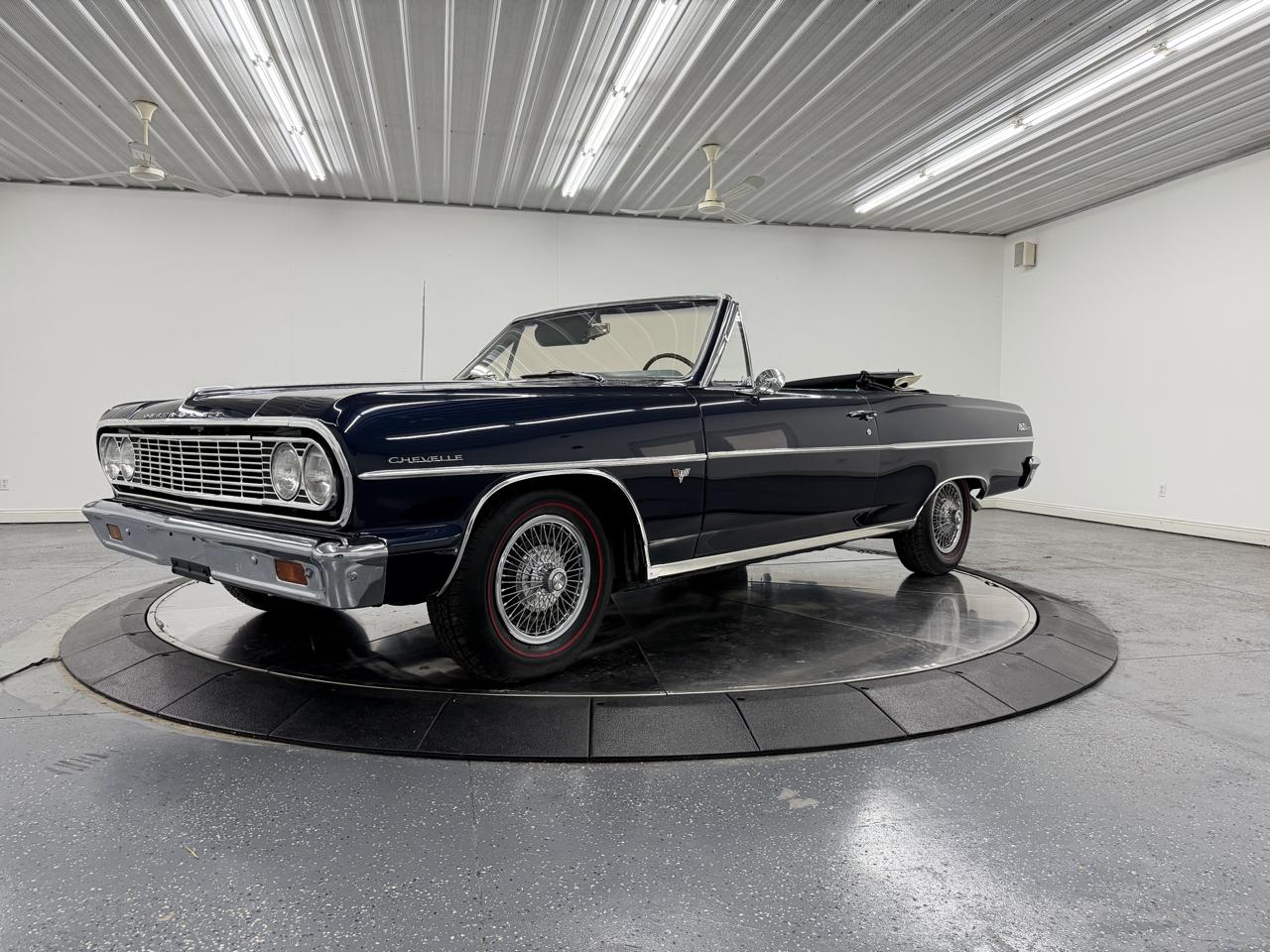
How to inspect one
Allow two hours, not one — a convertible has a whole second machine, the top, to test on top of the car underneath it. Bring a torch, a cloth-wrapped magnet, a small hammer for tapping the frame, a friend to work the steering while you watch, and a camera: photograph the VIN plate, the trim tag, the engine stamp pad and every fault you find — those photographs are your negotiation and, on an SS, part of your evidence file. If the car passes you, pay for a lift inspection before money changes hands. On a framed convertible, the lift is where the truth lives.
- Start with the identity, before the car. Match the VIN on the title to the plate at the driver's door jamb (early cars) or the base of the windshield (1968 on). Decode it: a 1966–68 SS convertible must read 13867; a Malibu reads 13667 (V8) or 13567 (six) in those years; from 1969 every convertible is 13667, with 1972's fifth character coding the original engine — W for the 454. Read the firewall trim tag for build date, original paint and trim. On any SS claim from 1969 on, ask for the build sheet, the Protect-o-Plate or a numbers-matching engine, and treat their absence as a price, not a detail.
- Cold start. Insist the engine is cold when you arrive — a warmed-up car is a seller managing a symptom. It should fire readily; watch the tailpipe: a puff of blue that clears is valve seals, blue that stays is bores, white that smells sweet is coolant and ends the viewing until explained. Listen for a lifter tick that fades (normal on a car that has sat) against a low knock that does not.
- The engine numbers, while it warms. Find the stamp pad at the front of the block and read the assembly suffix and, on a matching-numbers claim, the partial VIN. Check the casting date sits before the car's build date. Pull the dipstick: black oil is honest, grey or milky oil is coolant, oil smelling strongly of fuel points at a failing mechanical fuel-pump diaphragm washing fuel into the sump. Look down the carburettor throat for a wet, flooded idle before blaming the carburettor itself.
- Under the car — the step that decides. On the lift, tap along both boxed frame rails, concentrating under the doors and at the rear kick-up. Prod the body-mount pockets, the floor braces, the trunk drop-offs and the rocker bottoms. Perforation in frame or rockers is structural money; in a floor pan, negotiable money — know which you are looking at before you speak. Read the undercoat as you go: thin, chipped and honest is factory; a fresh, uniform coat of black over everything, pipes and mounts included, is a question the seller needs to answer.
- Floors and trunk from above. Lift every carpet and look at the pans from inside, where convertible rust starts. Press the rear footwells hard with a thumb. Then the trunk: mat up, spare out, torch into the well corners, and a look at the top of the fuel tank and its straps. Finally the top well behind the rear seat — lift the liner and read the metal there, because that panel is the convertible's diary: it records every year the seals were leaking.
- The top, as a machine. Engine running, lower and raise it twice in full. It should travel evenly, without jerking or one side leading. Watch the rails for bends as it folds, feel the pivots for play mid-travel, and check the front bow lands squarely with both latches pulling down evenly. With it up, examine the fabric at the folds and around the rear window, and look from inside for daylight at the header seal. Ask to see it under a hose if the seller allows; if not, the dry, rust-free well from step 5 is your proxy evidence.
- Body and gaps. Walk the car with the magnet: sills, quarter bottoms, arch lips, door bottoms, fender bottoms behind the front wheels. Check door gaps are even and the doors shut without lifting or dropping — on a convertible, sagging doors are a body-and-frame statement, not a hinge adjustment. Count pitted brightwork, especially header trim and top-well mouldings, and price the count. Look down each flank in raking light for ripples that say filler.
- Suspension and steering. Rock each front wheel top-to-bottom and side-to-side for ball-joint and steering play, and have your helper rock the steering while you watch the centre link and idler arm for lost motion. At the rear, check the control-arm bushings for perished, extruded rubber, and turn one raised rear wheel to test the limited-slip claim. This is the standard A-body check from the problem-areas section, and its job is to turn "needs a front-end rebuild" from an argument into a list with prices against it.
- The test drive. Fifteen minutes minimum, including highway speed and broken pavement. An automatic should engage without a countable delay, shift firmly and not flare on the 2–3 change; a Muncie should stay in gear on the overrun in second and third. The car should track straight hands-off, brake straight and hard without judder, and show no axle whine or clunk on and off the throttle. Big-blocks should pull without pinking under load; if one does, price the fuel and timing work, not just the noise.
- Heat and electrics, hot. Let it idle after the drive until properly hot. Watch the temperature in traffic conditions, check the heater works (a convertible with no heater is a car you will use two months less a year), and work everything: lights, wipers, washers, gauges, radio, courtesy lights — and the top once more, now the hydraulics are warm. A top circuit that fails hot, through its tired breaker, only shows itself now.
- Stance and structure, from a distance. Stand twenty feet back. The car should sit level, arch gaps even, flanks straight, and the top sitting square on the body. A car that leans, sits tail-down beyond tired springs, or wears different gaps on its two sides is telling you the frame-and-body story from step 4 again, in daylight. Photograph it from this distance; faults you talk yourself out of in person are obvious in a picture later.
- Interior and paperwork last. Sit in every seat and feel for springs through collapsed foam; check the rear seat back top for sun-split vinyl; work the quarter windows, which jam and fall off their regulators in their specific convertible way. Then sit down with the file: title, build sheet, Protect-o-Plate, invoices. A thick, consistent file is worth real money. A thin file on a claimed LS6 is worth a much smaller offer — you are buying the proof as much as the metal.

Values
The build's market block beneath this guide carries the live numbers — what is listed now, and what recorded sales have achieved — and it is refreshed as the market moves, so this section deliberately carries none. What it can teach you, durably, is how to read those numbers for this particular car, because the Chevelle convertible market punishes a naive reading of any single figure more than most.
Start with the condition spread, which here is not a spread so much as a cliff system. The same year and badge can describe a rusty, non-running project needing a frame decision, a presentable driver with a tired top, a restored car with fresh everything, and a documented numbers-matching SS with its build sheet — four different objects sharing a name, trading in four different markets. Any average across them is a fiction. When you use the figures below this guide, compare the car in front of you only with cars of the same year, the same engine claim and the same evidence for that claim, and the same honest condition band — and if the set is thin, widen the years before you widen the condition bands.
The second driver is proof, worth more on this model than on almost any other American classic, because the SS became an option package in 1969 and the VIN stopped testifying. A 1966–68 SS carries its proof in its 13867 VIN, so the paperwork premium is modest. A 1969–72 SS lives or dies on its build sheet, Protect-o-Plate and numbers-matching engine, and the market prices that evidence steeply: a documented car and an identical-looking undocumented car are not two prices for one car, they are two different cars. The 1970 LS6 sits at the extreme — the most valuable Chevelle convertible and the most forged — and at that level the value is in the chain of paper and stampings that survives expert scrutiny. Budget for that scrutiny before you bid, not after.
Third, read asking prices against achieved prices with the scepticism this marque has earned. Chevelles are offered by everyone from estates to flippers to dealers pricing for the one buyer who does not check, and the gap between an optimistic ask and an auction result on the same specification is routinely wide. Auction results — the recorded-sales block below — are the harder currency: public, final, and including the cars that failed to meet reserve, which tell you where the market's ceiling actually was that day. A car listed at the same price for months is not evidence of value; it is evidence of the absence of a buyer at that value.
Within the range, the premiums have a stable logic. Big-block SS cars outrun small-block SS cars, which outrun Malibus; four-speeds outrun automatics in the SS world and roughly match them in the Malibu world, where an automatic cruiser is what most buyers want; 1970 outruns its neighbours on the 454 and the cowl-induction hood; and originality adds value in the documented tier while mattering far less in the driver tier, where a well-chosen colour change costs you nothing you will miss. The project-versus-driver gap deserves a final word: because floors, frames and tops are all expensive in labour, a cheap convertible needing all three is rarely cheap for long — projects are priced by sellers as if the work were half done, and by buyers, correctly, as if it were barely started. The honest middle — a sound, documented-enough driver you can use the day you buy it — is where the value usually sits.
Parts and ownership
The Chevelle is one of the best-supported American classics ever built, full stop. Chevrolet made the A-body by the million, the restoration industry followed the SS money, and almost everything for a 1968–72 car — and most things for a 1964–67 — can be ordered from a catalogue tonight. The specialists (OPGI, Ground Up, YearOne, National Parts Depot and a dozen smaller suppliers) list body panels, interiors, trim, weatherstripping and hardware in a depth owners of European cars of the era can only envy. That support caps the cost of mistakes, keeps cars usable, and means a Chevelle convertible can be a first classic in a way a rarer car cannot.
Easy: everything mechanical. Engine parts for sixes, small-blocks and big-blocks are shelf items at ordinary prices, including performance variants; gearbox and axle parts likewise; brake, suspension and steering wear items are cheap and everywhere; glass, weatherstrip kits, carpets, seat covers and door panels are reproduced in correct patterns. Any competent general mechanic can service the car — though a classic-literate shop earns its money on carburation, timing curves and the flat-tappet oil question covered in the engines section.
Harder and dearer: the convertible-specific and year-specific items. Top frames are not reproduced complete — you repair, straighten or hunt used. Hydraulic cylinders and pumps are available rebuilt and new, so the top's wet side is fine; it is the bent ironmongery that takes time. Windshield header trim, top-well mouldings and vent-window assemblies are thin, damage-prone and priced accordingly. One-year trim — 1966 and 1967 grilles and tail panels, 1970's brightwork, early 1964–65 pieces generally — costs more than the high-volume 1969–71 equivalents, and NOS brightwork is a collector market in itself. Correct dated components for a numbers car — the right casting-week block, carburettor, alternator, distributor — are findable but priced by people who know exactly what they have.
Running costs. A sorted Chevelle convertible is a realistic regular-use classic: fuel consumption in the low-to-mid teens mpg for a small-block cruiser, single figures to low teens for a big-block driven as intended; classic-policy insurance is modest; the annual service is oil, filters, plugs and a grease gun underneath. The budget line that catches new owners is the first year of catching up. Recommissioning a car that has sat — fuel system cleaned end to end, because modern ethanol fuel attacks old rubber and leaves varnish in tanks and carburettors; every brake component inspected; all fluids, hoses and belts renewed; top hydraulics flushed — realistically runs $3,000–6,000 at a shop before you improve anything, and a car in regular use will still ask $1,500–3,000 in first-year arrears. Buy a driven car over a sleeping one, even at a higher price: regular use keeps the top mechanism, the seals and the floors honest, because a cycled top and a dried-out car do not rot the way a stored car rots.
Store it dry, store it with the top up (a folded top creases, chafes and takes a set), and cycle the top every month or two through the winter so the seals and cylinders stay wetted and moving. Those three habits are worth more to the car's next decade than any product you can buy for it.
Which one to buy
- The all-rounder: a 1968–70 Malibu convertible with a 350 or a mild 396. The best-supported years, the classic shape, enough power to use anywhere and no documented-SS premium to pay. If you want one Chevelle convertible to drive for years, this is it.
- The value buy: a 1966–67 Malibu convertible with a 327. The prettiest shape in the range at Malibu money — just buy it as the Malibu it is, with floors and frame checked twice.
- The provable SS: a 1966–68 SS 396 convertible. The only SS convertibles whose VIN does the proving for you (13867 — check it first), with the L34 the sweet spot of pace and manners. For most buyers who want a real SS, this is the rational way to own one.
- The collector car: a documented 1970 SS 454. LS5 for a car to use, LS6 for a car to keep — and in both cases the build sheet, the Protect-o-Plate and the stamp pad are the purchase, expert-verified before money moves. Undocumented at documented money is the single most expensive mistake in this market.
- The cruiser: a 1971–72 Malibu or SS convertible, automatic, power steering. Softer, heavier, cheaper to buy and just as much wind in your hair; the 1972 car adds last-of-the-line status and, on an SS 454, the W in the VIN.
- The first classic: a six-cylinder or 283/307 Malibu, honestly described. The cheapest entry, the simplest mechanics, the same shape and the same top — and the car least likely to be a clone of anything, because nobody clones a six.
And the rule that overrides all of the above: buy the soundest shell and frame you can find, with the strongest paperwork the car's claims require — in that order. Engines, gearboxes, tops and interiors are all fixable at prices you can plan for. A rotten boxed frame, a soft windshield header and an SS identity that exists only on the badges are the three things no catalogue sells you back.