
Chevrolet Camaro buyer's guide
Chevrolet Camaro -- the model's own buyer's guide: variants, values and what to check.
Years listed: 1967-2010 · Series: Camaro Gen 1
Overview and history
The Chevrolet Camaro is not one car. It is five distinct generations of pony car and muscle car built between 1967 and 2010 in the span covered by this guide, sharing a name, a front-engine rear-drive layout, and almost nothing else in detail. That is why a Camaro buying guide has to work differently from a single-generation guide. Your first decision is not trim or engine. It is which Camaro you actually want, because a 1969 big-block coupe, a 1979 Z28, a 1987 IROC-Z and a 2000 SS are different ownership propositions in performance, in parts, in rust behaviour and in what a good one feels like to drive.
Chevrolet launched the Camaro in September 1966 for the 1967 model year as a direct answer to the Ford Mustang. The Mustang had created the pony-car market in 1964 and Chevrolet had watched it sell for two years with nothing comparable. The Camaro, built on the new F-body platform shared with the Pontiac Firebird, was the reply: long hood, short deck, two-door coupe and convertible, a six-cylinder base car for secretaries and students, and a ladder of V8s, appearance packages and hidden performance options that let a buyer build anything from a commuter to a Trans-Am homologation special without ever leaving the order form. The name itself, Chevrolet said at the time, came from an old French dictionary word for friend or comrade. The car underneath was pure Detroit competition.
The first generation, 1967 to 1969, is the car most people picture. It is also the deepest part of the market in our store: 702 first-generation cars among 1,938 Camaros tracked in total, with 1969 alone accounting for 351 cars, 1968 for 203 and 1967 for 148. Those three years carry the original muscle-car story at full strength — small-blocks from mild to wild, big-blocks up to 427 cubic inches in dealer and COPO form, the Z/28 built to race, and styling that still defines what a Camaro is supposed to look like. If you want the classic, collectible, cruise-night Camaro, you are almost certainly shopping here.
The second generation, 1970 to 1981, is the long-lived car: eleven model years, a complete restyle, and a slow slide from peak muscle in 1970 and 1971 through emissions, insurance and fuel-economy pressure into the softer, heavier, decal-driven cars of the late 1970s. Our store carries 629 second-generation cars, with strength at both ends — 1970 with 122 cars, 1971 with 83, 1973 with 85, and a second peak in 1979 with 95. A good early second-generation car is a genuine muscle car. A good late one is a period cruiser with a completely different charm and a completely different price structure. Treat them as two markets wearing one body.
The third generation, 1982 to 1992, changed everything underneath: a lighter unibody, MacPherson strut front suspension, hatchback coupe, fuel injection arriving in stages, and the IROC-Z as the defining performance model from 1985. Our store carries 514 third-generation cars, concentrated in 1985 to 1991 — 1987 with 68, 1989 with 62, 1991 with 63. These were everyday cars for a decade, used hard and modified freely, so survival in original condition is rarer than production numbers suggest. The fourth generation, 1993 to 2002, kept the formula but sharpened it: the LT1 and then the all-aluminium LS1 V8, six-speed manuals, and the fastest factory Camaros yet built up to that point, wrapped in a rounded, cab-forward body that has dated more visibly than the earlier cars.
Across all of them, the buying logic is the same and it is unforgiving. Camaros were cheap cars built in huge numbers, sold to young buyers, driven hard, parked outside, crashed, repaired, cloned, re-engined and re-badged for fifty years. The mechanicals are simple, strong and almost infinitely rebuildable — Chevrolet small-block and big-block parts support is the best in the classic world. What decides whether a Camaro is a good buy is almost never the engine. It is identity — is the car what its badges and its price claim it is — and it is the shell: floors, quarters, trunk, subframe mounts and the other places these unibody and subframe cars rot and tear. Learn those two checks and you can shop any generation with confidence.
One more orientation point from the store itself. Of the cars we track, coupes dominate overwhelmingly, convertibles are a small minority, and hatchbacks in the data are almost all third-generation cars. Automatics and manuals split the pool almost evenly — roughly 828 automatics against 779 manuals in the listings that state a gearbox — which is unusual for an American classic and reflects how many Camaros were ordered to be driven hard. Red and black are the two commonest colours by a wide margin, followed by blue and white. None of that should choose your car for you.
The models
Read this section as a map, not a catalogue. Every generation offered a base car, a comfort or appearance step, and one or more performance models, and the badges moved around between years — Rally Sport is a trim package in one era and means something else in another, Type LT comes and goes, Berlinetta appears and vanishes. The table gives you the load-bearing variants: the cars that structure the market and carry distinct prices.
| Model | Years | Engine | Output | Built | Character |
|---|---|---|---|---|---|
| Camaro base and RS, Gen 1 | 1967–1969 | 230/250 six or 327/350 V8 | 140–210 hp | The bulk of about 699,000 Gen 1 cars | The starting point; RS adds hidden headlights, not power |
| Camaro SS, Gen 1 | 1967–1969 | 350 or 396 V8 | 295–375 hp | About 102,000 across three years | The volume muscle car; the most cloned badge in the range |
| Camaro Z/28, Gen 1 | 1967–1969 | 302 V8 | 290 hp rated, more in truth | 602 in 1967; about 27,500 in 1968–1969 combined | Trans-Am special; high-revving, no automatic, no air conditioning |
| COPO and dealer 427 cars | 1969 mainly | 427 V8 | 425 hp rated | About 1,000 COPO cars plus dealer builds | ZL1 and iron 427 cars; provenance is the entire value |
| Camaro SS and Z28, early Gen 2 | 1970–1972 | 350, 396/402 or LT-1 350 V8 | 245–360 hp gross | Tens of thousands | Last of the high-compression muscle; 1970 is the peak year |
| Camaro Z28, late Gen 2 | 1977–1981 | 350 V8 | 170–190 hp net | Tens of thousands per year | Decal-era performance; handling over power, huge survival |
| Camaro IROC-Z, Gen 3 | 1985–1990 | 305 or 350 V8, injected | 190–245 hp | The performance core of Gen 3 | The defining third-generation car; TPI 350 is the pick |
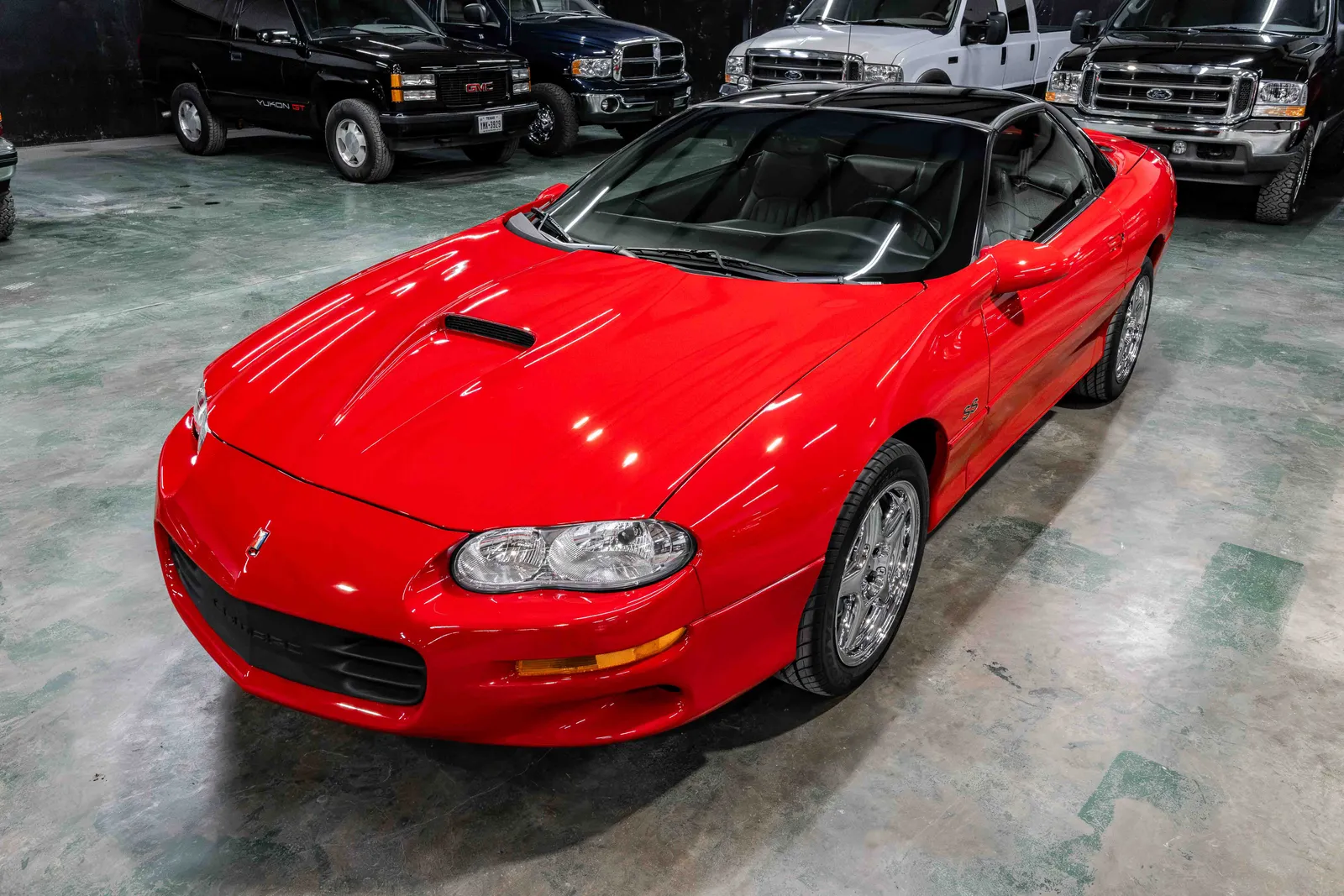
| Camaro Z28 and SS, Gen 4 | 1993–2002 | LT1 then LS1 V8 | 275–325 hp | The performance core of Gen 4 | Genuinely fast modern muscle; SS returns from 1996 |
| Camaro SS, Gen 5 | 2010 | LS3 or L99 6.2 V8 | 400–426 hp | First-year return | A modern car in retro clothes; buy it on modern-car checks |
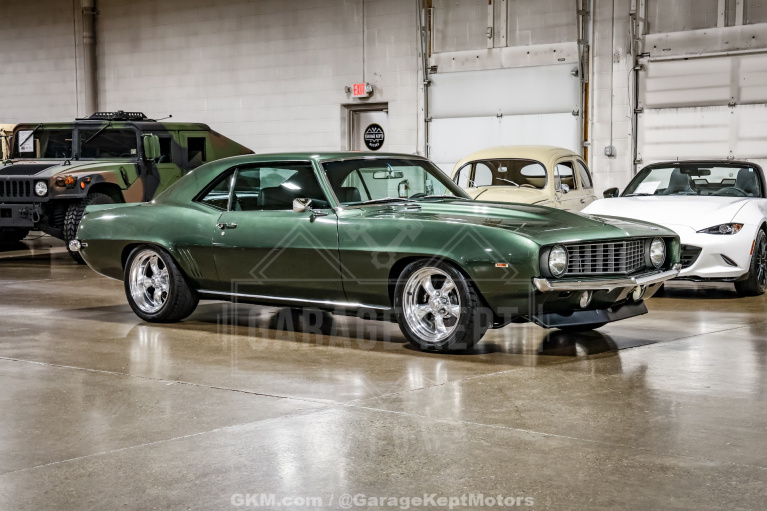
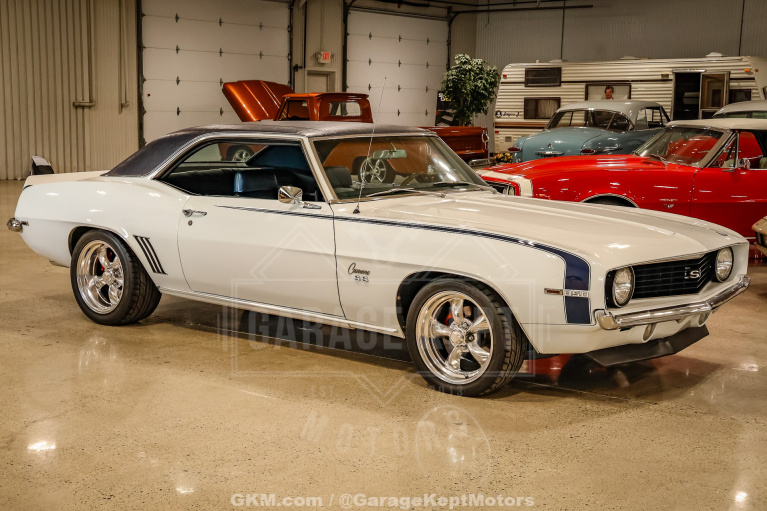
First generation, 1967–1969. The base car came with the 230 cubic inch six, later the 250, or a 327 V8, and most were sold exactly there. The Rally Sport, option RPO Z22, is an appearance package — hidden headlights behind vacuum-operated doors, revised tail lamps, extra trim — and it could be combined with anything, including the SS and the Z/28. Never pay a performance premium for RS alone. The SS, RPO Z27, is the volume performance car: a 350 small-block standard, a 396 big-block optional, a hood with simulated vents, stripes and badges.
Styling separates the years at a glance once you learn it. The 1967 car has vent windows, round indicators and no side marker lights. The 1968 car loses the vent windows, gains federally required side markers, and keeps a clean flank. The 1969 car is a restyle on the same shell — more aggressive creases, squared wheel openings, a different grille and tail panel — and it had a long production run, which is one reason 1969 dominates our listings.
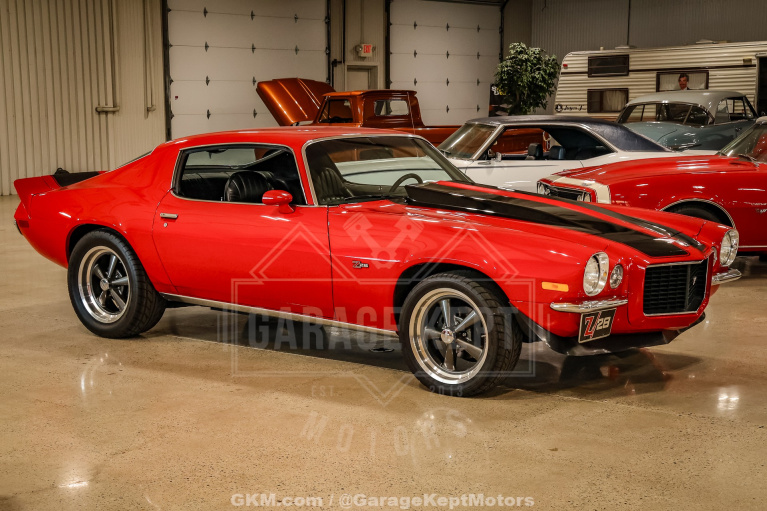
Second generation, 1970–1981. The 1970 car — sold from February 1970 and often called the 1970 and a half — is an all-new, lower, wider, more European body, coupe only; there was no second-generation convertible from the factory. The early cars carry the muscle era out: the SS with 350 or the big-block now displacing 402 cubic inches while still badged 396, and the Z28 with the solid-lifter LT-1 350 from the Corvette, the strongest small-block Camaro yet offered. Then the fall comes fast.
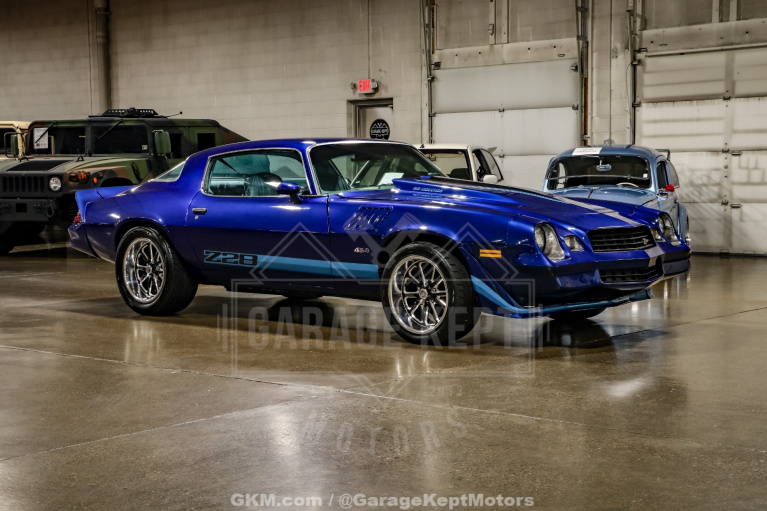
Third generation, 1982–1992. Smaller, lighter, hatchback-bodied, and the first Camaro styled in the wind tunnel era, the third-generation car launched with an embarrassing base four-cylinder, the Iron Duke, and improved every year thereafter. The Z28 was the performance model at launch; from 1985 the IROC-Z, named for the International Race of Champions series, sat above it with better suspension, 16-inch wheels and the stronger engine options, and from 1988 the IROC-Z effectively replaced the Z28 in the showroom. The engines that matter are the Tuned Port Injection V8s: the 305 and, from 1987 in automatic cars, the 350.
Fourth generation, 1993–2002. The fourth-generation car kept the third-generation floorpan and rear axle concept under a swooping new body, and put real power back: the LT1 350 from the Corvette at launch, then the LS1 from 1998, a six-speed manual option throughout the V8 range, and the SS name restored from 1996 through a programme with SLP. These are the fastest Camaros in this guide in everyday terms and the cheapest speed in the whole store on a performance-per-dollar basis. They are also the cars where plastic, electronics and 1990s build quality set the buying agenda rather than rust alone.
Fifth generation, 2010. After production ended in 2002, the Camaro returned for 2010 on the Zeta platform with independent rear suspension, a 3.6-litre V6 in the base cars and the 6.2-litre LS3 or L99 V8 in the SS, styled as a direct tribute to 1969. In a classic context it is a used modern car: dealer diagnostics, modern safety and emissions systems, and values driven by mileage and specification rather than by restoration quality. This guide covers it for orientation and routing only.
Engines and gearboxes
The small-block V8s: the centre of the Camaro world
Almost every Camaro worth discussing runs a Chevrolet small-block V8, and understanding that one engine family unlocks four generations of cars. The small-block launched in 1955 and in Camaro service appears as the 302, 305, 307, 327, 350 and 400, all sharing the same basic architecture: cast-iron block, overhead valves, a single camshaft in the valley, pushrods, and a distributor at the back of the engine driving the oil pump. It is a tough, simple, tolerant engine that forgives indifferent maintenance longer than it should, and every part for it — from a gasket set to a complete rotating assembly — is available off the shelf at prices no European classic owner would believe. That support is the Camaro's great ownership advantage.
The engines by character. The 327, in first-generation base and L30 form, is a sweet, revving street engine. The 350, introduced in the Camaro SS in 1967 and the default performance small-block thereafter, is the all-rounder — the L48 street version, the stronger L46 and LT-1 derivatives, and a thousand later crate and rebuild variations. The 302 is the exception that proves the family rule: a destroked, solid-lifter, high-compression screamer that makes its power high in the rev range, idles with a lope, has little low-speed torque, and was never offered with an automatic because it would have been miserable with one. A genuine 302 feels completely different from a 350 — busy, loud, eager only above 3,500 rpm — and that feel is itself an identity clue.
Failure behaviour is shared across the family and mercifully legible. Oil leaks come first: rocker-cover gaskets, the rear main seal, and the back of the intake manifold where the factory used a bead of sealant in place of a gasket. A dry small-block is unusual; a car losing a quart every few hundred miles needs the source found, not just topping up. Flat hydraulic lifters and worn cam lobes show as a tick that follows engine speed and, in the emissions-era engines with soft cam material, as a car that pops back through the intake under load when an exhaust lobe has gone flat — the classic test is to pull the rocker covers and watch for one rocker barely moving while the engine idles.
Fuel delivery divides the eras. First and early second-generation cars run a single four-barrel carburettor — Rochester Quadrajet on most street cars, Holley on the high-performance applications including the Z/28 and LT-1. The Quadrajet is an excellent carburettor when set up and a misery when worn: its reputation for trouble usually traces to worn throttle-shaft bores leaking air, a warped air horn from overtightening, or a choke pull-off failed. The test that separates carburettor wear from ignition trouble is substitution and measurement, not adjustment — check fuel pressure and volume first, confirm ignition timing and advance, and only then condemn the carburettor. A proper Quadrajet rebuild by a specialist runs roughly 400 to 800 dollars; a Holley refresh is cheaper and simpler. Injected cars — Cross-Fire and throttle-body systems in the early third generation, Tuned Port Injection from 1985, and the LT1 and LS1 systems after that — fail differently: leaking injectors that flood a hot restart, tired pumps that lose pressure under load, and tired sensors. On any injected car that runs badly, measure fuel pressure at the rail, key on and under load, before replacing a single sensor.
The big-blocks, the sixes and the later V8s
The big-block, Chevrolet's Mark IV engine in 396, 402, 427 and 454 cubic inches, is the heavy artillery of the first and early second generations. In the Camaro it means the SS 396 cars in L35, L34 and solid-lifter L78 form, the 427 COPO cars in iron-block L72 and all-aluminium ZL1 form, and the early second-generation SS with the 402 still badged 396 and, briefly, the LS3 402 and LS5 454 era ending after 1972 in California-restricted form. A big-block transforms the car: far more torque, more weight over the front wheels, stronger springs, and a cooling and traction demand the small-block cars never make. Its specific checks are its own. Big-blocks run hot in traffic if the radiator, shroud and fan are not exactly right. Solid-lifter cars need routine valve-lash adjustment, and a seller who has never heard of it has not maintained one. Because a genuine L78 or L72 car carries a premium that pays for forgery, casting numbers, casting dates and the stamped suffix on the engine pad all have to agree before you pay big-block money.
At the other end, the six-cylinder cars matter more than the market admits. The 230 and 250 overhead-valve sixes in the early cars, the later 250 and in the third generation the 2.8 and 3.1 V6s, powered the majority of everyday Camaros. A six-cylinder car is slower and will always be priced as a base car — and that is its virtue. Unmolested sixes are often the most original survivors in the whole store, bought by careful owners, never raced, and they make excellent entry classics if you accept the performance. The trap is the reverse conversion: a six-cylinder car converted to a V8 still carries a six-cylinder VIN and six-cylinder value. The third character family of checks in the inspection section — VIN, trim tag and engine pad — exists largely because of these cars.
The later V8s deserve their own paragraph because their faults are different in kind. The LT1 of 1993 to 1997 is a reverse-flow-cooled small-block with the Optispark distributor mounted on the front of the engine, driven by the camshaft, sitting directly under the water pump. That one design decision writes the LT1 fault list: when the water pump weep hole starts to leak, coolant drips onto the Optispark, and the car develops a misfire, a stumble or a no-start that owners chase through plugs and wires for months. The distinguishing test on a misfiring LT1 is to look for coolant staining under the pump before touching ignition parts; an Optispark replacement runs roughly 500 to 1,100 dollars fitted, and fitting a vented later unit is the durable fix. The LS1 from 1998 is a clean-sheet aluminium engine with no single signature fault — cold piston slap that fades warm is known and is not, by itself, a condemnation — and the 2010 LS3 and L99 are modern engines to be judged by service history, oil consumption and diagnostic codes.
Gearboxes: manuals, automatics and what to feel for
The manual gearboxes are the Camaro's sporting heart. Early cars offer the Saginaw three and four-speeds in base service and the Muncie four-speed — M20 wide-ratio, M21 close-ratio, and the heavy-duty M22 with its straighter-cut gears and characteristic whine — behind performance engines. The M22, nicknamed the Rock Crusher for its noise, is the desirable box and, like everything desirable, it is claimed far more often than it was fitted; the only honest check is the transmission's own numbers and, with the car on a lift, the case and gear evidence, not the seller's word and not the whine alone, since a worn M20 can whine convincingly. Second-gear synchromesh is the wear point on every Muncie and Saginaw: a crunch on a fast second-to-third or third-to-second change on a warm box is wear, priced as a rebuild at roughly 1,200 to 2,500 dollars.
The automatics carry half the market. The two-speed Powerglide in early base cars is simple and slow. The Turbo Hydra-Matic 350 and the heavy-duty Turbo 400 are the classic three-speeds: the TH400 behind big-blocks and high-torque cars is one of the strongest automatics ever fitted to a production car, and its test is shift quality — firm, prompt changes, no flare between gears, no long delay engaging reverse from cold, and fluid that is red and sweet-smelling rather than brown and burnt. A TH350 or TH400 rebuild is a known quantity at roughly 1,500 to 3,000 dollars fitted depending on specification. Overdrive arrives with the 700R4 and later 4L60 family in third and fourth-generation cars, and the early non-electronic boxes live or die by throttle-valve cable adjustment: a misadjusted cable drops line pressure and burns the box quickly, so a 700R4 car that shifts oddly needs the cable checked before it is driven any distance.

Problem areas
Our own photo evidence sets the tone honestly. Of 1,552 Camaros whose photo sets we examined in detail for this programme, rust was mentioned in the notes on 51 cars and visible damage on 67, with leaks noted on only 4. Do not read that as Camaros being rust-free. Read it as sellers photographing Camaros from their best angles: these numbers are far lower than the first-generation cars' true rust incidence on a lift, because the places a Camaro rots — floors under carpet, trunk drops, quarter bottoms behind the wheels, subframe mounting points — are exactly the places listing photographs avoid. Assume you have to go and look. The systems below are ordered the way the money is lost: identity and shell first, then the running gear, then the cabin and electrics.
Identity, clones and paperwork: the Camaro-specific trap
No mainstream classic is cloned as routinely as the first-generation Camaro, and the reason is arithmetic. A base coupe, a set of SS or Z/28 badges, stripes and a big-block or a 302-style build can be assembled for far less than the price difference to a genuine car, so the market is full of tributes — many sold honestly as tributes, like the 1971 car pictured in the models section, and some sold with a careful silence about origins. Your defence is a chain of three checks that must all agree, and you perform them before you discuss price.
First, the VIN. On 1967 cars it is on a plate in the driver's door jamb; from 1968 it is on the driver's side of the dashboard, visible through the windshield. The VIN tells you the model year, the assembly plant, the body style — coupe or convertible — and, crucially, whether the car left the factory as a six or a V8. It does not, on a first-generation car, tell you SS or Z/28. Anyone who claims the VIN alone proves a Z/28 is wrong. Second, the trim tag — the cowl tag on the firewall in the engine bay on early cars. It records paint, trim and build date and, on 1967 cars and late Norwood-built 1969 cars, option clues including the X codes, where X33 and X77 relate to Z/28 trim and X11, X22 and X66 to SS and style trim groups. Treat those codes as strong evidence, not proof on their own, because tags can be swapped. Third, the hidden partial VINs stamped on the cowl and on the firewall behind the heater box must agree with the visible VIN and the title. A disagreement explained only by a story is a reason to walk away.
Engine identity follows the same discipline. The small-block and big-block carry a stamped pad with an assembly date and a suffix code identifying the original application, plus on many cars a partial VIN matching the car it was first fitted to. A matching partial VIN on the engine pad, a suffix correct for the claimed model, and casting dates that precede the car's build date by a sensible margin are what numbers-matching actually means. A restamped pad — disturbed broach marks, a too-perfect stamp, a suffix that decodes to a truck — is common enough that on a high-value Z/28, L78 or COPO car, paying an independent marque expert to verify numbers before purchase is normal practice, not paranoia. Specific myths to bury: an X11 tag code alone does not prove an SS, hidden headlights prove Rally Sport and not performance, and a first-generation Z/28 with factory air conditioning or an automatic is not a rare exception — Chevrolet did not build it that way, so the car in front of you is not a factory Z/28.
Second, third and fourth-generation identity is easier in one way and harder in another. From 1981 the 17-character VIN decodes the engine from the factory, and from the late 1980s the Service Parts Identification label — in the glovebox, console or trunk depending on year — lists every Regular Production Option code the car was built with, including Z28, B4C for the police package, 1LE, and the engine and gearbox codes. Photograph that label on any viewing. A third or fourth-generation performance car whose SPID label lacks the performance code, or whose label VIN does not match the dashboard VIN, is a dressed base car until proved otherwise. The B4C police-package cars deserve a special note: they are genuine performance sleepers, Z28 running gear without the badges, and they are verified by that same label, not by a seller's story.
Rust and the shell: floors, quarters, trunk and subframe
Camaro rust follows water, torque and road salt, in that order, and each generation has its own map. Learn the map for the generation in front of you.
On first and second-generation cars, start underneath and work outward. The floor pans rot from inside: water past the windshield, the cowl and the convertible top well or rear window sits under the carpet and eats the pan from the top down, so a floor that looks sound from below on a lift can be paper-thin under the mat. Lift the carpets in all four footwells and prod. The toe boards and the front floor at the subframe body mounts matter most, because the front subframe — a separate bolted structure carrying the engine and front suspension — mounts to the body at points that must be solid; a torn or rusted mount is structural work, not a patch. The trunk floor and its drop-off panels at the sides rot from rear-window and tail-panel leaks, and the spare-wheel area hides it. Rear quarters rot at the bottom behind the wheel and at the arch lip and are often repaired with filler over rust, so run a cloth-wrapped magnet along the lower quarters, rockers and lower fenders and listen for the dull note of filler. Floors, trunk and quarters done in metal and paint run well into five figures in total, which is why the shell, not the engine, sets a classic Camaro's value.
Torque adds its own damage. Hard launches in a unibody or subframe car twist the shell, and the tells are cracked paint and torn metal at the rear subframe connectors' territory, stress cracks around the rear spring perches and shock mounts, doors that no longer shut cleanly on a car with straight panels, and on high-power cars without subframe connectors, a visible twist in how the car sits. Second-generation cars crack at the front subframe mounts and at the firewall where the subframe bolts load thin metal.
Third and fourth-generation rust is less romantic and more localised, but it still writes cars off. Third-generation floors rot at the front footwells and under the rear seats, hatch-area floors suffer from hatch-seal leaks, T-top cars leak onto the floors and the T-bar roof panel rots under its trim, and battery-tray acid attacks the front structure. Fourth-generation cars hide rust under plastic cladding and at the rear quarters and floor edges while looking modern and clean on top. On any of them, a car from the salt belt needs the same underside hour on a lift as a 1969 car. Convertible checks apply across the generations that offer them: the top frame, the well behind the rear seat where water collects, the floor under it, and the header seal.
Paint deserves one cold paragraph. Camaros are repainted constantly, often over repairs, and Hugger Orange or black paint photographs beautifully over filler. Judge paint last, after structure, and judge it for what it tells you: mismatched orange peel between panels, overspray on rubbers and trim, tape lines in door jambs, and a colour change away from the trim-tag code all reduce what you should pay, because a quality repaint in the original colour starts around 10,000 dollars and rises fast. The commonest colours in our store — red and black — are also the commonest repaint colours, which is another reason the trim tag's paint code matters.
Suspension, steering, brakes and driveline
The running gear is conventional, strong and cheap to fix by classic standards, which is why it should never excuse a bad shell — but neglected running gear still adds up, and on the later cars it carries safety items you cannot defer.
First and second-generation front suspension is double wishbones with coil springs, mounted on the subframe, with a recirculating-ball steering box. Wear shows as play at the idler arm and centre link, tired ball joints, perished subframe and control-arm bushings, and a car that wanders and trams under braking. A full front-end refresh with quality parts is roughly 800 to 1,800 dollars fitted, and a steering box rebuild or a quicker-ratio replacement is a few hundred more. Judge it by rocking each front wheel at the top and at the sides with the car jacked safely, and by how the car tracks on the test drive, not by a seller's assurance.
Brakes divide by era. Many early base cars left the factory with drum brakes all round, performance cars with front discs, and four-wheel discs only on specialist applications in the classic era; by the third and fourth generations discs dominate and ABS arrives. On any Camaro that has sat, assume the hydraulic system needs a full refresh — seized calipers or wheel cylinders, perished flexible hoses, a tired master cylinder — at roughly 700 to 1,800 dollars for parts and labour depending on generation. Judge discs by their surface and thickness, not by pedal feel alone, and check the hard lines along the floor and rear axle for corrosion on any northern car, because a burst line is the one brake fault that gives no warning.
Gearbox and clutch faults are covered in the engines section; the driveline item that belongs here is the universal joints and, on later cars, the two-piece driveshaft centre bearing. A vibration that arrives at a specific road speed and stays, worsening under load, is usually a universal joint or a lost balance weight, and it is cheap. A vibration under hard acceleration in a modified car is often pinion angle after lowering — ask what has been changed before you buy someone else's geometry problem.
Interior, electrics, glass and trim
The Camaro cabin is where deferred money hides in plain sight, especially on the early cars where a correct interior is a large part of the value. Seat foams collapse and covers split at the driver's bolster first; judge from the driver's seat, always. First-generation standard and deluxe interiors use different patterns and materials, and the trim tag records which the car was built with — a deluxe interior in a standard-trim car is not a fault, but you should not pay a factory-deluxe premium for it. Correct seat covers, foams and fitting run roughly 1,500 to 3,500 dollars for a full early-car interior in standard trim, with headliner, carpet and door panels on top.
Electrics fail at connections and at the add-ons of fifty years. Early cars suffer tired fuse boxes, poor grounds giving dim lights and wandering gauges, and vacuum headlight doors on Rally Sport cars that droop or refuse because the vacuum tank, hoses and actuators have perished — a charming fault that is cheap in parts and long in diagnosis. The test is simple: lights on, engine off, then engine running, and watch whether both doors open evenly and stay open. Third and fourth-generation cars add window motors that slow and die, hatch and door switches, and on fourth-generation cars the security system with its resistor-key pellet, where a worn key or column contact gives an intermittent no-crank that strands owners and is misdiagnosed as a starter fault.
How to inspect one
Allow ninety minutes for a classic-generation car and an hour for a third or fourth-generation car, bring a torch, a cloth-wrapped magnet, a tyre tread gauge, a friend to work pedals and lights, and a code reader for any 1996 or later car. Insist the engine is cold when you arrive. If the car passes you, pay for a lift inspection before money changes hands — on a unibody and subframe car it is the best money in the whole purchase.
- Paperwork and identity first. Match the title VIN to the dashboard or door-jamb plate. Photograph the trim tag on an early car and the Service Parts Identification label on a later car. On a performance car, write down the engine pad suffix and partial VIN, the axle code and the gearbox numbers, and check them against the claimed model before you look at anything else. A car that fails step 1 does not get cheaper and more attractive later in the viewing; it gets repriced as the base car it is, or you leave.
- Cold start and smoke. Start the cold engine yourself. A carburettor car should fire with a couple of pumps and settle as the choke comes off; an injected car should start at once and idle evenly. Blue smoke at start-up that clears is valve stem seals; blue smoke under load is rings; white sweet-smelling vapour that persists warm is coolant. Listen for a small-block lifter tick that fades, a knock that does not, and on an LT1 car look immediately for coolant staining under the water pump described in the engines section.
- Under the bonnet, systematically. Check oil condition and level, coolant colour, brake fluid, and automatic fluid colour and smell if the car is an automatic. Look for the leaks the problem areas predict — rocker covers, intake rear seal, rear main — and for fresh sealant and new gaskets that tell you someone has been chasing them. On a Tuned Port or later injected car, note whether it will hold a hot restart after a heat soak; that one test exposes leaking injectors and tired pumps.
- The shell, underneath. On a lift or safely on stands, work the rust map from the problem areas in order: floors at the subframe mounts, toe boards, trunk floor and drop-offs, quarter bottoms, rockers, cowl sides, rear window channel. Prod seams with a screwdriver only with the seller's permission, and read any underseal sceptically — a fresh uniform black coat over everything, including brake pipes and fittings, is a question, not an answer. Perforation at a subframe mount, a spring perch or a steering-box rail is a walk-away or a professional estimate in writing, never a driveway guess.
- Trunk, hatch and floors inside. Lift the spare wheel and mats. Look for water staining, rust in the well corners and a damp smell, and check the rear window and hatch seals while you are there. Inside, lift all four carpets or their corners and look for water tracks from the windshield base and heater box. Wet carpets in a dry-stored car mean leaking seals and rust starting where you cannot yet see it.
- Body and gaps with the magnet. Run the magnet over the quarters, rockers, lower doors and lower fenders. Check door bottoms, panel gaps, and how each door, hood and trunk or hatch shuts. Count wrong or missing trim, check the paint code against the tag, and photograph each flank from a distance — stance and ripple faults you talk yourself out of in person are obvious in a picture.
- Suspension and steering. Rock each front wheel top-to-bottom and side-to-side for ball-joint and bearing play. Bounce each corner and watch it settle in one movement. On a third-generation car, inspect the steering-box rail area with a torch for cracks. On any car, look at tyre wear: feathered fronts mean alignment and worn joints, a worn centre or shoulders mean pressures, and mismatched budget tyres on a performance car tell you how it has been kept.
- The test drive, fifteen minutes minimum. Include town, a fast road and, if you can, a rough surface. The engine should pull cleanly without flat spots — on a small-block, hesitation under load sends you back to fuel pressure, ignition and cam condition in that order. An automatic should engage promptly from cold, change firmly without flare, and kick down. A manual should take second gear fast, hot, without a crunch. Brake hard from speed: the car should stop straight without judder or a sinking pedal. Listen for axle whine that changes between power and overrun, and for the driveline clunk that points to torque-arm or control-arm bushings on a later car.
- Heat soak and electrics. Let the car idle hot after the drive. Watch temperature stability in traffic simulation, oil pressure behaviour, and charging. Run the heater and blower on every speed — you are testing for a heater-core leak as much as for heat — and work every window, the lights including Rally Sport headlight doors on an early RS car, wipers, washers, horn, gauges and, on a late car, the air conditioning and every switch on the console. Read any stored diagnostic codes on a 1996 or later car and ask about any you find.
- Interior last, from the driver's seat. Sit in every seat and feel for collapsed foam. Check seatbelts, headliner, dash top and, on a T-top car, the seals and the roof panel fit with water evidence on the trim below. Operate the convertible top on a convertible through a full cycle and inspect the well behind the rear seat. A sound original interior is the hardest thing to recreate on an early car, so weight it heavily; a tired late-car interior is cheaper to improve but still not free.
- Stance and final numbers. Stand back and judge ride height side to side and front to rear. Sag, a twist, or wheels sitting unevenly in their arches points back to springs, subframe mounts or shell damage from the problem areas. Then, before you negotiate, re-read your step 1 notes. The commonest Camaro buying mistake is falling for the car in steps 2 to 10 and forgetting a doubt you wrote down in step 1.
- Price the faults, then decide. List every fault you found with the job costs from the earlier sections — brakes, front end, carburettor or injection work, interior, the specific rust repairs — and total them honestly. If the total plus the asking price buys a better car already done, buy that car instead. The Camaro market is deep enough in every generation in this guide that patience is a real strategy, except for genuinely rare verified cars, where condition and paperwork together justify moving quickly.
Values
The Values section of this guide deliberately carries no price figures, because the market block beneath this guide on the site carries the live numbers, refreshed at every build, and any figure printed here would be stale before it was useful. What does not go stale is how to read that market, and the Camaro market needs more reading than most.
Start with the condition spread, which on a Camaro is wider than on almost any comparable classic. In every generation the distance between a project car and a genuinely finished car is enormous, because the work that separates them — shell metal, paint, correct interior, verified numbers — is the expensive work, while the mechanical work that frightens buyers of other marques is comparatively cheap on a Chevrolet. That inverts the usual instinct. A Camaro that runs badly but is solid, original and verified is usually a better buy than a Camaro that runs sweetly over a filled shell with a swapped engine and a story. Read the live listings with that lens: sort by what the car is, structurally and by identity, before you sort by how it presents.
Asking prices and achieved prices part company predictably. Auction results, which dominate our store's records, show what bidders actually paid on a day, with photographs and often with the flaws visible; dealer asking prices show what a seller hopes the best buyer in the country will pay, and they sit until the right buyer or a reduction arrives. Use the auction evidence to value a car and the dealer evidence to find one. Where a model is rare in the data — a verified first-generation Z/28, an L78 big-block, a 1LE, a B4C — a single exceptional or distressed result moves any average violently, so weight the individual car's paperwork and condition over any summary figure.
Premiums follow verification, not badges. In the first generation, a documented Z/28, a documented big-block SS and above all a documented COPO car carry premiums because the paperwork and stampings prove them; an undocumented car wearing the same badges should be valued as the car underneath, plus the value of its parts and work, and in a private sale that is exactly how experienced buyers will treat it when you come to sell. In the second generation, the early high-compression cars carry the premium and the late cars trade on condition and originality instead. In the third generation, the premium cars are the unmodified survivors — a stock IROC-Z with its label, its original engine and no subwoofer holes is scarcer than production suggests.
The project-versus-driver gap deserves a rule of its own. On a Camaro, a project is only cheap if the shell is sound and the identity is intact, because those are the two things money cannot efficiently buy later. A project with a rotten floor and quarters is not a cheaper route to a finished car; it is a more expensive one that also takes two years. Negotiate on faults you can price from this guide — brakes, front end, interior, specific panels — and treat unpriceable faults, structural rust and doubtful identity, as reasons to reduce your offer to base-car money or to walk away. Sellers of good Camaros expect informed inspection and respect it. Sellers who resist a lift, a cold start or a look at the tag are giving you market information for free.
Parts and ownership
Parts support is the Camaro's superpower, and it is strongest exactly where the cars are oldest. For first and second-generation cars, virtually everything is available: full reproduction body panels including floors, quarters, fenders and trunk floors, complete interiors in factory patterns and colours, weatherstripping, glass, trim, wiring harnesses, suspension and brake components, and every service part for the small-block and big-block engines. Multiple competing suppliers keep prices honest and quality variable — the skill is choosing the better reproduction panel or trim piece, because fit differs between makers and a cheap quarter panel can cost more in fitting labour than a good one costs to buy. Budget a first-generation body and trim restoration with that in mind: panels are available, skilled metal and paint labour is the bill.
Third and fourth-generation support is a different shape. Mechanical parts — engine, gearbox, brakes, suspension wear items — remain easy and affordable, and the LS aftermarket is the largest in the hobby. What is getting harder is generation-specific trim, plastics, dash components, correct seat materials, T-top and convertible parts, and electronic modules, where you are shopping new-old-stock, good used parts and a growing but incomplete reproduction range. If you buy a late car, buy the most complete one you can find, because a missing or broken interior plastic on a fourth-generation car can take longer to source than a first-generation fender. For the 2010 car, parts are a dealer and modern-aftermarket matter, straightforward while the car is current-generation recent, with the usual modern-car costs for modules and body electronics.
Running costs follow the same split. A sorted classic Camaro is a realistic regular-use classic: fuel consumption in the mid-teens for a small-block car driven gently and far worse for a big-block driven as intended, servicing any competent independent shop can handle, and tyres and brakes at ordinary prices in ordinary sizes. The budget line that catches new owners is the first year. Catching up deferred maintenance on a running car — fluids, hoses, belts, brakes inspected end to end, ignition service, carburettor or injection attention — honestly costs in the low thousands before you improve anything, and recommissioning a car that has sat for years costs more, because modern ethanol fuel attacks old rubber and leaves varnish in tanks and carburettors, and every seal and hydraulic component needs inspection.
Ownership practicalities are pleasant. Camaros are simple to store, tolerant of use, and supported by one of the largest club and events scenes in the hobby, with marque specialists, first-generation registries for the rare models, and local knowledge in every state — our listings concentrate in Florida, Georgia, Michigan, Texas and Ohio, but the support network is national. The one discipline to adopt from day one is documentation: keep every invoice, photograph the tags and stampings, and record any work that affects originality. The next buyer will pay for that file, because on this car more than most, the file is what separates a verified car from a story.
Which one to buy
- The all-rounder: a first-generation 350 coupe, SS or well-sorted base V8. The classic Camaro experience with the deepest parts support and the widest choice. Buy the least rusty verified car you can find and enjoy the largest ownership network in the hobby.
- The collector car: a verified 1969 Z/28. The defining first-generation performance car, with the strongest following and the most forged identity. Every dollar of premium must be bought with stampings, dates and paperwork checked by an expert, or not paid at all.
- The value muscle car: an early second-generation SS or Z28, 1970 to 1972. Genuine high-compression muscle at less than first-generation money, in a more modern-feeling car. The 1970 cars are the peak; condition and originality decide between individual cars.
- The affordable classic: a late second-generation Z28, 1978 to 1981. Period style, simple mechanicals, huge survival and friendly prices. Buy the most original one you can find and drive it as the cruiser it is.
- The eighties pick: a Tuned Port IROC-Z, 350 automatic or 305 manual. The defining third-generation car. Originality is the whole game — walk past modified cars and wait for a stock survivor with its identification label intact.
- The performance bargain: a fourth-generation LS1 car with the six-speed manual, SS if the premium is modest. The fastest Camaro in this guide for the money, with modern pace and classic simplicity underneath. Judge it on electronics, hydraulics and plastics as much as on the engine.
- The entry point: an original six-cylinder or base V8 car in any classic generation. The cheapest honest way into Camaro ownership, often the most original survivor on offer, and a car you can enjoy without insuring a badge. Never pay a converted car's premium for one, and never convert a good original six — the market increasingly values them as they are.
- The modern choice: the 2010 SS. Camaro character with modern safety, suspension and reliability. Buy it exactly as you would a used modern performance car, on mileage, history and condition, and do not expect classic-car appreciation logic to apply.
And the rule that overrides all of the above: buy identity and shell first, engine second, paint last. A Camaro's engine can be rebuilt in a week with parts that arrive tomorrow. A rotten shell costs more than the finished car is worth, and a badge without paperwork is worth the price of the badge. The least rusty, best documented car in the specification you can live with is always the right Camaro.
See the 973 Camaro cars currently listed.