
Chevrolet 2500 Extended Cab Long Bed buyer's guide
Chevrolet 2500 Extended Cab Long Bed -- the model's own buyer's guide: variants, values and what to check.
Years listed: 1988-1997 · Series: C/K Trucks
Overview and history
The Chevrolet C2500 is the three-quarter-ton, two-wheel-drive pickup in General Motors' GMT400 range — the C/K trucks built from 1988 to 2000. The letter does the first piece of identification for you. C means two-wheel drive. K means four-wheel drive. A C2500 and a K2500 share a cab, a bed, most engines and most of the trim catalogue, but they sit on different front suspension and only the K has a transfer case and front differential. Everything in this guide is the C, the rear-drive work truck, and the most common misdescription in this market is a K2500 advertised or filed in a way that blurs that line. Count driven wheels before you price anything else: a transfer case lever or dial, front drive shafts and a front differential mean K, whatever the advert says.
GMT400 was a clean-sheet replacement for the Square Body trucks, launched for 1988. The change was total: independent coil-spring front suspension in place of the old live axle, a rounded flush-glazed cab with bonded glass and galvanised panels in the rust-prone areas, and an interior that went from painted metal to a car-like dash with real sound deadening. This was the generation that turned the American pickup into the dual-purpose vehicle the whole market later became, and the C2500 sat in the middle of it: more payload and towing capacity than a half-ton C1500, none of the cost and weight of the one-ton C3500.
That middle position defines the truck's life and its survival pattern. A C2500 was bought to work — towing, carrying a slide-in camper, running a trade business or doing half-ton work with a margin in hand. Many were fleet and municipal trucks, ordered plain, maintained on a schedule and retired on mileage. Others were private tow vehicles, bought heavy because the owner intended to keep them, garaged between trips and serviced ahead of need. The result, three decades on, is one of the widest condition spreads of any classic truck: survivors run from ex-fleet regular cabs with a quarter of a million miles and every panel tired, to low-mileage extended-cab tow trucks that have plainly been somebody's pride. In our current Classic Listings pool of 15 records spanning 1988 to 1997, white and blue account for most trucks and automatics for almost all of them.
Two structural facts shape every purchase. First, there is not one C2500 but two, and the badge does not tell you which you are looking at: a light-duty truck on a 7,200 lb gross vehicle weight rating, built largely from half-ton hardware, and a heavy-duty truck on an 8,600 lb rating, built from one-ton-grade running gear. The models section covers the split, because it decides what the truck can legally and mechanically do and what it is worth. Second, production divides at 1996. The 1988 to 1995 trucks use throttle-body injection and a simpler dash; the 1996 to 2000 trucks use the Vortec engines, a revised interior from 1995 onward and noticeably stronger performance from the same displacements. Neither era is simply better: the early trucks are simpler and cheaper to fix, the late trucks quicker and nicer to drive every day. Buy the condition and the specification, in that order, and let the year follow.
Production wound down as the GMT800 arrived for 1999, but the heavy end of the old range continued into 2000, so a C2500 is a 1988 to 2000 truck in practice, with the latest survivors almost all Vortec-era extended cabs. Values have been rising as the Square Body market has pulled GMT400 up behind it, but a C2500 is still bought primarily as a working classic: tow with it on Saturday, show it on Sunday, service it on a driveway in between. That usability is the whole case for the model, and it is why the buying advice here keeps returning to hardware — axles, brakes, cooling, frame — rather than trim and paint.

The models
Chevrolet sold the C2500 as a working range, not a single truck, and the variations that matter are gross weight rating, cab, bed and trim, in that order.
Light duty versus heavy duty — the split that matters. The light-duty C2500 carries a 7,200 lb GVWR. It rides on six-lug wheels, uses the 9.5-inch semi-floating 14-bolt rear axle and shares much of its braking and suspension thinking with the heavy half-ton specification. The heavy-duty C2500 carries an 8,600 lb GVWR, rides on eight-lug wheels, uses the 10.5-inch full-floating 14-bolt rear axle — one of the strongest light-truck axles ever made — and brings bigger brakes, heavier springs and the heavy transmission options. Wheel count is the ten-second field test: six lugs means light duty, eight means heavy, and no seller's description overrides the count. The heavy truck is the one towers and camper carriers want, the one the big block and the 6.5 diesel were paired with most often, and the one that carries a premium when the hardware is original. The light truck is cheaper to run and adequate for moderate towing, but it must never be sold to you, or priced, as the heavy truck. Check the GVWR on the door-jamb certification label against the lug count and the axle; all three should tell the same story.
| Model | Years | Engine | Output | Built | Character |
|---|---|---|---|---|---|
| C2500 light duty, 7,200 lb GVWR | 1988–2000 | 4.3 V6, 5.0 or 5.7 V8 | 160–255 hp depending on year and engine | Not separately published by cab and rating | Six-lug heavy half-ton in all but name; the lighter, cheaper-to-run 2500 |
| C2500 heavy duty, 8,600 lb GVWR | 1988–2000 | 5.7 or 7.4 V8, 6.2 or 6.5 diesel | 180–290 hp depending on year and engine | Not separately published by cab and rating | Eight-lug, full-float axle; the real tow and camper truck |
| C2500 W/T Work Truck | 1990–2000 | 4.3 V6 or 5.0 V8, some 5.7 | As base engines | Not separately published | Stripped fleet specification: black grille, vinyl, steel wheels, minimum trim |
| C2500 Cheyenne | 1988–2000 | Full range by rating | As ordered | Not separately published | The mid trim for most of the run; the fleet-and-family middle ground |
| C2500 Scottsdale | 1988–1994 | Full range by rating | As ordered | Not separately published | Early-run trim level between Cheyenne and Silverado; dropped as the range was rationalised |
| C2500 Silverado | 1988–1998 as a trim, then a model name | Full range by rating | As ordered | Not separately published | The top trim: better cloth or leather, power equipment, the private tow buyer's truck |
| C2500 extended cab | 1988–2000 | Full range by rating | As ordered | Not separately published | Extra cab space and a small rear seat; the most sought-after private-use body |
| C2500 crew cab | 1992–2000, heavy chassis mainly | 5.7 or 7.4 V8, 6.5 diesel | As heavy duty | Not separately published | Four full doors on the long wheelbase; rare, usually heavy duty, the family tow rig |
| C2500 chassis cab | 1988–2000 | Full range by rating | As ordered | Not separately published | No bed from the factory; flatbeds, service bodies and campers; condition is all in the chassis |
(Outputs are period factory ratings and move with model year: throttle-body engines rate lower than the Vortec engines that replaced them from 1996. Treat any horsepower figure in an advert as a claim to check against the year and the engine code on the SPID label.)
Cabs and beds. The regular cab is the volume body: two doors, a bench or split bench, and a 6.5-foot short bed or an 8-foot long bed, the long bed the more common partner at this rating. The extended cab adds a short rear bench and makes a family vehicle without crew-cab length; judge the rear seat as occasional seating, and check the extended-cab rust points described later. The crew cab, on heavy trucks from the early 1990s, gives four real doors and real legroom; most were tow vehicles and good ones are scarce. Chassis cabs carry whatever the first owner bolted on — flatbed, service body, box or camper — and are priced on chassis condition.
Trim, honestly read. Trim matters less than hardware, but it changes daily life, and the table above gives the ladder: W/T is honest fleet specification with less to fail (but a W/T at Silverado money is simply mispriced), Cheyenne the durable middle, Scottsdale the early-run step up, Silverado the top with the best cloth or leather and power equipment on most. From 1999 the Silverado name migrates from a trim to the model line itself on the new trucks — on a GMT400, it describes equipment, not generation.
Badges that mislead. Three traps recur. First, the Silverado name appears on C1500, C2500 and C3500 alike, so it says nothing about capacity — GVWR and lugs do. Second, a 2500 badge on a six-lug truck is a light-duty truck, full stop; sellers who describe every 2500 as heavy duty, or as a one-ton, are wrong in the direction that raises the price. Third, the diesel badge: a 6.5 Turbo Diesel and a 6.2 naturally aspirated truck are very different purchases, and the 6.5's electronic injection has a signature failure the mechanical 6.2 never had. Finally, the Service Parts Identification label — the SPID, in the glovebox — is the truck's birth certificate: engine, transmission, axle ratio, GVWR package, paint and trim as built. Photograph it on any viewing.

Engines and gearboxes
The C2500 engine range is a ladder, each rung with a character and a failure signature of its own. Gasoline small blocks do most of the work, a big block tops the range, and two Detroit diesels serve the economy-and-torque buyers. Model year divides every gasoline engine in two: throttle-body injection to 1995, Vortec from 1996, with more power and one famous injection weakness on the later cars.
The gasoline V6 and small-block V8s: 4.3, 5.0 and 5.7
The 4.3-litre V6 (RPO LB4 in throttle-body form, later the L35 Vortec) is a three-quarter 350 — same bore, same architecture, two cylinders missing — and tougher than its reputation suggests. In a light-duty regular cab it is adequate and economical; in a heavy-duty or extended-cab truck it is underpowered for towing and will have spent its life working hard. Ratings run from about 160 hp early to 200 hp as a Vortec. Buy one for local work, not a trailer.
The 5.0-litre 305 (L03 throttle-body, L30 Vortec) is the middle option nobody dreams about and nobody should fear: roughly 175 hp early and 220 hp as a Vortec, suiting a truck that carries rather than tows. The 5.7-litre 350 is the core engine and the default recommendation of this guide. As the L05 throttle-body engine it rates about 190 to 210 hp, with torque — around 300 lb-ft — arriving early, exactly as a work truck wants. As the L31 Vortec 5700 from 1996 it jumps to 255 hp and about 330 lb-ft, and it transforms the truck: a Vortec 5.7 holds freeway speed on a grade with a trailer that would have a throttle-body truck down to a crawl in second.
The small blocks share their virtues and most of their vices across all three displacements and both injection eras. The virtues are famous because they are real: cast-iron block and heads that tolerate overheating better than they should, a timing chain that commonly outlasts everything around it, pushrod valve gear you can service on a driveway, and parts priced like groceries. A healthy small block starts instantly, shows oil pressure well up the gauge at cruise and pulls without a flat spot from 1,500 rpm. The vices are equally consistent. Oil leaks come from the rear of the intake manifold, the valve covers and the rear main seal — annoying, rarely fatal, priced as a few hundred dollars rather than a rebuild. Exhaust manifold bolts break at the rear of the heads, giving a cold tick that quiets as the manifold expands; extraction is the expensive part, at roughly $400 to $900 a side if studs must be drilled. Valve stem seals harden with age and give a puff of blue smoke on start-up after sitting — a seal job, not a ring job, at roughly $350 to $700 with the heads on. True ring wear is different: smoke under load, oil consumption in quarts per thousand miles, blow-by puffing from the filler. Learn that distinction and you will not be frightened out of good trucks or into bad ones.
Throttle-body injection (1988 to 1995) is two injectors in a unit that looks like a carburettor, spraying over a throttle plate at roughly 9 to 13 psi. It is crude, tolerant and diagnosable with a test light and a pressure gauge. Its failures are age failures: injector O-rings and the regulator diaphragm leaking fuel into the throttle bore (hard starting, rich running, fuel smell), a worn throttle shaft bore giving a wandering idle, and a gummed idle air control motor giving stalls at stops. A rebuild with injectors tested is roughly $250 to $500 — cheap insurance on any early truck that runs unevenly. The distributor-mounted ignition module is the other period failure: it dies hot, the truck stops dead, restarts cold and repeats — a pattern so classic that experienced owners carry a spare, a $40 to $80 part.
Vortec central injection (1996 to 2000) needs a myth separated from a fact. The Vortec 5.0 and 5.7 use central sequential fuel injection: one central injector unit — universally called the spider — inside the intake manifold, feeding poppet valves at each port through nylon lines, at roughly 60 to 66 psi. When it works it is excellent. The poppets, however, are opened by fuel pressure alone, and they gum, stick and leak with age, ethanol fuel and sitting. Symptoms are hard starting, a misfire that will not localise, fuel pressure that bleeds down overnight and, worst, fuel washing into the oil. Diagnosis is a pressure and leak-down test before anything else. The correct fix is the upgraded multi-port conversion unit, which replaces the poppets with real injectors at the ports and cures the weakness permanently, at roughly $350 to $650 for the part and $700 to $1,200 fitted. A documented conversion is worth a premium, and a cheap Vortec truck with a mysterious misfire is very often this one bill, waiting. The intake gaskets are the companion weakness: the plastic carrier gaskets crack and leak coolant externally at the front corners or, worse, internally into the valley and oil. Milky residue under the oil cap is this gasket until proven otherwise; the job is $600 to $1,100 at a shop, priced into any Vortec truck without a receipt for it.
The big block: 7.4-litre 454
The 7.4 (L19 throttle-body, then the L29 Vortec 7400 from 1996) is the heavy-duty flagship, built for one purpose: moving a heavy trailer or a slide-in camper without drama. Ratings run from about 230 hp and 385 lb-ft early to 290 hp and about 410 lb-ft as a Vortec. Numbers understate it: the value is torque at 1,800 rpm on a grade, hour after hour.
Big-block failure modes are cooling and oil, in that order. A 454 that runs hot is usually a system neglected as a whole: a radiator silted or scaled, a fan clutch that no longer locks (test it hot — a clutch you can spin freely by hand on a hot, shut-off engine is dead), a wrong thermostat, or hoses collapsing under suction at speed. Fix the system, not the gauge: radiator, clutch, hoses, thermostat and coolant together run roughly $600 to $1,200 in parts. Oil consumption is a matter of degree — a quart in 1,500 miles on a high-mileage tower is lived with, a quart in 300 miles is a rebuild conversation at $3,500 to $6,000. Early big blocks crack exhaust manifolds under sustained towing heat; listen for the cold tick and look for soot tracks at the ports. The Vortec L29 adds the small-block intake gasket caution, in an engine where coolant in the oil does damage faster. Oil cooler lines weep at their crimps and are replaced, not repaired, at roughly $200 to $400 a set fitted. Buy the big block with the thickest cooling and service history, because a sorted 454 is the most capable tow truck in this guide.
The diesels: 6.2 and 6.5 Detroit
The 6.2-litre diesel (RPO LH6 and L49 in its later form) is a naturally aspirated, mechanically injected Detroit Diesel design built for economy, not speed: about 130 to 155 hp, modest torque, and fuel economy in the high teens no gasoline C2500 can approach. It uses a Stanadyne DB2 rotary mechanical injection pump — no electronics in the fuel system at all — and that simplicity is its entire appeal today. Its failures are an old mechanical diesel's: a pump worn at high mileage giving hard hot starts and low power (a rebuild runs roughly $800 to $1,400), glow plugs and their controller giving cold-start misery that is cheap to fix and often misdiagnosed as a dead engine, lift pump failure starving the injection pump, and head gasket troubles on overheated engines, in a design with little thermal margin. A 6.2 that starts from cold on its glow cycle, runs clean at idle and holds temperature is a charming, economical truck. A 6.2 that needs ether to start is telling you its compression or glow system is gone, and ether itself damages these engines — walk away from any seller who reaches for the can during the demonstration.
The 6.5 (L56 light-duty and L65 heavy-duty, turbocharged from 1992 in pickups) raises output to roughly 180 to 195 hp and torque to around 360 to 430 lb-ft, and it tows respectably where the 6.2 merely copes. From 1994 it uses the electronic DS4 injection pump, which brings the best-known failure in this guide: the pump-mounted driver, the PMD, a small electronic module bolted to the pump in the valley of the engine, where heat cooks it until it fails. Symptoms are stalling — classically hot, in traffic, restarting after a cool-down or not at all — plus surging and intermittent no-starts. The cure is known and permanent: relocate a new PMD on an extension harness to a cooler place, typically behind the bumper or on the intake, on a proper heat sink, roughly $250 to $500 in parts. A 6.5 still carrying its PMD on the pump is a truck with a scheduled stall; a documented relocation means its signature fault was fixed by someone who knew the model. Beyond the PMD, judge a 6.5 on its cooling system (the 1997-onward dual-thermostat, high-flow water pump specification is the one to have), its harmonic balancer and crank pulley, whose rubber separates with age and, ignored, can take the crankshaft with it — a $200 to $400 preventive job against a four-figure catastrophe — and its wastegate control, where a failed vacuum pump or solenoid leaves the truck gutless and smoky. A well-kept L65 is a legitimate, economical tow vehicle; a neglected 6.5 with overheating history is the most expensive cheap truck in this guide.
Gearboxes
Most C2500s are automatics, and which automatic matters, because the two four-speeds are not equals. In our current pool, automatics account for 13 of the 15 records and manuals for two: a manual C2500 is a find, not a default.
The light automatics. Early light-duty trucks use three-speed automatics and then the 700R4 and its electronic successor the 4L60-E, a four-speed overdrive automatic rated for lighter work. In a truck that carries moderate loads it is adequate and cheap to rebuild, roughly $1,800 to $2,800 fitted. In a truck that has towed heavy it is the weak link, failing in the familiar way: loss of third and fourth, flaring on the 2 to 3 shift, burnt fluid. The throttle-valve cable on the pre-electronic 700R4 is a life-or-death adjustment — a misadjusted cable drops line pressure and burns the box in miles, so check it on any early automatic.
The heavy automatic: 4L80-E. From 1991, heavy-duty C2500s use the 4L80-E, an electronically controlled descendant of the Turbo 400, and it is the automatic you want behind a big block, a diesel or a trailer. It routinely outlasts the engine in front of it when its fluid and filter have been changed. Its faults are electrical more than mechanical: shift solenoids and the internal harness giving a box stuck in limp mode with second gear only, a fault that sounds terminal and is often a $300 to $700 repair. Judge it on fluid colour and shift quality hot, under load. A rebuild is roughly $2,500 to $3,800 fitted. The earlier three-speed Turbo 400 is simpler still and nearly unbreakable; it costs you overdrive, and therefore fuel and noise on the freeway.
Manuals. The early manual is the SM465 four-speed: cast-iron, granny-first, no overdrive, immensely strong, its test second-gear engagement and noise in third under load. From the early 1990s the NV4500 five-speed becomes the manual to have — overdrive fifth and strength enough for diesel and big-block duty. Its one famous fault is the fifth-gear nut on the mainshaft, which can back off and lose fifth: a known job at roughly $800 to $1,500 if caught early, and the question belongs in any NV4500 negotiation. Light-duty trucks could also carry the lighter NV3500, fine in a light truck, out of its depth towing heavy. Clutches run $700 to $1,200 fitted; a high, late pedal with slip in the top gears under load is that bill arriving.
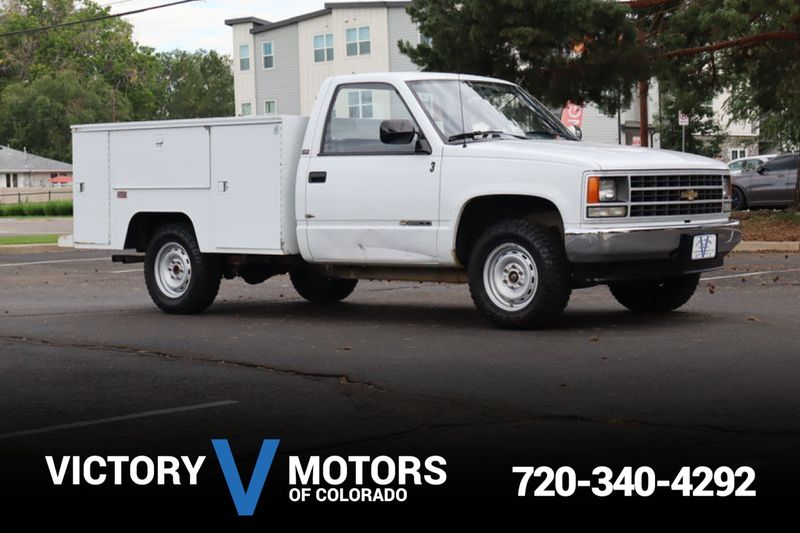
Problem areas
A C2500 is a body-on-frame truck, and that changes the rust verdict compared with a unibody car: a rotten cab can be repaired while the frame beneath stays sound, and a shiny cab can sit on a frame that is finished. Judge the two separately, and give the frame the deciding vote. In our photo examination of the trucks behind this guide, five records had photo notes detailed enough to assess, and rust featured in two of the five — a small sample, honestly stated, but consistent with the wider truth: GMT400s rust less catastrophically than the Square Bodies before them, thanks to galvanised panels, and more than asking prices usually admit, because the protection is now thirty years old.
Rust: cab, bed and frame
Cab corners and rocker panels are the signature GMT400 rust, and the mechanism is drainage. The cab corner behind each door and the rocker beneath it collect road spray and water running down inside the cab's rear pillars; the drain paths block with dirt, the water sits, and the panels rot from the inside out. By the time a bubble shows at the outer skin, the inner structure is usually perforated too. Press hard along both rockers, and treat fresh stone-chip paint along the bottom eight inches of any cab as a question, not an answer. A repair done properly — cut out, new panels welded, sealed and painted — runs roughly $800 to $1,800 a side; covers welded over rot are worth nothing. Extended cabs add the floor and rear panel of the extension, and the area under the rear seat where leaks from the rear window settle. Lift the rear seat cushion and look.
Wheel arches, bed and tailgate. The rear arch lips trap mud against the bed side and bubble from within; run a fingertip around the inside of each lip and feel for roughness under intact-looking paint. Bed floors dent on working trucks — that is use, not damage — but the bed support crossmembers underneath rot where they sit on the frame, and a bed floor that flexes, or a gap that has closed between bed and cab on one side, means the supports or mounts are going. Tailgates rot along the bottom edge and bend in the middle from loads rested on them; a tailgate that will not latch square tells you about both. Front fenders go behind the wheel, at the bottom rear corner. None of these panels alone kills a truck; together they are the bill that separates a cheap truck from an expensive one, so price the shell as one job.
The frame. The GMT400 frame is a stout ladder of boxed and channel sections, and it fails in specific places rather than generally. The rear section, behind the cab and over the rear axle, collects salt and mud inside the channel, worst on salt-belt trucks and on trucks that launched boats. The spring hangers and shackles are the critical points: they trap salt against the rail, and a hanger tearing away from a thinned rail is a known end for these trucks. Prod the rail around every hanger, the crossmembers over the fuel tank — the tank straps and the rail beside them rot together — and the area under the cab mounts. Surface scale is normal and treatable. Flaking, lamination and metal a screwdriver dents are structural: frame repairs are fabrication, priced per truck, and on a cheap C2500 they exceed its value. Front frame horns bend in accidents and show as uneven bumper gaps; check the steering box mounting for cracks on trucks that have worked with heavy front loads. A sound frame with a scruffy cab is a project worth doing. The reverse is a parts truck wearing makeup.
Fuel and brake lines, and the tank. Steel lines run the length of the frame rail and rot with it; on a salt-belt truck they are a when, not an if, and a full brake line replacement in nickel-copper is roughly $600 to $1,200 fitted. Fuel tanks rust from the top, where dirt sits against the sender, and from inside on trucks that have sat with old fuel.
Front suspension, steering and brakes
The two-wheel-drive front end is independent, with coil springs, control arms and ball joints — car hardware scaled for a truck, and it wears like it. The wear list is consistent: upper and lower ball joints, idler and pitman arms, control arm bushings and tie-rod ends, in roughly that order. The test is in the inspection section, but the economics belong here: a full front-end refresh with quality parts, fitted and aligned, runs roughly $1,200 to $2,500, and it transforms a wandering truck into a tight one. No single component is expensive; the bill is the set, and a truck with a documented rebuild is worth a real premium over an identical truck that wanders. Coil springs sag and occasionally break at the bottom coil, showing as a nose-down or one-sided stance. Shocks are cheap consumables; a truck that porpoises over freeway joints needs them, at roughly $200 to $450 a set fitted.
Steering boxes wear and leak at the sector shaft seal, giving play at the wheel owners chase through the linkage for months. Play with the linkage proven tight is the box: a rebuilt box is roughly $350 to $600 fitted, and preload adjustment buys time but is not a cure.
Brakes divide by rating. Light-duty trucks use front discs and rear drums with rear-wheel anti-lock on many specifications. Heavy-duty trucks get larger discs and drums and, on diesel and many big-block trucks, hydroboost assistance — the booster run from the power steering pump instead of engine vacuum. Hydroboost is excellent when right and distinctive when wrong: a hard pedal that stays hard with the engine running is a failed accumulator or pump supply, and pedal pulsation fed back through the steering points at the unit itself, roughly $400 to $800 fitted for a rebuilt one. Rear drums wear slowly, but their hardware — self-adjusters, wheel cylinders, axle seals leaking gear oil onto the shoes — is where rear performance quietly disappears. Oil-soaked shoes mean an axle seal, a hub-out job on the full-float axle; budget $400 to $800 a side fitted with shoes, and check for oil mist inside the rear wheels. Calipers seize on trucks that sit, and a full hydraulic refresh runs roughly $800 to $1,600, assumed on any truck recommissioned from storage. Anti-lock faults on later trucks are usually wheel-speed sensors and their wiring at the front hubs.
Driveline, axle and cooling
The rear axles are the strongest part of the truck and the least examined. The light-duty 9.5-inch semi-float 14-bolt is a good axle whose bearings ride on the shafts themselves, so a worn bearing scores the shaft and the repair is a shaft, not just a bearing. The heavy 10.5-inch full-float 14-bolt is close to indestructible here; its failures are neglect failures — gear oil never changed, run low from a pinion seal leak until the gears whine. A whine on the overrun at 45 to 55 mph that changes with throttle is ring and pinion wear, and a gear set fitted is roughly $900 to $1,600. The G80 locking differential, RPO G80 on the SPID, is a mixed blessing: it locks usefully in mud and snow, and it is the axle most often damaged by abuse, because it locks under load with a bang that hard use eventually breaks. Change the oil on any axle you buy; it is the cheapest diagnostic in this guide, because what comes out — grey paste, metal flakes, water — is the axle's medical record.
Cooling is the system that kills more of these engines than wear does, and it is a system, not a radiator: radiator, fan clutch, water pump, thermostat, hoses, heater core and cap, usually all the same age on a thirty-year-old truck. A fan clutch that freewheels hot is the most common cause of the classic complaint — fine on the freeway, creeps up in traffic or on a towing grade — because airflow at speed masks it. The heater core is the expensive address: the part is cheap, the access is a dashboard-out job, roughly $600 to $1,100 fitted, and its warning signs are a sweet smell in the cab, a misting windscreen and damp passenger carpet. Treat those signs as the job already owed. On diesels and big blocks, cooling margin is the whole game; on any truck, a gauge sitting higher than the seller says it used to is a system asking for its $600 to $1,200 refresh before it takes a head gasket as payment instead.
Interior, electrics and the small systems
GMT400 interiors are durable in structure and perishable in detail. Dash pads crack in sun states, door panels loosen as their clips age, headliners sag on extended and crew cabs, and seat foam wears on the driver's outer bolster first — judge the interior from the driver's seat. Bench seats are cheap to re-cover; Silverado interiors cost more and are worth more, and a clean, uncracked dash in a sun-state truck is a genuine value item because good used dashes are hunted. Window regulators and door latches wear together; a door that must be slammed and a window that drops crooked are the same afternoon's work, roughly $150 to $350 a side. The wiper pulse board cracks its solder joints and gives intermittent, possessed wipers that park where they like or work only on high — a cheap part and one of the most satisfying fixes on the truck. Fuel gauge senders fail more often than gauges: a gauge that reads full for a week and then falls off a cliff is a sender, tank-down or bed-up, roughly $300 to $600 fitted.
Air conditioning is part of a working C2500's usability, and its state is a clean buying signal. Early trucks run R12, later trucks R134a, and conversions vary from proper — compressor, drier, condenser flushed, correct oil — to a can of gas and a prayer. A system that blows warm is anywhere from a $150 service to a $1,200 compressor, condenser and drier renewal, so test a seller's claim on the viewing, at idle, after ten minutes. Electrically, the platform's faults are connection faults: earth straps between engine, cab and frame corrode and produce every ghost symptom in the book — dim lights, slow cranking, wandering gauges — for the price of a strap and an hour. Alternators and starters are cheap and changed in under an hour; a slow-cranking truck is a battery, cable and earth diagnosis before it is a starter purchase.
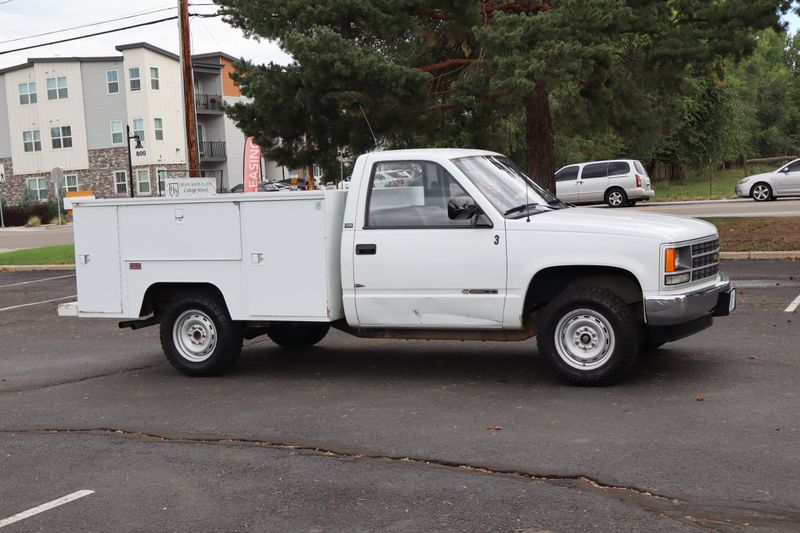
How to inspect one
Allow ninety minutes, bring a torch, a magnet in a cloth, a screwdriver for prodding frame and rockers with the seller's permission, and a code reader for a 1996 or later truck. Inspect it cold, in daylight, on flat ground. A C2500 inspection is won underneath and in the paperwork; the test drive merely confirms what those two have told you.
- Paperwork and the SPID label first. Match the VIN on the title to the dash plate and the door label. Then photograph the SPID label in the glovebox: engine code, transmission code, axle ratio, G80 code if present, paint and trim. Count the wheel lugs — six is light duty, eight is heavy — and read the GVWR on the door-jamb label: 7,200 lb or 8,600 lb. If badge, lugs, label and advert disagree, the metal wins and the price follows the metal.
- Cold start, and listen before you touch anything. Insist the engine is cold. A gasoline truck should fire at once; a diesel should start on its glow cycle without ether or excuses. Watch the exhaust: a blue puff that clears is valve seals, blue smoke that stays is oil burning, white smoke that persists on a diesel is fuel or coolant trouble, black smoke under load on a 6.5 is boost or pump trouble. Listen for exhaust manifold tick and, on a 6.5, a wobble or squeak from a separating harmonic balancer pulley.
- Under the bonnet, fluids before cosmetics. Read the oil: level, colour, and on a Vortec, smell and any milky residue under the filler cap — the intake gasket test from the engines section. Read the coolant: clean and coloured is maintained, rusty water is neglect. Check brake and power steering fluid, and plan to read the transmission fluid hot at step 9. Look for the PMD on a 6.5: on the pump in the valley means the relocation bill is still to pay; on a heat sink behind the bumper means it has been paid.
- The frame, on your back. Torch and screwdriver along both rails. Prod around the rear spring hangers and shackles, the crossmembers, the fuel tank straps and the cab mounts. Scale is fine; flaking, softness or a screwdriver that sinks is structural, and structural frame rust on a working-price C2500 is a walk-away, not a negotiation. Read the steel lines along the rail while you are there, and check the rear axle for pinion seal leaks and oil mist inside the rear wheels — the axle seal test from the problem areas.
- Cab corners, rockers and floors. Press both rockers hard, inspect both cab corners inside and out, and lift the floor covering in both footwells and, on an extended cab, under the rear seat. Bubbling with solid metal behind your thumb is a repair; crunching is a panel job at the price given in the rust section, per side. Check door bottoms and drain slots: a door that closes sweetly on its latch is a cab that is still square.
- Bed, arches and tailgate. Fingertip around the inside of every arch lip. Look down the bed floor, then underneath at the support crossmembers and mounts. Work the tailgate: it should latch both sides without being lifted or leaned on. A bed sitting crooked against the cab points back to step 4 — supports, mounts or frame, in ascending order of seriousness.
- Front end and steering. With the front raised, rock each wheel top and bottom for ball joint play and side to side for linkage play, and spin it for bearing roughness. On the ground, have a helper rock the steering while you watch the idler arm, pitman arm and tie rods for lost motion. Play is a priced set, not a single part: use the full front-end figure from the problem areas if more than one joint is gone.
- Brakes, standing and stopping. Pedal feel first: firm and high is right; sinking is hydraulics; rock-hard on a diesel or big-block truck points at the hydroboost. Check disc and pad condition through the front wheels and every flexible hose for cracking. On the drive, brake firmly from 50 mph: the truck should stop straight, without judder or pull. A handbrake that barely holds on rear drums is its own small bill, as the problem areas explain.
- The test drive, loaded with questions. Twenty minutes minimum, including a freeway stretch and, if the seller allows, a grade. The automatic should shift firmly without flaring; a 4L80-E stuck in second is limp mode and an electrical diagnosis, not automatically a rebuild. A manual should take second cleanly cold and hold fifth under load — fifth jumping out on an NV4500 is the nut fault from the gearboxes section. Read the transmission fluid afterwards, hot: pink and sweet is service, brown and burnt is a rebuild priced into the offer.
- Heat, cooling and a towing rehearsal. Let it idle hot for ten minutes and watch the gauge and the fan clutch. Then load the cooling system the way a trailer would: hold 2,500 rpm on a grade and watch for creep. A truck that creeps unloaded will boil towing, and the fix is the system refresh priced in the problem areas, not a thermostat alone.
- Electrics and comfort, every switch. Run the air conditioning at idle for ten minutes and judge it cold, not cool. Work every window, lock, light, the wipers on every setting — the pulse board test — the heater on every speed, and every gauge. A truck where everything works has usually been maintained by the owner who changed its fluids; the correlation is worth money.
- Stance and the final walk-round. Stand back on flat ground: level side to side, bed and cab lines continuous. A sagging corner is a spring; a sagging rear with a crooked bed is mounts or frame from step 4; front wheels tipped in at the top are ball joints from step 7. Photograph the truck from all four corners — stance faults you talked yourself out of in person are obvious in a picture that evening, which is when you should make the offer.
Values
The build below this guide carries the live market for the C2500 — trucks listed now and recorded sales, refreshed at every build — and that block, not any figure printed in a guide, is the number to negotiate from. This section teaches you how to read it, because on a C2500 the spread inside one model name is wider than the spread between models.
Condition is the first driver, and it is not close. At the bottom sit the projects: running or nearly running, rust in the cab corners, a tired front end, a fault list the seller can recite. Above them sit the honest drivers — sound frame, presentable cab, cooling and front end done, everything working, miles high but history present. At the top sit the low-mileage private tow trucks, the Vortec extended and crew cabs with full history, garaged between trips. The gap between a project and a driver is mostly the sum of the priced jobs in this guide — cab welding, front end, cooling, brakes — and the gap between a driver and a top truck is scarcity and history, which no spending on a project reproduces. Place any listing on that ladder by its frame, history file and fault list, not by its paint in photographs.
Specification is the second driver, and it cuts in surprising directions. The heavy-duty truck carries a premium when the buyer is a tower and none at all when the buyer wants a runabout — the same truck is worth different money to different people, which is why heavy trucks sell slowly to the wrong audience and instantly to the right one. Vortec trucks carry a premium for their performance, the big block one for its towing among buyers who tow and a discount among buyers who fear its thirst, and the 6.5 diesel splits the room: a premium truck with a relocated PMD, the late cooling specification and history, a hard sell with none of those and a stalling story. Extended and crew cabs outrun regular cabs for private buyers, and a manual gearbox is a discount to the market but a premium to the small band hunting one.
Asking prices and achieved prices part company in a predictable place. Private sellers price from the best truck they have seen advertised; the market pays for the truck in front of it. Every priced fault in this guide is a legitimate, itemised deduction — the spider conversion, the intake gaskets, the front-end set, the cab corners per side — and a seller with a sorted truck and invoices knows it and prices accordingly, leaving little room. The room lives in the middle of the market: drivers with two or three known jobs outstanding, honestly described, where an itemised offer reads as fair to both sides. Projects are the trap at both ends, and the cheapest truck in the market block is reliably the most expensive C2500 you can own if its frame is gone. Buy the frame, the rating and the history; let the market block set the number; and remember that value in use — towing, hauling, working every week — is the return most owners actually collect.
Parts and ownership
The C2500's strongest ownership argument is that it sits on one of the highest-volume truck platforms ever built, sharing its mechanical core with the C1500, the Suburban, the Tahoe and the GMC lines. Dealers, parts chains, specialist suppliers and the used-parts market all support it, and very little is genuinely hard to find in North America. Ownership difficulty is almost never availability; it is the labour of catching up a working truck's deferred jobs, budgeted below.
Easy: every service item, filters, plugs, belts and hoses; brake pads, rotors, drums, calipers and hydraulics; ball joints, tie rods, idler and pitman arms and the rest of the front-end wear set; shocks and springs; water pumps, radiators, fan clutches and thermostats; alternators, starters and batteries; throttle-body rebuild parts and ignition modules; the Vortec multi-port conversion unit; PMD relocation kits for the 6.5; exhaust systems in standard form; glass, seals and door hardware. All of it is order-today, fit-this-weekend, at prices that embarrass most classic car owners — the small block's parts economy is the best in the hobby.
Harder and dearer: rust-free cab panels and beds in salt-belt regions, where good southern and western sheet metal is hunted; crew-cab trim and rear door hardware; unbroken dash pads in the right colours; diesel injection pumps and their quality rebuilders, a smaller, more specialist trade than the gasoline side; big-block exhaust manifolds that are not cracked; and quality seat foam and covers for the higher trims. None of it is unobtainable. All of it rewards buying the truck that does not need it.
Running costs. Fuel defines the range: a 4.3 or 5.0 driven gently can see the high teens, a 5.7 working or towing lives in the low to mid teens and below, a 454 towing is a single-figure truck, and the diesels return the high teens that were their whole point. Budget by the work you will actually do. Servicing is cheap and simple, and any competent independent shop can do all of it; the specialist knowledge in this guide is for buying and for the model-specific faults, not routine care. In many states the heavy trucks register commercially — check before purchase, not after. The first-year budget catches new owners on every working classic: catching up deferred maintenance on a running C2500 honestly runs $1,500 to $4,000 before you improve anything, and recommissioning a truck that has sat for years runs $3,500 to $7,000 at a shop, because sitting attacks fuel systems, brake hydraulics, tyres and every seal at once. Buy a truck in regular use over a sleeping truck at the same money, every time.
Living with one. The C2500's daily manners are the GMT400 revolution still working: power steering with real feel, brakes that stop a loaded truck without planning ahead, a cab that seals properly, and heating and air conditioning that work like a car's. The two-wheel-drive truck rides better than its four-wheel-drive brother, steers lighter and costs less to maintain — no transfer case, no front differential — the quiet case for the C over the K for any buyer whose work is on roads. Its limit is traction: an empty-bed truck has little weight over its driven wheels in snow and mud, and the honest answers are weight in the bed, proper tyres and the G80 locker where fitted. Parts support and mechanicals any shop understands make this one of the lowest-risk classic trucks to own hard and use daily — which is what most of them are still doing.
Which one to buy
- The all-rounder: heavy-duty C2500, 5.7 Vortec, extended cab, 1996 to 2000. The strongest engine in its most modern form, the 8,600 lb chassis, the 4L80-E automatic and the cab a family can use. The one truck to do everything.
- The value buy: throttle-body 5.7 heavy duty, 1988 to 1995. The same chassis and nearly the same capability for less money, in a truck you can diagnose with hand tools. Buy it on frame and history, spend the saving on cooling and front end, and you own ninety percent of the Vortec truck.
- The serious tower: 7.4 big block, heavy duty, with documented cooling history. Nothing else in the range pulls a heavy trailer with the same ease. The fuel bill is the admission price; a sorted cooling system is the membership condition.
- The economy pick: 6.5 Turbo Diesel L65, 1997 onward, PMD already relocated. Late cooling specification, the signature fault already fixed, diesel economy with real towing torque. Without the relocation receipt and cooling history, it drops to the project list.
- The simple life: 6.2 diesel or 4.3 V6 light duty, regular cab. Mechanical injection or the smallest gasoline engine, six lugs, minimum systems, minimum bills — the cheapest honest C2500 ownership there is, as long as you never ask it to tow like a heavy truck.
- The driver's find: any rating with the NV4500 five-speed manual. Rare, cheaper than the automatic because the market discounts manuals, and the most engaging way to own one. Check fifth gear under load.
- The family rig: crew cab heavy duty, 1992 to 2000. Four real doors and the heavy chassis. Scarce in good order — when a sound one appears, hesitation is the expensive option.
And the rule that overrides all of the above: buy the frame, the rating and the history file, in that order, and let the engine, cab and trim follow. Lug count and the door-jamb label settle what the truck is; the frame settles whether it stays that way; and every engine and gearbox here can be repaired at a planned price — while a rotten frame under a shiny cab is the one purchase no budget rescues.
See the 14 2500 Extended Cab Long Bed cars currently listed.