
Chevrolet C10 buyer's guide
Chevrolet C10 -- the model's own buyer's guide: variants, values and what to check.
Years listed: 1961-1987 · Series: C/K Trucks
Overview and history
The Chevrolet C10 is the half-ton, two-wheel-drive pickup at the heart of the C/K truck line Chevrolet built from 1960 to 1987 — the truck that turned the American pickup from pure farm equipment into something people collect, restore, lower, hot-rod and drive every day. The letter and the number are the whole identity in two characters: C means two-wheel drive (K is the four-wheel-drive sister), and 10 means the half-ton class, below the three-quarter-ton 20 and the one-ton 30. Everything else — cab, bed, engine, trim — was a choice the first buyer made from a long option list, which is why no two C10s you look at will be quite alike, and why reading a truck's factory paperwork matters more here than on almost any classic car.
There are three distinct generations, and a buyer needs to hold them apart, because they drive differently, rust differently and sit in different parts of the market. The first generation (1960–1966) is the vintage truck: drop-centre ladder frame, wraparound windshield on the 1960–1963 cabs, torsion-bar front suspension for 1960–1962 and coils from 1963, and a wood plank bed floor. The second generation (1967–1972), the Action Line, is the collector core — the handsome, car-like truck with coil-spring rear suspension on trailing arms, trim from work-spec Custom to the plush Cheyenne Super, and, from 1971, standard front disc brakes. The third generation (1973–1987), the Rounded Line everyone calls the Square Body, is the big, squared-off, genuinely usable classic: fourteen model years, trim climbing from Custom Deluxe to Silverado, the last C10s of 1987 giving way to the R10 name before the GMT400 trucks replaced the line in 1988.
The shape of our own listings tells you where the market's centre of gravity sits. We track 259 C10s, spanning 1961 to 1987, and the single biggest year in that pool is 1972, with 1971 and 1970 close behind — the last, best-equipped years of the Action Line are the trucks buyers chase hardest. The Square Body years are strongly represented too, especially the mid-1980s trucks; the early 1960s trucks form a smaller, more originality-minded corner. Blue is the commonest colour in the pool, ahead of red, orange and black.
What defines the C10 as a purchase, though, is not the generation. It is the fork between the original truck and the modified truck. Chevrolet built these by the hundreds of thousands as tools, and for decades they were cheap, tough and everywhere — so they were worked, parked, hot-rodded, lowered, engine-swapped and restored in every combination. Today the same badge covers a numbers-matching 1972 Cheyenne Super, a patina'd farm truck, a Square Body with a modern LS V8 and air suspension, and a long-bed someone cut down to a short-bed in a home shop. All four are priced and judged by completely different rules — and the most expensive mistake in C10 buying is paying original-truck money for a modified truck, or modified-truck money for a badly modified one, without knowing which you are looking at.
The fundamentals are superb: engines among the best-supported in the world, a chassis simple enough for a home mechanic, an enormous parts trade, and a sorted truck that will cruise at highway speed and haul real loads. The bad news is concentrated in one word — rust — and in the deferred maintenance of trucks too tough to die and too cheap, for too long, to be worth repairing properly. Buy the shell and the paperwork first, the specification second, and the shine last.

The models
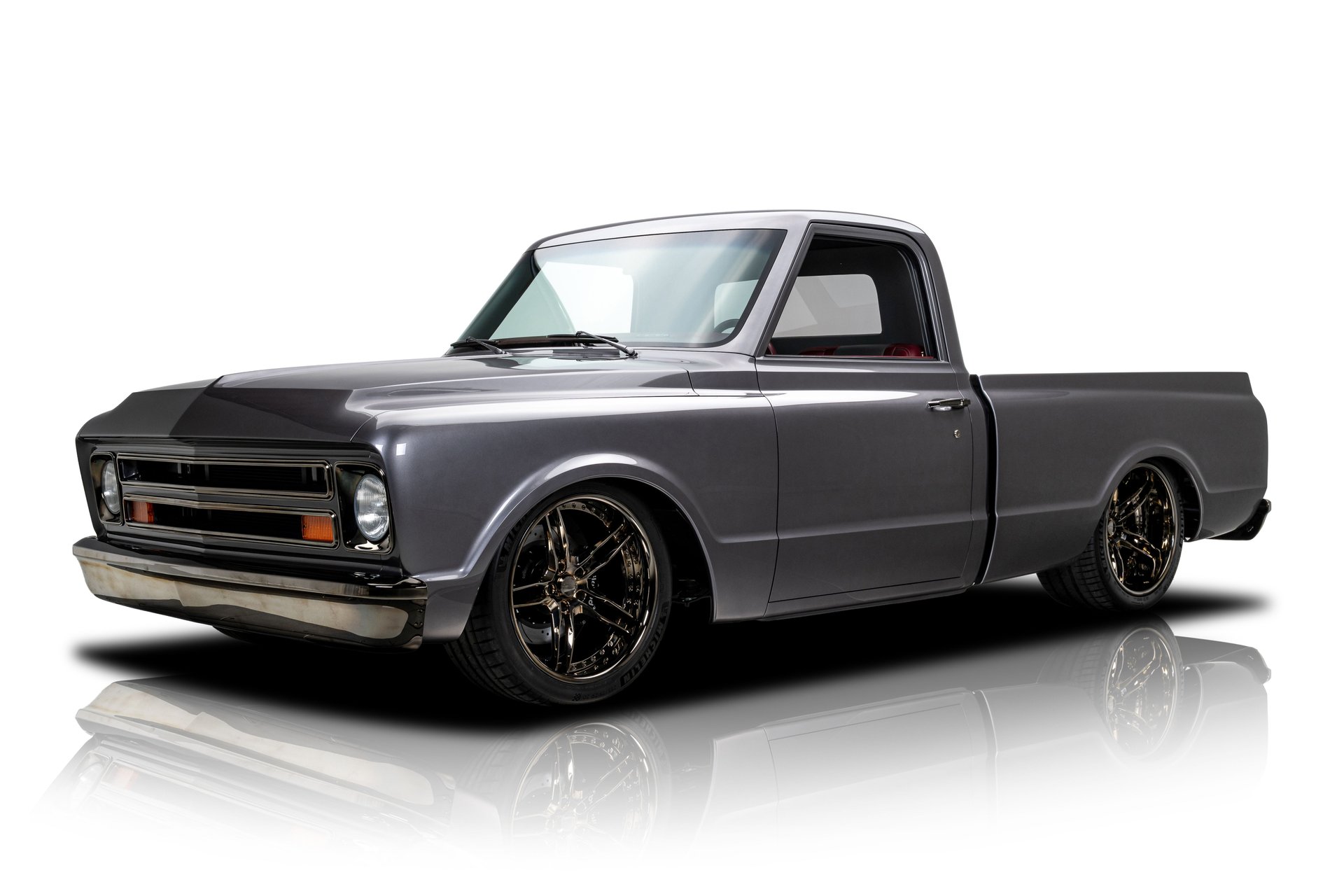
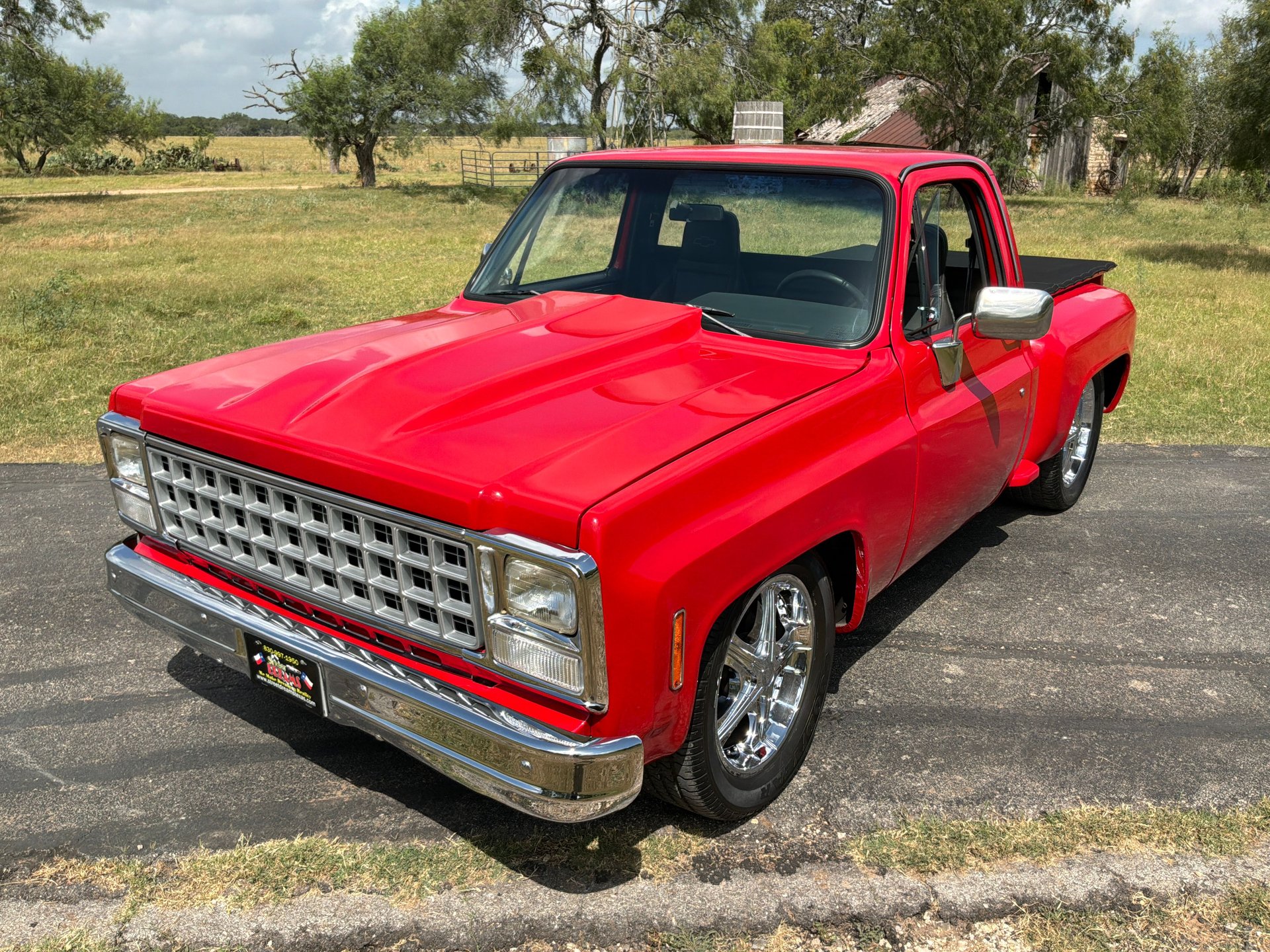
Every C10 is a half-ton, two-wheel-drive chassis in one of two lengths that matter: short-bed (115-inch wheelbase, a bed of about six and a half feet) or long-bed (127 inches, eight feet) on the first two generations, stretched slightly to 117.5 and 131.5 inches on the Square Body. Across all three generations you also choose the bed style: Fleetside, the smooth slab-sided bed that looks modern, or Stepside, with a narrower box, separate rear fenders and a step ahead of each rear wheel. Fleetsides dominate the market and the short-bed Fleetside is the collector configuration; Stepsides are fewer, look older-fashioned on every generation, and have their own loyal following.
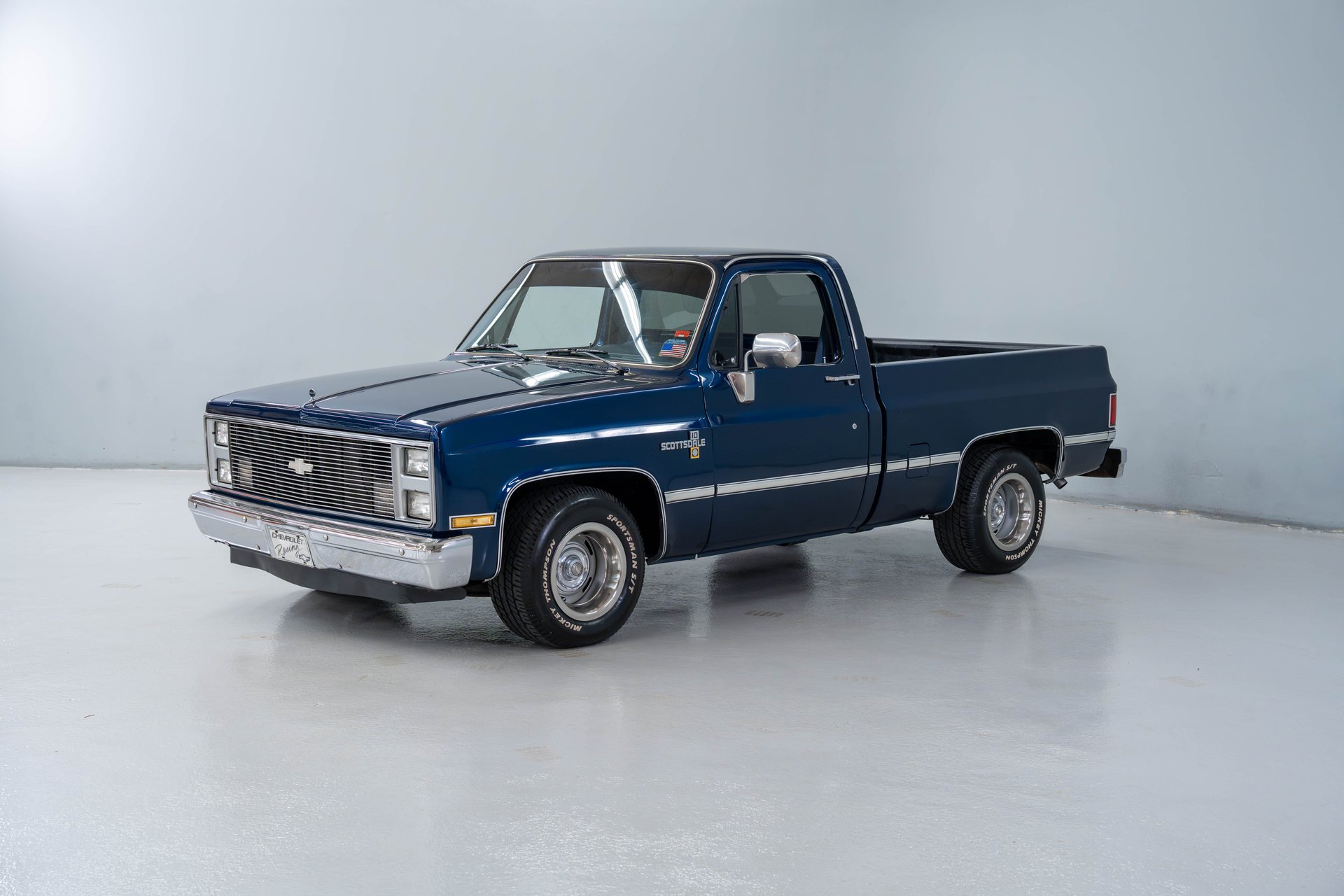
Trim is the second axis. The early trucks are simple: a base truck and a Custom option. The Action Line builds a ladder — base, Custom, CST (Custom Sport Truck) at the top for 1967–1970, then Cheyenne from 1971 and the Cheyenne Super above it, with woodgrain, carpet, better seats and often factory air conditioning. The Square Body renames the ladder Custom Deluxe, Scottsdale, Cheyenne (to 1981) and Silverado. Trim matters to value because it is hard to fake completely: a genuine Cheyenne Super or Silverado carries its specification on the factory option label, and a base truck dressed up with badges and woodgrain is still a base truck underneath.
| Model | Years | Engine | Output | Built | Character |
|---|---|---|---|---|---|
| C10, first generation (torsion-bar cars) | 1960–1962 | 235/230 six, 283 V8 | 135–195 hp (gross) | Volume production | The vintage truck; wraparound glass, wood bed floor |
| C10, first generation (coil-spring) | 1963–1966 | 230/250 six, 283 or 327 V8 | 140–250 hp (gross) | Volume production | The usable early truck; the 1965–1966 cab is the sweet spot |
| C10 Action Line, six-cylinder | 1967–1972 | 250 or 292 six | 155–170 hp (gross) | Volume production | The honest worker; simple, slow, cheapest to run |
| C10 Action Line, small-block V8 | 1967–1972 | 307, 327 or 350 V8 | 200–255 hp (gross) | Volume production | The collector core; short-bed Cheyenne is the prize |
| C10 Action Line, big-block | 1968–1972 | 396/402 V8 | Around 300 hp (gross) | Lower volume | The muscle truck; verify the engine and the paperwork hard |
| C10 Square Body, Custom Deluxe/Scottsdale | 1973–1987 | 250 six/4.3 V6, 305 or 350 V8, diesels | 100–175 hp (net) | Volume production | The working Square Body; specification varies enormously |
| C10 Square Body, Silverado | 1973–1987 | 305, 350 or 454 V8, 6.2 diesel | 130–230 hp (net) | Volume production | The luxury truck; air, cruise, trim — and the most to restore |
| C10 Stepside (all generations) | 1960–1987 | As per generation | As per generation | Lower volume than Fleetside | The traditional look; wood bed floor on early trucks |
(Outputs are period factory ratings — gross before the industry switched to net ratings in the early 1970s, net after — varying by year and specification. Chevrolet did not publish clean per-variant production totals for most C10 configurations, so the Built column is deliberately qualitative: treat any seller quoting an exact, tiny production figure for a mainstream variant with suspicion, and ask what document it came from.)
The first generation (1960–1966). Two trucks in one, really. The 1960–1962 trucks ride on torsion bars, wear the wraparound windshield and the deep, twin-pod hood, and feel like the 1950s trucks they replaced. The 1963 change to coil-spring front suspension is the one that matters mechanically, the 1964 cab lost the wraparound glass, and the 1965–1966 trucks are the easiest early trucks to live with. Chevrolet called the line Apache in the early years, a name that faded as the C/K designations took over. A first-generation C10 is bought for looks and vintage feel, not speed or comfort, and originality is worth more here than on any later truck because so few survive unmodified.
The Action Line (1967–1972). This is the heart of the C10 market, and the details reward study. The 1967 truck is a one-year look — no side marker lamps (they arrive for 1968, a federal requirement) and, on early 1967s, a small rear window enlarged during the year; a small-window cab is a genuine one-year feature, not a defect. The 1969–1970 trucks get the revised grille and the 350 as mainstream V8; the 1971–1972 trucks add standard front disc brakes and the Cheyenne trim level. The big-block trucks — badged 396 in 1968–1969 and 402 (still usually badged 396) from 1970 — are the muscle-truck play, and the trap is obvious: a big-block drops into any C10, and the badge proves nothing. The SPID label, the VIN and any build documentation are what separate a factory big-block Cheyenne Super from a well-dressed clone, and the price gap justifies real detective work.
The Square Body (1973–1987). Fourteen years is a long run, and the Square Body changed inside it. The 1973–1974 trucks are the purest of the design and the last before emissions equipment complicates the engine bay. The mid-1970s trucks add the 454 option, the 1978–1981 trucks offer the 5.7-litre diesel (bought today only with open eyes), and the 1981 facelift softens the front end and ends the Cheyenne name, leaving Silverado alone at the top. The 6.2 diesel arrives for 1982 as the economy option that actually works. The final trucks, 1985–1987, swap the straight-six for the 4.3 V6 as base engine, are the most refined of the line, and add electronic fuel injection on the 1987 V8s. A Square Body is the C10 you buy to use: bigger cab, better brakes and steering, and a driving experience close enough to a modern truck that daily use is realistic.
The identity checks that apply to every generation. Three numbers and one label do most of the work. The VIN (door frame or jamb on the early trucks, a plate at the base of the windshield on Square Bodies) decodes the series, the year, the assembly plant and, on later trucks, the engine it was built with. The SPID label in the glovebox (from the late 1960s onward) lists every factory option by its three-character code and is the single most valuable document a C10 can carry; a missing SPID is not a crime, but one that contradicts the truck is a story you need explained. The frame carries a partial VIN stamping, typically on top of the driver's-side rail, that should match. And measure the wheelbase before you fall for any short-bed: a truck that measures long and wears a short bed has been cut, and should be priced as a cut truck however good the work looks.
Engines and gearboxes
The sixes: 235, 230, 250 and 292
The straight-six is the engine the C10 was born with, and in its various forms it powered more of these trucks than any V8. The 1960–1962 trucks use the 235, replaced by the modern thin-wall 230 in 1963 and joined by the 250 in 1966. The 250 is the six to have: seven main bearings, a full-flow oil filter, and enough torque to move a half-ton without embarrassment. The 292, offered through the Action Line years and into the Square Body era, is taller, torquier and thirstier — a working engine, identifiable by its taller block, and prized by the six-cylinder faithful.
A healthy Chevrolet six is one of the toughest engines ever put in a truck: it should start readily, idle with a faint lope, pull from low revs and show no smoke beyond a cold-start puff. What kills them is neglect, not design — oil never changed until the lifters clatter permanently, cooling systems run on plain water until the water jackets silt up, and cracked exhaust manifolds from decades of heat cycles. Listen for a ticking that fades as the engine warms, the classic manifold-crack signature, and budget a manifold replacement (a repair in the low hundreds of dollars for the part, more if studs snap coming out, as they like to) rather than an engine.
Two six-cylinder traps deserve naming. The first is the integral-head 250 fitted to later Square Body-era trucks: from the mid-1970s this version cast the intake manifold as part of the cylinder head, and these heads crack, run poorly and strangle the engine; the fix everyone uses is an earlier separate-manifold head, so ask what head a late six is wearing. The second is ignition: simple engines, hydraulic lifters in most truck forms, a single-barrel carburettor (Rochester Monojet later, a Rochester B or Carter before it) and, from 1975, HEI electronic ignition — one of the great reliability upgrades of the era. A pre-1975 truck still on points is fine, but budget a points service or an HEI conversion into the first year.
The small-block V8s: 283, 307, 327, 305 and 350
The small-block Chevrolet is the most supported engine on earth, and the default C10 V8 in every generation: the 283 in the early trucks, the 327 as the 1960s performance option, the unloved-but-honest 307 as the base Action Line V8 from 1968, and the 350 from 1969 onward as the engine most buyers actually want. The Square Body years add the 305 — a small-bore economy V8 from the emissions era — alongside the 350, and telling them apart matters, because the market pays for the 350 and the two look near-identical from above. The honest checks are the block casting numbers and date, the stamped suffix code on the pad at the front of the passenger-side head deck, and the VIN derivative on later trucks. A seller who will not let you read the suffix pad is telling you something; a "350" that decodes as a 305 is a price conversation, not necessarily a walk-away — a healthy 305 is a perfectly good driving engine, just not the one the truck was advertised as.
Judge any small-block the same way. Cold start from stone cold: a puff of blue that clears is valve stem seals, a known repair (seals can be changed with the heads on, a job in the mid hundreds of dollars at a shop); blue smoke under load is rings or bores, and that is a rebuild conversation. A start-up rattle that fades is the timing chain and its nylon-toothed cam gear on original engines — the plastic teeth age, shed into the oil pan and eventually let the chain jump, so documented chain replacement on a high-mile original engine is a genuine selling point. Oil pressure should be strong hot at cruise and respectable at idle; a knock under load means the engine is done until rebuilt — and a standard small-block rebuild, done properly with machining, is a known quantity in the low-to-mid thousands of dollars. That is precisely why engine condition ranks below shell condition on a C10: you can buy your way out of an engine, at a price you can quote before you start.
The induction side is where the eras separate. The carburetted trucks run Rochester two-barrels on the mild engines and the Quadrajet four-barrel on the 350s and big-blocks — a superb carburettor when rebuilt by someone who understands it, and a flat-spotted misery when the throttle-shaft bores are worn and leaking air, so test for shaft play before paying for repeated "tuning". From 1975, HEI ignition removes the points problem. The early-1980s trucks add feedback carburettors and electronic spark control on some specifications — systems that work when complete and baffle when half-removed, so on a 1981–1986 truck an engine bay still wearing its full emissions plumbing, however ugly, is usually a better buy than one "cleaned up" by an amateur. The 1987 V8 trucks bring throttle-body injection: simpler day to day, and the system to check for a tired fuel pump and perished in-tank hoses rather than carburettor faults.
One modern-oil warning applies to every flat-tappet engine in this guide: current passenger-car oils carry far less zinc (ZDDP) than these camshafts were designed for, and a flat-tappet cam run on the wrong oil can wipe a lobe in a few thousand miles. Ask the seller what oil the truck runs. "Whatever was on sale" is the wrong answer; a classic-formulation or diesel-rated oil with proper zinc levels is the right one, and it costs nothing extra to get right from day one.
The big-blocks and the diesels: 396/402, 454, 5.7 and 6.2
The big-block C10 exists because Chevrolet would sell you almost anything in the muscle era. The 396 arrived for 1968 (growing to 402 cubic inches for 1970 while keeping the familiar badges), and it makes the Action Line truck genuinely quick — and thirsty and nose-heavy, working its front tyres and cooling system hard. The 454 joined the Square Body range and suits it better: mountains of low-rev torque, and in a half-ton a towing and cruising engine rather than a racer. Big-block checks are small-block checks plus two: cooling (look for the correct multi-row radiator and shroud, not a small-block radiator doing double duty — a marginal system will be found out on the first hot grade) and originality, because the swap traffic runs one way. Nobody swaps a big-block out for a six, and a great many six and small-block trucks have grown big-blocks since. Casting numbers, suffix codes, SPID codes and the VIN are the whole case, every time.
The diesels are two completely different engines sharing a badge position. The 5.7-litre diesel (1978–1981 in the half-ton line) was adapted from a gasoline V8 architecture and earned its poor reputation honestly: head-bolt stretch, head gasket failures and injection pump wear, in a truck bought by people who then worked it. A surviving 5.7 C10 is a curiosity; buy one as one, priced as one, with a compression test in hand. The 6.2-litre diesel (from 1982) is a proper Detroit Diesel-designed truck engine: slow, loud, frugal and durable when its glow-plug system and injection pump are healthy. Cold starting is its examination — a 6.2 that fires cleanly from cold on its glow plugs, with no ether stories from the seller, is a good one; one that needs persuasion has pump, glow or compression money due, and a Stanadyne pump rebuild is a specialist job priced accordingly. Neither diesel is a reason to reject a Square Body outright, but both must be bought cheaper than the equivalent petrol truck, because the market on the way out will insist on it.
Gearboxes
The manual story starts with the three-speed column-shift Saginaw, standard for most of the run: light, vague, perfectly adequate behind a six, and the source of the "three on the tree" driving experience. Worn column linkage is the usual complaint — sloppy gates and a lever that finds two gears' worth of neutral — and it is linkage bushes and adjustment, not a gearbox rebuild, nine times out of ten. The four-speed that matters is the SM465 from 1968 onward: a near-indestructible truck box with a crawler first you will use only for manoeuvring, making it effectively a wide three-speed on the road. It whines, shifts slowly and almost never breaks; check for jumping out of third under load, the one wear sign that means internal money. Clutches are conventional, cheap and judged on bite point and judder like any other truck.
Automatics dominate the market — in our listings they outnumber manuals by a wide margin — and there are four to know. The two-speed Powerglide appears in early trucks: simple and strong, but it leaves a V8 feeling undergeared everywhere. The Turbo-Hydramatic 350 is the Action Line and early Square Body default: it should shift firmly and promptly, kick down cleanly and engage reverse without a pause; flaring on the 2–3 change or a long, shuddering engagement means a rebuild, a well-understood job in the low-to-mid thousands of dollars fitted. The TH400 serves the big-blocks and is tougher still, with a firmer shift character that is correct, not a fault. The 700R4 overdrive arrives for 1982 and transforms Square Body cruising — and carries the most expensive gearbox trap in this guide: its throttle-valve (TV) cable is not a kickdown cable. It controls line pressure in proportion to throttle opening, and a misadjusted or disconnected cable does not just spoil the shifts, it starves the box of pressure and burns the clutches, sometimes within a few hundred miles. On any 700R4 truck, confirm the cable is present, connected and correctly set, and treat "we just left that cable off, it shifts fine" as a rebuild already in progress. The lockup-converter versions should be felt locking up at steady cruise; a shudder at lockup is converter or fluid first, box second.
Whichever automatic a truck has, the fluid tells the truth cheaply: bright red and faintly sweet is healthy; brown and burnt-smelling is clutch material, and it does not go back in the box.

Problem areas
Start with what the photographs of real trucks say. We have photo-checked 115 of the C10s in our listings in detail: rust is mentioned in the notes on 37 of them — roughly one in three — and visible damage of some kind on 31. Oil leaks barely register, and smoke does not appear at all in the sample. That is the C10 problem in one paragraph: the mechanicals are so tough and so well supported that they rarely make the notes, while the steel — and what previous owners have done to it — decides whether a truck is a purchase or a project with a purchase price attached. Work through the truck in that order: shell, then chassis, then systems, and let the engine come last, because it is the part you can most reliably fix.
Rust: the map
Rust on a C10 follows the water and the mud, and each generation has its own map. Learn the map for the truck in front of you and check it in this order — structure first, cosmetics last.
Cab corners and rocker panels. The single most important check on any C10, every generation. The rear cab corners trap mud thrown up by the rear wheels and rot from the inside out; the rockers under the doors do the same from road spray. By the time a bubble shows in the paint at a corner, the inner structure behind it is usually involved. Press hard along both, crouch and look at the corner from behind the cab where sellers' photographs rarely go, and be suspicious of fresh stone-chip localised to exactly these areas. Repair panels exist for every generation and are cheap as parts, but the labour is cutting, welding and paint: price a corner-and-rocker job as a four-figure repair per side done properly, and double the suspicion when both sides and the floor supports are gone together — that combination is a cab that has lived wet for years.
Cab floor, floor supports and cab mounts. Water comes through perished windshield seals, through the cowl and up from the road, and sits in the floor and the box-section supports underneath. Lift the mat or carpet (a seller who will not let you lift a mat in a fifty-year-old truck has answered the question) and prod around the pedals, seat mounts and outer edges. Then get underneath: a cab whose front supports have rotted sits visibly nose-down in its shut lines — doors that drop when opened and gaps that taper are often mounts and supports, not hinge wear. Repair sections are available for all generations; a floor pan fitted and painted is a mid-hundreds-to-low-thousands job per side depending on how much support structure goes with it, and floors, like cab corners, rarely rot alone.
The cowl, firewall and drip rails. The cowl plenum at the base of the windshield collects leaves and holds water against seams you cannot see until the dash comes out; rust here leaks water into the cab in rain and is fiddly, fabrication-grade repair rather than panel-swapping. Check for rust tracks on the firewall inside the cab, a damp footwell after rain, and bubbling along the windshield frame. On Square Bodies, add the roof drip rails: the seam sealer cracks, water enters the rail, and rust blooms along the roof edge and down the A-posts — look for paint lifting in a line above the doors, because a roof rail repair is paint-shop money across the whole roof, not a local touch-up.
Doors, fenders and the battery corner. Door bottoms rot where the drain slots block — run a fingertip along each door's bottom edge, feel for bubbling and check the drains are open. Front fenders go behind the wheel and at the lower rear corner; Square Body inner fenders and the core support rot where they trap road salt, and the battery tray on every generation eats itself with acid and takes the inner fender beneath it along — lift the battery, or at least rock it and torch the tray edges. None of these alone kills a truck; together they price the paint job the truck actually needs, and since fenders and doors are bolt-on panels, this is the rust you can forgive at the right price.
The bed. A steel Fleetside floor rusts in the seams and above the cross-sills, and rust at the front panel and wheel tubs is standard. A wood-floor bed — standard on early trucks and Stepsides — is judged differently: the planks and steel skid strips are a service item, replaceable as a kit in the mid hundreds of dollars plus labour, and a rotten wood floor is a weekend, not a weldathon. What matters under either floor is the cross-sills and mounting points, and on a Stepside the lower edges of the separate rear fenders, single-skin and prone to rust at the running-board junction. Look hard at any bed wearing a spray-in liner or a sheet of plywood over the floor: both are legitimate finishes, and both are excellent places to hide a floor that has gone.
The frame. Chevrolet frames are strong and outright failure is rare — but three places need a torch and a prod. On Action Line trucks, the rear coil-spring and trailing-arm crossmember area collects mud and can thin; check the trailing-arm brackets and spring pockets. On Square Bodies, the frame can crack around the steering box mounting, flexed by decades of steering loads — look for cracks radiating from the bolt holes and for a repair plate already welded there (a good, honest repair is acceptable; a cracked, unrepaired frame is fabrication money). On all trucks, check the frame horns behind the front bumper for accident kinks, the spring hangers, and anywhere a previous owner's hitch has been welded rather than bolted. Surface rust is normal and honest; flaking, holed crossmembers and fresh black paint blown over the whole underside the week before sale are not.
Suspension, steering and brakes
The C10's chassis layout is its ride-quality secret and its second-biggest wear bill. From 1963 the front is independent, on coil springs with upper and lower control arms; the rear of most Action Line half-tons rides on long trailing arms with coil springs — a layout that rides like a car because it locates the axle like one. (Leaf springs were the heavy-duty option, and remained the Square Body's standard rear arrangement.) The trailing-arm system has one expensive wear point: the arms themselves, their front bushes and the mounting crossmember. Arms rust from inside, bushes perish, and the axle starts steering the truck from behind — a vague, wandering feel at speed and uneven rear tyre wear are the tells. Sound arms plus bushes are a known repair in the mid hundreds to low thousands fitted; a rotted crossmember is the fabrication version of the same conversation.
At the front, budget for the standard old-truck list on any truck without receipts: ball joints, control-arm bushes (the early trucks use threaded steel bushes that seize solid when the grease history is poor), idler arm, tie-rod ends and shocks. None of it is dear individually — this is one of the best-supported front ends in the world — but a full refresh with alignment is a four-figure shop bill, so a truck that drives and brakes straight and wears its front tyres evenly has money already spent on your behalf. Steering boxes wear at centre and leak at the sector seal; a tight box with a slight weep is a service item, one with inches of free play is a rebuild or exchange unit, priced in the mid hundreds. The rubber rag joint in the column coupling perishes and adds its own slop — check it before condemning the box. Power steering, common from the Action Line onward, should be quiet; a pump that groans at full lock with correct fluid level is on its way out.
Brakes divide the range in two. Trucks before 1971 stop (eventually) on drums all round, with a single-circuit master cylinder on the earliest — a system that works when maintained and leaves no margin when it is not, which is why so many early trucks wear a later dual-circuit conversion, a change to welcome if done with the correct master cylinder and proportioning. From 1971, front discs are standard. On any truck, judge the hydraulics as a system: a pedal that sinks slowly is a master cylinder or a leak; a pull under braking is a seized caliper or a collapsed flexible hose (hoses fail internally and act as one-way valves — a caliper that drags and releases when the bleed nipple is cracked open is a hose, not a caliper). A full hydraulic refresh is a known job in the high hundreds to low thousands of dollars, and it is the first money any stored truck needs.
Standing is the chassis' other enemy. These trucks were cheap for so long that many sat for years, and sitting perishes every rubber bush, cracks tyre sidewalls from the inside out (check date codes, not tread depth — an old tyre with full tread is still an old tyre), and lets brake and fuel systems corrode from within. A truck in regular recent use, with receipts, beats a lower-mileage stored truck at the same price almost every time.
Interior, trim and electrics
The cab is where a C10's price quietly doubles or halves, because it is where restoration labour concentrates. Start with the seat: a bench in every generation, vinyl in work trucks, better trim in the high-spec trucks, and foam that collapses with age so you sit on the frame springs — sit in the driver's position, not the passenger's, and feel for the frame through the cushion. A re-trimmed bench is a mid-hundreds-to-low-thousands job depending on trim; the high-spec Silverado interiors, with door cards, headlining, carpet and dash pad all matched, cost real money to put right as a set.
Dash pads crack in the sun on every generation — a cracked pad is normal, and a pad under a glued-on cap should be priced as a cracked pad, because that is what is underneath. Instruments are simple and mostly reliable; a fuel gauge that lies in both directions usually indicts the tank sender or its earth, a cheap diagnosis before any gauge money. On Action Line trucks the fuel tank lives in the cab behind the seat: a fuel smell is a sender seal, a filler hose or a rusted tank, all fixable, but it is also why so many trucks have been converted to a rear-mounted tank — a good conversion is a plus for daily use, a bad one (tank hanging low, filler through the bed floor, venting unthought-through) is a job to redo.
Trim and brightwork are generation-specific traps. The Cheyenne's woodgrain, the anodised grille surrounds, the one-year 1967 trim pieces, the Silverado badging and the late Square Body's soft-feel interior plastics — all are reproduced to a degree, none completely, and quality varies from excellent to approximate. A truck wearing complete, original, slightly worn trim is usually worth more, and is certainly cheaper to own, than one in a patchwork of new reproduction pieces. Electrics are mercifully simple: the bulkhead connector corrodes and causes whole-cab electrical mysteries on Square Bodies, fusible links at the starter fail with age, and earth straps left off during engine work present as dim lights, slow cranking and wandering gauges. A truck where everything electrical works has been used and maintained — still the best single sign there is. Test the heater and, where fitted, the air conditioning on every viewing: factory air that blows cold is worth money, air that is present but dead is a compressor-and-hoses budget, and air with the compressor and brackets removed is a parts hunt, priced accordingly.
How to inspect one
Allow at least an hour, bring a tape measure, a torch, a magnet wrapped in cloth, and a screwdriver for prodding (with the seller's permission). If the truck passes you, pay for a lift inspection before money changes hands — the underside is where the price is decided.
- Paperwork and identity first. Match the VIN on the title to the plate on the truck — door frame or jamb on the early trucks, the plate at the base of the windshield on a Square Body. Open the glovebox and read the SPID option label where fitted: engine, gearbox, trim, paint and axle codes should describe the truck in front of you. Check the frame's partial VIN stamping on the driver's-side rail against the title. A mismatch anywhere stops the inspection until it is explained.
- Measure the wheelbase. Tape from front hub centre to rear hub centre: 115 inches on a 1960–1972 short-bed, 127 for a long-bed; 117.5 and 131.5 on Square Bodies. A truck sold as a factory short-bed that measures long has been cut down — reprice it as a conversion, however tidy the work, as the rust section explains.
- Cold start. Insist the engine is stone cold when you arrive. A six or a small-block should fire readily and settle; watch for blue smoke (a clearing puff is valve seals; continuous smoke under load later is rings), listen for timing-chain rattle at the front of a V8 and manifold ticking on a six, and note how the choke behaves as it warms.
- The engine's cheap evidence. Pull the oil filler cap and look for mayonnaise emulsion (short trips or a head gasket — the test drive will separate them), smell the dipstick oil for fuel, and read the coolant: rusty water in a truck that "never overheats" means the cooling system is living on luck. On a V8 advertised as a 350 or a big-block, read the suffix code on the front pad — the engines section explains why the pad, not the decal, settles it.
- The cab structure circuit. Cab corners, rockers, floor edges, floor supports and cab mounts, in that order, pressing and prodding as you go. Lift the floor covering. Open and close both doors and watch whether they drop. Perforation in corners plus supports together is the expensive combination; price the welding per side before you discuss anything else.
- Underneath on a lift. Frame rails and horns, the trailing-arm crossmember and spring pockets on an Action Line truck, the frame at the steering box on a Square Body, spring hangers, brake lines and the fuel lines. Read any underseal as evidence: patchy and old is honest; a fresh, uniform black coat over everything, applied for the sale, is a question, not an answer.
- The bed. Lift any liner, mat or plywood sheet. Check the floor seams and cross-sills on a steel bed, the planks and strips on a wood bed, the front panel and wheel tubs and, on a Stepside, the fender bottoms. Look at the bed from behind for squareness — a crooked bed is telling you about mounts, cross-sills or a frame story.
- Steering and front end. With the truck on the ground, rock the steering wheel and watch where the play lives — column coupling, box, or linkage. Rock each front wheel top-to-bottom and side-to-side for bearing and ball-joint play. Then check the tyre wear: even wear is a receipt in itself; feathered or one-sided wear is the front-end refresh from the problem areas section, priced into your offer.
- The test drive. Fifteen minutes minimum, including a highway stretch and some bumps. A manual should find every gear without graunching (third-gear jump-out on an SM465 is the expensive tell); an automatic should shift firmly, kick down and engage reverse promptly. On a 700R4 truck, confirm the TV cable is connected before the drive and feel for overdrive and lockup at cruise — the gearboxes section explains what a missing cable costs. The truck should track and brake straight, without the rear end steering over bumps.
- Brakes and heat. Brake firmly from speed twice: pull, judder or a sinking pedal each point at a different line in the hydraulic-refresh budget. Then let the truck idle hot for five minutes and watch the temperature gauge and oil pressure settle; a big-block or a diesel that creeps hot at idle has a cooling conversation coming. On a 6.2 diesel, the cold start you witnessed in step 3 was the real test — note whether it needed glow-plug cycles repeated, or worse, ether.
- Cab, electrics and air. Work everything: lights, indicators, wipers and washers, horn, every gauge, the heater fan on all speeds, and the air conditioning if fitted. Sit on the driver's seat and feel for the frame through the foam. Check for a fuel smell in the cab of an Action Line truck — its tank lives behind the seat — and look at the dash pad, door cards and headlining as a set, because that is how you will have to buy them.
- Stance and the walk-away look. Stand back and look down each flank. A C10 should sit level side to side; a nose-down cab suggests the front cab supports from step 5, a sagging rear on a coil-spring truck suggests springs or trailing-arm trouble, and ripples down a flank suggest accident or filler history your magnet checks should now confirm. Photograph the truck from this distance — stance faults talked away in person are obvious in a picture.
Values
The market block beneath this guide carries the current numbers — what is listed now, and what recorded sales have achieved — refreshed as the market moves, so this section teaches you how to read a C10's price rather than quoting figures that would date. Read every asking price through the condition spread first, because on a C10 the spread within a single model year is wider than the spread between generations: the same badge covers a rusted project that moves only on a trailer, an honest driver, a restored truck and a professionally built restomod, and those four share almost nothing except a VIN prefix.
Generation sets the frame. The Action Line, above all the 1969–1972 short-bed Fleetside in Cheyenne or Cheyenne Super trim, is where the collector money concentrates, and within it the premiums attach to verifiable things: a factory short bed (not a cut-down — the wheelbase and paperwork checks are worth real money here), a documented factory big-block, factory air conditioning, and an intact SPID label that matches the truck. The first-generation trucks price on originality and cab condition rather than specification; the Square Bodies have been the rising part of the market, the premium moving toward the clean, late, well-optioned Silverados, and a genuinely rust-free Square Body now commands respect that would have surprised sellers a decade ago.
Originality and modification pull in opposite directions, and the market is honest about it if you read it carefully. A documented, matching-numbers truck sells to the collector pool, which is smaller but pays for proof. A modified truck sells to the much larger driver pool — but only when the work is the kind buyers want, done to a standard: a tidy, well-engineered engine swap with cooling, brakes and suspension upgraded to match finds buyers readily, while a swap with its wiring and details left as problems for the next owner is worth less than the honest original truck it started as. Patina is its own category: genuine, dry, original paint with honest wear has a following that pays for survival, but surface rust over structural rust is not patina, it is rust with good marketing, and the cab-corner check separates the two in minutes.
The project-versus-driver gap is the sharpest on the popular trucks. Because parts are cheap and plentiful, sellers price projects as if the restoration were a formality; it is not. Cab welding, a quality repaint, an interior set and a hydraulic and front-end refresh together routinely exceed the gap between a project and a good driver — which is why the driver is usually the rational purchase even at a visibly higher price, and the cheapest C10 in any search is rarely the cheapest C10 to own. Asking prices also run ahead of achieved prices at the optimistic end of this market — the recorded-sales figures in the market block are the corrective — and the trucks that sit unsold for months are usually priced on what was spent rather than on what the truck is. Spend is not value: restoration invoices prove the work was done, and earn a premium for that, but they do not entitle the truck to recover the total.
Negotiation reality: the honest levers are the ones this guide gives you — measured wheelbase, decoded engine, photographed rust, dated tyres, the front-end and hydraulic budgets. A seller with a good truck expects those checks and prices for them; a seller who resists them is negotiating against information, and the correct response is to let the truck go. There is always another C10.
Parts and ownership
The C10 is one of the best-supported classic vehicles in the world, full stop. Chevrolet built the C/K line in the millions across three decades, the trucks share their mechanical core with the cars and each other, and a dedicated reproduction industry — specialists such as LMC Truck, Classic Industries and Brothers, alongside the general Chevrolet trade — catalogues everything from a glovebox latch to a complete cab.
Easy: almost everything mechanical. Service items, ignition parts, water pumps, radiators, carburettor kits, brake components, suspension and steering wear parts, clutch kits, engine internals for every six and V8 in the range, gaskets, glass, weatherstrips, and the common rust repair panels — cab corners, rockers, floor sections, bed floors and wood bed kits — for every generation. Order today, fit this weekend is a realistic rhythm for most of the truck, at prices close to modern-vehicle money.
Harder and dearer: the generation- and trim-specific pieces. One-year 1967 trim and original brightwork, correct Cheyenne Super woodgrain in good order, factory air-conditioning components that have been removed rather than merely failed, correct-date big-block castings for a documented restoration, 5.7-litre diesel parts (a shrinking pool for a shrinking fleet), good original Square Body dash pads and late interior plastics in the right colours, and uncut, unrusted original sheet metal of any kind — reproduction panels are good and getting better, but a truck that does not need them is ahead of the game. A quality repaint, on a truck first put right in metal, is the biggest single ownership bill, starting in the mid four figures for a respectable driver finish and climbing well beyond that for show work — which is why the instruction is to buy the body first and fix the mechanics.
Running costs. A sorted C10 is a realistic regular-use classic. Fuel consumption runs from the mid-teens mpg for a gently driven six or a late overdrive-automatic truck, through low double figures for a small-block, to single figures when a big-block is worked hard — budget by engine, not by badge. Servicing is within any competent general mechanic's scope and most home mechanics' too: oil and filters, grease points on the early front ends, coolant and brake fluid on a two-year rhythm, and the zinc-appropriate oil the engines section describes. Insurance sits in line with other classics of similar value, and agreed-value cover is straightforward given the depth of market evidence. The budget line that catches new owners is the first year: catching up deferred maintenance on a running truck — hydraulics, tyres by date rather than tread, front-end wear, fluids, hoses, belts and the small leaks — honestly runs into the low thousands of dollars before you improve anything, and recommissioning a truck that has sat for years costs more again, because the fuel system needs cleaning end to end (modern ethanol fuel attacks old rubber hose and leaves varnish in tanks and carburettors) and every brake component needs inspection or replacement. Buy a truck in regular use over one that has been asleep, even at a higher price — the photo evidence in our own sample, where damage and rust dominate the notes while the engines barely feature, is the same lesson from the other side: these trucks rarely stop because the engine died.
Which one to buy
- The all-rounder: 1971–1972 C10 short-bed, 350 V8, Cheyenne trim. Front discs, the best trim, the strongest market to buy from and sell into, and parts for everything. If you want one C10 to drive, show and keep, this is it.
- The value buy: a Square Body Scottsdale or Custom Deluxe, 350 V8. The usable classic at working-truck money: bigger cab, cheap parts, honest specification. Buy the driest, rust-freest one you can find and let the Silverado buyers pay for trim.
- The vintage buy: 1965–1966 C10, six or small-block. The coil-spring first generation in its cleanest form — vintage looks without the torsion-bar truck's compromises. Originality and cab condition are the whole purchase.
- The cruiser: a late Square Body Silverado, 1985–1987. Air conditioning, overdrive automatic on the earlier 1980s trucks or fuel injection on the 1987, and the refinement to cover distance. The most modern-feeling C10 there is.
- The muscle truck: a documented 1968–1972 big-block C10. Genuine factory 396/402 trucks are the performance prize of the range — and the most cloned. Buy only with the SPID, the suffix codes and the casting numbers all agreeing, or buy it priced as a swap.
- The traditionalist's truck: a Stepside, any generation. The old-fashioned bed, separate fenders, a wood floor to maintain and enjoy. Fewer buyers, lower prices, and a truck that looks like a truck.
- The worker: a long-bed C10 with the 250 six or a 6.2 diesel Square Body. Eight feet of bed, simple mechanics, real economy by truck standards. Buy it to use, and maintain it like the tool it is.
And the rule that overrides all of the above: buy the least rusty C10 you can find, with paperwork that matches the truck, in the specification you can live with. Engines, gearboxes, brakes and interiors are all fixable at prices you can quote before you start. A rotten cab costs more to put right than the finished truck will be worth, and a truck whose numbers do not agree can never be documented into being what it claims to be — and on a C10, that documentation is where the money lives.
See the 179 C10 cars currently listed.